Bantu knots are a protective style with roots in African tradition, now refined into geometric art for textured hair. This season, the trend leans toward precise parting and delicate accessories over the casual, uniform knots of past years.
This collection of Classy Bantu Knots Hairstyles brings you 17 ways to wear the style, from quick weekend looks to intricate, occasion-ready designs. Whether your hair is fine or coily, short or mid-back, each idea accounts for hold, texture, and the time you are willing to spend. If your knots tend to loosen by day two, the parting and wrapping techniques here address that directly.
Bridal Bantu Knots With Butterfly Accessories
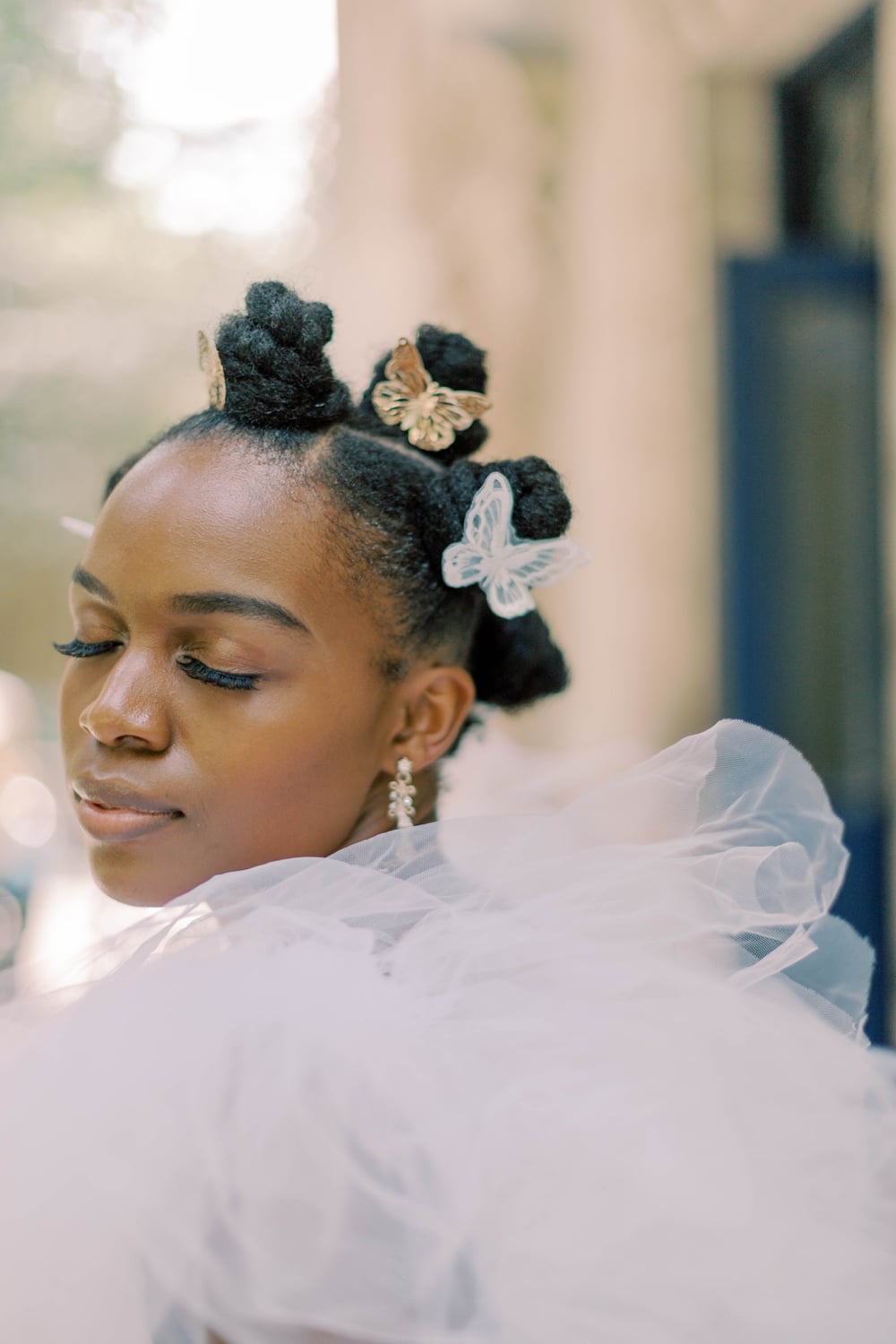
What makes this design read as bridal isn’t the knots themselves, but the delicate butterfly pins tucked into each one. The hair is mid-back length, thick and coily, twisted into multiple knots that sit close to the scalp for a smooth, sculpted finish. The middle part keeps the front clean, letting the accessories do the talking. This style suits thick, coily hair, and the length gives enough weight for the knots to hold their shape through a long ceremony. Ask your stylist for: elegant bantu knots with delicate butterfly pins. A light-hold gel applied before twisting keeps flyaways down, and a trim every six to eight weeks maintains the clean ends.
Bantu Knots With Geometric Parting And Gold Accessories
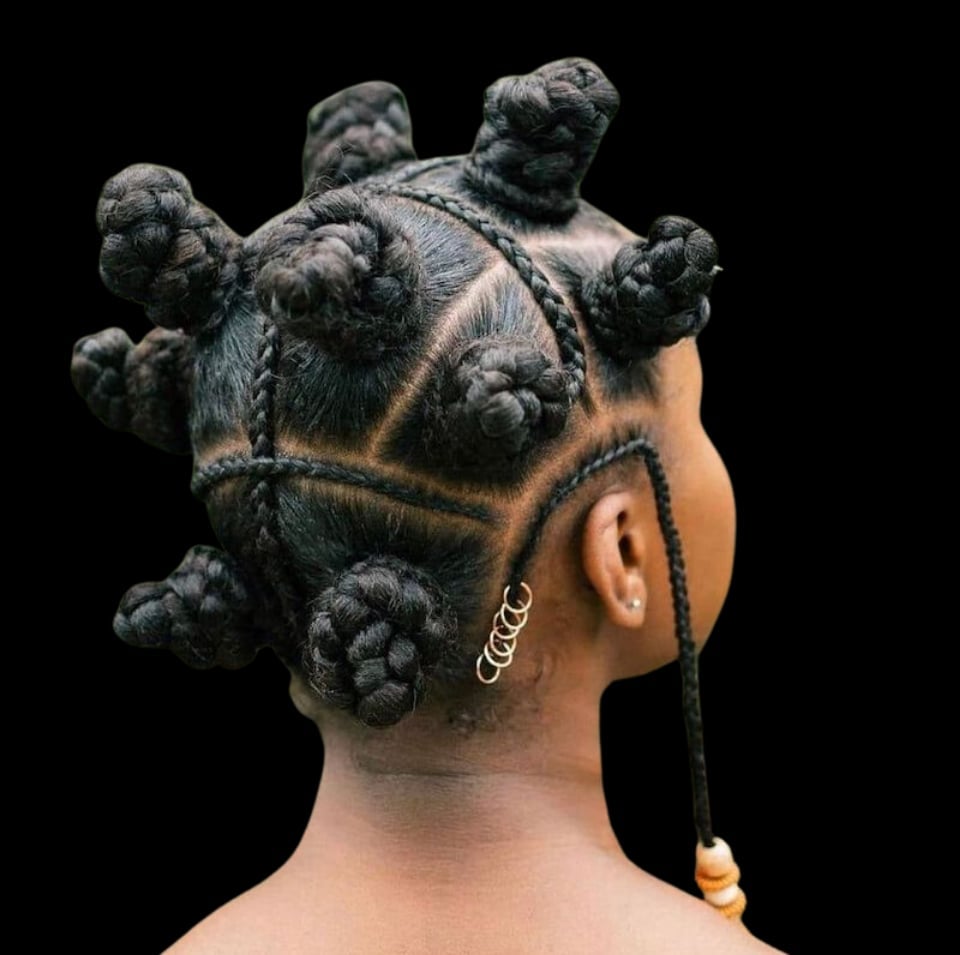
Wondering how to get that precise, almost architectural parting you see on Instagram? The trick is asking for it by name. This back view shows bantu knots set along sharp geometric lines, with gold accessories woven into the braids and a single braid with a bead running down the neck. The hair is black, thick, and coily, and the mid-back length gives the stylist room to map out the sections. Ask your stylist for: bantu knots with geometric parting and gold woven accents. A rat-tail comb is what makes the parting crisp, and bobby pins keep the knots anchored so the pattern doesn’t shift by evening.
Bantu Knots With Intricate Braided Parting
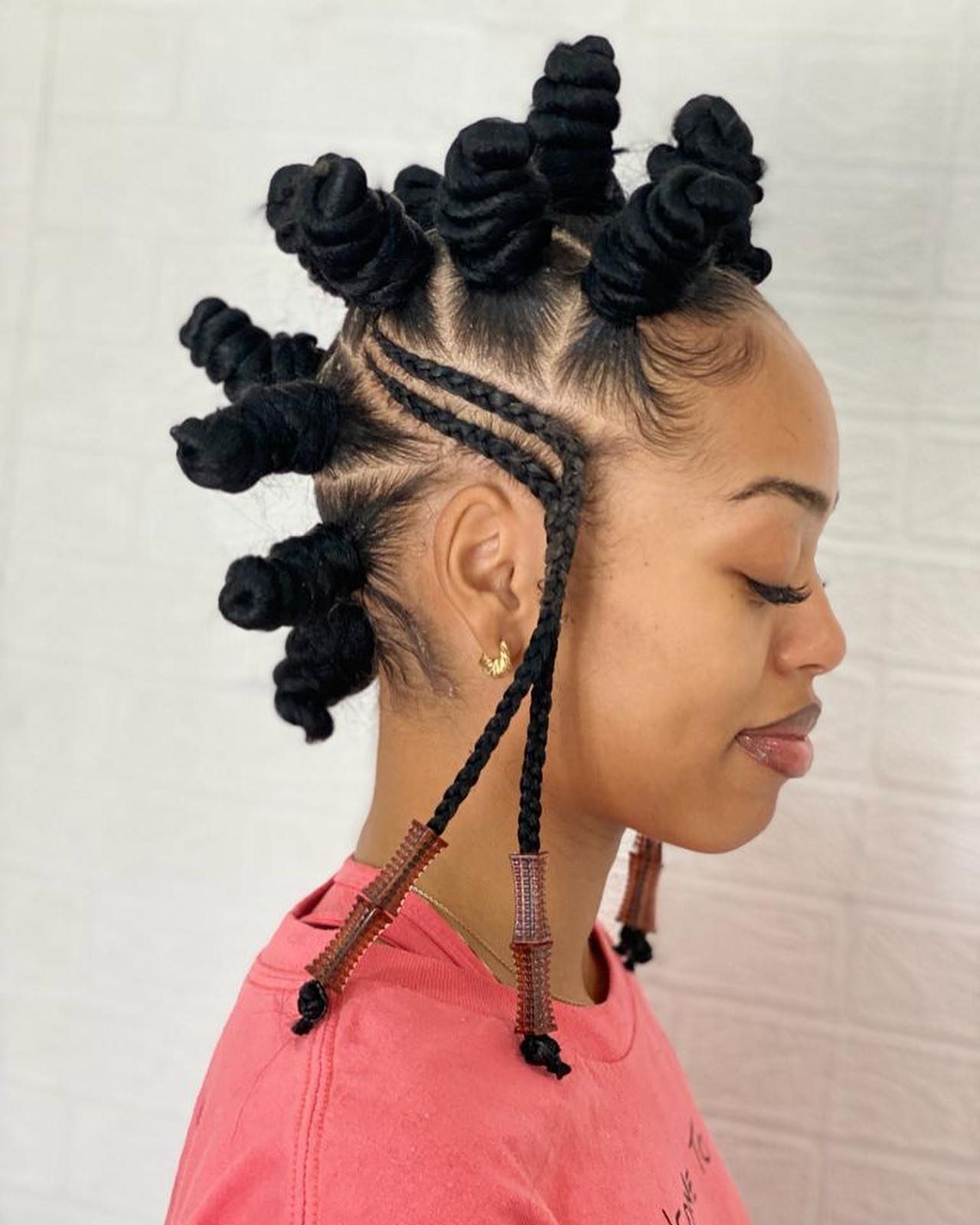
The braided parting is what sets this apart from a standard knot style, and it’s also what makes it last. Those small, tight braids along the part lines hold the scalp taut, so the knots stay put longer than they would on loose sections. The hair is thick and coily, with a middle part that frames the face evenly. This one is a salon job, given the precision required. Ask your stylist for: bantu knots with intricate braided parting. A moisturizing leave-in conditioner before twisting keeps the braids from frizzing, and you can expect the style to hold for a week or more with nightly wrapping.
Bantu Knots With Geometric Parting And Gold Wire, Black
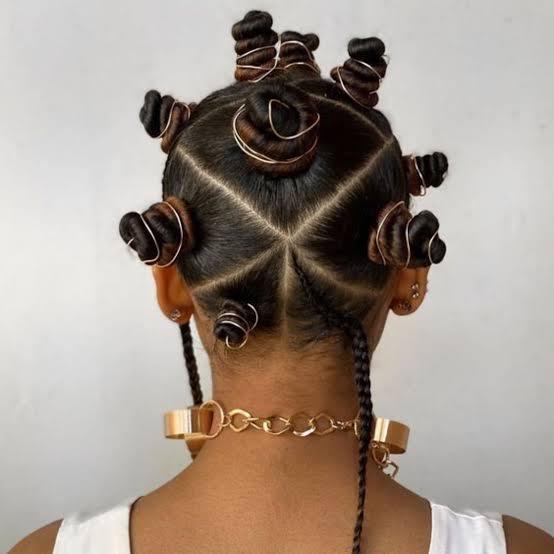
If you’re torn between this and the simpler version with just a middle part, know this: the geometric parting with gold wire is the high-maintenance cousin. It takes longer in the chair, because each section has to be mapped and parted precisely, and the wire has to be wrapped so it doesn’t snag. The payoff is a bold, sculptural look that reads as fashion-forward rather than casual. The black, thick, coily hair is twisted into numerous knots, and the gold wire adds a metallic glint that catches the eye. Ask your stylist for: bantu knots with geometric parting and gold wire wrap. A finishing spray helps keep the wire in place, and expect to spend a few hours getting it done.
Clean Bantu Knots With Middle Part
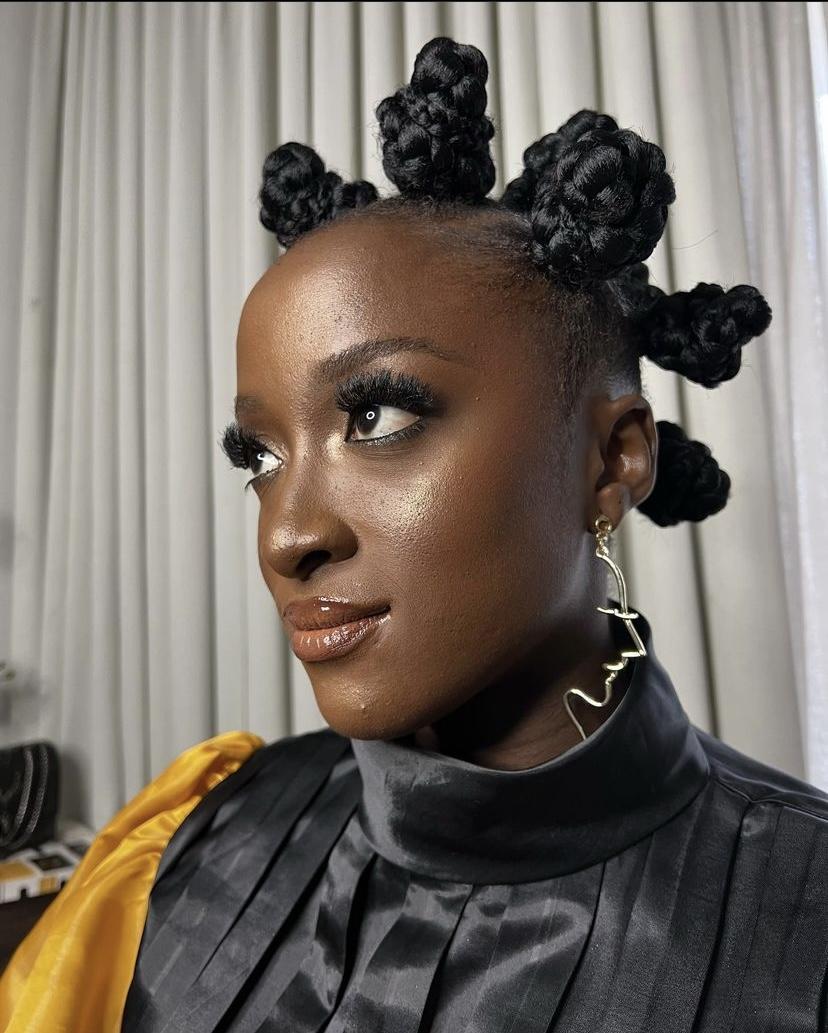
The middle part is the quiet workhorse of bantu knots, and it’s especially flattering on round or oval face shapes because it adds vertical length. The hair is black, thick, and coily, and the knots are well-formed with a defined spiral texture that gives the style a polished, almost sculpted feel. This is a great everyday protective style that still looks intentional for work or a night out. Ask your stylist for: clean bantu knots with a middle part. A smoothing balm applied to each section before twisting keeps the finish sleek, and the style holds well for several days if you sleep on a satin scarf.
Bantu Knots With Heart-Shaped Parting
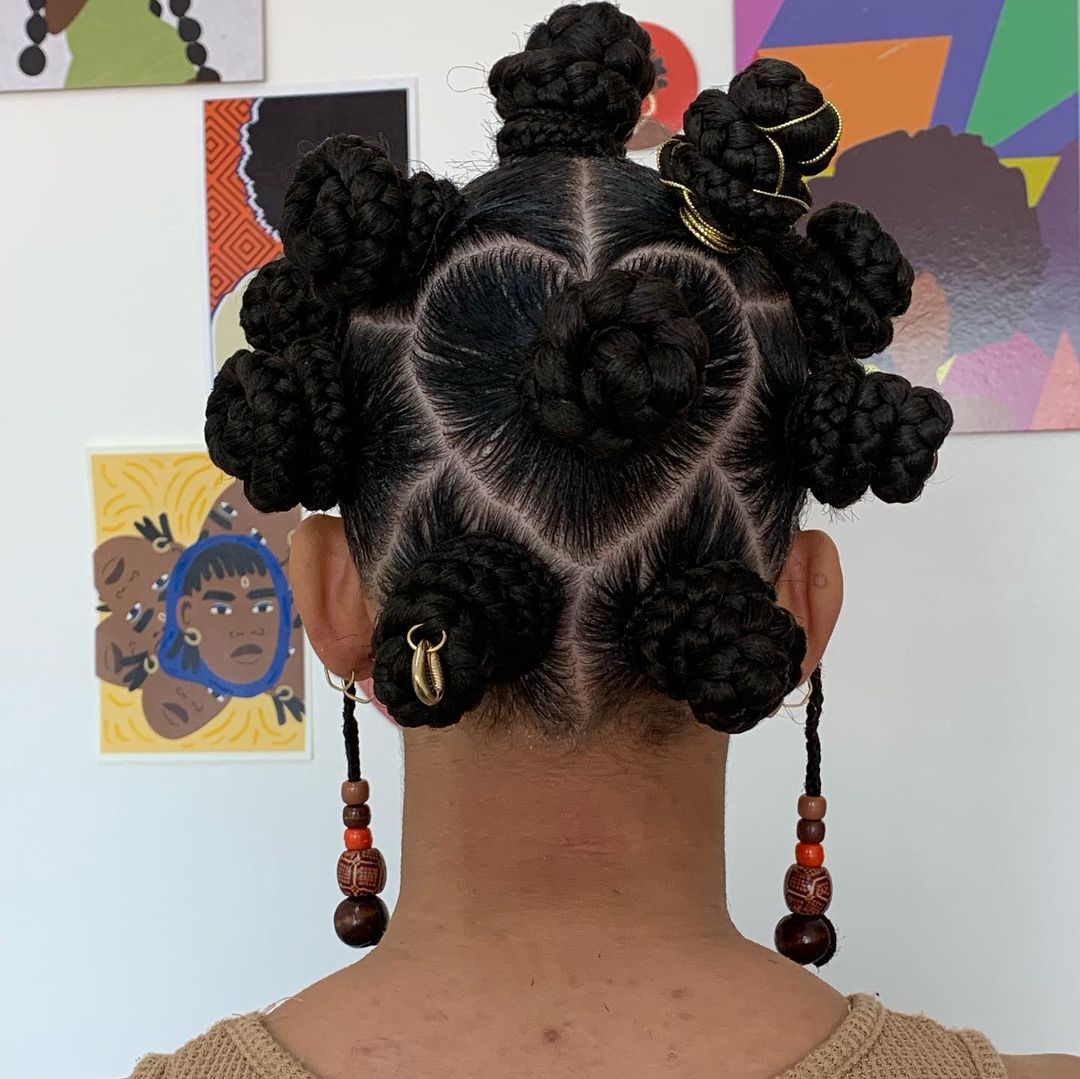
Who says geometry can’t be romantic? This heart-shaped parting in black, coily, thick hair turns a classic protective style into a declaration, with knots radiating outward from the center. The heart shape offers a playful nod to Valentine’s Day or an anniversary dinner, but it also holds its own at a garden party where you want the hair to do the talking. Ask your stylist for bantu knots with a heart-shaped parting. The one real drawback: the shape relies on precision, so a skilled hand is essential, and any frizz blurs the outline by midday.
Elegant Bantu Knots With Floral Accents
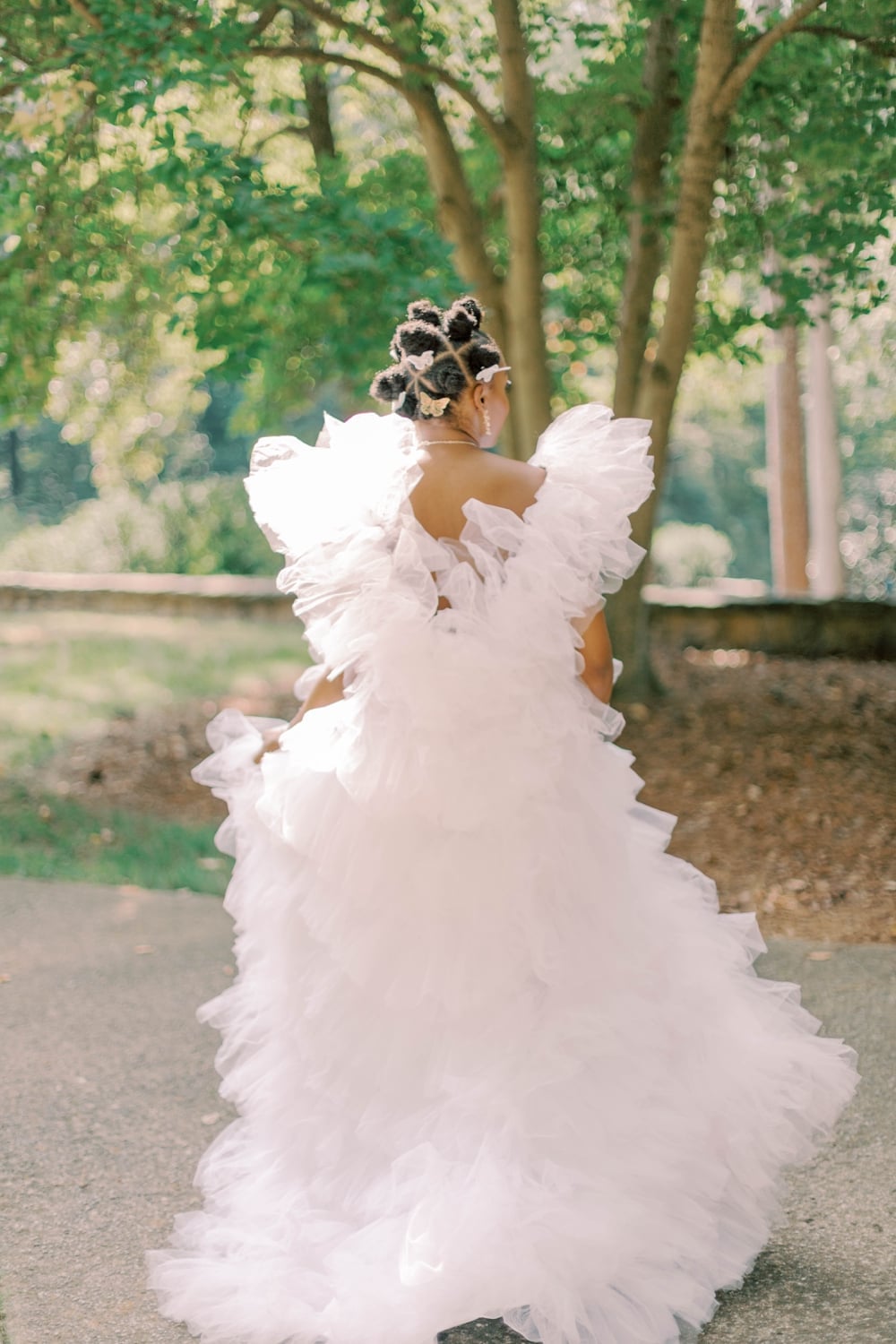
The technique here starts with sectioning mid-back length, coily, thick hair into clean squares, then twisting each section from root to tip before wrapping it into a flat knot against the scalp. The floral accents are the finishing move, and they need to be anchored into the base of each knot, not perched on top, or they’ll shift with the first dance. A back view shows how the layered cut lets the knots sit at varied heights, which keeps the silhouette varied and organic. Ask your stylist for bantu knots with delicate floral accents.
Keep embellishments small and lightweight. Heavy pins pull on the knot and loosen the hold. For a wedding or garden party, white or blush blooms tuck in neatly without competing with the black hair beneath.
Large Sculpted Bantu Knots
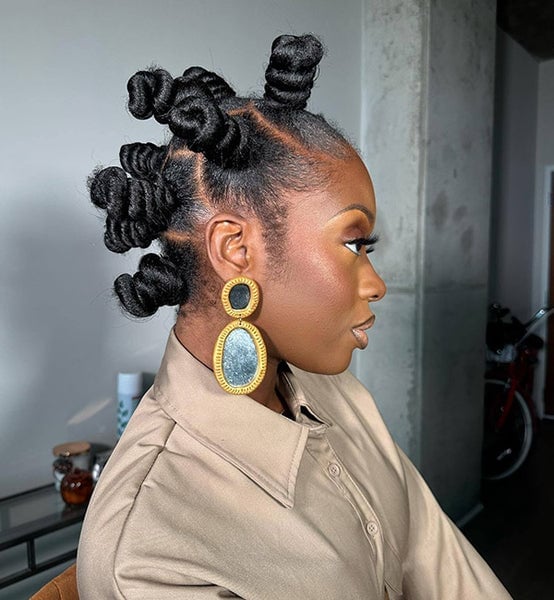
These are not the dainty knots you wear to brunch. Shoulder-length, black, coily, thick hair is twisted into substantial, smooth shapes that sit along a central parting, and the side view shows off the volume each knot carries. The sculpted finish demands a strong hold gel and real tension during twisting, so this is a salon sit. The honest drawback: large knots have more surface area, which means they catch on collars and pillowcases, and the shape softens noticeably by the evening. Ask your stylist for large, sculpted bantu knots with a central parting. Trim every six to eight weeks to keep the ends clean.
Uniform Light Brown Bantu Knots
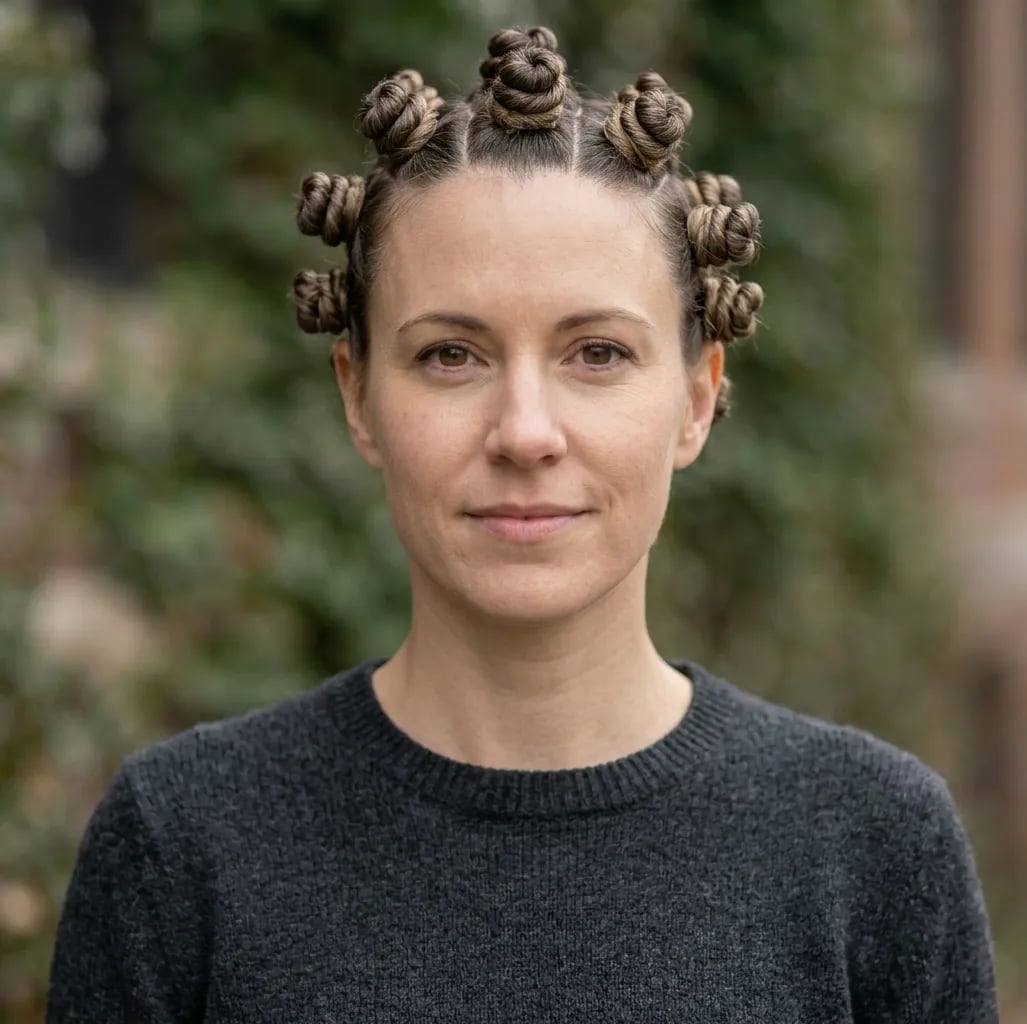
Light brown reads softer than black on bantu knots, and the wavy, thick texture here keeps the row of uniform knots from looking severe. The central part is neat, and each knot sits at the same size, which gives the front view a pleasing symmetry. Wavy hair holds a twist reasonably well, but it also has more give than coily hair, so the knots may loosen slightly over a long day. Ask your stylist for uniform light brown bantu knots. Damp hair before twisting adds grip and helps the shape last. This is an everyday-friendly version of the style, and it wears well for about a week with a satin scarf at night.
Sophisticated Bantu Knots With Varied Placement
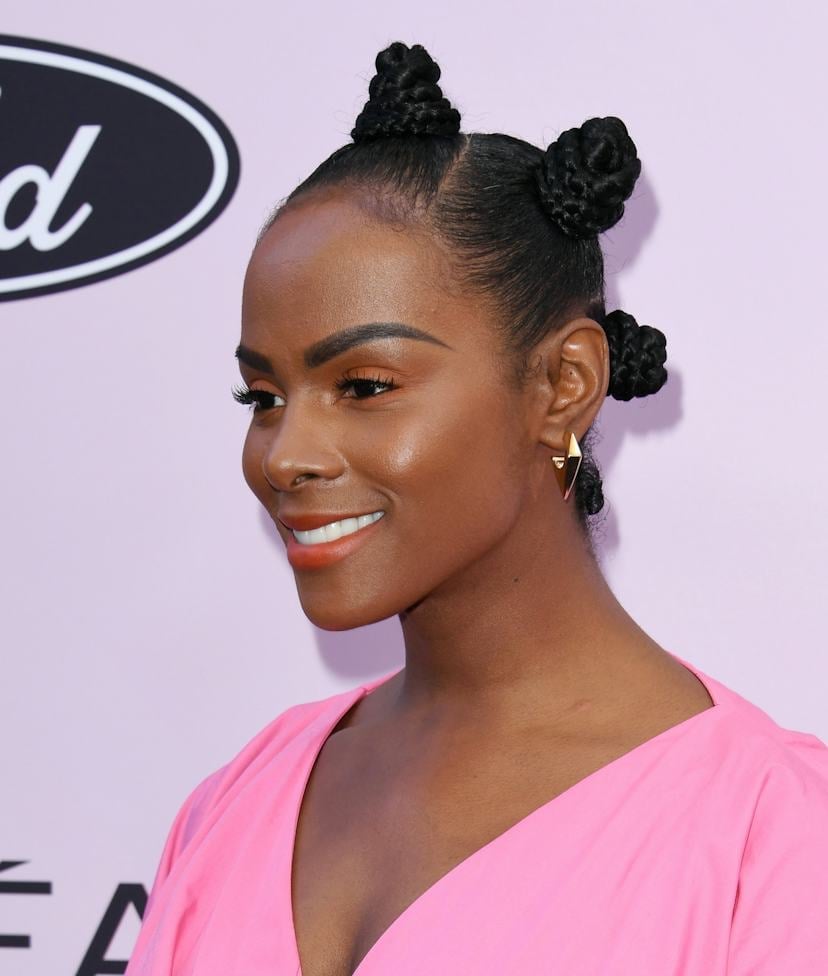
Do you want your bantu knots to look like they were arranged by someone who knows what they’re doing? This variation places some knots high on the crown and others lower toward the nape, breaking up the uniform grid and giving the black, coily, thick hair a dynamic, less predictable silhouette. The middle part keeps it grounded, and the earrings draw the eye down, balancing the height. This is a salon-only style, because the placement requires a careful eye for proportion. Ask your stylist for bantu knots with varied placement, high and low. If you’re tempted to try it at home, know that the part lines will show any unevenness for the entire wear.
Bantu Knots With Star-Like Center Parting
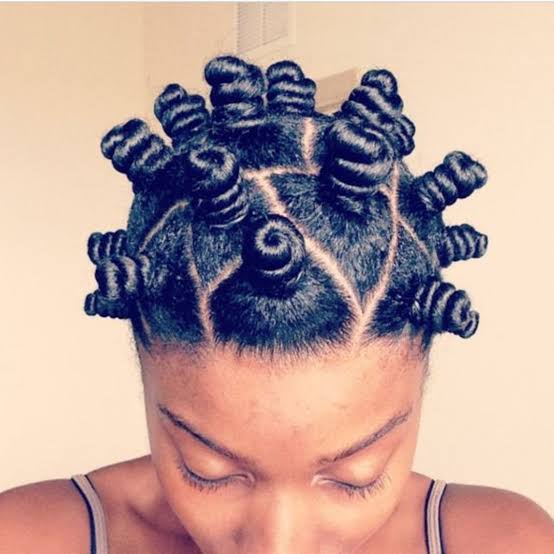
A star-like center parting sets these bantu knots apart from the usual uniform rows, turning the scalp into the focal point. This design suits thick, coily hair and works best when you want the parting to do the talking. Ask your stylist for: bantu knots with a star-like center parting. The precision of the pattern means every section must be mapped before you start, so bring a reference and expect to sit a while. The intricate parting can lose its definition as the style wears, especially if you sleep on it without a satin scarf.
Bantu Knots With Delicate Floral Accents
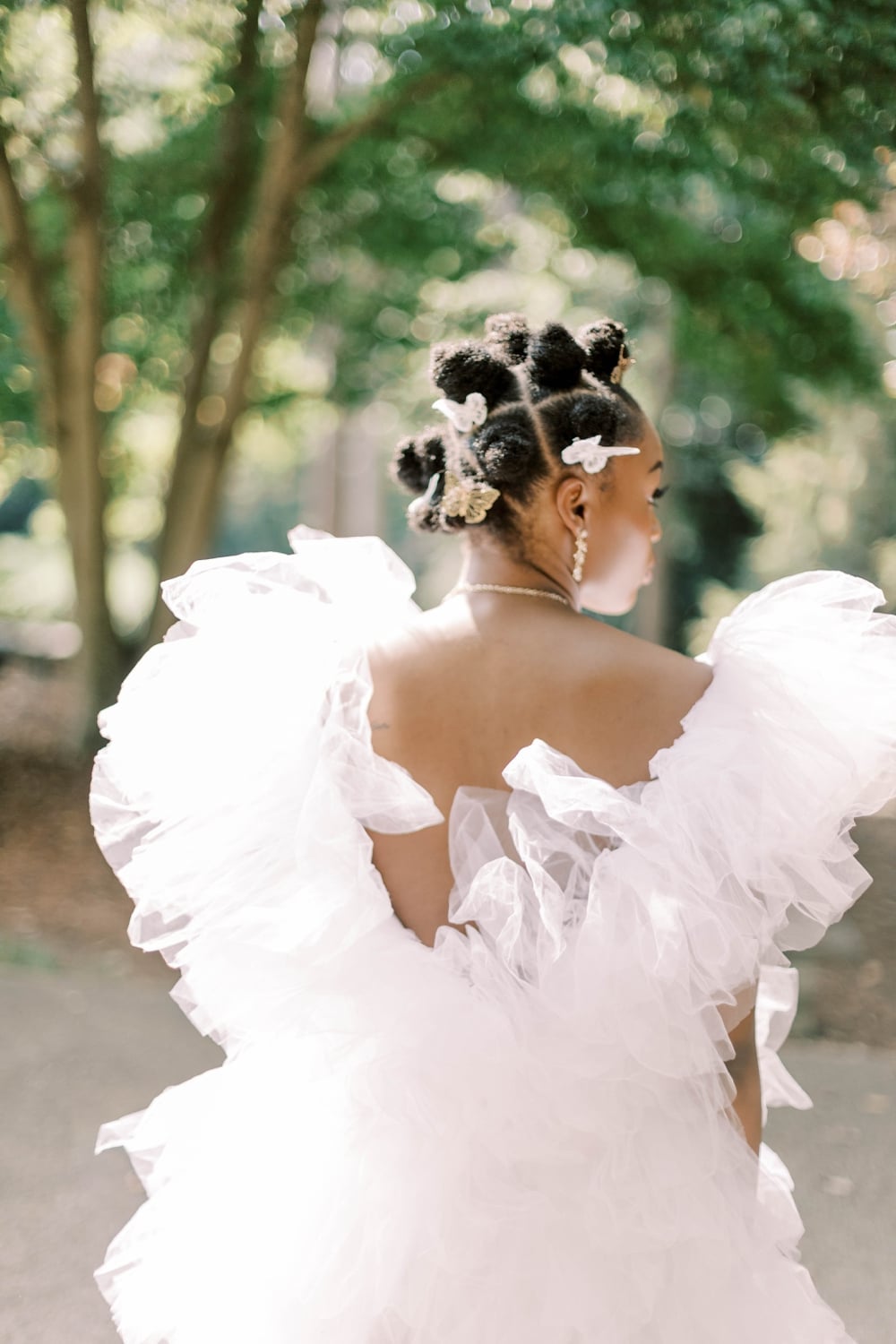
The delicate floral accents are the quiet star here, tucked into the knots without overwhelming the coily texture. Ask your stylist for: bantu knots with delicate floral accents, and make sure each bloom is wired or pinned securely into the base of a knot. A middle parting keeps the look balanced, and the flowers appear deliberately placed. To maintain the placement, avoid heavy brushing and re-pin any loose petals before they drop. A light mist of water and a silk scarf at night will keep both the knots and the blooms in place for a day or two of wear.
Crown Formation Bantu Knots With Loose Tendrils
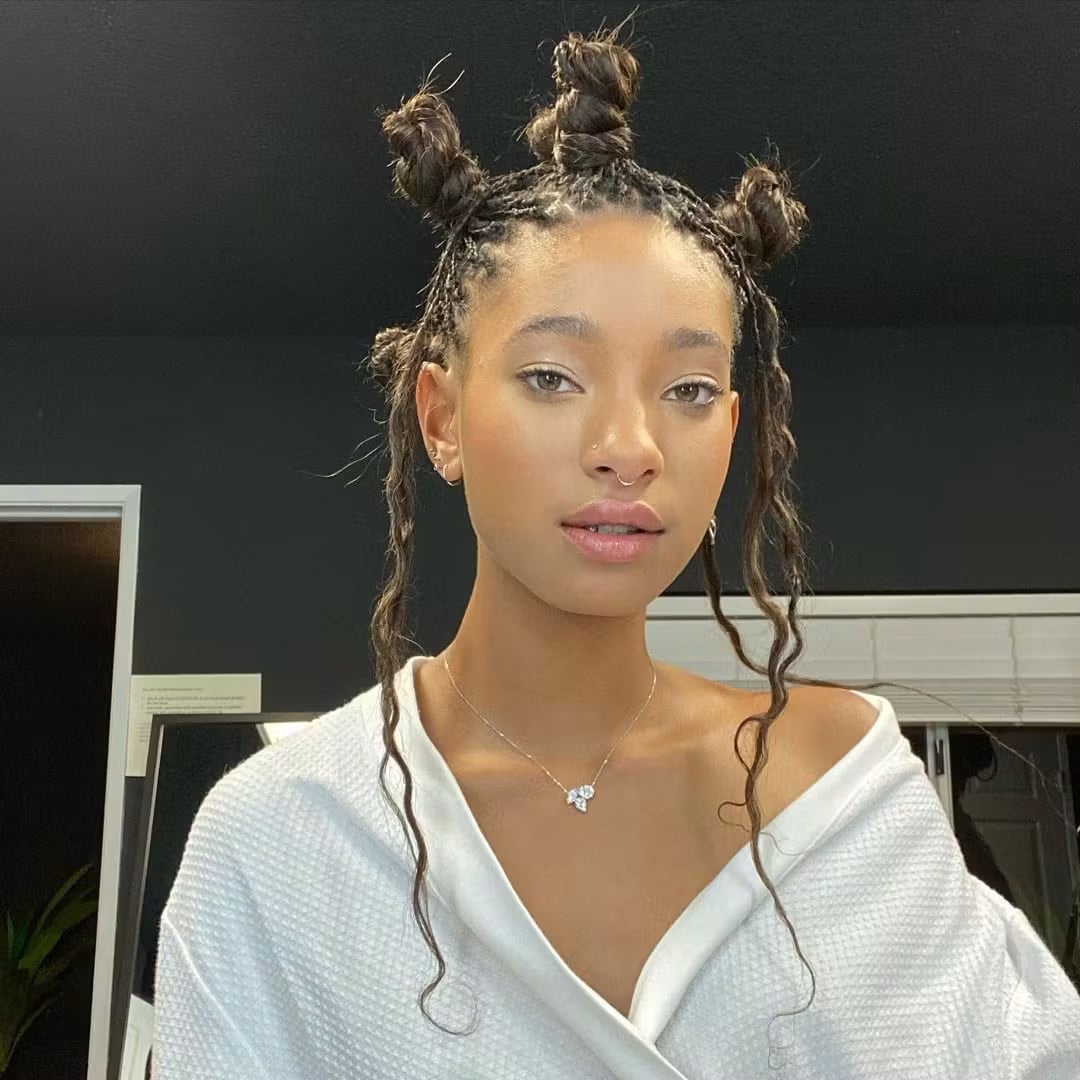
Wondering how to get that regal crown effect without looking like you tried too hard? Ask your stylist for: bantu knots in a crown formation with face-framing tendrils. The knots circle the head, and the loose braids and curly tendrils soften the frame, so the style works for formal events or a photoshoot where you want presence. This is a salon-level build, since the crown placement needs to be mapped to your head shape. The middle parting keeps it symmetrical, and the tendrils are what sell the look, so make sure they are defined with a light gel before they dry.
Small Bantu Knots With Middle Part
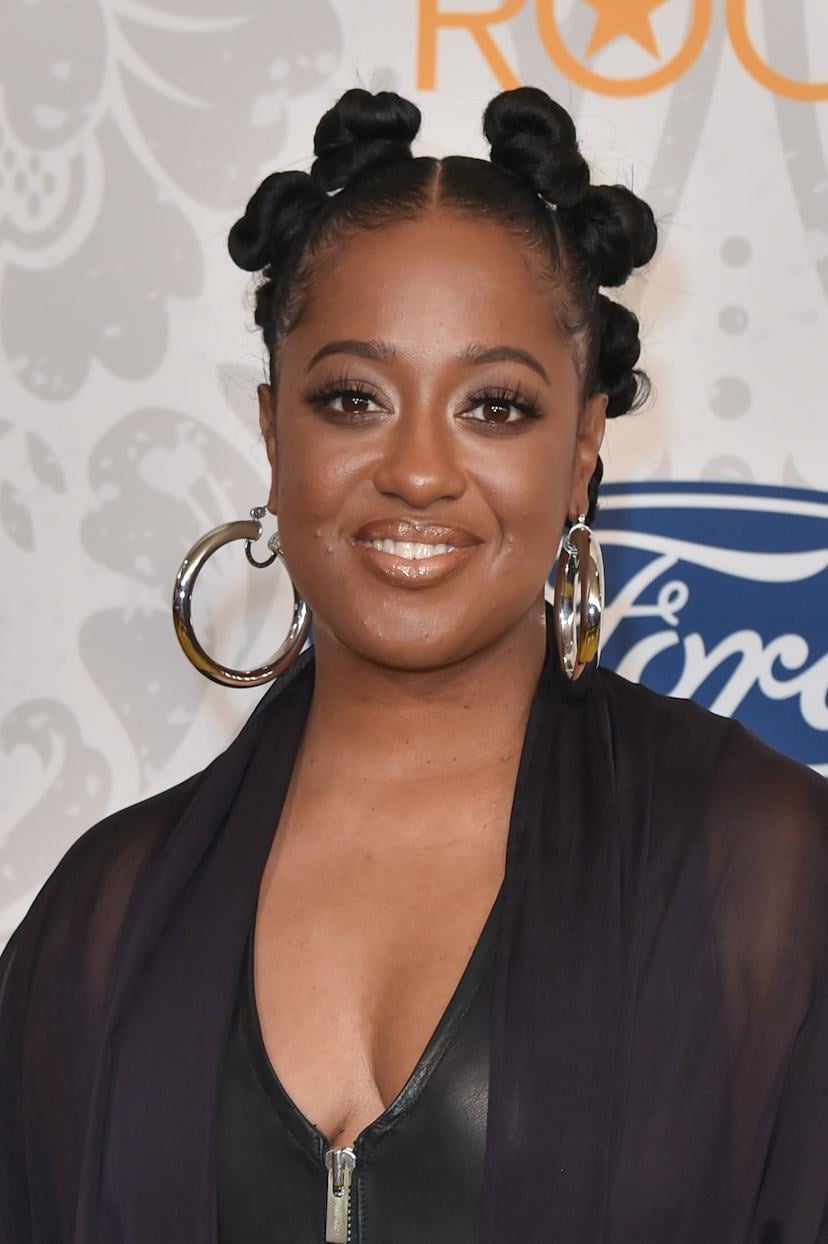
Small bantu knots distributed evenly across the scalp are the definition of a classic protective style, but they are not a quick appointment. The smaller the knot, the longer the install, so budget a few hours in the chair. Ask your stylist for: small bantu knots evenly distributed with a middle part. The style suits shoulder-length coily hair and holds well for a week or more if you wrap it at night. The real drawback is the time it takes to remove them, especially if you let them set too long and they start to lock.
Top Knot Bantu Knots With Mid-Back Length
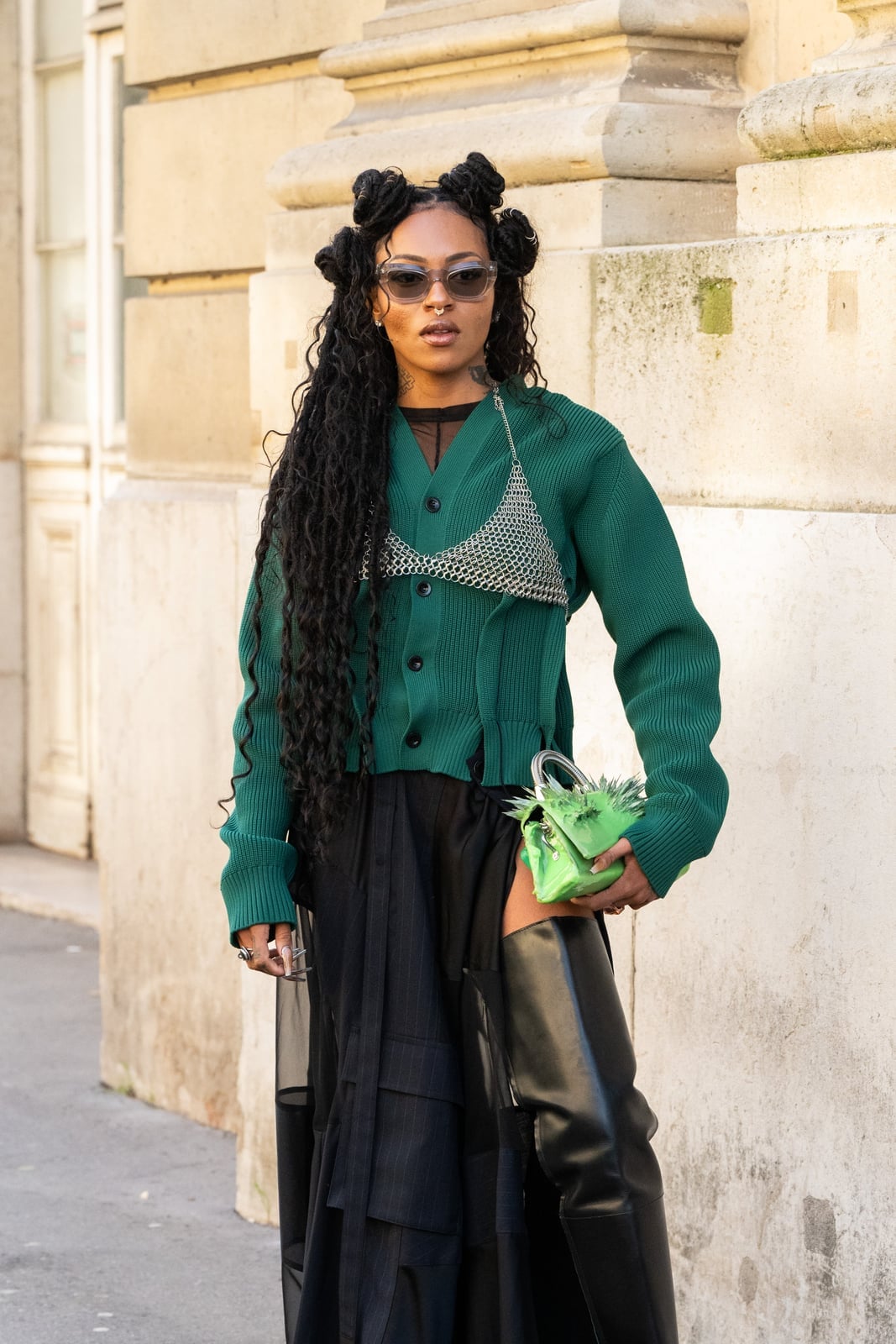
The top knot formation here is a clever way to manage mid-back length without losing the bantu knot aesthetic. All those knots are gathered into a high cluster, so the weight sits on top of your head, not on your neck. Ask your stylist for: bantu knots styled into a top knot. Because the hair is long and thick, the base needs to be secure, so expect a few extra pins and a strong hold gel at the roots. The middle parting keeps the front tidy, and the length below gives you the option to let it swing free or tuck it under. This one wears well for a busy day, but you will need to re-fluff the knots by the second morning.
Dense Small Bantu Knots
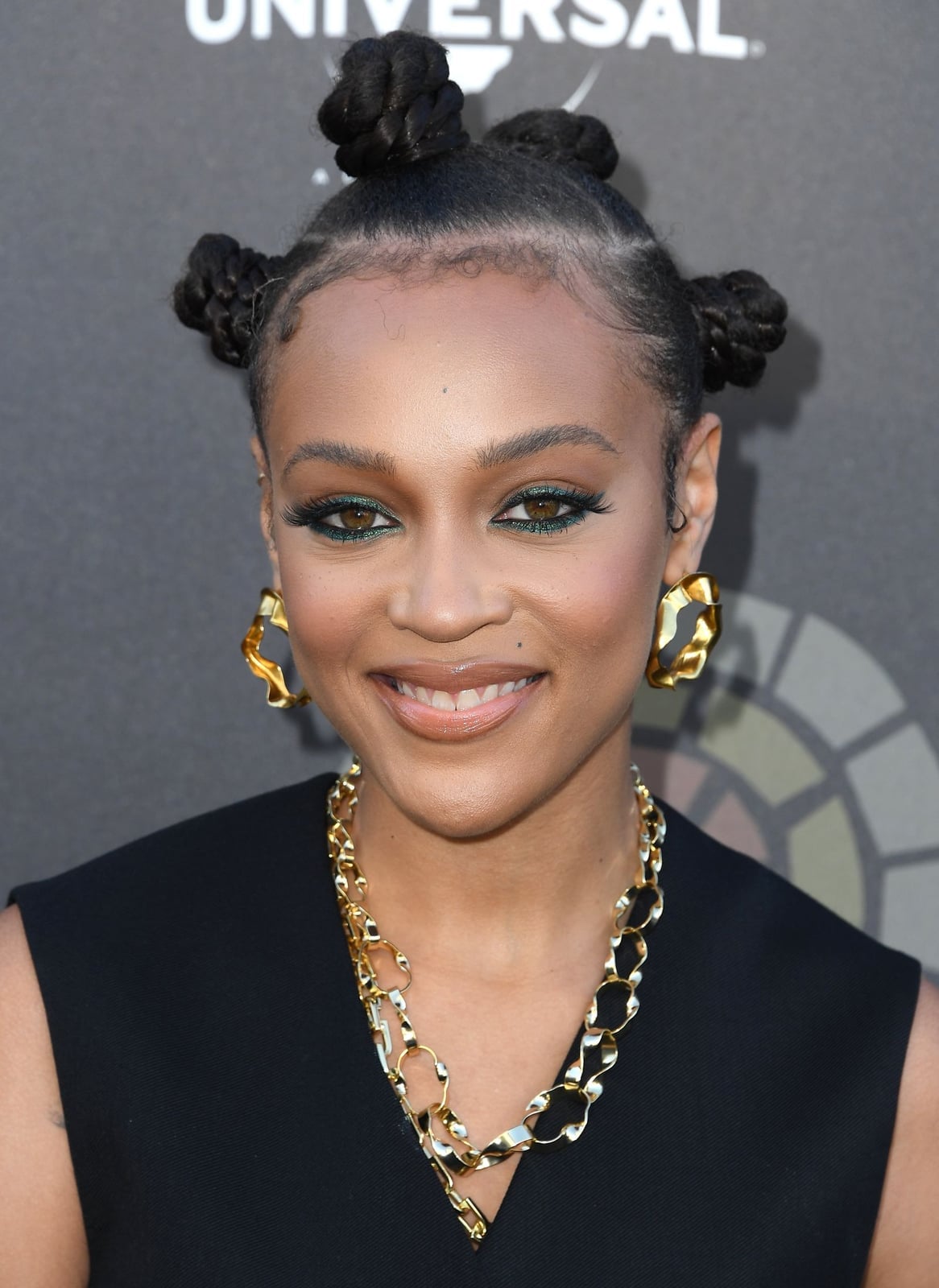
A head full of small bantu knots is a precise, time-consuming design that rewards patience with a striking texture. This look works best on thick, coily hair that can hold the tight twists without slipping. Ask your stylist for: dense, small bantu knots. If your hair is fine or low-density, the knots may look sparse instead of lush; that is the one real drawback. A lightweight serum brushed over the finished knots adds a subtle shine that makes the pattern look deliberate.
Geometric Bantu Knots With Braided Tail
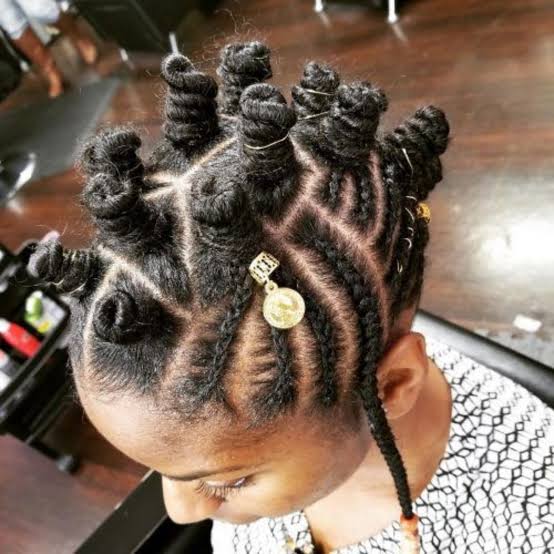
What happens when bantu knots meet braids and gold accents? A back view that does all the talking. The parting here is a geometric map, each knot placed with intention, while the braids converge into a single braided tail at the nape. This is an occasion style: think cultural celebrations or events where the hair is part of the statement. Ask your stylist for: geometric bantu knots with a braided tail and gold accents. The black, thick, coily texture holds the shapes cleanly, and the gold accessories add shine without overwhelming the pattern.
Final Thoughts
For a polished result, keep the partings sharp and the knots uniform in size; that’s what separates a deliberate style from a rushed one. If you want more flair, add a single accessory like gold wire or a floral pin, but let the knot pattern carry the design.
- Maintain bantu knots for 1-3 weeks, depending on hair type and care.
- Gently unravel knots to release hair, conditioning as you go.
- Re-twist or re-knot sections as needed to maintain shape.
- Protect hair with a silk or satin bonnet or scarf at night.
Bantu knots are a versatile canvas for creativity and protection.