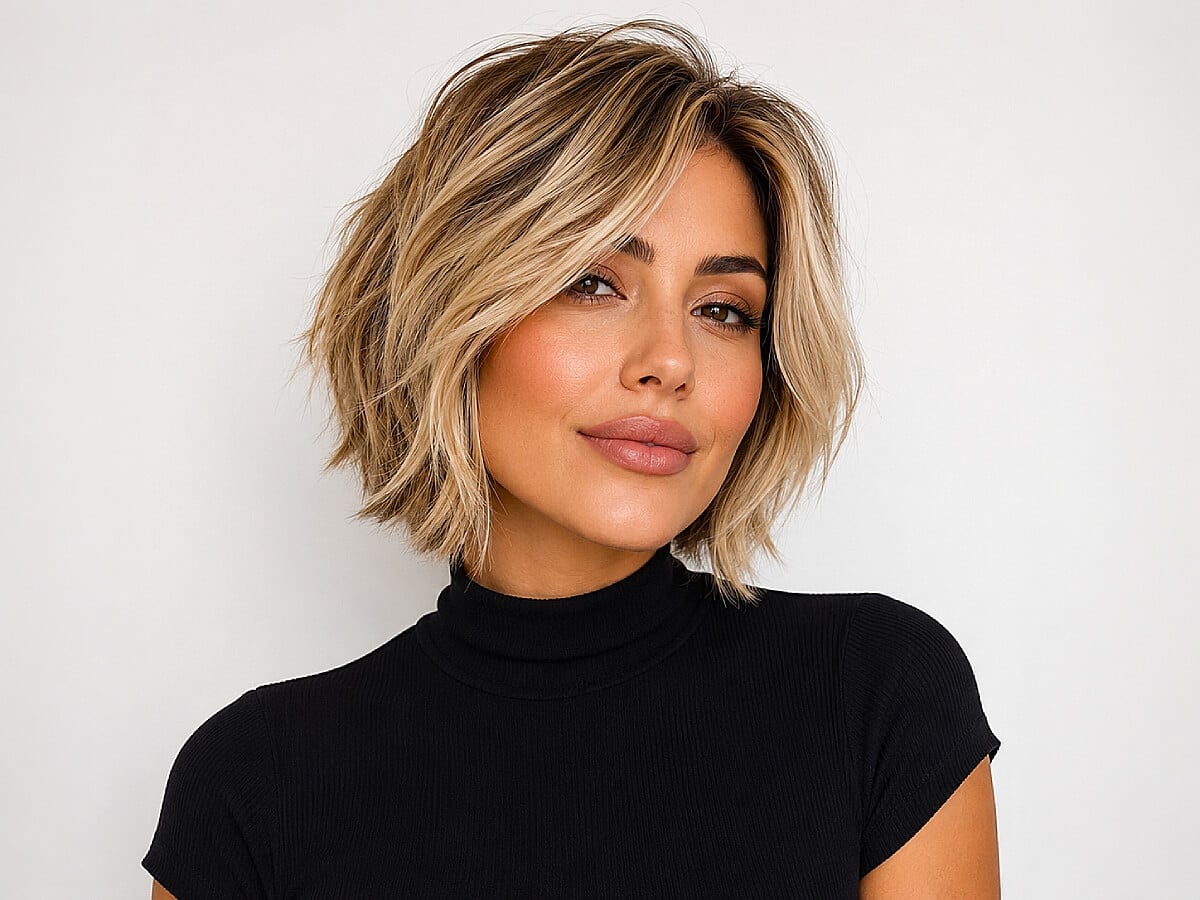
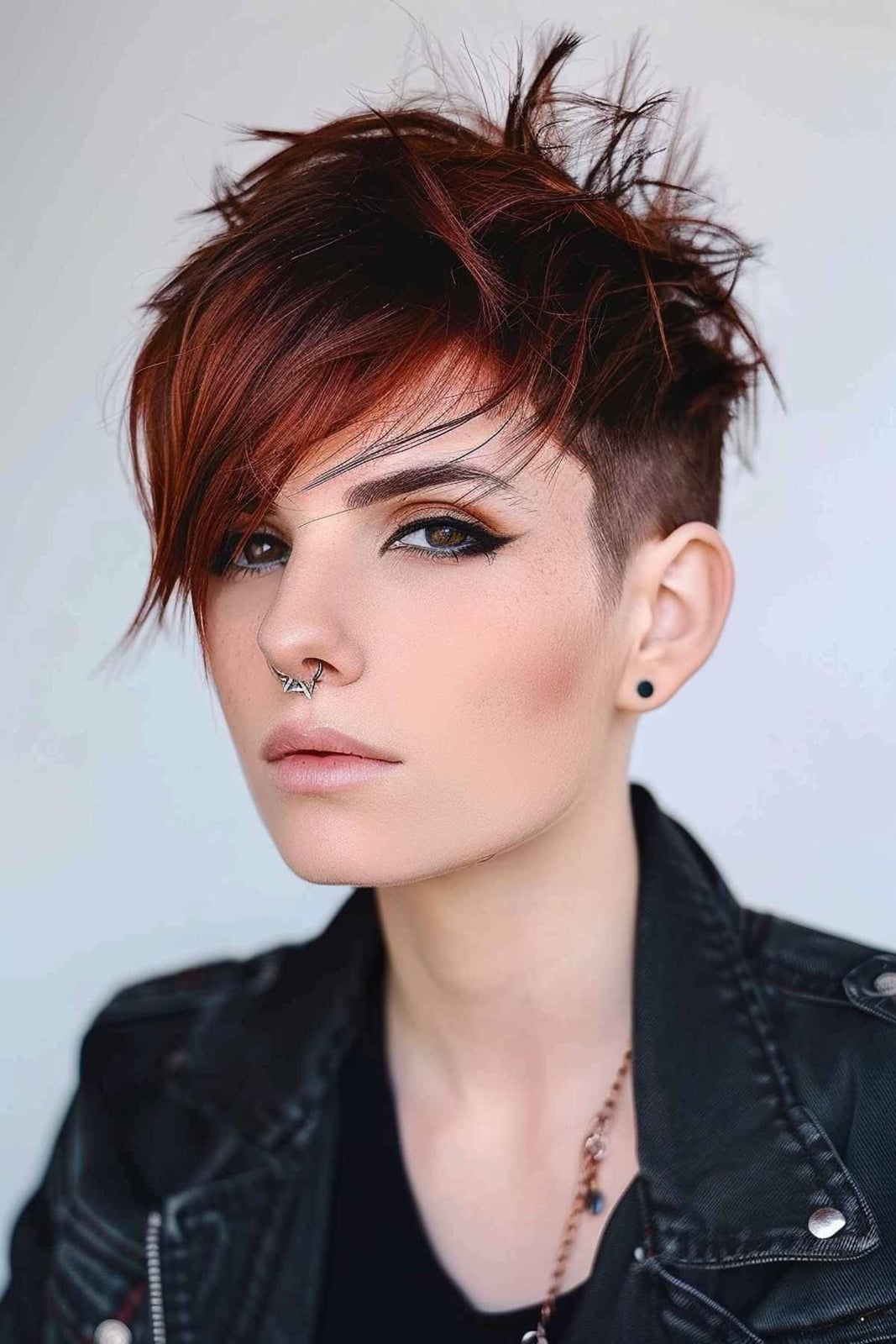
A good layered cut on curly hair is less about what you remove and more about what you let the curl do on its own. Right now, the shift is toward soft, face-framing layers and curtain bangs that work with your natural texture rather than forcing it into submission.
This collection of 32 ideas for Classy Curly Hair Layers covers collarbone lengths that keep shape without losing curl, shoulder-length cuts with defined bangs, and shorter bobs that handle fine or thick densities alike. If you have fine curls that fall flat by midday or a fringe that refuses to sit, each option here answers a specific cut challenge.
Collarbone Layers With Curtain Bangs
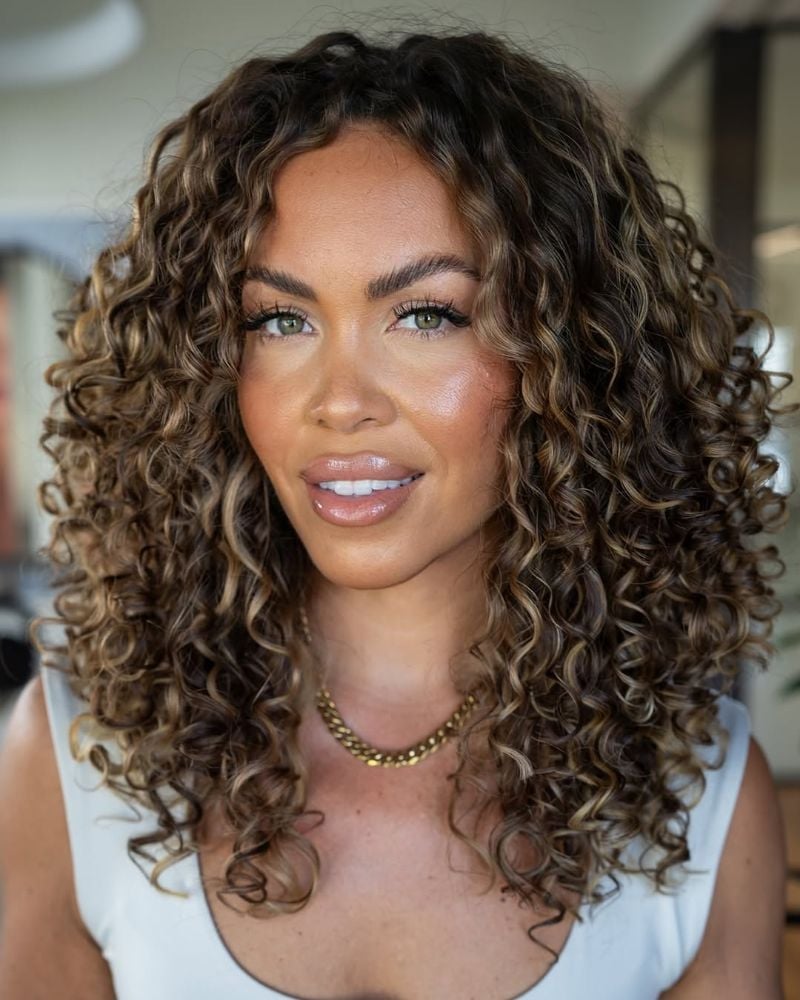
How do you get thick curly hair to actually land where you want it? The answer is collarbone layers with curtain bangs, cut so the shortest piece hits just below the cheekbone and the longest falls to the shoulder. The side parting lets the blonde highlights catch light on one side without splitting the curl pattern in half. Ask your stylist for: collarbone layers with face-framing curtain bangs. Thick curly hair at collarbone length or longer is the starting point here, and oval or heart face shapes get the most out of the swoop.
Shag Layers With Collarbone Curtain Bangs, Dark Brown

The shag cut stacks the shortest layers at the top and lets the longest ones graze the collarbone, which creates movement without losing density. Dark brown curly hair with curtain bangs keeps the shape grounded while the layers do the work. Ask your stylist for: collarbone shag with curtain bangs and middle part. Thick curly hair at collarbone length is ideal here, and the vertical lines help elongate a round face.
Caramel Blonde Collarbone Layers
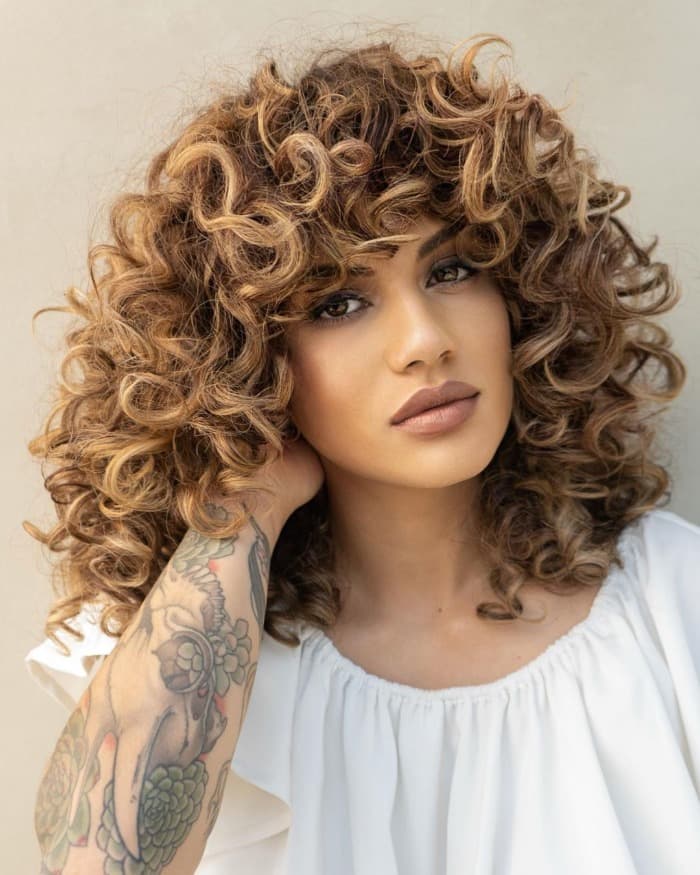
Warm caramel blonde balayage versus an all-over gold blonde: the difference is a softer regrowth line and a shade that doesn’t wash out in November light. Collarbone layers with curtain bangs and a middle parting keep the warmth close to the face. Ask your stylist for: collarbone layers with caramel balayage and curtain bangs. Thick curly hair at this length makes the balayage read as a highlight rather than a stripe, which is what you want for brunch or errands.
Dark Brown Collarbone Layers With Balayage
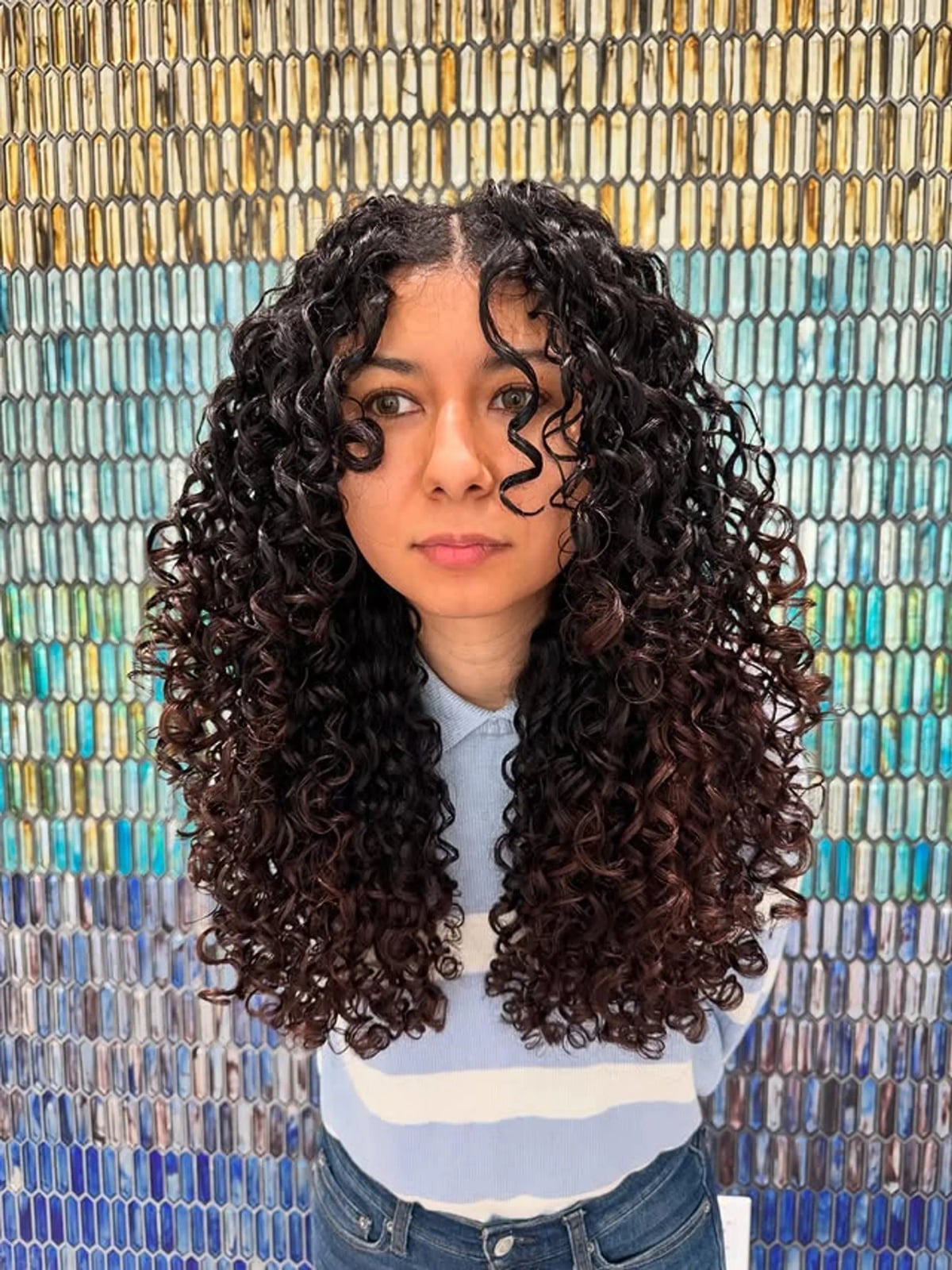
Subtle balayage on dark brown curly hair breaks up the color so the cut avoids a single block of color. The collarbone length layers and curtain bangs frame the face without needing a round brush.
Ask your stylist for: collarbone layers with curtain bangs and subtle balayage. Air-drying is straightforward here: scrunch in a styling product, then leave it alone. The shape holds for about a week before the layers start blending together, so a trim every eight to ten weeks keeps the curtain bangs from turning into one long fringe.
Collarbone Layers With Soft Curtain Bangs, Middle
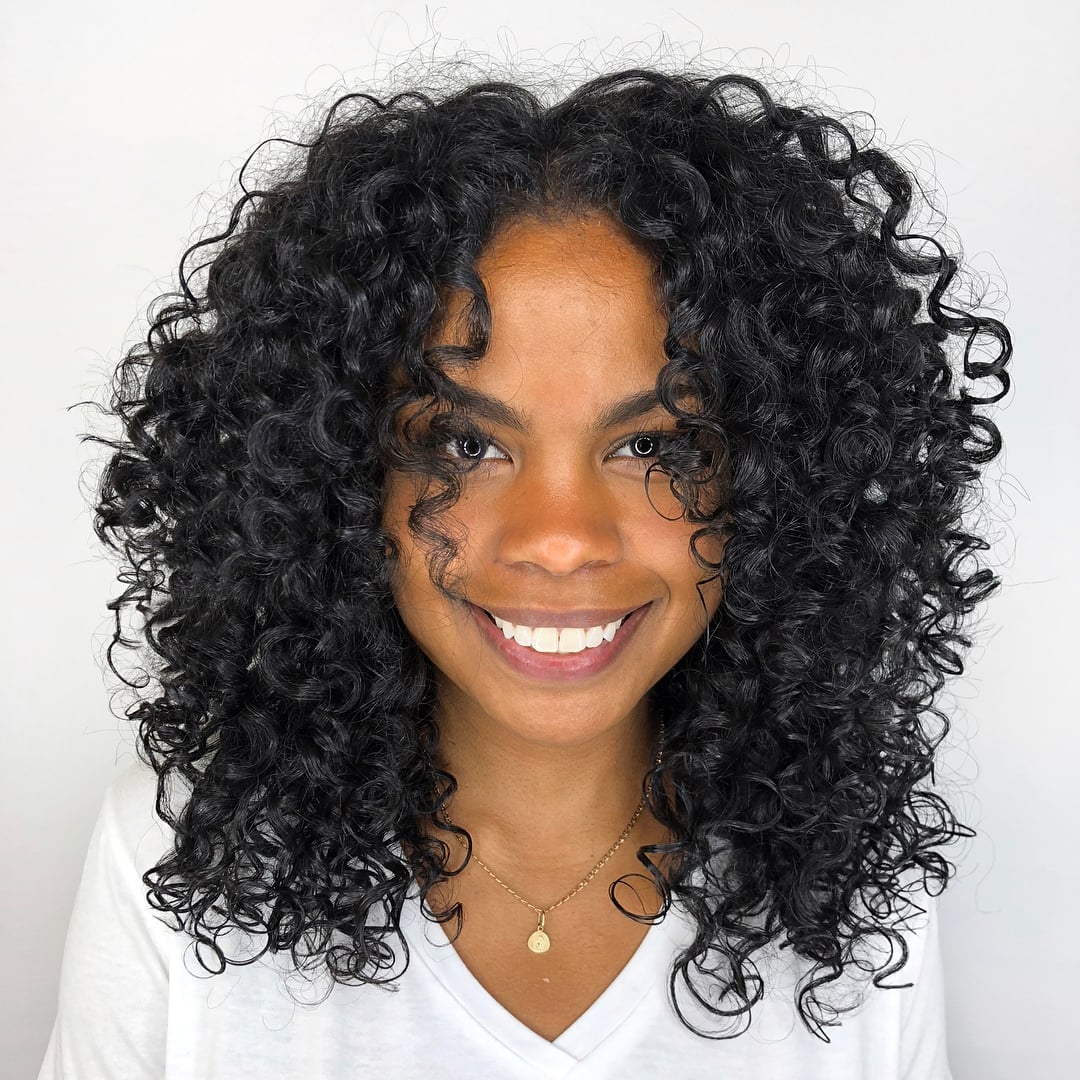
Soft curtain bangs on thick curly hair are more forgiving than a straight-across fringe because they blend into the layers rather than stopping abruptly. The collarbone length and middle parting let the hair fall equally on both sides, which softens a square jawline without adding width. Ask your stylist for: collarbone layers with soft curtain bangs. Thick curly hair starting at collarbone length or longer gives the layers enough weight to move instead of springing up. Anyone with a long or angular face shape will find the horizontal sweep of the curtain bangs balances the proportions.
Shoulder Length Layers With Curtain Bangs
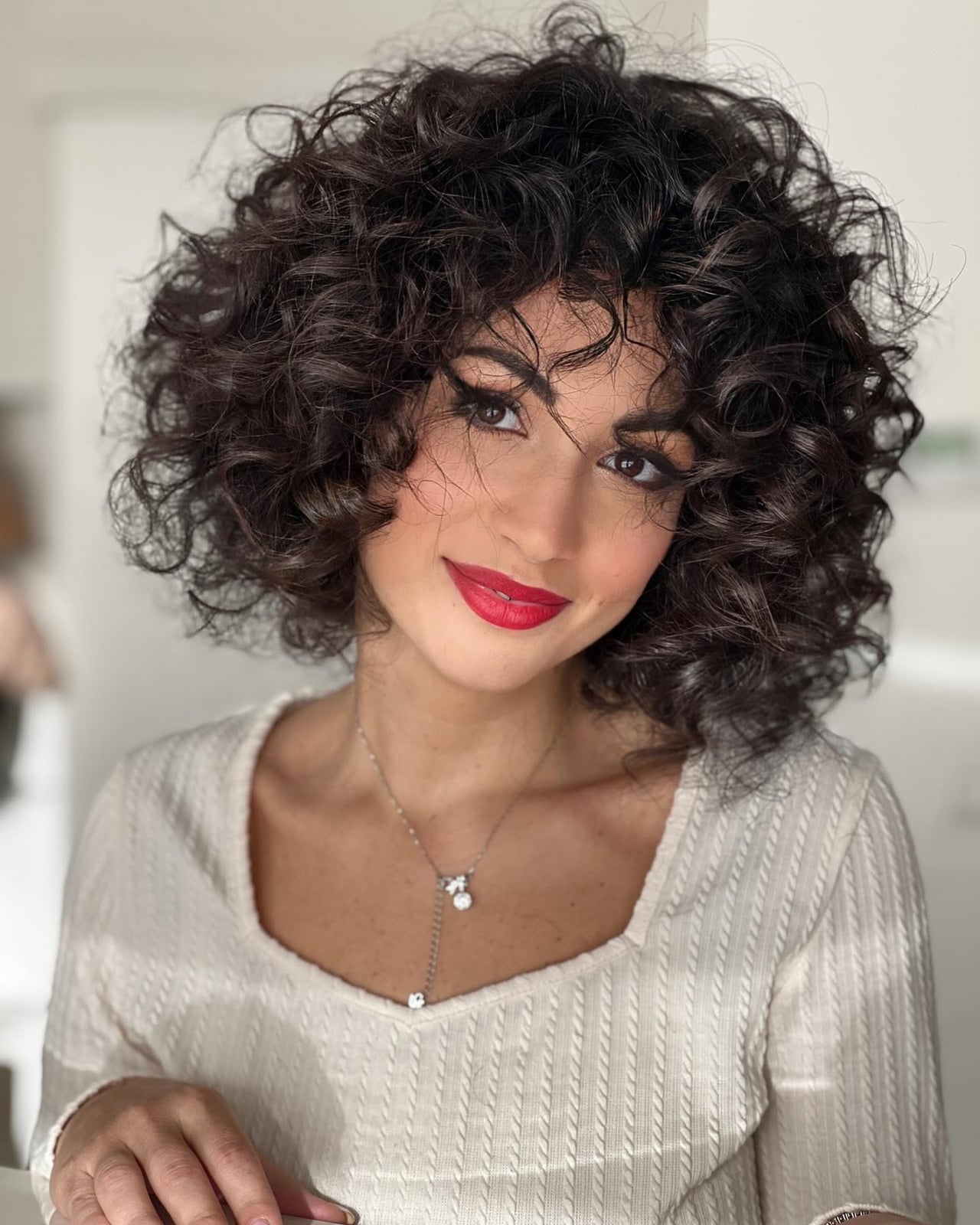
These shoulder length layers are cut to let thick curls stack their volume, which is a different proposition from the blowout-polished version you saw earlier. Air-dried texture keeps the shape honest: the curtain bangs fall soft around the face, and the side parting gives the crown a bit of lift without extra heat. Ask your stylist for: shoulder length layers with curtain bangs. It suits most face shapes because the length lands at the collarbone, a forgiving spot. Apply curl cream to damp hair and let it dry as it wants, then trim every 8 to 10 weeks so the layers keep their spring.
Thick Collarbone Layers With Defined Curls
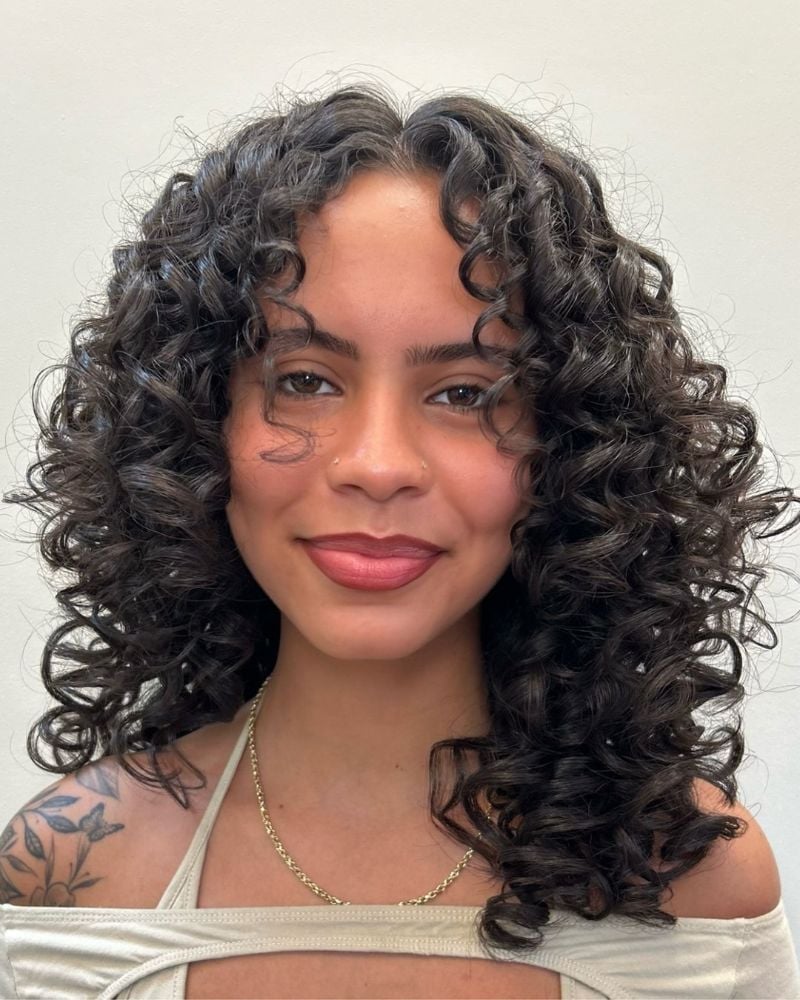
Getting collarbone layers to read as defined curls takes more than a good cut, and this one is honest about the trade-off. The middle parting and curtain bangs frame the face, but the defined pattern you see here is the result of technique, not luck. At home, you can coax curls into shape with a diffuser and a curl cream, yet perfectly uniform definition usually needs a stylist’s hand, so budget for a salon visit if that’s the look you want. The real drawback: thick hair at this length can turn triangular if the layers aren’t cut to remove bulk at the ends. Trim every 8 to 10 weeks, and use a silk pillowcase so the curls survive the night.
Air-Dried Collarbone Layers With Bangs
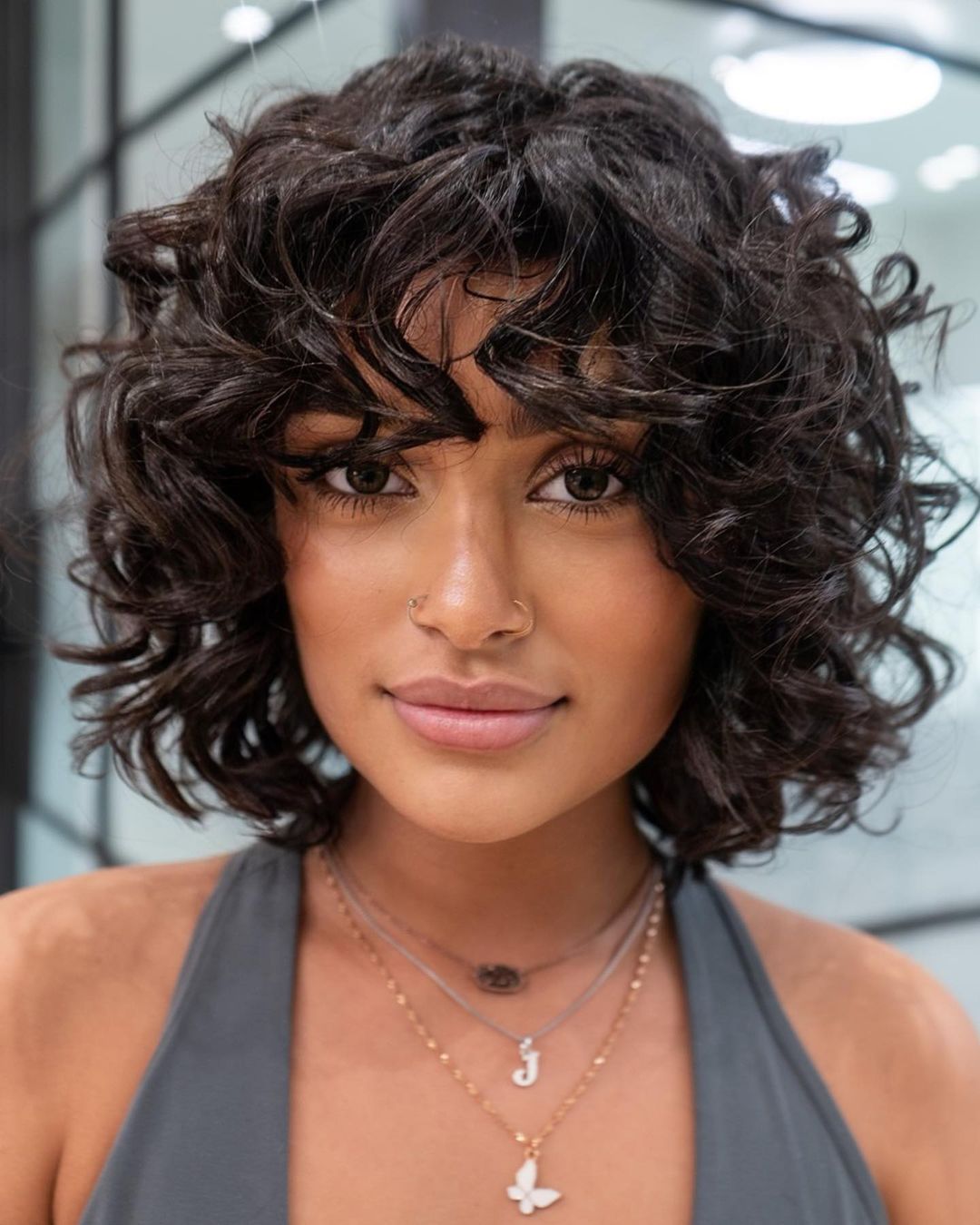
This shag proves the same collarbone layers can go two ways: a polished blowout for work days or an air-dried finish when you’re in a hurry. The middle parting keeps the curtain bangs symmetrical, and subtle lighter highlights give the dark brown base a bit of dimension without shouting. Ask your stylist for: collarbone layers with curtain bangs, air-dried finish. The cut is built so the texture does the styling, which means you can skip the round brush most of the time. It suits round and square faces because the soft bangs break up a strong jaw line. Apply curl cream to damp hair, scrunch, and let it dry; a trim every 8 to 10 weeks keeps the shag shape sharp.
Dark Brown Collarbone Layers With Bangs, Middle
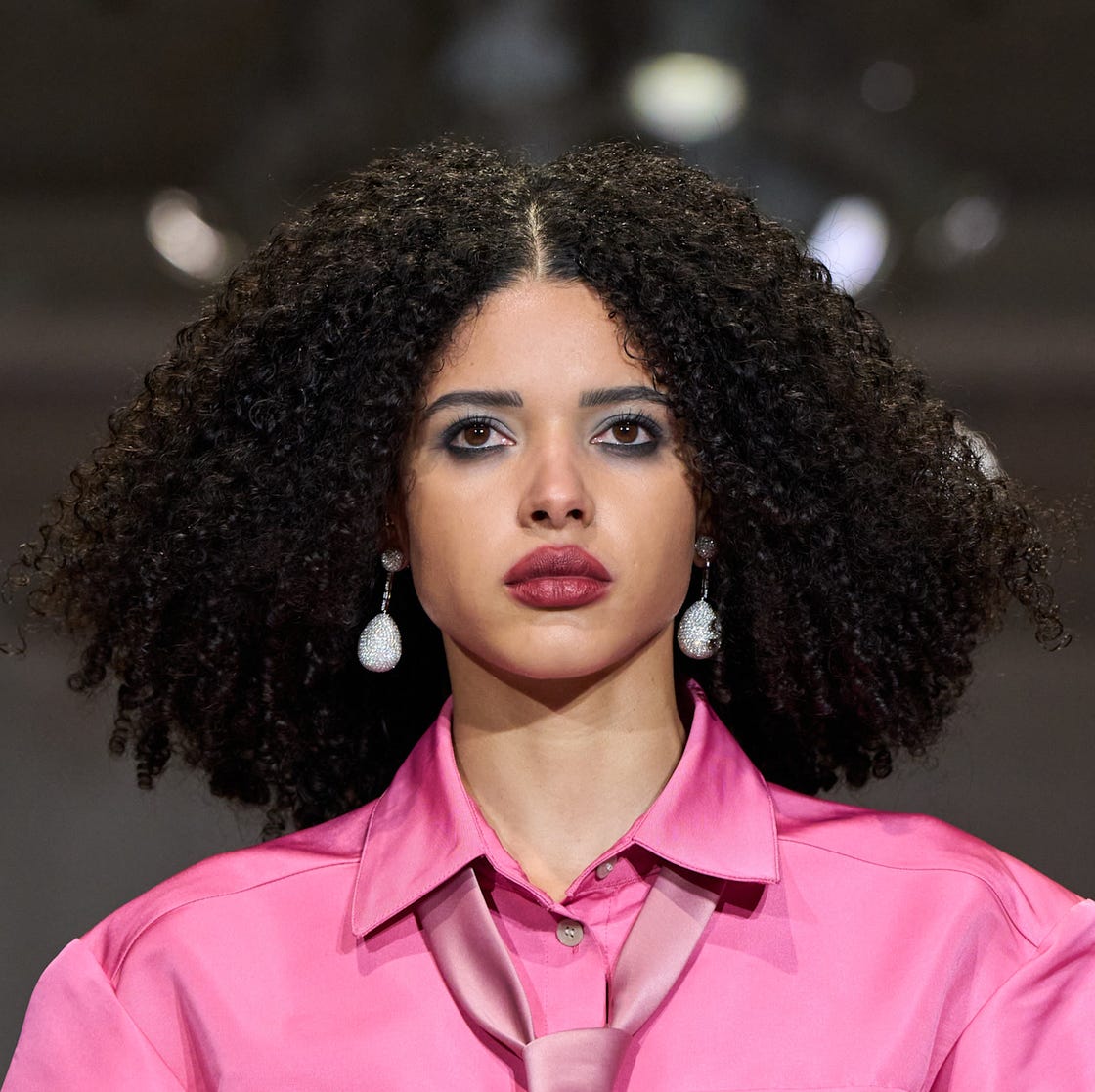
How do you ask for curtain bangs that actually work with a middle part? Specify that they should start at the cheekbone and angle down, so they frame without covering the eyes. This collarbone cut is layered throughout to give thick curls movement, and the blowout styling adds a glossy finish that air-drying won’t match. Ask your stylist for: collarbone layers with soft curtain bangs. The middle parting suits square and round faces because the length below the chin elongates the face. Keep the shine with a smoothing serum on dry hair, and trim every 8 to 10 weeks so the bangs don’t creep past their intended spot.
Mid-Back Layers With Balayage And Bangs
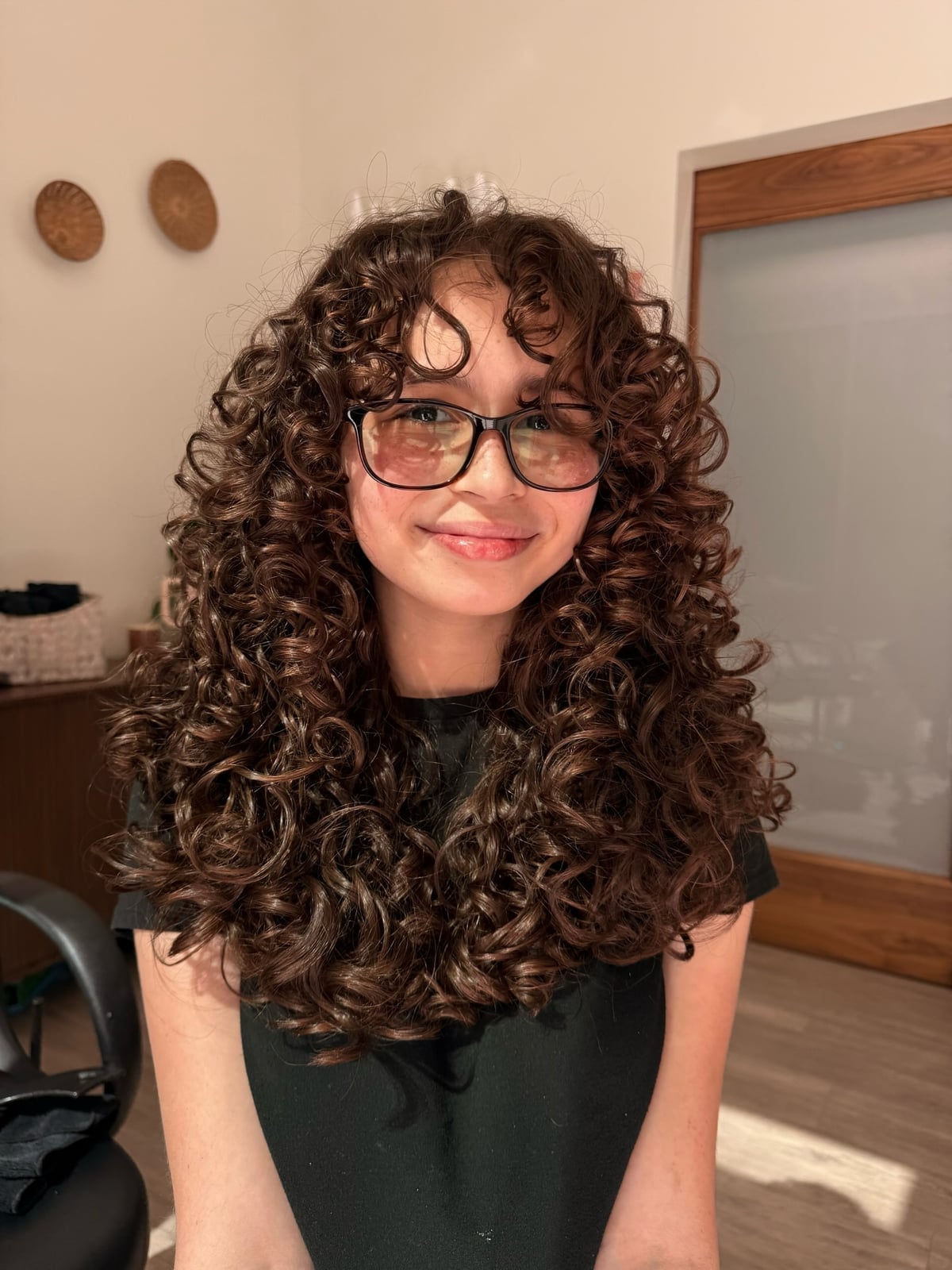
Long curly hair has a lazy habit of hanging like a curtain, which is why mid-back layers earn their keep. They add shape and volume to naturally curly hair, and when paired with curtain bangs, they give the front a face-framing lift that a one-length cut can’t offer. The dark brown base with subtle balayage adds depth without a harsh grow-out line, so the color fades naturally. Ask your colorist for: mid-back layers with curtain bangs and balayage. This genuinely flatters long, thick curly hair, but if your curls are fine or sparse, the length can drag them down, so you might pass on this one. Use a sulfate-free shampoo to protect the color, and trim every 10 to 12 weeks to keep the layers from blending into one.
Voluminous Mid-Back Layers With Bangs, Middle
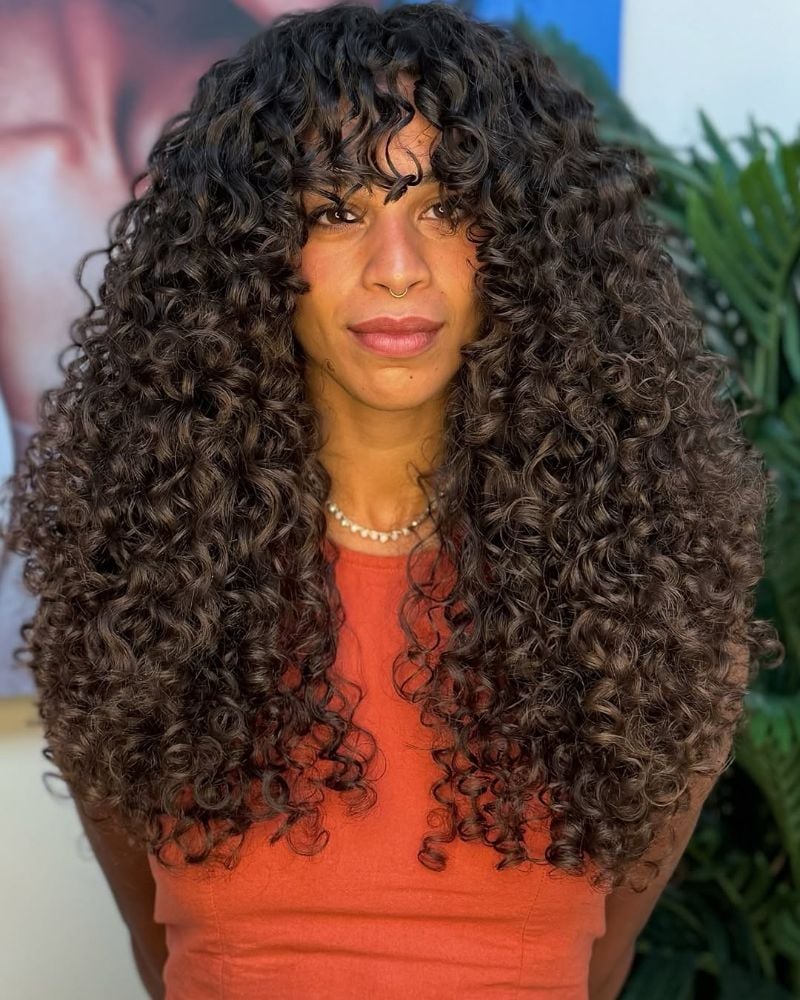
Very long, thick curly hair needs interior layers to keep it from becoming a heavy triangle, and this cut answers that with a mid-back length, soft curtain bangs, and a middle parting. The subtle lighter highlights add depth without distracting from the natural texture. This length suits thick hair best; thinner textures risk looking sparse.
Ask your stylist for: mid-back layers with voluminous curls and curtain bangs. A wide-tooth comb on damp hair detangles without breaking the curl pattern. Expect a trim every 10 to 12 weeks to keep the shape from dragging down the volume.
Honey Blonde Collarbone Layers
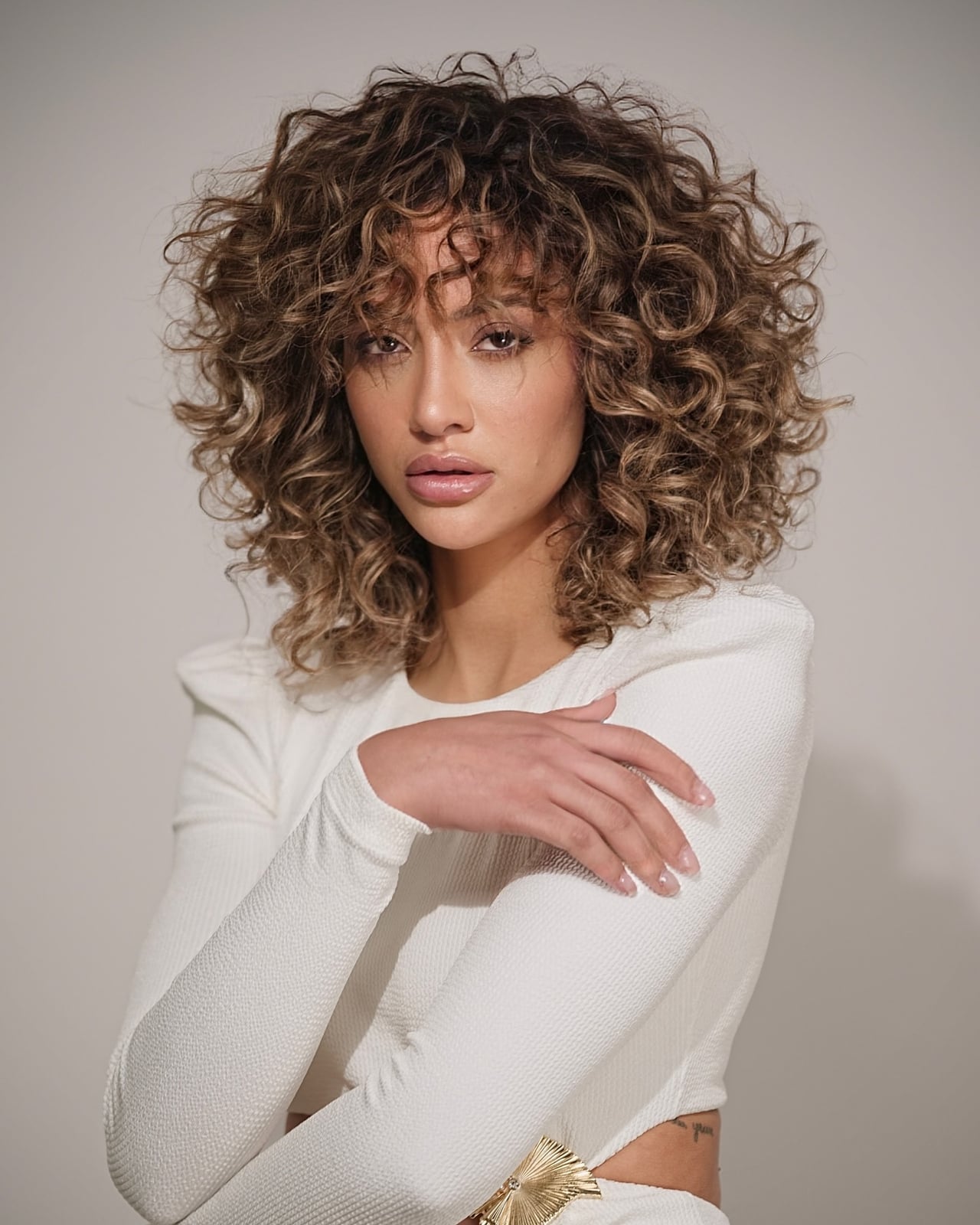
Honey blonde can read brassy on some bases, but paired with lighter highlights and a collarbone length, it lands squarely in warm, dimensional territory. The side-parting and no-bangs layout keeps the focus on the voluminous curls themselves. It is a strong choice for spring and summer, when lighter tones feel less heavy against the skin. Thick curly hair holds the shape well through humidity, though a glossing treatment every six weeks keeps the color from drifting too golden.
Honey Blonde Collarbone Curls With Layers, Side
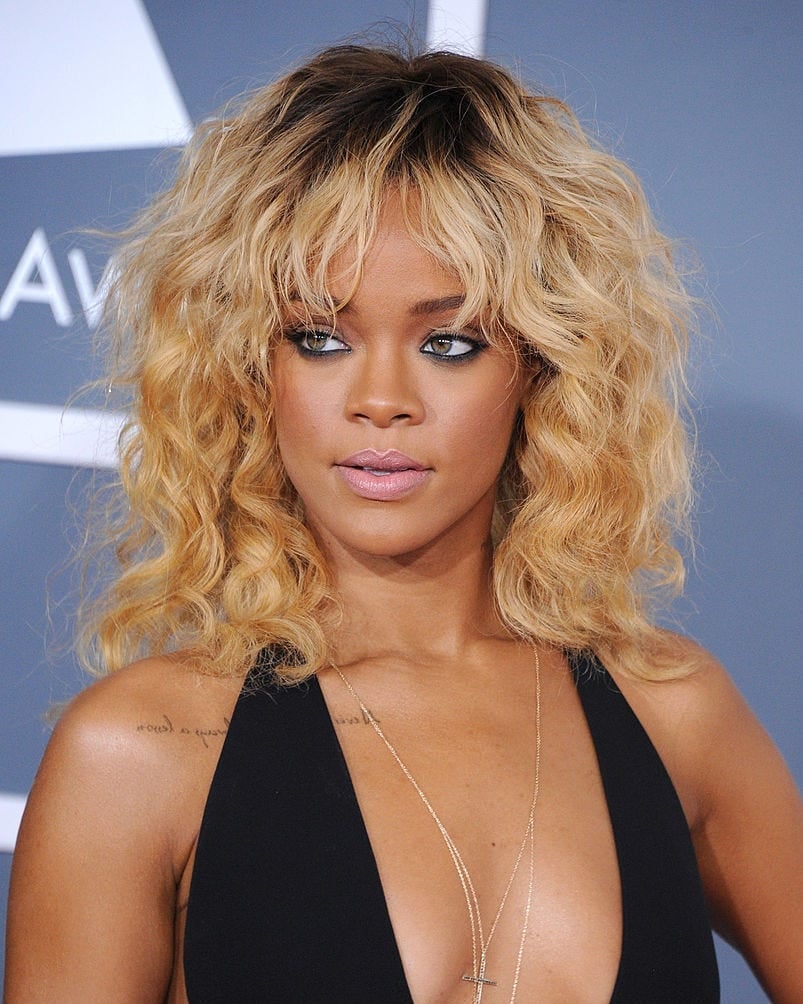
Defined air-dried curls on collarbone-length hair rely on the cut doing the work, not the heat tool. The layers here are cut into the honey blonde base, with lighter highlights placed to create depth without a stripe effect. Medium-density hair benefits most from this approach: enough weight to hold the curl, not so much that it flattens. Applying a leave-in conditioner to soaking wet hair, then scrunching, encourages the shape without crunchy hold. The side parting adds asymmetry that prevents the roundness from looking too uniform.
Shoulder Length Honey Blonde Layers

Wondering how to get a balayage that still reads naturally on shoulder-length curls? The key is asking for a technique that starts the lighter color lower, around the mid-lengths, so the root stays dark and the honey blonde melts gradually into the ends. This cut uses a blowout for a glossy finish, which works well on thick curly hair that can handle the heat. The side-parting and layered shape keep the weight distributed evenly, so the curls do not bunch at the bottom. A trim every six to eight weeks prevents the layers from losing their definition.
Shoulder Layers With Honey Blonde Highlights, Dark Brown
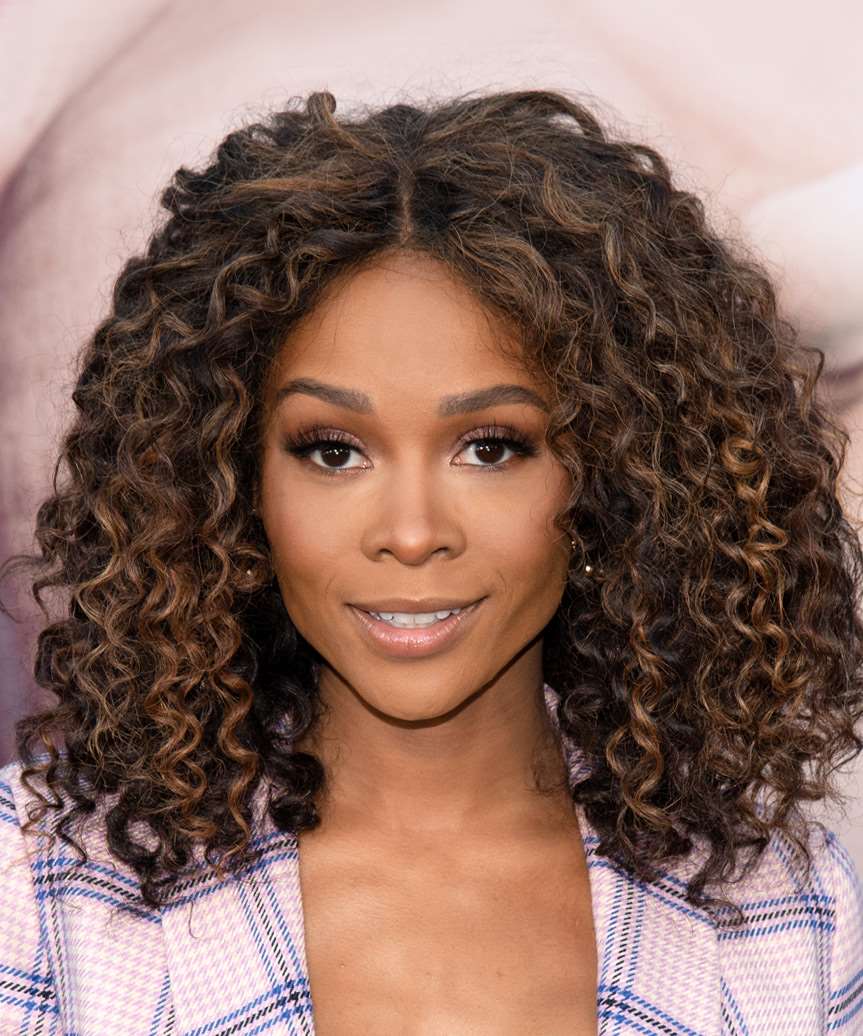
Honey blonde highlights on a dark brown base create a softer contrast than a full honey blonde all-over, which can wash out darker natural tones. The shoulder length and middle part here let the layers fan outward, and the blowout technique adds a polished sheen that airdrying would not deliver on thick curly hair. This approach suits someone who wants dimension without committing to a full color change. The highlights sit on the surface of the curls, so they catch light without needing constant toning. Expect a trim every six to eight weeks to keep the shape clean.
Shoulder Layers With Dimensional Color
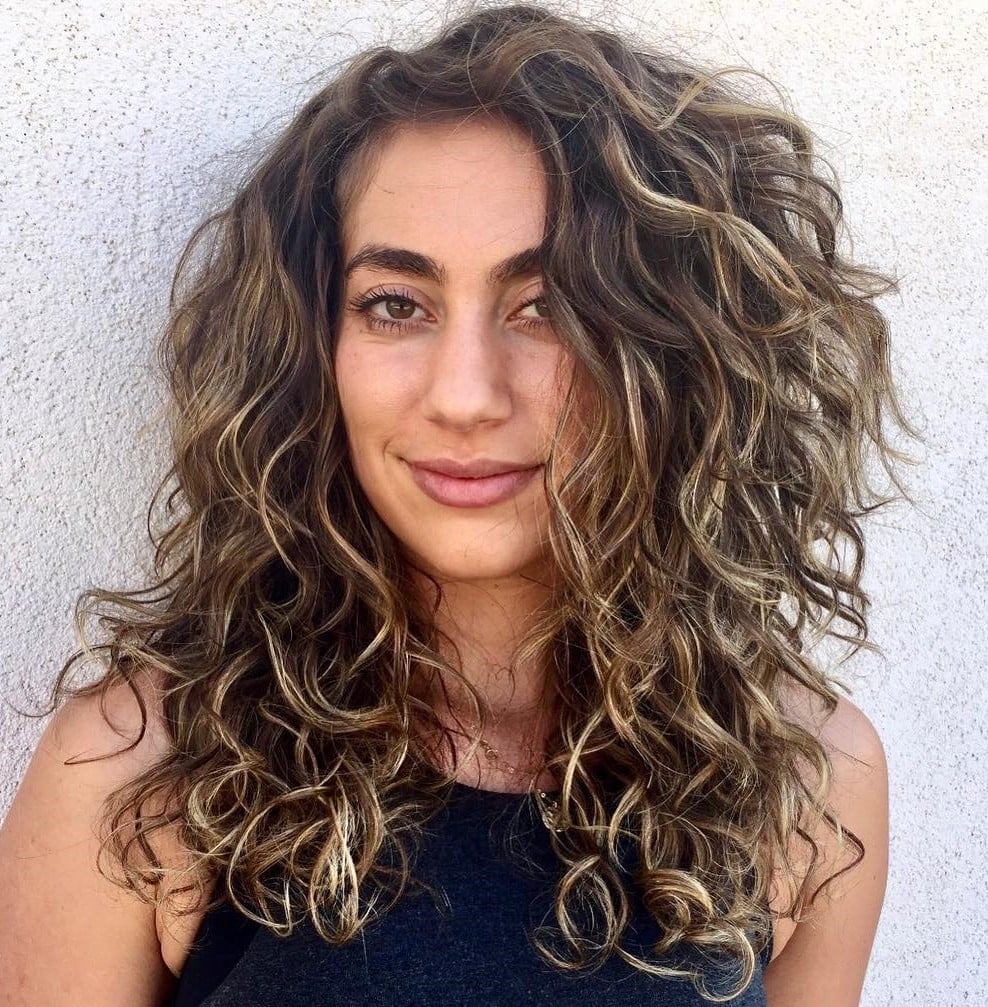
Blonde highlights against medium brown curls create a depth that flat color cannot match. The shoulder length and face-framing pieces give medium-density hair enough weight to hold its shape without collapsing. Ask your stylist for: shoulder length layers with face-framing pieces and blonde highlights. A side parting directs the lighter strands forward, which is a useful trick if your natural part falls elsewhere. The dimensional effect is strongest when curls air-dry with their original texture intact.
Shoulder Defined Curls With Layers
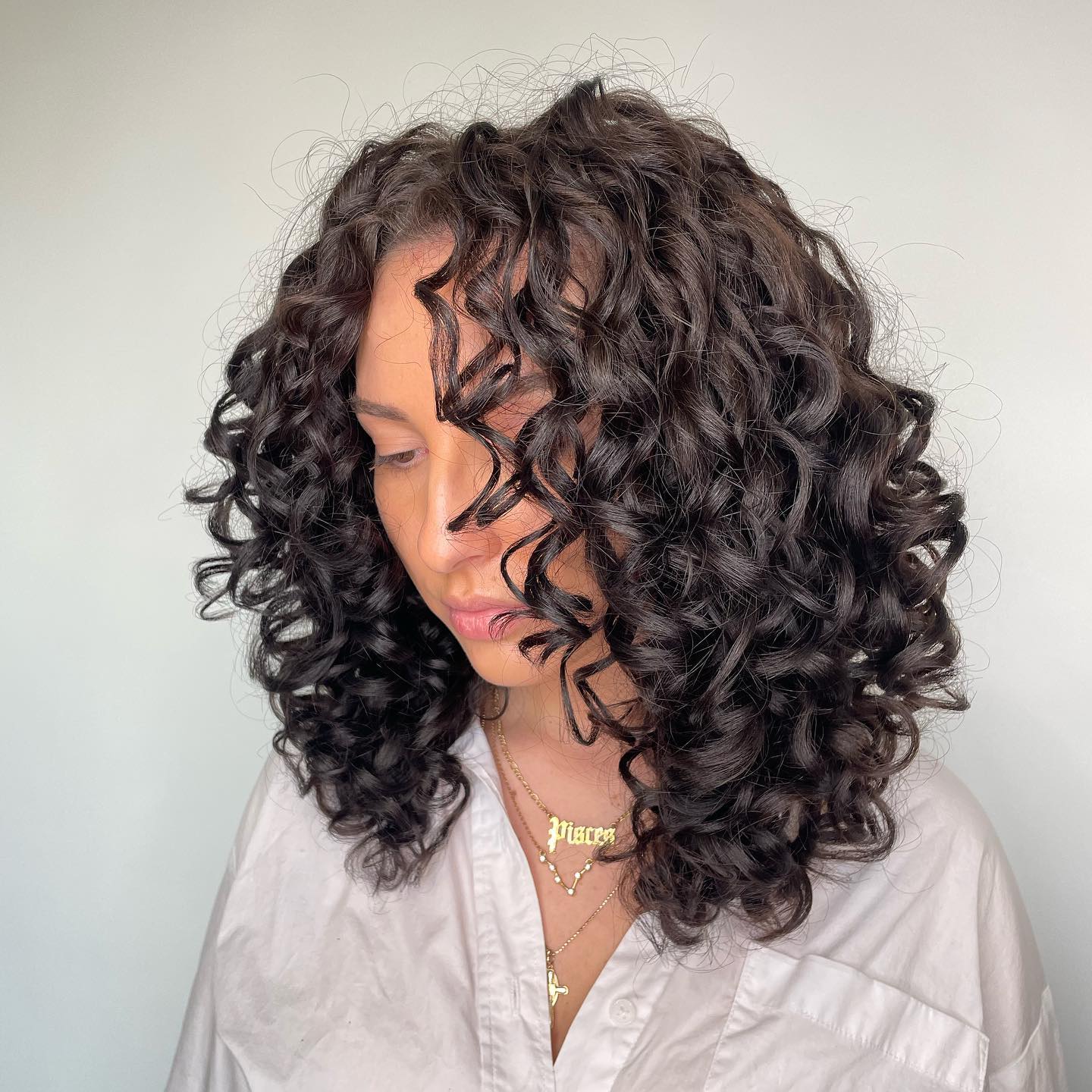
Glossy, defined curls at collarbone length look polished without a blowout. The layers here are cut to follow the curl pattern, which means each coil sits where it should. Ask your stylist for: shoulder length layers with defined glossy curls.
Maintaining that shine requires a curl-enhancing gel or mousse applied to soaking-wet hair, then left alone. A trim every six to eight weeks keeps the shape intact, because split ends show up faster on glossy hair. The side parting breaks up the symmetry, which helps the hair look deliberate.
Shoulder Layers With Defined Curls and Air Dried
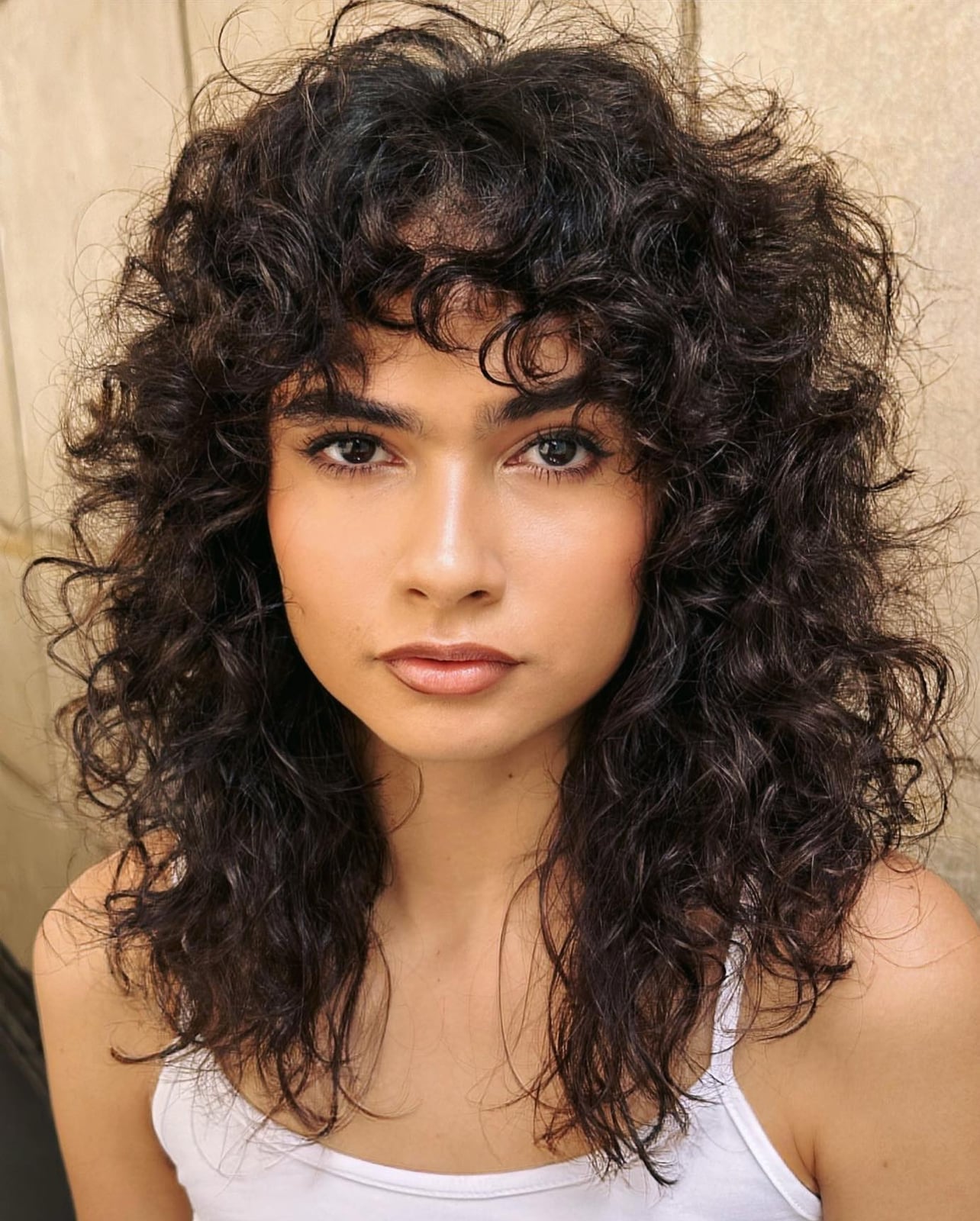
Thick curly hair at shoulder length has enough weight to pull air-dried curls into a predictable shape, but only if the layers are cut short enough to prevent triangle head. The middle parting here distributes volume evenly on both sides, which helps the hair fall forward instead of out. Ask your stylist for: shoulder length layers with defined curls. Air-drying can take up to two hours on thick hair, and the result varies with humidity. Using a diffuser on a low heat setting shortens that time and locks in more uniform curl definition.
Shoulder Layers With Curly Bangs
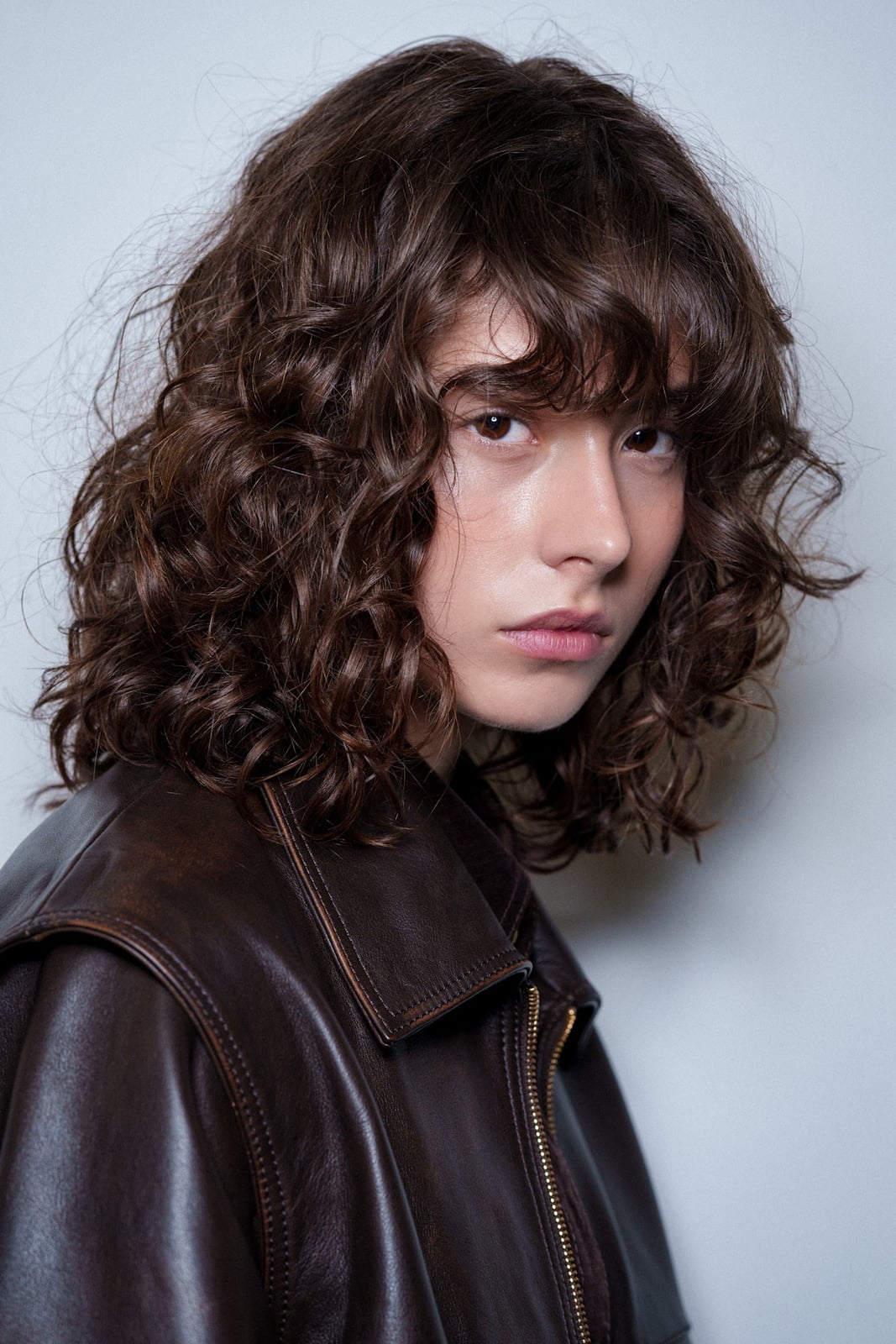
Can curly bangs work without looking like an afterthought? Yes, when the cut respects the curl pattern and the length stops above the brow bone. The shoulder length keeps enough weight to balance the bangs, and the middle parting lets them fall symmetrically. Ask your stylist for: shoulder length layers with curly bangs. This is a spring and summer cut, because curly bangs dry fast and stay off the forehead in humidity. A curl defining serum applied to the bangs separately prevents frizz from overtaking the hair.
Chin Length Bob With Curly Bangs
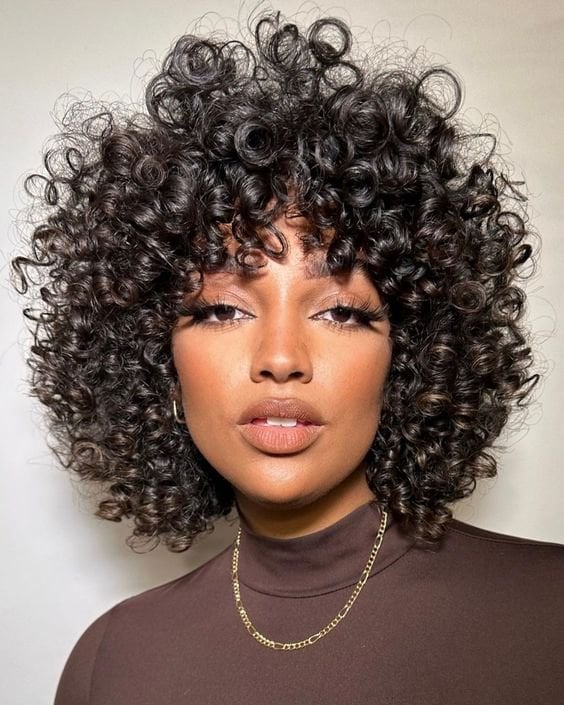
A chin-length bob with short curly bangs is built on precise graduation: the back is stacked enough to support the front length without creating a mushroom shape. The layers are cut into the interior of the curl, not the surface, so the hair springs up rather than lying flat. Ask your stylist for: chin length bob with short curly bangs. The side parting adds asymmetry to what could be a round silhouette, and the subtle lighter highlights catch light where the darker base would absorb it. This cut works best on thick hair that can hold the bob’s structure without product.
Chin Length Bob With Defined Curls
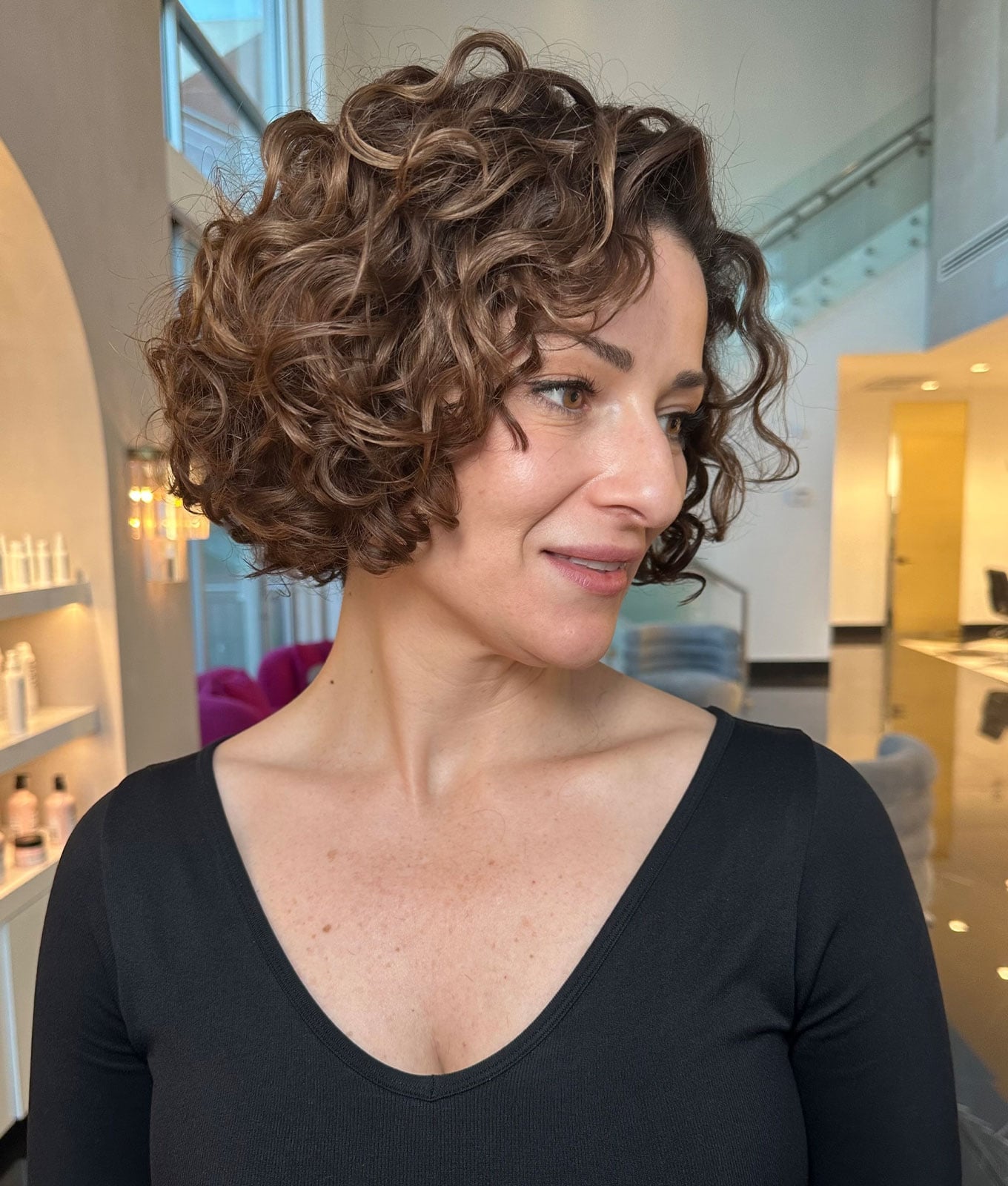
Does a bob work on curly hair without looking like a triangle? It does when the layers are cut into the shape instead of just hacked off at the ends. This chin length bob uses visible layers to let each curl sit where it wants, avoiding that bottom heavy puff. Dark brown hair keeps the silhouette clean. Ask your stylist for: a chin length bob with defined curls and layers. Medium density curls hold the shape well, and a curl refresher spray helps bring back definition by midday. Plan a trim every six to eight weeks to keep the bob crisp.
Chin Length Fine Curls With Layers
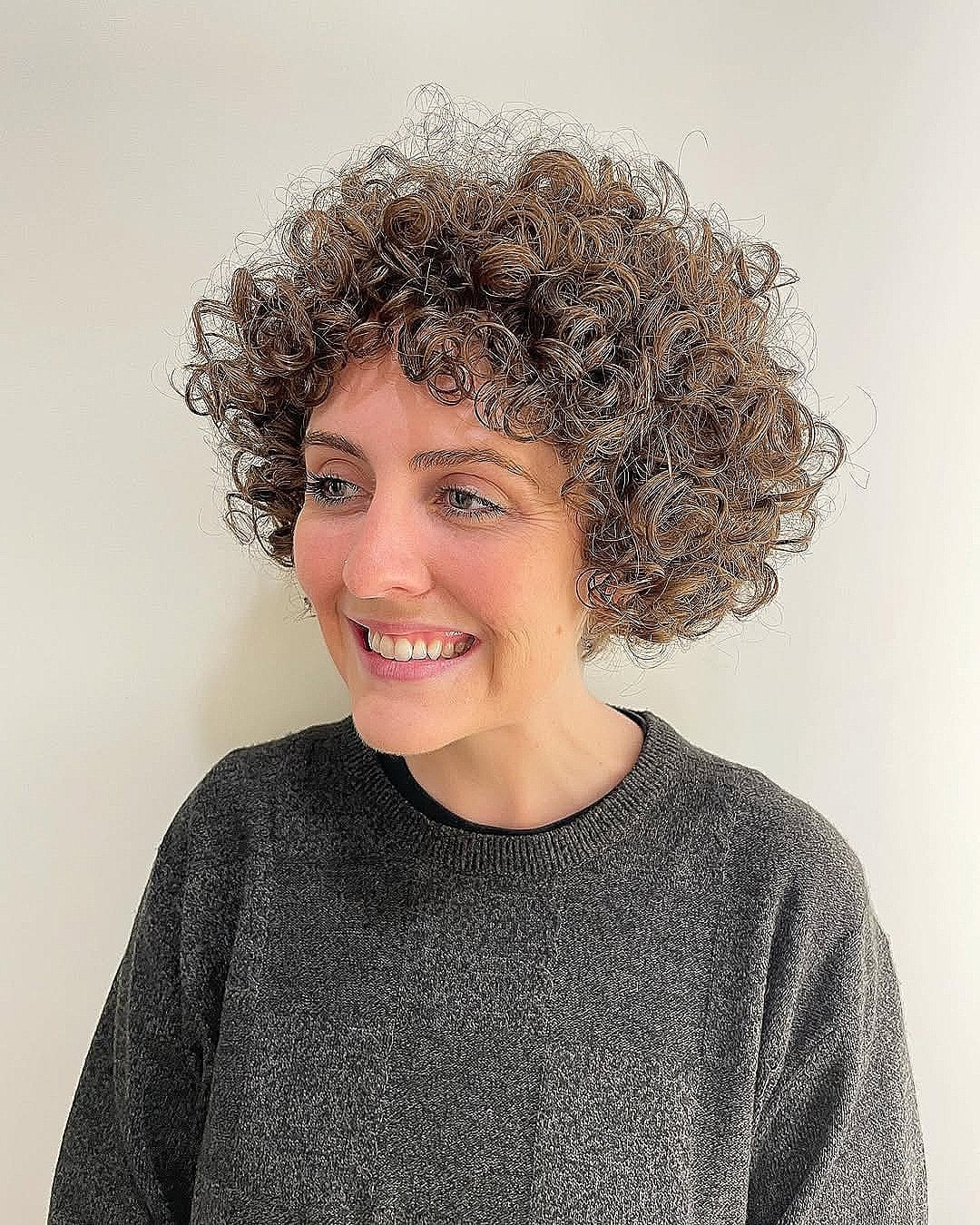
The smartest thing about this chin-length cut is how the layers work with, not against, fine curls. Defined ringlets in light brown with subtle highlights get noticeable lift at the crown, which is exactly where fine hair tends to go flat. The middle parting keeps the weight even on both sides. Ask your stylist for: chin length layers with defined ringlets. This length is ideal for fine curly hair because it removes bulk without sacrificing volume. Heavy creams will weigh those ringlets down, so stick to a lightweight mousse instead. A trim every six to eight weeks keeps the shape intact.
Pixie Bob With Textured Bangs
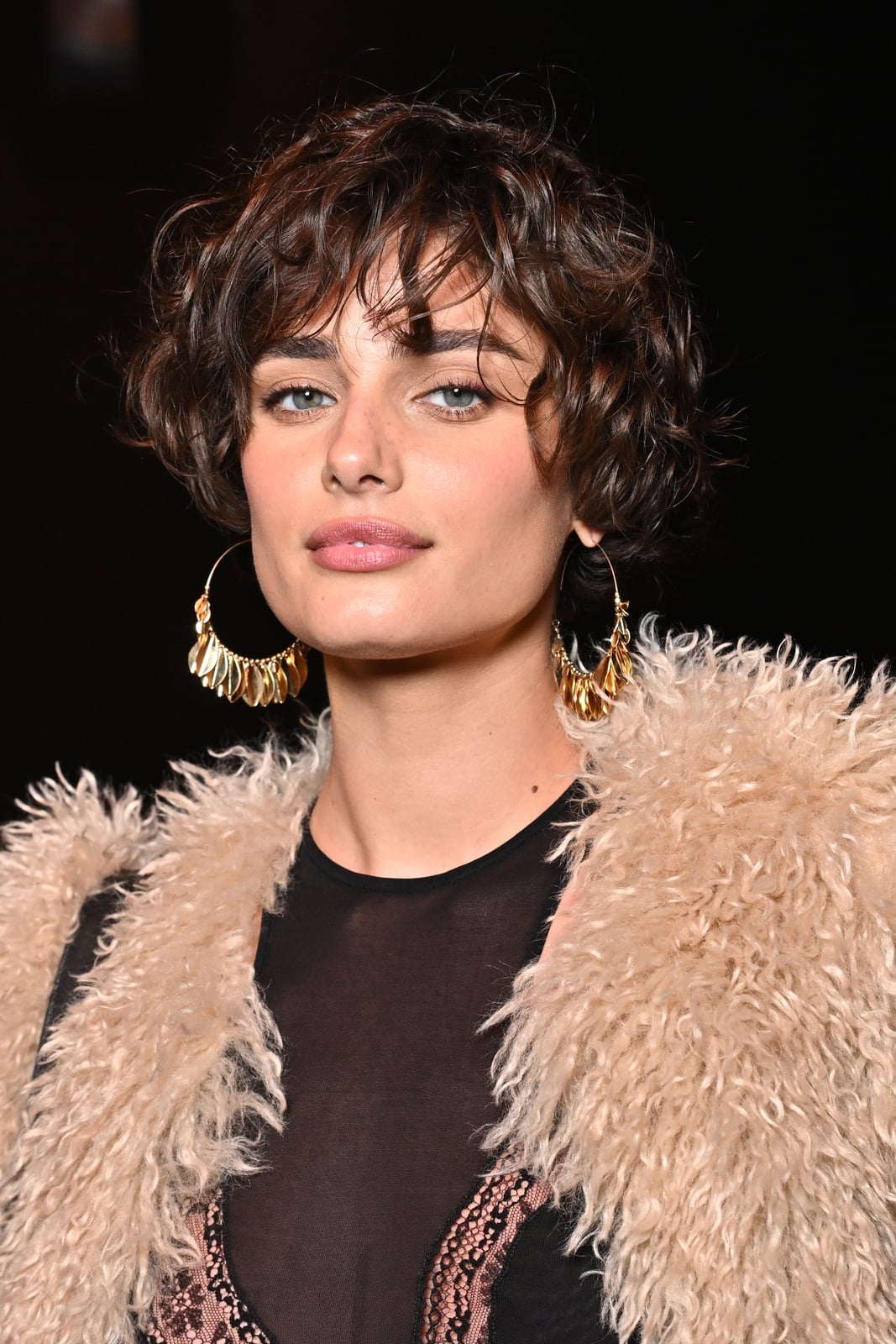
A pixie bob on fine curly hair is a matter of geometry: every layer has to land in the right place or the whole thing goes rogue. This ear-length version uses short, textured bangs to frame the face, while lighter brown highlights add dimension to the dark brown base. The side parting gives the eye somewhere to land. Ask your stylist for: a pixie bob with textured bangs. Styling takes about ten minutes with a texturizing paste worked through damp curls. The trade-off is frequent trims: every four to six weeks, or the bangs start looking more shaggy than intentional.
Short Layered Curls Ear Length
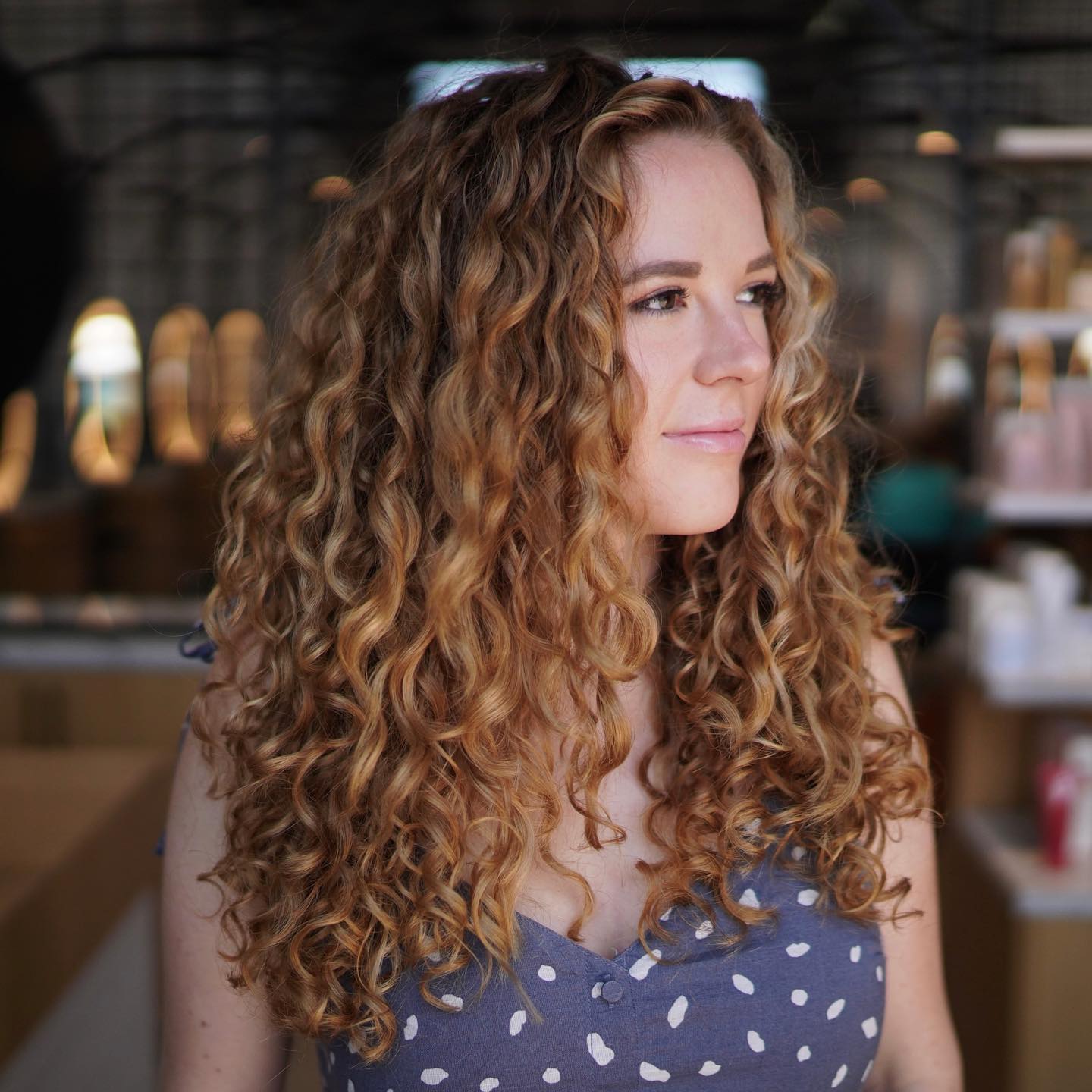
Short curls at ear length look deceptively simple, but the layers here define the shape. Defined, air-dried ringlets in dark brown keep their shape because the cut removes weight from the bottom, letting each curl spring up instead of hang down. The side view shows exactly how the layers stack. Ask your stylist for: a short layered curly cut at ear length. This is a salon-only proposition: cutting dry curly hair into this precise a shape takes experience. Fine hair at this length can show every uneven snip, so do not try this at home. Trims every four to six weeks are essential.
Medium Length Curly Bangs
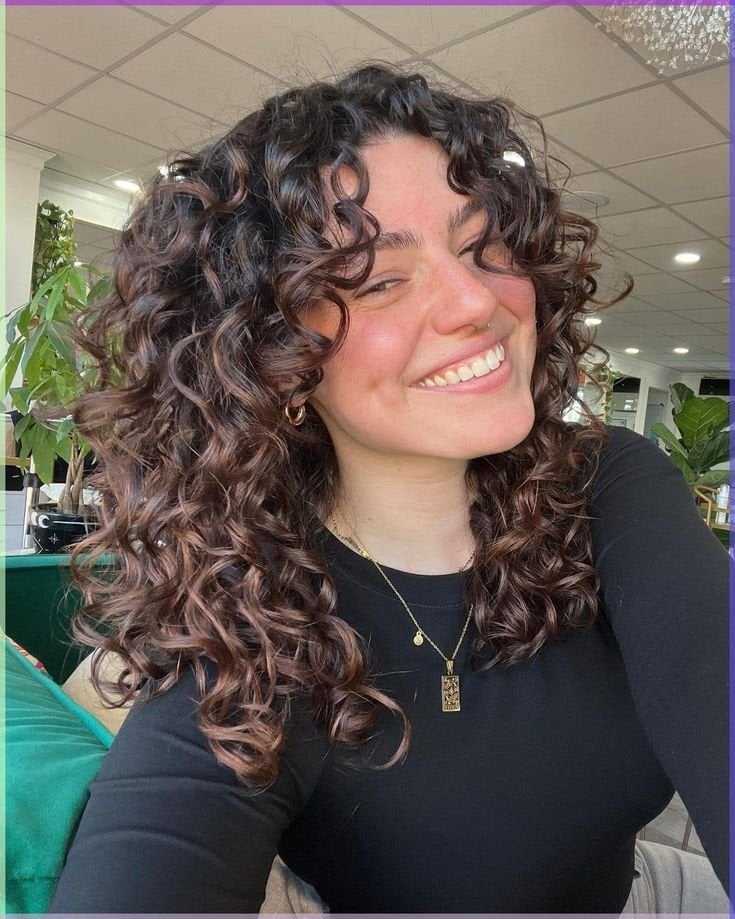
Curly bangs at medium length add a polished detail to a layered cut. This dark brown style with subtle highlights uses visible layers throughout, while the bangs frame the face softly without cutting across it. The side parting keeps the volume balanced. Ask your stylist for: medium length layers with curly bangs. This style works well for summer occasions, from outdoor brunches to casual evening events, because air-dried texture looks polished without heat styling. A curl-defining cream on the bangs keeps them from separating into odd clumps. Plan a trim every eight to ten weeks.
Medium Length Layers With Balayage
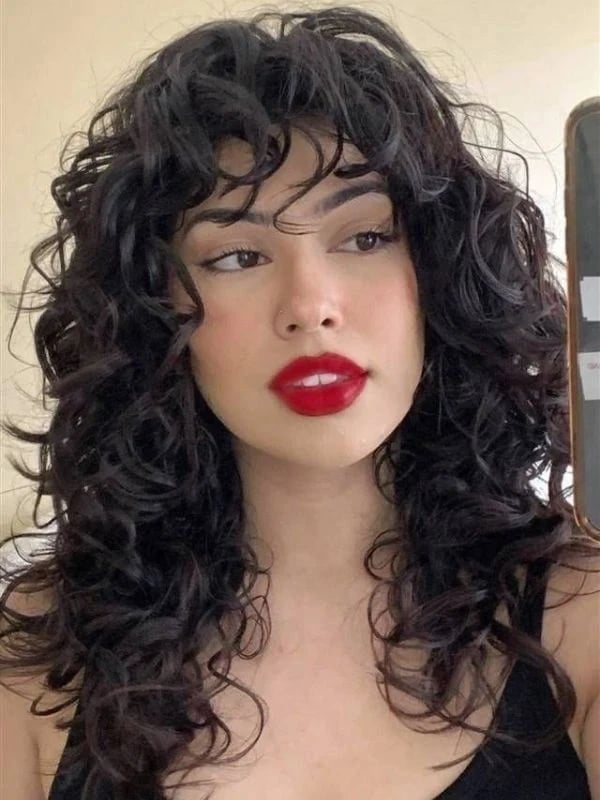
The balayage begins below the ears, leaving the dark brown root intact so the blonde pieces land exactly where the layers fall. Medium-density curls catch light differently on each tier, which is the whole trick: a solid color would look flat, but the hand-painted sections make every ringlet visible. Ask your colorist for: medium length layers with blonde balayage. A middle parting keeps the fade symmetrical, and since the color is painted freehand, there is no harsh regrowth line to panic over.
Collarbone Layers With Face-Framing
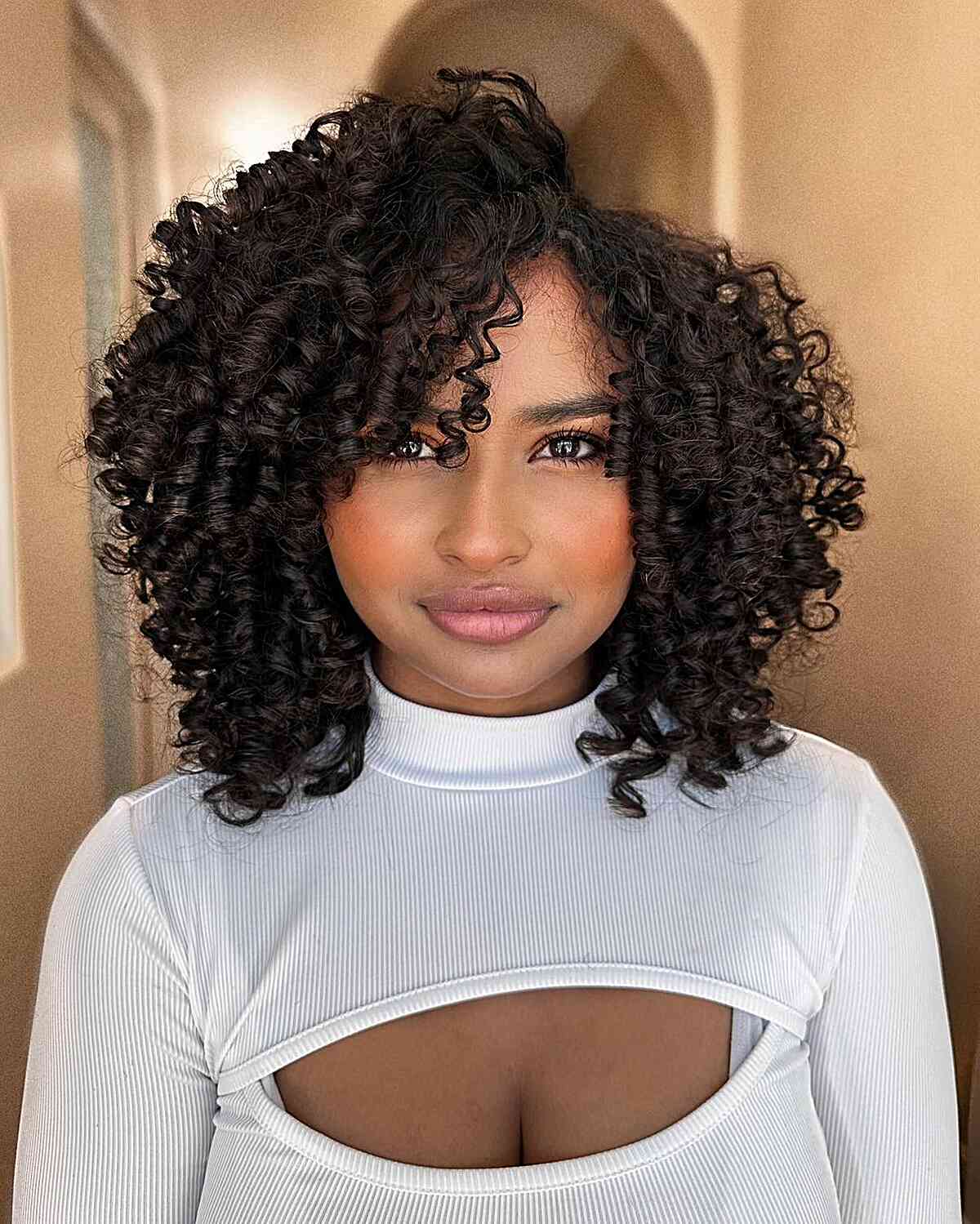
How do you get those spiral curls to fall forward instead of hiding behind your shoulders? Ask your stylist for: collarbone layers with face-framing pieces. The shortest layers start around the jaw and blend into the collarbone length, so the curls that land near your cheeks are lighter than the rest. Thick curly hair tends to triangle out without this kind of shaping, but the face-framing sections break the weight exactly where you need it. A middle parting lets the curls mirror each other.
Thick Curly Hair With Blonde Highlights
Subtle highlights on thick curly hair behave differently than a full balayage. Here the blonde pieces are fine and scattered, so they create texture instead of a color block. A more dramatic technique would carve distinct ribbons through the curls, which works if you want contrast, but this version keeps the dark brown as the main event and lets the highlights add movement.
Thick hair at mid-back length needs that lightness to stop the shape from pulling heavy. Ask your colorist for: dark brown with subtle blonde highlights. A side parting angles the lighter pieces so they catch the eye on one side first, which gives the curls a deliberate flow and avoids a round bush effect.
Mid-Back Air-Dried Curls
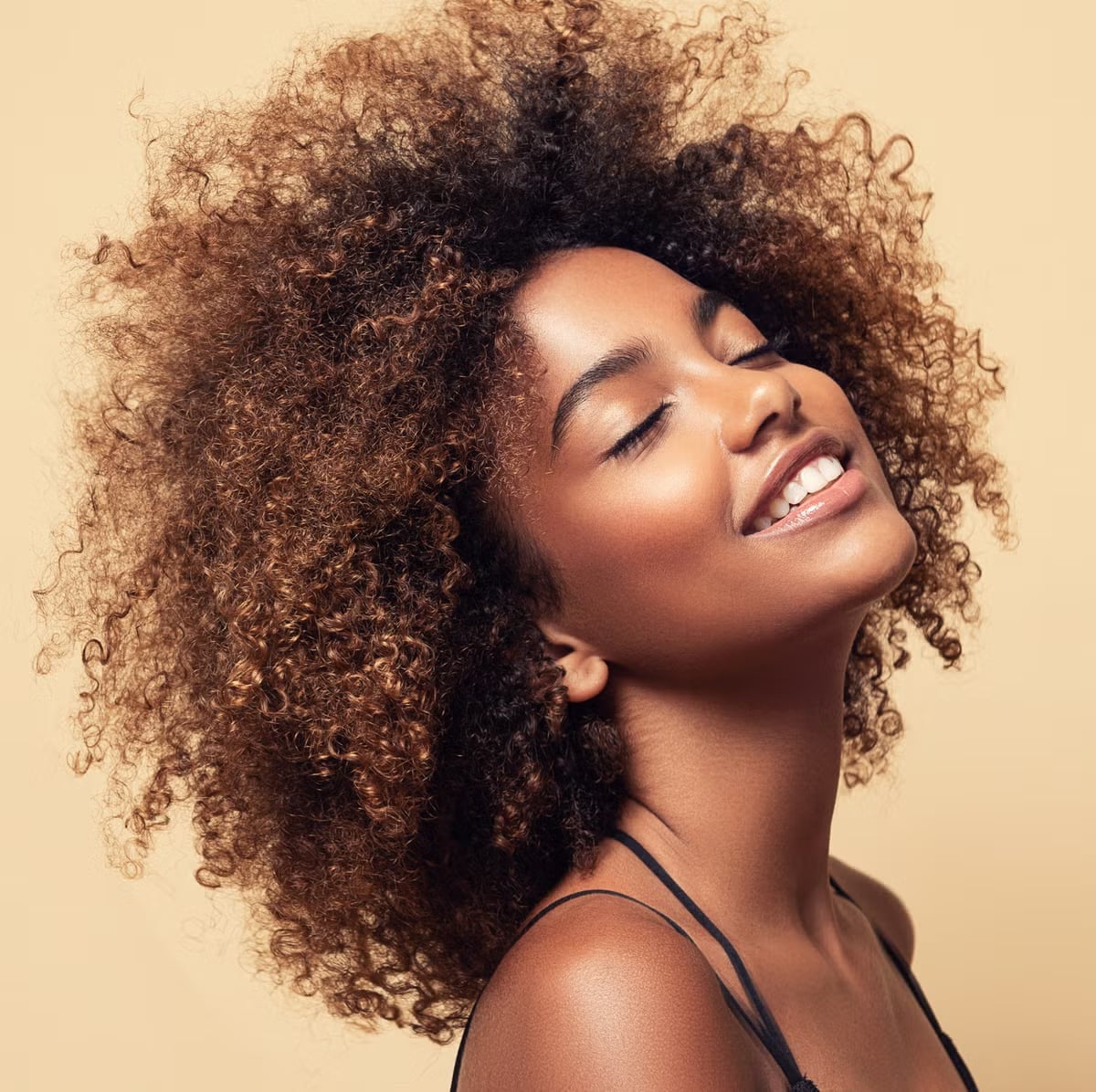
A layered cut on thick curly hair does the heavy lifting here, not a diffuser. The layers are cut so the curls stack without weighing each other down, which means air-drying actually works: apply a leave-in conditioner, scrunch, walk away. The subtle highlights add depth, but the real volume comes from the shape itself.
This is a DIY-friendly cut if you already have thick, mid-back length curls. The stylist sets the layers, and you handle the drying. Hair this dense takes about 30 minutes to air-dry completely, so plan around that. Ask your stylist for: mid-back layers with an air-dried finish. A middle parting keeps the volume even on both sides.
Mid-Back Defined Curly Layers
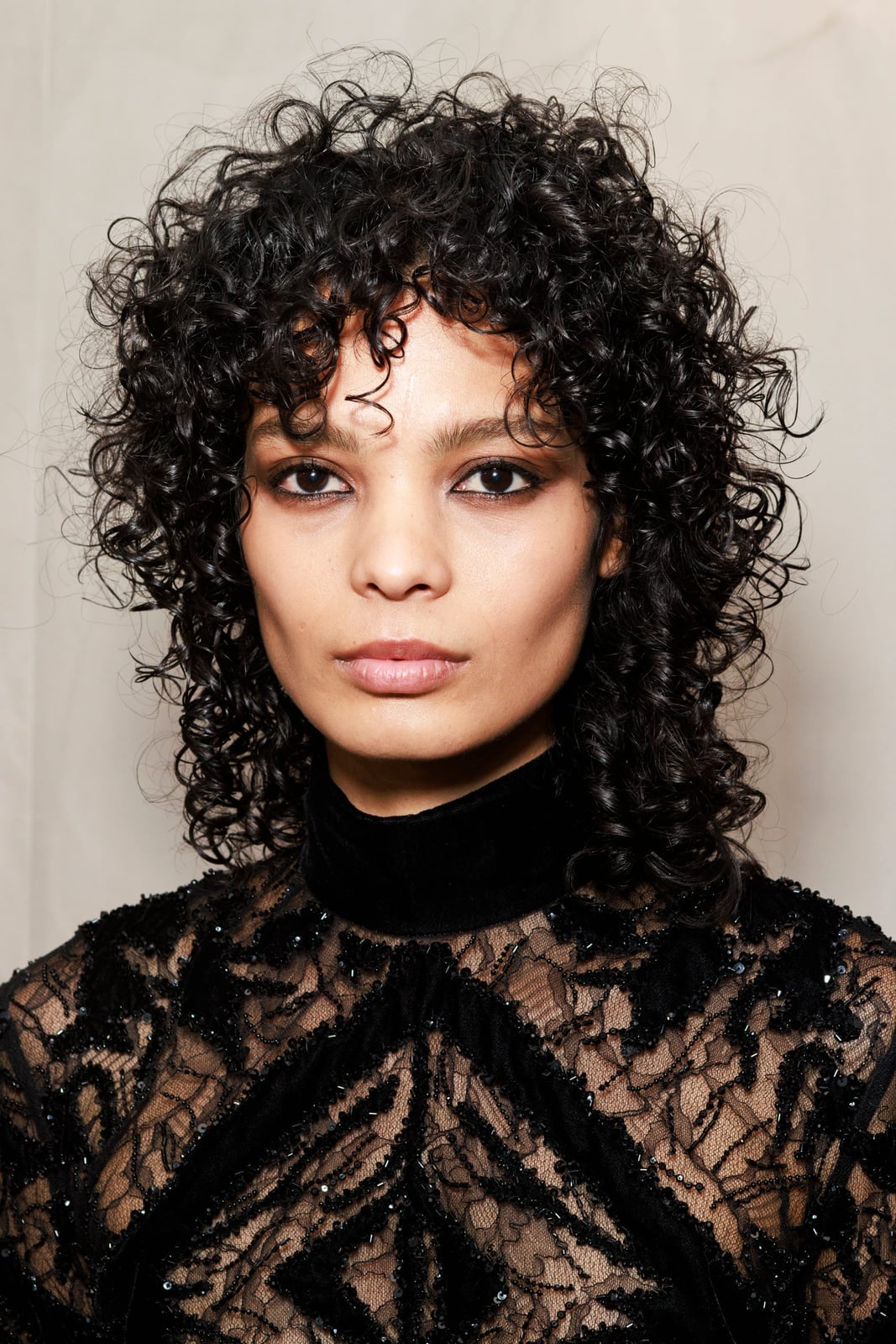
Defined curls at collarbone length need consistent upkeep to stay separate. The layers are cut to remove bulk from the underside, so each ringlet has room to form without tangling with its neighbor. A side parting shifts the weight off center, which helps the curls fall forward instead of spreading wide.
A wide-tooth comb on wet hair is the only tool you need between washes. Trim every 10 to 12 weeks to keep the ends from fusing into a single mass. Ask your stylist for: collarbone layers with defined curls. The medium brown color reads as clean and low-maintenance, exactly what a busy schedule calls for.
Mid-Back Flowing Curly Layers
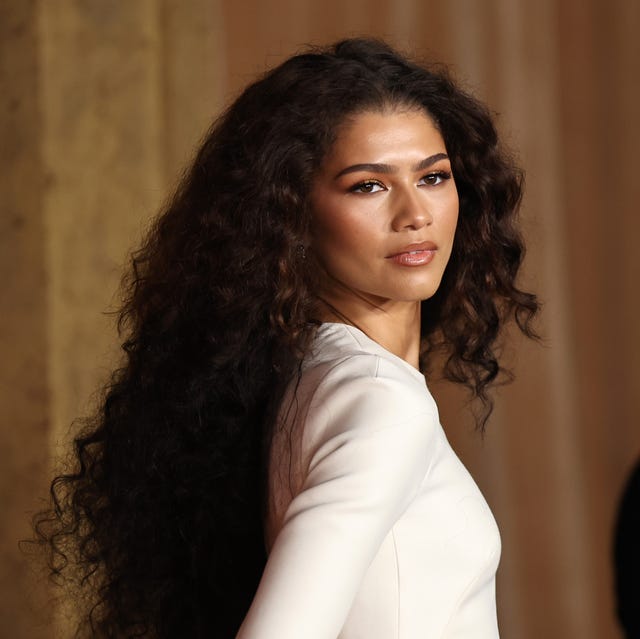
Long, thick curls need a cut that subtracts weight without sacrificing the overall length. This mid-back design uses extensive layering throughout to let dense hair move instead of sitting in one heavy sheet. It works best on thick, very long curly textures that can support the removal of bulk while keeping the flowing silhouette intact. Ask your stylist for: mid-back layers for long flowing curls.
This is a salon-only cut. The risk of taking off too much weight or creating uneven lengths is real, so finding someone who understands how curly hair bounces up after drying is essential. Growing out layers this long requires patience, usually a trim every ten to twelve weeks to keep the shape defined.
Mid-Back Layered Cut With Caramel
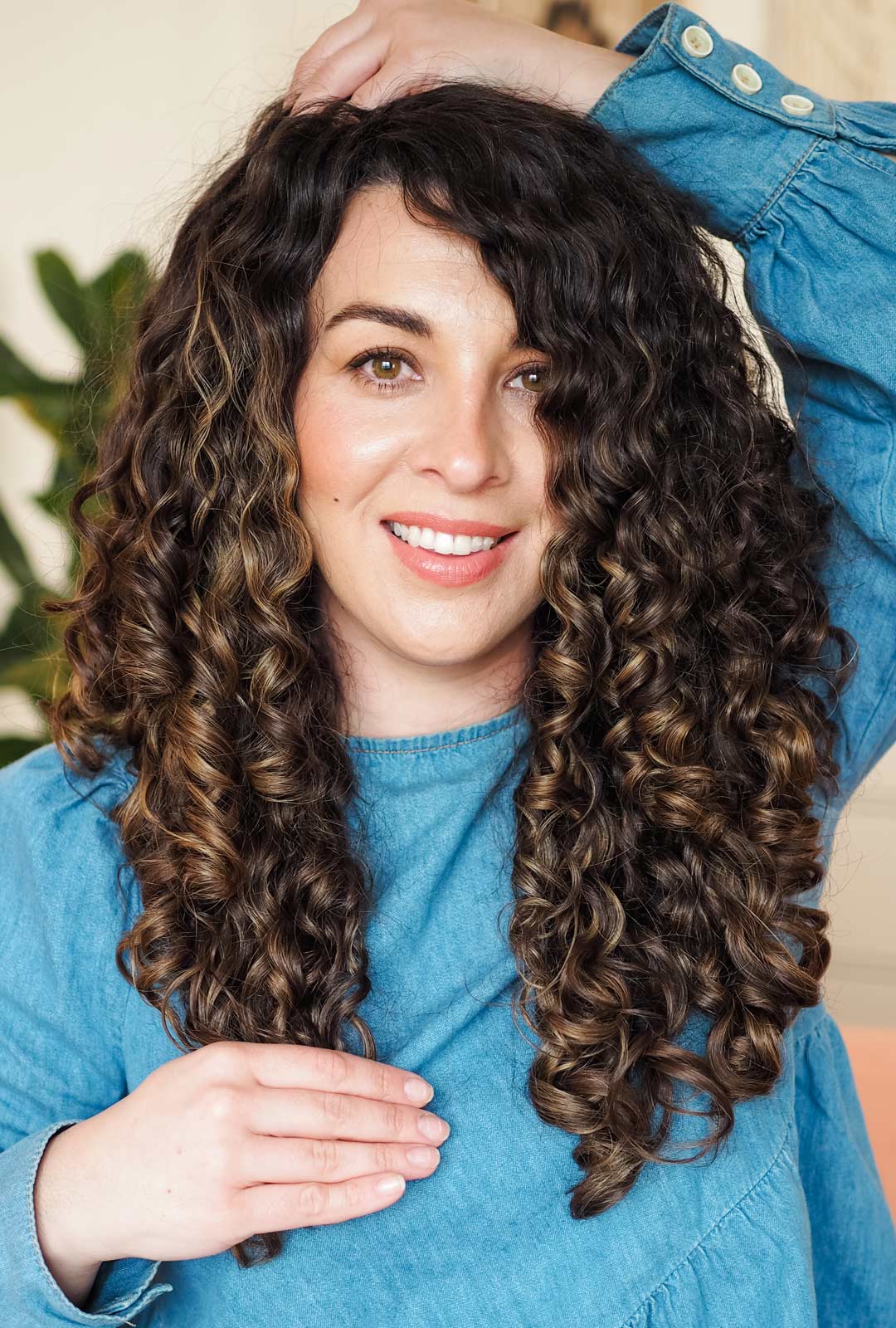
If dark brown feels flat for autumn, caramel balayage adds warmth without a full commitment to blonde. This mid-back layered cut pairs a side parting with visible internal layers that give thick curls definition instead of a single heavy curtain of color. The balayage technique places lighter strands where the layers naturally fall, so the dimension reads as part of the cut. Ask your stylist for: mid-back layers with caramel balayage.
The warm caramel tones pair naturally with sweaters and scarves, making this a strong choice for the cooler months. A color-safe shampoo helps the balayage stay vibrant between salon visits, and a trim every ten to twelve weeks keeps the layers from growing uneven.
Final Thoughts
Fine curly hair holds volume best when layers start around the jawline or collarbone and the ends stay blunt enough to read as dense. Thick curls can handle heavier layering throughout, even at mid-back, to shed weight and let the pattern spring up. Match the cut to your texture, not to a photo.
- Trim every 8-12 weeks to maintain layer shape and prevent split ends.
- Air-dry when possible; use a diffuser on low heat for faster drying and enhanced curl definition.
- Use curl-defining products like creams or mousses on damp hair before air-drying or diffusing.
- Deep condition weekly to maintain moisture and elasticity, crucial for healthy curls.
Embrace your natural curl with the right layers.