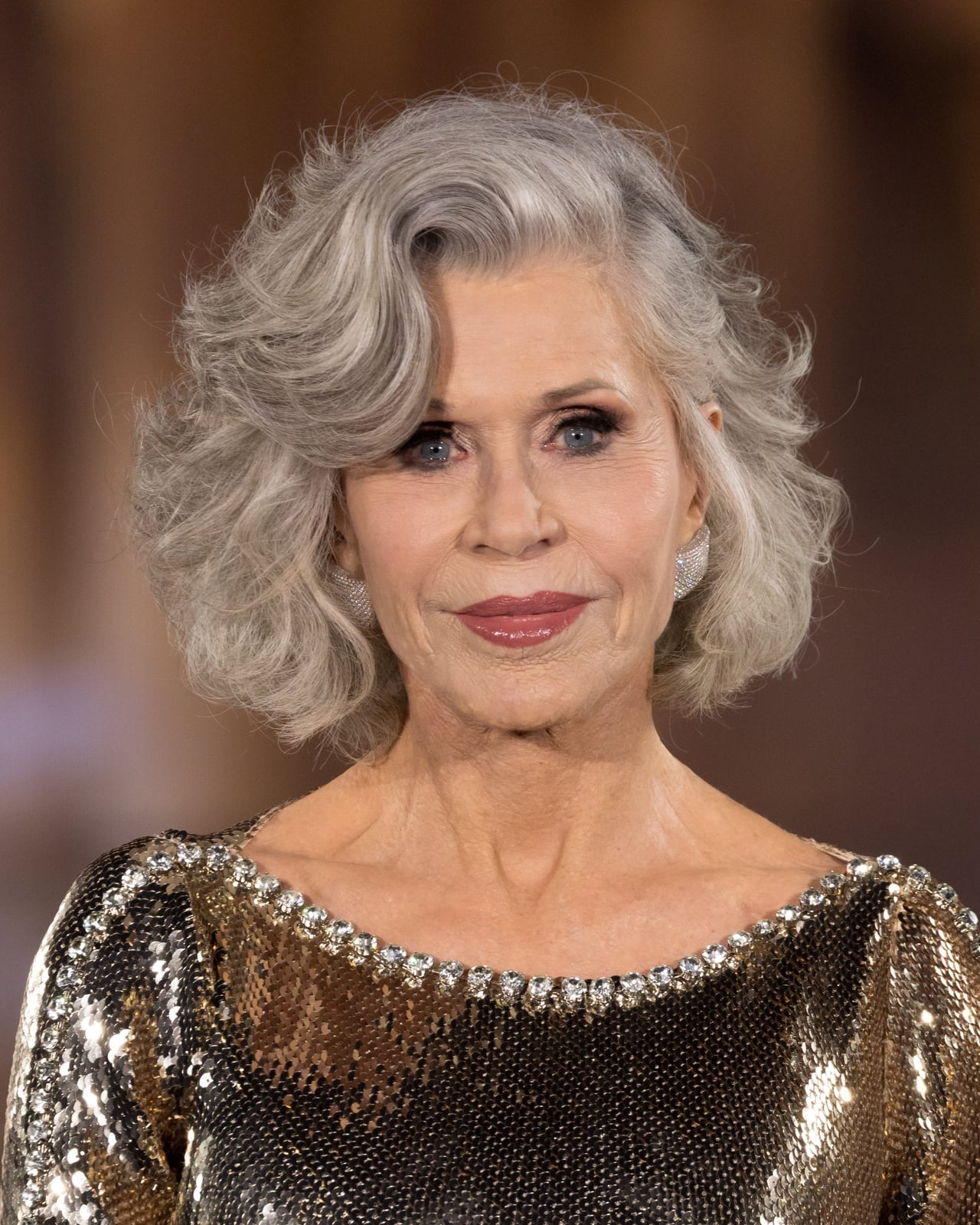
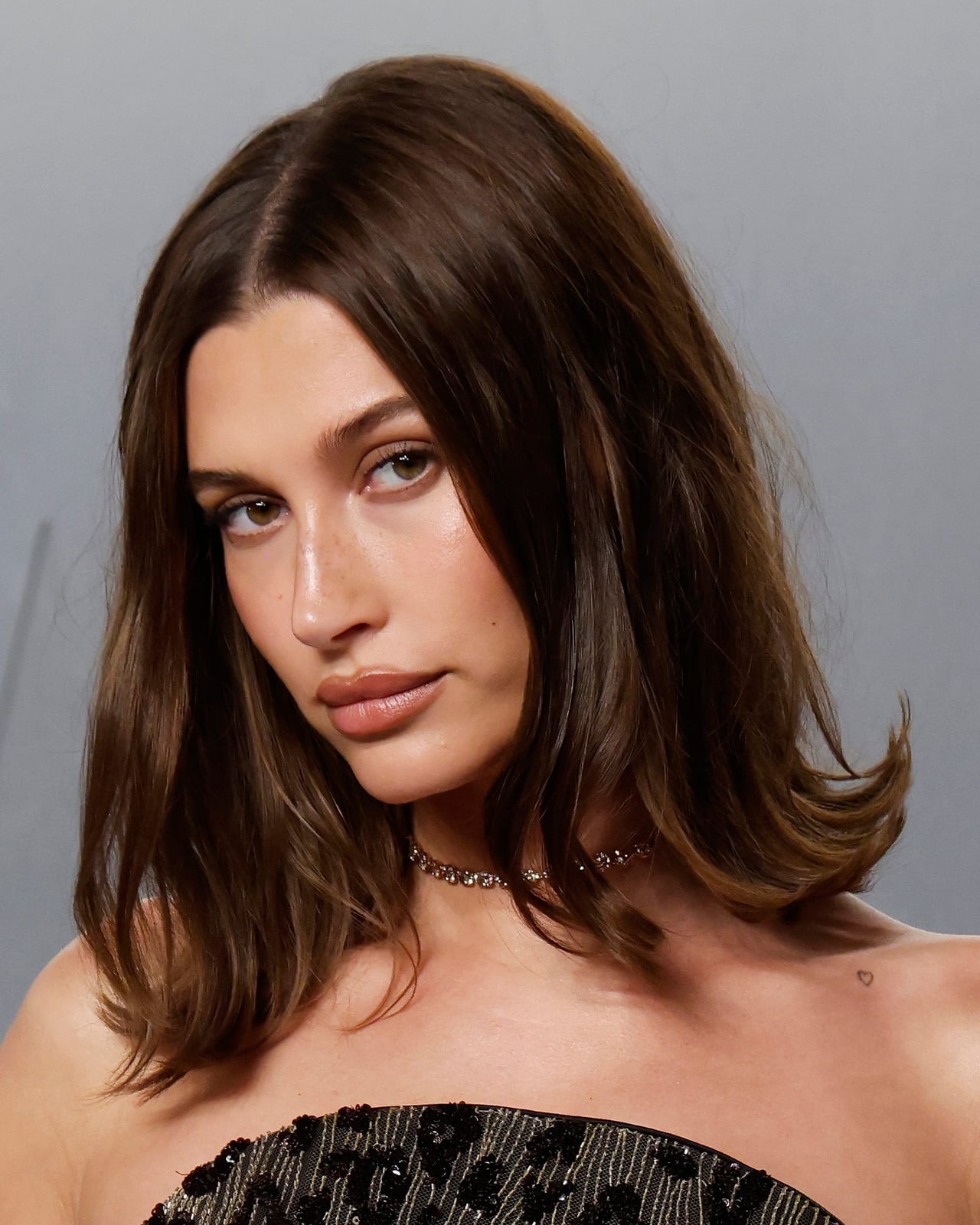
The wolf cut has left its rebellious teenage phase behind. Today it’s a refined layering system, built around soft face-framing pieces, curtain bangs, and lived-in color that grows out without drama.
This collection of 26 Classy Wolf Cut Hair ideas spans collarbone to mid-back lengths, blunt to wispy bangs, and every base from platinum to deep brown. Whether your hair is fine and falls flat by noon or thick enough to need taming, there’s a version that works. Most styles take under twenty minutes to style with a round brush and texturizing spray.
Black Wolf Cut With Subtle Red Undertones

The black base here carries a quiet red glow that only surfaces when the light hits the waves, which keeps the cut from reading flat. That collarbone length lands in a sweet spot: long enough to pull back, short enough to show off the layered shape. The curtain bangs open around a middle parting, so they soften a square jaw without hiding it, and they suit oval faces just as well. Ask your stylist for a collarbone wolf cut, curtain bangs, and subtle red undertones if you want the same depth. Thick, wavy hair gives the texture its volume, so fine strands may need a heavier hand with product. A texturizing spray will enhance the waves, and a trim every six to eight weeks keeps the baseline sharp.
Honey Blonde Collarbone Wolf Cut With Balayage
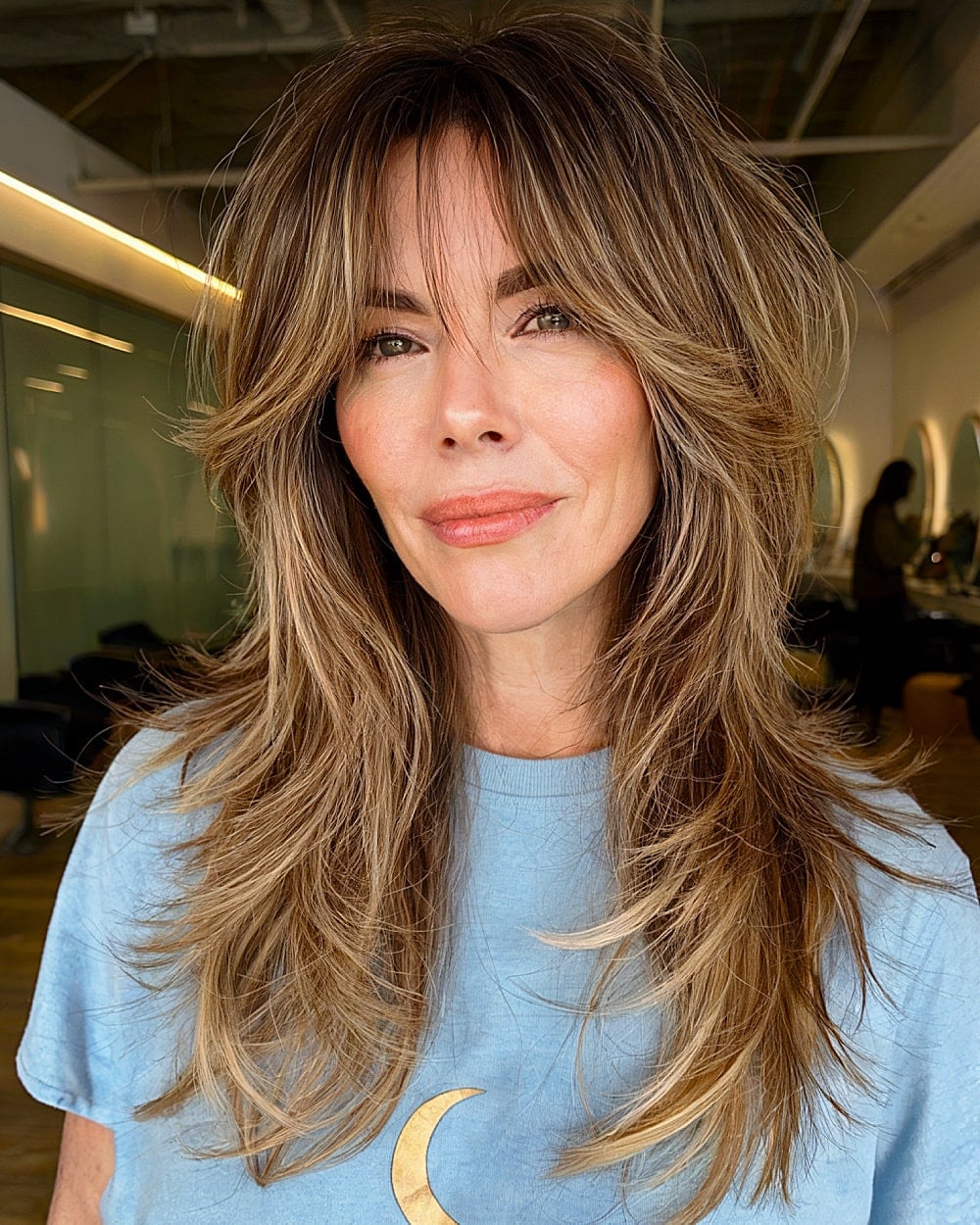
Balayage is the reason this honey blonde base never looks flat: the lighter pieces are painted on by hand, so the color melts from root to tip instead of stopping at a hard line. The face-framing layers are cut to follow the jaw, which makes them work with many face shapes, and the middle parting lets them fall forward naturally. Medium to thick wavy hair is the ideal starting point, since the air-dried finish needs some body to hold its shape. Ask your colorist for a collarbone wolf cut, face-framing layers, and honey blonde balayage. To keep the dimension, tone the highlights every six to eight weeks and let a texture cream do the work while it air-dries.
Platinum Blonde Wolf Cut With Blunt Bangs
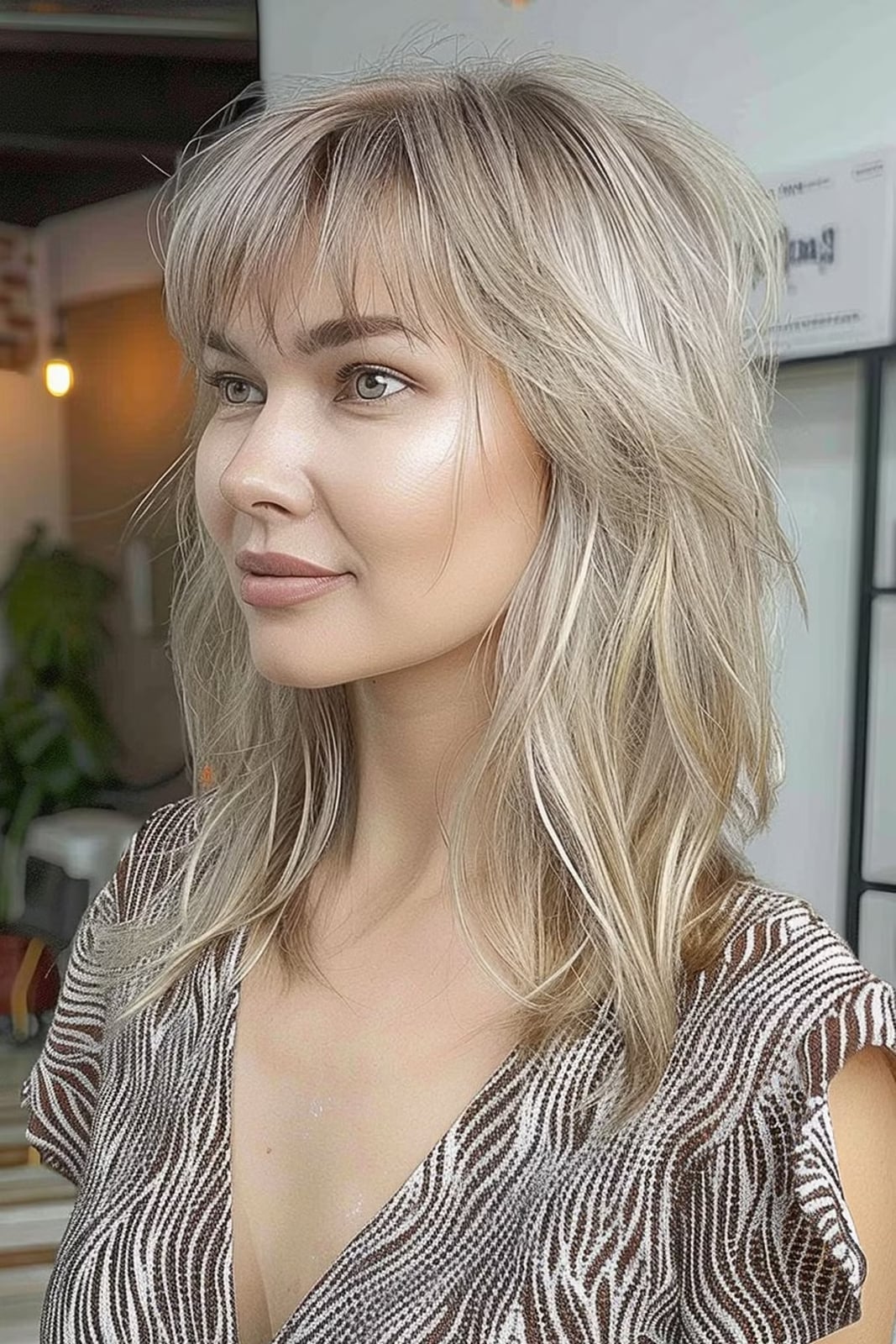
What happens when you pair a wolf cut with blunt bangs? You get a look that either reads as sharp or as severe, and the difference comes down to your face shape. The straight-across fringe shortens a long face, but on a round one it can feel heavy, so weigh that before you commit. The choppy layers keep the cut soft, which is the saving grace here. Ask your stylist for a collarbone wolf cut, blunt bangs, and ash-toned platinum blonde. Fine, wavy hair works well because the blunt edge adds the weight that fine strands lack. A purple shampoo keeps the ash tone from going brassy, and the bangs need a trim every four to six weeks to stay precise.
Copper Wolf Cut With Wispy Bangs

The wispy bangs here do what heavy fringes can’t: they blend into the layers instead of fighting them, so the whole cut moves as one piece. That softness is exactly what a copper base needs, since the color already brings warmth and the air-dried texture keeps it from looking done. Medium density wavy hair gives the layers enough body to hold their shape without turning into a helmet. Ask your stylist for a collarbone wolf cut, wispy bangs, and copper with blonde highlights. The blonde pieces add dimension, but they also mean more upkeep: a copper-toned conditioner will refresh the color between salon visits, and a trim every six to eight weeks keeps the ends from splitting.
Dark Brown Mid-Back Wolf Cut With Curtain Bangs
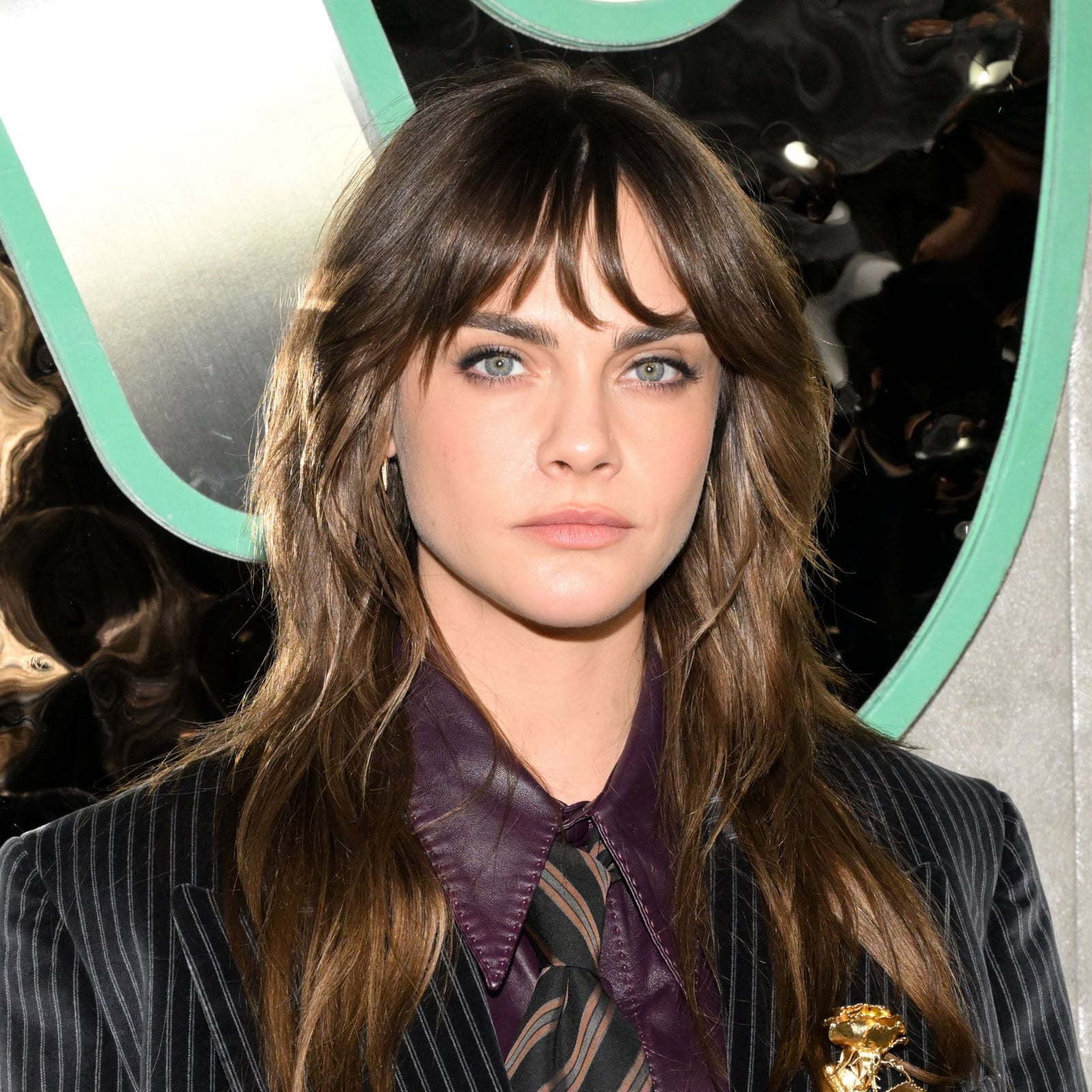
Most wolf cuts stop at the collarbone, but this one keeps going, and the extra length changes the whole game. The mid-back length means the layers have more room to move, so the face-framing pieces blend into the rest of the hair rather than sitting as a separate frame. Curtain bangs soften the transition, and the middle parting lets them fall open naturally. Medium density wavy hair is the right match because it gives the texture body without requiring constant styling. Ask your stylist for a mid-back wolf cut, curtain bangs, and dark brown. Longer hair takes longer to air-dry, so a leave-in conditioner will help define the waves. Plan on a trim every eight to ten weeks to keep the layers from growing out into a shapeless block.
Honey Blonde Shag With Side Part Curtain Bangs
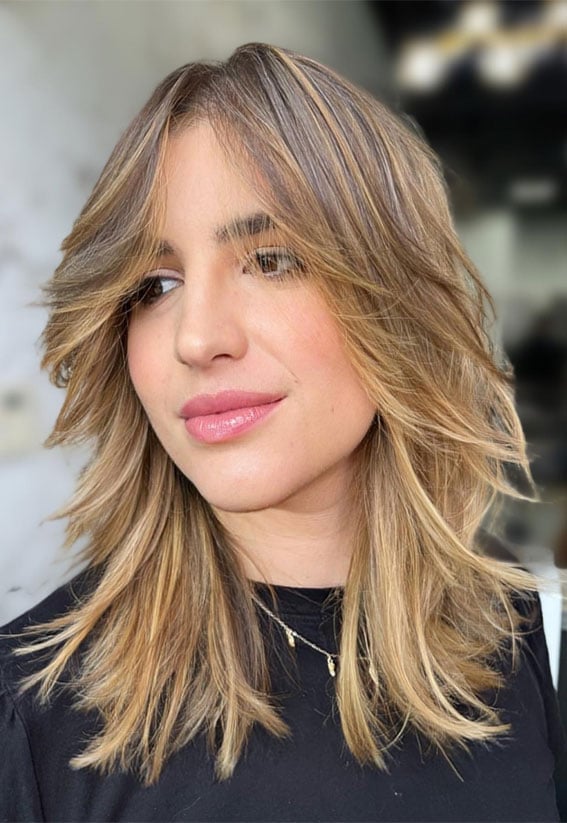
A shag is not a wolf cut, though they share a family resemblance. The shag leans heavier on the layering, with more distinct, disconnected pieces that stack up around the crown. Here, the collarbone-length honey blonde balayage sits in soft waves, the curtain bangs swept to one side. Fine, wavy hair starting at the collarbone works well for this shape; the side part and curtain bangs also suit round faces. Ask your stylist for: collarbone shag, curtain bangs, honey blonde balayage, side part. A blowout with a round brush gives it that smooth, bouncy finish, and the highlights will need a toner every six to eight weeks.
Ash Blonde Wolf Cut With Textured Waves

Can you get the wolf cut silhouette without the weight of high-maintenance color? Yes, if you pick the right tone. Ash blonde with subtle lowlights lands at collarbone length, the curtain bangs and textured layers shaped with a glossy blowout. This cut genuinely flatters medium-density wavy hair, where the layers have enough body to hold their own without falling flat. Ask your stylist for: collarbone wolf cut, curtain bangs, ash blonde with lowlights. A silver shampoo keeps the ash from warming up, and a trim every six to eight weeks prevents the layers from losing their shape. Medium density is the key, too fine and the texture waves disappear, too coarse and the ash can read muddy.
Voluminous Honey Blonde Wolf Cut With Soft Waves

The volume here is not an accident of good lighting, it is built into the cut. The collarbone length honey blonde wolf cut with curtain bangs and face-framing layers is styled in soft waves that create lift, and the middle parting lets the shape fall evenly on both sides. The honey blonde base with subtle highlights stays warm without looking brassy, which is the goal of a lived in summer color.
This cut works best on medium wavy hair starting at collarbone length, and the volume suits longer face shapes by balancing the proportions. Ask your stylist for: a collarbone wolf cut, voluminous soft waves, curtain bangs. Use a volumizing mousse at the roots before blow drying, and plan to tone the highlights every six to eight weeks if you want that honey shade to stay warm rather than turning brassy. The whole look lands as a special occasion cut that still behaves like everyday hair.
Dark Blonde Curly Wolf Cut With Curly Bangs
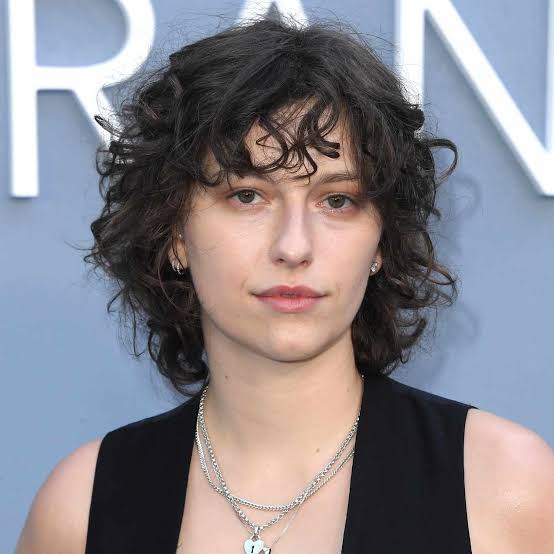
A wolf cut built for curls works because the layers follow the shape of the coil. This collarbone-length dark blonde version with highlights keeps the natural curl pattern intact, the curly bangs cut to land at brow level. The air-dried finish is the point, diffuse for definition or let it go for a softer, lived-in shape. Ask your stylist for: collarbone curly wolf cut, curly bangs, dark blonde with highlights. Medium curly texture is the ideal candidate here; tighter coils may need the bangs cut a bit longer to avoid shrinkage, and looser waves might not hold the layered shape. A curl-defining cream helps the individual spirals separate without crunch.
Dark Brown Wolf Cut With Shaggy Bangs
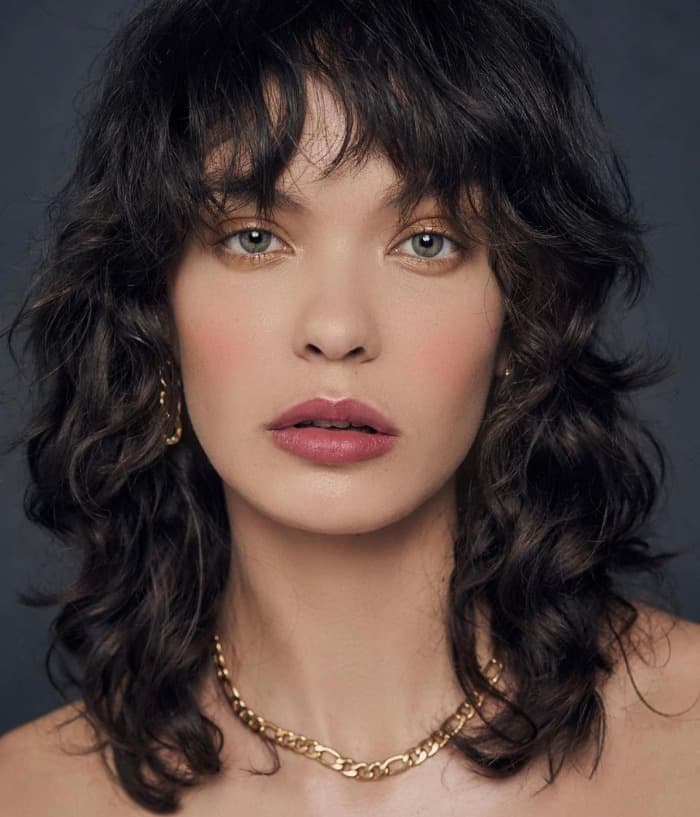
The shaggy bang is the detail that makes a wolf cut feel less precious and more lived-in. This collarbone-length dark brown version with subtle highlights leans into that, the shaggy bangs cut to blend into the prominent layers around the face. Thick, wavy hair is the natural home for this shape, since the density keeps the shaggy pieces from looking sparse. Ask your stylist for: collarbone wolf cut, shaggy bangs, dark brown. The words to use are “shaggy, not blunt”. That tells the stylist to keep the bangs piecey and soft rather than cutting a solid line. A texturizing paste worked through the ends adds separation without weight.
Thick Wavy Dark Brown Wolf Cut With Face-Framing Layers
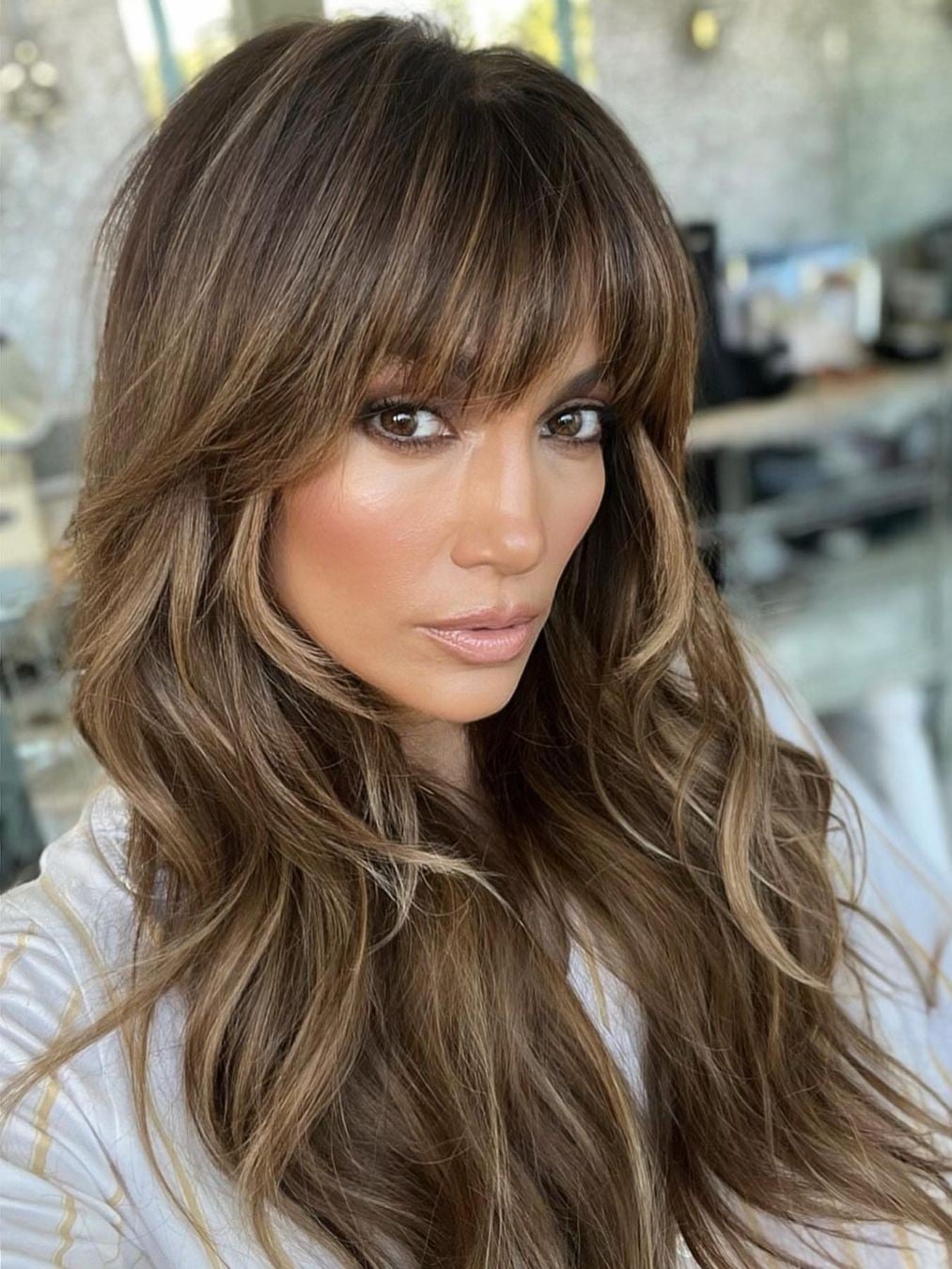
Ever feel like your thick, wavy hair just gets heavy and shapeless by lunch? The collarbone-length dark brown wolf cut with face-framing layers and subtle highlights is the answer, because it removes bulk where you need it while keeping that natural, air-dried texture. The curtain bangs and choppy layers work with your wave pattern, not against it, so the cut actually encourages the movement your hair already has.
This look suits those with genuinely thick, wavy hair starting at collarbone length; the face-framing layers balance the weight and keep the shape from turning into a triangle. Ask your stylist for: collarbone wolf cut, curtain bangs, face-framing layers, dark brown. To maintain the piece-y effect, apply a smoothing serum to tame frizz and let it dry without touching it. A trim every six to eight weeks keeps the layers from growing out into a shapeless blob.
Shoulder Length Dark Brown Wolf Cut With Blonde Highlights

If you’re torn between the lived-in look of a wolf cut and the polish of a blowout, this shoulder-length version with dark brown base, blonde highlights, and curtain bangs splits the difference. The choppy layers are cut to hold a wavy blowout, so you get the volume and bounce without the flat-ironed stiffness. The blonde highlights add contrast against the dark base, which makes the layers more visible and the whole cut read as intentional.
Chic Dark Brown Wolf Cut With Subtle Balayage
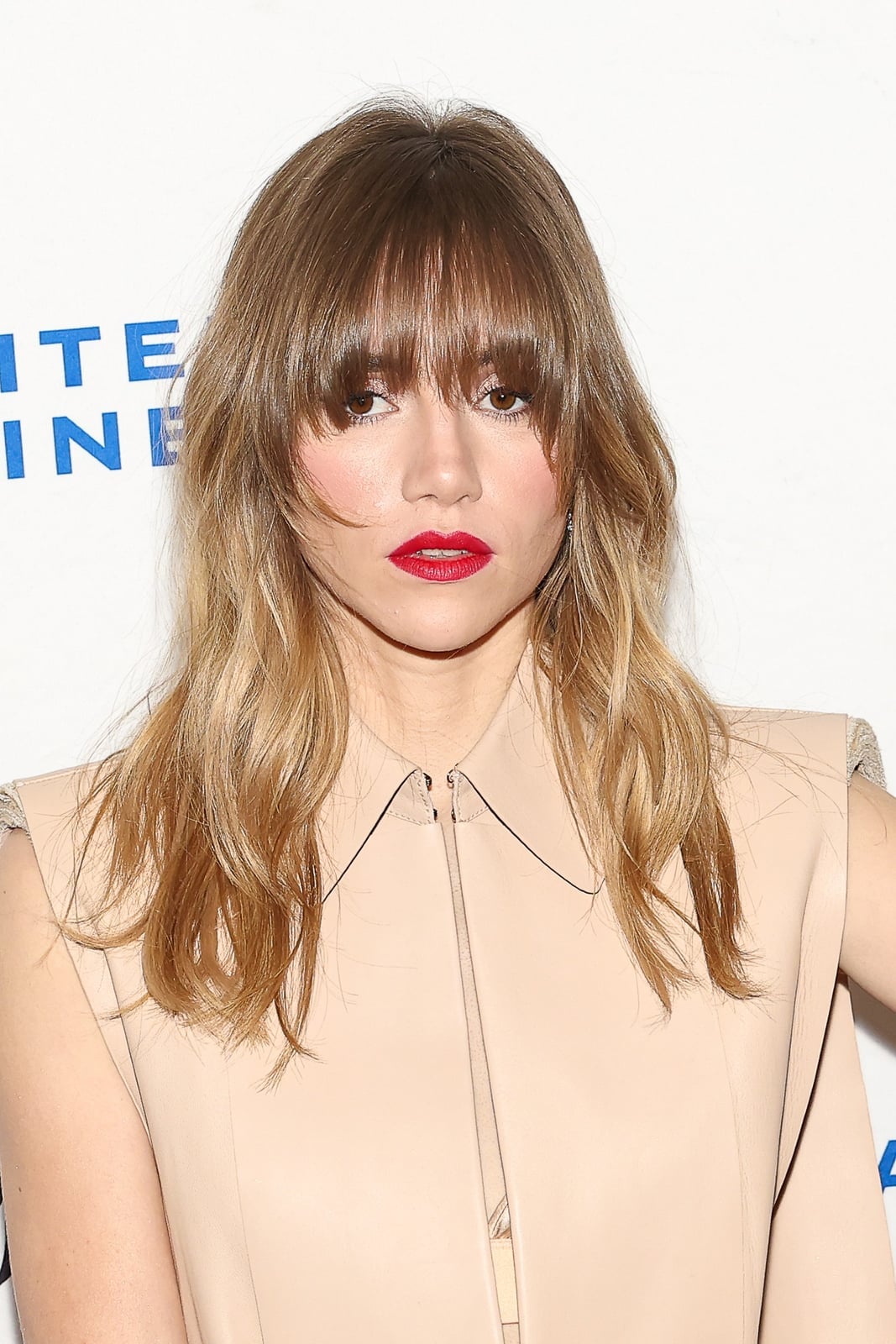
The design here is all about restraint: a collarbone-length wolf cut in dark brown with a subtle balayage that lifts the base just enough for dimension, plus prominent curtain bangs and face-framing layers. The loose, textured waves are styled to look natural, but the cut is precise. The balayage is painted on the ends, so the roots stay dark and the grow-out line is soft, not harsh.
Shoulder Length Light Brown Wolf Cut With Balayage
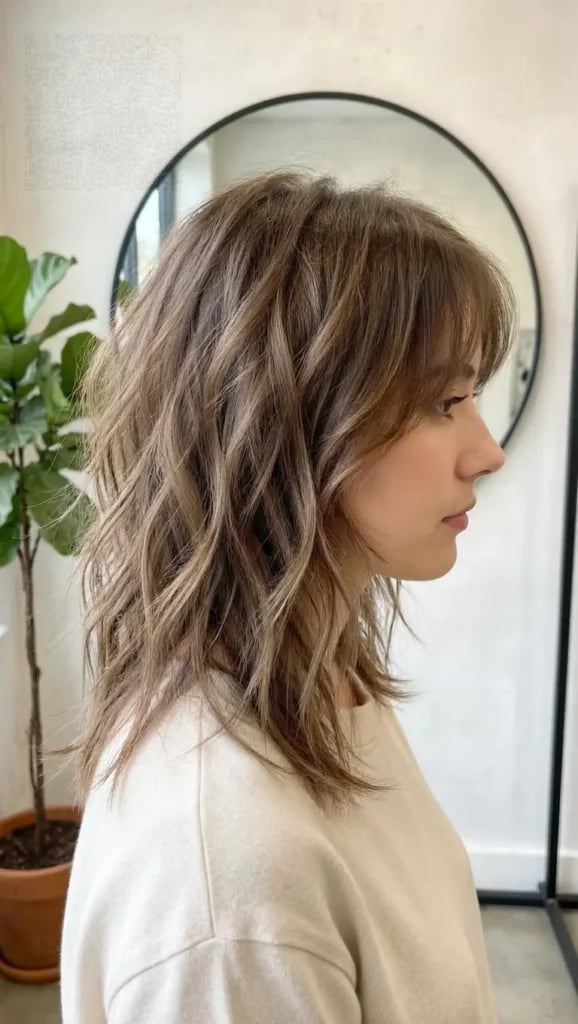
Not every wolf cut needs bangs, and this shoulder-length light brown version with balayage proves that a middle parting and choppy layers can do all the work. The side view shows how the layers frame the face without any fringe to soften the line, which makes it a sharper, more modern take. The balayage adds dimension to the light brown base, so the cut doesn’t look flat even when it’s air-dried.
This suits medium wavy hair starting at shoulder length, especially if you prefer a lower-maintenance style that doesn’t require daily styling. Ask your stylist for: shoulder length wolf cut, no bangs, light brown balayage. Use a shine serum to keep the balayage looking glossy, and plan on a trim every eight to ten weeks to maintain the choppy ends.
Mid-Back Blonde Wolf Cut With Curtain Fringe
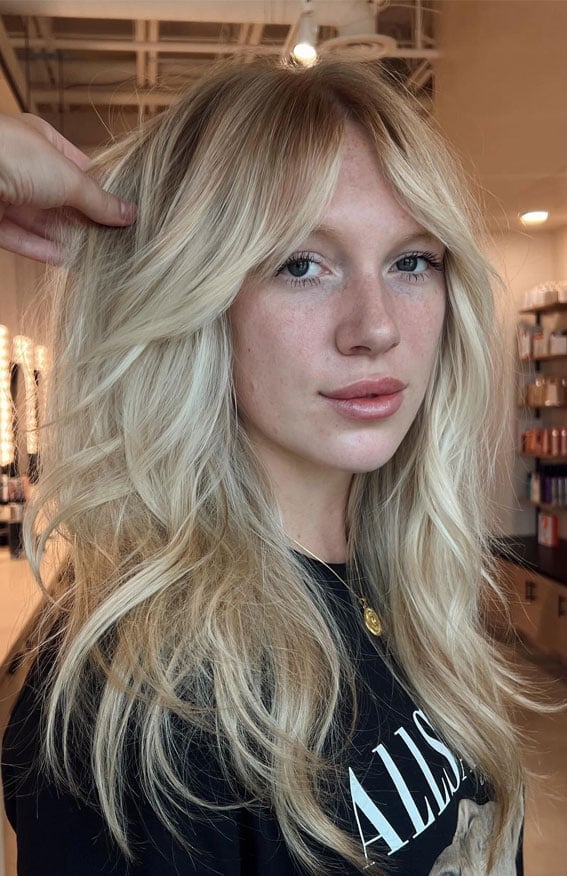
Can a wolf cut work on fine hair without falling flat? Yes, when it is cut to mid-back length with a prominent curtain fringe and loose waves, as this blonde balayage version shows. The long layers are cut to move with the hair’s natural wave, and the curtain fringe adds volume around the face, which is where fine hair tends to look thinnest. The balayage lightens the ends, adding the illusion of more density.
This is ideal for those with fine, wavy hair of mid-back length who want length and softness; the curtain fringe softens the face. Ask your stylist for: mid-back wolf cut, curtain fringe, blonde balayage. To keep the loose waves looking full, apply a volumizing product to damp hair and scrunch as it dries. Trim every eight to ten weeks to keep the fringe from getting too heavy.
Dark Brown Wolf Cut With Subtle Highlights And Side Part

The side part is the quiet workhorse of this collarbone-length cut, giving the face-framing layers a clear direction to move in. It does the heavy lifting of adding height at the crown, which matters if your hair is on the medium-density side. Ask your stylist for: collarbone wolf cut, curtain bangs, face-framing layers, side part. The subtle lighter highlights keep the dark brown from looking flat, and the wavy texture gives everything a lived-in finish that doesn’t require a second thought.
Honey Blonde Shoulder Wolf Cut With Textured Blowout
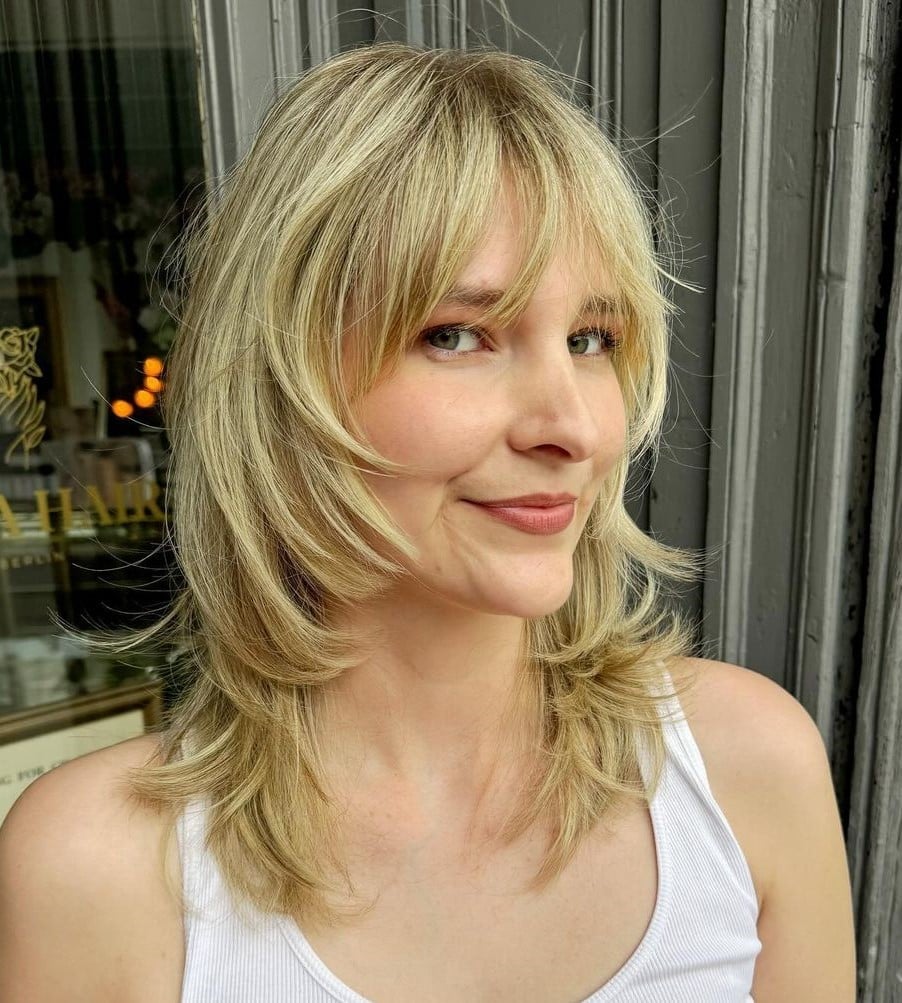
A good textured blowout on a shoulder-length wolf cut is a commitment, not an accident. Thick, wavy hair takes the shape beautifully, but you are looking at a solid ten minutes with a round brush and a dryer to get the curtain bangs to sweep just so. The payoff is volume that holds, though the shine does dull faster on honey blonde, so a gloss treatment every six weeks keeps it from looking tired. Ask your stylist for: shoulder length wolf cut, curtain bangs, honey blonde. The one real drawback is that on humid days, the texture can soften to the point of looking like a regular layered cut.
Honey Blonde Shoulder Wolf Cut With Choppy Bangs
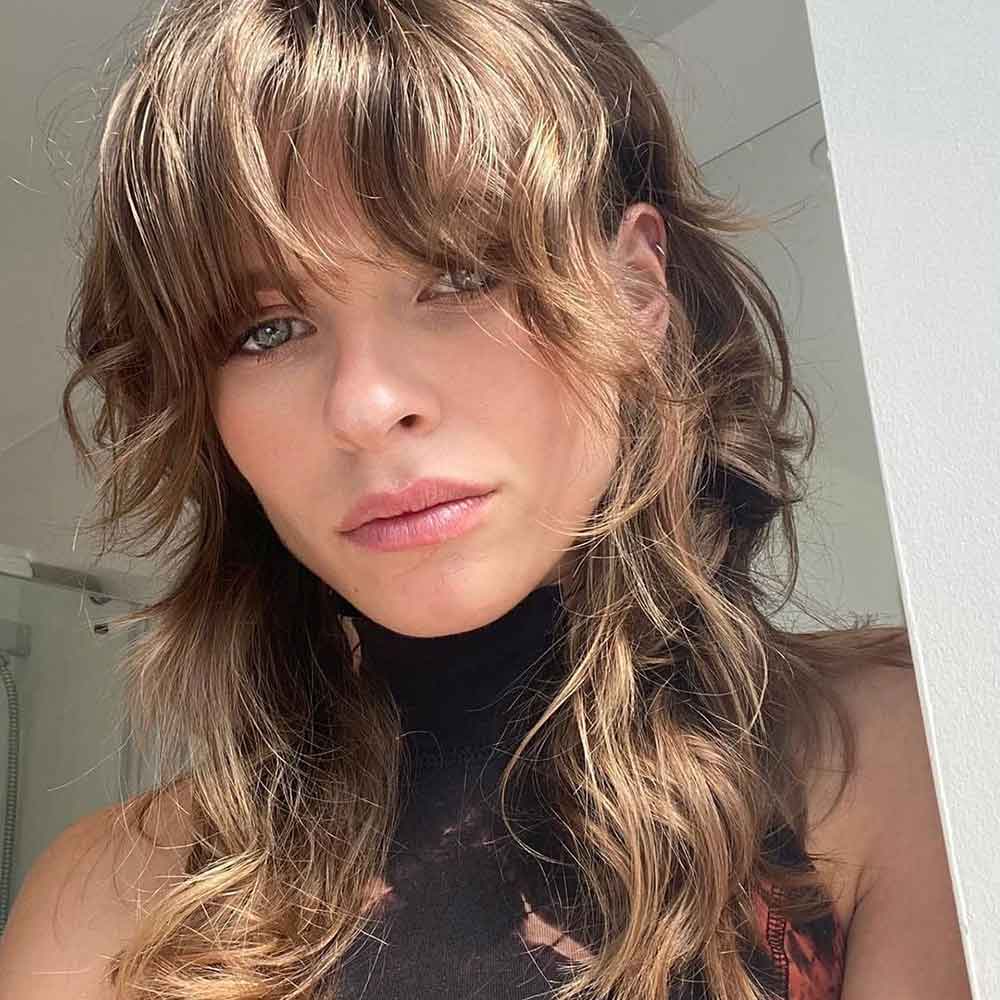
Choppy bangs are cut with a point-cutting technique that removes weight from the ends, so they sit with a deliberate jaggedness instead of a blunt line. On this shoulder-length honey blonde cut, the technique gives the layers an edge that an air-dried finish can carry without heat styling. The medium texture is ideal, as very fine hair can make the choppy ends look sparse. Ask your stylist for: shoulder length wolf cut, choppy bangs, honey blonde. The highlights break up the solid color, which helps the choppy sections look like texture instead of damage.
Shoulder Length Dark Brown Wolf Cut With Shaggy Bangs

Wondering how this differs from a classic shag? The wolf cut keeps more weight in the perimeter, so the layers are less disconnected and the overall shape reads softer. The shaggy bangs here are the giveaway, sweeping across the forehead and blending into the face-framing pieces, which leans playful rather than severe. This style suits medium-density wavy hair that can hold the shape without needing a curling iron. Ask your stylist for: shoulder length wolf cut, shaggy bangs, dark brown. The subtle highlights add dimension so the wavy, textured finish holds its shape throughout the day.
Chin Length Dark Brown Curly Wolf Cut With Soft Bangs

Fine, curly hair gets a genuine lift from the chin-length wolf cut, as the layers keep the curls from weighing each other down. The soft bangs are cut to blend with the curl pattern, which is a detail best left to a professional who knows how to cut curly hair when it is dry. Ask your stylist for: chin length curly wolf cut, soft bangs, dark brown. While you can maintain the air-dried texture at home with a curl cream, the initial shaping is a salon-leaning proposition, since a misjudged layer on fine curls will just look like a hole. The side part adds a little volume to the crown without disrupting the curl’s natural bounce.
Mid-Back Dark Brown Wolf Cut With Blunt Bangs, Close-Up Take

Loose waves on a mid-back wolf cut need to be coaxed, not left to chance. The blunt bangs give the dark brown base a graphic edge, while the subtle highlights keep the length from reading as one flat block. This is a cut that favors thick, wavy hair because the weight of the texture helps the layers hold their shape.
Ask your stylist for: mid-back wolf cut, blunt bangs, dark brown with highlights. A side part adds a little drama, so commit to styling with a large-barrel iron to form those loose curls. A smoothing serum tames any frizz without weighing the waves down. Plan on a trim every eight to ten weeks to keep the blunt bangs from turning into a curtain fringe.
Mid-Back Medium Brown Wolf Cut With Layers
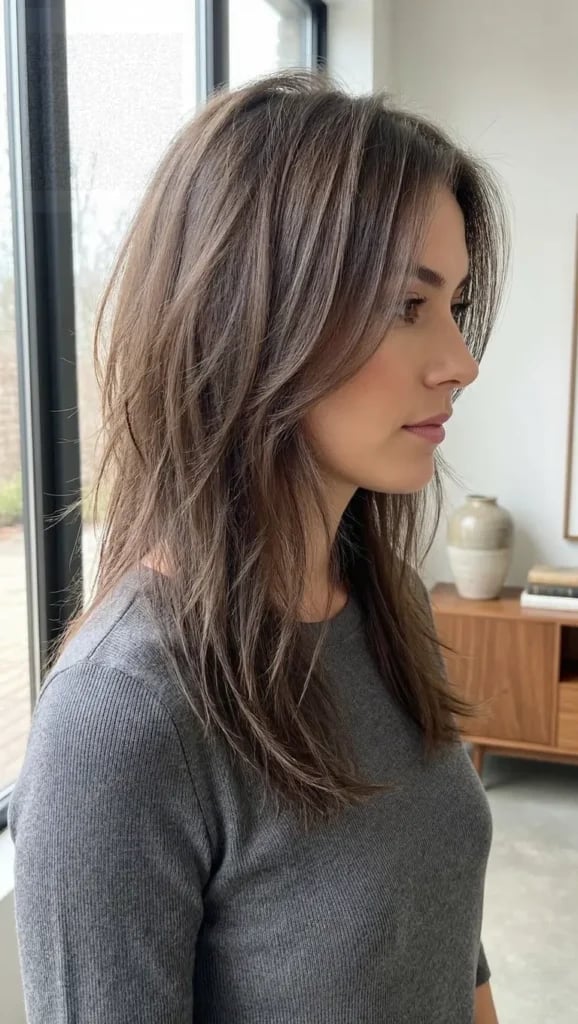
Layers are the workhorse of this mid-back wolf cut, especially when the strands are fine and straight. The medium brown base with subtle highlights gives the visible layers a soft, dimensional look without needing much effort. With no bangs and a middle part, the cut leans on the layering to create movement and shape where fine hair often falls flat.
Ask your stylist for: mid-back wolf cut, no bangs, medium brown with layers. The air-dried texture is the point, so skip the heavy products and instead use a volumizing spray at the roots to lift the crown. Because fine hair shows growth quickly, a trim every eight to ten weeks keeps the layers from disappearing.
Dark Brown Wolf Cut With Warm Highlights And Wispy Fringe
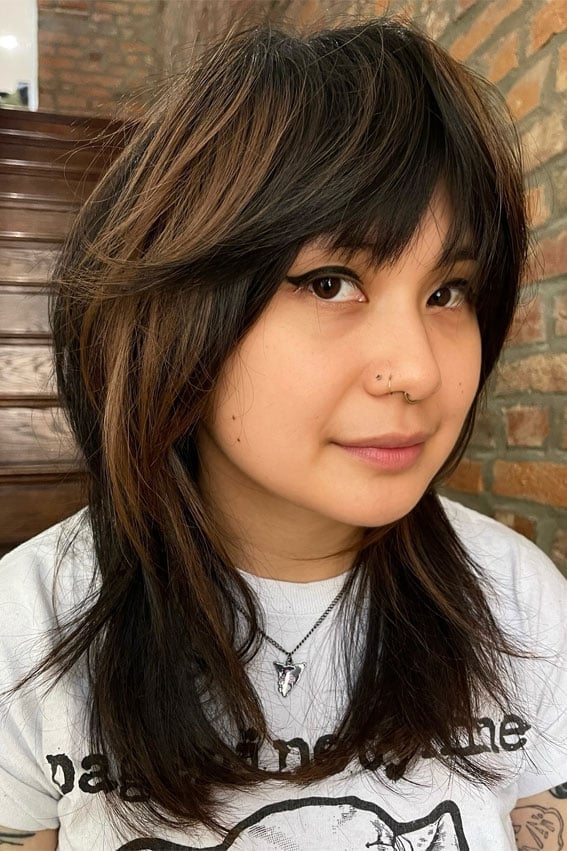
The wispy fringe is the softener here, taking the edge off a collarbone wolf cut that could otherwise feel too severe. Dark brown with warm highlights adds a sun-kissed dimension that moves with the choppy layers, and the shaggy texture does most of the talking.
Ask your stylist for: collarbone wolf cut, wispy fringe, dark brown with warm highlights. To keep the fringe from looking like an afterthought, ask for it to be cut dry so it falls naturally. A texturizing paste helps define the choppy ends, and a trim every six to eight weeks keeps the wispy shape from growing into heavy bangs.
Mid-Back Medium Brown Wolf Cut With Balayage and Wispy Bangs

Wondering if a wolf cut can work with thick, wavy hair? This one proves it can, as long as the face-framing layers are cut to follow the natural wave pattern. The mid-back length gives the thick texture room to move, while the medium brown balayage adds depth that keeps the air-dried waves from looking flat.
Ask your stylist for: mid-back wolf cut, wispy bangs, medium brown balayage. The wispy bangs are key, because thick hair can easily turn them into a solid fringe. A leave-in conditioner helps encourage the natural wave, and a trim every eight to ten weeks keeps the face-framing layers from losing their shape.
Collarbone Ash Blonde Wolf Cut With Curtain Bangs

The blowout is what makes this collarbone wolf cut look polished, and the ash blonde with subtle highlights gives it a lived-in finish that never looks brassy. Curtain bangs frame the face without demanding constant attention, which is the real trick of the cut.
Ask your stylist for: collarbone wolf cut, curtain bangs, ash blonde with highlights. The downside is that the wavy blowout takes some effort to maintain, so be prepared to reach for a round brush and a heat protectant. A texturizing spray can stretch the style an extra day, but a trim every six to eight weeks is necessary to keep the bangs from becoming a full fringe.
Collarbone Dark Brown Wolf Cut With Blunt Bangs
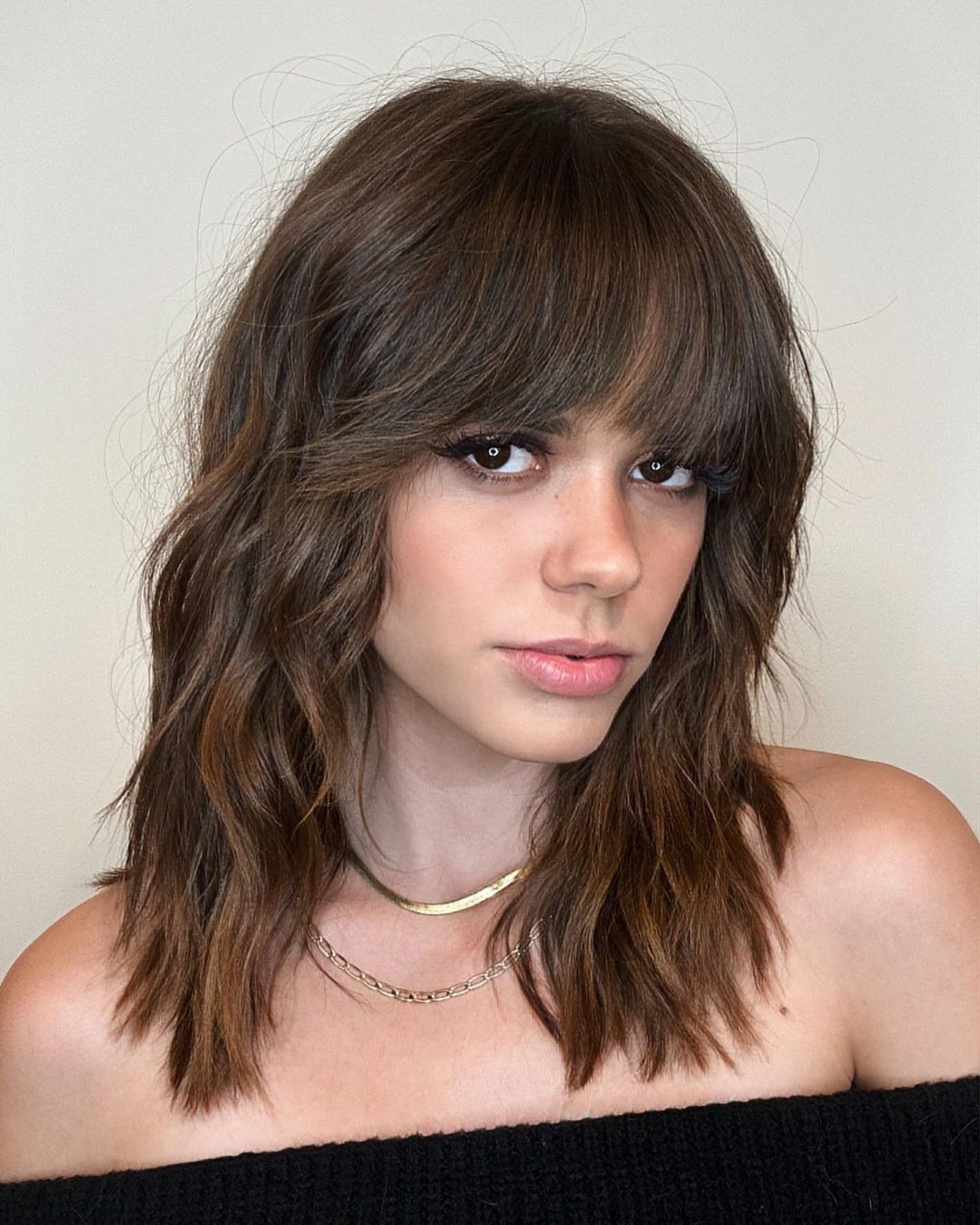
The blunt bangs are the anchor here, cut straight across to balance the choppy layers stacked through the back. That contrast is the whole trick: the fringe gives structure while the layers keep the movement loose. For medium density wavy hair starting at collarbone length, this cut adds definition without thinning out the ends. Ask your stylist for a collarbone wolf cut, blunt bangs, choppy layers, side part. A texturizing spray helps hold the shape, and the blunt fringe needs a trim every six to eight weeks to stay crisp. The side parting softens the line of the bangs, so it wears well for everyday with a bit of edge.
Final Thoughts
For fine hair, keep a blunt baseline and skip heavy layers to hold volume. For thick hair, let the length fall past the collarbone and lean on face-framing pieces to manage density. Either way, the wolf cut adapts to you, not the other way around.
- Trim the shape every six to eight weeks.
- Use a texturizing spray on dry hair.
- Apply heat protectant before styling.
- Tone blonde shades every four to six weeks.
Embrace the modern wolf cut for a look that’s both edgy and undeniably chic.