Curtain bangs are the most adaptable fringe in rotation: soft, face-framing pieces that blend into the rest of the cut instead of sitting as a separate strip. Right now the shift is toward longer, more lived-in curtain bangs that air-dry as easily as they blow out.
This collection of 33 Easy Ways to Style Curtain Bangs covers every texture, from fine and straight to thick and wavy, at lengths from collarbone to mid-back. Whether your fringe falls flat by afternoon or refuses to sit at all, these looks give you a practical fix without a full restyle.
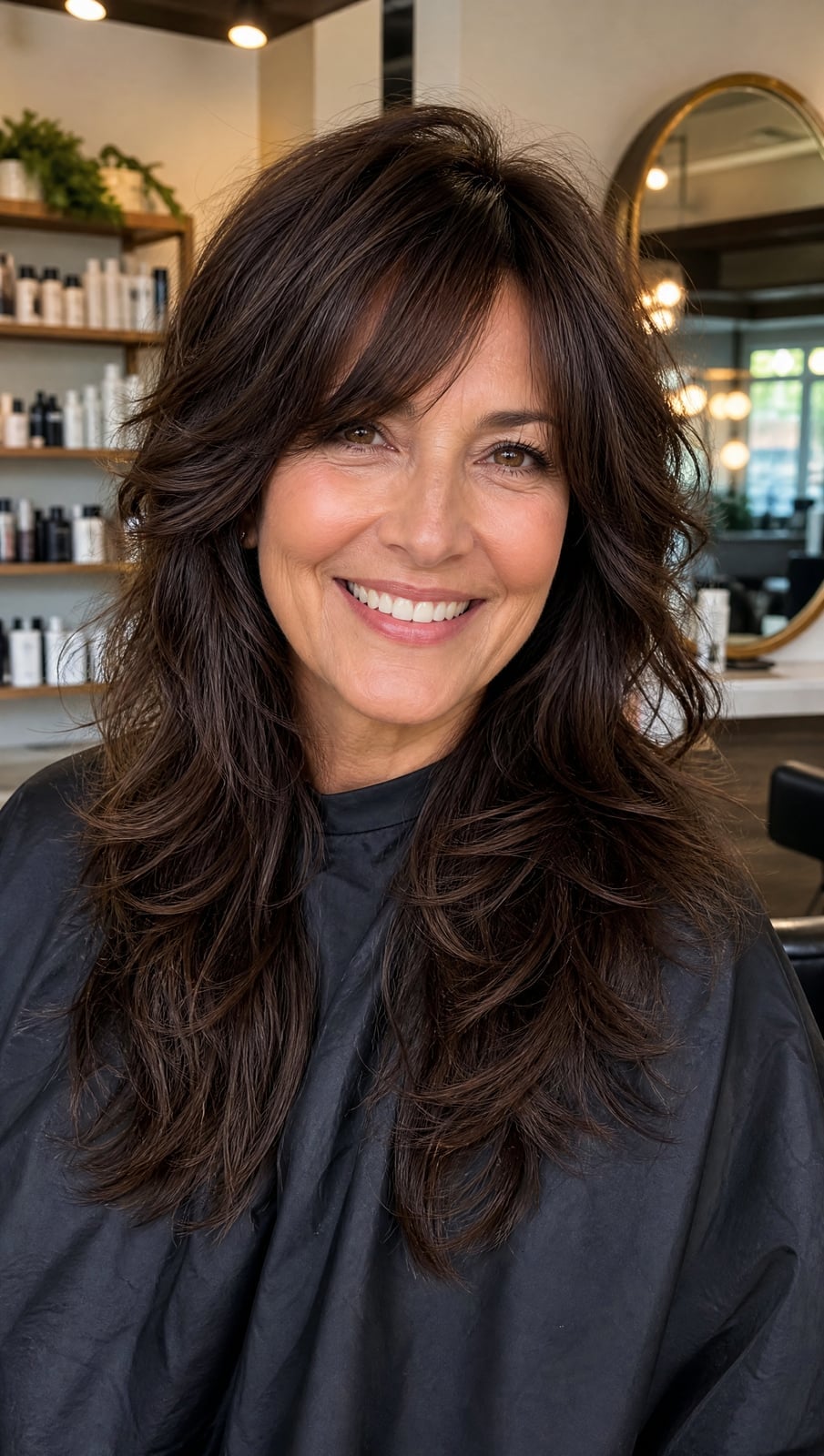
Thick Wavy Mid-Back Hair With Curtain Bangs
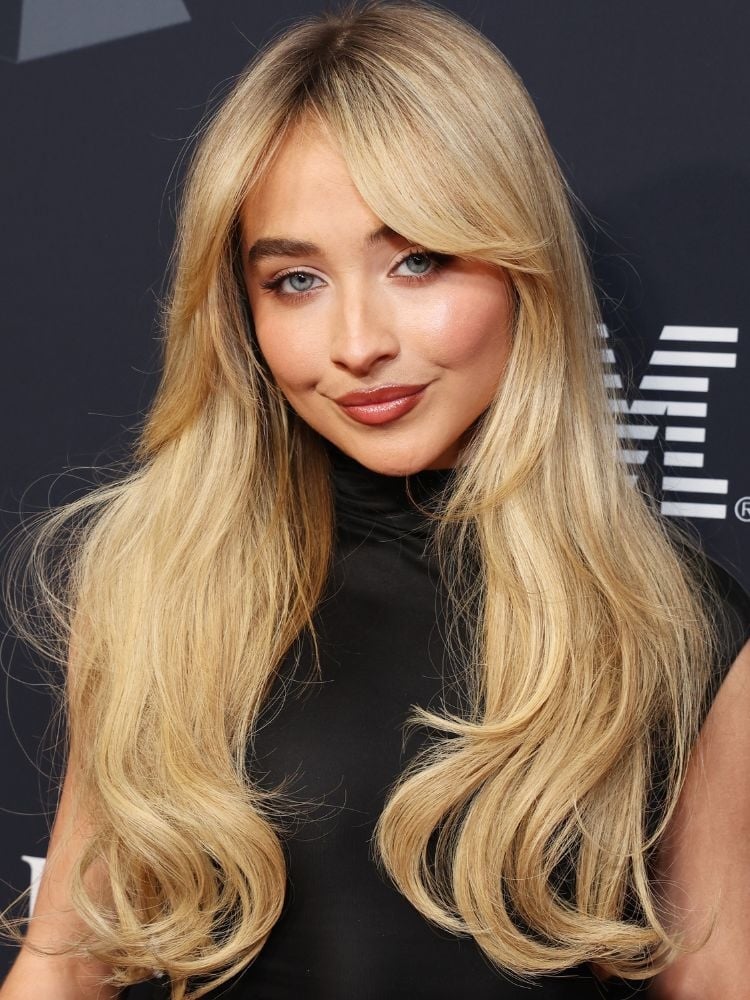
Ask your stylist for: mid-back layers with curtain bangs, dark brown balayage. For the blowout, a large round brush at the roots and a medium one for the bangs will coax out the wave pattern. Plan on a trim every six to eight weeks to keep the bangs from grazing your chin.
Collarbone Length Fine Wavy Hair
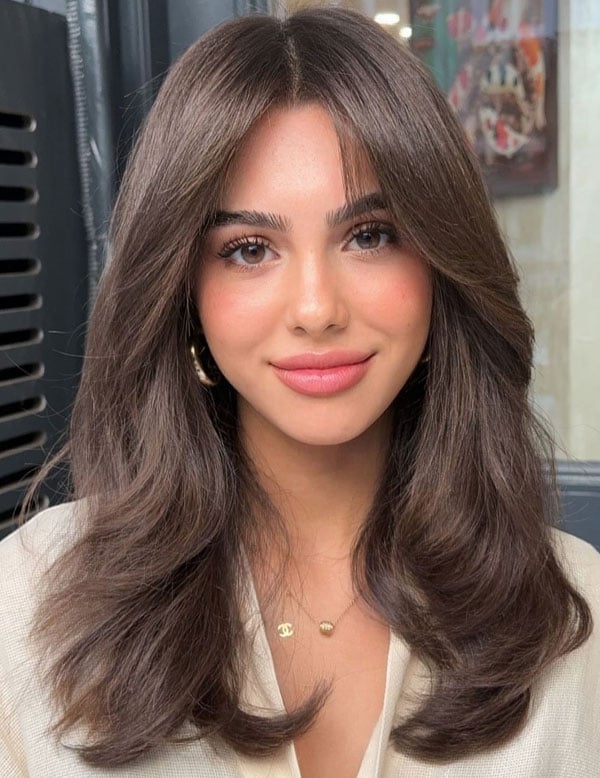
Can fine hair hold a curtain bang without looking stringy? Yes, but the cut has to do the work. The collarbone length and layers bulk up the body, while the wavy texture and blowout add volume that a flat iron would erase. The dark brown base keeps the ends looking dense rather than see-through. Ask your stylist for: collarbone length layers with curtain bangs, fine wavy texture. A volumizing mousse before drying helps, and a trim every six weeks keeps the baseline clean.
Thick Collarbone Waves With Styled Bangs
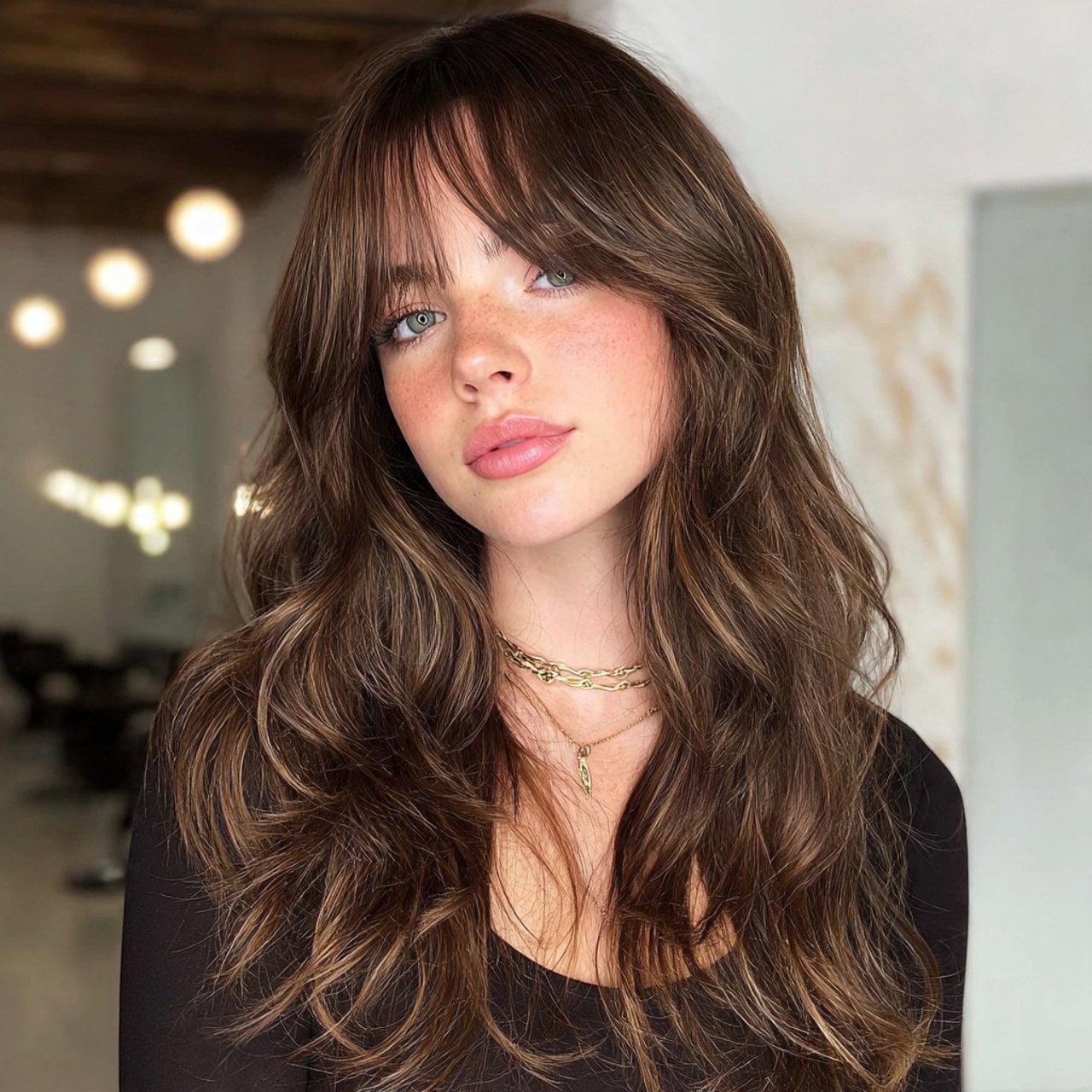
This is less a wash-and-go curtain bang and more a styled, polished version. The difference is in the cutting technique: the face-framing layers are carved to feather toward the cheekbones, and the bangs are cut with a slight graduation so they curve around the face rather than falling flat. The medium brown base with blonde highlights adds visual depth. Ask your stylist for: collarbone length layers, styled curtain bangs, medium brown with highlights. A medium round brush and a blow-dryer with a concentrator nozzle give the shape at home.
Medium Blonde Mid-Back Loose Waves
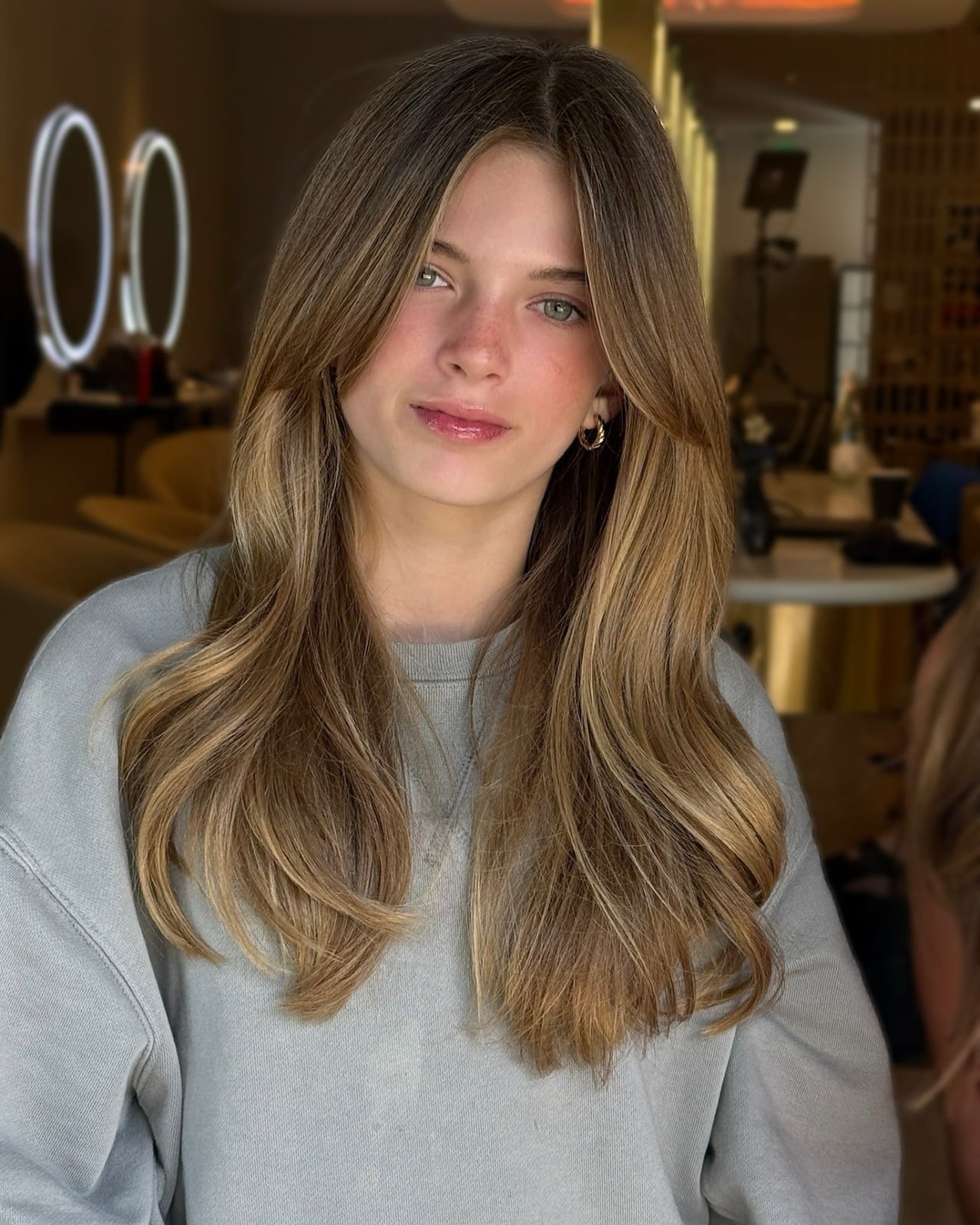
Long layers and soft curtain bangs create a different silhouette than the more structured versions. Instead of a defined C-curve, these bangs blend into the mid-back length, making the fringe feel less like a separate piece and more like the front edge of the haircut. The medium blonde with lighter highlights keeps the look airy. Medium density, wavy hair carries this style well. The trade-off: soft bangs need more frequent trims (every eight weeks) to avoid collapsing into the layers. Ask your stylist for: mid-back long layers, soft curtain bangs, medium blonde highlights.
Dark Blonde Collarbone Blowout
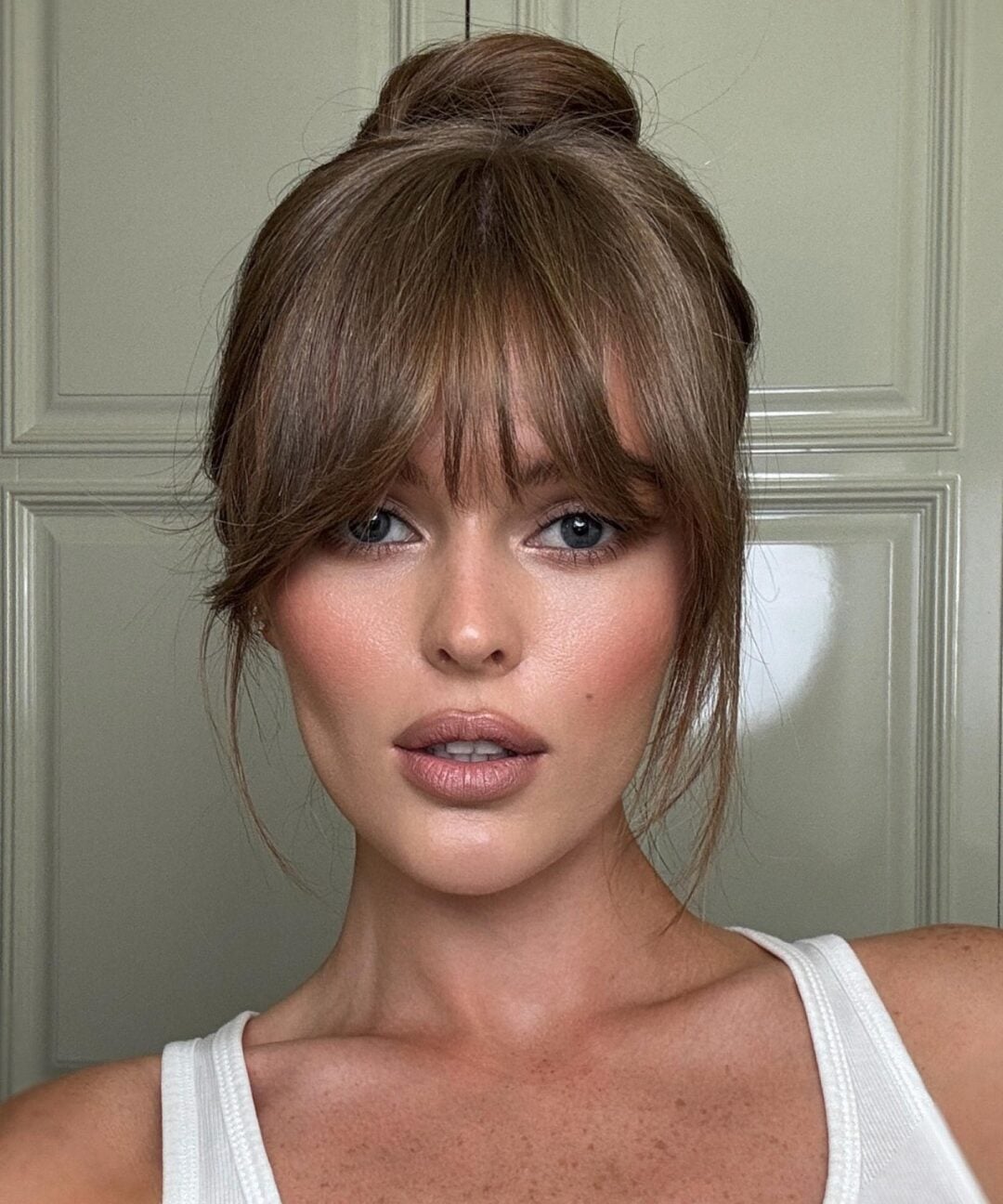
A collarbone blowout with curtain bangs is a request, not an accident. The key detail is the root lift: the bangs are styled to sweep back and then fall forward, creating a soft arch that frames the brows. The thick, wavy texture holds the shape without product, and the dark blonde with lighter highlights adds contrast. Ask your stylist for: collarbone length layers, curtain bangs, dark blonde with highlights. This is a six-week trim rhythm to keep the bangs from hitting the lip.
Collarbone Layers With Side Parted Bangs
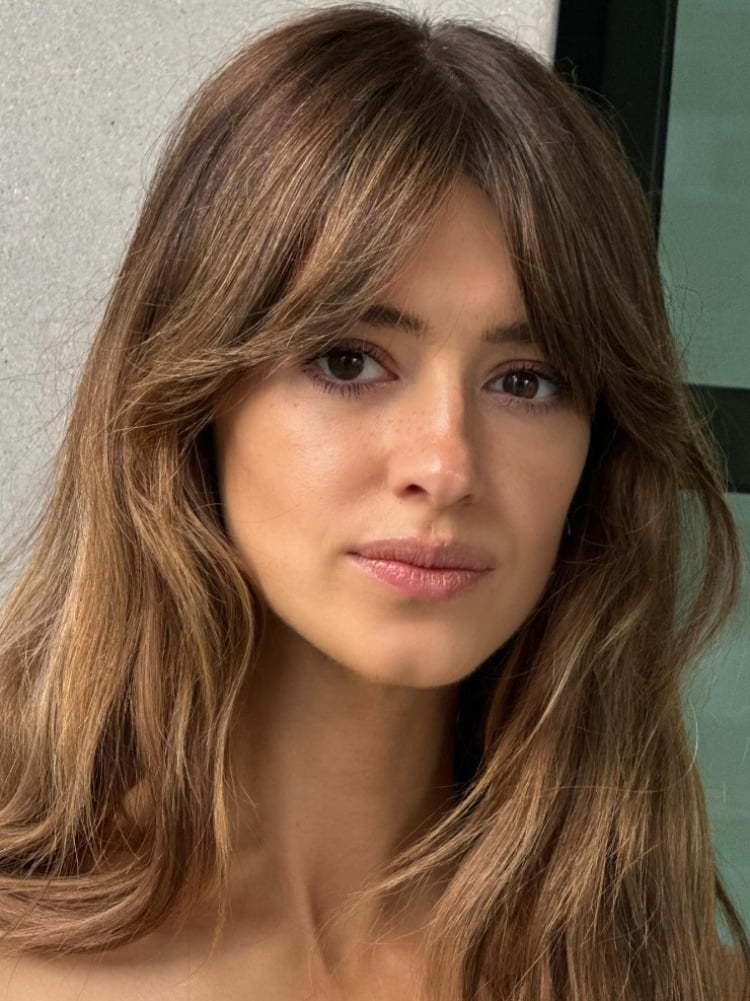
What happens when you take a classic curtain bang and shift the part a few inches to the side? The bangs drape asymmetrically, one side grazing the brow bone while the other tucks behind the ear. This collarbone-length cut with subtle highlights works best on medium-density wavy hair and suits oval faces. Ask your stylist for: collarbone length layers, curtain bangs with side part. Blow-dry the bangs away from your face with a round brush and schedule a trim every six weeks.
Blonde Collarbone Layers Textured Waves
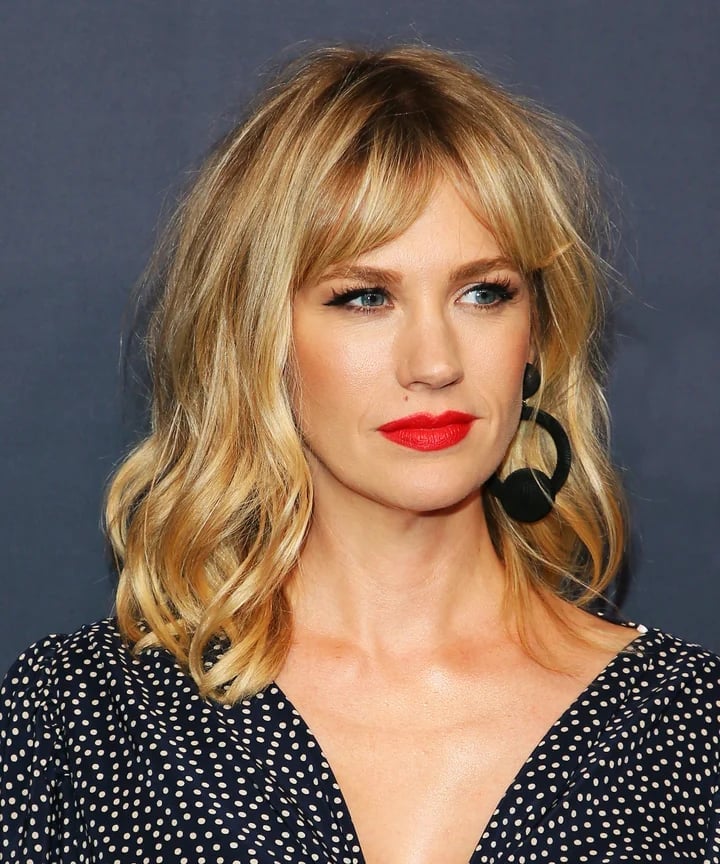
The trick to textured waves that still show off a curtain bang is in the layering pattern. This collarbone-length cut uses internal layers that start below the ear, so the bangs hold their shape while the hair gets that piecey, undone finish. The medium density and wavy texture make it a good match for the technique.
Ask your stylist for: collarbone length layers, curtain bangs, blonde with subtle highlights. A salon visit is required for the initial cut, but the daily styling is simple. Use a texturizing spray and scrunch; you can skip the round brush entirely.
Medium Brown Collarbone Blowout
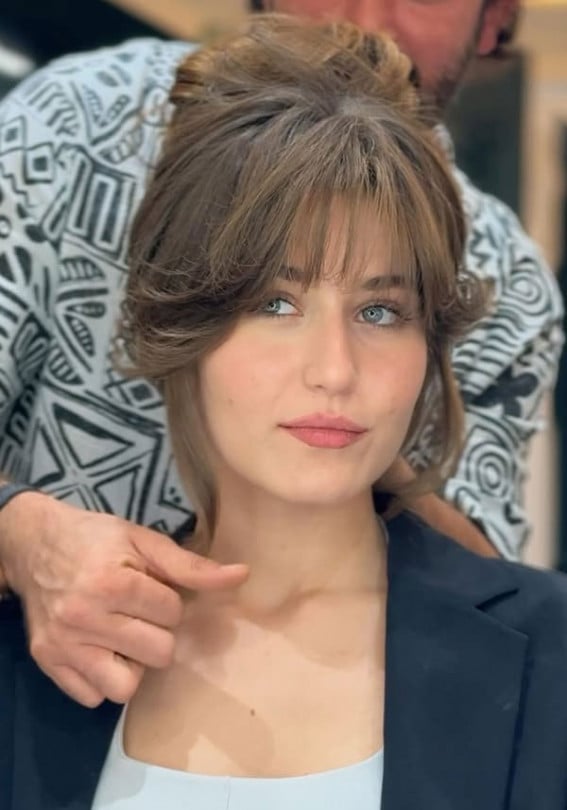
It is not a blunt bob, though the collarbone length might tempt you to ask for one. This cut keeps the weight off the ends with face-framing layers that start at the jaw, making it a better choice for medium-density wavy hair that wants movement without losing length. The middle-parted curtain bangs and subtle highlights add dimension. Ask your stylist for: collarbone length layers, curtain bangs, medium brown with highlights. A blow-dry with a round brush is the standard finish, and the style works equally well for a workday or a casual weekend.
Medium Brown Collarbone Layers, Wavy
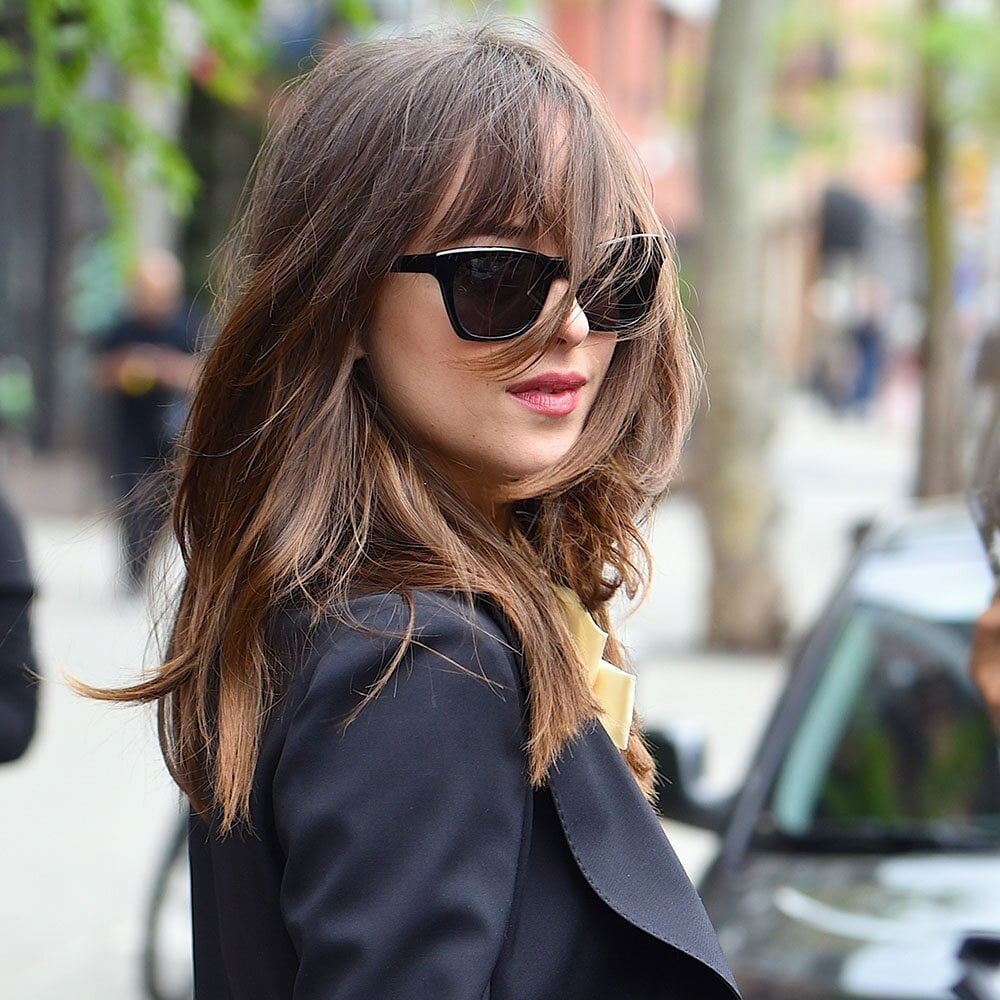
Wondering whether to take the layers shorter or keep them long at collarbone length? Longer layers, like these, let the curtain bangs blend gradually into the hair instead of sitting as a separate piece. This creates a continuous flow of loose waves that still frames the face. Medium-density wavy hair handles this cut well. Ask your stylist for: collarbone length long layers, curtain bangs, medium brown. Apply a smoothing serum before blow-drying to keep the waves defined, and trim the baseline every six weeks.
Light Brown Collarbone Soft Waves
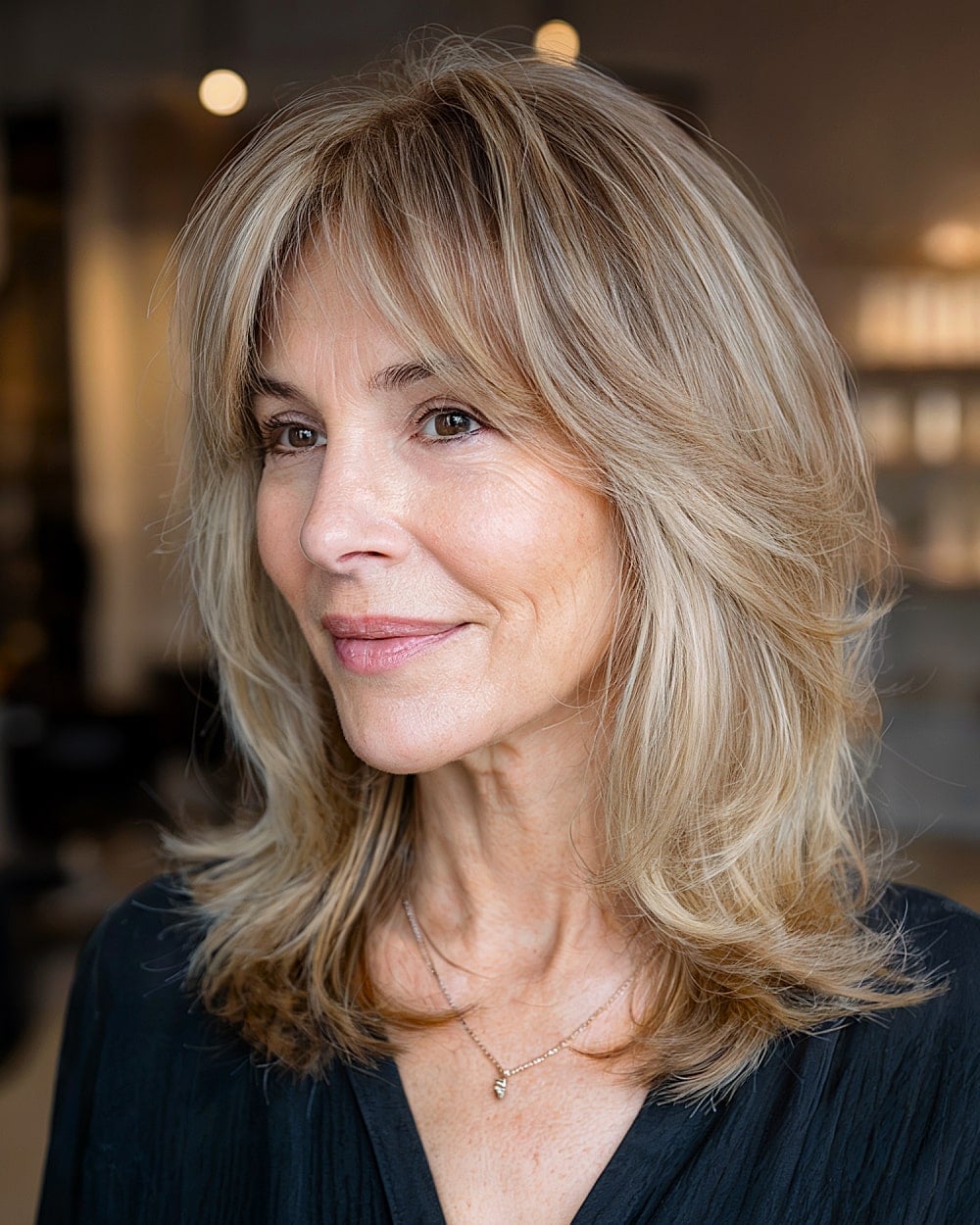
These soft waves look like they took no effort, which is the design working as intended. The long layers and middle-parted curtain bangs are cut to fall into a gentle S-shape with minimal coaxing. The drawback is that the soft wave pattern does not hold past eight hours without a wave spray or a quick refresh. Medium-density wavy hair at collarbone length is the ideal canvas. Ask your stylist for: collarbone length layers, curtain bangs, light brown with blonde highlights. The styling steps are short: apply a wave spray, scrunch, and air-dry or use a diffuser.
Fine Straight Collarbone Blowout
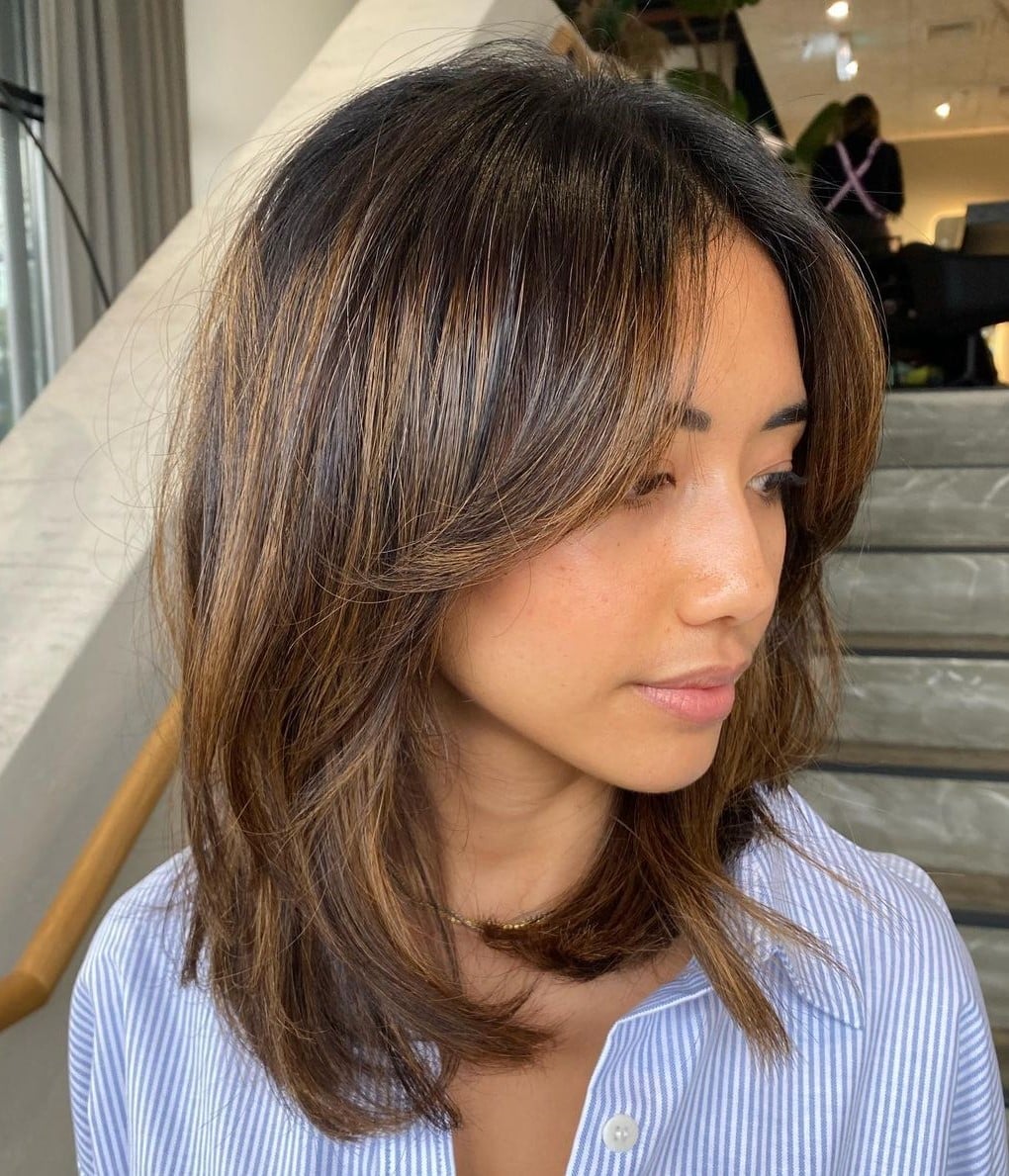
Fine, straight hair works well with a blunt collarbone cut and long layers, but the curtain bangs are where the design earns its keep. The middle part and the soft, graduated fringe create the illusion of density without extra product weight. Ask your stylist for: collarbone length layers, curtain bangs, fine straight hair. A round brush delivers the glossy finish; plan on a trim every six weeks.
Fine Collarbone Waves With Bangs
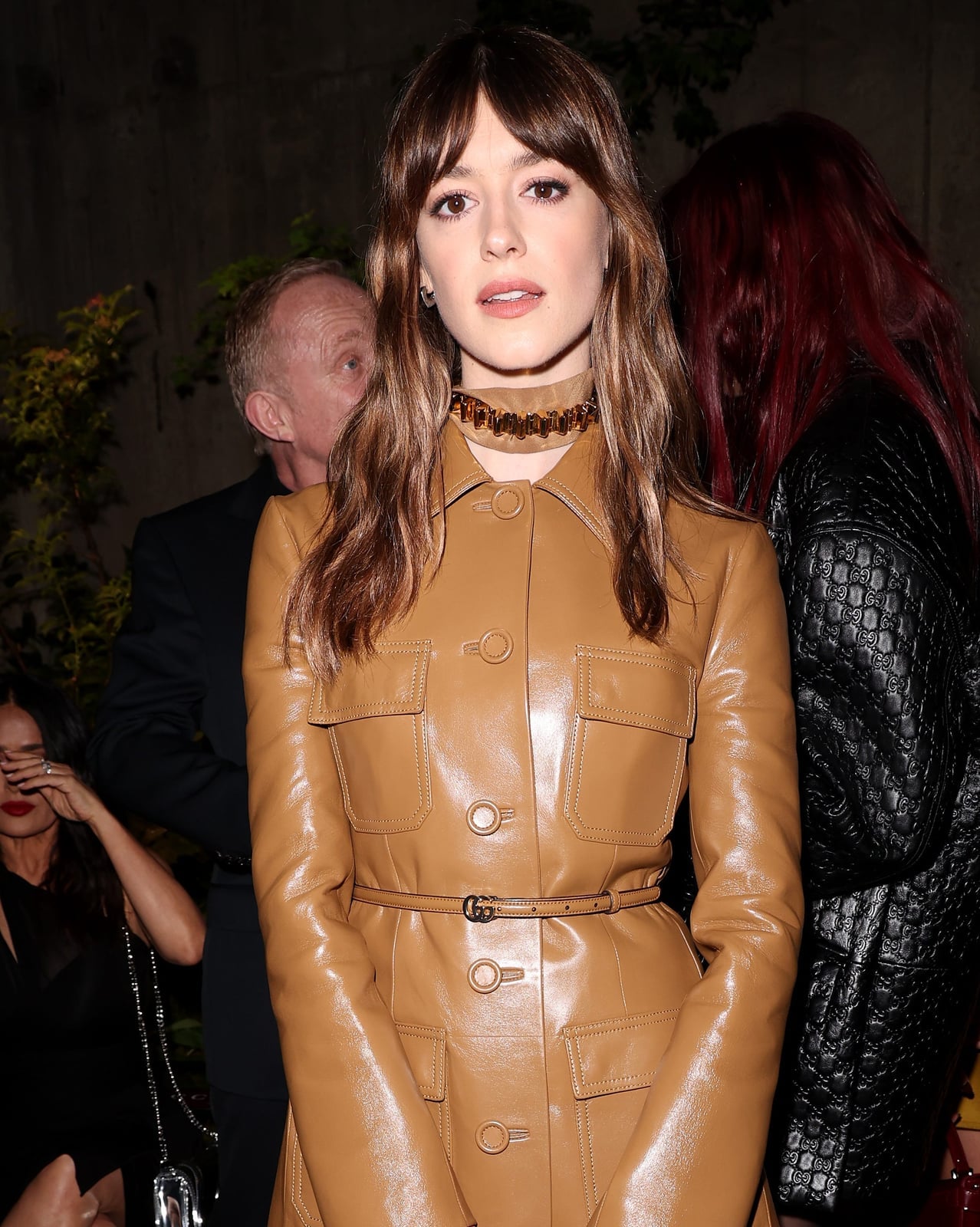
Can fine, wavy hair pull off curtain bangs without looking sparse? Yes, if the layers fall just past the collarbone and the side part directs the fringe across the forehead instead of straight down. Ask your stylist for: collarbone length layers, curtain bangs with side part, blonde highlights. The polished blowout keeps the texture smooth and the ends from feathering out.
Brunette Collarbone Blowout
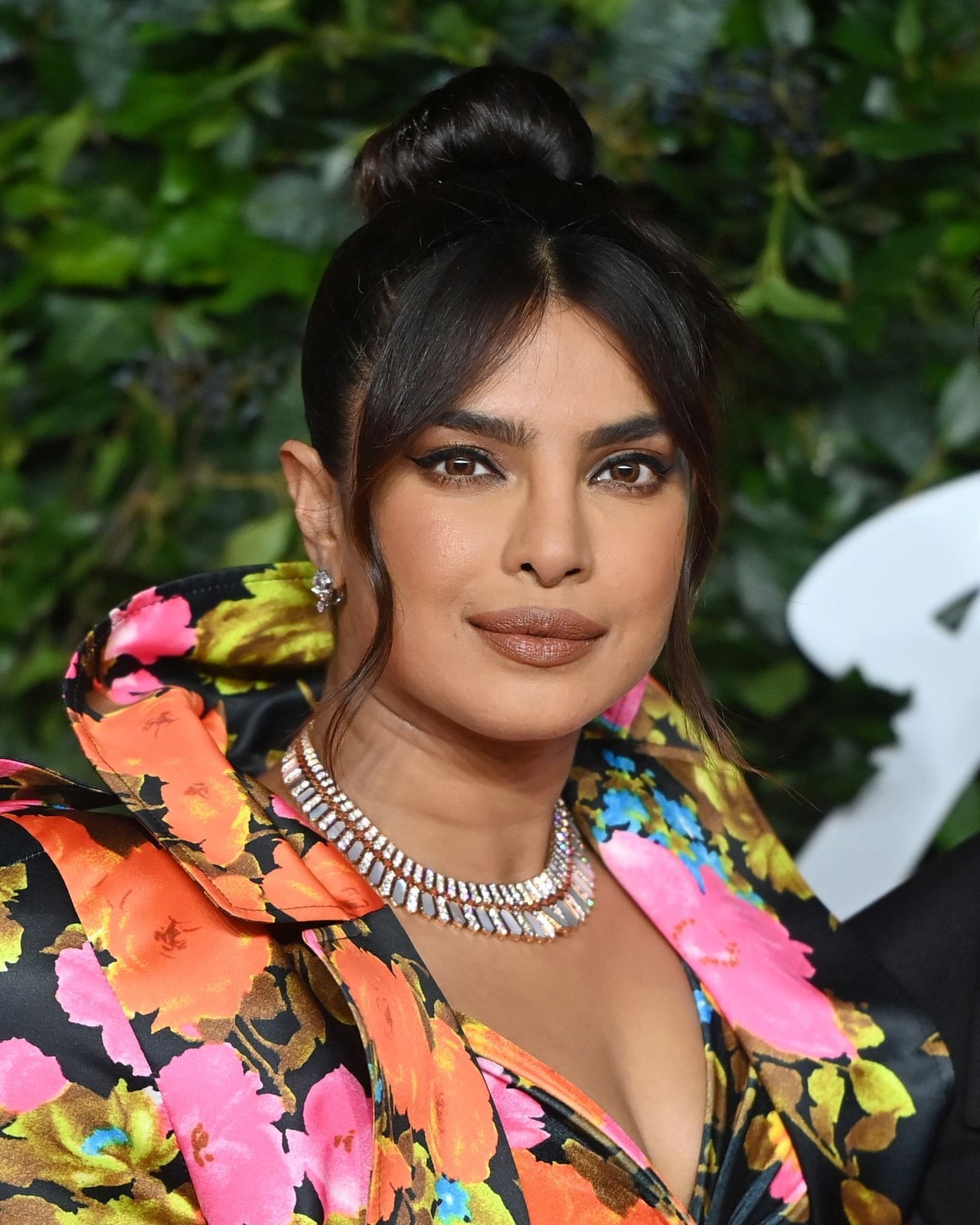
A soft blowout on fine, wavy hair reads as polished until about midday, when the side-parted curtain bangs start to separate. That is the nature of the texture, not a flaw. Ask your stylist for: collarbone length layers, curtain bangs with side part, brunette with highlights. A DIY blowout with a round brush and a heat protectant extends the window by a few hours. The baseline needs a trim every six weeks to keep the shape.
Brown Balayage Collarbone Air-Dried

The air-dried finish on collarbone-length layers relies on the balayage to add dimension where the waves fall flat. A wave-enhancing cream worked through damp hair encourages the curtain bangs to separate at the side part without heat. Ask your stylist for: collarbone length layers, curtain bangs with side part, brown balayage. This is a summer weekend look, but it holds up for a casual office day if the air is dry.
Brown Balayage Collarbone Air-Dried With Face-Framing Effect
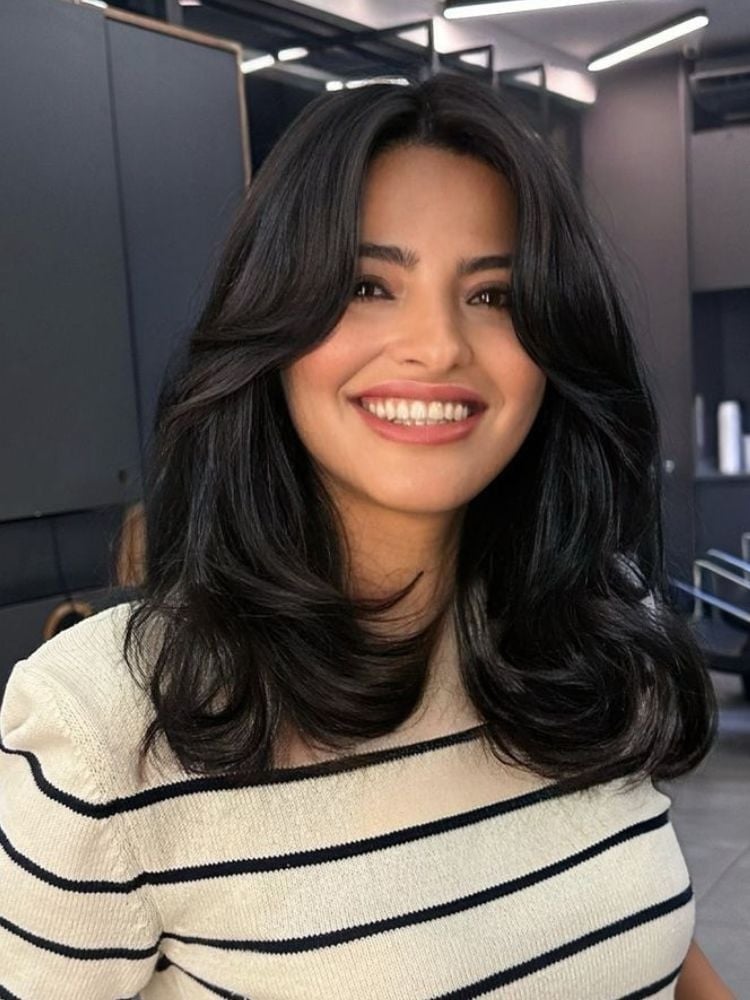
Air-drying this balayage and curtain-bang combination produces a softer face-framing effect than a blowout, but the texture can read as unkempt if the layers are too long. The drawback is that the waves lack the intentional sweep a round brush creates. Ask your stylist for: collarbone length layers, curtain bangs with side part, brown balayage. A quick pass with a flat iron on the bangs only solves the problem without committing to a full blowout.
Shoulder Length Blonde Blowout
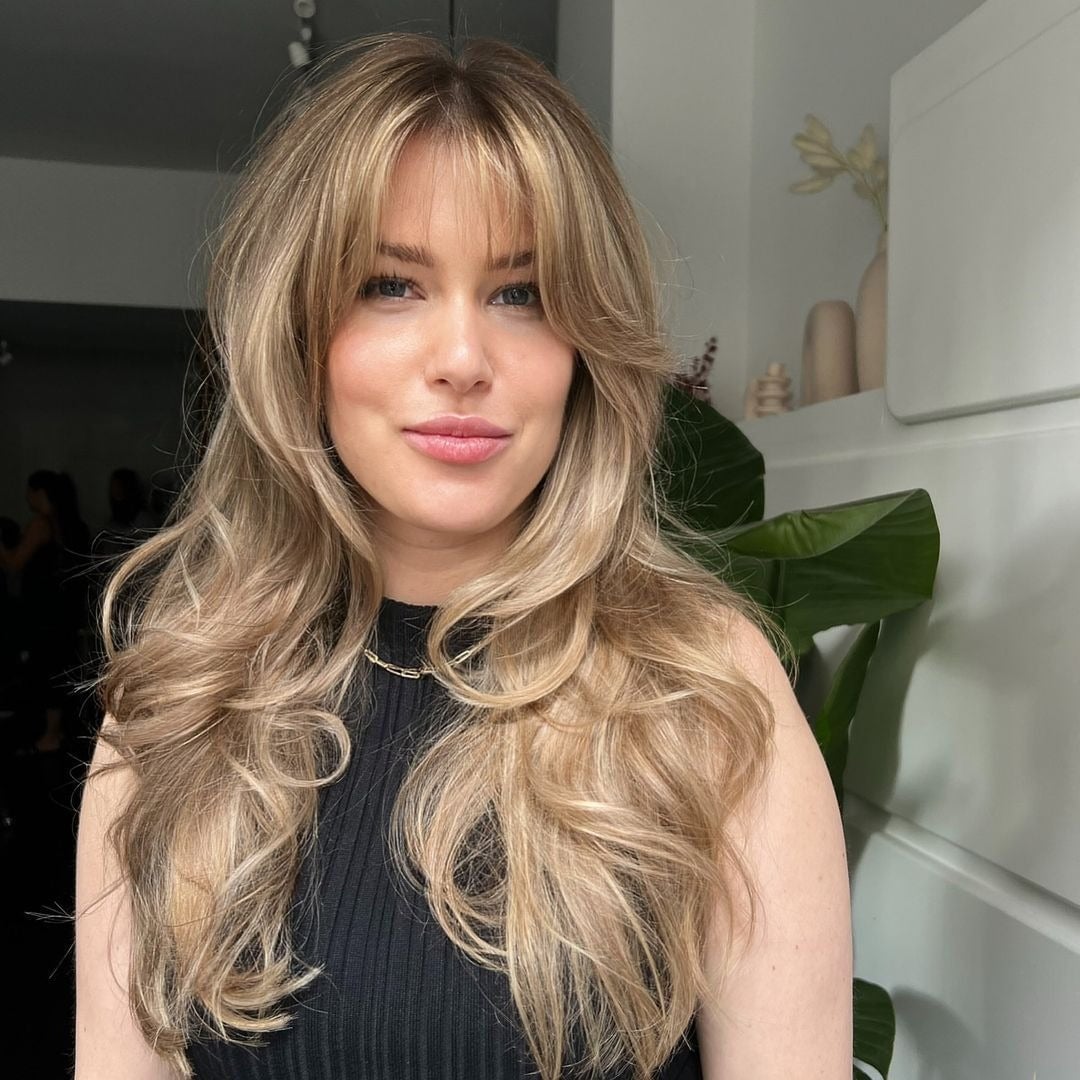
The blonde base with highlights gives the wavy texture dimension without looking flat. Ask your stylist for: shoulder length layers, curtain bangs with side part. A round brush and a dryer are your tools at home, direct the bangs away from your face as you dry. Plan on a trim every six weeks to keep the bangs at brow level and the ends from splitting.
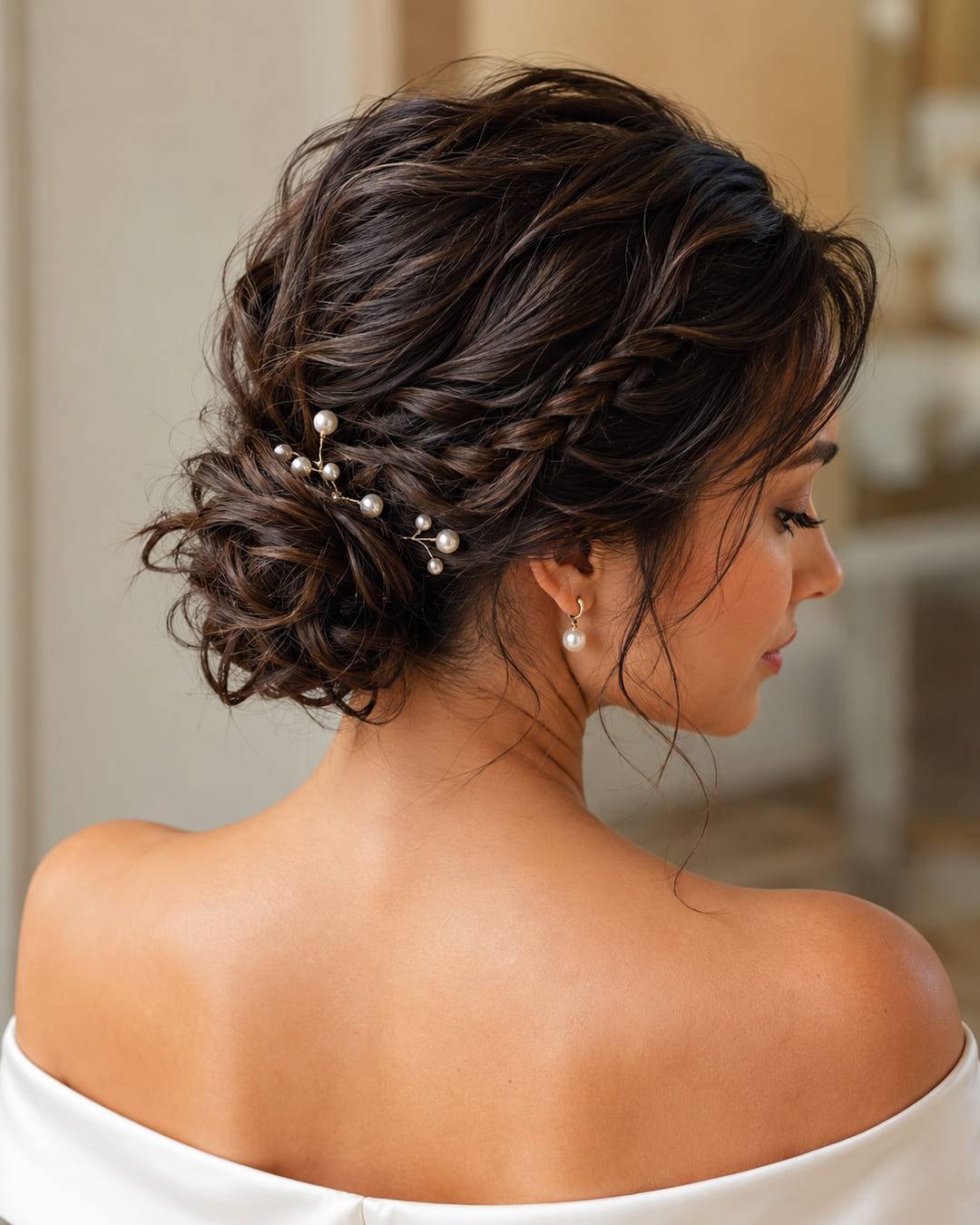
Shoulder Length Updo With Bangs and Dark Brown With Subtle Highlights
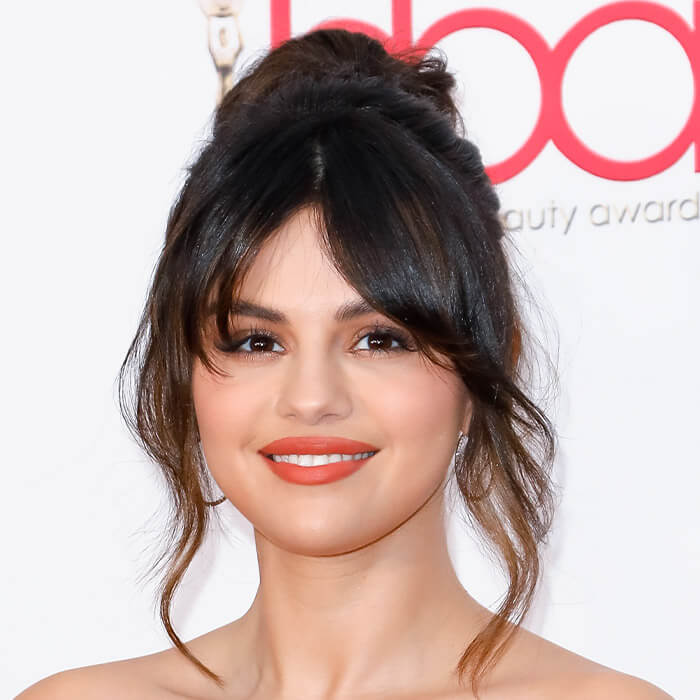
An updo with a side part and face-framing curtain bangs is a design that works because of what it omits: the bulk of shoulder-length hair is pinned up, leaving the bangs as the only moving piece. Fine, wavy dark brown hair with subtle highlights holds an updo better than straight hair, since the texture gives the pins something to grip. This is an evening or formal occasion shape, not a daily one, because the bangs need to be styled with a round brush first and then settled into the updo without pulling the fringe flat. Ask your stylist for: shoulder length updo, wispy curtain bangs with side part. Plan on a trim every six weeks so the bangs stay above the brow bone.
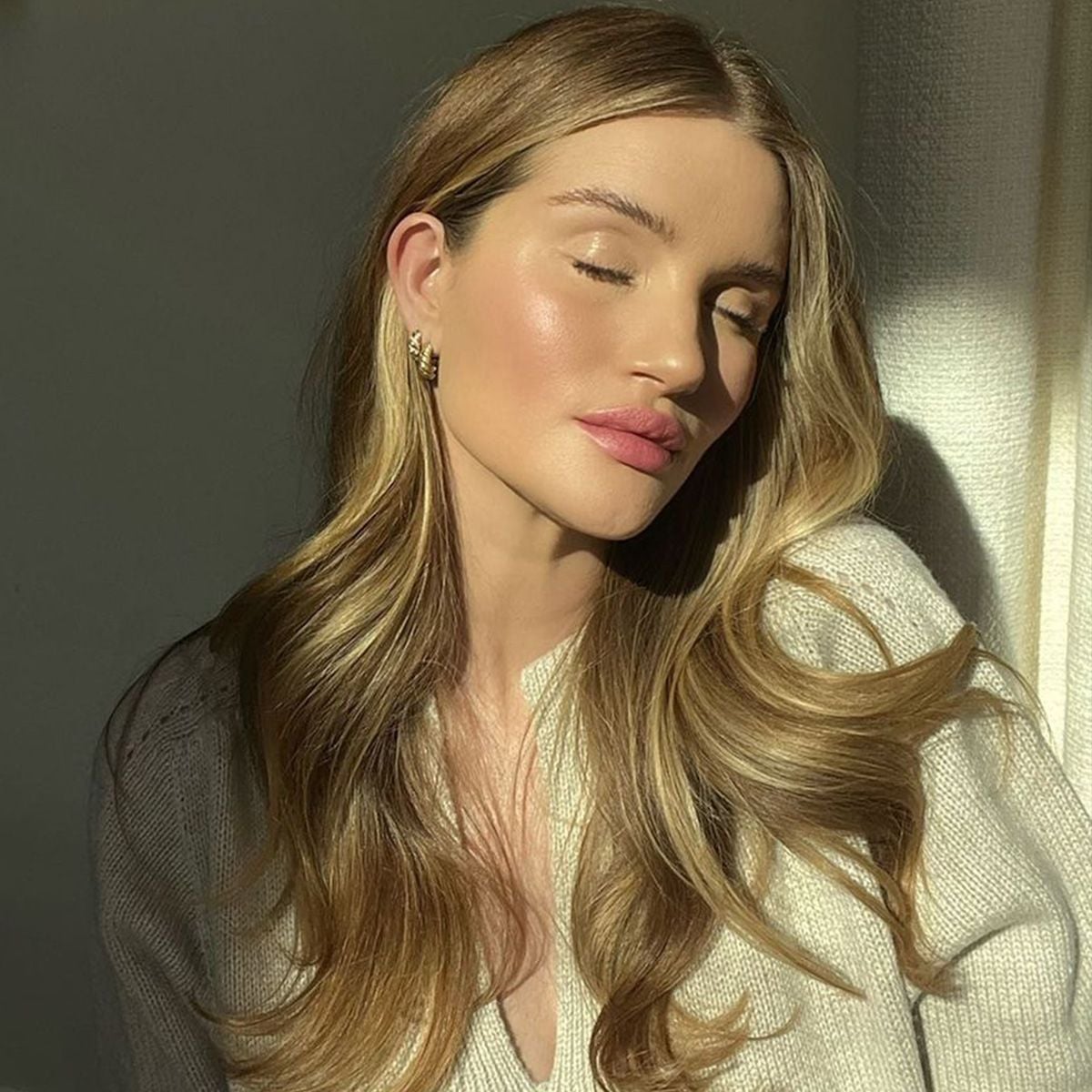
Shoulder Length Blonde Blowout With Framing Her Face

The blowout technique here relies on layers that graduate from the collarbone up to the curtain bangs. A medium round brush lifts the roots as you dry, and the middle part lets the blonde-with-highlights color show through the wavy texture. The face-framing effect is built into the cut, not added after. Ask your stylist for: shoulder length layers, curtain bangs. At home, a blow-dry with a concentrator nozzle and a brush takes about fifteen minutes. Trim every six weeks to maintain the shape; this is a style that needs a salon refresh more often than an air-dried cut.
Dark Blonde Collarbone Voluminous Bangs, Wavy
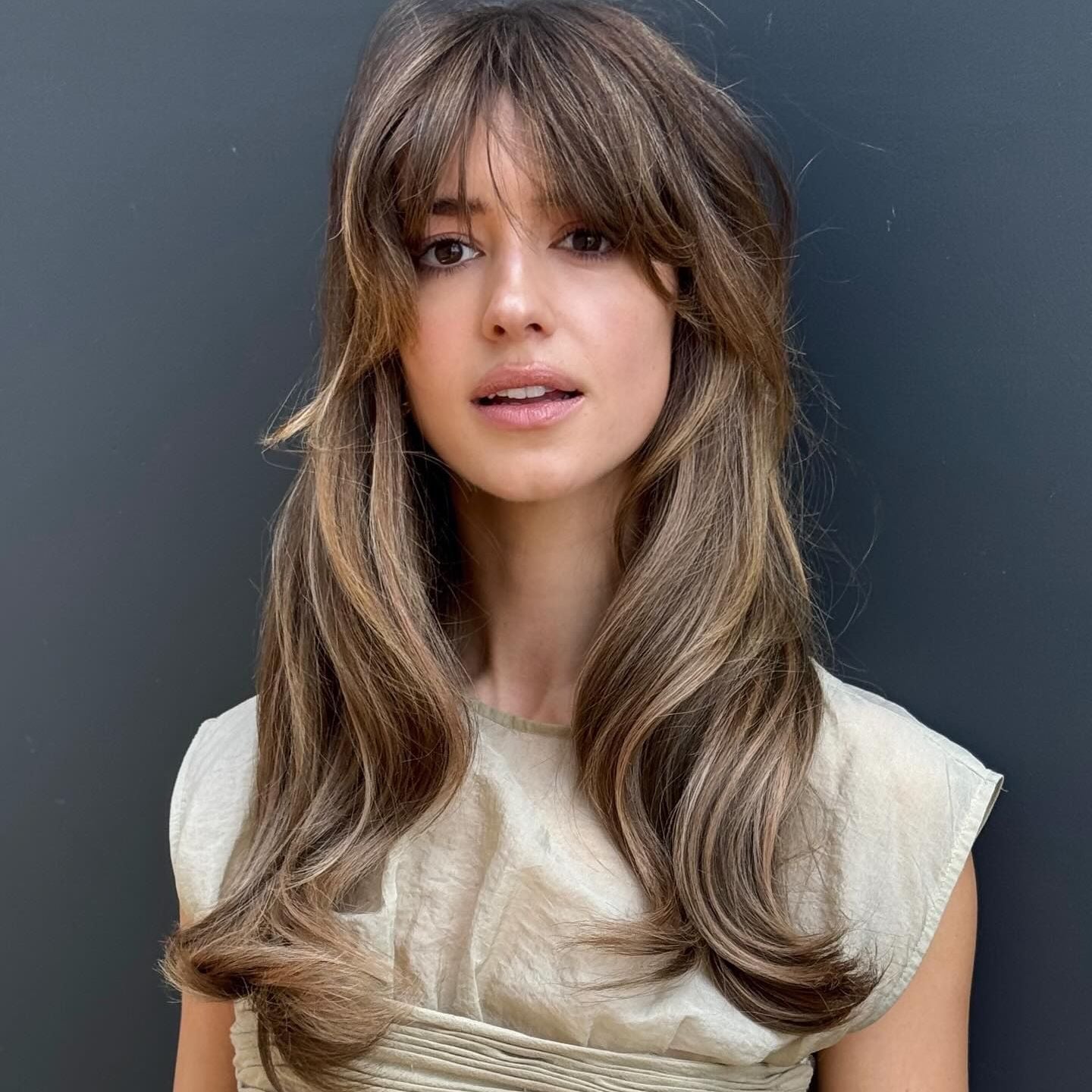
Not every bang style works on thick, wavy hair, but voluminous curtain bangs are the exception. The collarbone length with layers prevents the weight of thick hair from pulling the bangs flat. This cut is made for a middle part and a blowout with soft waves, using a large round brush to build height at the crown. Ask your stylist for: collarbone length layers, voluminous curtain bangs. The dark blonde base with highlights keeps the waves from reading as one solid block. A trim every six weeks preserves the bangs’ swoop and the layers’ movement.
Blonde Collarbone Shag With Bangs
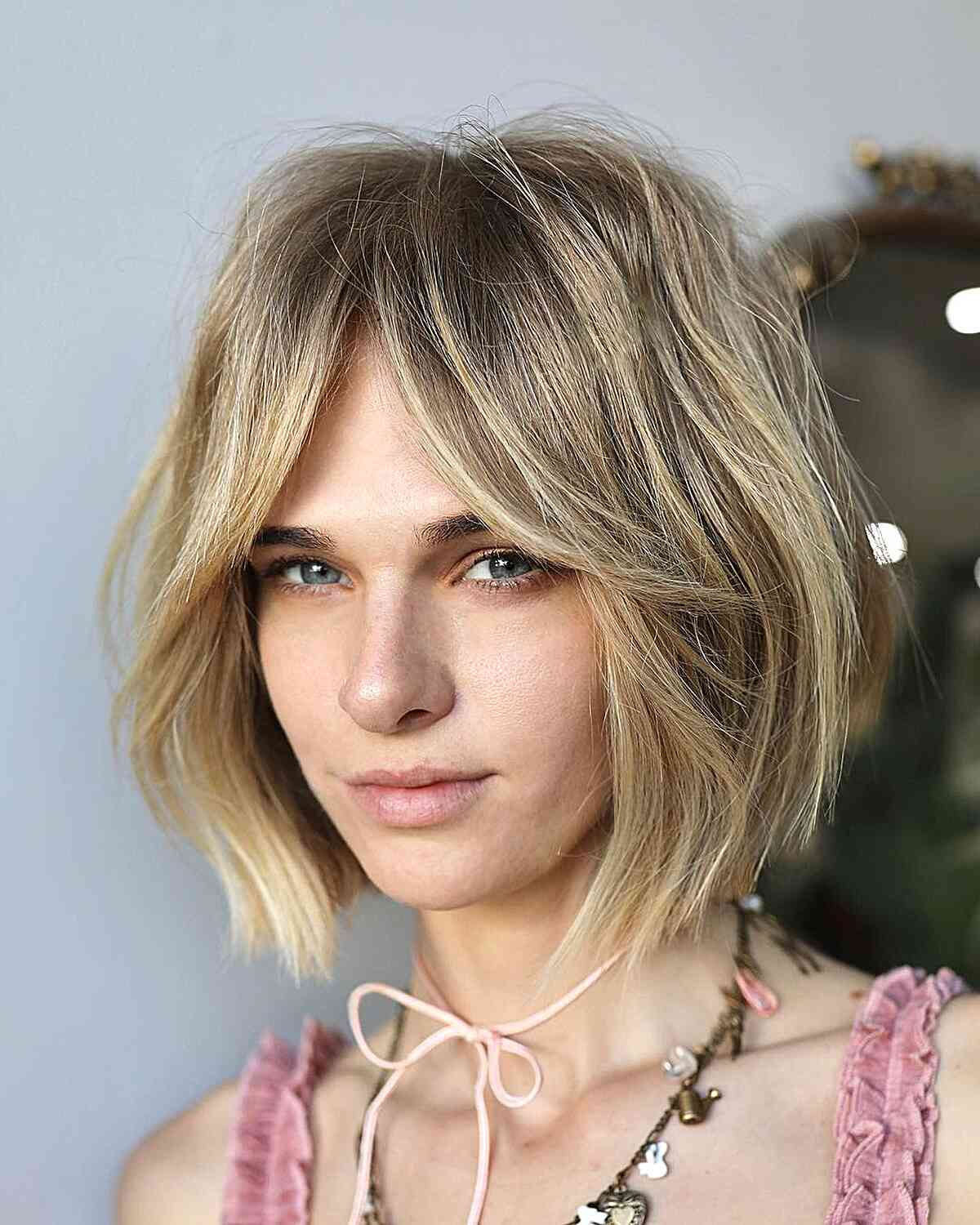
A shag cut is more layered than a standard collarbone cut, which means the curtain bangs blend into the surrounding hair instead of sitting apart. The difference shows in the texture: where a blunt cut gives the bangs a clean edge, the shag’s layers soften that line. The blonde balayage adds dimension to the wavy texture, and the middle part keeps the bangs symmetrical.
Ask your stylist for: collarbone length shag cut, curtain bangs. The trade-off for all that texture is that the layers grow out faster than a uniform cut. Plan on a trim every six to eight weeks, and use a texturizing spray with scrunching for the waves to refresh the shape between appointments.
Shoulder Length Shag With Bangs

Wondering how to get that lived-in shag without looking like you styled it in the dark? For a shoulder length shag with bangs, ask your stylist for a shag cut with textured curtain bangs, and keep the dark brown base with lighter pieces to add depth. The thick, wavy texture is the key here, so request air-dried styling to let the natural movement do the work. A texturizing paste helps define the bangs, and a trim every six to eight weeks keeps the shape from turning into a shapeless blob.
Shoulder Length Shag Air-Dried
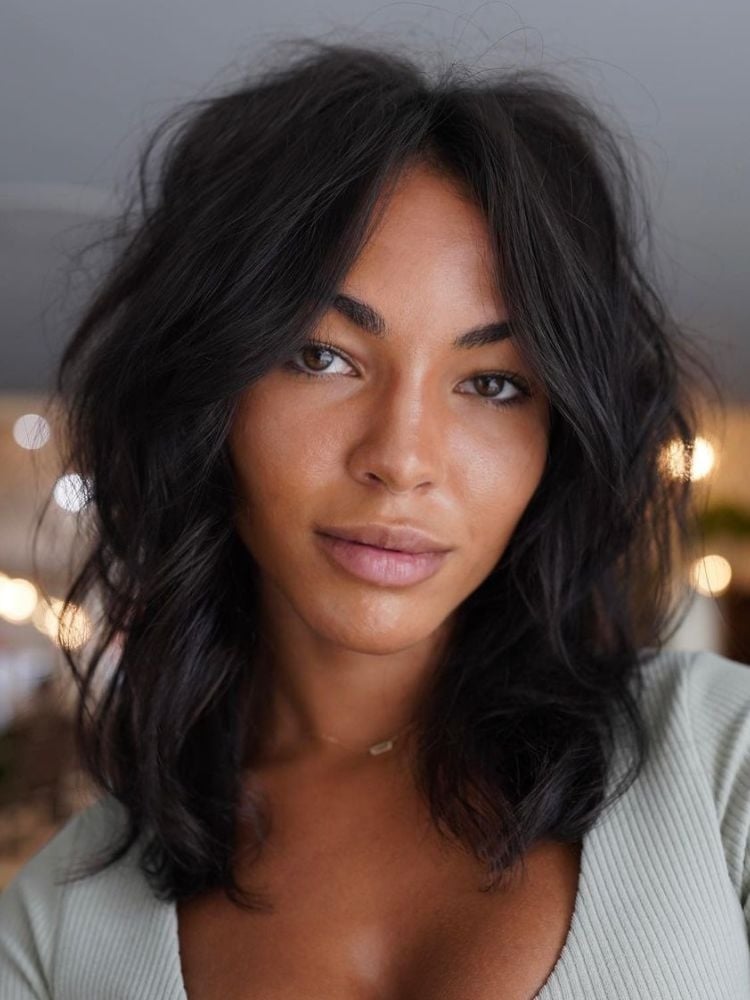
The beauty of this shag is that it’s designed to air-dry, which means the bangs fall naturally without a fight. On collarbone-length hair with medium density, the curtain bangs part in the middle and blend into loose waves, so you skip the round brush entirely. Ask your stylist for a collarbone length shag cut with layers and curtain bangs, and let the dark brown color stay as is. A wave-enhancing cream helps define the texture, and a trim every six to eight weeks keeps the layers from growing out into a curtain that’s too heavy.
Thick Mid-Back Air-Dried Waves

The trick to thick, mid-back air-dried waves is in the layering: too little and your hair feels like a heavy blanket, too much and you lose the natural wave. The stylist cuts long layers through the mid-back length, with curtain bangs that part in the middle, so the thick, wavy texture can fall without effort. Ask your stylist for mid-back layers with curtain bangs, and keep the dark brown base simple. This is a salon-leaning cut, but the air-dried finish means you’re not signing up for daily blowouts.
For the DIY part, a leave-in conditioner on damp hair helps define the waves, and you can let it dry on its own. A trim every eight weeks keeps the layers from losing their shape.
Mid-Back Dark Brown Air-Dried
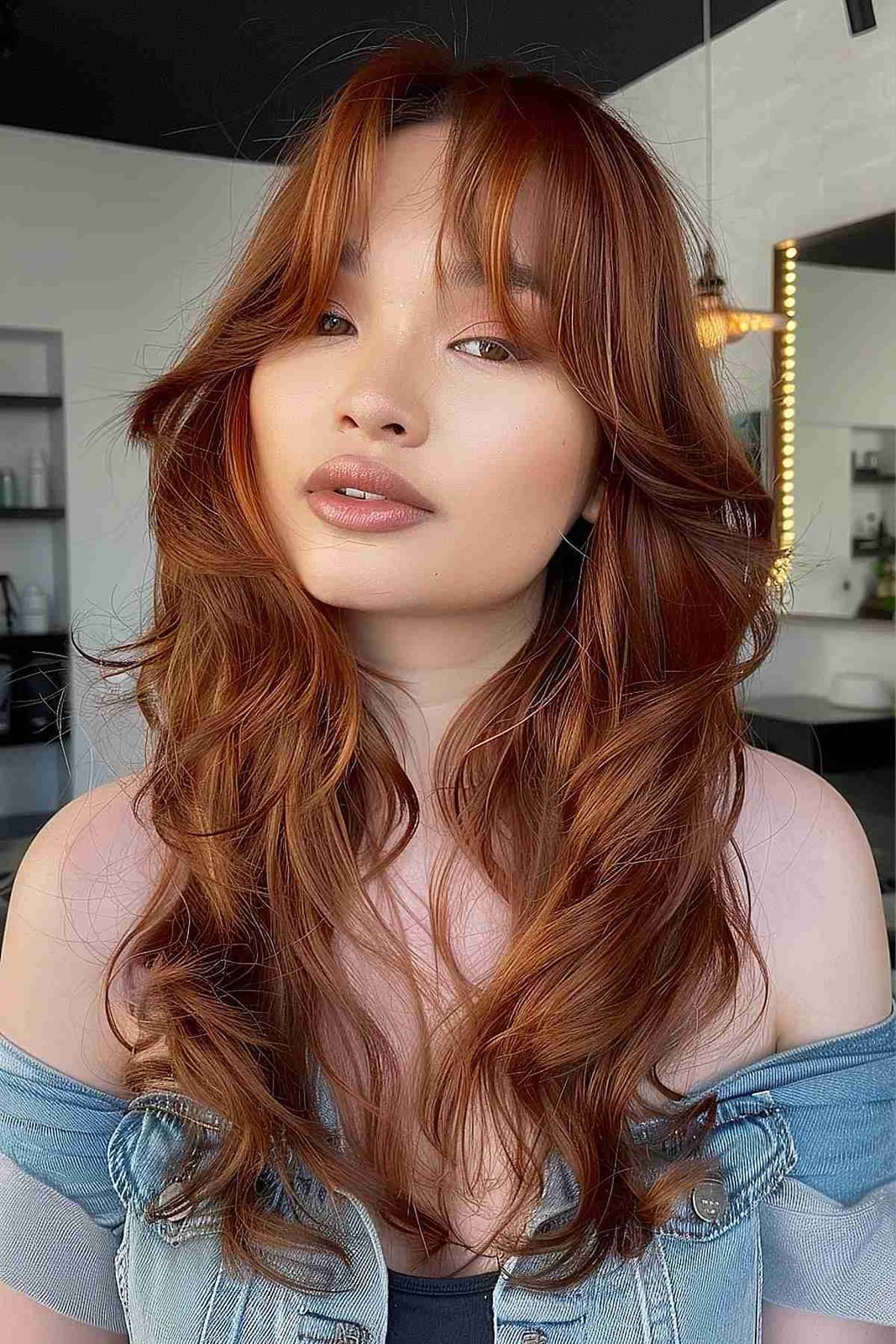
Is this the right style for you if you have thick, wavy hair that reaches mid-back? The face-framing layers and prominent curtain bangs work best when you’ve got some density to work with, as they add shape without sacrificing volume. Ask your stylist for mid-back layers with curtain bangs, and let the dark brown with subtle lighter pieces add dimension. The air-dried finish means you can skip the heat tools, but a texturizing spray helps keep the layers from falling flat. A trim every eight weeks maintains the shape.
Long Layered Dark Brown Blowout
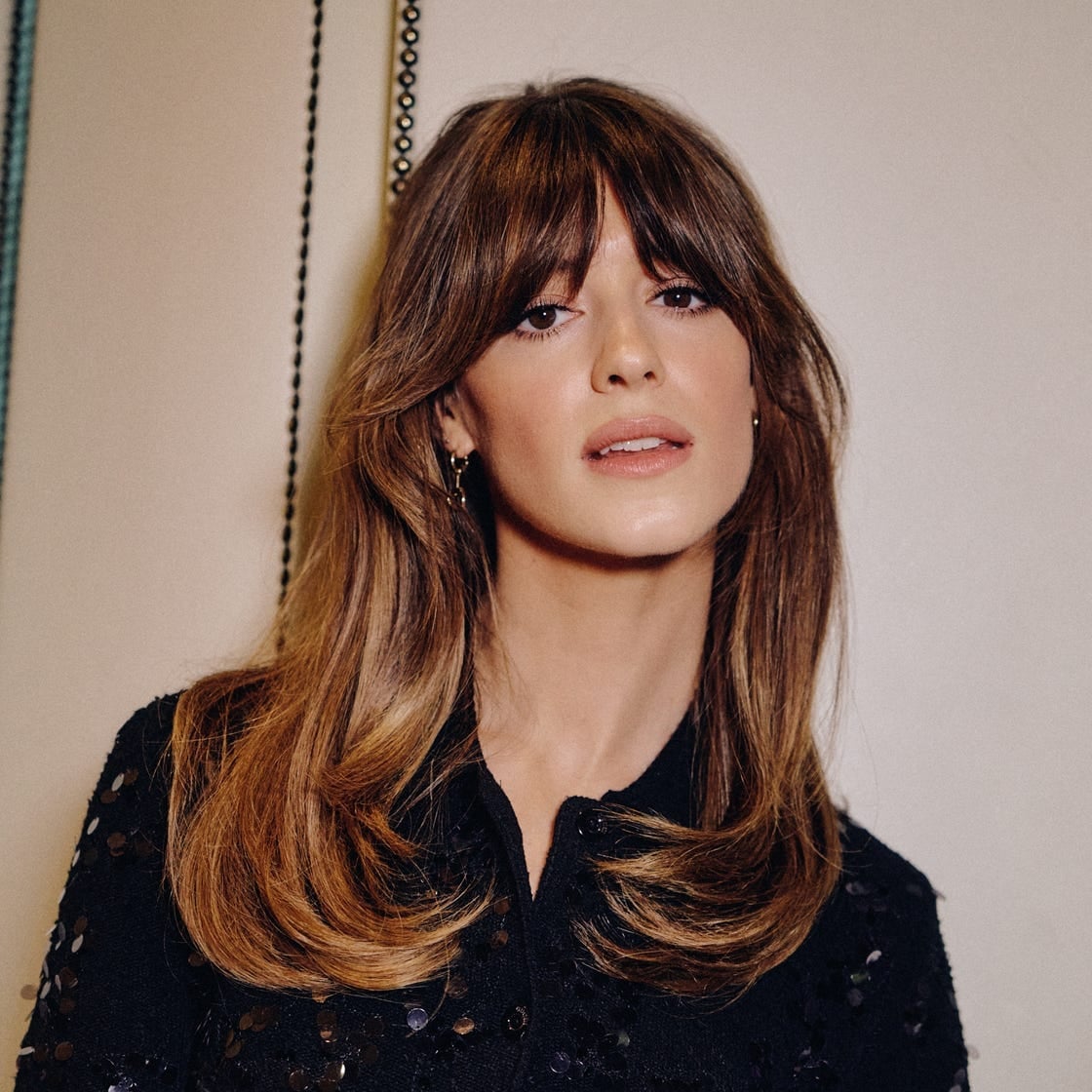
Unlike a quick air-dry, this long layered blowout requires a bit more commitment, but the payoff is bangs that actually frame your face. On mid-back length, thick, wavy hair, the long layers add movement while the curtain bangs are swept to the sides, creating that soft, voluminous effect. Ask your stylist for mid-back long layers with curtain bangs, and keep the dark brown with lighter brown highlights for dimension. To maintain the look, use a large round brush to shape the bangs and ends, and schedule a trim every eight weeks.
The drawback: this style does not survive a humid day without a touch-up. You will need to re-curl the bangs or give them a quick blast with a round brush to reshape them.
Long Dark Brown Wavy Layers
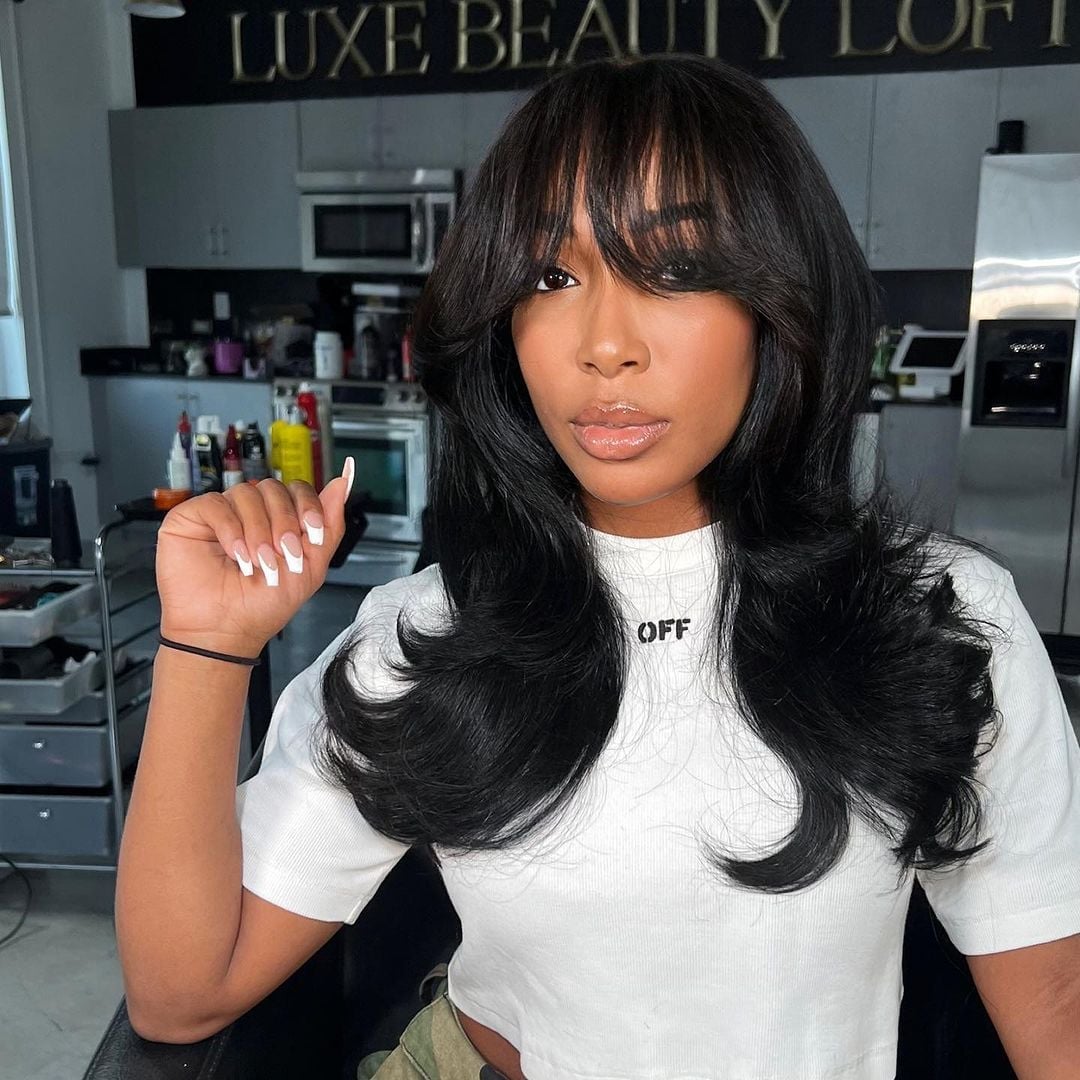
The design hinges on long layers that start below the shoulder and cascade through the mid-back length, so the dark brown waves stack with real volume instead of lying flat. Thick hair is the ideal candidate here, since the cut removes weight gradually and lets each wave hold its shape. Ask your stylist for mid-back long layers, curtain bangs. A middle part keeps the bangs symmetrical, and the blowout with a round brush points them outward. The payoff is movement that survives a full day without re-styling.
For this long dark brown wavy layers cut, the layers are cut deep enough to create a soft V-shape at the back, which adds lift and keeps the ends from feeling heavy. The curtain bangs are cut to blend into the front layers, so they sweep aside naturally. A smoothing serum applied before drying controls any frizz, and a trim every eight weeks preserves the shape. The texture stays glossy and thick, with waves that look natural.
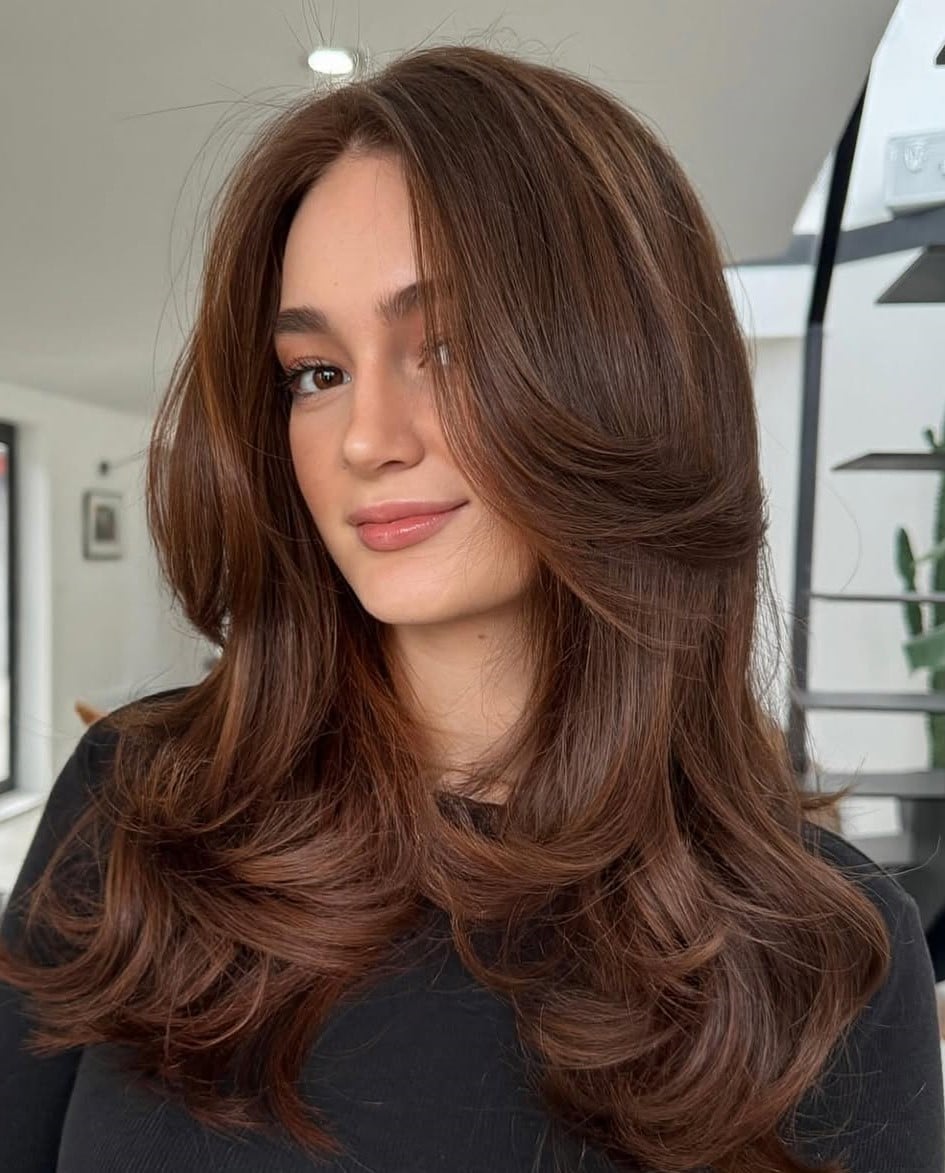
Mid-Back Dark Auburn Soft Waves
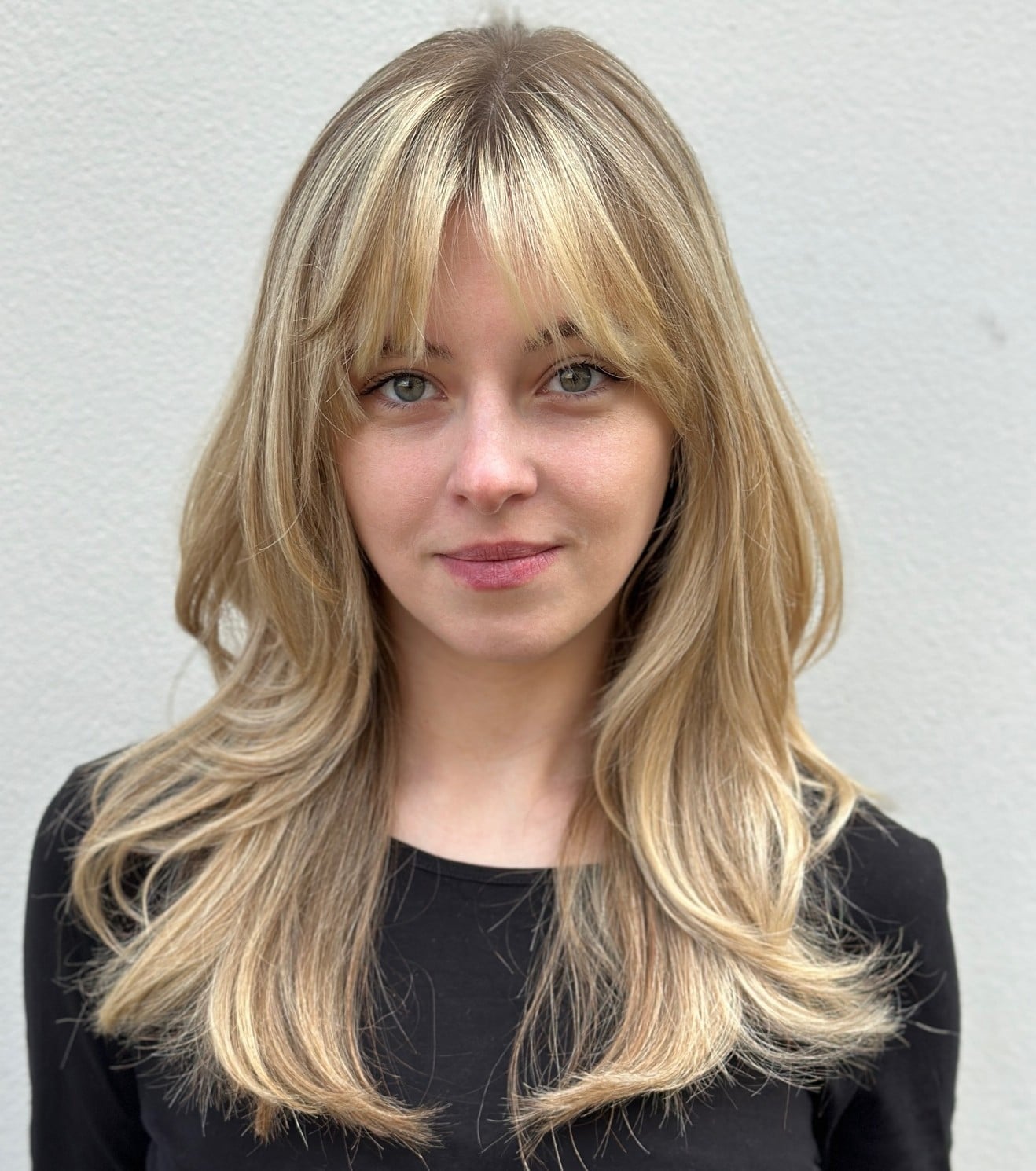
The full curtain bangs are the centerpiece here, cut thick enough to make a statement yet soft enough to blend into the long layers that run through the mid-back length. On wavy, thick hair in a dark auburn shade, the blowout with soft waves gives the bangs a gentle curve that frames the face. Ask your stylist for mid-back long layers, full curtain bangs. The middle part is required for the curtain effect, and the waves are brushed back from the face as they dry. This style holds its shape well through a standard day. A heat protectant and a round brush are the only tools needed, with a trim every eight weeks to keep the bangs from outgrowing their curve.
Mid-Back Dark Auburn Blowout
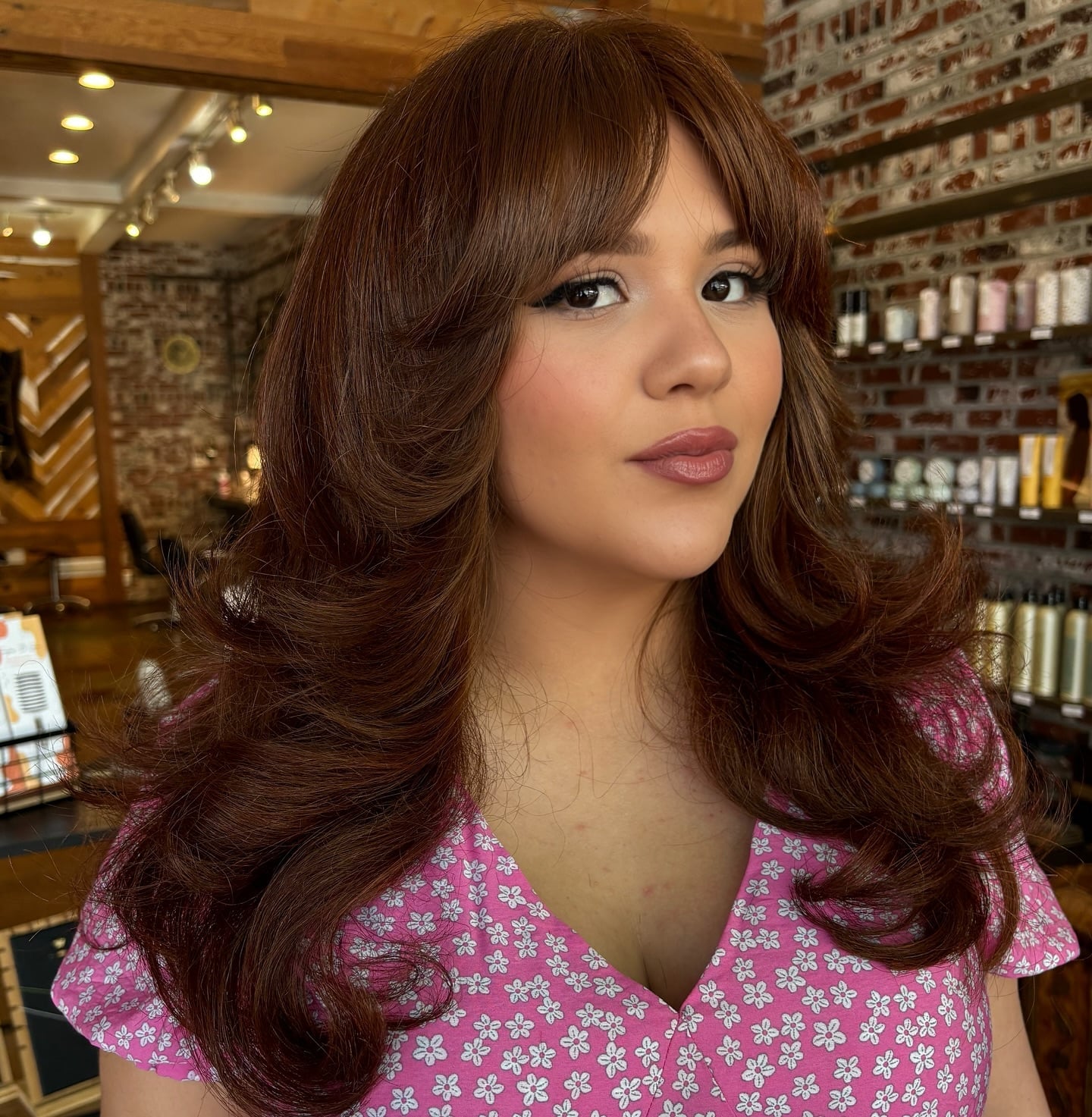
How much time does this blowout actually take? Plan on about twenty minutes with a round brush, since the thick, wavy texture needs to be dried in sections to get the soft waves and the full curtain bangs to cooperate. The salon does this faster, but at home it is doable if you split the hair into top and bottom halves. Ask your stylist for mid-back long layers, full curtain bangs. The dark auburn color adds depth that makes the waves read clearly, and the middle part keeps the bangs balanced. The long layers are what give the mid-back length its movement, so resist the urge to let them grow out too long between visits. A trim every eight weeks keeps the shape honest, and the whole process is more about technique than product.
Mid-Back Natural Gray Loose Waves
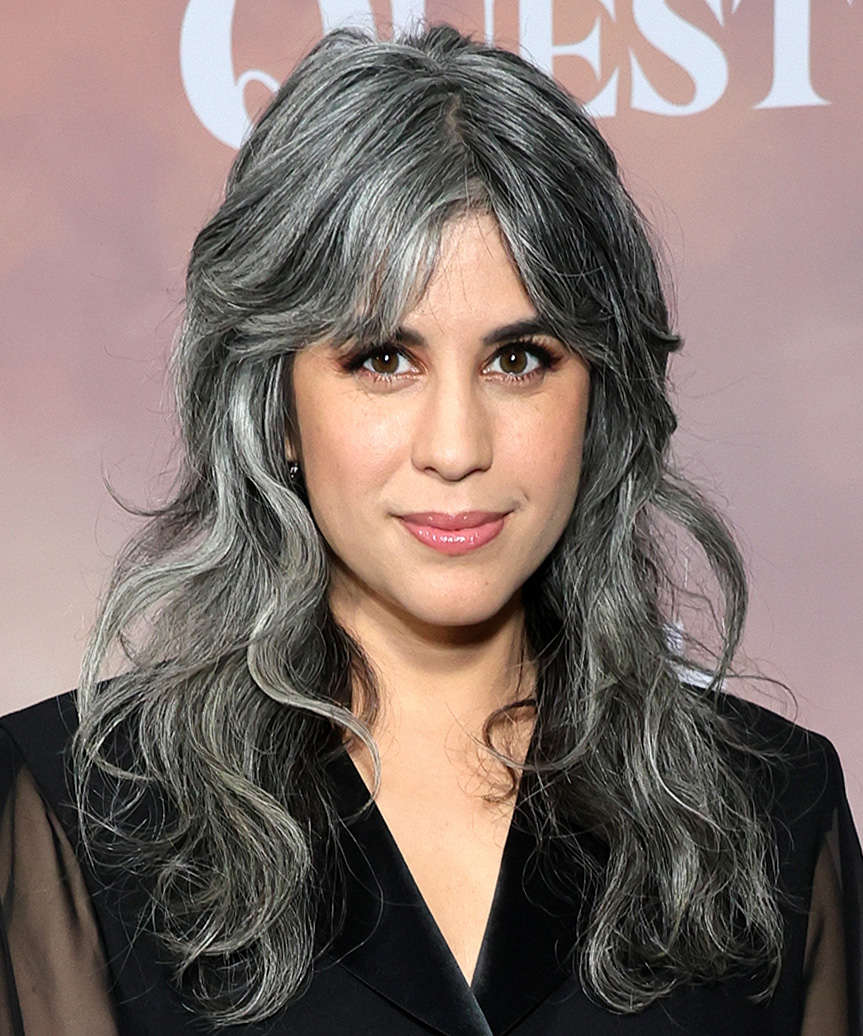
Ask your stylist for mid-back long layers, soft curtain bangs with side part. The silver highlights create a shimmering effect that dye cannot replicate, so the cut needs to be precise to show them off. Thick, wavy hair at mid-back length is the base, and the long layers are cut to remove bulk without sacrificing the natural wave pattern. A wave spray on damp hair and a diffuser are enough for most days, and a trim every eight weeks keeps the bangs at curtain length. This is a low-maintenance style that still looks deliberate.
Fine Straight Mid-Back Blowout
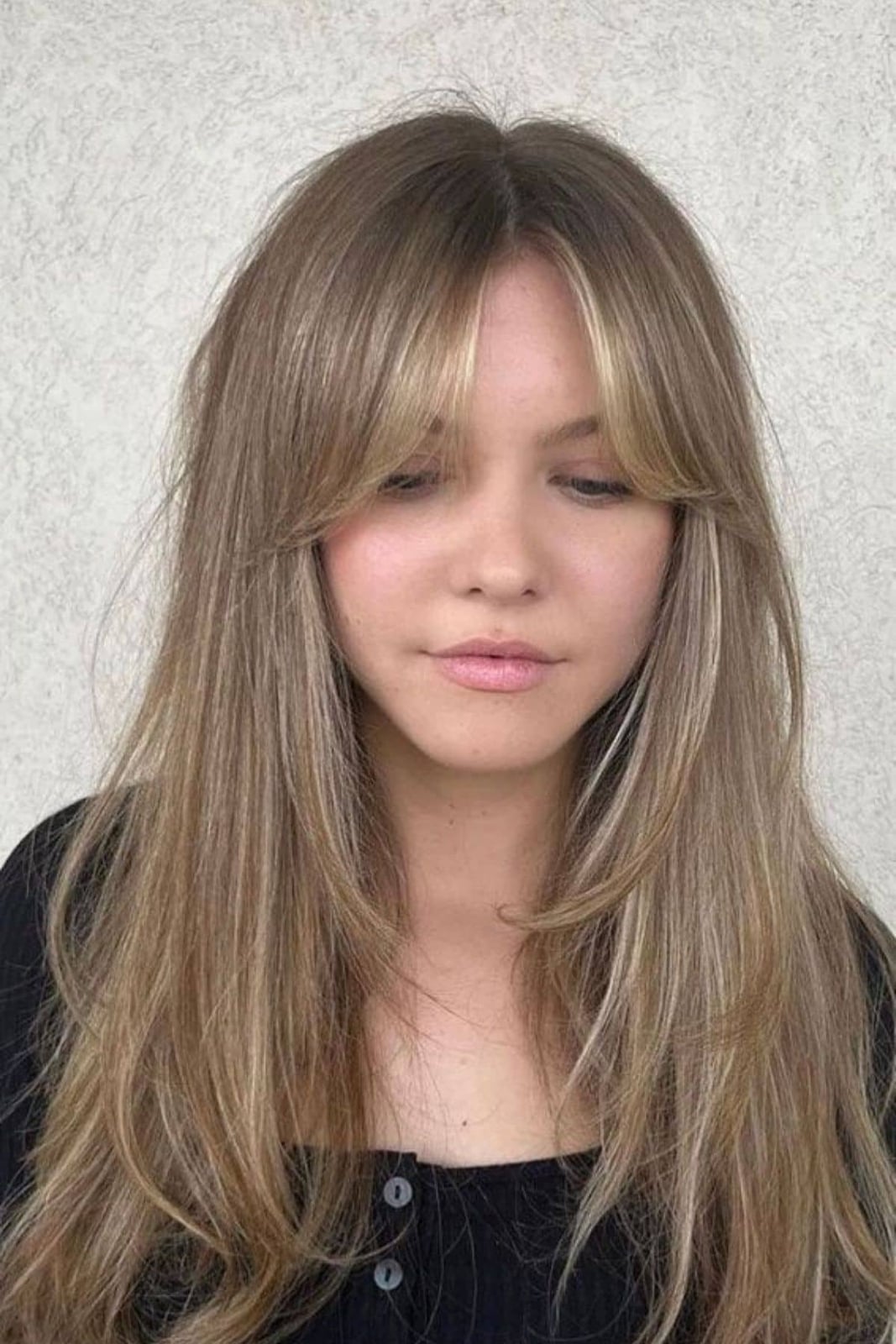
Fine, straight hair needs a different blowout strategy than thick hair, since the goal is to add body without weighing the strands down. The face-framing curtain bangs are cut to blend into the long layers, which gives the mid-back length shape that it would otherwise lack. Ask your stylist for mid-back long layers, curtain bangs. The dark blonde base with lighter highlights adds dimension that makes the fine texture look denser. To style, use a round brush and direct the bangs to each side, then finish with a light smoothing serum on the ends. The blowout holds for about a day, so expect to refresh the bangs with a quick pass of the brush on day two. A trim every eight weeks keeps the layers from looking straggly, and the middle part is essential for the curtain effect to work.
Mid-Back Balayage Voluminous Bangs

Can voluminous curtain bangs actually work on mid-back length hair without looking like two separate haircuts? Yes, when the layers and the balayage do the coordinating for you. The thick, wavy texture holds the sweep of the bangs, while the side parting creates a face-framing shape. The balayage highlights add depth so the bangs don’t look like a flat block of color. This cut suits oval faces best, since the volume at the sides can broaden a rounder shape. Ask your stylist for: mid-back layers, voluminous curtain bangs with side part, medium brown balayage. A round brush and a texturizing spray during the blowout keep the lift going for the day.
Mid-Back Dark Brown Air-Dried Waves With Long Layers

The design of soft, face-framing curtain bangs on air-dried waves assumes your hair will cooperate with minimal effort. On thick, wavy hair at mid-back length, that bet often pays off. The side-part and the subtle lighter brown highlights give the bangs definition even when you skip heat styling. The honest trade-off: air-dried texture can fall flat in humidity or pull the bangs toward the center as it dries, so you will occasionally need to re-wet and redirect them. This look suits oval faces best. Ask your stylist for: mid-back long layers, curtain bangs with side part, dark brown with highlights. A wave-enhancing cream applied to damp hair helps the shape hold.
Thick Wavy Mid-Back Hair With Bangs and A Glossy Finish
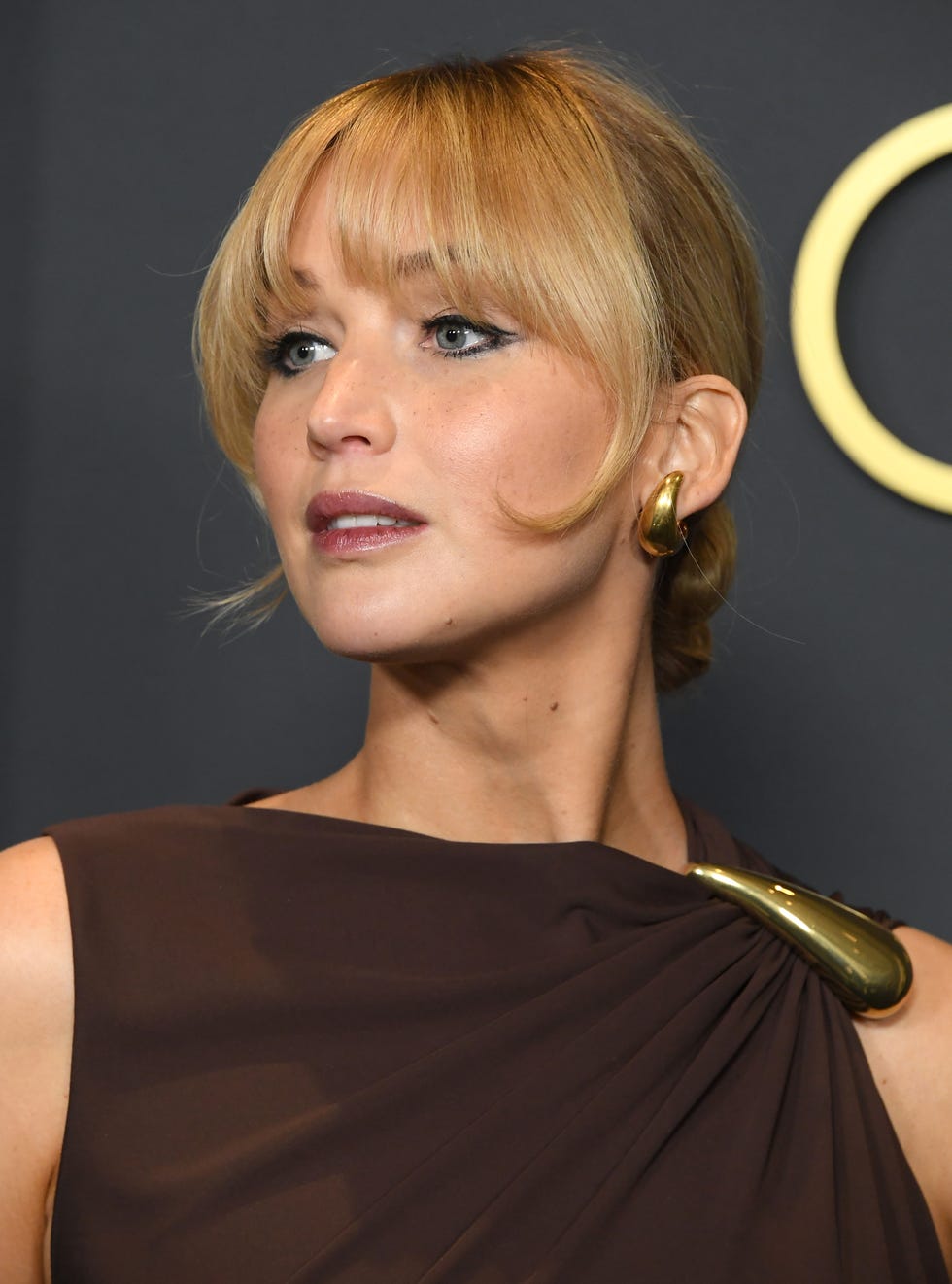
This is the version of a blowout that looks like it took an hour but actually took forty minutes and a medium round brush. The blonde balayage on the thick, wavy layers keeps the curtain bangs from merging with the rest of the hair, and the middle part gives a balanced, open frame. This is a salon cut through and through. The layers need precise placement so the bangs sweep to the sides. For the DIY version, you will need a blow dryer, a round brush, and the patience to cool-set each section before moving on. Ask your stylist for: mid-back layers with curtain bangs, dark brown balayage.
Final Thoughts
For fine hair, reach for a volumizing mousse at the roots and blow-dry bangs with a round brush to keep them from collapsing. For thick or wavy hair, a texturizing spray on damp fringe lets the natural wave do the work without extra heat. The rule is simple: match your styling method to your texture, not to a photo.
- Trim curtain bangs every 4-6 weeks to maintain their shape.
- Use a round brush and blow dryer to style fringe daily for a polished look.
- Air-dry with a texturizing spray for a more relaxed, lived-in style.
- Consider a light-hold hairspray to keep bangs in place without stiffness.
Mastering curtain bangs is about embracing their versatility.