Gray blending isn’t about hiding your natural color; it’s about weaving it into a cut that makes the most of every strand. The shift toward lived-in color means less time in the chair and more time with hair that looks like it’s meant to be gray.
These 31 simple gray blending haircut ideas cover the range from low-upkeep lobs to shorter bobs that need a trim every eight weeks. Whether your hair is fine and falls flat or you’re tired of a visible grow-out line, there’s a cut here that works with your texture and your schedule. Every style starts with a solid shape, so the gray reads as part of the plan, not an afterthought.
Long Layered Hair With Natural Gray Blend
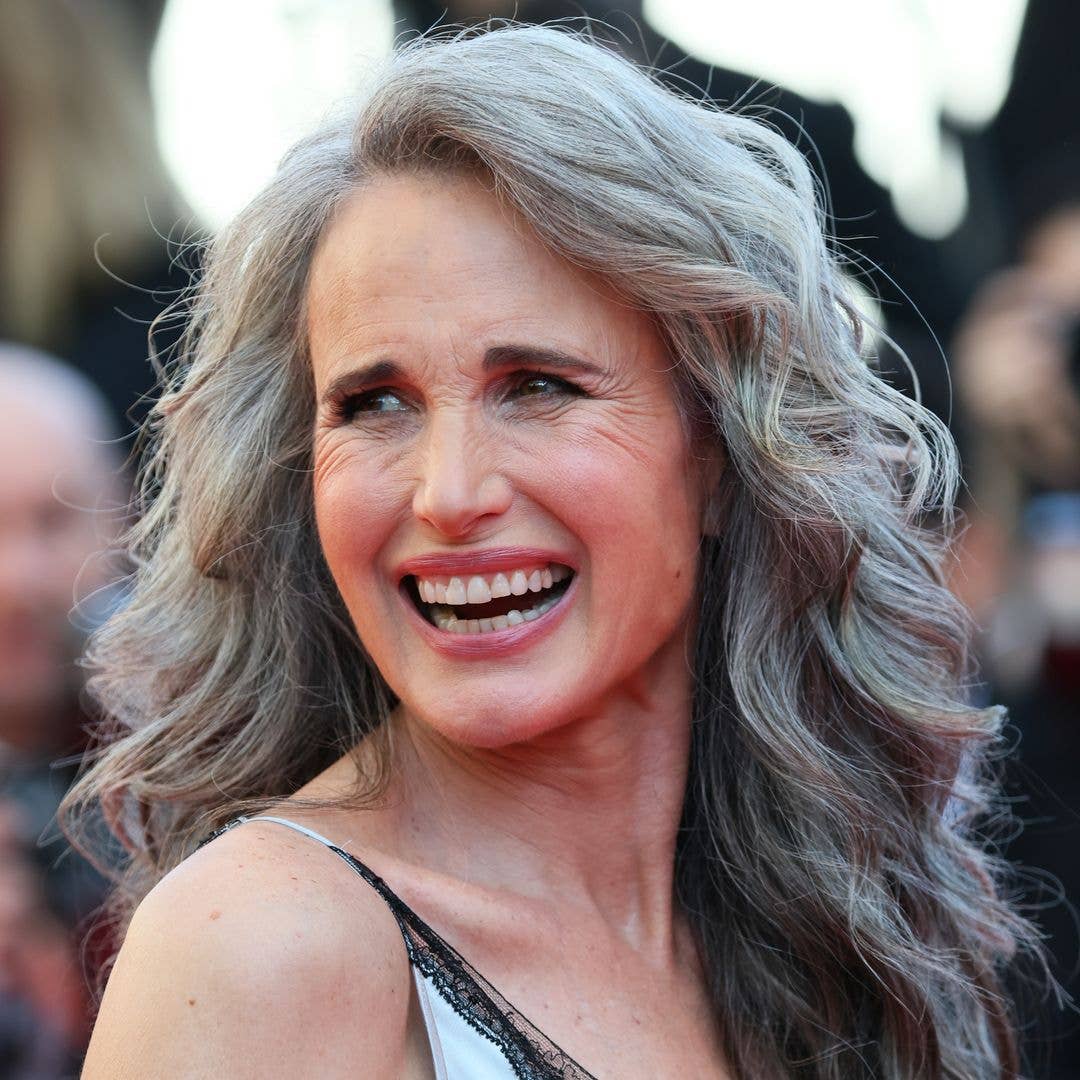
The design works because the long layers are cut to follow the wave pattern, so the gray strands land where the light naturally hits. That side parting is deliberate: it lets the lighter gray pieces fall forward instead of hiding at the back. Thick, wavy hair starting at mid-back is the ideal canvas here, since the weight of the hair keeps the layers from collapsing into one block.
Ask your stylist for: long layered cut, natural gray blend, loose waves. Air dry or use a diffuser to encourage the wave; a blowout would smooth out the texture this cut depends on. Plan on a trim every eight to ten weeks, because the layers are the whole point and they grow out fast.
Collarbone Lob With Face-Framing Curtain Bangs

Can curtain bangs work on a collarbone lob without looking like a high-school experiment? Yes, when they are cut to blend into the layers instead of sitting as a separate piece. Fine, wavy hair at this length benefits from the face-framing shape, which adds the illusion of density around the jaw. The gray and lighter blonde strands are woven through the top layers, so the gradient starts right at the roots. Ask your stylist for: collarbone lob, face-framing curtain bangs, gray and blonde blend. The bangs soften square and angular faces, and they sweep to the side when you want a different line.
Chin Length Bob With Ash Gray Blend
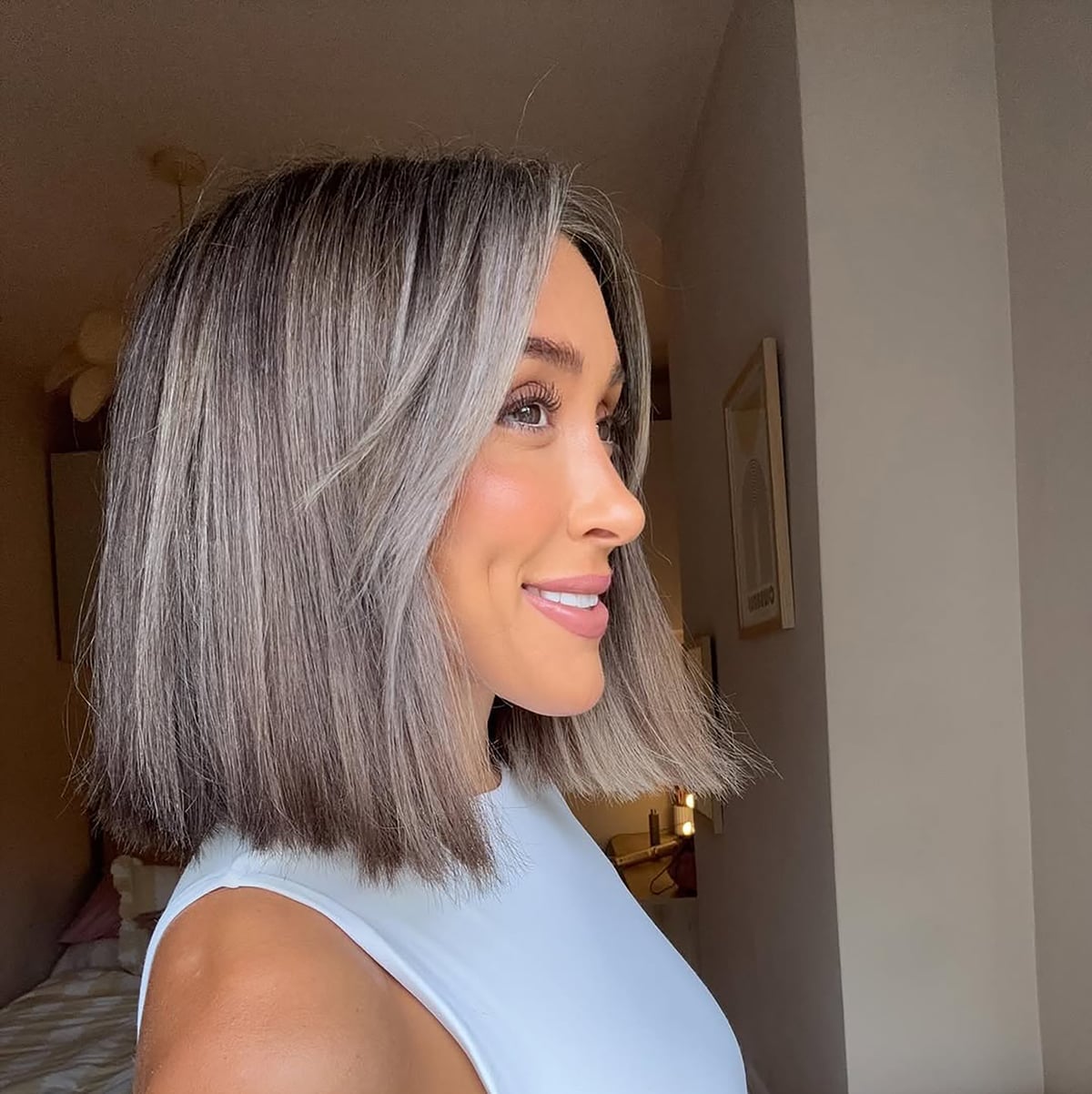
A chin-length bob with soft layers and curtain bangs is a different animal from its longer, unstructured cousin. Where a lob lets the gray read as casual, this cut makes it look deliberate. The ash blonde tones are blended into the gray so the line between colors is smudged, not sharp. Fine, straight hair works well here because it holds the bob shape without extra bulk. Ask your stylist for: chin length bob, curtain bangs, ash gray blonde blend. This is a cut that reads as finished even on day four.
Chin Bob With Side Swept Bangs and Gray Undertones
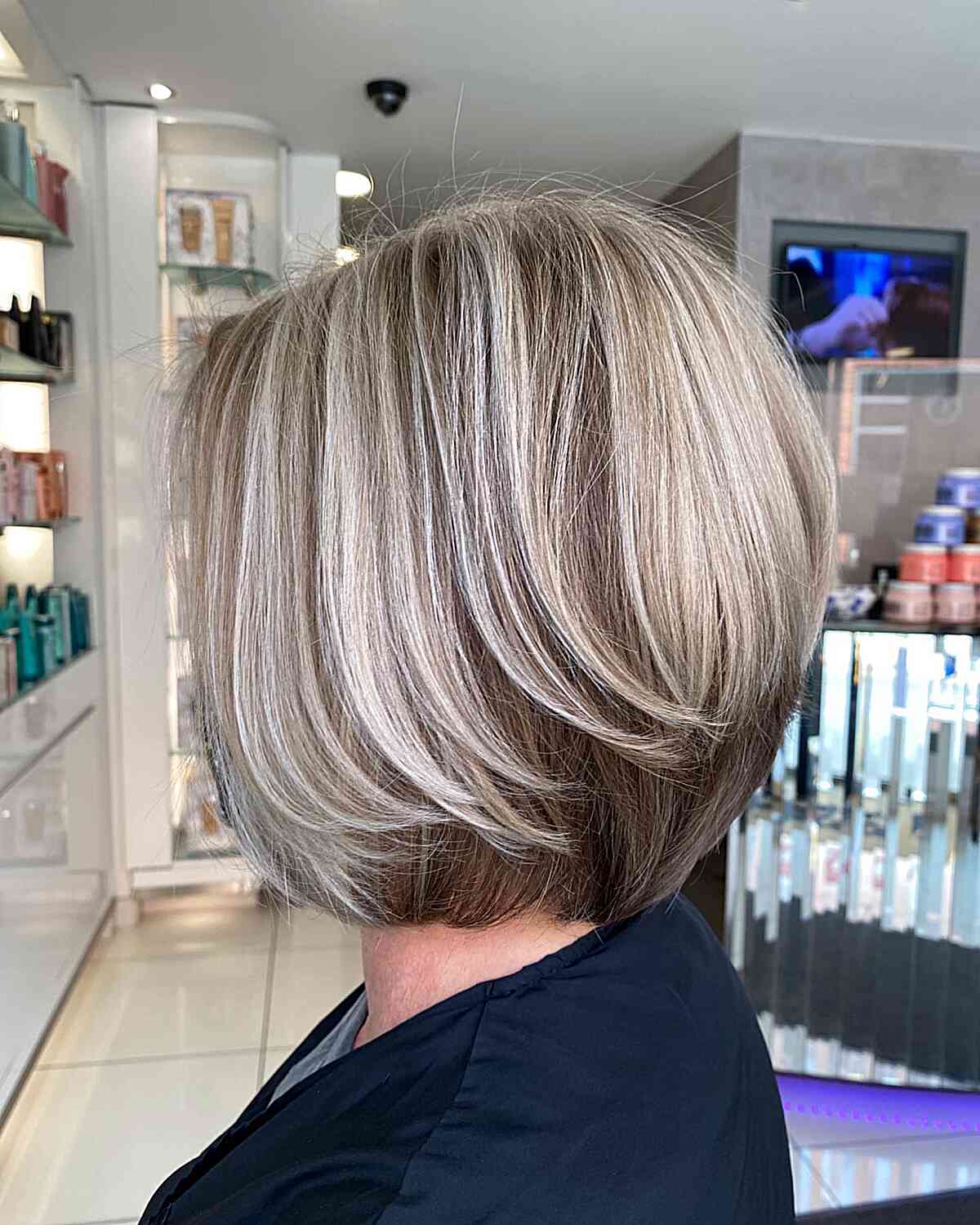
The side swept bangs break up the blunt line of the chin bob and make the gray undertones feel like an accent rather than a grow out phase. The darker roots anchor the color, so the ash blonde and gray pieces above them have somewhere to fade from. Fine, straight hair at chin length needs this kind of visual separation or it becomes one flat shape. Ask your stylist for: chin length bob, side swept bangs, ash blonde with gray undertones. The side part means you can tuck the longer side behind an ear for a different line. Trim every six to eight weeks to keep the bob crisp.
Mid-Back Ash Gray Blended Waves
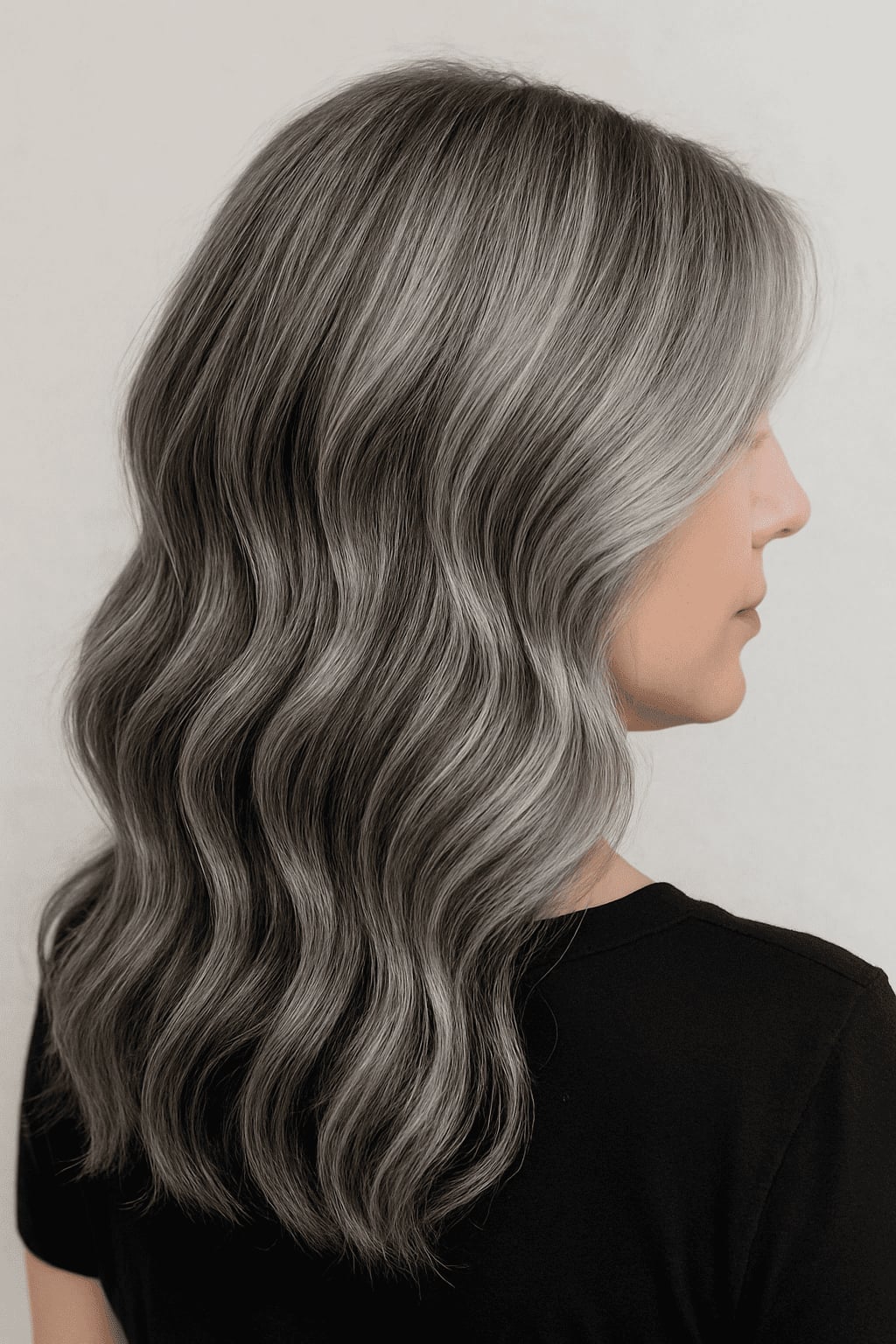
This is the kind of cut that looks best when the air is cool and the light is low. The mid-back length lands just where a heavy coat collar hits, so the gray blend stays visible above the neckline. Long, loose waves with a middle parting need thick hair to carry the shape; fine hair would let the waves fall flat by midday. The ash gray is seamless, meaning no harsh line between the darker base and the lighter ends.
Ask your stylist for: mid-back length, long wavy layers, seamless ash gray blend. A middle part elongates round faces and works with the wave pattern, but a side part is an easy switch for a different frame. This is a salon-only color job, and the layers need a trim every eight to ten weeks to keep the wave shape from looking ragged.
Collarbone Wavy Hair With Gray Blend
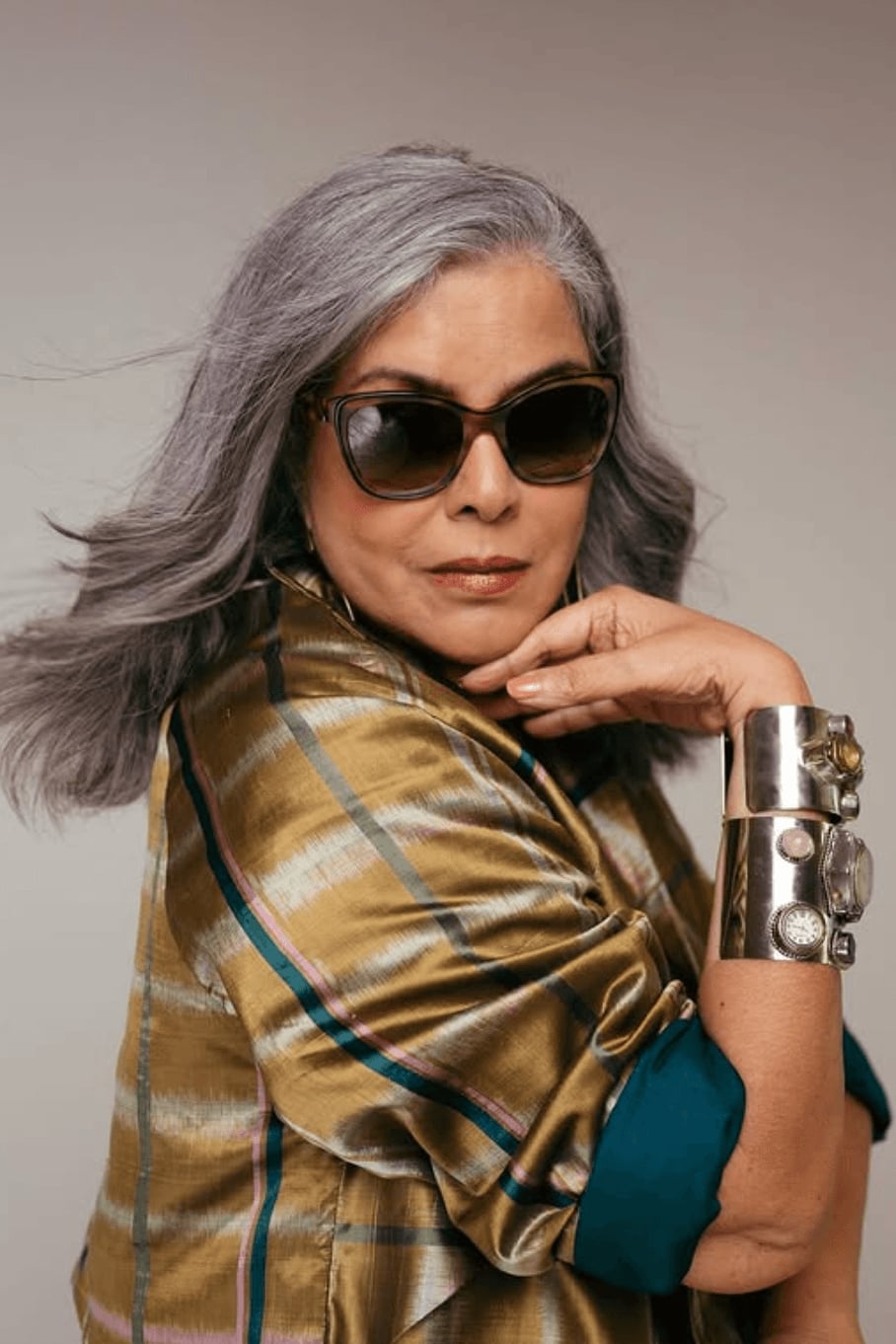
Wondering how to get that lived-in gray blend without looking like you gave up on color entirely? This collarbone length cut keeps things easy with soft layers that let the wave pattern do the work. A side parting adds volume at the root, which helps if your hair leans fine. Ask your stylist for: collarbone length wavy cut, seamless gray blend. The layers are subtle enough to avoid a choppy grow-out but present enough to prevent the weight from pulling your waves straight. No bangs here, just a clean side sweep that keeps the focus on the tonal transition. Scrunch with a sea salt spray after washing and let it air dry. A trim every six to eight weeks keeps the collarbone shape precise.
Collarbone Blunt Bob With Dark Gray Blend
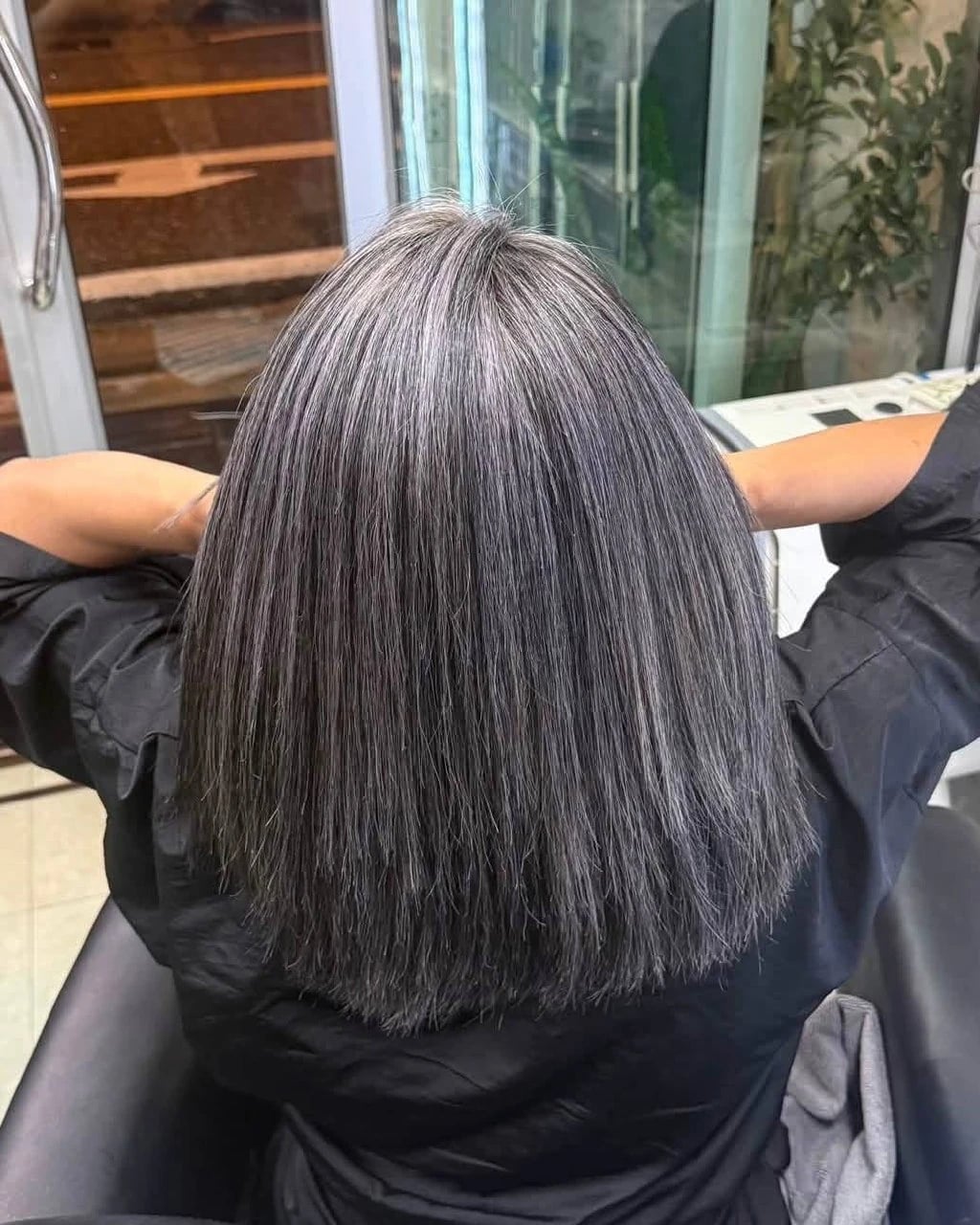
A blunt bob at the collarbone is a statement of precision, not patience. The clean, unlayered line means every stray hair shows, so this is not the cut for anyone who prefers a forgiving silhouette. The dark base with blended gray highlights creates a sophisticated gray blending effect, but it requires a skilled hand to avoid a stripey result.
This is strictly a salon job. The blunt baseline adds visual weight to fine, straight textures, making hair appear thicker than it is. The trade-off: any unevenness in the gray placement or the cut itself will be obvious. A middle parting and air-dried finish keep it modern, but do not expect to skip your six-week trim without the bob losing its nerve.
Mid-Back Gray Blend With Beige Blonde Highlights
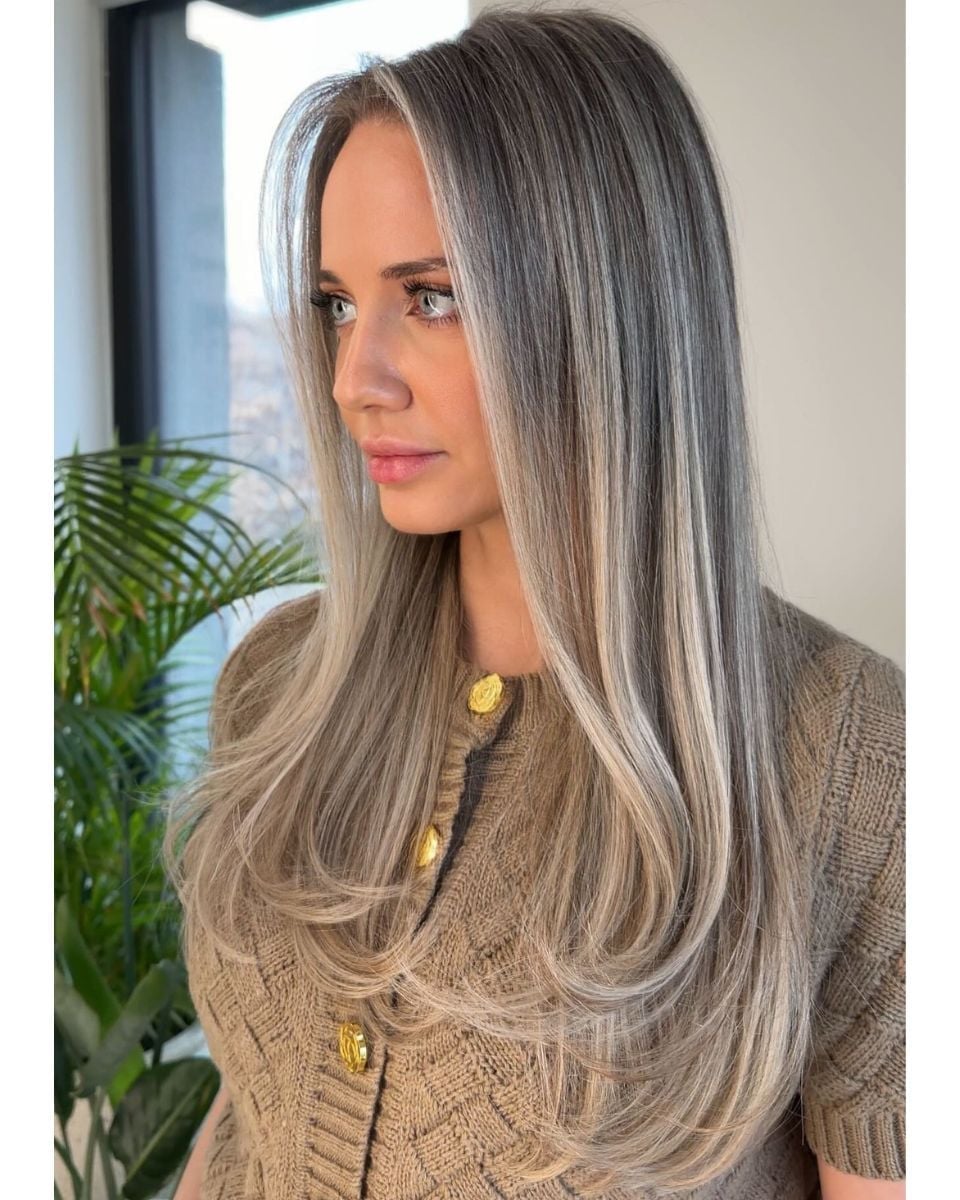
The technique here relies on a balayage application that paints the beige blonde highlights through the mid-lengths and ends, leaving the root area darker for a soft grow-out. The gray blending acts as a bridge between the natural base and the lighter pieces, so there is no harsh line of demarcation. Soft waves add movement to the otherwise straight, fine texture, and the middle parting keeps the face open. Ask your colorist for: mid-back length, subtle layers, gray blend with beige blonde highlights. A volumizing spray at the roots before blow-drying prevents the length from pulling the crown flat. The subtle layers need trimming every eight to ten weeks, but the color itself can stretch closer to twelve thanks to the root shadow.
Collarbone Wavy Bob With Ash Blonde Highlights
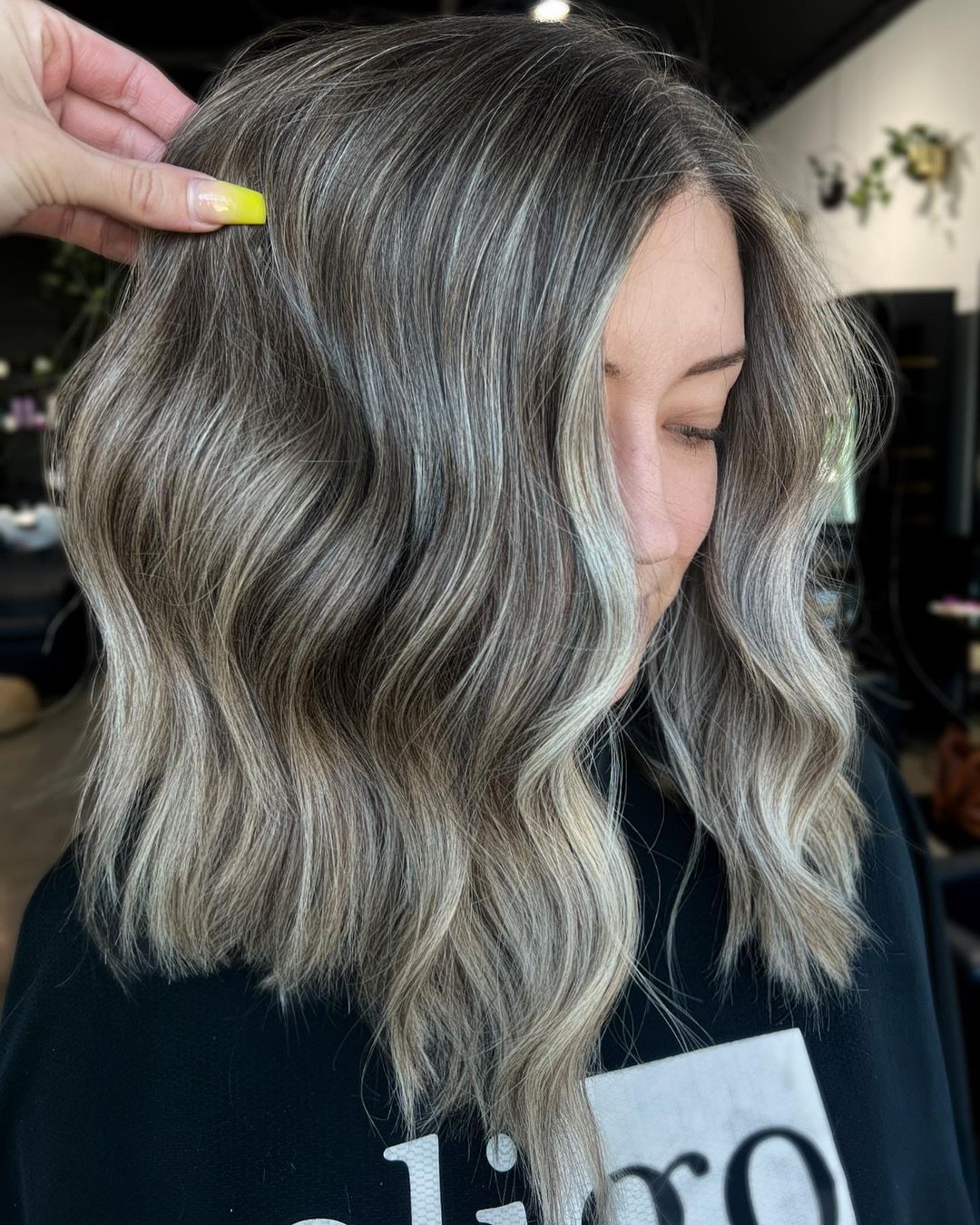
Does a collarbone wavy bob actually work with curtain bangs, or is that a recipe for a triangle head? It works, provided your hair has medium density and a natural wave. The curtain bangs soften the perimeter of the bob and blend into the layers, so the shape stays rounded rather than pyramidal. The dark base with ash blonde highlights adds dimension without going brassy, which matters if your skin has cool undertones. Ask your stylist for: collarbone wavy bob, curtain bangs, dark base with ash blonde highlights. Oval and heart-shaped faces benefit most from the curtain framing. If your hair is very fine, skip the heavy layering and keep the bob more blunt to preserve density. The side parting adds a little lift at the root.
Shoulder Length Wavy Hair With Side Bangs
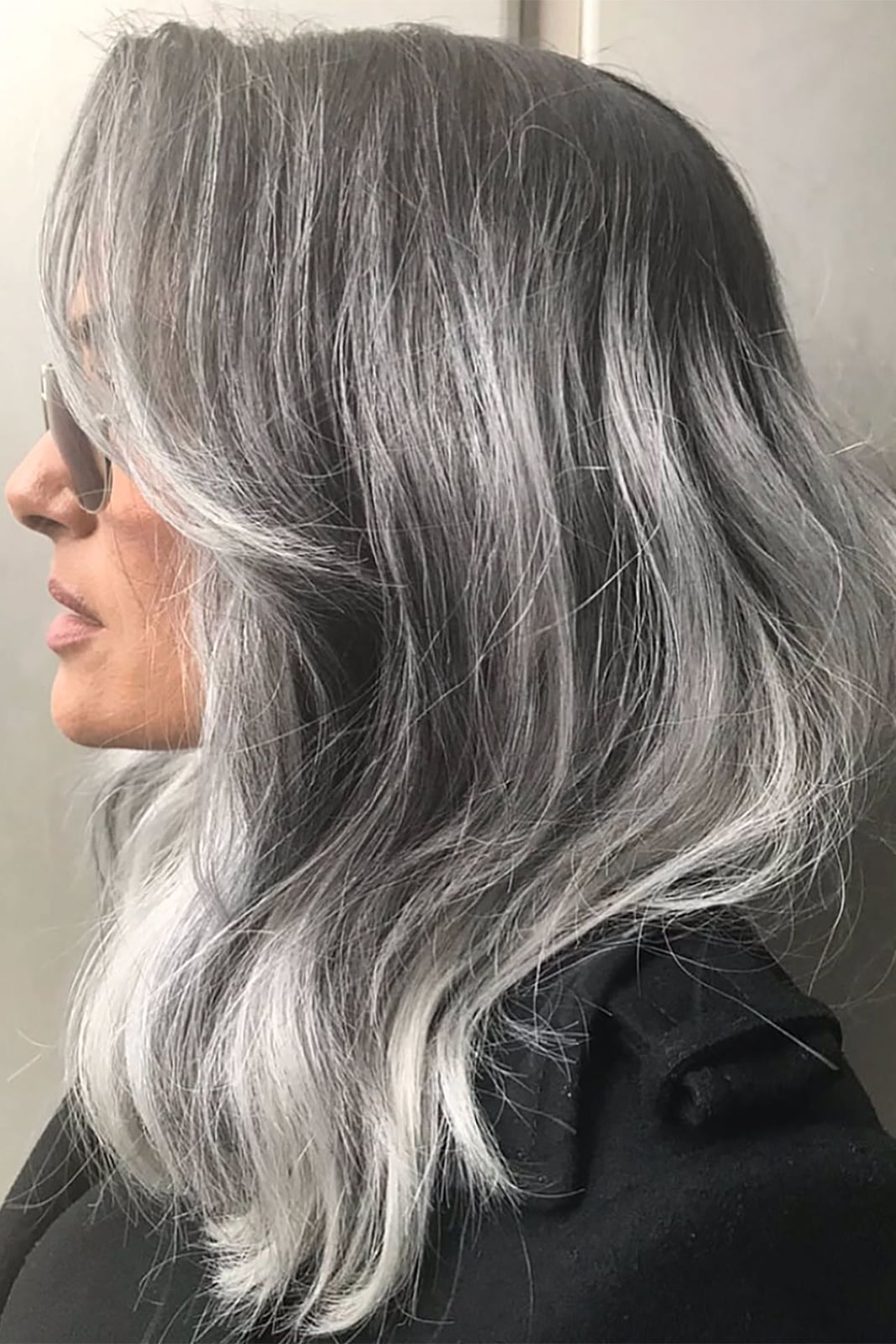
Side bangs at shoulder length walk a fine line between deliberate and accidental. The key is keeping the bangs connected to the layers so they sweep across the forehead. This cut uses soft layering through the length to encourage the wave pattern, and the gray blending is subtle enough that regrowth is not a monthly crisis. Ask your stylist for: shoulder length wavy cut, side bangs, gray blending. Damp hair, scrunch, and air dry is the standard routine. The shoulder length means the waves have enough weight to stay defined but not so much that they fall straight. Trim every six to eight weeks keeps the bangs from grazing your nose. The side parting helps balance a round face by creating diagonal lines.
Shoulder Layered Cut With Blended Gray and Blonde
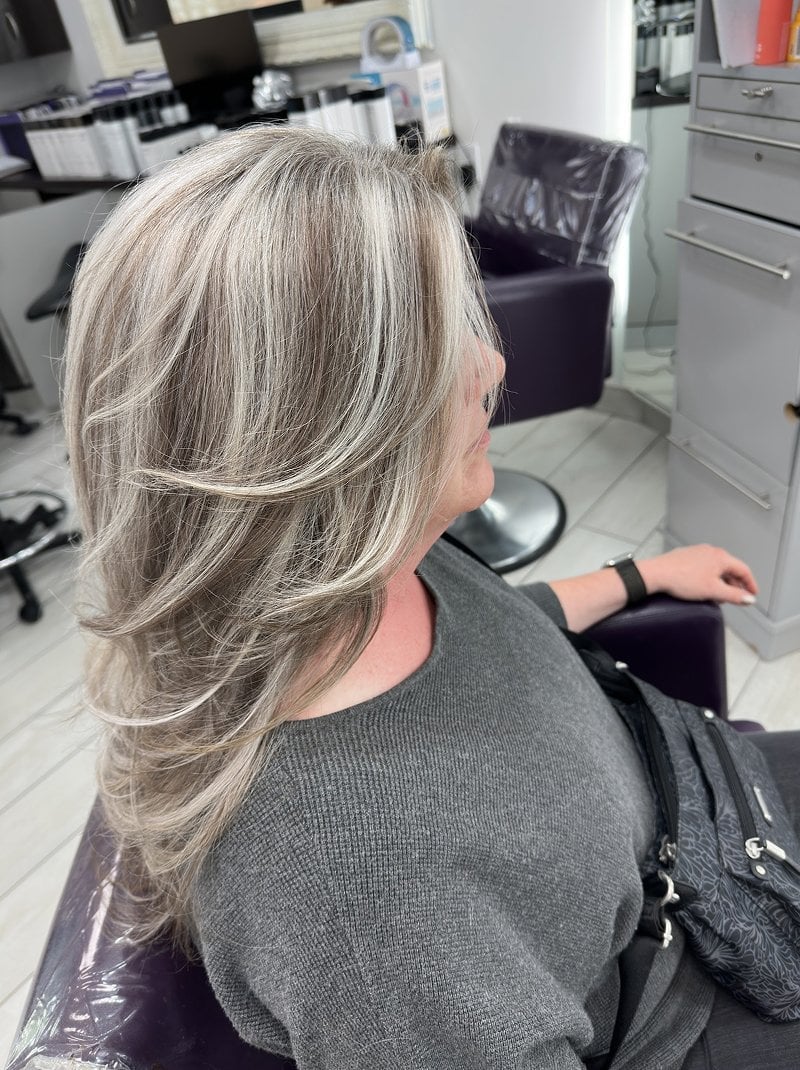
A solid color application at this length tends to sit flat. A shoulder-length layered cut with curtain bangs does the opposite, using blended gray and blonde highlights to create depth that a single shade cannot match. The wavy blowout adds movement, so the layers catch light at different points instead of landing in one block.
Medium-density, wavy hair at shoulder length works best here; curtain bangs help soften an angular jaw. Ask your stylist for: shoulder length layered cut, soft curtain bangs, gray and blonde blend. Blow-dry the layers with a round brush for volume, then wrap sections around a large-barrel iron for the wave. Plan on a trim every six to eight weeks to keep the shape clean and the curtain bangs grazing your cheekbones.
Mid-Back Layers With Curtain Bangs and Ash Blend
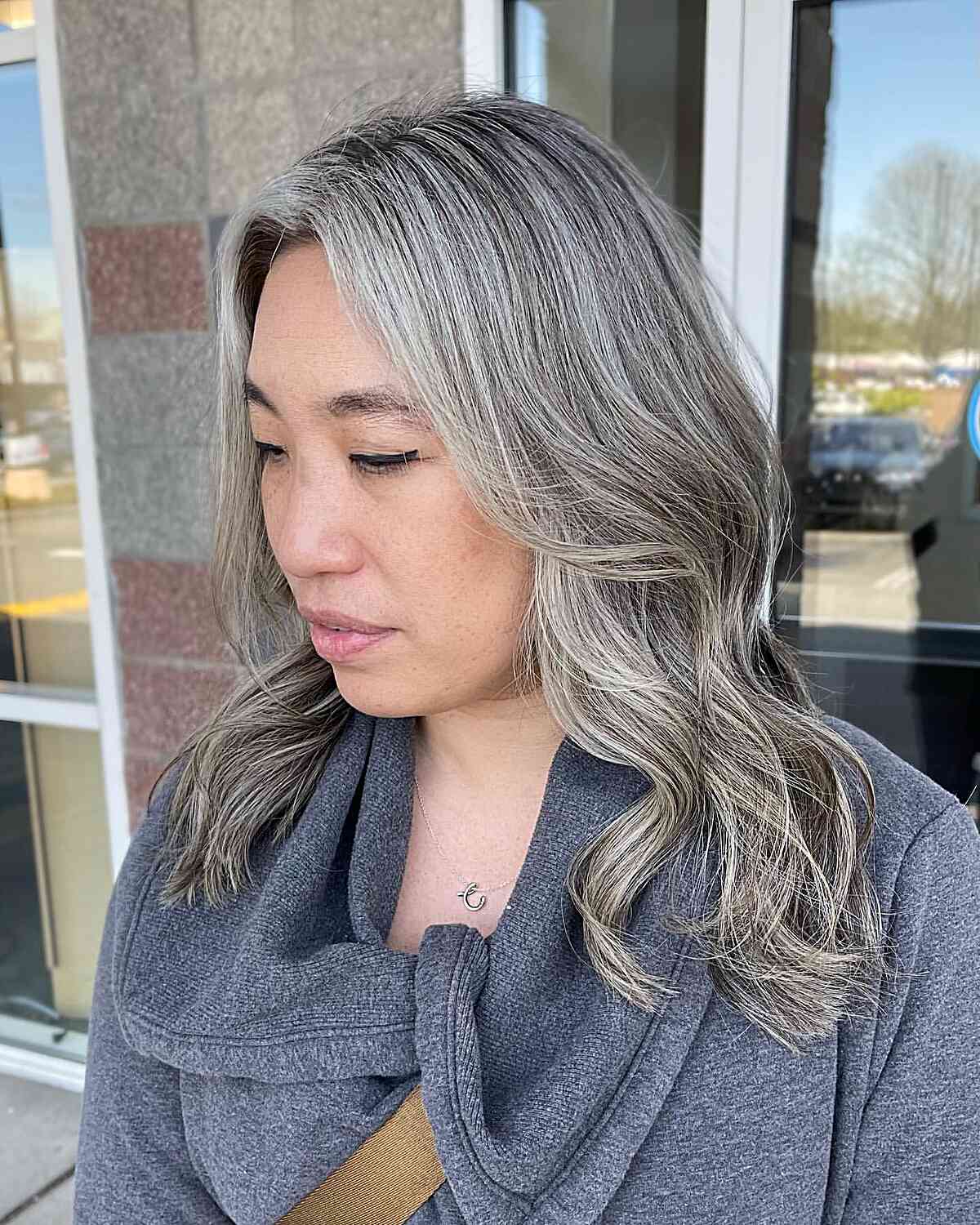
The design here relies on two choices: long layers that start below the chin and curtain bangs that hit the cheekbones. That spacing keeps the ash blonde highlights from stacking in one place, so the gray base looks like natural depth. The side part and loose waves pull the eye diagonally, which a middle part with tighter curls would not do.
Medium-density, wavy hair at mid-back length can handle this layering without losing weight. Ask your stylist for: mid-back length, long layers, curtain bangs, gray and ash blonde blend. The colorist paints the ash blonde highlights through the ends, leaving the root area darker to soften regrowth. A curling wand on the ends defines the wave pattern, and the layers need a trim every eight to ten weeks to keep the shape from collapsing.
Chin Wavy Bob With Dark Gray and Blonde Blend
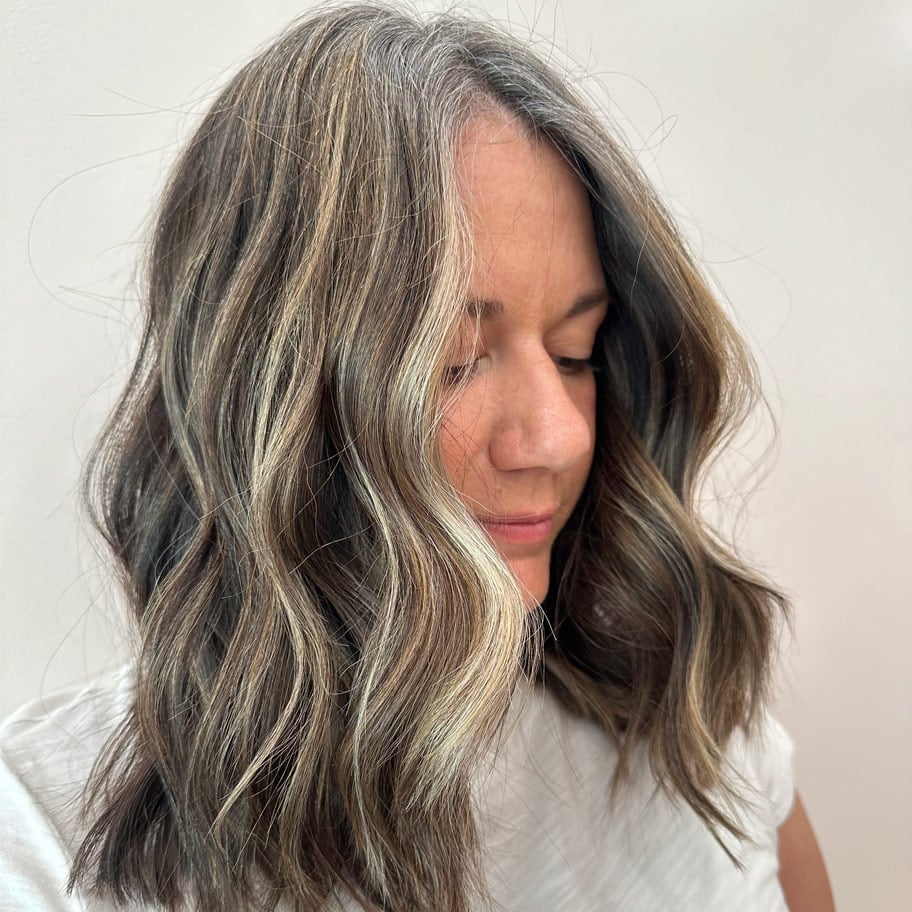
Does a chin-length bob work if your hair is medium-density and wavy? It does, provided the color adds dimension. This cut uses a middle part and a mix of dark brown, gray and blonde highlights to create depth that a single dark shade would lack. The air-dried texture keeps styling simple, and the length suits anyone who wants to skip daily heat styling. Ask your stylist for: chin length wavy bob, dark brown with gray and blonde blend. A texturizing spray at the roots enhances the wave, and the bob needs a trim every six to eight weeks to avoid losing its shape.
Chin Bob With Platinum Blonde and Gray Undertones
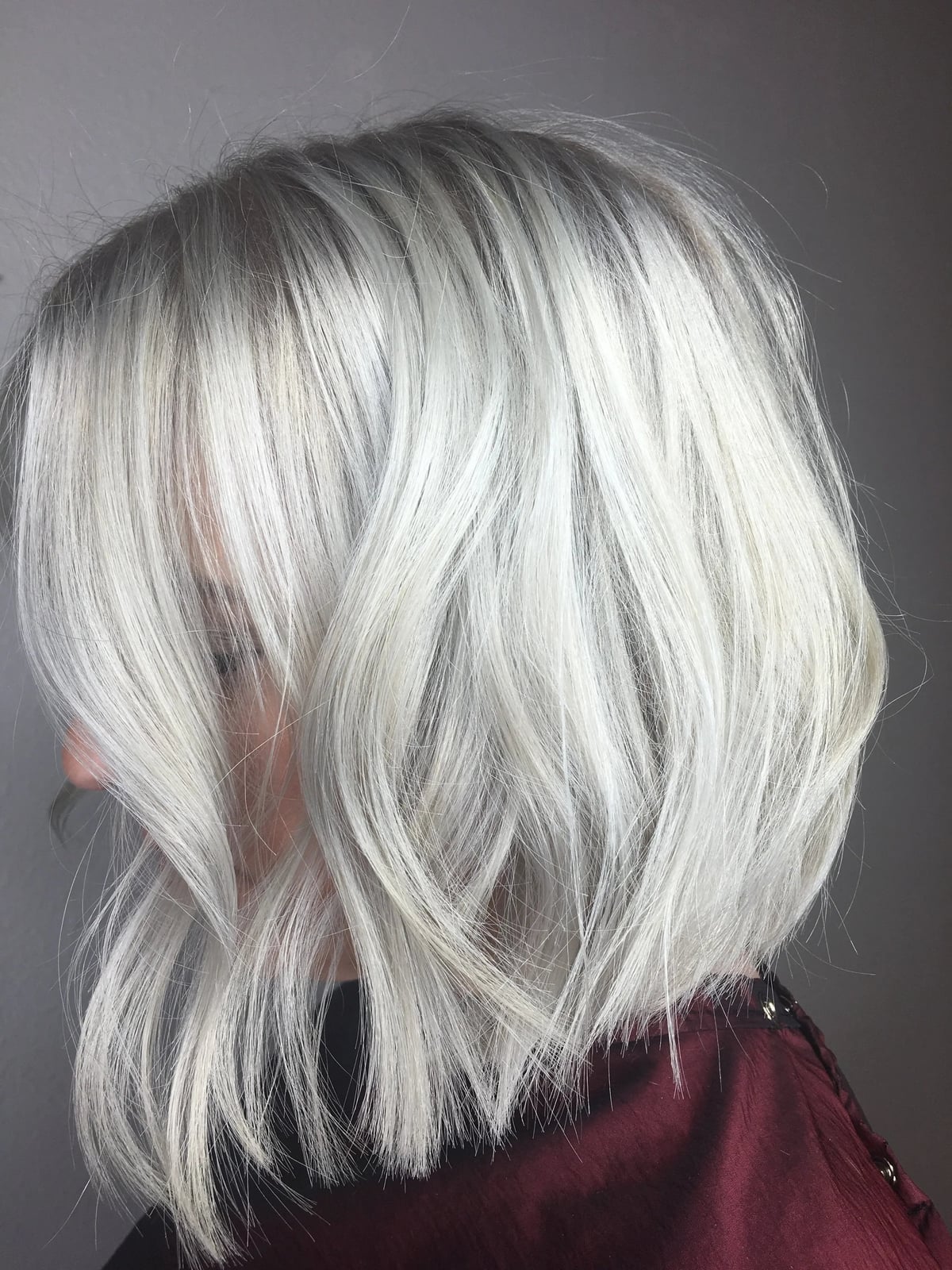
This chin-length bob lands in the warm-weather category by virtue of its lightness: platinum blonde with cool gray undertones reflects sunlight rather than absorbing it. The side part and soft waves keep the finish polished without looking stiff, and the length clears the shoulders, which helps on humid days. Ask your colorist for: chin length bob, platinum blonde with gray undertones. The undertone cancels the yellow that can creep into platinum, so a toning appointment every four to six weeks keeps the color from shifting. A color-safe shampoo extends the time between visits.
Mid-Back Layers With Gray and Ash Blonde Blend and Wavy Texture
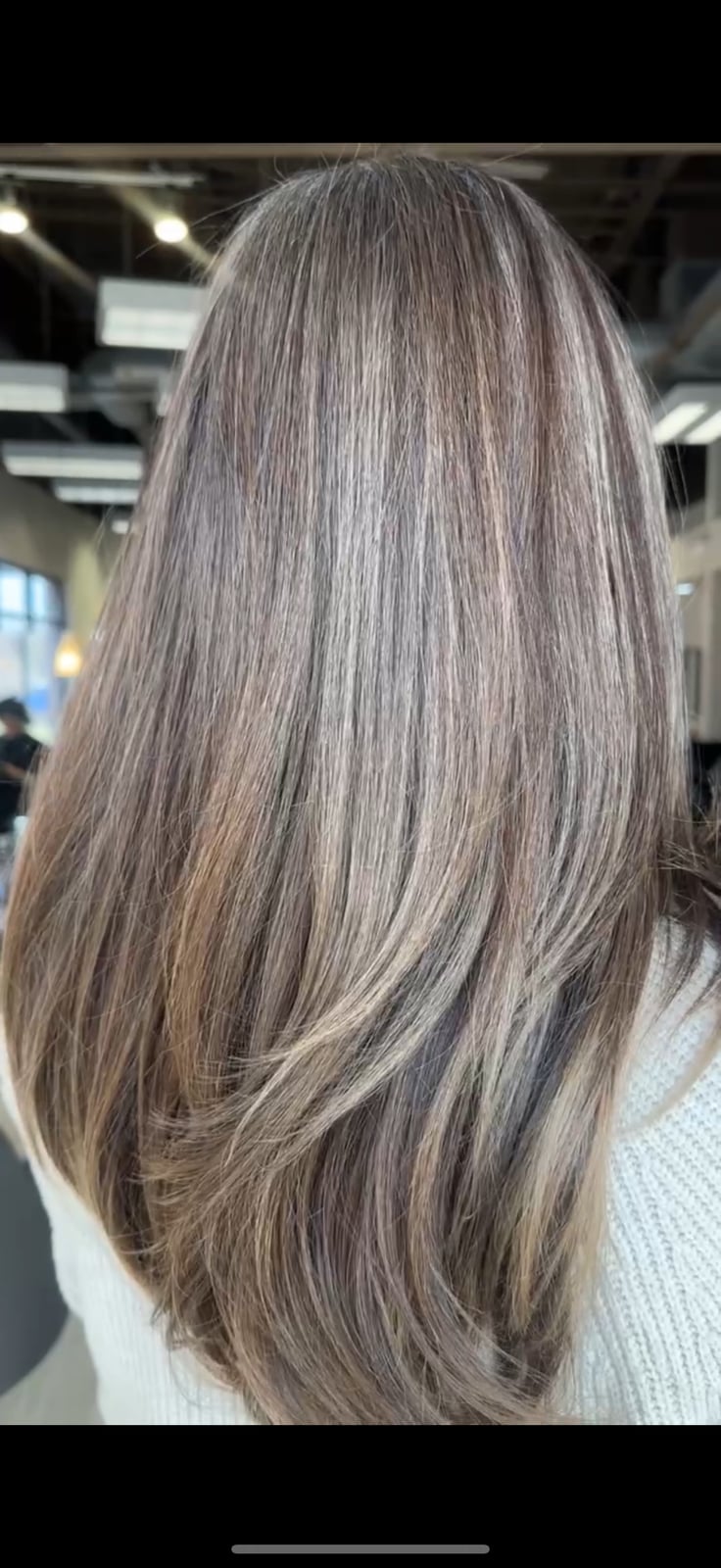
Mid-back length with layers and a middle part can look one-dimensional if the color does not vary. This cut avoids that by blending gray and ash blonde highlights through the waves, so each layer has a slightly different tone. The back view shows how the highlights follow the curve of the layers, creating movement that a single-process color cannot replicate.
Medium-density, wavy hair at mid-back length benefits from the layering, which keeps the waves from falling straight. Ask your colorist for: mid-back length, soft layers, gray and ash blonde highlights. A lightweight serum on the ends adds shine without flattening the wave. The layers need a trim every eight to ten weeks to keep the shape defined and the blend looking deliberate.
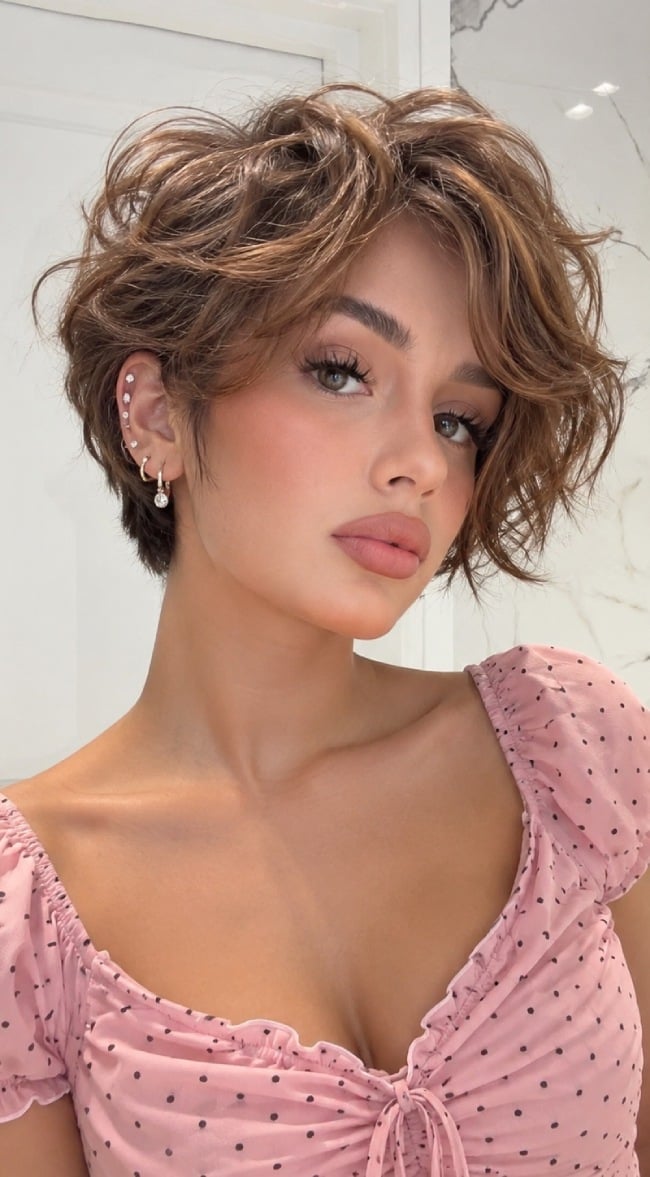
Short Textured Bob With Silver Gray Blend
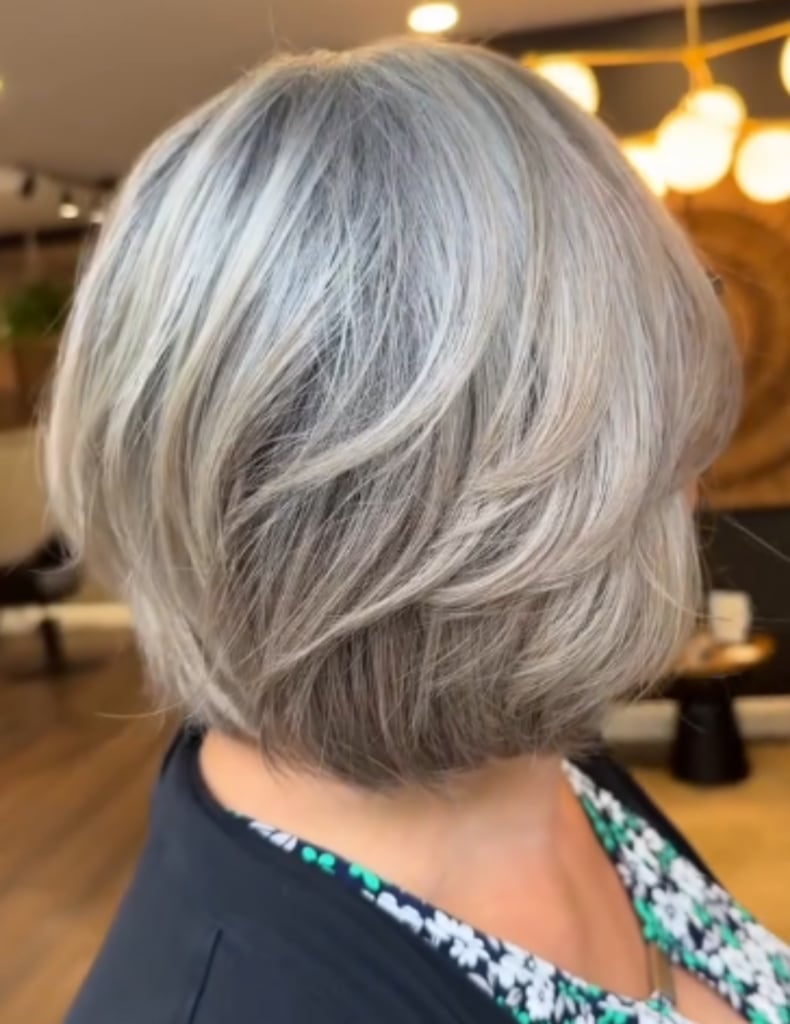
A short bob looks like a helmet without texture, layers, and a side part that adds movement. This chin-length cut uses fine, straight hair as an advantage: the silver gray blend creates a polished gray and silver look. Ask your stylist for: short textured bob, layers, gray and silver blend. A texturizing paste or wax defines the shape without weighing it down, and the bob needs a trim every six to eight weeks to keep that precise line.
Collarbone Wavy Bob With Ash Blonde Gray Blend and Creating A Natural
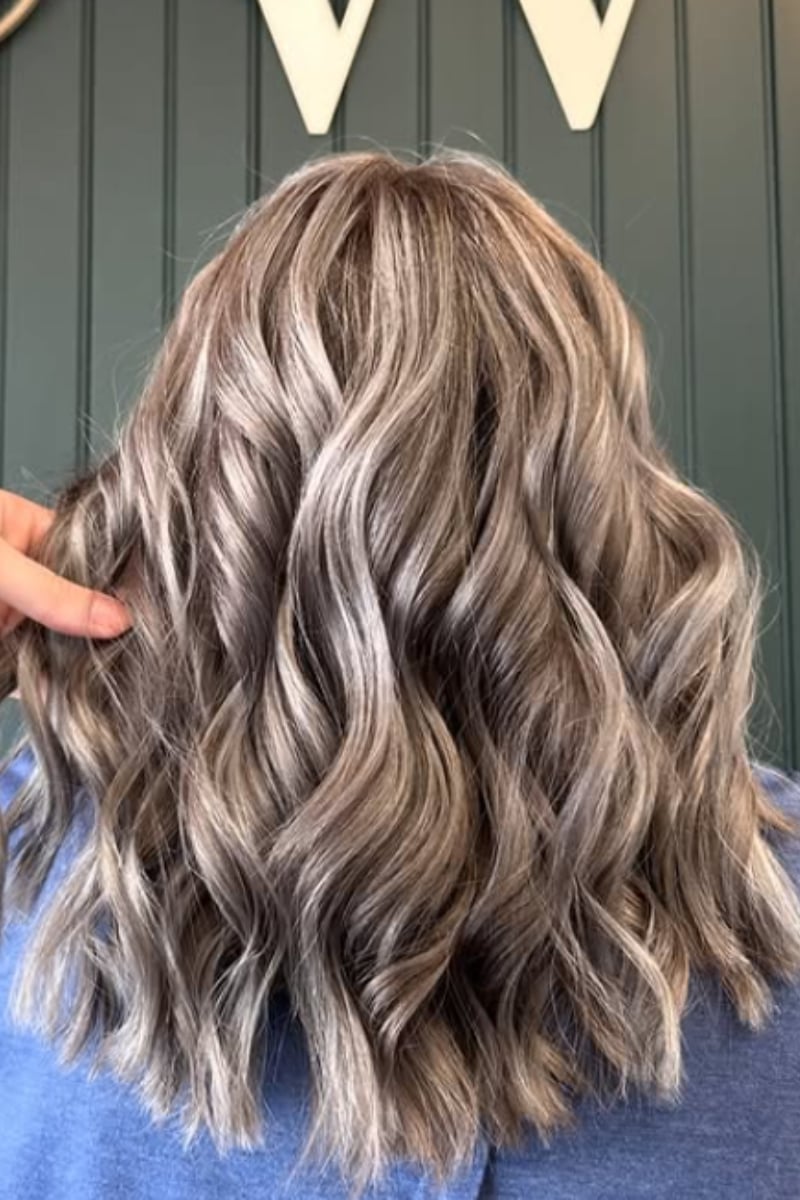
Collarbone length is the Goldilocks zone for wavy hair, but this bob asks for a specific kind of commitment. The loose layers and side part give medium-density waves room to move, and the gray blended with ash blonde tones creates a natural, sun-bleached effect that doesn’t look like you tried very hard.
The trade-off is that the texture is mostly a salon achievement. Recreating those waves at home takes a diffuser, a good heat protectant, and the patience to let it dry without touching it. If your hair is naturally stick-straight or very fine, you will fight the bob more than you will enjoy it. Plan on a trim every six to eight weeks and a toning appointment every four to six to keep the ash from warming up.
Ear Length Sleek Bob With Cool Gray Blend
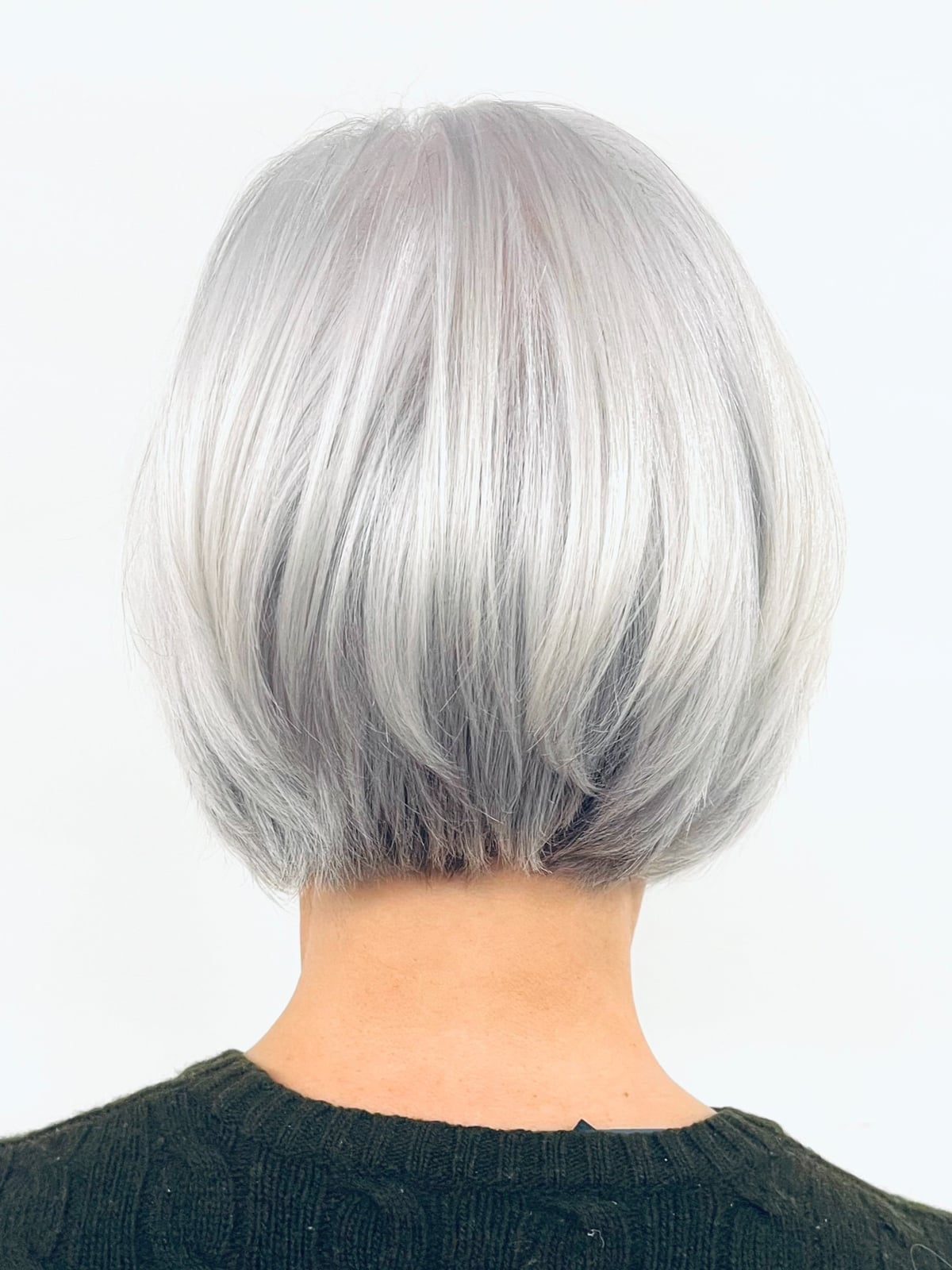
An ear-length blunt bob is a geometry problem solved correctly. The centered part and clean nape line create a sharp silhouette, while the cool gray blend adds depth without a single obvious highlight. Fine, straight hair at this length looks denser than it is, which is the whole point. Ask your stylist for: ear length sleek blunt bob, cool gray blend. A smoothing serum on damp hair gives that polished finish; the bob requires a trim every six weeks to maintain the exact line at the jaw.
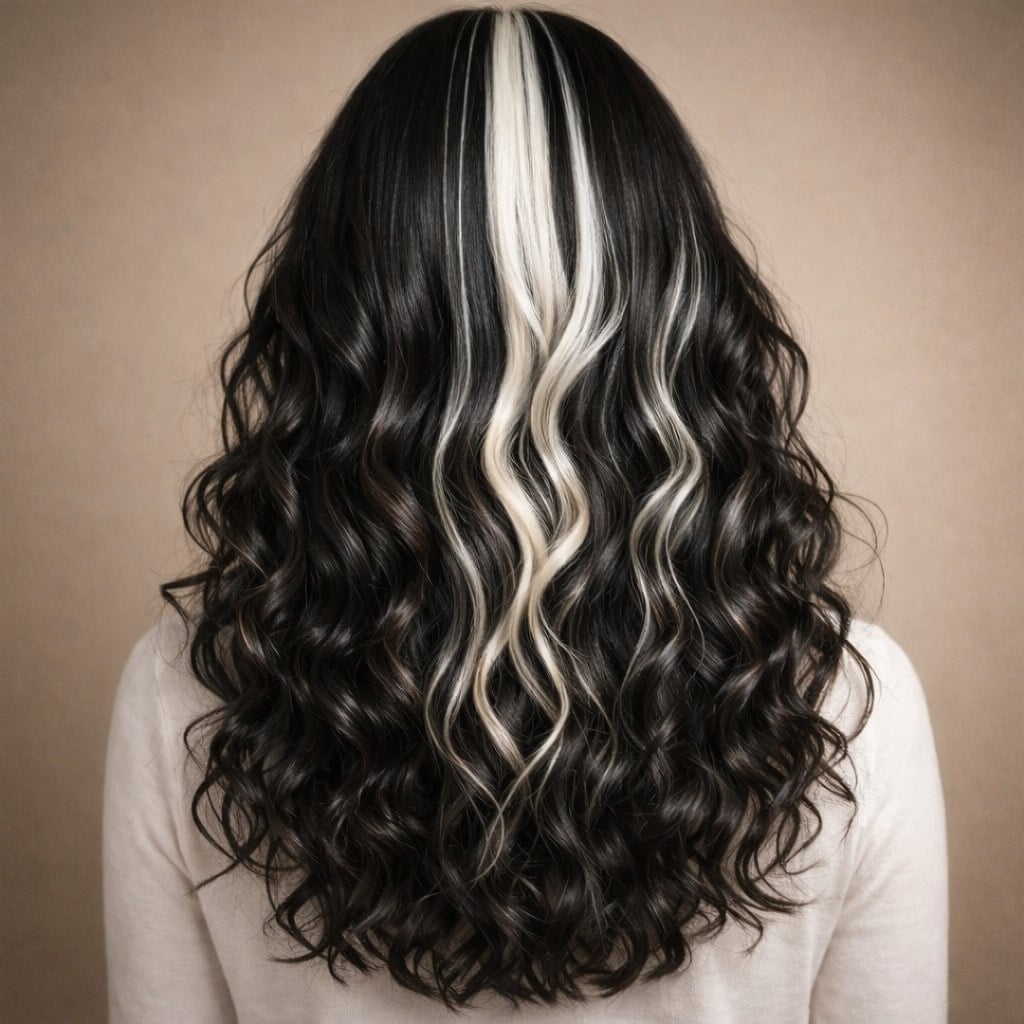
Mid-Back Curls With Rich Gray and Silver Highlights
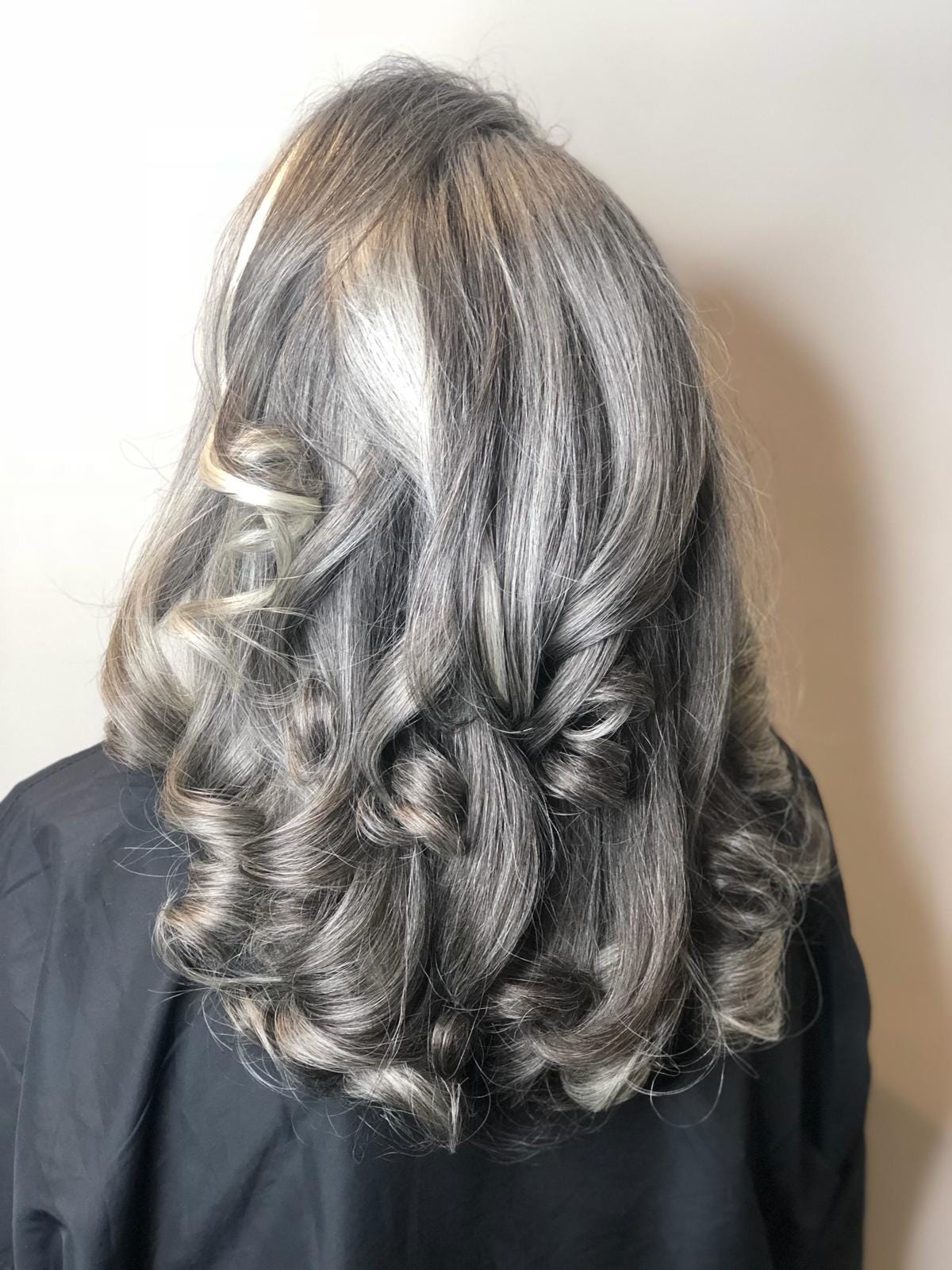
Who actually benefits from mid-back curls with silver highlights? Anyone with thick, wavy hair who wants volume that stays put. The layers cut into this length prevent the curl from falling flat, and the rich gray base with silver and white highlights creates dimension. Ask your colorist for: mid-back length, voluminous curls, rich gray with silver and white highlights.
This look genuinely flatters medium to high-density hair that already has some wave. If your texture is fine or your curl pattern is loose, the silver highlights can get lost in the length instead of adding the contrast they are supposed to. A curl-defining cream and a diffuser are essential for shape; plan on a layer trim every eight to ten weeks and a gloss or toner every six to keep the silver bright.
Long Wavy Hair With Dark Brown Gray Blonde Blend
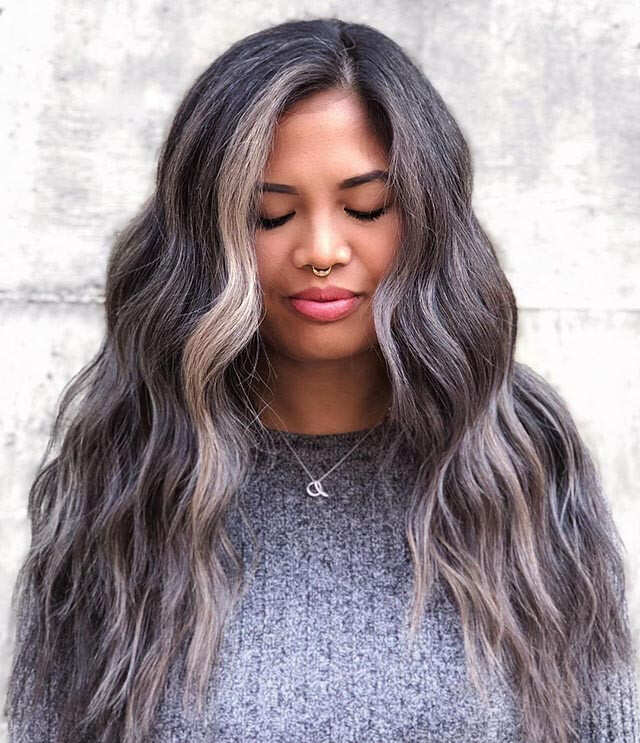
Dark brown hair going gray usually means a stark root line every few weeks, but this blend sidesteps that problem entirely. The long layers keep thick, wavy hair from turning into a triangle, while the gray and blonde highlights are concentrated around the face, where they brighten the overall look. Ask your colorist for: long wavy hair, dark brown with gray and blonde highlights.
The upkeep is manageable if you accept that the highlights will grow out softer than a solid color. A leave-in conditioner keeps the waves defined and the ends from drying out, which is the main risk with lightener on dark base hair. Trim the layers every eight to ten weeks; the highlights can stretch to every twelve weeks because the blend is designed to fade gracefully rather than leave a hard line.
Mid-Back Wavy Blowout With Ash Blonde Highlights
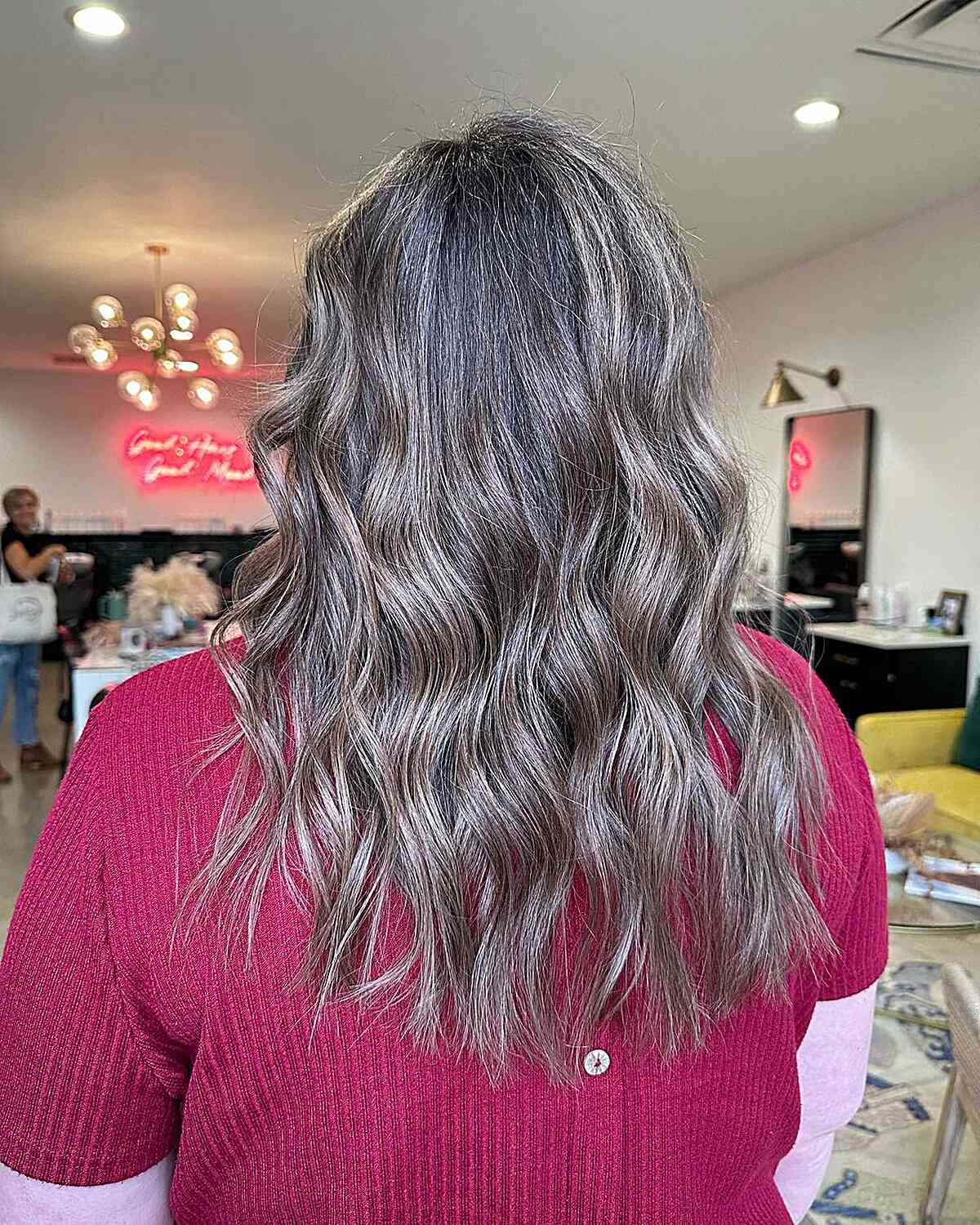
Wondering how to ask for those blended ash blonde highlights on long, thick hair? The technique is simple: request a dark brown base with ash blonde highlights woven through the mid-lengths and ends, not the roots. Ask your colorist for: mid-back length wavy hair, dark brown with ash blonde highlights. The layers throughout the cut allow the lighter pieces to move naturally in a wavy blowout. A middle part keeps the look grounded. The result is a polished, salon-fresh finish that looks grown-in.
Collarbone Lob With Gray Blend and Curtain Bangs
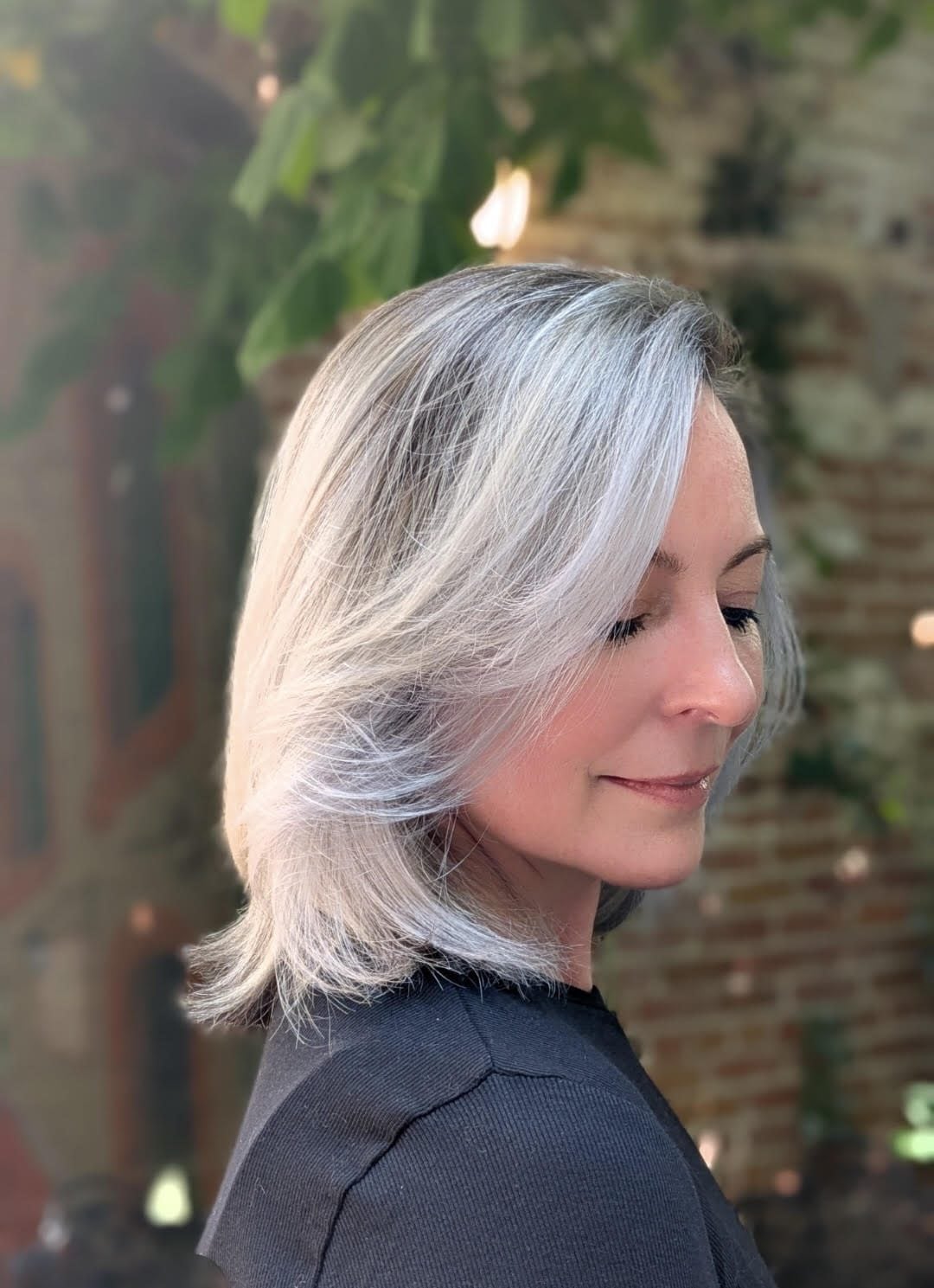
A collarbone lob with curtain bangs is a design built on contrast: darker roots soften into a gray blend toward the ends, and the bangs frame the face without committing to a full fringe. It works best on fine, wavy hair that can handle the weight of a blunt-ish lob shape. Ask your stylist for: collarbone lob, curtain bangs, gray blend with darker roots.
The trade-off is the bangs. Curtain bangs need a trim every three to four weeks to stay in that sweet spot, and you will need to blow-dry them with a round brush each wash day. This is a salon-only cut, not a between-appointments shape. Skip it if you want a set-and-forget style.
Mid-Back Layers With Dark Gray and Blonde Contrast
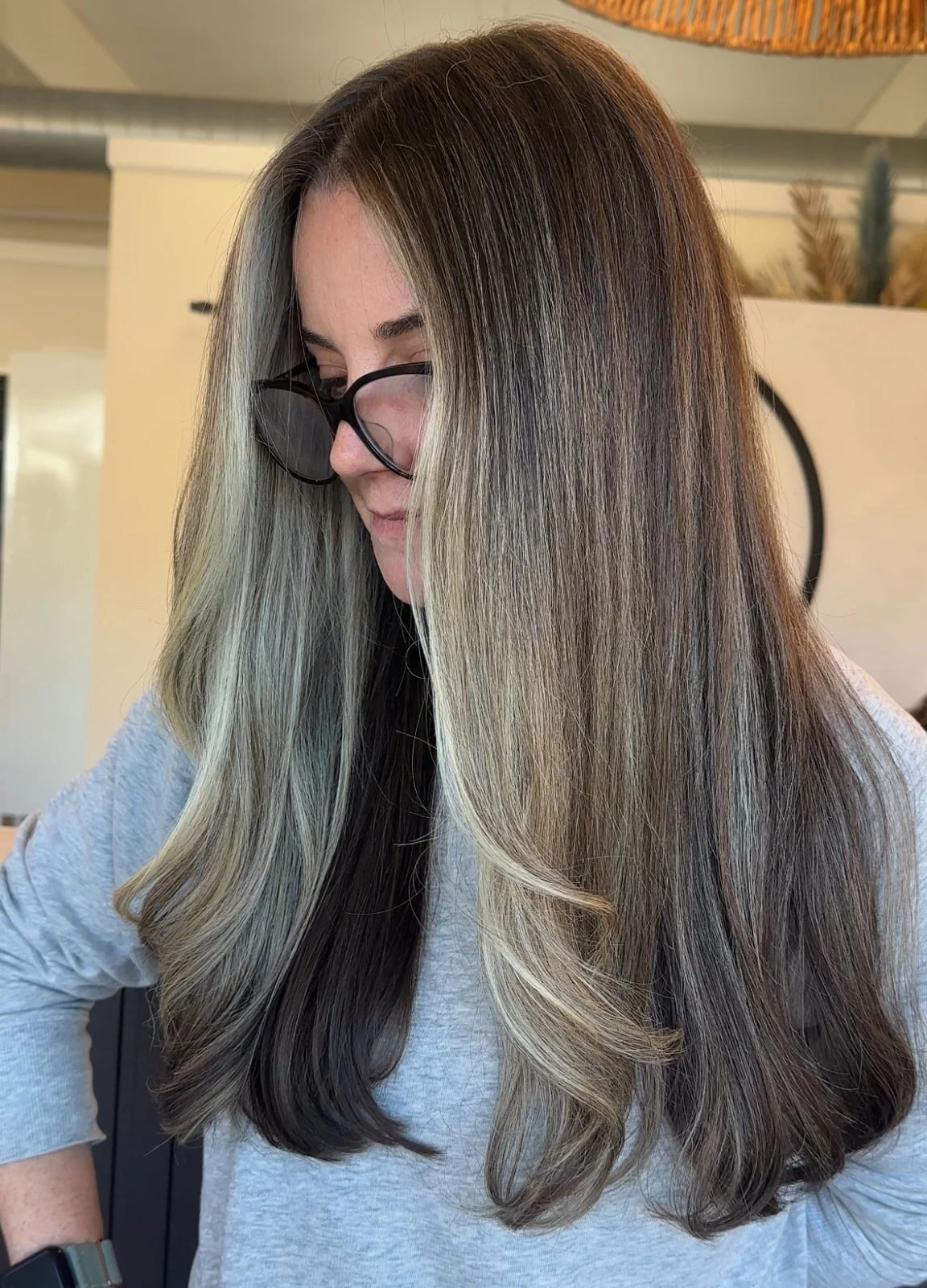
The trick here is the placement of the highlights. On a dark brown base, the stylist paints thicker sections of gray and blonde through the ends, skipping the root area entirely. This creates a deliberate contrast instead of a blended fade. The layers in the cut let those lighter streaks stand out as separate pieces, especially in loose waves. Ask your colorist for: mid-back length, layers, dark base with contrasting gray and blonde. A middle part keeps the symmetry clean. The result is a high-contrast, dimensional look that relies on the dark base to anchor the lighter tones.
Thick, wavy hair works best with this technique. The density prevents the contrast from looking sparse, and the natural wave softens the hard line between dark and light. If your hair is fine, the streaks may feel too sparse, so ask for a balayage approach instead.
Collarbone Layered Cut With Gray Blend
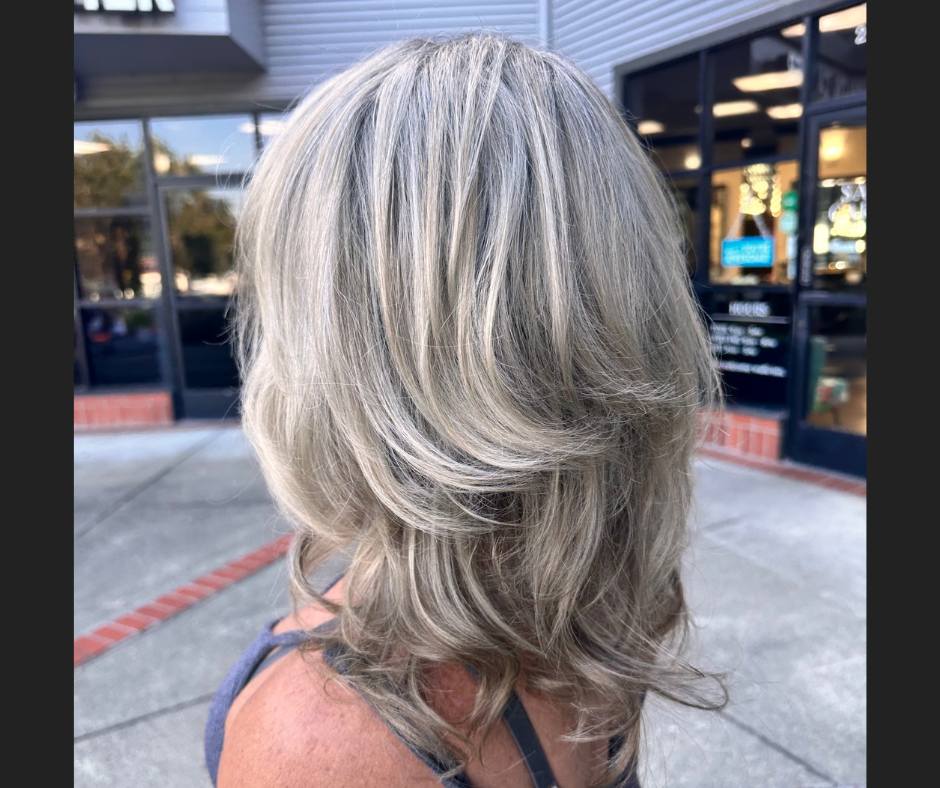
A blunt collarbone cut gives you a solid line, but a layered version does something different: it adds movement and a softer silhouette. On fine, wavy hair, layers prevent the gray blend from sitting in one flat block. The side parting helps the lighter pieces fall forward, creating a natural face-framing effect. Ask your stylist for: collarbone length layered cut, gray blend. A blunt cut holds a stronger line but can feel heavy on fine hair, while layers let the gray tones breathe and shift as you move. Choose the layered version if you want a lived-in, low-commitment shape.
The trade-off is that layers require more frequent trims to keep their shape, about every six weeks, while a blunt bob can stretch to eight. Fine hair benefits from the extra movement, so the extra appointment is worth it.
Chin Blunt Bob With Dark Gray Blend, Straight
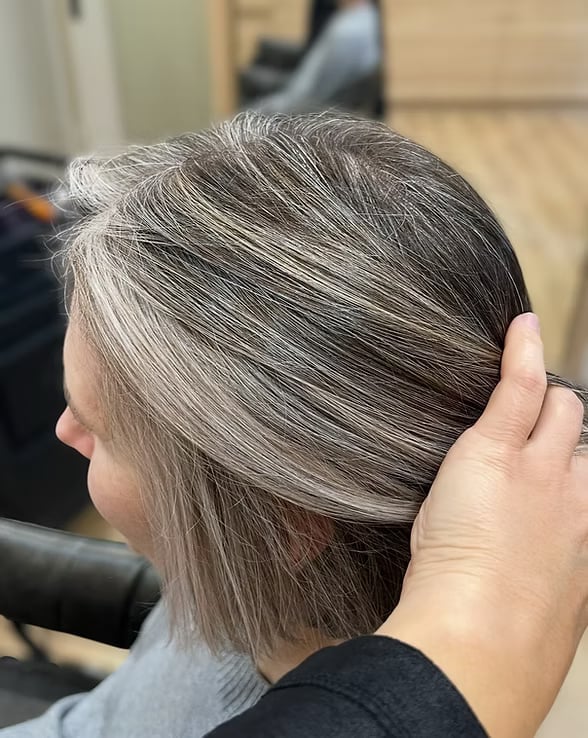
Can fine, straight hair pull off a chin-length blunt bob? Yes, but only if the baseline is sharp. The blunt cut gives the illusion of thicker density, and the dark brown base with subtle gray highlights adds depth without bulk. Ask your stylist for: chin length blunt bob, dark brown with gray blend. A side parting breaks up the symmetry and lets the gray pieces sit naturally. The air-dried finish keeps it low-maintenance, but a smoothing balm helps control flyaways. This is a salon-leaning cut that needs a trim every six to eight weeks to keep the blunt edge intact.
Mid-Back Layers With Balayage Ash Blonde Gray
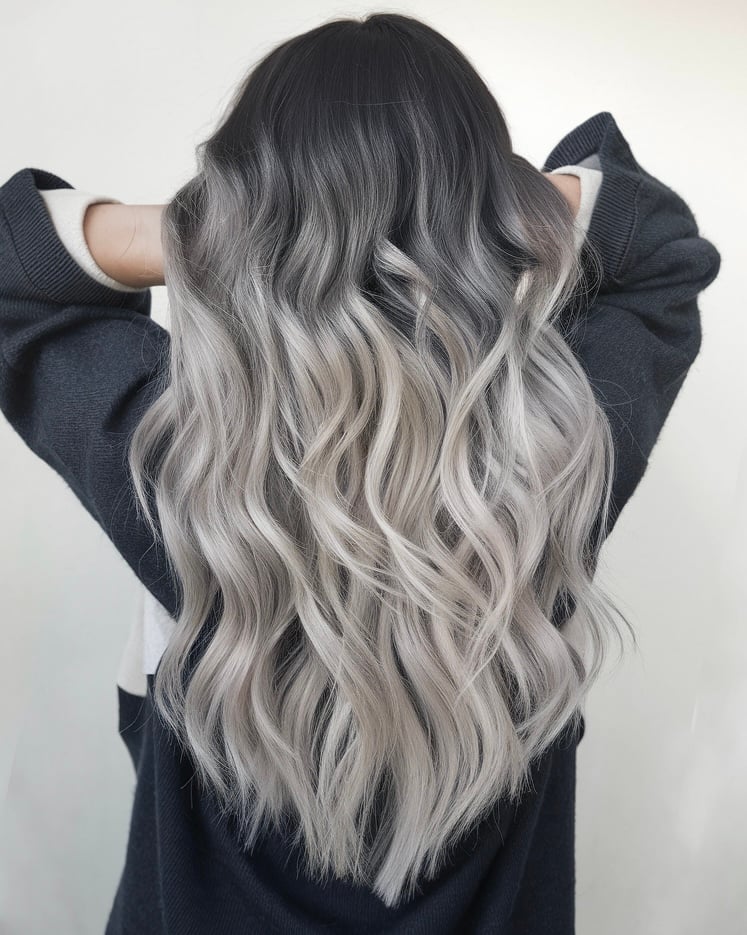
Balayage starts at the mid-shaft, so the dark root stays intact while ash blonde and gray highlights take over through the mid-back length. Thick, wavy hair at this length holds the loose wave pattern without fighting it, and the middle part keeps everything symmetrical. Ask your colorist for: mid-back length, long layers, balayage with ash blonde and gray. Focus conditioner on the ends to maintain hair health; trim layers every eight to ten weeks.
The grow-out is the main event here. Because balayage is painted freehand rather than foiled to the scalp, the line between dark base and lighter lengths stays soft for months. You will not see a harsh stripe at the part, just a gradual fade that works with the natural gray coming in. A trim every eight weeks keeps the ends from looking stringy, but the color itself buys you time.
Collarbone Layers With Blended Gray Tones
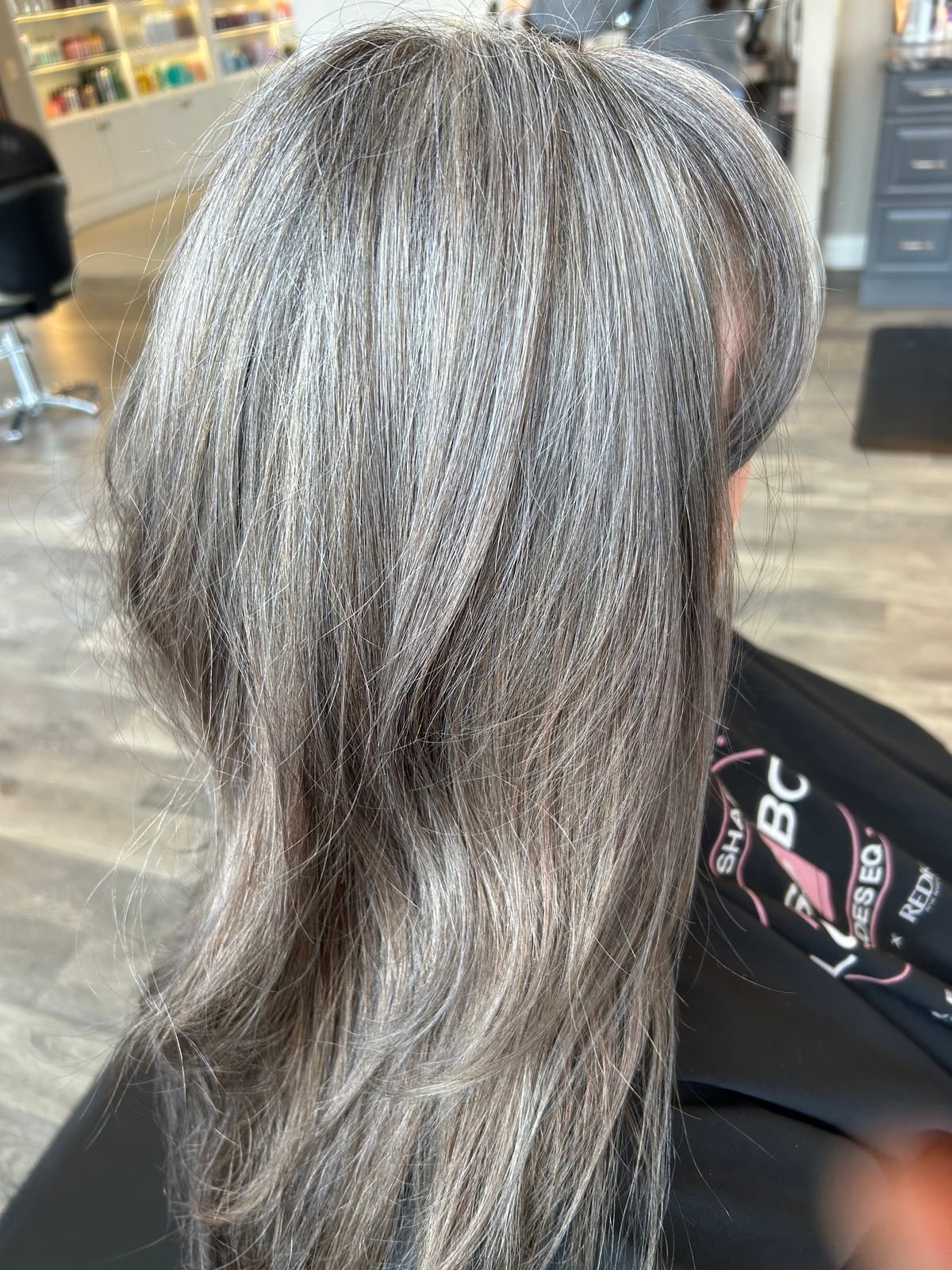
How do you ask for a gray blend that does not look like a stripe? Start with the cut. Collarbone length with subtle layers keeps fine, wavy hair from losing density, while the side part lets the lighter gray strands peek through the darker base. Ask your colorist for: collarbone length with subtle layers, blended gray tones. The key is keeping the layers soft enough that the gray reads as dimension rather than a separate color. A root-lifting spray at the crown adds volume without weighing down the fine texture.
Mid-Back Layers With Natural Gray Blend
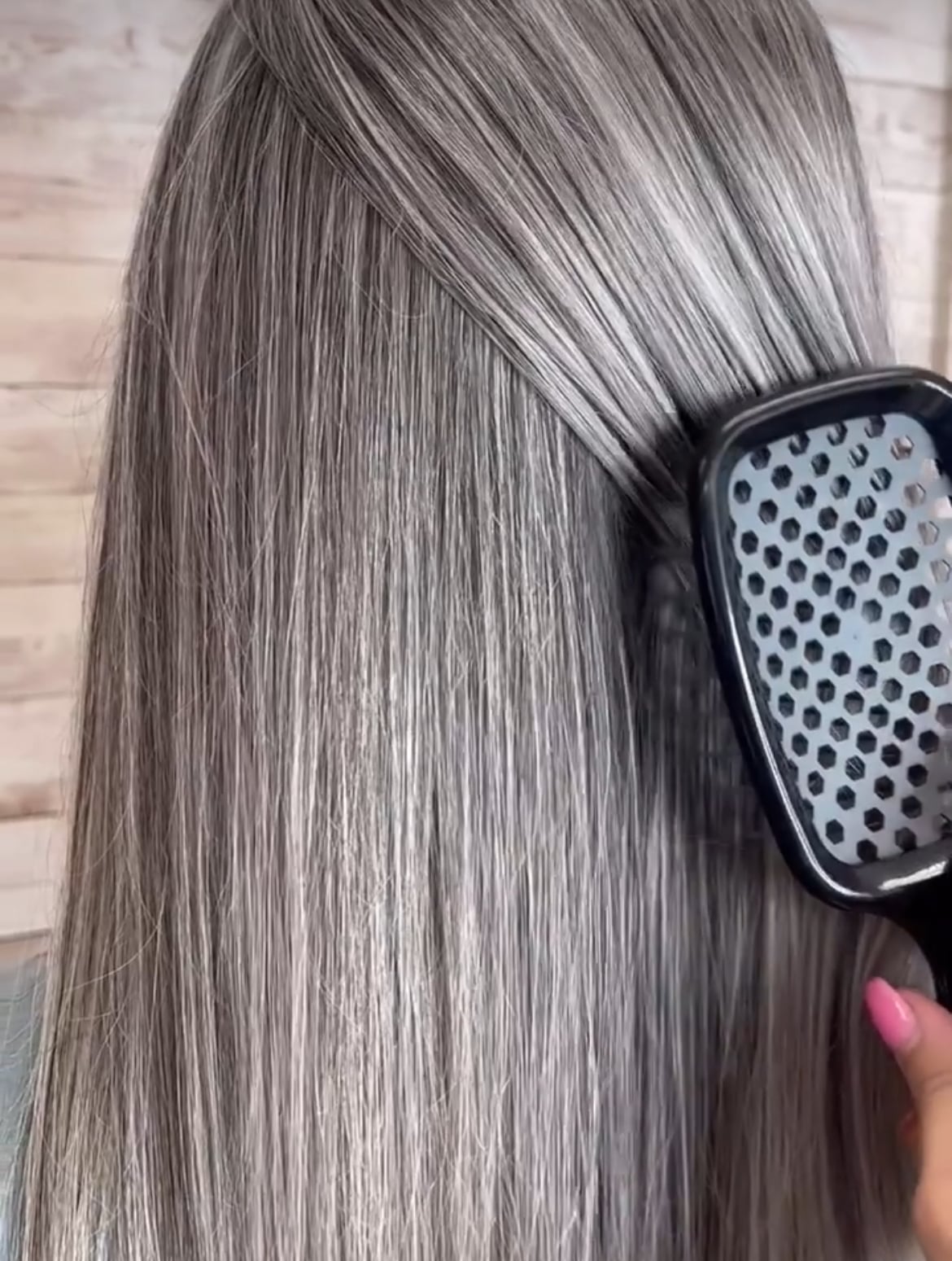
Thick, wavy hair at mid-back length pairs well with a natural gray blend. The layers break up the mass so the lighter strands weave through the darker base without looking like an afterthought. A side part adds asymmetry, which helps the transition appear natural. Ask your stylist for: mid-back length, layers, natural gray blend.
This cut relies on texture to hold its shape. On thick, wavy hair, air-drying works fine, but if you skip the diffuser or a lightweight oil on the ends, the layers can blur into one shapeless block. A trim every eight to ten weeks keeps the edges defined. This is a salon-only cut; the layering needs a stylist who understands how gray strands behave differently than pigmented hair.
Collarbone Shag With Ash Blonde Gray Blend
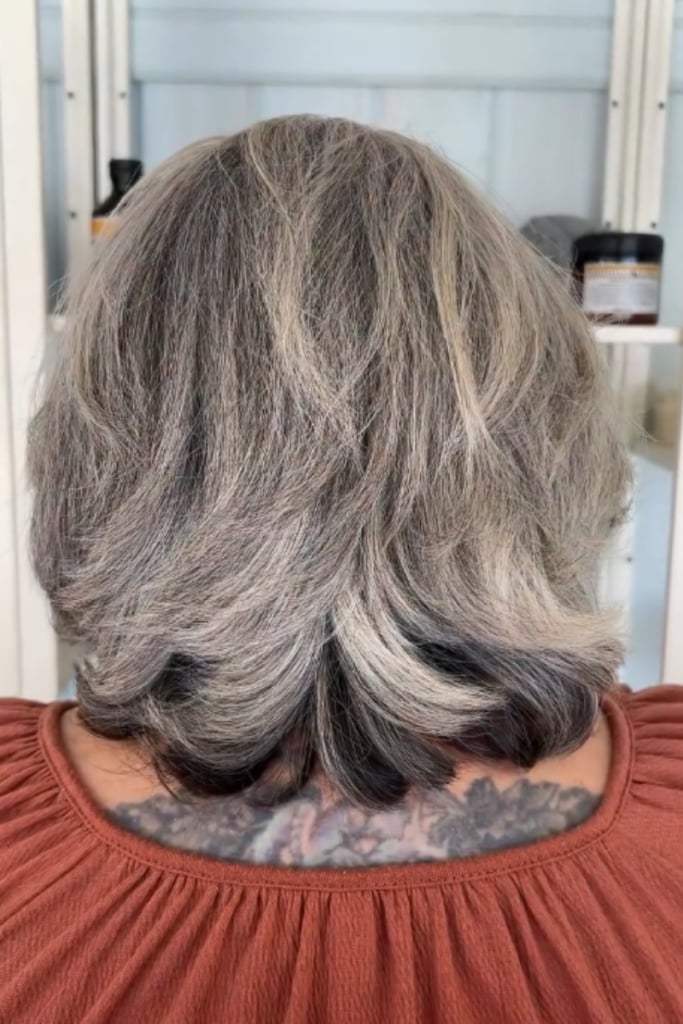
A middle part keeps the face-framing pieces even. Ask your stylist for: collarbone length shag, textured waves, ash blonde gray blend. The technique involves point-cutting the ends so the gray and ash blonde highlights land on different lengths, which creates the dimensional effect. A sea salt spray on damp hair enhances the texture without adding weight.
Collarbone Wavy Blowout With Gray Blend, Layers
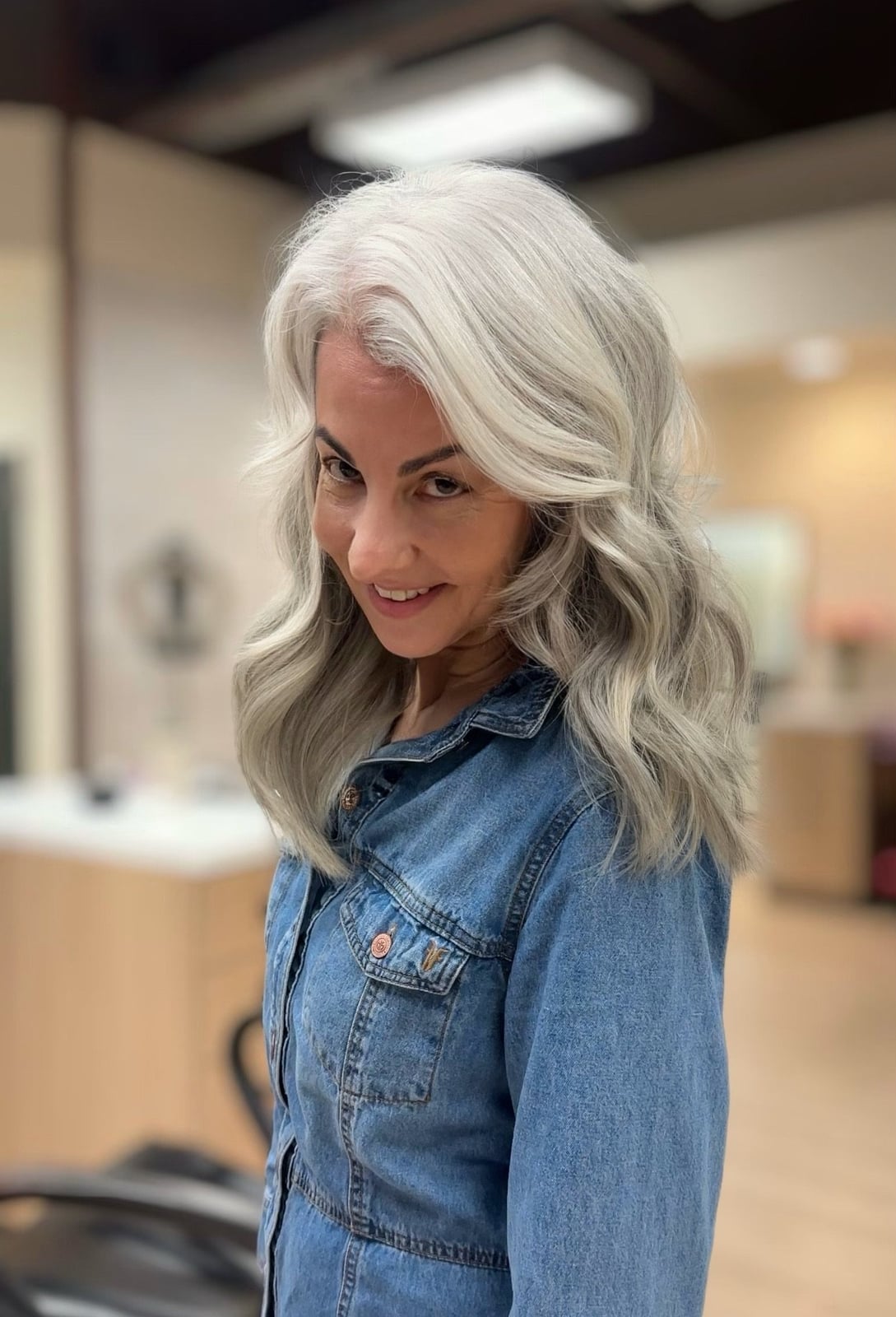
Is a voluminous blowout still possible with gray blending? Yes, if the hair is thick and wavy to begin with. Collarbone length with soft layers gives the blowout enough lift at the crown without losing the polished finish. A middle part keeps the volume distributed evenly. Ask your stylist for: collarbone length wavy hair, voluminous blowout, gray blend. Thick hair holds the bend from a large round brush for a full day, and the gray blend reads as glossy rather than flat. A trim every six to eight weeks maintains the shape, but the real work is in the blow-dry technique.
Mid-Back Straight Hair With Gray and Blonde Blend
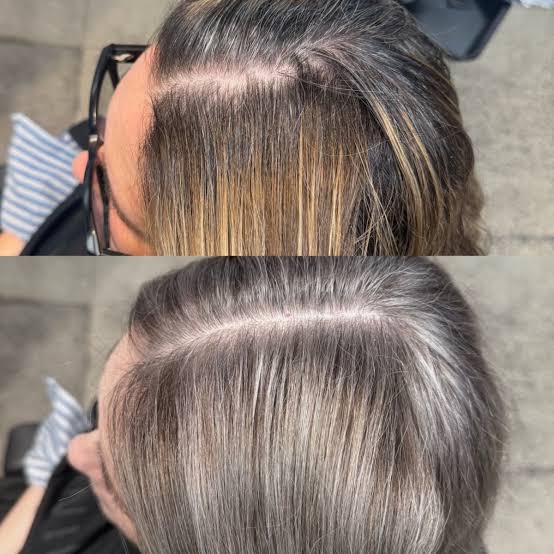
Styling is a five-minute affair: apply a lightweight serum through damp lengths to seal the cuticle, then let it dry without touching it. The straight, fine texture means you can skip a blow-dryer entirely. Plan on a trim every eight to ten weeks to keep the ends from fraying, and a toning appointment every six to eight weeks if you want the blonde highlights to stay cool rather than warm up.
Final Thoughts
For fine hair, keep one blunt baseline and skip heavy layers that can thin out the ends. For thick hair, long layers and strategic texturizing prevent that heavy, helmet-like feeling. A well-placed fringe can soften a square jaw, but let the length fall below the chin for a round face.
- Maintain gray blending with a toner application every 6-10 weeks.
- Trim layered cuts every 8-10 weeks to preserve shape.
- Use a purple shampoo or conditioner weekly to keep cool tones bright.
- Protect hair from heat styling with a heat protectant spray.
- Wash hair 2-3 times a week to prevent color stripping.
Graceful gray blending offers a modern approach to hair color.