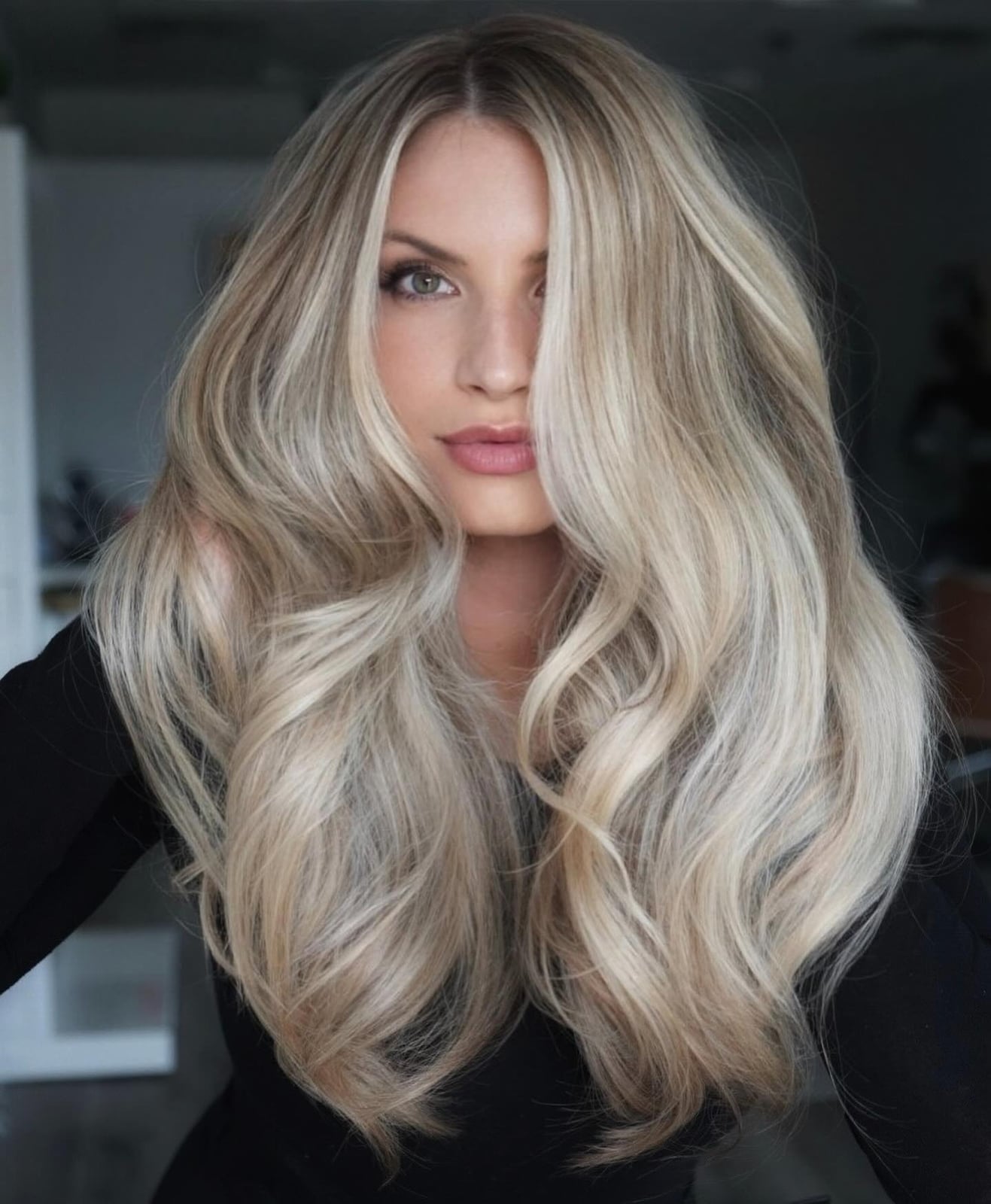
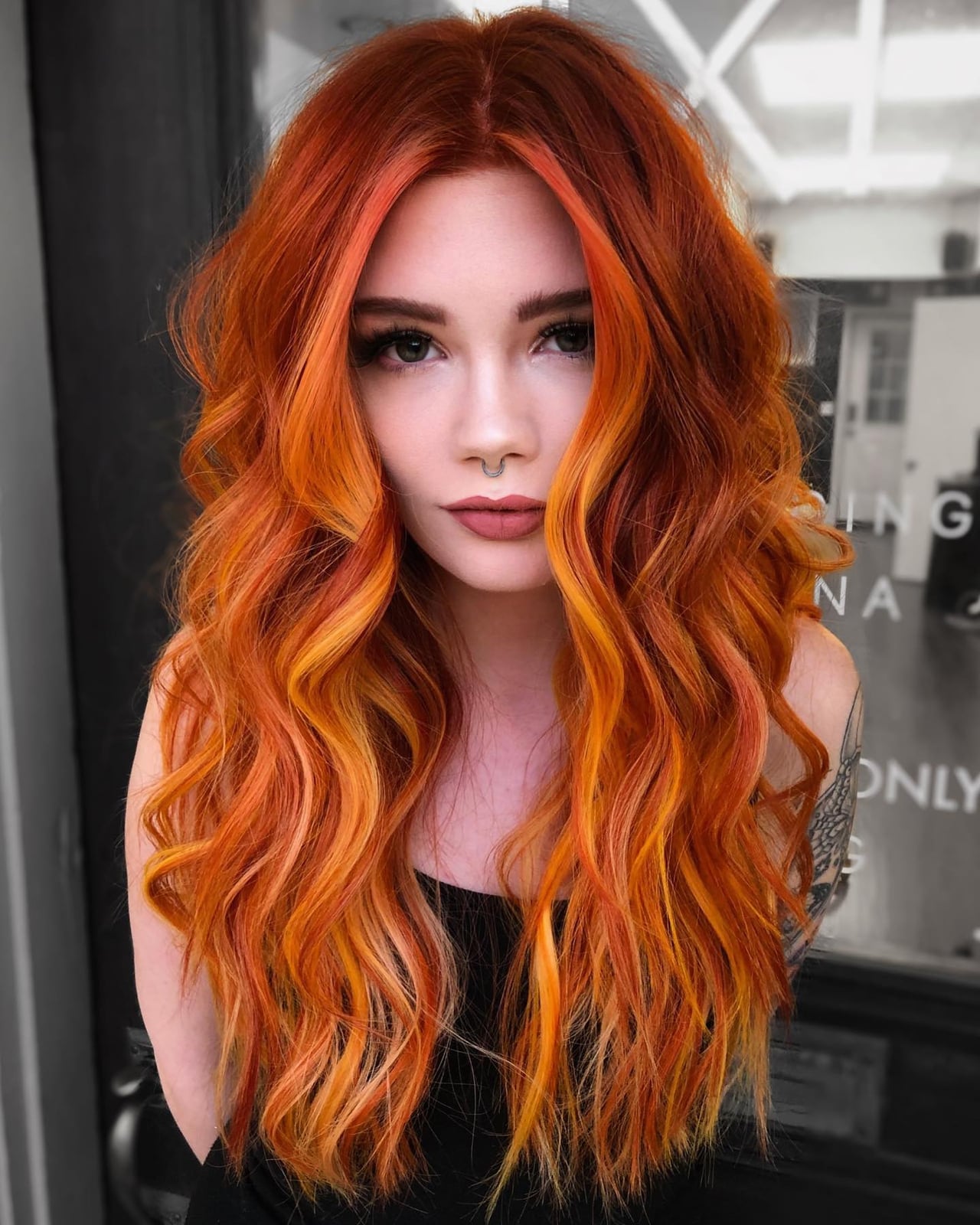
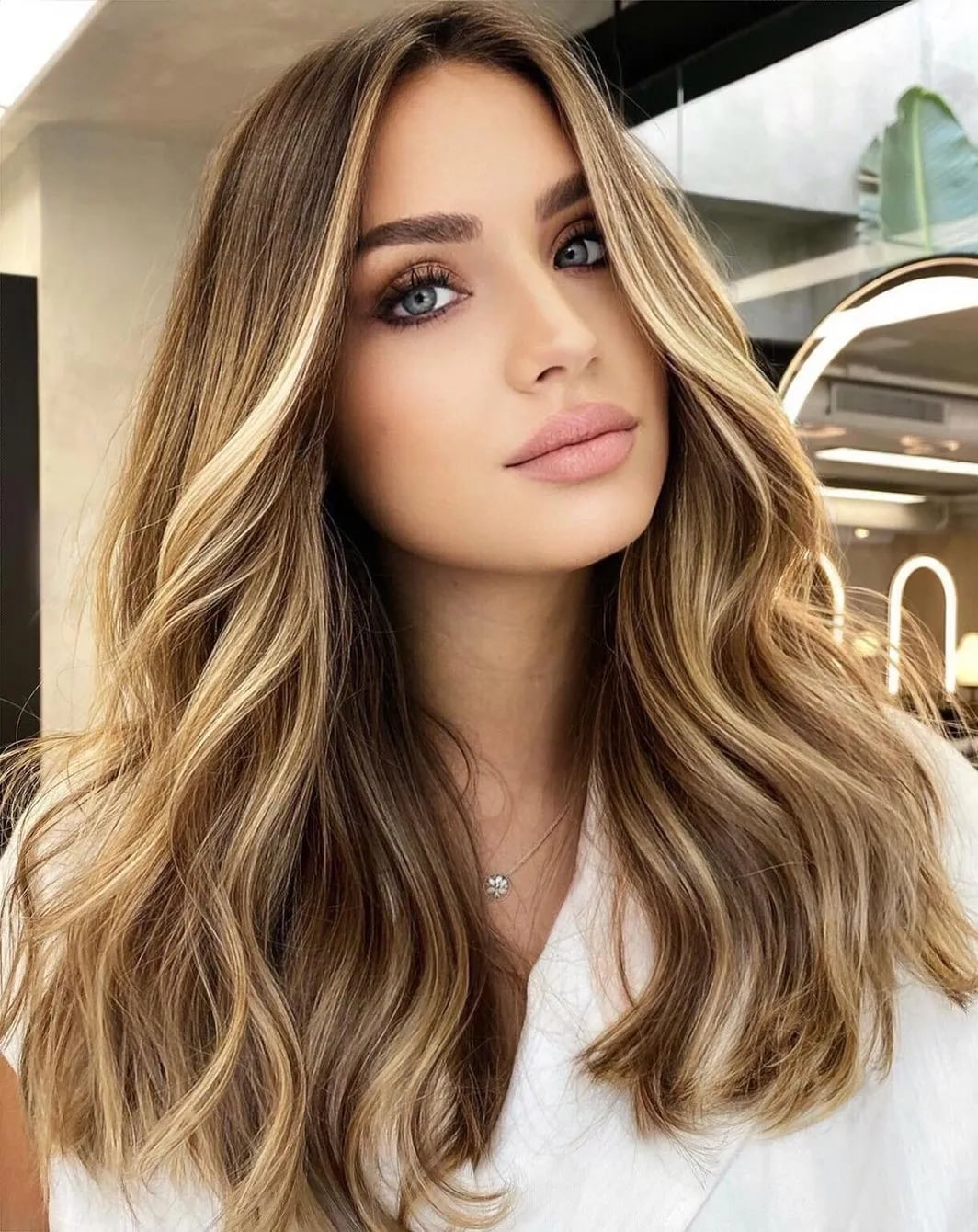
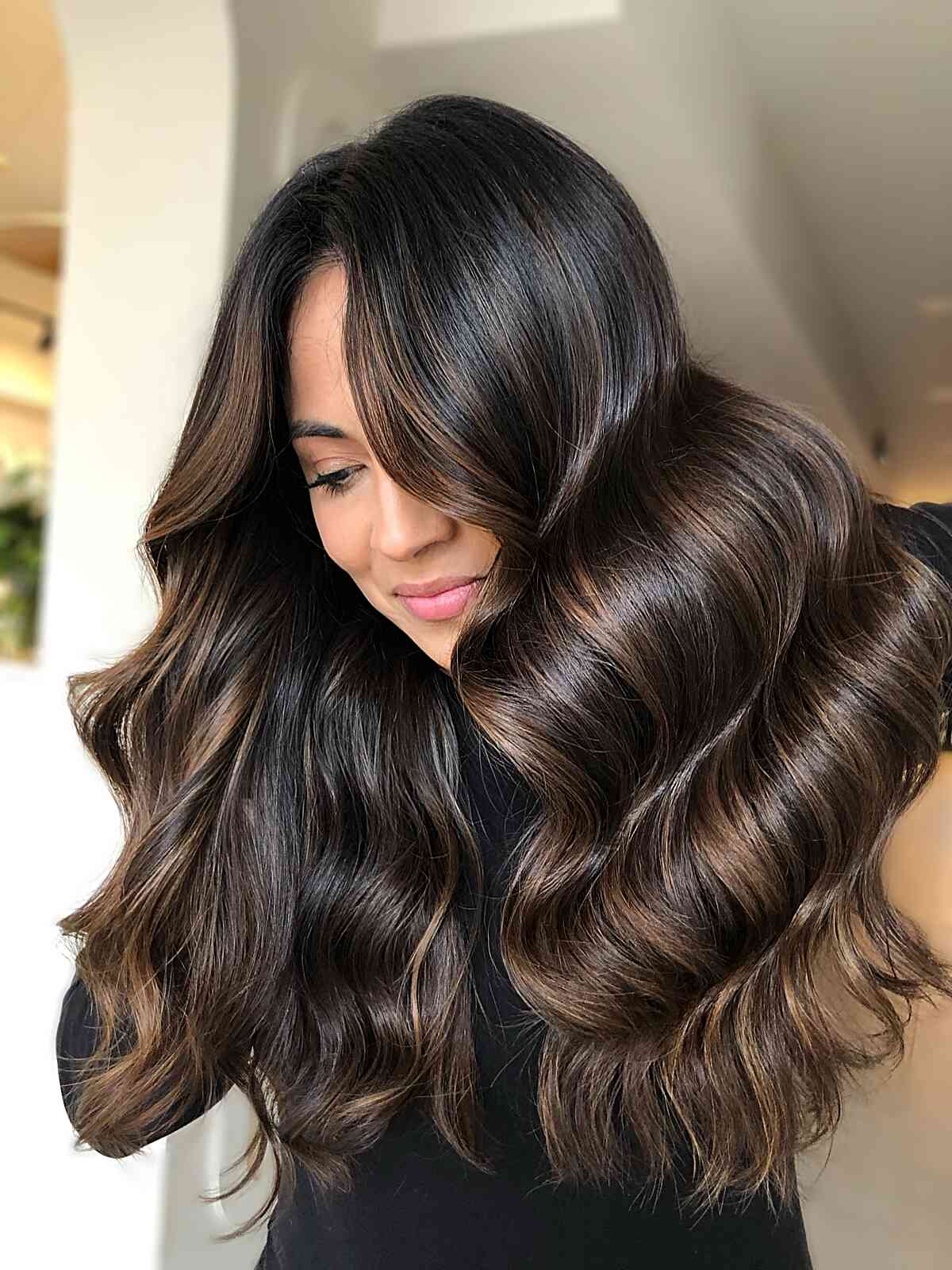
Ombre hair color has moved past the stark two-tone stripe of its early days. The current take is a lived-in, dimensional blend that starts darker at the roots and softens into a lighter shade toward the ends, often with face-framing pieces for extra brightness.
This collection of 25 ideas runs the gamut from subtle brown-to-blonde transitions to bold teal and purple statements, so there is a version for every comfort level. Whether your hair is fine or thick, straight or wavy, these looks work with your texture and your schedule. Say goodbye to a visible grow-out line and hello to a color that grows with you. Trendy Ombre Hair Color has never been this flexible.
Rooty Blonde Ombre With Mid-Back Length
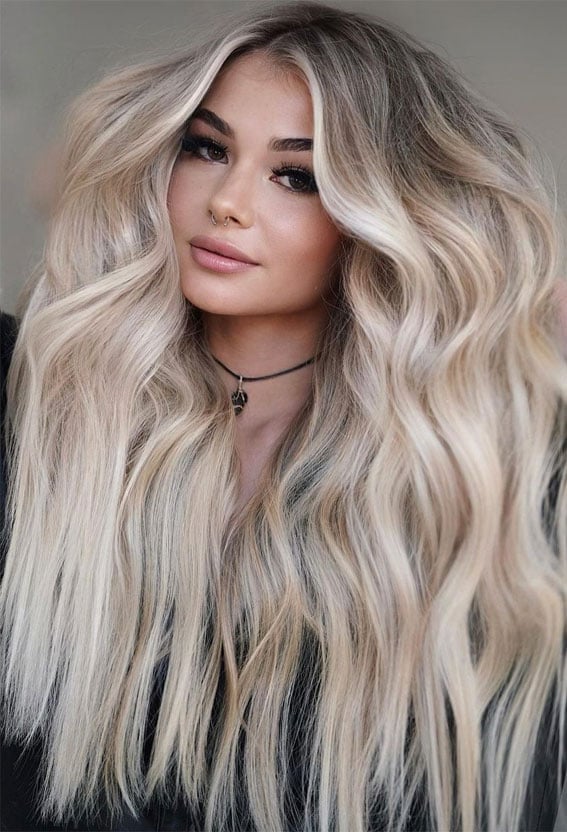
The design here works because the root shadow isn’t a hard line: it graduates into blonde low enough that the thick, wavy texture reads as dimension rather than a grown-out highlight. Thick, wavy hair at mid-back length or longer benefits most from this placement, since the weight of the wave pattern catches both tones. A middle part like this one works well on oval and long face shapes. Ask your colorist for: rooty blonde ombre, natural transition. A large barrel curling iron shapes the ends after a blow-dry to keep the wave pattern consistent. Plan on a trim every six to eight weeks to maintain the shape.
Collarbone Lob With Golden Blonde Ombre And Curtain Bangs
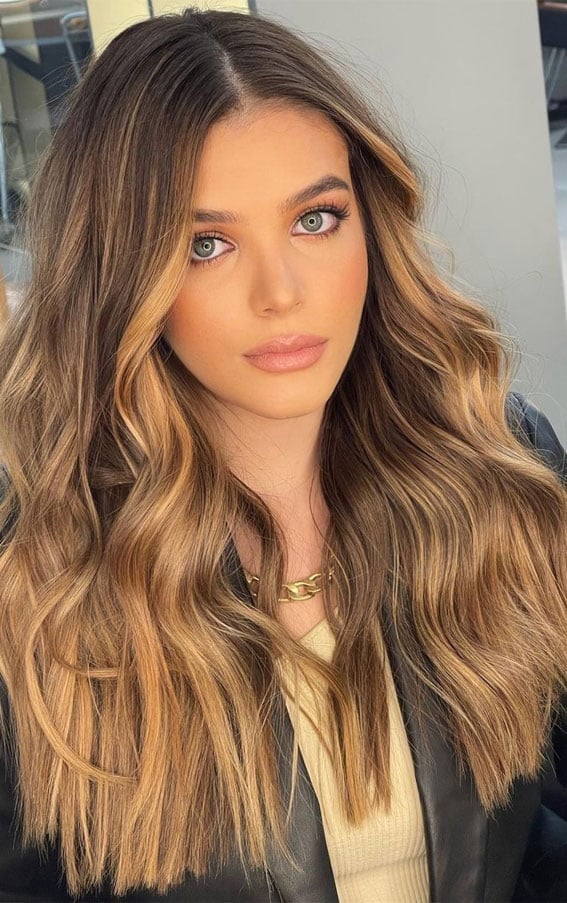
What exactly do you say to get a golden blonde transition instead of one that pulls brassy? Start with the specific shade. The medium brown root melts into a warm golden tone that stops just before the ends turn yellow. Curtain bangs soften the transition on round and square face shapes. Ask your colorist for: medium brown to golden blonde ombre, collarbone lob, curtain bangs. Wave the lengths with a medium barrel iron and let the bangs fall naturally. A trim every six to eight weeks keeps the lob from losing its shape.
Seamless Dark Brown To Medium Brown Ombre
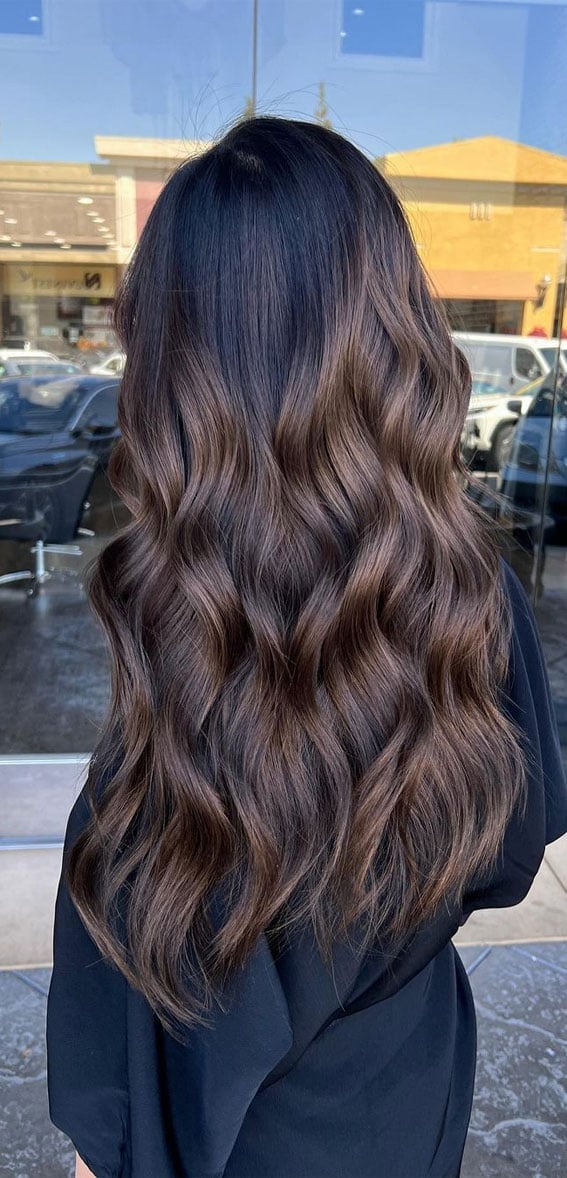
The shift from dark brown to medium brown is so gradual that the eye registers it as a single shade until the ends show a subtle contrast. Achieving this requires a back-to-back technique: a darker base painted onto the roots and a lighter gloss blended down through the mid-lengths. Thick, wavy hair at mid-back length or longer shows the gradient best. Ask your colorist for: dark brown to medium brown seamless ombre, long layers. A smoothing serum applied to damp hair reduces frizz without flattening the wave. A trim every eight weeks prevents the ends from thinning out.
Dark Brown To Neutral Blonde Ombre On Straight Hair
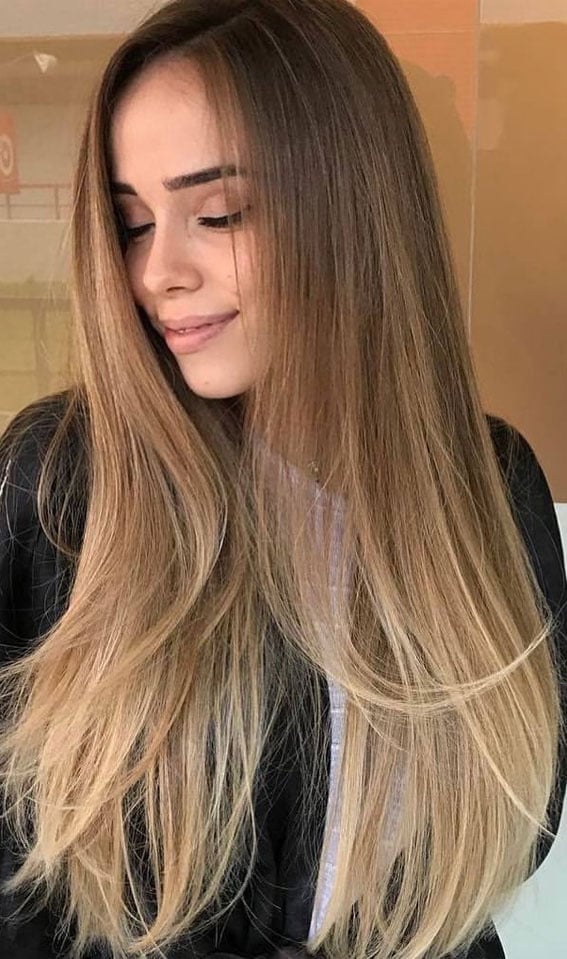
Straight hair shows every transition line, so this neutral blonde ombre relies on precision rather than texture to hide the seam. Compared to a warmer blonde that blends more forgivingly on waves, this tone demands a salon hand: the colorist places the lightener in a diagonal pattern so the dark brown root feathers into the blonde rather than hitting a hard stop. Thick, straight hair at mid-back length holds the sleek finish best. Ask your colorist for: dark brown to neutral blonde ombre, straight texture. A flat iron run over dry hair seals the look. This is a salon-only process that takes about three hours.
Dark Brown To Ash Blonde Ombre With Loose Waves, Close-Up Take
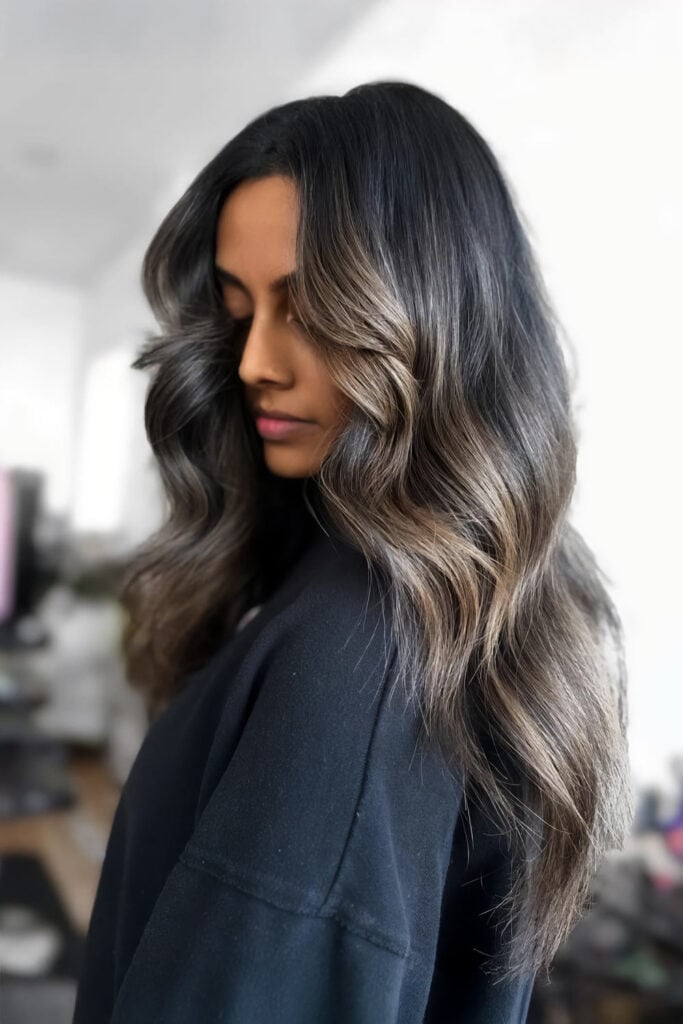
The dimensional ash blonde transition here shows restraint, letting the dark brown base hold its own weight before the cool tone takes over through the mid-back length. The side view is where the blend proves itself, and the middle part keeps the two shades reading as one deliberate gradient. Thick, wavy hair takes this dark brown to ash blonde ombre particularly well, since the loose waves catch the lighter ends without letting the color pool in one spot.
Ask your colorist for: dark brown to ash blonde ombre, loose waves. Ash tones fade warm, so a purple shampoo every other wash keeps the cool edge between visits. A curl-defining cream helps the waves hold their shape, and a trim every six to eight weeks keeps the lighter ends from splitting.
Collarbone Length Ombre From Dark To Golden Blonde
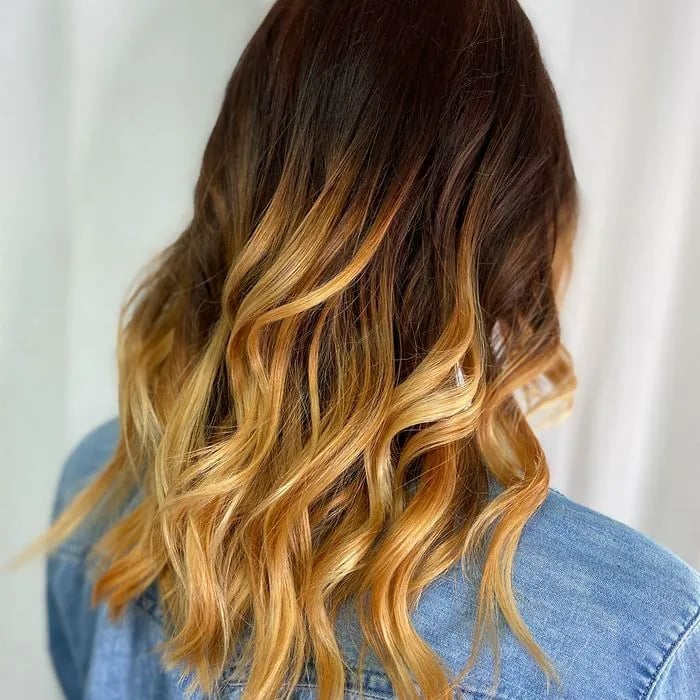
This ombre lands the dark brown to golden blonde transition right at the collarbone, so the lighter ends catch sun and motion without competing with your shoulders. The middle part and loose waves keep the gradient readable from the back, which is the whole point. Medium density wavy hair holds this shape best; fine hair may need a smaller curling barrel. Ask your colorist for: dark brown to golden blonde ombre, collarbone length. A trim every six to eight weeks prevents the ends from looking sparse, and a texture spray adds grip to the waves without weighing them down.
Dark Brown To Caramel Blonde Ombre Blowout
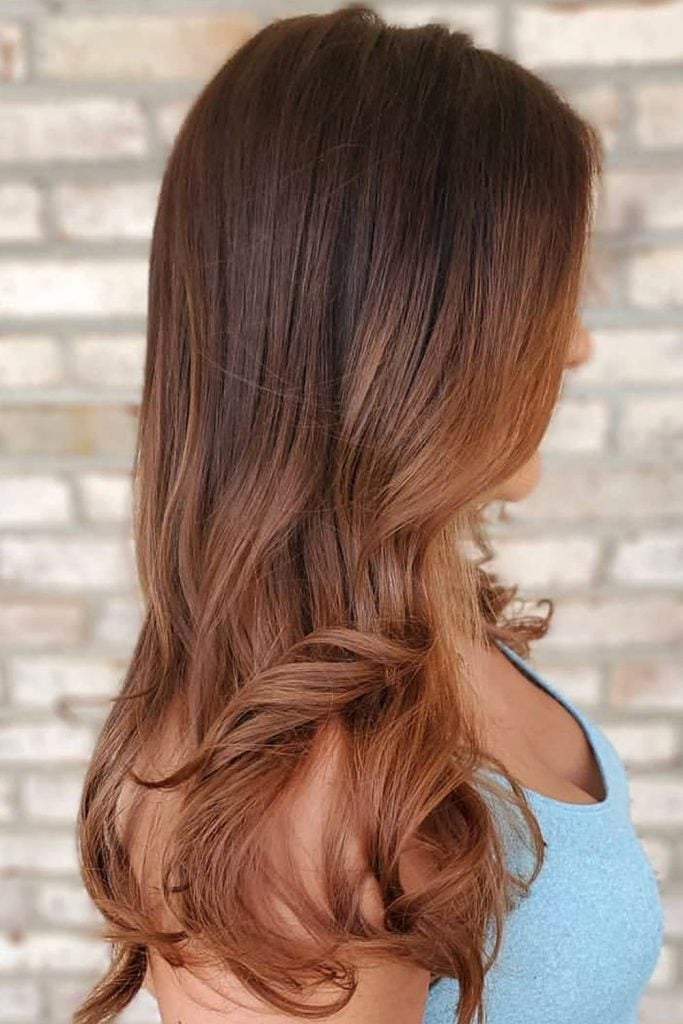
The caramel blonde is applied so the warmth concentrates at the ends while the dark brown base stays rich and rooty. On thick, wavy hair at mid-back length, that combination creates a blowout with serious volume and a tone that reads as expensive. The middle part lets the caramel peek through symmetrically on both sides. Ask your colorist for: dark brown to caramel blonde ombre, wavy blowout. A heat protectant before the round brush keeps the wave pattern smooth and the color intact between appointments.
Mid-Back Length Dark Brown To Warm Blonde Ombre
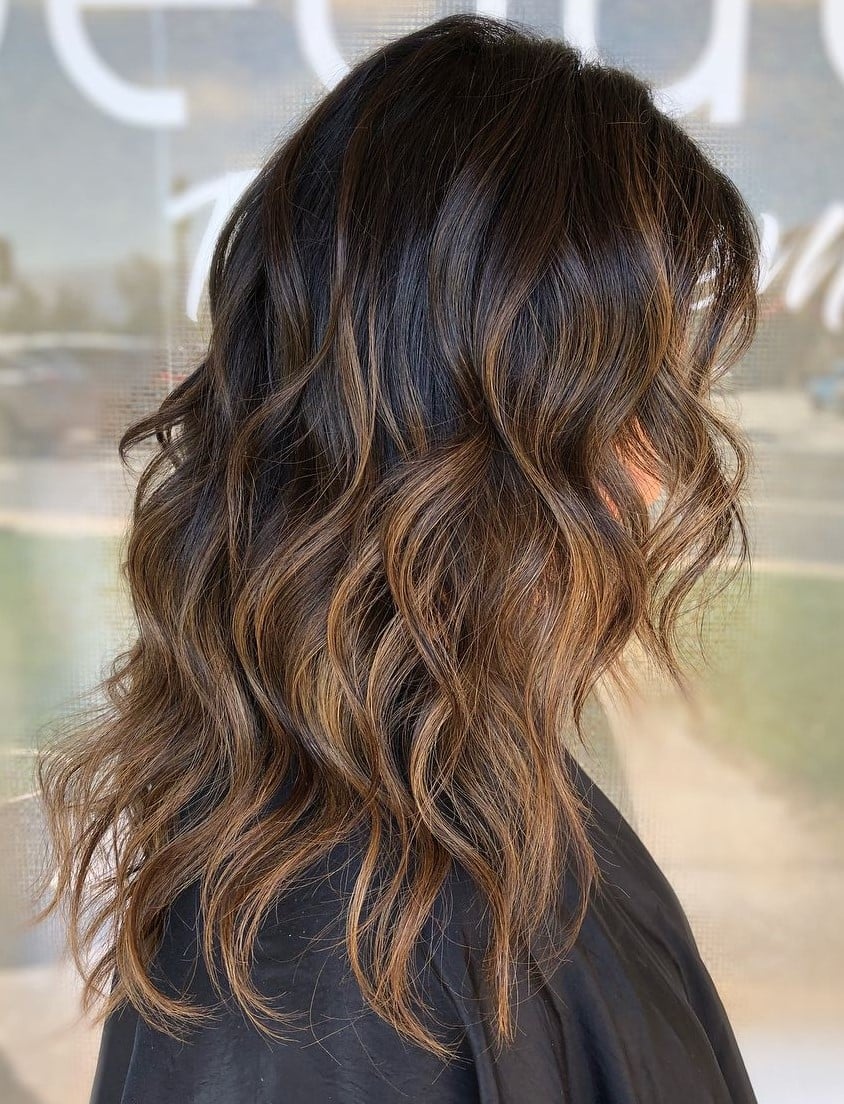
A dark brown root that melts into warm blonde ends works because the transition is gradual enough that a quarter inch of regrowth barely registers. This version sits on thick, wavy hair at mid-back length, where the weight of the density helps the ombre look intentional. The side view confirms the color is applied evenly through the lengths, not just on the surface. Ask your colorist for: dark brown to warm blonde ombre, mid-back length. A volumizing mousse at the roots maintains lift through day two, and a trim every six to eight weeks keeps the ends healthy enough to hold the lighter tone.
Mid-Back Length Dark Brown To Blonde Ombre, Close-Up Take
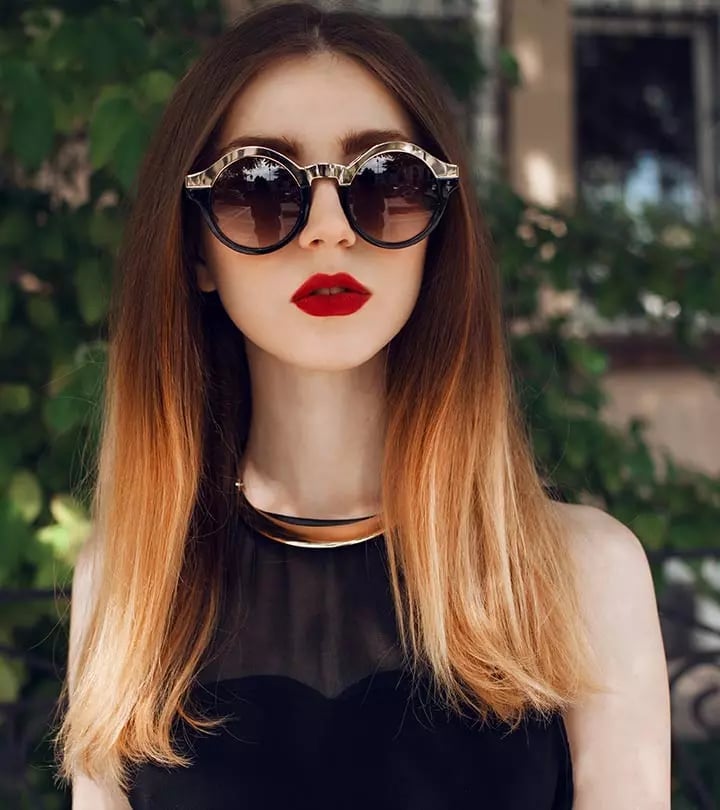
How do you ask for an ombre that actually shows up? Specify a strong contrast between the dark brown base and the blonde ends, because a subtle shift gets swallowed by thick, wavy texture at mid-back length. The front view here shows the color starting about halfway down and gaining intensity toward the tips, which keeps the roots low-maintenance and the ends bright. Ask your colorist for: dark brown to blonde ombre, strong contrast. This is a salon-only technique: the lightener needs to be painted in sections to avoid a hard line, and that takes about two hours.
Dark Blonde To Light Blonde Ombre Blowout
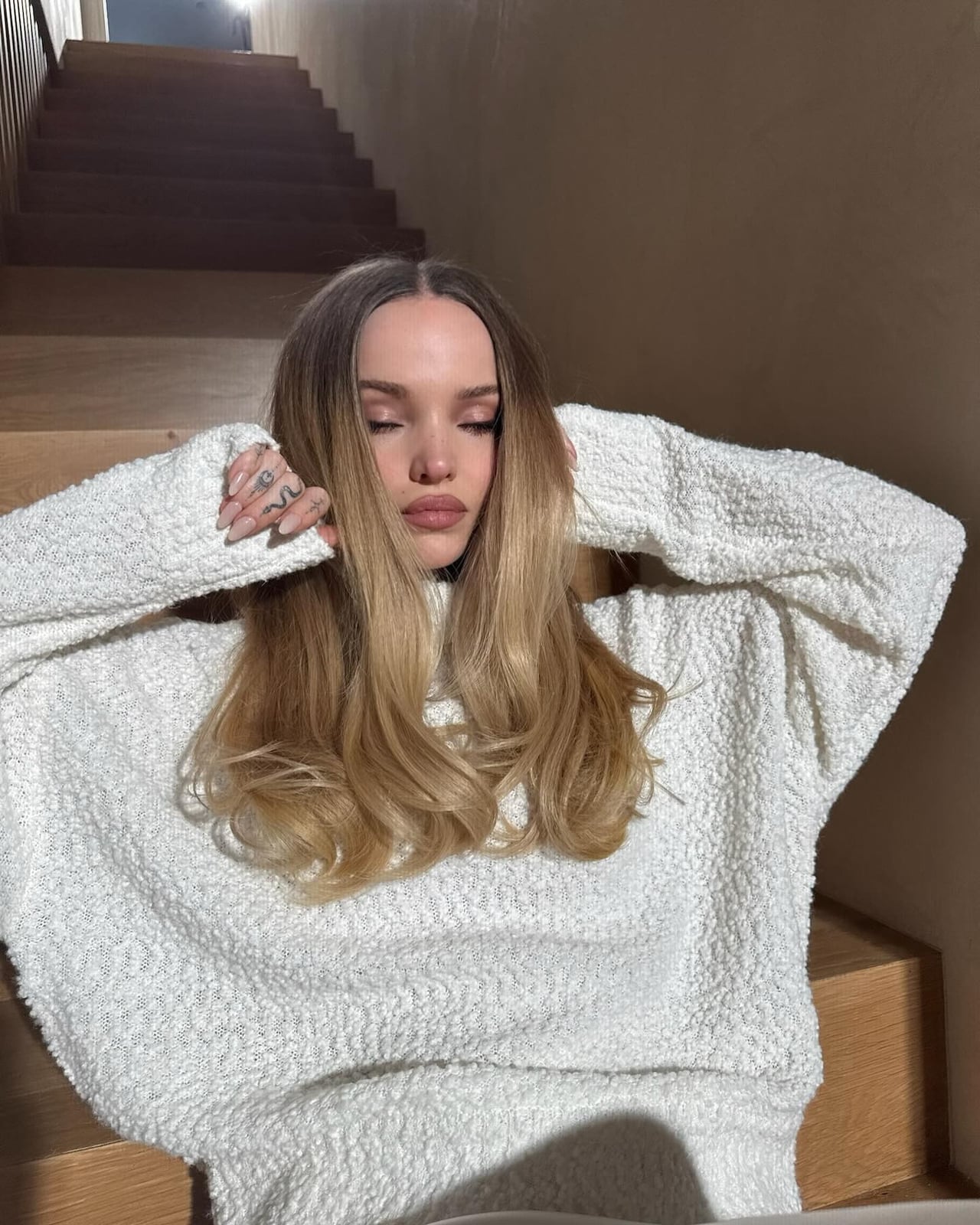
Compared to a dramatic dark-to-light switch, this dark blonde to light blonde ombre reads as you just spent a month at the beach. The subtler shift means the grow-out is almost invisible, and the wavy blowout adds texture that disguises any slight unevenness in the color application. Thick, wavy hair at mid-back length carries this best; fine hair might need a gloss to keep the lighter ends from looking transparent. Ask your colorist for: dark blonde to light blonde ombre, subtle transition. A salon does this in one session, while a DIY version often lands streaky and requires corrective work later.
Ash Blonde To Platinum Blonde Ombre
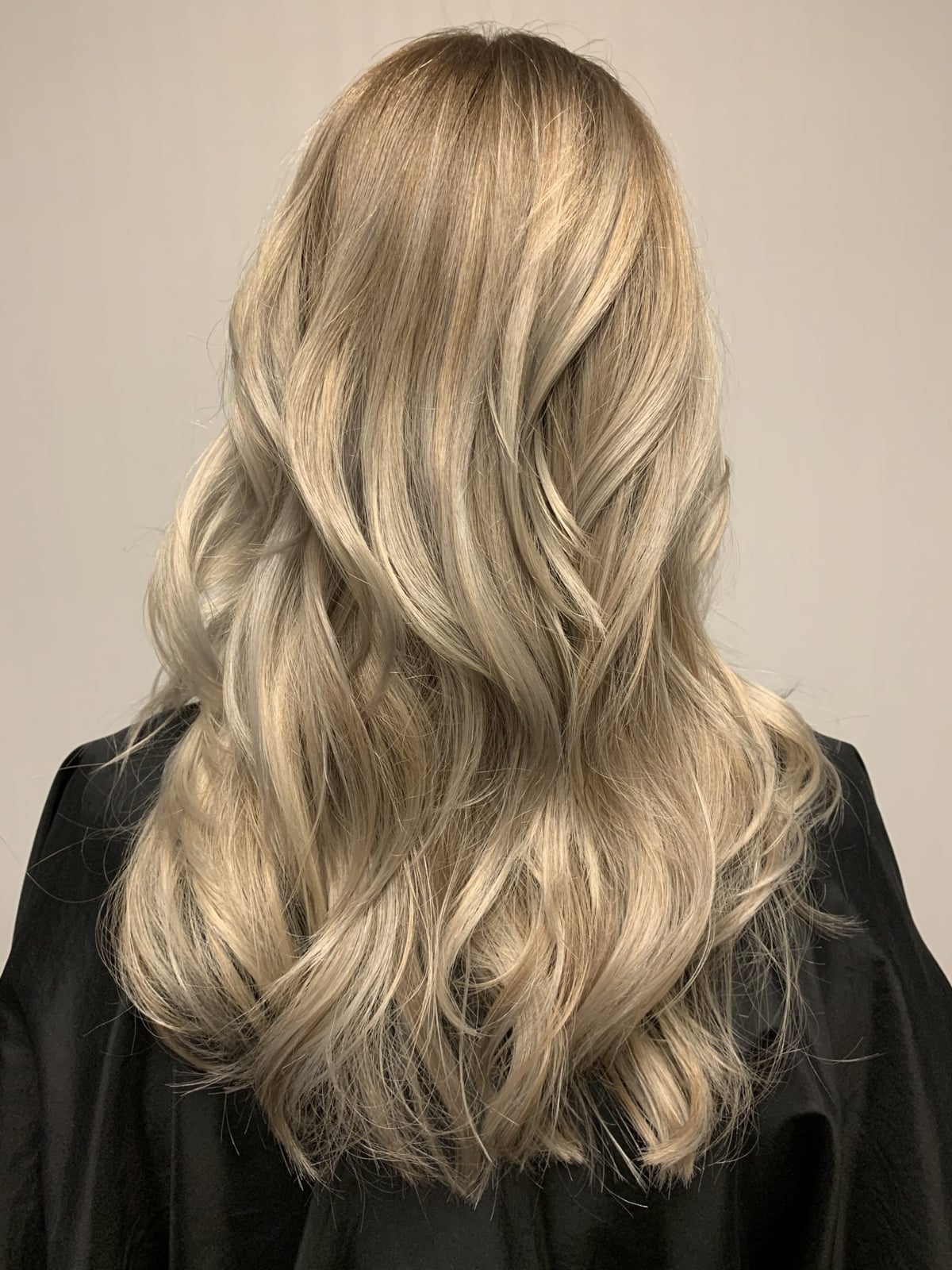
An ash blonde base that shifts to platinum at the ends gives a cool-toned ombre with a deliberate appearance. The key is a clean line of demarcation placed low enough that the lighter shade lands on the thickest part of the wave pattern. Thick, wavy hair at mid-back length carries the contrast well because the texture softens what could be a stark transition. Ask your colorist for: ash blonde to platinum blonde ombre with a soft transition. Ash tones can pull muddy without a toner refresh every four to six weeks, and a purple shampoo is needed between salon visits.
A trim every eight weeks keeps the ends healthy enough to hold the lighter pigment. The blowout in the back view shows how the platinum reflects light differently from the base, which is the aim of the technique. This is not a low-maintenance color, but it is a precise one.
Rich Dark Brown To Medium Brown Ombre, Mid-Back
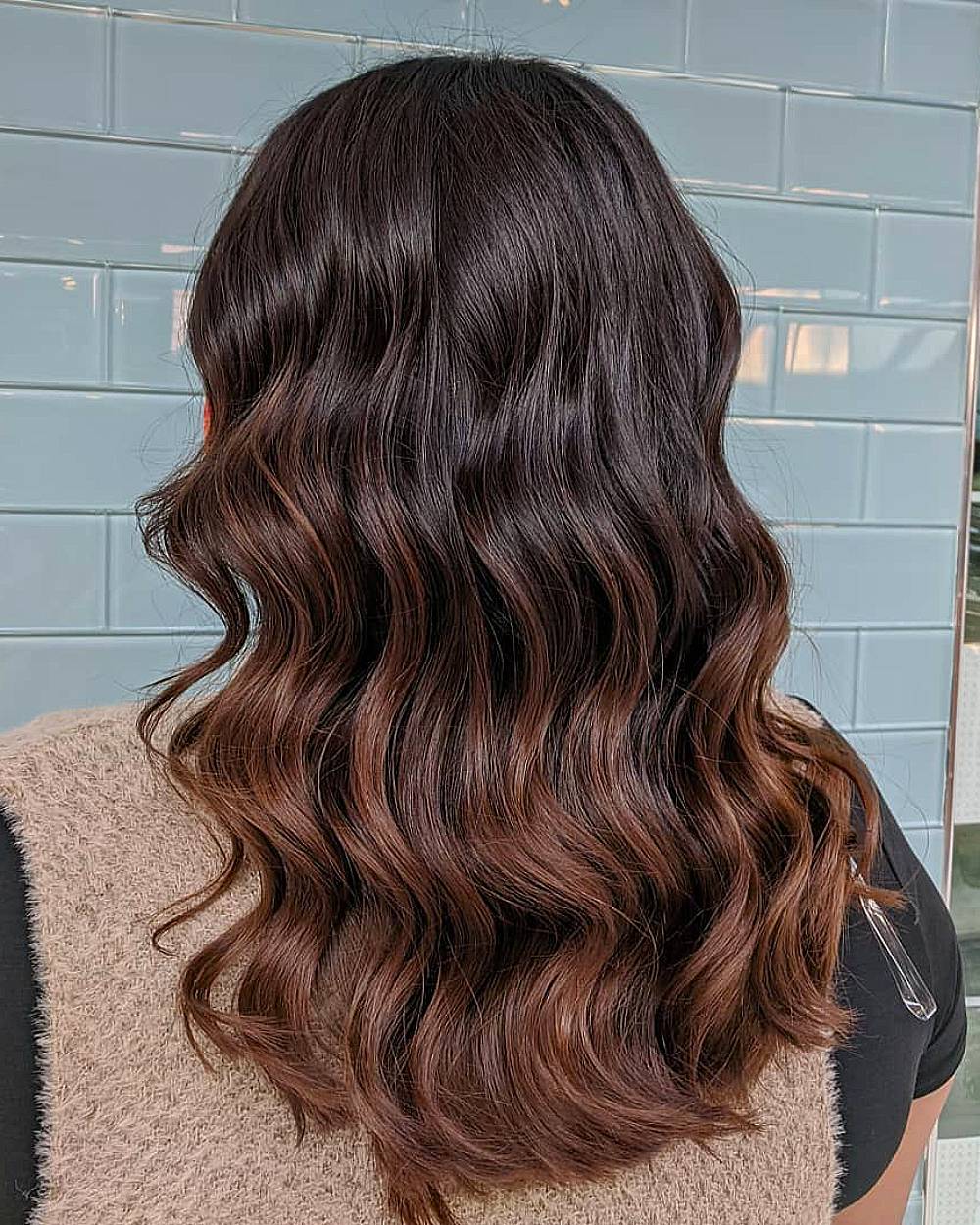
A rich dark brown at the roots bleeding into a medium brown through the lengths creates an ombre that is basically a grown-out highlight in reverse. The loose curls visible from the back help the two tones blend without a harsh line. Thick, wavy hair at mid-back length wears this transition well because the natural volume disguises where one shade ends and the next begins. Ask your colorist for: dark brown to medium brown ombre with a subtle shift. The grow-out is the main appeal: roots stay invisible for three to four months, and a trim every eight weeks keeps the curl pattern defined. A curl cream and diffuser are enough to maintain the shape between washes.
Collarbone Length Natural Brown Ombre Blend
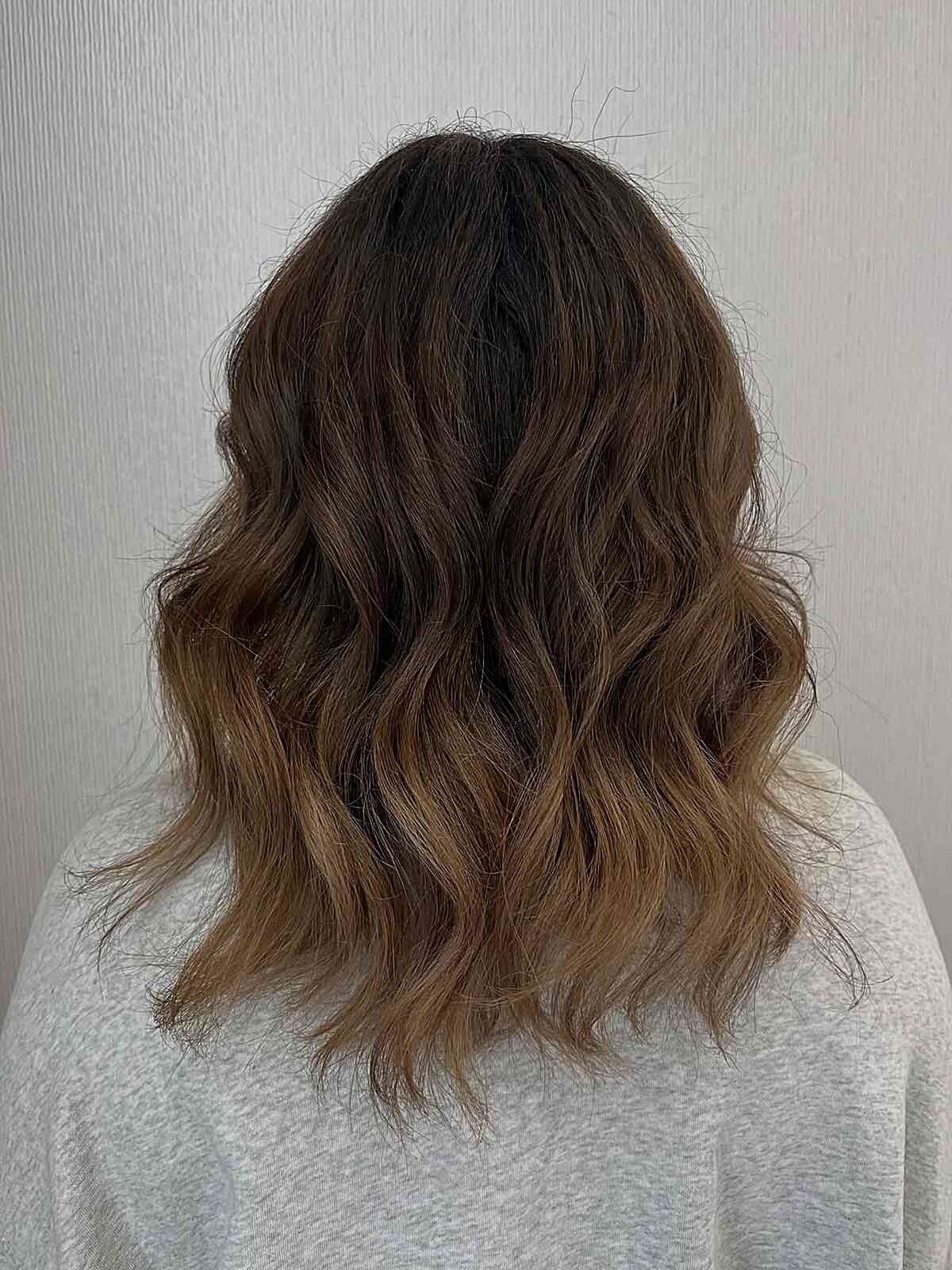
Can a subtle dark to light brown ombre still look like a root emergency? No, when the transition starts below the ear and the lighter ends stay within two shades of the base. This collarbone length version with a middle part and soft waves works best on thick, wavy hair that has enough density to carry the gradual lift without looking sparse at the ends. Ask your colorist for: natural dark brown to light brown ombre with a seamless blend. The shorter length means the lighter pieces sit where they catch the most light, so the dimension is immediately visible. Hair that is fine or thin may find the contrast too subtle to register from any distance.
Mid-Back Layers With Dark Blonde Balayage
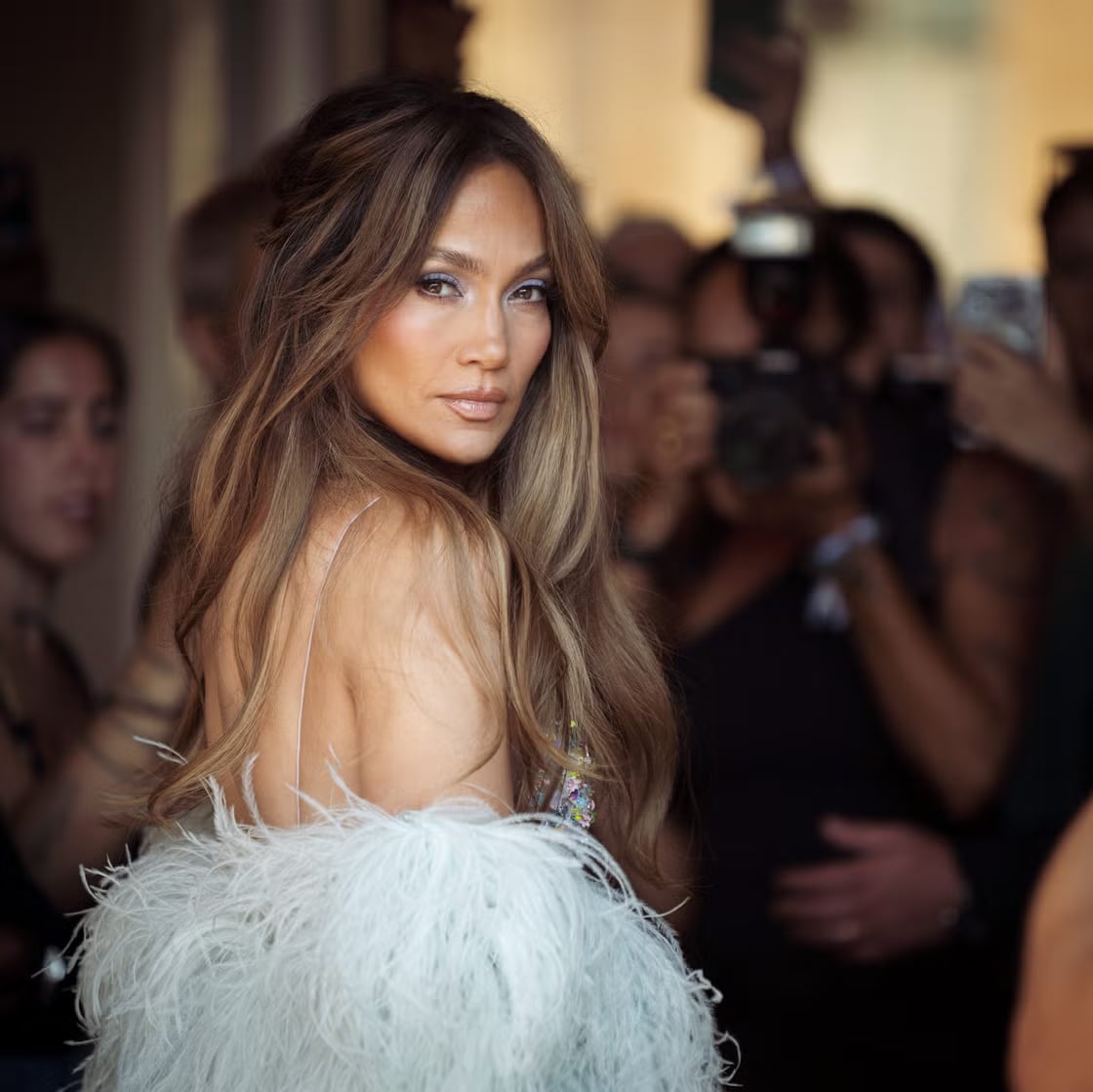
Long layers and curtain bangs frame the face while a dark blonde base gets lifted with sun-kissed lighter blonde highlights applied freehand. The balayage technique places the lighter pieces where the sun would naturally hit: along the part line and around the face. Fine, wavy hair at mid-back length benefits from this approach because the hand-painted sections add the illusion of density without saturating every strand. Ask your stylist for: dark blonde balayage with sun-kissed highlights and curtain bangs. Specify the placement should concentrate on the front pieces and the top layer. The side part shown here helps the face-framing sections fall forward, so the lighter color reads even when the hair is down.
Dark Brown Base With Face-Framing Blonde Ombre
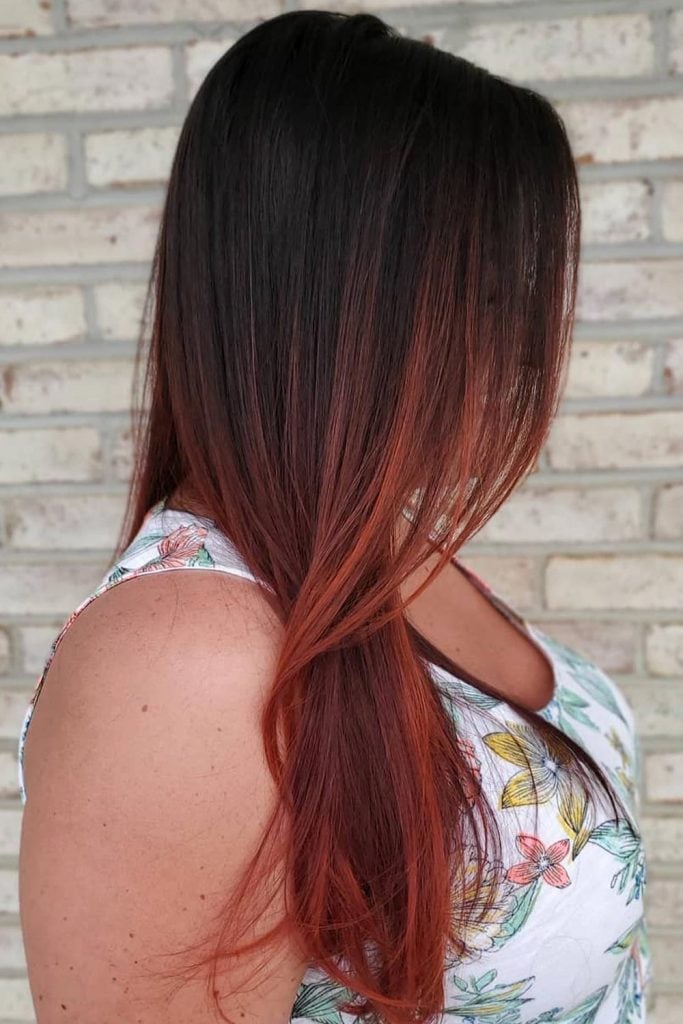
Face-framing blonde pieces against a dark brown base create a concentrated ombre effect that does not require lightening the whole length. The front view with a middle part and curtain bangs shows how the lighter color wraps around the face while the back stays dark. This look requires a salon visit: the placement needs to be precise enough that the transition looks smooth from every angle, and a DIY bleach job on the front sections risks uneven lift that a professional can avoid. Ask your colorist for: dark brown base with face-framing blonde ombre and curtain bangs. Thick, wavy hair at mid-back length holds the contrast best because the texture prevents the lighter pieces from looking out of place. The grow-out is forgiving since the dark base stays intact.
Black To Honey Blonde Ombre Lob
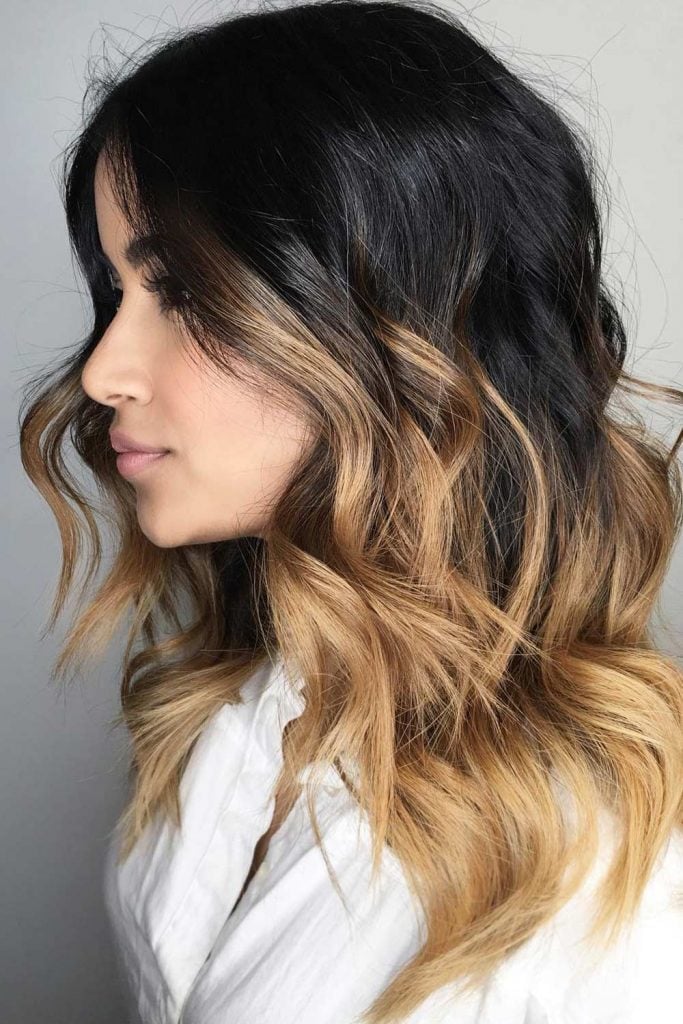
The lob uses a black base that softens into honey blonde through the ends, a gradient that relies on a smooth balayage application. Thick, wavy hair at collarbone length takes this contrast well, with the side part showing off the color’s depth. Ask your colorist for: a black to honey blonde ombre lob.
Honey tones pull warm, so expect to use a purple shampoo every second week to keep them from veering brassy. The style needs a trim every six to eight weeks to maintain the lob’s shape. The real drawback is that black roots grow in fast, meaning a root touch-up around week four keeps the contrast clean.
Chin Length Bob With High Contrast Blonde Ombre
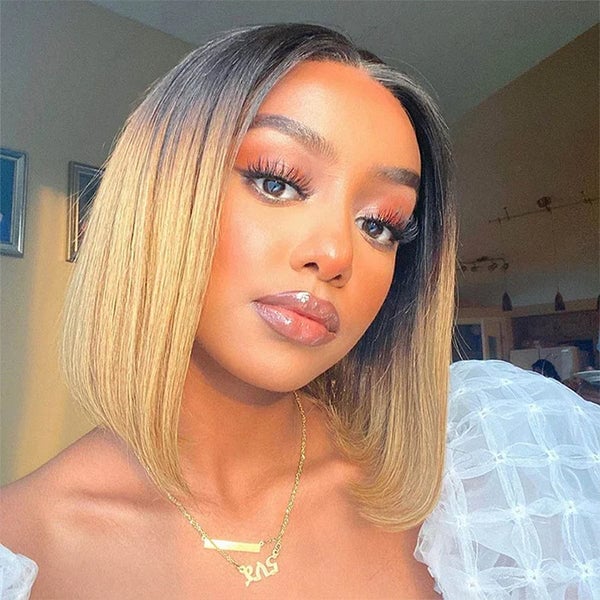
How does a high-contrast blonde ombre wear on a chin-length bob? It sits cleanly if the bob is trimmed every four to six weeks and the ends stay blunt. The straight, fine texture here keeps the line sharp, and the middle part lets the dark brown at the roots read clearly against the lighter lengths. Ask your colorist for: a chin length bob with blunt bangs and dark brown to blonde high contrast ombre. The blunt bangs need a trim every two to three weeks to stay at brow level, and a flat iron finishes the look in about ten minutes.
Chin Length Bob With Rose Gold Ombre And Blunt Bangs
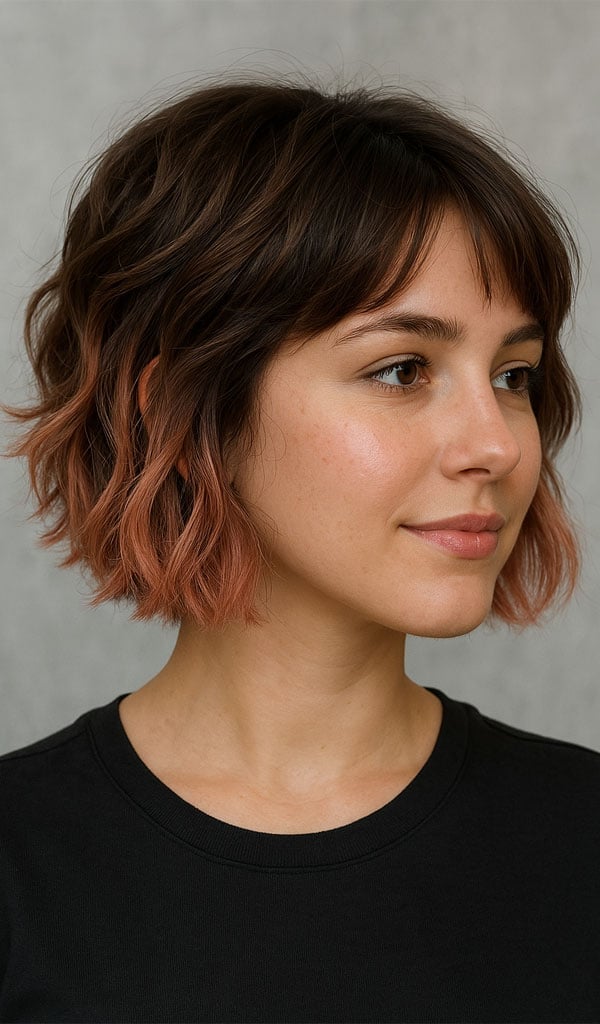
Rose gold on a chin-length bob with blunt bangs works as a transitional shade for late summer into early fall, when warm metallics feel more purposeful than pastels. The fine, wavy texture here lets the dark brown roots ground the rose gold ends without the tone looking washed out. Ask your colorist for: a chin length bob with blunt bangs and dark brown to rose gold ombre. The side part adds volume, and the waves keep the shape relaxed.
Collarbone Length Teal To Purple Ombre
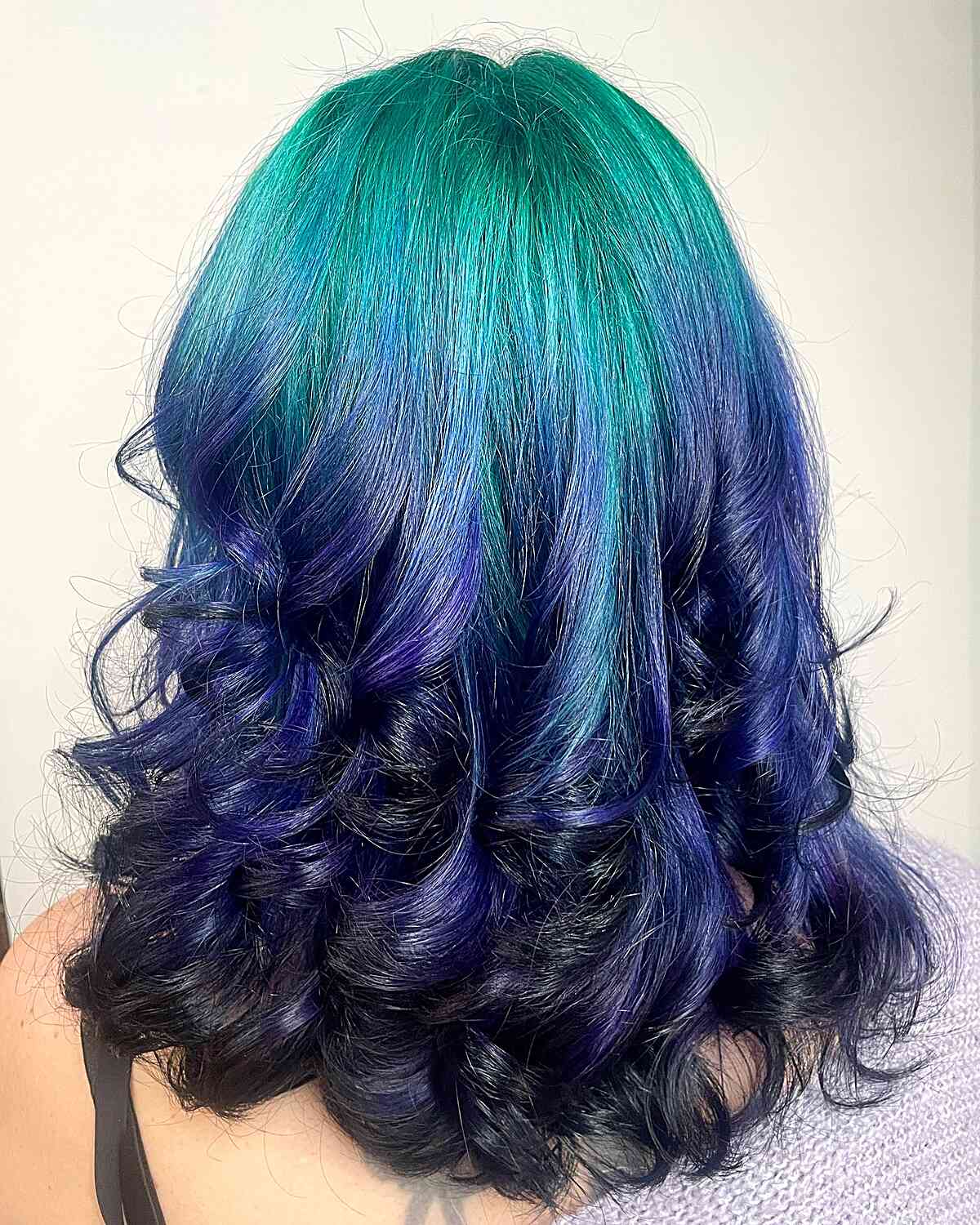
The color moves from teal and blue at the crown into deep purple at the ends, a transition that requires the hair to be pre-lightened to a very pale blonde before the fashion shades go on. Thick, wavy hair at collarbone length holds this gradient well because the texture catches the light at each level. Ask your colorist for: a teal to blue to deep purple ombre at collarbone length.
Fashion colors fade faster than natural tones, and deep purple tends to wash out toward violet after about four weeks. A color-depositing conditioner in a purple or blue shade extends the vibrancy. The layers here also mean a trim every six to eight weeks keeps the ends from looking see-through.
Collarbone Ash Blonde To Blue Ombre
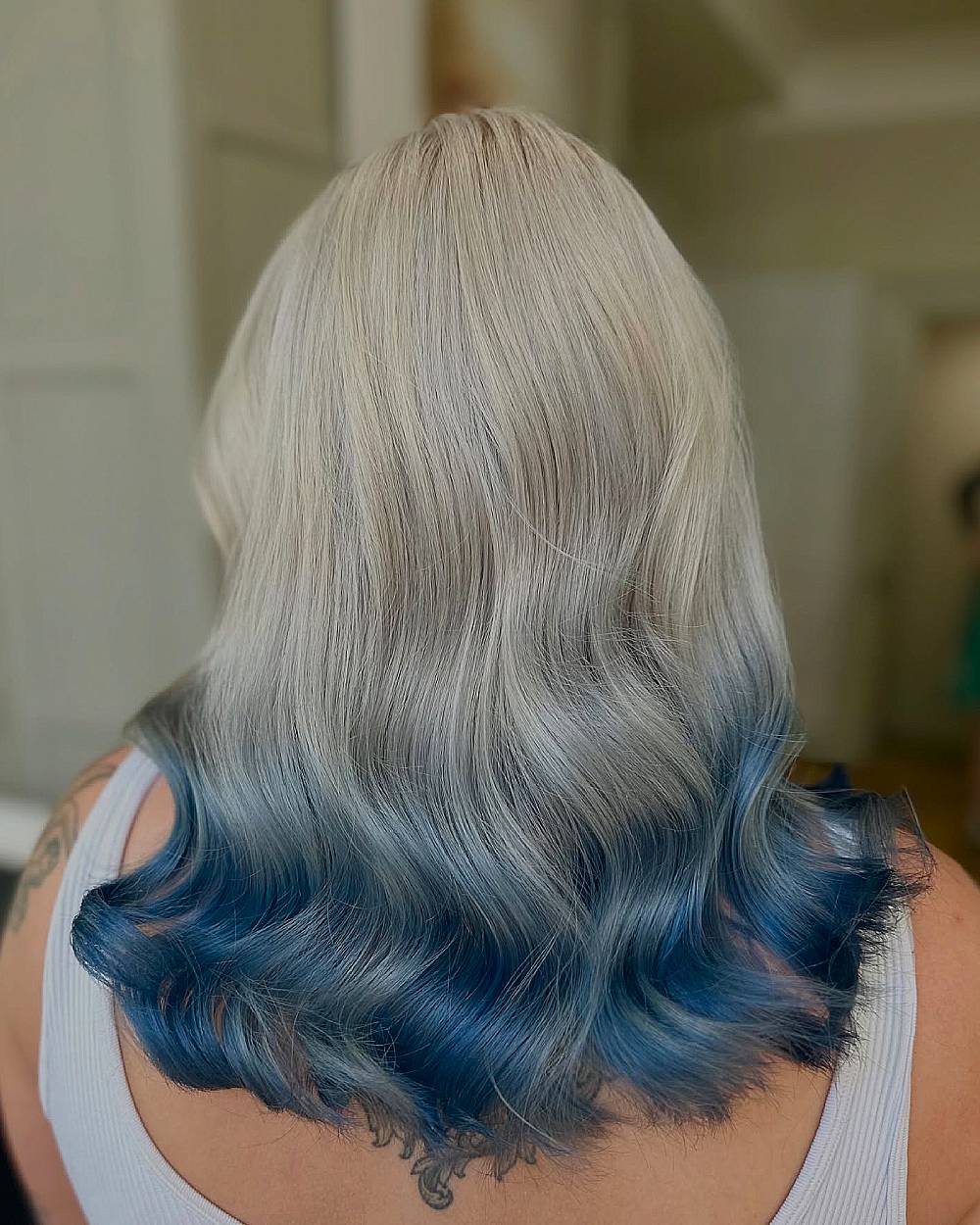
Who should consider an ash blonde base that shifts into vibrant blue ends? Those with enough natural lift to skip a double bleach, since ash blonde is a cool neutral that takes blue pigment well without fighting warm undertones. The medium-density wavy texture here gives the color depth at each length. Ask your colorist for: an ash blonde to vibrant blue ombre at collarbone length. The blue appears as a deliberate statement, not a faded pastel, and it works best on hair that is already a natural level seven or lighter at the ends.
Shoulder Length Dark Base To Blue Ombre With Full Bangs
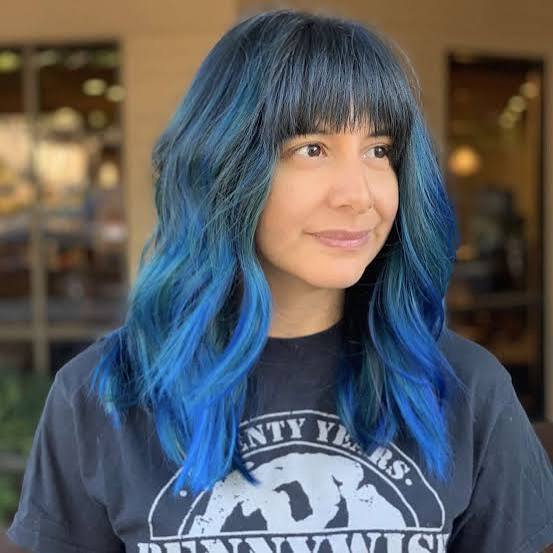
A dark base that slides into vibrant blue is a bold choice, and the full bangs keep it from feeling like a costume. The middle part and wavy texture give the color room to move, so the blue reads as a deliberate part of the cut. Ask your colorist for: dark base to vibrant blue ombre, full bangs. Keep the waves loose with a texturizing spray, and smooth the bangs with a cream so they frame without fighting the color.
Mid-Back Length Dark Brown To Vibrant Purple Ombre, Wavy
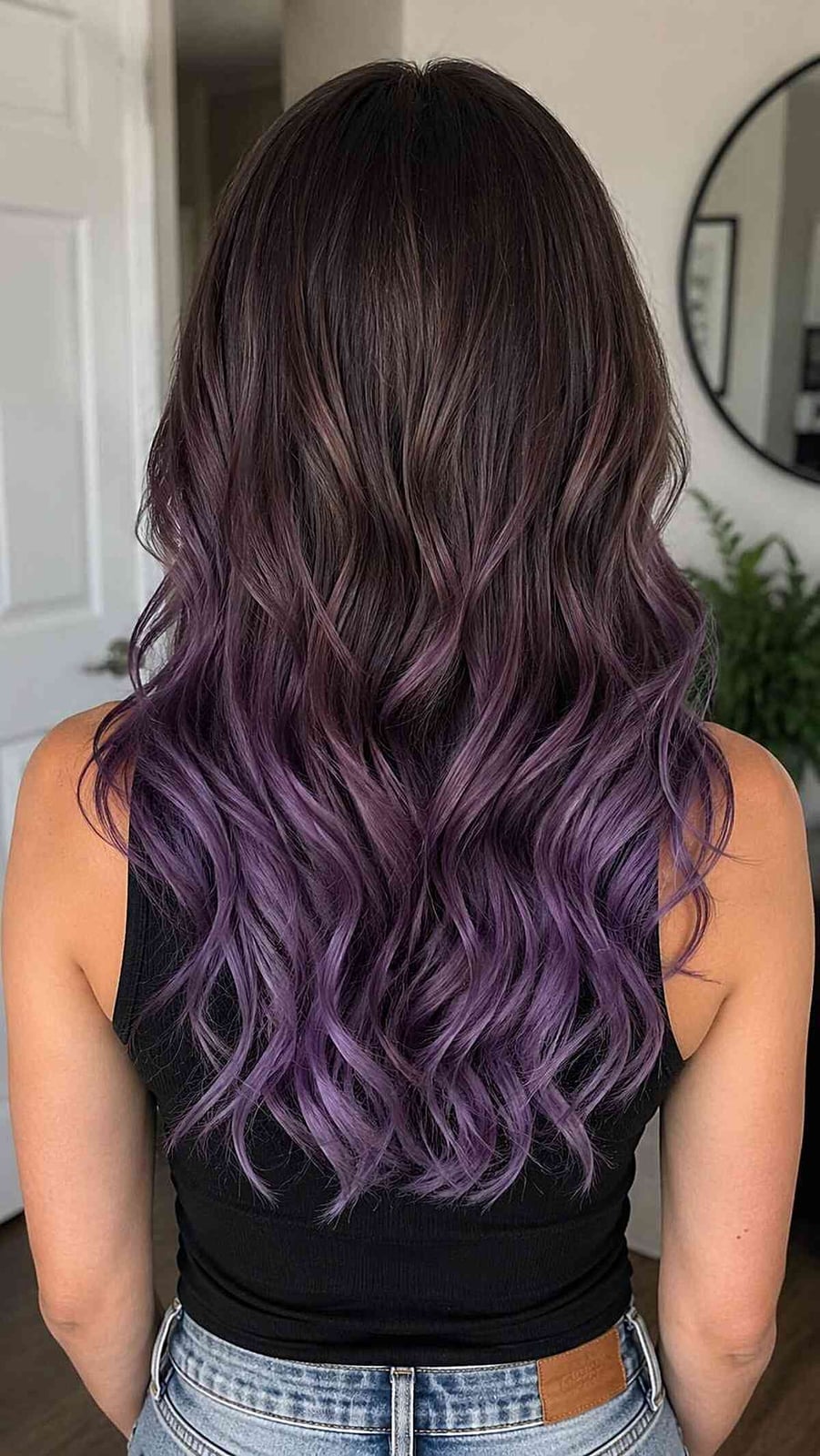
If a pastel purple feels too soft, this dark brown to vibrant purple ombre on thick, wavy hair is the louder sibling. The loose waves and mid-back length let the vivid ends swing, while the dark roots ground the whole thing. A salon job is the only way to get the gradient right, and you will be back for touch-ups. Use a color-depositing mask weekly to keep the purple from drifting to a murky mauve, and plan a toning appointment every four to six weeks.
Mid-Back Black To Deep Purple Ombre
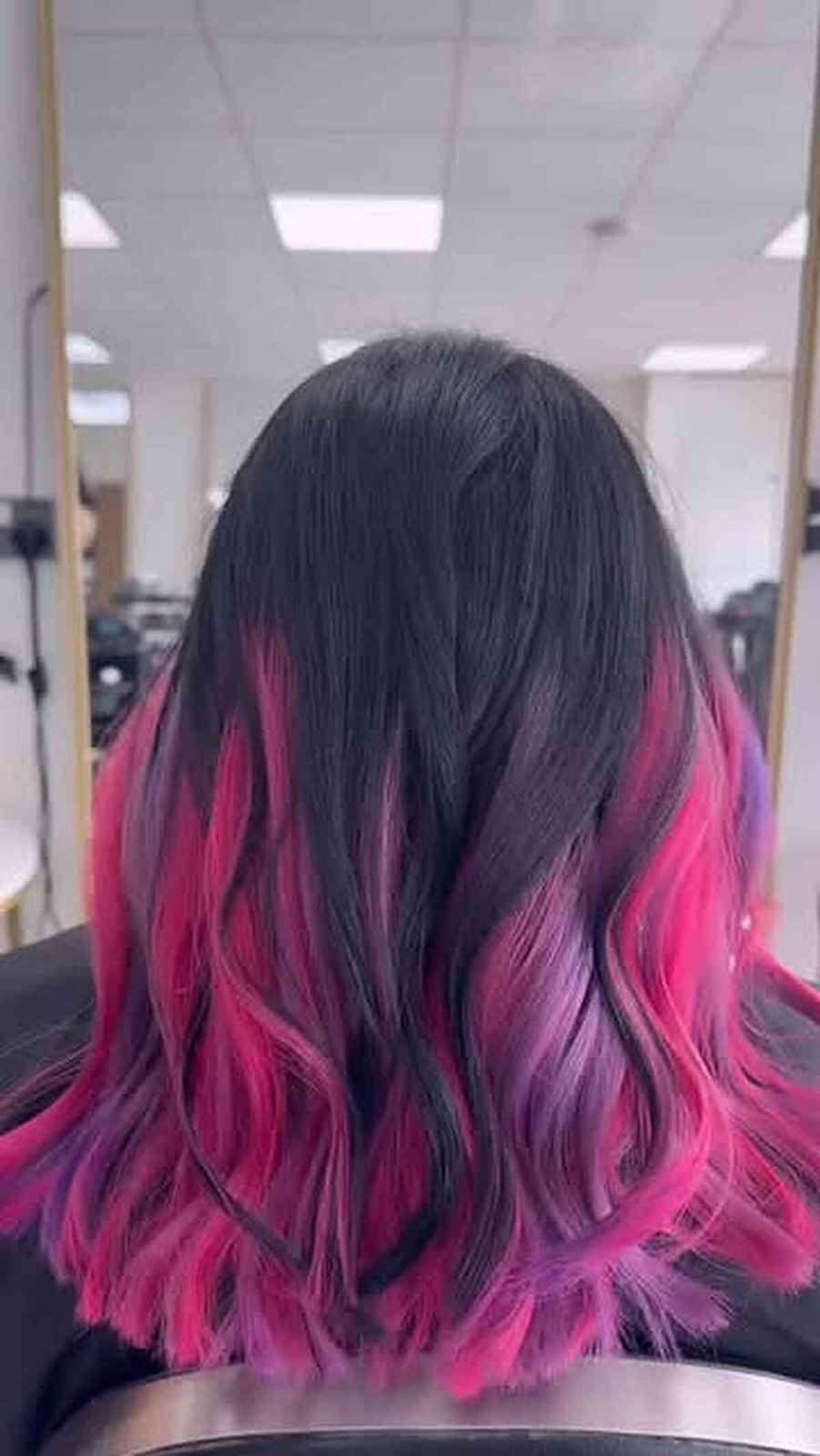
Black at the roots fading to deep purple is a classic for a reason: the contrast is built in. The soft waves on thick, mid-back length hair show off the gradient without needing a lot of styling. Ask your colorist for: black to deep purple ombre, mid-back length. Deep purple fades faster than it seems like it should, and the ends can turn a dull violet if you skip the color-safe shampoo. A trim every six to eight weeks keeps the ends looking deliberate.
Long Layered Dark Brown To Bright Blonde Ombre
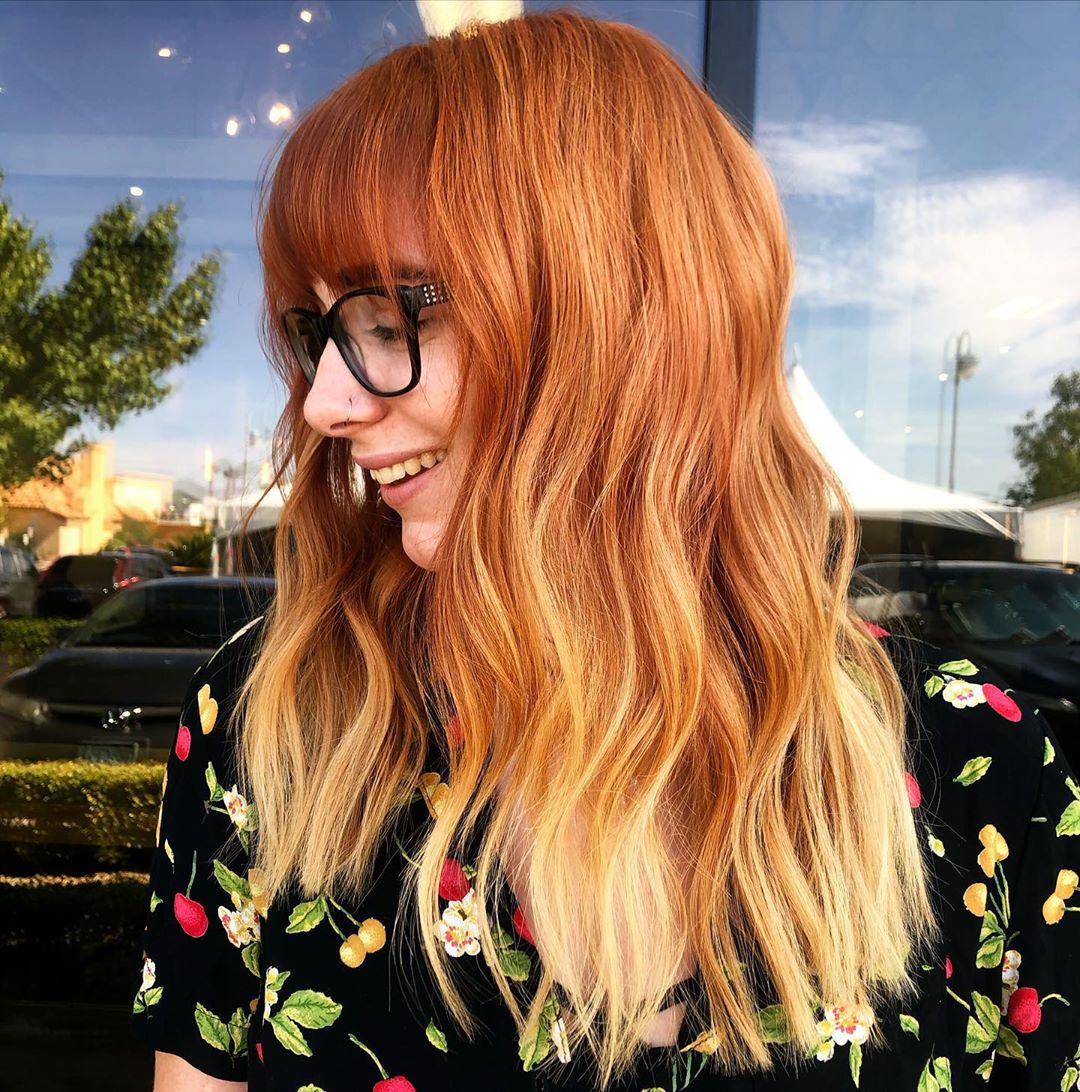
The long layers and face-framing pieces catch the bright blonde transition, and the middle part lets the contrast show evenly. Ask your colorist for: dark brown to bright blonde ombre, long layers, face-framing pieces. The reality is that bright blonde needs maintenance: a purple shampoo once a week keeps it from going brassy, and a gloss every six to eight weeks keeps the tone fresh. The waves are easy, just a heat protectant before a quick curl.
Collarbone Length Wavy Fine Hair With Pink Ombre
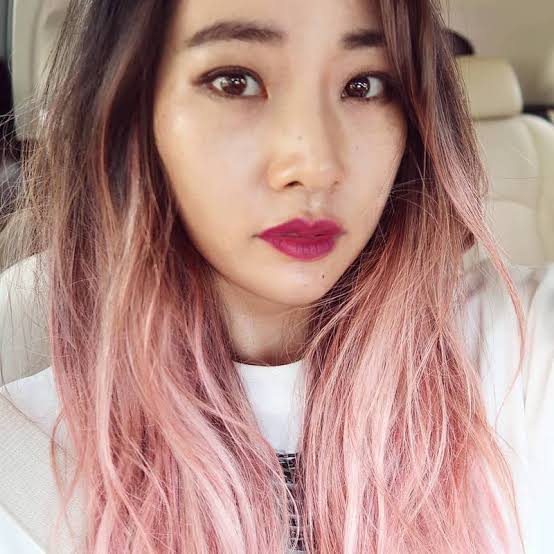
Is pink ombre out of reach for fine hair? Not if you keep the roots darker and let the color live on the ends. The side part and air-dried waves give this collarbone length a lived-in feel, and the pink fades from a deeper root to a lighter tip. Ask your colorist for: pink ombre, collarbone length, air-dried finish. A light texture spray adds grip without weighing down the fine strands, and a trim every six to eight weeks keeps the ends from splitting.
Final Thoughts
Fine hair takes a softer transition with lighter ends to fake fullness; thick hair can carry higher contrast, but only if the blend is seamless, no harsh lines. Match the ombre to your texture and your maintenance budget, not just the photo you saved.
- Trim the ends every 6-10 weeks to keep the ombre crisp.
- Use color-safe shampoo and conditioner to protect lighter ends.
- Deep condition weekly to fight dryness in porous sections.
- Tone every 8-12 weeks to refresh blonde or brassy tones.
Ombre remains the most forgiving way to change your color.