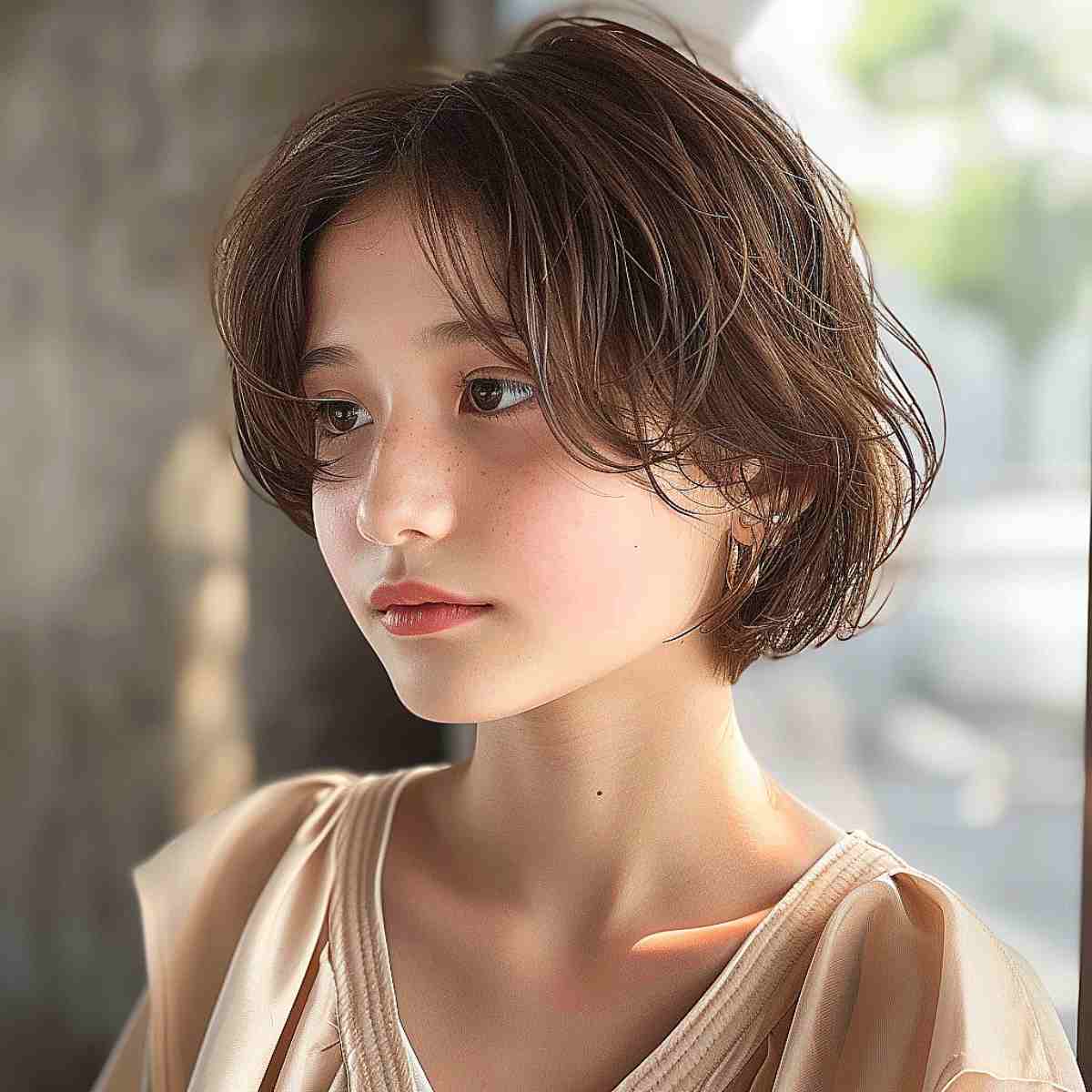
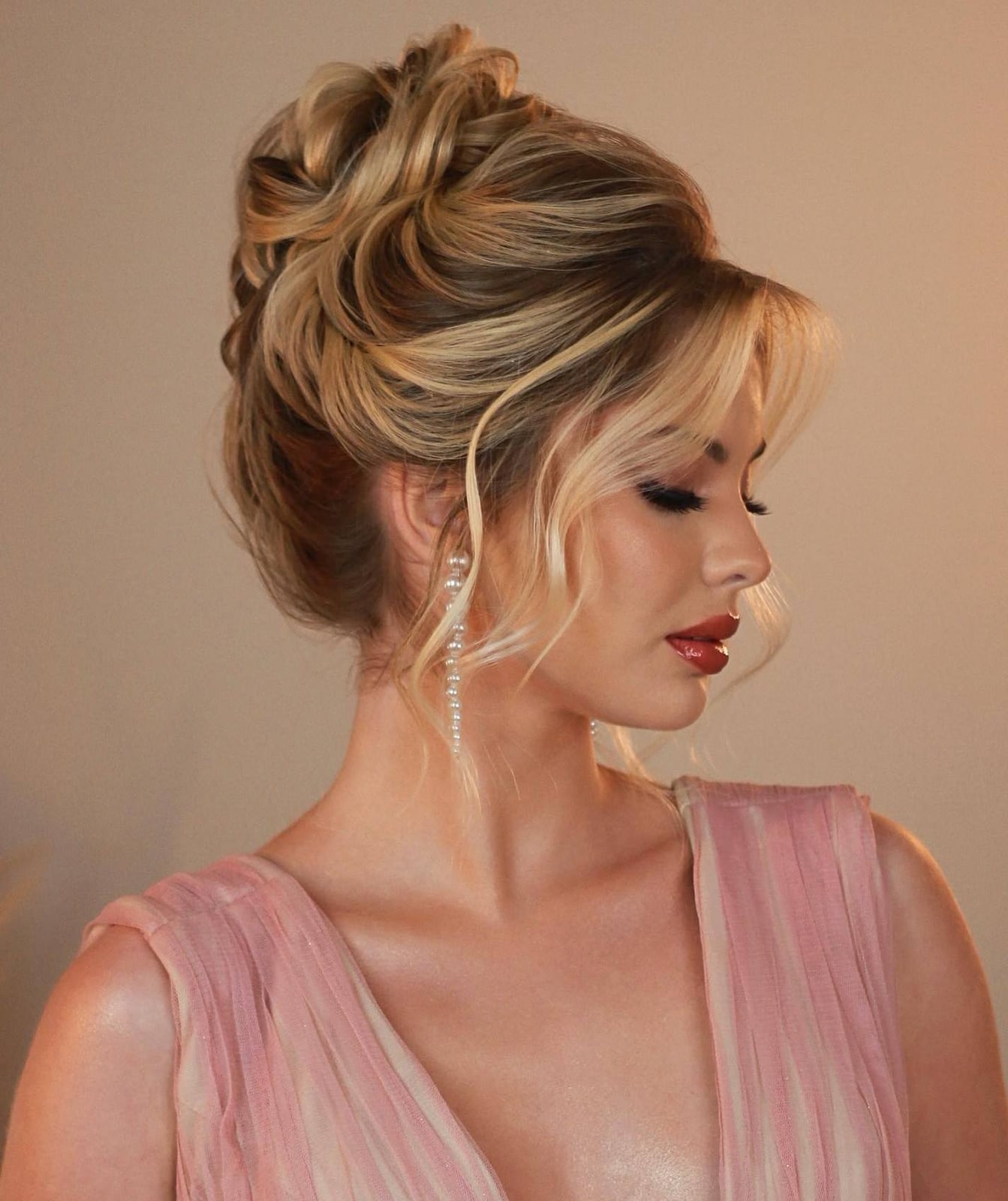
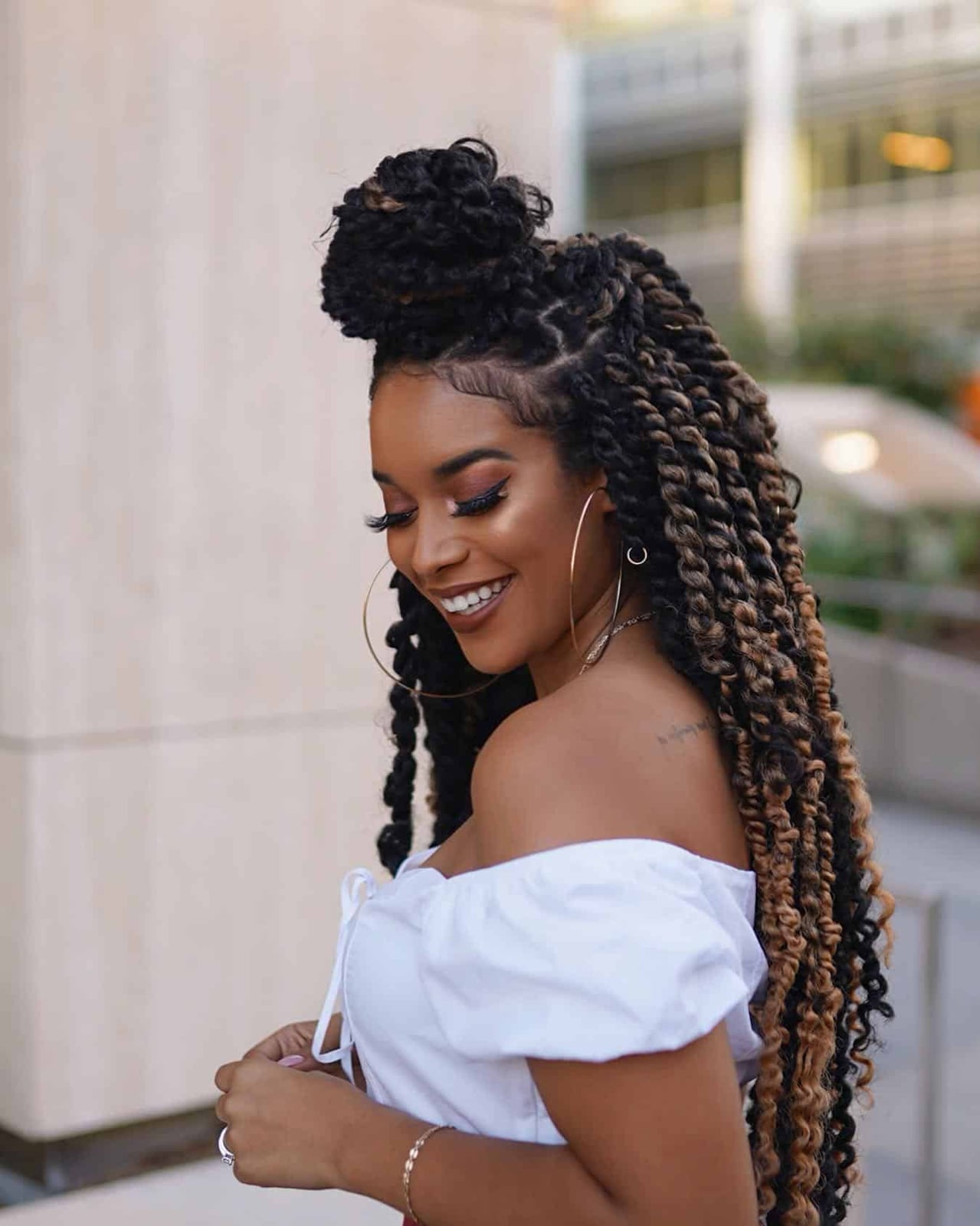
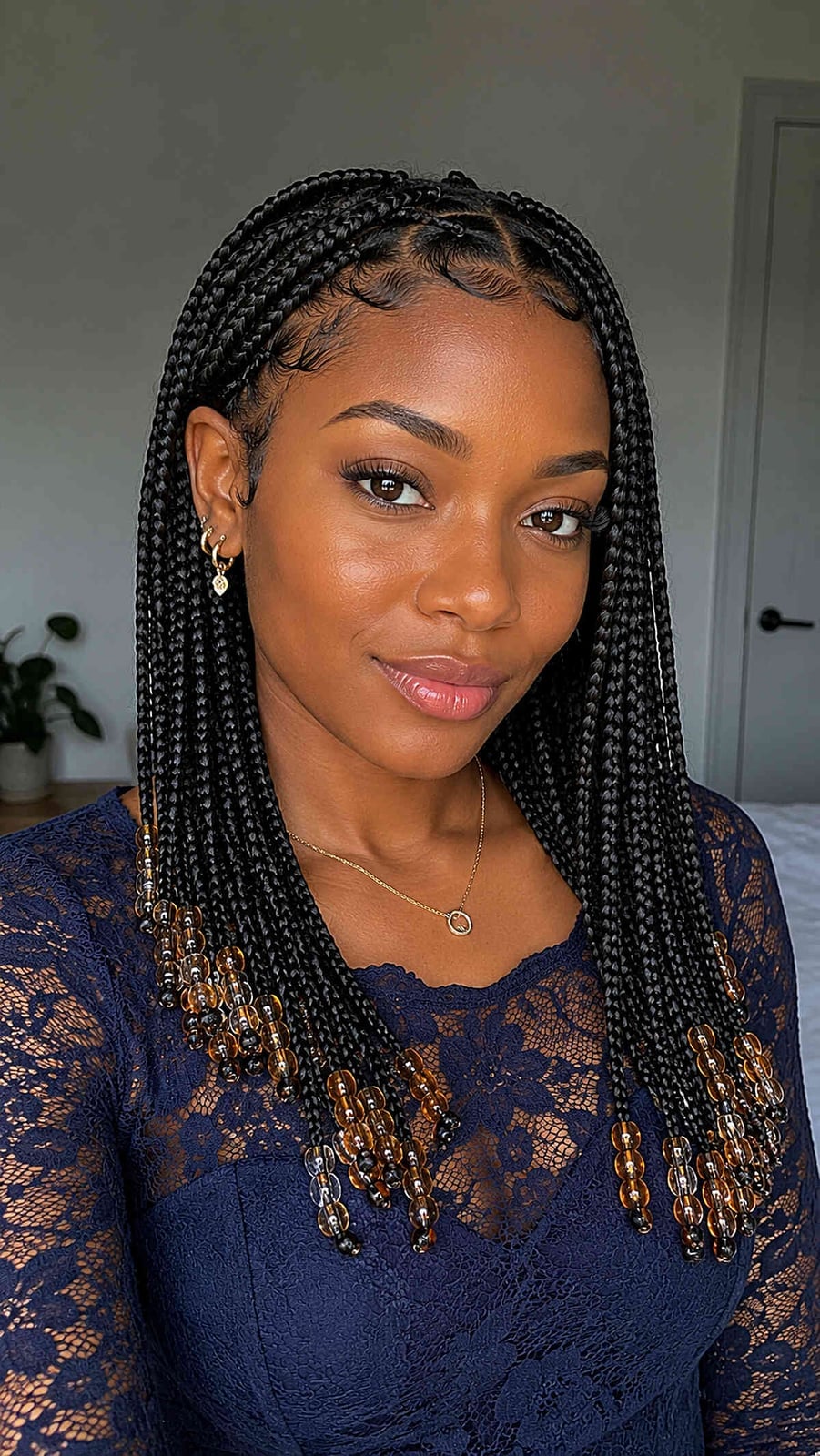
The butterfly haircut is back, but 2027’s version is less about dramatic wings and more about polished, face-framing layers that move with you. Soft curtain bangs and lived-in color are the key updates, replacing the chunky highlights and poker-straight styling of previous years.
This collection of 33 classy butterfly haircut ideas covers lengths from collarbone to mid-back, with options for fine or thick hair, curly or straight textures, and a range of bang styles. If your fine layers tend to fall flat, or you want a cut that looks intentional without constant heat styling, there is a butterfly variation here that works.
Long Dark Brown Butterfly Cut With Voluminous Layers
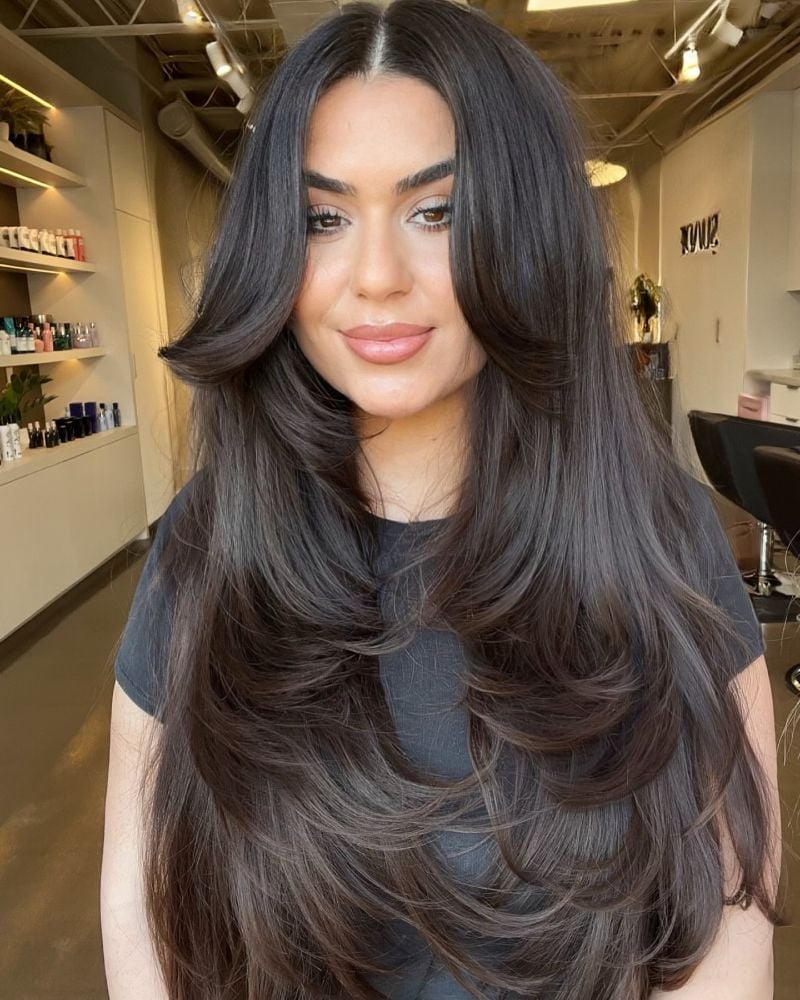
The genius of this cut is that the layers are shortest near the face and lengthen gradually toward the back, so the volume lifts rather than collapses. Thick, wavy hair starting at mid-back is the ideal candidate; the middle part and graduated layers naturally elongate oval and long faces without extra styling. Ask your stylist for a long butterfly cut with voluminous face-framing layers and a middle part.
Use a large round brush, lifting at the roots, to get the maximum body the cut is designed for. The layers typically keep their shape for about eight weeks between trims, though the face-framing pieces may need a touch-up sooner if you wear them forward often.
Mid-Back Butterfly Layers With Curtain Bangs
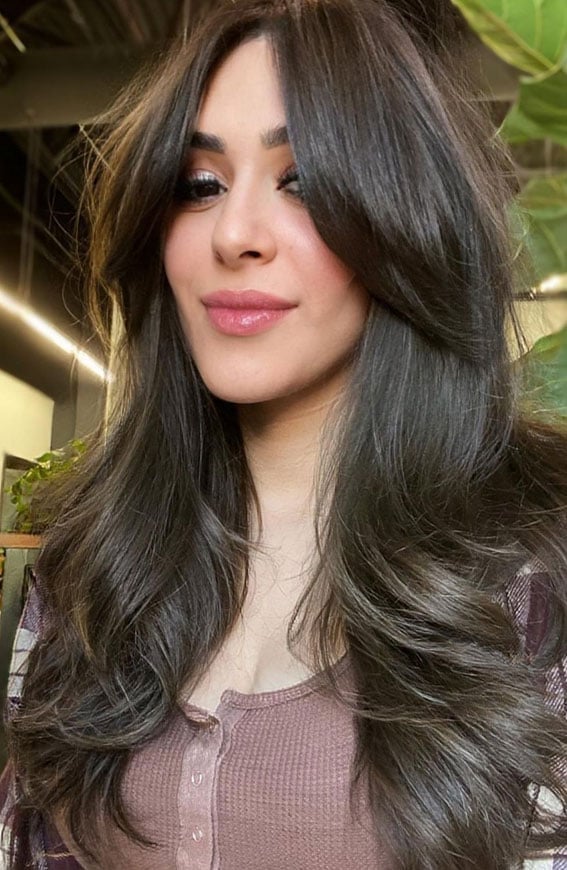
Can you ask for curtain bangs that actually blend into the butterfly layers rather than sitting like a separate piece? Yes, and the request is specific. The bangs should be cut to sweep to the sides at cheekbone level, with the longest pieces melting into the shortest face-framing layer. This works best on thick, wavy hair starting at mid-back; the curtain bangs soften square and round face shapes by breaking up the horizontal line at the jaw. Ask your stylist for mid-back butterfly layers with soft curtain bangs and a middle part.
The things to tell the stylist: the bangs must be dense enough to sweep but light enough to connect to the layers. A dry cut is better for seeing how the wavy texture will land.
Long Dark Brown Butterfly Cut With Face-Framing
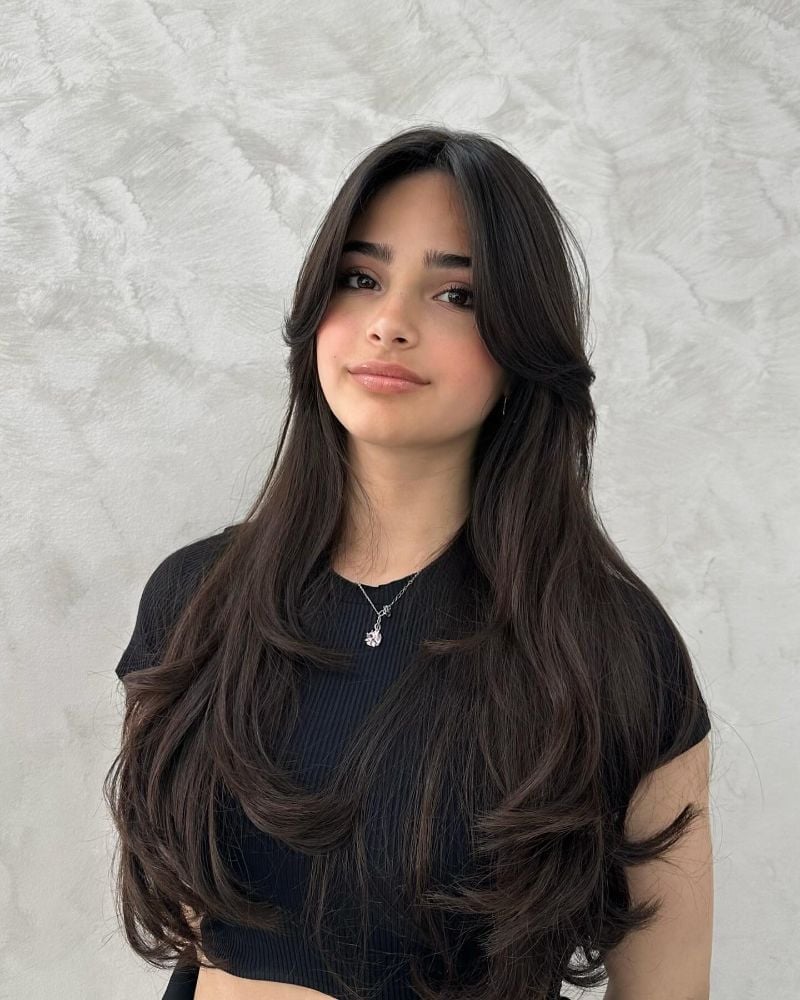
A standard layered cut distributes volume evenly, which can feel heavy on thick hair. This one concentrates the volume into distinct face-framing sections, so the hair moves in separate winged pieces instead of one big wave. The contrast between the shorter face layers and the longer back can look awkward if the stylist over-directs the graduation. It suits oval and long faces best, and the middle part is essential for the symmetry. Ask your stylist for a long butterfly haircut with voluminous face-framing layers and a middle part.
Mid-Back Butterfly Layers With Blonde Highlights
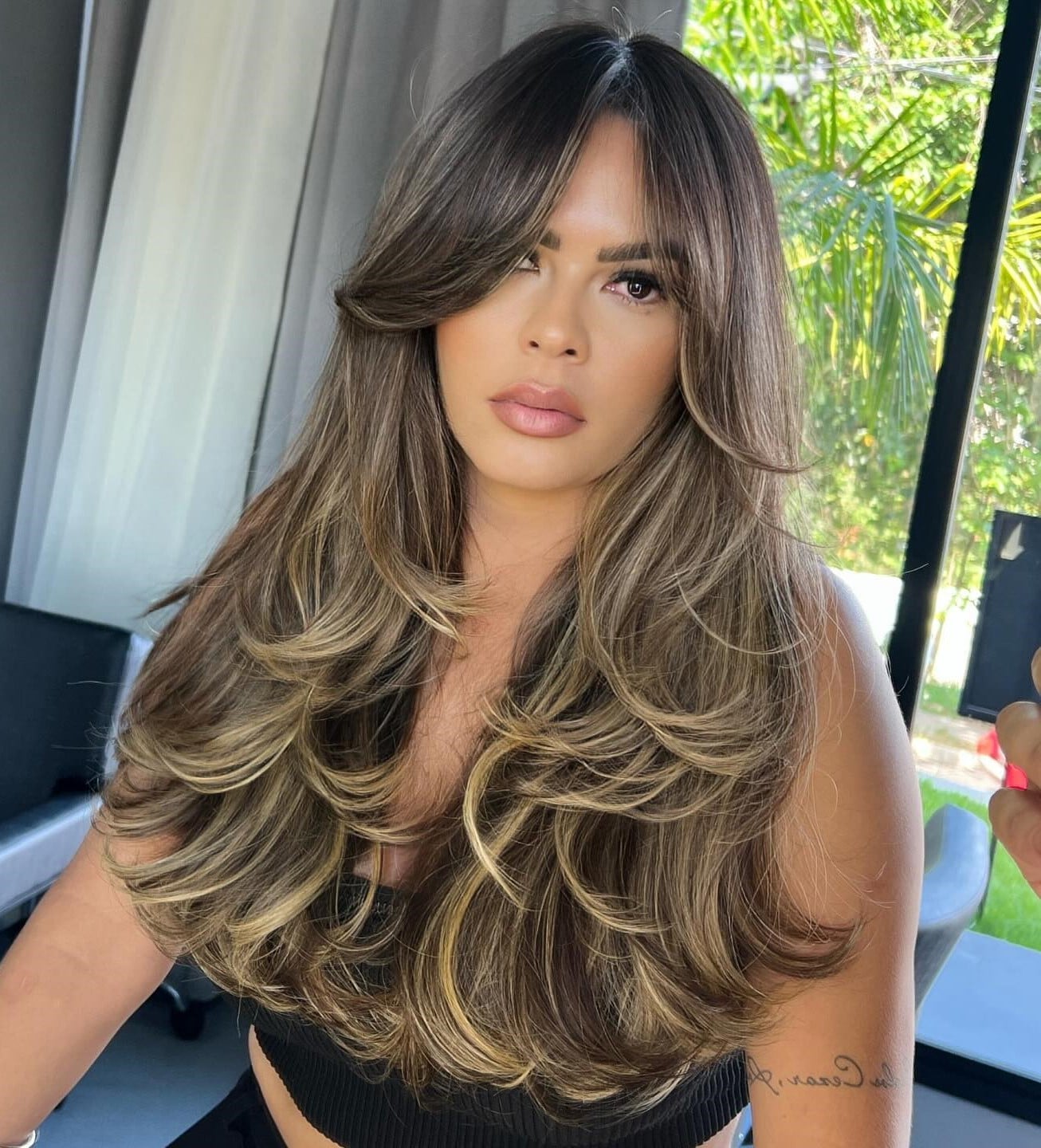
The blonde highlights here are placed on the shorter face-framing layers and the top sections, so the color lifts exactly where the cut creates movement. On a dark brown base, the contrast shows up as dimension, not stripes. This technique requires the layers to be cut first, then the highlights painted onto the pieces that will sit on top. It works on thick, wavy hair starting at mid-back; the blonde adds visual texture to an already voluminous shape. Ask your stylist for butterfly layers with swept curtain bangs and blonde highlights placed on the face-framing sections.
The highlights will need a toning appointment every six to eight weeks to keep the blonde from warming up against the dark base. A purple shampoo can stretch the time between salon visits.
Long Dark Brown Butterfly Cut With Soft Bangs
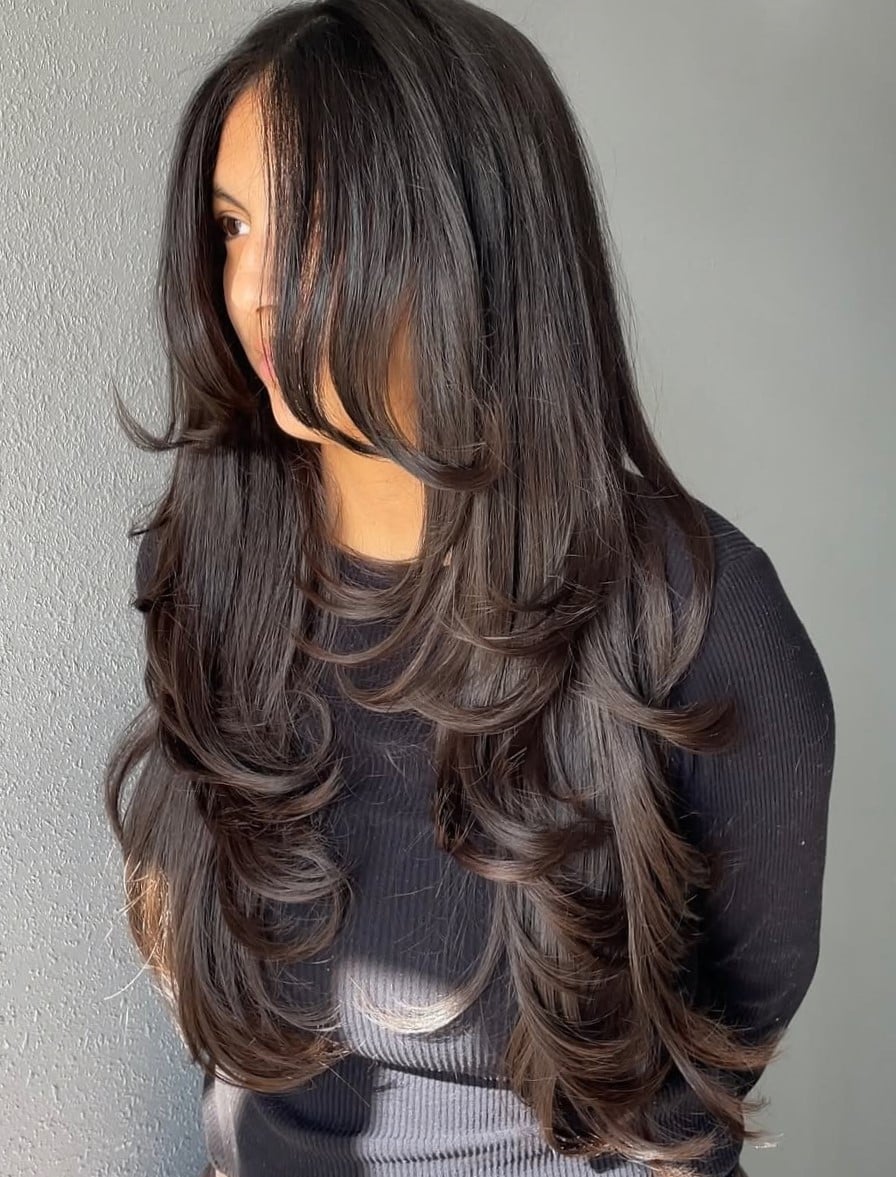
The soft bangs here are cut to sweep, not to sit straight across, which is the difference between a butterfly cut that looks lived-in and one that looks like you just left the salon. The layers are graduated so the shortest pieces hit around the cheekbone and the longest reach the collarbone, creating a soft frame that moves with the rest of the hair. Thick, wavy hair starting at mid-back holds this shape best; finer hair may need a texture spray to keep the layers from blending together. Ask your stylist for long butterfly layers with soft curtain bangs and a middle part.
For daily styling, air-dry with a curl-defining cream and let the natural wave do the work. A blowout with a round brush gives a more polished finish, but the cut is forgiving either way. Trim every eight weeks to keep the bangs from landing in your eyes.
Collarbone Lob With Face-Framing Layers
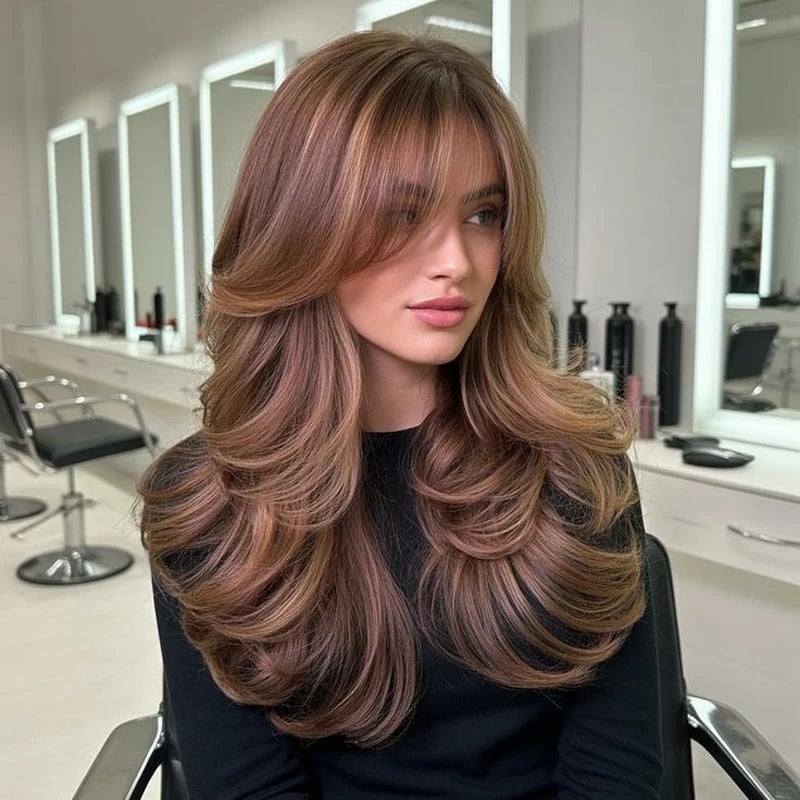
Can a lob still deliver volume without looking heavy? A collarbone cut with face-framing layers and curtain bangs manages it by keeping the length substantial while the shorter pieces around the jaw do the lifting. The brown base with blonde highlights adds dimension, and a side part helps the layers fall forward. This shape works best on medium to thick hair with natural wave, since very fine hair can lose the separation between the layers. Ask your stylist for: collarbone lob, face-framing layers, curtain bangs, side part. The fringe needs blow-drying forward before you sweep it to the sides, and the baseline will want a trim every six to eight weeks to keep the line clean.
Collarbone Length With Face-Framing Layers and Curtain Bangs
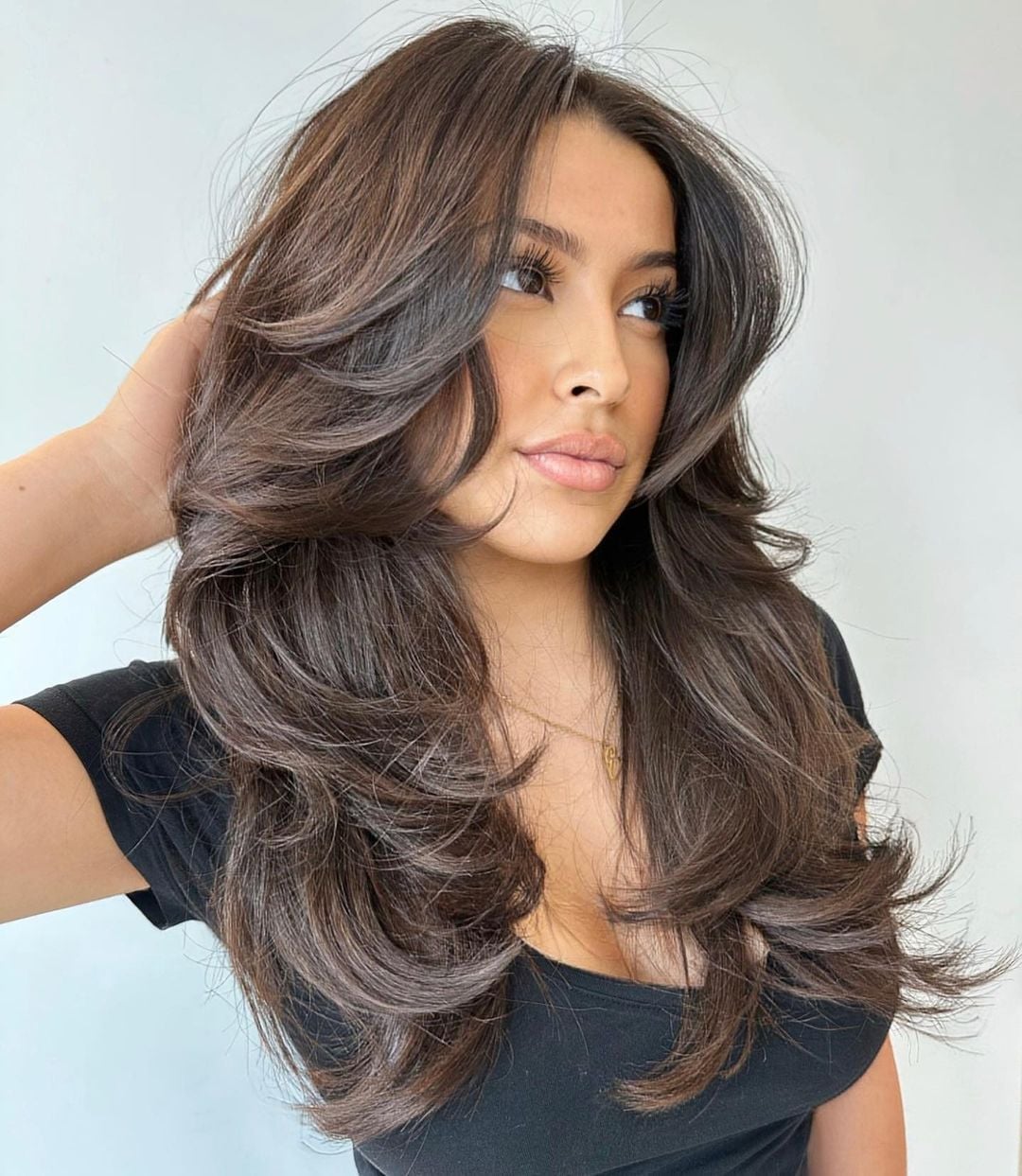
The gesture in this cut is subtle: the face-framing layers start high enough to skim the cheekbone but blend into the collarbone length so nothing looks chopped. The curtain bangs soften the transition, and the side part opens up the shorter side to show the layering. This is a salon-only shape, since the interior graduation is tricky to eyeball at home. Ask your stylist for: collarbone length, long face-framing layers, curtain bangs, side part. A texturizing spray on dry hair will emphasize the wave pattern, and a baseline trim every six to eight weeks keeps the collarbone line from drifting.
Medium Brown Collarbone Cut With Layers
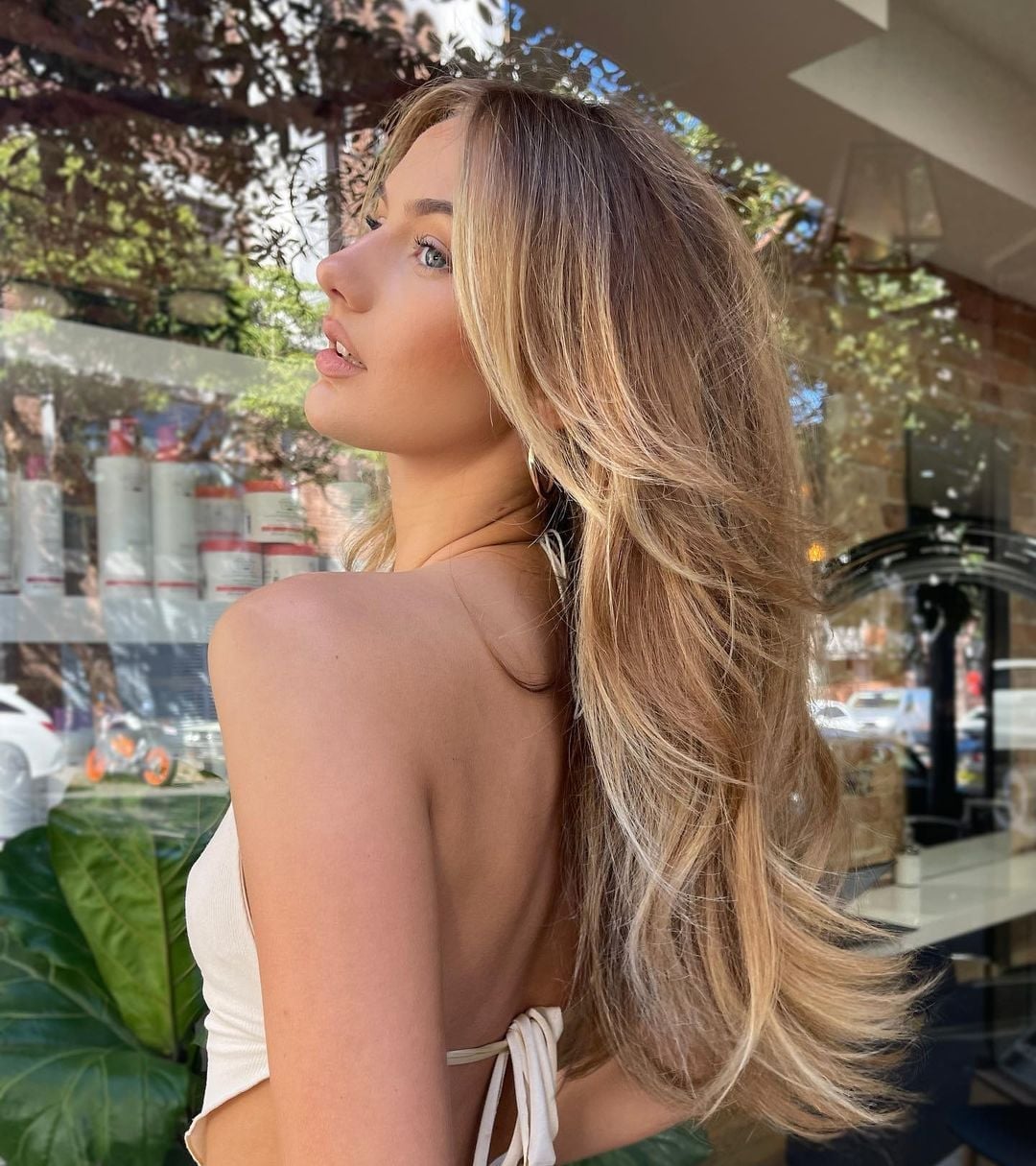
The common mistake with thick, wavy hair at collarbone length is letting the stylist remove too much weight through the midsection. When the interior layers are cut too aggressively, the face-framing pieces lose their anchor and the whole thing goes flat. This medium brown cut avoids that by keeping the longer face-framing layers connected to the denser back, so the wave stacks volume instead of collapsing it. The curtain bangs and side part help the shorter front pieces look like a planned part of the style.
The one real drawback is that thick wavy hair at this length can feel heavy in humid weather, and the layers will need a round brush and a blow-dryer to keep the separation visible. Ask your stylist for: collarbone length, long face-framing layers, curtain bangs, side part. Without heat styling, the layers tend to clump, so plan for a quick blowout on most wear days.
Collarbone Strawberry Blonde With Layers
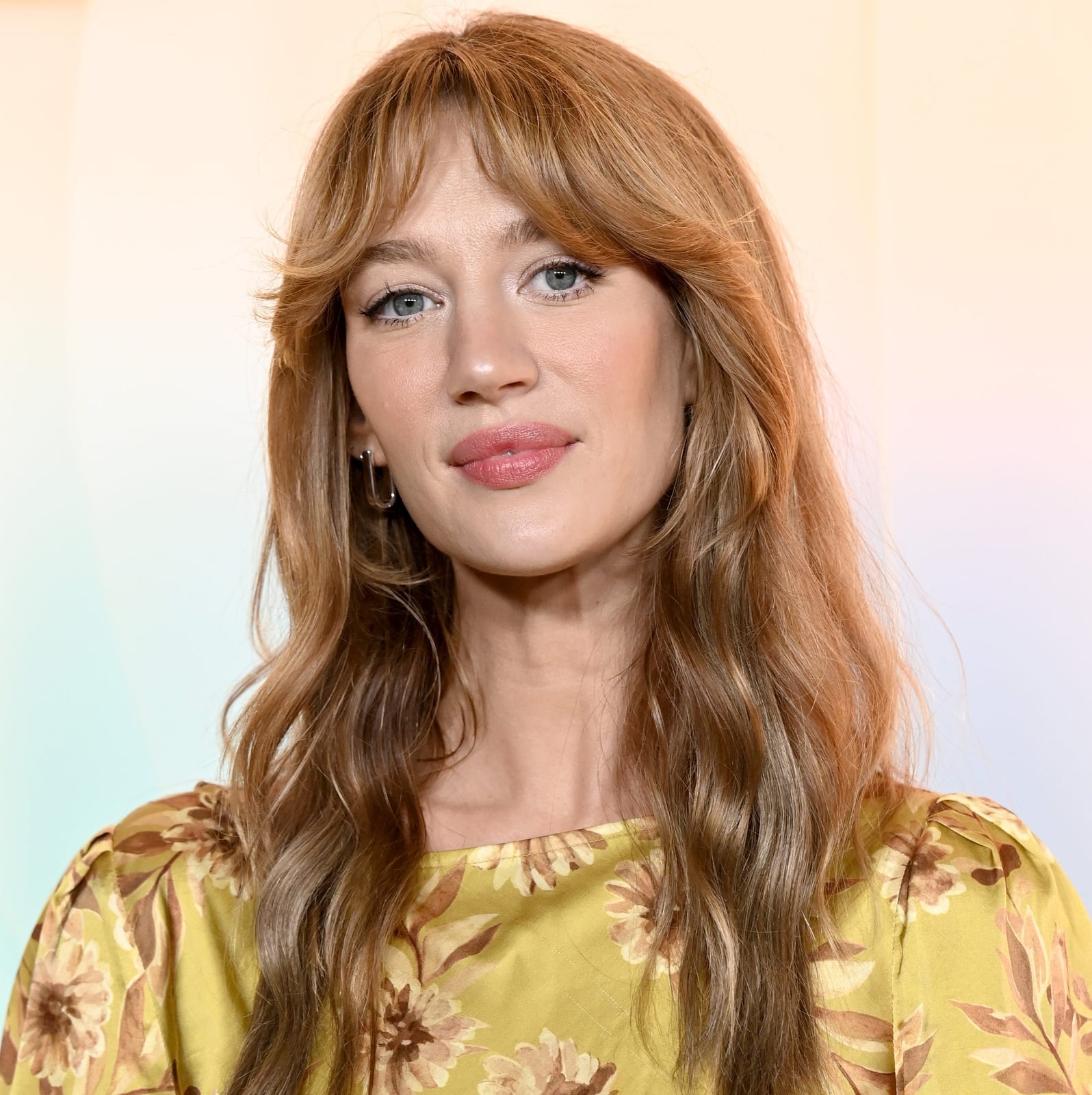
Why does this combination feel right for spring and summer? The strawberry blonde base with subtle highlights reads lighter than a solid warm tone, and the collarbone length keeps the hair off the neck without losing shape. The face-framing layers and curtain bangs add movement that catches air, which is useful when humidity tries to flatten everything. Medium-density wavy hair holds the wave best here, since very fine hair can let the layers disappear. Ask your colorist for: collarbone length, soft face-framing layers, curtain bangs, side part. The strawberry tone needs a toning appointment every four to six weeks to keep the pink notes from turning brassy, and a heat protectant before blow-drying is the standard move.
Collarbone Brunette With Blonde Highlights
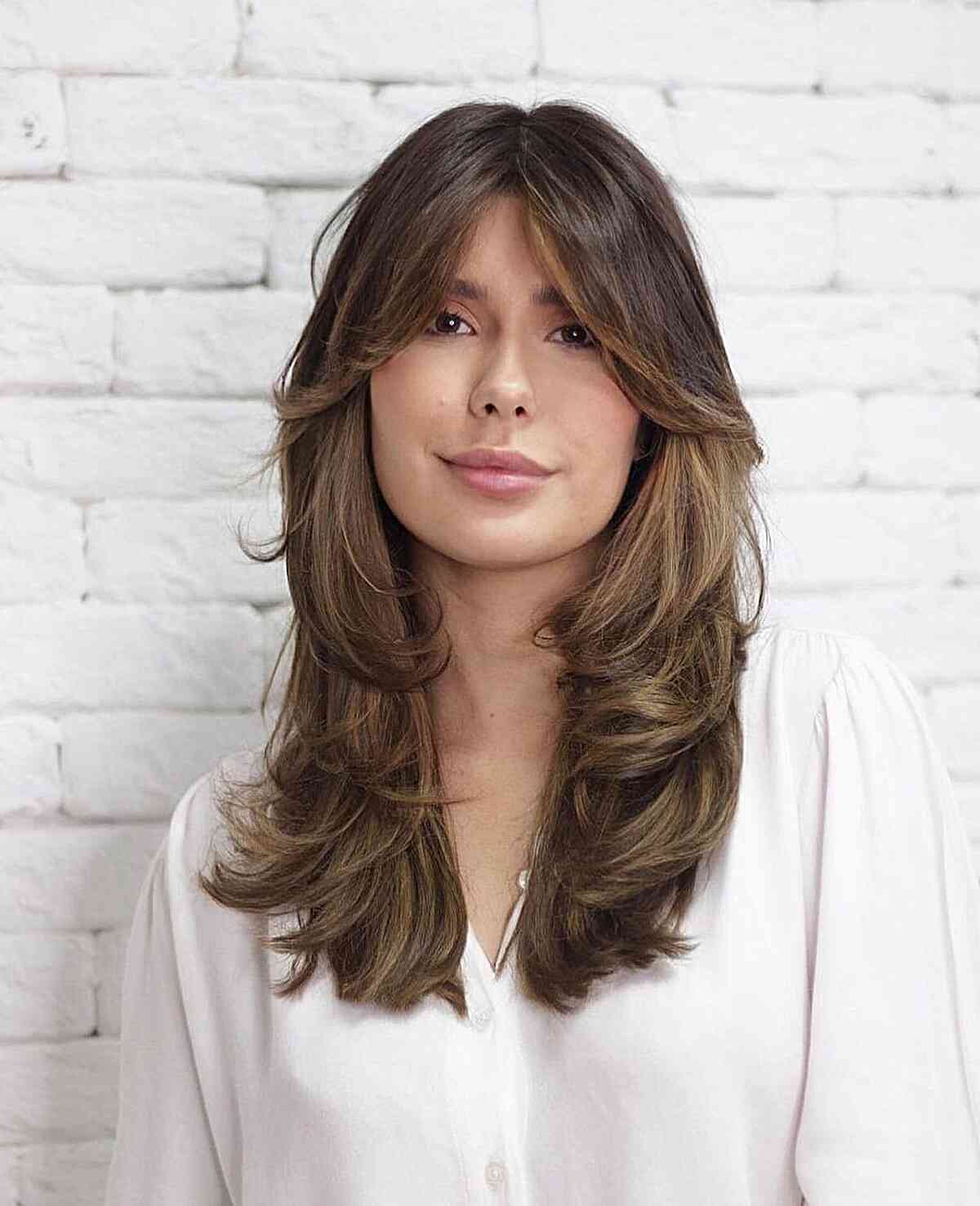
The technique here is straightforward: the blonde highlights are placed through the mids and ends of the layers, so the brunette root keeps the depth while the lighter pieces catch the curl. The soft curls themselves are built with a medium-barrel iron, wrapping each section away from the face to open up the curtain bangs. The side part helps the layers fall asymmetrically, which adds visual volume on the heavier side. Medium-density wavy hair holds this shape best, since very fine hair can let the curl drop. Ask your colorist for: collarbone length, noticeable layers, curtain bangs, side part. The blonde highlights will need a toning visit every six to eight weeks to keep them from warming up, and a volumizing mousse before blow-drying helps the curls hold their shape.
Blonde Collarbone Cut With Face-Framing Layers
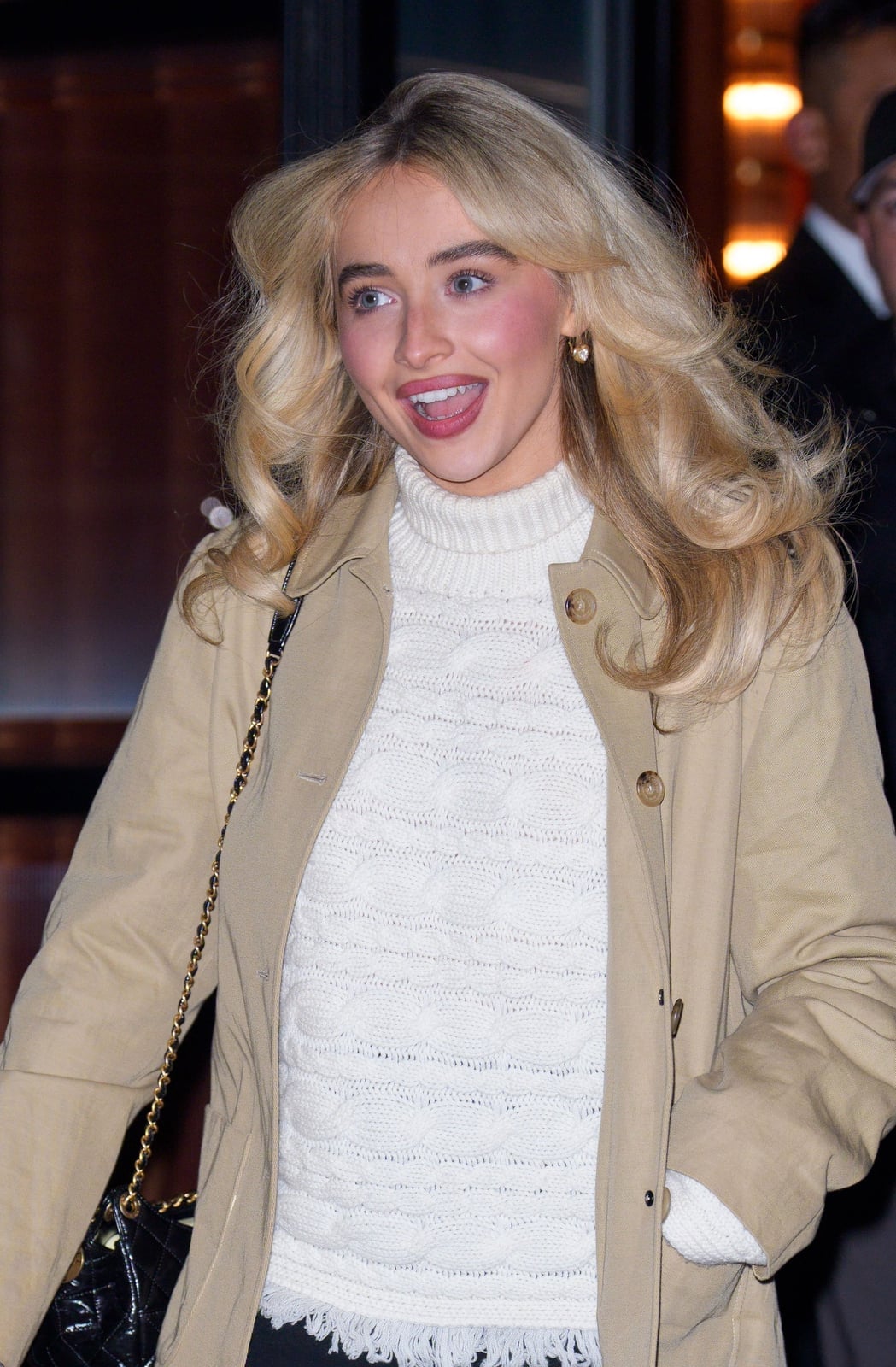
A collarbone-length blonde cut with face-framing layers and curtain bangs is a practical option for fine, wavy hair. The layers start around the cheekbones and blend into the length, so the hair appears fuller without extra bulk. A side part adds lift at the root, which helps if your texture tends to flatten by mid-afternoon.
This works best if your hair is already at collarbone length and you want movement without losing density at the ends. Ask your stylist for: collarbone length, face-framing layers, curtain bangs. A texturizing spray on the mid-lengths keeps the waves defined, and a trim every six to eight weeks maintains the shape.
Ash Blonde Collarbone With Curtain Bangs
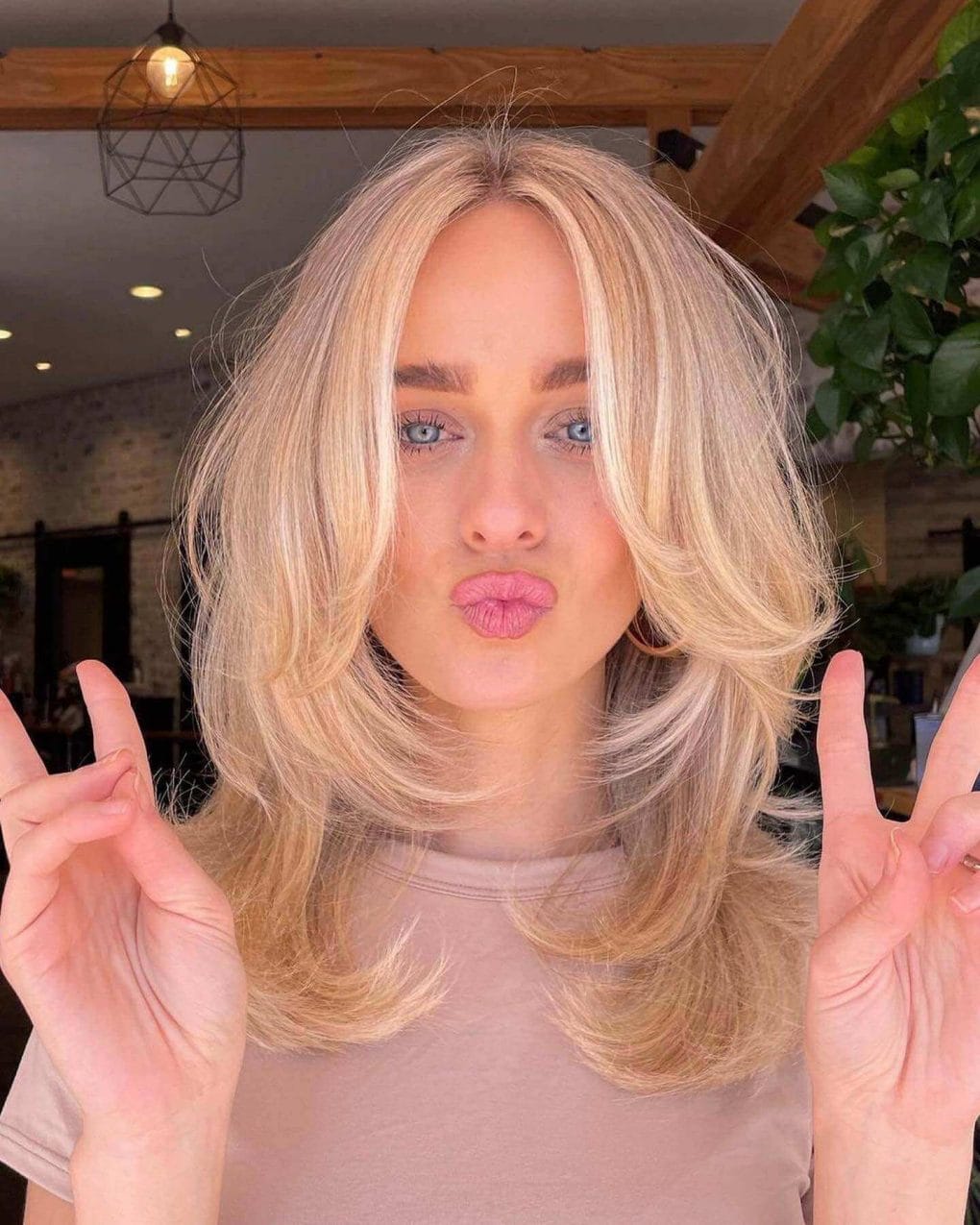
Ash blonde collarbone with curtain bangs is the cooler cousin of the warm blonde lob, and it asks for a bit more effort. The voluminous layers and middle part give the fine, wavy texture some structure, but ash tones have a habit of drifting brassy. A purple shampoo once a week keeps the cool tone honest, and a toning visit every six to eight weeks is non-negotiable if you want to stay ashy. The cut itself is low-maintenance, the color is not.
Collarbone Ash Blonde With Soft Waves
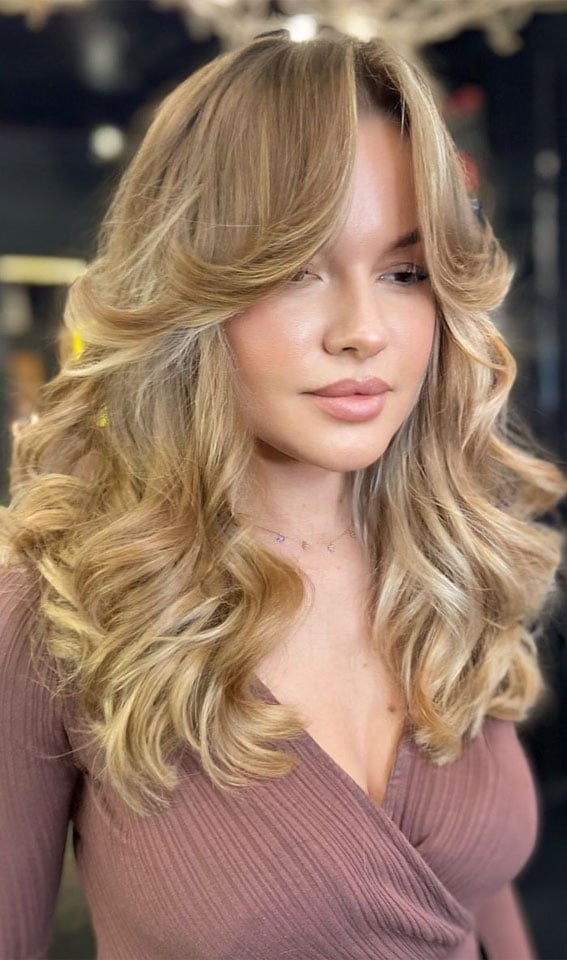
Where a warm blonde can look brassy, this collarbone ash blonde with soft waves and lighter highlights keeps things cool and collected. The long layers and curtain bangs are cut to move with the wave pattern, so the shape holds its line without constant re-rolling. Medium-density hair starting at collarbone gets the most out of this, since the layers add movement without thinning the ends. Ask your stylist for: collarbone length, long layers, curtain bangs. A smoothing serum on damp hair before blow-drying keeps the gloss, and a trim every six to eight weeks preserves the shape.
Collarbone Dark Brown With Feathered Layers
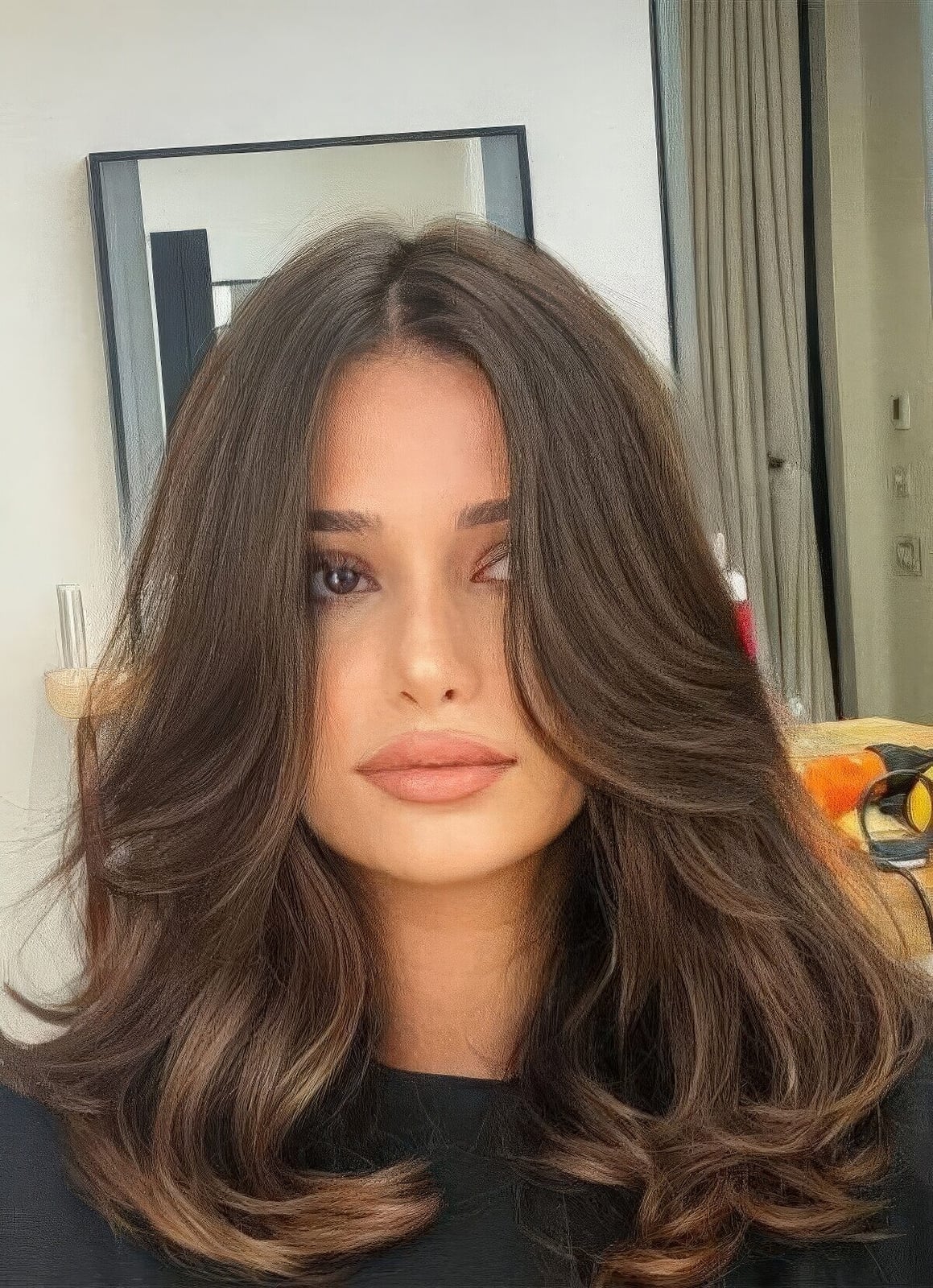
Dark brown collarbone length with feathered layers is the cut for anyone who wants bounce without bangs. The layers are cut close together, which creates that full, rounded silhouette that moves when you do. A middle part keeps it modern, and the lack of bangs means the face framing has to come entirely from those feathered pieces.
Thick, wavy hair starting at collarbone is the ideal candidate, because the layering removes weight while the wave pattern keeps the fullness. Without bangs, the style depends on the layers doing all the work, so a bad blowout will leave you looking a little flat. Ask your stylist for: collarbone length, feathered layers, no bangs. A texturizing spray adds definition, and a trim every six to eight weeks keeps the feathering sharp.
Collarbone Black With Side-Swept Bangs
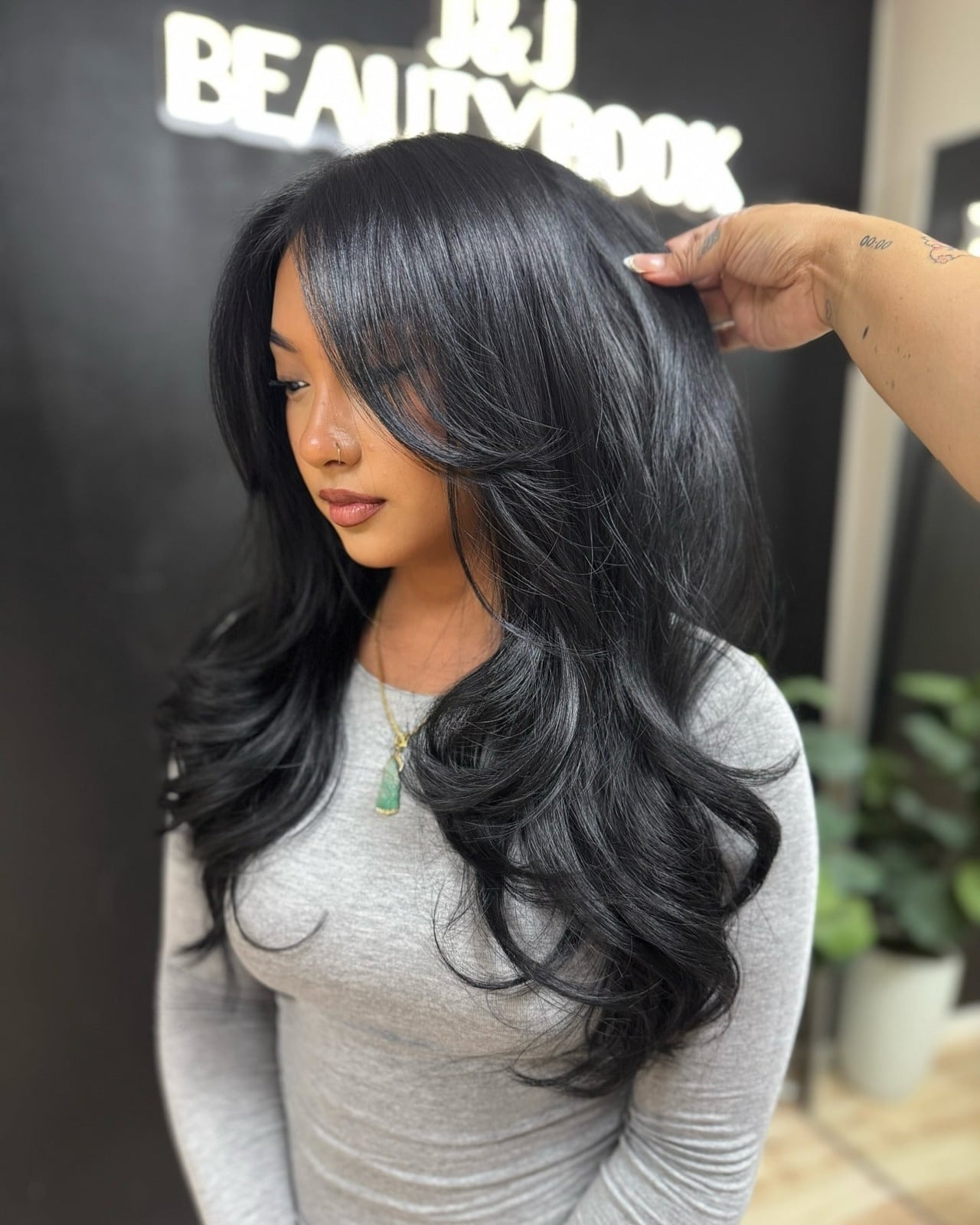
Wondering if side-swept bangs will work with thick, straight hair? This collarbone black cut makes the case. The face-framing layers are cut to blend into the side-swept bangs, creating a soft, rounded shape that moves as one piece. Thick, straight texture holds the line beautifully, and the side part adds a little lift at the crown. Ask your stylist for: collarbone length, face-framing layers, side-swept bangs. A smoothing serum on the lengths keeps the shine, and a trim every six to eight weeks stops the bangs from turning into a curtain you have to push aside.
Collarbone Brown With Blonde Highlights and Curtain Bangs
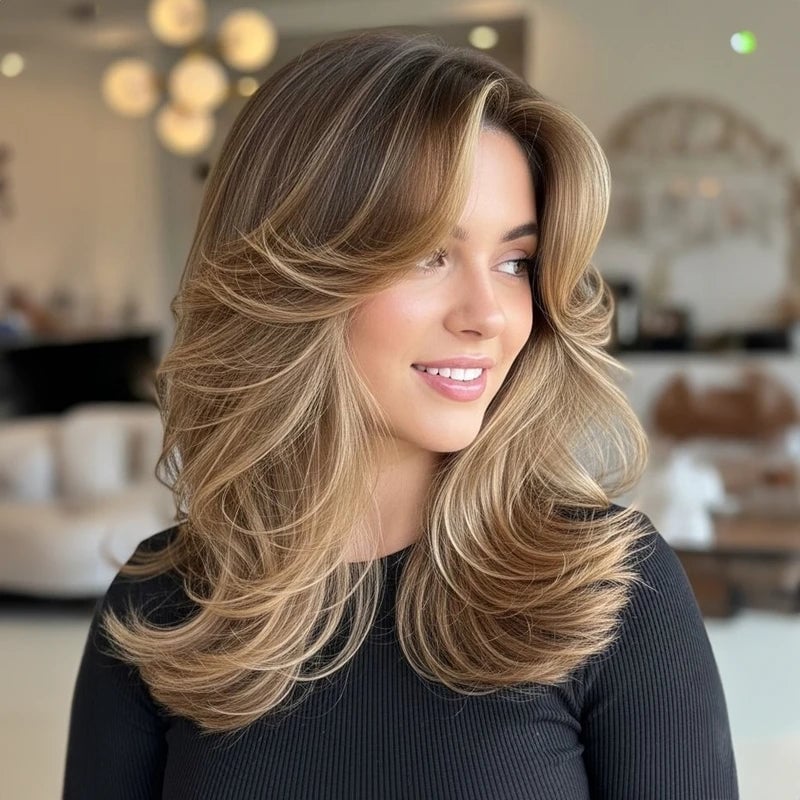
The side part does more work than you might expect, sweeping the curtain bangs across the brow before they tuck behind the ears. That collarbone brown with blonde highlights looks like a lived-in color, since the lighter pieces sit close to the face to catch the layers. The placement is the whole point, so be specific when you book. Ask your stylist for: collarbone length, face-framing layers, curtain bangs, side part. This one is a salon cut through and through, since the highlight placement and the layer graduation need to land in the same spot. Medium density, wavy hair takes the shape best, and the face-framing pieces soften round and square faces without shortening the overall length. Blow-dry the fringe forward first, then sweep it to the sides for that polished blowout finish. The baseline needs a trim every six to eight weeks to keep the collarbone line clean.
Collarbone Dark Brown With Curtain Bangs
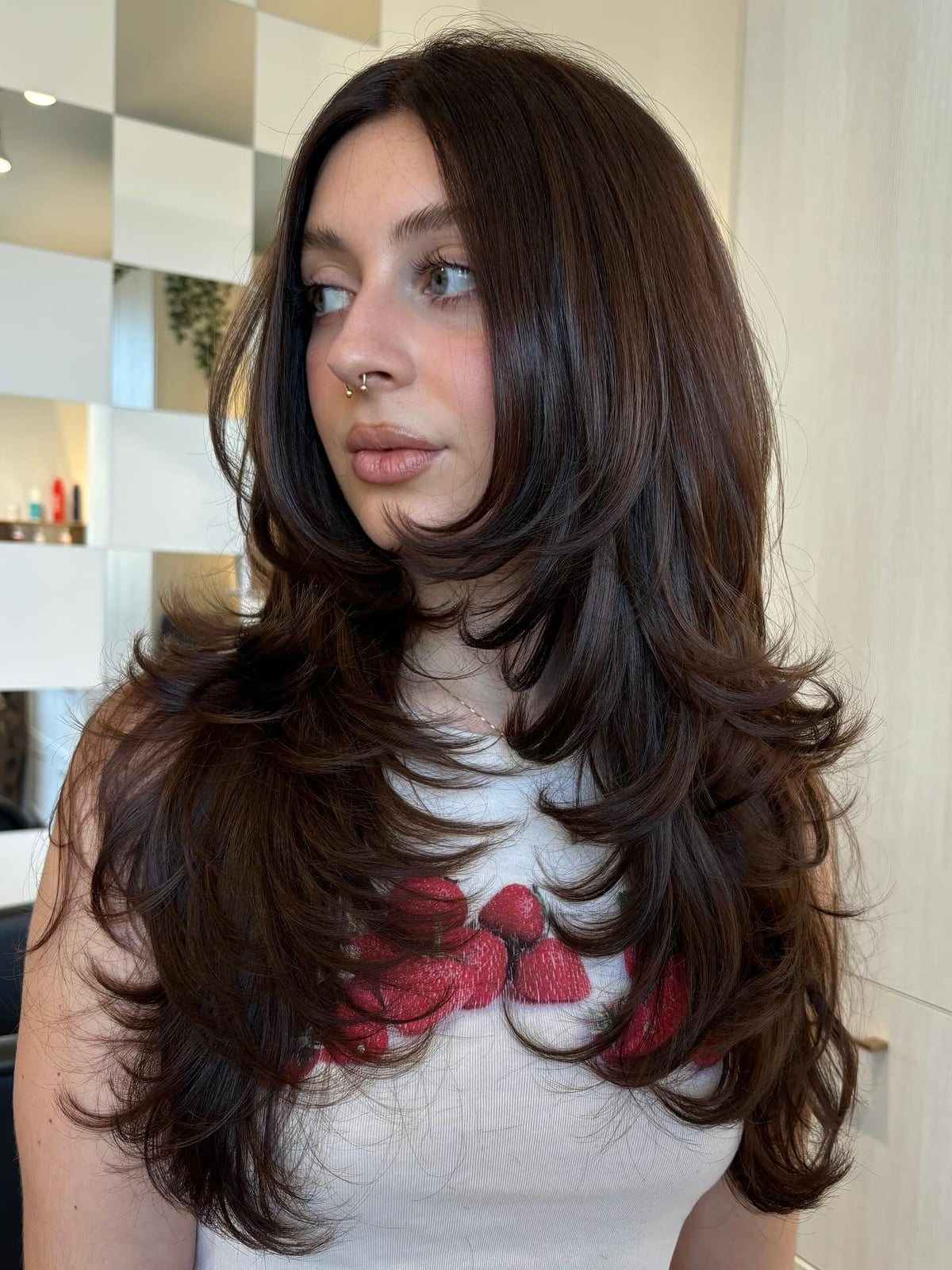
A rich dark brown base with subtle lighter pieces gives this collarbone cut its depth, and the curtain bangs blend into the layers so nothing looks glued on. The middle parting keeps the symmetry honest, which is exactly what you want when the face-framing is this deliberate. Ask your stylist for: collarbone length, face-framing layers, curtain bangs, middle part.
The daily reality of this one is a blowout with a round brush, plus a volumizing spray at the roots before you start, or the soft waves fall flat by lunch. Thick, wavy hair starting at collarbone length holds the shape best, and the curtain bangs do the softening work on angular faces. A trim every six to eight weeks keeps the collarbone line from creeping toward the shoulders. The dark base means the lighter pieces stay low-maintenance, since regrowth shows up as shadow instead of a harsh line.
Collarbone Beige Blonde Butterfly Layers With Curtain Bangs
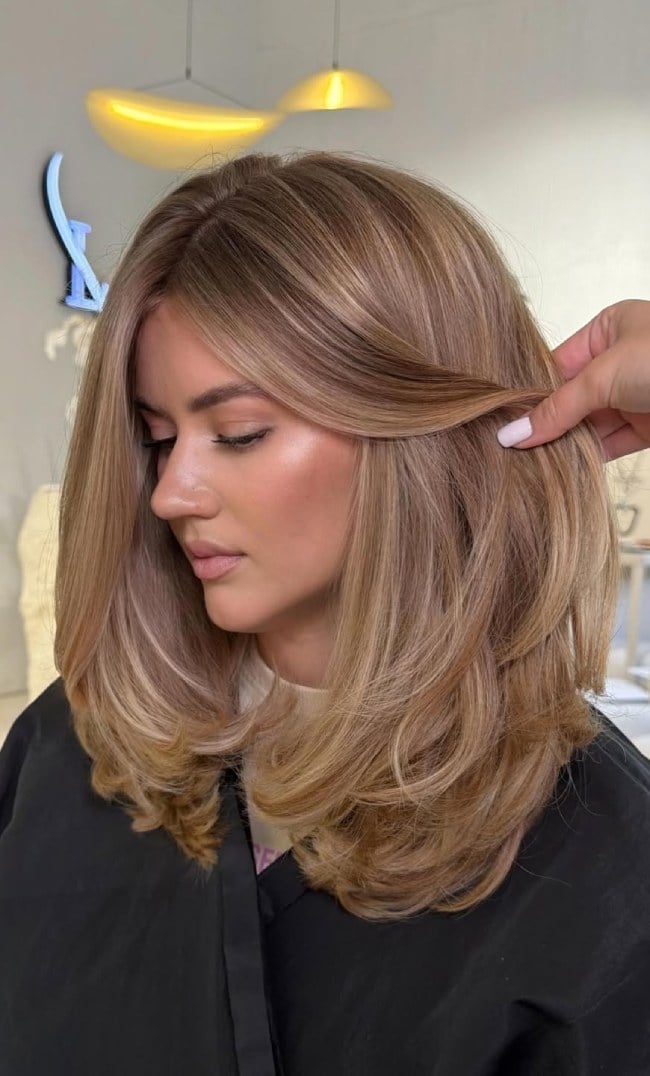
How do butterfly layers actually get that rounded, weightless shape? The stylist cuts the interior layers shorter than the perimeter, so the hair stacks into a soft dome that moves as one piece. On this collarbone beige blonde, the curtain bangs split the difference, blending into the shortest layers while the warm beige tone with highlights keeps the dimension from going flat. Ask your stylist for: collarbone length, soft butterfly layers, curtain bangs, middle part. The side view is where the structure shows, since the layers step down in a clean sequence rather than a choppy mess. Thick, wavy hair starting at collarbone length gives the butterfly shape enough weight to hold its arc.
Mid-Back Auburn With Voluminous Layers
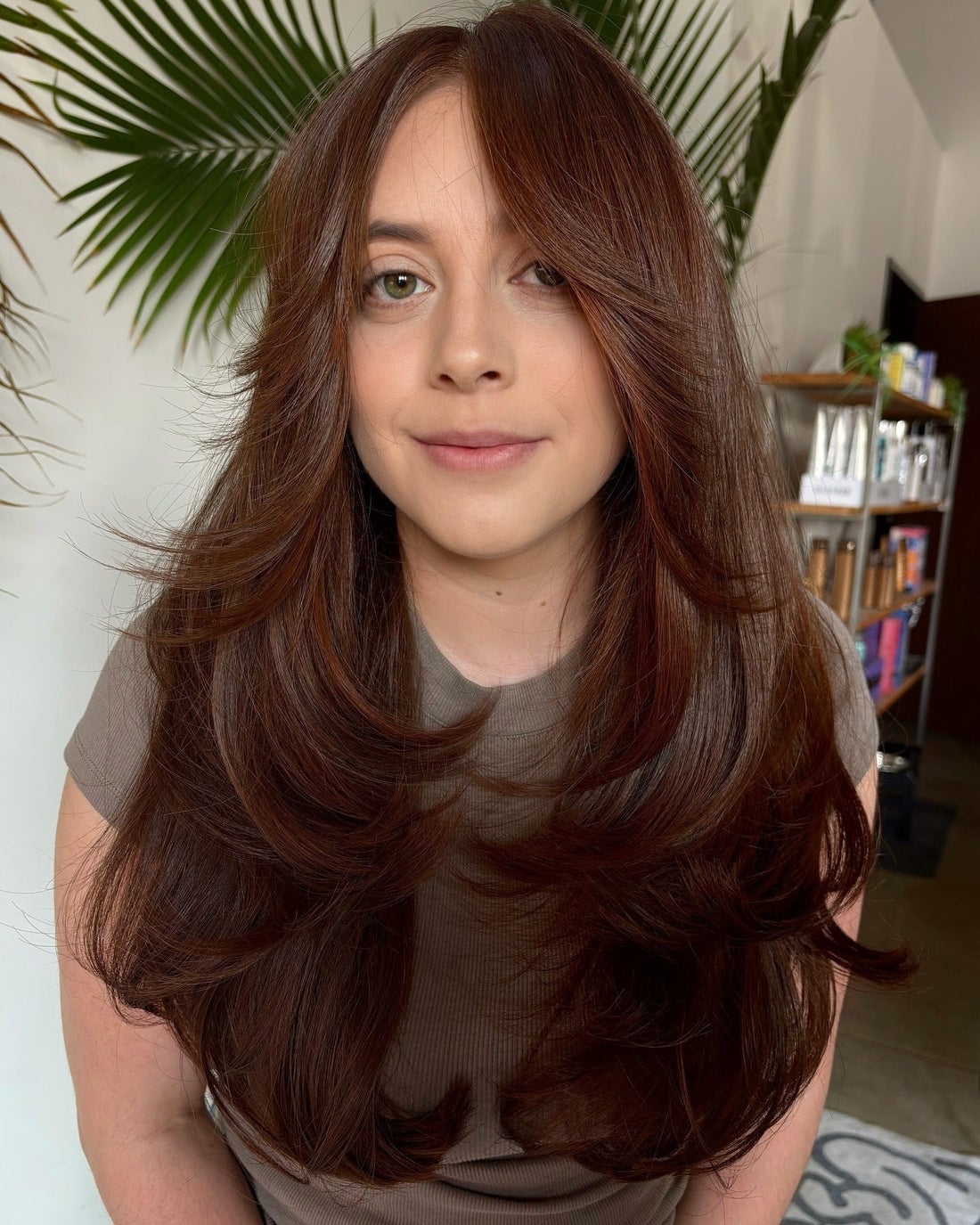
The rounded shape here comes from layers cut to stack around the face, and the rich auburn shade gives the volume a warmth that a flat brown would not. This mid-back length with no bangs and a middle parting suits thick, wavy hair that already has some body to work with, since the voluminous layers need density to hold their arc. Fine hair tends to lose the shape by midday, so this one is for the naturally thick crowd. Ask your stylist for: mid-back length, voluminous layers, no bangs, middle part.
The auburn tone is the quiet workhorse of the design, since the reddish undertones catch light in a way that makes the layers look deeper and more dimensional. A color-safe shampoo and conditioner will keep the tone from pulling brassy, and the layers need a trim every eight to ten weeks to keep the rounded silhouette from growing out into a shapeless curtain. The middle part keeps the volume balanced on both sides, so the whole shape lands as symmetrical.
Mid-Back Dark Blonde With Layers, Wavy
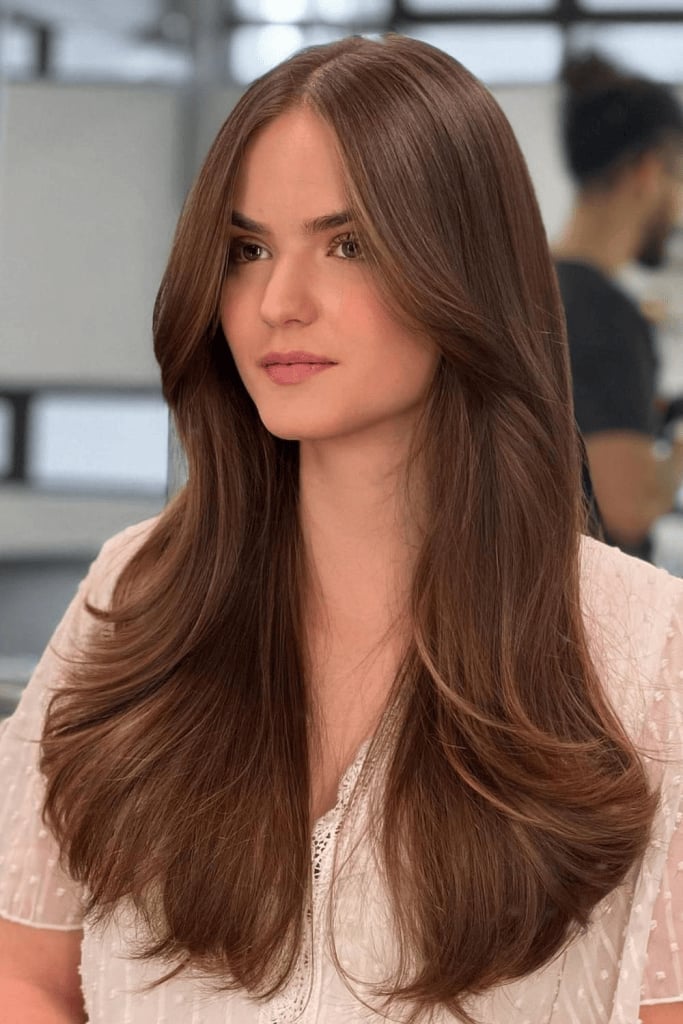
This style uses a dark blonde base with blonde highlights for subtle dimension. The long face-framing layers reach mid-back and blend into soft waves, so the cut moves with the hair. Ask your stylist for: mid-back length, long face-framing layers, no bangs, middle part. Compared to a heavier balayage with obvious lighter panels, this approach keeps the highlights close to the base tone, which means the grow-out is forgiving and the layering does the talking. The side and back views show the layers stepping down gradually, which suits thick, wavy hair that wants movement without losing length. A texturizing spray adds separation to the mid-lengths, and the layers need a trim every eight to ten weeks to keep the face-framing pieces from disappearing into the hair.
Mid-Back Brown With Balayage Highlights

Wondering how to ask for a butterfly cut that doesn’t look like a costume? Start with the color. This mid-back length cut keeps long, blended layers and face-framing bangs on a medium brown base with balayage highlights. Ask your colorist for: “mid-back length, long blended layers, face-framing bangs, side part.” The balayage should be painted freehand, not foiled, so the highlights melt into the base instead of sitting in stripes. A side part lets the face-framing pieces fall where they actually do something.
Mid-Back Dark Brown With Blonde Balayage
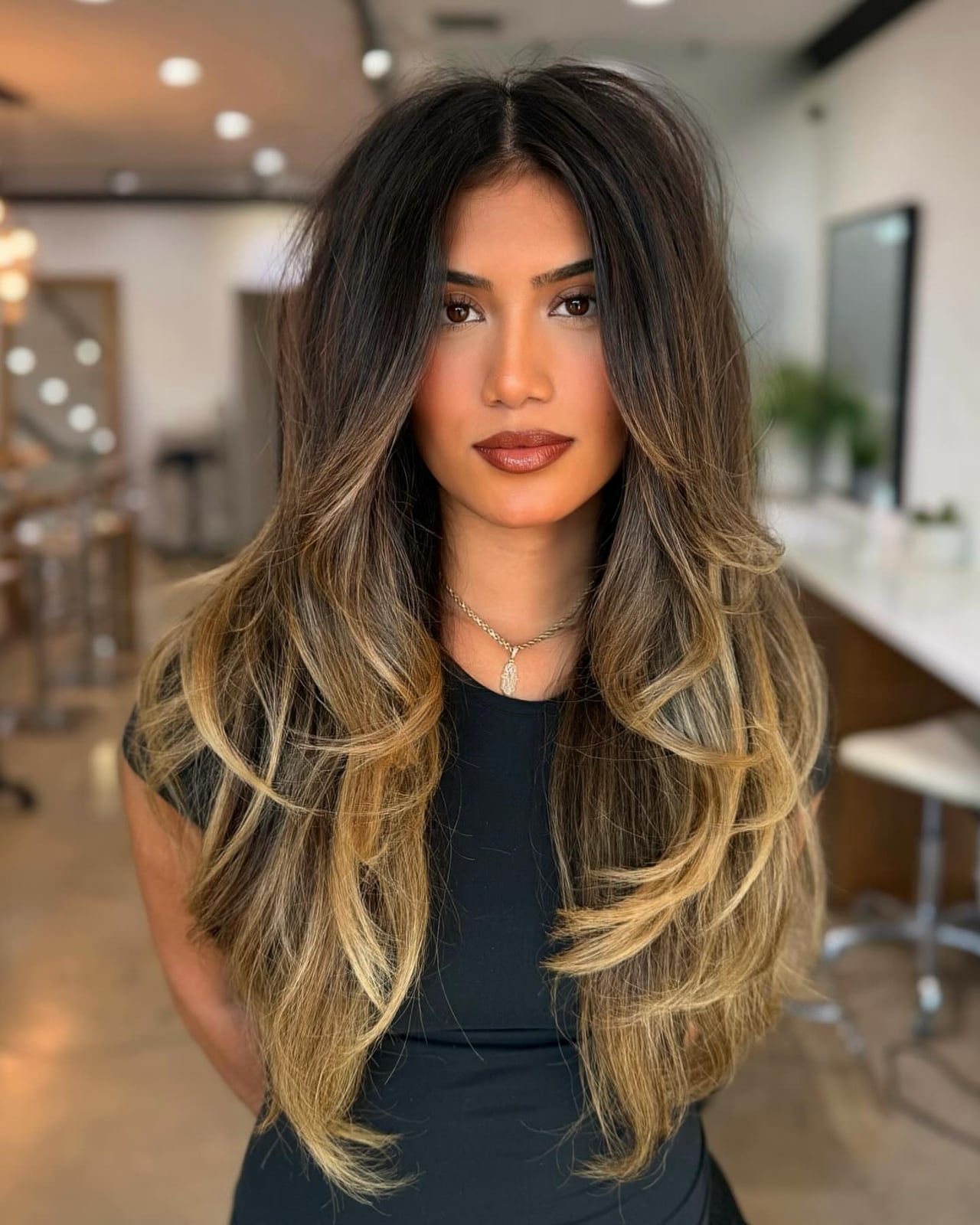
Blonde balayage on a dark brown base is a commitment, but the payoff is dimension that flat color can’t touch. The mid-back length here pairs curtain bangs with layers that move through the mid-lengths, all styled in a blowout with loose waves. The dark base keeps the roots low-maintenance while the blonde pieces show up only where they catch light. Ask your stylist for: “mid-back length, layers, curtain bangs, middle part.” Expect to tone the balayage every eight to ten weeks to keep the blonde from going brassy, and refresh the wave with a texturizing spray on damp hair before diffusing or air-drying.
Mid-Back Ash Blonde With Curtain Bangs
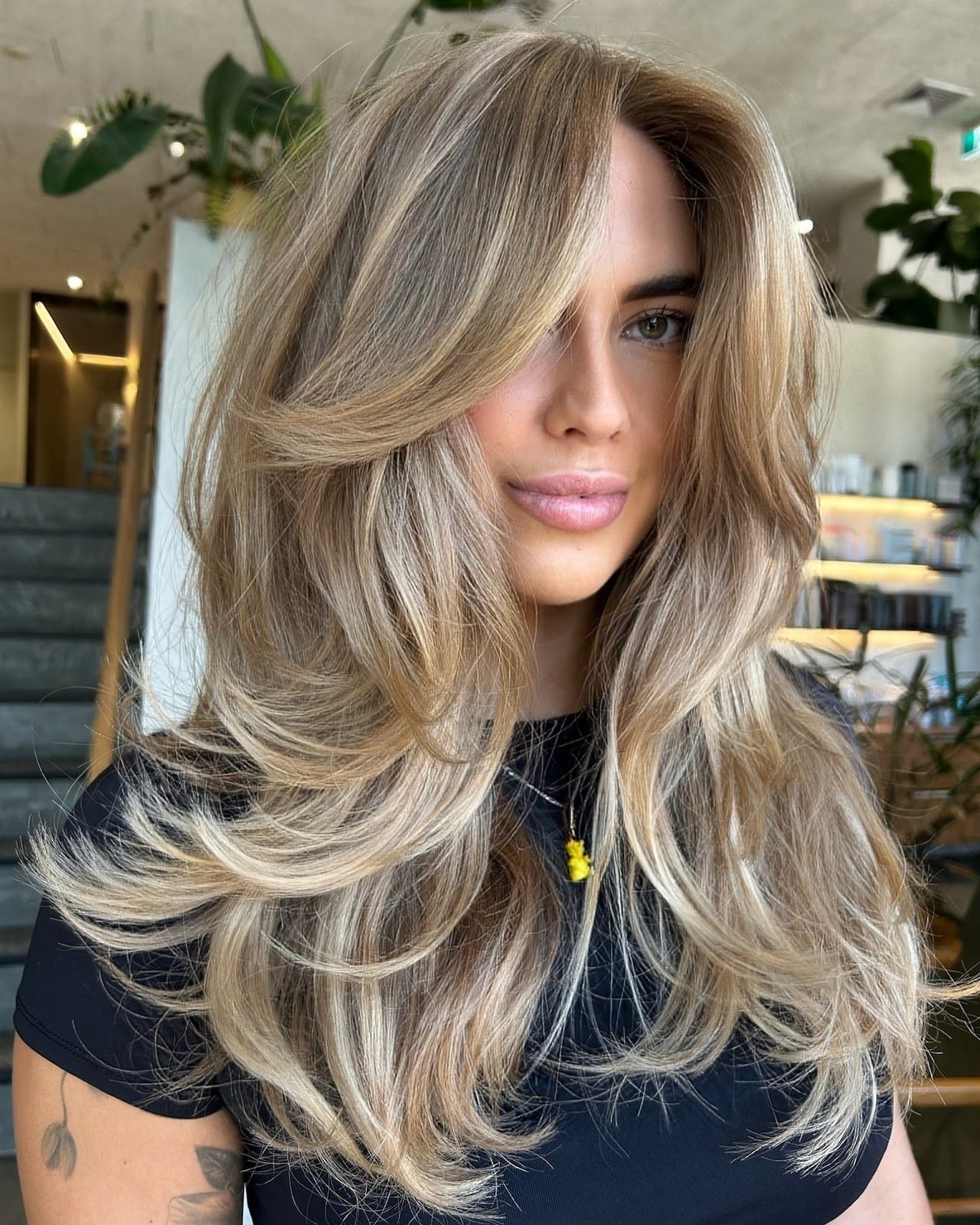
Ash blonde with a root shadow is a technique that builds depth without sacrificing brightness. The mid-back length here uses prominent face-framing layers and curtain bangs, parted in the middle, all styled in a blowout with loose waves. The root shadow is a few shades darker than the ash blonde, so the regrowth line stays soft for weeks. Ask your colorist for: “mid-back length, face-framing layers, curtain bangs, middle part.” The ash tone needs a purple shampoo once a week to hold its cool edge, and the layers should be trimmed every eight to ten weeks to keep the shape from collapsing.
Mid-Back Dark Brown With Full Bangs
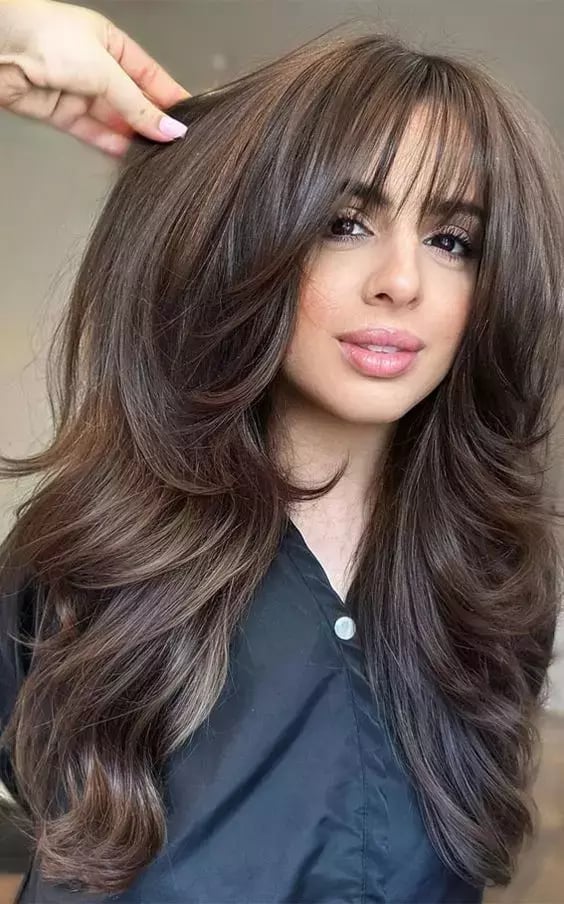
Who can actually carry full bangs with a long, layered cut? Anyone with a longer face shape, since the fringe shortens the visual length. This mid-back dark brown style layers heavily through the crown for volume, with subtle highlights to keep the color from going flat. The full bangs sit just above the brows, and the side part softens the overall line. Ask your stylist for: “mid-back length, long layers, full bangs, side part.” The bangs need a trim every four to six weeks, and the rest of the shape every eight, to keep the volume from turning into a triangle.
Mid-Back Dark Brown With Full Bangs and Especially Around The Face
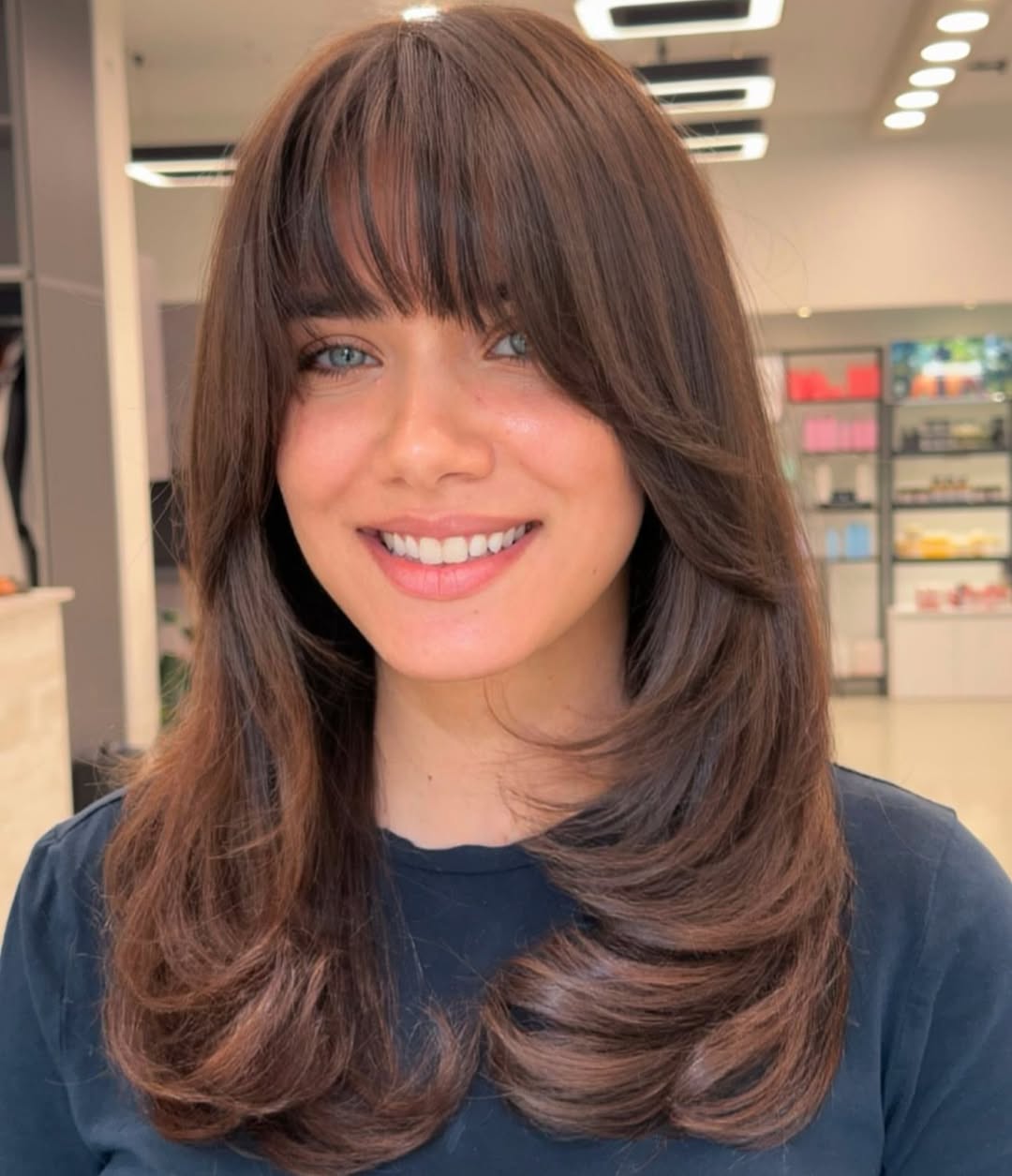
The trade-off with full bangs plus heavy face-framing layers is that you are committing to styling both every single day. This mid-back dark brown cut puts the layers right around the face, which creates volume but requires a round brush and a blow-dryer to achieve. The full bangs, parted in the middle, frame the forehead, and subtle lighter pieces keep the dark base from feeling heavy. Ask your stylist for: “mid-back length, long layers, full bangs, middle part.” The daily styling time is a drawback: bangs need a blast of heat to sit right, and the layers need product to hold their shape. If you prefer to air-dry and go, this style will fight you.
Shoulder Length Brown With Honey Highlights
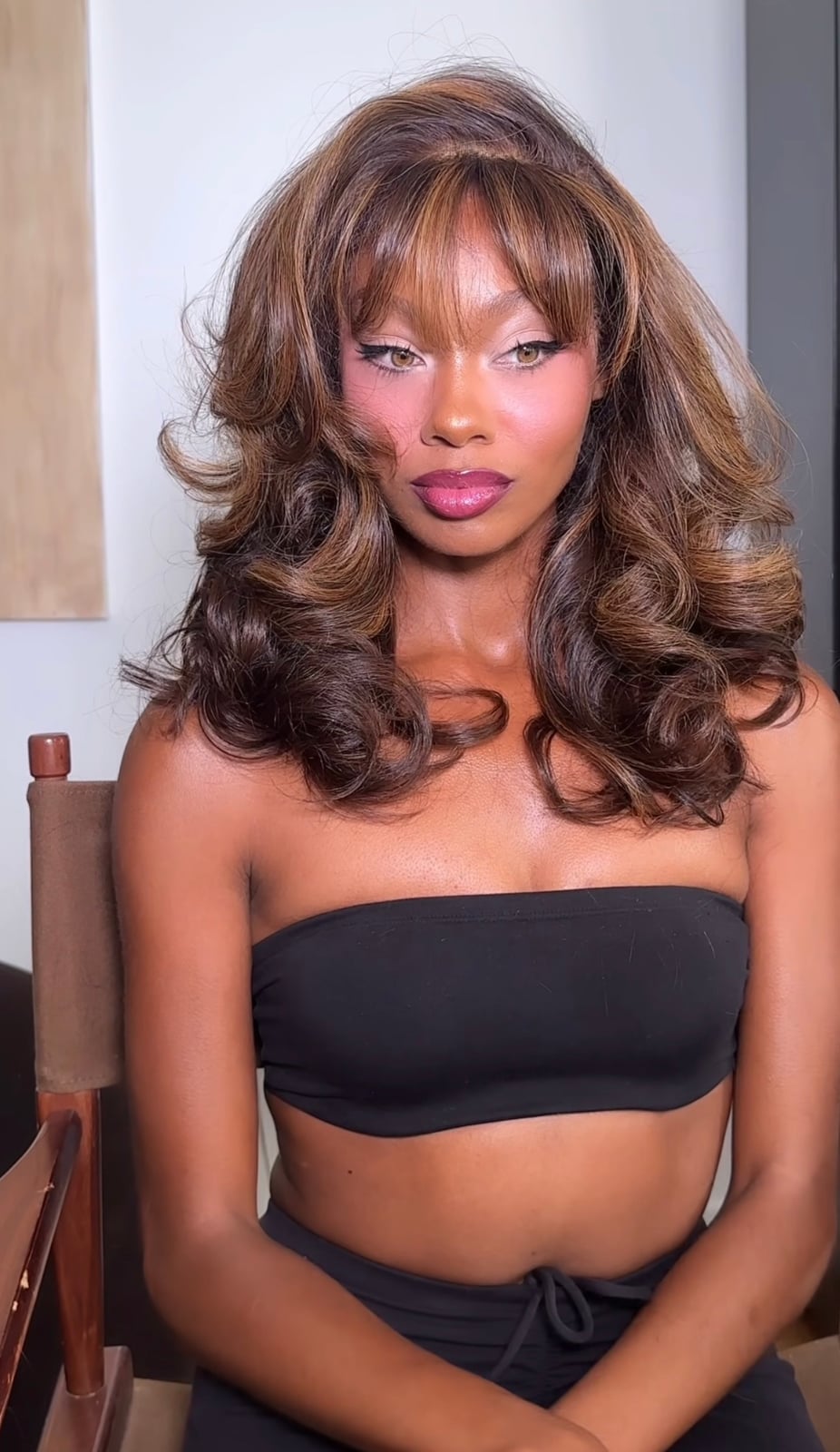
This shoulder-length cut pairs a warm brown base with honey and caramel highlights that add depth without overwhelming the natural color. The full fringe and side part give it a polished, fall-ready feel, especially when styled with voluminous curls that add movement. It suits those with thick, wavy hair starting at shoulder length, as the layers help distribute the volume evenly. Ask your stylist for shoulder length, layers, full fringe, side part. To keep the curls defined and the color fresh, use a curl-defining cream and a diffuser, and plan to tone the highlights every six to eight weeks.
Mid-Back Dark Brown Defined Curls
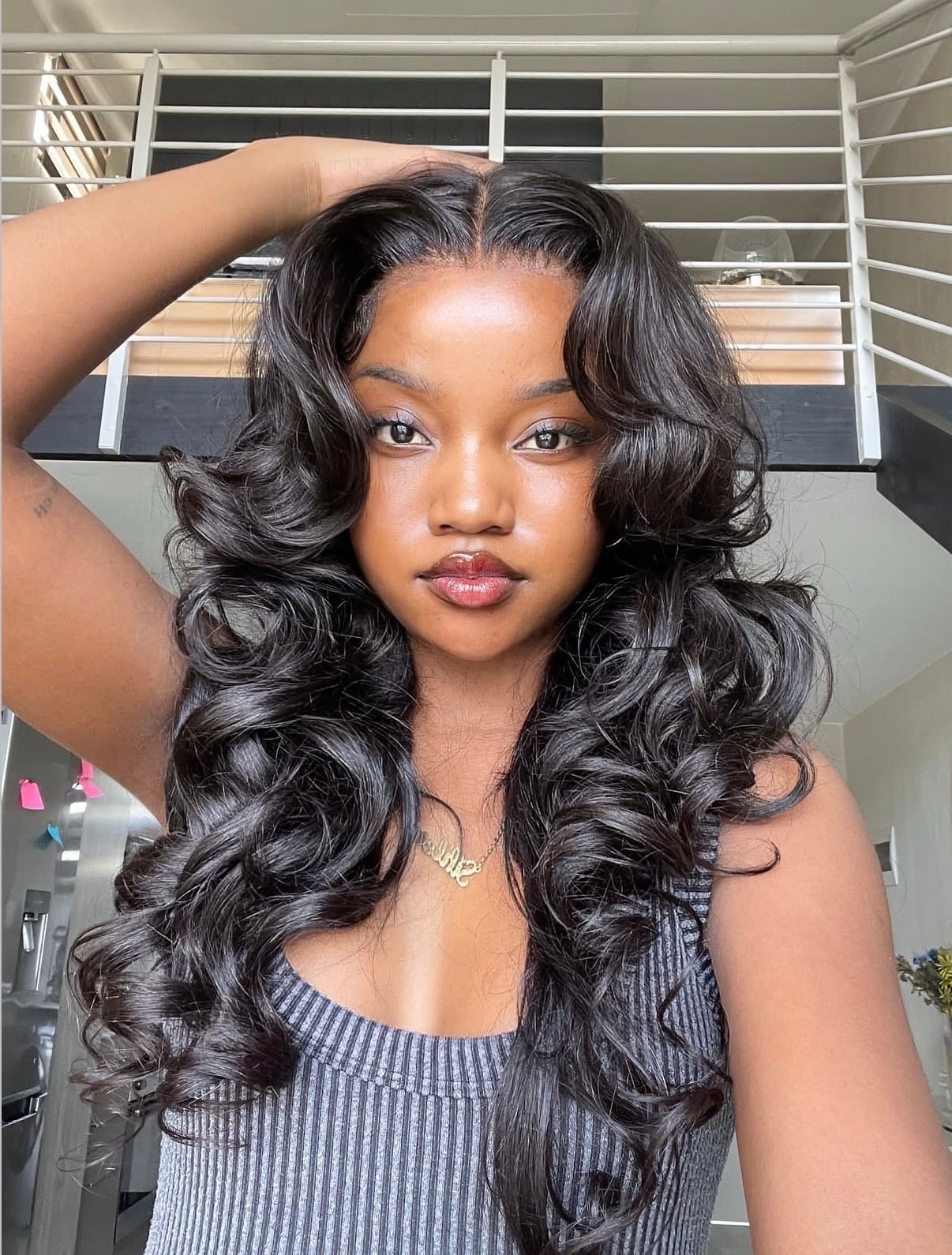
What if your curls could hold their shape without constant fuss? This mid-back length cut with visible layers does exactly that, giving thick, naturally curly hair a structured bounce that lasts. The dark brown color stays rich and low-maintenance, and the middle part lets the curls frame the face evenly. It suits those with thick, curly hair starting at mid-back, as the layers prevent the dreaded triangle effect. Ask your stylist for mid-back length, layers, no bangs, middle part. To keep the shape, apply a curl-enhancing product and diffuse on low, then trim every eight to ten weeks so the layers don’t lose their definition.
Mid-Back Dark Brown Feathered Layers
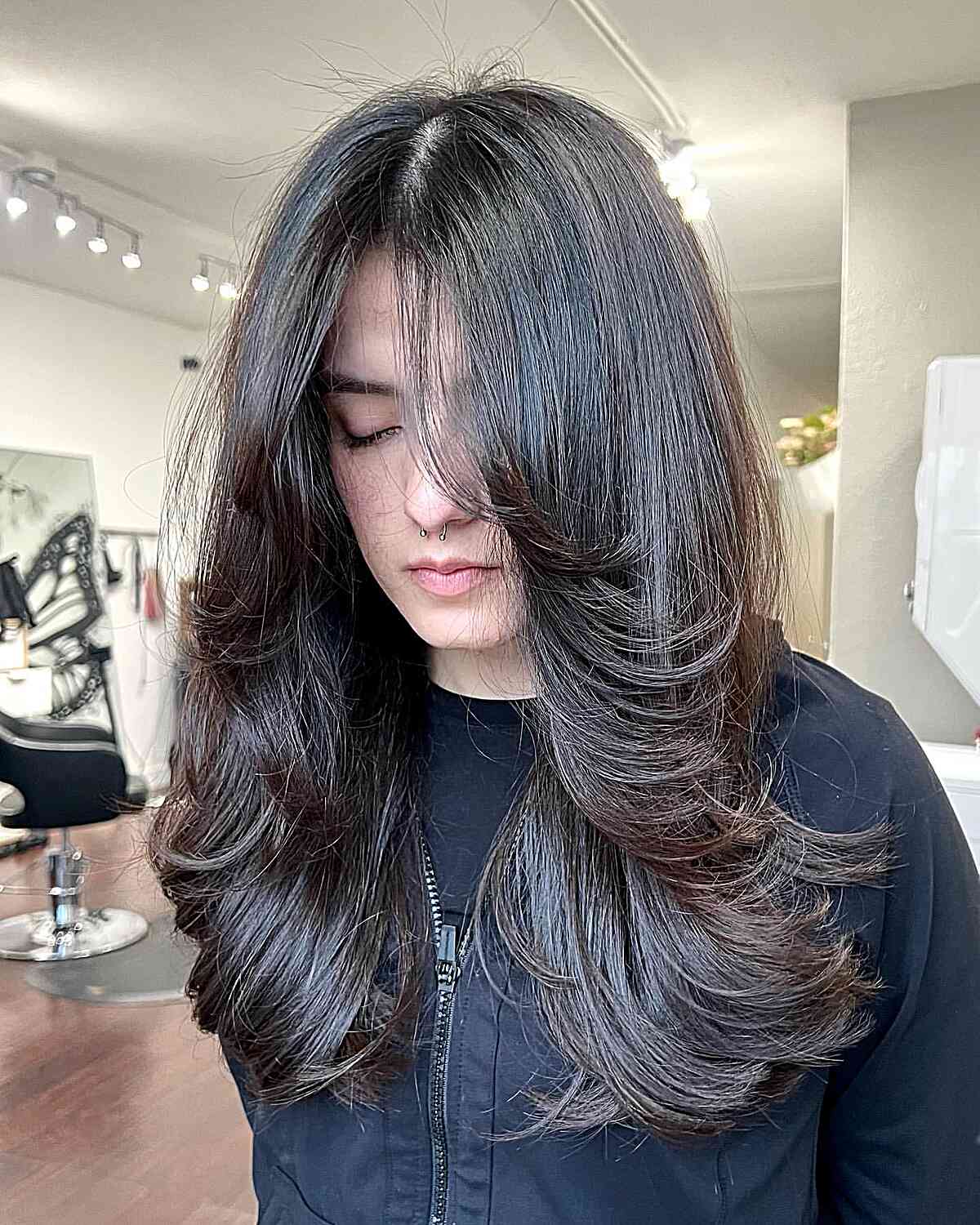
Feathered layers are cut with a razor or point-cutting to create soft, blended edges that move like wings, which is exactly what makes this butterfly effect work. Starting from the crown and extending to the ends, the layers add volume without sacrificing the mid-back length. The soft curtain bangs and middle part keep it face-framing rather than heavy. This works best on thick, wavy hair that needs a bit of lift at the roots. Ask your stylist for mid-back length, long feathered layers, curtain bangs, middle part. The technique requires precision, so it’s a salon-only job that you can’t replicate at home with scissors and hope.
Mid-Back Dark Brown With Curtain Bangs and Parted In The Middle
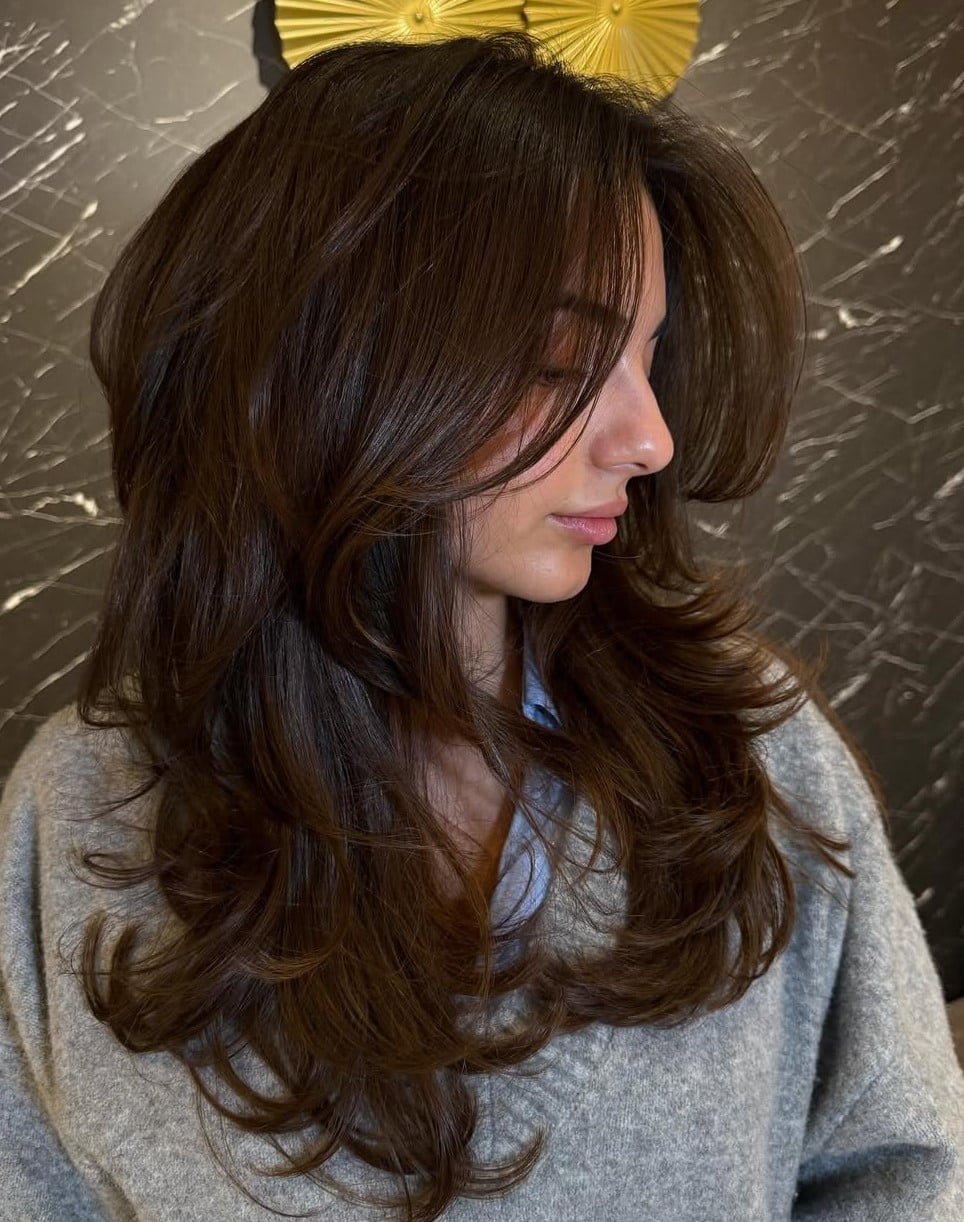
When the shortest layers start around the chin, they create a natural frame that softens the face without shortening the overall length. Here, those layers are paired with soft curtain bangs and a middle part, all styled in a smooth blowout that shows off the dark brown shine. It suits thick, wavy hair starting at mid-back, as the chin-grazing layers add movement without too much weight removal. Ask your stylist for mid-back length, layers starting at chin, curtain bangs, middle part. You can attempt a similar blowout at home with a round brush, but the cut itself needs a professional hand to blend properly, so plan for a salon visit. To keep the shape, trim the baseline every six to eight weeks.
Mid-Back Honey Blonde With Voluminous Layers
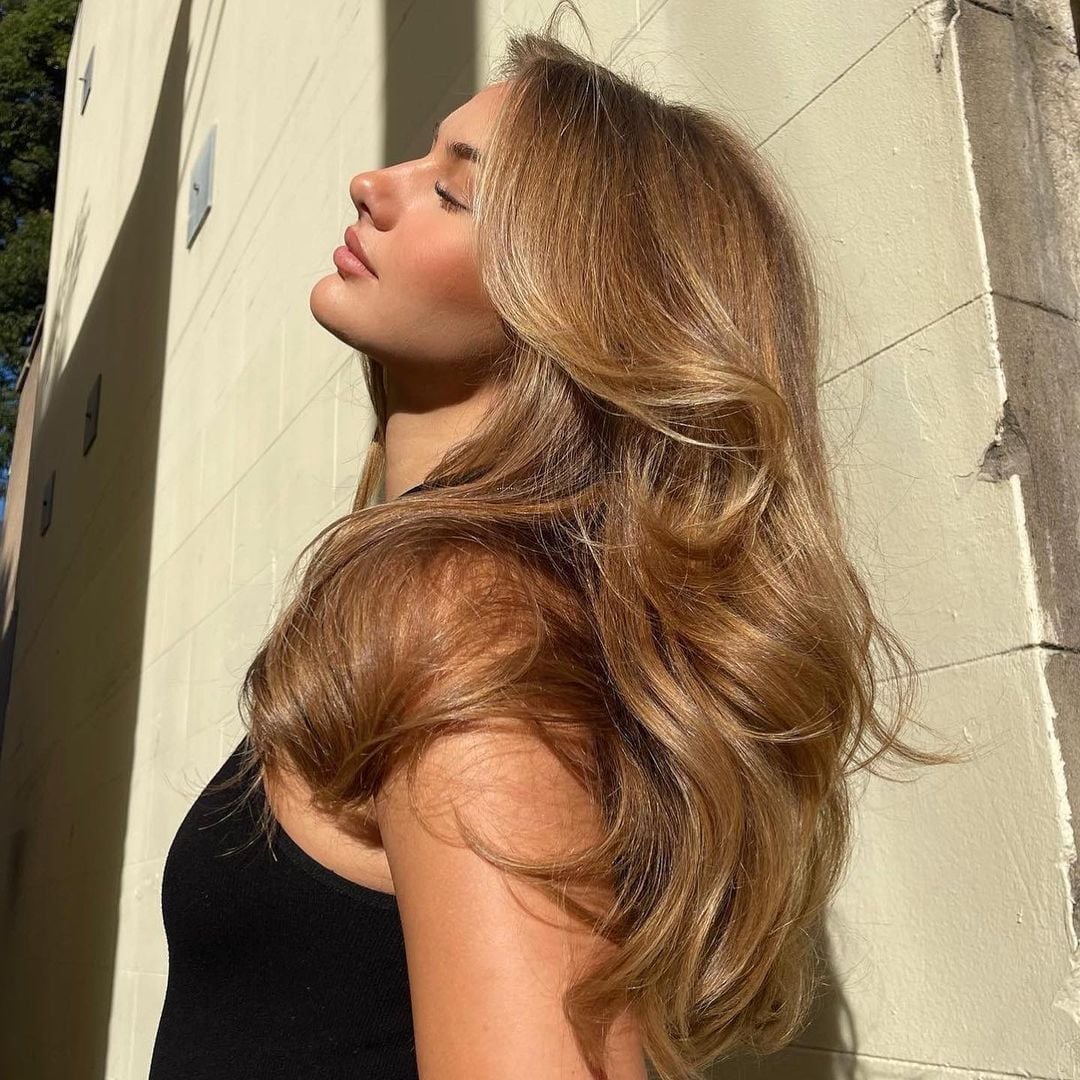
Who should book this cut? Anyone with thick, wavy hair who wants more lift at the crown and soft movement through the ends. The long layers and face-framing pieces are cut to add volume, not remove it, and the dark blonde base with honey blonde highlights gives the length a sun-kissed dimension. The curtain bangs and middle part keep it modern and easy to style. Ask your stylist for mid-back length, long layers, curtain bangs, middle part. To keep the volume, work a volumizing spray into the roots before blow-drying, and tone the highlights every six to eight weeks to stop them from turning brassy.
Mid-Back Sandy Blonde Butterfly Layers, Middle
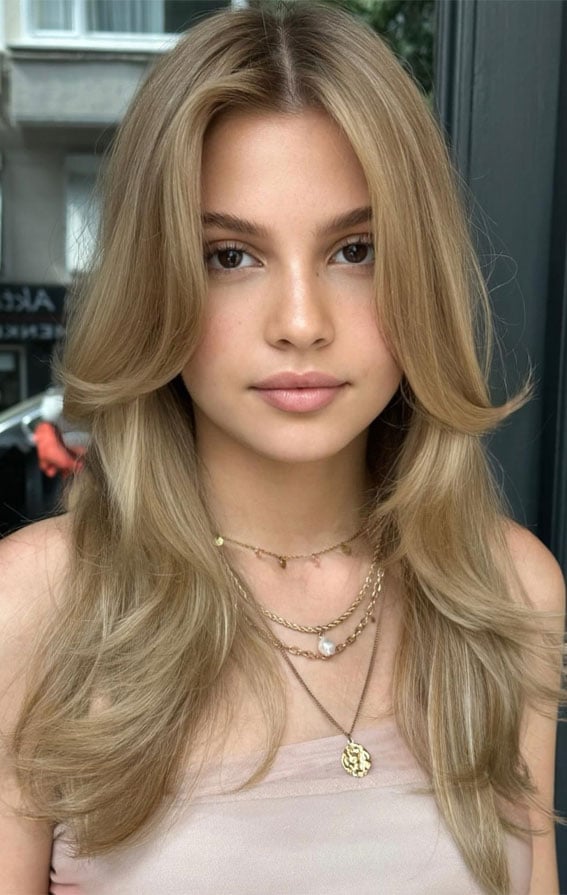
The butterfly cut here leans into lightness, not just in the sandy blonde highlights but in how the layers are spaced. The mid-back length gives those butterfly layers enough room to open up, while the curtain bangs and middle part direct the movement forward. It suits thick, wavy hair that already has some natural volume; the layers just refine it. Ask your stylist for: mid-back length, butterfly layers, prominent curtain bangs, middle part.
Short Black Butterfly Cut With Layered Bangs
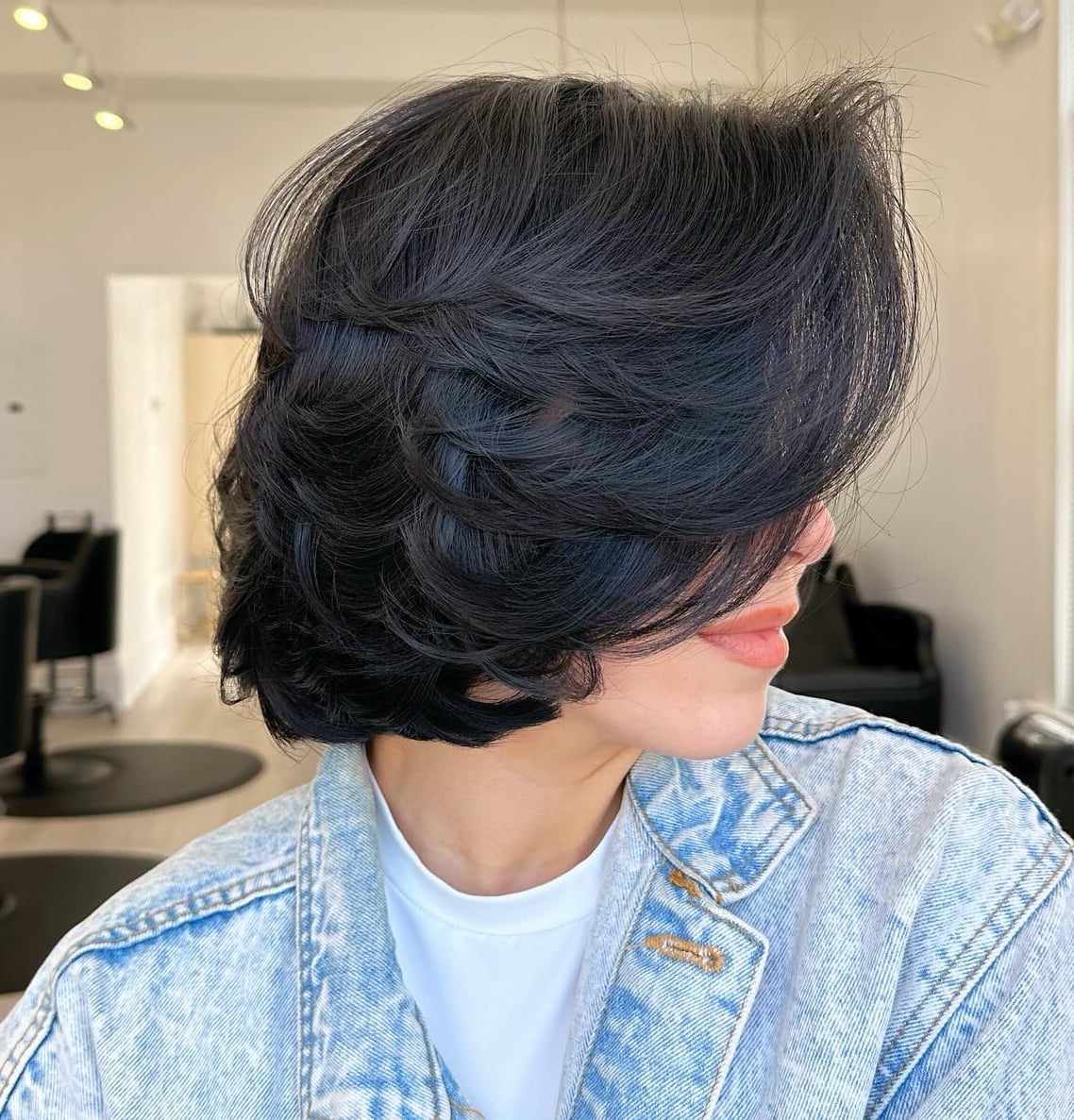
This ear-length black butterfly cut relies on stacked layers to build volume through the crown and sides. The short layered bangs sweep across the forehead, giving it a rounded silhouette that works with straight, thick textures. The trade-off is upkeep: those layered bangs need a trim every four to six weeks to keep their shape from going ragged. Ask your stylist for: short butterfly cut, stacked layers, short layered bangs, side part.
Dark Brown Bun With Butterfly Accessory
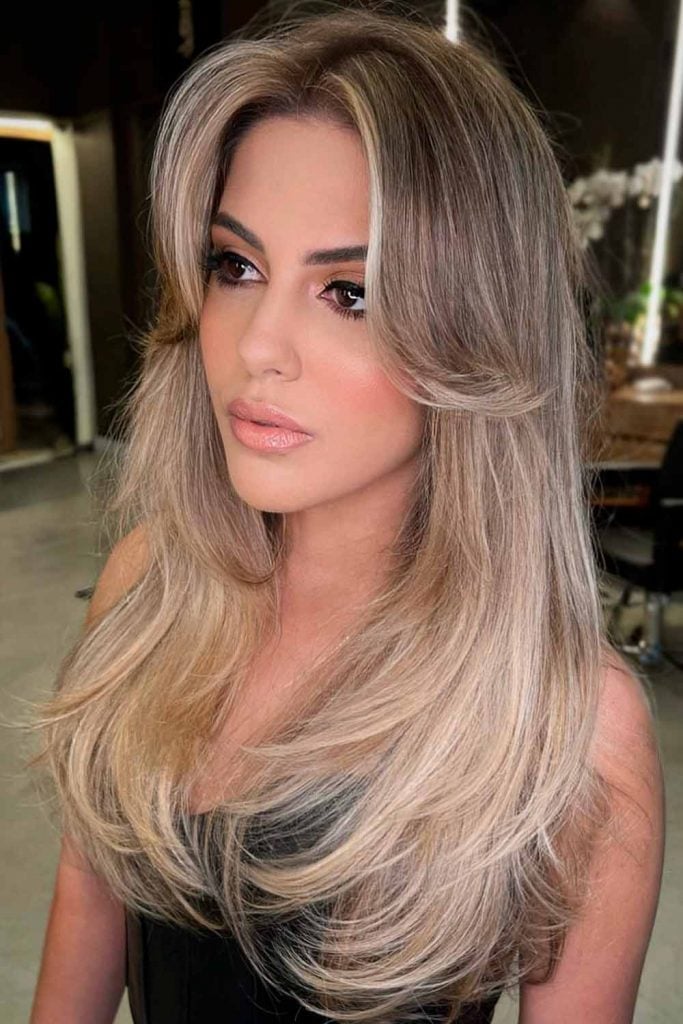
Can a bun count as a butterfly haircut? When the accessory does the talking, yes. This dark brown bun is slicked back from the face and secured at the nape, with a jeweled butterfly clip placed at the crown as the focal point. It is easy to do yourself with a strong-hold hairspray and a steady hand, though a salon finish means perfectly smooth edges and the clip anchored so it stays put through a reception. Ask your stylist for: neat bun, butterfly hair accessory.
Final Thoughts
For fine hair, ask for blended layers that maintain density near the ends so the shape does not disappear. For thick hair, embrace the volume with more pronounced layers and a texturizing spray to keep them light. Curtain bangs or face-framing pieces soften strong jawlines and round faces equally well.
- Schedule trims every 6 to 8 weeks to maintain the layered shape.
- Blow-dry the top section with a round brush for the signature volume.
- Add a dry texture spray at the roots for lift that lasts.
- Deep condition weekly to keep the layers smooth and glossy.
The butterfly cut offers endless styling possibilities for a classic yet modern look.