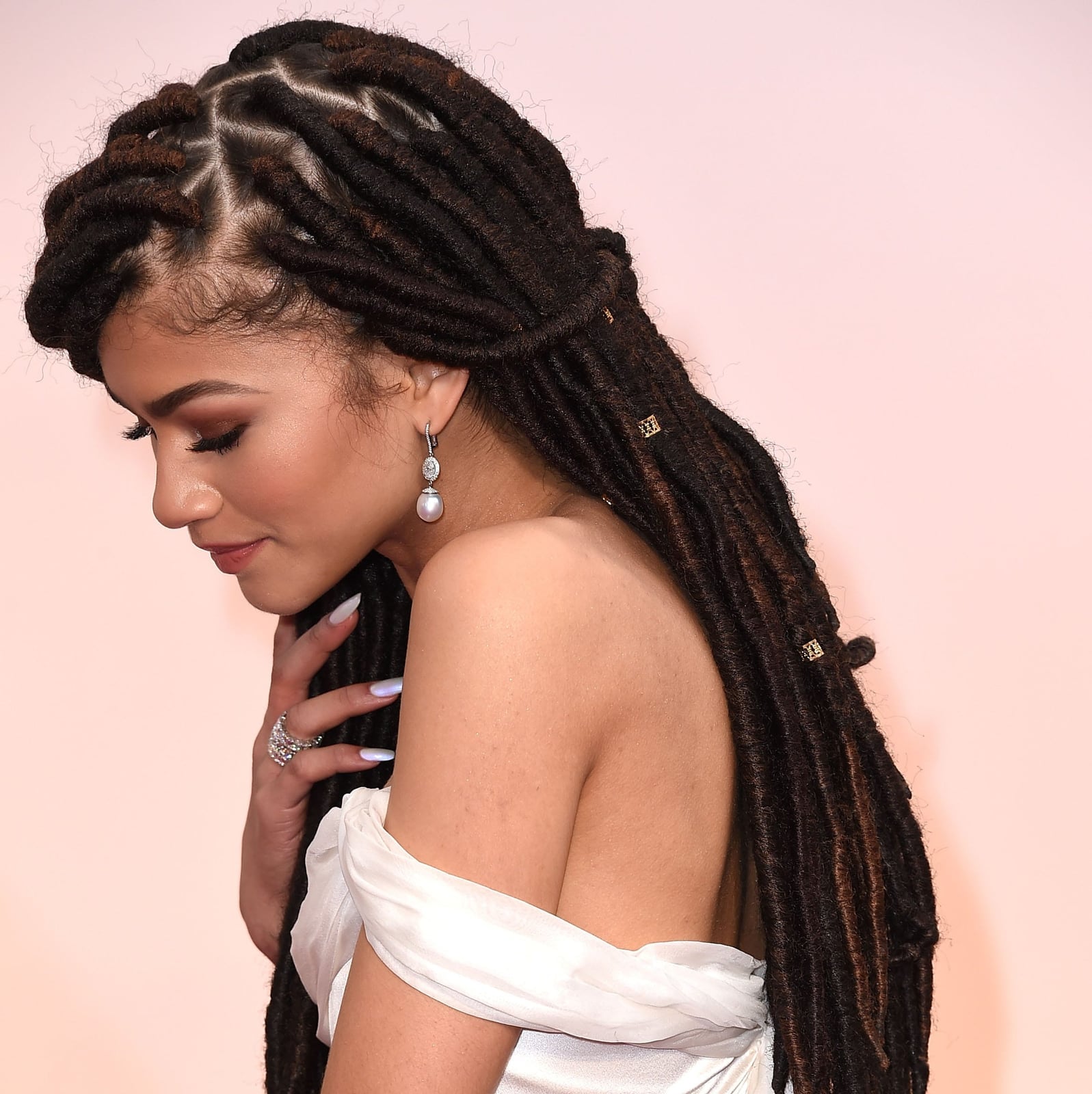
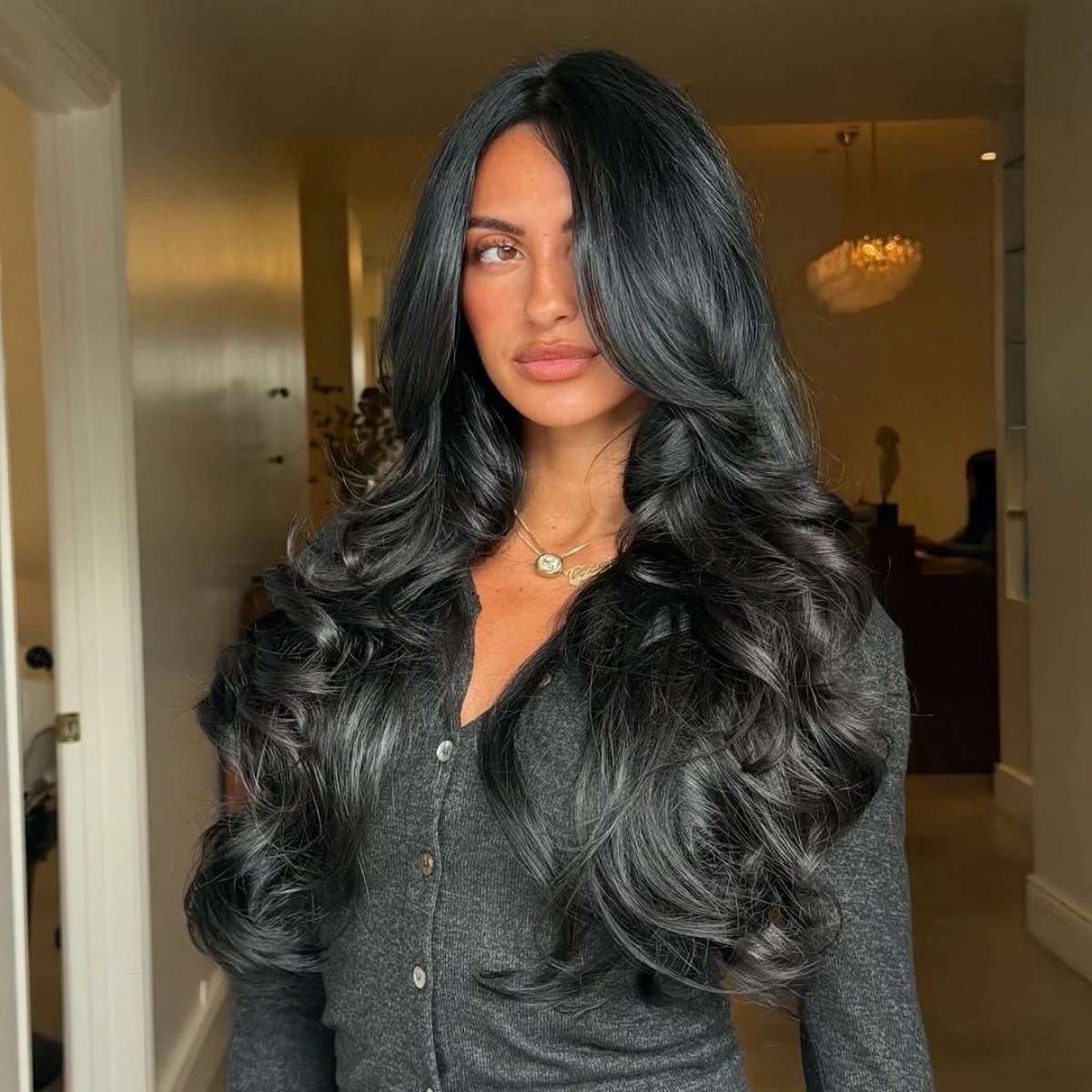
Feed-in braids add length and density without the weight of traditional box braids. The technique feeds new hair into each section as you braid, which keeps the tension even and the part lines crisp. For 2027, the shift is toward softer finishes: think glossy natural texture and ends that curl instead of staying poker straight.
This collection of 19 classy feed-in braids covers straight and coily textures, mid-back lengths and chin-short cuts, plus decorative details like beads and zig-zag partings. If your braids tend to look dull by week three or feel tight at the hairline, these styles offer a practical alternative. The focus is on hold that lasts and a finish that stays polished between salon visits.
Mid-Back Feed In Braids With Curly Ends
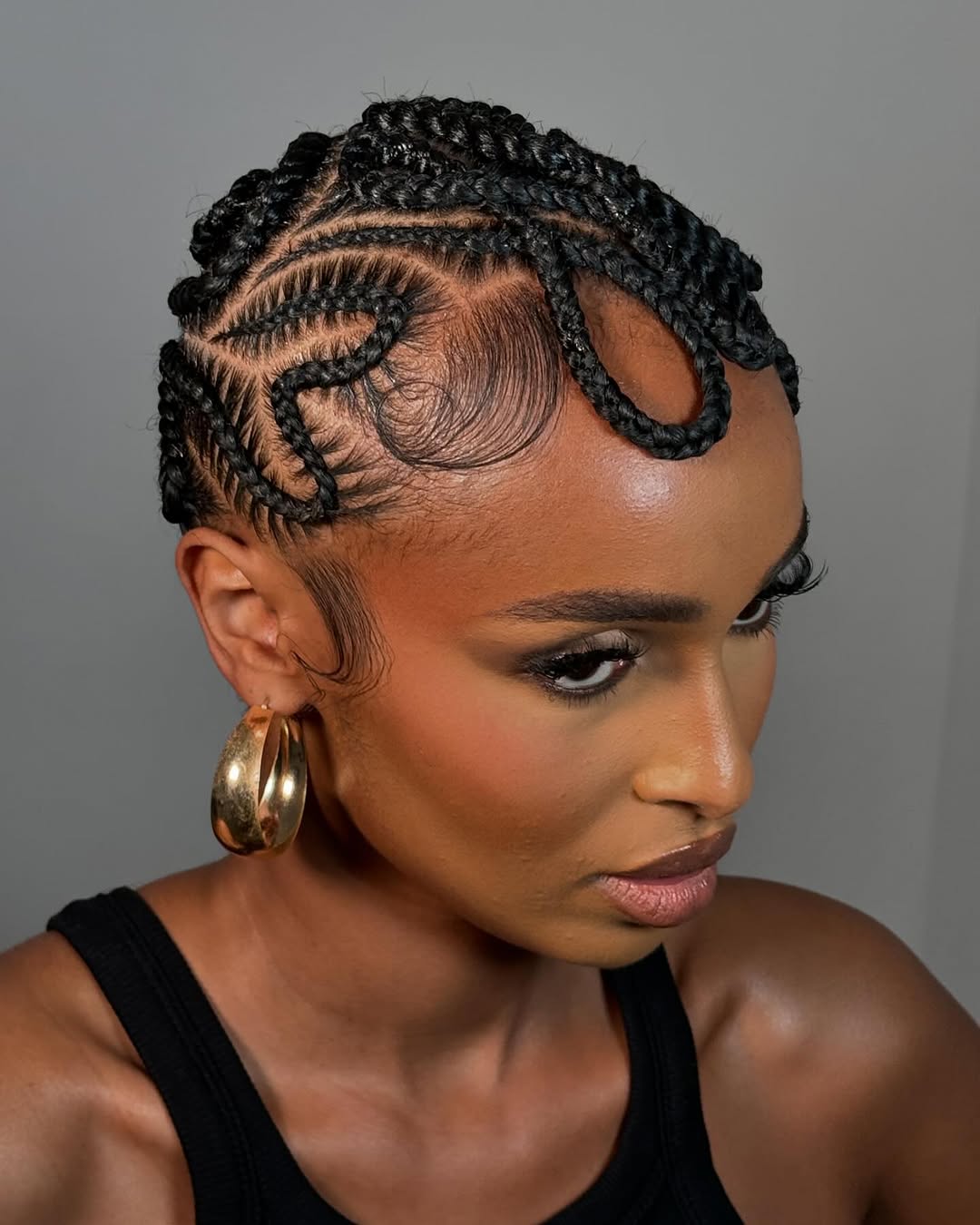
The geometric scalp pattern here does more than catch the eye: it draws attention to the center of the face, which is why this style suits oval and heart shapes so well. The braids start at a middle parting, lie flat through the crown, then release into curly ends that bounce with movement. Ask your stylist for mid-back feed in braids with curly ends and geometric scalp pattern. If your natural hair is medium to thick density and at least shoulder length, you have the base this design needs. A light serum on the curly ends keeps them defined without turning crunchy, and a weekly trim of stray flyaways keeps the pattern crisp.
Thick Mid-Back Feed In Braids With Geometric Parting
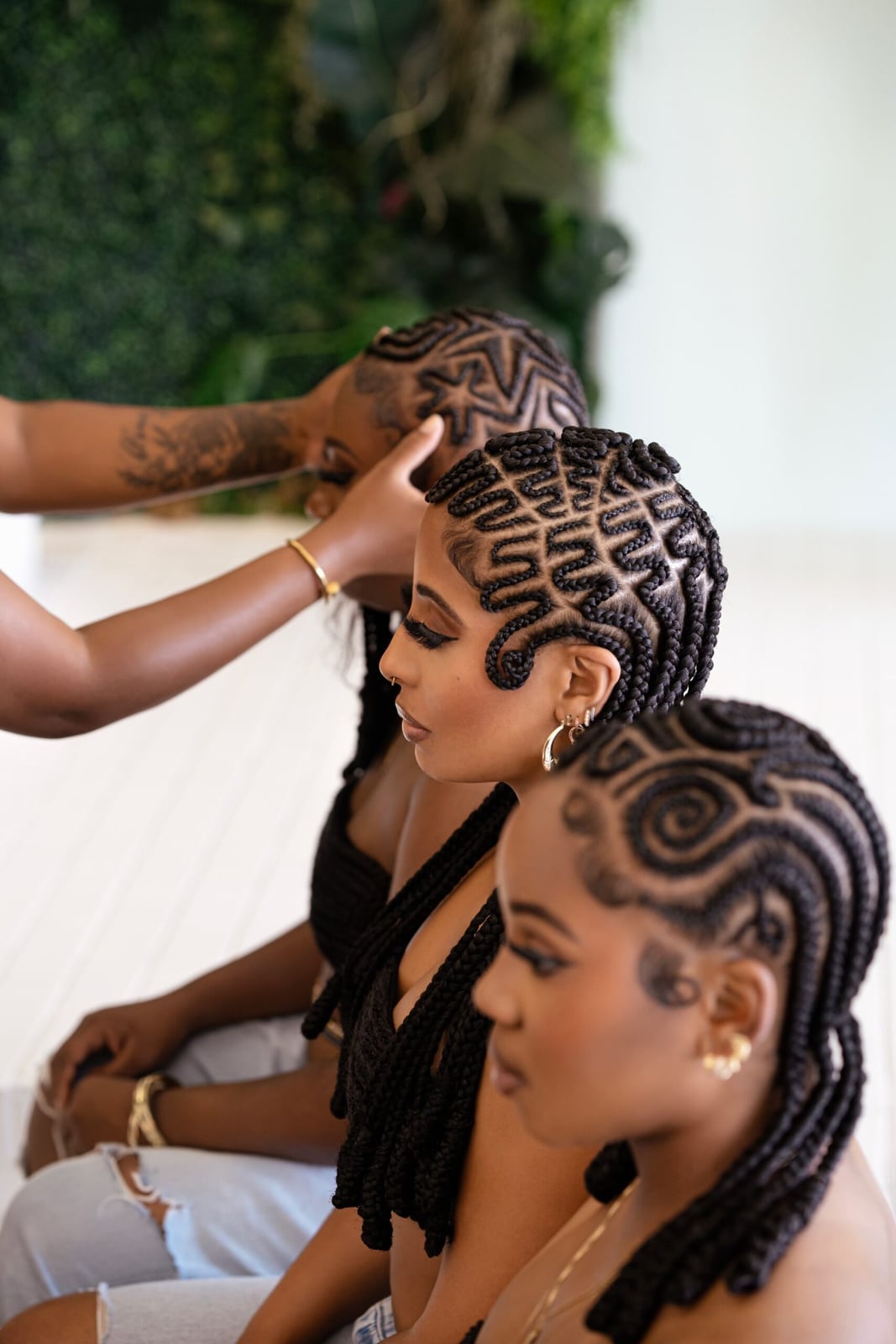
A simple middle part is the polite handshake of braids; this geometric parting is the full conversation. The difference shows in the scalp: instead of one clean line, you get interlocking angles that add structure to thick, straight braids falling to mid-back. Ask your stylist for thick, mid-back feed in braids with intricate geometric parting. This one suits naturally thick hair best, since the extra weight helps the pattern hold its shape. To keep the scalp comfortable under all that precision, massage in a light oil along the part lines weekly, and it will stay neat for several weeks before the roots need attention.
Platinum Blonde Mid-Back Feed In Braids
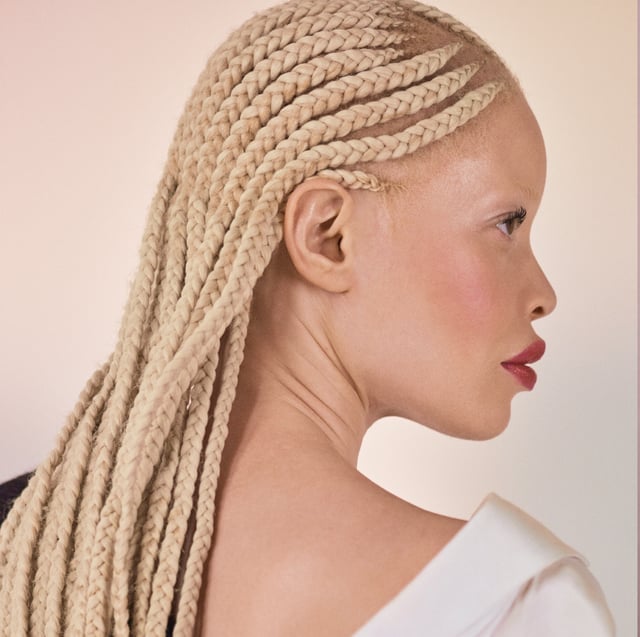
Wonder if platinum blonde braids will look washed out by fall? They are built for sunnier days, where the uniform shade catches light like a beacon. These straight, mid-back feed-in braids start at a middle parting and keep every strand the same platinum tone, which reads as sleek rather than brassy. Ask your colorist for mid-back, straight platinum blonde feed in braids. The upkeep is the price of admission: a purple shampoo once a week and a toning session every four to six weeks will hold the color. It is a commitment, but the payoff is a single, striking block of brightness.
Black Feed In Braids With Curly Ends and Beads
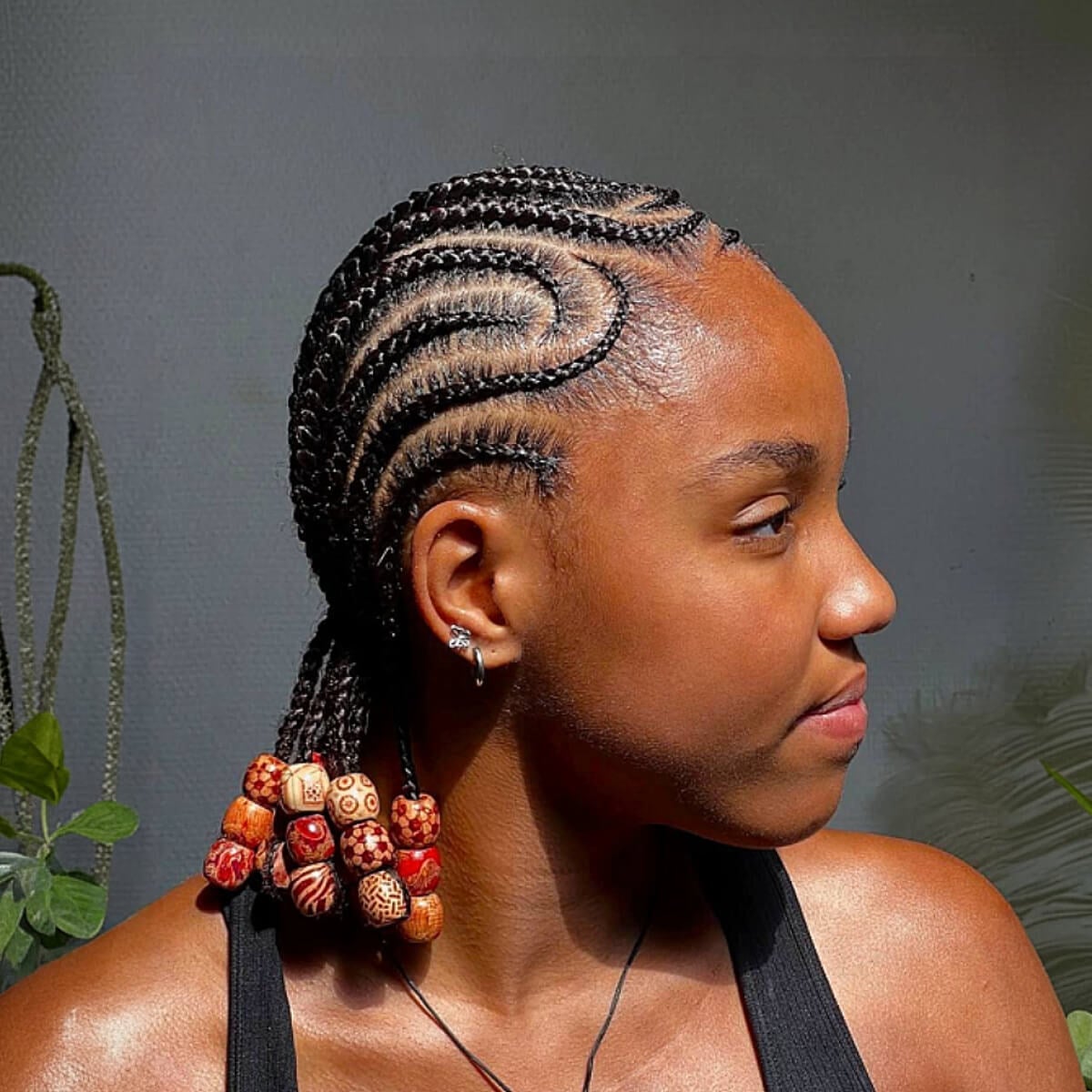
The technique here is about tension: each braid is fed with hair gradually, so the base stays flat against the scalp while the curly ends bounce free, and that flat base is what lets the beads sit securely without slipping. These mid-back braids, parted down the middle, carry a row of colorful beads that clink with every turn of the head. Ask your stylist for mid-back feed in braids with curly ends and colorful beads. They are a natural pick for festivals or summer parties, where the embellishment does the talking. Just check the beads are crimped tight at installation, and they will stay put through the whole wear.
Thick Straight Black Feed In Cornrows
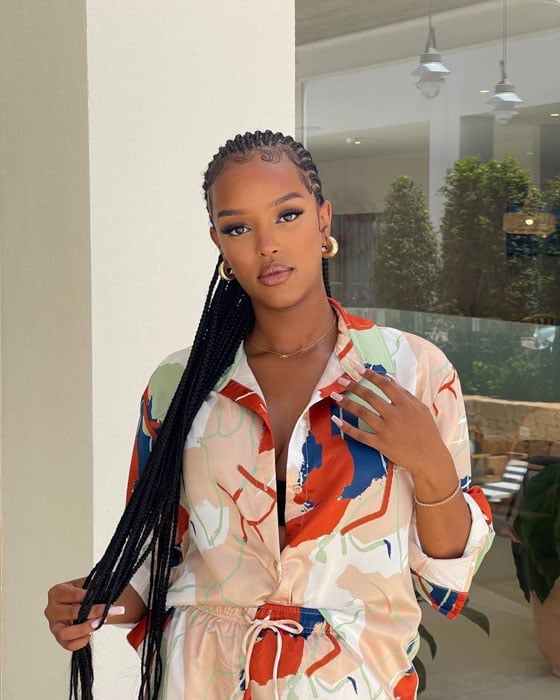
The neat cornrow base is the unsung hero here: those clean, flat lines along the scalp are what make the thick, straight black braids look polished rather than heavy. The braids feed in from a middle parting and drop to mid-back with a uniform thickness that holds its shape well. Ask your stylist for mid-back, thick, straight feed in cornrows with a neat base. To keep the baby hairs lying smooth, a light hairspray on a soft brush does the job without weighing the cornrows down. This one carries the low-maintenance badge: a quick oiling at the scalp every couple of weeks and it stays camera-ready.
Glossy Black Mid-Back Feed In Braids
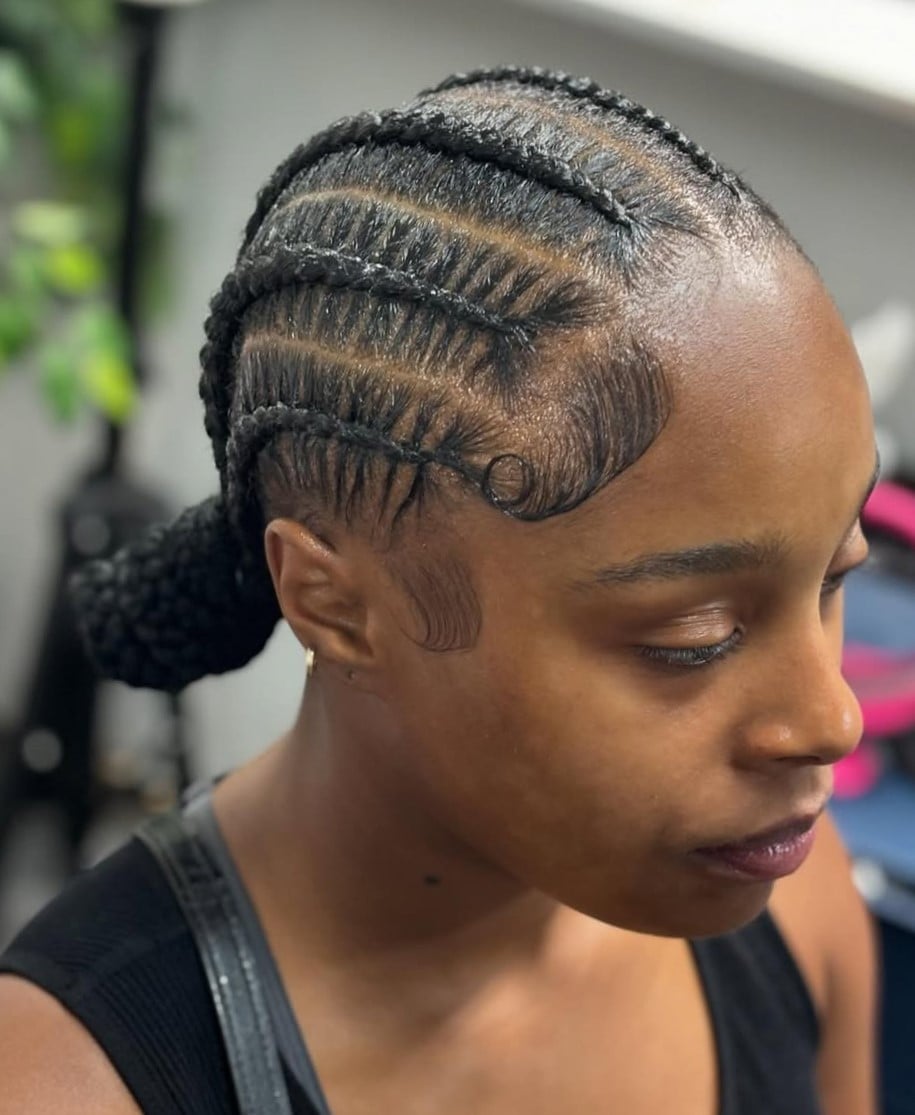
These mid-back feed-in braids owe their sharp, uniform look to a straight, fine texture that sits flat from root to tip. The glossy finish is the main feature, and it also needs the most maintenance. Ask your stylist for: mid-back, glossy, straight black feed in braids. A silk scarf or bonnet every night keeps the shine from dulling and stops frizz from creeping in along the part lines. Long, neat braids also pick up lint and dust during the day, so a quick once-over with a shine serum before you head out keeps them looking freshly done.
Micro Feed In Braids With Intricate Parting
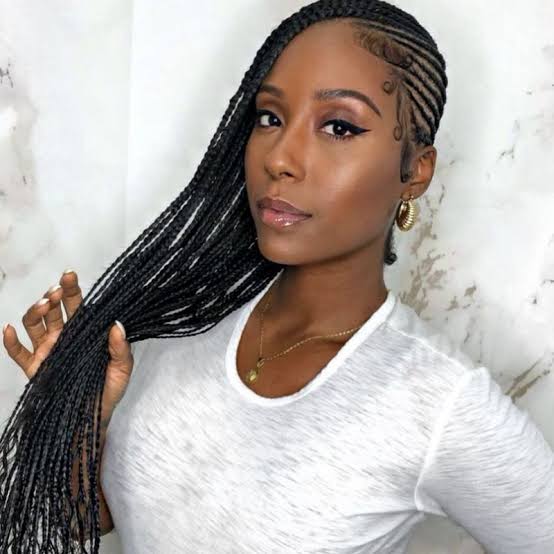
Wondering whether micro braids will read as too busy for fine hair? The intricate parting at the front changes the math. Those thin, precise lines add visual texture where density is low, so the style looks intentional rather than sparse. The braids themselves are thick and straight, reaching mid-back, which balances the delicate parting with enough weight to hold the shape. Ask your stylist for: mid-back, micro feed in braids with intricate parting. Fine strands need a gentle hand, so keep the scalp clean with a light spray and resist the urge to tug at the braids when styling. A middle part keeps the symmetry clean and the look grounded.
Wavy Feed In Braids With Curly Ends

The trick with wavy feed-in braids is that the curls at the ends create the movement, and they also create the tangling. The wavy, thick texture gives the style motion, but those curly ends will frizz and knot faster than the braided sections above them. Baby hairs along the hairline soften the frame and keep the part from looking severe. Ask your stylist for: mid-back wavy feed in braids with curly ends and baby hairs. A curl-defining cream on the ends keeps them clumped, and gently separating the curls with your fingers gives the finish more volume. Just know the ends will need more attention than the braided sections.
Shoulder Length Coily Cornrows With Baby Hairs
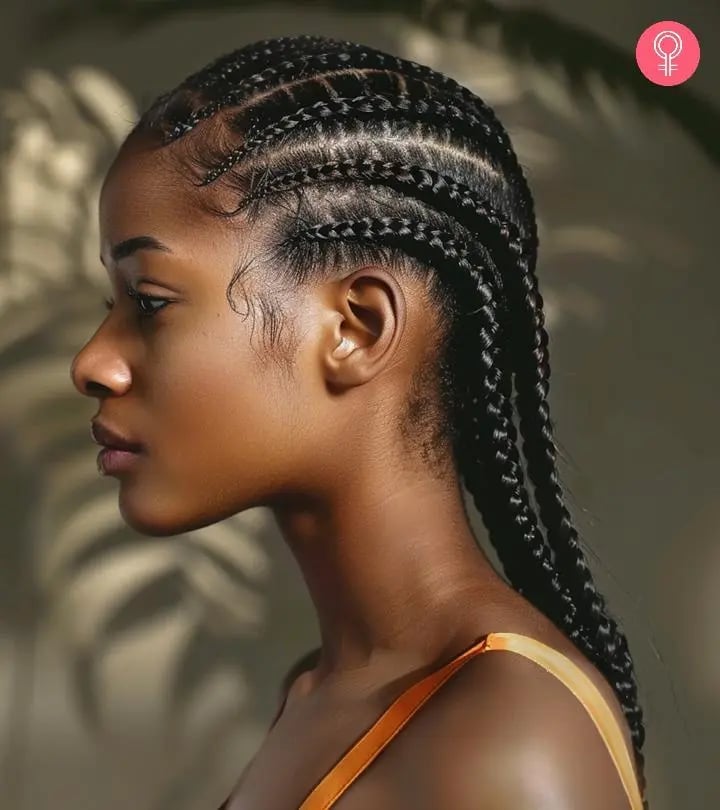
Neat, parallel cornrows at shoulder length are a geometry lesson that is hard to replicate at home. The clean lines come from a salon chair, where the coily, thick texture is sectioned into precise rows with a middle part. At-home attempts tend to wobble and pull, so this is one style worth booking a professional for. Defined baby hairs along the hairline finish the look, but they need a small brush and edge control to stay sleek past the first day. Ask your stylist for: shoulder length coily cornrows with defined baby hairs. The result is a protective style that holds its shape.
Braided Updo With Side Parting
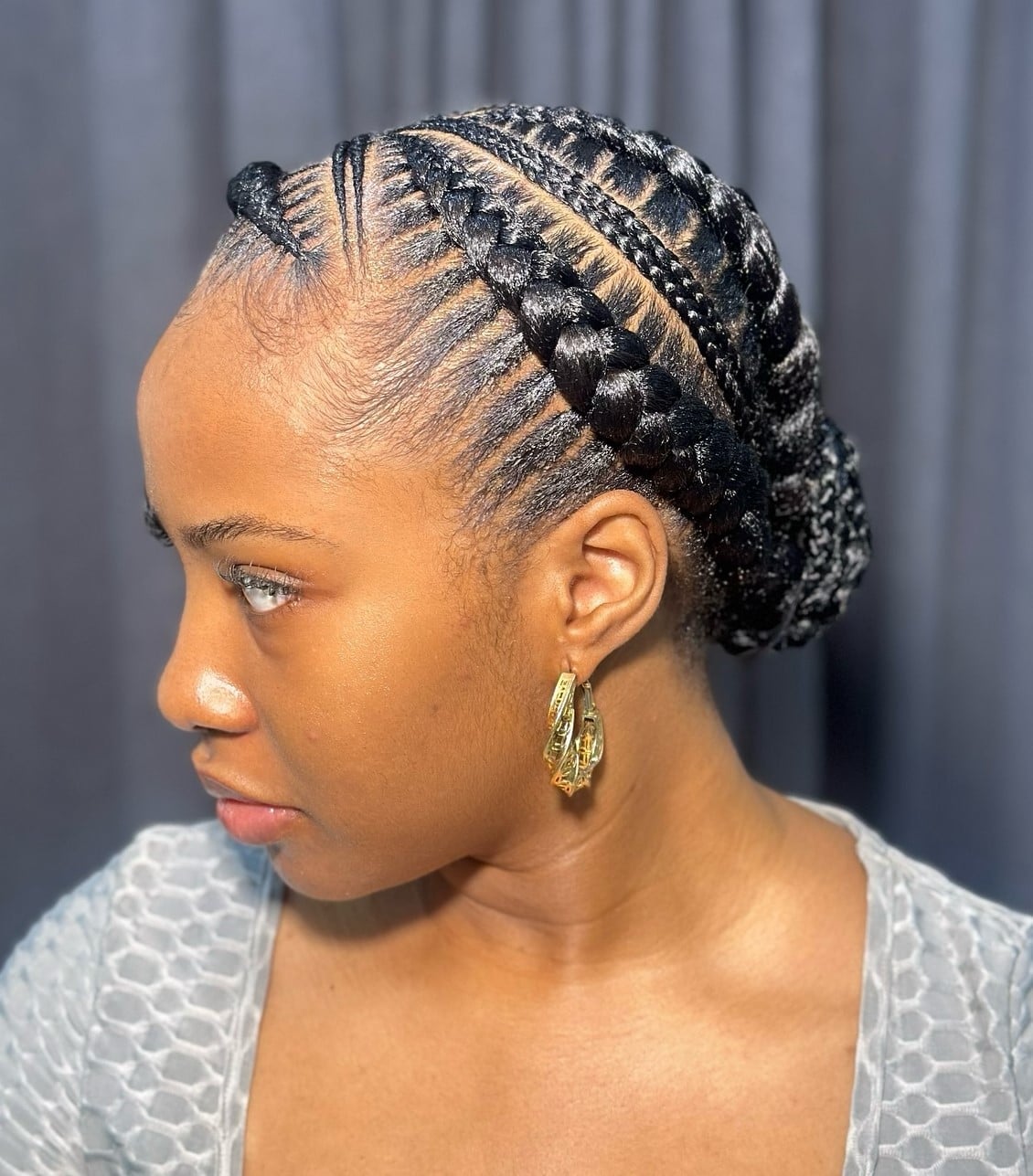
Why does a braided updo feel right for summer weddings and garden parties? Because it keeps the hair off your neck without sacrificing the detail work. Large braided sections are swept into an updo with a side parting, which gives the silhouette a bit of asymmetry that a center part would not. The shoulder-length braids gather neatly at the back, and the style stays put through an evening of dancing. Ask your stylist for: feed in braids styled into a sophisticated updo with a side part. Bobby pins and a strong-hold hairspray are the glue here, so expect a quick touch-up before you walk out the door.
Shoulder Length Braids With Geometric Parting
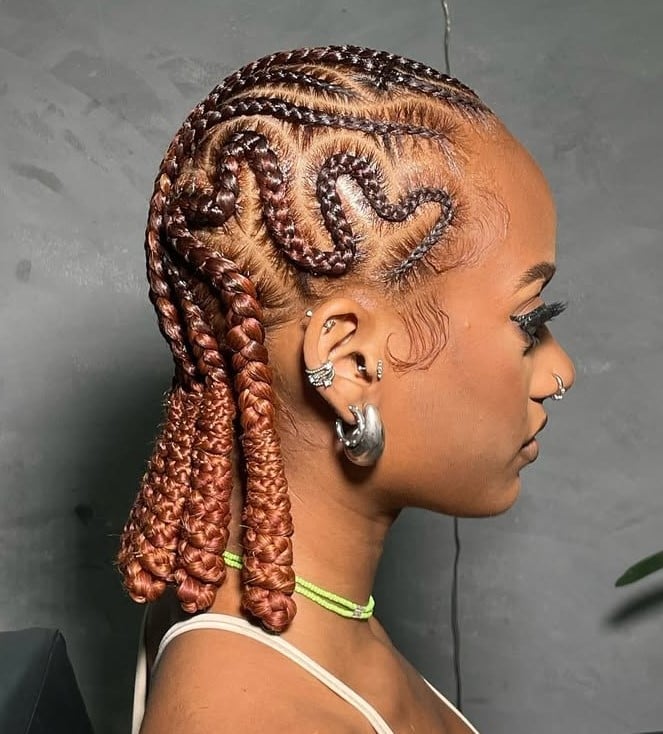
A side part is one thing; a geometric parting pattern carved into the scalp is another. These feed-in braids swap a standard line for a deliberate, angular design that draws the eye along the part. The wavy, thick texture keeps the shoulder-length braids from looking flat, and the brown and copper mix adds dimension without high contrast.
Ask your stylist for: shoulder length braids with a striking geometric parting. This one asks for medium to thick hair, since the pattern needs density to read clearly. The wavy ends benefit from a spritz of texture spray to keep their movement visible. Expect the scalp parting to need a light touch-up about once a week as new growth softens the lines.
Coily Feed In Braids With Geometric Pattern
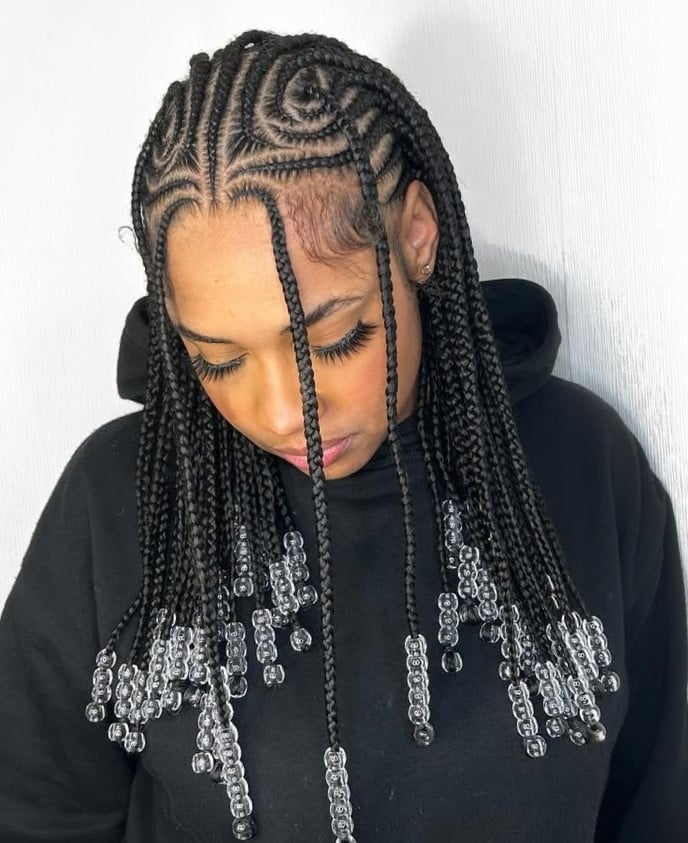
The geometric scalp pattern here is a deliberate design choice: the coily texture grips each braid start firmly, so the angles and lines hold their shape without blurring. These mid-back feed-in braids use a middle parting as the anchor, then build precise sections outward. Black hair in its natural coily state gives the pattern a crispness that looser textures cannot replicate. Ask your stylist for: mid-back coily feed in braids with a geometric scalp pattern. A leave-in conditioner keeps the braid strands hydrated, and a silk bonnet at night preserves the part definition. This style works well for those with naturally coily or kinky hair; anyone with fine or thin density should pass, as the pattern requires substantial thickness to look as intended.
Mid-Back Coily Braids With Curly Tendrils
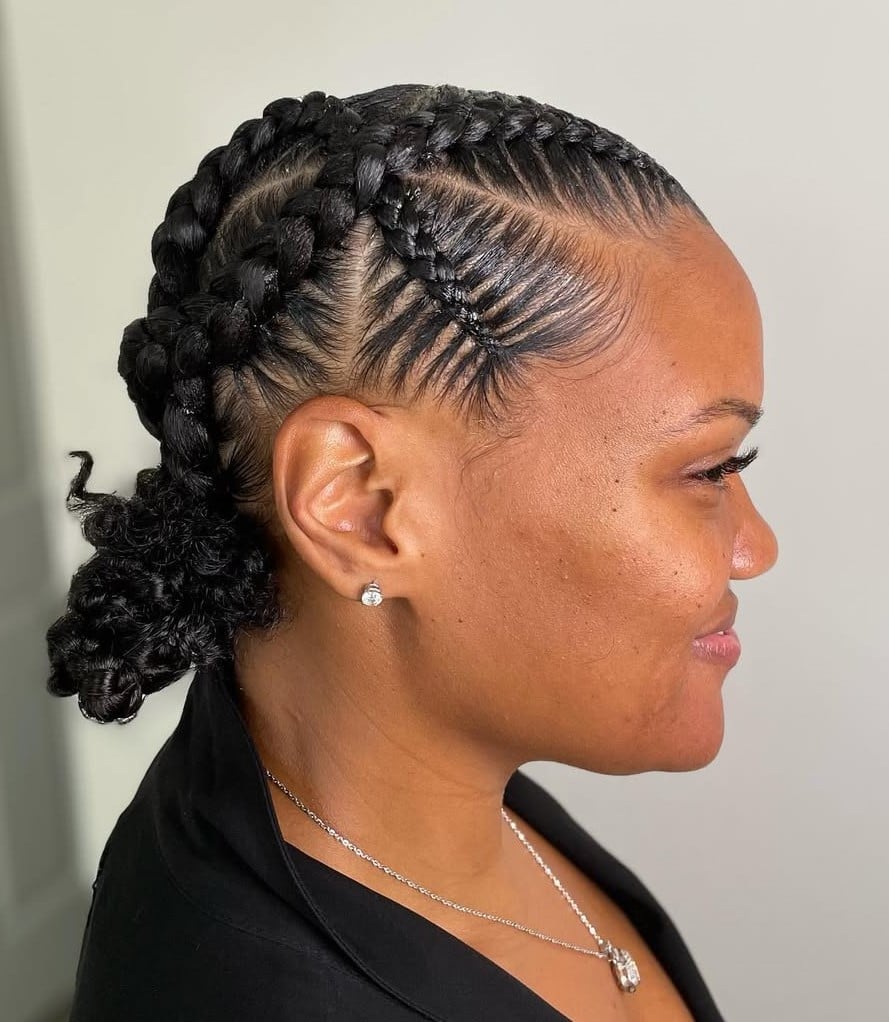
This is a style that asks for patience at the start and delivers ease afterward. The intricate feed-in braid pattern on the scalp takes time to install, especially with the coily texture that demands even tension throughout.
The payoff is a mid-back style that feels secure for weeks. A few loose curly tendrils at the nape soften the overall look, but they also require a separate curl cream application to stay defined rather than frizzy. Ask your stylist for: mid-back coily feed in braids with curly tendrils. The real drawback is the install time: expect to sit for several hours while the braider maps and executes the pattern. Avoid excessive touching of the tendrils to keep them from unraveling ahead of schedule.
Black Feed In Braids With Neat Cornrow Base
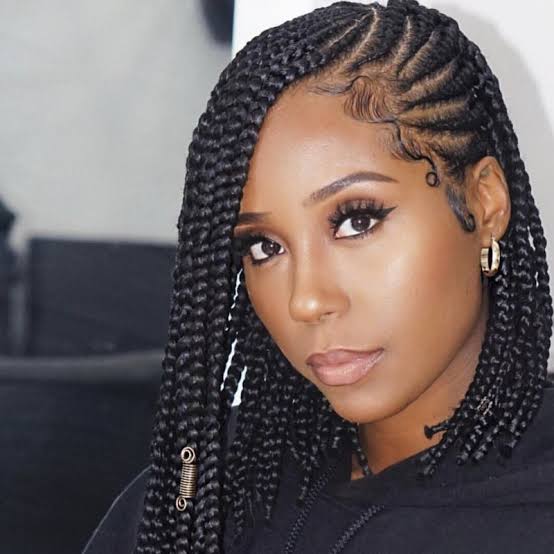
A feed in braid is only as clean as its foundation, and this one starts with a cornrow base laid with precise tension. The middle parting splits the scalp evenly, and each braid is built directly off a flat, smooth cornrow that hugs the head. The thick, straight black hair feeds into the braids without bumps or loose sections, which keeps the mid back length looking polished and not heavy.
Ask your stylist for: mid back feed in braids with a neat cornrow base. The technique requires the braider to keep consistent tension as they add hair, so the cornrow stays flush against the scalp from the hairline to the nape. A light hold gel brushed along the part lines helps maintain that neatness between appointments. This style has a structured look from every angle.
Mid-Back Braids With Curly Extensions, Black
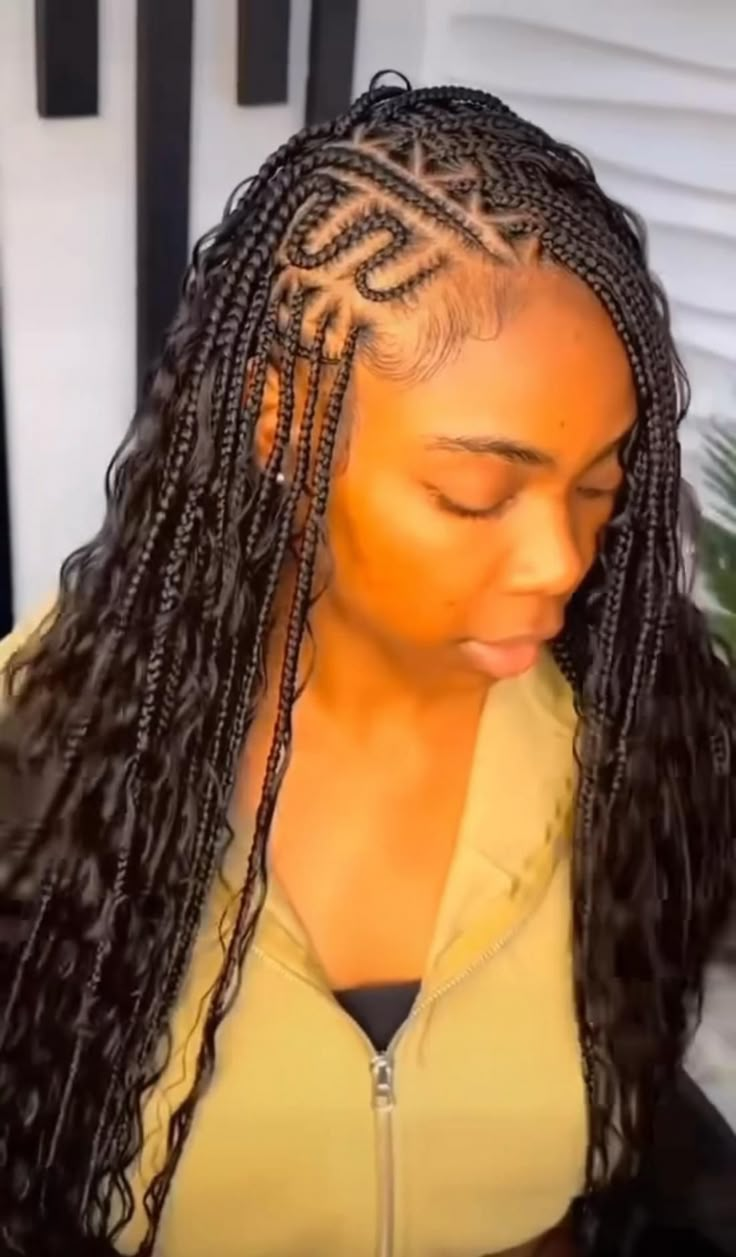
How do you get the structure of braids with the volume of loose curls? You braid the top and add curly extensions to the length. The intricate scalp pattern here keeps the roots neat while the mid-back extensions cascade in defined curls. The black color stays consistent from base to ends, so the blend between natural hair and extension is seamless. Ask your stylist for: mid-back feed in braids with intricate scalp patterns and curly extensions. This is a salon-only request: the braider maps the scalp pattern while you sit, then attaches each extension piece as they braid down. The curly sections need a moisturizing spray every few days to keep them soft and prevent the cuticle from catching on itself. DIY is not realistic here, but the result holds for four to six weeks with proper care.
Long Braids With Loose Curls and Tendrils
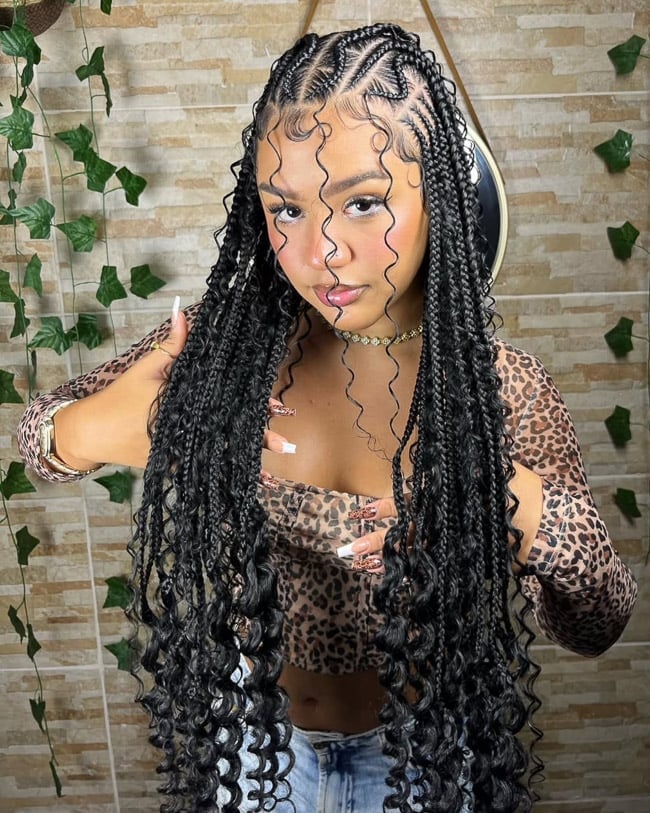
Feed-in braids that run into extremely long, dense, wavy curls sound like two hairstyles fighting, but the middle part and loose tendrils around the face make the transition look like one deliberate design. This is a look for anyone with naturally textured hair who wants serious length without committing to all-braid weight. The braided section keeps the root neat while the curls add volume that straight braids cannot fake.
Ask your stylist for: extremely long feed in braids with loose curls and face-framing tendrils. The tendrils are the part that sells it, so ask for them to be cut just below the cheekbone. For fashion events or photoshoots, the mix of textures photographs well. At night, wrap the curly ends in a silk scarf to keep their shape and stop them from tangling into one mat.
Feed In Braids Into High Bun With Gold Beads
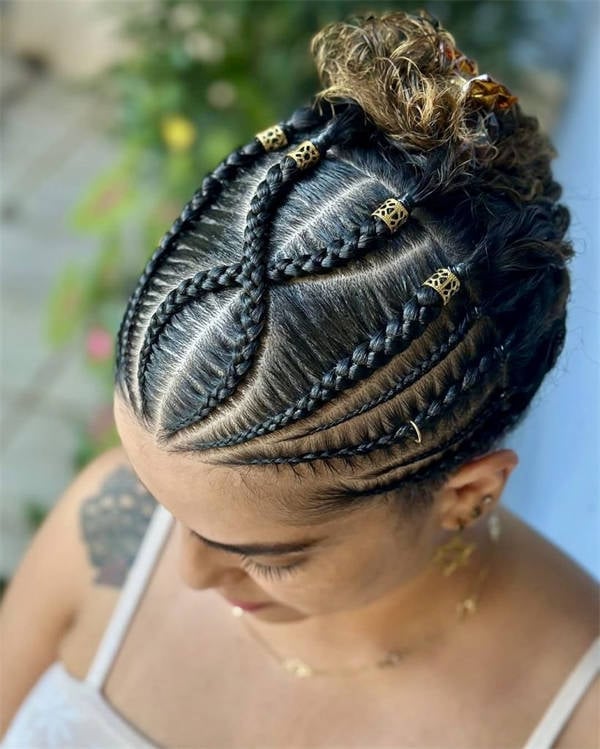
Need a style that survives a full evening of handshakes, hors d’oeuvres and the occasional dance floor? Thick black feed-in braids with a zig-zag scalp pattern sweep into a high bun, with gold beads catching the light at intervals. The bun sits secure because the braids are anchored at the root, so there is no slipping by hour three. Ask your stylist for: feed in braids styled into a high bun with a zig-zag scalp pattern and gold beads. Pin the bun firmly and finish with a light spray to keep flyaways flat. It holds its shape through formal events and holiday dinners, which is more than can be said for most updos.
Black Braids With Zig-Zag Scalp Pattern
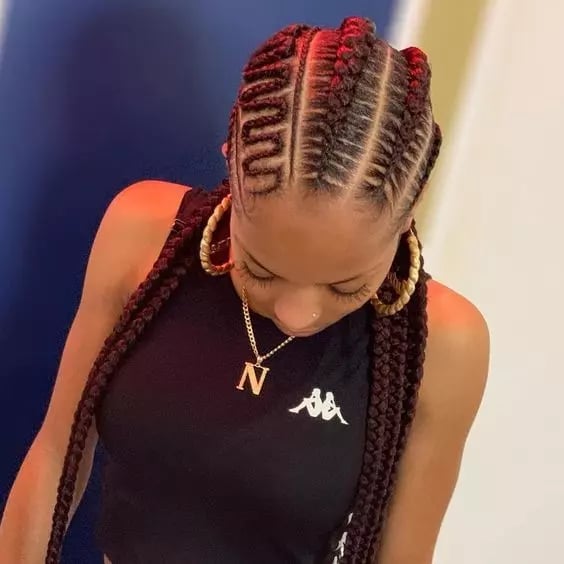
The zig-zag scalp pattern on these mid-back feed-in braids is the kind of detail that gets noticed up close, not across the room. The thick, straight, black braids fall evenly from the part, and the pattern gives the style a geometric precision that a plain middle part lacks.
Ask your stylist for: mid-back feed in braids with a distinct zig-zag scalp pattern. The pattern holds well for the first two weeks, but the zig-zag lines can loosen unevenly as the braids settle. Keep a fine-tooth comb and a light styling gel on hand to trace the part back into place. It is a salon-only build that rewards a steady hand, so book someone who has done geometric parts before.
Chin Length Cornrows With Pearl Embellishments
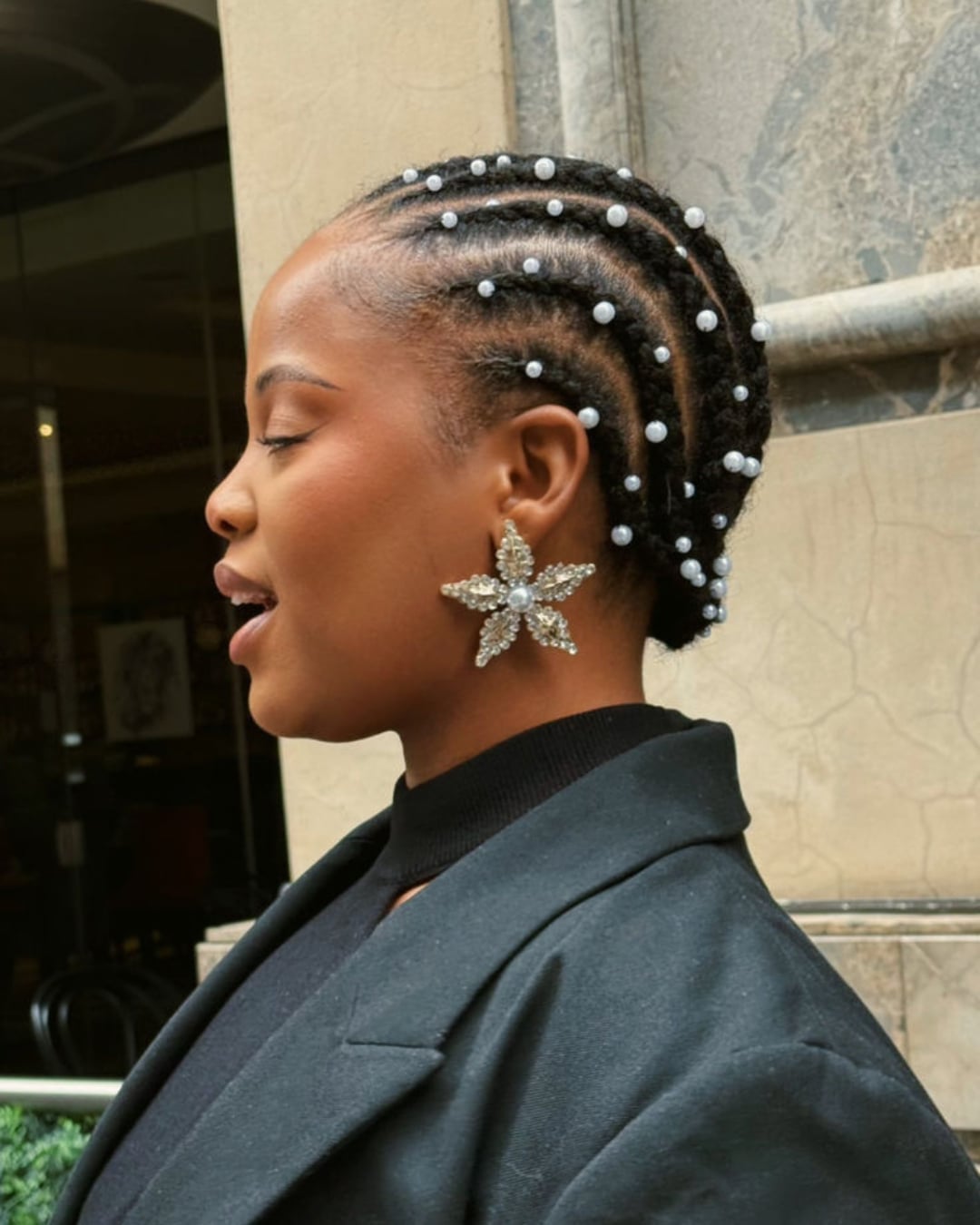
Small white pearls threaded onto chin-length cornrows turn a practical protective style into something that belongs at an elegant gathering. The middle part keeps the lines clean, and the straight, black cornrows sit close to the scalp, so the pearls are the only thing that catches the eye. Ask your stylist for: chin length cornrows with small pearl embellishments. The pearls are attached with a thin wire or thread, so they stay put but need gentle handling. Avoid snagging them on scarves, hoods or anything with a zipper, because a pulled pearl is a lost pearl. This is a shorter style that suits anyone who wants the polish of braids without the weight of long extensions.
Final Thoughts
For a low-maintenance yet polished look, opt for straight, uniform feed-in braids. If you prefer more texture and visual interest, consider styles with curly ends or decorative beads.
- Keep scalp clean with dry shampoo or a diluted astringent applied with a cotton pad.
- Apply a light oil or serum to the braid strands to maintain shine and prevent frizz.
- Sleep with a silk or satin bonnet or scarf to protect braids from friction.
- Avoid excessive manipulation and tight styles to prevent tension on the hairline.
- Moisturize your scalp regularly with a lightweight, non-greasy formula.
Feed-in braids offer endless classy possibilities.