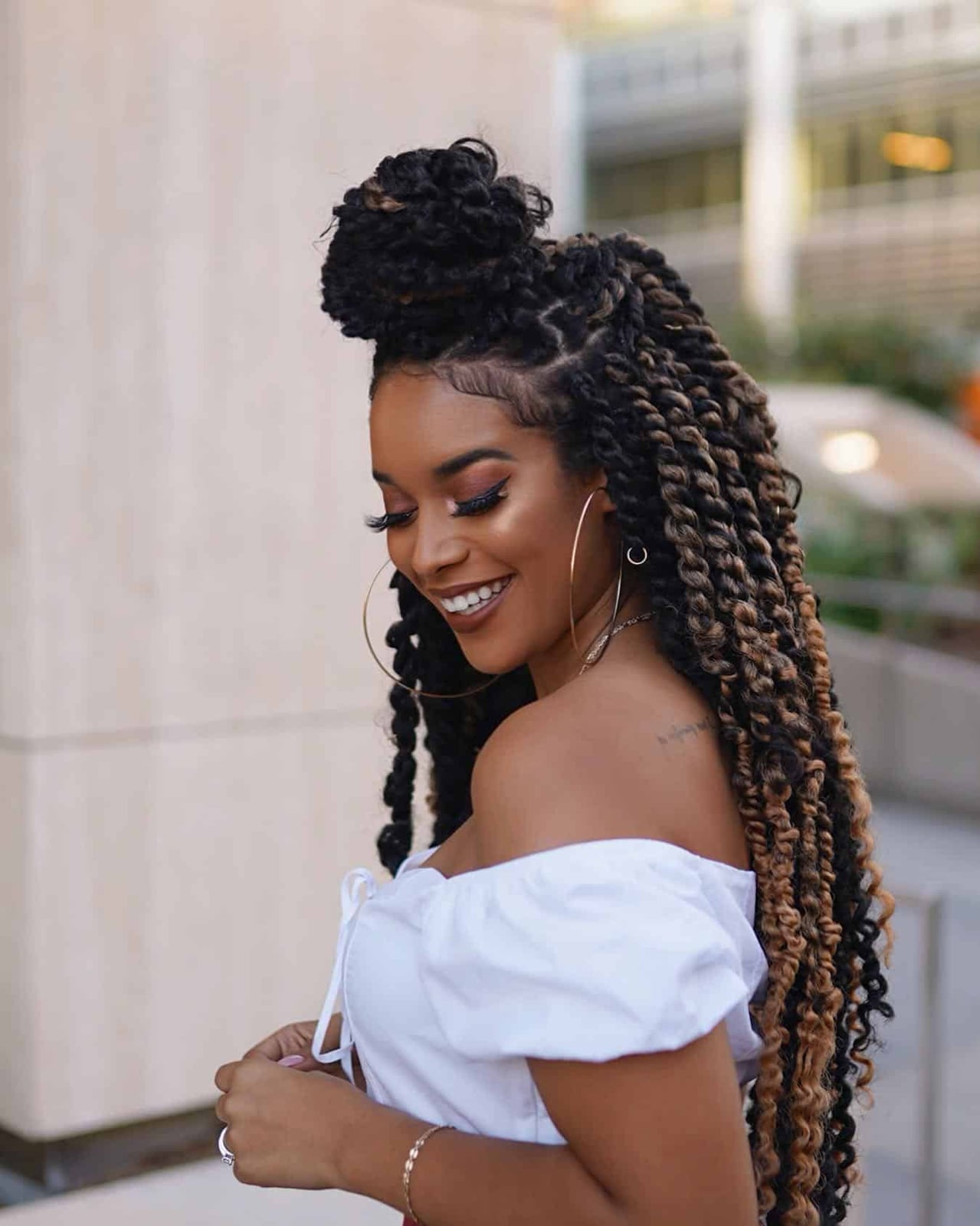
Soft locs are a protective style that blends natural texture with refined polish, and this year the trend is all about richer colors and more intricate updos. The shift is toward lived-in tones and glossy finishes, moving away from flat-ironed uniformity.
This collection of 28 Classy Soft Locs Hairstyles covers everything from collarbone ponytails to mid-back buns, with options for fine or dense hair and every face shape. The struggle of finding a style that holds without looking stiff is solved here, with practical advice on length, part, and color placement.
Collarbone Length High Ponytail With Pulled Back Front
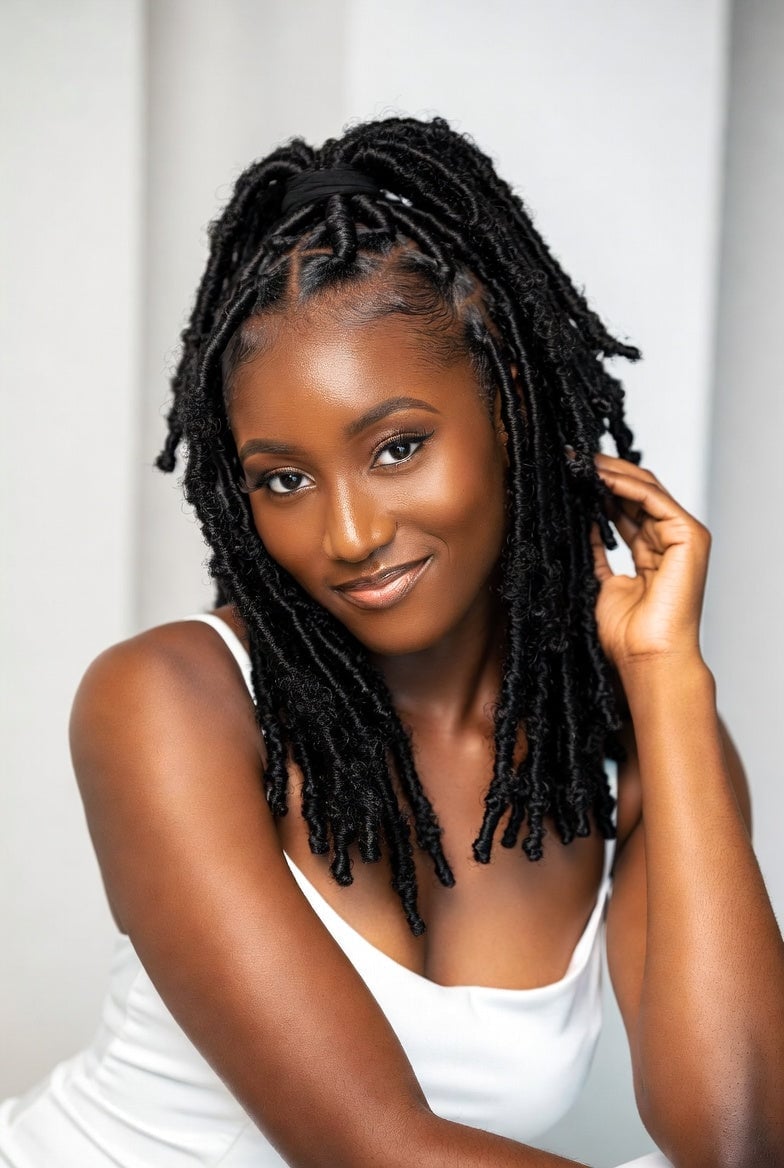
A high ponytail is a practical way to wear soft locs, but the pulled-back front sections are what separate a thrown-together style from a deliberate one. Collarbone-length, wavy, thick black locs are gathered high, with the front edges smoothed back cleanly. That sleek front elongates oval and heart face shapes, and the ponytail volume balances a longer face. Medium to thick density hair that already reaches collarbone length is the best candidate. Ask your stylist for: collarbone length soft locs, high ponytail, front pulled back. Secure the base with a satin scrunchie to reduce friction, and refresh the waves with a light mist of water each morning.
Shoulder Length Loose Soft Locs
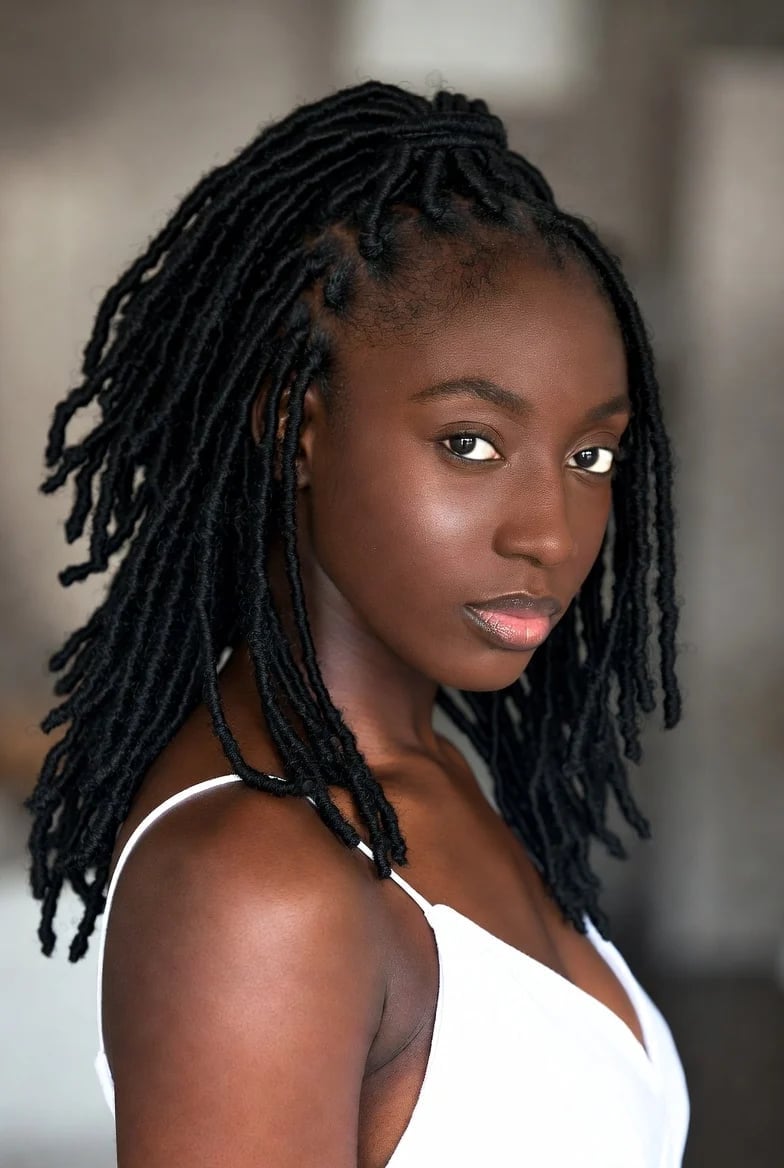
Can shoulder-length locs still look soft? Yes, when the texture is wavy and the style is loose. The side parting in this view adds asymmetry, which helps the locs fall naturally around the jaw. Medium density hair starting at shoulder length suits most face shapes when the part is off-center. Ask your stylist for: shoulder length soft locs, loose style, side part. A light serum applied to the ends controls flyaways and adds a subtle shine. A trim every 12 weeks keeps the ends neat without losing length.
Mid-Back Length Full Loose Soft Locs
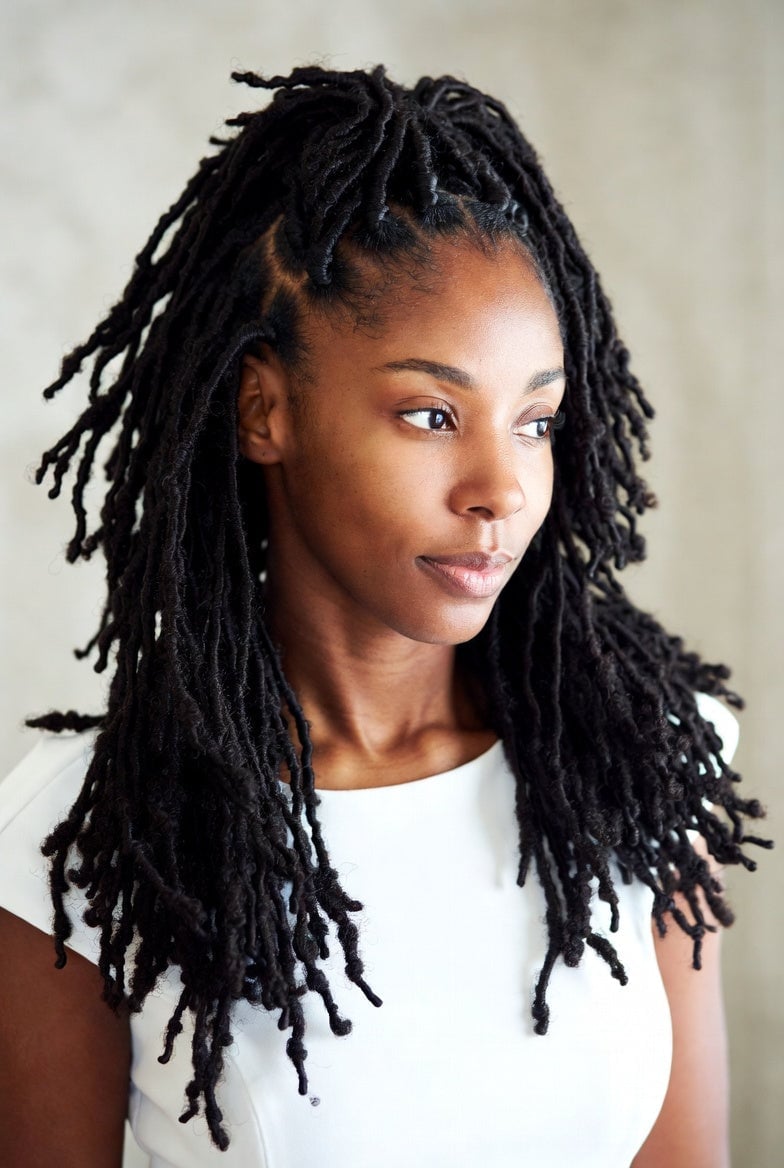
A shorter set of locs can feel lighter, but the mid-back length offers something a bob cannot: real weight and movement. The black, wavy, thick locs here are worn loose with a middle part, and the fullness is the entire point. The heft is a real factor. Very thick locs at this length pull on the scalp, especially if the installation is tight, so skip this if you have a sensitive nape or low hair density. Long faces benefit from the width at the sides. Ask your stylist for: mid-back length soft locs, loose and full style. Apply a mousse to the ends for definition, and skip heavy creams that weigh the locs down.
Polished Mid-Back Dark Brown Loose Soft Locs
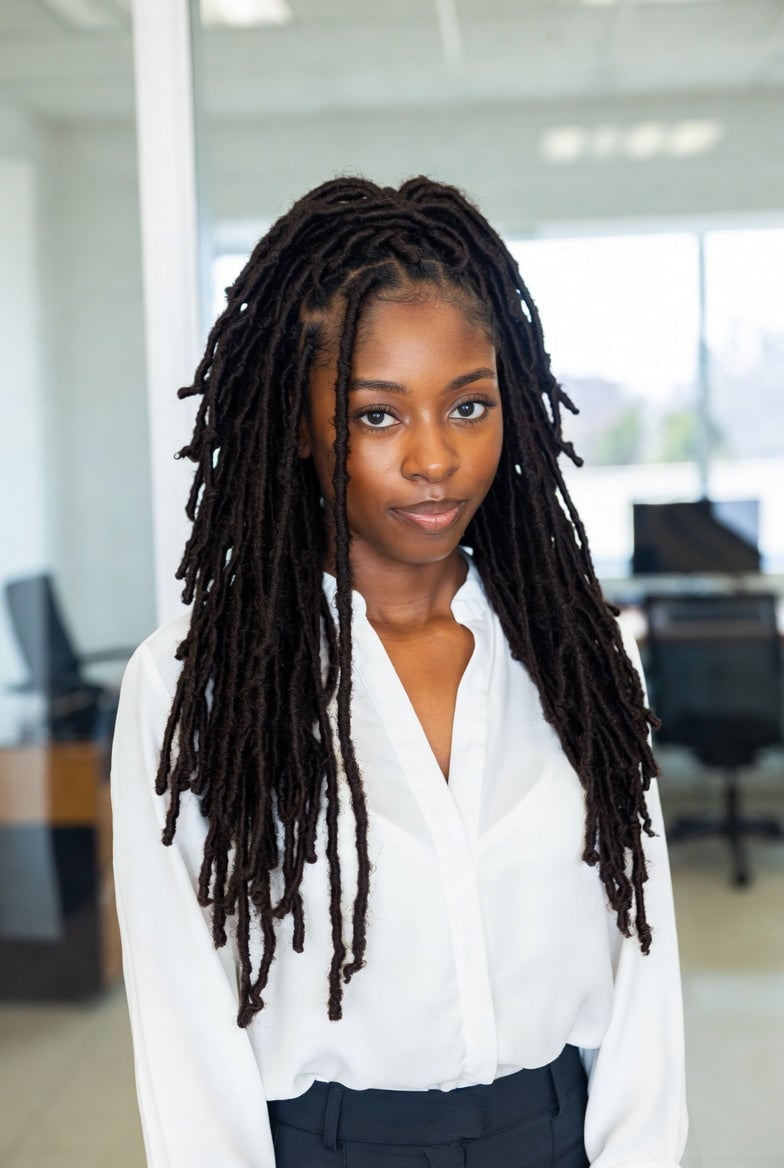
Black locs appear bold; dark brown locs appear polished. That one shade shift makes this mid-back, thick, wavy set feel more office ready than its black counterpart. The middle part and loose styling keep it straightforward, but the color depth is what gives it a finished look. Medium to thick density hair at mid-back length works well here, and most face shapes can wear it. Ask your colorist for: mid-back dark brown soft locs, polished loose style. Where a lighter shade might need toning every six weeks, dark brown fades more gracefully. A silk scarf at night preserves the smoothness, and a light hairspray holds the style without stiffness.
Long Flowing Black Soft Locs
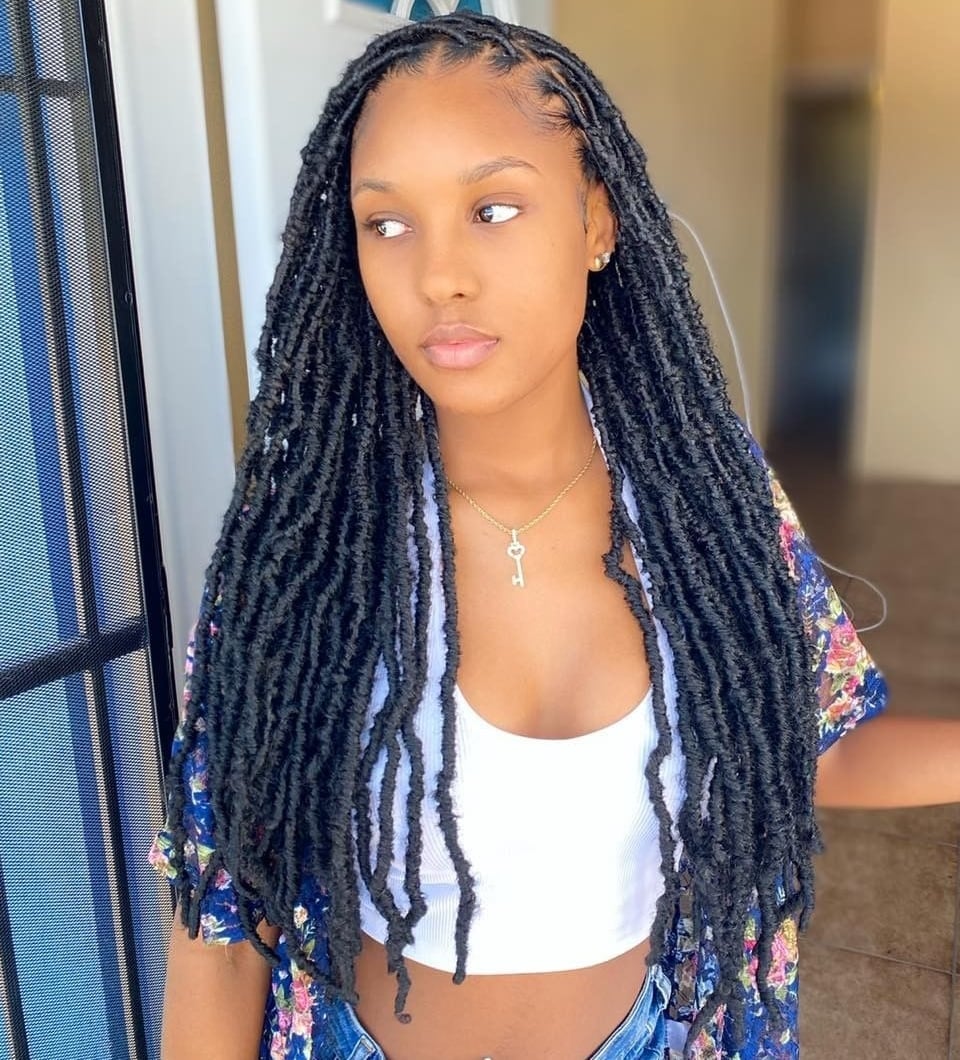
A loose, flowing loc style is less about the part and more about how the locs fall. Here the black, wavy locs extend past the shoulders with a middle part, and the texture is what keeps it from looking stiff. The key is the installation: locs need to be set with enough space at the root to allow natural movement, or they stay flat against the scalp. Thick density hair starting at shoulder length can carry this; longer face shapes get balance from the volume at the sides. Ask your stylist for: long flowing black soft locs. Apply a leave-in conditioner to the ends to keep the locs hydrated and prevent the wavy texture from drying out.
Collarbone Butterfly Locs Loose Style
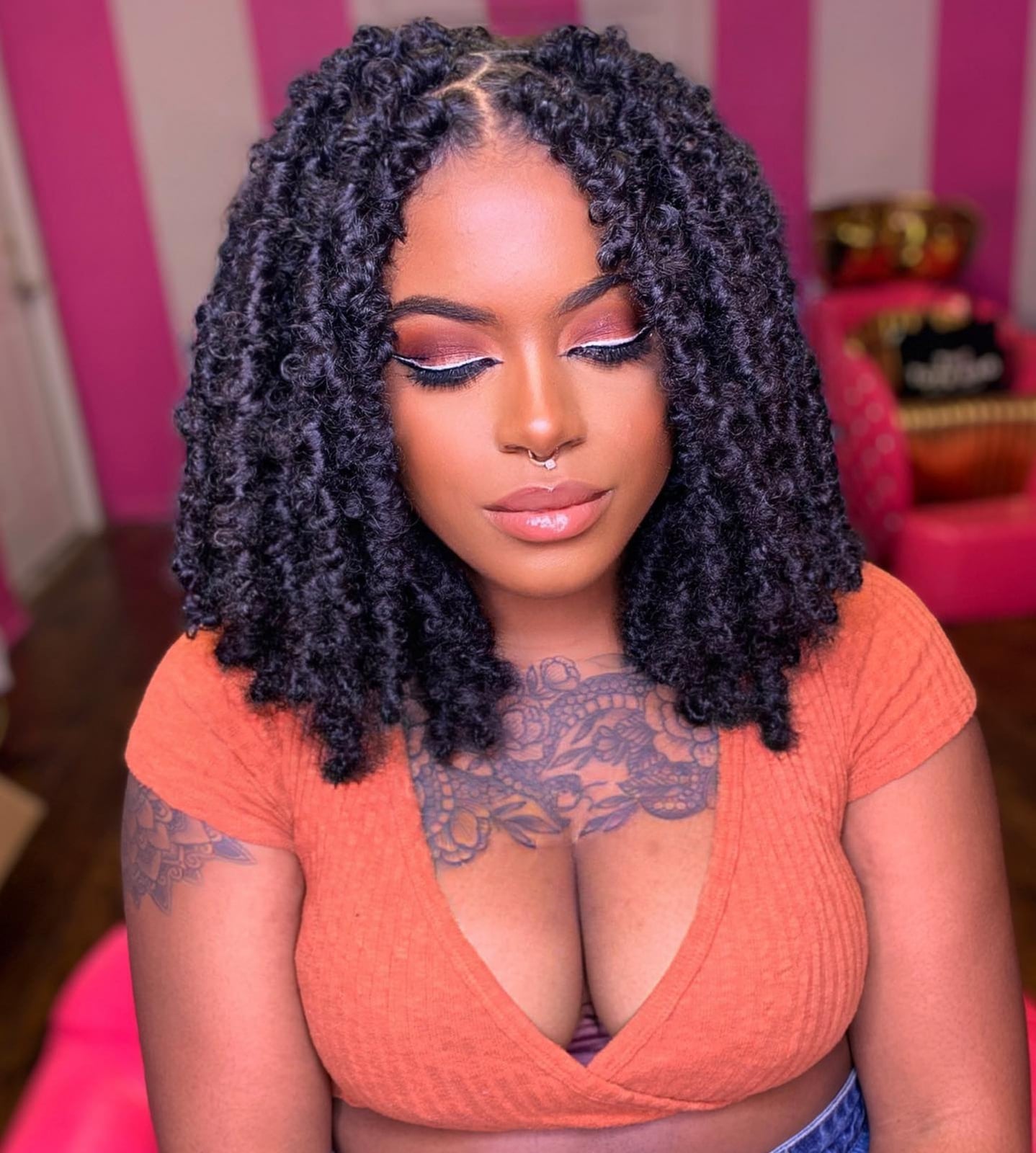
How do you get the volume of butterfly locs without them reading as too heavy? Go for a collarbone length with a loose, wavy texture and a middle part, exactly as shown here. The thick, defined locs create the fullness without the weight of longer extensions. Medium to thick density is the sweet spot for this style; thinner hair tends to look sparse at this scale. Ask your stylist for: collarbone length butterfly locs, loose wavy style. The middle part and soft wave at the ends soften square and round faces without needing bangs to do the work. A small edge-control gel on the hairline keeps flyaways in check, and a trim every six to eight weeks prevents the ends from fraying.
Chin Length Butterfly Locs With Wispy Bangs
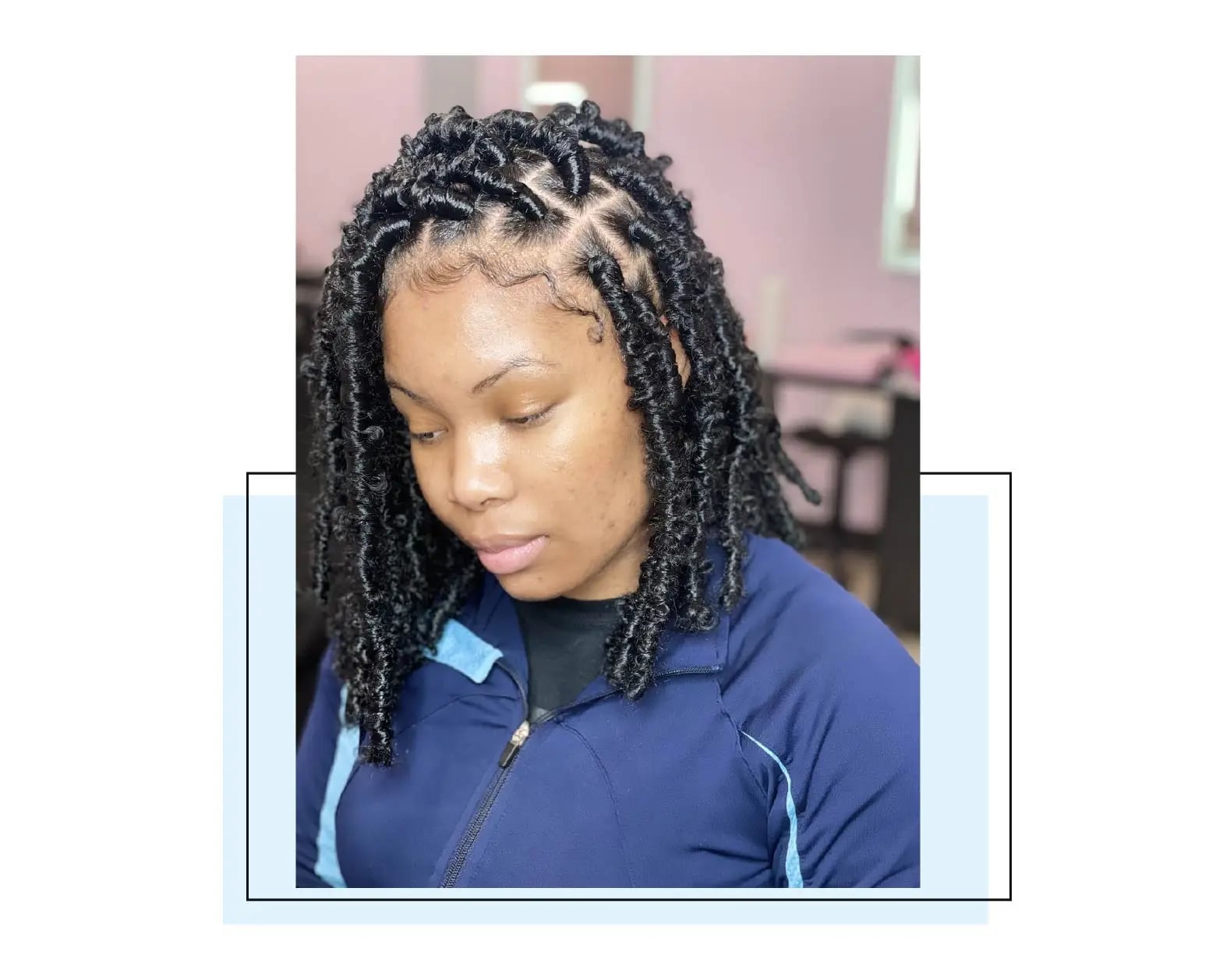
The wispy bangs here are doing something clever: they break up the solid line of a chin-length cut, so the style reads as playful rather than severe. The defined curls in the butterfly locs add bounce, and the middle part keeps everything balanced. Fine to medium hair density works best at this shorter length, as thicker textures can overwhelm the delicate bang shape. Ask your stylist for: chin length butterfly locs, loose curls, wispy bangs. The wispy bangs soften angular faces, and the curl pattern gives the style a texture that holds its shape without constant restyling.
Mid-Back Vibrant Burgundy Loose Soft Locs
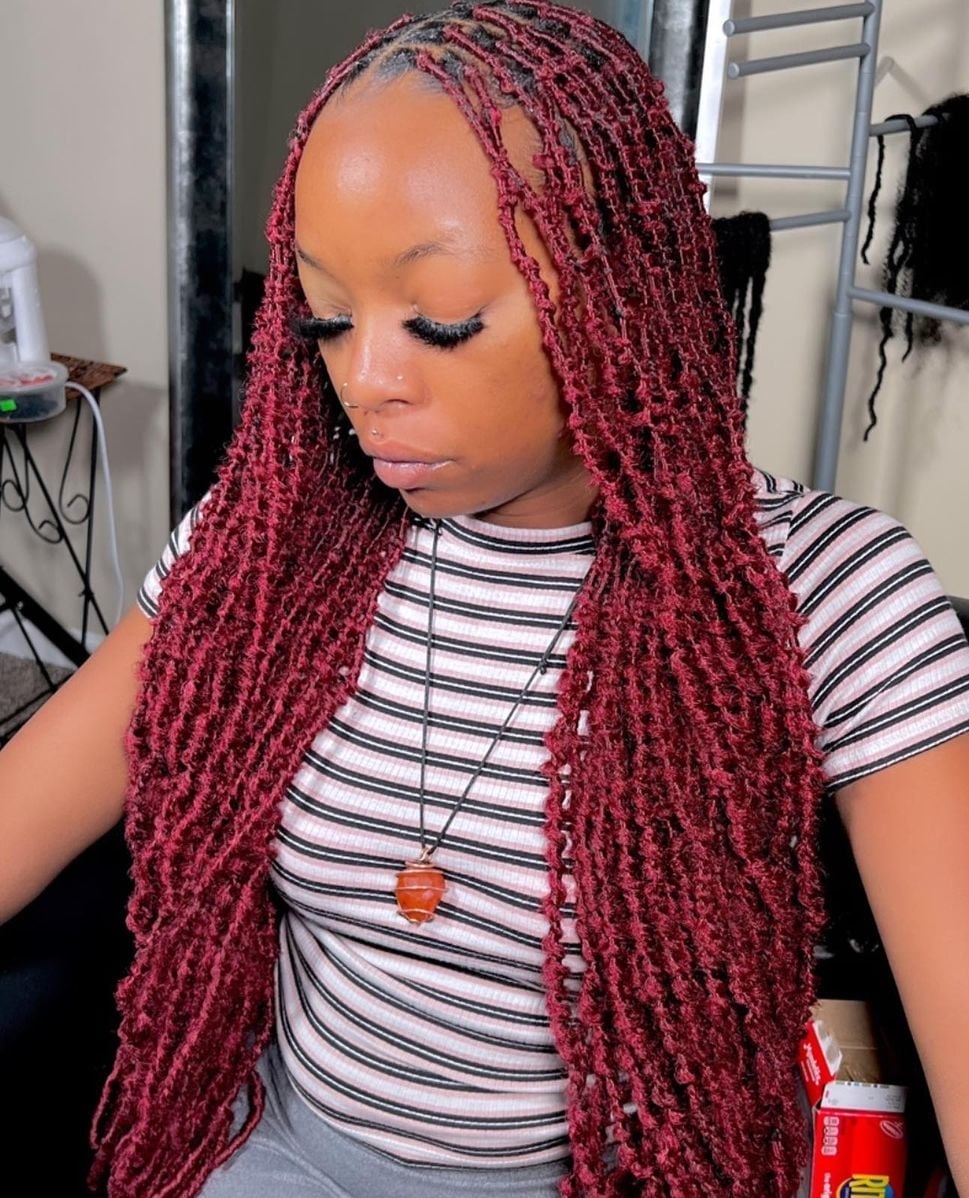
It is not a neutral brown, and it is not a red that fades into pink after two washes. This is a true vibrant burgundy, rich enough to catch light without looking artificial. The mid-back length and thick, wavy texture give the color depth, while the loose styling keeps it from feeling costumey. This color lands best in fall and winter, when jewel tones feel natural in the daylight. Medium to thick hair densities carry the shade evenly; finer textures may need a double-pass application to avoid patchiness. Ask your colorist for: mid-back length soft locs, vibrant burgundy color, loose style.
A color-depositing conditioner every other wash keeps the burgundy from pulling orange, and skipping heat styling preserves the integrity of both the locs and the dye. The middle part and loose waves let the color take center stage without competing with elaborate styling.
Collarbone Micro Locs With Brown Tips
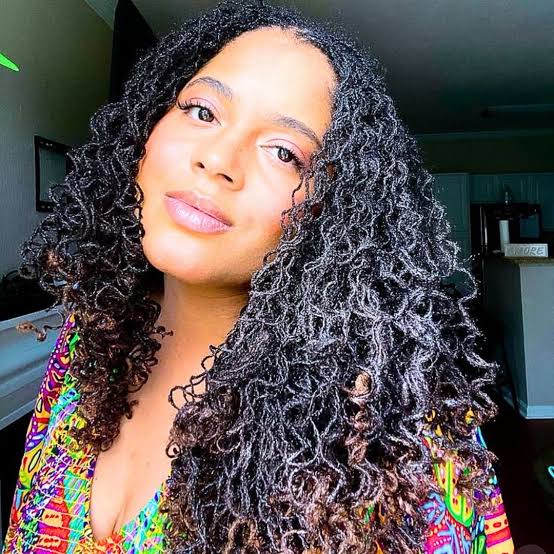
Micro locs at collarbone length have a different weight and movement than their thicker cousins. The fine, wavy texture here creates a soft drape rather than a stiff frame, and the brown tips add a subtle fade that prevents the black base from looking flat. Fine hair densities take to micro locs more naturally than to standard sizes, since the smaller diameter matches the existing strand thickness. Ask your stylist for: collarbone micro locs, brown tips, loose wavy style. The middle part and loose styling keep the look from feeling too uniform, and the brown tips give the ends a lived-in finish that blends well with most natural base shades.
Mid-Back Ombre Soft Locs Loose Waves
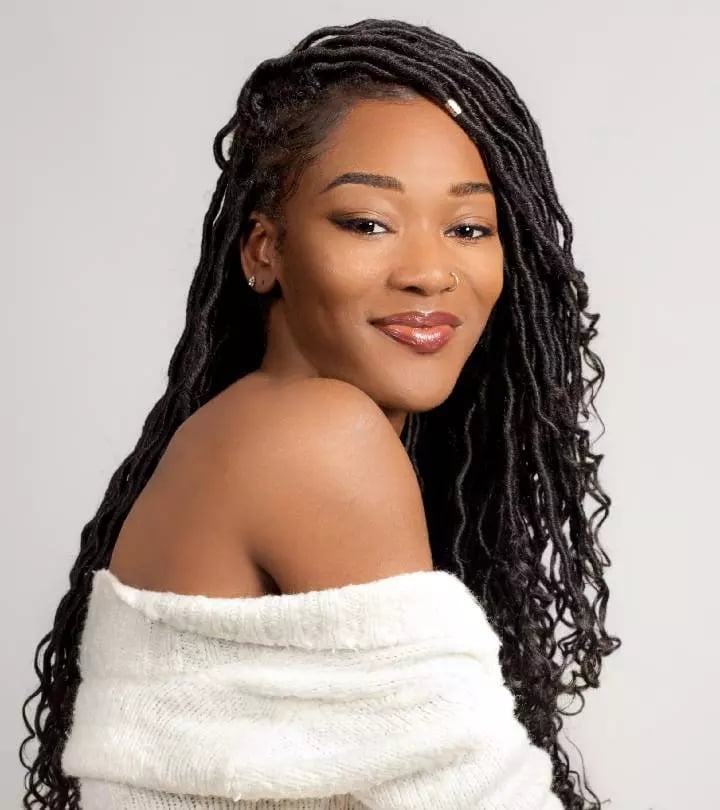
The ombre here starts at a natural black base and transitions to a warm brown at the ends, a technique that works because the color shift is gradual enough to look grown out. The mid-back length and thick, wavy texture give the gradient room to breathe, and the loose styling with a middle part shows the color change at every angle. The ombre on locs is applied differently than on loose hair: the color is painted onto the individual locs, so the saturation stays even from root to tip. Medium to thick densities carry the dimension best. Ask your colorist for: mid-back soft locs, black to brown ombre, loose wavy style.
Hydrating the ends is the main upkeep, since the lighter brown sections can dry out faster than the black base. A trim every eight weeks keeps the ombre line looking deliberate.
Long Glossy Soft Locs With Brown Undertones
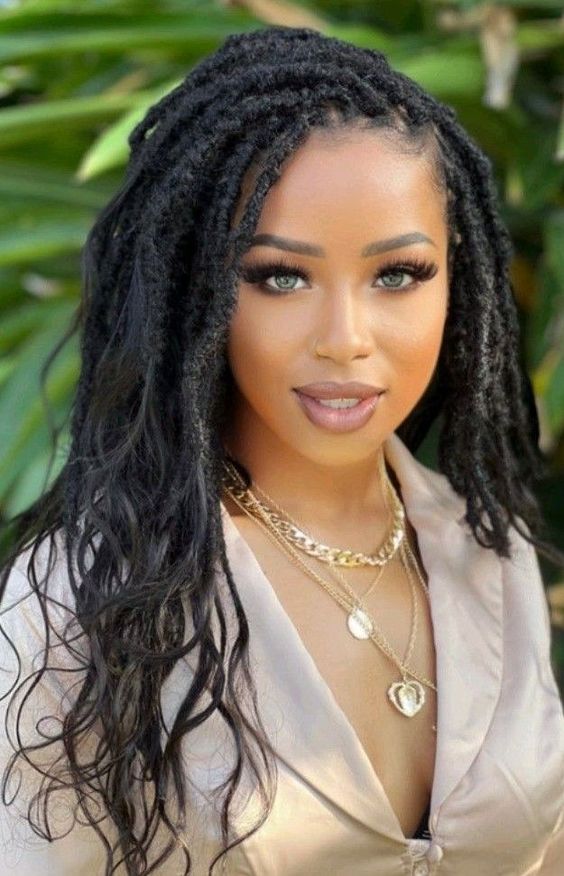
Want your locs to look like they just left the salon every morning? That is the promise of a glossy finish on long, wavy locs with subtle brown undertones, styled loose with a middle part. The glossiness looks healthy, not greasy, provided you keep the shine on the locs and off the scalp. Ask your stylist for: long glossy soft locs, subtle brown undertones, loose wavy style.
A middle part and long length suit thick density starting at shoulder length, and the vertical line balances a long face. Upkeep is about maintaining that gloss without buildup. Use a shine serum sparingly, focusing on the ends, and a silk pillowcase will prevent the finish from dulling overnight. A toning appointment every six weeks keeps the brown undertones visible and clear. The hold is soft but consistent: these locs move naturally without losing their shape all day.
Mid-Back Loose Waves With Curly Ends
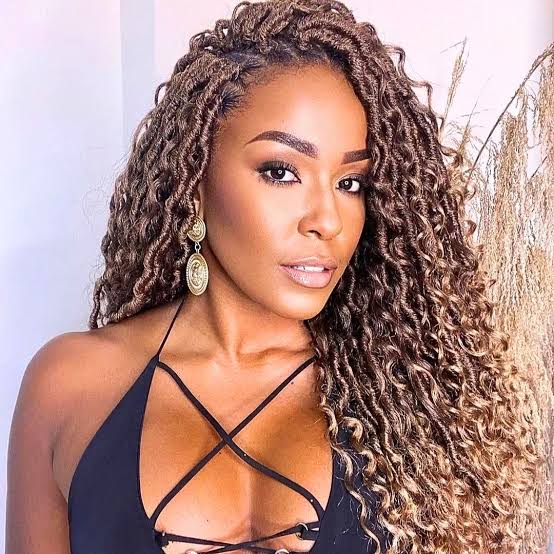
This is not a uniform curl pattern from root to tip. The locs stay in loose waves through most of the length, then switch to defined curly ends at the bottom. That subtle texture variation softens angular edges around the jaw and cheekbones. Ask your colorist for: mid-back soft locs, brown with blonde highlights, curly ends.
Long Past Mid-Back Black Locs With Brown Highlights
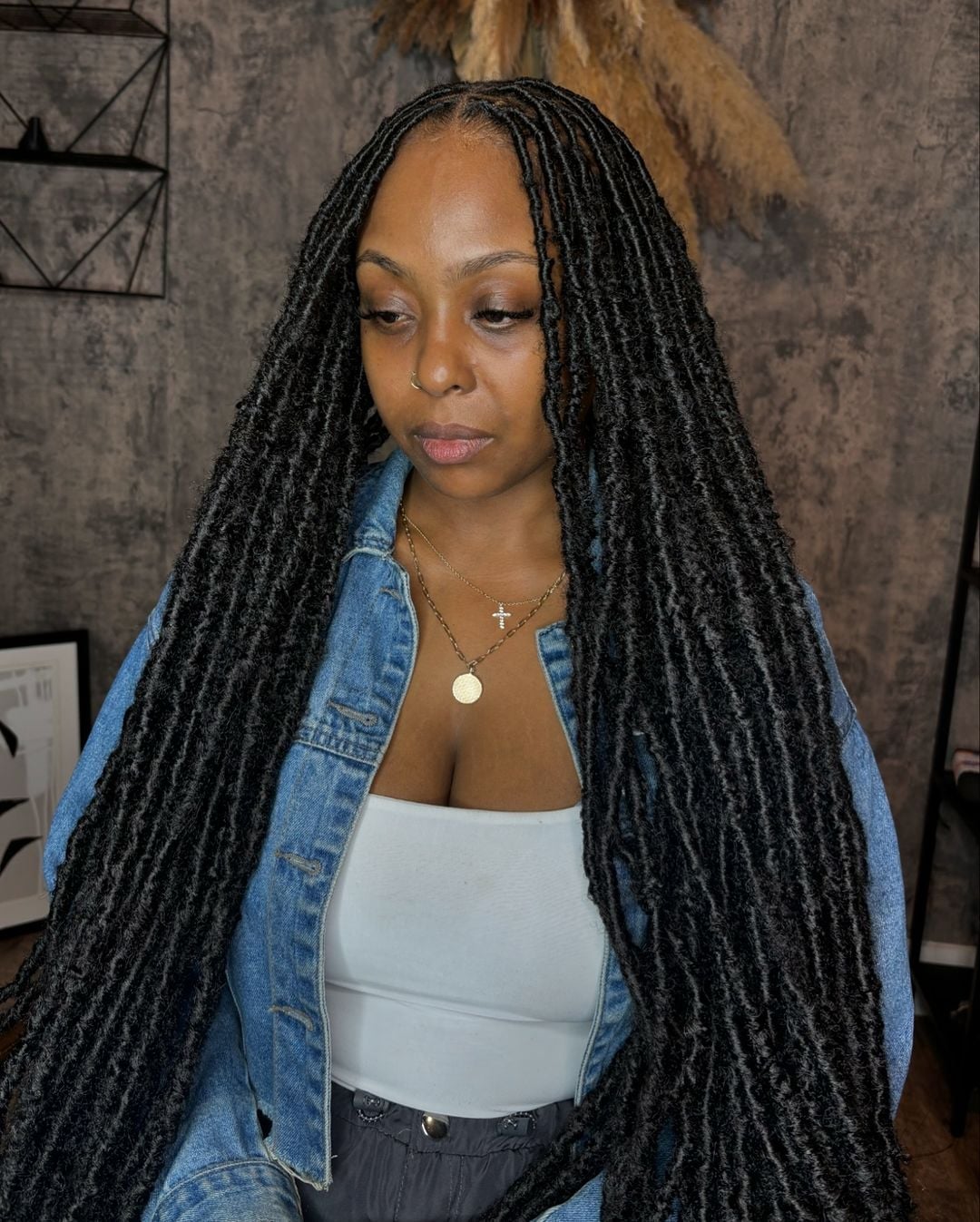
The color here is doing something smart: a black base with brown highlights that are subtle enough to look like natural depth, not a dye job. On extremely long locs past mid-back, that rich variation prevents the length from looking flat or heavy. Ask your colorist for: long black locs, subtle brown highlights, loose wavy style.
This is a salon-only project, and the time commitment is real. Achieving that layered color on very long locs requires multiple sections and a patient colorist, usually three to four hours. The highlights need maintenance: a toning appointment every eight weeks keeps the brown from fading into brassiness. The payoff is a full, luxurious look that moves with weight and does not feel heavy. Medium to thick density starting at mid-back length carries the highlights well; finer locs may not show the dimension as clearly.
Mid-Back Curly Soft Locs With Blonde Highlights
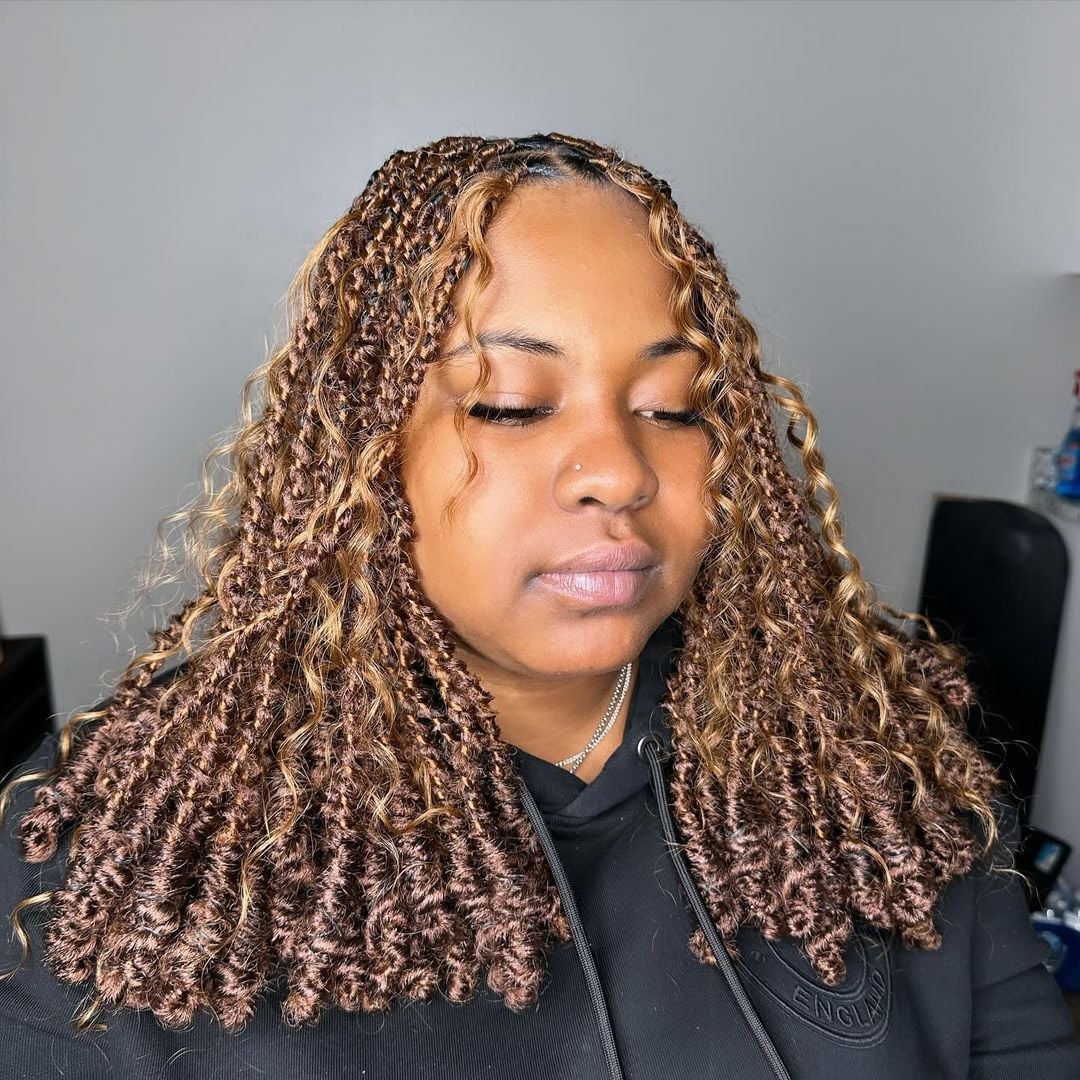
Can dimensional color work on curly locs without looking busy? It does when the blonde highlights are placed on a rich brown base and the curls are loose enough to let each shade show separately. This is a look that lands naturally in warmer weather or festive settings, where the contrast remains vibrant. Ask your colorist for: mid-back curly soft locs, brown with blonde highlights.
Medium to thick density starting at mid-back length gives the curls enough body to hold the shape, and the middle part keeps the volume balanced on both sides. The soft curls soften angular faces, drawing attention to the dimensional color. A silk bonnet overnight preserves curl definition so you only need to refresh with water and a spray the next morning. The hold is long: these locs keep their curl pattern for several days without re-styling, which makes them practical for a weekend away or a celebration where you want the hair to last.
Mid-Back Uniform Loose Soft Locs
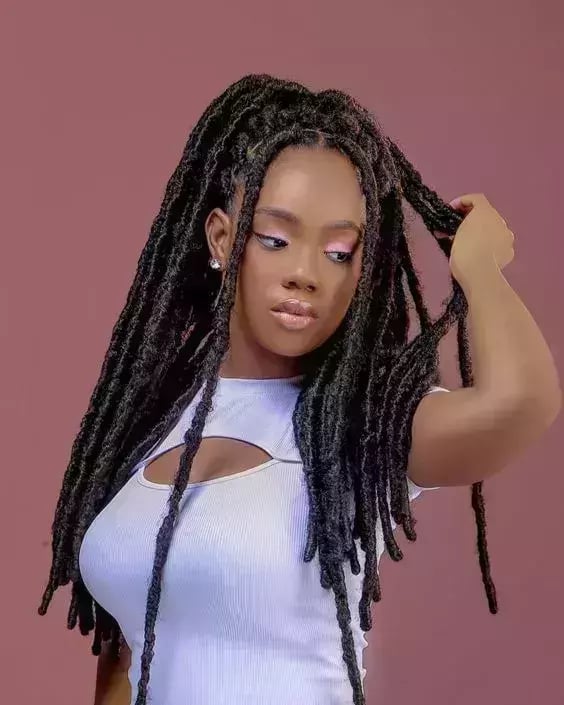
This look falls firmly on the consistent side, with black wavy locs that are the same width from root to end, styled loose with a middle part. The result looks polished, more suited to a professional setting than a bohemian one. Ask your stylist for: mid-back length uniform soft locs, loose wavy style. Medium to thick density starting at mid-back length carries the uniform look best, and the even weight suits most face shapes. A trim every eight weeks keeps the ends clean so the uniformity holds.
Mid-Back Loose Black Soft Locs Side Part
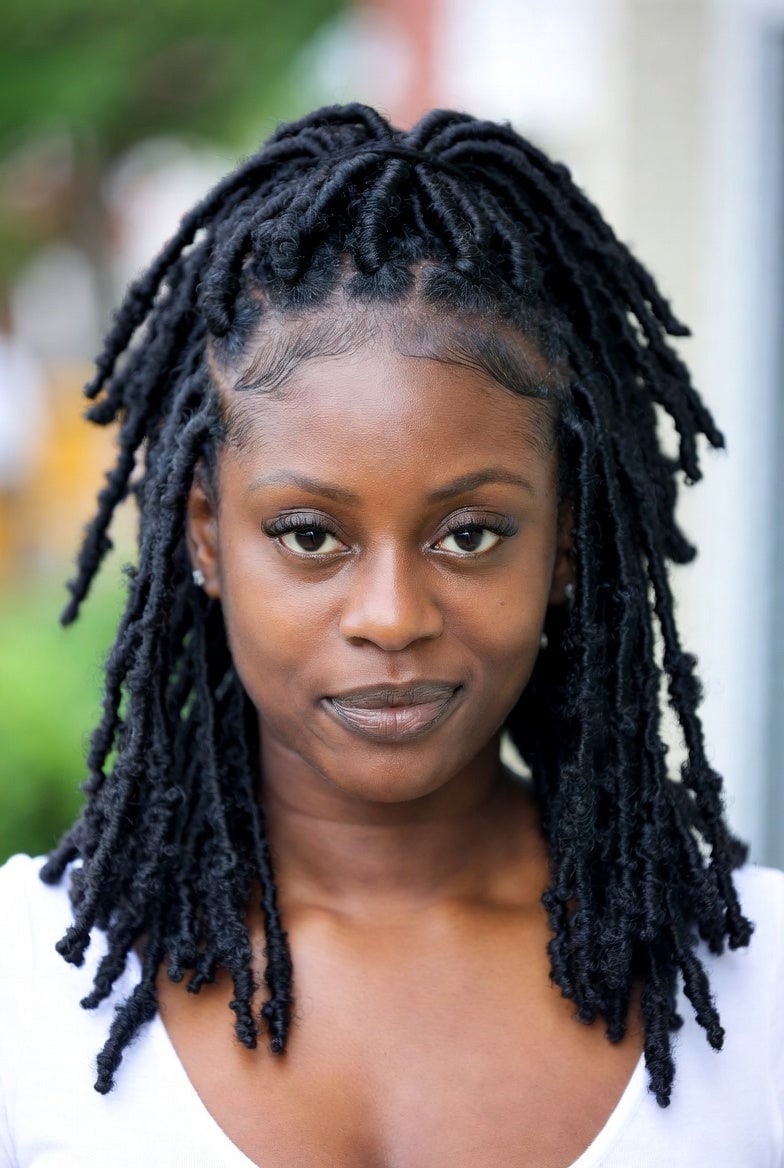
The side part here does more than break up a solid mass. It lifts the crown and lets those thick, wavy black locs fall with actual direction instead of just weight. Length and volume like this need a defined anchor, and a deep side part provides it without adding bulk.
Medium to thick density hair that already reaches mid-back carries this style well. Ask your stylist for: mid-back soft locs, loose with side part. The hold is strong enough for daily wear, but the texture benefits from a light oil worked through every few days to stop the wave from drying out. A trim to tidy the ends keeps the shape clean.
Long Flowing Medium Brown Locs With Highlights
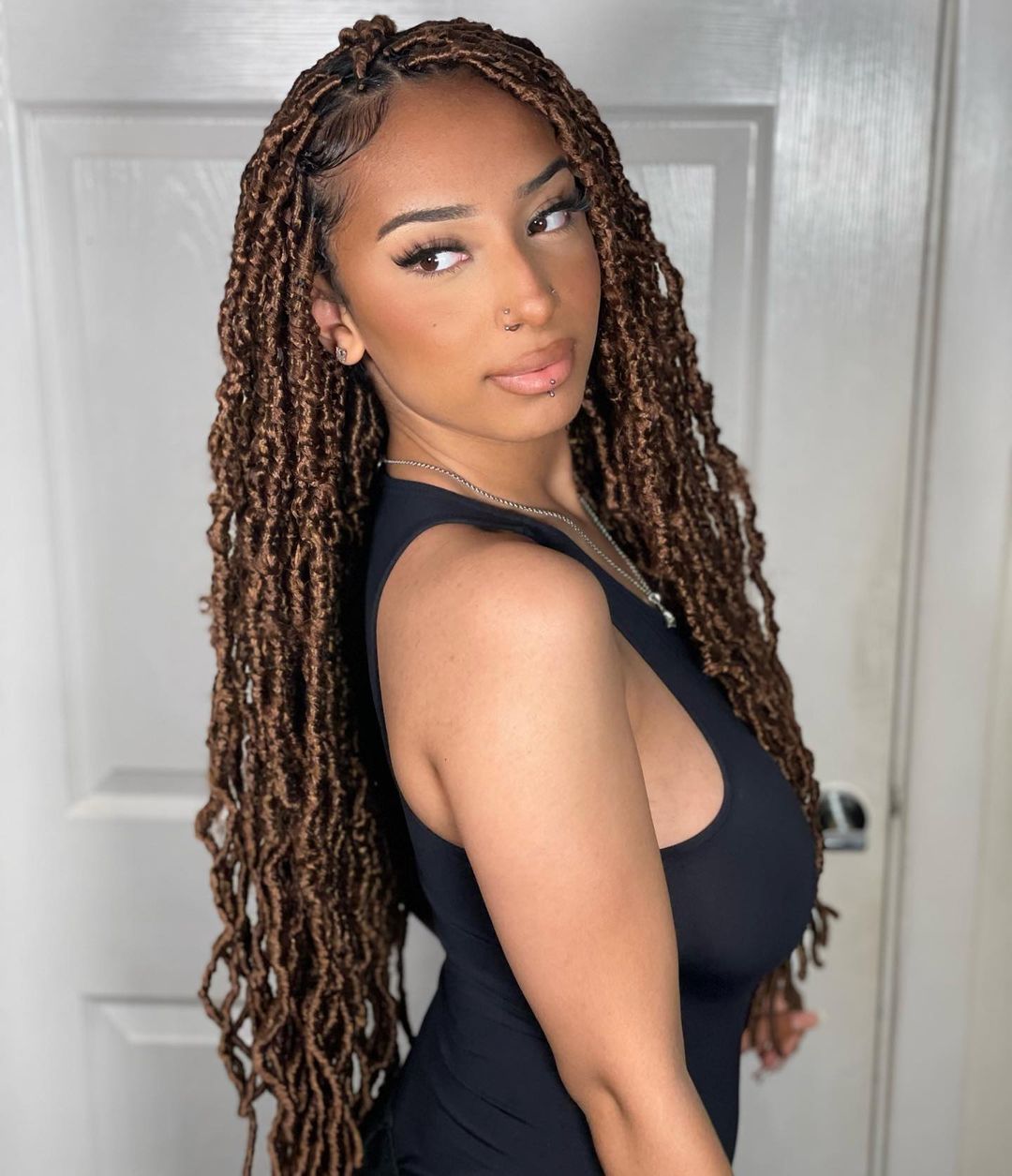
Can a single color make locs look flat? Yes, which is why the subtle lighter brown highlights here matter. They run through the medium brown base in fine, spaced sections, catching light at different points along the wave. The effect is dimension without a harsh stripe.
Ask your colorist for: medium brown base with lighter brown highlights throughout. The placement should be concentrated around the face and the mid-lengths, not the ends. The side part and loose flow work best on shoulder-length or longer hair with medium to thick density. A side view proves the point: the highlights follow the wave, not fight it.
Shoulder Length Loose Wavy Black Soft Locs
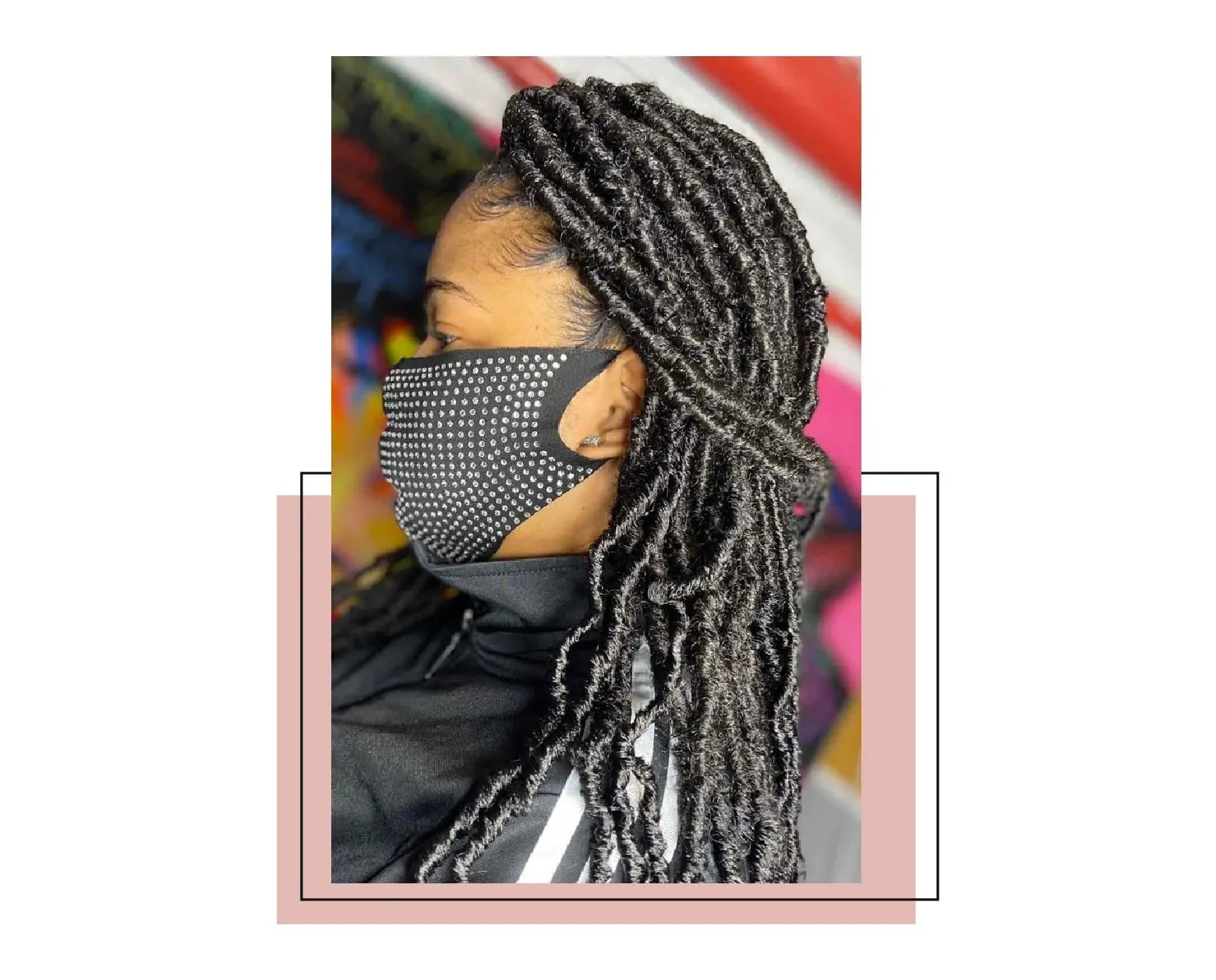
Shoulder length locs offer a neat middle ground between the weight of longer sets and the limited styling options of a bob, but the wavy texture here comes with a trade-off. Those waves create tangles faster than straight locs, especially where the shoulder hits the hair. You will spend more time separating them than you would with a longer, heavier set. The density is full and soft, but the tangling makes this a casual only length for most days. Medium density works best; very fine hair will lack the volume the wave needs to hold its shape.
Collarbone Half Up Half Down Soft Locs
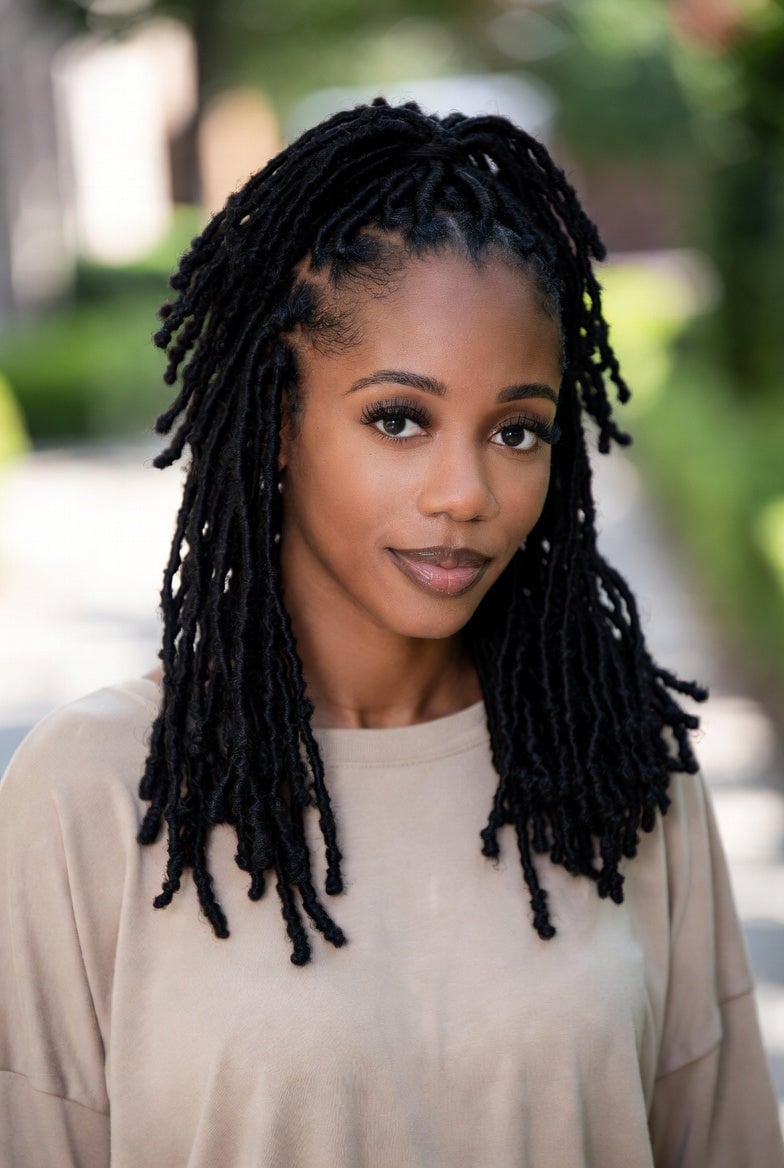
A half-updo at collarbone length solves a specific problem: keeping locs off the neck while preserving the weight and flow of a loose style. The top section here is pulled back smoothly, leaving the rest falling in thick, black wavy locs. The middle part keeps the arrangement symmetrical and tidy.
This shape balances round and square faces by adding height at the crown and softness around the jawline. Ask your stylist for: collarbone length soft locs, half up half down style. Medium to thick density is ideal; fine hair may not have enough grip to keep the top section secure without extra pins. The hold is solid for a full day, but expect to adjust the pulled-back section by evening.
Long Half Up Half Down Locs With Side Bang
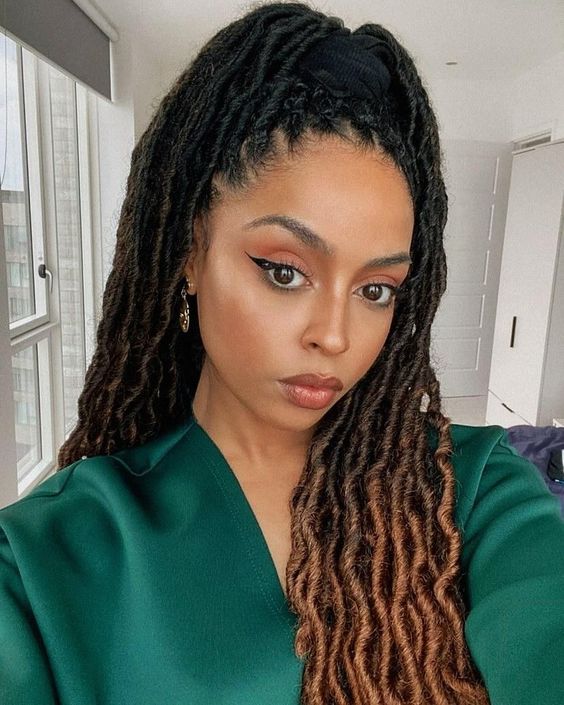
The half-up style here has a longer shelf life than a full updo because the loose length hides any shift in the pinned section. The black base graduating into a brown ombre toward the ends adds a soft fade that keeps the overall look from feeling flat. The side-swept bang is the real workhorse: it breaks the horizontal line a half-up can create and directs the eye down the length.
This suits medium to thick density starting past the shoulders. Ask your stylist for: long locs, black to brown ombre, half up half down, side-swept bang. The side bang needs a slight curve during styling, set with a flexible hold spray to last through a workday or a dinner out. A toning appointment every six to eight weeks keeps the ombre from turning brassy at the ends.
Mid-Back High Ponytail With Braided Accents
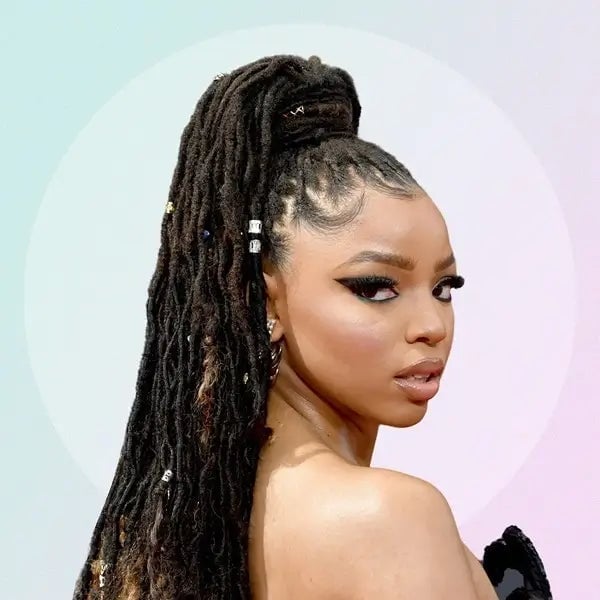
How do you keep a high ponytail from looking like you just rolled out of bed? You add braided accents and beads. These thick mid-back locs in black with subtle highlights are pulled up tight at the crown, with a few sections braided and wrapped with gold beads for texture. The middle part keeps the hairline clean and symmetrical.
Thick hair density starting at mid-back length works best for this design; it elongates round faces. Ask your stylist for: mid-back locs, high ponytail, braided accents, beads. Wrap a few locs around the base to conceal the elastic, then apply gel along the hairline for a sleek finish that holds all day. The braided accents add enough grip that beads stay put without constant adjustment.
Mid-Back High Bun With Hanging Locs
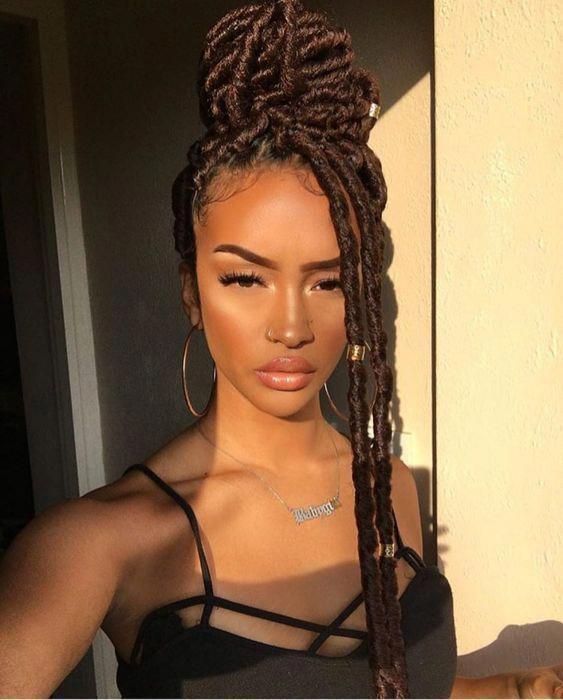
A high bun with locs left to hang down the front sounds simple, but the balance is tricky. These mid-back dark brown wavy locs are swept into a bun at the crown, with several strands falling forward and gold beads catching the light. The middle part and the hanging strands frame the face without bangs. Medium to thick density hair starting at mid-back length suits this style; it balances long faces nicely. Ask your stylist for: mid-back locs, high bun, hanging locs with gold beads. This is best left to a professional. The bun needs tight pinning so it does not sag, and the hanging locs need precise placement to avoid looking lopsided. A DIY attempt often ends with a bun that tilts or strands that fall unevenly.
Mid-Back Ponytail With Braided Accents, Close-Up Take
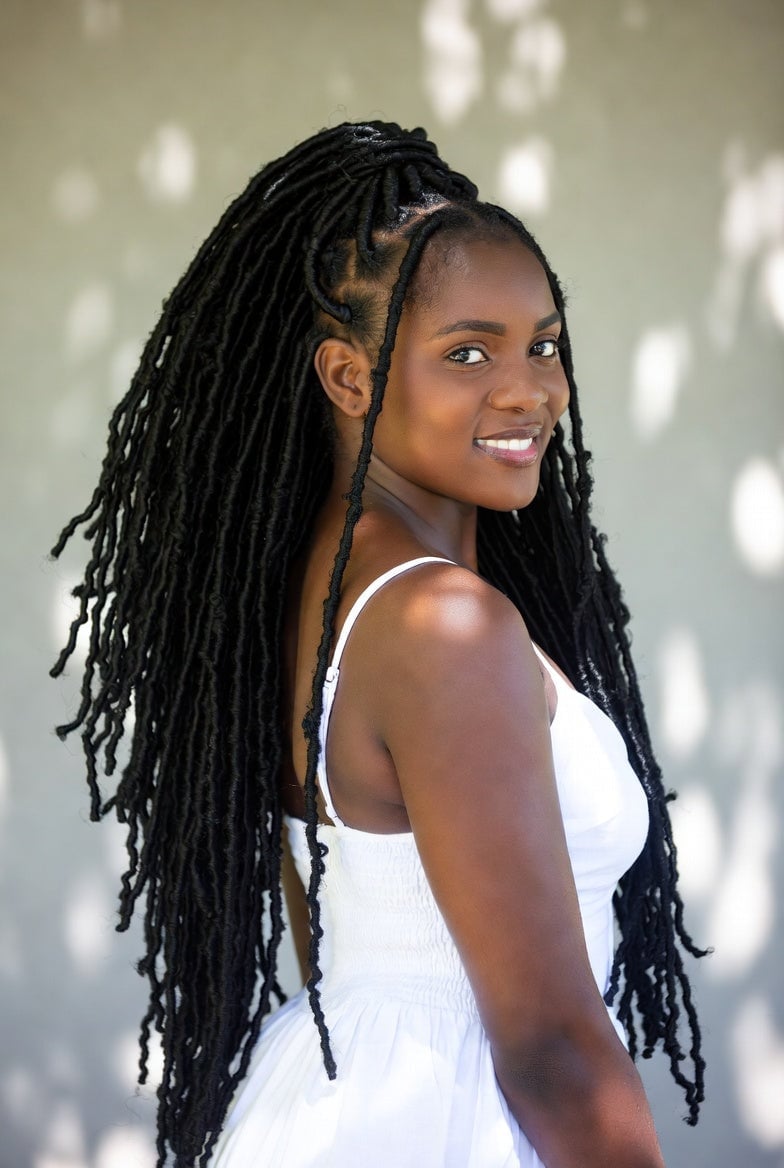
The side view reveals the real architecture of this ponytail. Mid-back black wavy locs, thick and full, are swept into a high ponytail with braided accents woven into the crown. The middle part directs everything back cleanly, so the braided sections sit visible and deliberate. Medium to thick density hair starting at mid-back length works here; it elongates round faces. Ask your stylist for: mid-back soft locs, high ponytail, braided accents. When you sit in the chair, be specific: request that three to four locs near the crown are braided before joining the ponytail, and that the base is wrapped with a single loc to hide the elastic. A light hold spray keeps flyaways down without stiffening the wavy texture.
Collarbone Faux Locs High Ponytail With Beads
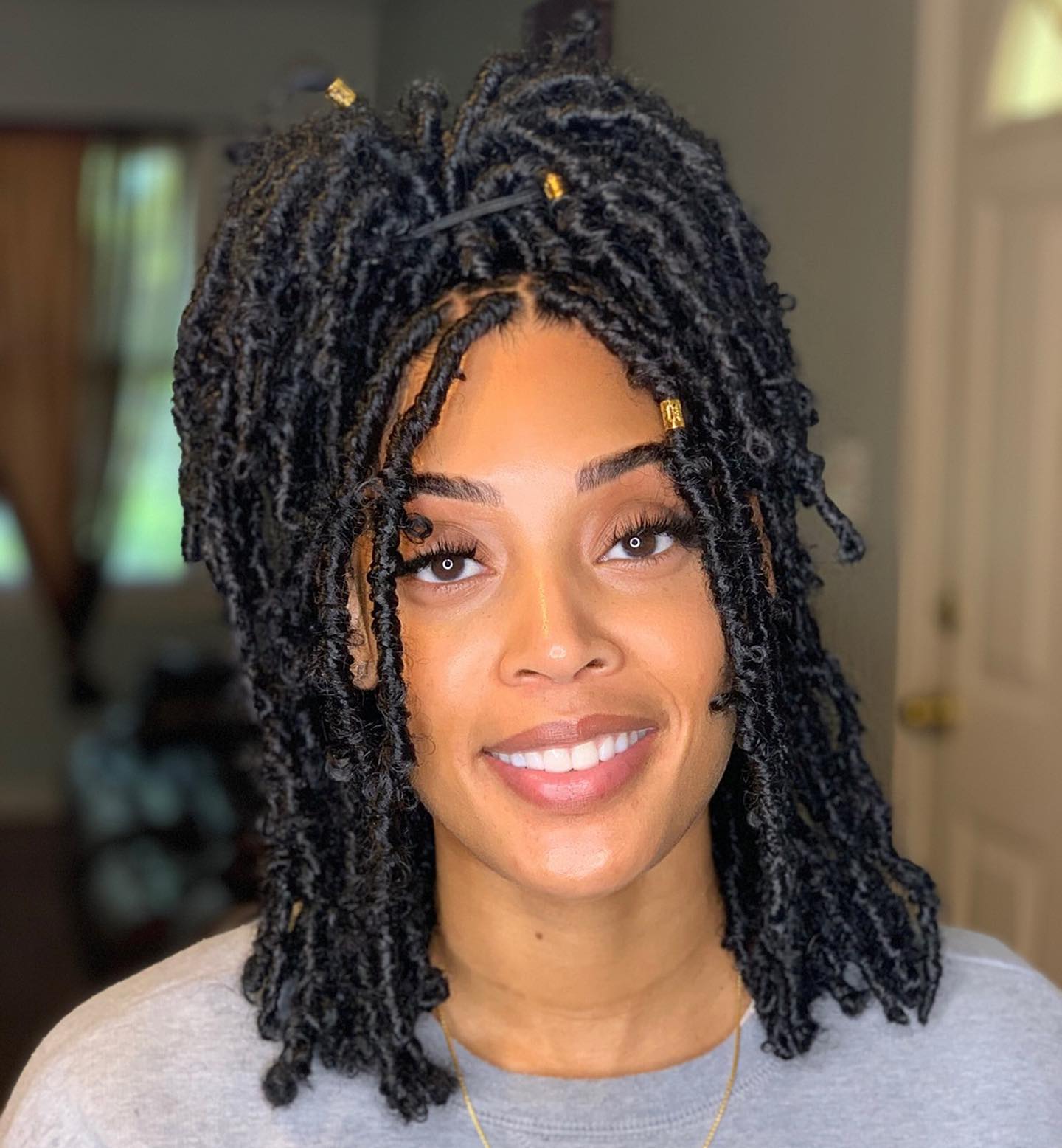
Gold beads transform a simple ponytail into a festive style. These collarbone length black wavy faux locs are pulled into a high ponytail with a clean middle part, and the beads add visual interest without overwhelming the look. Loose strands soften the hairline, preventing it from looking too severe. Medium density hair starting at collarbone length suits this look; it elongates round faces. Ask your stylist for: collarbone faux locs, high ponytail, gold bead accents. The festive feel of the beads makes this a natural choice for holiday parties or end of year celebrations. Secure the ponytail firmly and use edge control to smooth the hairline for a polished finish that lasts through dinner and dancing.
Mid-Back Extreme Length Faux Locs High Ponytail
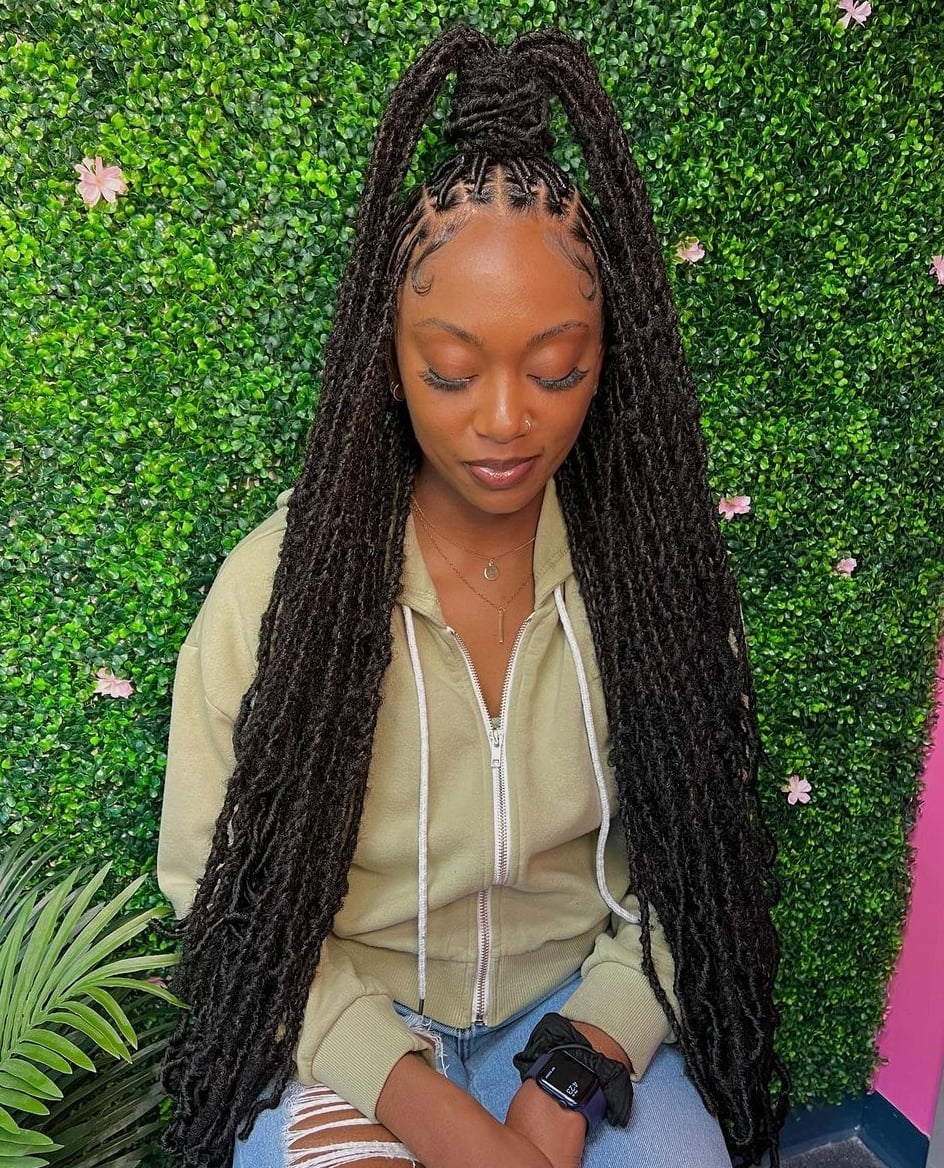
Extreme length and volume make a statement, but they come with a trade-off. These mid-back black wavy faux locs in a high ponytail cascade down with serious weight, and delicate baby hairs are left out to soften the hairline. The middle part keeps the look grounded despite the drama. Medium density hair starting at mid-back length suits this style; baby hairs soften angular faces. Ask your stylist for: mid-back faux locs, extreme length, high ponytail, baby hairs. The real drawback is the weight. A high ponytail with this much length and density pulls on the scalp all day, so it is not a casual weekend choice. Use a strong hold hairspray to keep baby hairs in place and mist the locs for hydration to prevent them from drying out under the tension.
Shoulder Length Neatly Parted Black Locs
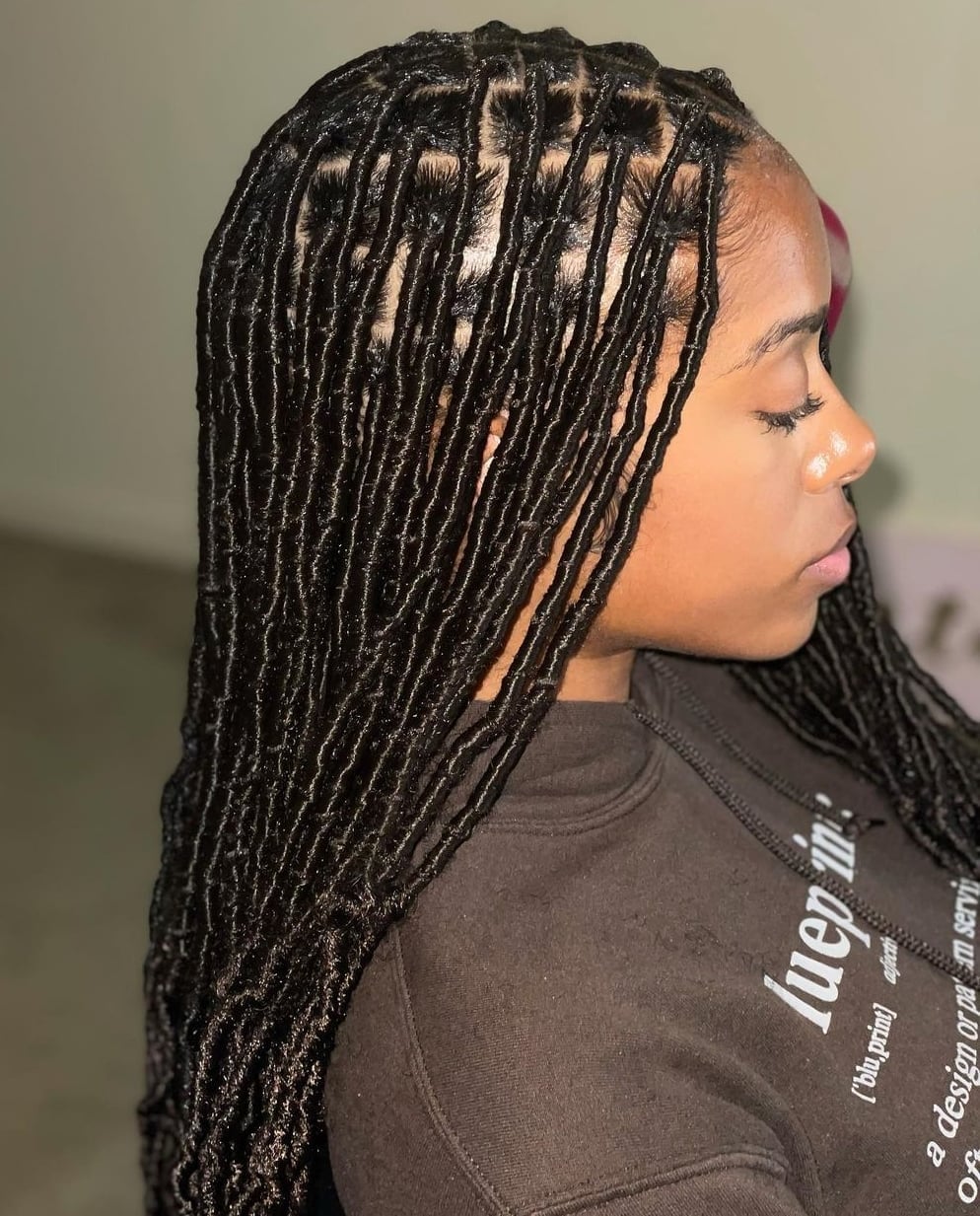
Wondering if neat parts will work with your hair? The answer depends on your density and how much time you enjoy spending with a comb. These shoulder length black locs with a wavy texture are styled with a middle part and clear, even sections, which makes the lines the real feature here. Ask your stylist for: shoulder length locs, neatly parted, middle part. The clean parts suit medium density hair starting at shoulder length, and the symmetry works well for most face shapes. To keep the parts looking sharp, run a fine-tooth comb along the scalp lines each morning and use a light mousse to hold the roots in place.
Mid-Back Elegant Braided Updo Dark Brown Locs
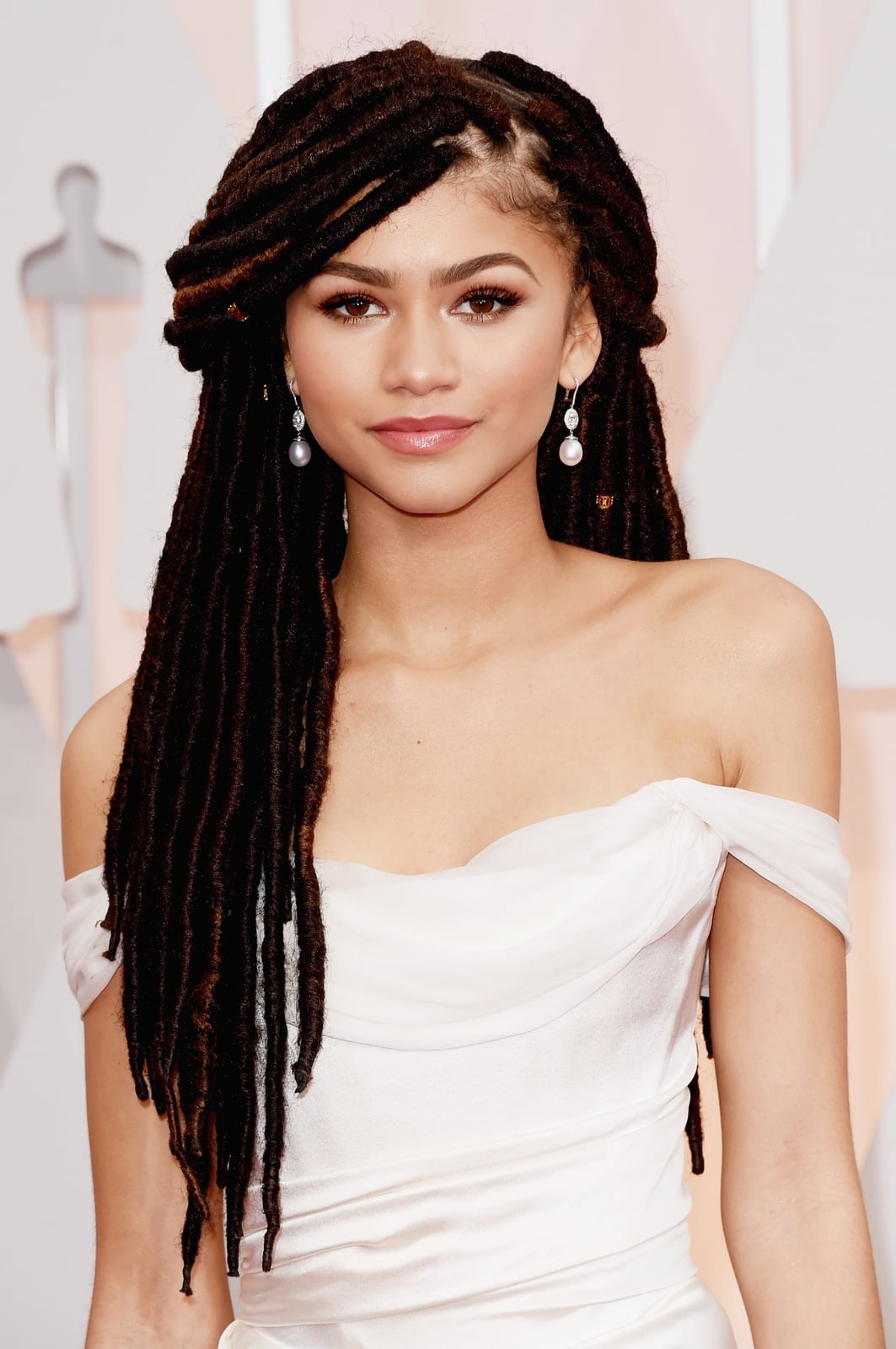
The technique behind this look is more about layering braids than tight tension. The outer locs are braided into a halo shape, while the inner ones are pinned underneath, which creates that dense, polished finish. It holds well for formal events, but it is a salon-only style, so expect to sit for a while. The side part softens the overall effect, making it less severe than a slicked-back version.
Shoulder Length Loose Black Wavy Locs, Close-Up Take
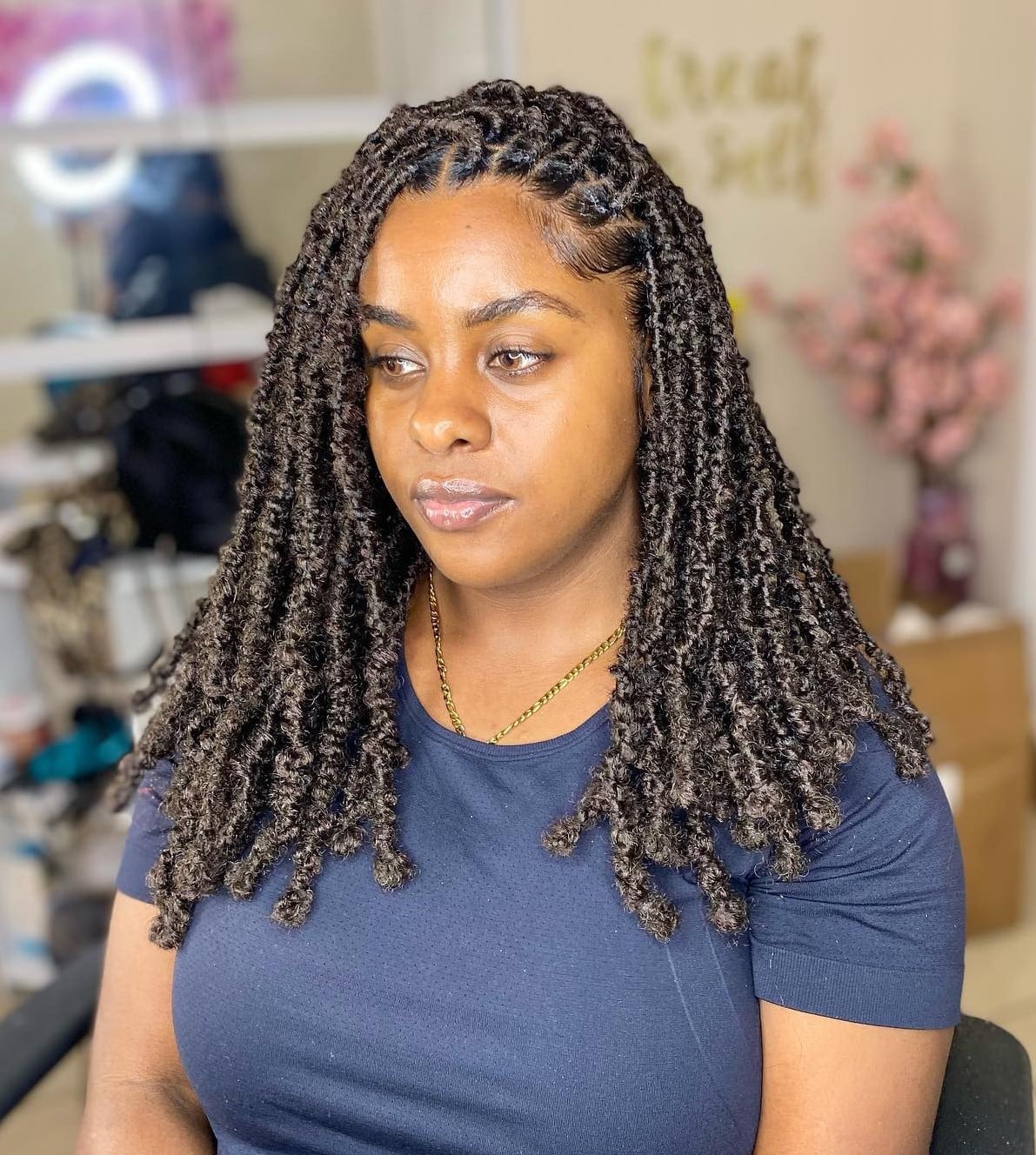
If you like the idea of soft locs but want a finish that moves, this loose wavy black locs style is the less structured sibling of the sleek, tightly twisted version. The locs fall to mid-back in dark brown, with a side part and no bangs, and the wavy texture gives them a natural flow that shifts as you turn your head. Ask your stylist for: shoulder length soft locs, loose wavy style, side part. This style works best on medium density hair starting at shoulder length, since the waves need enough weight to hang properly.
In terms of daily wear, loose locs are forgiving. You can re-style the part in seconds, and the waves mean you do not have to obsess over perfect symmetry. A light serum on the ends keeps the texture soft without weighing down the waves. For shape, a trim every ten to twelve weeks will stop the ends from looking ragged, and the side part can be switched up whenever you need a change.
Final Thoughts
For a professional setting, opt for uniform length and middle parts; for a softer look, consider subtle color variations or loose strands framing the face.
- Gently cleanse scalp weekly with a diluted shampoo or apple cider vinegar rinse.
- Moisturize locs with a light oil or leave-in conditioner, focusing on the scalp.
- Avoid excessive manipulation to preserve the locs’ texture and prevent frizz.
- Sleep with a satin bonnet or scarf to protect locs from friction.
- Trim any stray frizzies or unraveling locs carefully with scissors as needed.
Soft locs offer a blend of beauty and practicality.