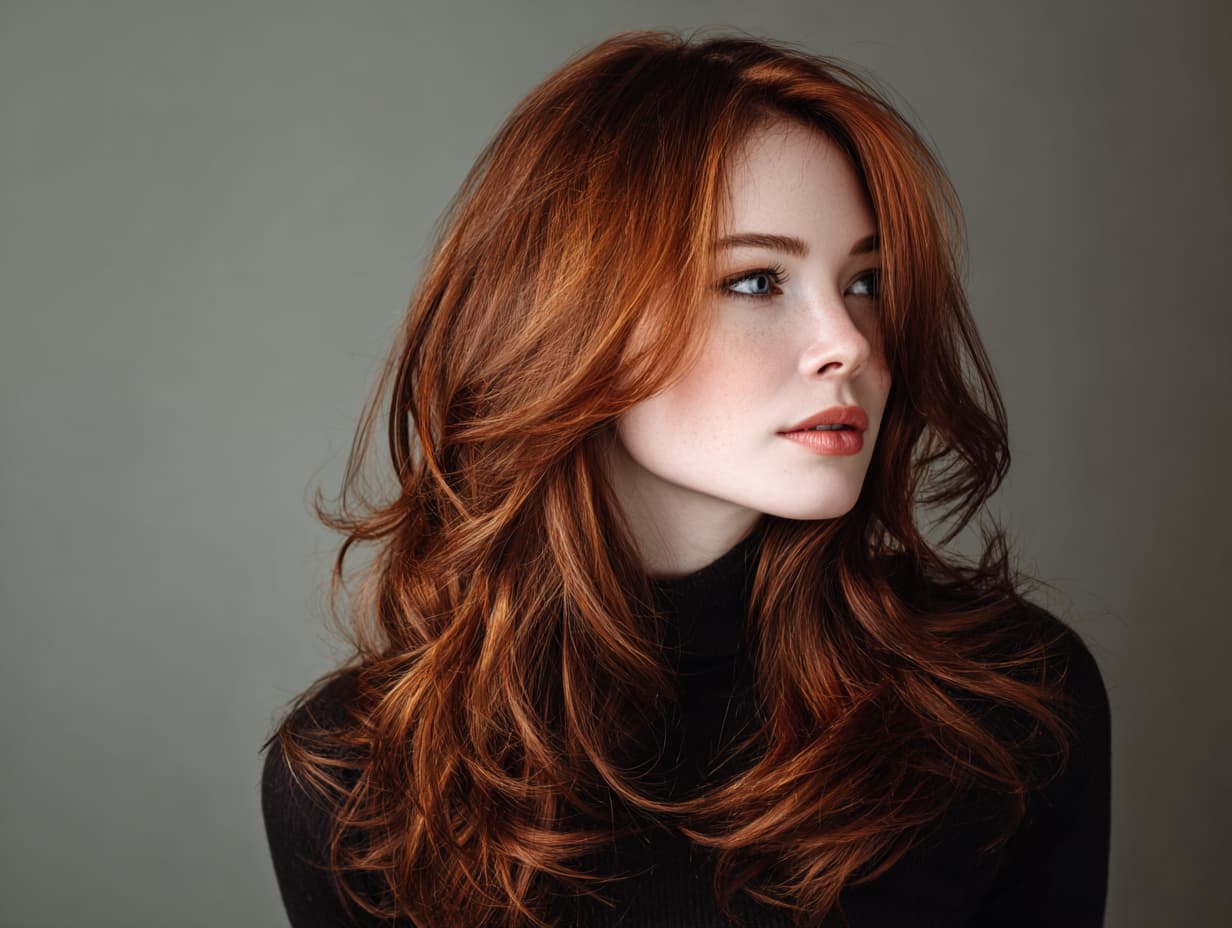
Natural hair is finally getting the respect it deserves, and the cuts and colors this season are all about working with what you’ve got. Soft face-framing layers and lived-in color are replacing the rigid, one-length cuts of years past, making every style feel a little more intentional.
This collection of 29 Natural Hair Ideas covers everything from low-maintenance bobs to high-impact braided updos, so there is something for fine strands, thick coils, and everything in between. Whether your struggle is a fringe that refuses to cooperate or fine hair that falls flat by noon, these cuts and colors are built to make your daily routine easier, not harder.
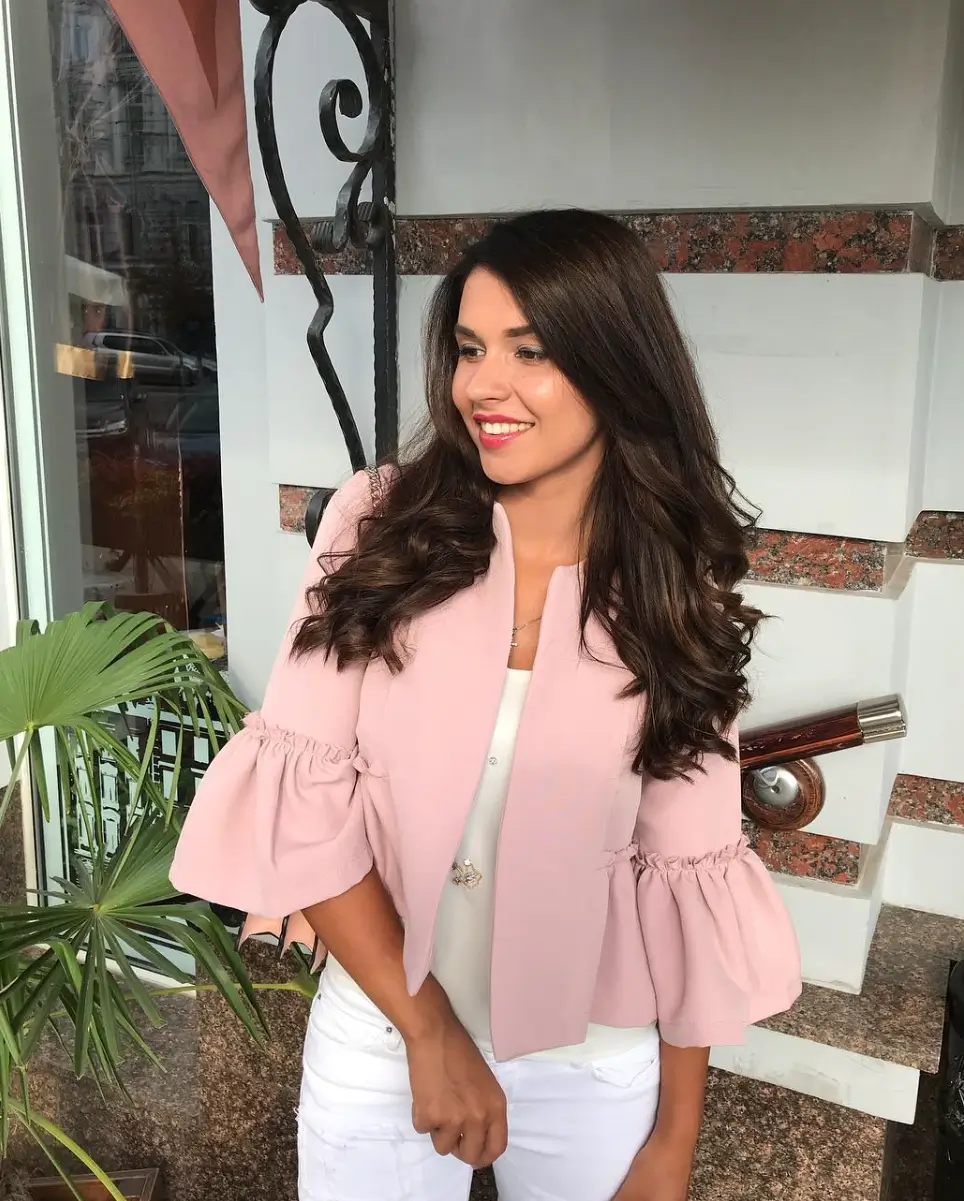
Collarbone Lob With Caramel Highlights
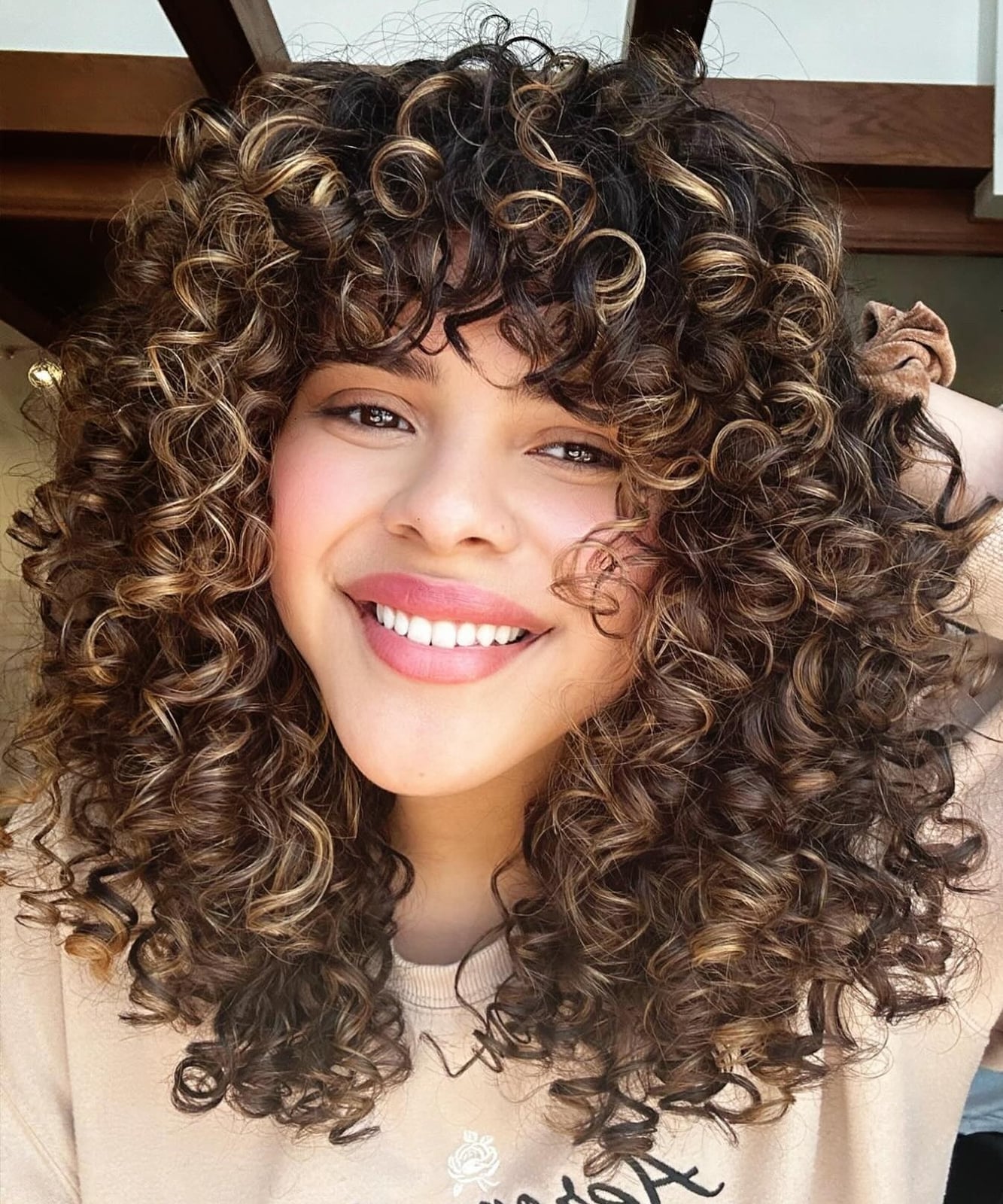
The design hinges on a middle part and long layers that let thick, wavy hair fall into a glossy curtain rather than a heavy wedge. Curtain bangs frame the face without demanding constant heat styling, and the caramel highlights add dimension against a dark brown base without looking streaky. Ask your stylist for a collarbone lob with long layers and curtain bangs, caramel highlights. This cut suits thick, wavy textures that start at the collarbone, and it softens round and heart faces. Air dry for natural texture or use a round brush for a smoother finish; trim bangs every six to eight weeks.
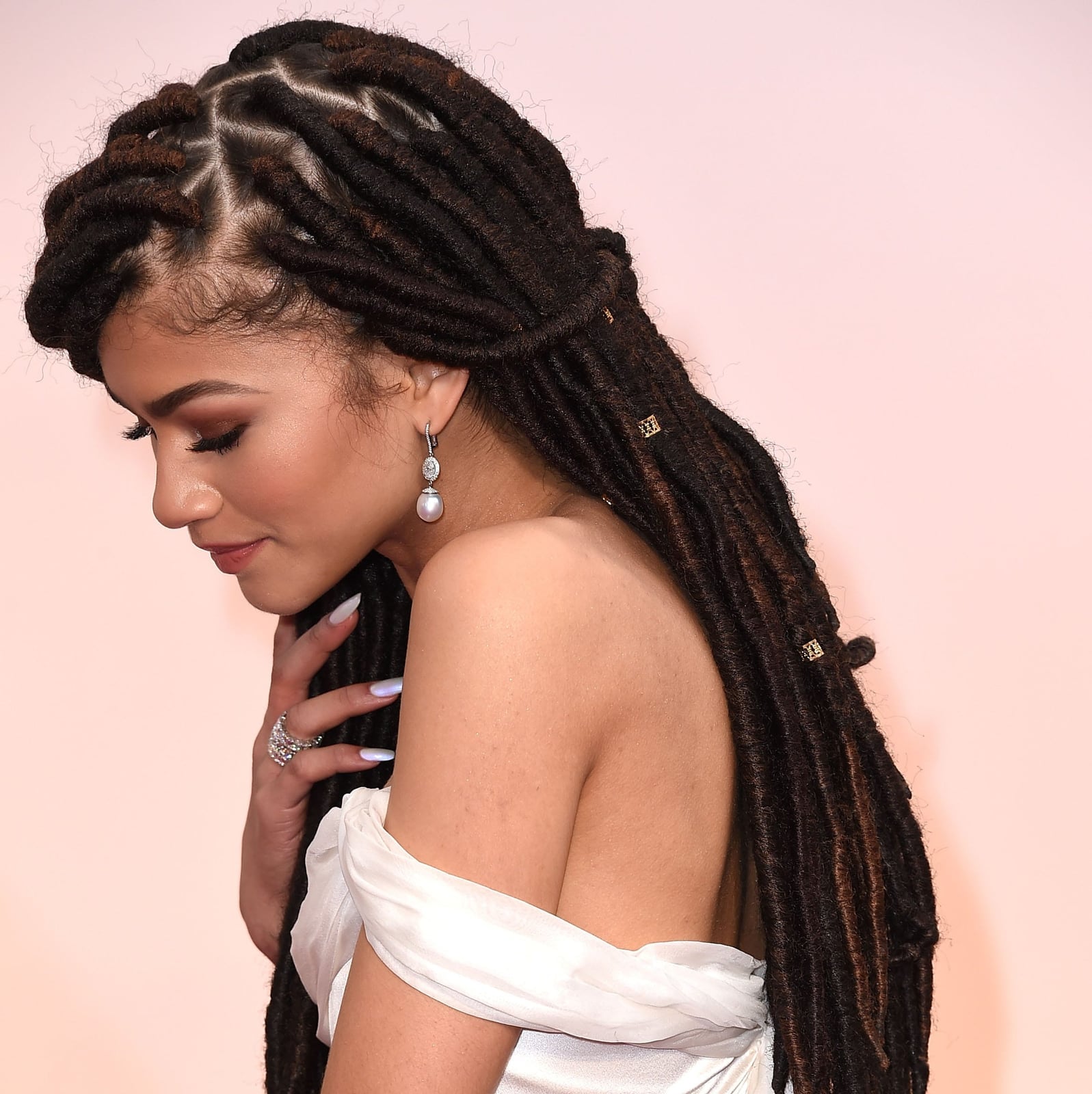
Intricate Black Braided Updo
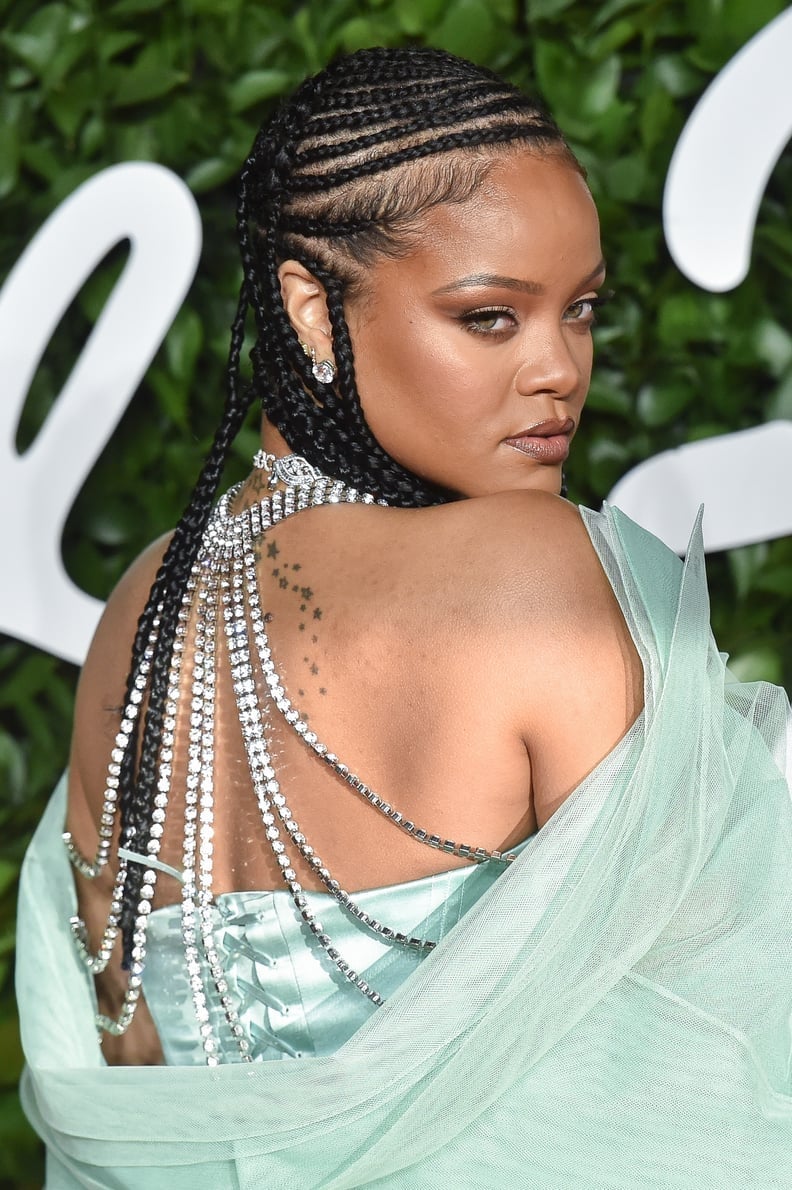
Thick, straight black hair is sectioned into neat, uniform braids that are then gathered into an updo, leaving the nape and sides clean. The middle part keeps the front symmetrical, and the pulled-back strands create a polished profile. Ask your stylist for an intricate braided updo, neat braids.
This style works best for formal occasions or special events, where the detailed braiding becomes a focal point. Thick, straight hair of mid-back length or longer holds the braids most securely, and the technique suits all face shapes. Because the braids are woven tightly, the updo stays intact through a long evening without constant adjustment.
Shoulder Length Layered Curls
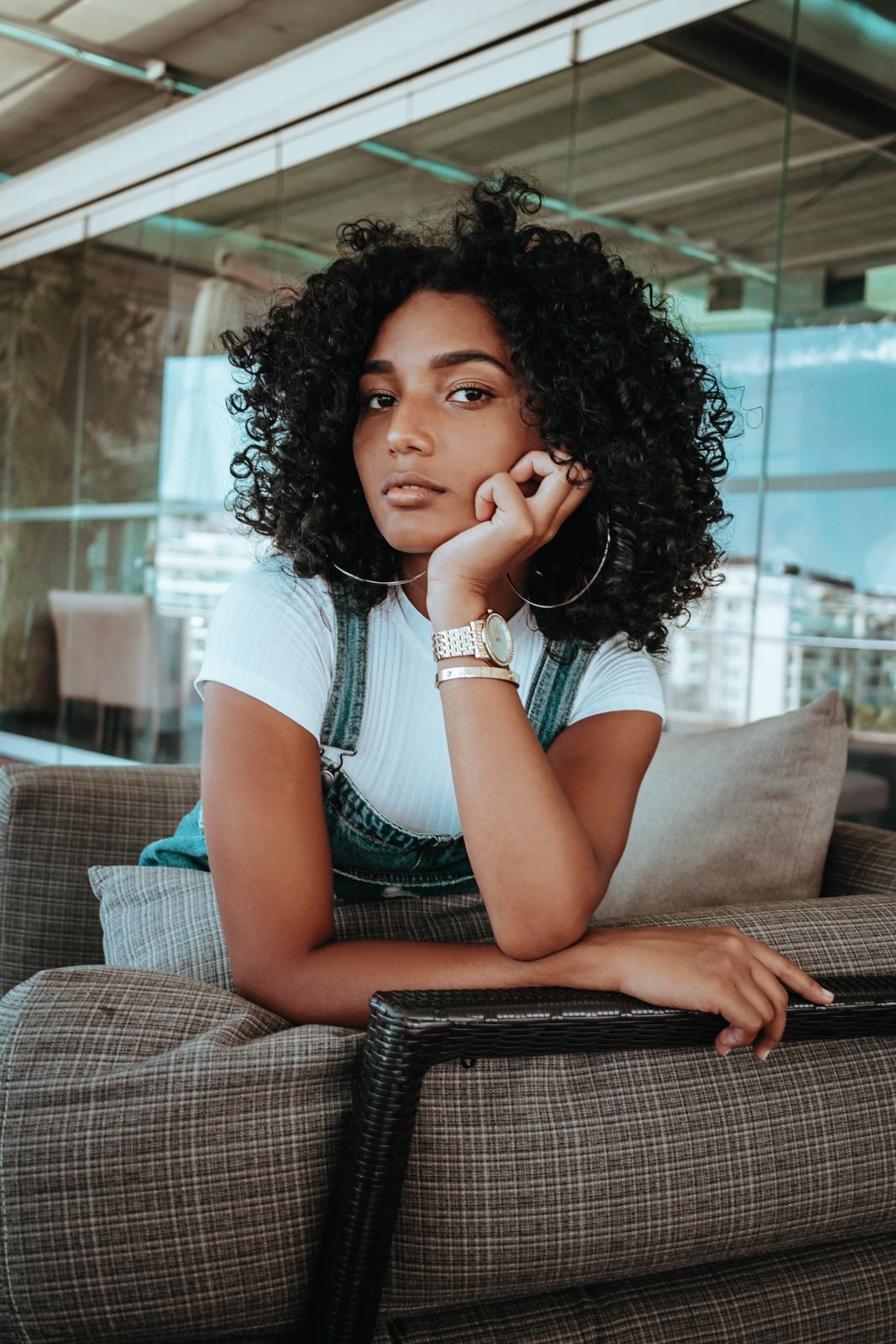
How do you ask for a cut that gives defined curls without losing length? Start with shoulder length as your baseline, then request layers that remove weight from the interior while keeping the perimeter intact. A side part adds asymmetry, which helps elongate round faces. Ask your stylist for a shoulder length layered cut, defined curls. Thick, curly hair benefits from this approach because the layers prevent the shape from turning into a triangle. Air dry with curl-enhancing product or use a diffuser, and plan a trim every eight to ten weeks to maintain the shape.
Blonde Mohawk With Undercut
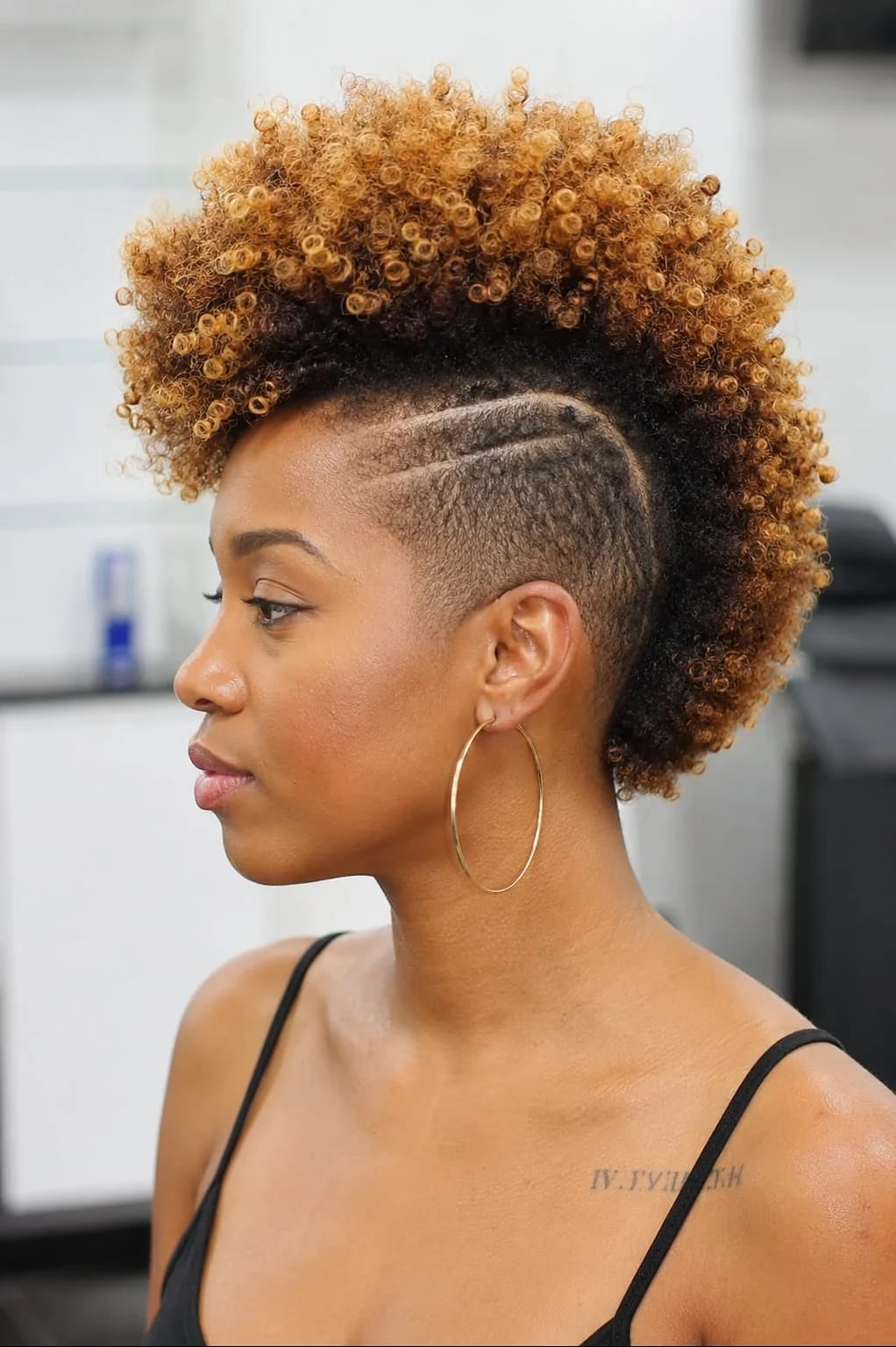
A mohawk with an undercut is not a quiet haircut, but it is also not as extreme as shaving everything off. The top section stays voluminous and curly, while the sides are clipped short enough to make the shape read as intentional. Ask your stylist for a mohawk with undercut, voluminous top. Thick, curly hair of shoulder length holds the mohawk shape best, and the style suits oval and square faces.
This is a salon cut through and through. The undercut requires regular maintenance trims to keep the lines sharp, and styling the top upwards takes a pomade or wax. The lived-in blonde with dark roots means you can stretch the time between color appointments.
Collarbone Black Layered Cut
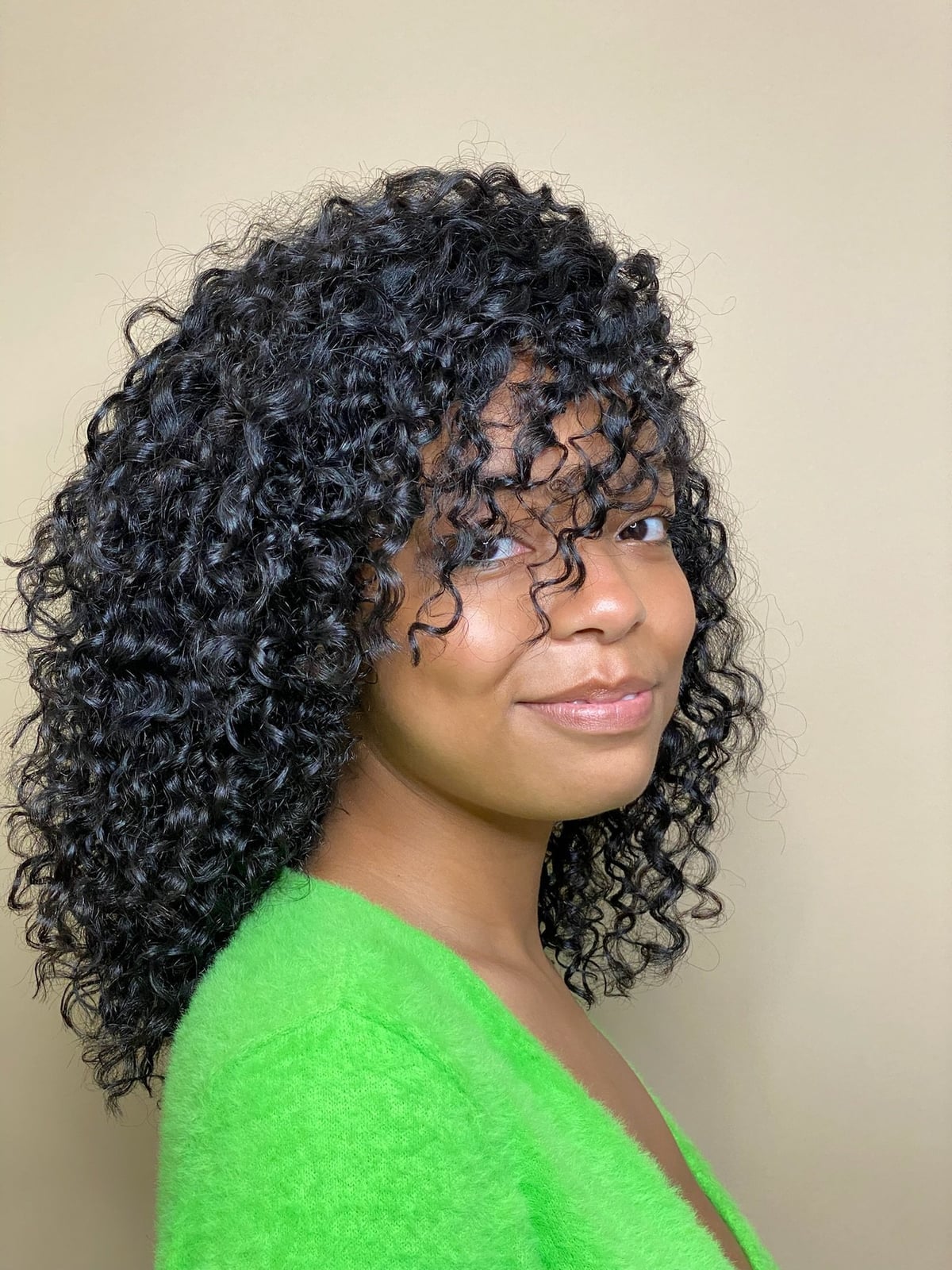
A collarbone cut with layers and defined curly bangs walks a careful line between structure and freedom. The layers remove bulk so the curls stack without looking heavy, and the curly bangs frame the forehead without needing to be flat-ironed. A middle parting keeps the shape symmetrical. Ask your stylist for a collarbone layered cut, defined curly bangs.
Thick, curly hair starting at collarbone length works well here, and the style softens square and round faces. Air dry with a curl cream for definition, and trim the layers and bangs every six to eight weeks to keep the shape from growing into a single triangle. The black color stays glossy without toning visits.
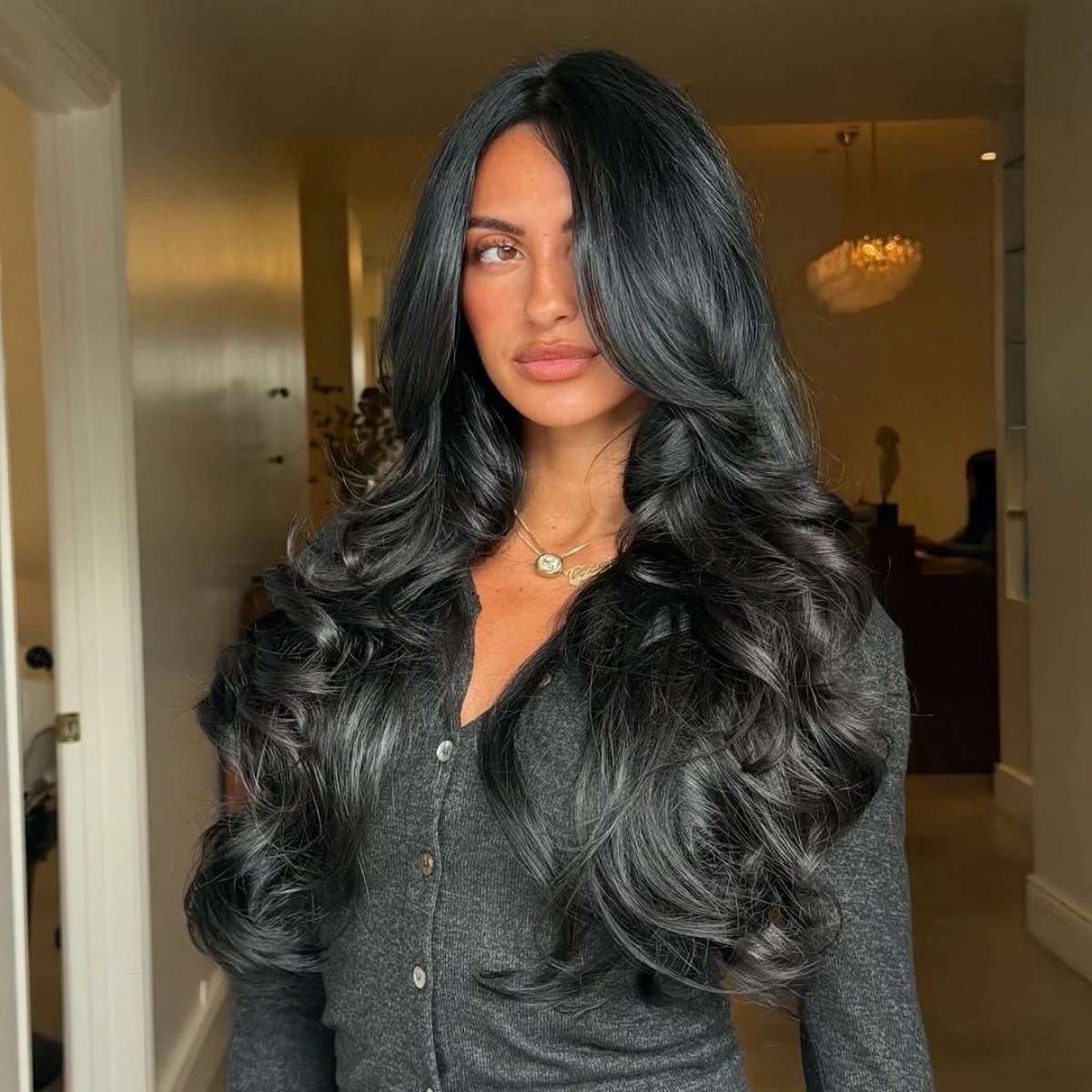
Shoulder Length Voluminous Blowout
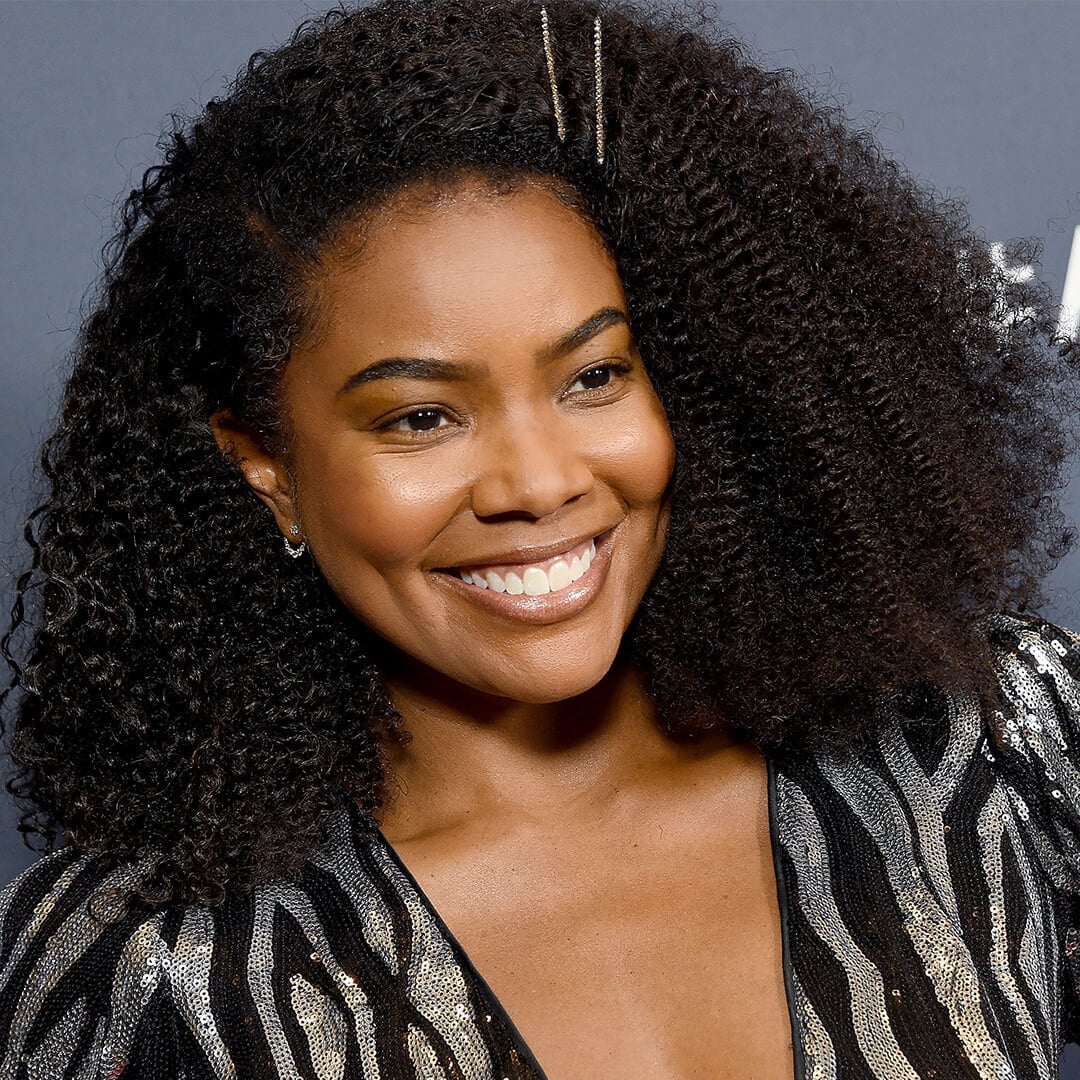
A voluminous blowout on shoulder-length curly hair is a commitment, but the payoff is bounce that lasts a solid day or two. This cut uses layers and curtain bangs to keep the weight from pulling the curl out, which is the main battle with thick hair at this length. It works best on naturally curly or wavy textures that can hold shape without a full can of product, and it suits oval and heart faces. Ask your stylist for: shoulder length layered cut, voluminous blowout, curtain bangs. The drawback: you are looking at a round brush and blow dryer session that takes longer than a quick air-dry. The middle part and subtle highlights add dimension, but the real work is in the roots, lift them or the whole thing falls flat.
Chin Length Bob With Glossy Waves
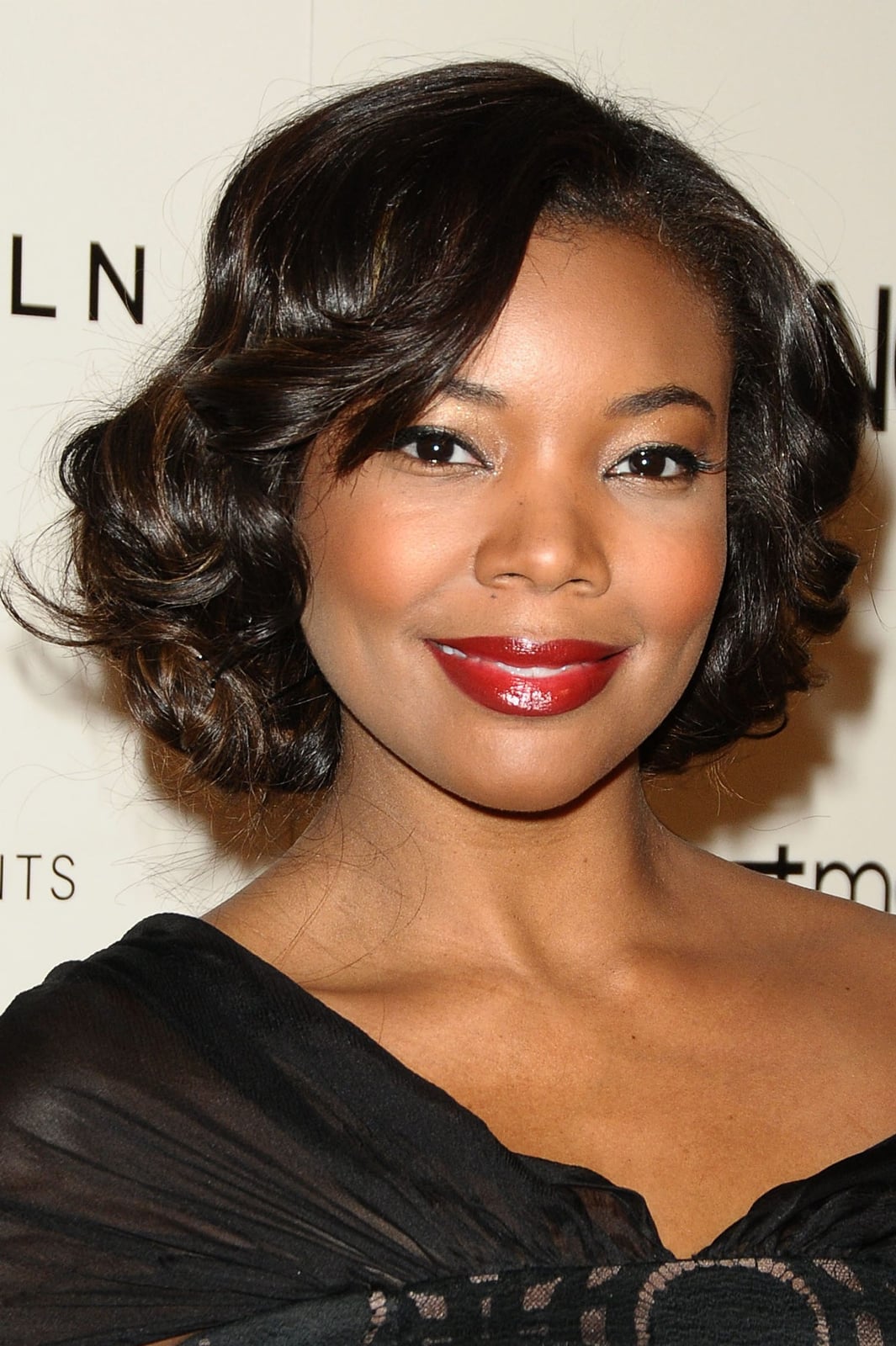
Can a bob do double duty for both the office and a dinner out? A chin-length version with glossy waves answers yes, provided you keep the side part and the shine. This cut has no bangs, which means the face-framing comes from soft waves that graze the jaw, a trick that elongates round faces. Ask your stylist for: chin length bob, soft waves, side part. The polish comes from a large-barrel curling iron and a drop of shine serum, and a trim every six to eight weeks maintains the shape. It is a winter-to-spring cut that works because the length is practical and the waves add movement without requiring a full blowout.
Mid-Back Voluminous Curly Hair
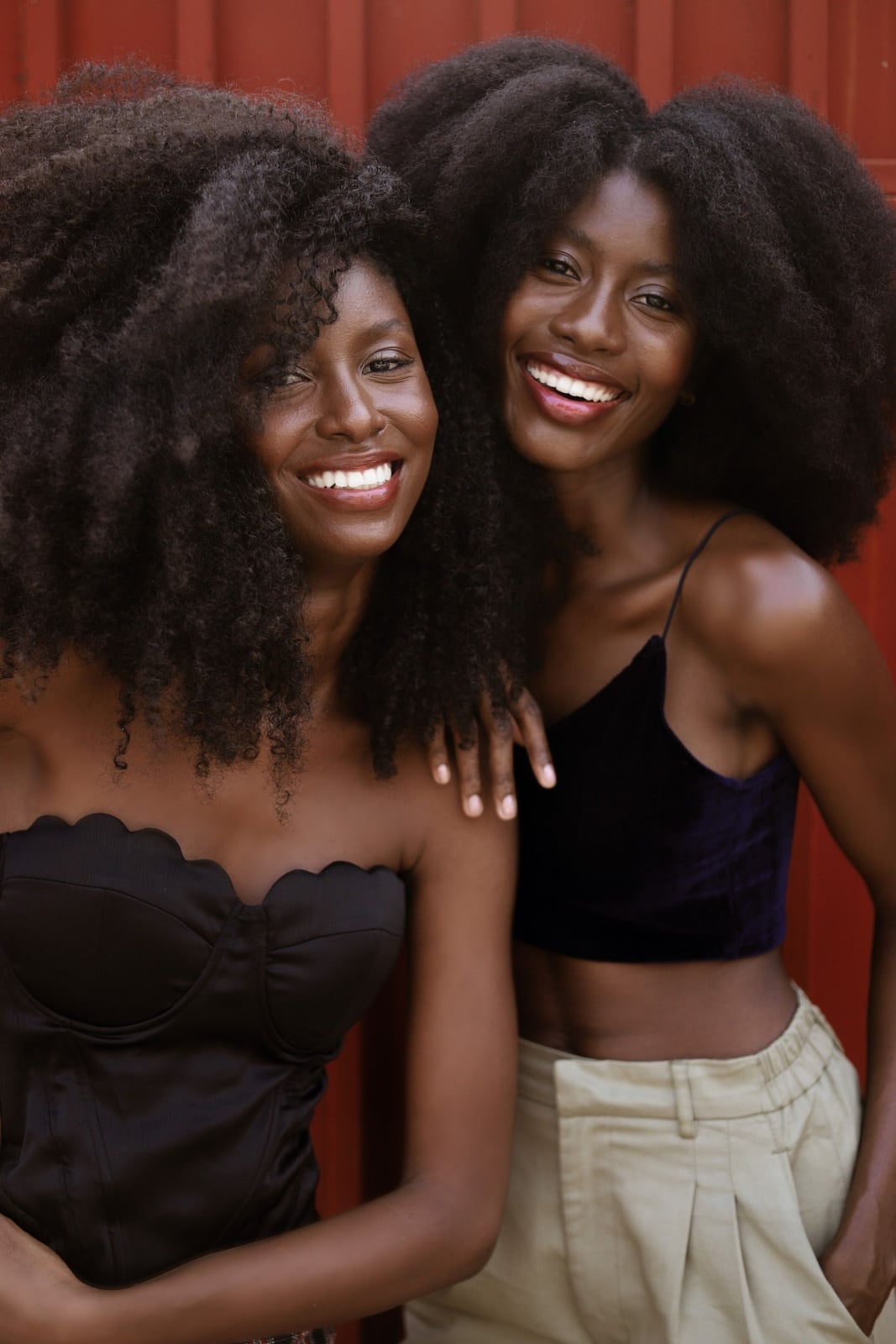
The mid-back length is a sweet spot for thick, curly hair that wants volume without the weight of anything longer. This cut uses long layers to prevent the hair from sitting like a heavy triangle, and the side part adds asymmetry that keeps the shape from feeling too round. It genuinely flatters all face shapes because the volume sits at the crown and sides, not at the chin or jaw. Ask your stylist for: mid-back length, natural voluminous curls, side part.
Upkeep is straightforward: detangle with a wide-tooth comb or your fingers, apply a curl cream, and air dry. The trim schedule runs every ten to twelve weeks, which is generous for curly hair. The trade-off for all that volume is that this length requires patience during the grow-out phase. It takes a while to reach mid-back from a shorter cut, and the layers need to be maintained or the shape collapses.
Mid-Back Defined Curly Texture
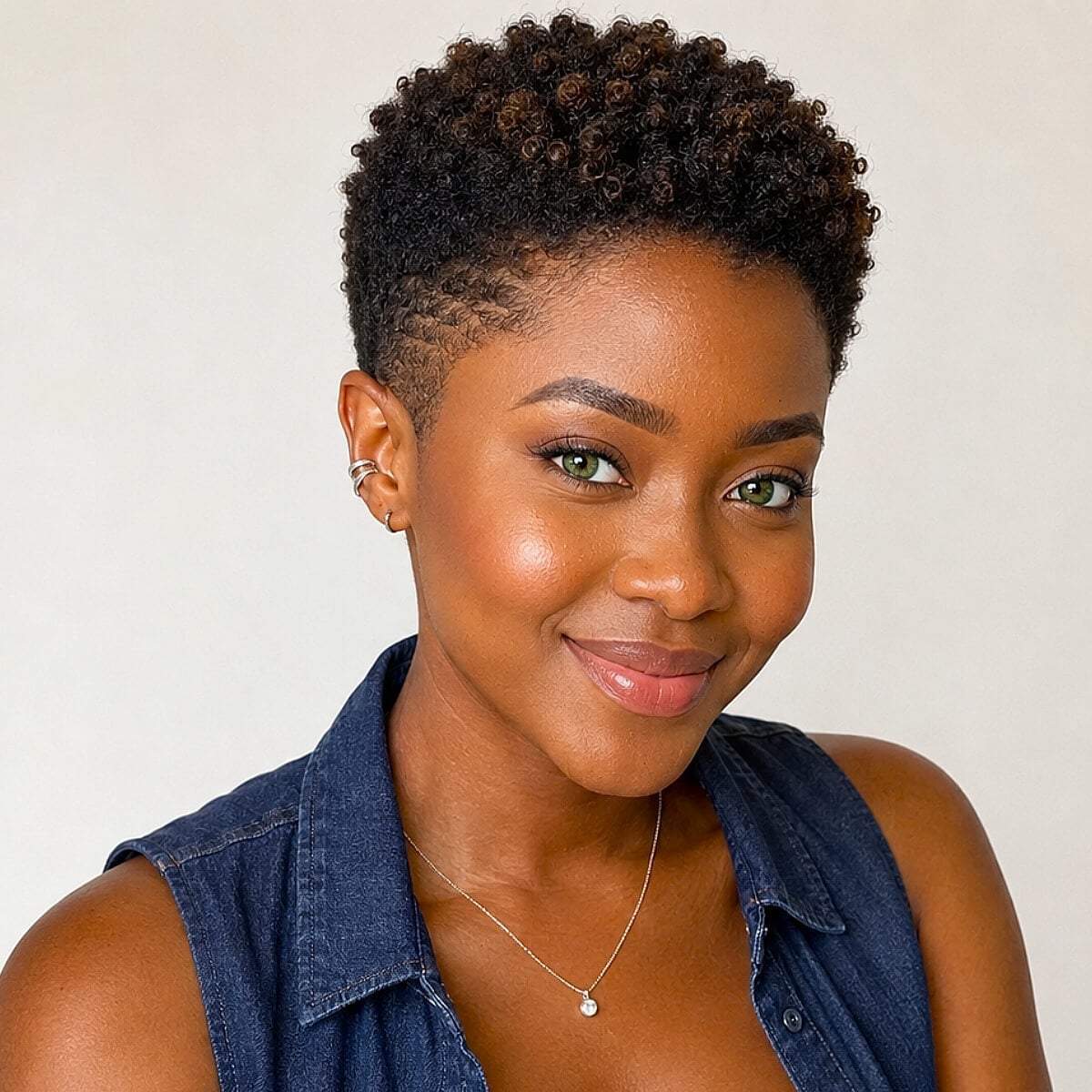
The difference between voluminous curls and defined ringlets is mostly technique, and this look leans hard into the latter. The hair is cut in long layers that let each curl form a distinct spiral instead of a general puff, and the middle part keeps the shape symmetrical. Subtle lighter strands separate the curls visually, which is the whole point of a defined texture. You see each ringlet, not a single mass of hair. Ask your colorist for: mid-back defined curly hair, subtle highlights.
The technique relies on a curl-defining serum applied to wet hair, followed by scrunching and air drying. Over-brushing is the enemy here: a wide-tooth comb in the shower, then hands only. This look suits all face shapes because the length and the defined curls draw the eye downward instead of across. It is a casual, everyday style that appears deliberate without looking like you spent an hour on it.
Long Voluminous Updo With Curly Bangs
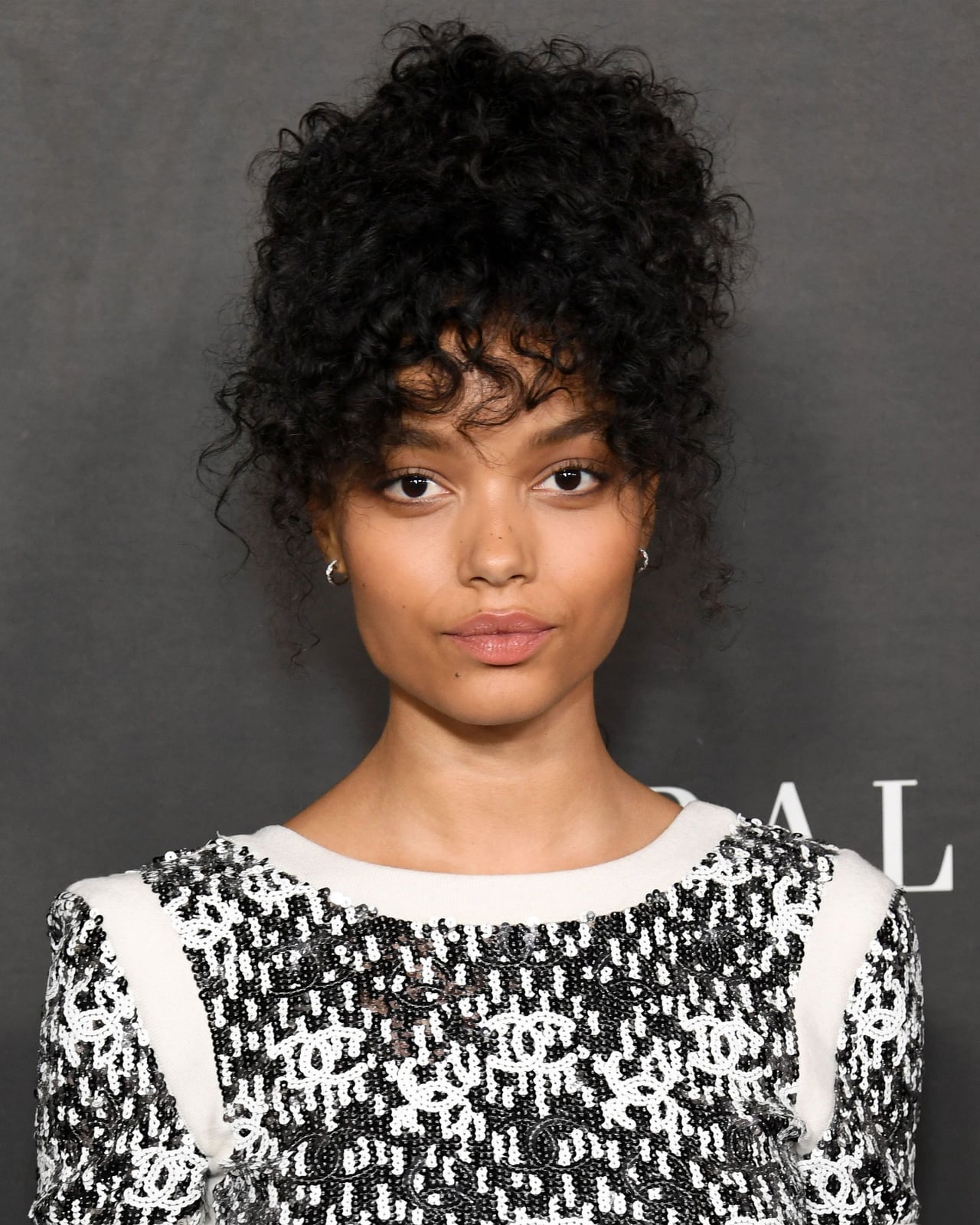
How do you get a formal updo that does not look like a ballet bun? Start with long, thick curly hair and keep the bangs out of the pinning. This style gathers the length into a voluminous updo at the crown, leaving soft curly bangs to frame the forehead and loose curls to cascade around the face. It is a salon-level construction that needs texturizing spray and strategic pinning to hold the volume without looking stiff. Ask your stylist for: voluminous updo, soft curly bangs. The DIY version is possible if you have practice with pins and hairspray, but expect a learning curve. The volume tends to deflate halfway through if you skip the prep. It suits all face shapes because the bangs and loose curls soften the edges, and the height at the crown balances a longer face.
High Ponytail With Voluminous Curls
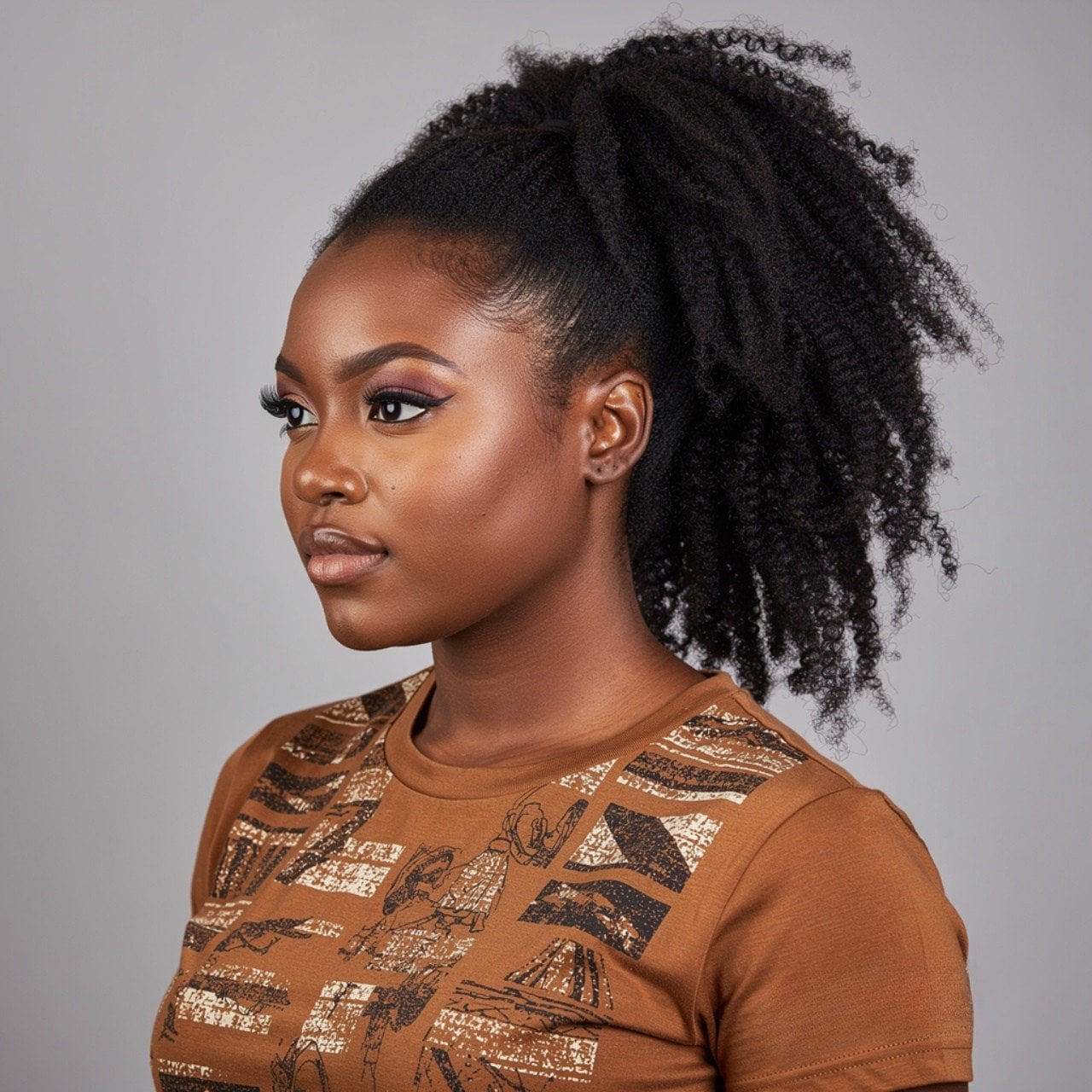
A high ponytail with voluminous curls is a practical style for thick, curly hair at mid-back length or longer. It works for all face shapes, since the ponytail adds height and the curls soften the overall line. Ask your stylist for: high ponytail with voluminous curls, side part. Gather the hair tightly at the crown, then wrap a section around the elastic to hide it. This style holds well for a full day of activity and transitions easily from casual to dressed-up.
Shoulder Length Bantu Knots
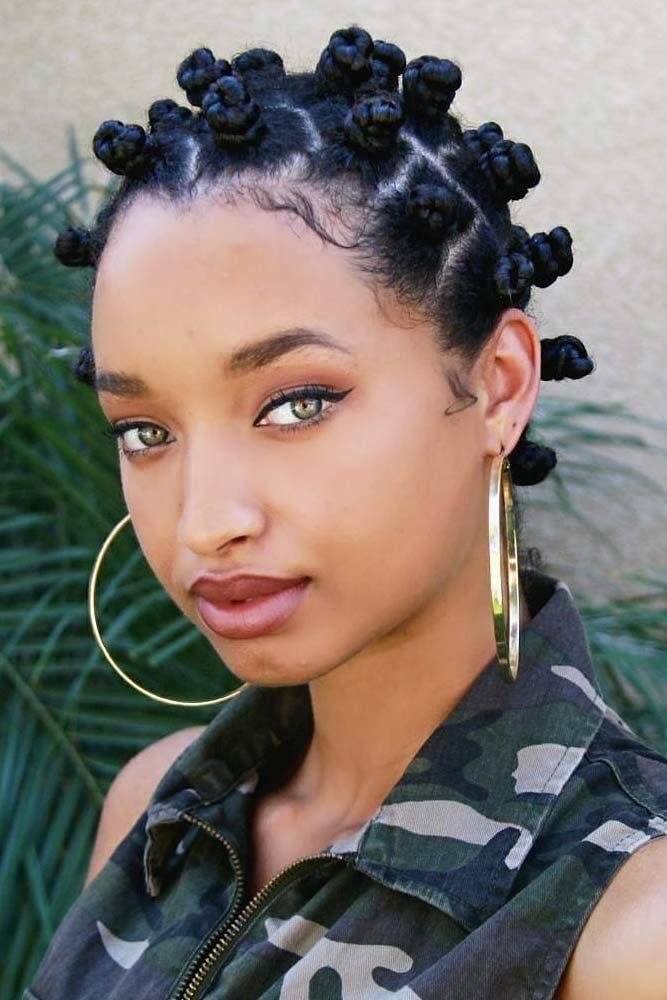
Bantu knots are a protective style that works best on thick, coily hair at shoulder length, with a side parting to add asymmetry. Ask your stylist for: shoulder length bantu knots. Apply a setting lotion to each section before twisting and knotting for a defined finish. The style lasts several days with a satin scarf at night, and when you unravel the knots, you get a heatless curl pattern that holds for another day or two.
Chin Length Updo With Twisted Sections
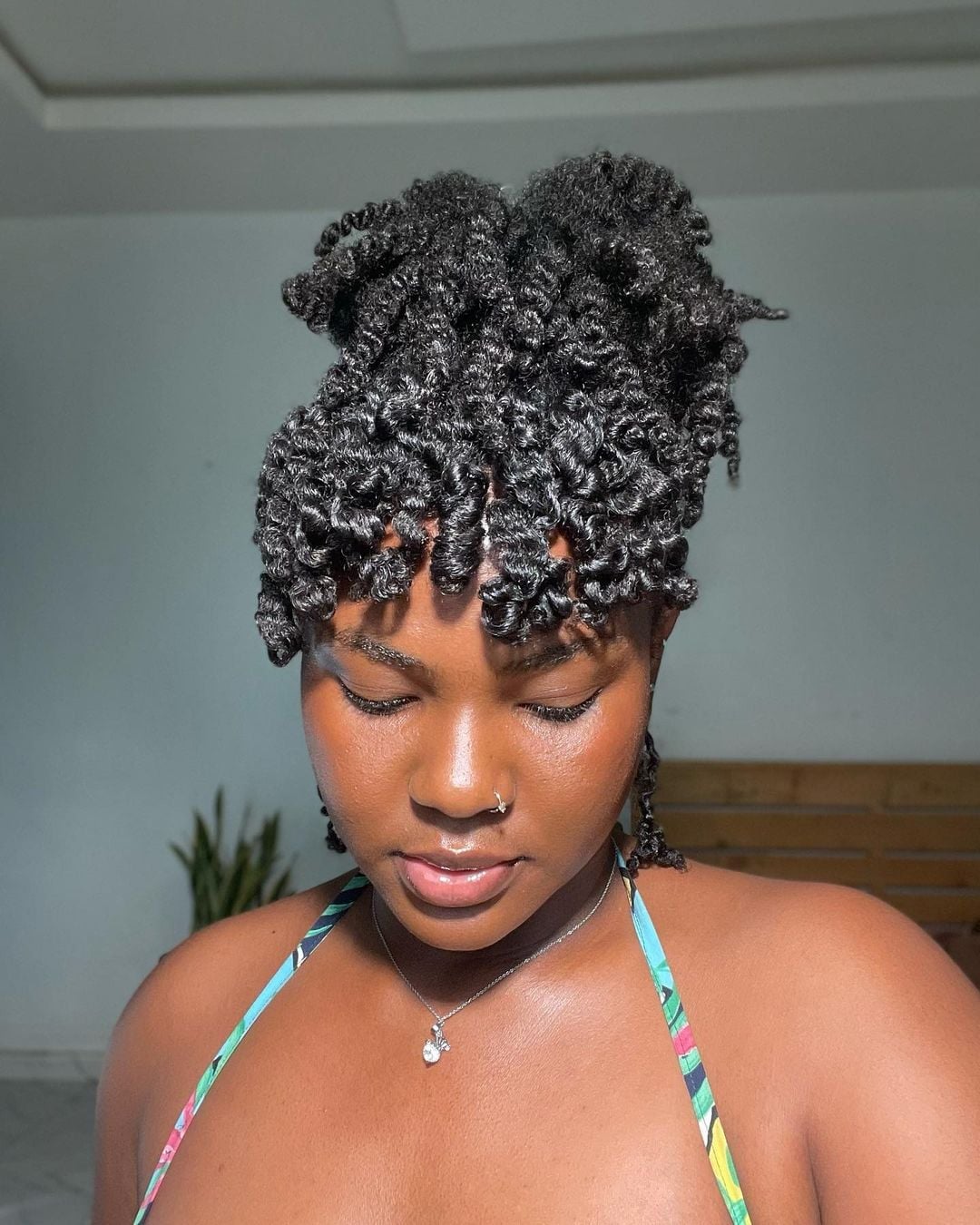
The twisted sections and curly bangs frame the face and soften square or round shapes. Ask your stylist for: chin length updo, twisted sections, curly bangs. The honest trade-off is the time it takes to section and twist each piece evenly. Moisturize the coils well before starting, and plan for an hour or more depending on density.
Nape Length Tapered Braids
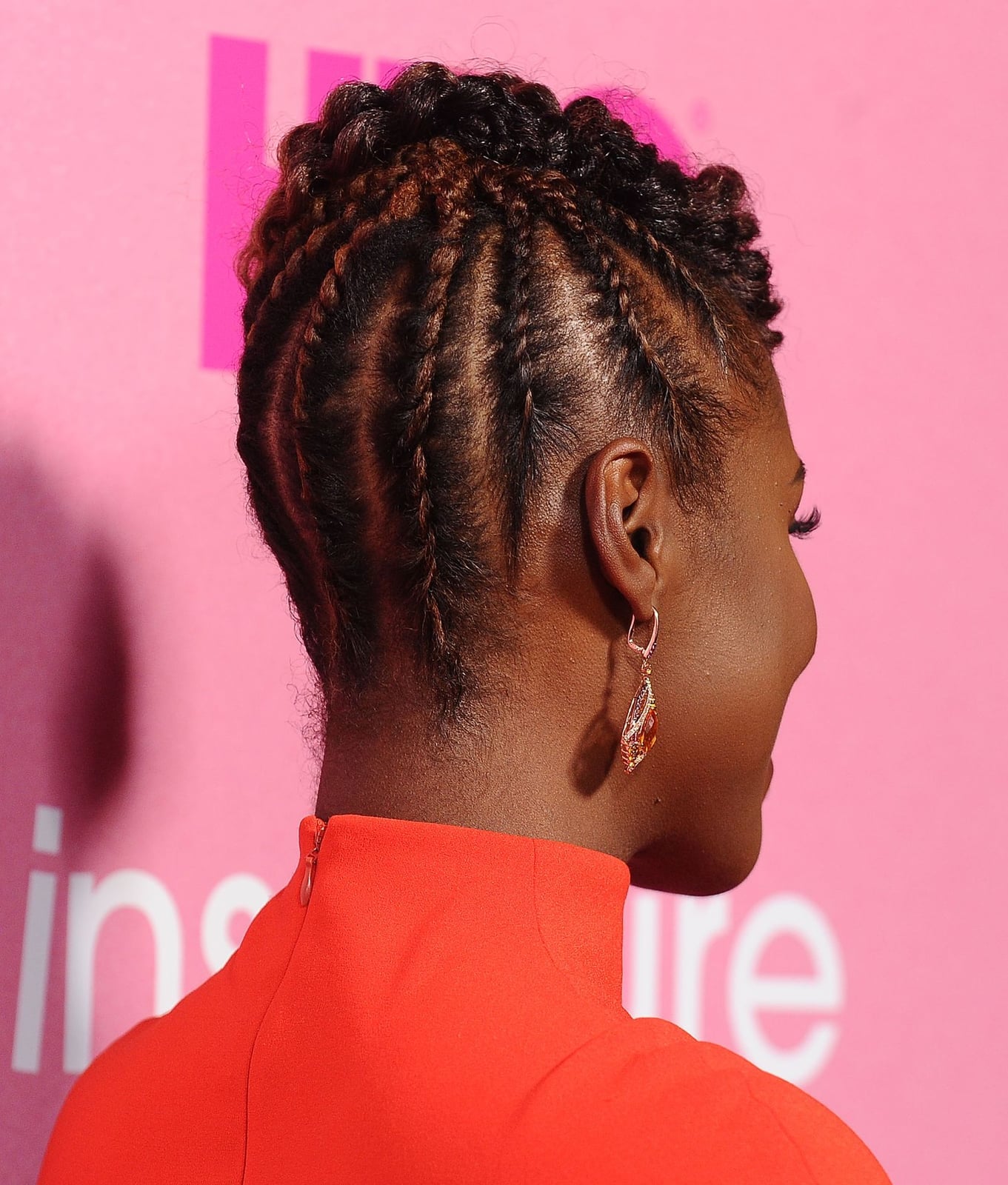
Nape-length tapered braids sit closer to the head than longer braided styles, which means less weight and less time in the chair. The tapered cut and subtle lighter highlights add dimension to thick, coily hair. Ask your stylist for: nape length tapered braids. Upkeep is straightforward: keep the braids moisturized with a lightweight oil or spray and avoid excessive tension at the edges. A trim every six to eight weeks maintains the tapered shape.
Short Tapered Afro Puff
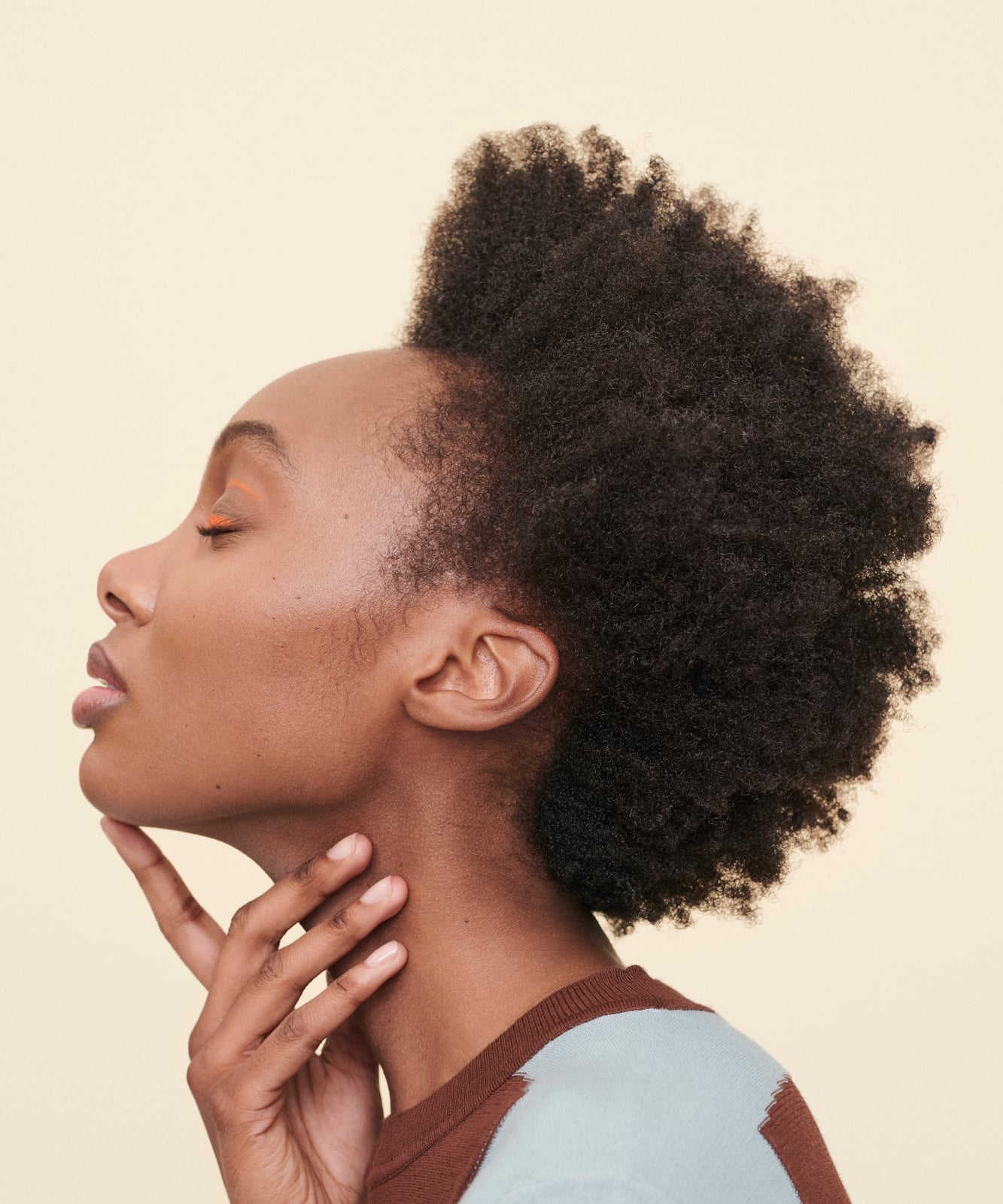
Can a short tapered cut still pull off a puff? Yes, if your hair is thick and coily. The afro puff gathers the top section while the tapered sides stay clean, making it a low-fuss option for short lengths. Ask your stylist for: short tapered afro puff, warm highlights. Use a satin scrunchie to create the puff and edge control to smooth the hairline. It suits all face shapes, though round faces get extra elongation from the height at the crown.
Chin Length Textured Bright Orange Afro
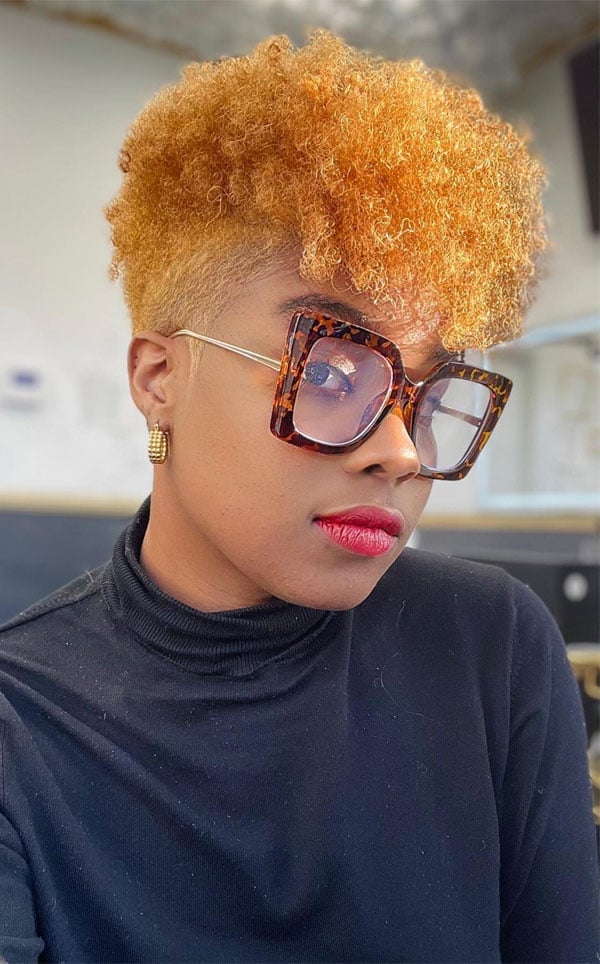
A chin length textured afro with shaved sides and a side part gets its power from the contrast between dense volume on top and bare skin at the temples. The bright orange color is not a one-and-done process: it demands a double-process lift from dark base to vivid copper, then a semi-permanent gloss to lock in saturation. Ask your colorist for: chin length textured afro, bright orange color, shaved sides. DIY touch-ups between salon visits are risky with this shade; a root retouch every three weeks stops the grow-out from looking like a different color entirely. For festival season or a bold daily statement, this cut earns every minute of upkeep.
A pick lifts the roots for that signature round silhouette, and the shaved sides need a trim every two weeks to stay clean. The payoff is a shape that is sculptural, with the orange changing appearance at every angle.
Shoulder Length Voluminous Dark Brown Afro
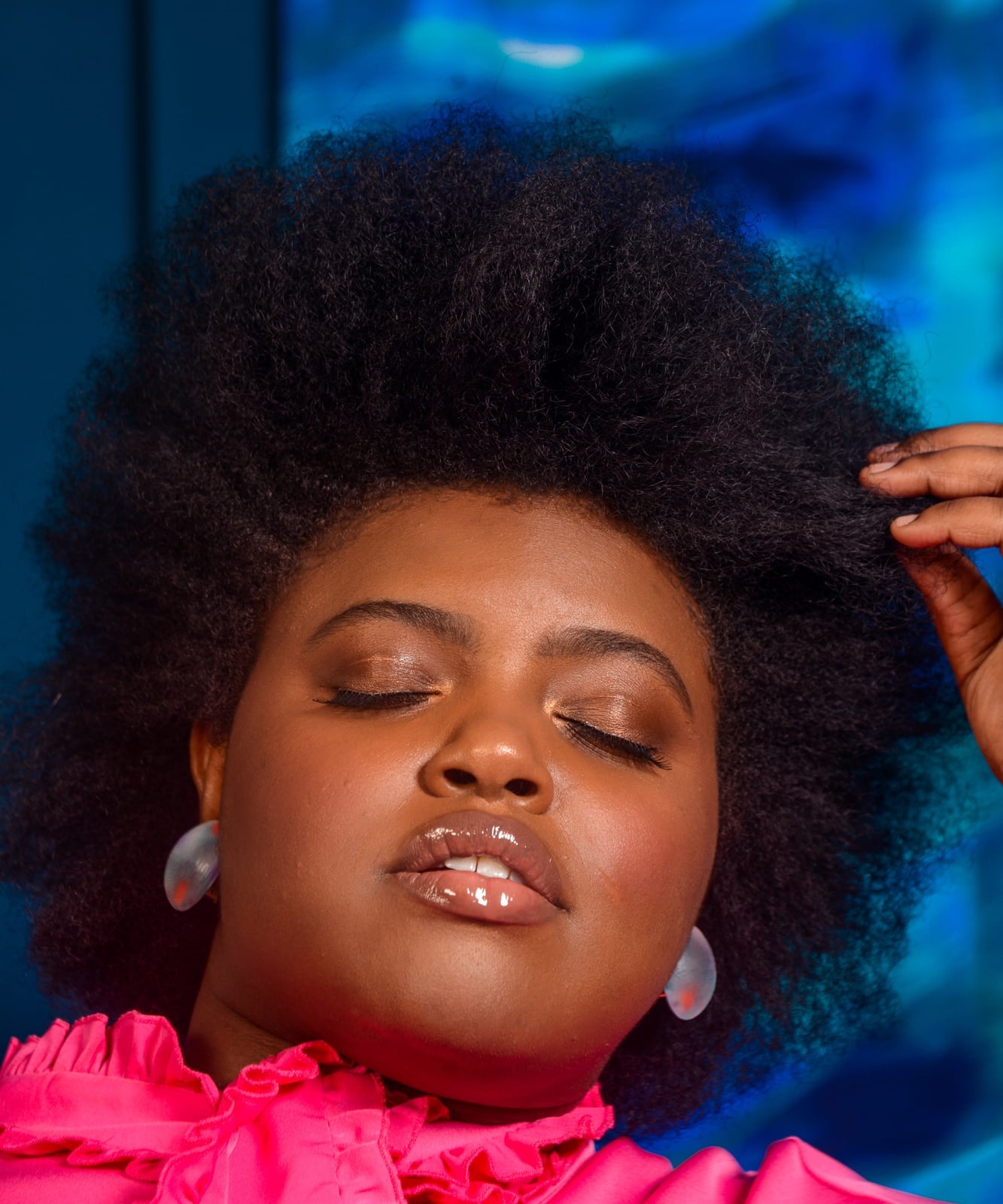
A shoulder length dark brown afro relies on the hair’s own coily texture to hold its round shape without much interference. The glossy finish comes from the natural oils traveling down each strand, which means overwashing is the enemy: a weekly cleanse with a sulfate-free shampoo keeps the volume without stripping moisture. Ask your stylist for: shoulder length voluminous dark brown afro. A wide-tooth comb or a pick is all you need to fluff the roots after air drying, and sleeping on a satin pillowcase reduces friction. The reality of this cut is that the shape looks best when the hair is fully dry and undisturbed, so plan for a few hours of drying time on wash day.
Collarbone Brown With Blonde Highlights
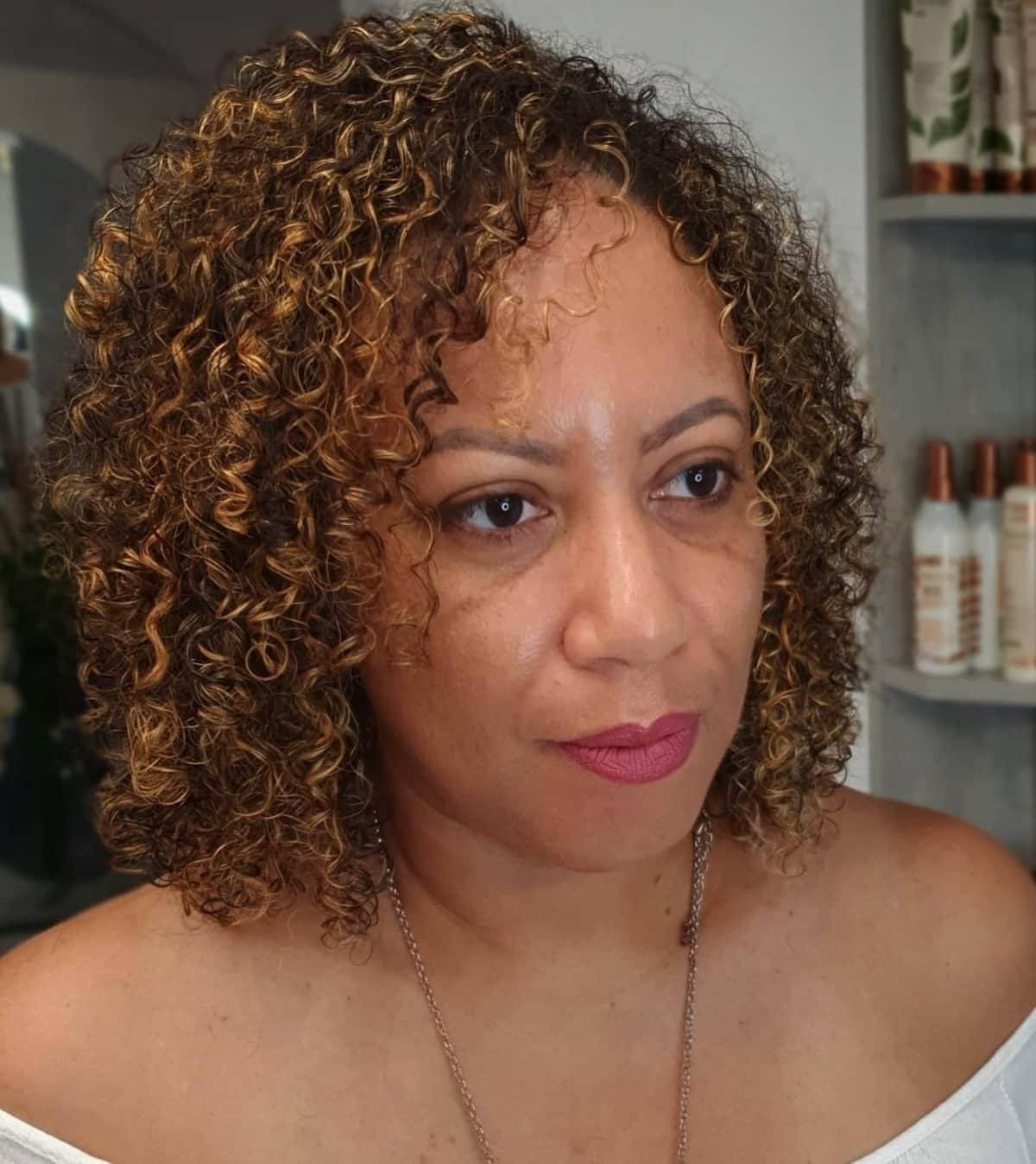
The honest take on collarbone length brown curls with blonde highlights is that the dimension is worth the vigilance. Blonde on curly dark hair lifts beautifully but fades faster than on straight textures, and the brassiness tends to show first on the ends. A purple shampoo used once a week extends the cool tone, but a toner appointment every eight weeks is the real minimum to keep the blonde from swinging orange. Ask your colorist for: collarbone layered cut, brown with blonde highlights. If you prefer to air dry and walk out the door, this look still works, but the highlights will read warmer over time than the day you left the salon.
Short Pixie With Textured Top and Brown With Blonde Highlights
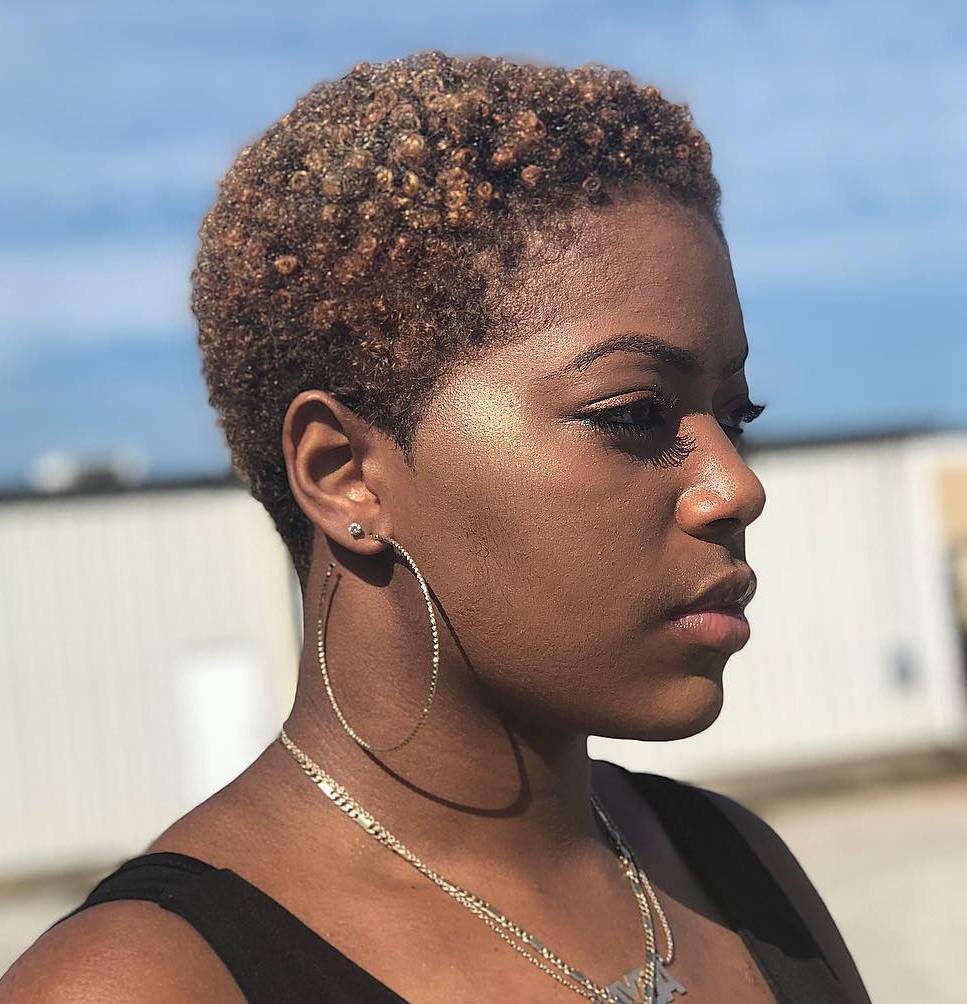
Is there a haircut that actually gets better as the weather warms up? A short pixie with a textured top answers that one with a yes. The ear-length cut is cropped close at the sides, with curly, fine hair left longer on top to create that lifted, air-dried shape. Brown with blonde highlights adds dimension without looking like you tried too hard. It suits fine, curly hair starting at ear length, and the side parting softens square faces. Ask your stylist for: short pixie with textured top, brown with blonde highlights. A texturizing paste worked through the top gives definition, and a trim every four to six weeks keeps the shape from turning shaggy.
Short Crop In Vibrant Copper Blonde
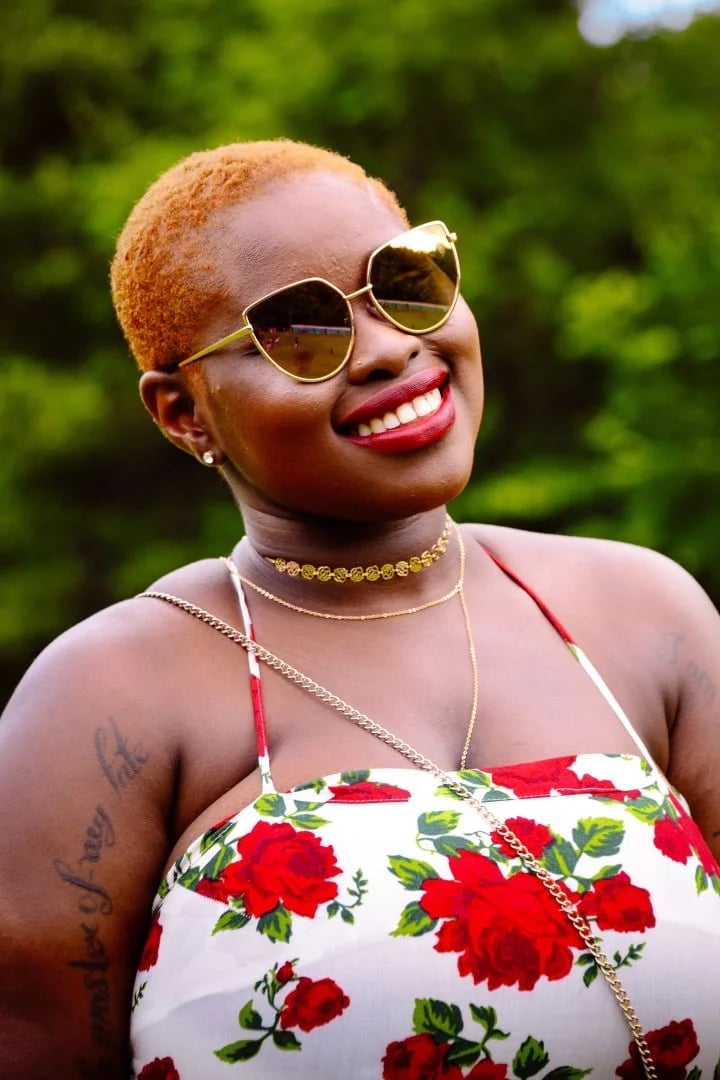
An ear length short crop in a vibrant copper blonde shade is a color-first cut that works best on thick, curly hair capable of holding its own shape without layers. The middle part and air-dried finish keep the look relaxed, but the copper blonde demands a specific base: natural levels six through eight lift cleanly to this tone, while darker bases need a two-step process that is better left to a colorist. Ask your colorist for: short curly crop, vibrant copper blonde color. If you are comfortable with at-home root sprays for touch-ups, you can stretch salon visits to six weeks. Oval and heart faces get the most from the rounded silhouette, and the absence of bangs means the focus stays on the color and the curl pattern.
Short Blonde Curly Cut
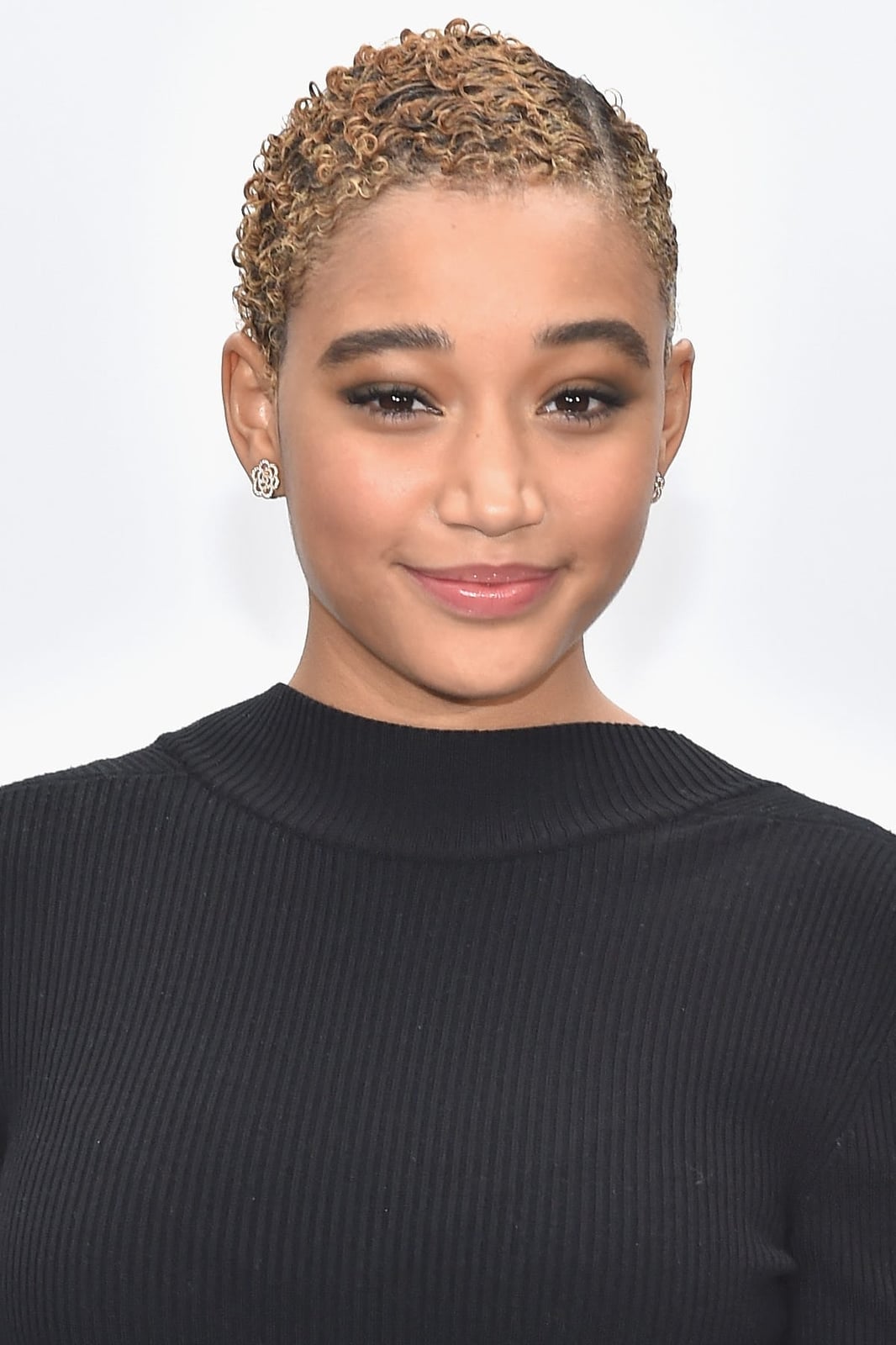
A short blonde curly cut relies on precise layering so the natural curl pattern has room to spring, not crush itself. Fine, curly hair at ear length benefits from a side part that breaks up the roundness and adds visual asymmetry. Ask your stylist for: a short blonde curly cut, side part. The blonde color requires a purple shampoo every other wash to keep brass at bay, and a trim every six to eight weeks maintains the shape.
Short Salt and Pepper Pixie Crop
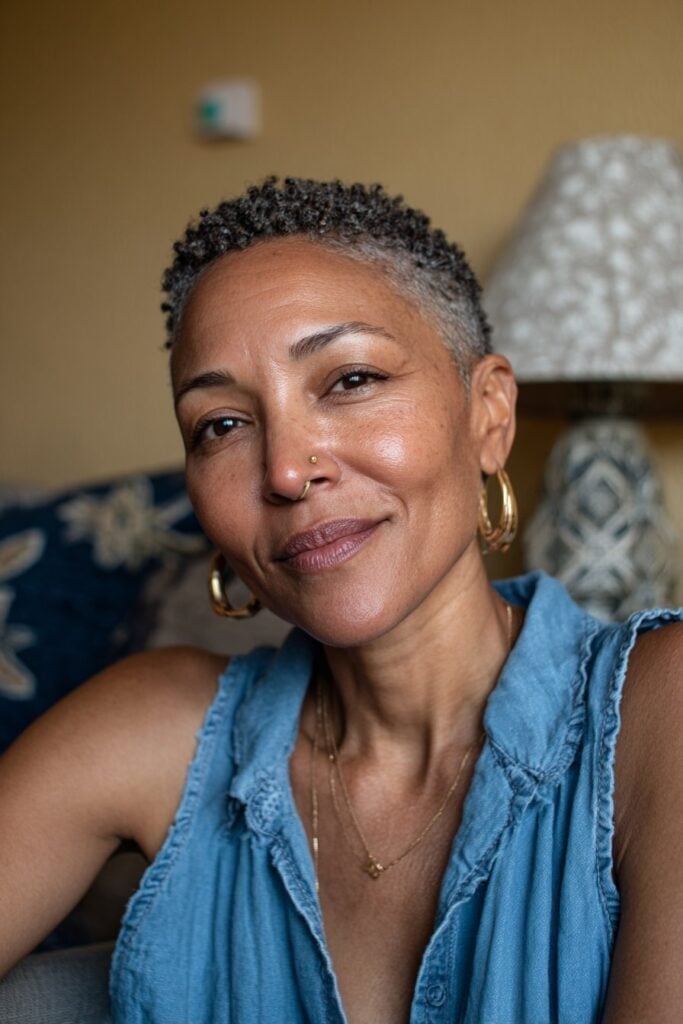
The cut itself is a short pixie with a side part, the length grazing the ears, and the texture is curly and fine. Ask your stylist for: a short textured pixie, salt and pepper color. The result is a modern, sharp silhouette that works on most face shapes because the volume sits at the crown.
Short Pixie With Side Swept Fringe
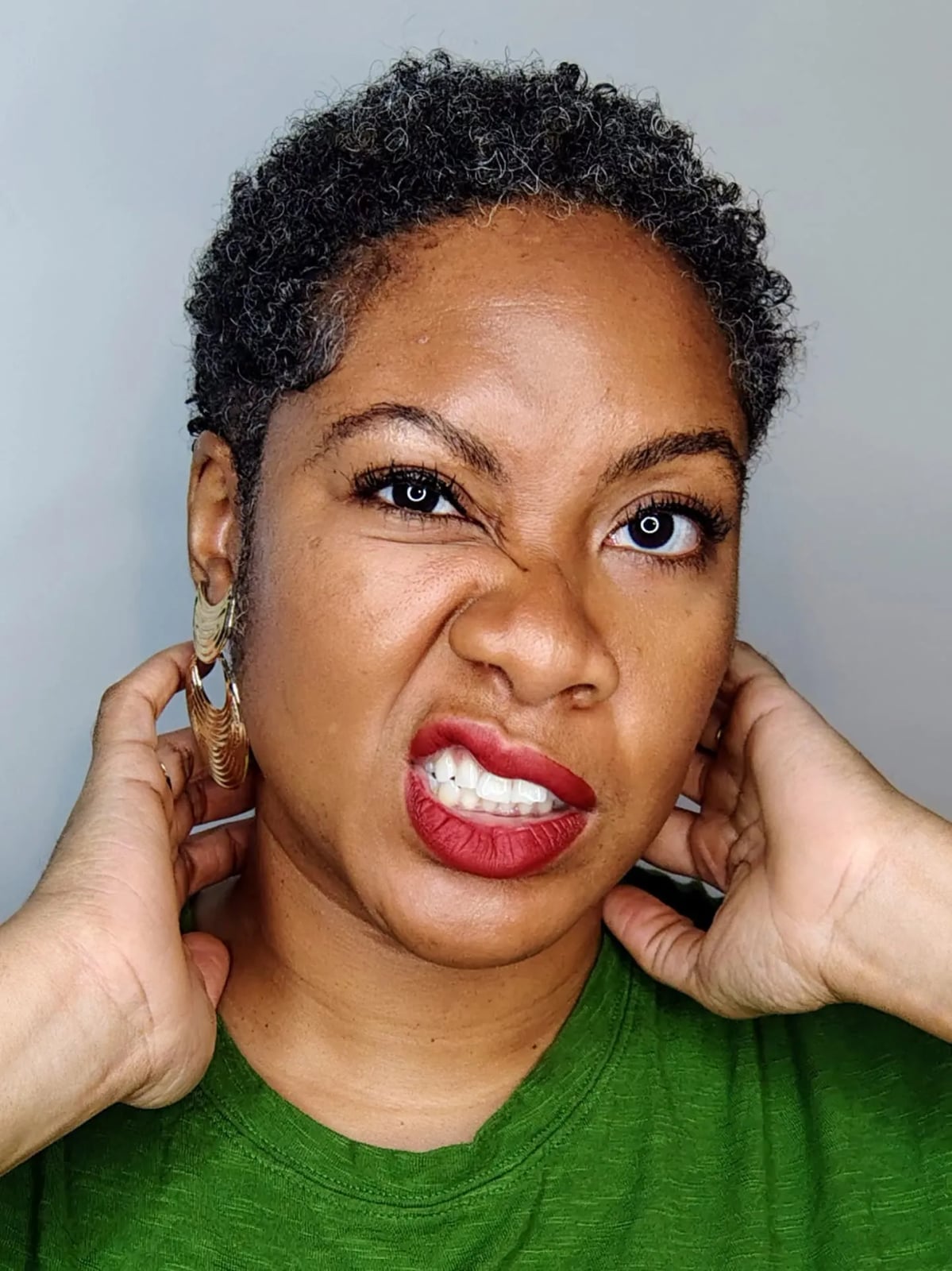
For the salt and pepper color, a gloss treatment every eight weeks keeps the silver tones from turning dull. Fine hair works best here because the shorter layers hold curl without weighing down. The side part and swept bangs soften round and heart face shapes by breaking up the width at the forehead.
Short Pixie With Sleek Side Part
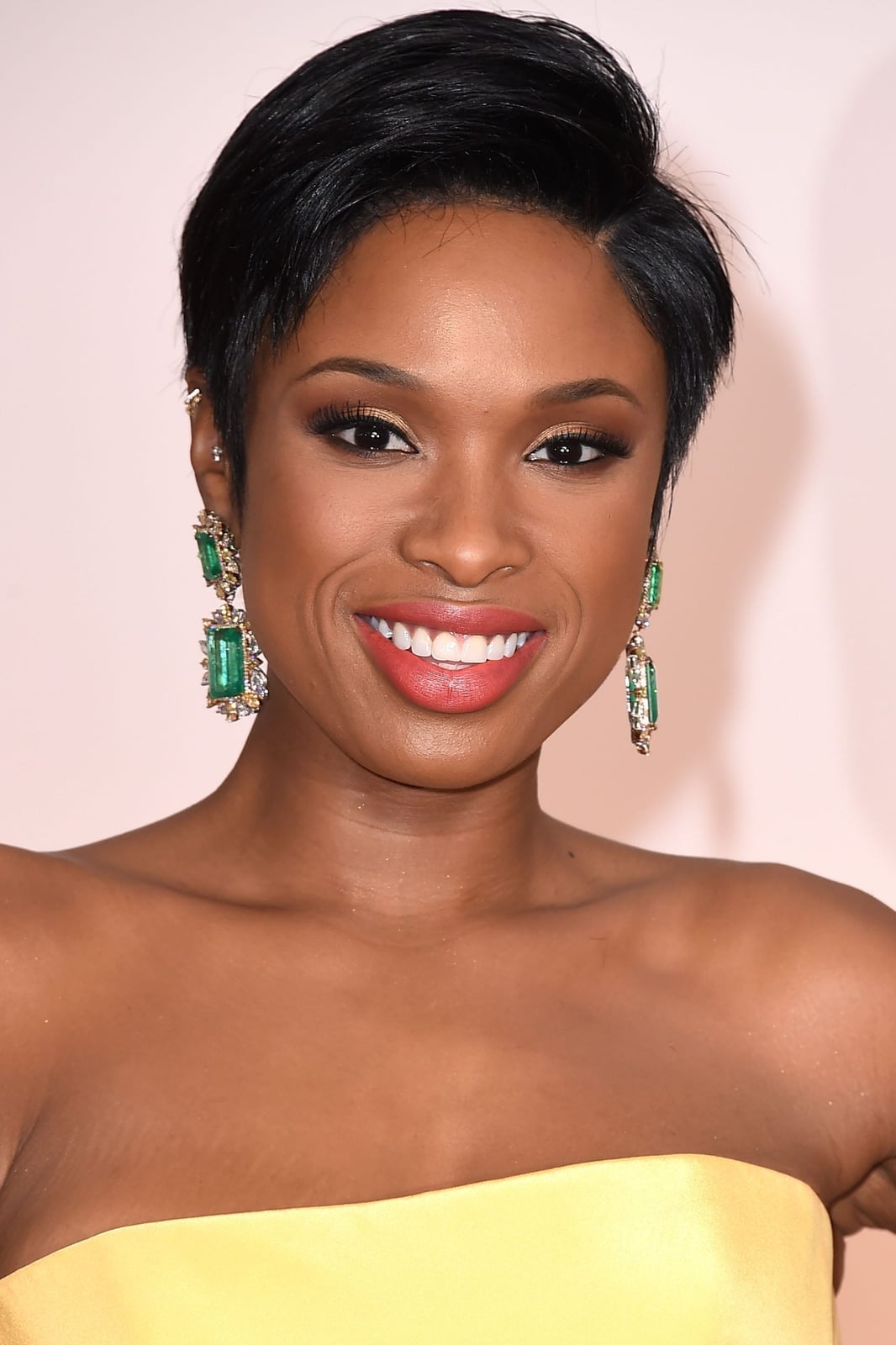
Where the textured pixie is all about rumpled volume, the sleek side part version is its polished cousin. This short black pixie cut uses a deep side part and straight, fine hair to create a clean, almost architectural line that ends just above the ear. Ask your stylist for: a short pixie, deep side part, sleek styling. The slicked-back finish elongates round faces, but it requires a smoothing cream and a blow dryer to get that mirror shine. A trim every four to six weeks is essential because even a quarter inch of growth ruins the silhouette.
Short Black Pixie With Swept Bangs
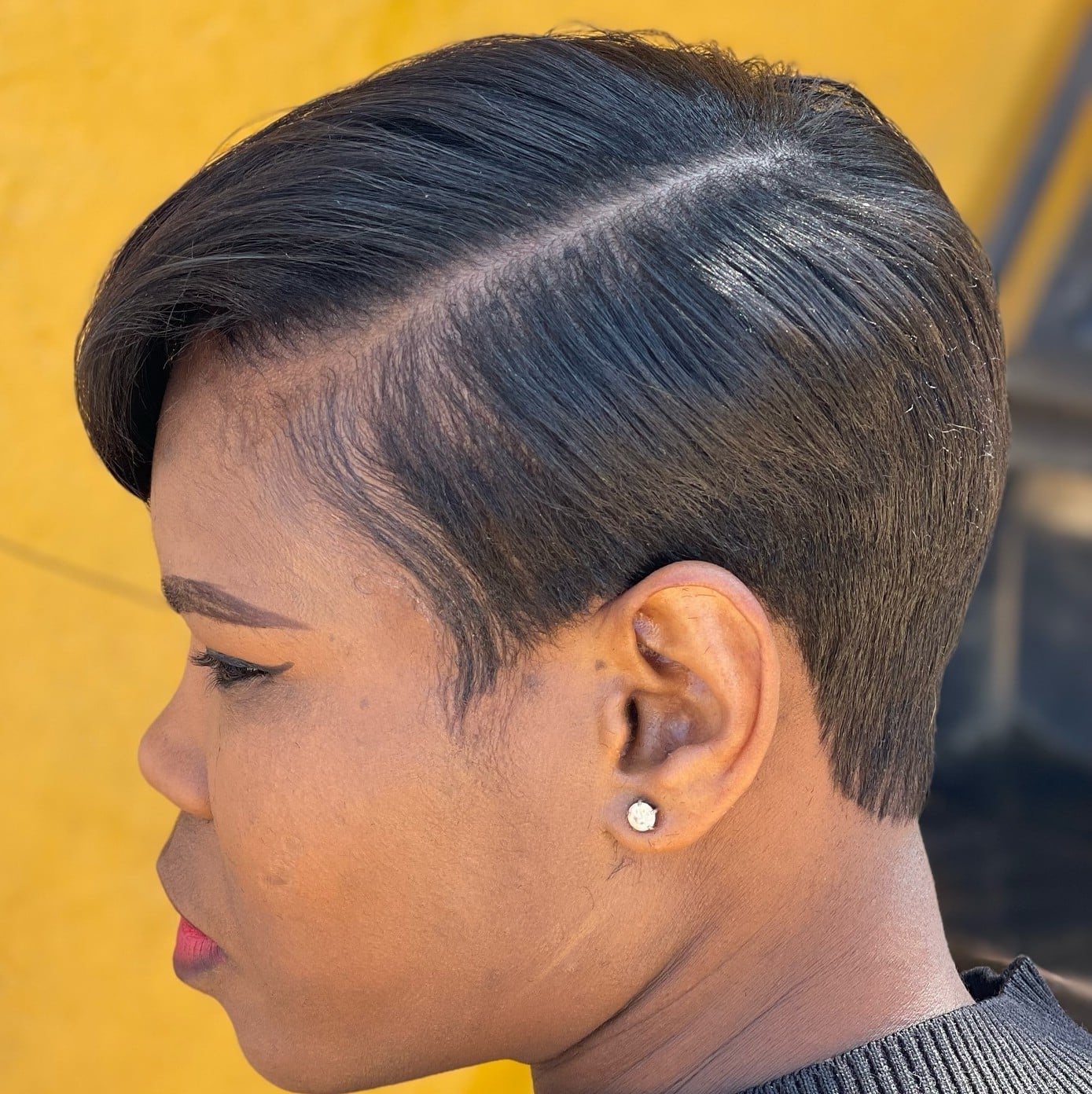
A short black pixie with swept bangs is the haircut that works for a Tuesday meeting and a Saturday wedding with zero changes. The deep side part and fine, straight texture create a clean silhouette that ends at the ear, with the swept bangs softening the forehead. Ask your stylist for: a short pixie, deep side part, swept bangs. A blowout gives it that polished finish, but air-drying with a side clip also works. The shape holds best in cooler months when humidity does not fight the straight texture. A trim every four weeks keeps the line sharp.
Short Dark Brown Afro With Short Bangs
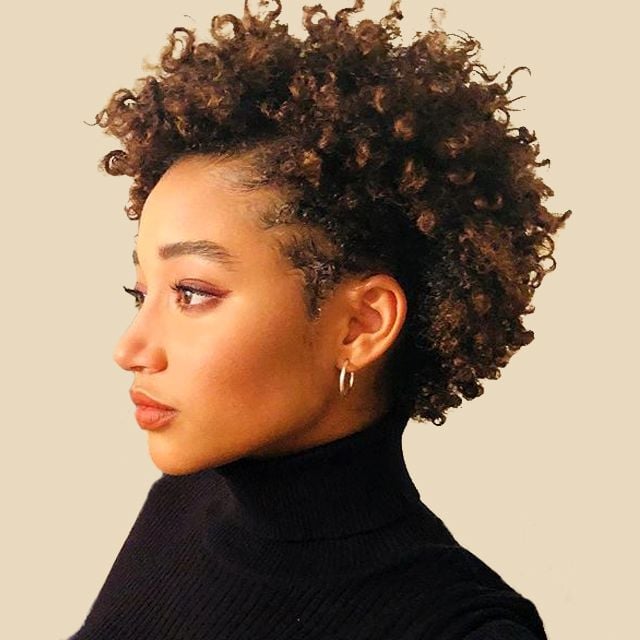
A short afro with a side part and short bangs sounds simple until you consider the geometry. Those bangs land at a length that shows off the curl pattern but demands a trim every three to four weeks to avoid turning into a fuzzy curtain. The ear-length cut itself is low-maintenance: a pick to fluff and a light cream for definition, and you are out the door. This works best on thick, curly hair that holds its shape without product theatrics. The drawback is honest: if you like to sleep in and roll out, those bangs will test your commitment to the shape.
Ask your stylist for: short afro, short bangs, side part.
Chin Length Bob With Blunt Bangs
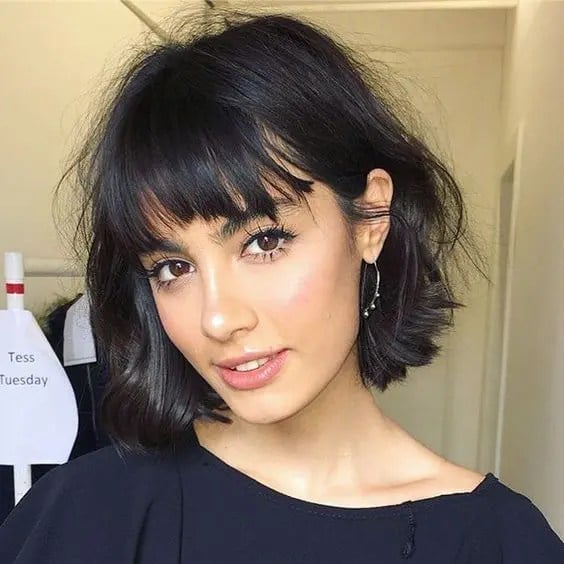
Does a chin-length bob work on wavy hair? It does when the blunt bangs are cut straight across and the bob lands exactly at the jaw. The side part and soft face-framing layers keep it from feeling like a helmet. Medium density, wavy hair carries this shape best: the blunt edge gives structure, the waves add movement. Square and round faces benefit from the vertical line the bangs create. Ask your stylist for: chin length bob, blunt bangs, side part. A DIY trim on those bangs is risky, so plan for a salon visit every four to six weeks to keep the line crisp.
Short Gray Curly Pixie
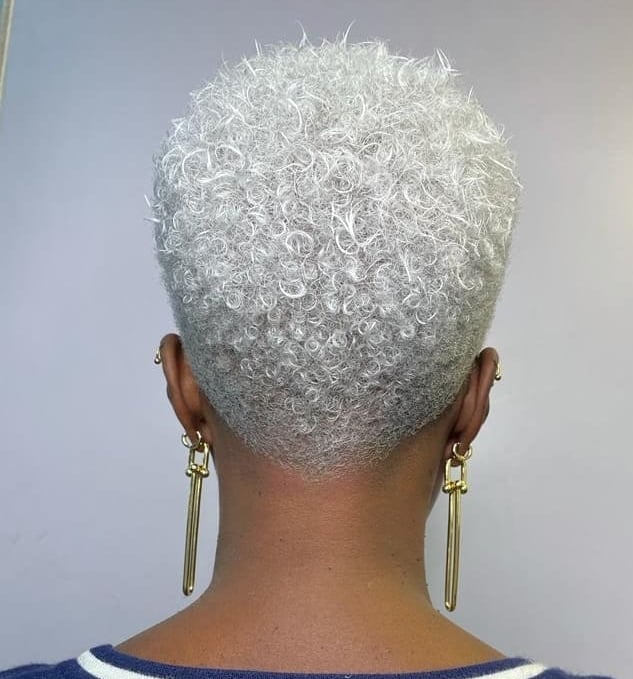
The short gray curly pixie is built on a simple technical fact: the back is cut close to the ear, and the top is left long enough for the curls to stack into a rounded silhouette. Natural gray hair often has a coarser texture, which works in your favor here, because it holds volume without product. The air-dried finish means zero heat styling. Ask your stylist for: short gray curly pixie cut. The shape is forgiving on all face shapes, but the real win is the grow-out, which blends into a neat tapered nape instead of an awkward mullet.
Shoulder Length Blonde Mohawk
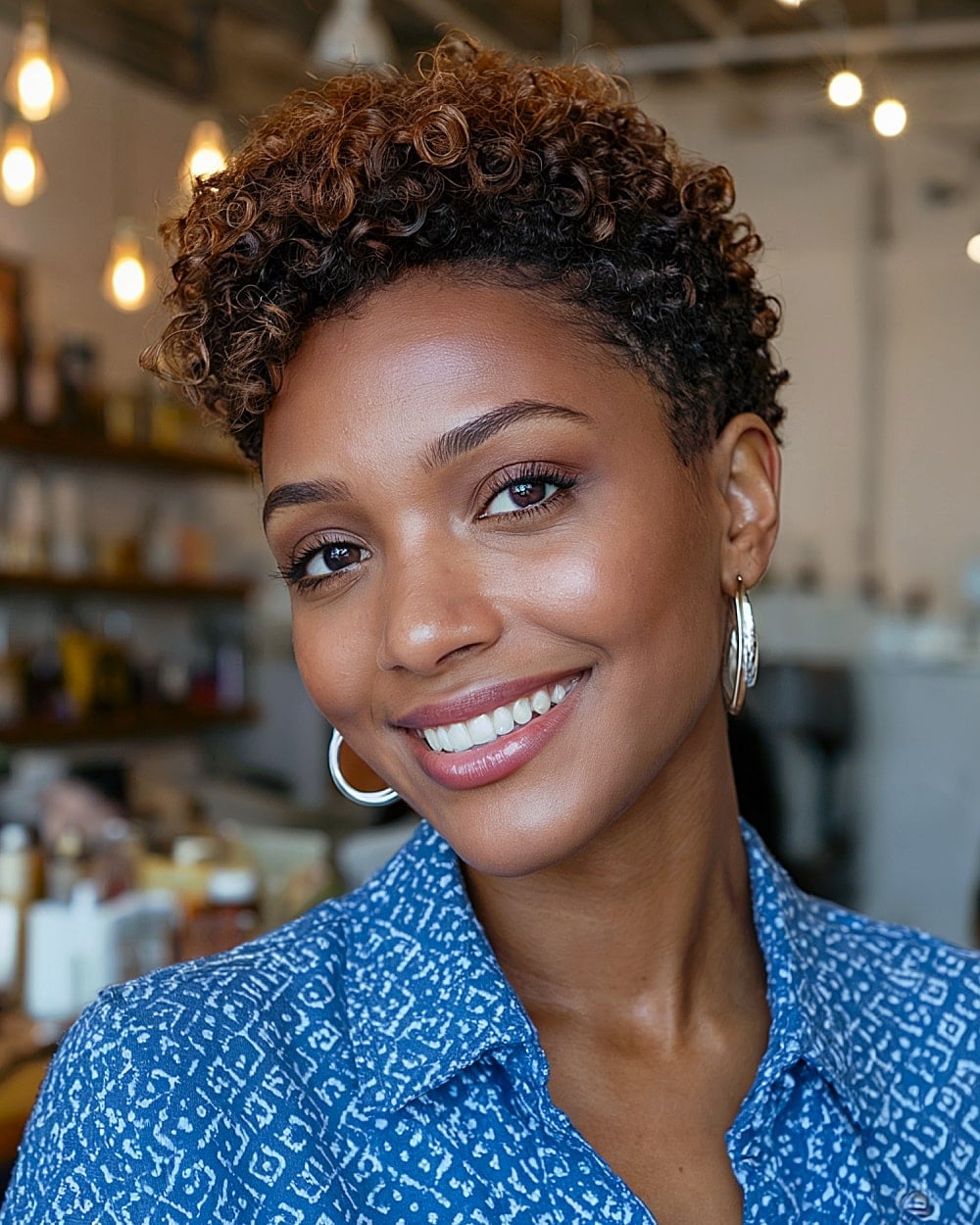
A shoulder-length mohawk with an undercut is a bold choice, and the upkeep matches the commitment. The top section is cut to shoulder length with thick, curly texture and warm highlights against dark roots, which gives the color a lived-in feel that stretches time between salon visits. The sides are shaved close, so expect a trim every two to three weeks to keep the line sharp. Curly texture is the secret weapon here: it adds volume on top without backcombing. Ask your stylist for: shoulder length mohawk, undercut sides, lived-in blonde. This cut works best on oval and square faces, and it pairs well with a pomade or wax for definition.
That undercut means the style stays cool in warm weather. The downside is the grow-out phase, which requires a stylist to reshape the contrast between the longer top and the shaved sides.
Final Thoughts
For fine or thinning hair, stick with blunt cuts and minimal layers to keep volume where you need it. For thick, coily hair, lean into protective styles that show off your texture while keeping length manageable. The right cut is the one that makes your morning routine shorter, not longer.
- Trim split ends every 8-12 weeks to maintain shape and health.
- Deep condition weekly for curly and coily textures to retain moisture.
- Use heat protectant spray when blow-drying or using hot tools.
- Refresh styles with dry shampoo or texturizing spray between washes.
- Color touch-ups for highlights or vibrant shades may be needed every 4-6 weeks.
Embrace your natural texture; the perfect style awaits.