Purple hair has moved past a single shade into a spectrum of techniques, from dimensional melts to subtle balayage. This year, rich jewel tones and muted lavenders are replacing the chunky streaks of the past, giving you more control over how bold or understated the color reads.
These 26 Purple Hair Color Styles cover the range: high-maintenance galaxy dyes that ask for regular toning and gentler options like purple highlights on a dark base that let you ease into the trend. Whether your hair is fine and needs a lighter touch or thick enough to carry a full melt, there is a version here that works with your texture, your schedule, and your grow-out tolerance.
Mid-Back Wavy Hair With Purple And Teal Highlights
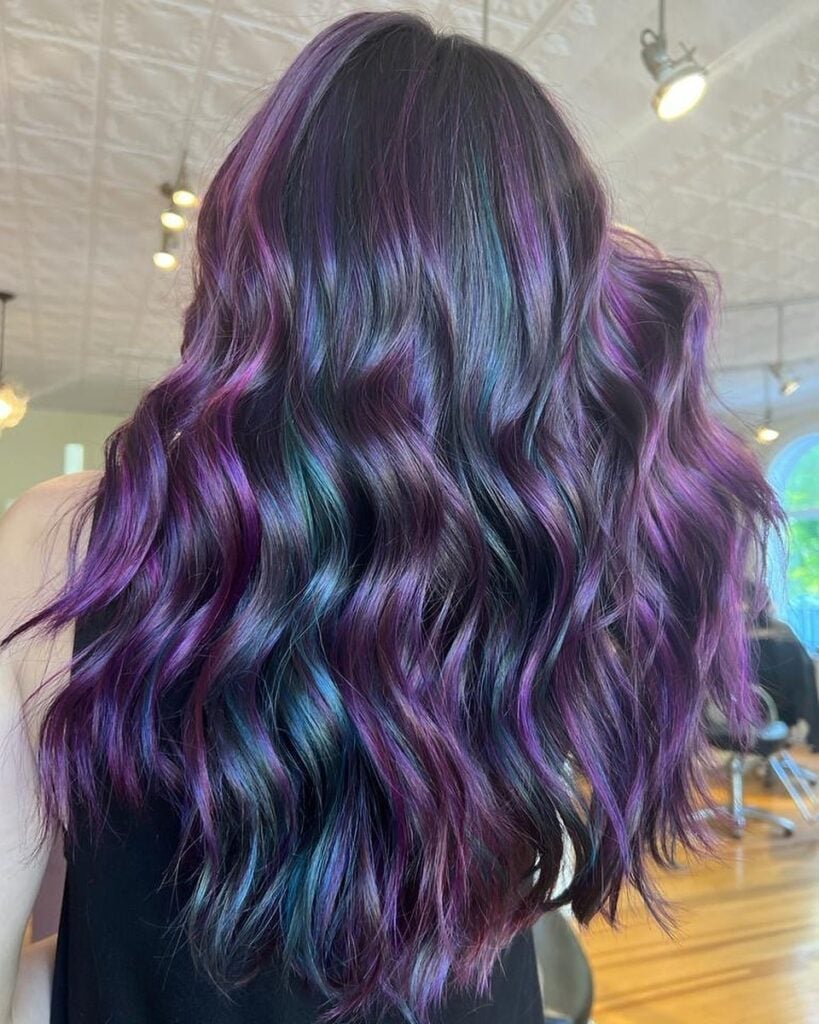
The smartest part of this look is how the purple and teal highlights sit against the dark base, which makes each color read clearly without competing for attention. Thick, wavy hair at mid-back gives the color plenty of surface to move through, so the dimension shows with every wave. This works best if you already have some wave in your texture, since the highlights shift in appearance as the hair bends. Ask your colorist for: dark base with purple and teal highlights. A root shadow will keep the grow-out line soft for about six weeks, and touch-ups land around every eight to ten weeks.
Mid-Back Galaxy Hair With Half-Up Knot
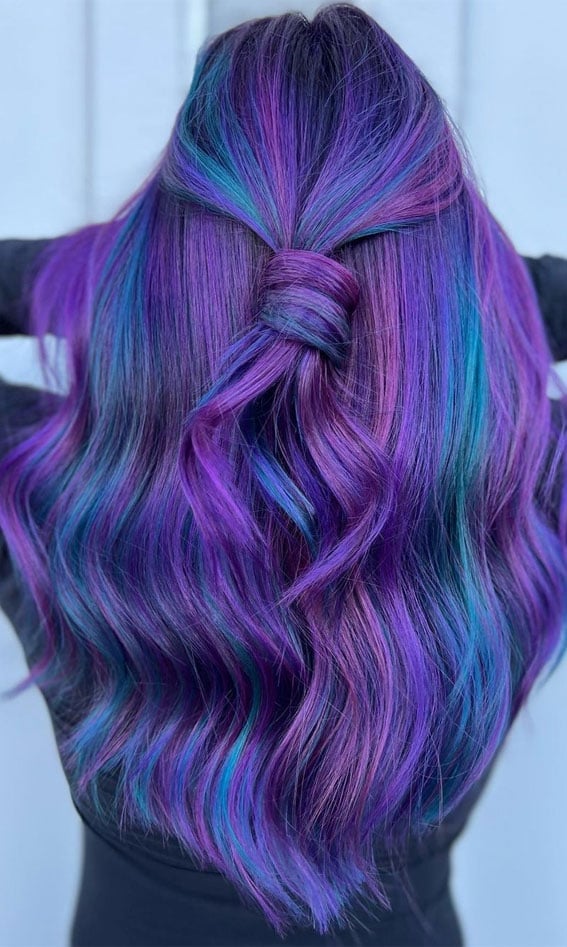
Unlike a simple two-tone melt, this galaxy effect layers purple, teal, and blue in a way that feels more like a nebula than a gradient. The half-up knot at the crown gives the wavy mid-back length a reason to be noticed from behind, which is where the color does its best work. A middle part suits oval and heart faces, and thick hair holds the knot without slipping. Ask your colorist for: galaxy hair color melt with purple, teal, and blue. The knot stays put with bobby pins, and a texturizing spray keeps the waves from going flat.
Thick Wavy Mid-Back Galaxy Hair
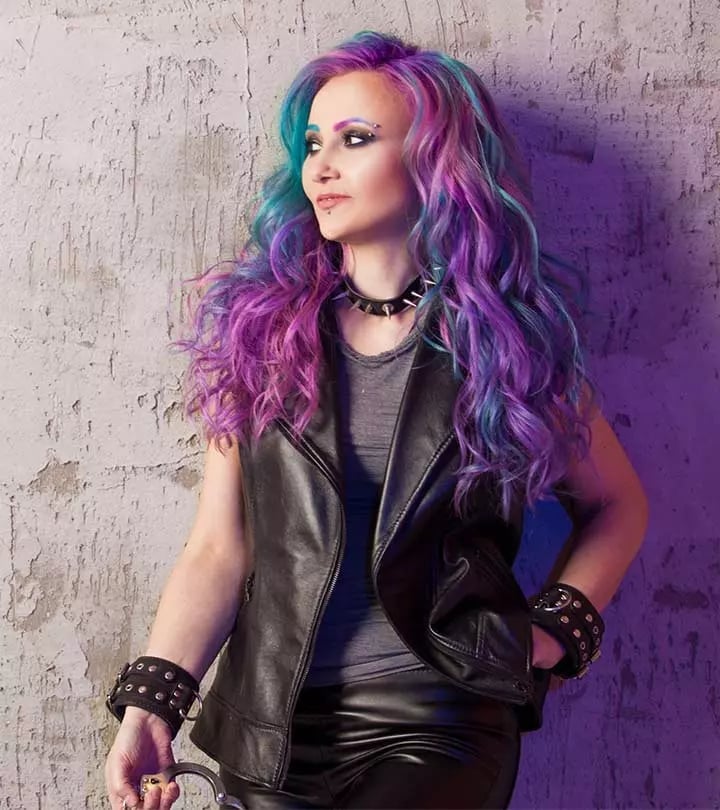
Can thick, wavy hair handle a galaxy color without turning into a blur? Yes, if the blend uses purple, teal, and pink in separate sections rather than one muddy swirl. The middle part elongates a round face, while the waves give the color depth that straight hair would flatten. Ask your colorist for: purple, teal, and pink galaxy hair color blend. This texture air dries well with a curl-enhancing cream, and the color needs refreshing every six to eight weeks to keep the tones from pulling toward brown.
Short Choppy Bob With Color Blocking
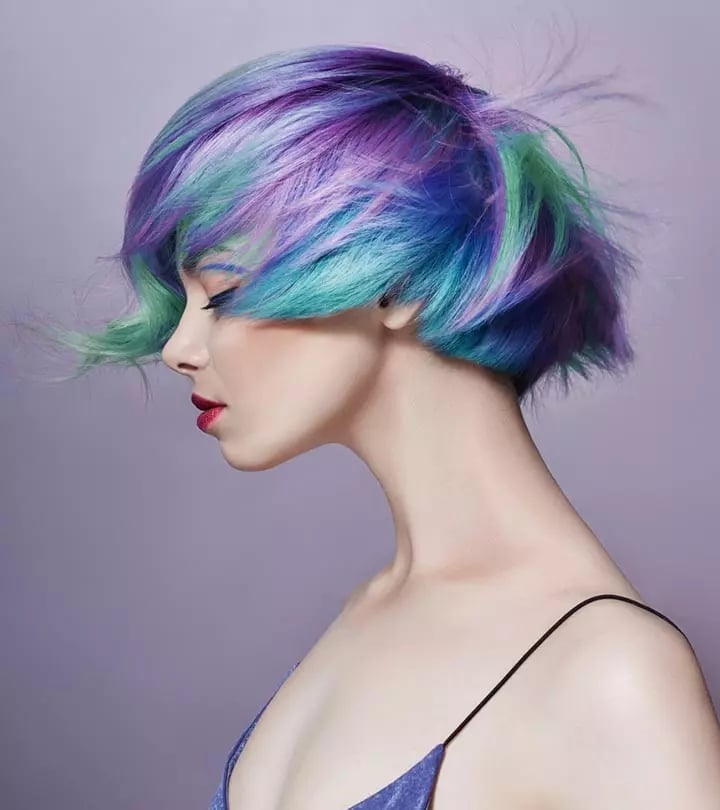
Color blocking on a short bob is a precise request, because the purple, blue, and green sections need to stay sharp at the edges. The choppy texture and short bangs keep the straight, fine hair from looking heavy, and the ear-length cut shows off the blocks from the side. Ask your stylist for: short choppy bob with color blocking in purple, blue, and green. The blocks are cleanest when the stylist uses foil to separate each shade, and a trim every four to six weeks keeps the shape and the color lines in check.
Mid-Back Split Dye Pink And Purple
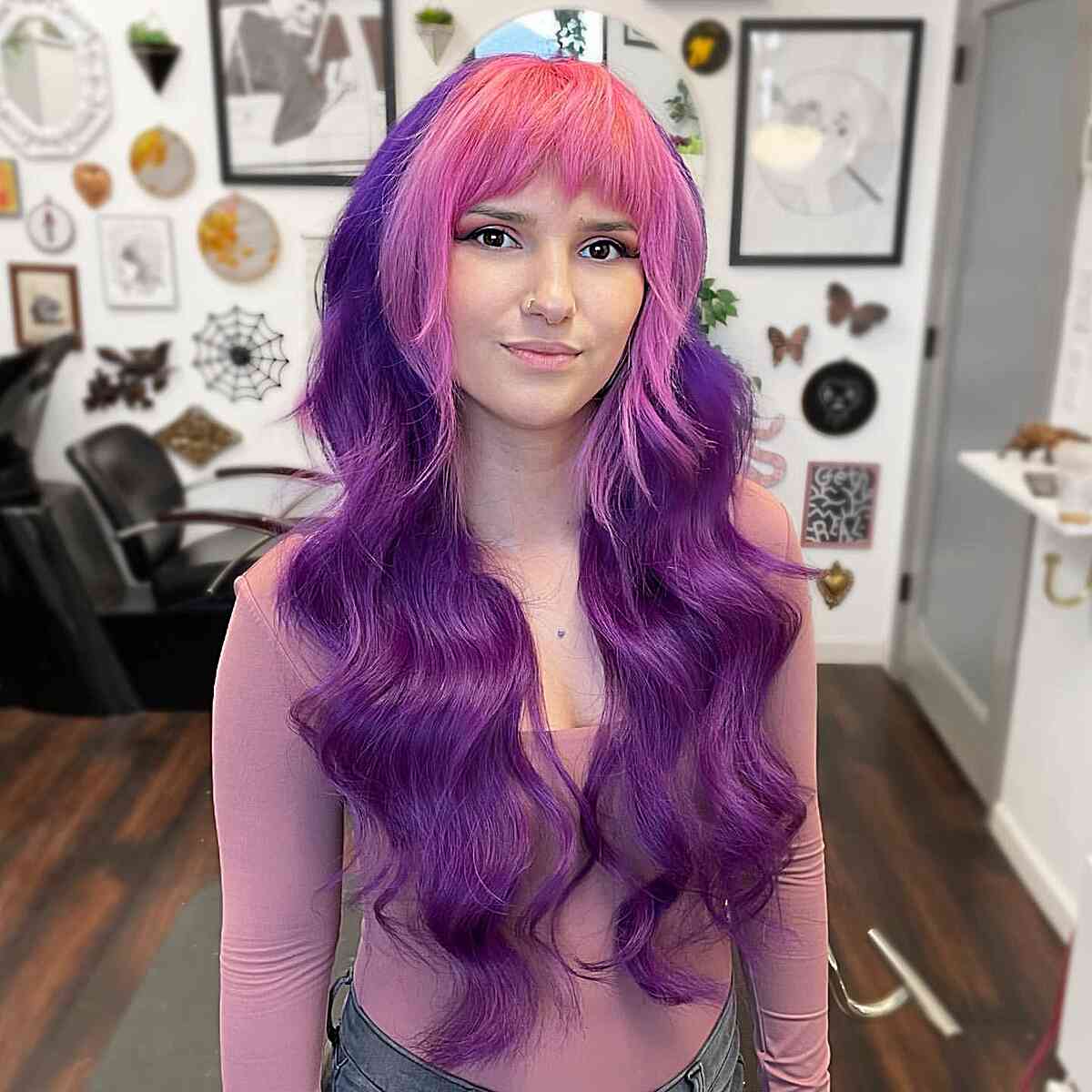
The split dye here is not a simple half-and-half; the pink and purple each melt into a balayage at the ends, so the two sides feel connected rather than pasted together. Thick, wavy hair at mid-back gives the colors room to move, and the full bangs tie the front view together. Ask your colorist for: pink and purple split dye with balayage, full bangs.
Upkeep is the real conversation with this one. Because the two sides are different colors, you will wash them separately in practice, and a color-safe shampoo is required. The balayage helps the grow-out look softer, but expect to book a toner every six to eight weeks to keep the pink from going peach and the purple from going gray.
Mid-Back Purple To Blue Ombre Waves
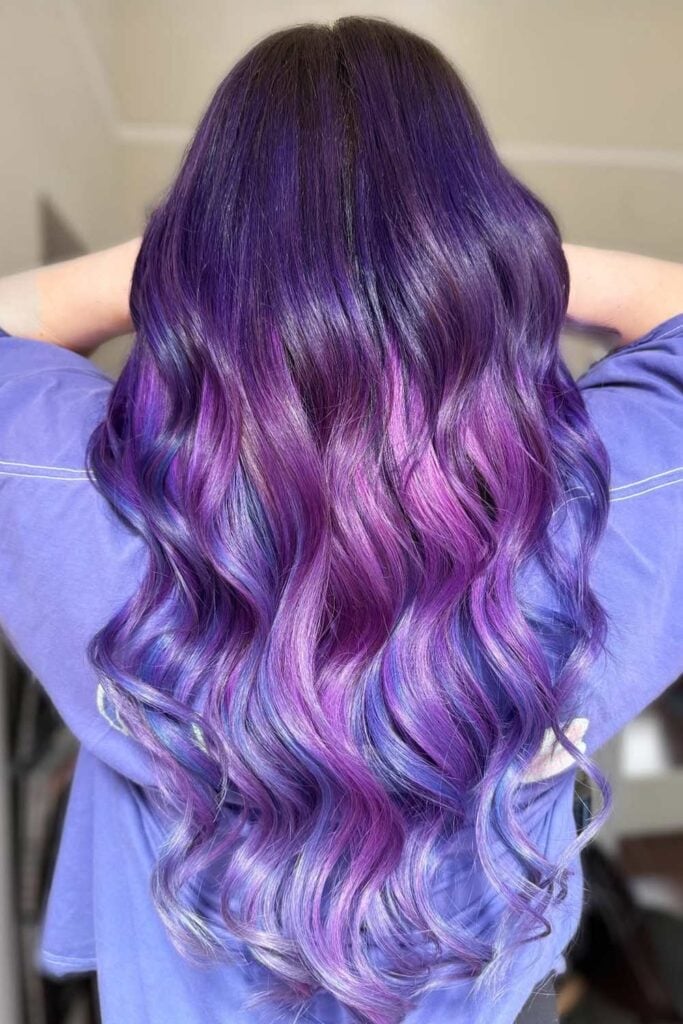
This isn’t a one-and-done purple: it’s a gradient that moves from deep purple at the roots through lavender in the mid-lengths to bright blue at the ends. The trick is keeping each transition soft, so the colors melt without hard lines, and that works best on thick, wavy hair where the texture can hide any rough spots. A middle part keeps the ombre balanced on both sides, which suits oval and heart faces. Ask your colorist for: purple to lavender to blue ombre, wavy texture. Plan for a full day in the salon, since the blend takes time to lay down properly.
Long Wavy Hair With Pink And Purple Highlights
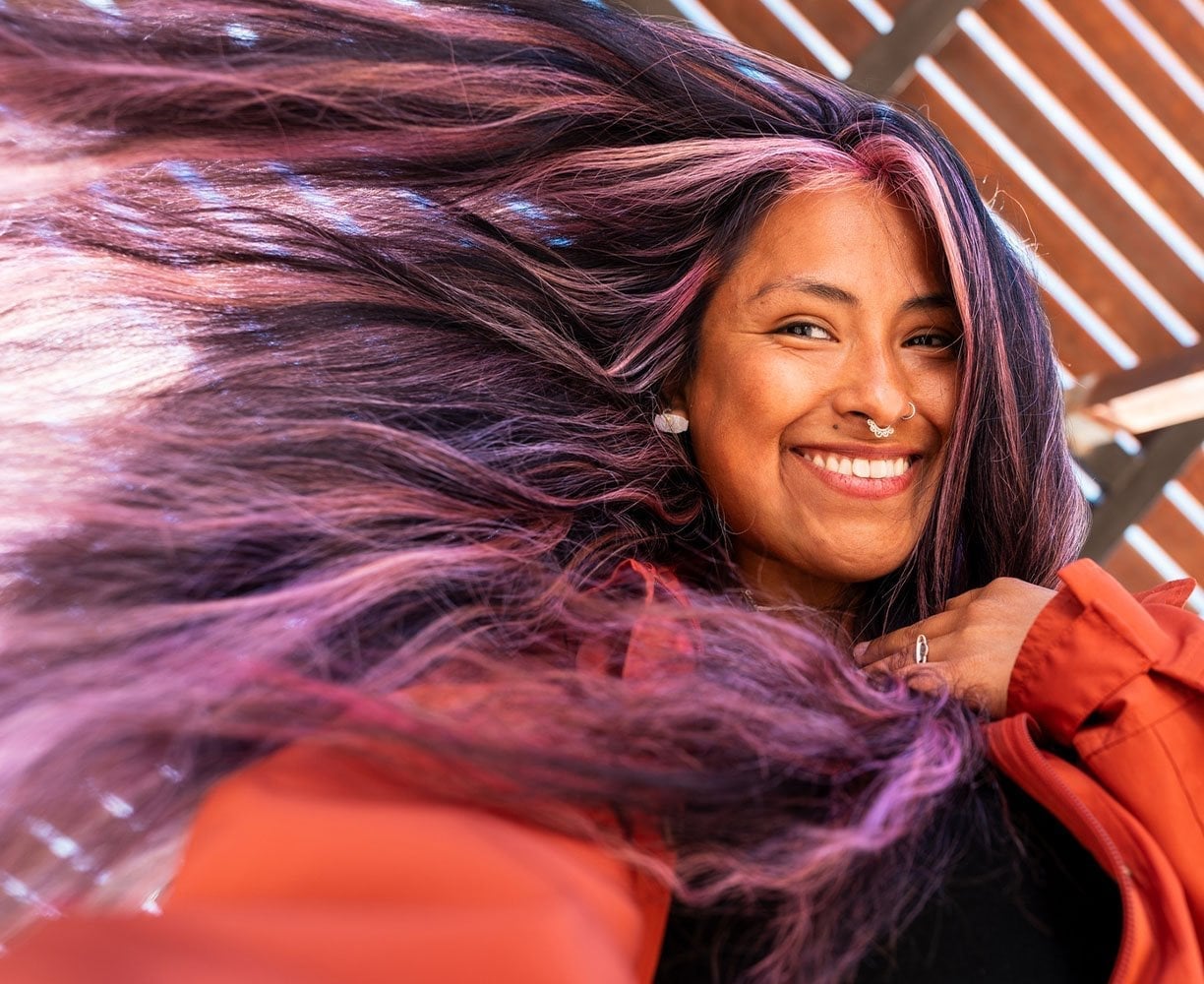
When the base is dark, vibrant pink and purple highlights read as jewelry for your hair: they catch the eye without demanding a full color commitment. This look suits long, thick, wavy hair, where the streaks have room to show up and move as you do. It works for summer festivals and fall weddings alike, since the dark base keeps it grounded while the bright pieces do the talking. Ask your colorist for: dark base with vibrant pink and purple highlights, flowing waves. Refresh the highlights every 8 to 10 weeks to keep the contrast sharp.
Mid-Back Wavy Hair With Purple And Pink Balayage
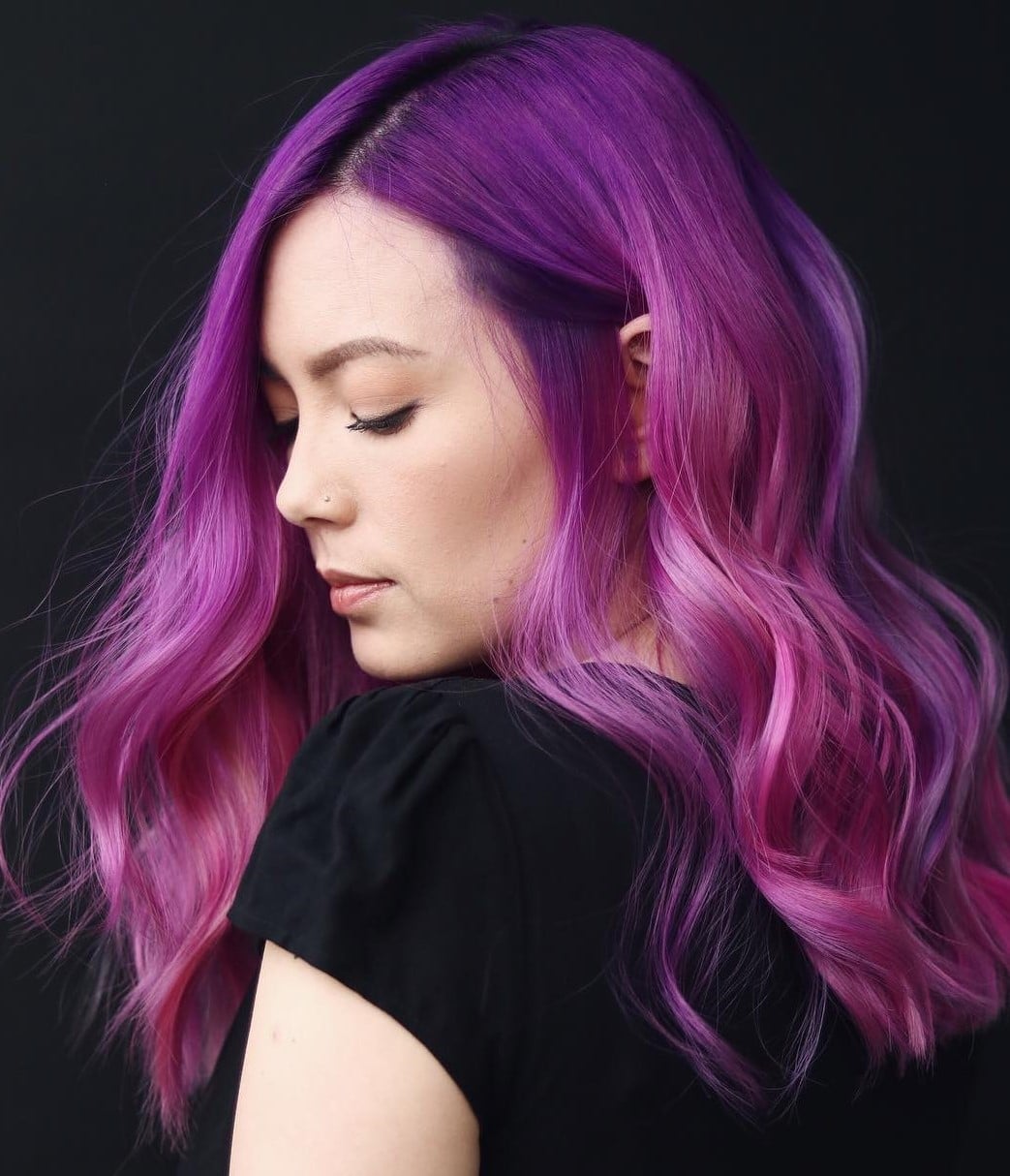
The middle part here isn’t an accident: it lets the vivid purple and pink balayage fall symmetrically, so each side mirrors the other. The color is painted on freehand, which is why the blend looks soft instead of striped, and the thick, wavy texture helps diffuse the transition even further. A middle part also elongates round faces, making this a practical choice if that’s your concern. Ask your colorist for: vivid purple and pink balayage, wavy texture. Use a color-protecting serum after washing to keep the shine and blend intact, and expect a trim every 10 to 12 weeks.
Mid-Back Layered Hair In Vibrant Violet
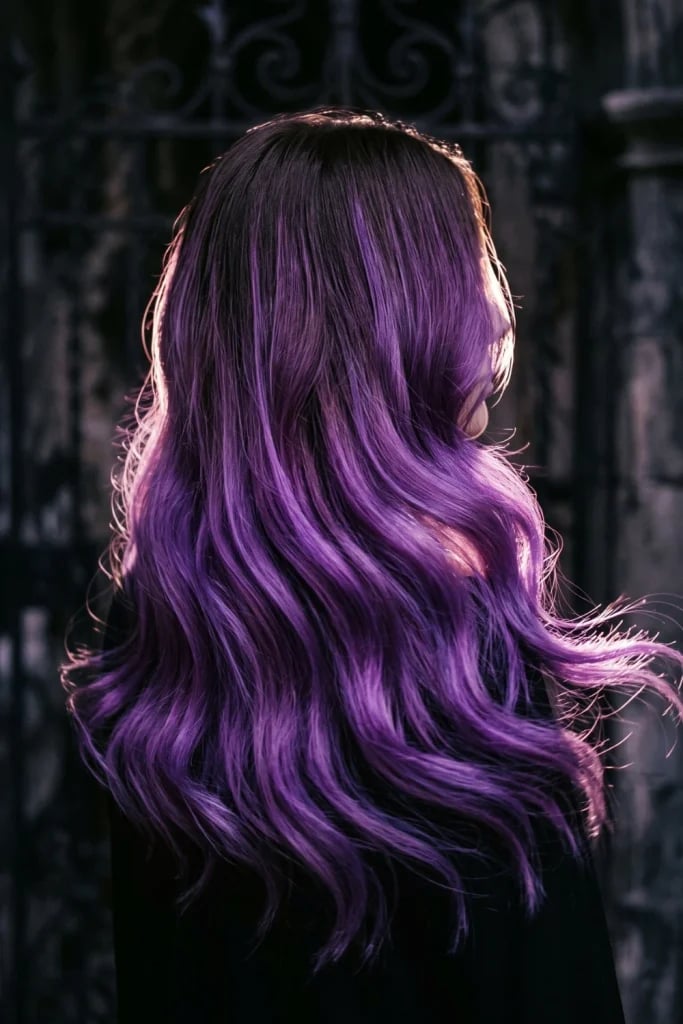
Vibrant violet is a demanding color, but on medium density, wavy hair it pays off because the layers create dimension. The lighter purple highlights are placed to lift the violet from flat to faceted, which is exactly what this shade needs to avoid looking like a single block of color. Loose waves add movement, so the hair doesn’t sit still and let the intensity overwhelm. Ask your colorist for: vibrant violet with lighter purple highlights, loose waves. Use a curling iron to define the waves, and refresh the violet tone every 6 to 8 weeks before it fades to a washed-out lilac.
Mid-Back Purple Melt With Curtain Bangs
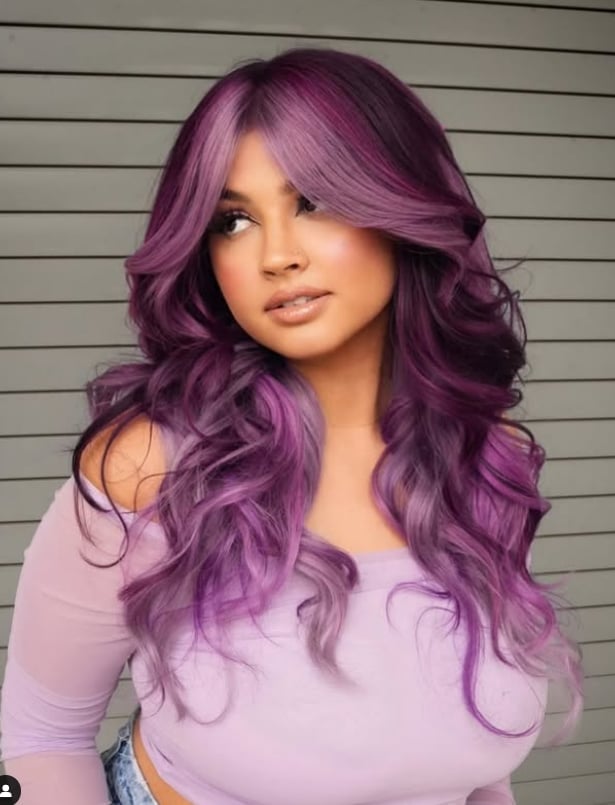
Start with a dark purple base and let the lighter purple balayage sweep through the mid-lengths, keeping the root area rich and the ends brighter. The curtain bangs are the key detail here: they frame the face and pull the color forward, so the melt doesn’t get lost in the length. This suits medium density, wavy hair, and the curtain bangs soften round and square faces. Ask your colorist for: dark purple to lighter purple color melt, curtain bangs. Blow-dry the bangs with a round brush and seal the balayage with a serum to keep the blend smooth.
Mid-Back Deep Dimensional Purple Waves
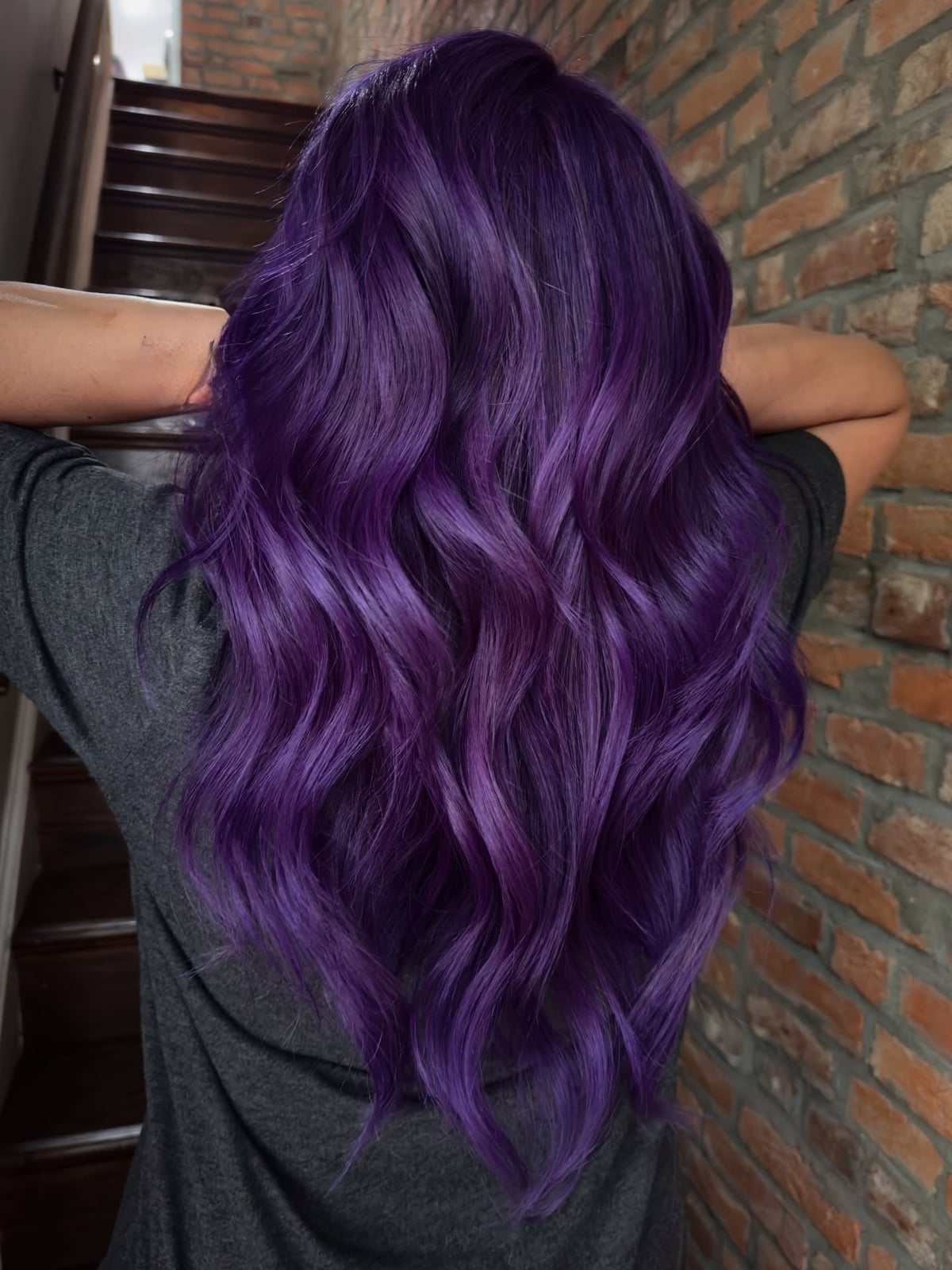
The design relies on depth and a deep purple that shifts between jewel tones and near-black in the shadows. Thick, wavy hair at mid-back length carries this color well because the texture catches light at different angles, showing the dimension. A middle part and soft waves keep the look polished. Ask your colorist for: deep dimensional purple color, soft wavy style.
This color suits those with thick, wavy hair starting at mid-back. The middle part elongates round faces, but the real consideration is upkeep. Deep purple tends to fade unevenly, with the ends turning cooler faster than the mid-lengths. Plan for a refresh every six to eight weeks to keep the tone consistent. Thinner hair may not show the dimension as clearly since the waves need volume to create those light-catching peaks.
Mid-Back Dark Base With Purple Violet Balayage
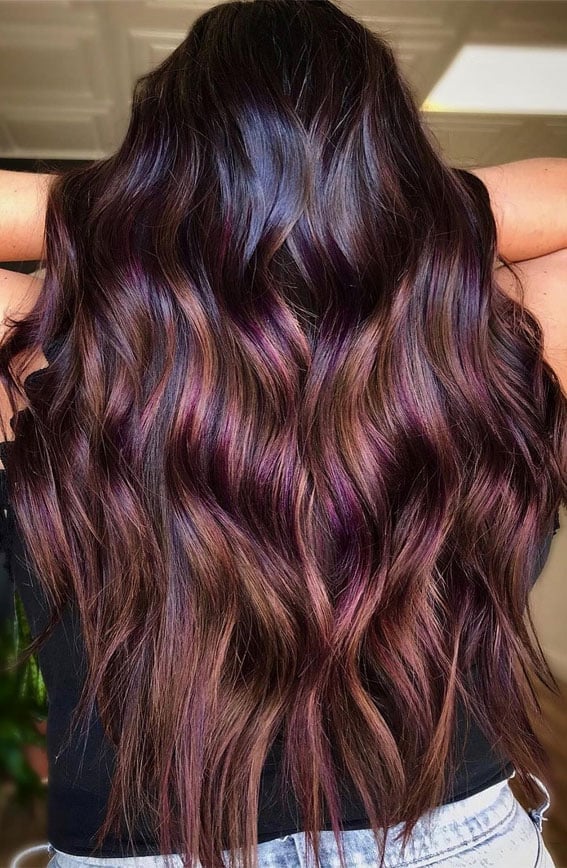
The balayage technique here starts the purple and violet tones below the root line, leaving the dark base intact at the crown. This creates a rich gradient that softens the grow-out phase considerably. Thick, wavy hair styled in a blowout shows the color placement clearly, with the lighter pieces sitting on the surface of each wave. Ask your colorist for: dark base with rich purple and violet balayage, wavy blowout. A heat protectant spray before blow-drying keeps the cuticle smooth. Refresh the balayage every eight to ten weeks to maintain the contrast between the dark base and the violet tones.
Mid-Back Dark Base With Subtle Purple Balayage and Curtain Bangs
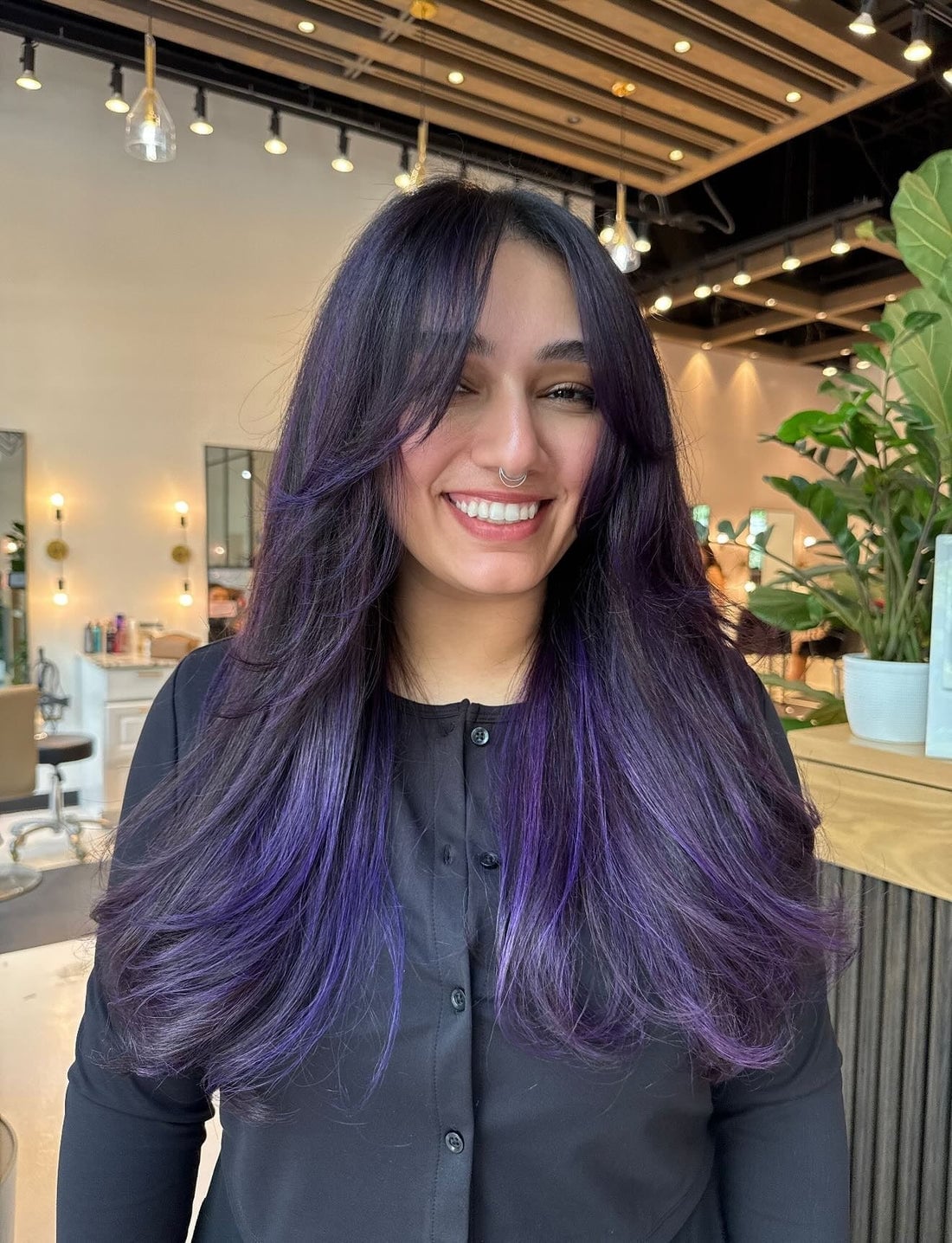
The purple balayage here reads as an undercurrent rather than a statement, visible only where the light hits the lengths. The dark base dominates, so the purple works best on medium-density hair that lets some light pass through the ends. Curtain bangs add softness around the face without competing with the color. Ask your colorist for: dark base with subtle purple balayage, curtain bangs. This is a salon-only request: the balayage needs precise placement to stay subtle rather than muddy, and the curtain bangs require a dry cut to fall correctly. Attempting the color at home risks an uneven fade that defeats the understated effect.
Mid-Back Brown With Purple Highlights
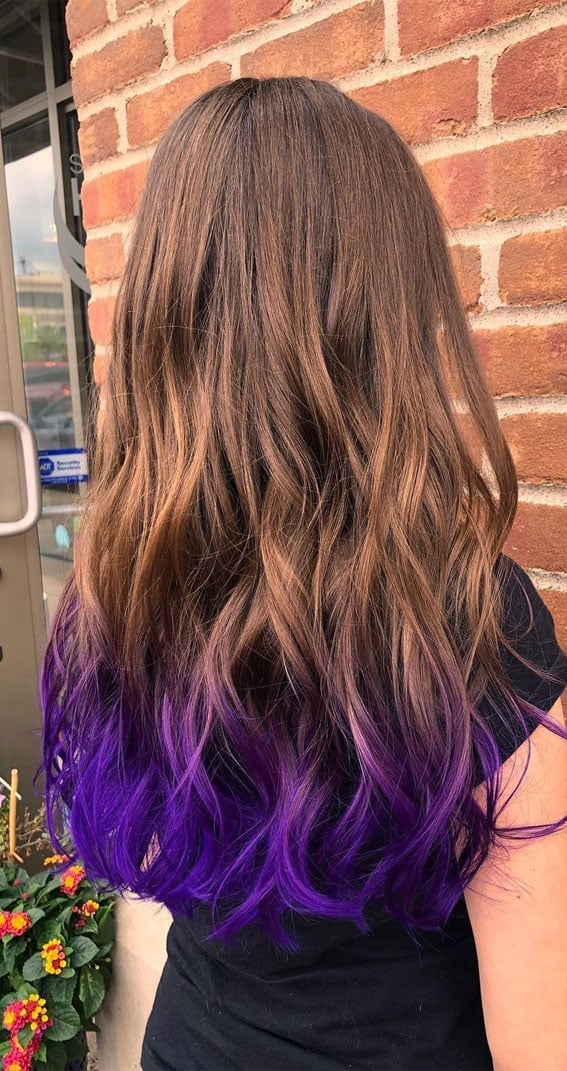
Compared to a platinum or black base, brown hair with purple highlights looks more natural and less dramatic. The warm brown base keeps the purple from looking stark, while the concentration of highlights toward the ends gives a graduated effect instead of a stripe. Thick, wavy hair at mid-back length shows these highlights best because the wave pattern distributes the color across the surface. Ask your colorist for: warm brown base with subtle purple highlights. For someone wanting a softer entry into purple, this is the better choice over a vivid all-over violet. A dark base with purple balayage creates more contrast, but brown with highlights blends into the hair more easily and requires less root maintenance.
Mid-Back Black With Purple Face-Framing
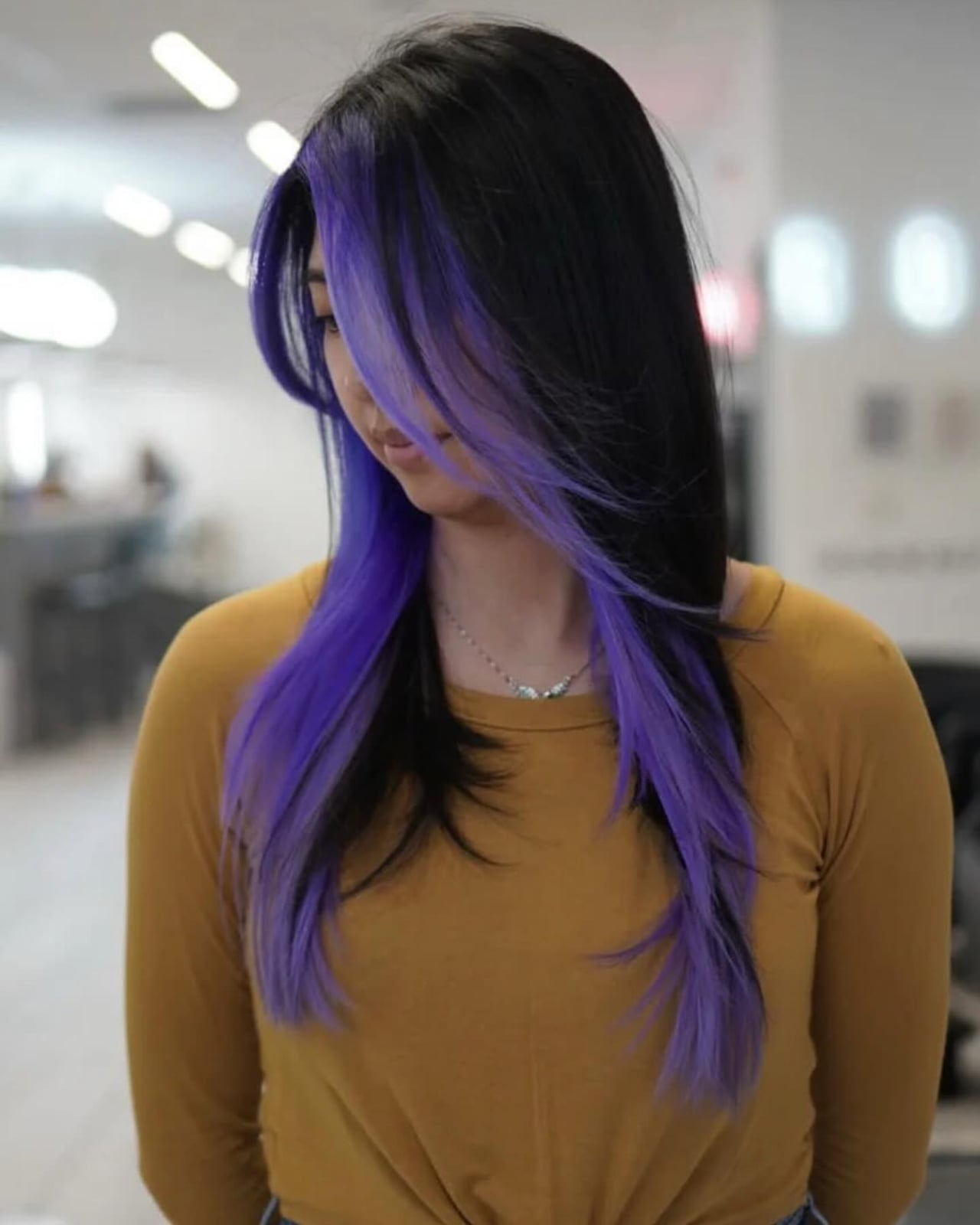
Can fine, straight hair carry purple without looking overwhelmed? Yes, when the color stays in face-framing pieces and the base remains black. The contrast is sharp but contained, so the hair does not read as fully dyed. Side-swept bangs draw the eye to the purple sections, and the fine texture keeps the color from pooling too heavily. Ask your colorist for: black base with purple face-framing highlights and balayage. This works best for those who want a bold accent without committing to all-over color. A longer face shape benefits from the side bangs, which add width at the cheek level. The face-framing pieces need a toner refresh every six to eight weeks to keep the purple from fading into a washed-out mauve.
Chin Length Bob With Purple Ombré Ends
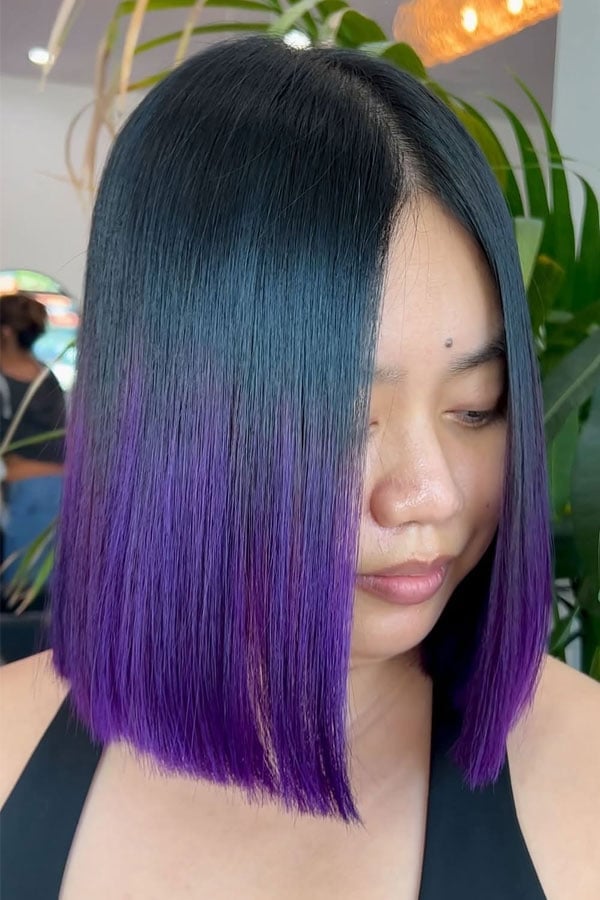
The design is clean and deliberate: a sleek, straight black bob at chin length with blunt bangs, then vivid purple from mid-shaft to the ends. Fine, straight hair shows the ombré transition best since there is no wave to interrupt the line. Ask your colorist for: chin length black bob with vivid purple ombré ends, blunt bangs. A ceramic flat iron keeps the surface glassy, and the bob needs a trim every four to six weeks to keep that sharp edge from going soft. The grow-out is low stress; the ombré grows in rather than out.
Chin Length Bob With Purple Balayage
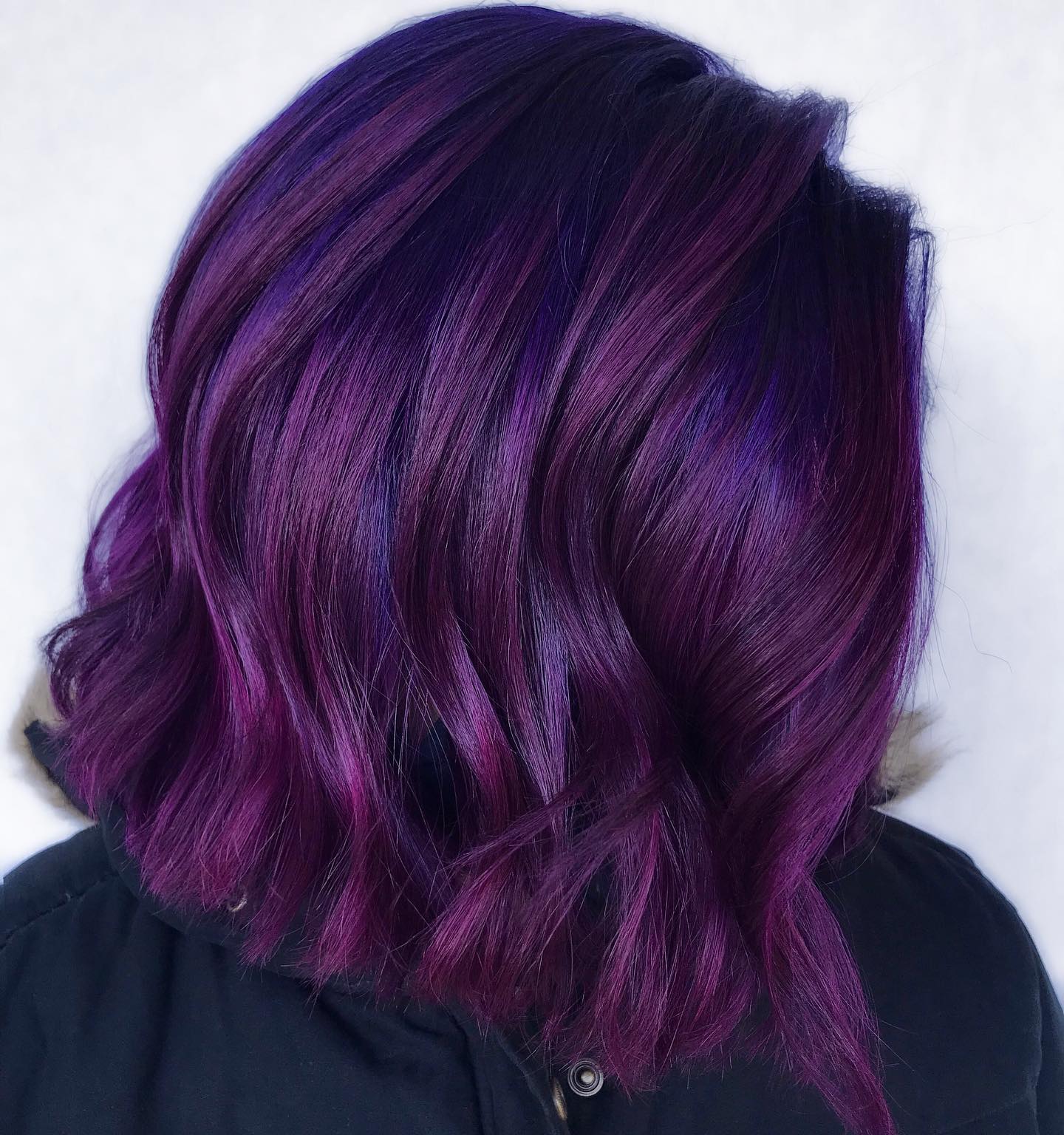
This bob uses balayage to lift sections of a dark purple base into lighter purple, creating dimension that moves with the hair. The chin-length cut and side part give the wavy texture somewhere to fall without losing shape. Ask your colorist for: chin length bob with dark purple and lighter purple balayage. A sea salt spray encourages the natural wave and keeps the ends from looking too uniform. Since the balayage is painted freehand, it blends back into the base as it grows, so the line never feels hard.
Shoulder Length Straight Solid Purple, Close-Up Take
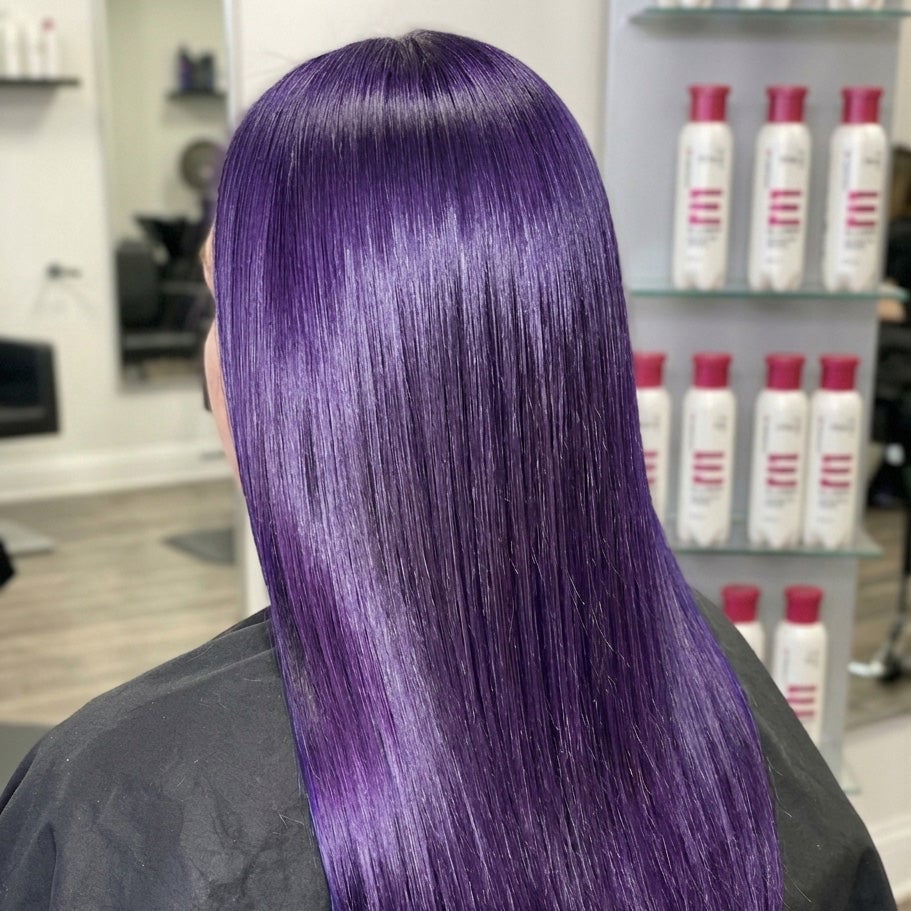
The back view makes it clear: this is a uniform, vibrant purple from root to tip, with no highlights, no shadow, no fade. Fine, straight hair at shoulder length shows the color as a single block, which is exactly the point. The middle part suits oval and heart faces by drawing the eye down the center. But here is the trade-off: a solid vibrant purple on fine hair reveals every bit of root growth within two weeks, and the tone washes out faster than it would on coarser textures. Ask your colorist for: solid vibrant purple color, shoulder length straight cut. A trim every six to eight weeks keeps the line sharp, but the color itself needs a toning appointment every four to five weeks to stop the purple from shifting toward pink or gray.
Collarbone Layered Hair In Vibrant Purple
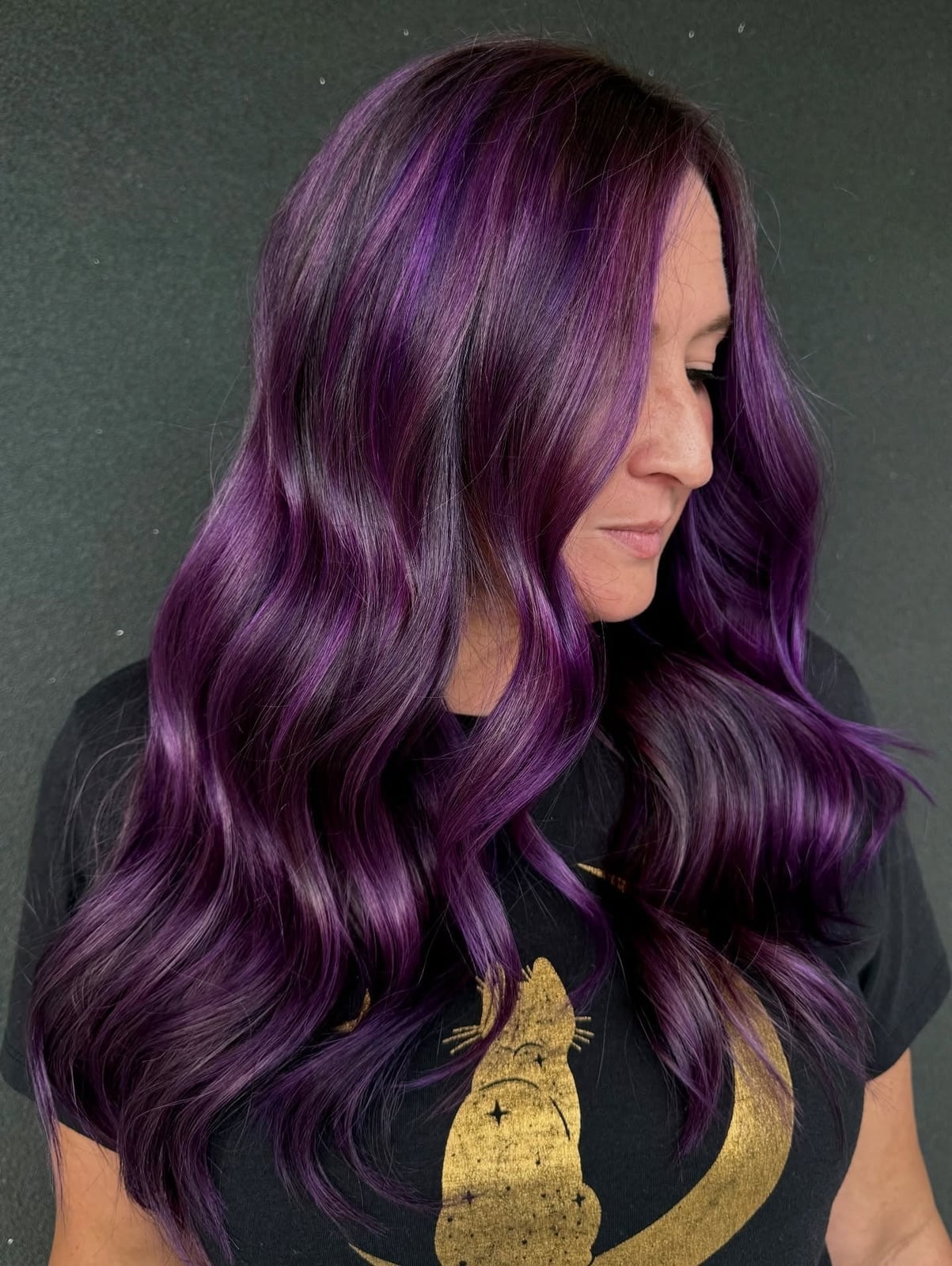
The layers hit collarbone length and the vibrant purple is dimensional, with subtle shifts in depth that keep the color from looking flat. Medium density, wavy texture carries those shifts naturally because the waves catch light at different angles. Ask your colorist for: vibrant dimensional purple color, collarbone length wavy blowout. A middle part works here because the volume sits evenly on both sides. The soft wavy blowout adds movement without fighting the cut’s shape.
Collarbone Length Muted Lavender Waves
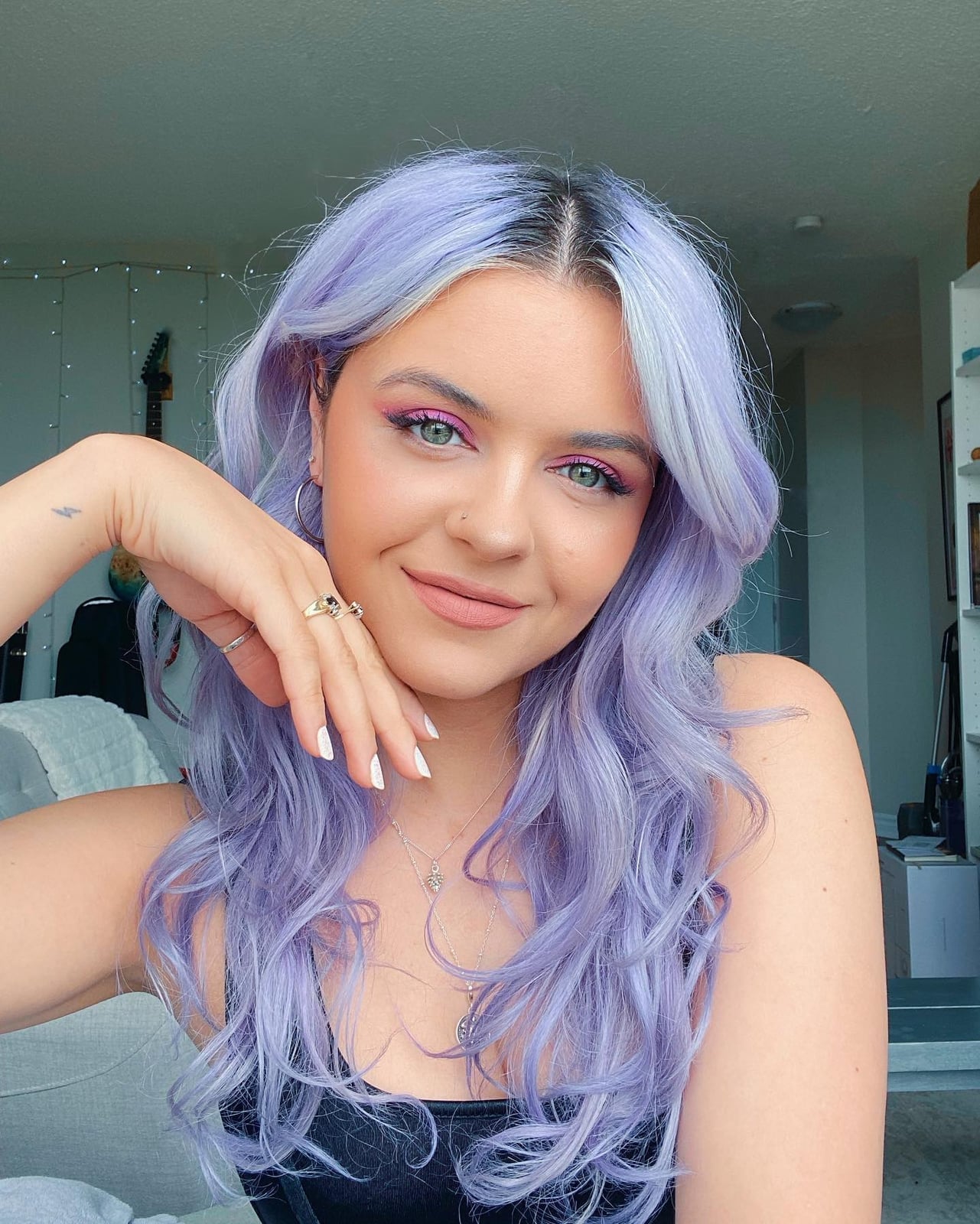
Muted lavender is a lower-commitment purple: it is visibly purple but toned down enough that it does not demand full attention. Wavy, medium-density hair at collarbone length benefits from the subtle dimension, as the loose waves catch the lighter and darker patches of the color. Ask your colorist for: muted lavender dimensional color, collarbone length waves. A middle part and soft layers keep the shape from feeling heavy. This shade works best on hair that is already lifted to a pale blonde base underneath.
Collarbone Muted Lavender With Lilac Highlights
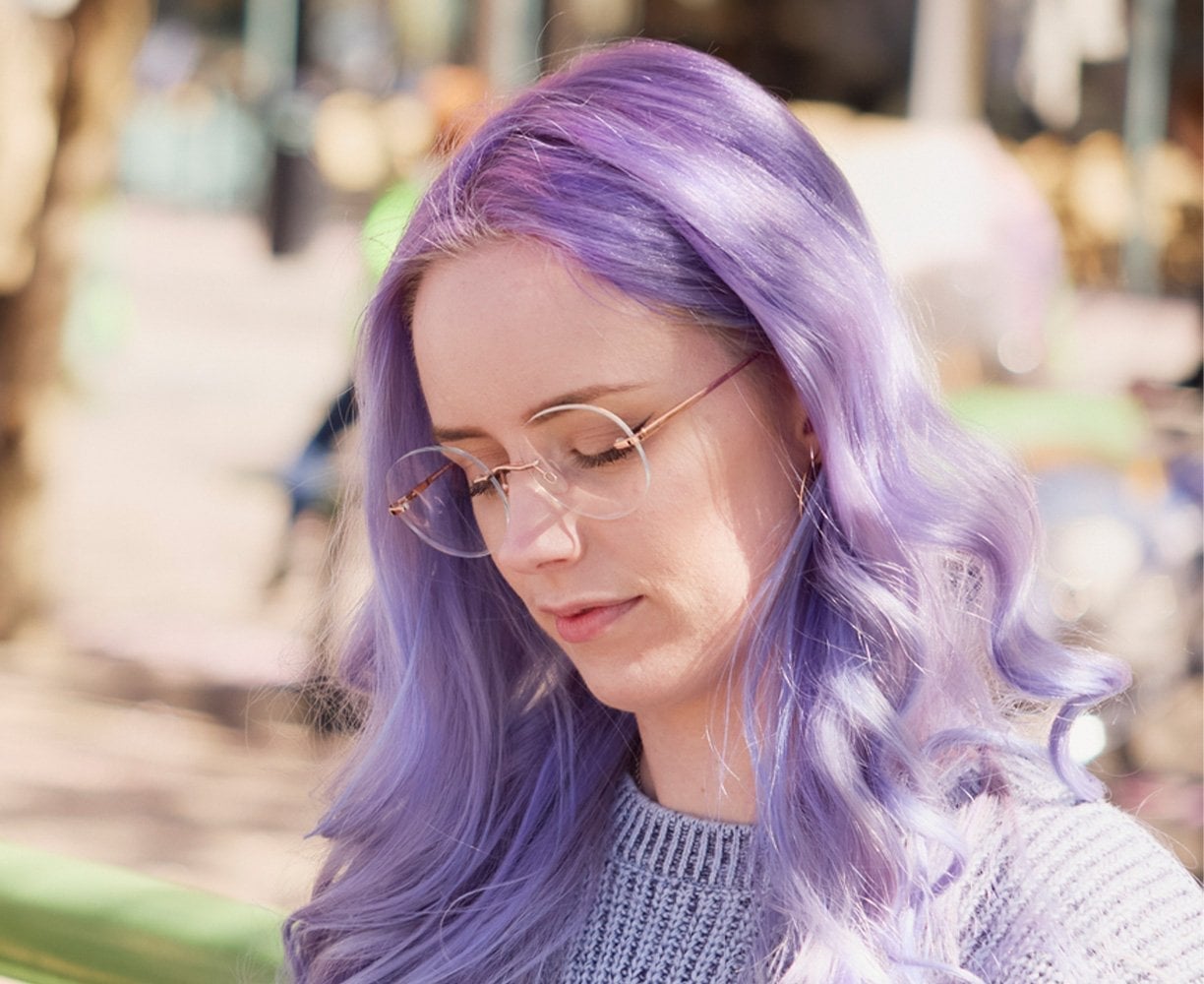
A muted lavender base with lighter lilac highlights creates a soft, dimensional pastel effect that feels sophisticated. The collarbone length and medium wavy texture give the color enough surface area to show both shades without overwhelming the shape. Ask your colorist for: muted lavender with lighter lilac highlights and curtain bangs. Curtain bangs soften round and square faces, and the blowout styling keeps the pastel tones looking deliberate.
Collarbone Lavender With Pink Root Tones
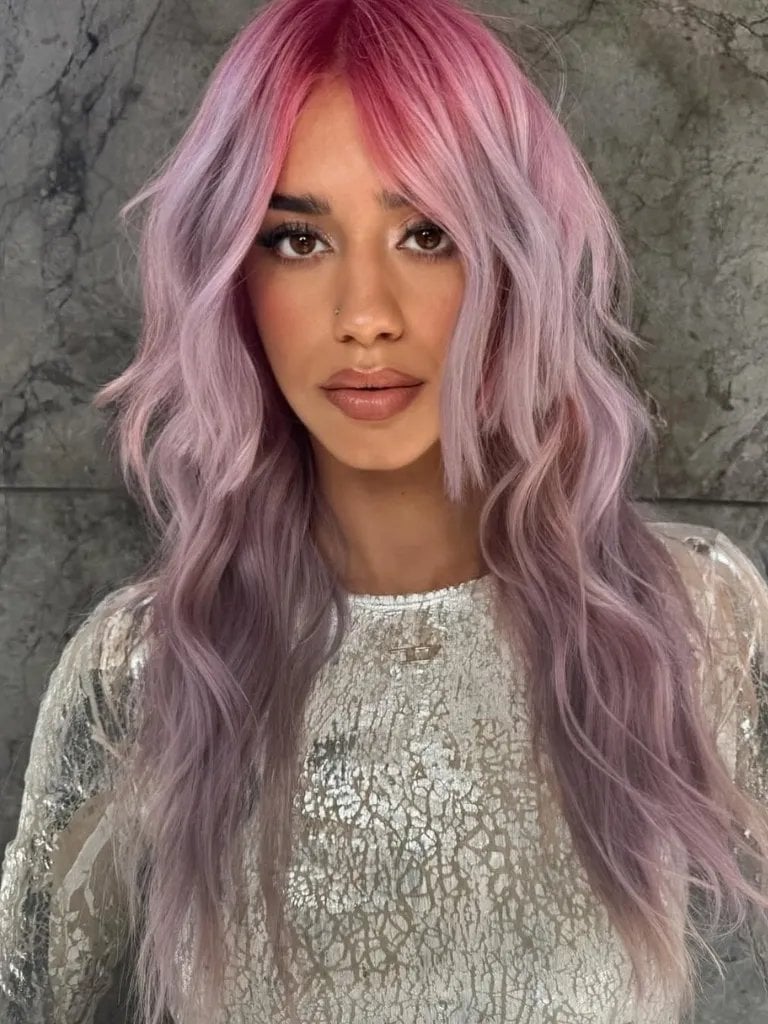
A muted lavender base with pink grown-out roots reads differently than a silver or dark root shadow would: it reads warmer and more intentional. The pink tones at the root keep the lavender from looking washed out as it fades, and the wispy bangs lean into the softness. Ask your colorist for: muted lavender with pink root tones and wispy bangs. This split suits medium density wavy hair cut to collarbone length, and the wispy bangs adapt to most face shapes without requiring daily trimming.
Collarbone Deep Plum Purple With Red Undertones
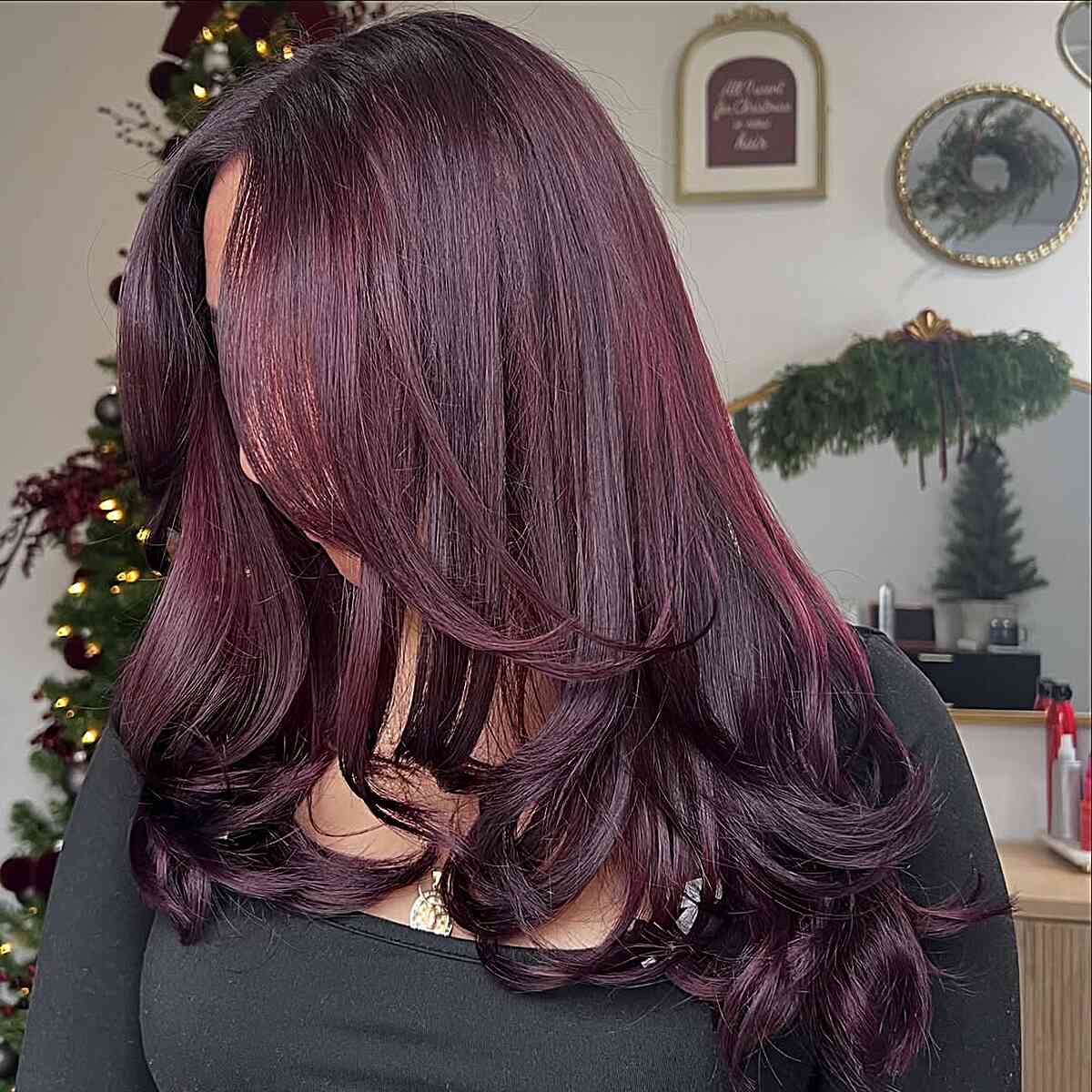
Deep plum purple with subtle red undertones is a lower-maintenance purple than pastel shades; the red base means fading lands warm rather than ashy. Collarbone layers with curtain bangs and soft waves keep the rich color from feeling heavy. Ask your colorist for: deep plum purple with subtle red undertones and curtain bangs. A color-depositing conditioner every other wash maintains the plum tone, and a trim every eight to ten weeks keeps the layered shape clean.
Mid-Back Muted Lavender With Lighter Undertones
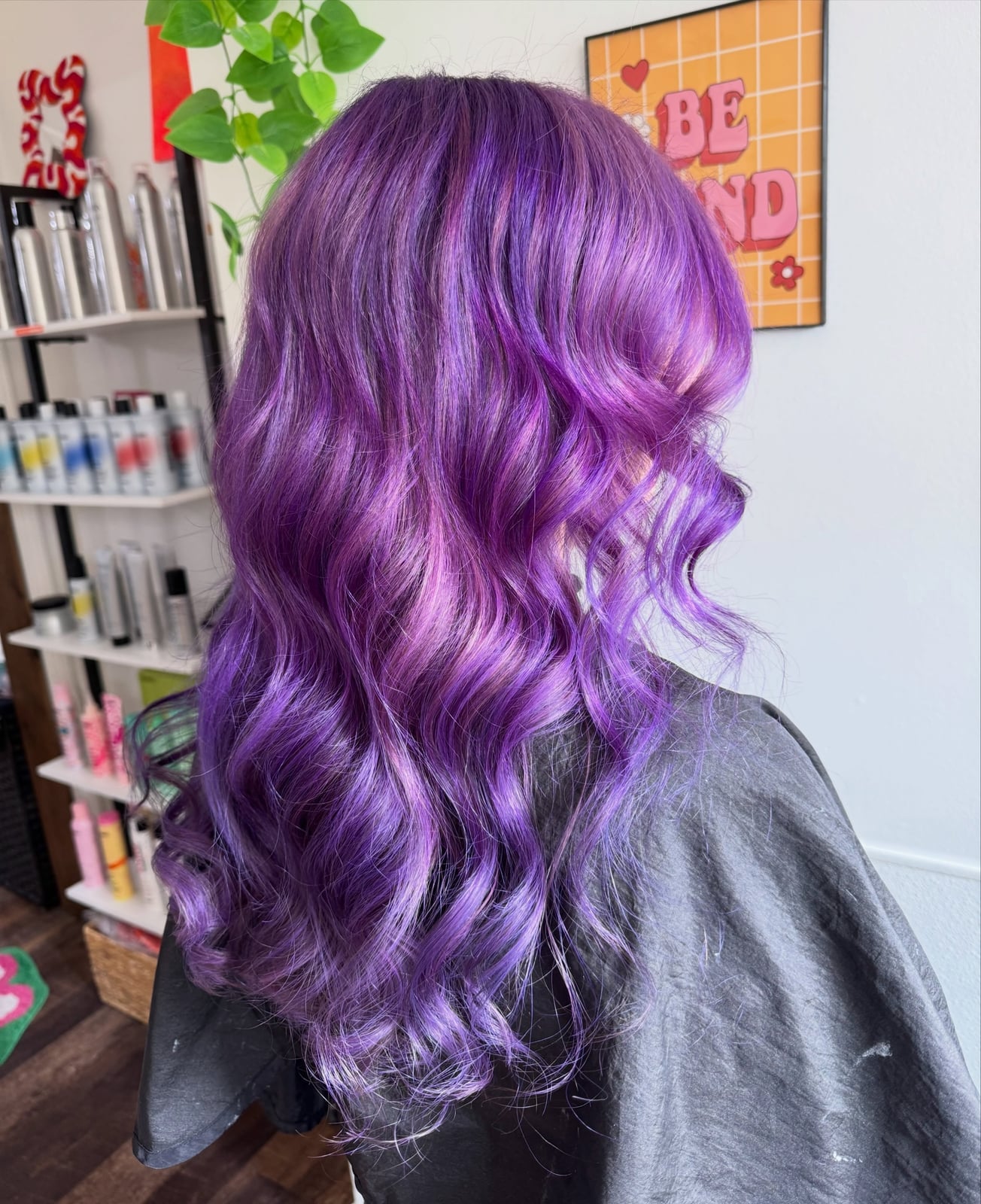
Muted lavender with lighter purple undertones relies on a double-process technique: a lifted base followed by a diluted violet toner painted through the mid-lengths and ends. The lighter undertones create the illusion of natural dimension, not a flat pastel block. Ask your colorist for: muted lavender with lighter purple undertones and loose curls. Thick wavy texture starting at mid-back carries the soft fade well, and a toning appointment every six to eight weeks keeps the lavender from shifting beige.
Collarbone Dark Base With Purple Undertones
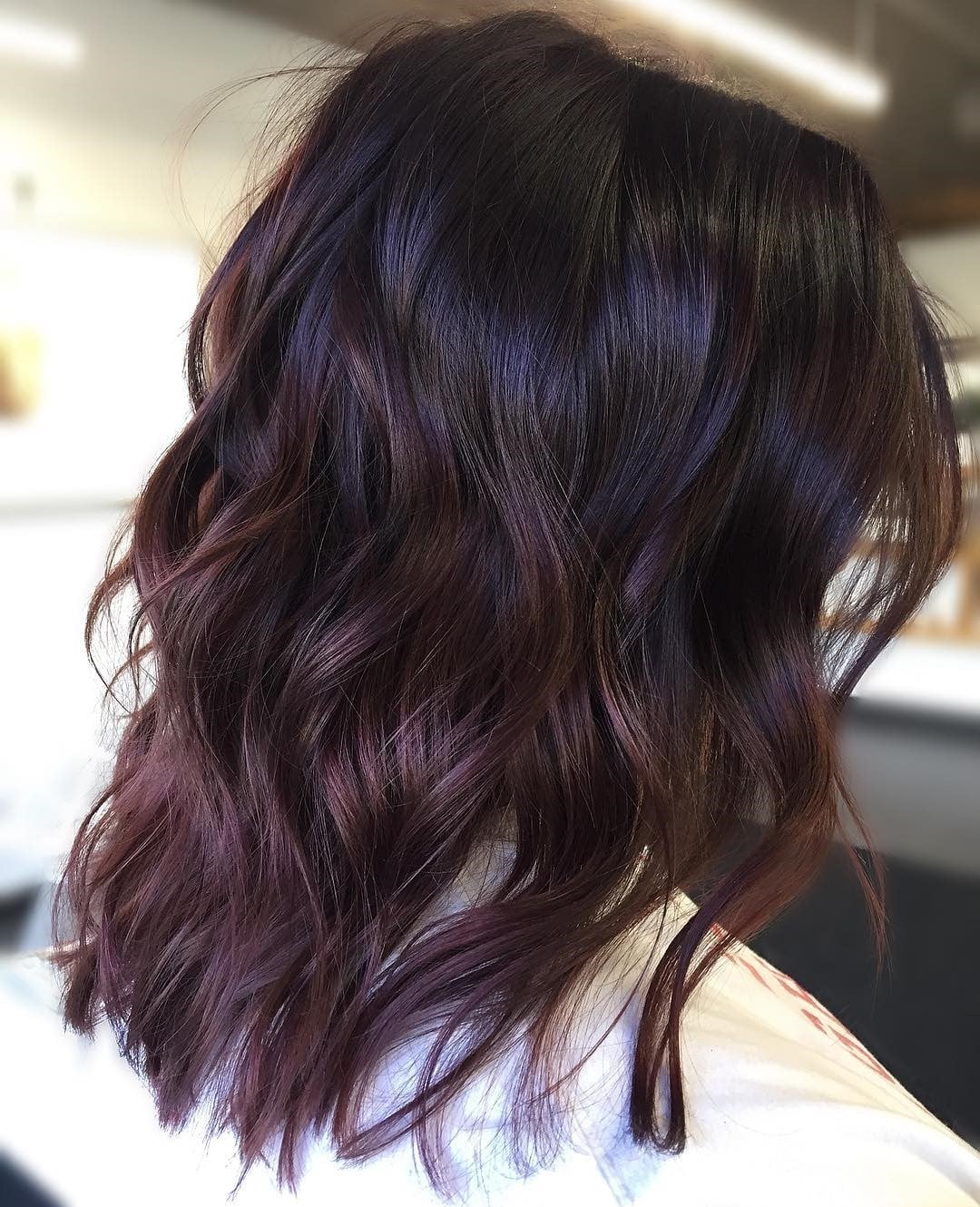
A dark base with purple undertones and subtle highlights is the entry point for anyone who wants purple in their hair without full commitment. The side part and wavy styling let the lighter pieces catch the eye only when the hair moves. Ask your colorist for: dark base with subtle purple undertones and highlights. Medium density, wavy collarbone length is ideal; the side part suits round and square faces by breaking up the symmetry.
Mid-Back Dark Base With Vibrant Purple Melt
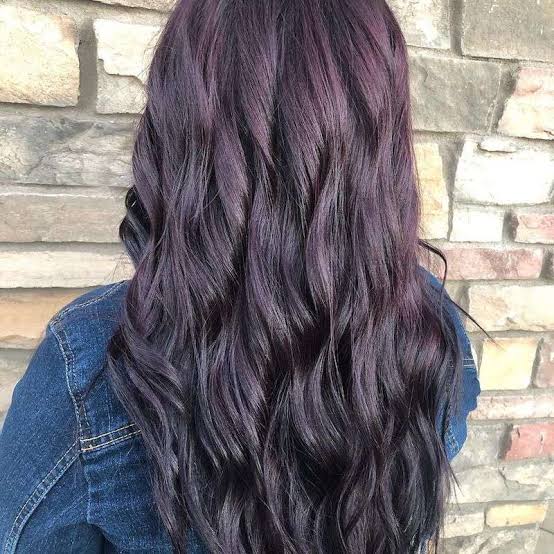
Can a dark base handle a vibrant purple melt without looking muddy? Yes, but it requires a two-step salon process: lightening the ends enough to hold the violet tone, then blending it upward so the transition reads as a gradient, not a line. Ask your colorist for: dark base with vibrant purple melt, wavy texture. This one works best on thick, wavy hair starting at mid-back, with a middle part that lengthens round faces. The drawback is that a vibrant purple melt on dark hair is strictly a salon service; the lightening alone takes about three hours, and the tone needs refreshing every five to six weeks to keep the melt from turning drab.
Final Thoughts
The right purple depends on how much upkeep you want. High-contrast melts and split dyes deliver maximum impact but need toning every six to eight weeks. Balayage and highlights on a darker base fade more gracefully and let you stretch salon visits.
- Wash with cool water and sulfate-free shampoo to preserve color vibrancy.
- Use color-depositing conditioners weekly to refresh purple tones.
- Toning may be needed every 6-8 weeks depending on the shade and fade.
- Minimize heat styling to prevent color degradation and damage.
Embrace the purple spectrum; there is a shade for every style.