Purple hair dye has moved past the all-over commitment into something more strategic: a root shadow here, a money piece there, a fade-out that lands somewhere between violet and magenta. The shift from flat-ironed straight to glossy natural texture means the color moves with you, catching light in the waves rather than fighting a stiff silhouette.
This collection of 25 Purple Hair Dye Styles runs the gamut from low-upkeep root-shadowed lengths to high-impact vivid pixies, built for fine strands that need a density trick, a visible grow-out line that needs hiding, or a fringe that won’t cooperate. Every look comes with a concrete ask for your colorist, a realistic upkeep window, and the honest thing that happens between appointments.
Vivid Purple Mid-Back Blowout
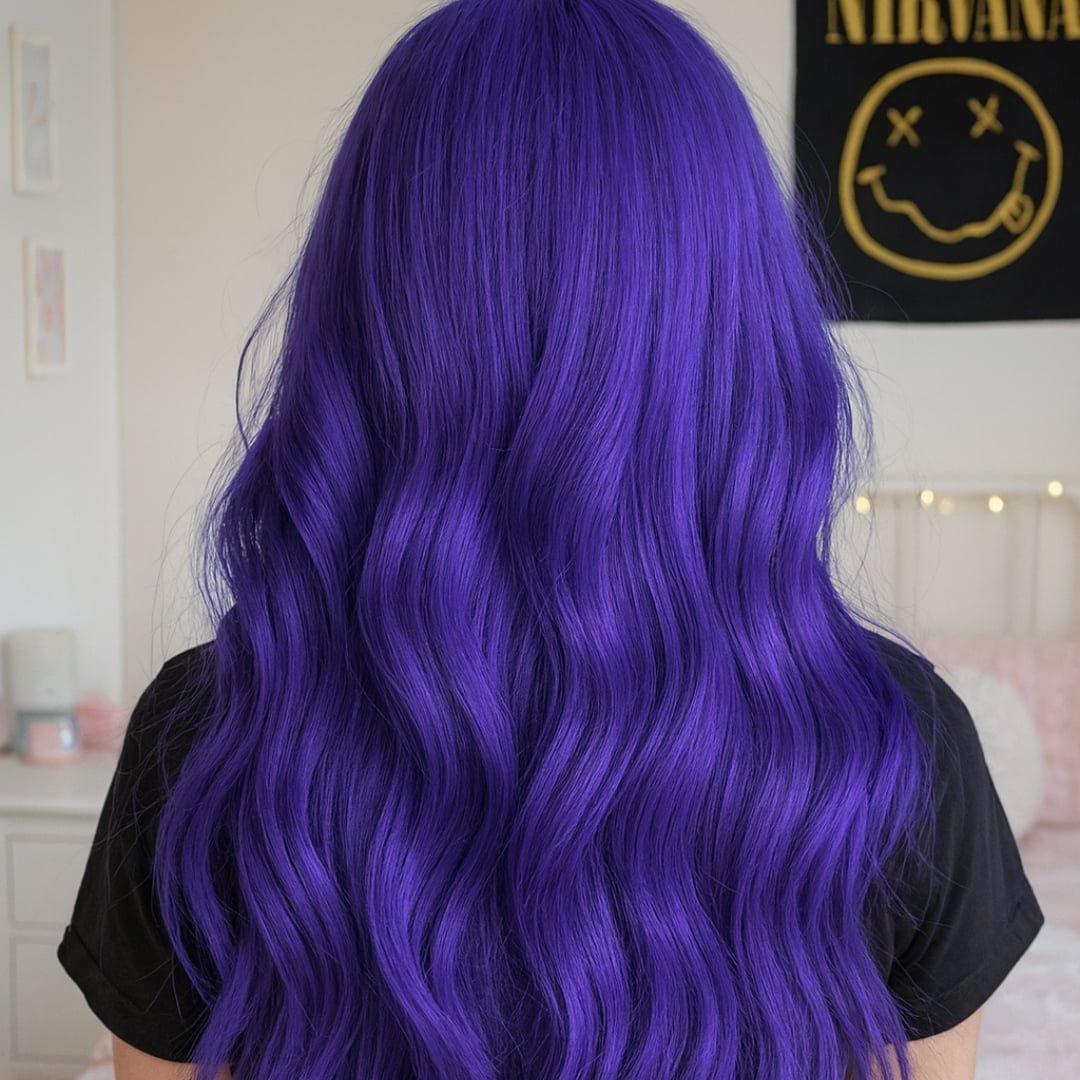
A full head of vivid purple signals a commitment to the shade. The even saturation from root to tip requires a double-process application, starting with a lift to pale blonde and then depositing the purple pigment. The result is a glossy, uniform tone that holds its intensity for about four weeks before needing a refresh.
Thick, wavy hair at mid-back length carries this color best, as the density gives the purple weight and depth. Ask your colorist for: full vivid purple color, mid-back length blowout. A large round brush during blow-drying builds volume at the crown and bends the ends under. Plan for a trim every eight weeks to maintain the shape.
Long Wavy Purple With Root Shadow
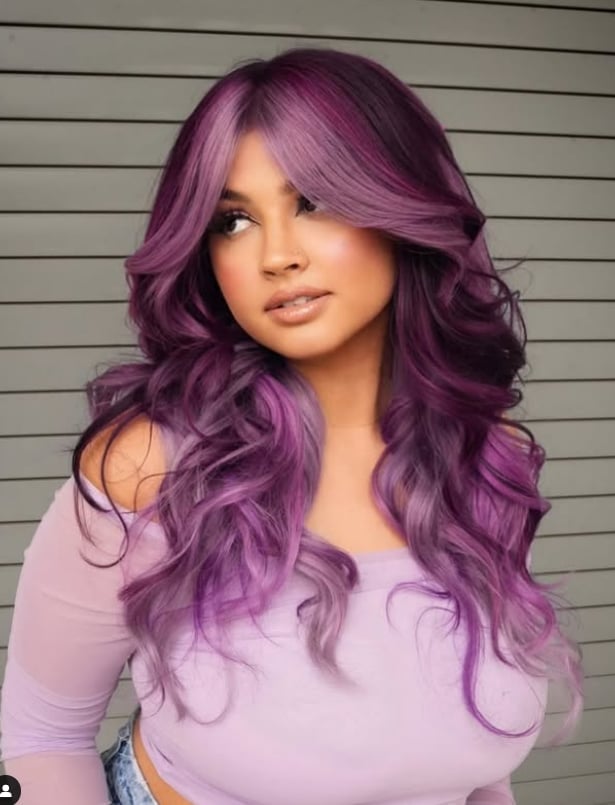
Wondering if you can wear vivid purple without committing to a harsh grow-out line? A root shadow solves that. The darker tone at the roots blends into a vibrant purple base with lighter purple highlights, creating dimension that softens as the color fades.
Curtain bangs and thick, wavy hair at mid-back length make this style work; the curtain bangs soften round and square faces. Ask your colorist for: vibrant purple with lighter highlights and root shadow, curtain bangs. Use low heat to encourage the wave pattern. The root shadow buys about six weeks before you need to be back in the chair.
Dark Base Purple Ombré With Blunt Bangs
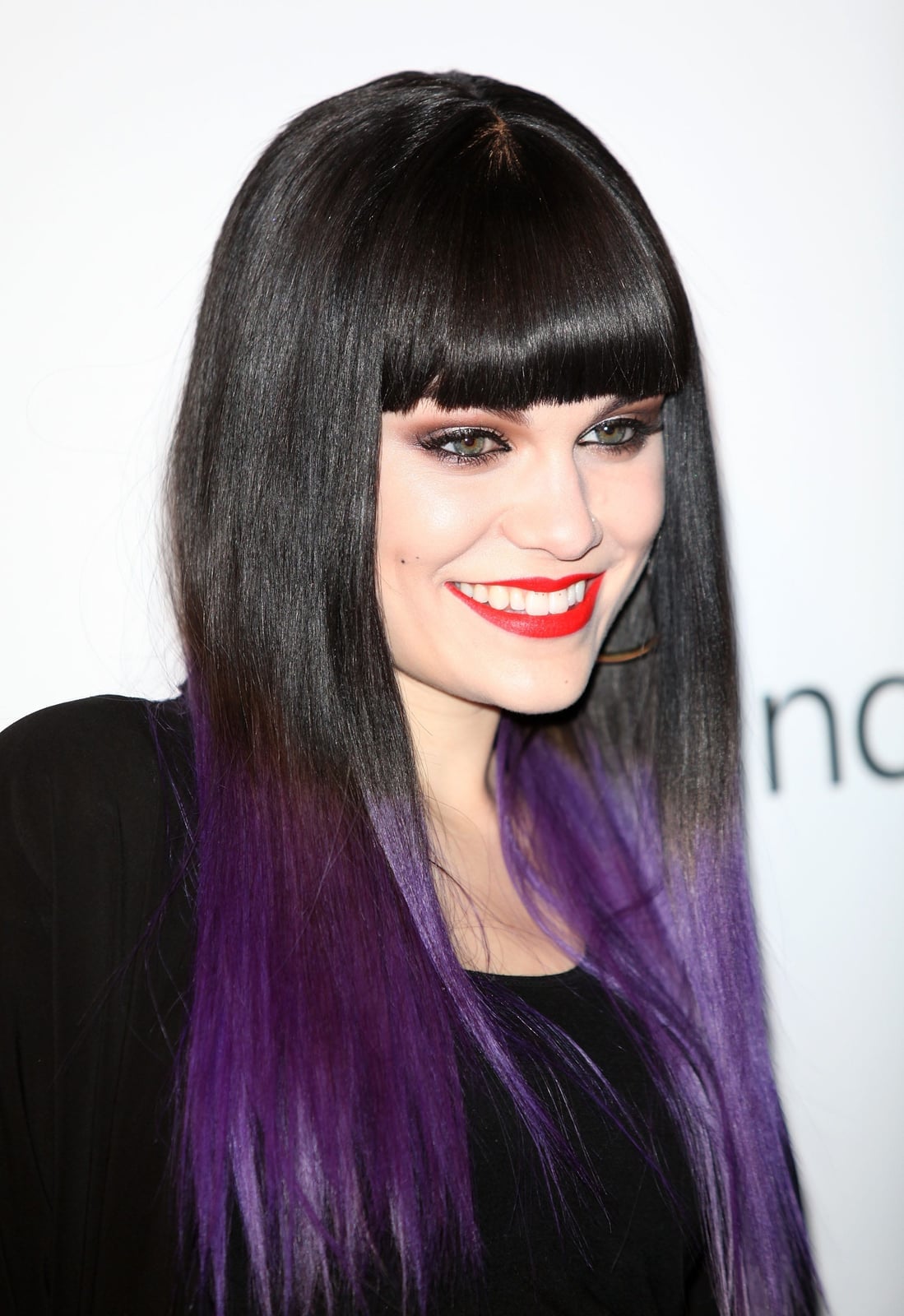
Solid purple can feel relentless. A dark base to vibrant purple ombré offers a similar payoff with less upkeep, because the roots stay your natural shade. The blunt bangs anchor the look, drawing attention to the contrast between the dark crown and the bright ends. This suits thick, straight hair of mid-back length, and the blunt bangs work best on oval and long faces. Ask your colorist for: dark base to vibrant purple ombré, blunt bangs. A flat iron smooths the ombré sections and keeps the bangs sharp.
Purple To Magenta Pink Ombré
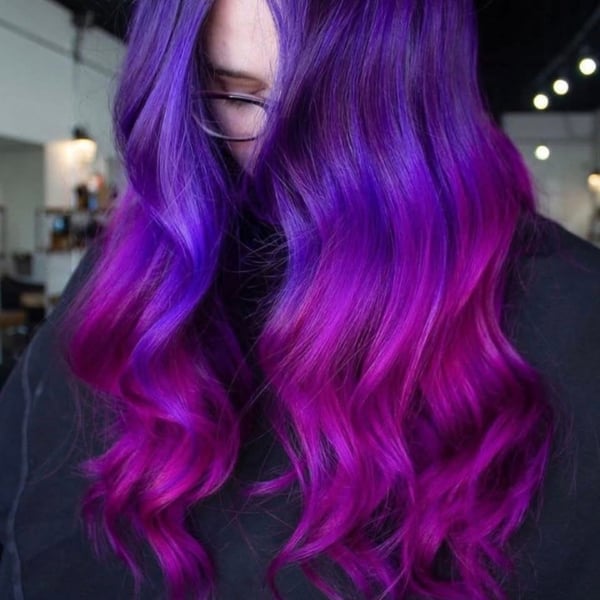
The transition from intense purple at the roots to magenta pink at the ends is built by painting two separate formulas onto pre-lightened hair and blending them where they meet. The seamlessness of the gradient depends on the colorist feathering the purple down into the pink rather than leaving a hard line. Thick, wavy hair at mid-back length gives the blend enough surface area to read clearly. Ask your colorist for: intense purple to magenta pink ombré. A texturizing spray on damp hair enhances the waves and the color shift.
Dark Purple To Bright Purple Balayage
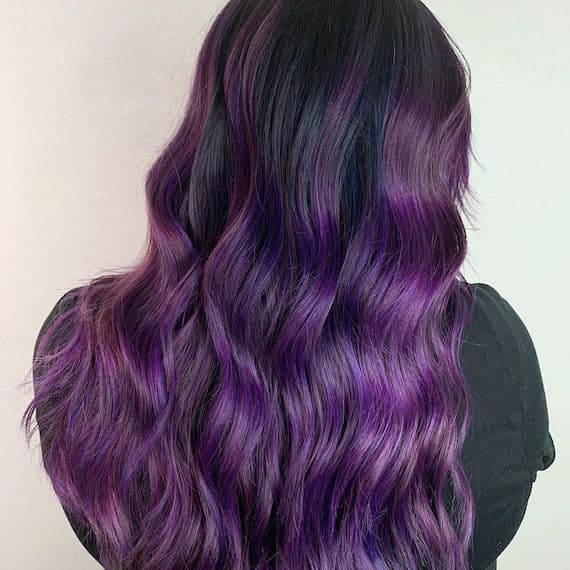
What do you actually say to get a balayage that reads as deep purple turning bright? You describe the contrast. A dark purple base sits at the roots, and the colorist hand-paints sections from the mid-lengths down with a brighter purple formula, keeping the application freehanded so the line stays soft. Thick, wavy hair at mid-back length shows the gradient best. Ask your colorist for: dark purple base to vibrant purple balayage. A wide-tooth comb detangles the waves without disrupting the color placement.
Collarbone Lob With Purple Highlights
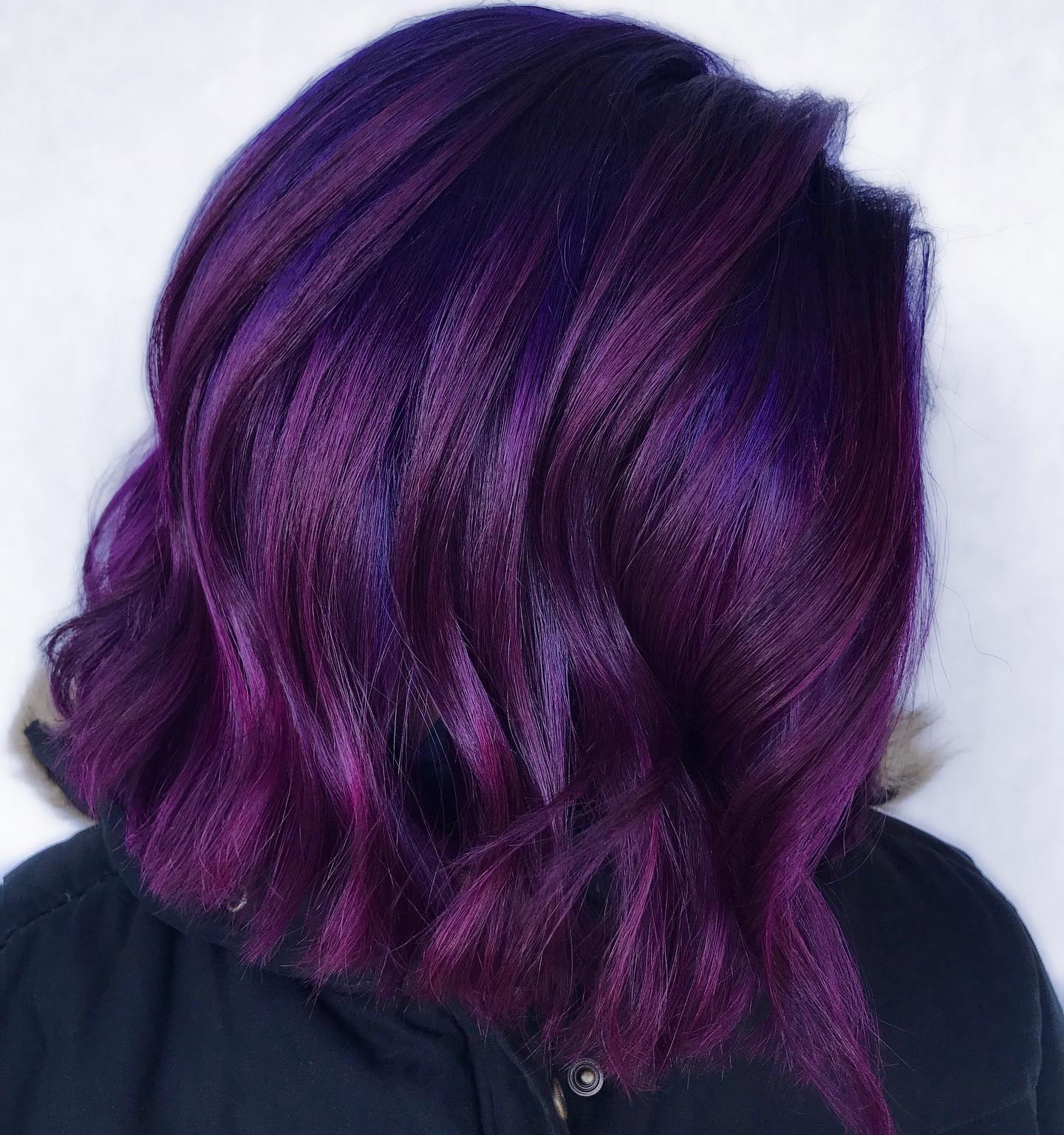
A lob that lands at the collarbone with curtain bangs and a middle part gains serious dimension from purple highlights and balayage layered over a dark base. The soft waves and smooth blowout keep it office-appropriate. Thick, wavy hair starting at the collarbone works best here, and the curtain bangs soften round and heart faces without demanding constant trimming.
Ask your colorist for: collarbone lob with purple highlights and balayage, curtain bangs. Blow-dry the fringe forward to set the shape. Purple highlights on a dark base fade faster than you think, so color-safe shampoo and a toning appointment every six weeks keeps brassiness at bay.
Mid-Back Waves With Purple Money Piece
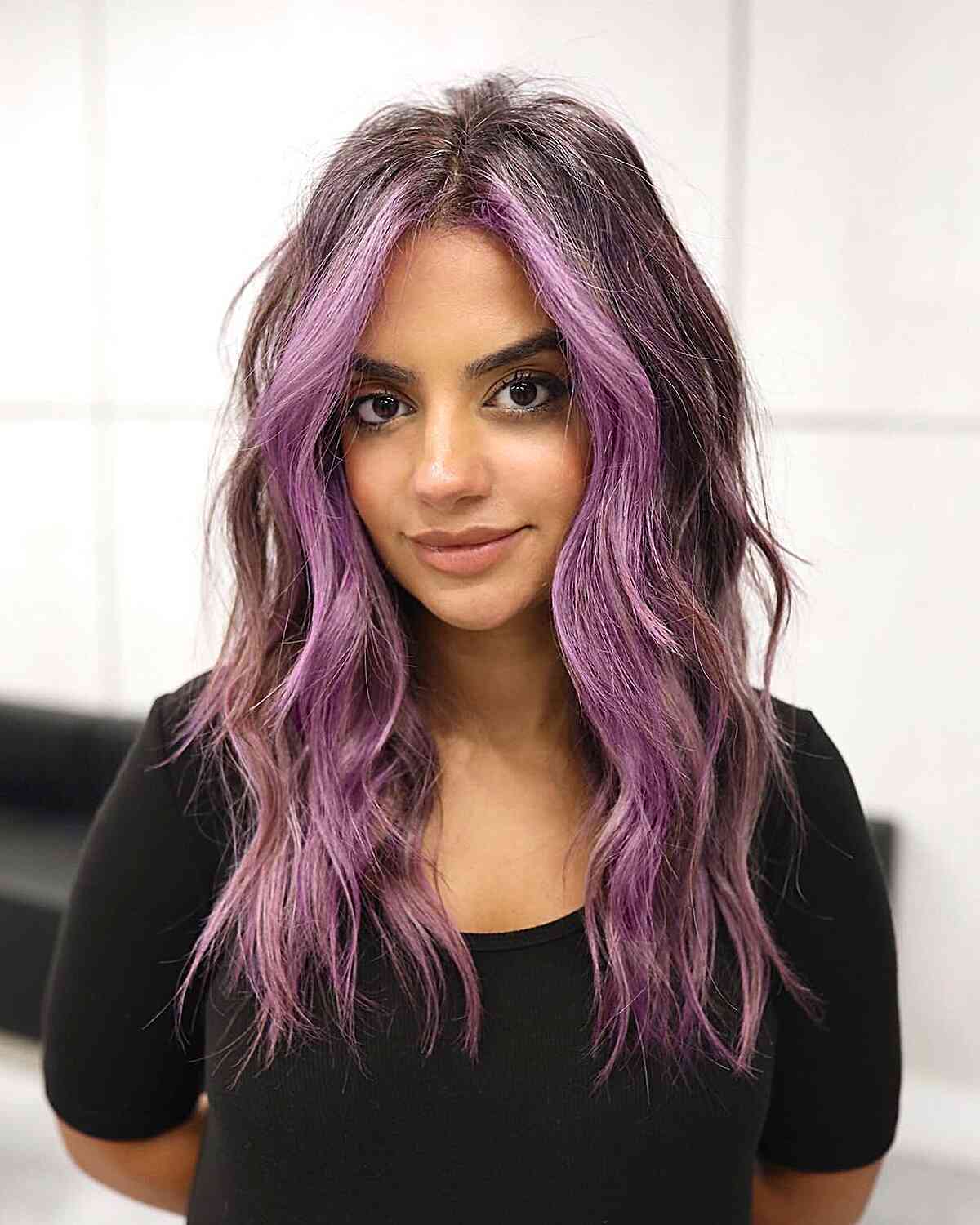
A bright purple money piece against a dark base draws every eye to your face. The mid-back loose waves and middle part let the two front sections take center stage, while the length stays understated. Medium-density wavy hair of mid-back length carries the look without needing thick strands to make the purple pop.
Ask your colorist for: dark base with a bright purple money piece. Those front pieces fade fastest from sun, heat styling, and general friction with your skin. Expect a touch-up every four weeks if you want the purple to stay vivid and not drift into a muddy pastel. Who should skip it: anyone who washes hair daily or hates salon visits more than once a month.
Collarbone Waves With Lavender Highlights
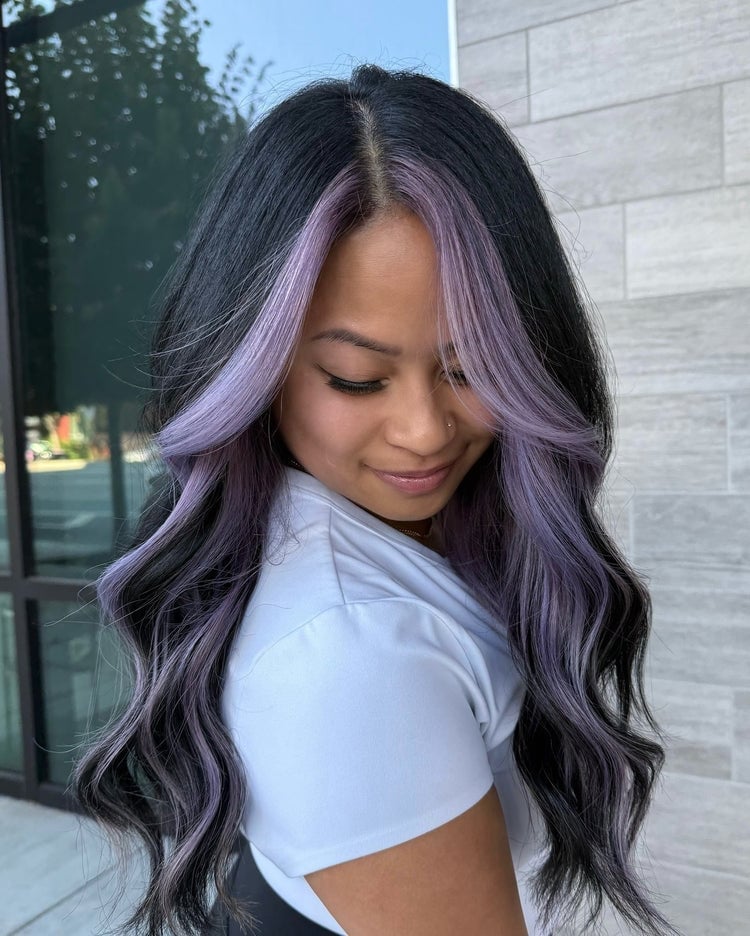
Is lavender too delicate for dark hair? Not when the highlights stay chunky and face-framing, as they do here on a black base. The collarbone-length layers and soft blowout waves let the lavender sweep forward, creating contrast without the commitment of all-over color. Wavy hair at this length carries the highlights naturally, and the face-framing placement softens square and round jawlines.
Ask your colorist for: black base with lavender face-framing highlights. This is a lower-contrast look than vivid purple. Cool-toned dark bases that don’t lean warm are best, because lavender on brassy hair turns a muddy gray fast. Fine hair benefits from the chunkiness of the highlights, which add volume and texture.
Dark Base With Vivid Purple Streaks
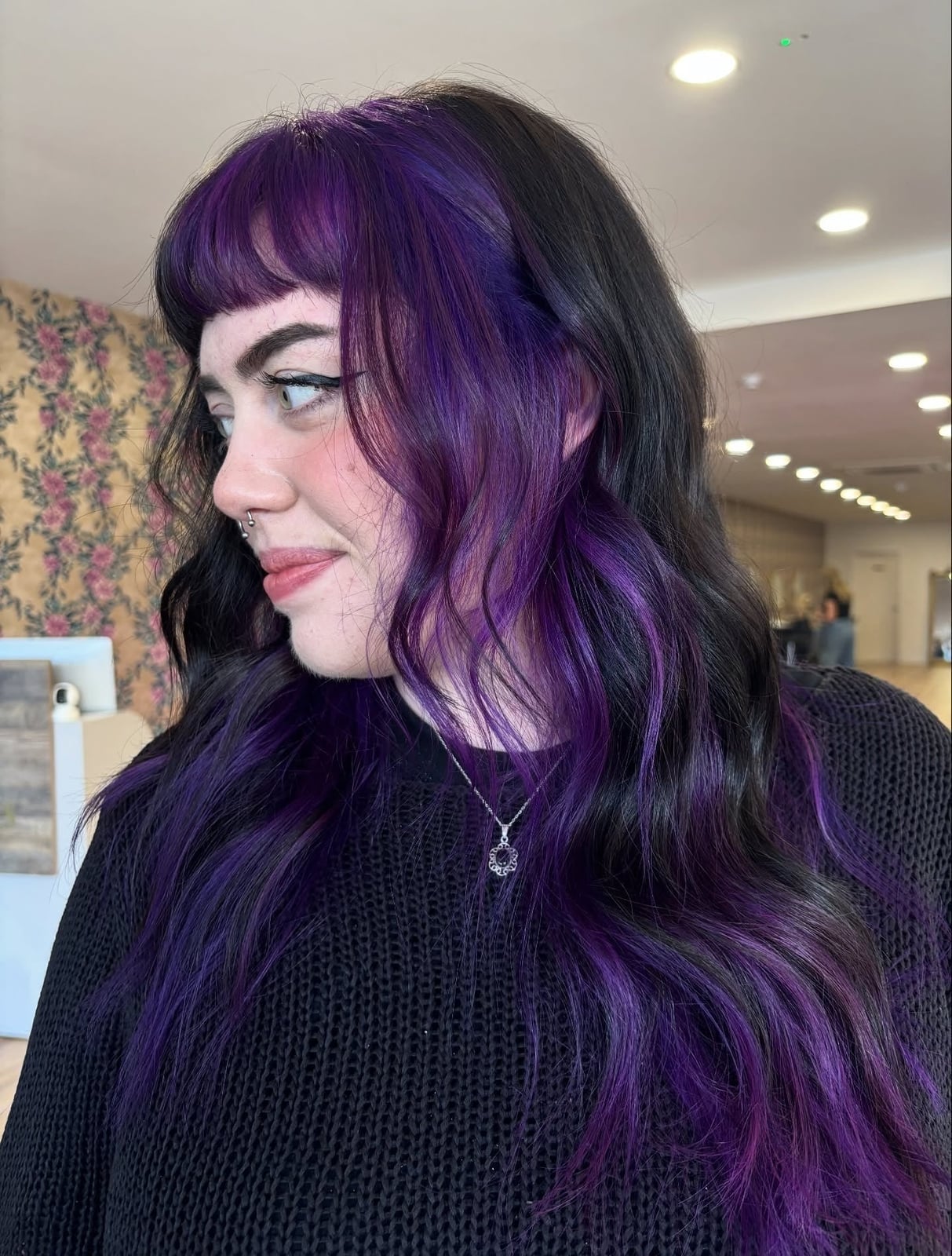
Vivid purple streaks woven through a dark base rely on contrast: the thicker the streak, the more it reads as a deliberate statement rather than a dye mishap. Here the mid-back wavy texture and middle part let the purple sit in broad ribbons through the mid-lengths and ends, keeping the roots dark. Thick, wavy hair of mid-back length is ideal because the streaks have enough surface area to register.
Ask your colorist for: dark base with vivid purple streaks. As for salon versus DIY: a professional can place the streaks so they catch light and movement, while at-home kits tend to oversaturate or miss sections entirely. The streaks fade fastest of any placement because they are not blended into the base, so expect noticeable color loss after four weeks. A purple shampoo used twice a week extends the life, but not indefinitely.
Dark Base With Purple Highlights
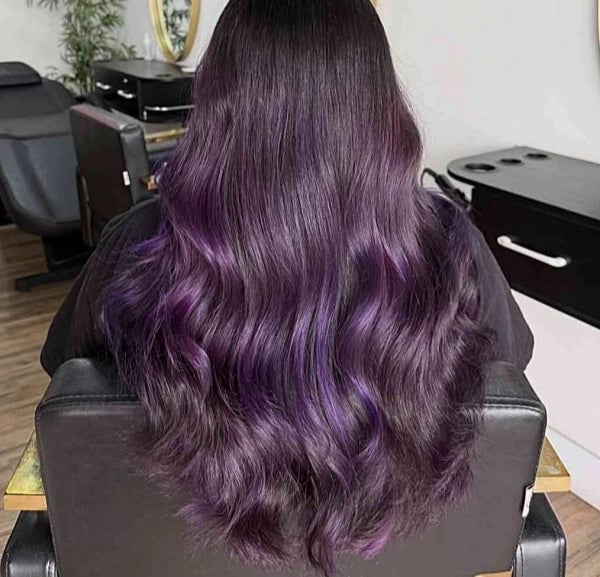
The most common mistake with purple highlights on a dark base is asking for too many, which turns the whole thing into a muddy violet blob. This back-view shot shows the smarter approach: vibrant purple highlights woven sparingly through the ends, leaving the deep base dominant. The loose wavy blowout and middle part let the highlights peek through. Thick, wavy hair of mid-back length carries the placement without the highlights overwhelming the texture.
Ask your colorist for: dark base with vibrant purple highlights. The trick is to request fewer foils than you think you want, especially on the first visit. Highlights that sit too close together lose their definition and blend into the base, requiring corrective color to fix. If your goal is subtle dimension, this is the safer bet.
Shoulder Length Curly With Purple Highlights
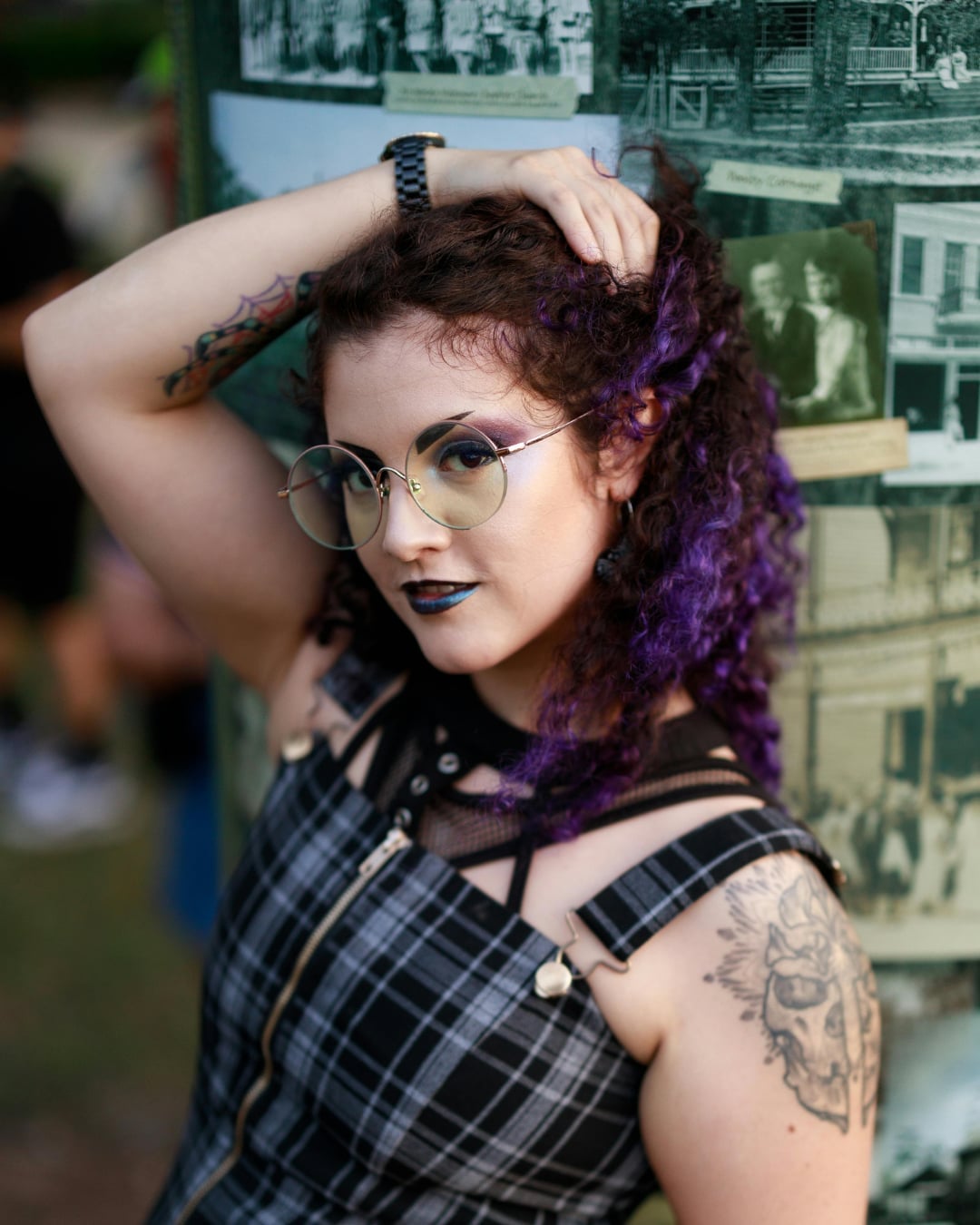
Wondering how to carry bold color through autumn without losing the summer energy? Thick, curly hair at shoulder length, parted to the side, weaves vibrant purple highlights through a dark base, keeping the look playful while the deeper roots ground it for cooler months. The technique places the bright pieces where curls catch light, so the color appears deliberate and not scattered. Ask your colorist for: dark base with vibrant purple highlights. A curl-defining cream and low heat drying keep the pattern defined and the tone true.
Collarbone Waves Pink To Purple Ombré
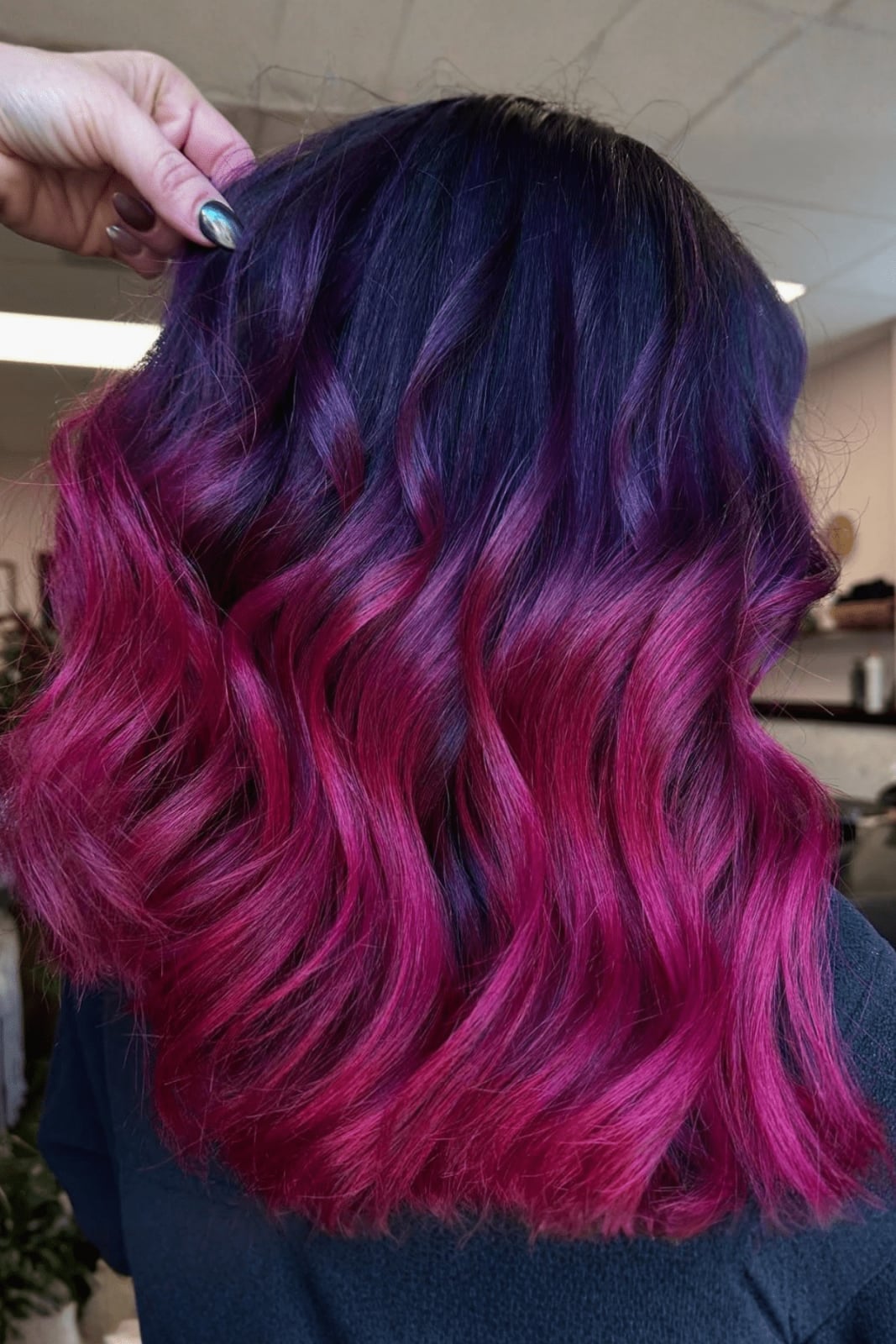
A gradient from dark roots to vibrant pink and purple ends demands a serious lift at the back. Medium wavy hair at collarbone length shows the ombré clearly, with the pink fading first and the purple lingering near the darkest section. That sequence means the color shifts over time. Ask your colorist for: dark base to vibrant pink and purple ombré.
A color-protecting shampoo is non-negotiable here. Pink fades faster than purple, so expect to refresh the mid-lengths with a tinted conditioner every second wash. The dark root means you can stretch salon visits to eight or ten weeks before the grow-out line becomes obvious.
Mid-Back Black To Purple Ombré
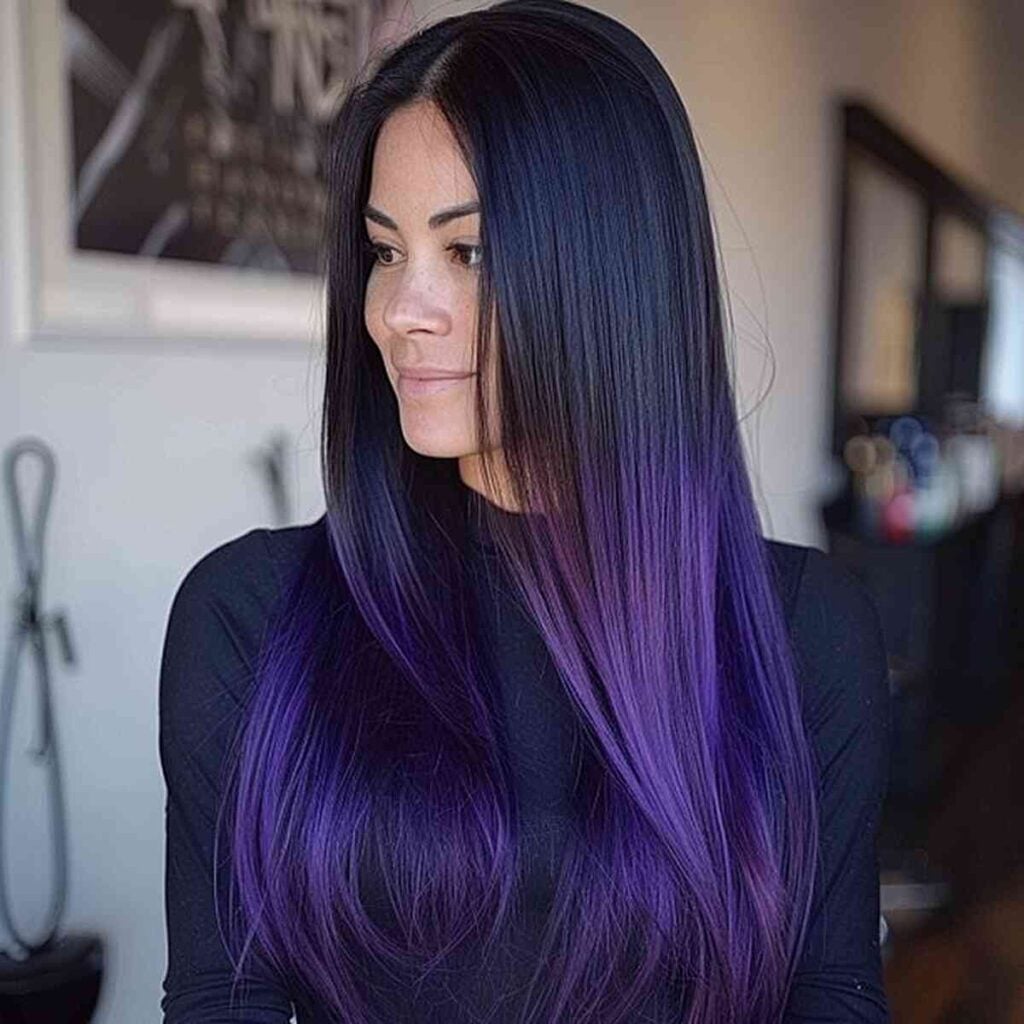
The lift step determines how bright the purple reads. A single bleach pass gives a deeper eggplant tone; two passes open the cuticle for a truer violet. Straight styling with a flat iron seals the cuticle and adds the gloss the photo shows. Because the ombré sits low, new growth blends for months before you need to sit for a refresh.
Mid-Back Dark Base Purple Ombré
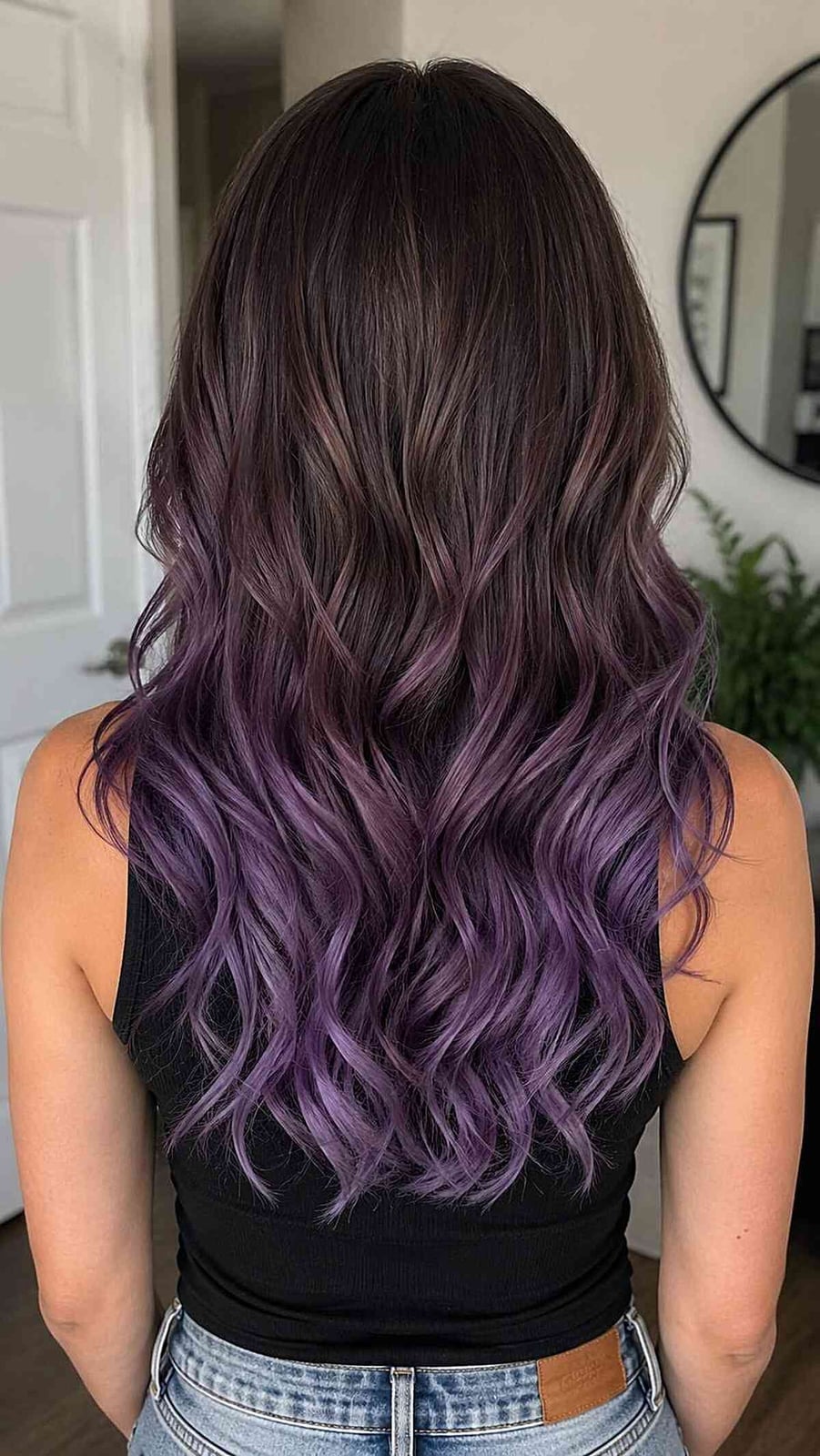
What exactly do you say to get a purple ombré that doesn’t look like a dip-dye from a box? Medium density wavy hair at mid-back length, with a middle part and long layers, shows the color transition from a dark base to purple ends. The key words are “soft transition” and “natural placement,” so the purple starts subtly around the collarbone and deepens toward the tips. Ask your colorist for: dark base to purple ombré, soft transition.
Ask for the ombré to be painted on select sections, not applied as a solid block. That keeps the dark base visible through the waves and prevents a harsh line. Wavy texture helps the color blend, so a leave-in conditioner and air-drying are enough to show off the gradient. The grow-out is low-maintenance because the roots stay untouched.
Collarbone Purple With Lighter Highlights
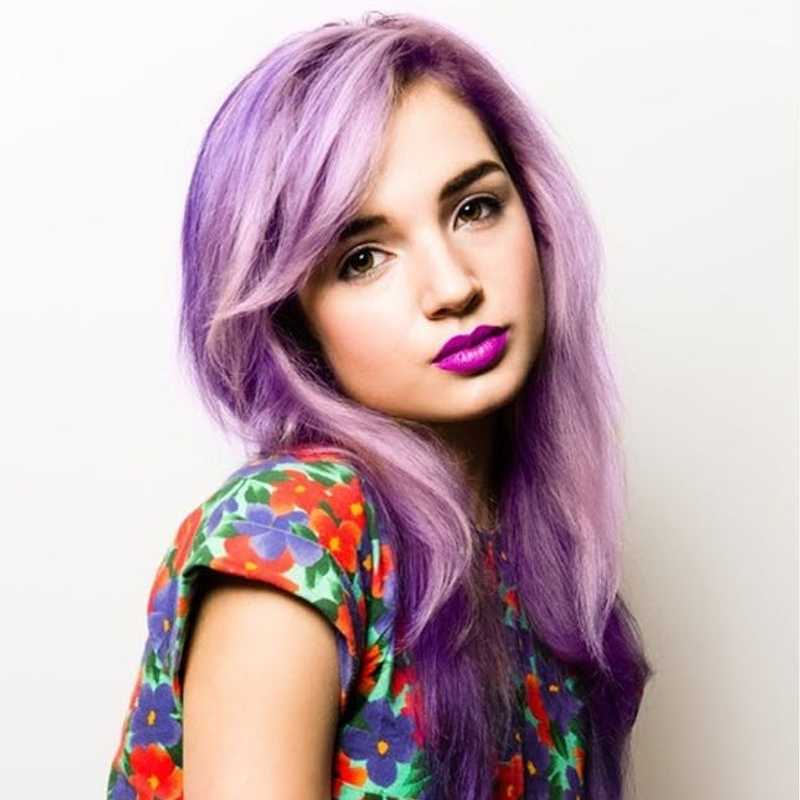
Side-swept bangs and layered waves at collarbone length create a frame that suits oval and heart-shaped faces particularly well. The base is a vivid, saturated purple, and the lighter purple highlights sit mostly around the face and on the ends, adding dimension without turning the whole thing pastel. The difference between the base and the highlights is subtle enough to avoid a stripe effect. Ask your colorist for: vibrant saturated purple with lighter highlights, side-swept bangs.
Medium wavy texture holds the shape without much effort, though the bangs need a quick blow-dry each morning to keep the sweep. The lighter pieces will fade to a dusty lavender first while the base stays punchy, so a purple shampoo used twice a week keeps both tones from turning brassy.
Mid-Back Pastel Purple And Lilac Blend
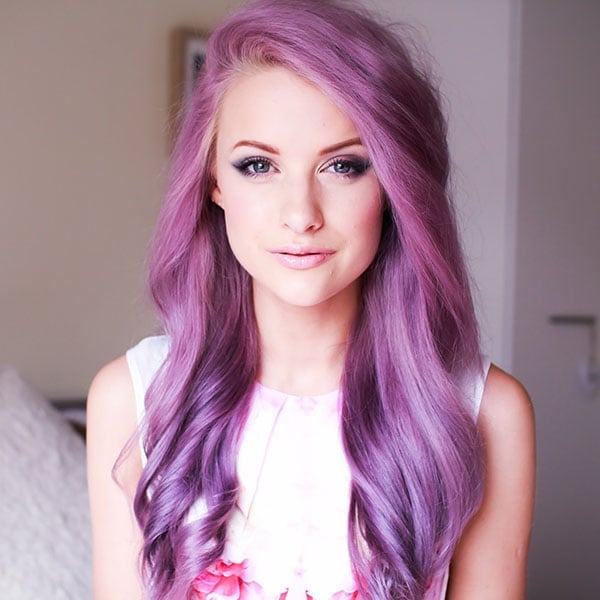
If you want purple hair but find a solid vivid shade too aggressive, a pastel purple and lilac blend lands somewhere between a statement and a whisper. The mix of two soft tones on thick, wavy mid-back hair creates dimension without the high contrast that demands weekly toning. Side-swept bangs help soften round faces, and the side parting keeps the color distribution uneven in a good way. Ask your colorist for: pastel purple and lilac blend, side-swept bangs.
Pastel shades fade faster than saturated ones, so the trade-off is gentler grow-out and more frequent color refreshes. A color-safe shampoo and cooler water are not negotiable here. The payoff is a tone that reads as deliberate rather than accidental, and the blend hides regrowth better than a single pastel shade would.
Fine Hair Lob With Purple Balayage
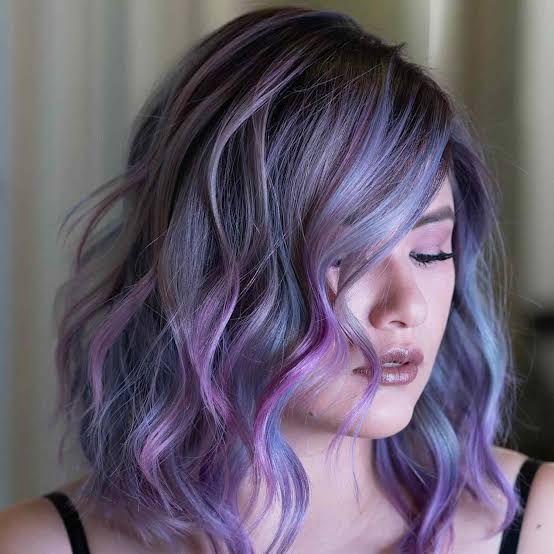
A collarbone lob with soft purple balayage and curtain bangs is designed to add volume on fine, wavy hair. The light-handed technique keeps the color at the ends, so the roots stay untouched and the hair retains its natural body. The drawback is that fine hair absorbs color quickly and can look saturated if the stylist applies too much pigment. Ask your colorist for: collarbone lob, soft purple balayage, curtain bangs. A volumizing mousse at the roots and a texturizing spray through the waves give the lob the lift it needs without weighing it down.
Shoulder Length Purple Ombré In Buns
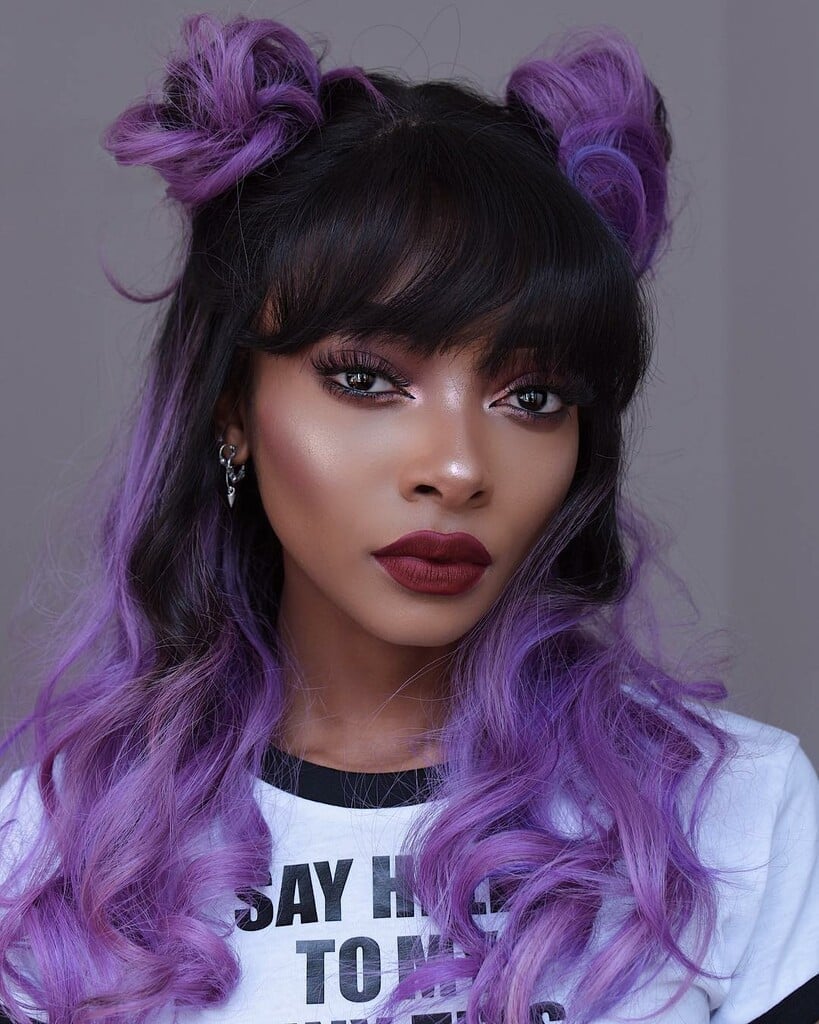
Can you wear purple ombré and still look polished at a midday meeting? Yes, if you pull it into two high buns with loose, wavy strands left out. The black-to-purple transition keeps the root area professional, while the lighter ends add a playful note that works for brunch or a festival. Curtain bangs soften the forehead and make the style feel less severe. Ask your colorist for: black to purple ombré, two high buns, face-framing waves. The ombré technique means you can stretch touch-ups to every ten to twelve weeks, which is the real win here.
Mid-Back Vivid Purple With Teal And Pink
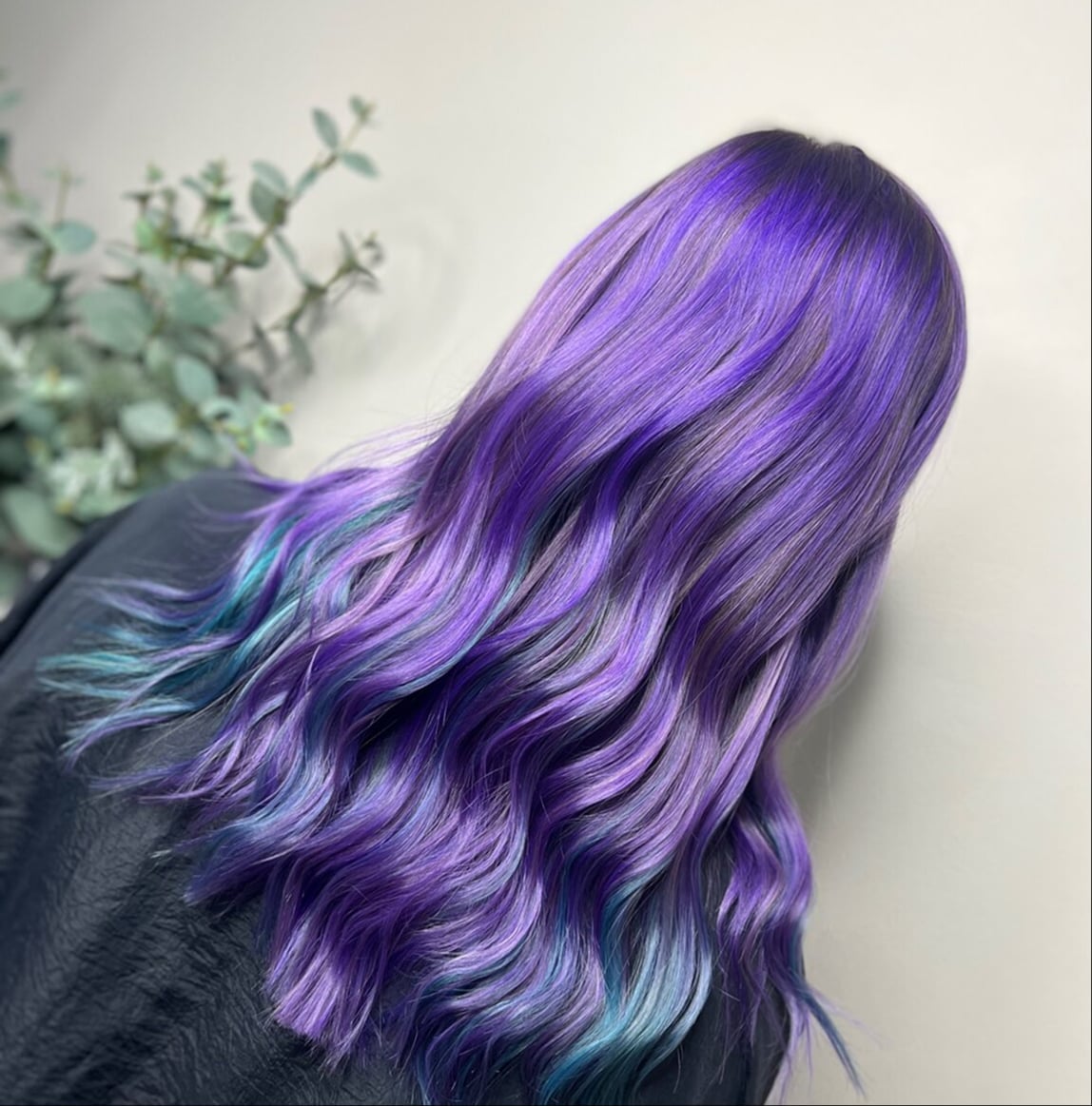
Layering teal and pink streaks into a vivid purple base is not a casual color application. The stylist applies each tone in separate sections, letting them overlap slightly at the edges so the transitions read as depth rather than stripes. Thick, wavy mid-back hair carries the multi-tonal effect well because the waves catch each color from a different angle. Ask your colorist for: vivid purple with teal and pink undertones.
The result is a back-view showstopper that demands attention without looking like a rainbow experiment. The downside is that three tones mean three different fade rates. A color-depositing conditioner in a cool purple tone helps keep the teal and pink from turning muddy between salon visits.
Mid-Back Pink And Purple Split Dye
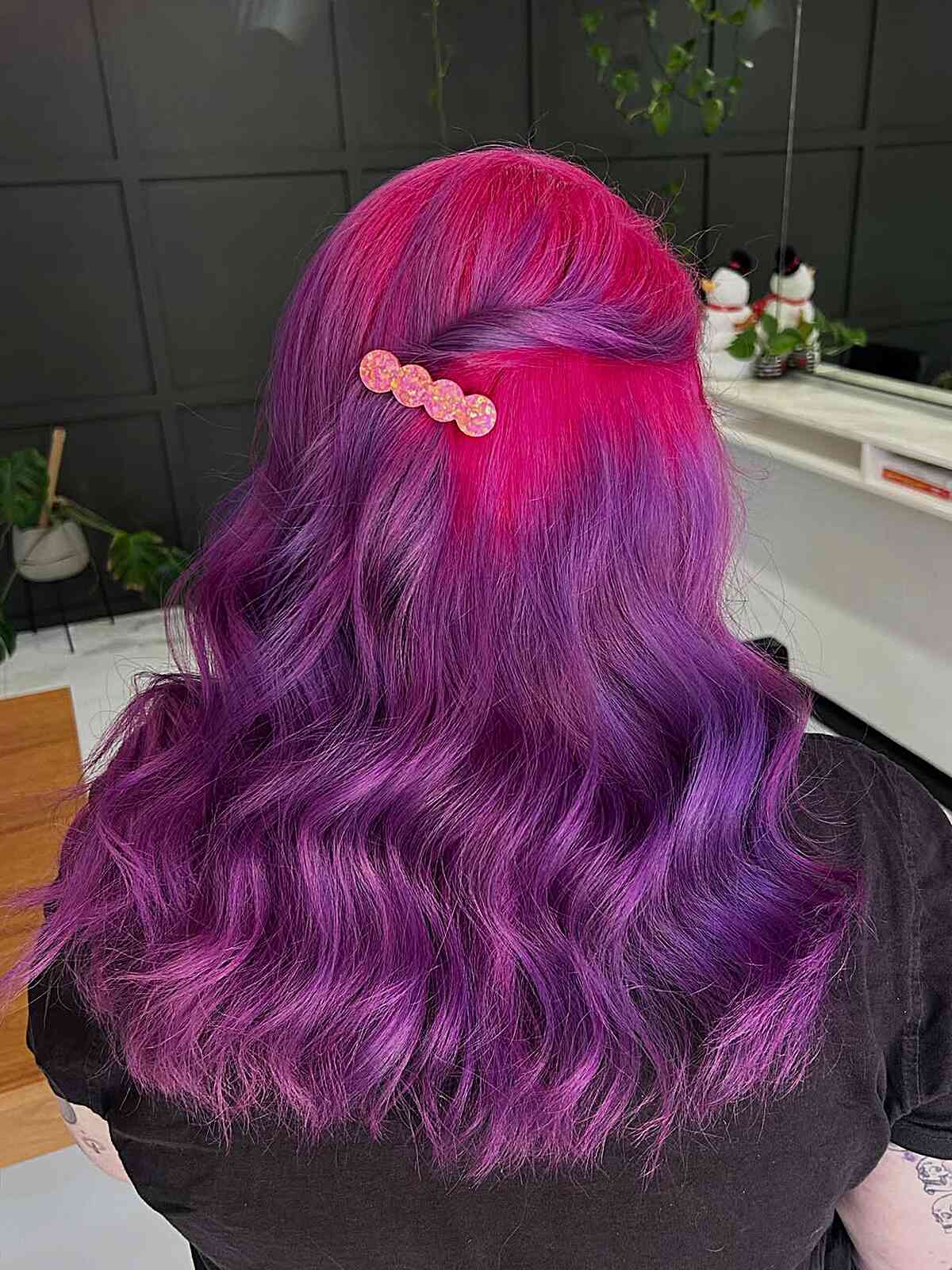
Washing the two colors separately is impractical, so the realistic approach is to use a purple shampoo on the purple side and a pink conditioner on the pink side, applied section by section. A toning appointment every four to six weeks keeps the split crisp rather than muddy. The half-up style also protects the ends from friction against clothing, which slows fading.
Mid-Back Subtle Purple Undertones
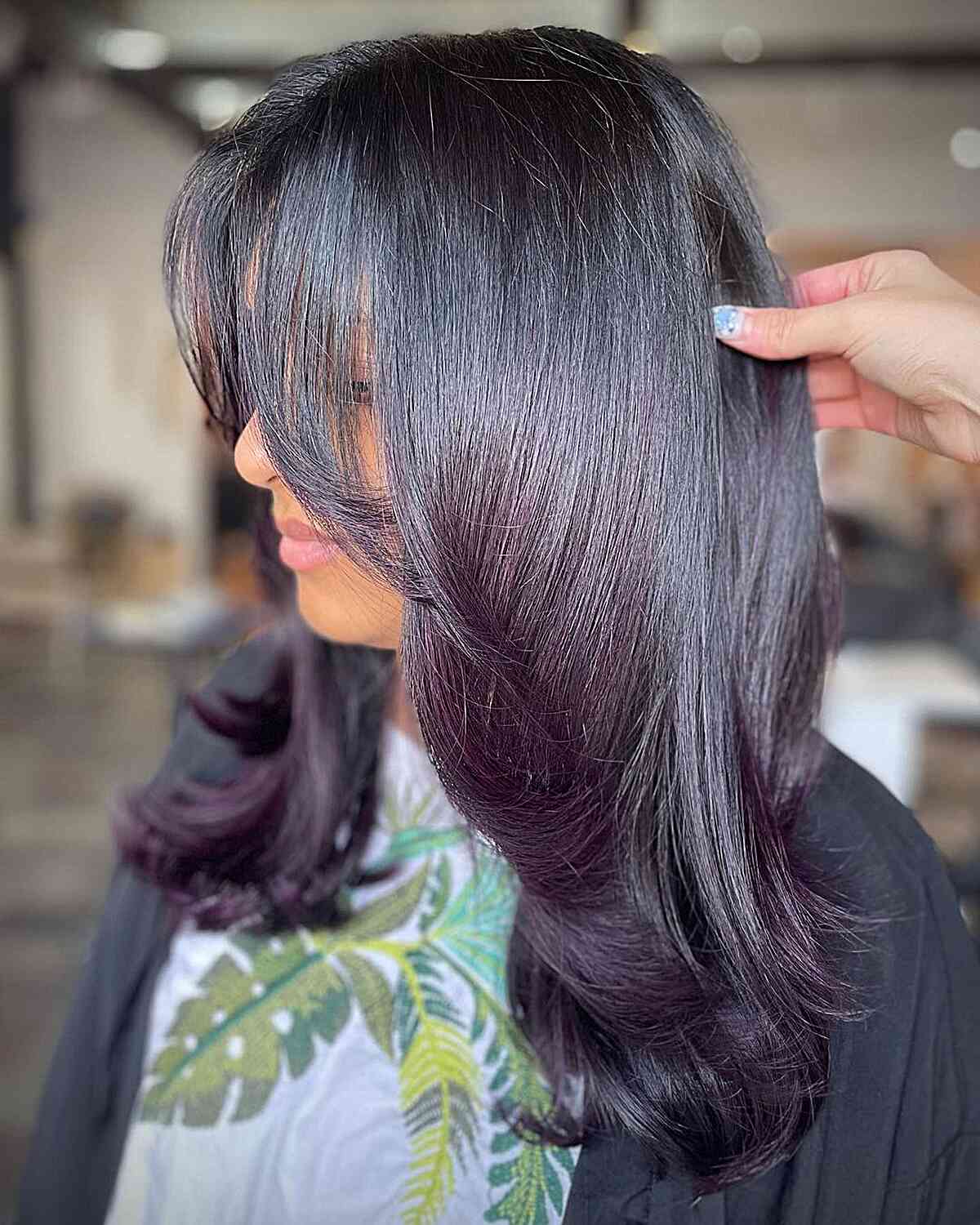
Ever wanted purple hair that only your hairdresser and you know about? This dark base with subtle purple undertones and highlights delivers exactly that. The mid-back length with long layers and a side parting looks air-dried and natural, ideal for fine, straight hair that wants a hint of color without the commitment. Ask your colorist for: dark base with subtle purple undertones and highlights. The payoff is a shade that shifts under certain lighting, so don’t expect it to shout. It’s a grow-out-friendly option since the dark base hides new growth for a while.
Pastel Purple Mullet With Curtain Bangs
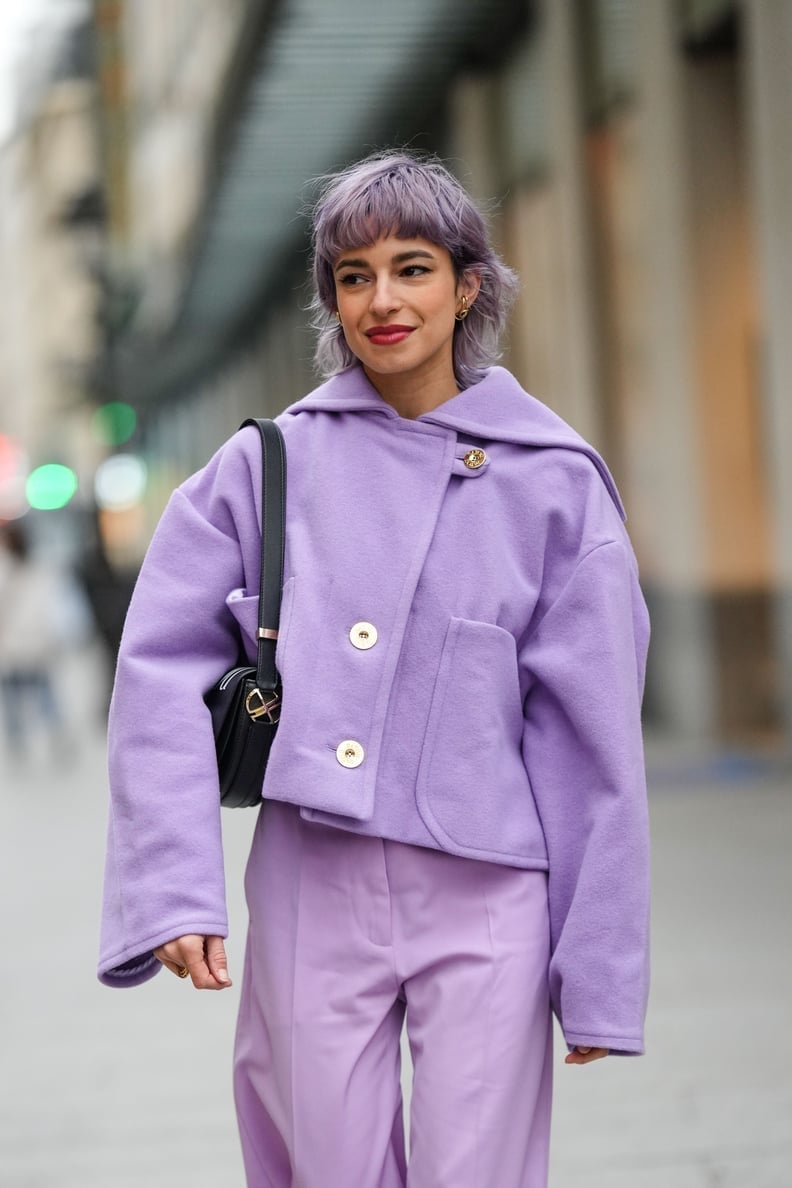
If a classic long mane feels too safe, the pastel purple mullet is the alternative that actually has an opinion. This ear-length cut pairs a uniform pastel purple with curtain bangs and a wavy, air-dried texture, giving it a softer edge than the usual sharp mullet. Fine, wavy hair takes well to the layered shape, and the curtain bangs help soften round or square faces. Ask your stylist for: pastel purple mullet, curtain bangs. A texturizing spray will enhance the layers, though pastel colors fade fast, so be ready to refresh the tone.
Chin Length Bob Purple To Silver Ombre
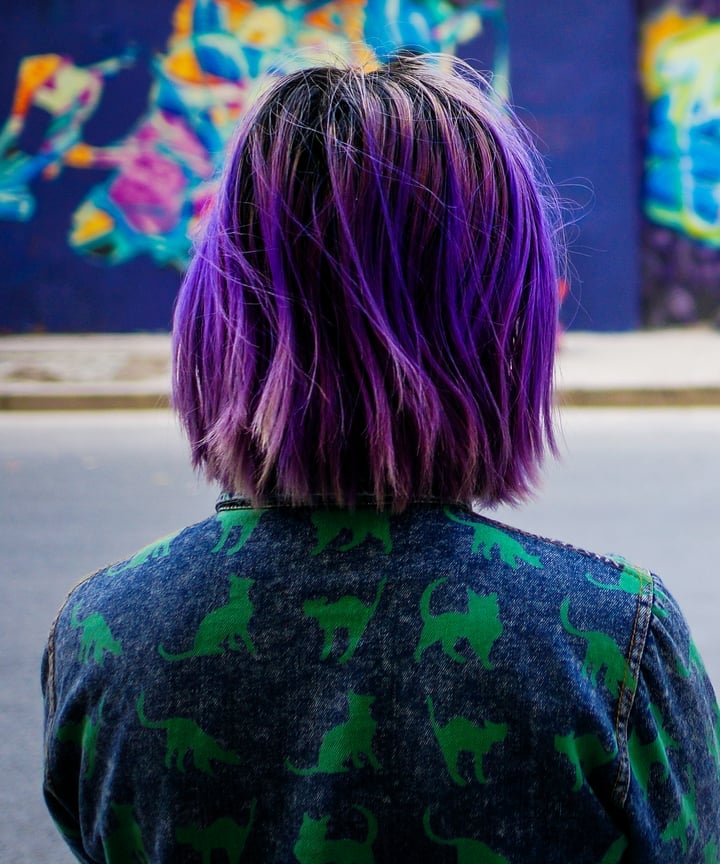
The chin-length bob has a middle parting and a purple to silver ombré that starts dark at the roots and lightens toward the ends. On fine, straight hair, this design creates a clean, modern line that suits most face shapes. Ask your colorist for: chin length bob, purple to silver ombré. The silver ends need a very light base, and on fine hair, the transition can look brassy if the toner isn’t maintained. A straightening balm keeps the sleek finish, and the ombré means you can skip root touch-ups for a while, but the ends will need a toning appointment every four to six weeks to stay silver.
Short Pixie With Silver Base And Purple Streaks
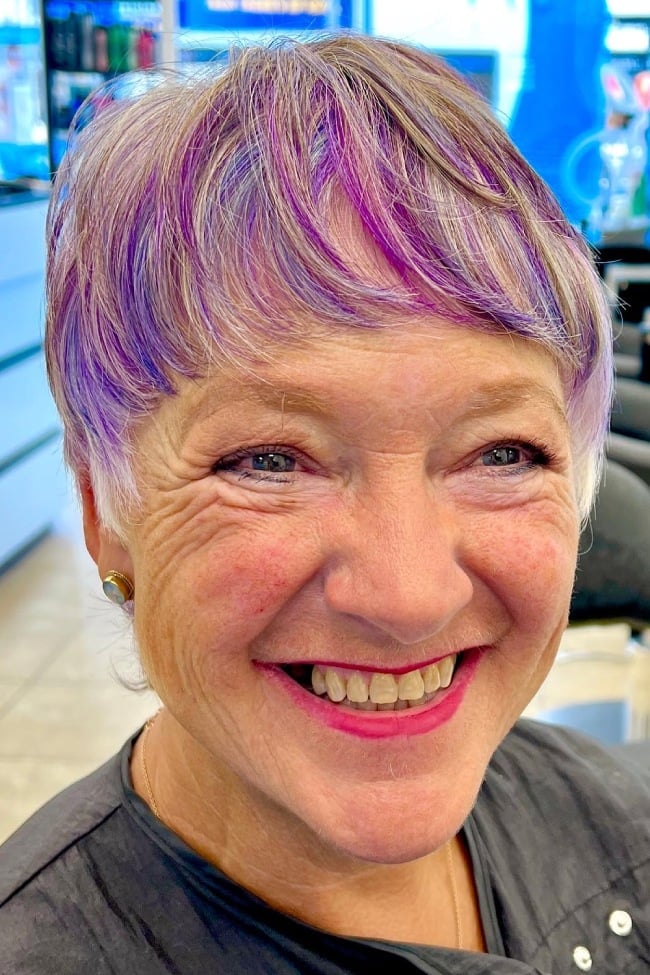
The ear-length cut has short bangs swept to the side and a textured finish, so it reads as deliberately styled rather than accidental. Fine, straight hair holds the shape well. Ask your colorist for: short pixie, silver base with vibrant purple streaks. This is not a DIY job: getting a clean silver base at home is a gamble, and the purple streaks need a steady hand. A texturizing paste will keep the piecey look, and the purple will need regular toning to stay bright.
Vivid Purple Textured Pixie With Short Bangs
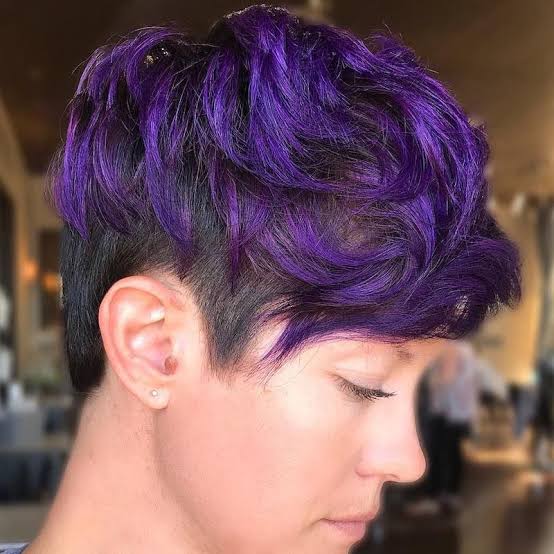
A vivid purple pixie with short bangs and a side part relies on contrast between the dense color on the voluminous top and the tapered sides; on curly texture, that contrast creates a deliberate structure. The even saturation across short hairs demands a careful single-process application, because any missed spot shows immediately. Curly hair of ear length works with most face shapes. Ask your colorist for: vivid purple pixie cut, textured and voluminous. The real difference from a pixie with purple streaks is commitment: this is full saturation, so the fade is slower and the regrow is less forgiving.
Final Thoughts
Fine hair benefits from a blunt baseline and a single vivid section rather than all-over color. Curly textures need a heavier conditioner schedule and a colorist who understands the porosity curve. For vibrant, fashion-forward purples, a salon application and regular toning sessions every six to eight weeks are the baseline. Subtle purple tones or highlights can be maintained at home with a semi-permanent dye after a consultation.
- Wash with cool water using color-safe shampoo and conditioner.
- Use purple-depositing conditioners or masks weekly to maintain vibrancy.
- Deep condition weekly to combat dryness associated with fashion colors.
- Schedule salon toning sessions every six to eight weeks for upkeep.
Purple hair dye is a versatile canvas for creative expression.