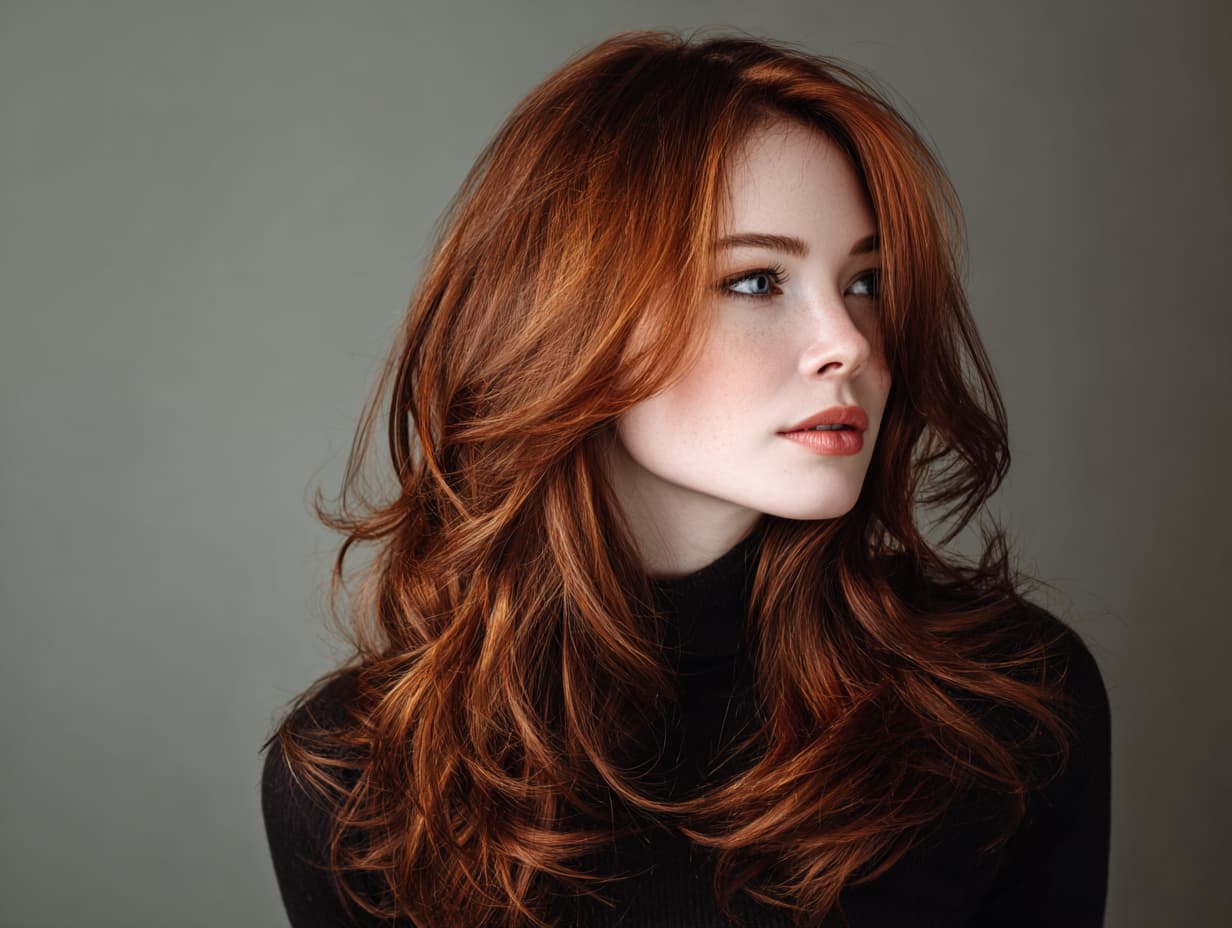
Natural hair is a spectrum of textures, each with its own styling logic. The current shift favors soft face-framing layers and lived-in color over flat-ironed poker straight, so cuts and styles now work with the curl pattern instead of against it.
These 28 Simple Natural Hair Hairstyles cover everything from a five-minute pixie to a salon-built updo, for fine coily strands that fall flat by noon and thick curly manes that need taming. Each idea pairs a concrete ask with the upkeep rhythm, so you know what to say and when to book the trim.
Short Textured Pixie Crop
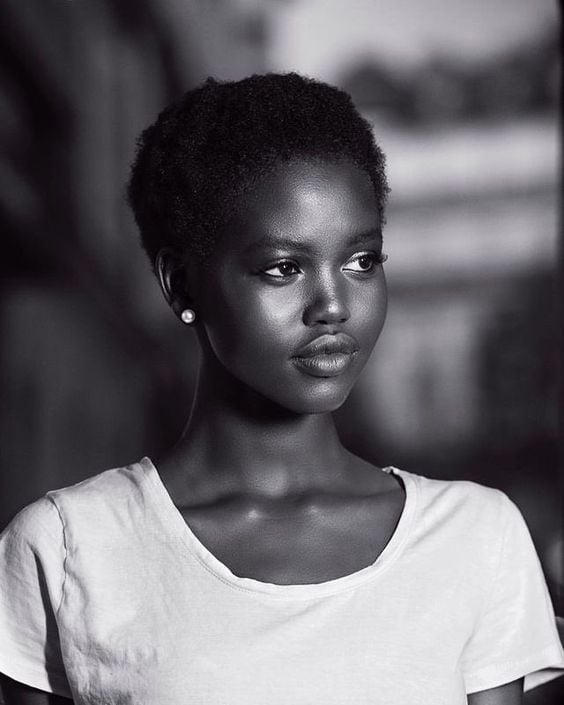
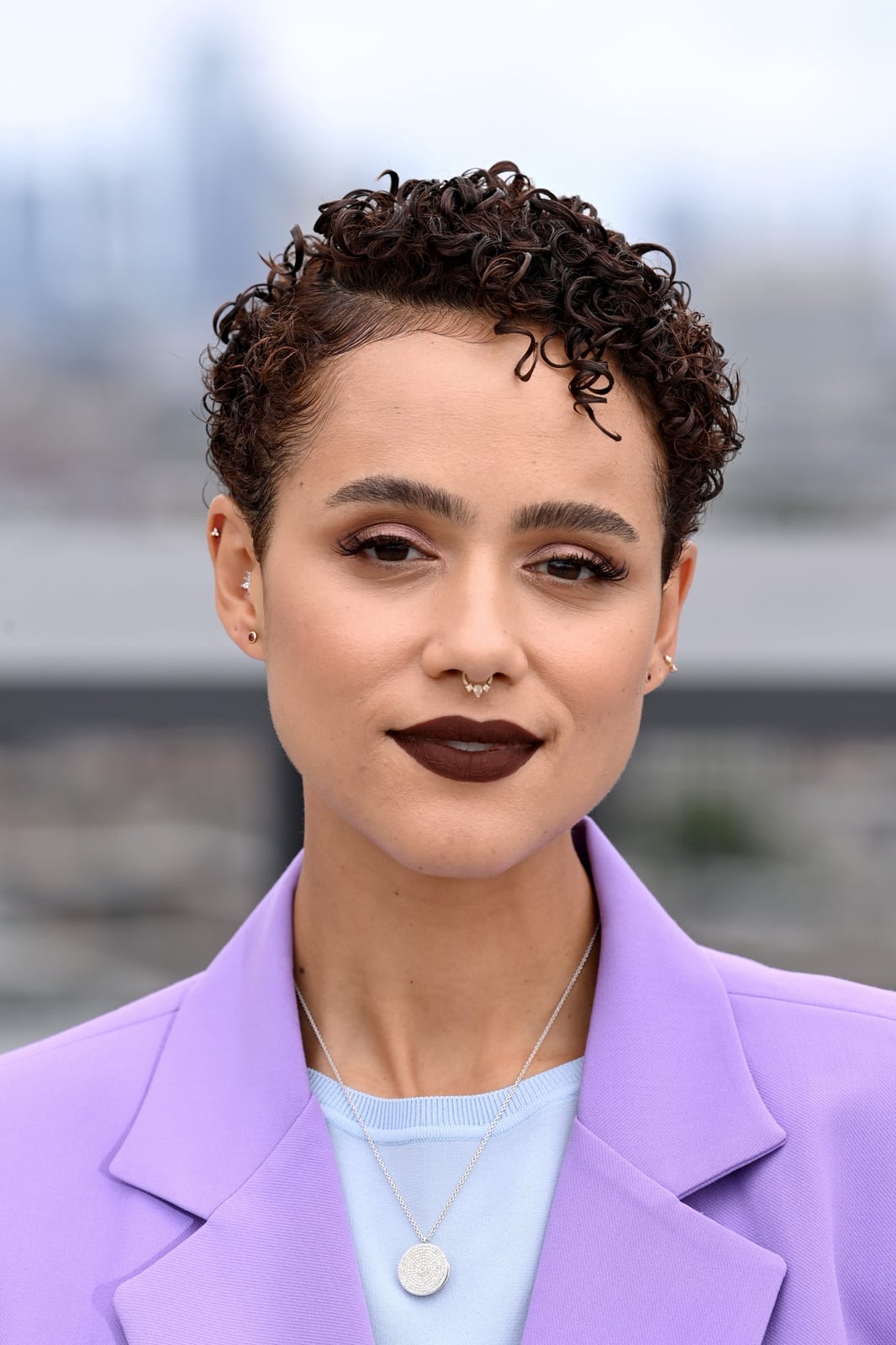
A short textured pixie crop is designed to make the most of fine, coily hair by keeping length at the ear and removing weight that can flatten the shape. This cut suits fine, coily textures that naturally hold a compact form rather than drooping. Ask your stylist for: short textured pixie crop, ear length. Use a dab of light pomade to define the coils; the style is easy to refresh each morning and needs a trim every four to six weeks to keep the silhouette crisp.
Side Parted Curly Pixie
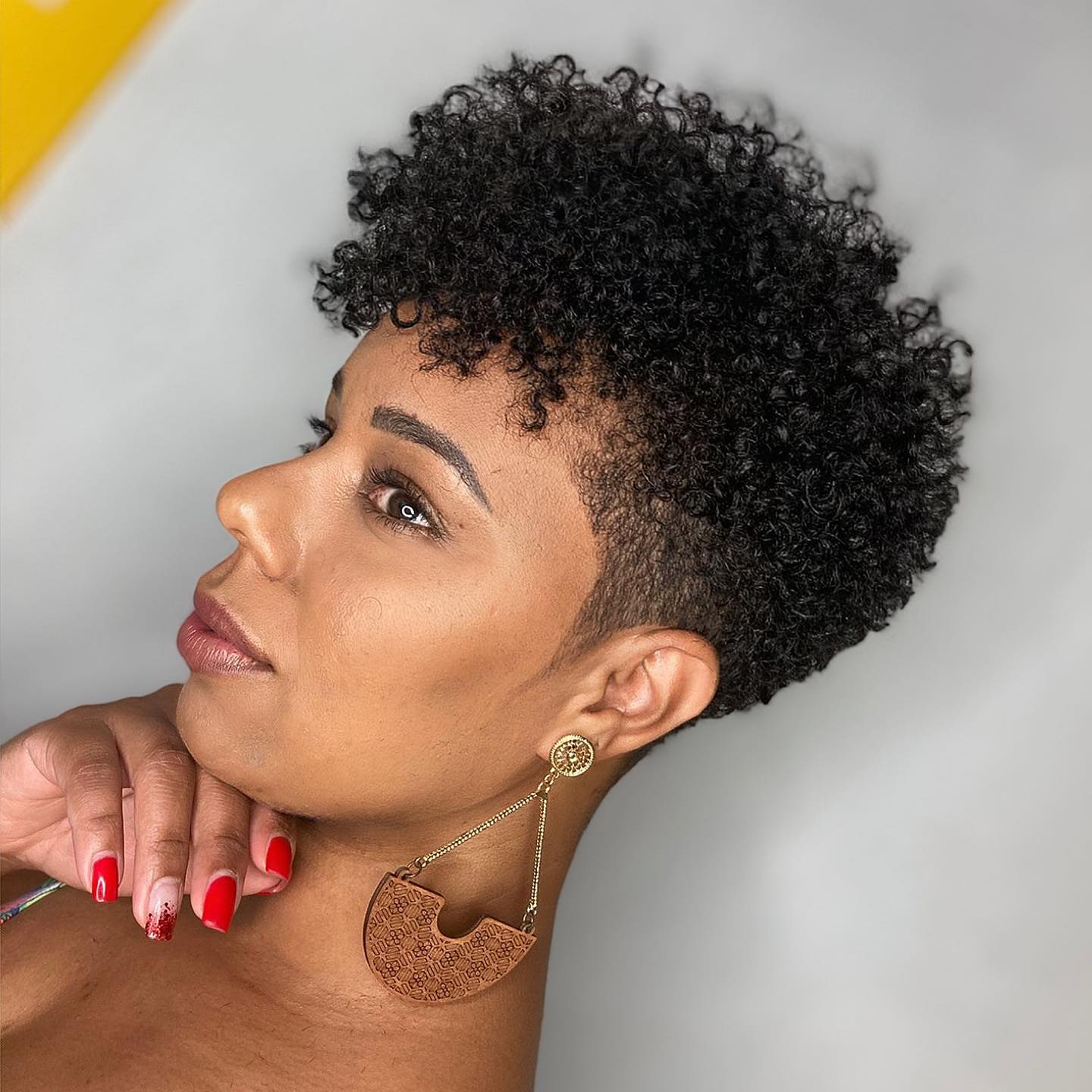
Wondering how to get defined curls without a full head of length? A curly pixie with a side part delivers them. This cut works best on thick, curly hair that can hold its own shape without heavy product. Ask your stylist for: curly pixie cut with a side part. Apply a curl-defining cream to damp hair and let it air dry; the side parting adds volume at the roots. Plan on a trim every six to eight weeks to maintain the silhouette.
Voluminous Pixie With Undercut
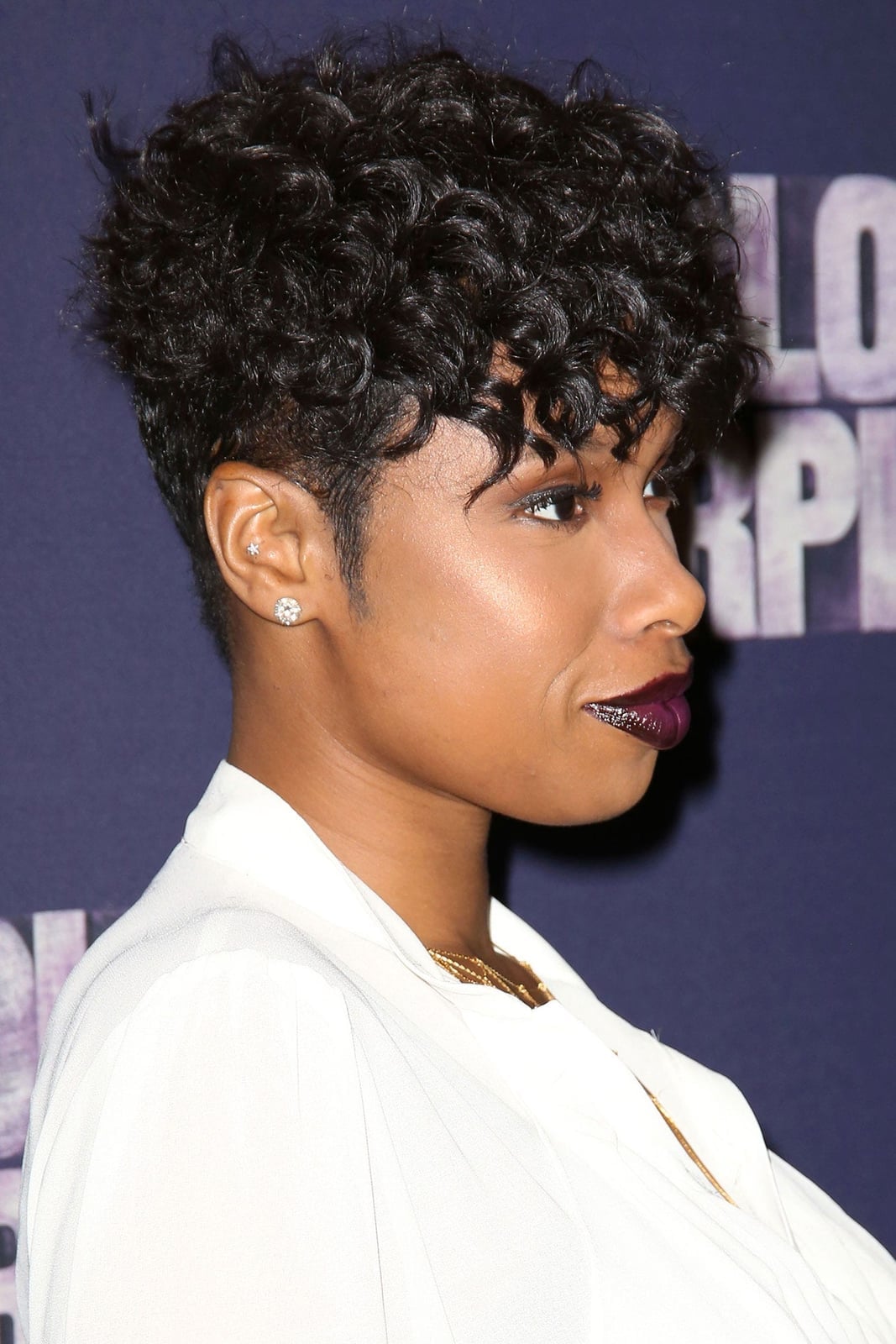
A voluminous pixie with an undercut removes bulk from the nape while leaving dense, dark curls free to expand above the ear. This cut suits thick, coily hair that can support a bold shape without falling flat. Ask your stylist for: voluminous pixie cut with an undercut. Air drying is the entire styling routine here, but the undercut side needs a razor touch-up every three weeks for a clean edge. It’s a style best kept up at the salon.
Short Twisted Coils
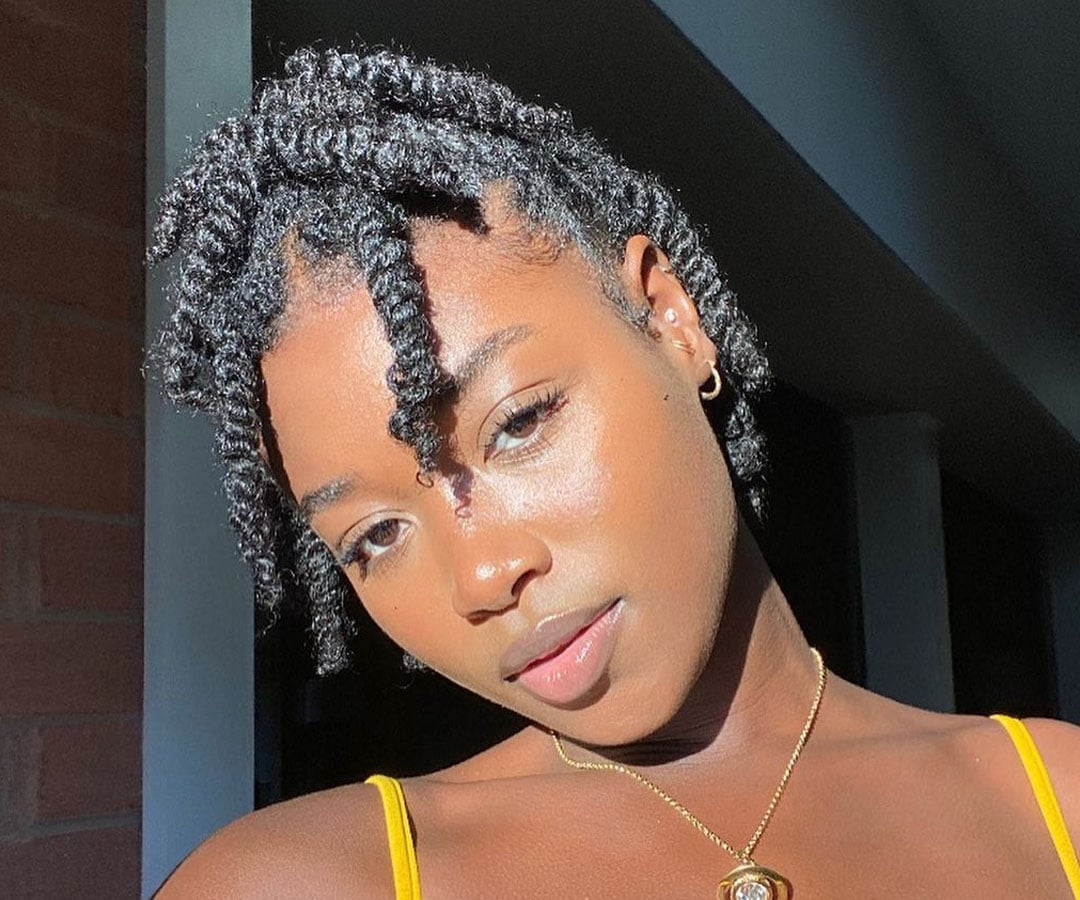
Short twisted coils sit somewhere between a wash-and-go and a full set of braids: they take more time to install than finger-combing but far less than cornrows. This style works on thick, coily hair that can grip a twist without unraveling. Ask your stylist for: short twists, middle part. A lightweight oil keeps the coils shiny and defined, and the style holds its shape for several days before needing a refresh. The upfront twisting time is the investment.
Neat Braids on Short Hair
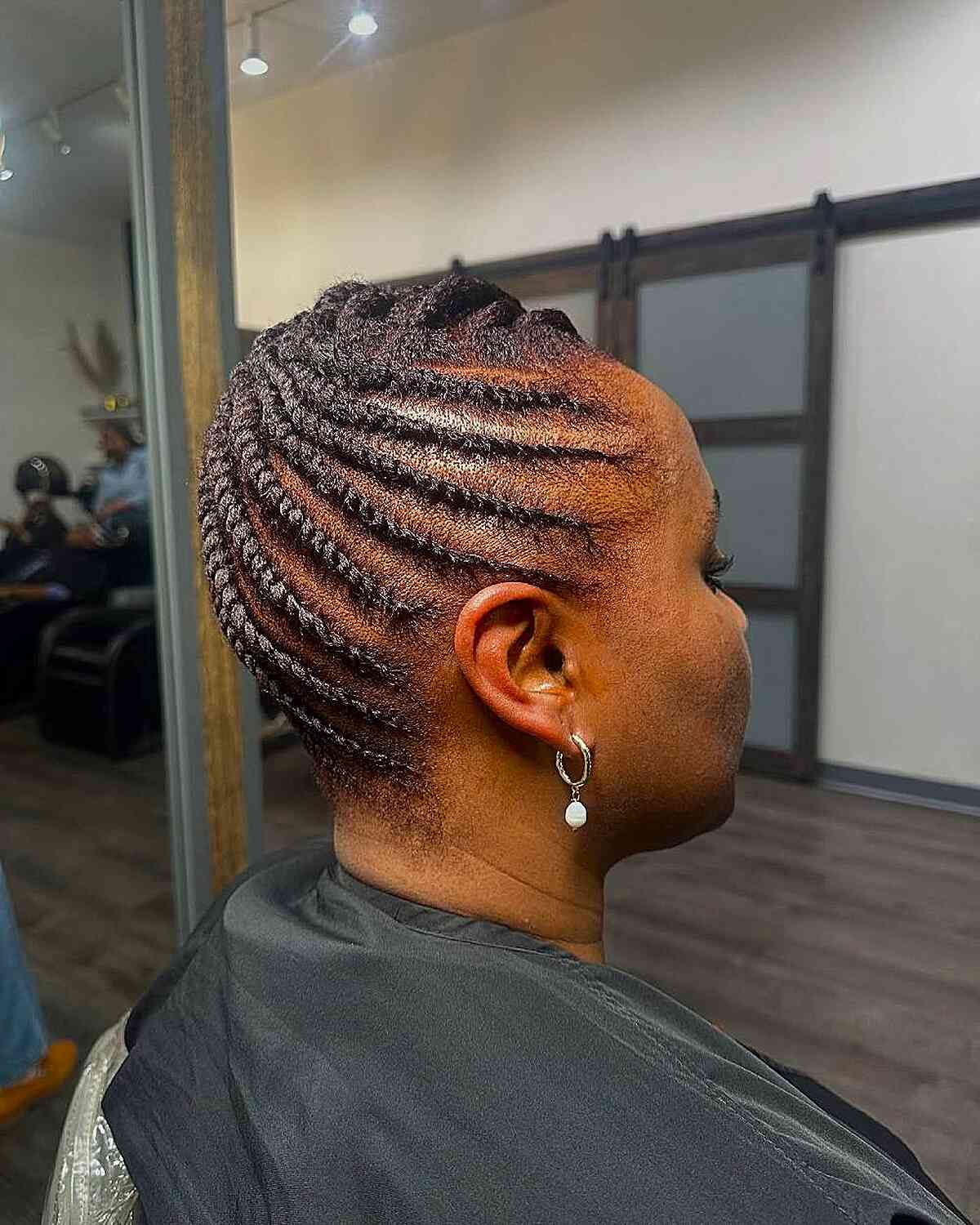
Neat braids on short hair require more time in the chair than a simple twist-out, but the payoff is a low-manipulation style that lasts for weeks. This look suits thick, coily hair that can hold a tight, intricate braid pattern. Ask your stylist for: neat braids on short hair, middle part. Keep the scalp moisturized with a light oil between washes, and expect to return for a touch-up around the edges after two weeks. The braids themselves can stay in for up to four.
Shoulder Length Natural Afro
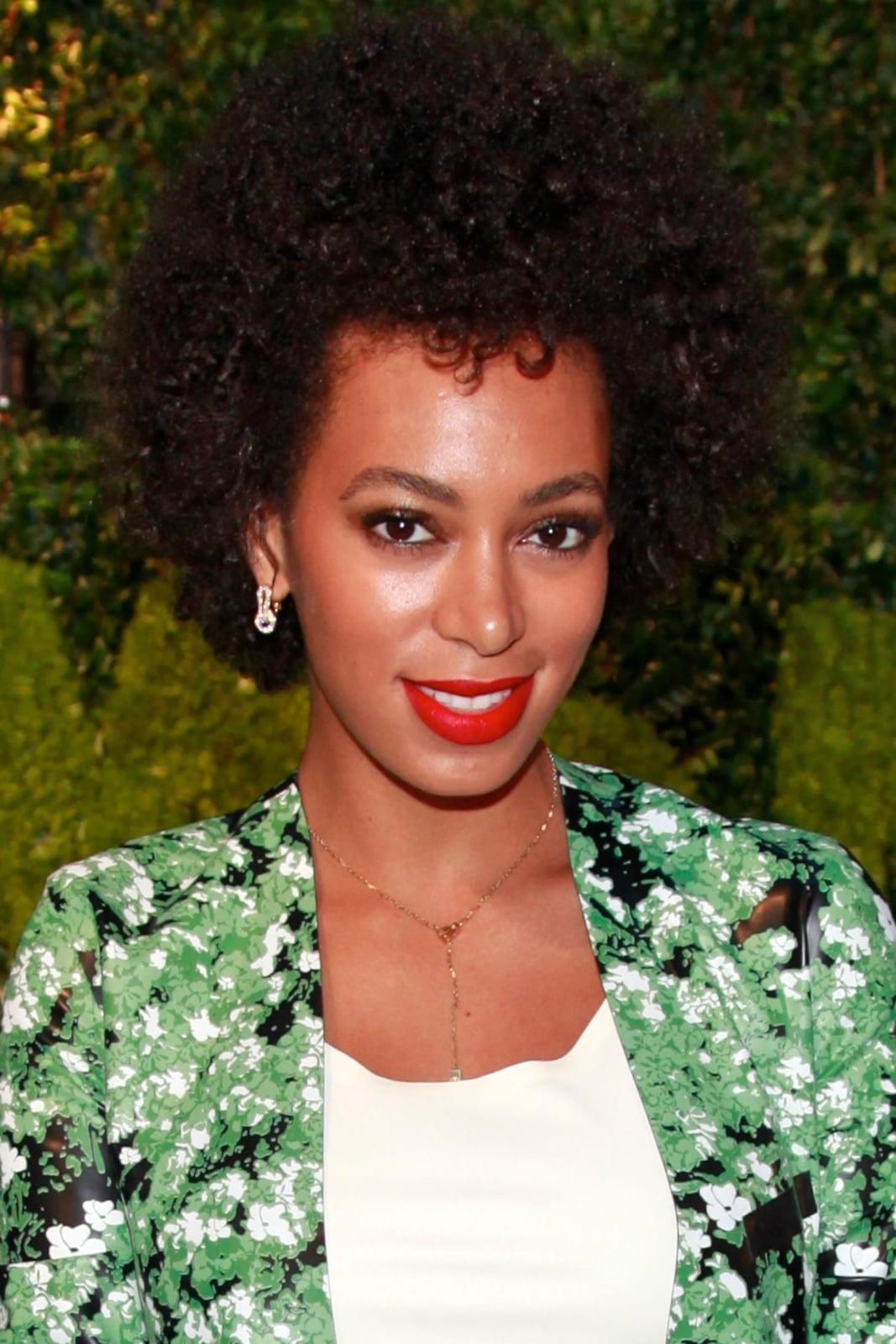
This shape works best for thick, curly hair that naturally forms an afro and can handle the shrinkage that comes with air-drying. Ask your stylist for: shoulder length natural afro. The trade-off is that shrinkage can pull the shape up more than expected, so a trim every eight weeks keeps the silhouette from turning lopsided. A pick is the only tool you need to fluff the crown, and a satin cap at night prevents the texture from matting.
Voluminous Shoulder Afro
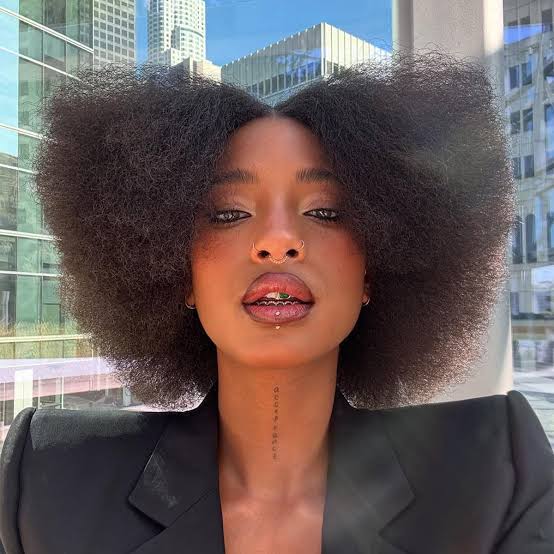
A thick, coily afro cut to shoulder level and styled with a middle part relies on density for its shape. This silhouette genuinely suits hair that is naturally coily and high-density, because the hair provides its own structure without product or heat. Ask your stylist for: voluminous afro, shoulder length. A weekly refresh with water or a lightweight leave-in conditioner helps maintain definition without flattening the volume. Over-brushing is the enemy here: it breaks up the coil pattern and turns the shape fuzzy rather than bold.
Natural Curly Afro
Can a shoulder-length afro hold its shape through a full day of movement? The answer depends on texture and preparation. Thick, curly hair cut to shoulder length with a middle part can hold its volume well if the curls are properly hydrated. Ask your stylist for: natural afro, shoulder length.
Applying a leave-in conditioner to damp hair and reshaping with your hands in the morning refreshes the curl pattern without adding weight. The reality is that the style softens as the day goes on, but a quick fluff with fingers brings the volume back. A trim every six to eight weeks keeps the outline clean and the shape balanced.
Full Rounded Afro
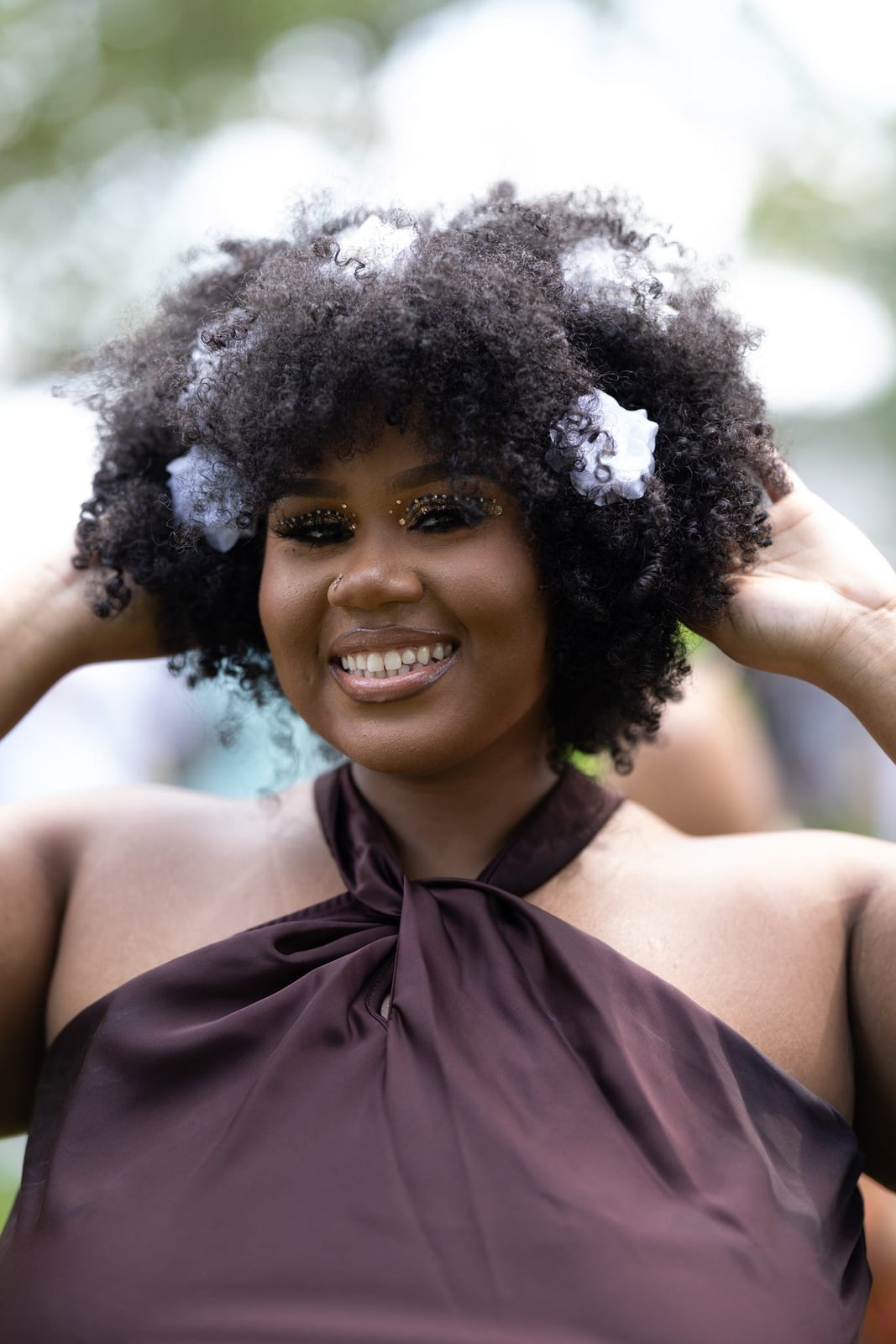
The middle part keeps the volume even on both sides. Ask your stylist for: full rounded afro, shoulder length. This is a DIY style that requires no heat and about twenty minutes of drying time plus a quick fluff. The key is to pick from the ends toward the scalp to avoid breaking the curl pattern. A weekly deep condition keeps the hair elastic enough to hold the round shape without frizz.
Shoulder Length Defined Curls
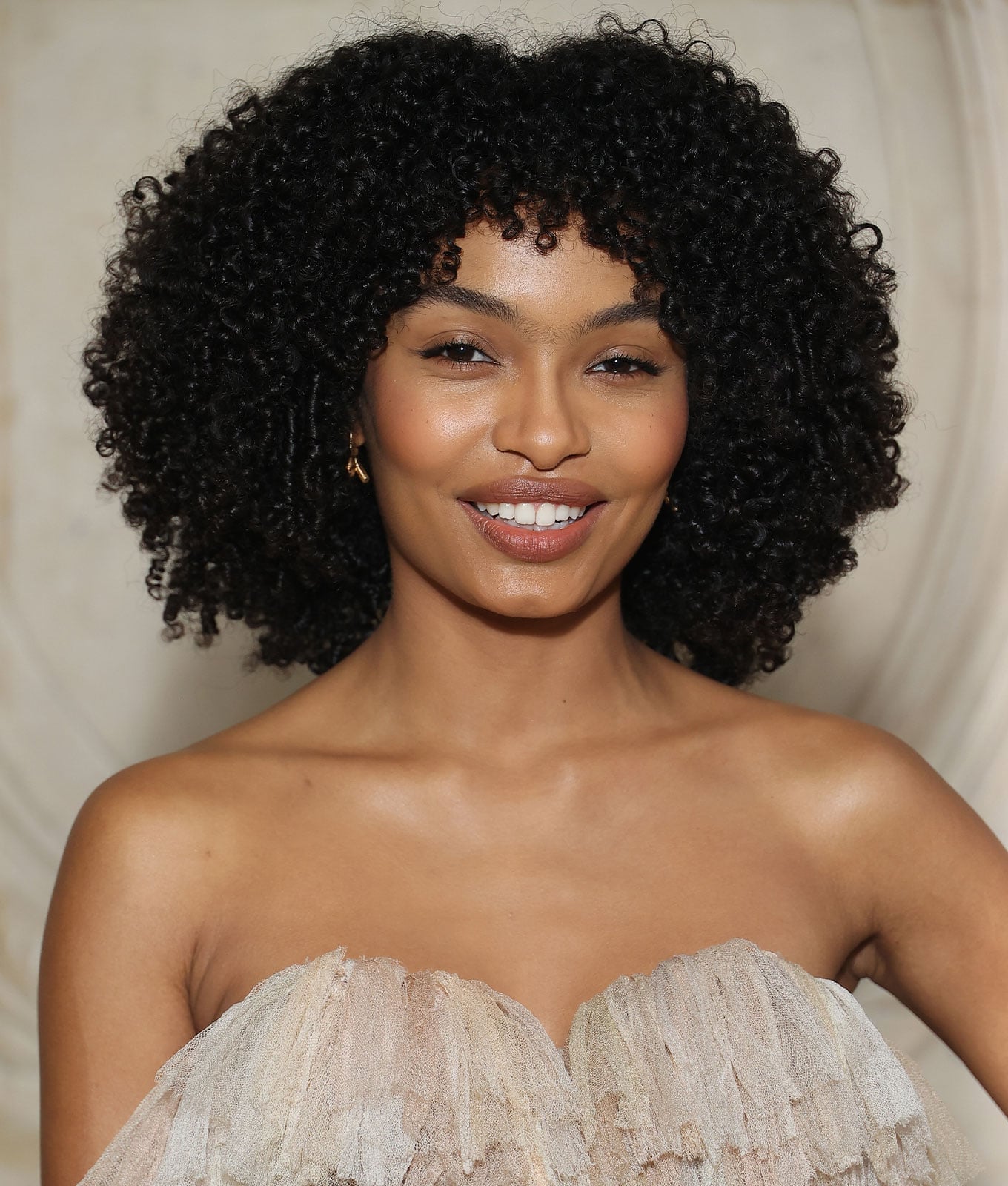
Curl cream applied to soaking wet hair and scrunched before air-drying locks in the shape. Ask your colorist for: shoulder length defined curls, natural texture. The honest drawback is that defined curls can drop or lose their shape by midday, especially if the air is humid or dry. A lightweight gel or curl refresher spray helps extend the hold, and a trim every eight weeks prevents the ends from fraying and disrupting the curl clumps.
Shoulder Length Natural Curls With Air Dried
Ever wondered how to get those defined, bouncy curls without a fight? The secret is in the cut. Ask your stylist for: defined natural curls, shoulder length. On this style, the hair is cut in layers to encourage the curl pattern. The thick, curly black mane looks air dried with a healthy sheen.
This natural shoulder length curls style is ideal for anyone with thick, curly hair who wants definition without daily heat styling. To achieve this look, apply a leave-in conditioner and scrunch the curls upward. Then let them air dry or use a diffuser on low heat. The hold is soft and flexible, lasting until the next wash, and the cut keeps its shape for about eight weeks before a trim is needed.
Collarbone Length Natural Blowout
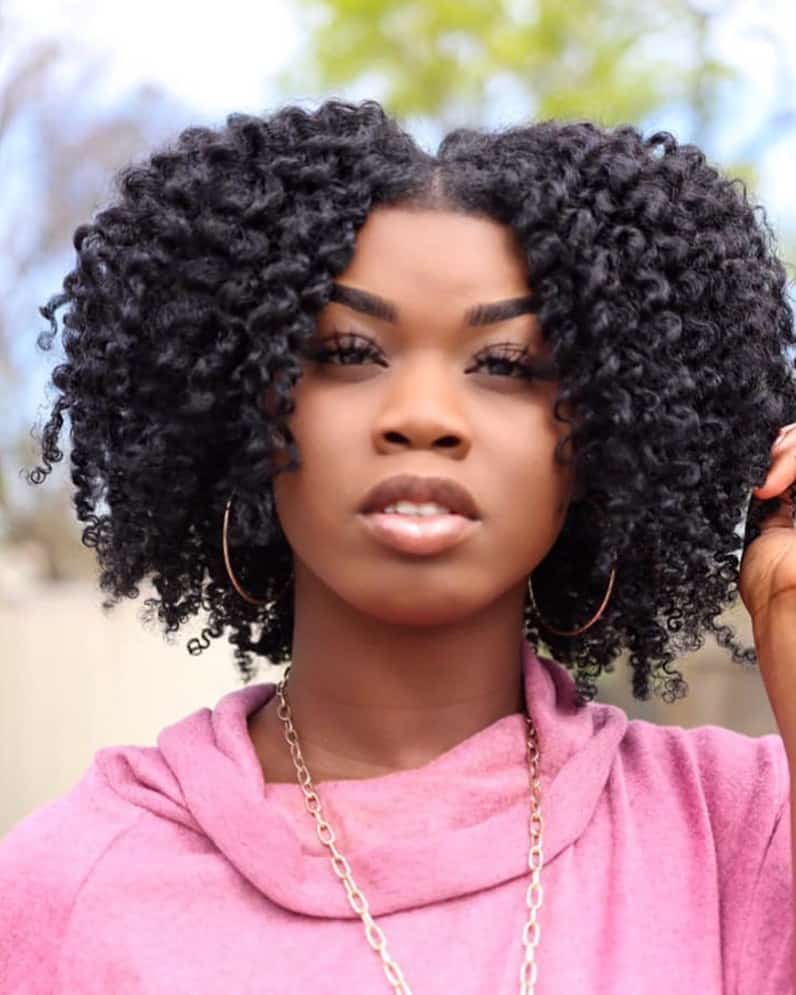
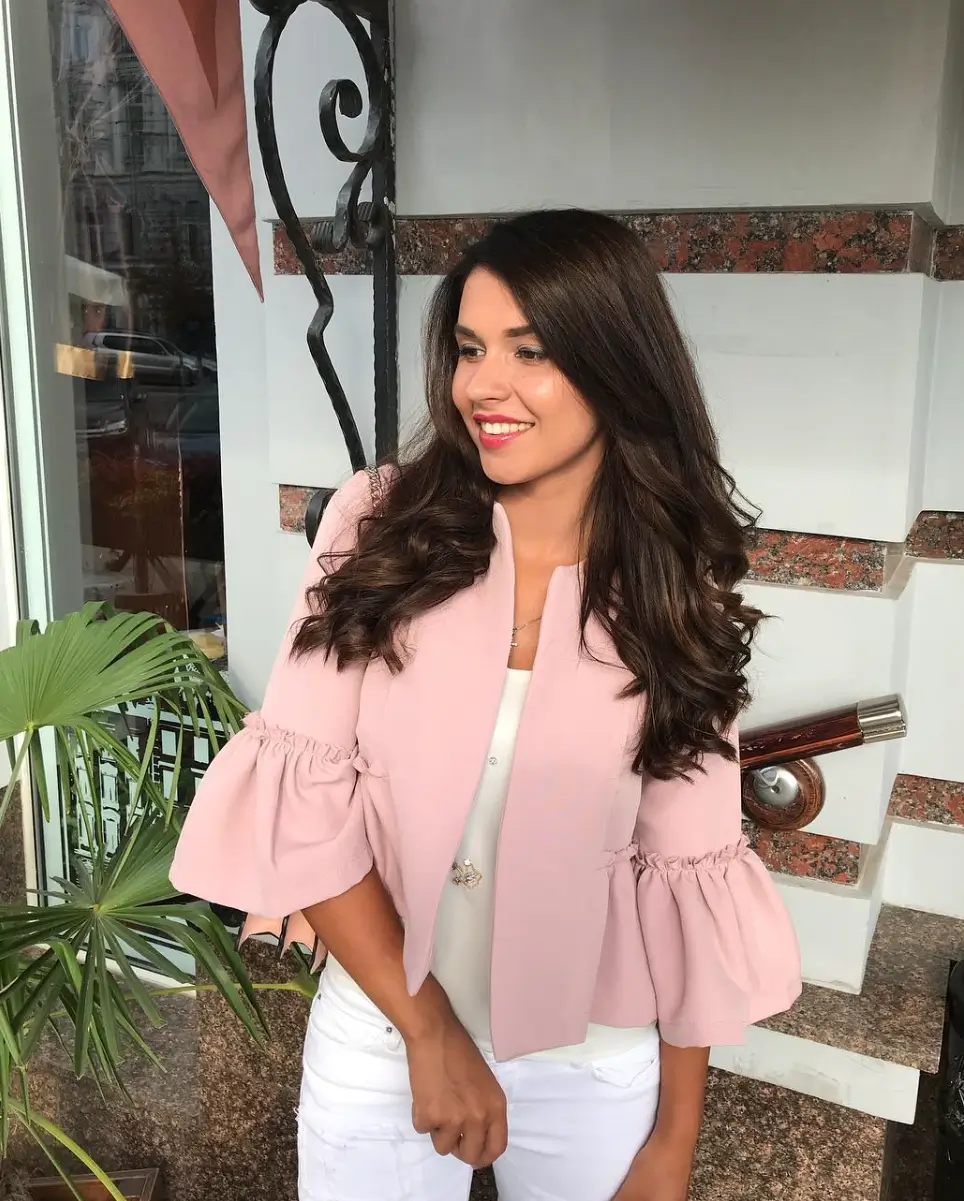
A collarbone-length natural blowout is built on tension and heat. The stylist uses a large round brush to pull the thick, wavy hair smooth while directing the ends into a slight curve. The middle part keeps the front framing even, and the subtle highlights catch the light to add dimension to the dark brown base. Ask your stylist for: collarbone length natural blowout with waves. This style suits most face shapes because the length sits at a flattering point, and the soft waves add movement without overwhelming the face.
Upkeep is straightforward: a blowout holds for about two to three days with a good styling product, and you will want to refresh the waves with a curling iron or a quick re-blowout. Plan on a trim every six to eight weeks to keep the ends looking fresh and the shape intact.
Collarbone Lob With Curtain Bangs
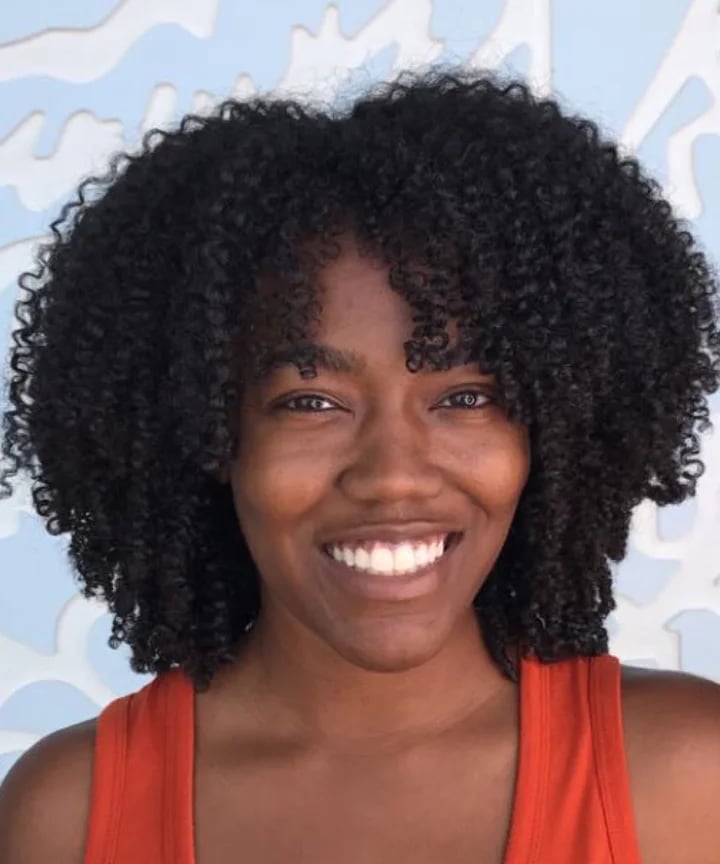
The collarbone lob with curtain bangs is a layered cut with a middle part. The curtain bangs soften angular jawlines and work for a wider range of face shapes than a straight across fringe. The loose waves and subtle highlights add dimension to the thick, wavy texture, while the collarbone length keeps it versatile. Ask your stylist for: collarbone lob with curtain bangs and waves.
Compared to a lob without bangs, this cut demands more styling: the fringe needs a round brush and a blow dryer to fall correctly, and the hair benefits from a quick wave. The hold is moderate, so expect to refresh the bangs daily.
Collarbone Layered Cut With Face-Framing
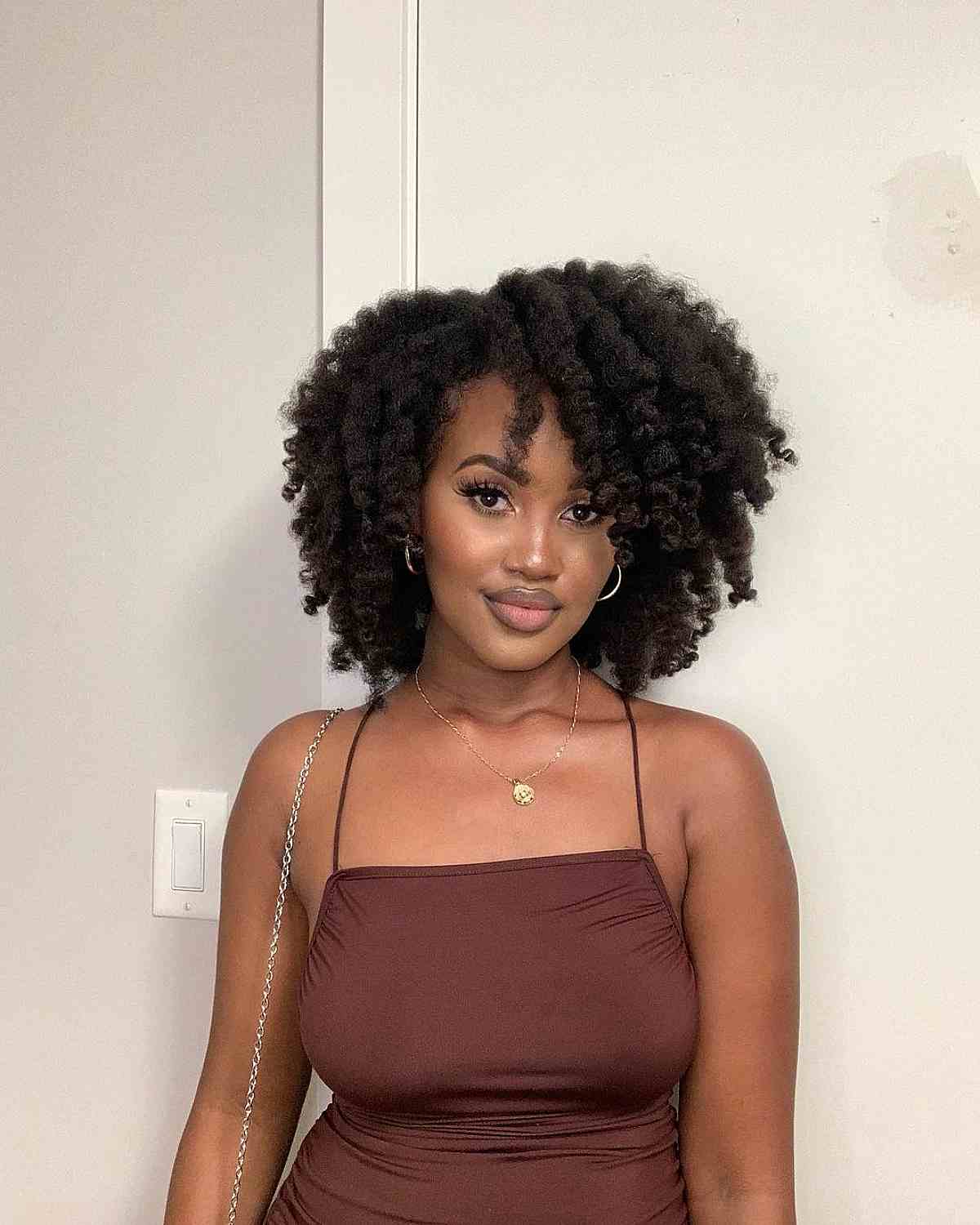
Wondering if a layered cut will work with your natural texture? This collarbone-length style is a strong yes for thick, curly hair. The layers are cut to remove bulk and let the curls spring up, while the face-framing pieces soften the jawline, making it a good match for square or round face shapes. The middle part and black color keep it simple, and the defined curls show off the cut’s shape. Ask your stylist for: collarbone layered cut with face-framing layers.
This is a DIY-friendly style once the cut is in place. Apply a curl cream to damp hair, scrunch, and air dry for a natural finish. The layers help manage the thickness, so you can skip the blow dryer if desired. The hold is flexible and lasts until the next wash, and a trim every eight weeks keeps the layers from growing out into a triangle.
For a more polished look, use a diffuser on low heat, but the air-dried version works well for everyday wear.
Braided Bob With Loose Curls
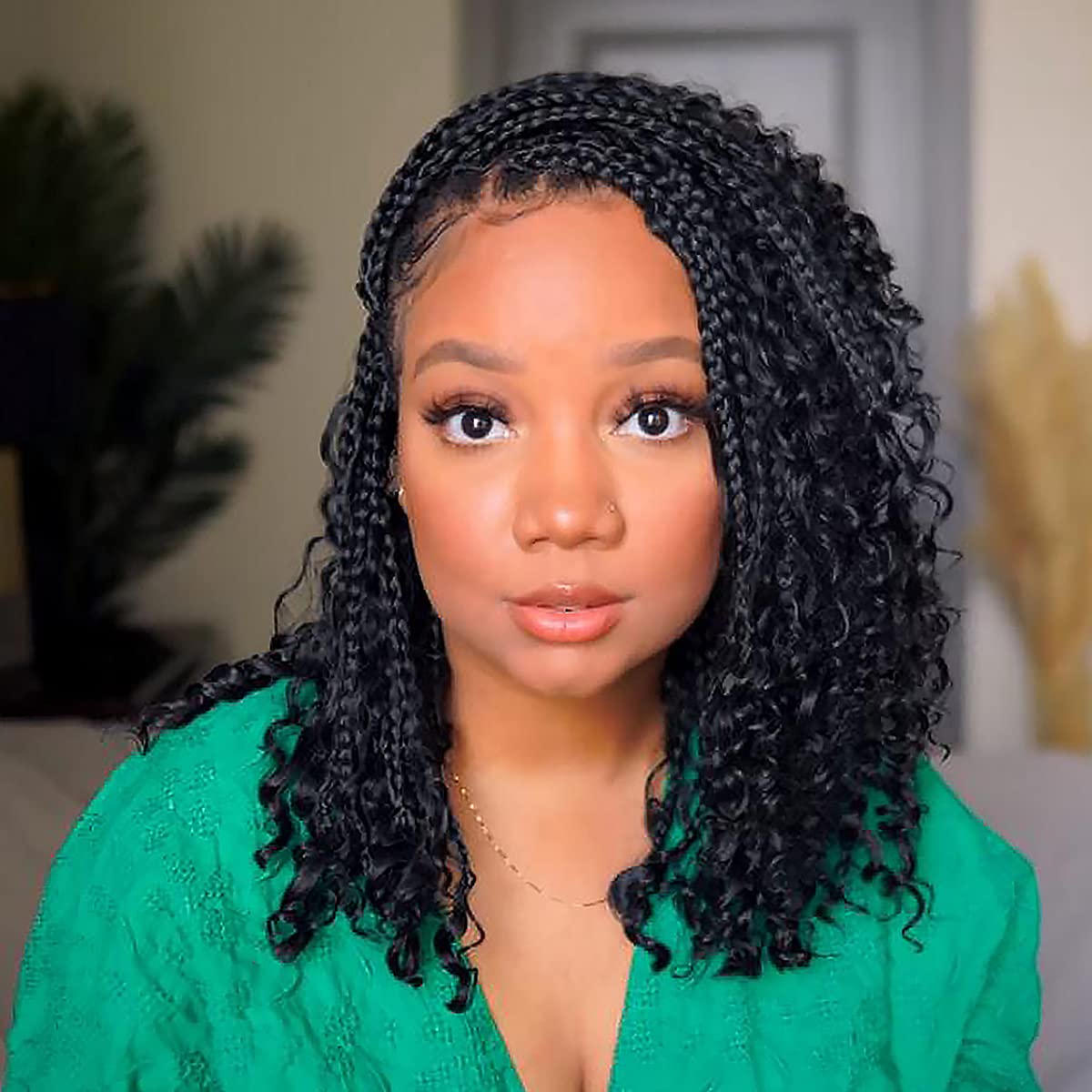
The braided bob with loose curls is a study in contrast: small, neat braids along the hairline and crown give way to a cascade of loose, defined curls that fall around the collarbone. The side part and face-framing tendrils soften the overall shape, and the black color ties the two textures together. Ask your stylist for: braided bob with loose curls.
This style works best on coily or curly hair that can hold both braids and curls. The braids protect the hair along the edges, while the curls add movement and volume. The wear is practical: the braids stay in place for a couple of weeks, but the curls will need refreshing with a curl cream or a spritz of water to keep their definition. The mixed texture means you will want to moisturize both sections regularly to keep them looking healthy.
Elegant Twisted Updo
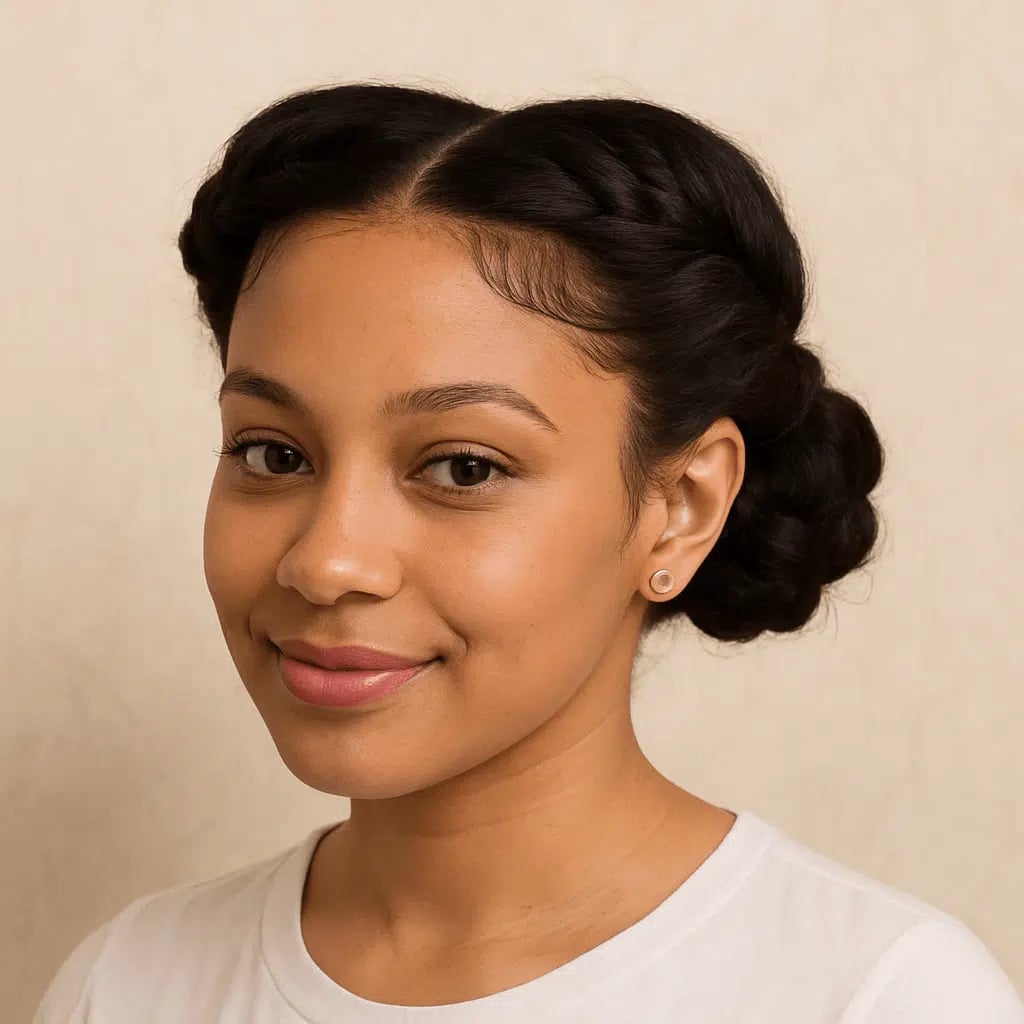
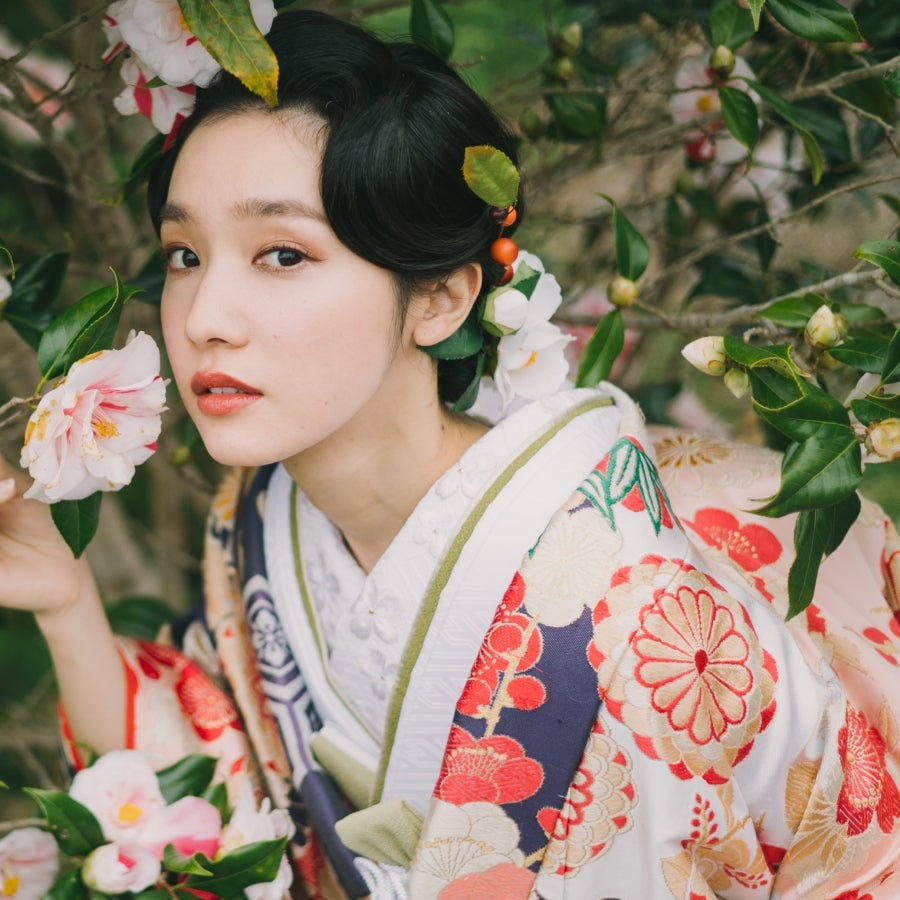
The design hinges on a low bun seated at the nape, built from twisted sections instead of a simple wrap. That twist is what keeps the shape from looking like a ballerina bun. For straight, collarbone-length hair, section the hair down the middle, then twist each side inward toward the back before pinning them together. Leave the wispy tendrils at the temples loose, since they are the part that softens the whole silhouette. Ask your stylist for a low twisted updo with face-framing tendrils. Finish with a smoothing serum along the lengths and a firm-hold spray at the crown, and the style stays put through a long evening. It suits straight or lightly waved textures that can show off the twist definition, and it holds best when the hair has some weight to it.
Braided Updo With Cornrows
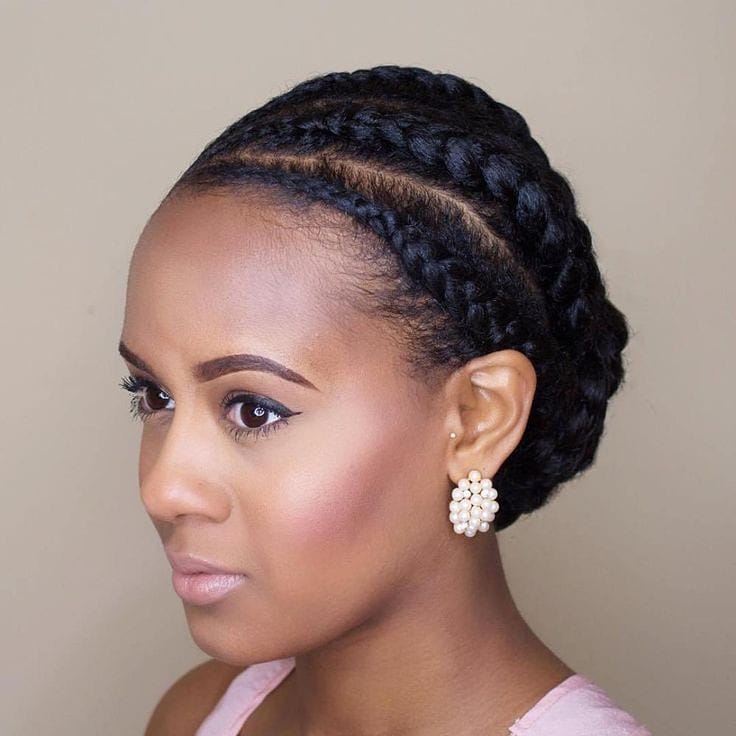
You know the look: neat cornrows that start at the front and sweep into a braided updo at the back. The question is how to describe it so the braider gets it right the first time. Ask your stylist for cornrows into a braided updo, with the parting kept distinct and the rows running clean from the hairline. On thick, coily hair at collarbone length, the cornrows should lie flat against the scalp while the updo gathers the remaining length into a compact shape at the crown. The middle part is the detail that makes the whole thing read as deliberate rather than thrown together. This style pulls everything off the face and neck, which makes it a practical choice for warm days or long work weeks. It suits anyone with enough density for the rows to sit smoothly, and the updo keeps the ends tucked away.
High Bun With Braided Crown
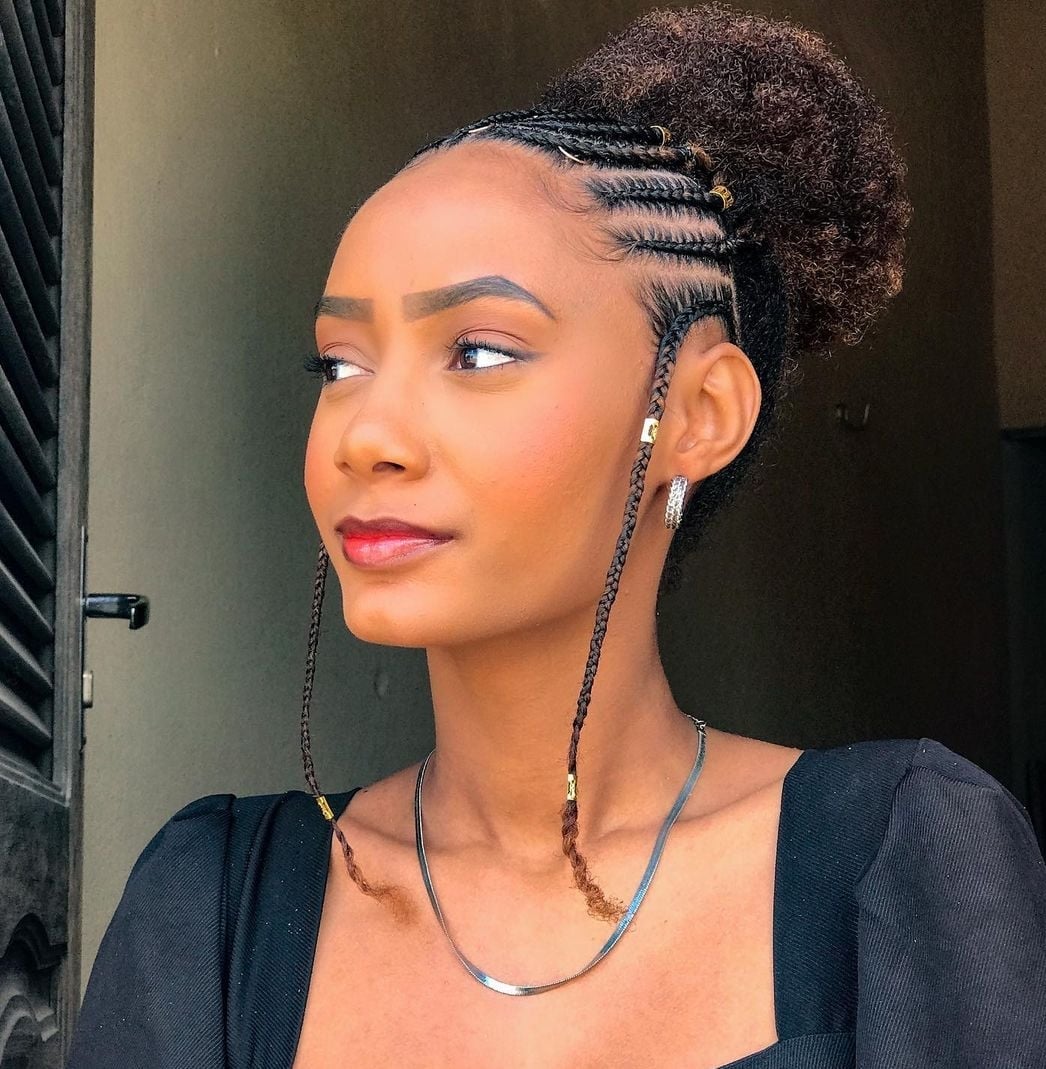
The braided crown is the part that takes time. Cornrows along the sides feed into a high bun at the crown, with a coily afro puff left free at the back. The contrast between the sleek braids and the puff is the whole point, but getting there is not a quick appointment. Ask your stylist for cornrows with a high bun and afro puff. Intricate cornrows on thick, coily hair take patience, and the beads on the front braids add even more time. This style holds for days without much thought. It requires enough length and density to support both the braids and the bun, and it keeps the hair off the face completely. If you cannot sit still for a long session, this one is better saved for a special occasion.
Messy Bun With Face-Framing Curls
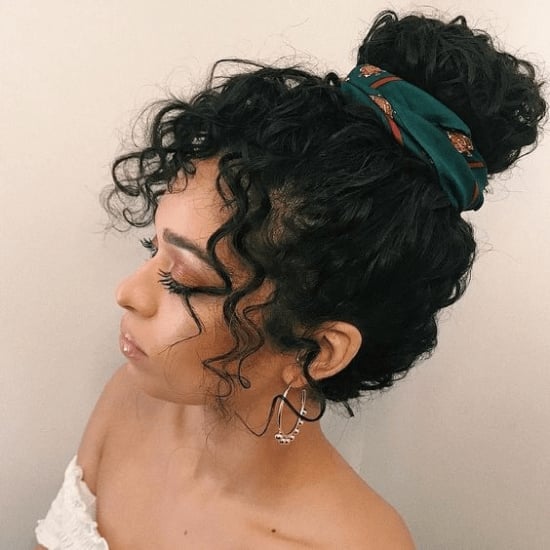
Unlike a sleek updo that needs constant checking, a messy bun is the style that works with your hair’s own agenda. On thick, curly hair at mid-back length, gather the length into a loose bun at the crown, then pull out the face-framing pieces at the temples and let them curl naturally. The side part is what gives the bun its off-center ease. Ask your stylist for a messy bun with face-framing curls. The hold comes from the curls themselves: they grip the pins and the hair tie better than straight hair ever will. For a softer line, tug a few strands loose around the ears, and keep the bun slightly tousled instead of smoothed flat. You need enough length to make a full bun, and the loose curls mean you do not need a mirror for touch-ups.
Braids Leading to Two Low Buns
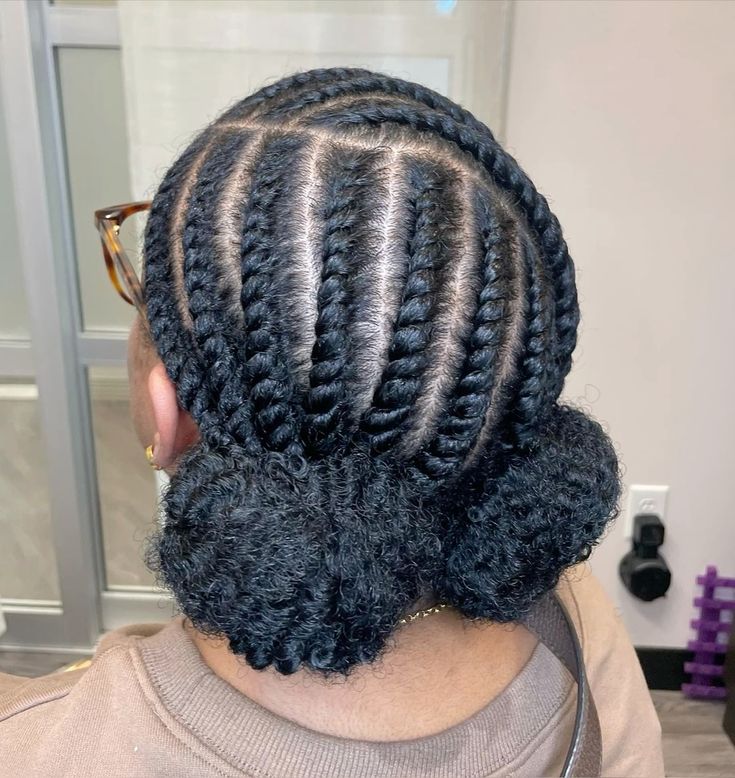
The back view is where this style does its work. Intricate braids run from the front into two low buns at the nape, with straight parts keeping the pattern visible. It is a salon build: the braider sections the hair into clean rows, braids each one toward the back, then gathers the ends into the two buns. Ask your stylist for braids into two low buns. The technique relies on even tension along every row, which is why it takes a professional hand. On thick, coily hair at mid-back length, the braids hold their shape for days, and the buns keep the ends protected. The straight parts are the detail that makes the pattern read as geometric. It suits anyone who wants a protective style with a bit of structure, and it keeps the hair out of the way completely.
Geometric Braids With Afro
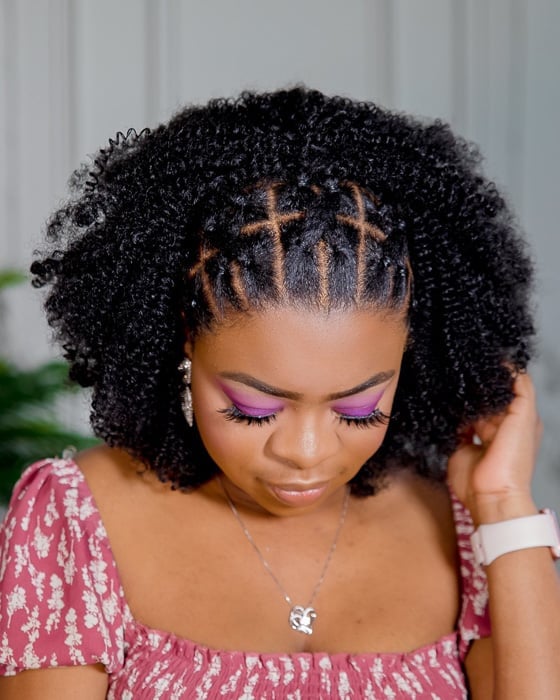
How do you keep an afro from being all one note? Braid the front hairline into a geometric pattern and let the rest stay curly and thick. This geometric braids afro works best on dense, curly hair long enough to support both intricate scalp braiding and a voluminous shape. Ask your stylist for: geometric braids with an afro. The braided sections hold tight for weeks, while the afro needs regular conditioning to stay soft and defined.
Long Curly Hair With Fringe
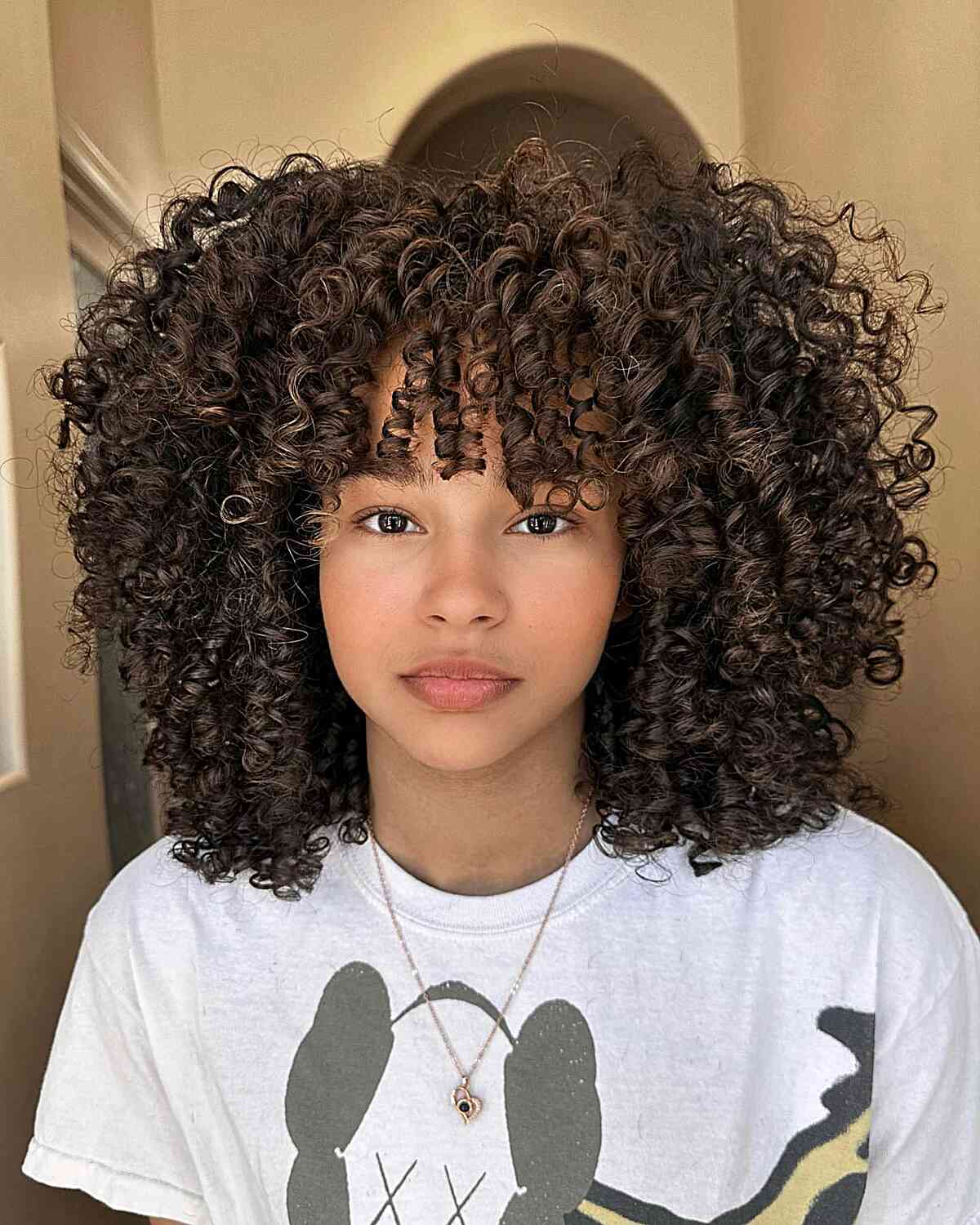
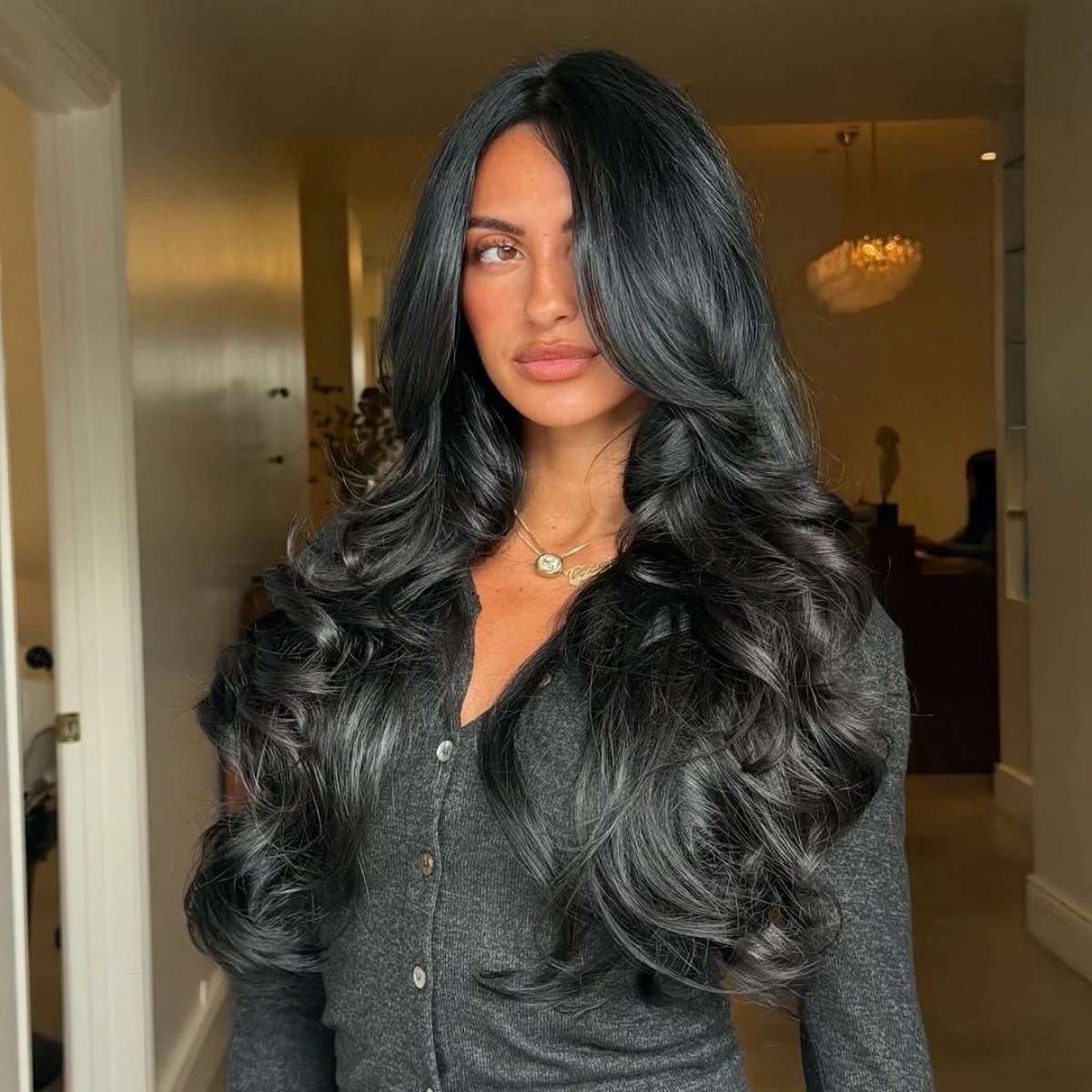
A full fringe on long curly hair makes a statement that side-swept curtains cannot match. The blunt line of the bangs contrasts with the loose, voluminous curls below the shoulders, giving the whole style a deliberate shape. Dark brown bases with subtle highlights add depth to the density. Ask your stylist for: long curly hair with a full curl fringe. This cut suits those with thick, dense curls who do not mind a little daily styling. In humid months, the fringe will curl up faster and need a trim every four to six weeks; in drier weather, it falls softer and behaves better. Low heat sets the curls without frizz, making it a dependable everyday look.
Voluminous Mid-Back Curls
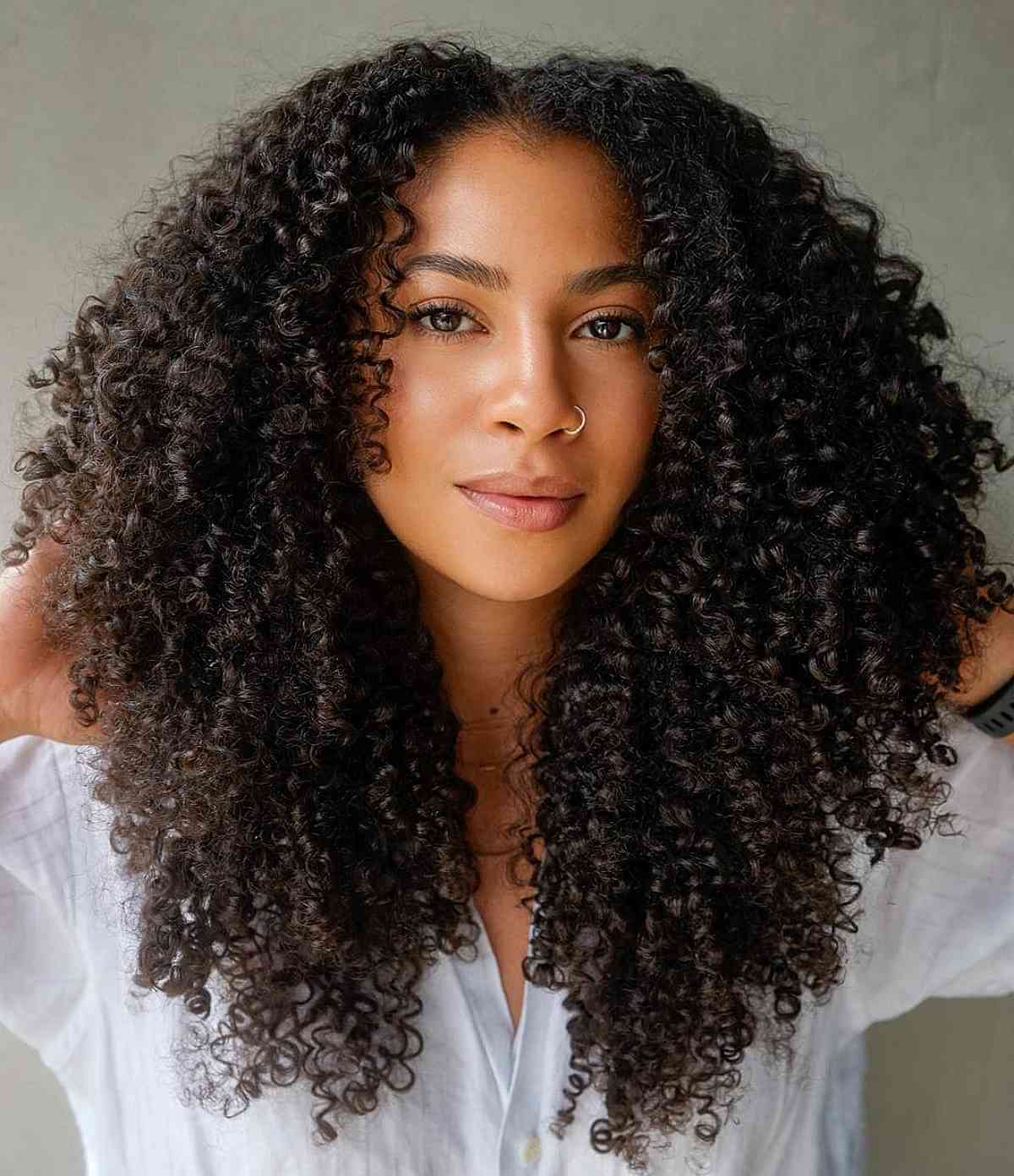
Mid-back length on thick, curly hair is a lot of hair to manage, but the result is a full, natural shape that shorter cuts cannot produce. The middle part keeps the volume balanced on both sides, while layers prevent the mass from becoming a single heavy triangle. Ask your stylist for: voluminous mid-back length curls. This style works best for those with dense, textured hair who want to show off their natural volume; anyone with fine or sparse hair will find it falls flat. Upkeep is straightforward: apply a curl-enhancing product to damp hair, scrunch, and let it air dry. A trim every eight weeks keeps the ends healthy, and a deep conditioning session once a week preserves the definition.
Mid-Back Voluminous Coils, Black
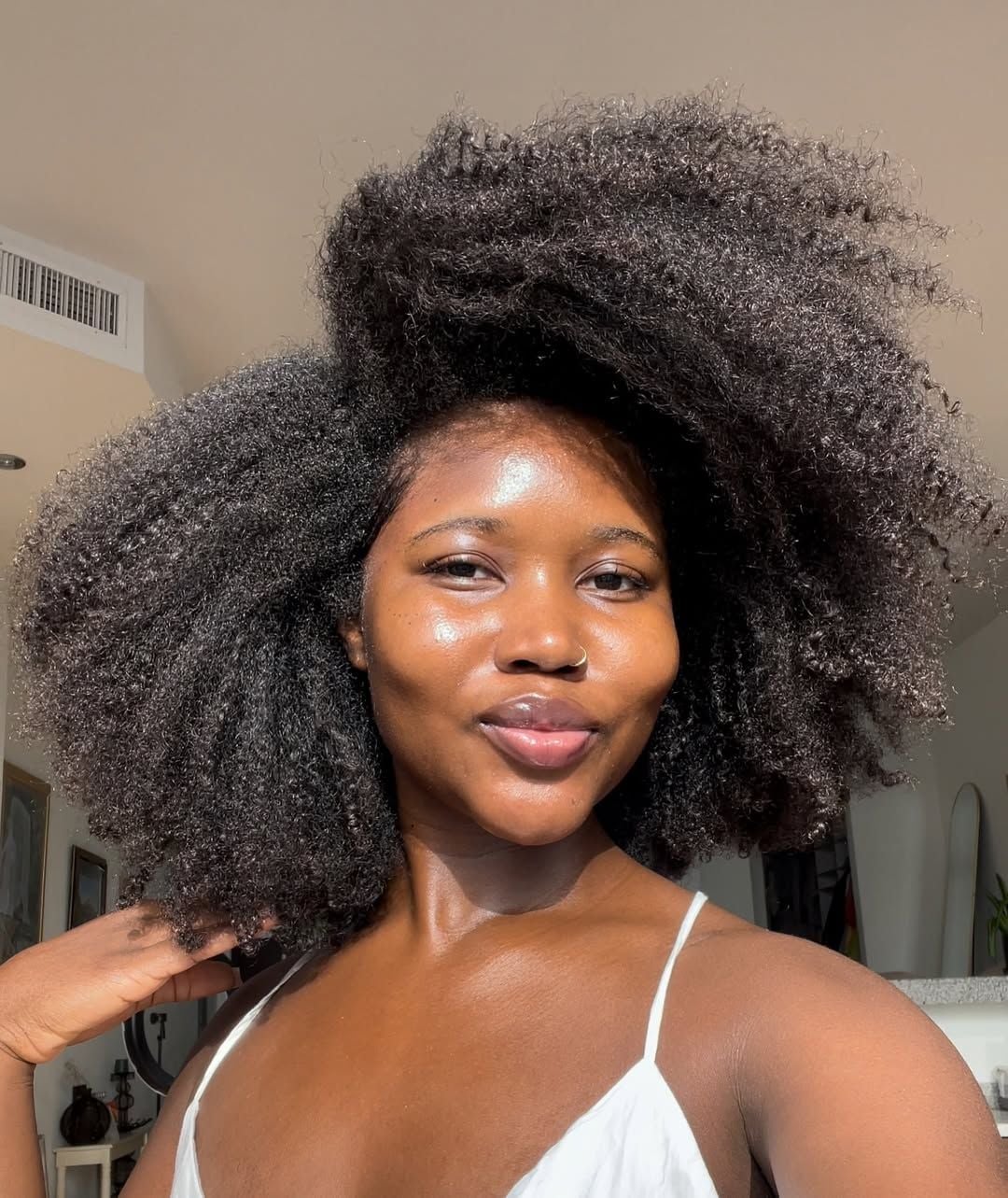
What does it actually take to keep mid-back coils looking like this every day? More than a quick finger comb, less than a salon appointment. The thick, coily texture in black hair shrinks as it dries, so the air-dried look you see is the result of careful handling. Ask your stylist for: mid-back length voluminous coils. At home, a leave-in conditioner and a wide-tooth comb on soaking wet hair, then no touching until dry, preserves the coil pattern. Going to a salon gets you a professional shape-up and even layers, but the daily routine is yours either way. The hold is reliable for a couple of days, then a refresh with water and a bit more product brings it back.
Shoulder Length Curls With Braided Accents
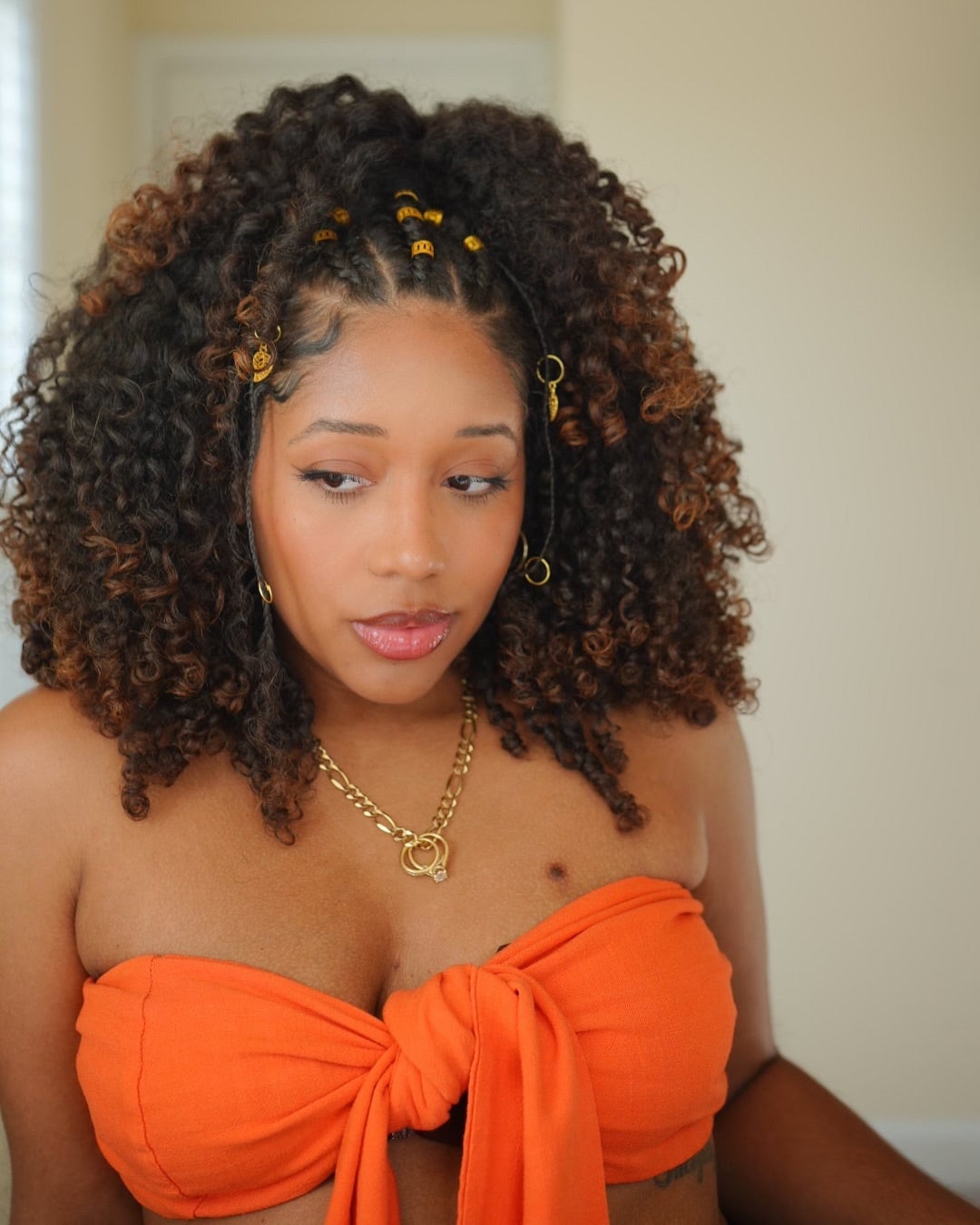
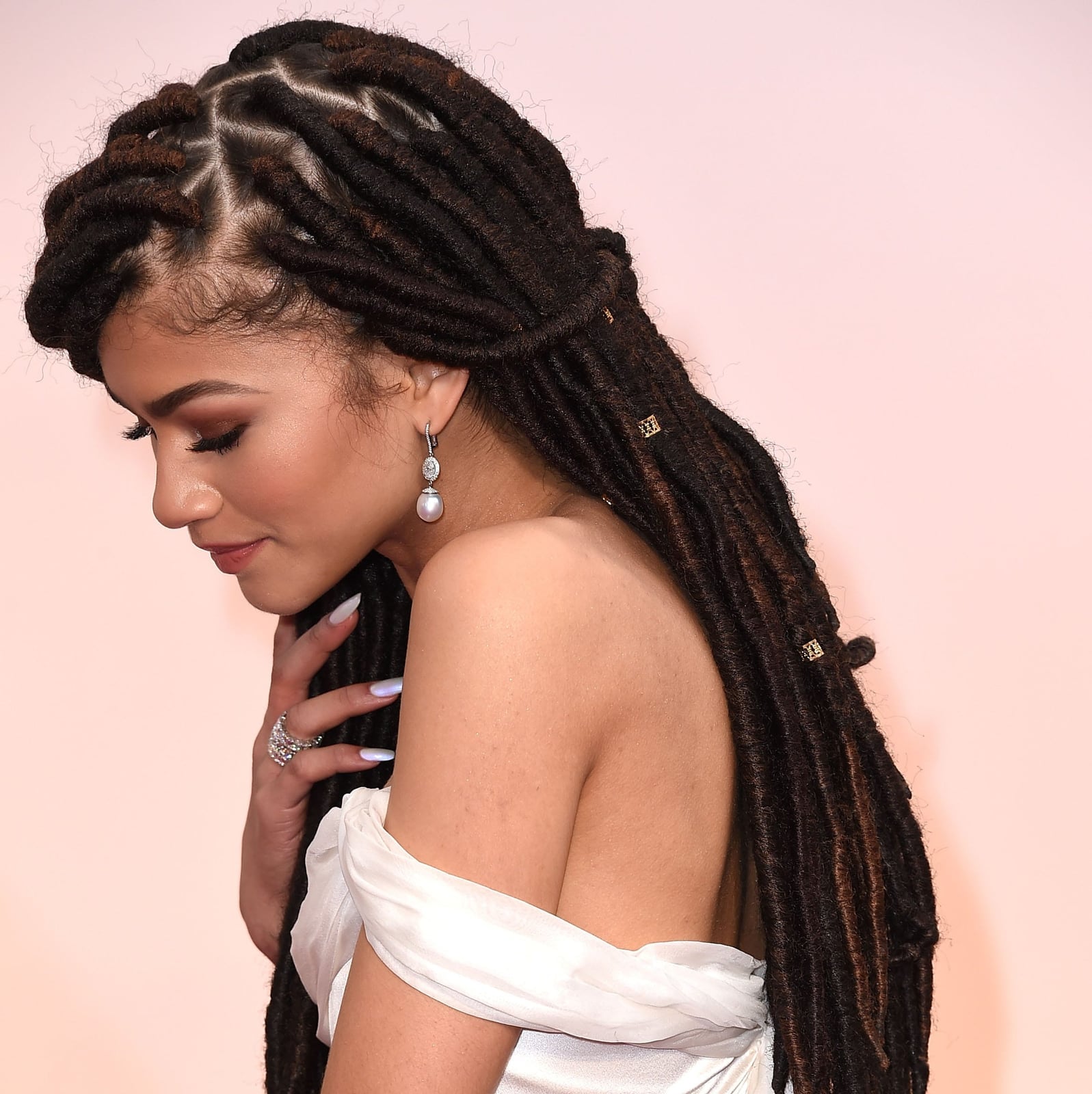
The clever part of this style is that the braids do not carry the whole look; they accent it. Small braids near the hairline, finished with beads and gold accessories, sit against loose, thick curls that fall to the shoulder. The honey highlights in the dark brown base give the texture depth, while the middle part keeps everything symmetrical. Ask your stylist for: shoulder length loose curls with small braids. The braids are the focal point, so they need neat, tight work at the root to hold for several weeks. The surrounding curls stay soft with regular conditioning, and the braids themselves should be moisturized at the scalp to prevent frizz. This salon-leaning style looks festive without being fussy.
Mid-Back Curls With Face-Framing Braids
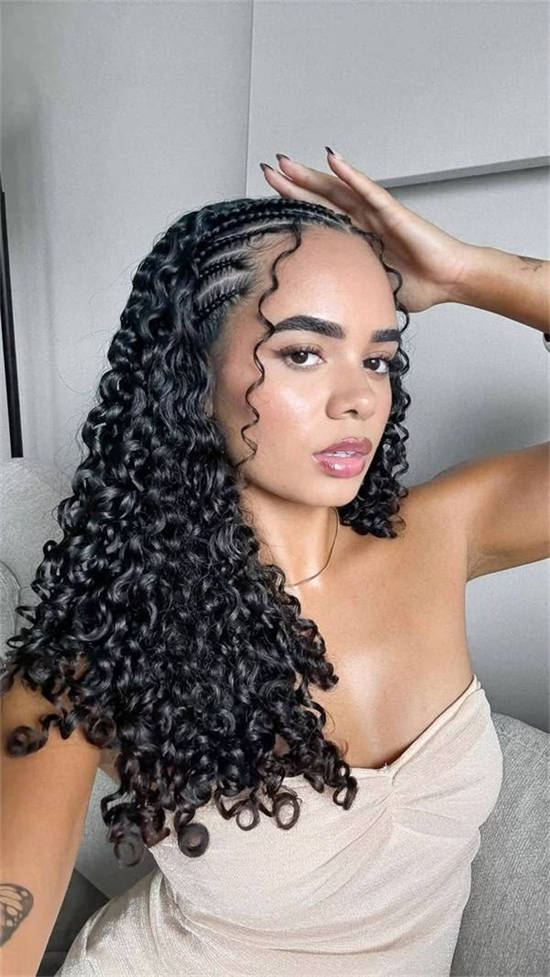
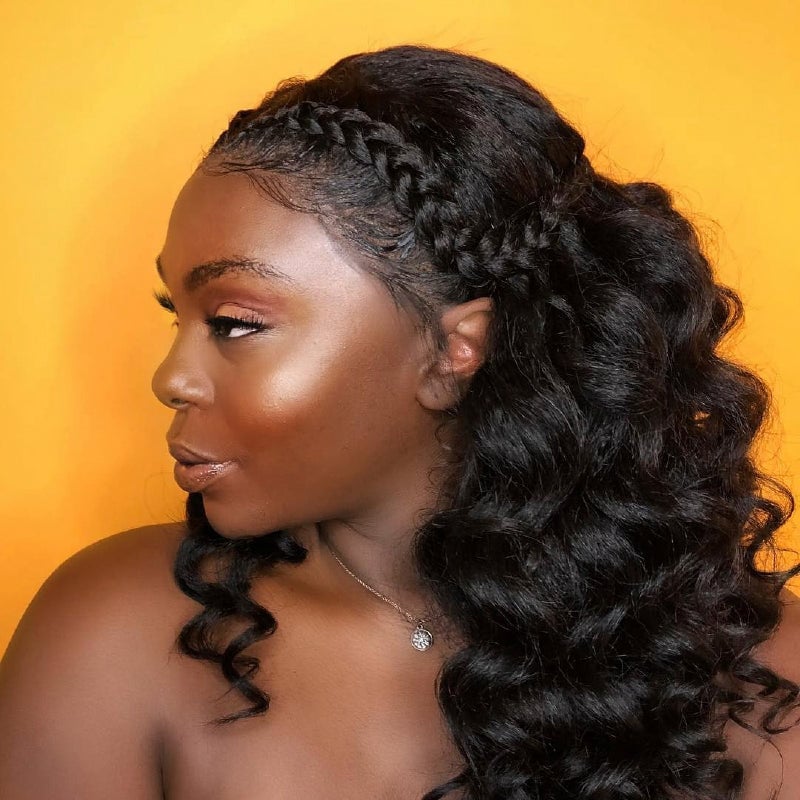
The design hinges on contrast: loose, glossy curls flowing past the shoulders while two thin braids near the hairline pull the eye forward. That middle part keeps the symmetry calm, so the braids read as detail rather than decoration. Thick, curly hair at mid-back length carries this best, since the braids need enough density to sit flat against the scalp without looking sparse.
Ask your stylist for: mid-back curls with face-framing braids. The braids will show split ends faster than the curls do, because they are manipulated more during installation. A leave-in product on the curly sections keeps the glossy finish intact, and a light oil on the braids prevents them from drying out. Plan for the braids to need redoing every four to six weeks if you want them to stay neat.
Long Thick Twisted Braids
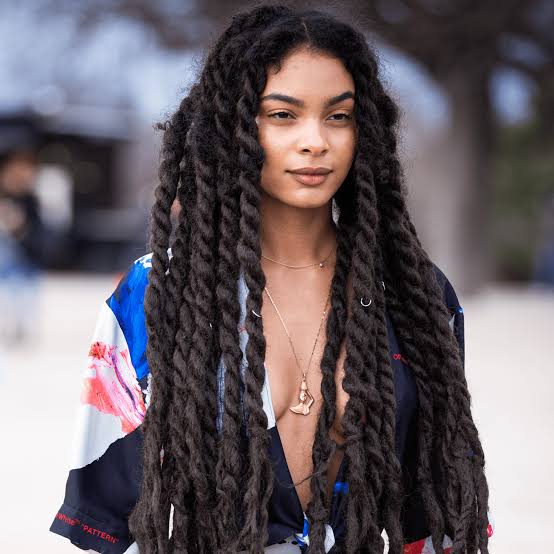
Wondering whether long thick twisted braids beat box braids for your texture? The difference comes down to density. These tight twists, reaching mid-back in dark brown, sit closer to the scalp than box braids do, which makes them feel lighter on the head and less likely to tug at the roots.
Coily, thick hair holds the twist pattern best, since the natural texture grips the braid and keeps it from unraveling. Ask your stylist for: long thick twisted braids. Styling time runs longer than a standard braid install, often a full day in the chair, because each twist is wound individually. The payoff is a style that needs almost nothing daily, just a light oil on the ends to stop them from splitting. If your hair is fine or thin, the tension of tight twists can feel heavy, so a looser braid suits you better.
Shoulder Length Neat Braids
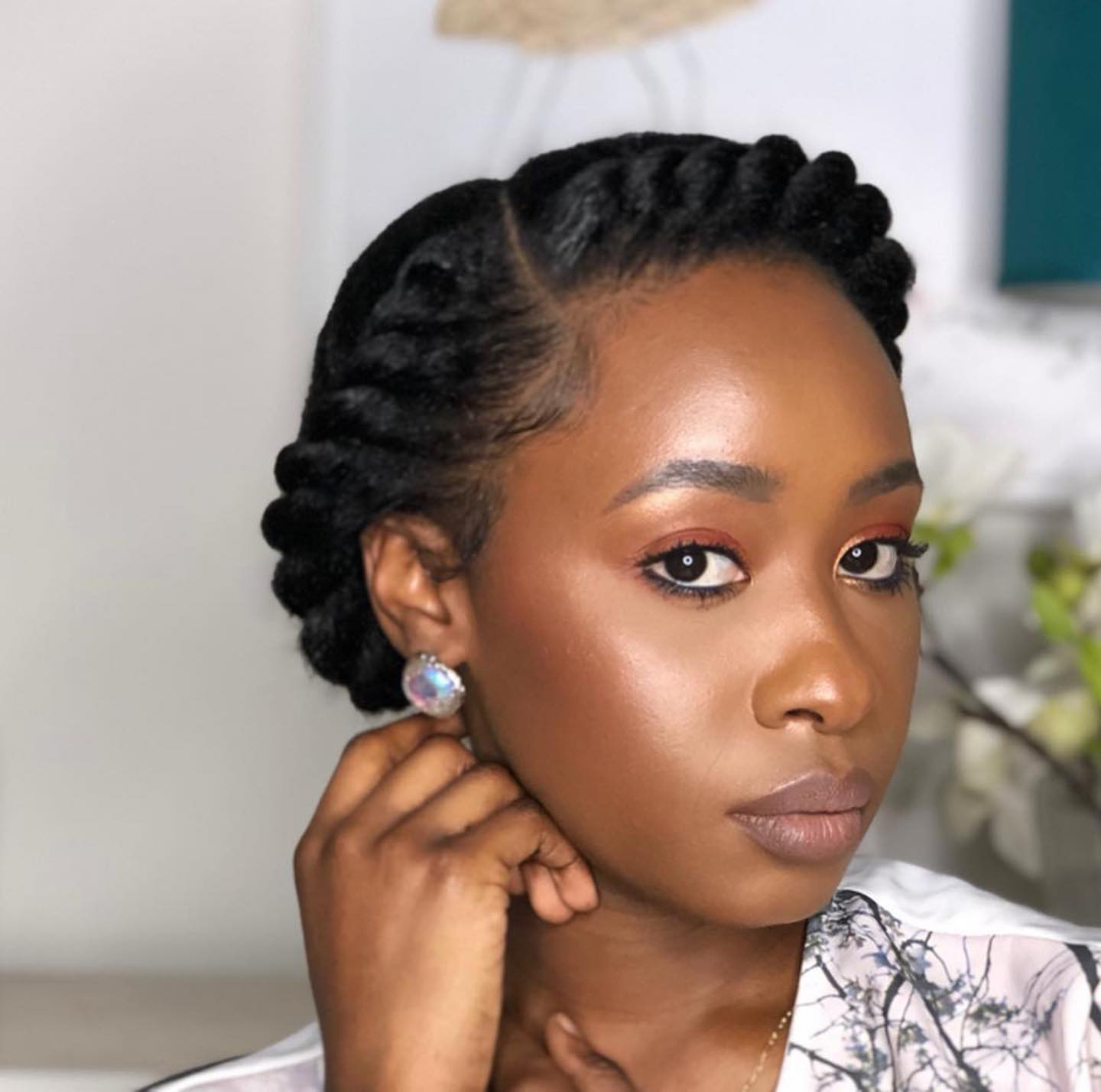
Neat braids at shoulder length on black coily hair give a polished finish, with the side parting adding a touch of asymmetry to the uniform braid lines. Ask your stylist for: shoulder length neat braids with side part. The upkeep is steady, not demanding: a braid balm along the part lines controls flyaways and adds shine, and sleeping on a satin scarf keeps the braids from frizzing at the nape. The real drawback is the timeline, neat braids this tidy take hours to install, and the scalp needs regular cleansing to avoid buildup. If your hair is fine or your scalp is sensitive, the tension at the roots can become uncomfortable by week three, so a looser style might suit you better.
Final Thoughts
Fine coily hair: reach for styles that add volume and definition without heavy products. Thick curly hair: choose cuts that manage density and enhance the curl pattern. Match the style to your texture, and the upkeep stays simple.
- Trim braids every 8-12 weeks to maintain neatness.
- Deep condition coily hair weekly for moisture.
- Air dry styles when possible to minimize heat damage.
- Use a satin bonnet or pillowcase to preserve styles overnight.
Embrace your natural texture; simple styles can be the most beautiful.