Blue hair has moved past its punk-phase reputation into something far more wearable, with this year’s spectrum running from icy pastels to midnight navy, often built with soft face-framing layers and lived-in color rather than a flat, all-over tint.
These 30 Trendy Blue Hair Color ideas cover every commitment level, from a low-maintenance root shadow to a full vivid melt, and every length, from pixie to mid-back. Whether your hair is fine and falls flat or thick and naturally wavy, there’s a version here that works with your texture, not against it. No more guessing which blue will actually suit your routine.
Uniform Light Blue Mid-Back Waves
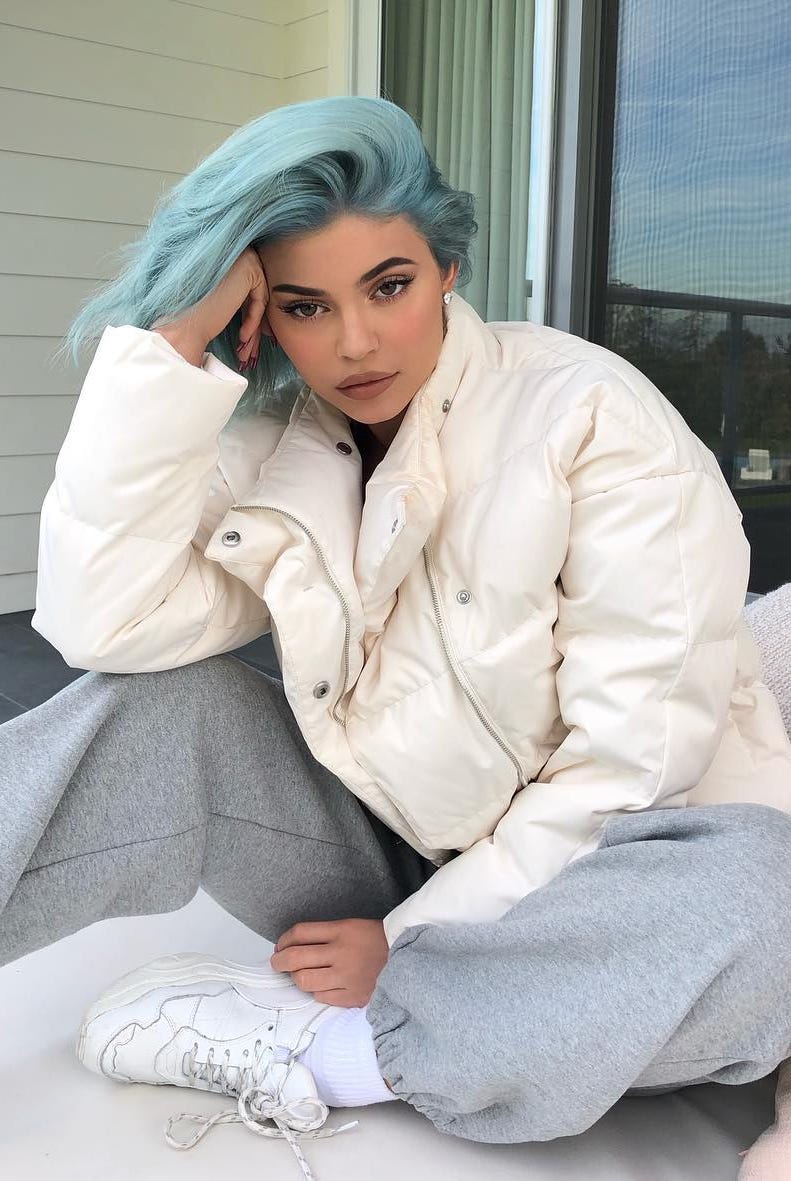
An all-over light blue reads as a single, deliberate statement rather than a happy accident. The uniform application here works because the color is pale enough to catch light but not so pastel that it washes out against thick, wavy texture. Face-framing layers add a little movement around the jaw, which keeps mid-back length from feeling heavy.
Ask your colorist for: uniform light blue all over, mid-back length with face-framing layers. This tone needs a pre-lightened base of at least a level nine or ten, so budget for a full day in the chair. At home, a smoothing serum keeps the wave pattern defined and the color looking glossy. Plan on a trim every eight to ten weeks to keep the ends healthy and the color even.
Collarbone Lob With Purple Root Shadow
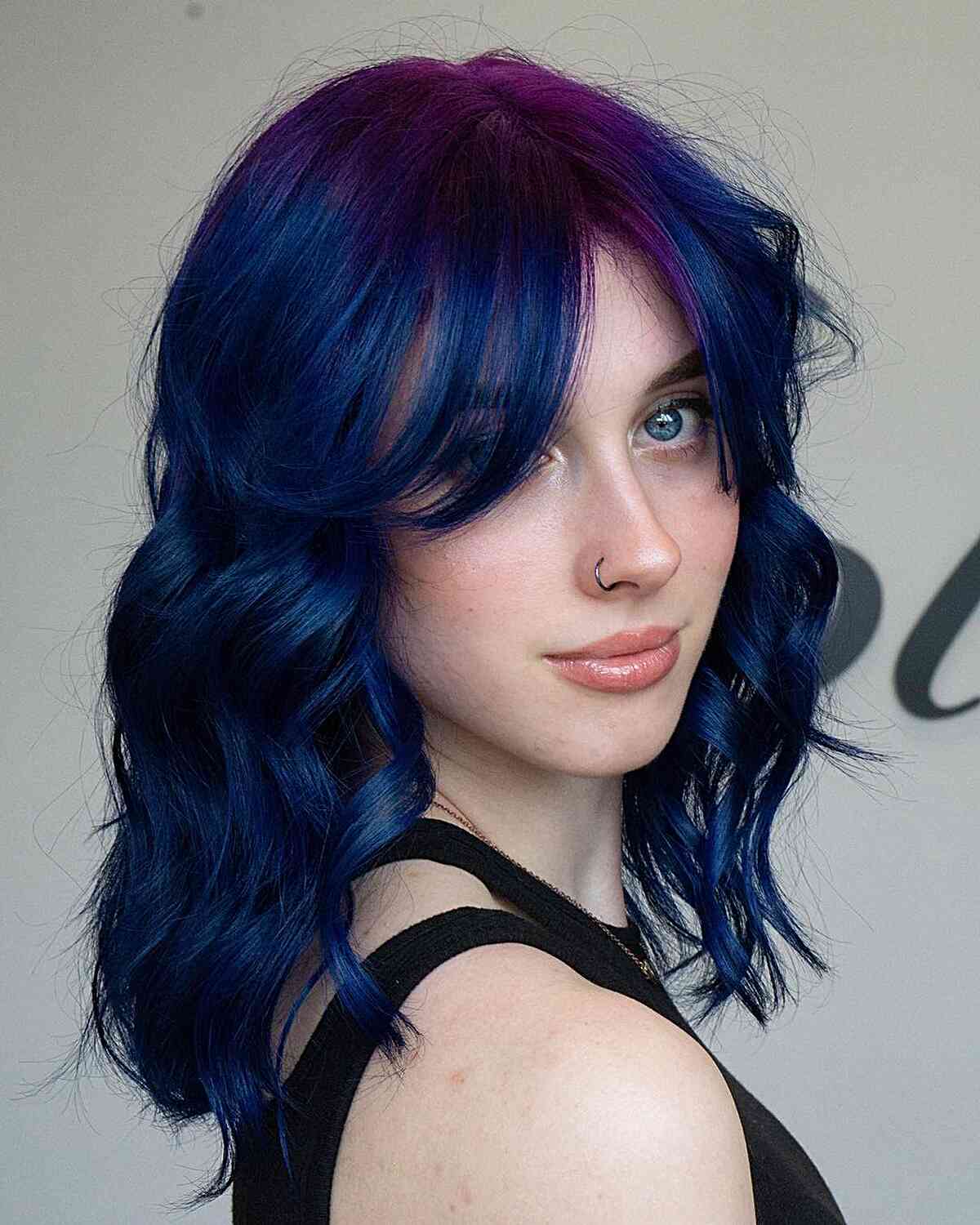
How does a deep blue lob stay low-maintenance without looking like an afterthought? A purple root shadow. The darker base at the roots is a deliberate buffer: it softens the grow-out line so you can stretch salon visits to six or seven weeks instead of three. The curtain bangs frame the face without demanding daily flat-ironing, and the wavy blowout gives the collarbone length a soft, rounded silhouette. Ask your colorist for: collarbone lob, deep blue with purple root shadow, curtain bangs. Medium density hair carries the color saturation well, and a round brush on the fringe is all the daily styling it asks for.
Electric Blue and Teal Multi-Tonal Waves
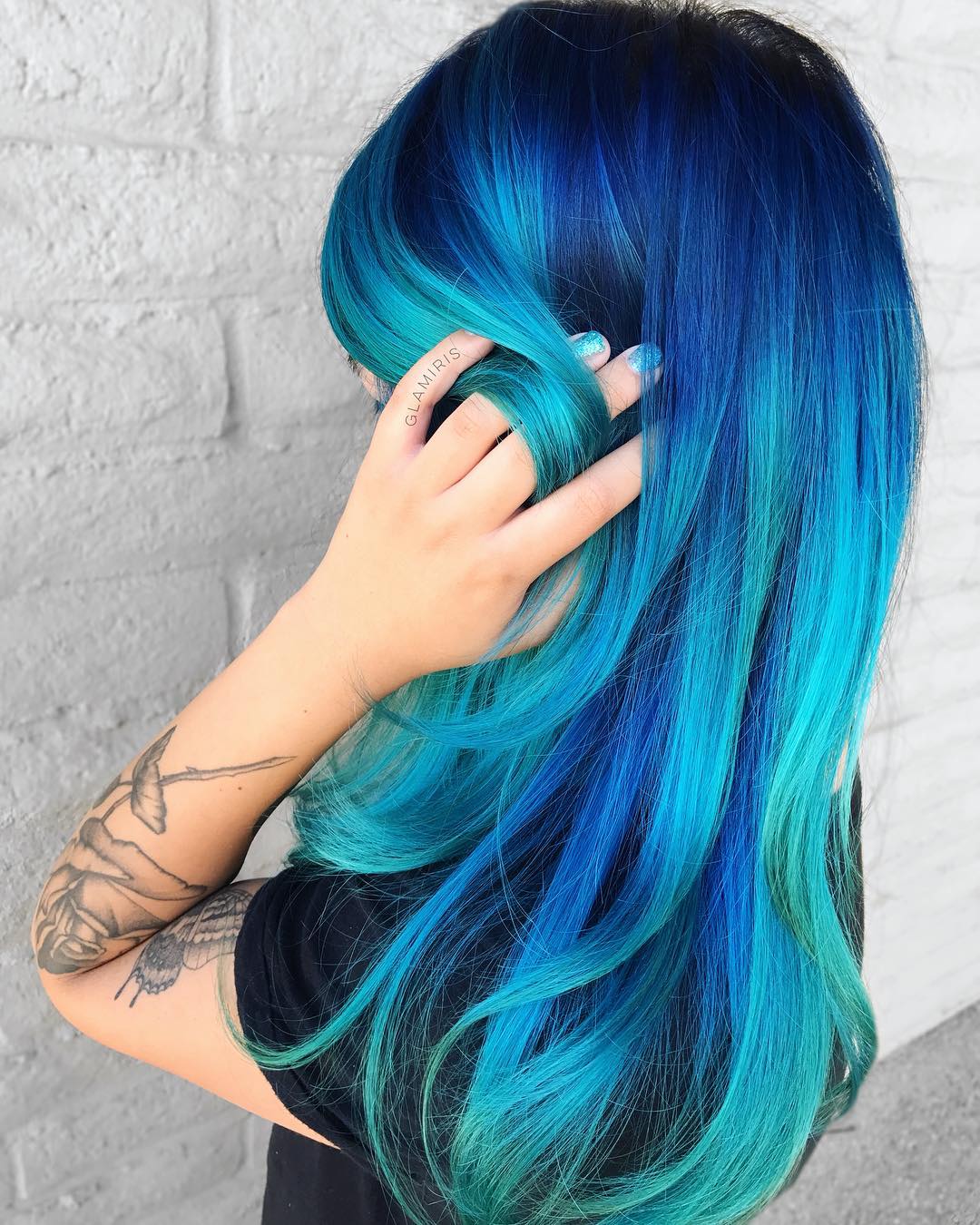
A solid electric blue can feel flat, but a teal companion changes the whole look. The two shades sit close on the color wheel, so the blend looks dimensional rather than busy. Thick, wavy hair at mid-back length is the ideal canvas: the loose waves catch each tone separately, and the middle parting gives the color a symmetrical anchor. Ask your colorist for: electric blue and teal blend, mid-back length, loose waves. This is a statement for warm-weather events or festival season, where the brightness stands out. A color-safe leave-in conditioner keeps the wave pattern from frizzing and the tones from dulling.
Deep Blue With Violet Undertones Collarbone Lob
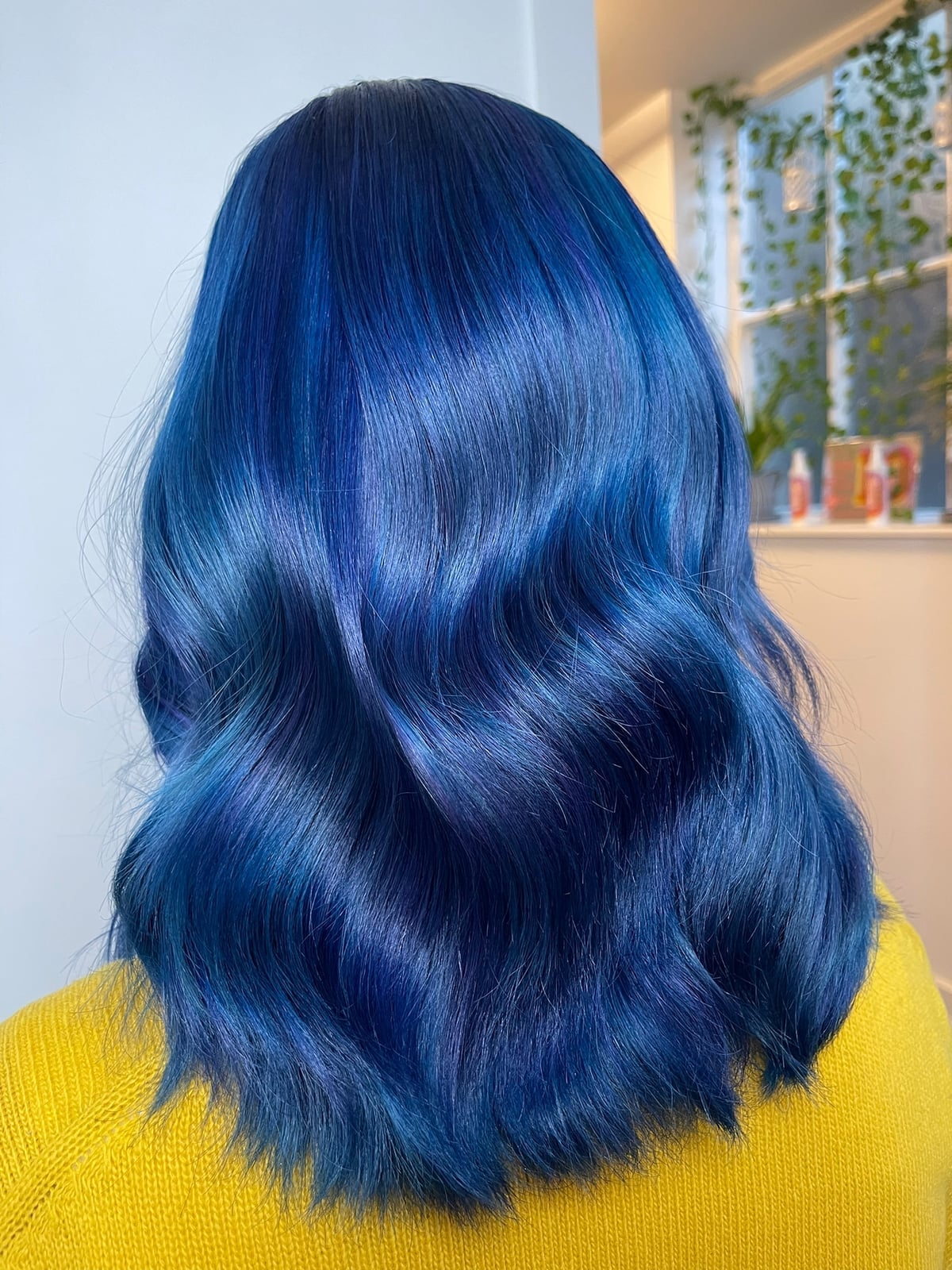
The violet undertones in this deep blue base do not scream; they just stop the color from turning flat or muddy as it fades. A collarbone lob with soft layers keeps the silhouette neat, and the uniform waves add body without needing a curling iron every morning. Ask your colorist for: collarbone lob, deep blue with violet undertones, soft waves. A purple-toned shampoo used every third wash reinforces the violet side of the formula. The thick, glossy texture visible here is a reminder that this shade rewards healthy hair: split ends show up fast against a dark, saturated tone. Trim every eight weeks to keep the shape precise.
Ash Blue Mid-Back Waves With Highlights
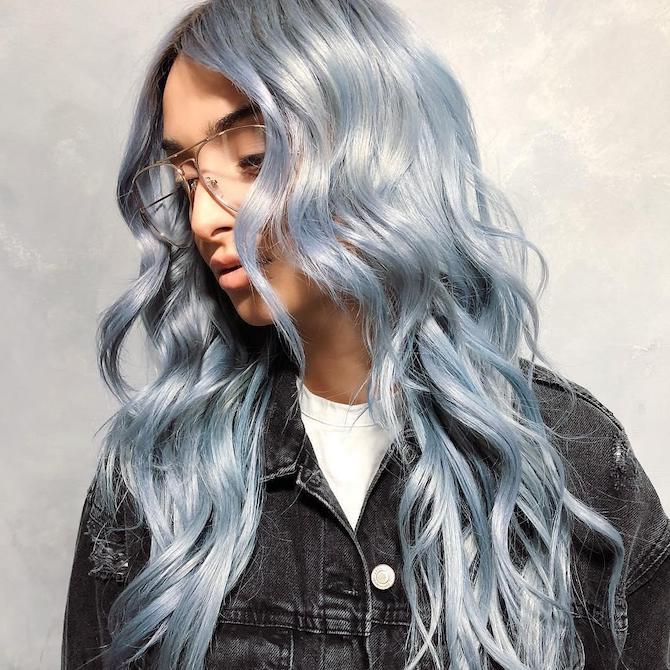
Ash blue is a cool-toned compromise between a true blue and a gray, and the lighter blue highlights keep it from reading as flat. The side parting adds a little asymmetry to the mid-back length, and the soft natural waves let the highlights catch light at different angles. Ask your colorist for: ash blue base with lighter blue highlights, mid-back waves. The specific ask is important here: you want the highlights to be a few shades lighter, not a different color family. A color-depositing conditioner in a cool blue tone helps maintain the ash cast between salon visits. Thick hair carries the highlight placement well because there is enough density for the lighter pieces to contrast without looking sparse.
Blue Balayage Mid-Back Waves
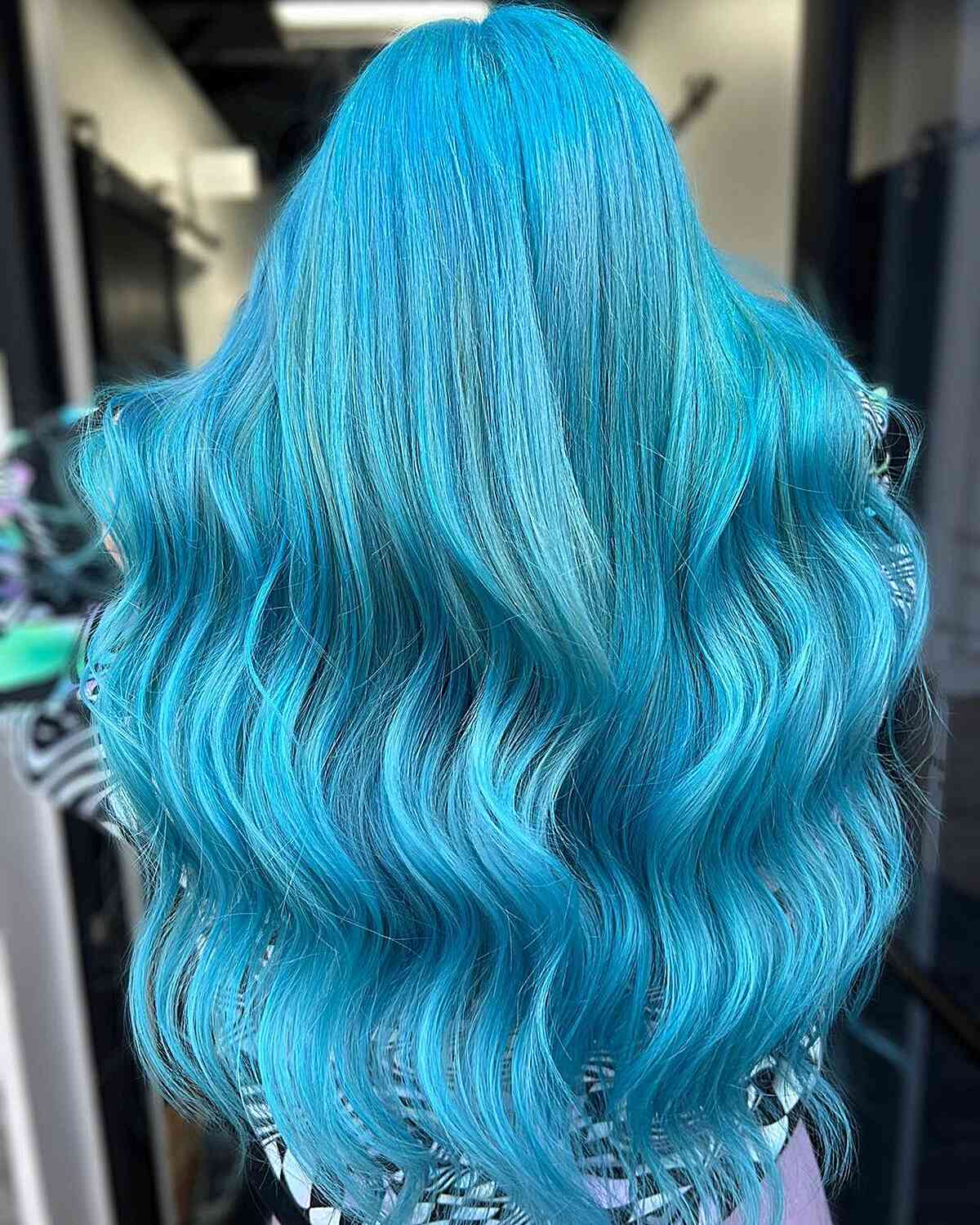
Balayage relies on a hand-painted application, so the transition between a darker blue base and lighter blue strands is soft rather than striped. Here the lighter pieces run through the mid-lengths and ends of thick, wavy hair cut with layers, stopping well short of the root. Ask your colorist for: blue balayage, darker to lighter blue, mid-back waves. The technique saves you from a harsh regrowth line, which means you can stretch toning appointments to every six to eight weeks. A texturizing spray helps the waves catch the dimension.
Collarbone Lob With Blue Aqua Highlights
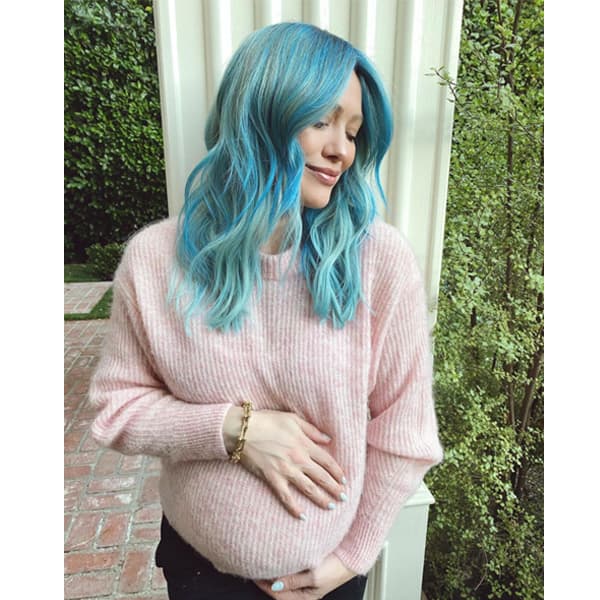
Can a cooler-toned highlight look soft without being stark? It can when the base is a muted blue and the lighter pieces lean into aqua. The blend works especially well on medium-density wavy hair at collarbone length, where the curtain bangs help diffuse the color around the face. Ask your colorist for: collarbone lob, blue and aqua highlights, curtain bangs. The highlights are woven through the layers, not painted in thick chunks, so the overall effect stays airy. A middle part keeps the two tones balanced.
Dark Base With Blue Teal Face Framing
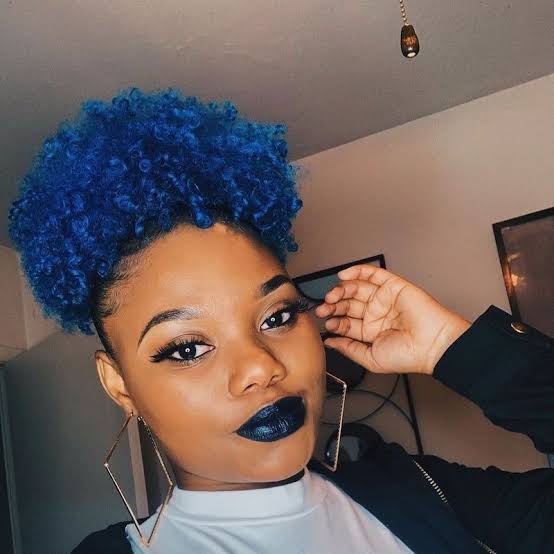
A dark base with vibrant blue and teal highlights places the color exactly where it gets the most light: around the face. On thick, wavy hair cut with layers and curtain bangs, the effect is striking. Ask your colorist for: dark base with blue and teal face-framing pieces, collarbone length. Those lighter pieces need more frequent toning than the rest of the hair. A color-refreshing mask used once a week buys you an extra week between salon visits.
Dark Base With Blue Teal Face Framing, Close-Up Take
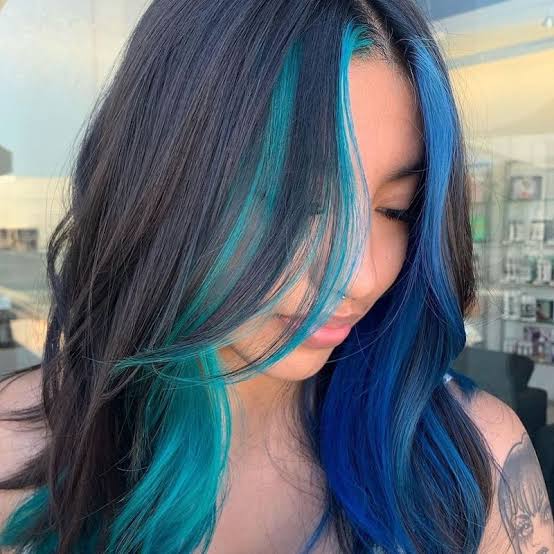
This close-up shows the same dark base with blue and teal face-framing pieces, but the tighter crop reveals how the lighter strands sit against the natural root. Getting that blend right is a salon job: a colorist can lift the face-framing sections to the exact level needed without bleaching the whole head. Ask your colorist for: dark base with blue and teal face-framing pieces, collarbone length. A DIY attempt with a box dye on dark hair tends to land patchy or brassy, and neither is a good look with curtain bangs.
Chin Bob With Blue Streaks
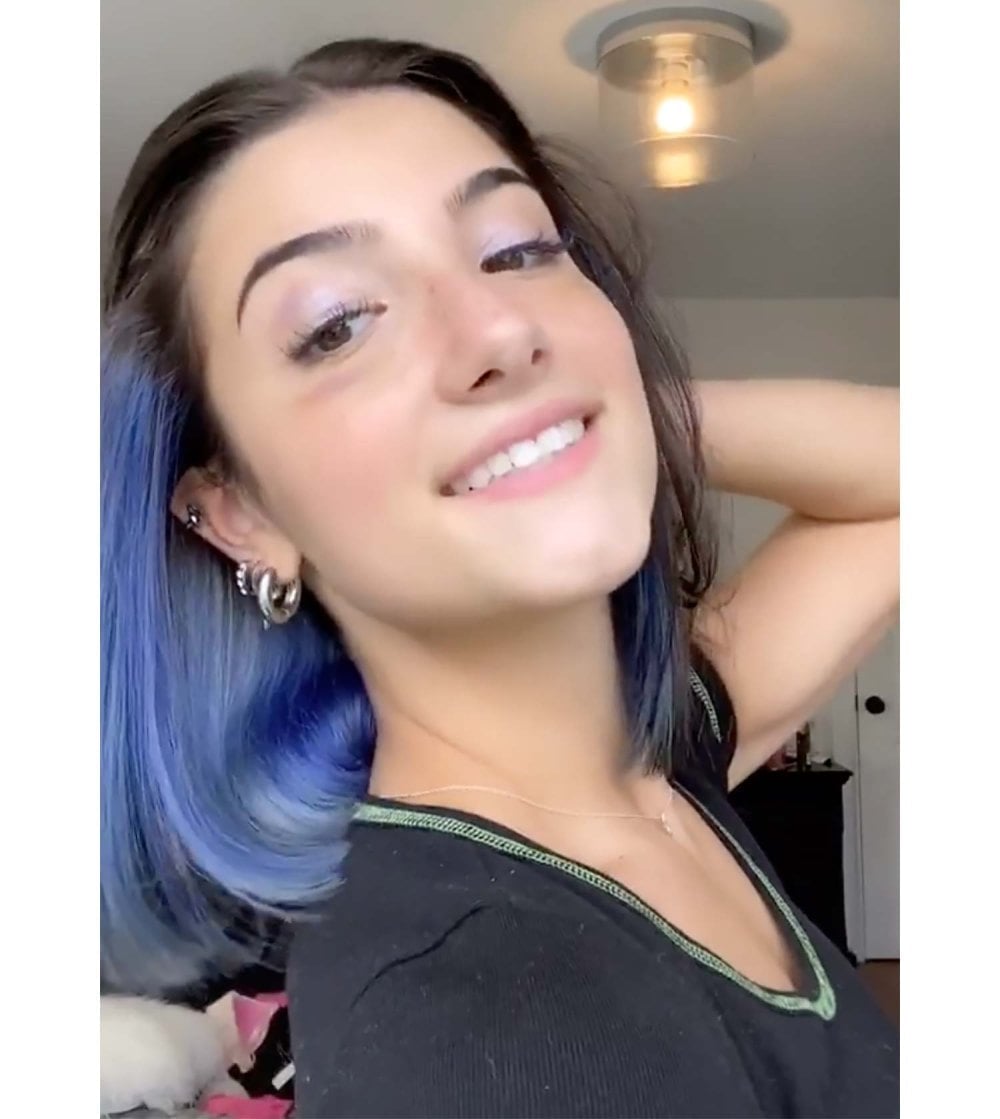
Does fine, wavy hair have to skip vivid color? Not when the saturation is concentrated in a few blue streaks rather than spread over the whole head. On a chin-length bob with curtain bangs, the streaks sit at the face and through the top layers, adding contrast without overwhelming the fine texture. Ask your colorist for: chin-length bob, dark base with blue streaks, curtain bangs. The dark base keeps the grow-out subtle, so you can stretch trims to every six to eight weeks. A middle part lets the streaks fall evenly on both sides.
Mid-Back Teal Blue With Lighter Highlights
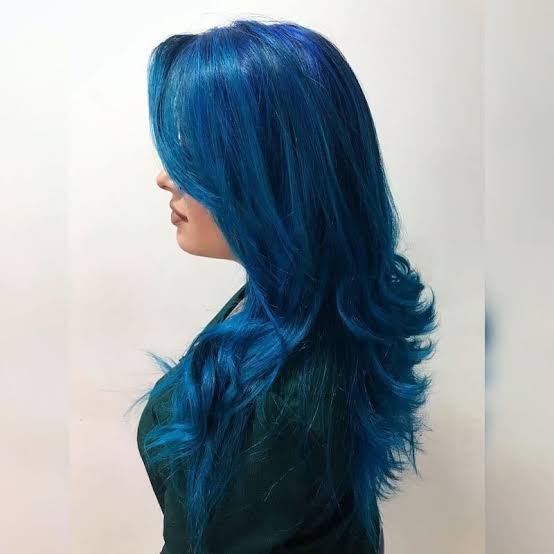
The design plays with two blues at once: a vibrant teal base that is the main event and lighter highlights that run through the ends like a built-in dimension layer. Thick, wavy hair at mid-back length gets curtain bangs and soft face-framing layers, which keep the color from feeling solid or flat. The lighter highlights are subtle enough that the overall effect still looks teal, not a highlight job.
Ask your colorist for: mid-back length, vibrant teal blue with lighter highlights, curtain bangs. The teal will fade fastest on the ends, so a color-depositing conditioner every two weeks keeps the vibrancy honest. Curtain bangs need a trim every four to six weeks, and a glossing spray on dry waves helps the lighter pieces reflect light without extra styling time.
Vibrant Cyan Blue Mid-Back Waves
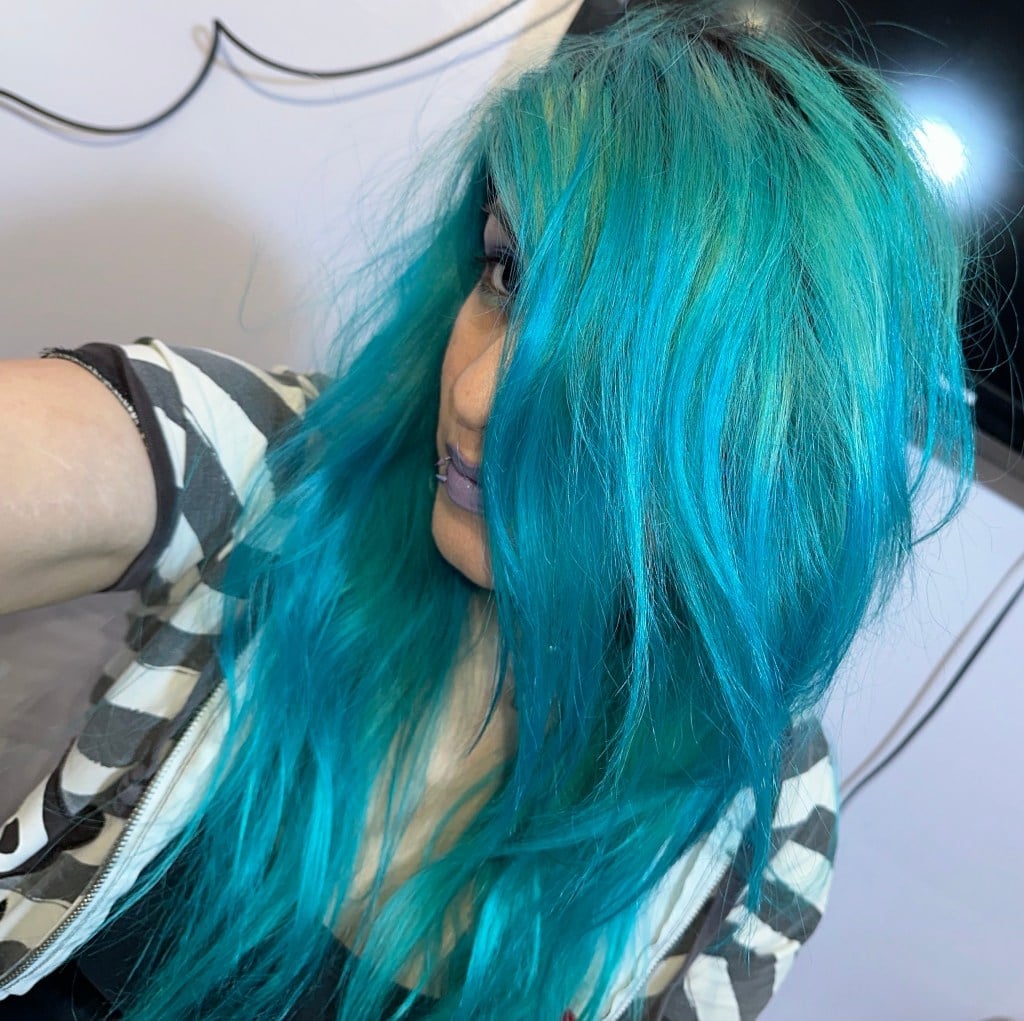
A single shade applied from root to end sounds simple, but cyan blue is so saturated that any unevenness in the application becomes obvious. Thick, wavy hair at mid-back length is sectioned into quadrants, and each section is painted with a dense, all-over cyan formula while the stylist works soft, side-swept bangs into the cut. The blowout finish smooths the texture without hiding the wave pattern.
Ask your colorist for: vibrant cyan blue all over, mid-back length, side-swept bangs. Because cyan sits between blue and green, the base needs to be lifted to a very pale yellow before the color goes on; that means a full day in the chair. Side-swept bangs are cut dry and blended into the layers so they swing, not stick.
Collarbone Ombré Blue and Teal
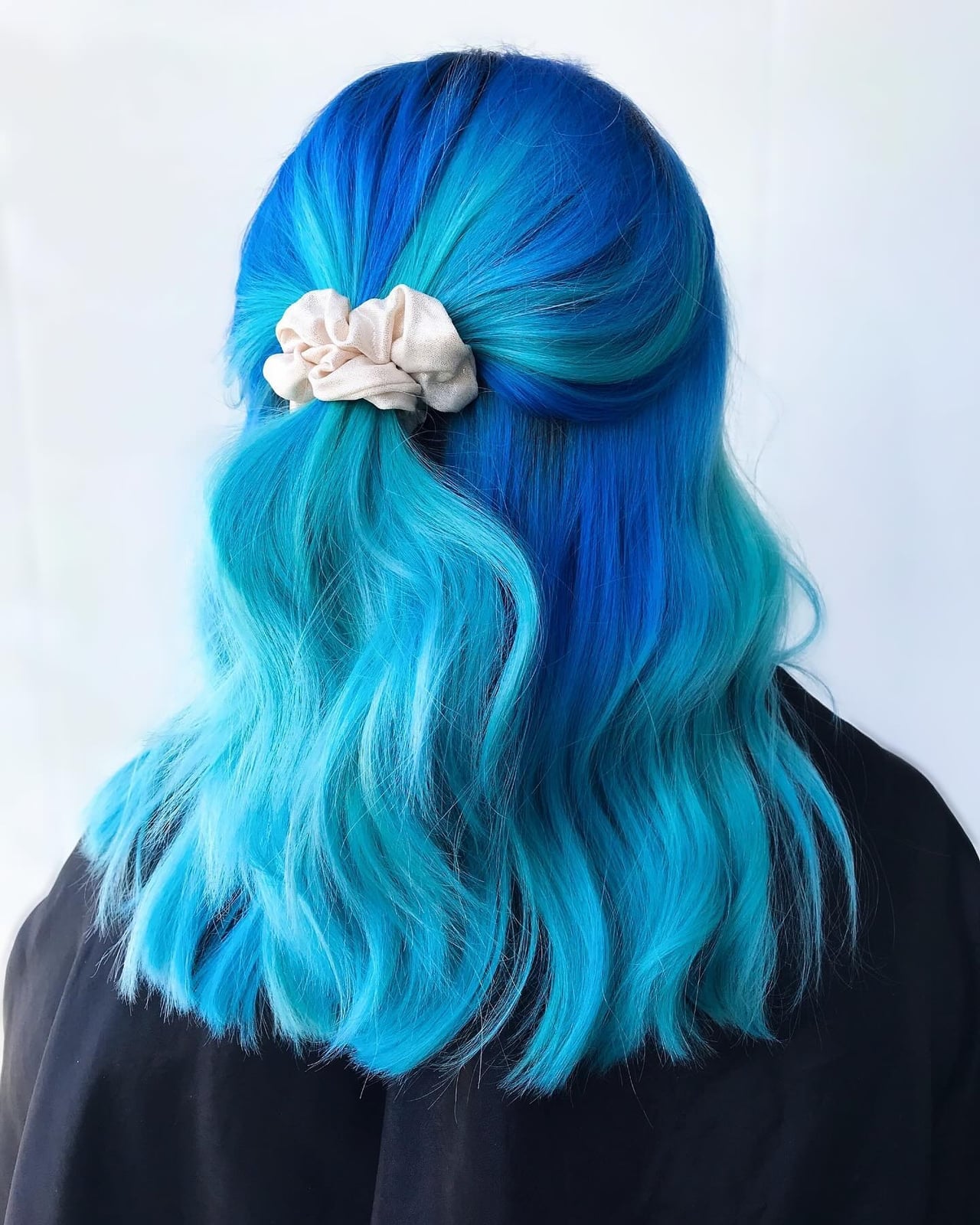
How do you ask for a gradient that starts bright blue at the roots and shifts to a lighter teal at the ends without getting a stripe? The answer is a hand-painted ombré on collarbone-length, thick wavy hair. The stylist applies the blue formula from the roots to about the mid-lengths, then blends a lighter teal into the last few inches using vertical strokes. A side parting keeps the color distribution asymmetrical, which hides any hard line during the grow-out.
Ask your colorist for: collarbone length, blue to teal ombré. Bring reference photos showing the exact blue and teal tones you want, because ombré reads differently on a wave than it does on a straight strand. The loose waves in the styling soften the transition further.
Mid-Back Blue Base With Rainbow Ombré
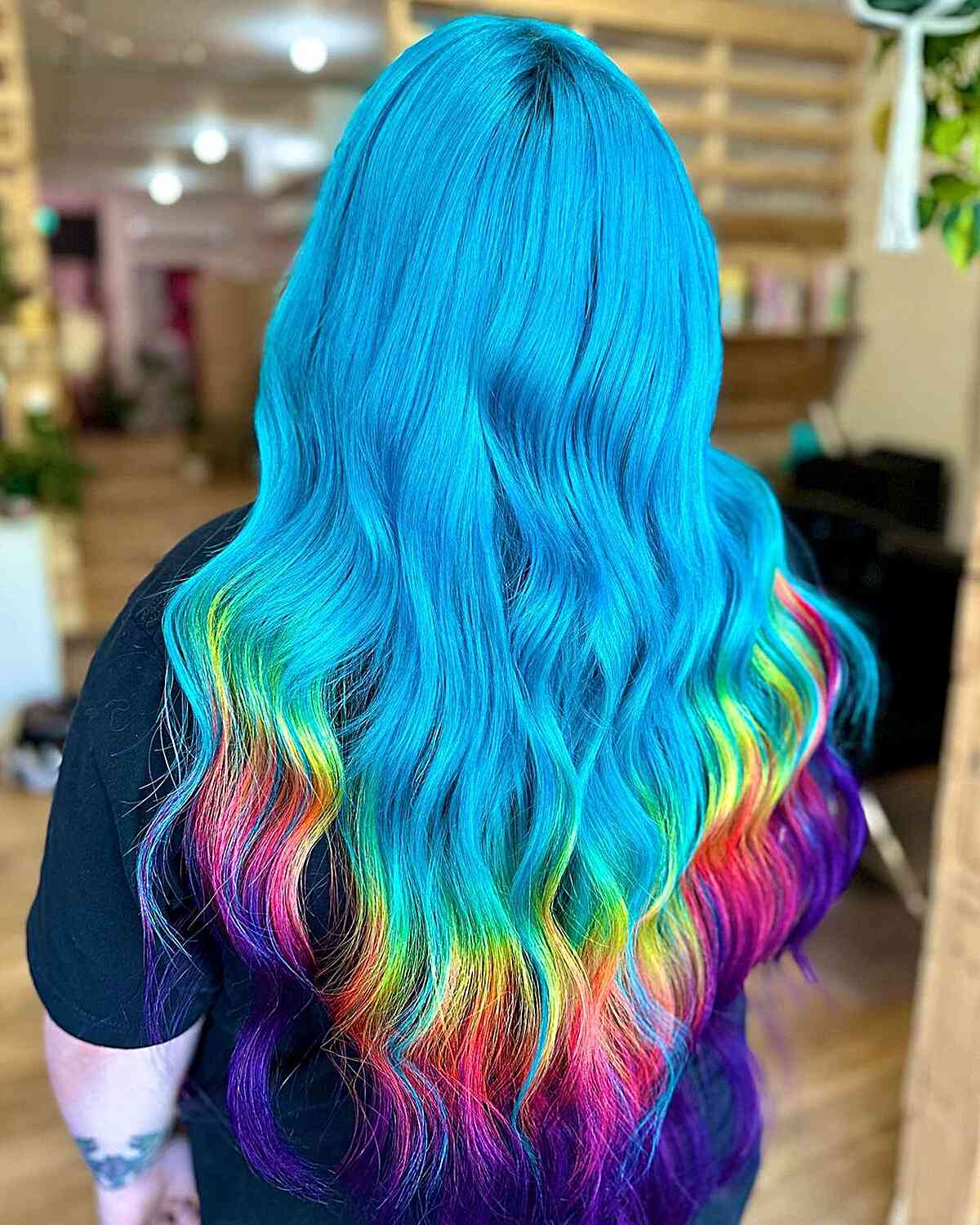
Five or more colors layered into the ends of a vibrant blue base is a lot of pigment, and that many tones means the fade rate varies across the rainbow. Thick, wavy mid-back hair is lightened to a pale blonde before the blue base goes on at the roots and the rainbow is painted through the ends in loose, graduated sections. A middle parting keeps the color distribution even.
Ask your colorist for: mid-back length, vibrant blue base with rainbow ombré. The yellow and green bands tend to wash out first, leaving the blue and purple sections looking stronger. A cool-water rinse and a sulfate-free shampoo delay the fade, but uneven fading is the nature of the design, not a mistake.
Mid-Back Blue Ombré Layers
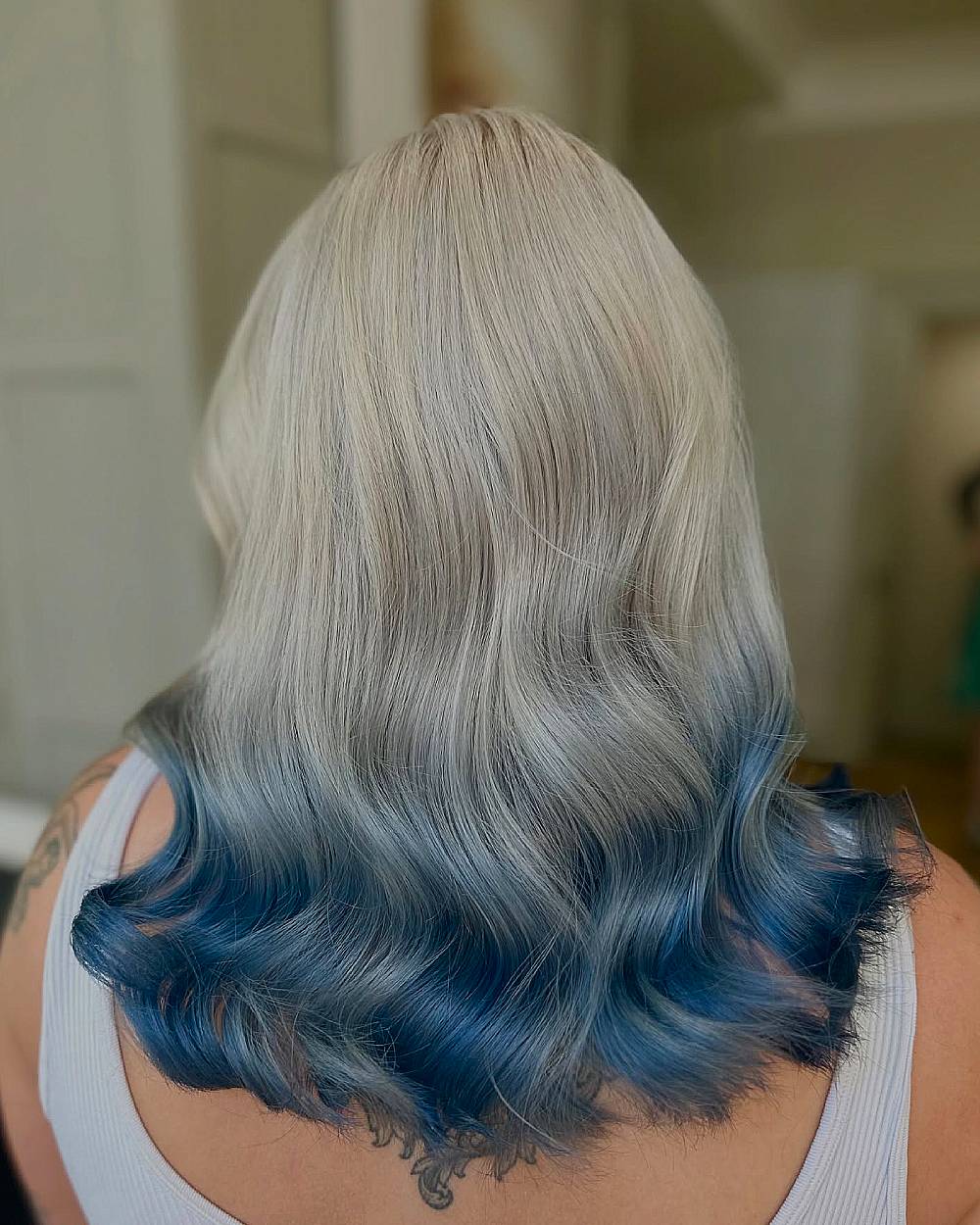
A mid-back blue ombré with a darker root and vibrant ends relies on the gradient looking smooth all the way down. Thick, wavy hair is cut with long layers that let the color transition read without interruption: the darker root shade is painted from the scalp to about ear level, then the blue is blended through the layers so each section picks up a slightly lighter tone toward the ends. A middle parting and wavy blowout show the gradient from every angle.
Ask your colorist for: mid-back length, blue ombré with darker roots. The dark root grows out invisibly for about eight weeks, which is longer than a solid blue would manage. A trim every eight to ten weeks keeps the layers from splitting, and a glossing serum on dry waves makes the gradient look wet and intentional.
Mid-Back Blue Ombré With Icy Ends
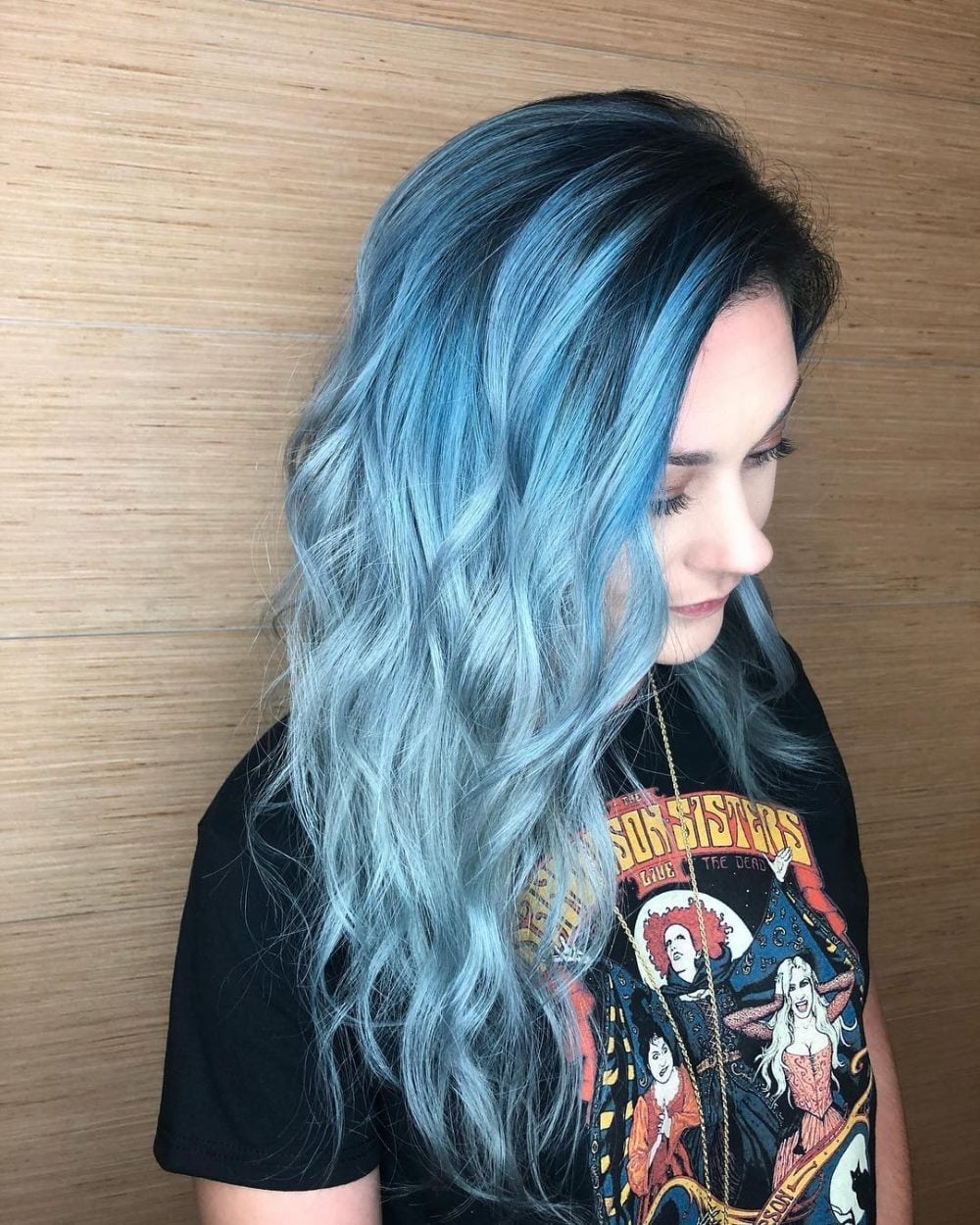
A blue ombré built this way relies on a precise gradient, not a hard line, which keeps the transition from dark roots to icy ends looking grown out on purpose. The technique works best on thick, wavy hair at mid-back length, where the color has enough canvas to shift gradually. Ask your colorist for mid-back length, blue ombré with icy blue ends. A side part adds volume at the root, and the loose curls help the lighter ends stand out without fighting the darker base.
Mid-Back Silver Blue Melt With Gray Roots
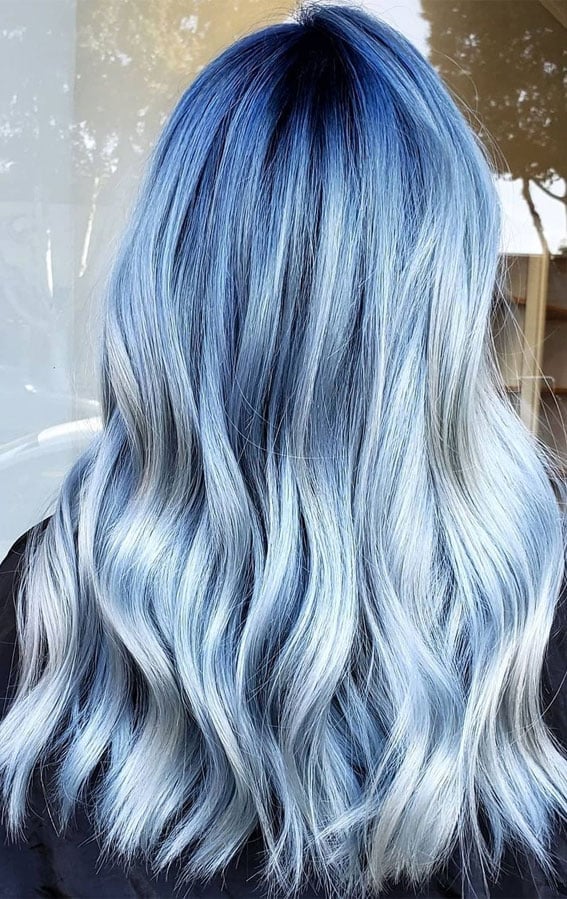
Wondering if gray roots can look intentional? This silver blue melt answers that question. The gray root area blends into lighter silver-blue tones without an abrupt stop, so the regrow line looks like part of the design, not a lapse. It works best on thick, wavy mid-back hair: the density helps the melt hold its shape, and the natural wave softens the transition.
The color demands a lightened base, which means a full salon session. A middle part keeps the melt symmetrical and shows off the gradient evenly. This is a cool-toned blue shade that still feels grown-up.
Mid-Back Icy Blue With Silver Undertones
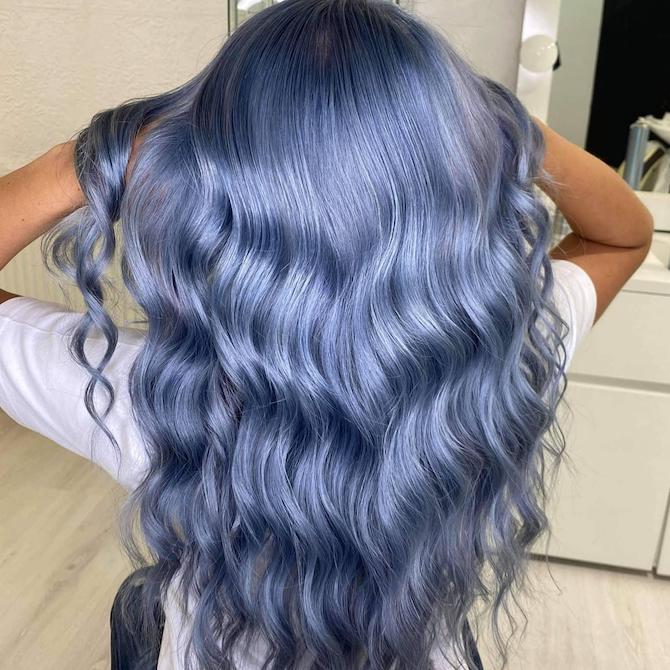
Straight pastel blue can look flat on long hair, which is where the silver undertones come in. They give the color a metallic depth that stops it from looking like a single wash of pastel. This version, a light blue with subtle silver undertones, sits closer to an icy steel than a baby blue. It suits thick, wavy mid-back hair because the texture catches the dual tones and keeps the color from looking one-note.
A middle part and loose waves let the silver undertones peek through at different angles. The effect is cooler and more dimensional than a solid pastel, but it still looks blue and not gray. Ask your colorist for: mid-back length, light blue with silver undertones, icy effect.
Mid-Back Blue-Gray With Gray Highlights
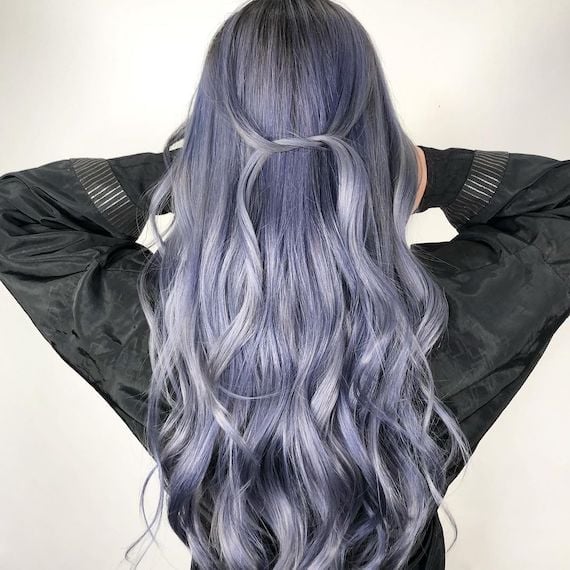
A blue-gray base can veer muddy if the highlights are placed too densely, but here the lighter gray pieces are spaced just enough to add dimension without overwhelming the base. The result is a sophisticated, low-contrast look that still registers as blue. It works on thick, wavy mid-back hair, where the layers can separate and show off each highlight individually.
Ask your colorist for mid-back length, blue-gray base with lighter gray highlights. A half-up style like this one lets the color do the talking without needing a full blowout. The texture is natural wave with a bit of lift at the crown, which keeps the gray tones from sitting too flat against the head.
Mid-Back Color Melt Blue Ash Blonde
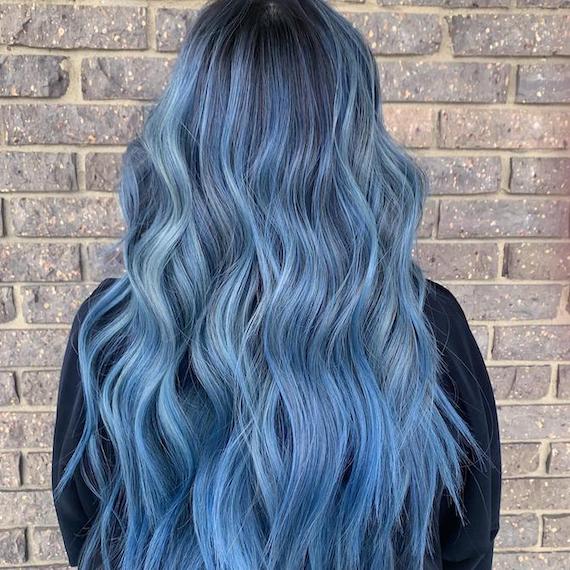
This color melt layers three zones: a dark root shadow, a mid-length blue section, and ash blonde highlights that run through the ends. The ash blonde pieces keep the blue from dominating the whole length, which gives the color more complexity than a single-tone application. It works on thick, wavy mid-back hair where the different tones can blend naturally rather than stack in stripes.
Ask your colorist for mid-back length, color melt blue with ash blonde highlights. The upkeep is moderate: the root shadow buys you four to six weeks between touch-ups, and the ash blonde ends fade cooler than a beige or gold shade would. Air-dried texture actually helps here, since the slight wave softens the transition lines between each color zone.
Vivid Blue Mid-Back Waves, Wavy
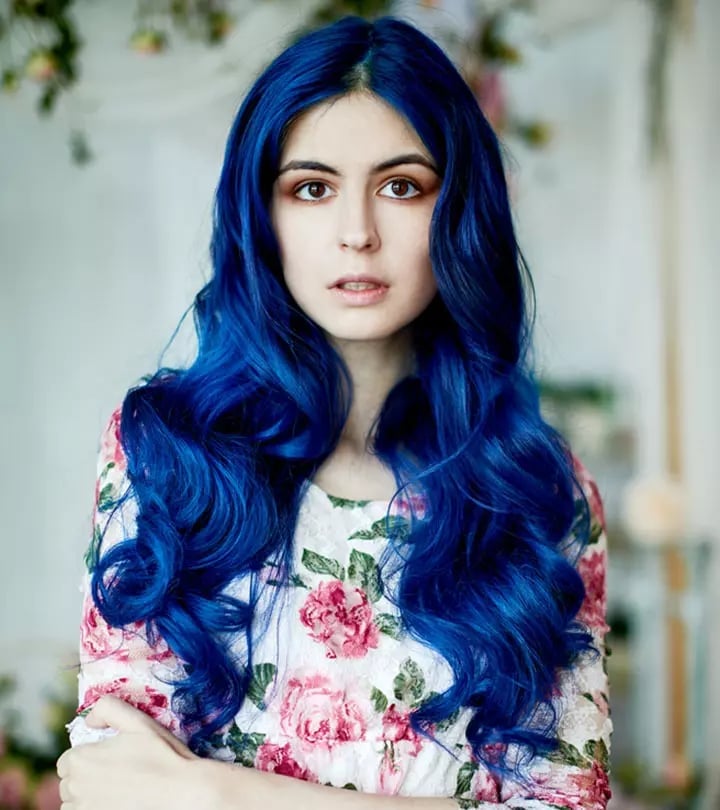
A vivid blue all-over color on mid-back length hair with subtle layers relies on the interplay between light and shadow to keep it from reading flat. The loose waves catch the light at different angles, making the shade look dimensional rather than solid. This approach works best on hair with natural body, since fine or stick-straight textures may not create enough movement to show off the technique. Ask your colorist for: vivid blue all over, soft layers. A color-depositing mask applied every week or two helps keep the tone from turning brassy between salon visits. Expect to book a trim every eight to ten weeks to maintain the shape.
Midnight Blue Mid-Back Waves With Long Layers
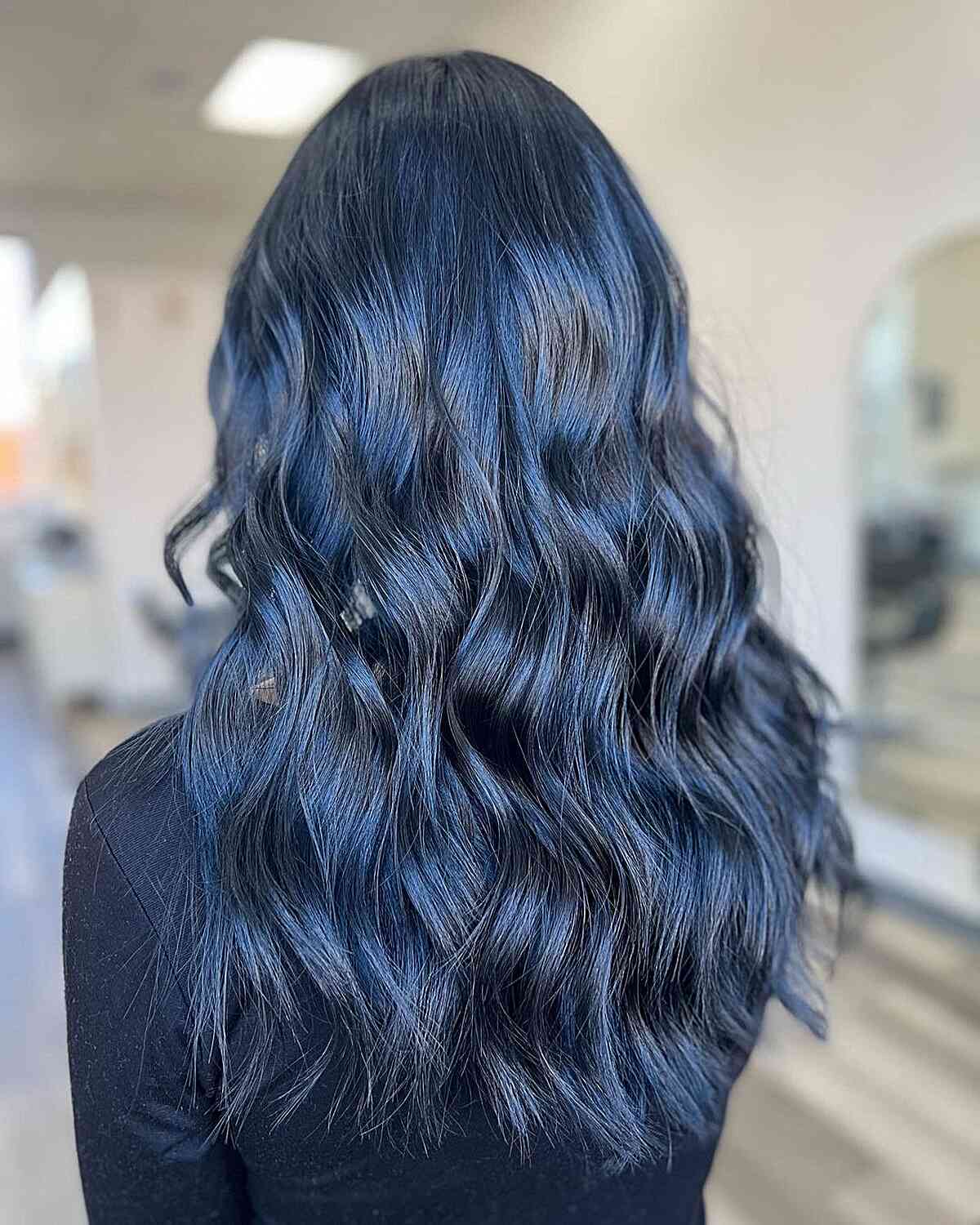
Can a blue hair color feel understated? Midnight blue on thick, wavy mid-back length hair makes a strong case for it. The shade is deep enough to pass for a dark neutral in low light, but the back view shows a rich, glossy tone that is unmistakably blue. This color suits those who want a bold change without the constant attention a neon shade invites. Ask your colorist for: deep midnight blue all over, long layers. The key is the depth: a true midnight blue has enough pigment to stay cool and saturated, so it works well on hair that is already dark and does not require heavy lifting to a pale blonde.
Vibrant Blue Collarbone Waves
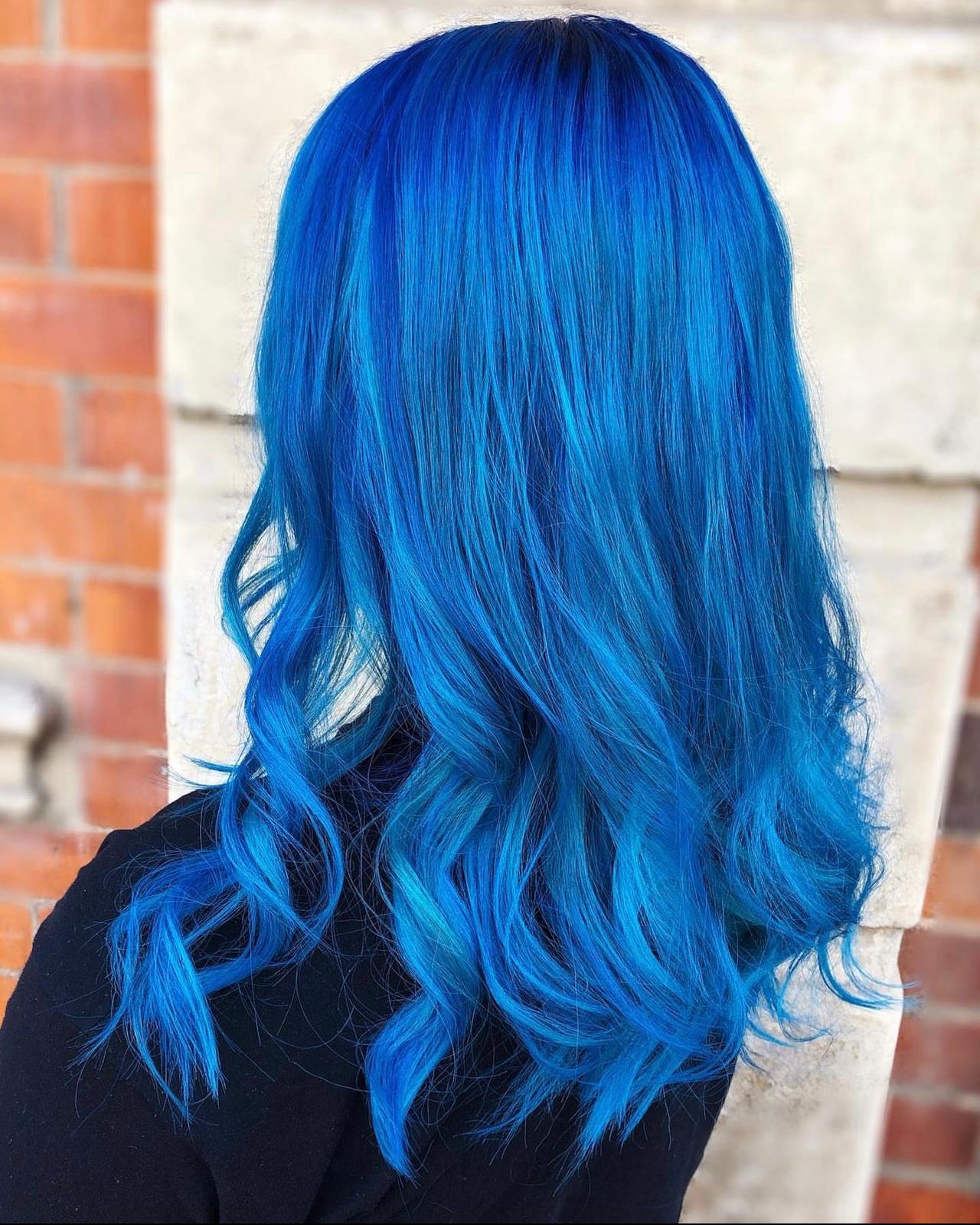
A vibrant blue on collarbone-length hair is a compact package: the color works as a deliberate statement, not an accidental dip-dye. The uniform application and soft waves give it a polished finish, but a vivid blue at this length demands frequent refreshes. The ends are close to the shoulders, so they rub against clothing and fade faster than longer lengths would. Ask your colorist for: collarbone length, vibrant blue all over, soft waves. If you commute or wear dark tops daily, plan on a toning appointment every four to five weeks to keep the color from looking washed out.
Shoulder Length Navy Blue Blunt Cut
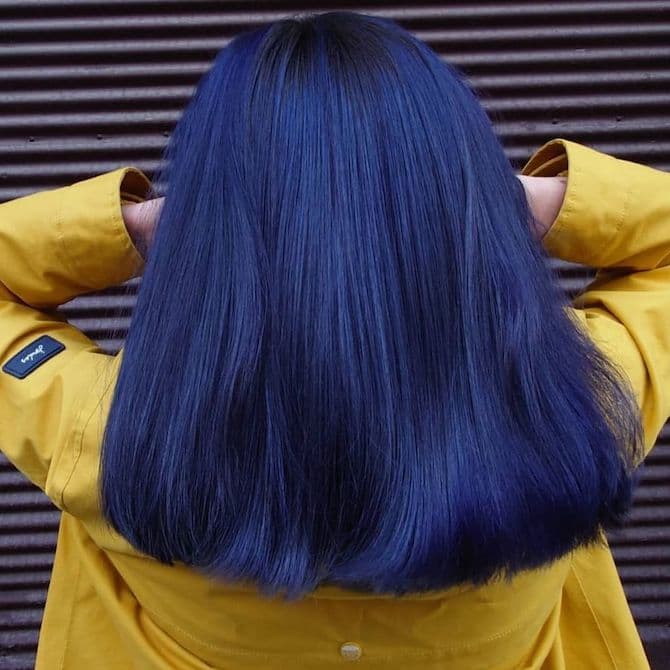
A shoulder-length blunt cut in navy blue is the more disciplined sibling of layered bobs. The solid, straight-across line emphasizes the density of the color, giving the navy blue a richness that layers can dilute. Compared to a piecey cut, this one requires more precision at home: a blunt baseline shows every uneven snip. Ask your colorist for: shoulder length blunt cut, deep navy blue. This is a salon-only application because achieving an even navy blue requires lifting the hair evenly first, then saturating every strand. A DIY approach risks patchy saturation and a muddy result.
Collarbone Muted Blue-Black Bob
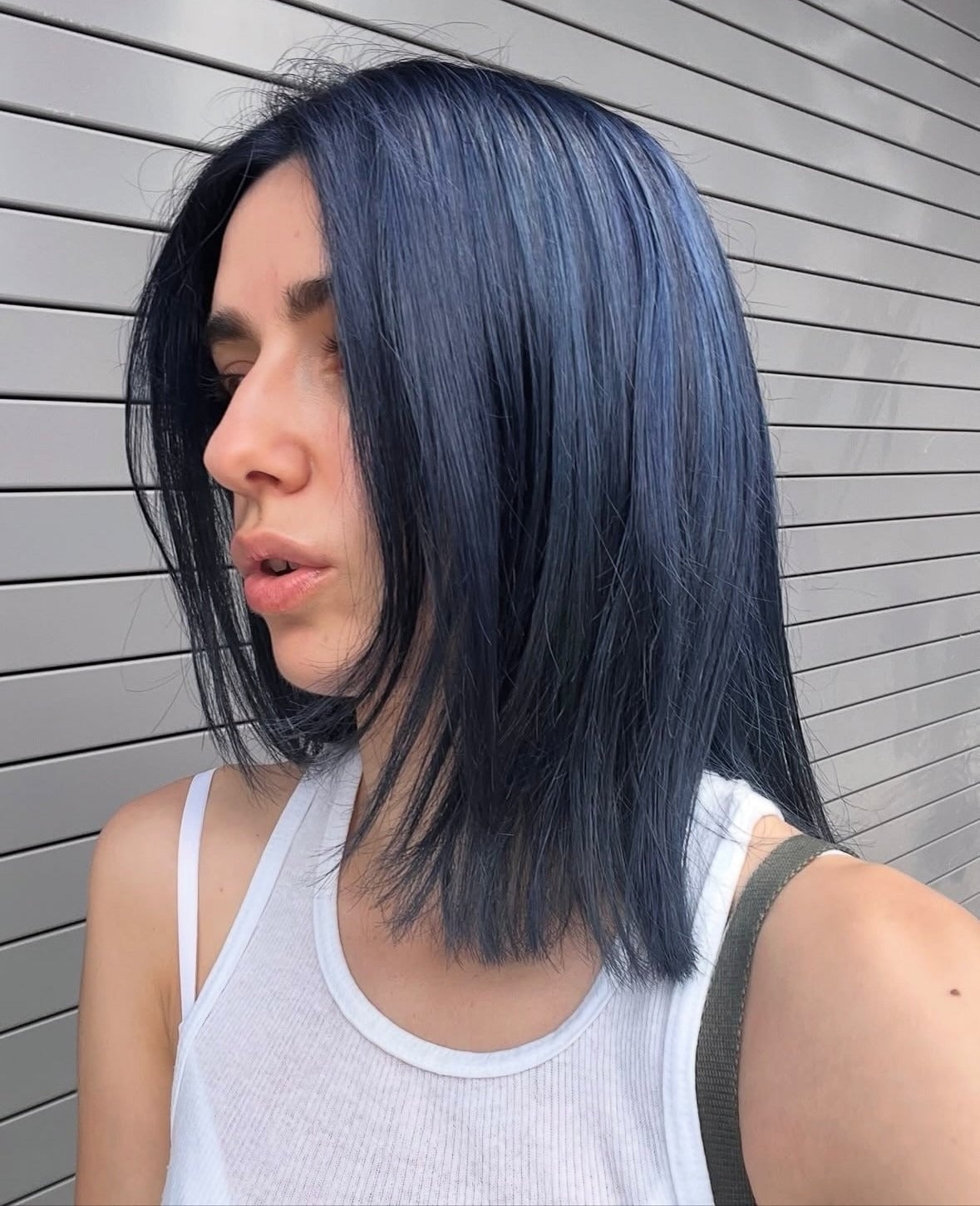
A muted blue-black on a collarbone blunt bob is a low-commitment entry into blue hair. The tone is close to black but appears as a cool, almost grayish-blue in direct light, so the grow-out line is forgiving. On fine, straight hair, the blunt cut adds visual fullness, but the lack of layers means any split ends are immediately visible. Ask your colorist for: collarbone length blunt bob, muted blue-black color. A trim every six to eight weeks is necessary to keep the bob’s clean line, and a gloss treatment every few months will revive the subtle blue sheen.
Collarbone Lob With Cobalt Blue Dip-Dye
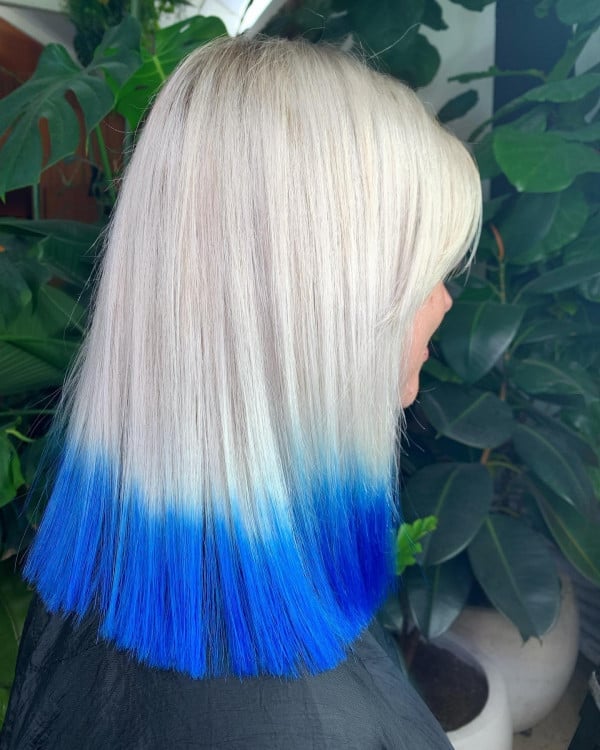
The dip-dye technique here works because the platinum blonde base and the cobalt blue ends are two distinct zones with no gradient between them, which keeps the line crisp. Fine, straight hair at collarbone length holds this precision best, and the blunt bangs add a graphic edge that suits oval and square faces. Ask your colorist for: collarbone lob, platinum blonde with cobalt blue dip-dyed ends, blunt bangs. The lob needs a trim every six to eight weeks to keep the blunt line sharp, and a color-safe leave-in conditioner on the ends helps the cobalt blue stay vivid longer.
Shoulder Length Emerald Green Dip-Dye
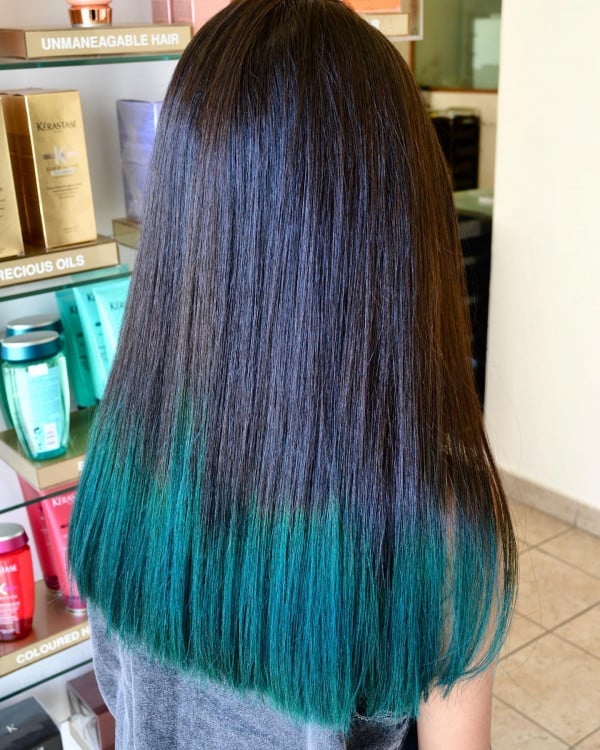
How do you get emerald green ends without committing to a full head of color? You ask for a dip-dye that starts at the mid-lengths, leaving the dark base untouched. This works on fine, straight shoulder-length hair because the natural texture lets the transition line sit cleanly. Ask your colorist for: shoulder length, dark base with emerald green dip-dye ends. A color-safe shampoo keeps the green from turning murky, and a shine serum on the ends adds the gloss that air-dried hair often lacks.
Short Turquoise Pixie Cut
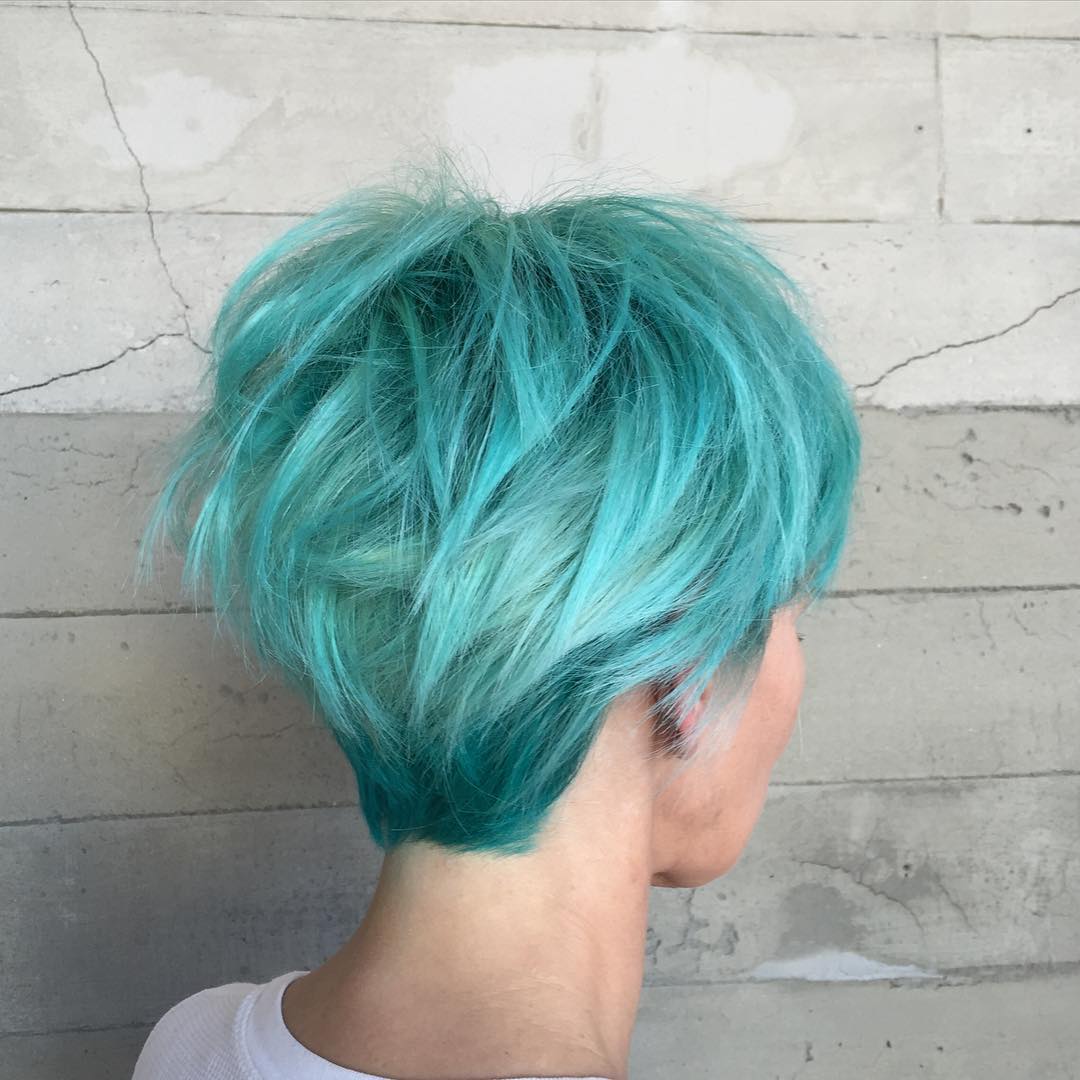
A short pixie cut in a solid turquoise stands out because the choppy bangs sweep back to show the full shape. This cut works best for fine, wavy hair: the texture gives the choppy layers enough grip to hold their form without product. Ask your colorist for: short pixie cut, vibrant turquoise all over, choppy bangs. The ear-length crop suits oval and heart faces, and the back view matters here since the nape line defines the silhouette.
Short Vibrant Blue Pixie
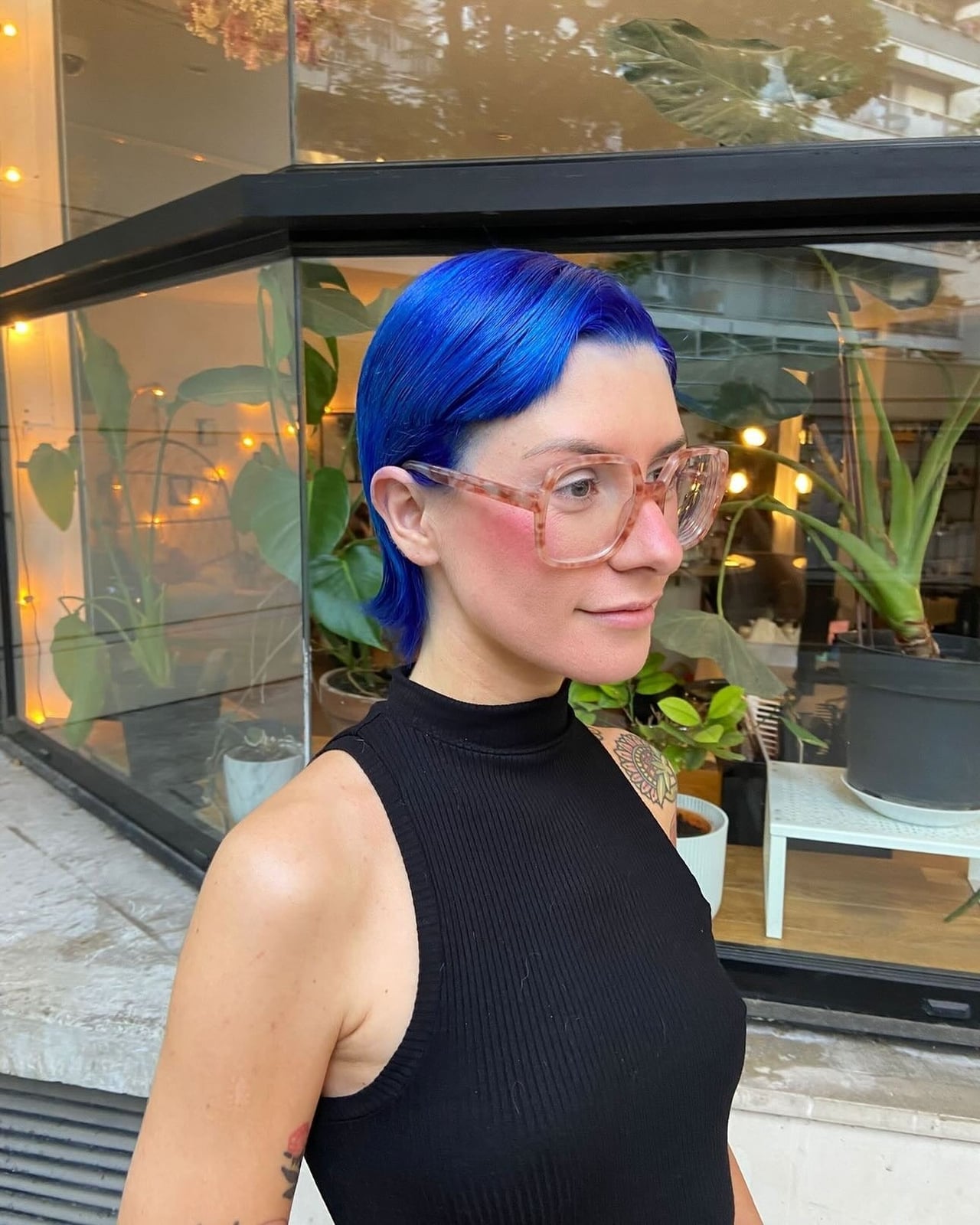
The honest drawback is the daily styling. That slicked-back finish requires a strong-hold product and a quick blow-dry each morning, and skipping a day leaves the pixie looking flat rather than purposeful. For anyone who wants a wash-and-wear option, a textured pixie with a softer finish would need fewer tools and less time.
Chin Length Split Dye Bob
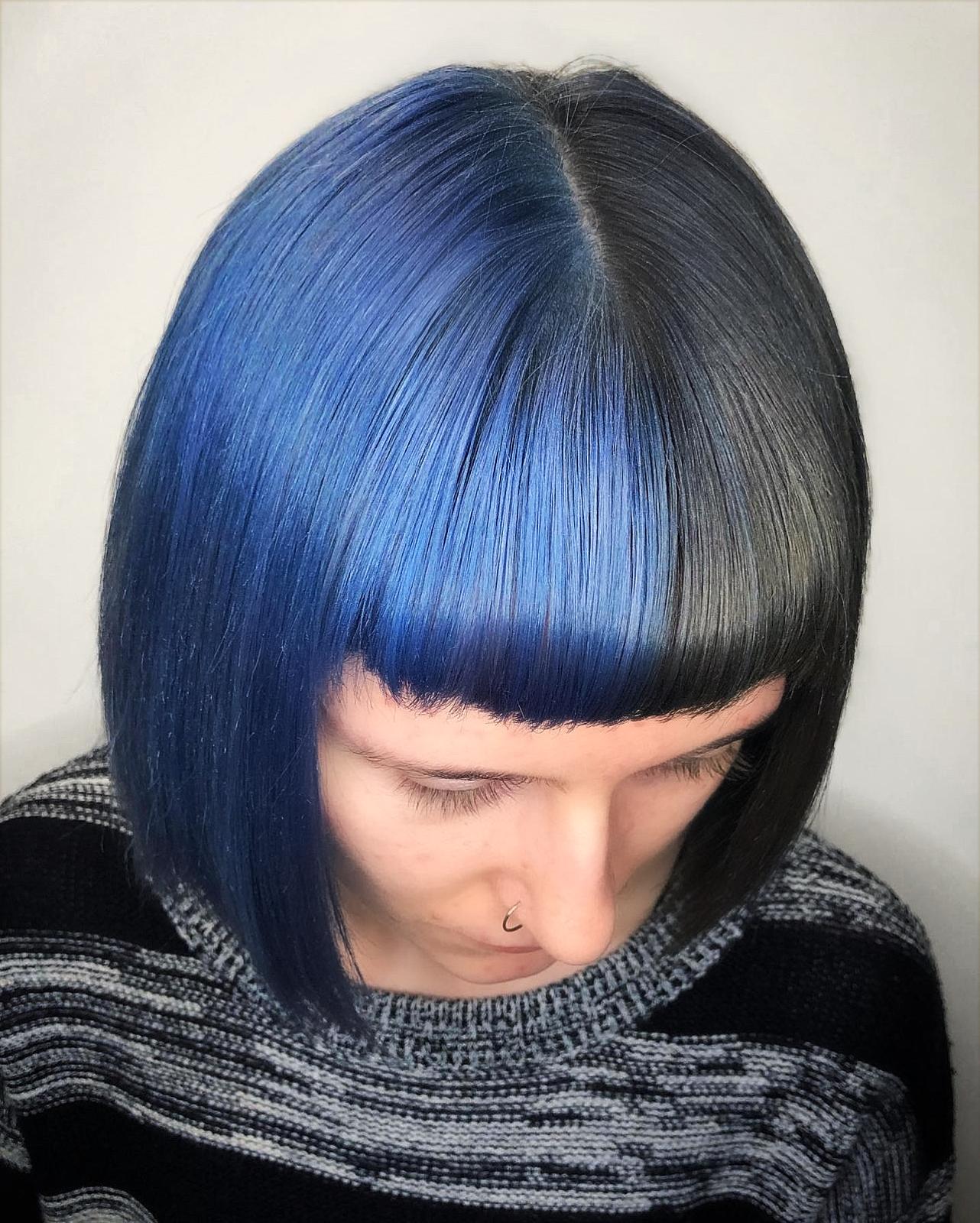
Where a solid-color pixie hides its maintenance in the shape, a split dye bob makes the upkeep obvious because the two colors meet at a visible line. This chin-length bob with blunt bangs keeps the contrast clean by using a middle parting and poker-straight styling, which works best on fine, smooth hair. Ask your colorist for: chin-length bob, split dye blue and black, blunt bangs. This is a salon-only color job: the two sides need separate processing times, and the black side requires a filler to prevent the blue from bleeding into it during the first few washes.
Final Thoughts
For a sophisticated blue, stick with darker, muted tones like navy or blue-black, or ask for highlights on a dark base. If you want playful, go for an ombré or split dye that lets the color fade without a harsh line.
- Use a color-depositing conditioner every one to two weeks.
- Stick to sulfate-free shampoo to keep the blue from stripping.
- Deep condition weekly to fight dryness from lightening.
- Plan for touch-ups or toning every four to six weeks.
Embrace the blue.