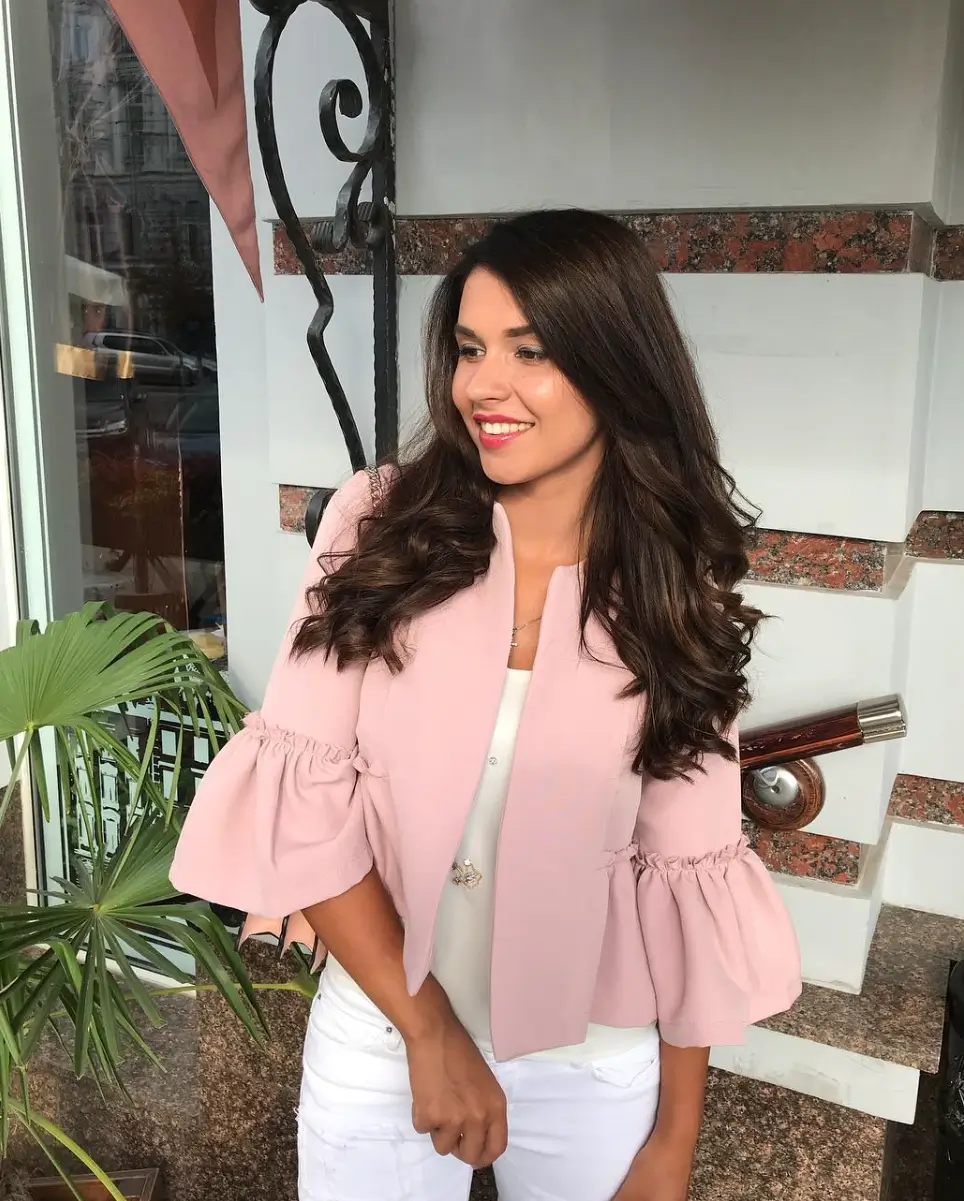
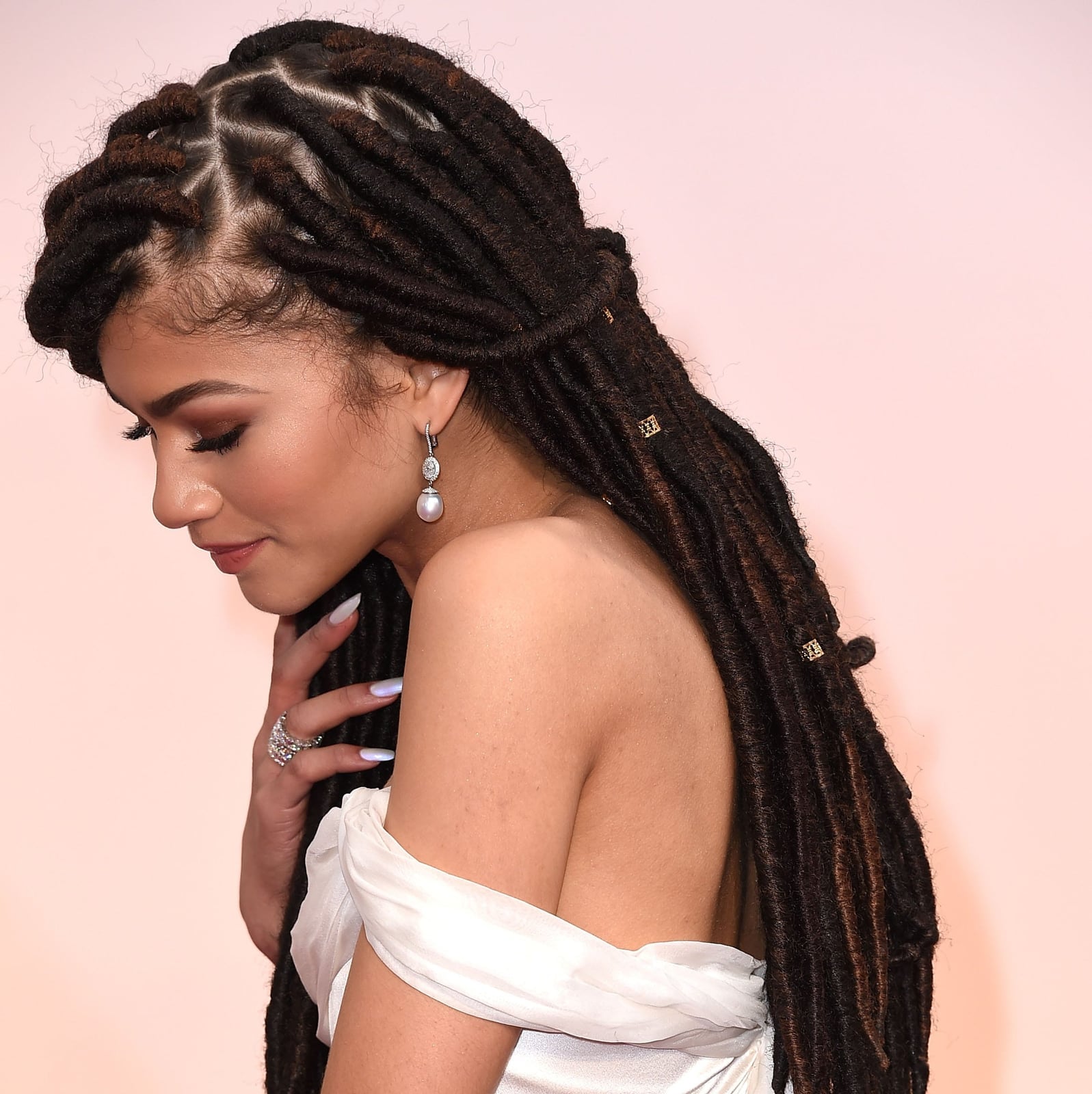
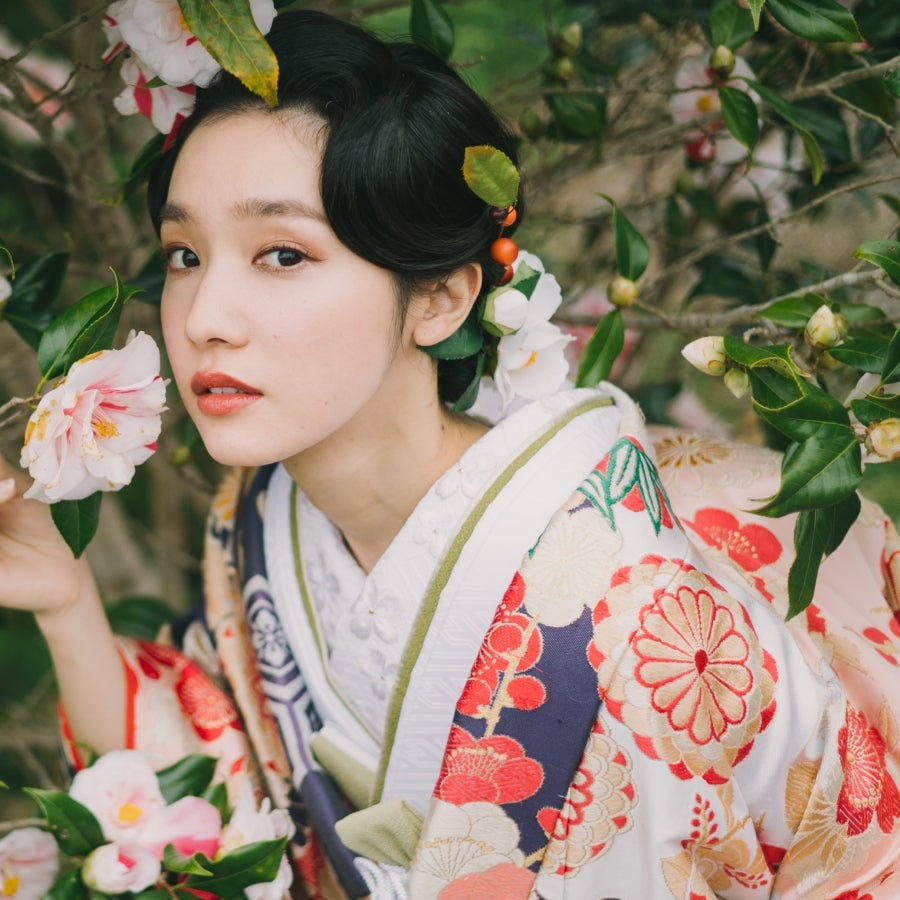
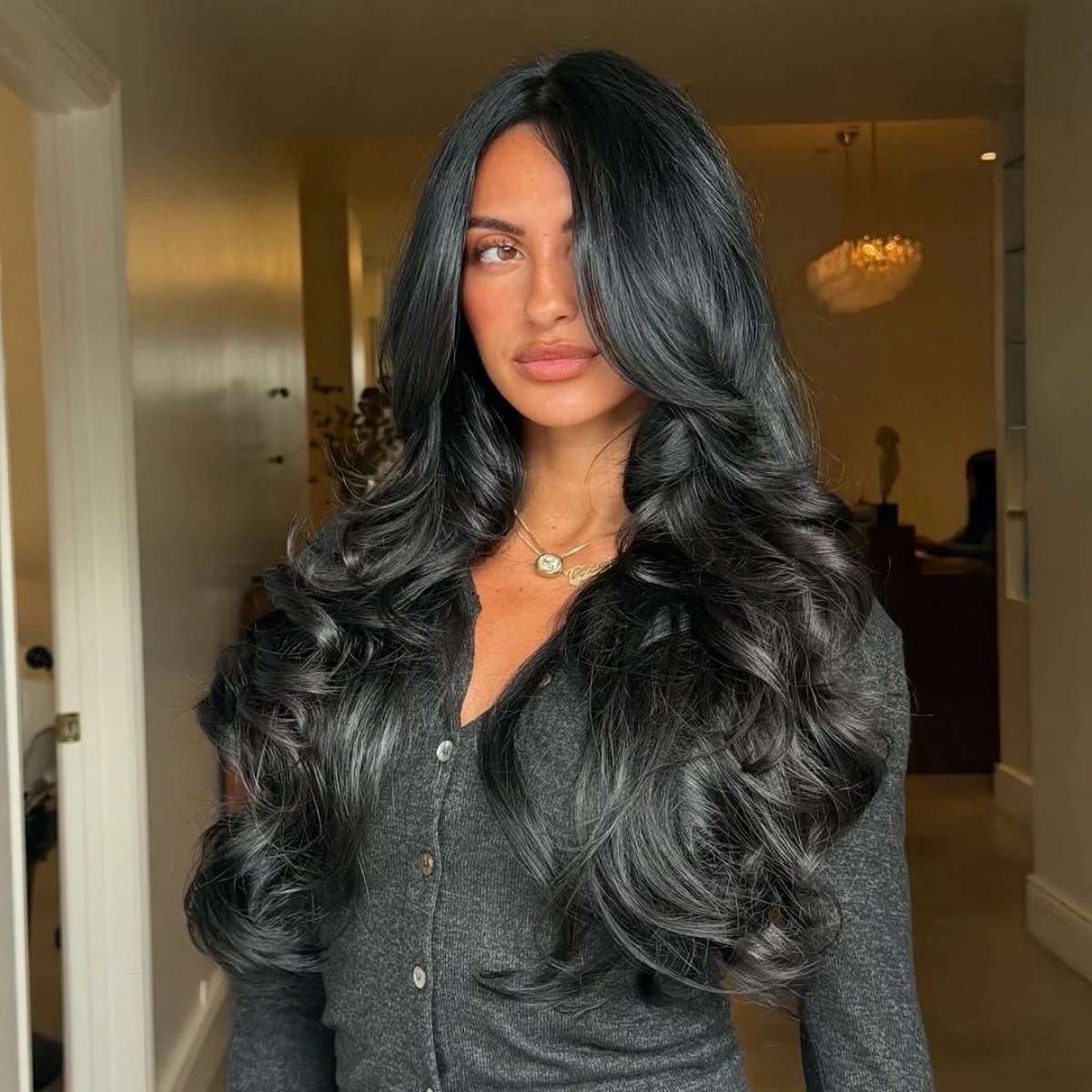
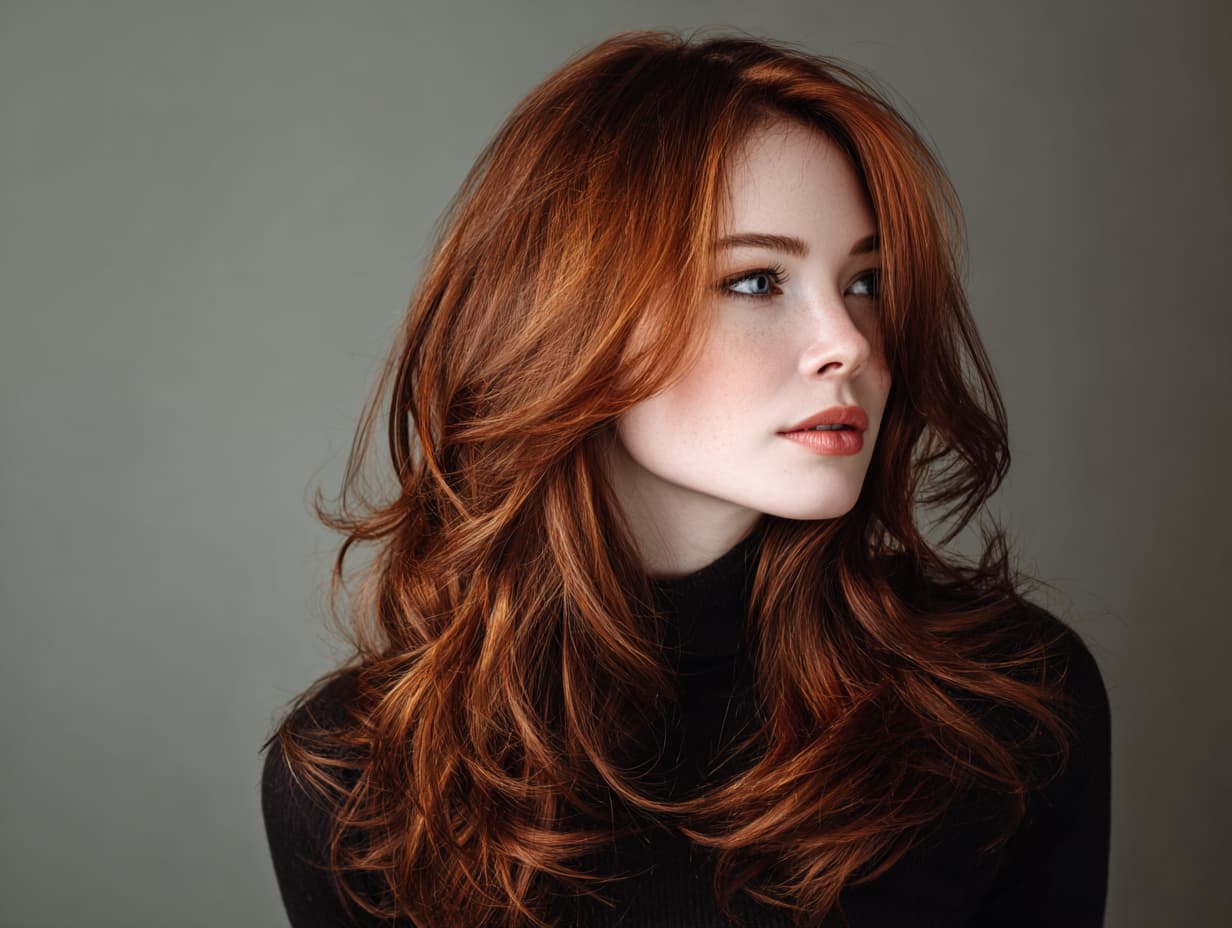
Curly hair in 2027 is about working with your texture, not against it, from structured bobs to loose, air-dried lengths. The shift is toward soft, face-framing layers and lived-in color that let the curl pattern do the talking, with curtain bangs making a strong case for a fringe that actually behaves.
These 23 Trendy Curly Hair Hairstyles cover the spectrum from low-maintenance air-dried looks to polished blowouts, for every face shape and hair density. Whether your curls are fine and fall flat by noon or thick and need taming, there’s a style here that solves the struggle and celebrates the volume.
Voluminous Chin Bob With Ash Blonde Highlights
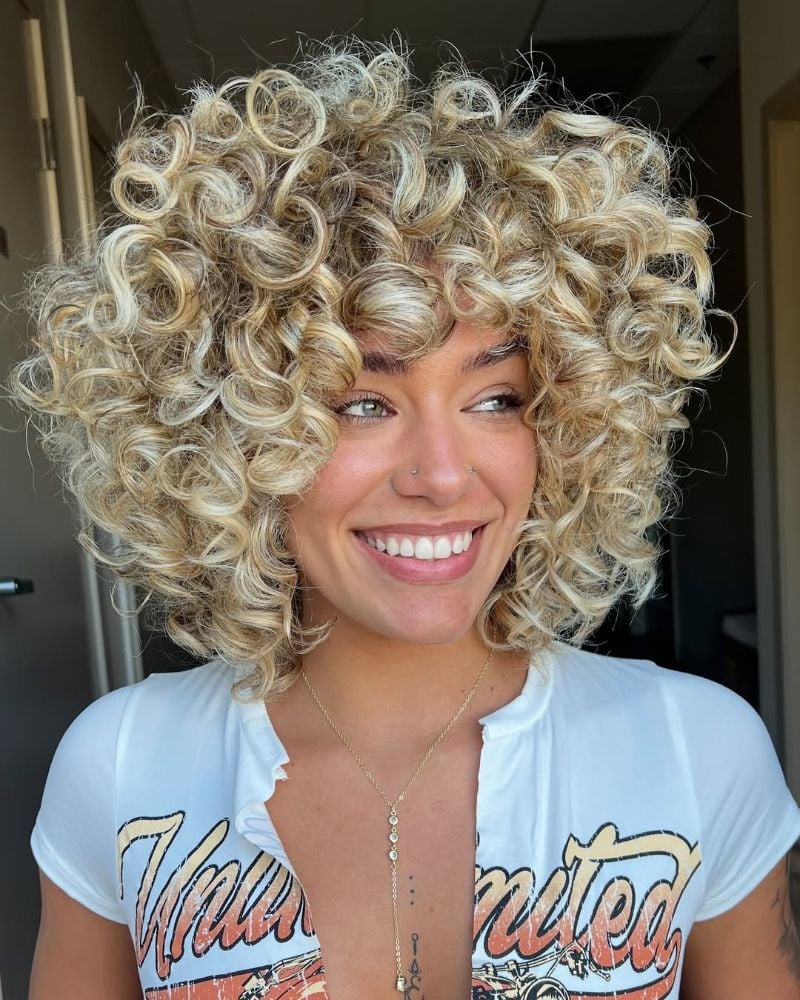
The magic of this chin-length bob is that the volume does the talking, and the tight curls give it a full, rounded shape that feels deliberate, not accidental. Thick, curly hair starting at chin length is the ideal candidate, and the middle part keeps the weight balanced so the shape holds its line. Ask your stylist for: chin-length bob with short curly bangs, ash blonde highlights. Air dry with a curl-defining product to keep the texture glossy, and plan on a trim every six to eight weeks to stop the bob from rounding out into a triangle.
Short Ash Blonde Pixie With Textured Curls
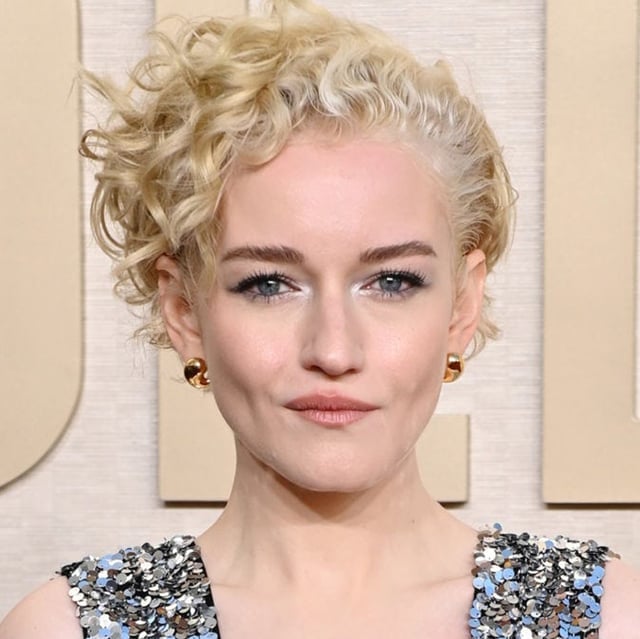
If a chin bob feels like too much commitment, this short pixie is the close relative that gets you there faster. Fine, curly hair starting at ear length suits the air-dried texture best, though the side parting is doing more work than it looks. Ask your stylist for: short pixie cut with short textured bangs, ash blonde. Upkeep requires a light styling cream to hold fine curls and a trim every four to six weeks to keep the silhouette sharp.
Chin Bob With Honey Blonde Curls
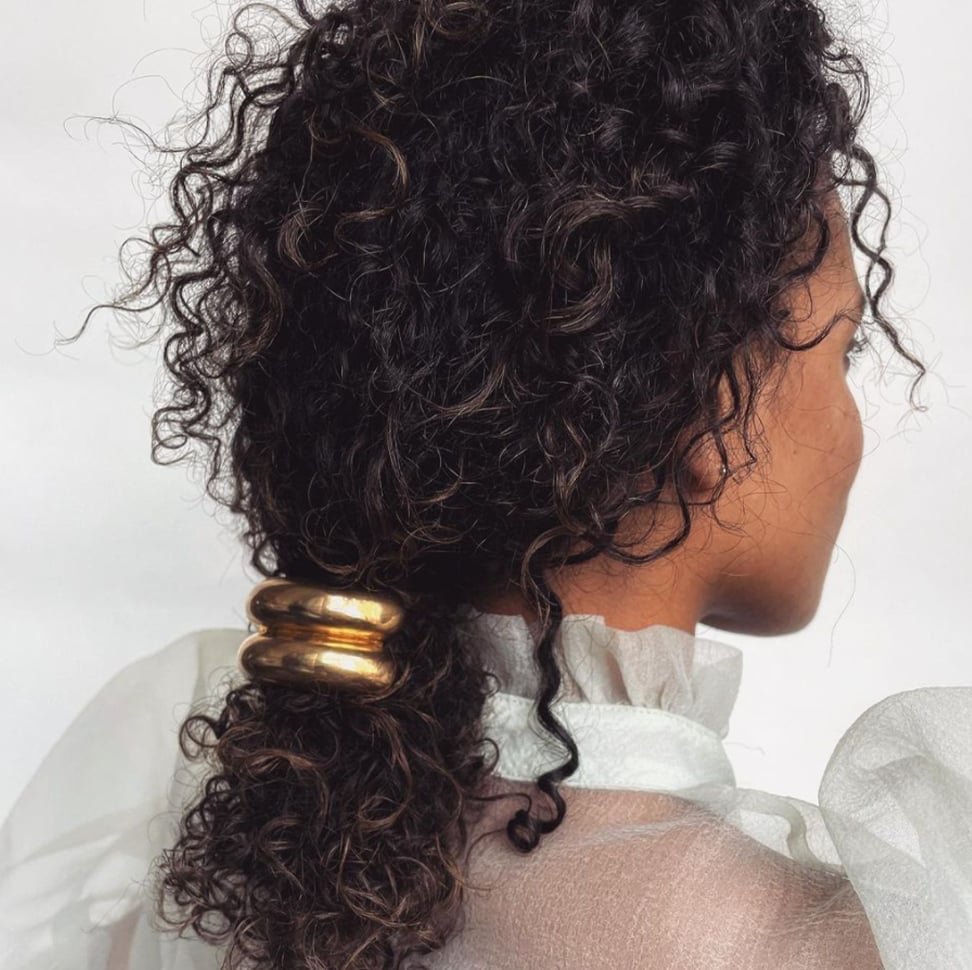
Defined curls start with a chin-length bob, and honey blonde highlights add dimension without stiffness. Thick, curly hair at chin length pairs well with a middle part and curly bangs, keeping volume intact. Ask your stylist for: chin-length bob with curly bangs, honey blonde highlights. Use a diffuser on low heat to set the curl pattern, and keep the shape honest with a trim every six to eight weeks.
Layered Gray Bob With Defined Curls
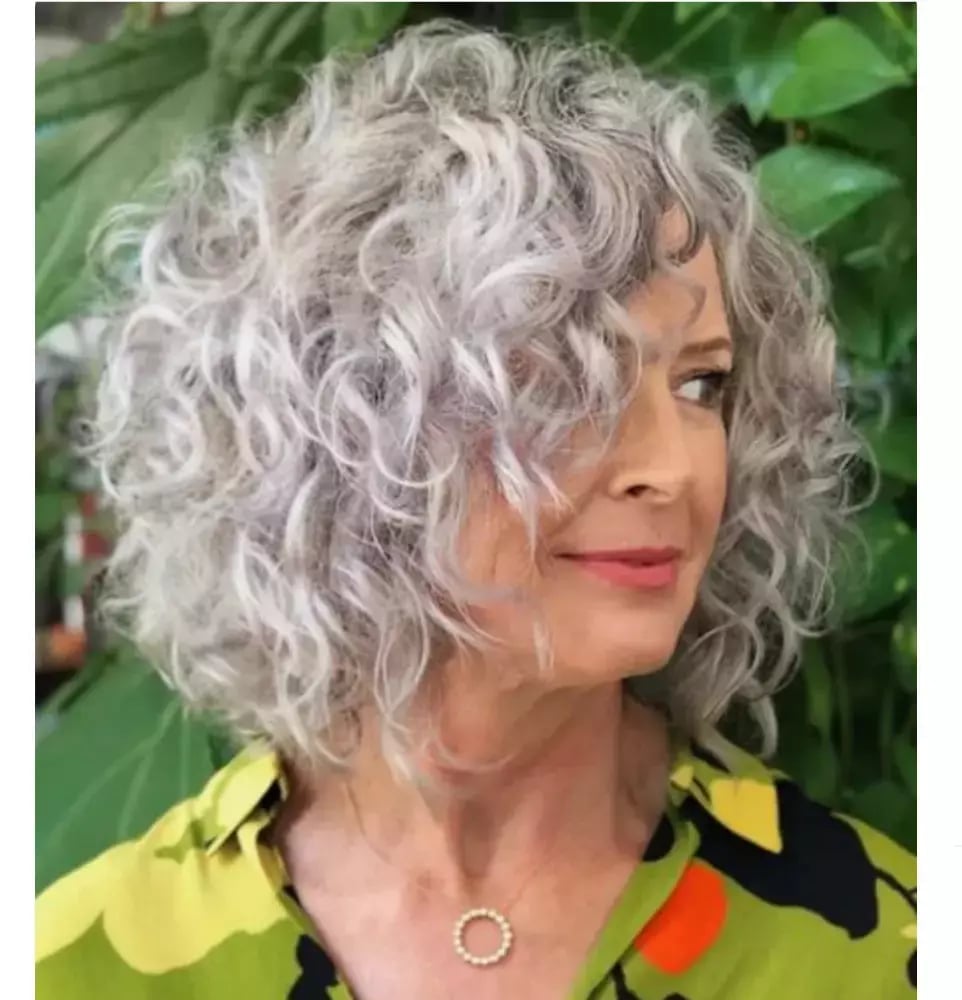
Gray hair in a layered bob has a certain no-nonsense charm, especially when the curls are dense and well-defined. The collarbone length keeps the weight manageable, and the middle part lets the air-dried texture fall naturally. Thick, curly hair starting at collarbone length is the right match, and the layers stop the bob from sitting like a helmet.
Ask your stylist for: collarbone length layered bob, gray color. A leave-in conditioner on damp hair keeps the curls from frizzing as they dry, and a trim every six to eight weeks maintains the shape. The gray needs no toning, but it will announce itself loudly if you skip the moisture.
Collarbone Layers With Curtain Fringe

A curtain fringe on curly hair is a delicate engineering problem: too heavy and it flattens the roots, too wispy and it disappears into the cut. This collarbone length version gets it right with layers that start at the jaw and a fringe that grazes the cheekbones. Thick, curly hair starting at collarbone length is the ideal base, and the brown base with subtle highlights adds depth.
Ask your stylist for: collarbone length layers with curtain fringe, brown with subtle highlights. The fringe needs a smoothing serum to stay defined, and the layers demand a trim every eight to ten weeks to keep the shape from growing out into a shapeless mass.
Collarbone Layers With Face-Framing Bangs
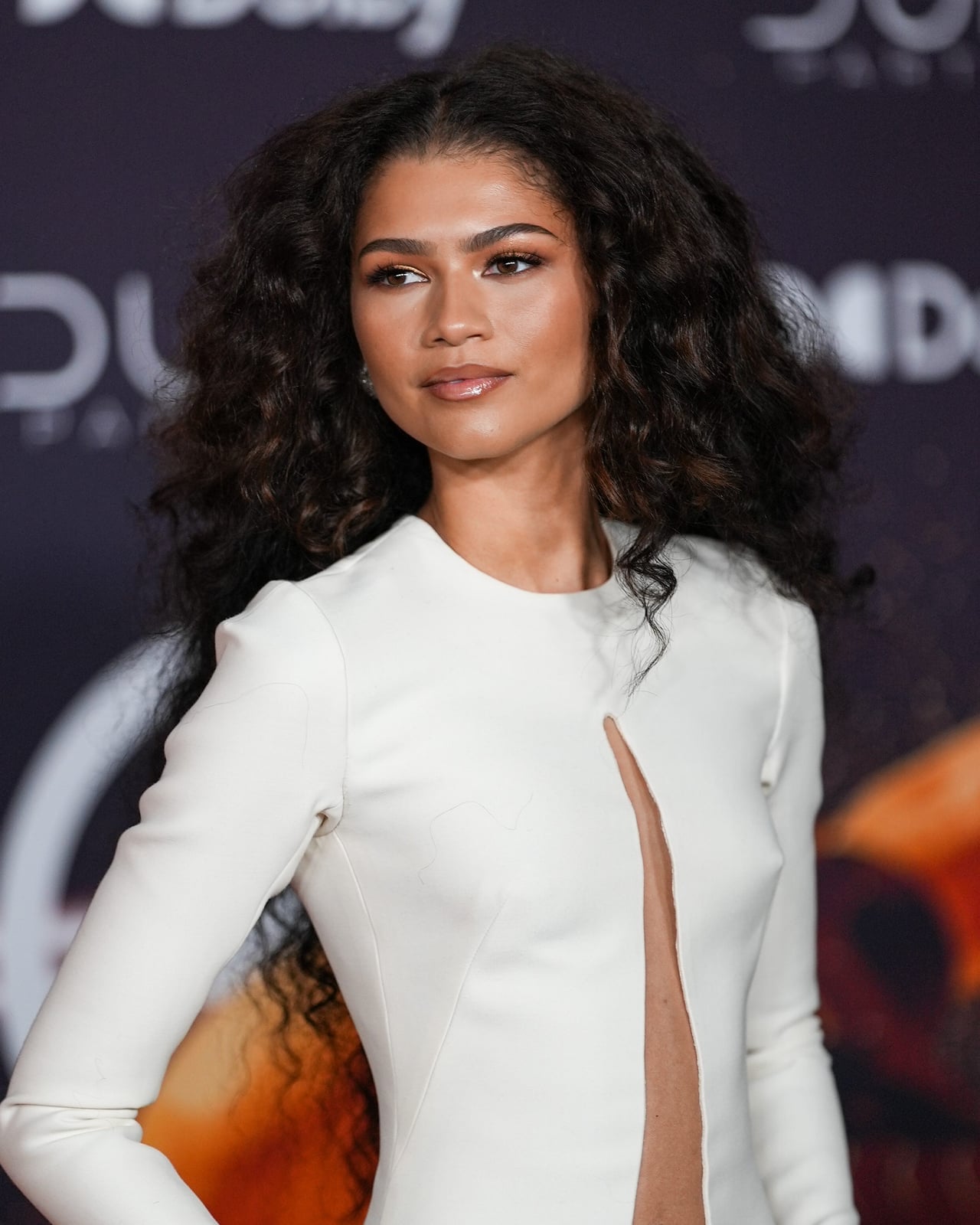
Wondering if curtain bangs actually work on thick, curly hair? They do, provided the layers start around the collarbone so the face-framing pieces have enough weight to swing rather than spring. On a square or angular face, these bangs soften the jawline; on a round face, the length below the chin works to elongate. Ask your stylist for: collarbone length layers with curtain bangs, dark brown with subtle highlights. The subtle highlights give the curls dimension without a heavy grow-out line. Style the fringe with a light styling cream, then let the rest air dry. Expect a trim every eight to ten weeks to keep the curtain shape defined.
Collarbone Layers With Curly Bangs
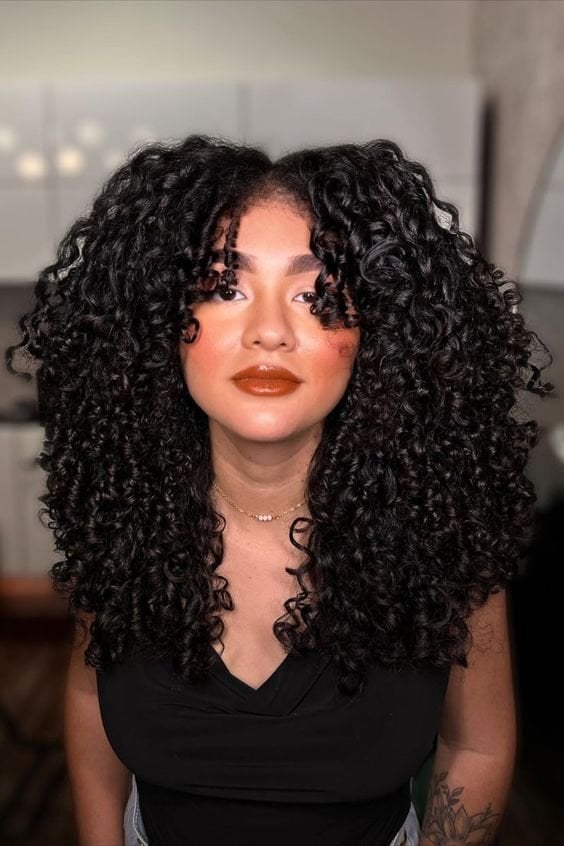
Curly bangs are not curtain bangs. They sit shorter, spring forward, and they change the whole character of a collarbone-length cut. Where curtain bangs frame the face, curly bangs become the focal point, and on thick, defined curls they read as playful. This version is air dried, so the layers are cut to encourage each curl to hold its shape. Ask your stylist for: collarbone length layers with curly bangs, dark base with subtle highlights. Scrunch a curl-defining product into damp hair and leave it alone. This style requires minimal effort but still looks deliberate. Trim every eight to ten weeks, because curly bangs grow out fast and start to droop.
Collarbone Layers With Curtain Bangs Blowout
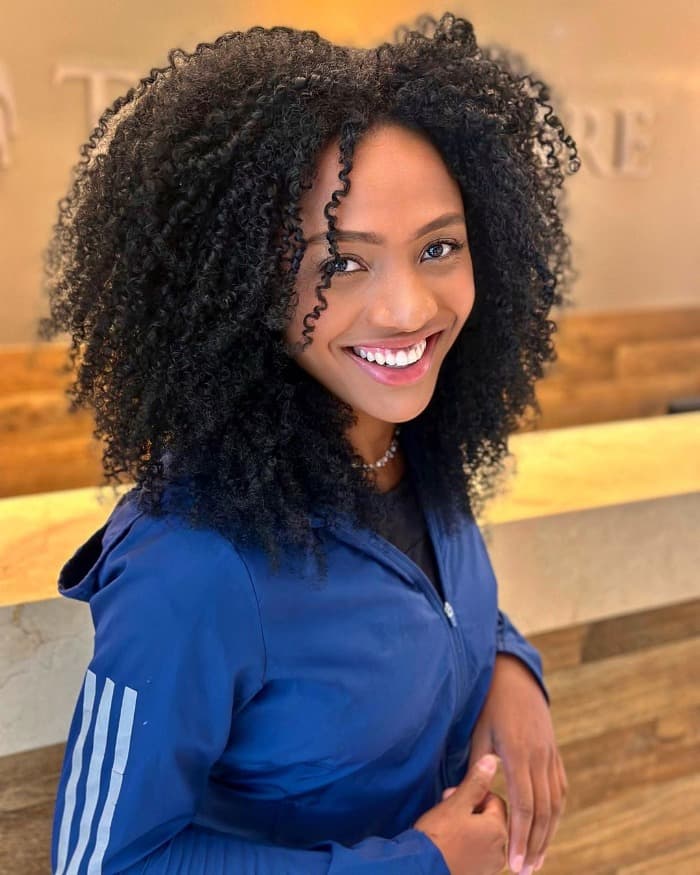
A blowout on thick, curly hair is a different animal than on straight hair. The goal here is volume at the root and definition through the mid-lengths, with the curtain bangs smoothed into a soft curve around the face. The black base with subtle lighter strands keeps the color from going flat under all that shape. Ask your stylist for: collarbone length layers with curtain bangs, black with subtle highlights, blowout style. The technique is straightforward: a round brush lifts the roots as you dry, then the bangs are rolled toward the face. The hold lasts a good day, maybe two if you sleep on a silk pillowcase. This is a salon finish, not a quick home job, so budget an hour in the chair and a trim every eight to ten weeks.
Shoulder Length Layers With Defined Curls
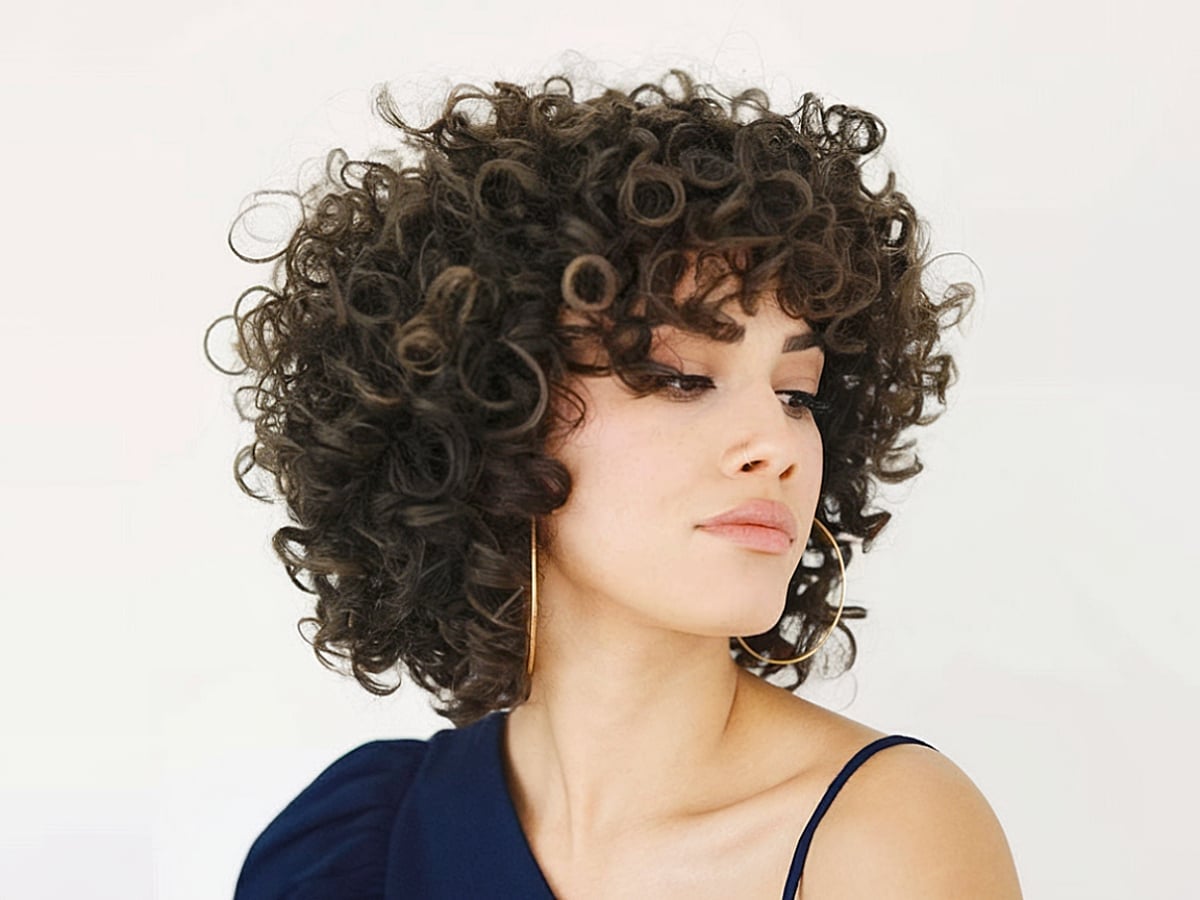
Defined curls at shoulder length wear differently than they do at collarbone. The extra inch gives each curl more room to bounce, but it also means more hair to dry and shape. On medium-density hair, the blowout holds the definition without weighing it down, and the curtain bangs frame most faces without needing constant fiddling. Ask your stylist for: shoulder-length layers with curtain bangs, dark brown, blowout. Heat protectant before you dry is non-negotiable, then use a diffuser to set the curls. The style holds through a workday, but expect to refresh the bangs with a quick blast of heat the next morning. Trims land every six to eight weeks to keep the shoulder line clean.
Collarbone Dark Brown Curls Air Dried
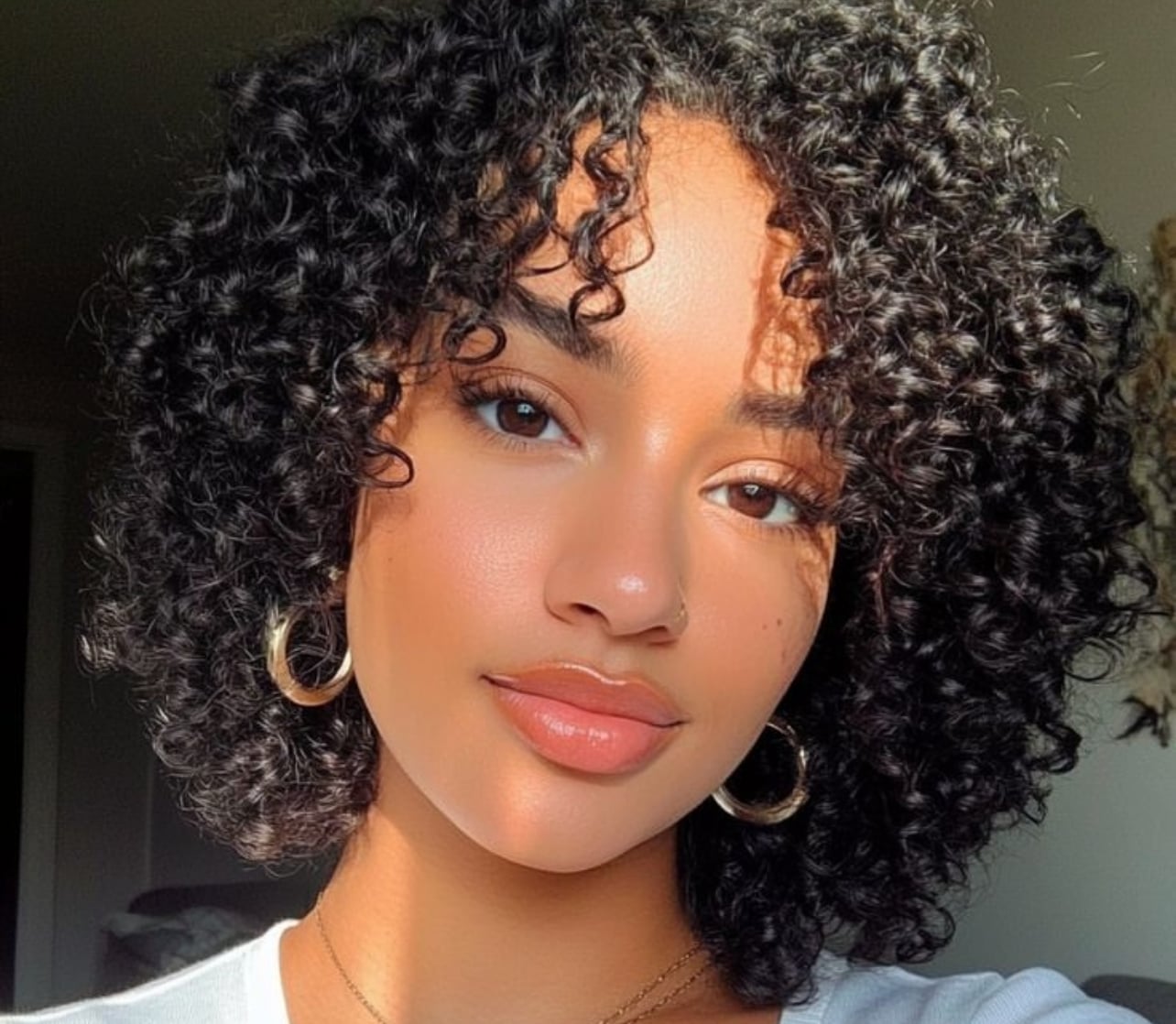
Can you get defined curls without any heat? On thick, dense hair, yes, if you work with the curl pattern instead of against it. This collarbone-length cut is layered to let the curls stack naturally, and the dark brown base keeps the texture looking rich and glossy. Ask your stylist for: collarbone length natural curly style, dark brown. At home, apply a curl cream to soaking wet hair, scrunch from the ends up, then air dry. The trade-off is time: air drying takes a few hours, but the result holds all day without a touch-up. Skip the diffuser and you skip the frizz, as long as you don’t touch the hair while it dries. A trim every eight to ten weeks keeps the layers from getting heavy.
High Volume Collarbone Updo
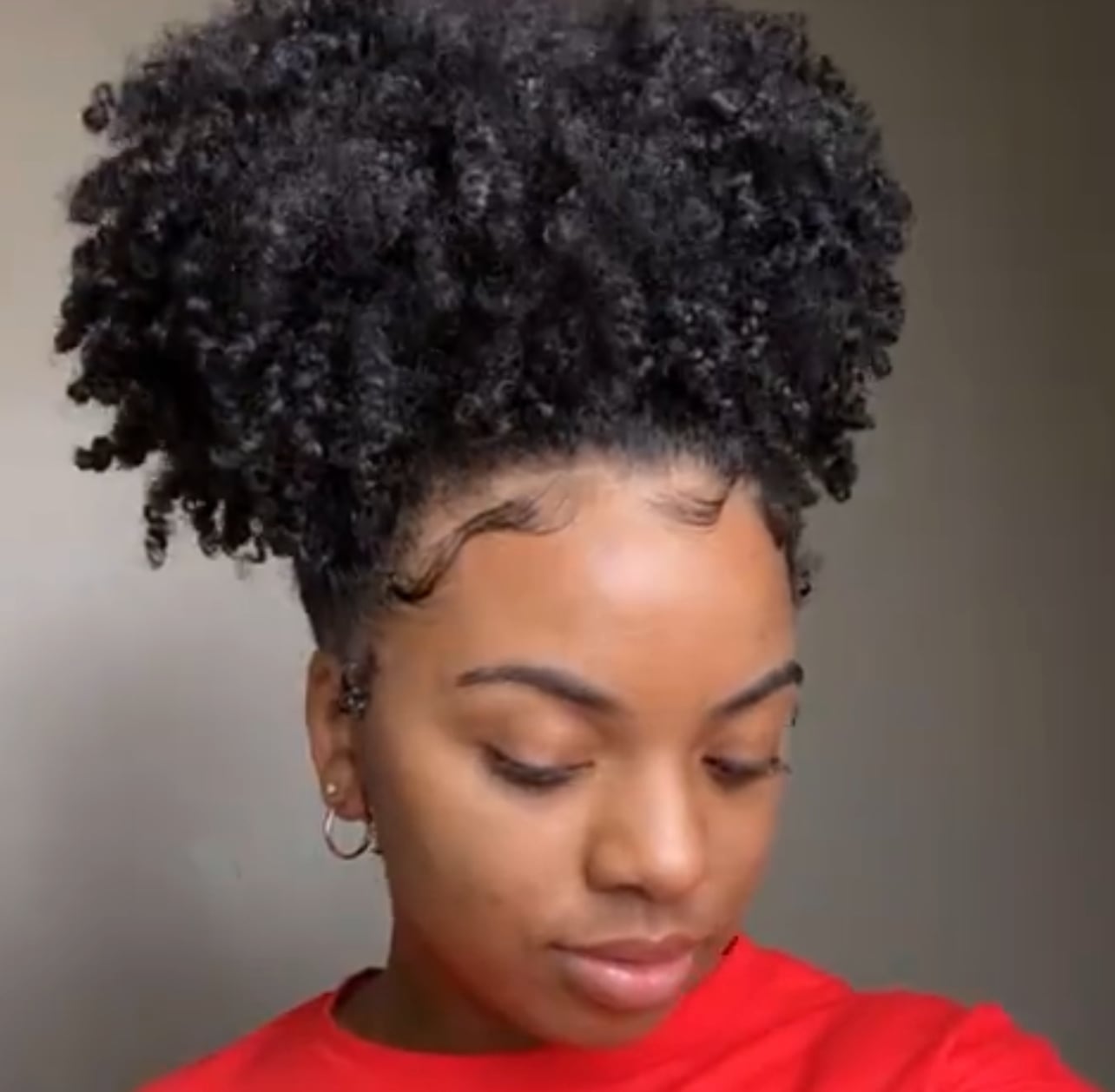
Before you dismiss the high updo as a style reserved for weddings and someone else’s patience, consider this: a collarbone length, dark brown curly updo with a middle part can be a regular evening option when your curls have other plans. The volume comes from the density of thick, curly texture, so you are working with the hair rather than wrestling it into submission. It suits most face shapes, and the collarbone starting length gives you enough weight to pin without everything sliding loose.
Ask your stylist for: collarbone length high volume updo, dark brown. The honest trade-off is time: thick, curly hair needs sections pinned one by one to hold that height, and the shape stays put only with enough pins and a flexible hairspray. It is not a five-minute twist, but it holds through an evening without constant checking. Take the accessory out before you sleep, or you will find it tangled by morning.
Collarbone Blowout With Caramel Highlights
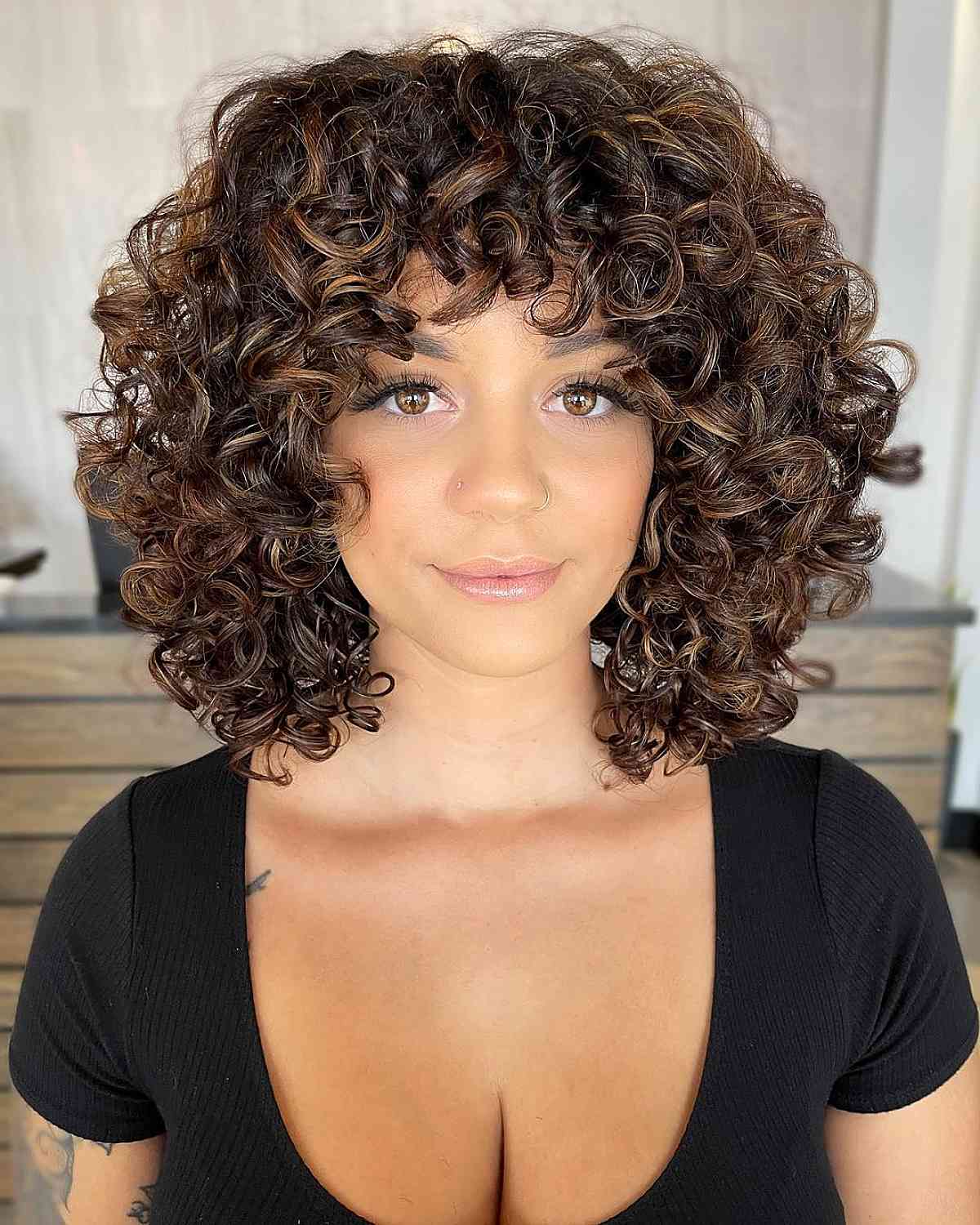
How do you ask for that bouncy, defined blowout without leaving the salon with something heavier than you pictured? Start with the placement: caramel highlights woven through a dark brown base, kept a shade lighter than you think you want so they read as depth, not stripes. The collarbone length layers give the blowout its movement, and full bangs frame the face while keeping the volume concentrated up top. Ask your stylist for: collarbone length layered cut with full bangs, caramel highlights, blowout. Thick, curly hair responds best to a diffuser on medium heat, which sets the curl without flattening the root. A trim every eight to ten weeks keeps the bangs from turning into a curtain you did not order.
Shoulder Wavy Curls With Blonde Highlights
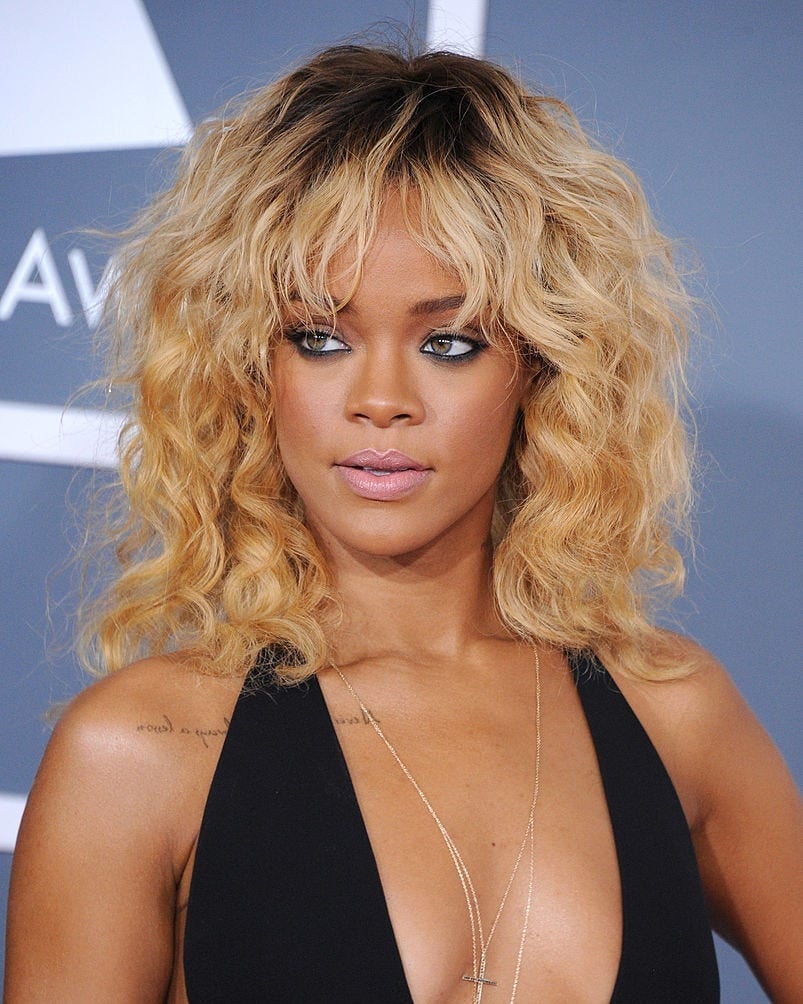
The design here is all about where the layers fall, not how many there are. Face-framing layers on shoulder-length, wavy curly hair with blonde highlights on dark roots work because the shortest pieces sit at the cheekbone, pulling the eye outward and softening angular faces. Curtain bangs blend into those layers, so the part never looks harsh. Ask your stylist for: shoulder length layers with curtain bangs, blonde highlights on dark roots, soft blowout. A root lift before drying gives the volume, then a soft blowout sets the wave without making it crunchy. This cut needs a trim every six to eight weeks, or the face-framing pieces grow past their intended line and the whole shape goes limp.
Collarbone Wavy Hair Side Part Blowout
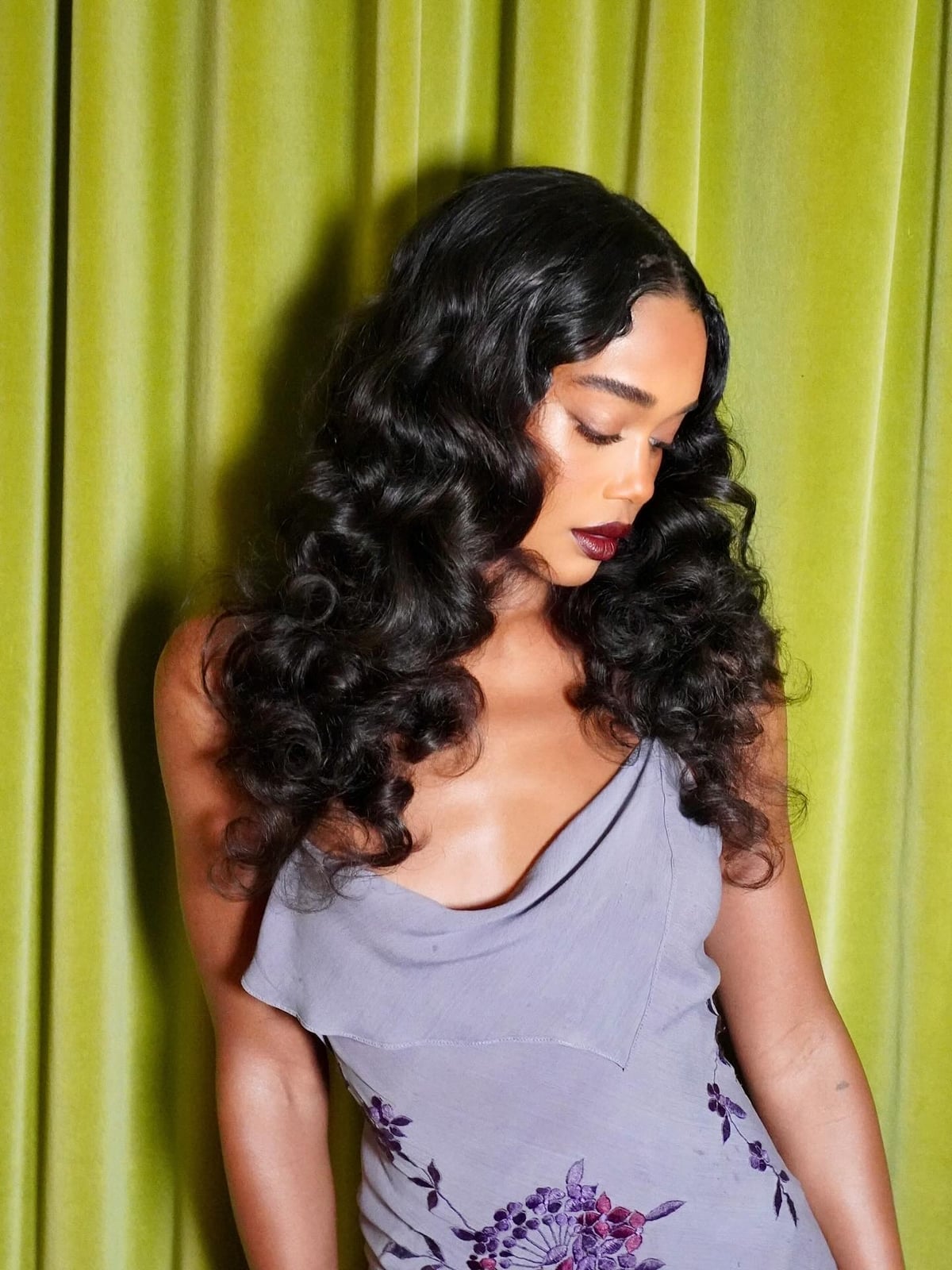
A side part on thick, wavy hair is not a styling afterthought, it is the volume strategy. With the parting set off-center on a dark brown, collarbone length blowout, the roots lift on the shorter side and the waves fall in a soft, glossy curtain that holds its shape through a workday. The blowout on thick, wavy texture lasts longer than on fine hair, usually a couple of days if you protect it at night. Ask your stylist for: collarbone length layers, side part, dark brown, blowout. A large round brush is the tool for the smooth, voluminous finish, pulling the waves taut as you dry. Budget a trim every eight to ten weeks, because collarbone length is unforgiving once the ends start to split.
Mid-Back Updo With Loose Curls
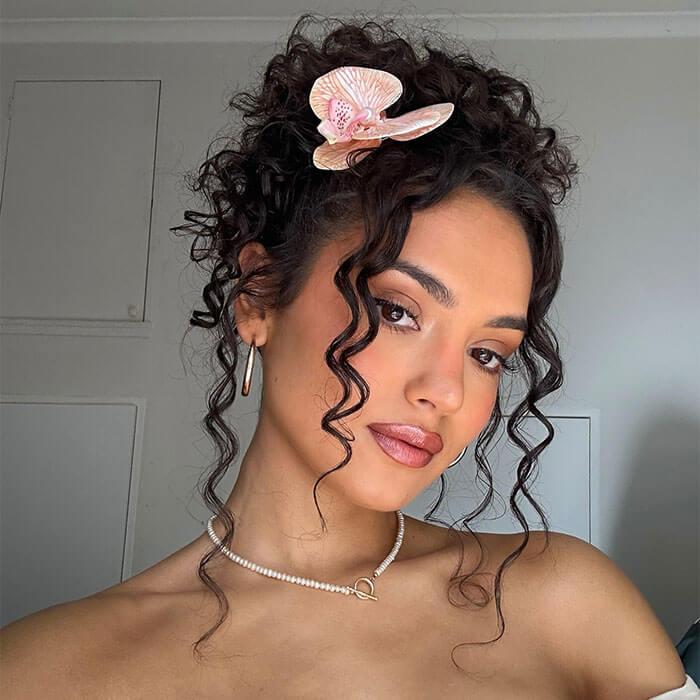
The decorative accessory on top is the clue that this is not a casual updo; it is the style for an event where the hair has to behave for hours. A mid-back length, dark brown curly updo with loose curls cascading around the face looks formal, but the curtain bangs and side part keep it from feeling pinned into submission. The loose tendrils are the point, so leave them out instead of tucking everything away. Ask your stylist for: mid-back updo with loose curls, curtain bangs, side part. Thick, curly hair holds an updo well, and bobby pins secured at the base of each twist keep the shape intact through dinner and dancing. This is a salon style, not a five-minute home twist, so plan the time.
Mid-Back Copper Red Layers Blowout
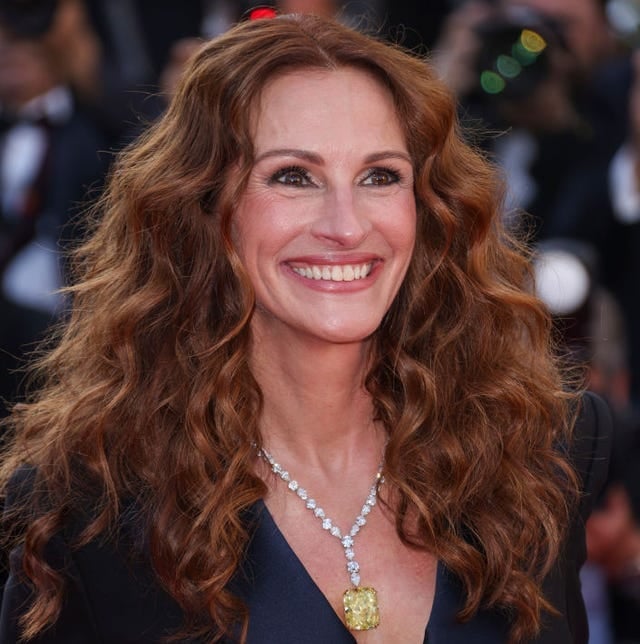
The blowout is the real workhorse here: it smooths the cuticle, which makes copper red look polished and almost glossy instead of brassy. Ask your stylist for mid-back length long layers, copper red, blowout. Thick, wavy hair starting at mid-back length takes the layers well, since the movement keeps the weight from pulling the curl out. A large barrel curling iron after the blow-dryer gives each wave a uniform bend, and the color stays vibrant and flat. A trim every eight to ten weeks keeps the ends from thinning, which matters when the shade is this saturated.
Mid-Back Dark Brown Layers Air Dried
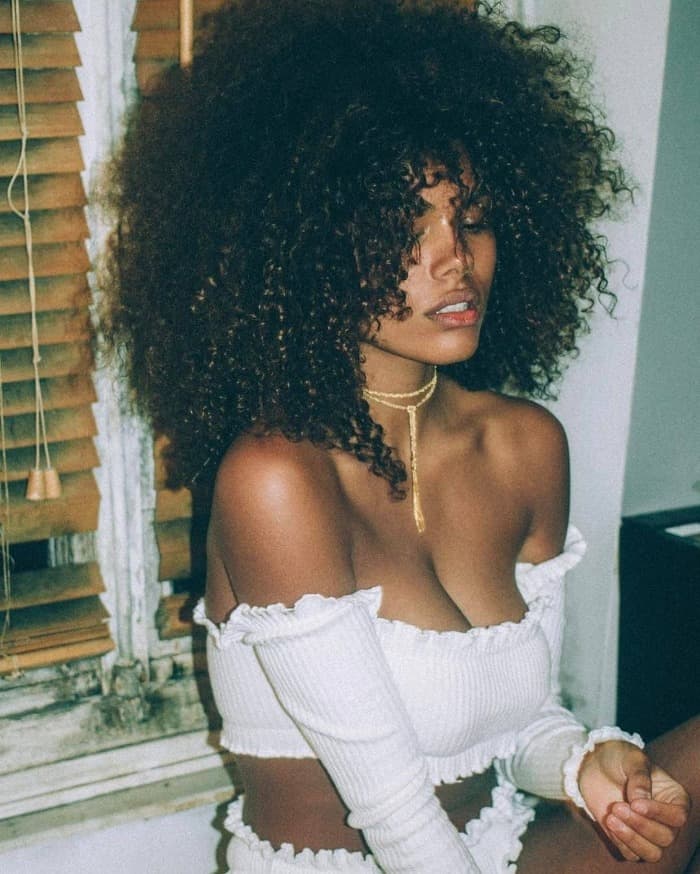
Is there a way to get volume without reaching for a heat tool every morning? This air-dried style comes close, provided your hair is thick and curly to begin with. Ask your stylist for mid-back length soft layers, dark brown with highlights, air dried. The layers give the curls room to spring up, and the highlights add dimension so the density doesn’t read as a single heavy block. A curl-enhancing mousse applied to damp hair before you let it dry sets the pattern, and a trim every eight to ten weeks keeps the shape from growing shaggy. It’s a low-fuss routine that rewards the hair you already have.
Mid-Back Gray Curls Air Dried
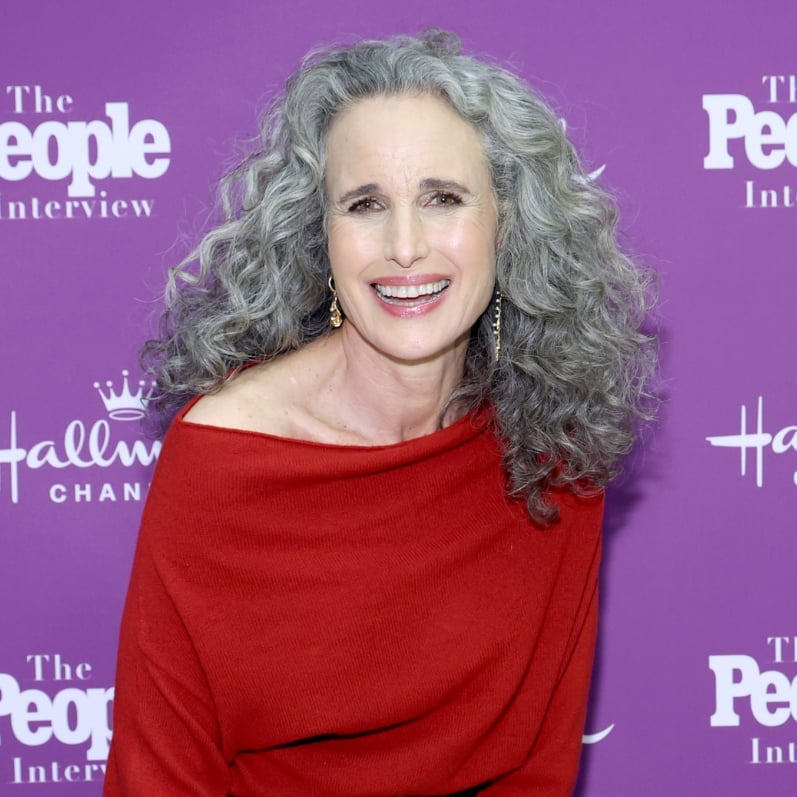
Gray curls air-dry into a shape that needs almost no intervention, which is the point of this style. Ask your stylist for mid-back length natural gray curls, air dried, side part. The side parting lifts the hair off the face, and the natural volume does the rest. For a DIY approach, detangle with a wide-tooth comb while the hair is still wet, then leave it alone; no diffuser required. Air drying takes longer than a blowout, but the result holds its shape for a full day. A trim every eight to ten weeks keeps the ends from splitting, and you can skip the salon between cuts.
Mid-Back Dark Brown Defined Curls
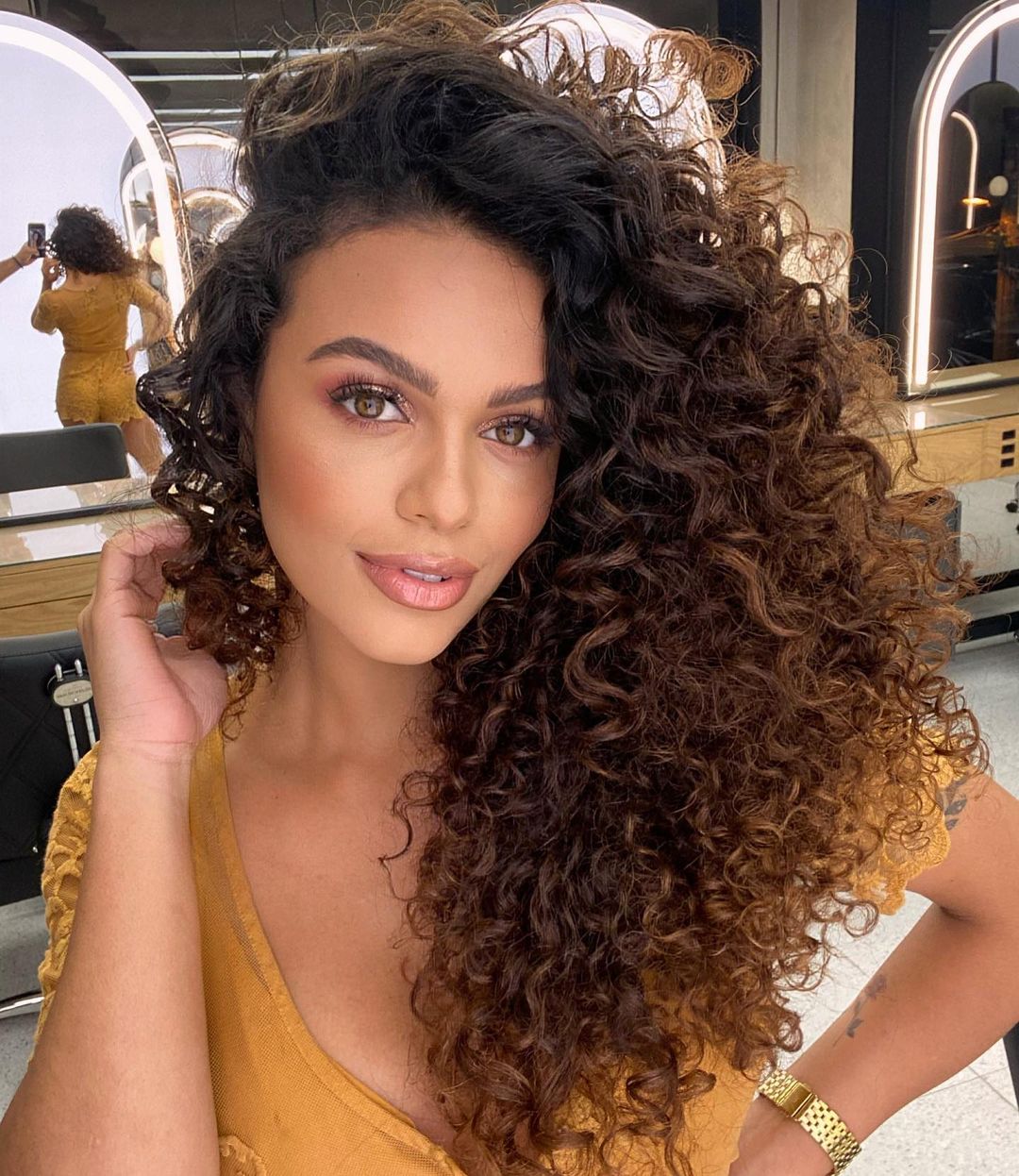
Defined curls on dark brown hair hold their shape well, which makes them a practical everyday choice. Ask your stylist for mid-back length defined curly hair, dark brown, natural style. The middle parting keeps the face open, and the definition comes from the curl pattern itself, not from styling products that stiffen. A curl serum applied to damp hair boosts shine and keeps the coils from frizzing as they dry. The style wears well through the day, holding its shape without constant touch-ups. A trim every eight to ten weeks maintains the shape, and the dark brown color means you won’t see root growth for a while.
Mid-Back Dark Brown Soft Layers Air Dried, Close-Up Take
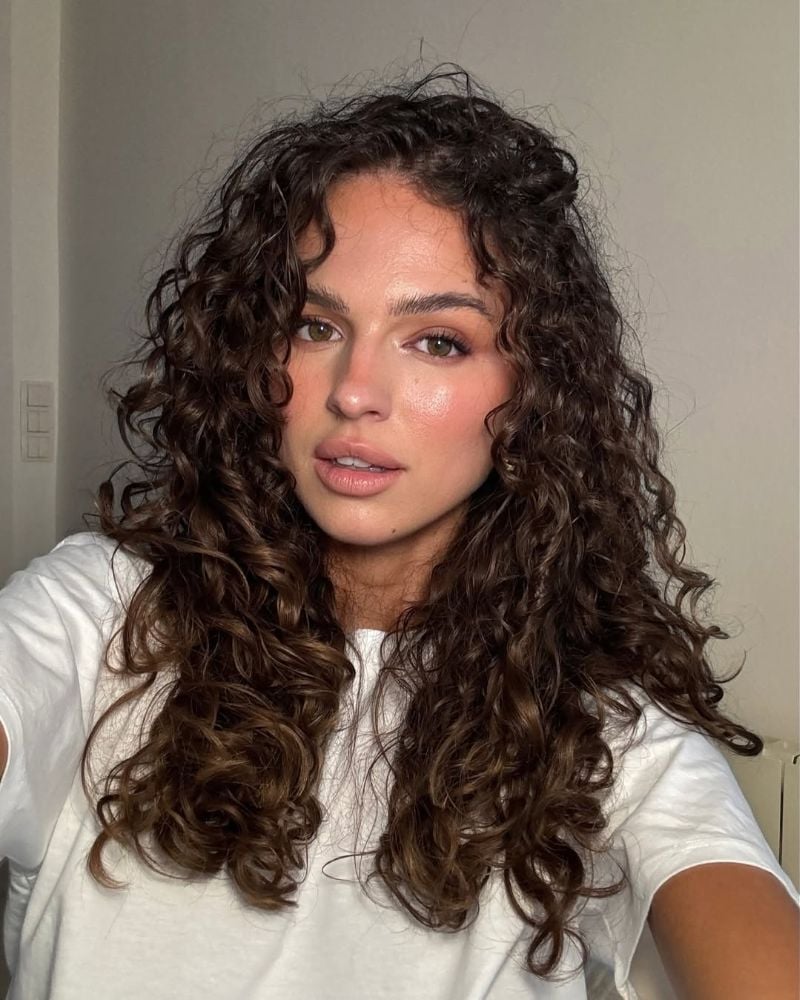
Soft layers on medium-density curly hair can be a gamble: too little and the hair falls flat, too much and it poofs. This version splits the difference with air drying. Ask your stylist for mid-back length soft layers, dark brown, air dried. The layers give the curls a gentle shape without removing the weight that keeps them from expanding into a triangle. A light hold spray sets the style without stiffness, so the hair moves naturally. The honest drawback is that medium-density curls don’t hold a defined pattern as long as thicker hair, so expect some loosening by the end of the day. A trim every eight to ten weeks keeps the layers from growing out unevenly.
Mid-Back Black Curly Hair Voluminous Style
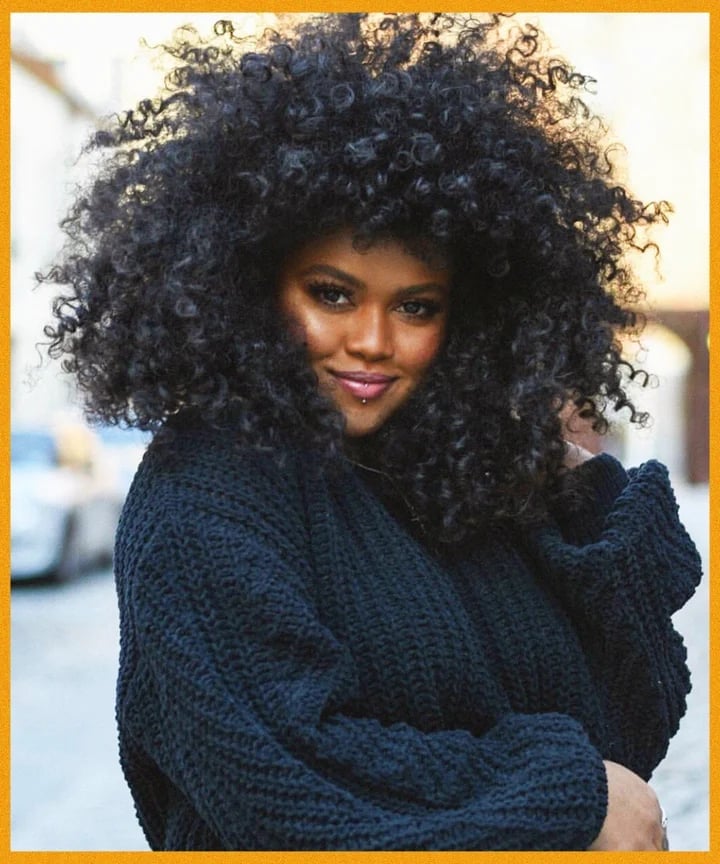
For curls this dense, volume is a cutting problem before it is a styling one. The mid-back length keeps enough weight to pull the curl pattern downward, while internal layers release the bulk so the top half does not sit flat against the scalp. A middle part splits the mass evenly, and the air-dried finish lets each coil snap back to its natural shape without heat forcing it into submission.
This works best on thick, dense curly hair that already reaches mid-back, since fine textures will not hold that much height. Ask your stylist for mid-back length voluminous curly hair, black. Apply a volumizing mousse to the roots before air drying, then leave the rest alone; a trim every eight to ten weeks keeps the layers from growing into a heavy triangle.
Mid-Back Lavender Curly Hair Blowout
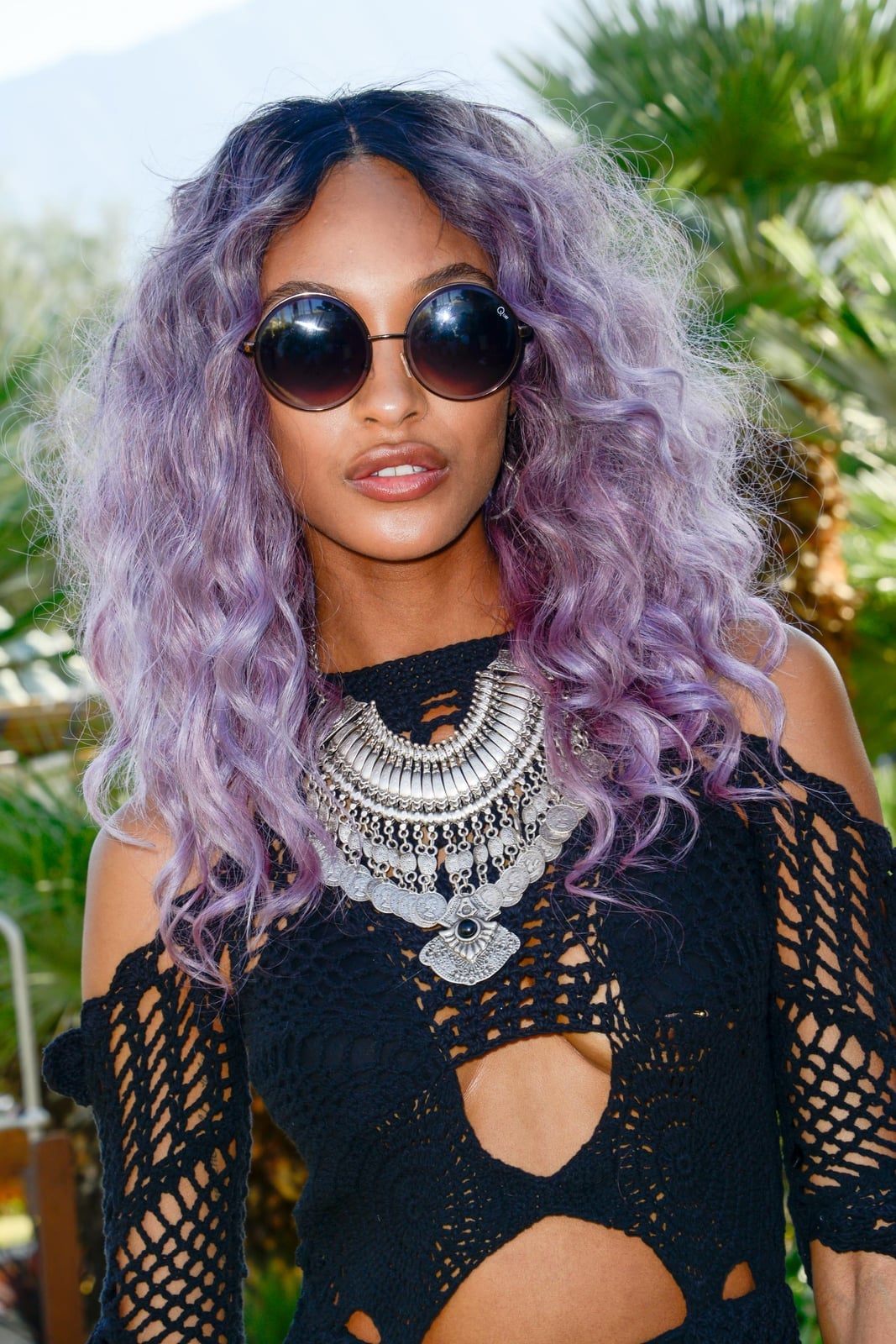
Wondering how to get that lavender to look lived-in? The trick is in the highlights. Ask your colorist for mid-back length lavender hair with highlights, and a blowout to smooth the curl into soft waves. The lighter pieces break up the solid pastel so it does not look like a single flat wash of color. A middle part lets the shade frame both sides evenly, and the blowout stretches the curl just enough to show off the tonal variation. This needs thick, curly hair at mid-back length to carry the weight of the color work, and it demands salon upkeep: the lavender will fade fast, so plan on a toning appointment every four to six weeks to keep the shade from turning muddy. Bring a reference photo of the exact lavender you want, because the range between lilac and periwinkle is wide.
Short Pixie Cut With Dense Curls
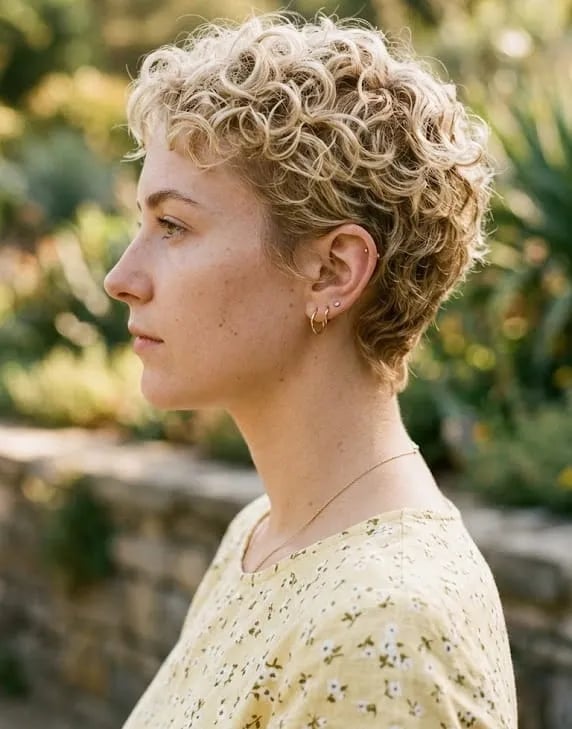
Defined curls on a pixie are easier to achieve than on longer hair, because there is simply less length to weigh them down. The ear-length cut with a middle part lets each tight coil spring up on its own, no diffuser gymnastics required. This suits dense, curly hair and most face shapes, since the short sides balance a rounder jaw and the top volume lengthens a wider face. Ask your stylist for short pixie cut with dense curls, light blonde. A styling paste worked through damp hair defines the curls and adds texture, and it air-dries in under an hour. The trade-off is maintenance: a pixie needs a trim every four to six weeks to hold its shape, but the daily styling time drops to nearly zero.
Final Thoughts
For fine curly hair, prioritize layered cuts that encourage volume and shape without weighing down strands. For thick curly hair, focus on styles that manage density while highlighting the curl pattern.
- Trim every 6-10 weeks to maintain shape and prevent split ends.
- Deep condition weekly to keep curls hydrated and defined.
- Use a microfiber towel or t-shirt to gently dry hair, minimizing frizz.
- Apply curl-defining cream or gel to damp hair and air dry or diffuse for best results.
Embrace the beautiful complexity of your curls.