Curly hair is a canvas, not a problem to solve. The shift is toward cuts that work with your natural texture rather than fighting it, think soft, face-framing layers, lived-in color, and a glossy finish that reads as healthy, not crunchy.
This collection of 32 ideas spans short bobs to mid-back lengths, with bangs and layers throughout. It is for anyone tired of a fringe that won’t sit, fine curls that fall flat, or a grow-out line that shows too soon. Each look pairs a cut with the right Trendy Curly Hair Products to keep definition without the crunch.
Short Curly Bob With Curly Fringe

Can a curly fringe actually work without turning into a helmet? Yes, when the cut is a short curly bob ending at the ear and the fringe is cut to match your curl pattern, not fight it. The middle parting and defined, voluminous curls give thick hair a full, rounded shape that reads as playful rather than heavy. Ask your stylist for: short curly bob, ear length, with curly fringe. This suits thick curly hair starting at chin length or longer, and it works well on oval and square face shapes. A curl-defining cream and air drying or diffusing keeps the volume where it belongs.
Dark Brown Curly Bob With Face-Framing Layers
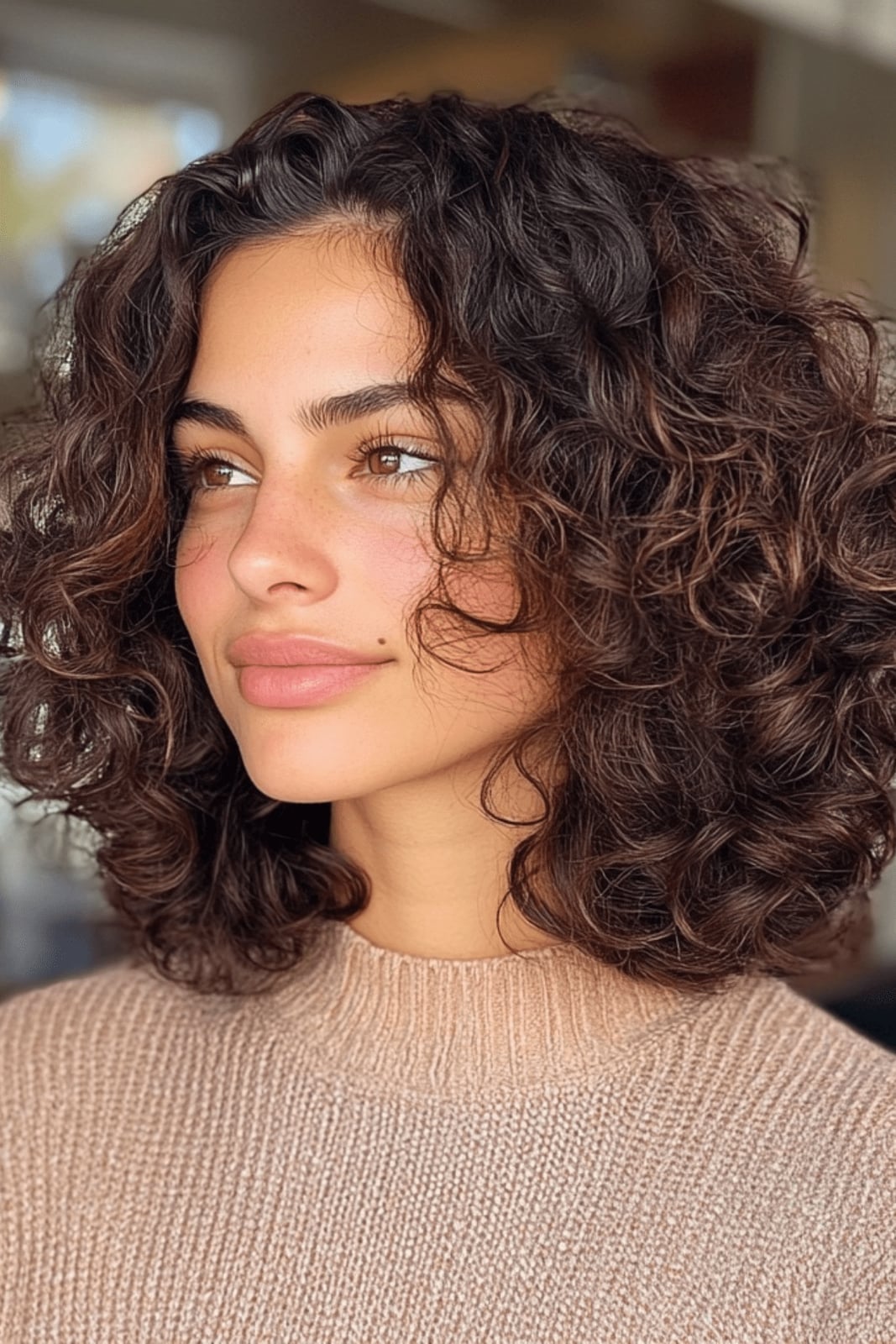
The design hinges on soft face-framing layers that let an ear-length bob move instead of sitting like a dome. Dark brown, defined bouncy curls with a side parting keep the shape grounded, while the layers stop the density from feeling boxy. Ask your stylist for: ear-length curly bob, soft face-framing layers. It suits medium density curly hair starting at collarbone length, and the length below the chin helps elongate a round face. Apply a curl enhancer to damp hair and let it air dry for definition, then plan on a trim every six weeks.
Short Bob With Defined Curly Bangs
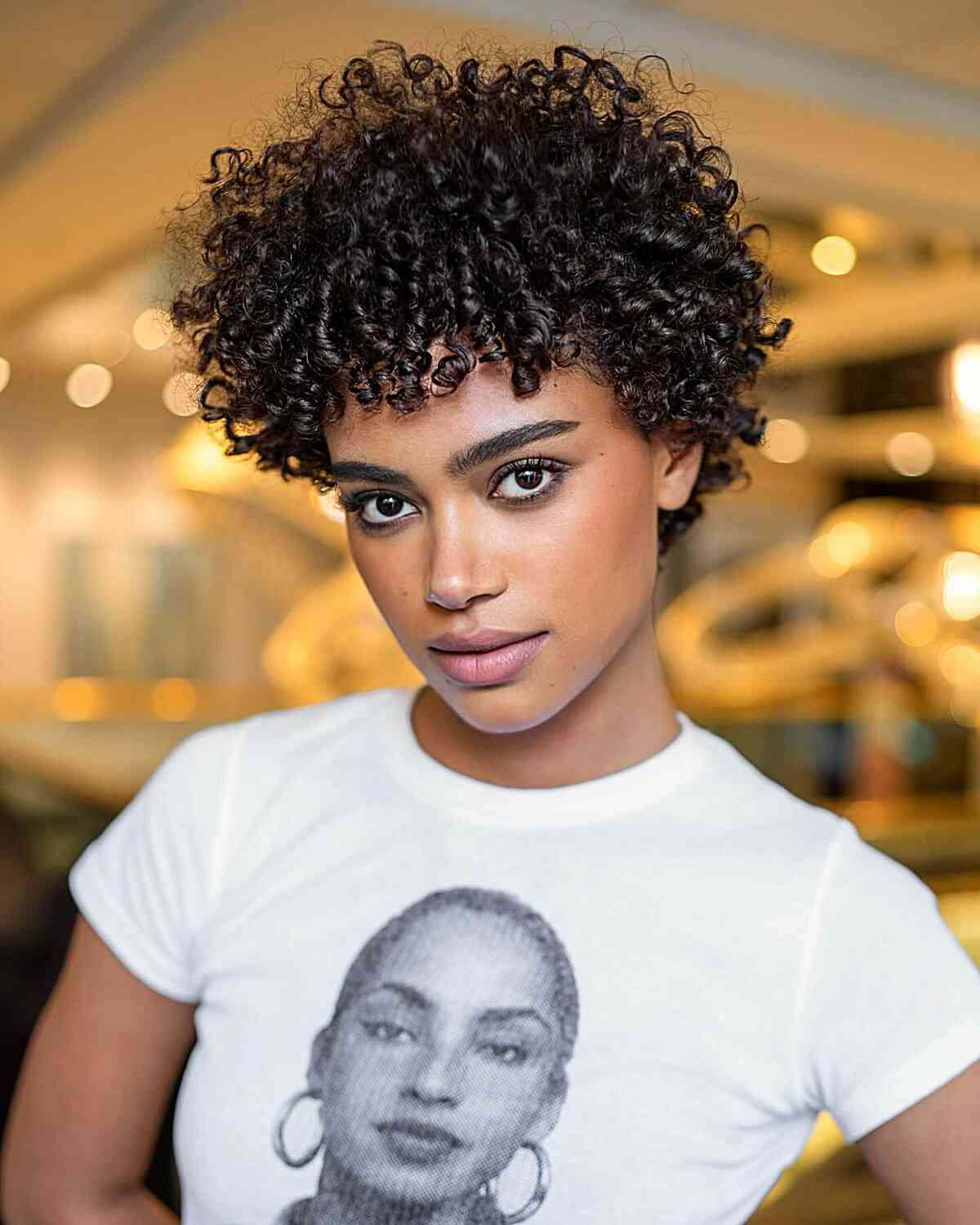
What do you say to get curly bangs that frame instead of flop? Start with the density: this short bob ends around the ear and relies on defined curly bangs cut to sit with the natural curl pattern. The dark brown base with blonde highlights gives the dense texture some visual separation, and the side parting keeps the bangs from reading as a solid curtain. Ask your stylist for: short curly bob, defined curly bangs, blonde highlights. A small amount of styling cream worked through the bangs defines them without crunch, and air drying or diffusing keeps the shape honest.
Ash Blonde Curly Layers With Curtain Bangs
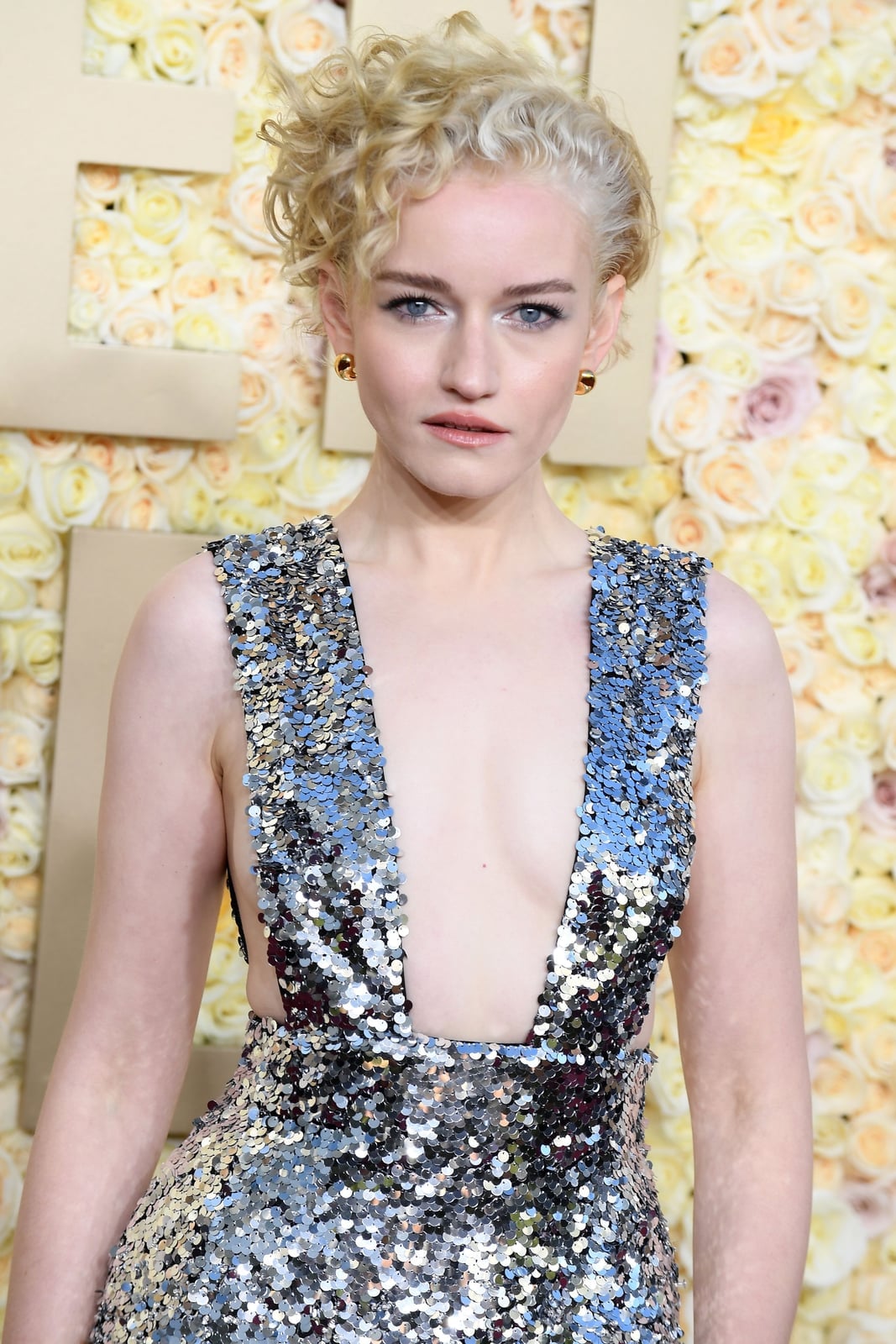
The ash blonde shade and side parting give the ear-length shape a lighter feel, and the loose, slightly tousled texture keeps it from looking precious. Ask your stylist for: short layered cut, ear length, ash blonde, curtain bangs. Fine curly hair starting at shoulder length takes well to this, and the soft pieces around the jaw help soften a square face. The honest drawback is that fine layers can turn wispy fast, so the bangs need a trim every four to six weeks.
Fine Curly Pixie With Choppy Bangs
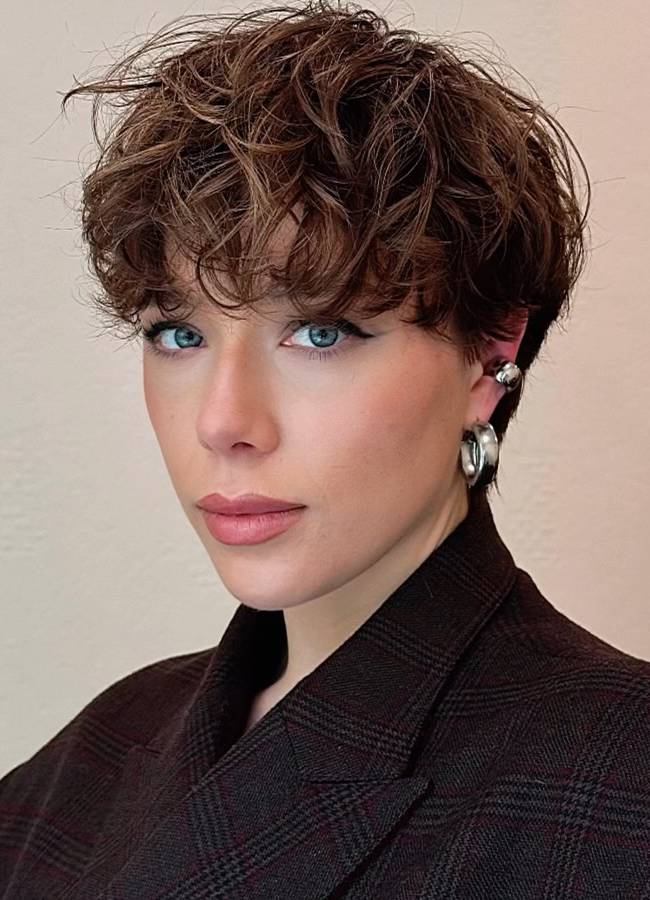
A fine curly pixie wears its texture on the surface, and that is exactly the point. The ear-length cut with short choppy bangs swept to the side and a side parting creates a textured finish that does not rely on volume you do not have. The brown base with subtle lighter highlights adds a little depth without demanding maintenance. Ask your stylist for: fine curly pixie, choppy side bangs. It suits fine curly hair of any starting length and reads as low-maintenance, though the shape needs a matte paste or wax to hold the texture and a trim every four to six weeks to keep the lines sharp.
Chin Length Layers With Copper Highlights
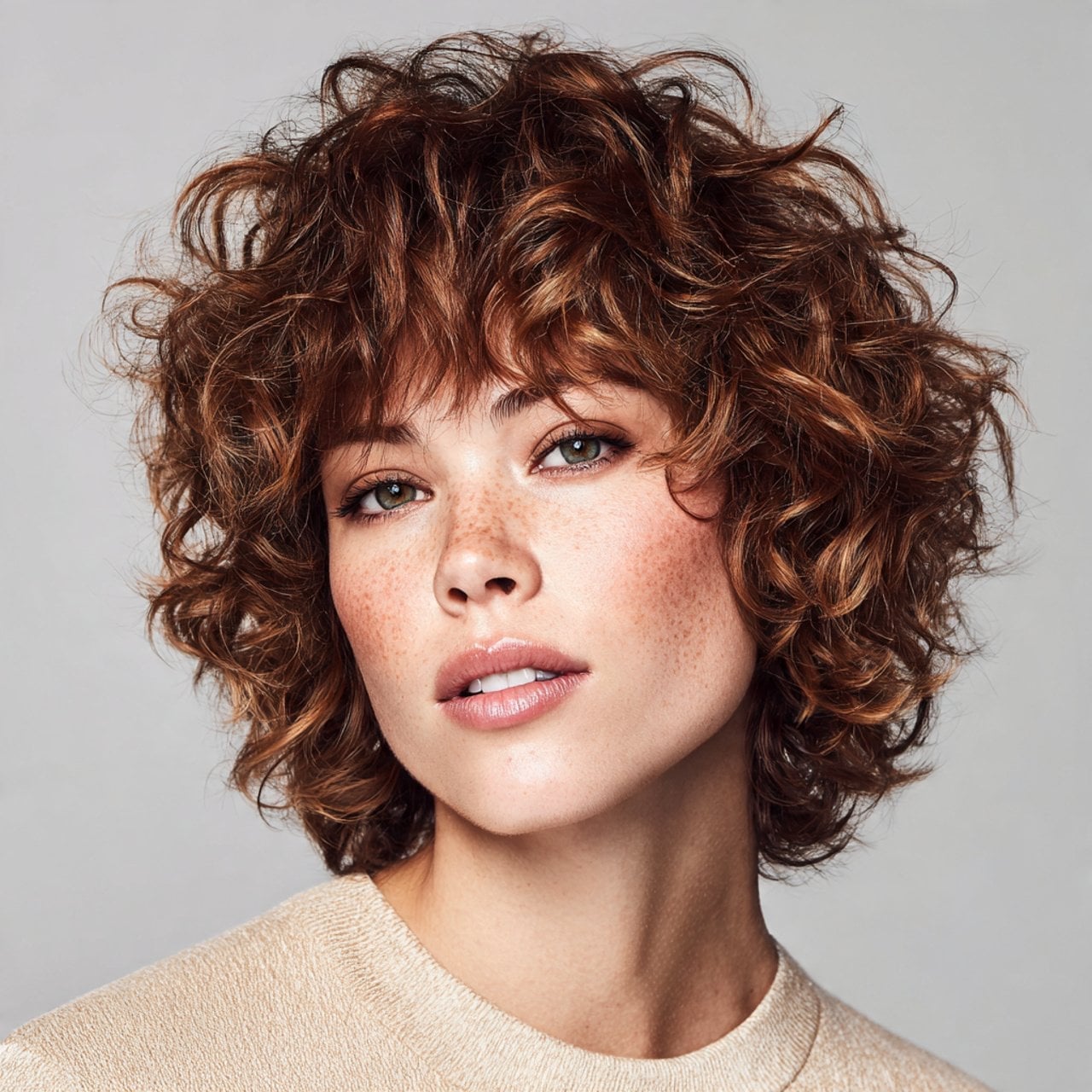
Copper has a way of making autumn feel like a deliberate choice, and this chin-length layered cut leans right into it. The reddish-brown base keeps the copper highlights from shouting, while the short bangs and side parting give the air-dried curls a bit of structure. It suits medium-density curly hair that starts around collarbone length, and the layers add width to longer faces. Ask your stylist for: chin length layered cut, short bangs, copper highlights. A heat protectant before diffusing keeps the shine intact, and a trim every six to eight weeks holds the shape.
Rounded Bob With Curly Bangs

The rounded bob is built on volume, not precision, which is good news for thick curly hair. A blowout with a round brush shapes the ends under while the curly bangs stay soft and frame the face without committing to a hard line. This cut works best starting at collarbone length so the stylist has room to remove weight and create that curved silhouette. Ask your stylist for: chin length rounded bob, curly bangs, warm undertones. Doing it at home means mastering the brush-and-dryer dance, which is doable but slower than the salon version, where the shape comes together in one pass.
For round face shapes, the rounded bob adds height at the crown, which balances the proportions without adding width at the cheeks.
Shoulder Length Layers With Blonde Highlights

Shoulder length curly layers with a brown base and blonde highlights suit thick hair that has weight to spare. The layers take out bulk so the curls spring up instead of hanging heavy, and the highlights add dimension to a solid color that can otherwise look like one flat block. If your hair is fine or thin, skip the heavy layering, it will make the ends look wispy. Ask your stylist for: shoulder length layered cut, no bangs, brown with blonde highlights. A styling cream keeps the curls defined and cuts frizz, and a trim every six to eight weeks stops the ends from splitting.
This is a cut that works for most face shapes, the length hits at the shoulder, which softens a square jaw and elongates a round face when parted on the side.
Shoulder Length Layers With Glossy Curls
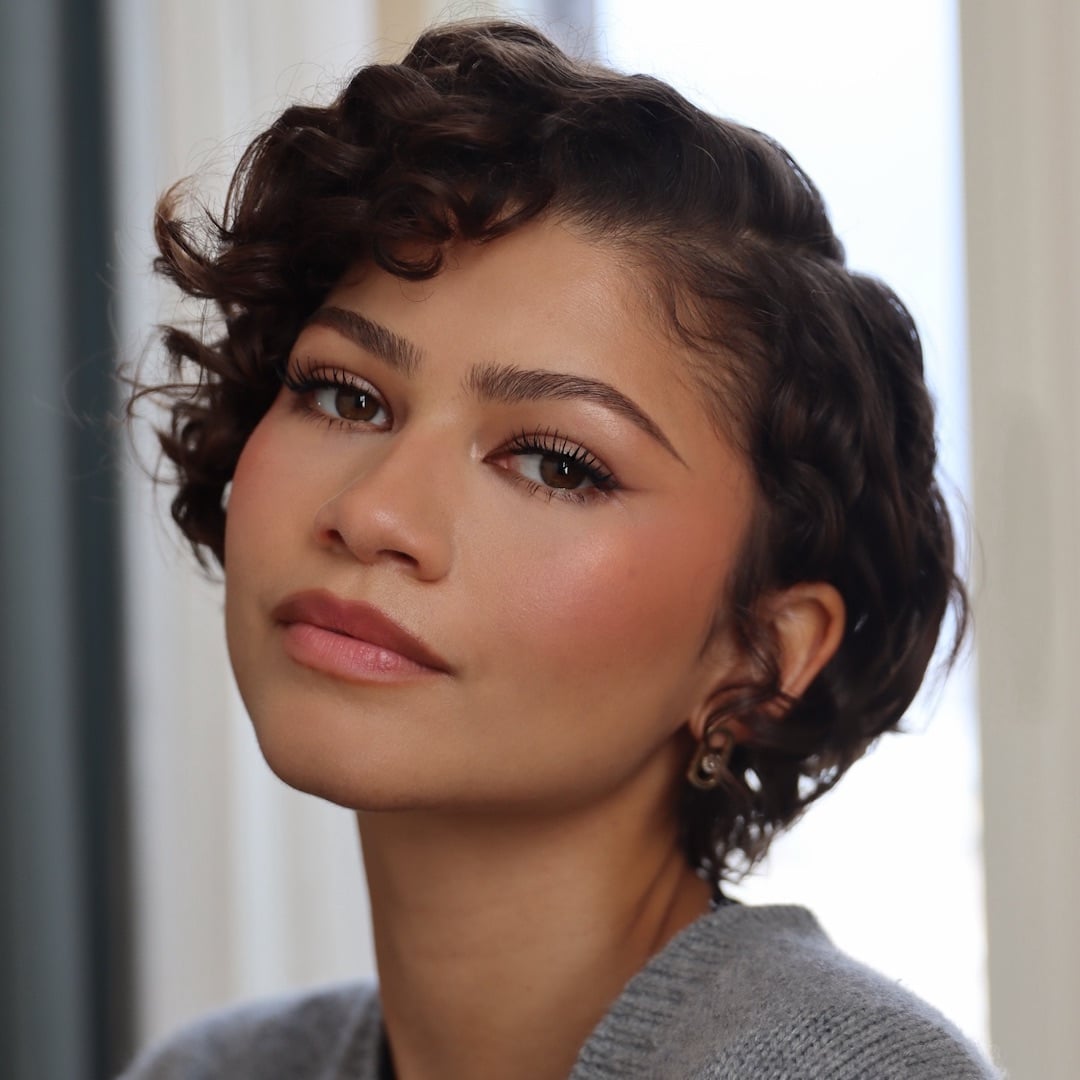
Glossy defined curls at shoulder length are less about the cut and more about what happens after. The layers give the curls room to move, but the shine comes from a smoothing serum applied to damp hair, then air-dried or diffused on low. Dark brown bases show off that gloss best, especially with a side parting that lets the light catch the curve of each curl. Ask your stylist for: shoulder length layered cut, glossy defined curls, no bangs. To keep the definition overnight, a silk pillowcase helps, and a trim every eight weeks keeps the ends from fraying so the gloss lasts longer.
Collarbone Layers With Curtain Bangs
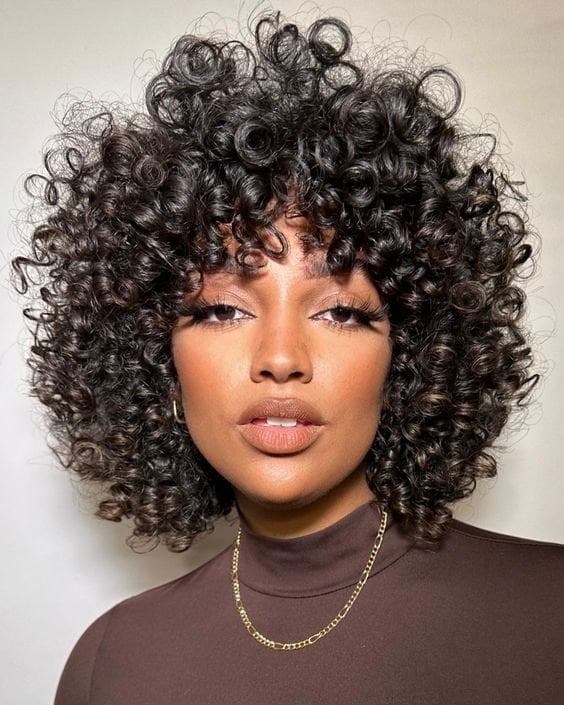
What do you ask for when you want collarbone length curls without the commitment of blunt bangs? Curtain bangs, and layers that start at the chin. This combination works on thick curly hair that begins at mid-back length, giving the stylist enough material to shape the face-framing pieces. The subtle blonde highlights on the dark brown base add depth without a full color commitment. Ask your stylist for: collarbone length layers, curtain bangs, subtle blonde highlights. Blow-dry the bangs with a round brush for a soft sweep, and use a texturizing spray on the layers to keep them from falling flat.
Collarbone Length Defined Curls
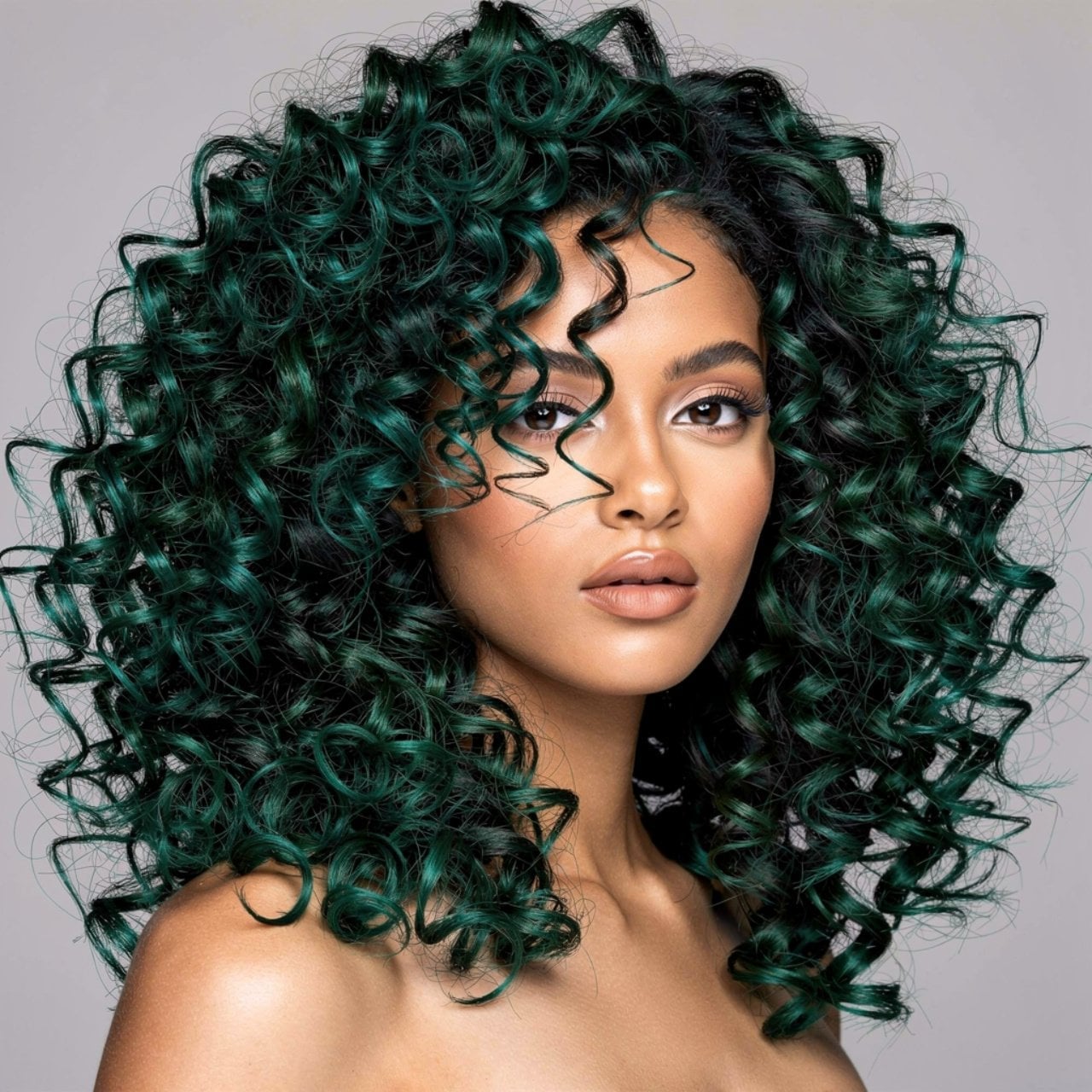
If you are torn between a bold color and a more subtle technique, this collarbone length cut with a dark base and vibrant emerald green highlights is the loud option. It suits thick curly hair that is already at mid-back length, since the layers keep the weight from pulling the curls out of shape. Ask your colorist for: collarbone length curls, defined, with curtain bangs. The middle parting and air-dried texture let the green pieces show up as streaks rather than blending away.
Emerald green on dark hair needs a color-depositing conditioner every few washes to stay bright, and you will be back for a toner long before the eight-week trim. If that sounds like a commitment, a few face-framing highlights give a similar pop with far less maintenance.
Collarbone Layers With Subtle Dimension
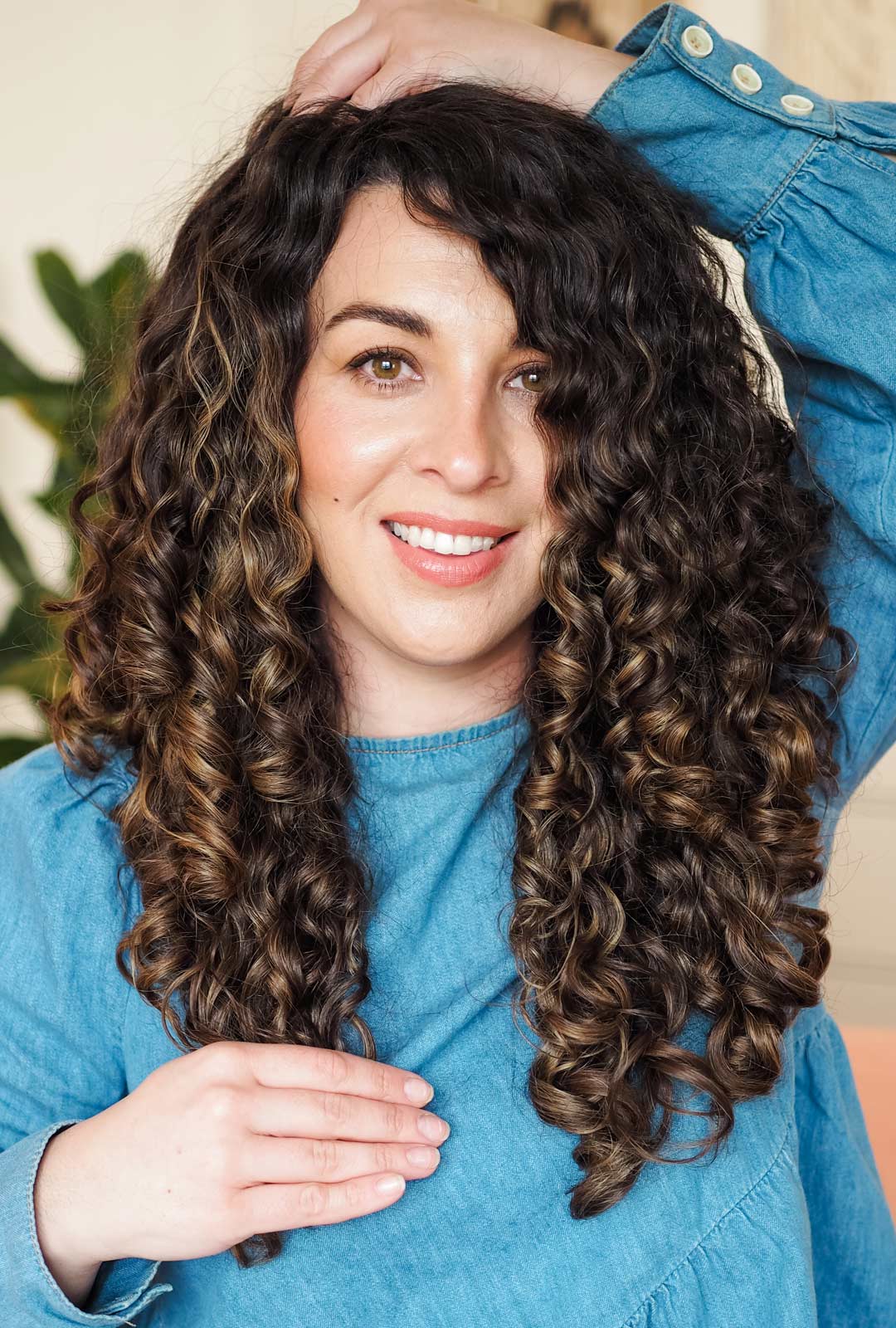
The design here relies on well-defined layers cut into the curl pattern, so each coil lands at a slightly different point around the collarbone. On medium density dark brown hair, those staggered lengths create movement without needing much color. Subtle lighter pieces add just enough dimension to keep the shape from reading as one flat block. Ask your stylist for: collarbone length layered cut, subtle dimension, no bangs. A side parting lets the layers fall forward, which suits anyone who wants to soften a square jaw. Air drying is the easiest way to keep the definition intact, and a trim every eight weeks preserves the bounce.
Collarbone Ringlets With Side Parting
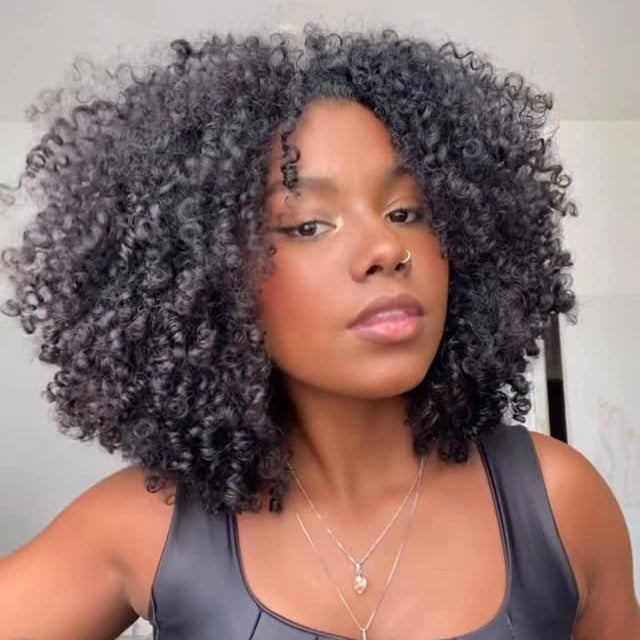
How do you get loose ringlets that last past lunch without a diffuser? Start with thick, dark brown curls that reach your collarbone, then part them to the side. On wet hair, apply a curl cream and scrunch upward, letting the curls clump naturally. Air dry without touching them, or use a blow dryer with a diffuser attachment on low if you are short on time. The layers here are cut to encourage each ringlet to separate, so no bangs are needed to frame the face. Ask your stylist for: collarbone length loose ringlets, side part. This is a DIY-friendly cut: you can recreate the look at home in about twenty minutes, though the initial shape needs a salon to get the layering right.
Collarbone Layers With Auburn Highlights
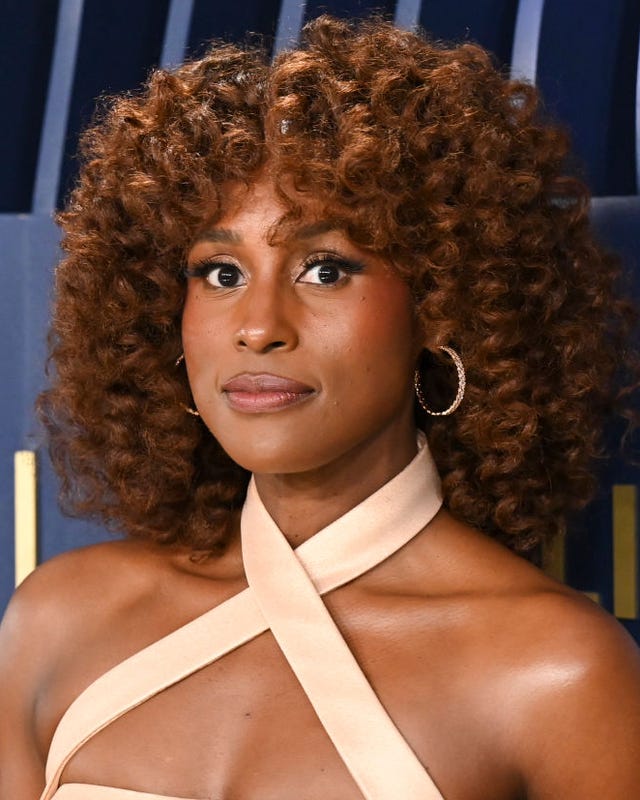
Warm auburn highlights on a medium brown base land particularly well when the weather turns cool, since the copper tones pick up the lower autumn light. On thick curly hair cut to the collarbone, these highlights create dimension instead of streaks, especially with a middle parting that lets them frame the face evenly. The air-dried texture keeps the look relaxed, which fits a season of cozy layers and casual weekends. Ask your colorist for: collarbone length layers, medium brown with auburn highlights. A color-safe shampoo will slow the fade, and a trim every eight weeks keeps the ends from splitting. This is a salon color, so budget for a two-hour appointment to get the placement right.
Collarbone Layers With Emerald Green Highlights
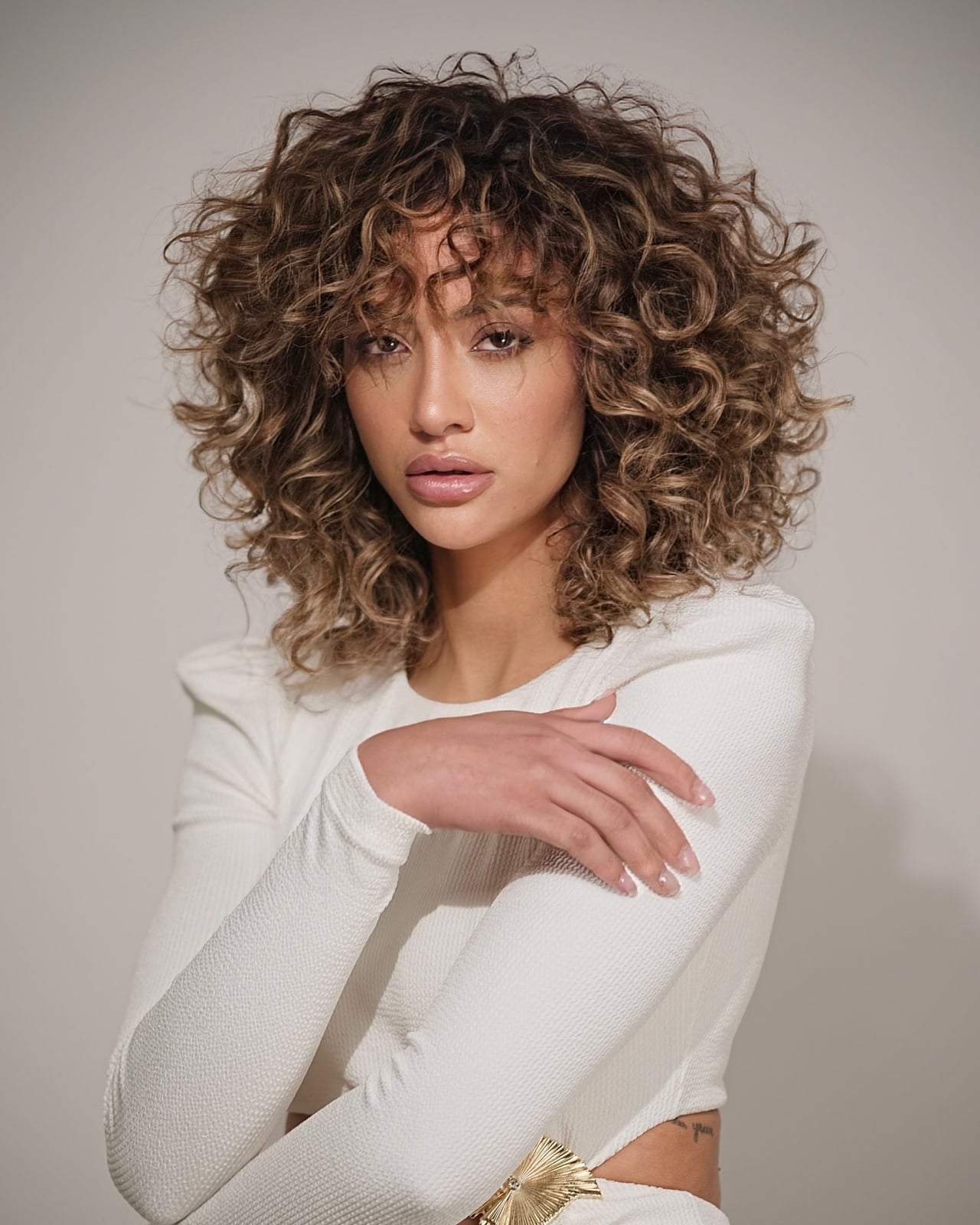
Collarbone length layers on medium density dark brown hair give the curls enough room to expand without losing shape, and that natural volume is the real draw here. The subtle lighter highlights add depth without turning the whole head green, which makes this a gentler entry point for anyone curious about emerald. Ask your colorist for: collarbone length layers, dark base, emerald green highlights. A side parting helps the green pieces peek out from underneath, so the color shows up when you move rather than all at once. This suits thick hair that can carry the extra dimension, but if your curls are fine, the layers may fall flat. A trim every eight weeks keeps the ends healthy.
Shoulder Layers With Blonde Balayage

How do you get that lived-in blonde on curly hair without the goldfish-bowl effect? The answer is shoulder-length layers with a dark brown base, then letting the blonde balayage do its work from mid-length to ends. The face-framing curtain bangs and middle parting keep the color from turning into a solid block. Ask your stylist for: shoulder length layers, curtain bangs, blonde balayage. The air-dried texture saves you heat time, but that blonde will need a purple shampoo once a week to stay cool-toned. A trim every six to eight weeks keeps the layers springy and the bangs from turning into an accidental fringe.
Shoulder Layers With Face-Framing Bangs
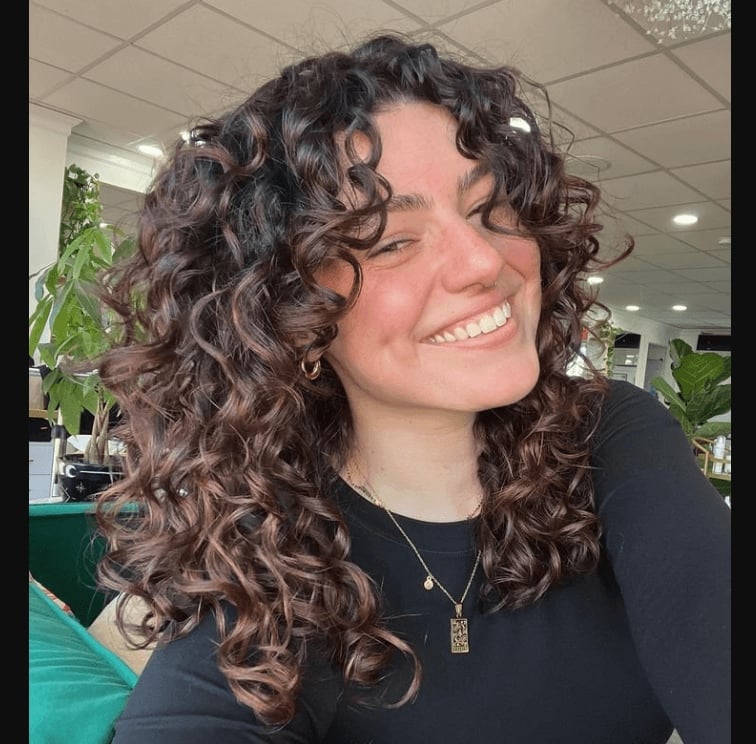
The design here is deceptively simple: soft, face-framing layers and curtain bangs on a dark brown base with subtle highlights, all air-dried. Getting close at home starts with a shears-free approach. Wash and condition, then rake a lightweight curl cream through damp hair. Section off the front pieces to create those curtain bangs by twisting each section away from your face and clipping them upward while the rest air-dries; unclip them last. A diffuser on low speed over the crown adds lift without disturbing the natural curl pattern. The salon version uses a dry cut for precision and a razor for that soft, wispy edge. The DIY version takes more patience but zero scissors.
Shag Cut With Curtain Bangs And Blonde Balayage

A regular layered cut lands evenly; a shag cut with curtain bangs and blonde balayage lands like a controlled explosion. The key difference is the shag’s shorter, choppier layers that stack at the crown and taper toward the collarbone. On thick, wavy hair, those layers create actual movement instead of a fuzzy triangle. The blowout styling is required here. Air-dried waves can look too heavy, while a round brush and medium heat open up the curl pattern and let the balayage show. Ask your stylist for: collarbone length shag cut, curtain bangs, blonde balayage. The shag’s dramatic layers grow out awkwardly around week six, so book trims every four to six weeks to keep the shape sharp.
Collarbone Layers With Side Parting, Mid-Back
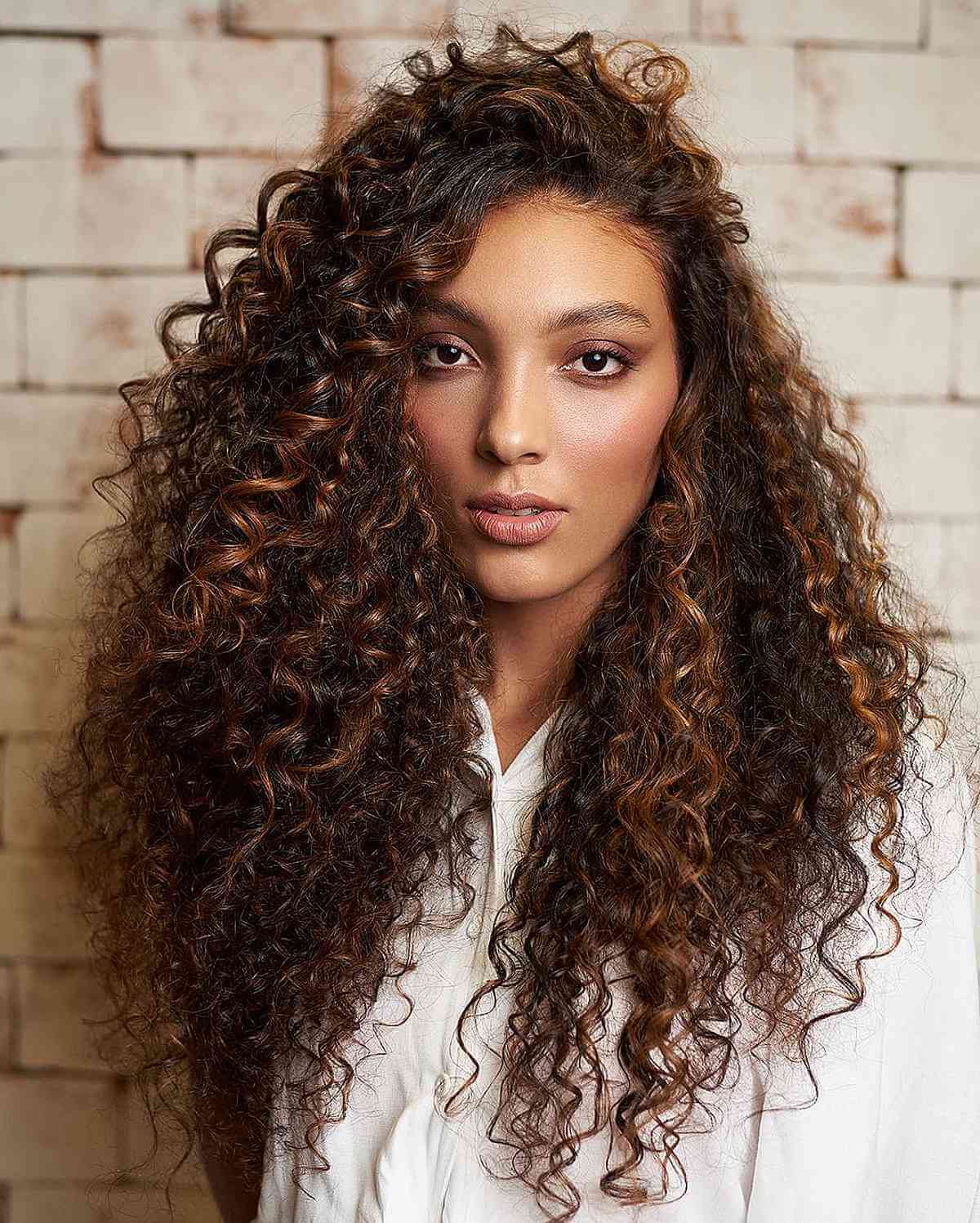
Mid-back length on thick curly hair is a test of patience: the weight pulls the curl pattern straighter near the roots, leaving a heavy upper half. Collarbone layers with no bangs solve that by removing bulk through the canopy while preserving length. The warm caramel highlights add dimension so the hair looks rich, not flat, even when air-dried. Ask your stylist for: mid-back length layers, middle part, warm caramel highlights. Maintenance means a hydrating mask every week to prevent the ends from going brittle, since long curly hair loses moisture faster. A trim every eight weeks keeps the layers from blending into one solid block of length.
Mid-Back Layers With Caramel Highlights
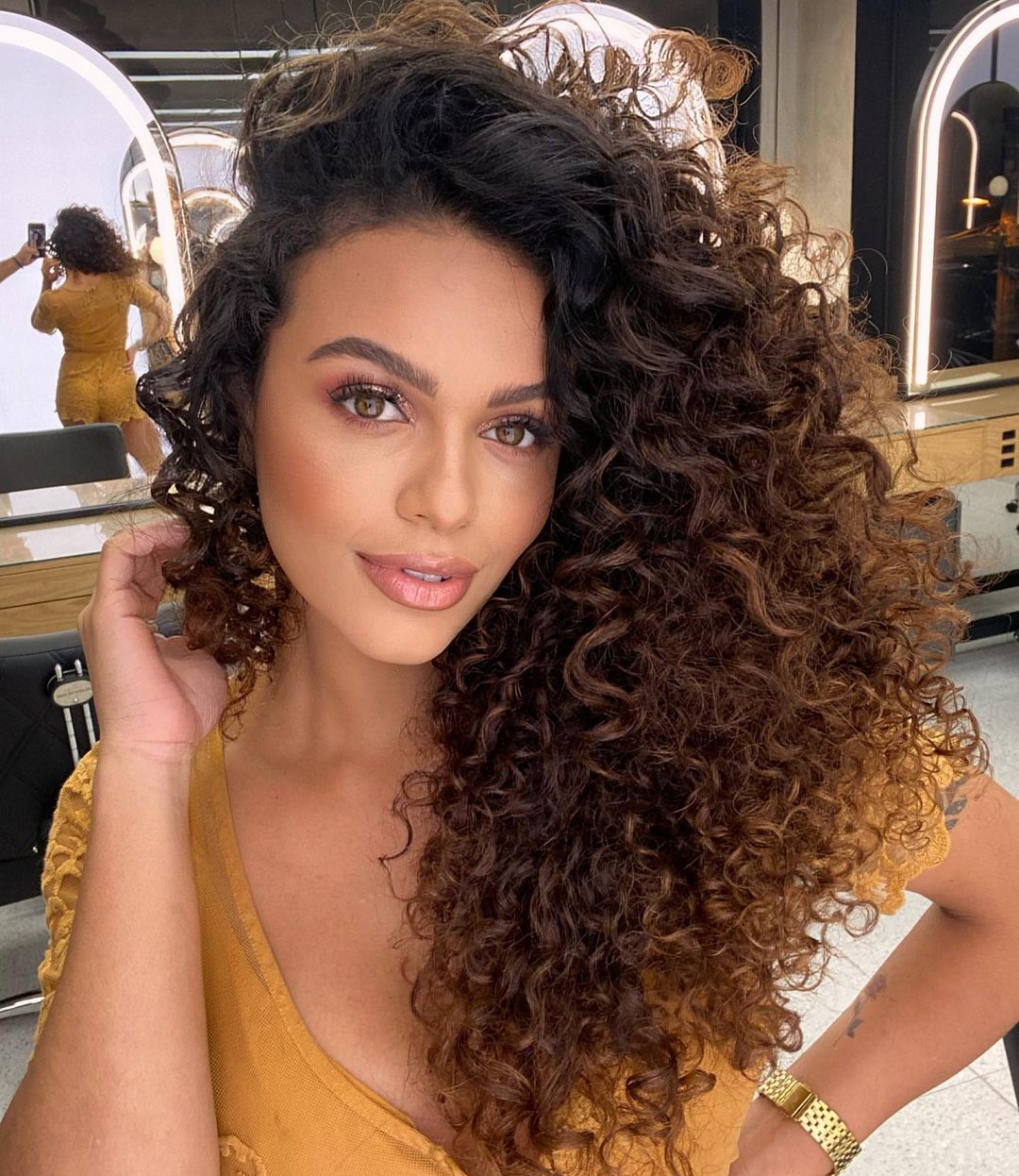
The technique behind voluminous mid-back curls starts with internal layering: the stylist cuts shorter layers underneath the main length so the hair lifts from the crown instead of hanging straight down from the roots. A side parting helps distribute that volume evenly across the top, and the caramel highlights add contrast that makes each curl visible as a separate piece. On thick curly hair, the dark brown base grounds the look while the caramel runs through the ends. Ask your stylist for: mid-back length layers, dark brown with caramel highlights. The air-dried texture looks intentional and not heavy, which saves you from reaching for a diffuser every morning.
Mid-Back Curls With Caramel Highlights, Middle
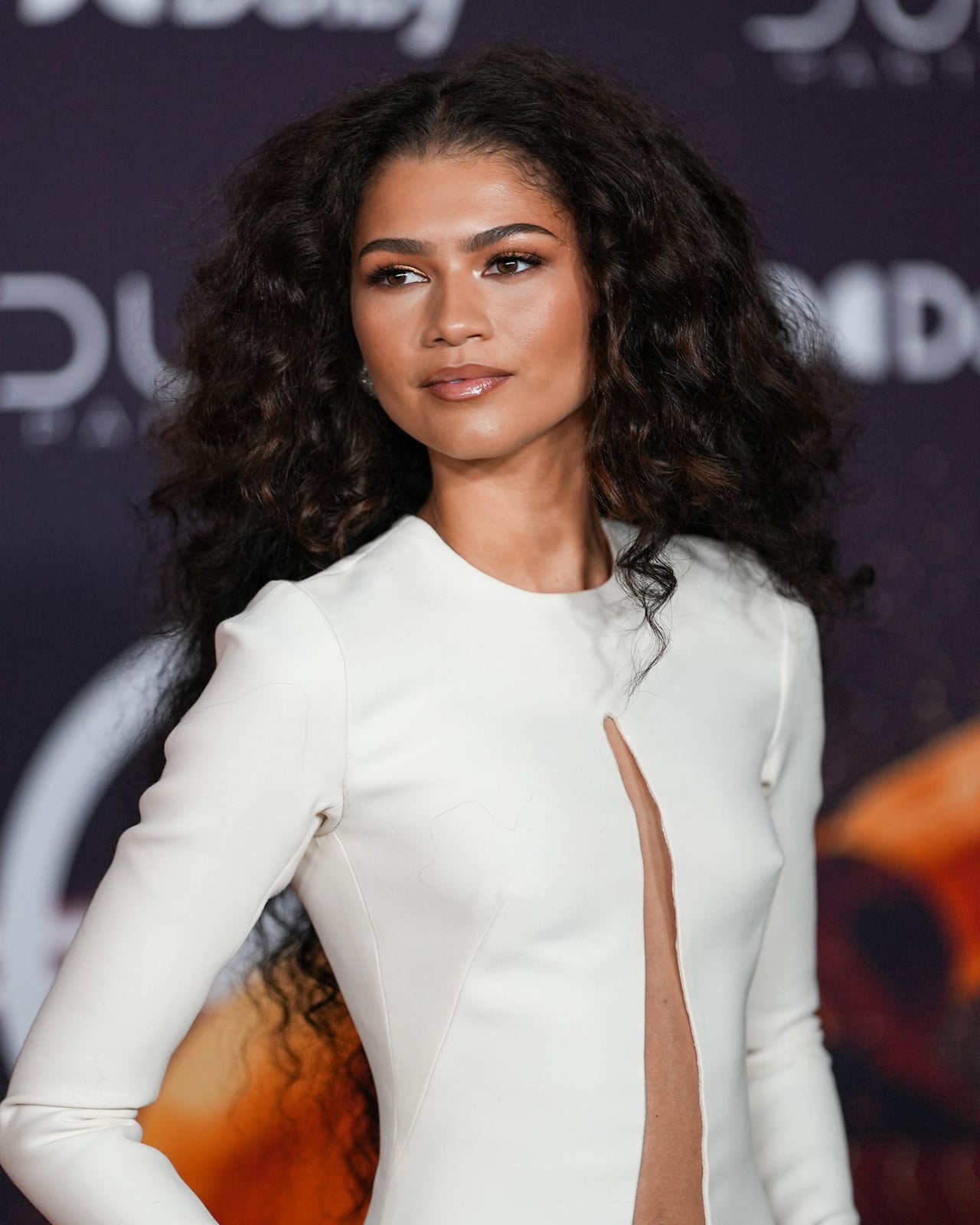
Thinking about adding dimension to your curly mid-back length without going lighter all over? This cut keeps the shape simple with layers through the ends and no bangs so the texture stays the star. The dark brown base gets warm caramel highlights woven through the curls, which works best on thick hair that can handle the extra visual weight. Ask your colorist for: mid-back length curls, warm caramel highlights. A curl-defining serum on damp hair, then air dry or diffuse. Trim every 8 to 10 weeks.
Mid-Back Curly Hair With Subtle Highlights
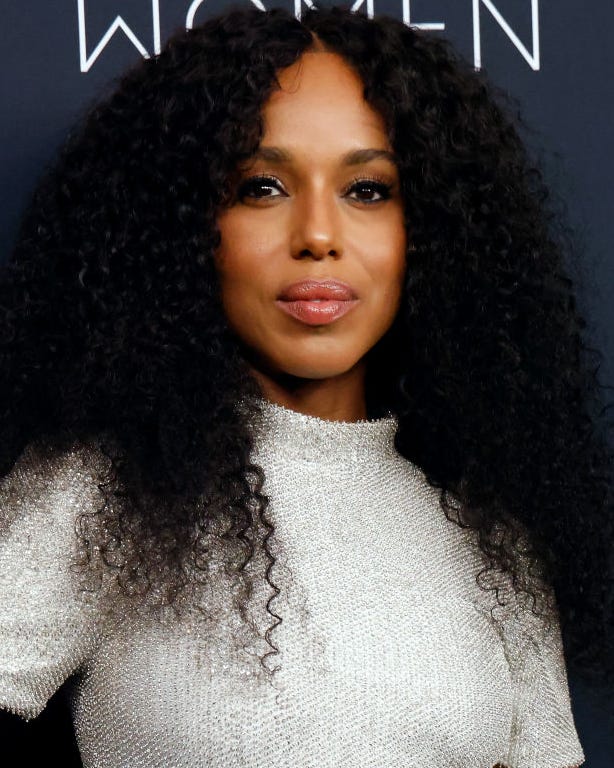
A mid-back length cut with layers and no bangs keeps the silhouette simple, which lets defined curls stand out. The black base has subtle highlights that add a hint of movement without changing the overall depth. This shape looks polished even when the styling is minimal. Apply a curl cream or mousse on wet hair to manage frizz, then let it air dry or diffuse for curl definition. A trim every 8 to 10 weeks keeps the ends healthy and the layers from looking straggly. Subtle highlights can disappear into the base if the room is dim, so natural light is your friend.
Voluminous Black Curly Hair Mid-Back
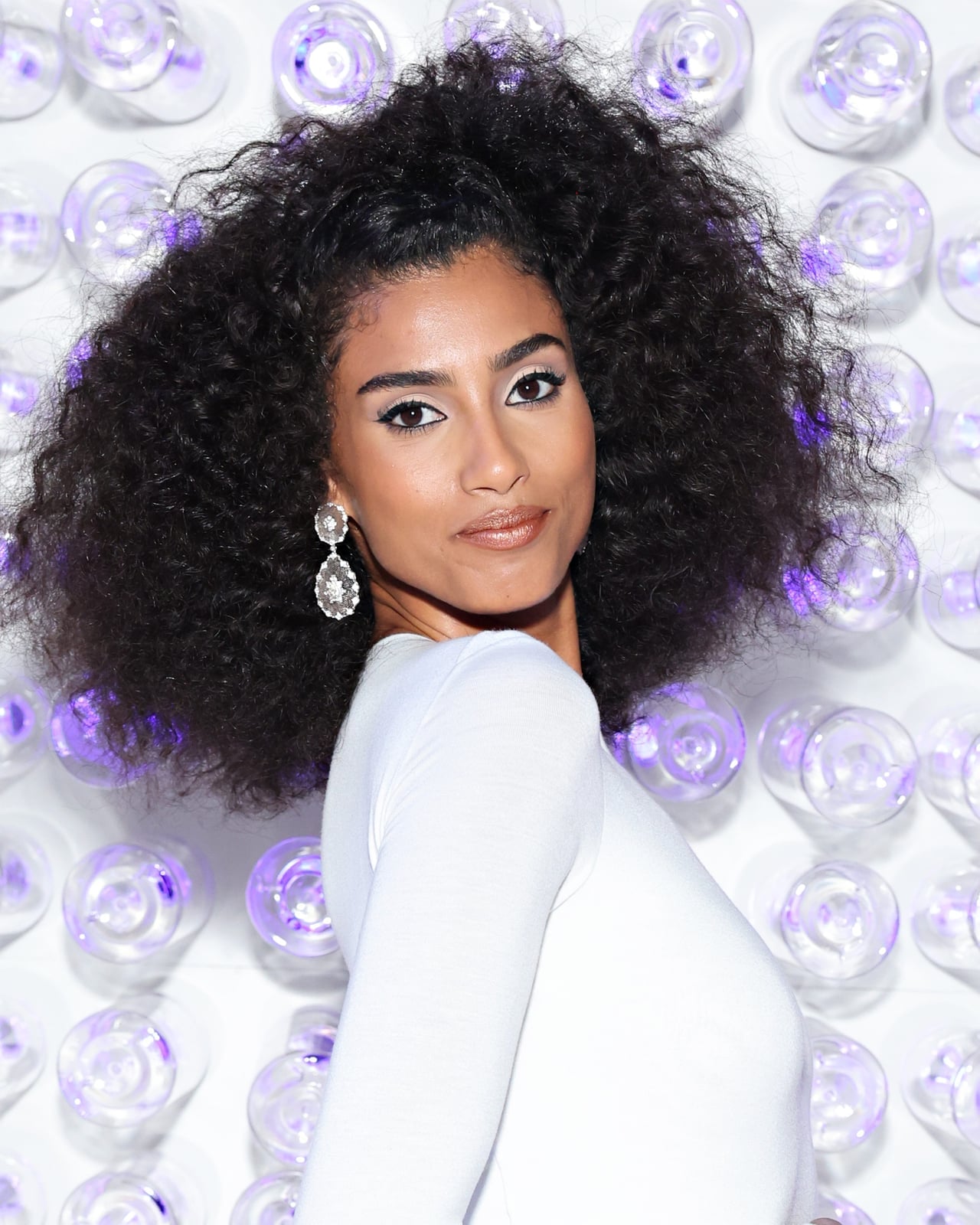
This is a mid-back length cut with layers and no bangs. The middle parting lets the natural volume speak for itself. The black color is solid, so every curl forms one dense mass. Thick curly hair that starts at waist length can pull this off; finer textures would get swallowed by the weight. Maintaining this much volume at mid-back requires layers that need precise placement, and without them, the shape can look like a triangle. A volumizing product at the roots and avoiding over-brushing helps, but expect to schedule a trim every 8 to 10 weeks to keep the shape defined.
Mid-Back Black Curly Hair With Defined Curls
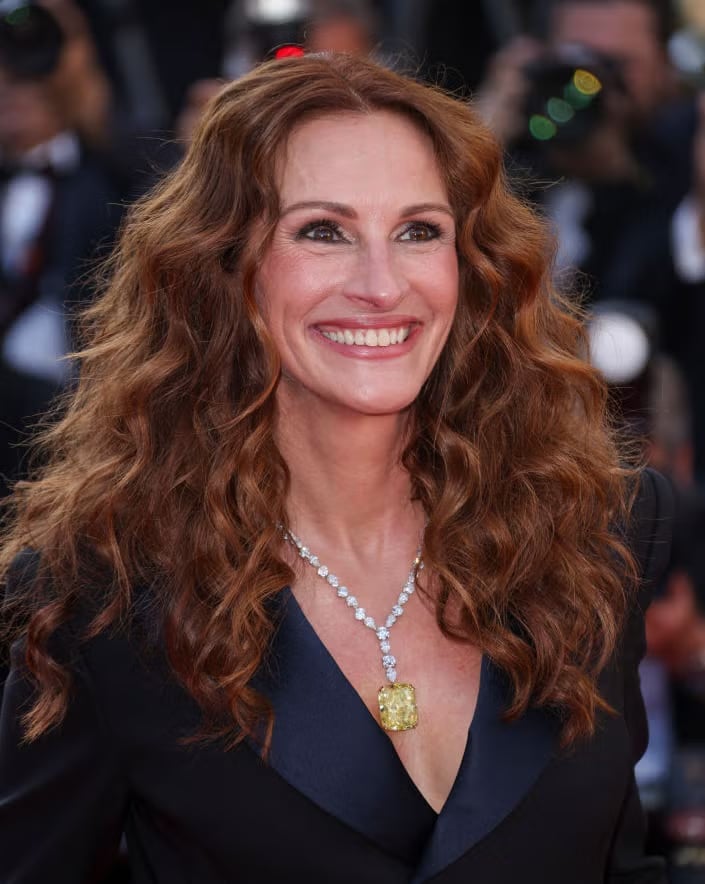
A mid-back length cut with a side parting, no bangs, and a blowout finish that gives wavy texture a glossy, defined look. The auburn color adds warmth without high contrast, which suits medium-density hair that can hold a wave without frizzing. Ask your stylist for: mid-back length layers, defined curls. A curl-defining cream and scrunching during the blowout locks in the shape. This is a salon-level finish that needs a trim every 8 to 10 weeks.
Mid-Back Layers With Face-Framing Bangs
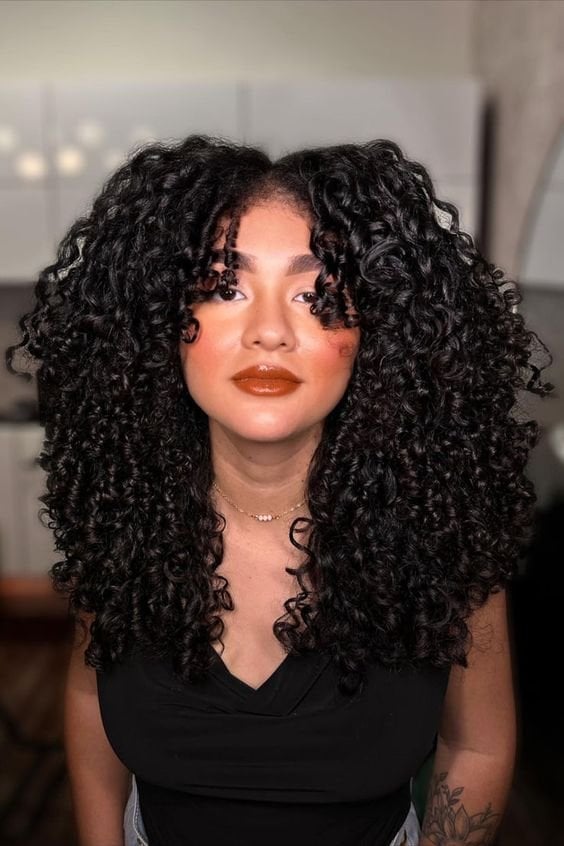
How do you ask for face-framing bangs on thick curly hair without ending up with a blunt fringe? Start with the right words. This is a mid-back length cut with layers throughout and face-framing bangs that blend into the curls, no separate fringe. The black base keeps the color solid so the shape and texture stand out. Ask your stylist for: mid-back length layers, face-framing bangs, defined curls. The bangs should be cut dry and curly so they land at the right length. Styling them separately with a small diffuser or a curl cream keeps them from blending into the rest of the hair. A trim every 8 to 10 weeks prevents the bangs from getting too long and losing their frame.
Mid-Back Updo With Wispy Bangs
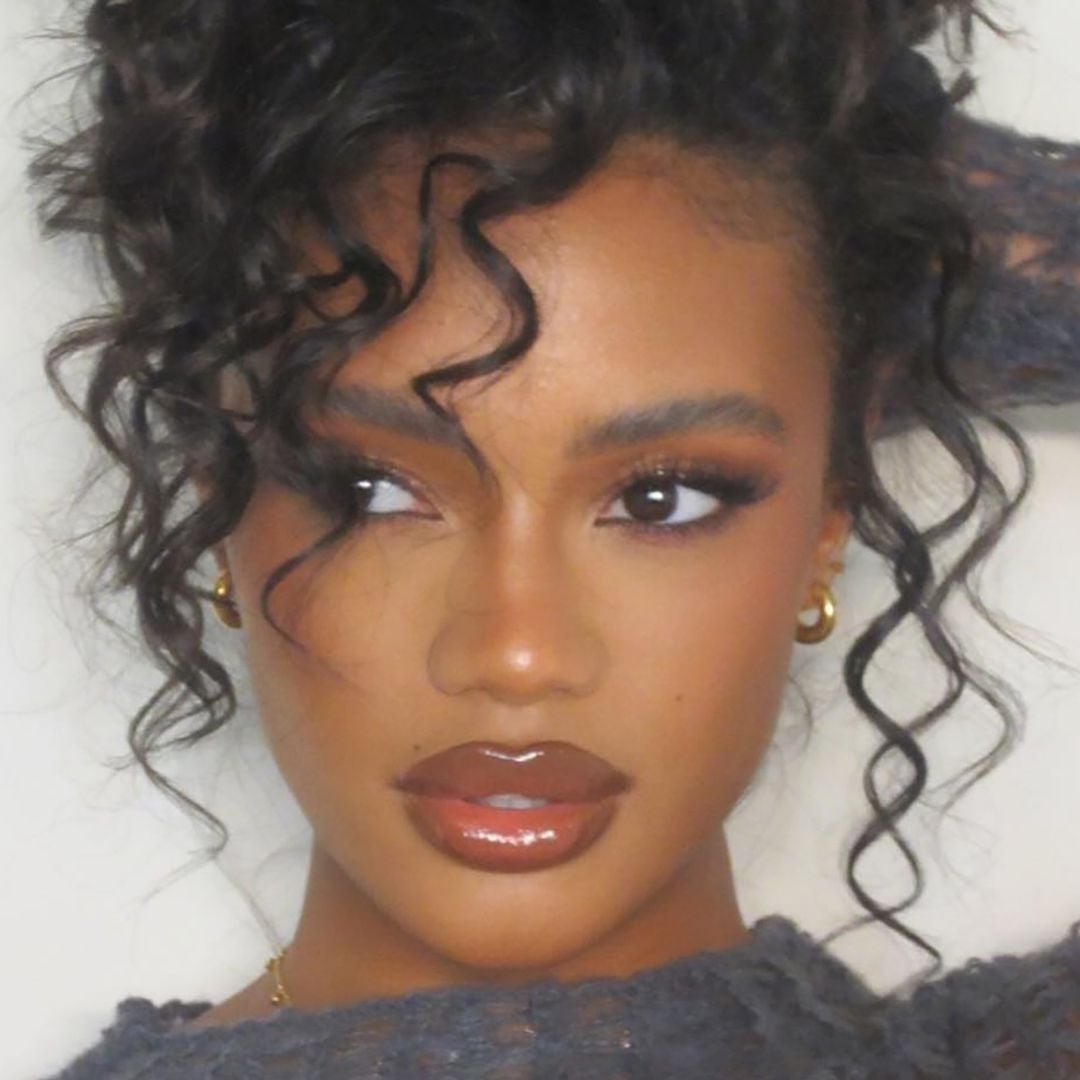
This is not a tightly pinned updo. The close crop of thick, dark brown curly hair reaches mid-back but is gathered into a soft updo, with wispy bangs and loose tendrils left out. A middle parting keeps the look grounded. It suits thick curly hair of any length that can be gathered, and it works best for formal occasions where a relaxed finish is the goal. Ask your stylist for: updo with wispy bangs and loose tendrils.
Those loose tendrils will need attention. A flexible hold hairspray keeps them in place, but expect to refresh the curls as the evening goes on. It is salon-leaning in execution, so plan for a stylist to build the structure and pin the body, then you handle the tendril maintenance at the event.
Mid-Back Voluminous Updo With Curly Bangs, Dark Brown
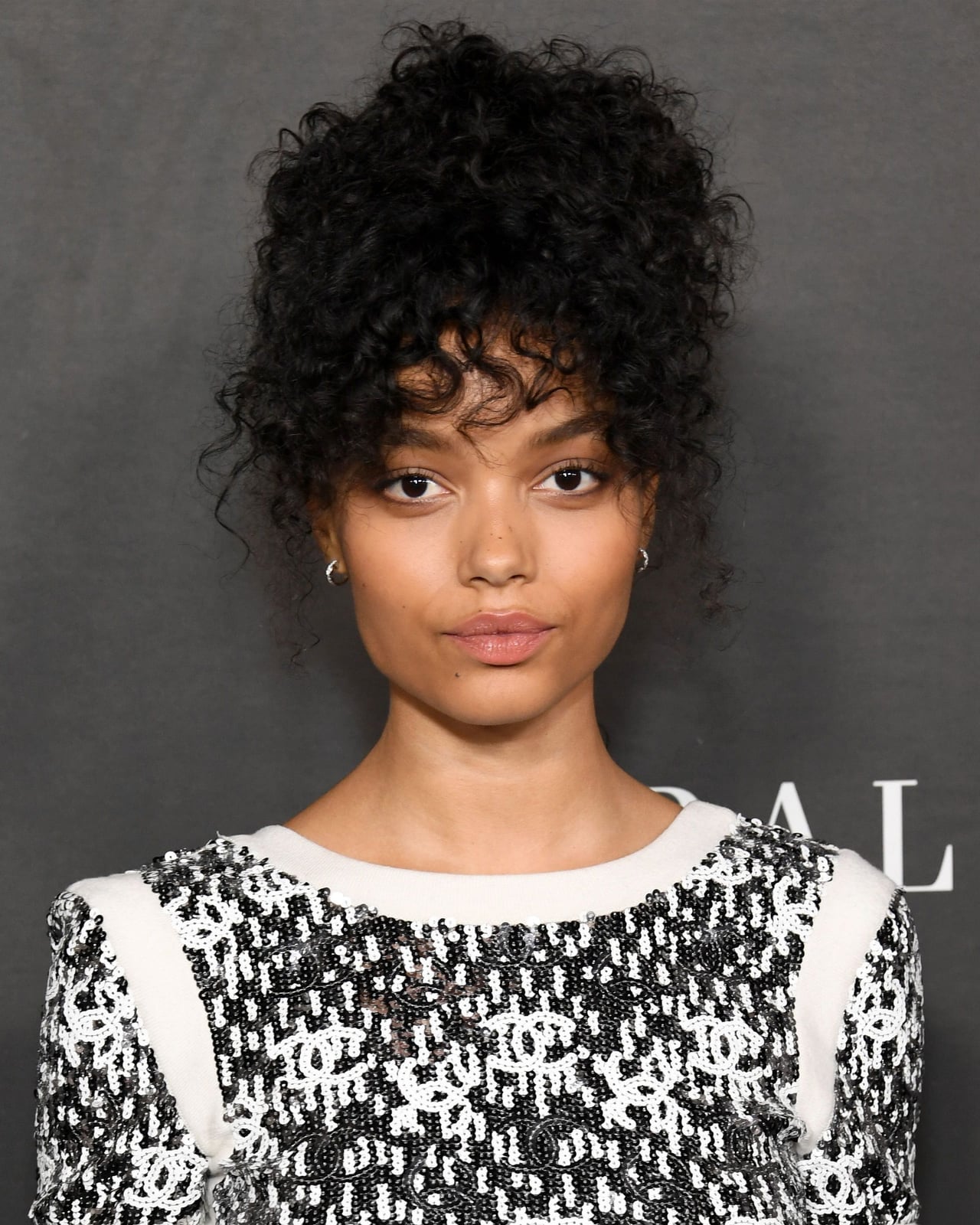
The design starts with the volume at the crown. Thick, dark brown curly hair is pulled up high from a middle parting, with the length piled into a voluminous updo that sits above the scalp. Loose cascading curls fall forward to frame the face, and curly bangs complete the shape. Ask your stylist for: voluminous updo with cascading curls and curly bangs. The technique involves sectioning the hair, teasing the crown for lift, and securing the body with bobby pins before allowing the front pieces to fall naturally. A firm hold hairspray locks the structure.
Mid-Back Curls With Lighter Brown Highlights
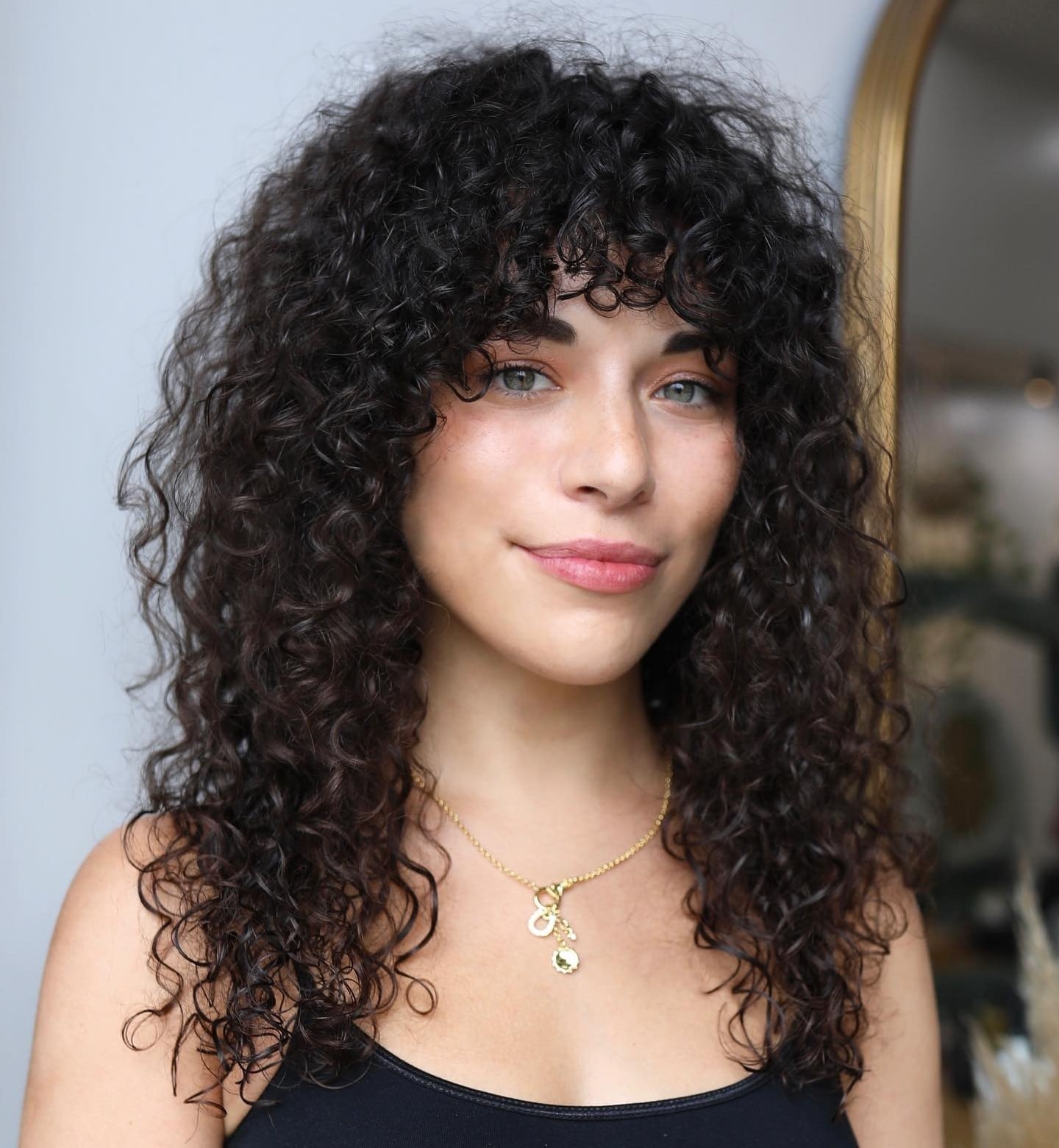
Does thick curly hair need highlights to look dimensional? Not always, but lighter brown highlights against a dark brown base create depth without changing the overall tone. This mid-back length cut uses layers to prevent the abundant curls from becoming a single heavy mass, and the air-dried texture keeps it natural. A middle parting balances the volume on both sides. Ask your stylist for: mid-back length curls, dark brown with lighter brown highlights. It suits thick curly hair starting at waist length, where the weight of the hair can pull curls straight at the root. The highlights add the illusion of lift and movement.
For those with finer curly hair, this approach can overwhelm. The density of the cut and the layering require a certain thickness to hold the shape. A curl refresher spray between washes keeps the definition alive for days, and a trim every eight to ten weeks prevents the ends from getting wispy.
Mid-Back Loose Waves With Side Parting
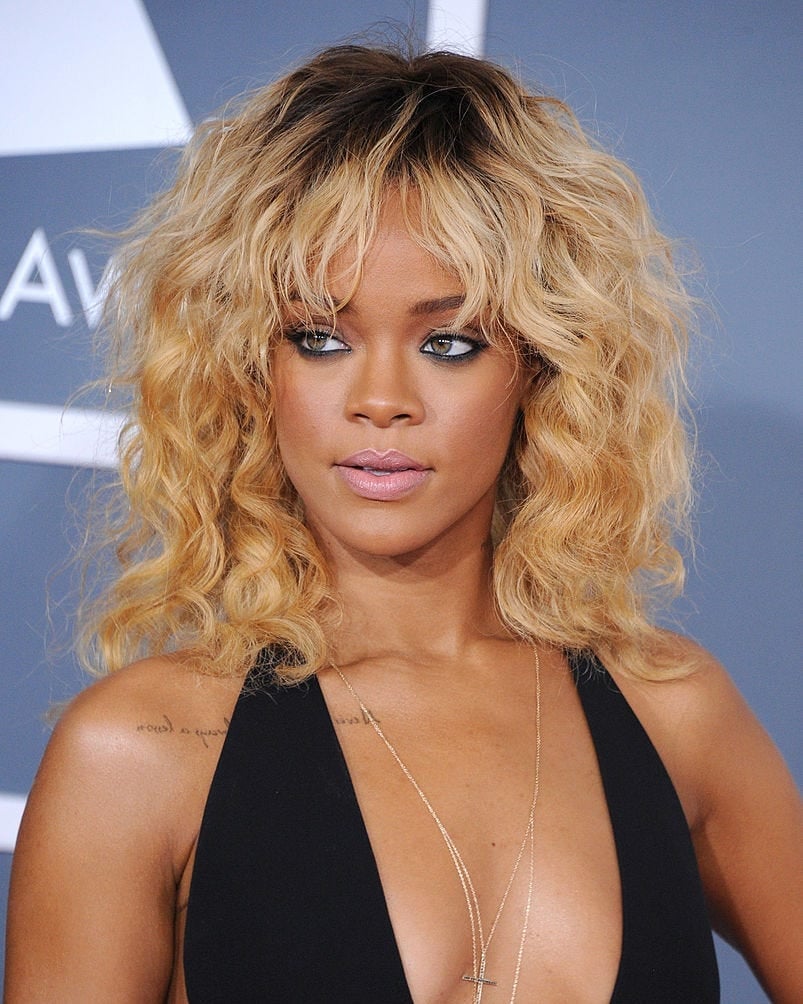
A collarbone-length cut with layers and curtain bangs, styled in a loose blowout with a middle parting. The color is blonde with lighter highlights and darker roots, which adds dimension to the fine, wavy texture. The challenge here is maintaining volume. Fine wavy hair tends to fall flat within hours of a blowout, especially with curtain bangs that can separate and lose their shape. Ask your stylist for: collarbone layers with curtain bangs, blonde with dark roots. A sea salt spray applied before diffusing helps the waves hold their structure. A trim every eight weeks keeps the layers defined and the bangs from growing past the cheekbone.
Long Air-Dried Curls With Side Part
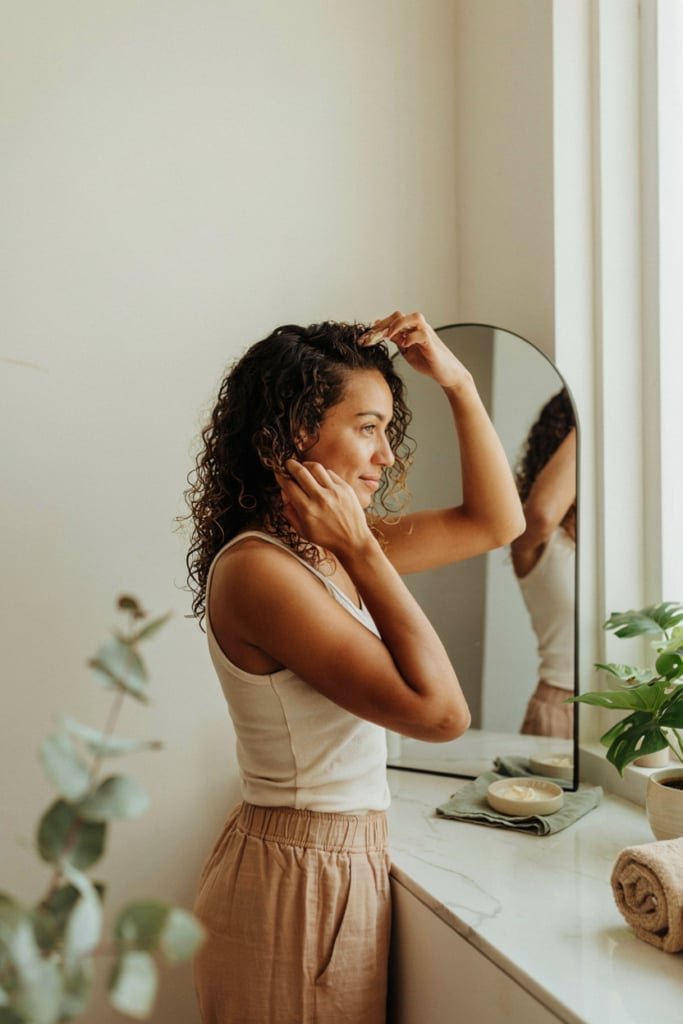
Thick, dark brown curly hair reaches mid-back and is styled with a side parting, left to air-dry. The result is defined curls that maintain their shape without heat. This is a DIY-friendly approach: apply a curl cream or gel to soaking wet hair, scrunch from the ends upward, and do not touch it until it is fully dry. A side parting breaks up the symmetry and adds volume at the root on the heavier side. Ask your stylist for: long air-dried curly hair, mid-back length, side part.
This is not a salon-only look. The cut itself needs a stylist for the layers that prevent triangle head, but the daily styling is entirely at home. Plan for a trim every eight to ten weeks to keep the ends healthy enough to air-dry without frizz.
Flex Curl Definer Product Application
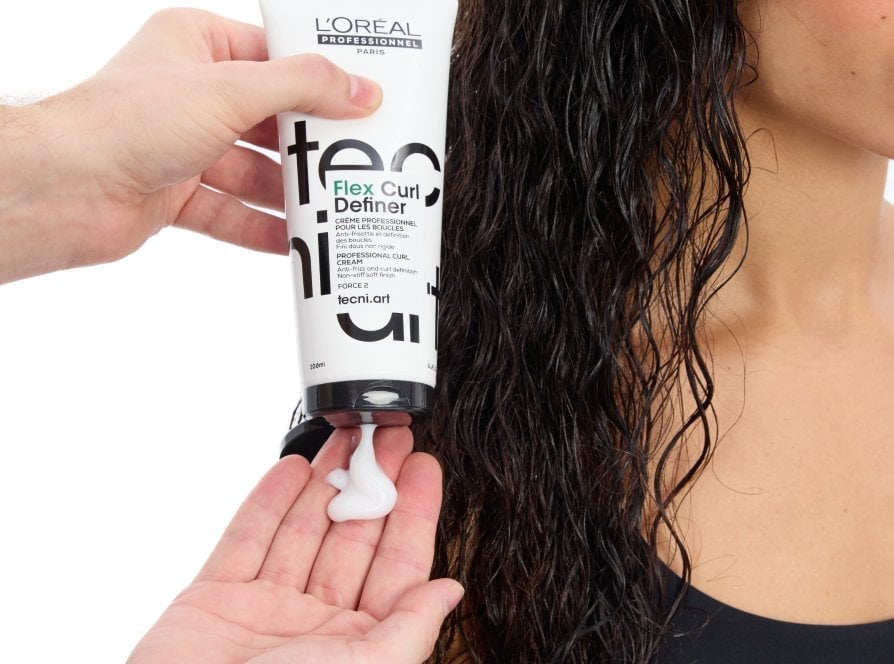
The design of a flex curl definer is all about how it meets wet hair. A dollop on the palm, worked through mid-lengths and ends, is the standard move for this curly hair product application. Ask your stylist for: a curl defining product. The squeeze tube delivers a controlled amount, no guesswork. Focus on individual strands to build that wet-look shine without the weight. The result is definition and gloss, not crunch.
Rounded Bob With Warm Undertones
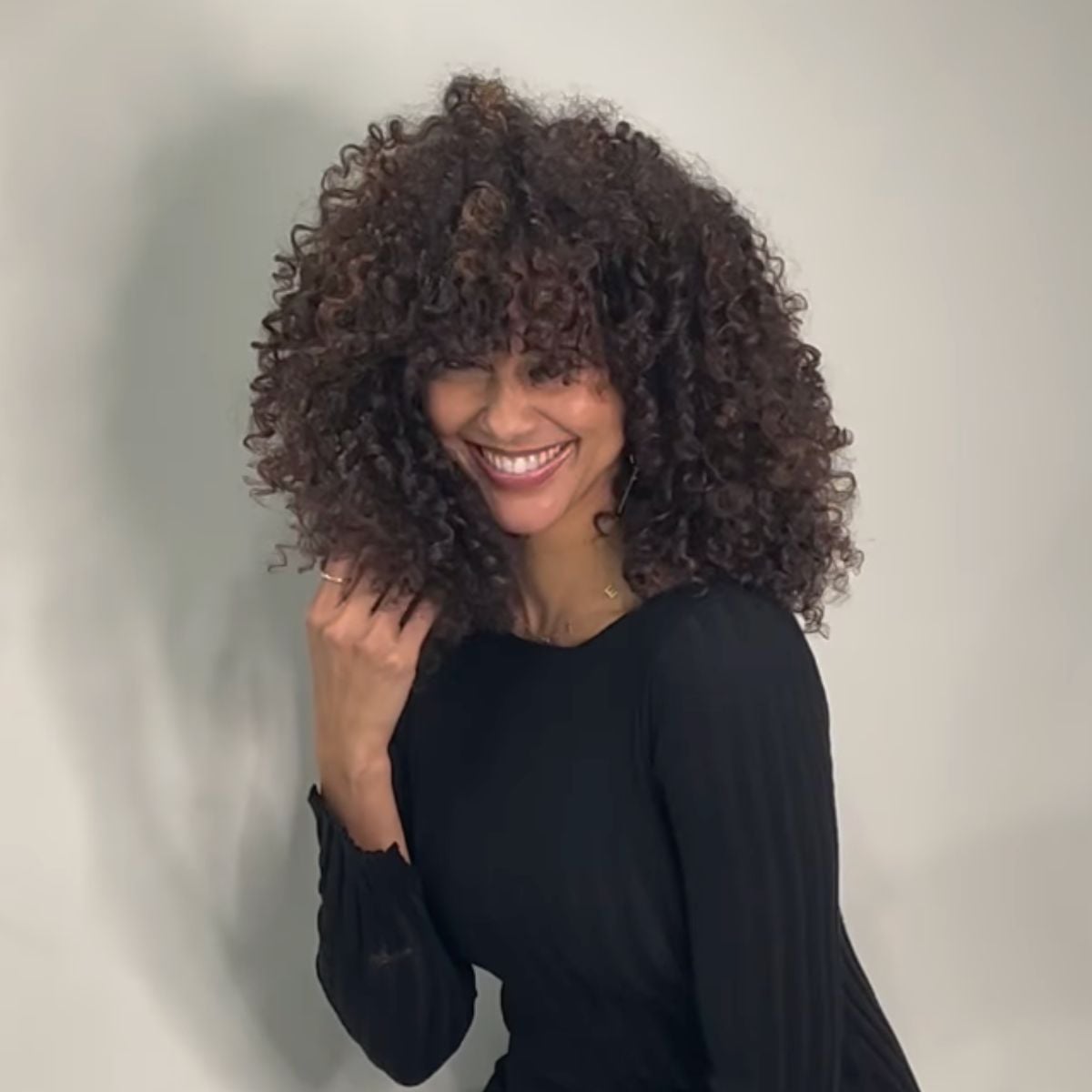
The warm undertones in dark brown add depth to the dense curl pattern, which is thick enough to hold the shape without help. Ask your stylist for: chin length rounded bob, warm undertones, curly bangs. The rounded silhouette suits those who want movement, not severity. A shorter rounded shape like this needs a trim every six to eight weeks to keep the curve defined.
Final Thoughts
For fine curls, prioritize cuts that enhance volume, like a shag or layered bob. For thick curls, manage density with collarbone-length layers or a structured bob. Trim layers and bangs every six to eight weeks to keep the shape sharp. Refresh color highlights every eight to twelve weeks, depending on how bold you went. Deep condition weekly to maintain curl health and elasticity. Use a diffuser on low heat for air-dried styles to boost definition. Protect curls with a heat protectant spray before any heat styling. Embrace your curls with a cut that celebrates their unique texture.