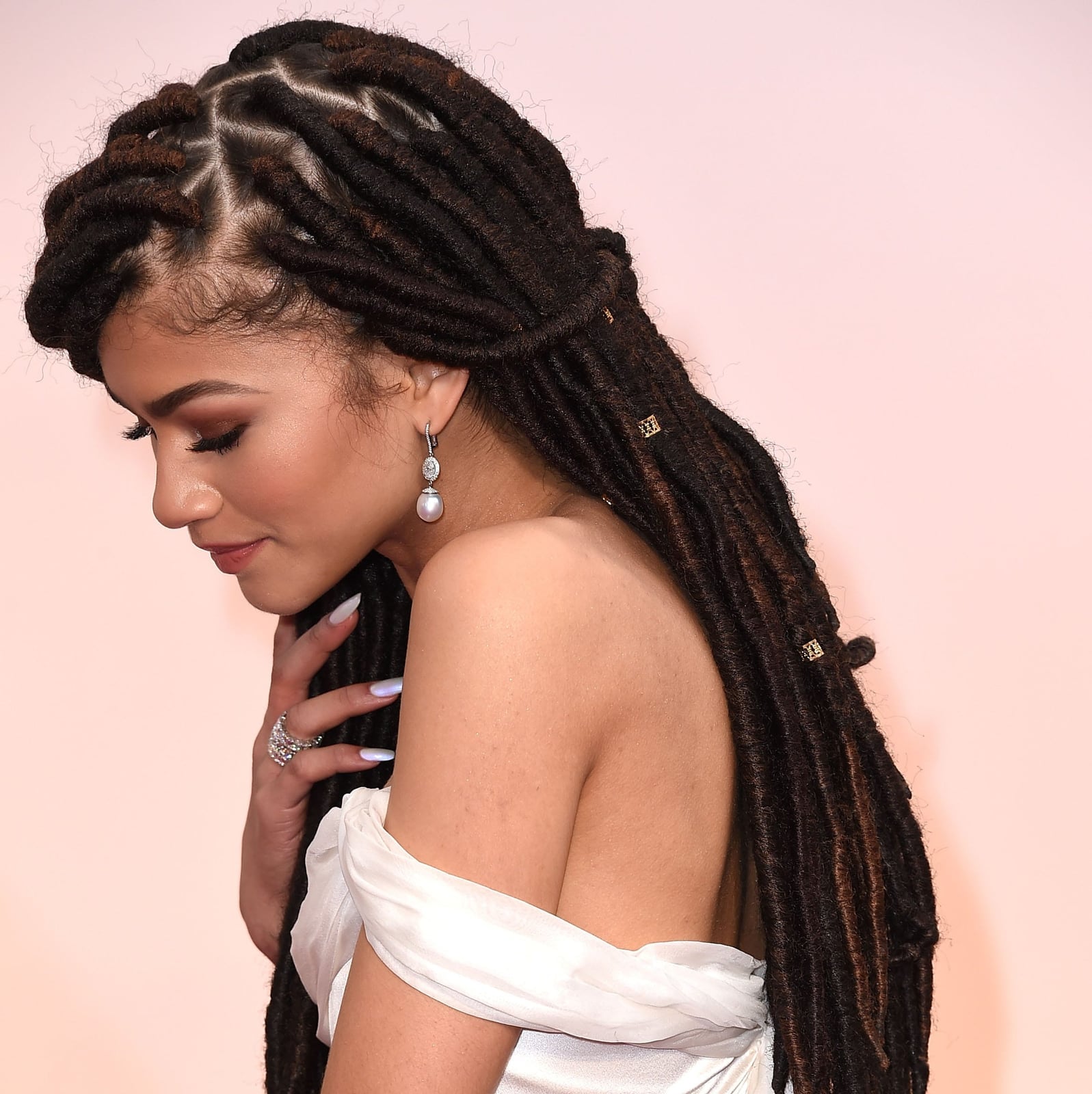
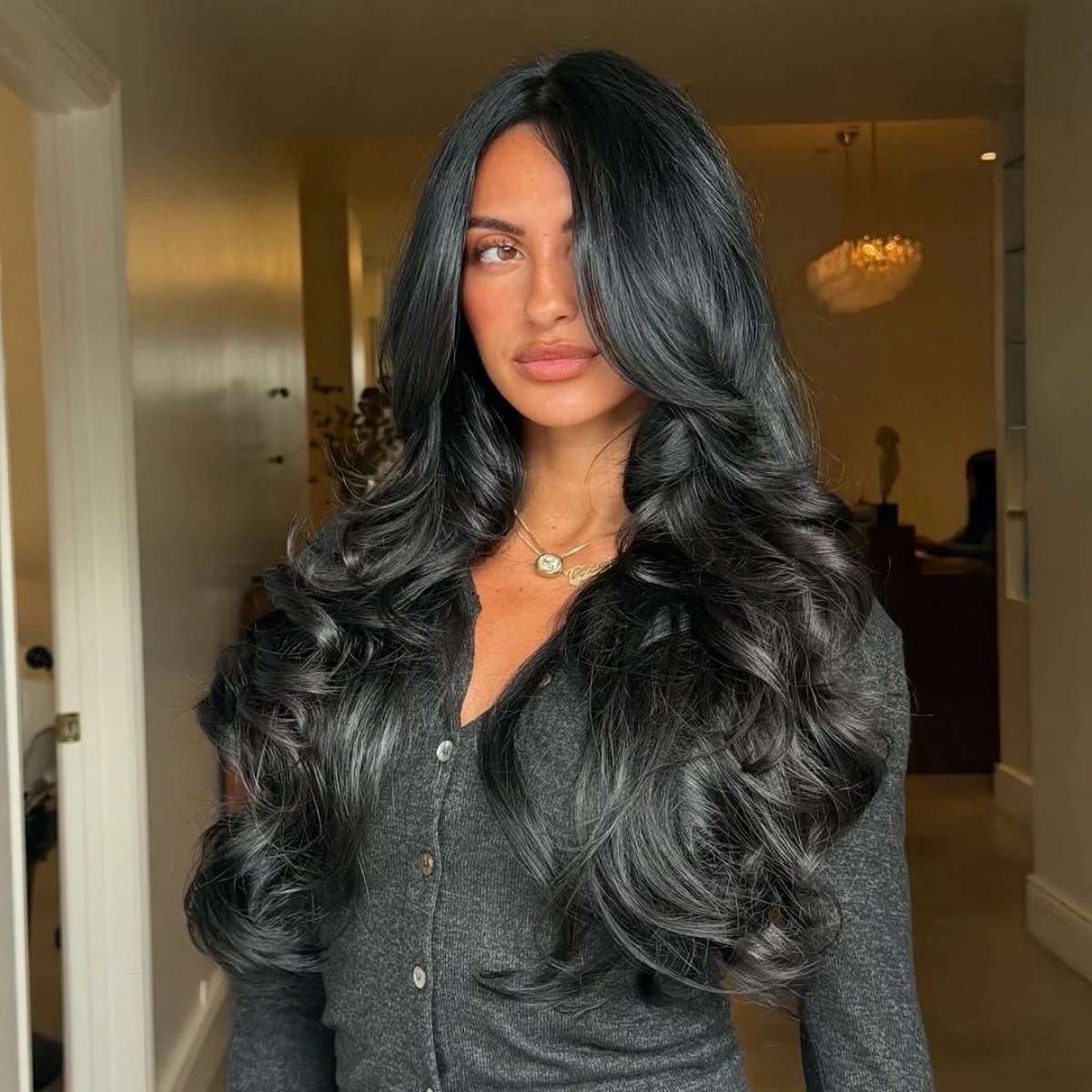
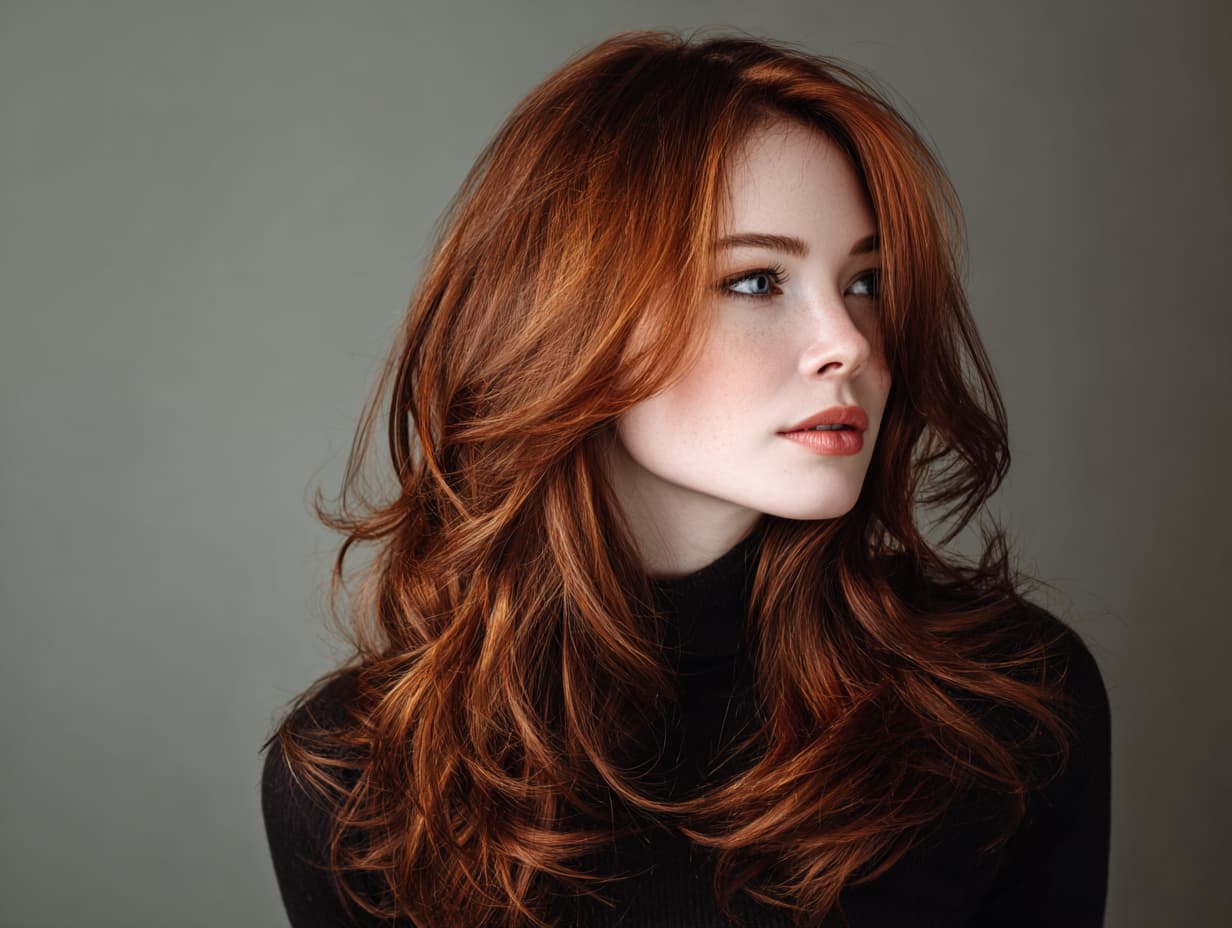
Thick hair is a lot of things, but low-maintenance isn’t one of them. The right cut removes weight, adds movement, and works with your natural density instead of against it. Right now, that means soft face-framing layers, curtain bangs, and lived-in color that grows out gracefully rather than requiring a salon visit every four weeks.
This collection of 34 Trendy Hairstyles for Thick Hair covers everything from ear-length bobs to mid-back waves, with options for straight, wavy, and curly textures. Whether you need a low-upkeep cut for a busy schedule or a high-impact shape for a special occasion, there’s a style here that solves the real struggle of thick hair: finding a cut that doesn’t turn into a triangle.
Collarbone Bob With Blonde Balayage
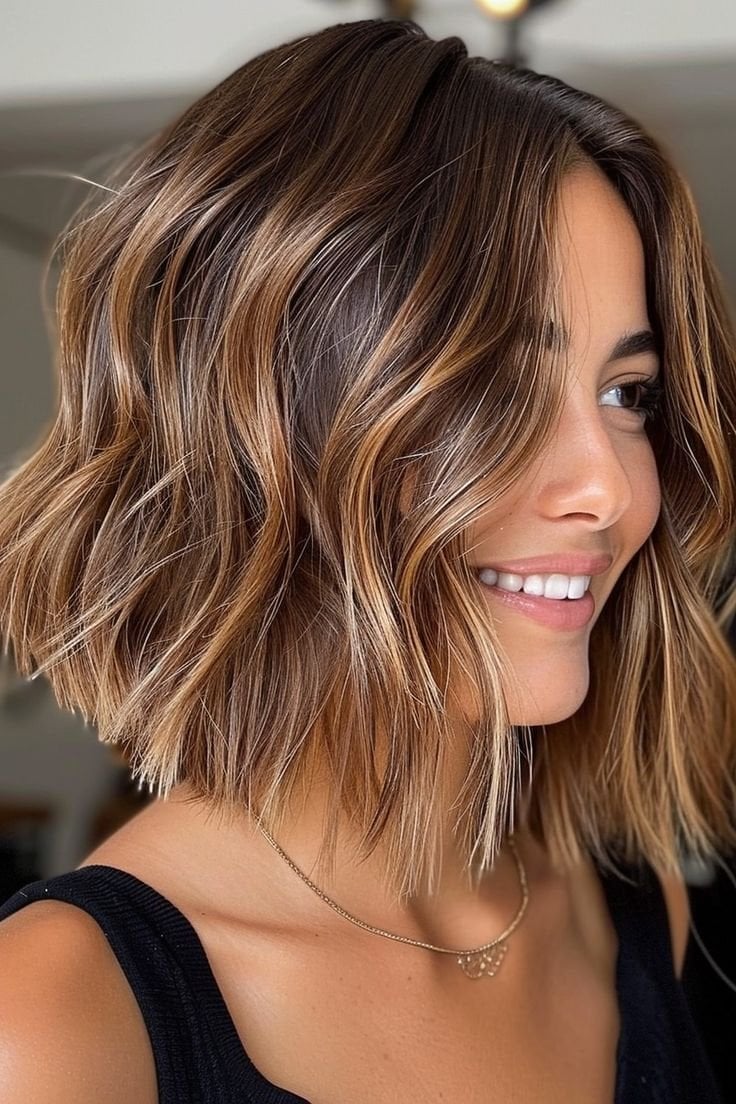
The collarbone bob with blonde balayage works because the soft layers remove enough weight from thick, wavy hair so the cut keeps its shape instead of mushrooming out. The side parting and smooth blowout give it a polished finish, while the gentle wave texture keeps it from looking too stiff. This cut suits thick hair that already reaches collarbone length or a bit beyond, and it can soften a square jawline without sacrificing the density you clearly like having. Ask your stylist for: collarbone bob with soft layers and balayage. Blow-dry with a round brush to keep the ends smooth, and a trim every six to eight weeks keeps the layers from turning into a triangle.
Voluminous Shoulder-Length Afro
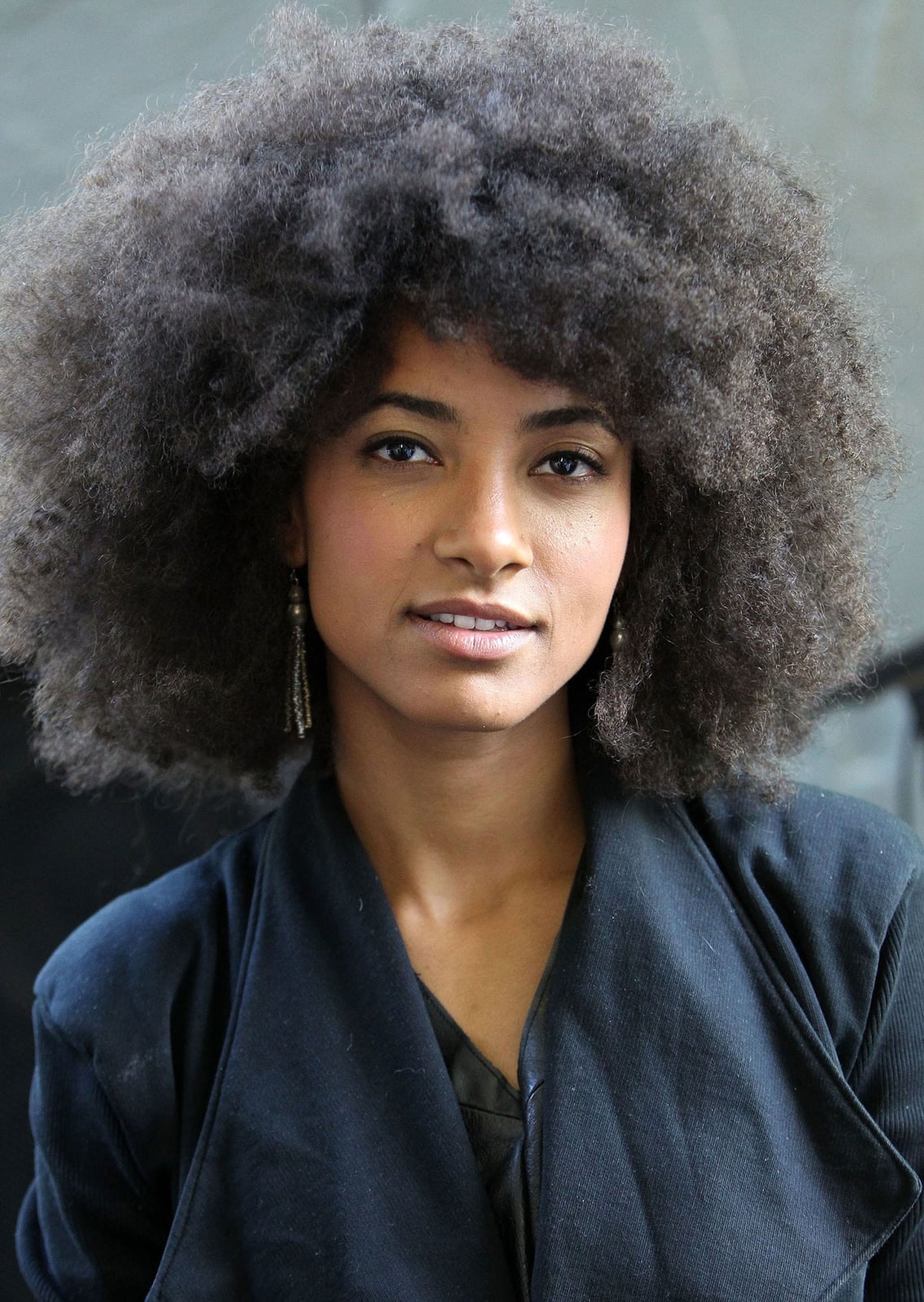
Can a haircut be both low-maintenance and high-impact? A shoulder-length afro says yes, provided you start with naturally coily or kinky thick hair that’s already at least shoulder length. The middle parting is subtle within all that volume, and the dark brown color lets the texture do the talking. Ask your stylist for: shoulder-length afro, natural coily texture. To keep the shape from collapsing, use a pick to fluff the roots and mist with water plus a curl enhancer daily. This one is entirely DIY between trims, which is the point: you shape it with your hands, not a brush, and the density does the rest.
Collarbone Cut With Curtain Bangs And Highlights

The collarbone cut with curtain bangs is precise about two things: where the layers fall and how much weight the bangs carry. The soft layers start around the chin and blend down, which keeps thick wavy hair from feeling bottom-heavy, and the curtain bangs are cut to graze the cheekbones rather than sit heavy on the forehead. The dark brown base with subtle lighter highlights adds dimension without a harsh regrowth line. Ask your stylist for: collarbone length layers with curtain bangs. When you’re describing the bangs, be specific about length and weight, because too thick and they’ll overwhelm the face, too thin and they’ll disappear into the rest of the hair.
Mid-Back Waves With Long Layers
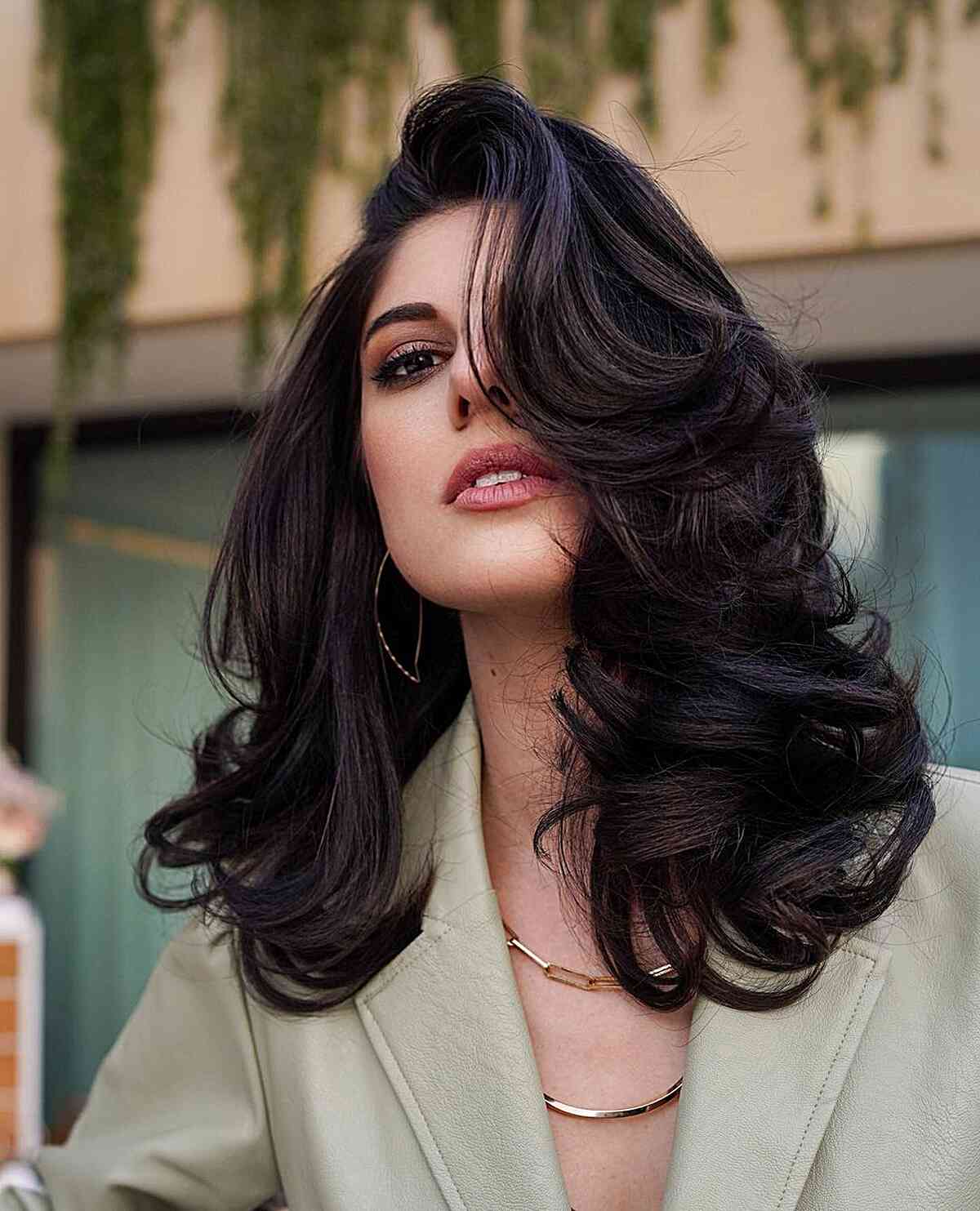
Long layers are the technical answer to a very specific problem: you want to keep your length but not the weight that comes with it. On thick, dark brown hair reaching mid-back, those layers are cut to remove bulk from the interior while leaving the perimeter intact, so the hair moves instead of hanging like a curtain. The side parting and voluminous waves give it a glossy, flowing finish that reads as deliberately styled, not air-dried and hoping for the best. Ask your stylist for: mid-back waves with long layers. Apply a wave-enhancing cream to damp hair, then diffuse or air dry for definition. A trim every eight weeks keeps the layers from growing out into one solid block.
Collarbone Lob With Curtain Bangs And Highlights, Wavy
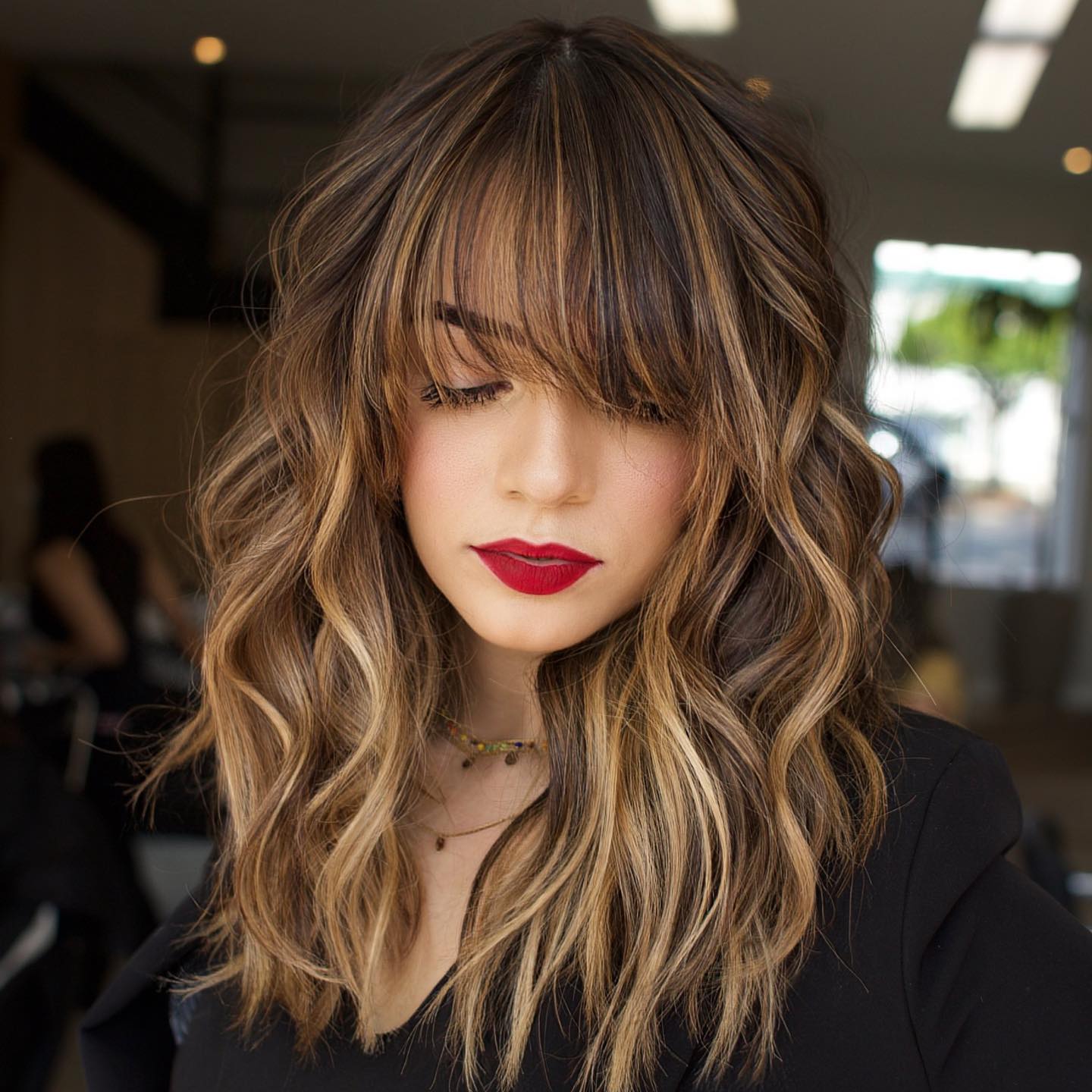
If a blunt collarbone cut feels too severe for your taste, the wavy lob with curtain bangs is the softer sibling. Prominent curtain bangs frame the face without committing to a full fringe, and the brunette base with blended blonde highlights creates that lived-in effect that grows out gracefully rather than announcing itself. The loose, slightly tousled waves show off the thick texture while keeping the whole thing from looking too done. Ask your stylist for: collarbone lob with curtain bangs. Use a texturizing spray on dry hair to get that piecey finish, and budget for a bang trim every four to six weeks, since that keeps the curtain shape honest.
Mid-Back Ash Blonde With Long Layers
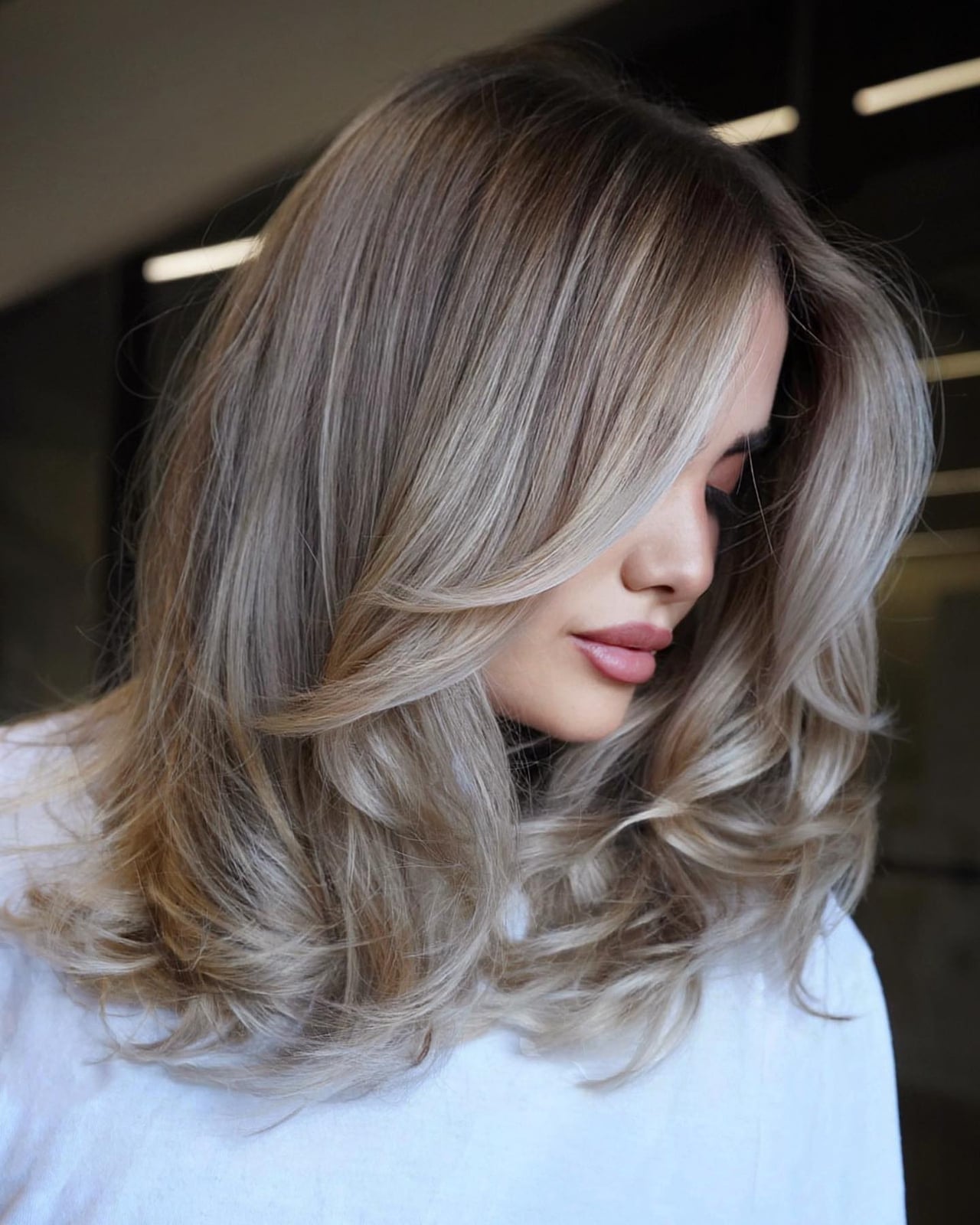
Why does ash blonde always look so much cooler than you expect? Because the cool-toned base plus lighter highlights gives a polished, expensive finish, especially on thick hair. This mid-back cut uses prominent long layers starting around the shoulders, so the density has somewhere to go instead of just hanging. The middle part and soft blowout waves stop it from feeling heavy.
Ask your stylist for: mid-back length with long layers, ash blonde highlights. Use a volumizing mousse at the roots before blow-drying to keep the shape from falling flat. Plan on a toning appointment every six to eight weeks to stop the ash shade from shifting warm.
Ear-Length Shaggy Cut With Choppy Bangs
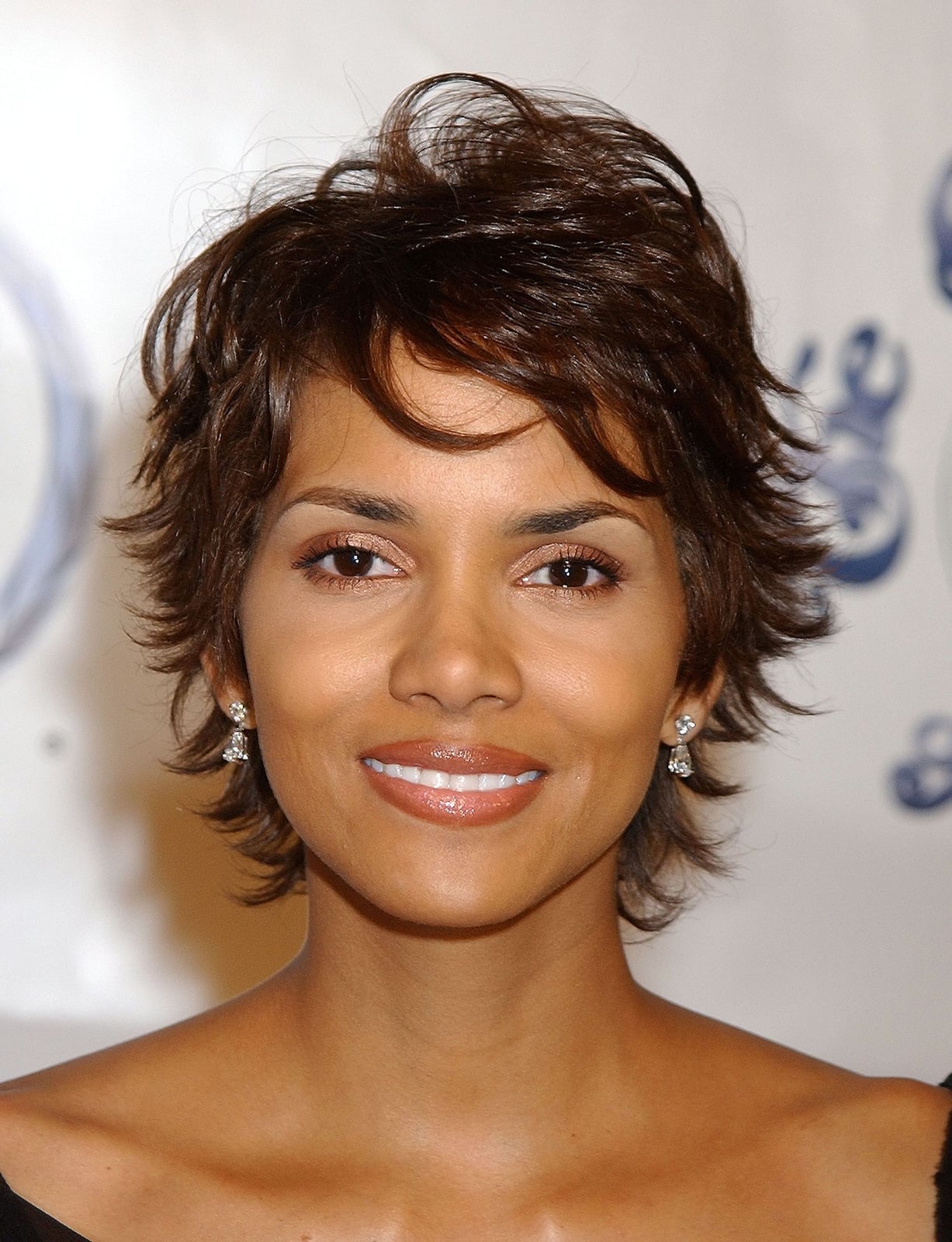
Do not ask for this cut unless you are ready to see your stylist every four weeks. The ear-length shaggy shape with short, choppy bangs swept to the side relies on precision. Thick, straight hair holds the piecey definition well, but those choppy layers grow out fast. One missed trim and the structure blurs into a shapeless blob.
Ask your stylist for: short shaggy cut with choppy bangs. Apply a texturizing paste to the ends for definition, and budget for frequent shaping. The honest drawback is the upkeep. It is worth it, but only if you show up.
Shoulder-Length Old Hollywood Curls

This is a design built on volume and drama, and it only works if you have the density to support it. The shoulder-length cut with long layers creates a base for those old Hollywood-inspired curls, dark brown with subtle highlights for dimension. A side parting pushes the weight forward, which flatters oval and long face shapes.
Ask your stylist for: shoulder-length hair with old Hollywood curls. Use a strong-hold hairspray to lock the curl pattern in place. A steam styler is your friend for refreshing the shape between wears. If your hair is fine or thin, the curls will not hold the intended silhouette.
Mid-Back Layers With Curtain Bangs And Balayage
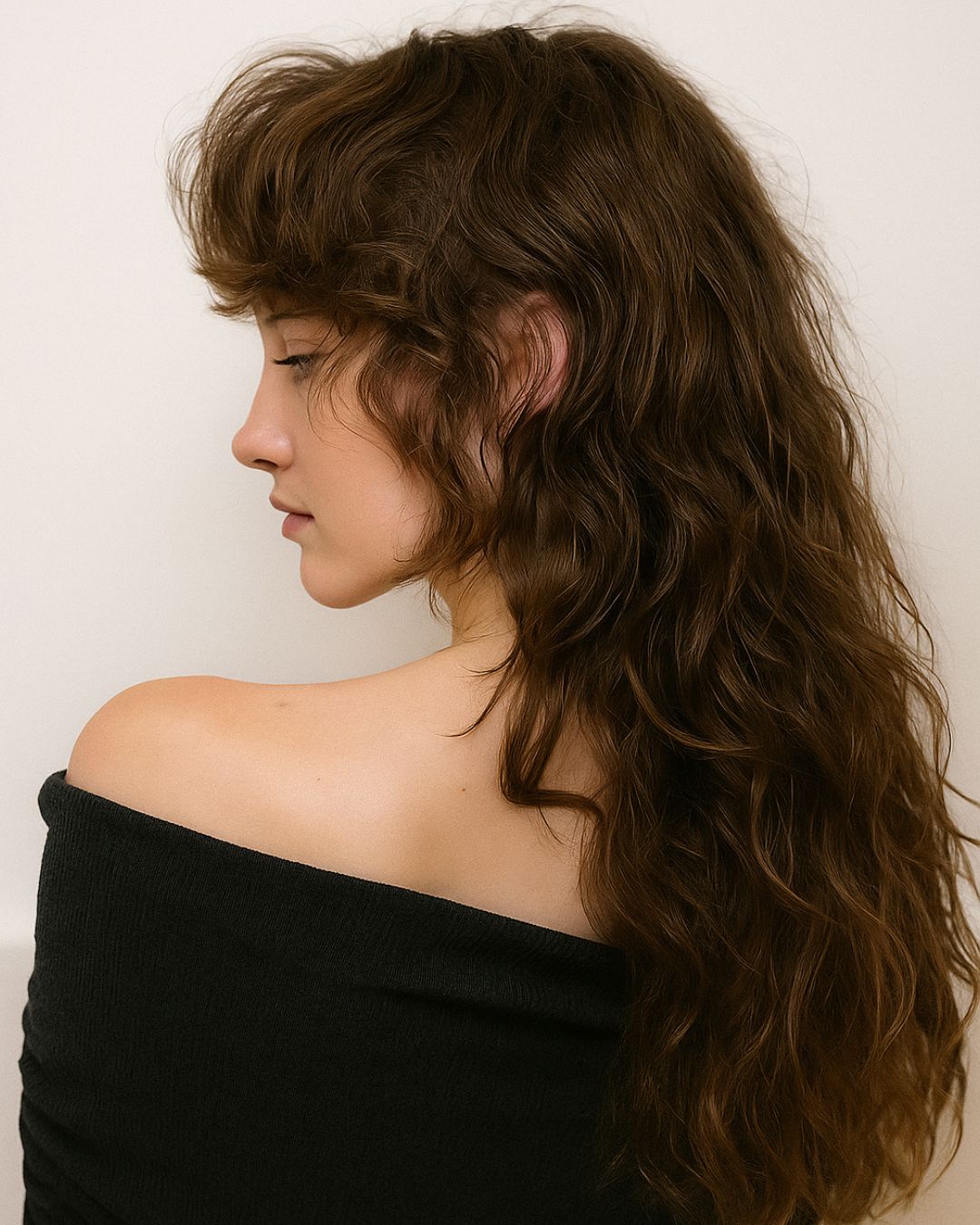
The key to these loose waves is the layering, not the iron. Long layers starting around the collarbone and soft curtain bangs give thick hair movement, while the dark brown base with blonde highlights adds dimension. At home, a large-barrel curling wand and a light hold spray get you close to the salon version.
Ask your stylist for: mid-back length with long layers and curtain bangs. Damp hair is blow-dried to encourage the natural wave. A trim every eight to ten weeks keeps the layers fresh and the curtain bangs from merging with the rest of the hair.
Short Shag With Wispy Bangs
How do you keep a short shag from looking like a helmet? Wispy bangs. This ear-length cut uses textured, piecey layers plus short, wispy bangs to break up the density. The dark brown hair gets a full silhouette without feeling bulky.
Ask your stylist for: short shag with wispy bangs. Use a texturizing spray or wax to enhance the piecey definition. Expect to book a trim every four weeks. The wispy bangs need regular shaping to stay light and avoid turning into a solid fringe.
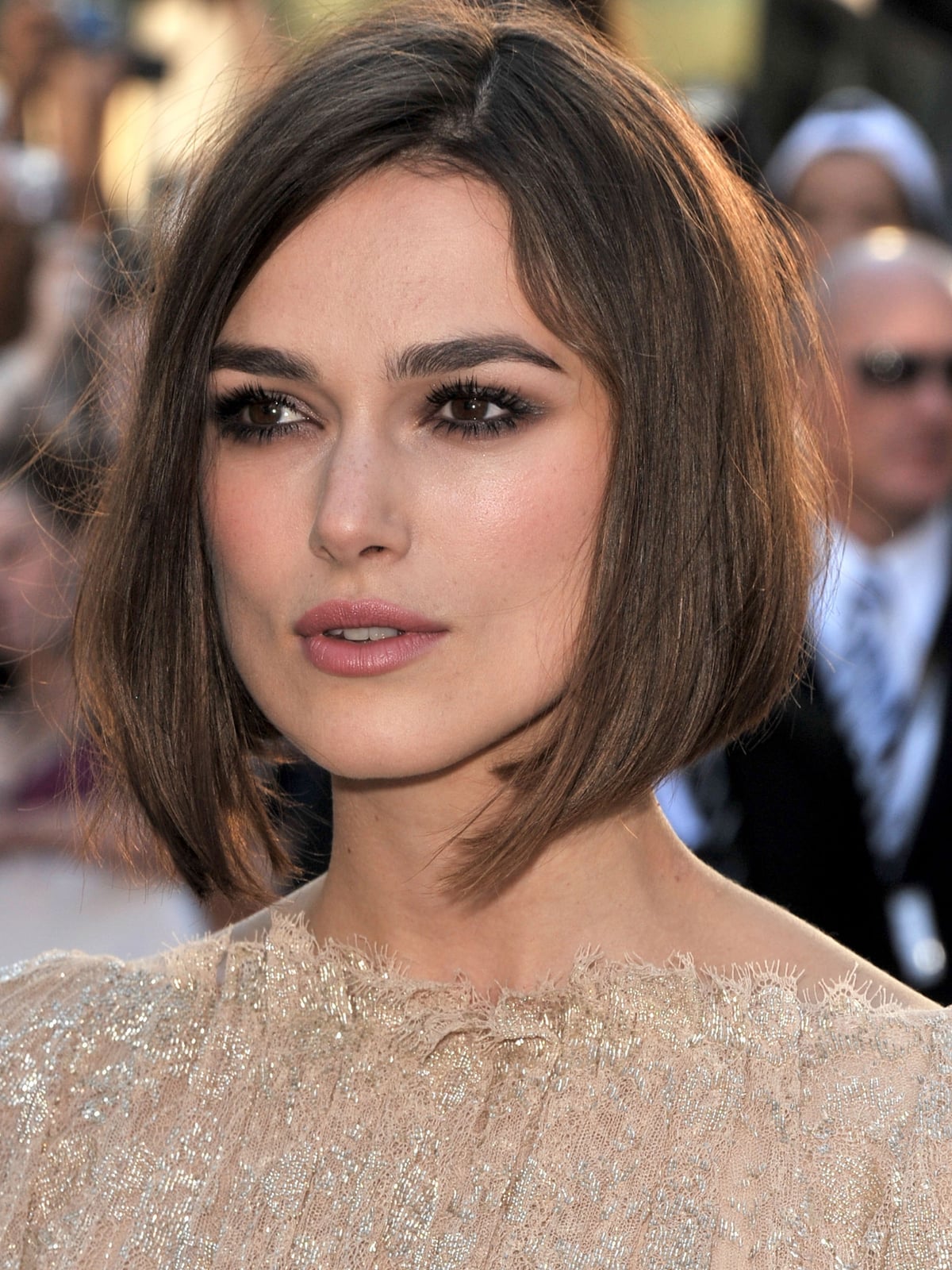
Collarbone Lob With Balayage And Curtain Bangs
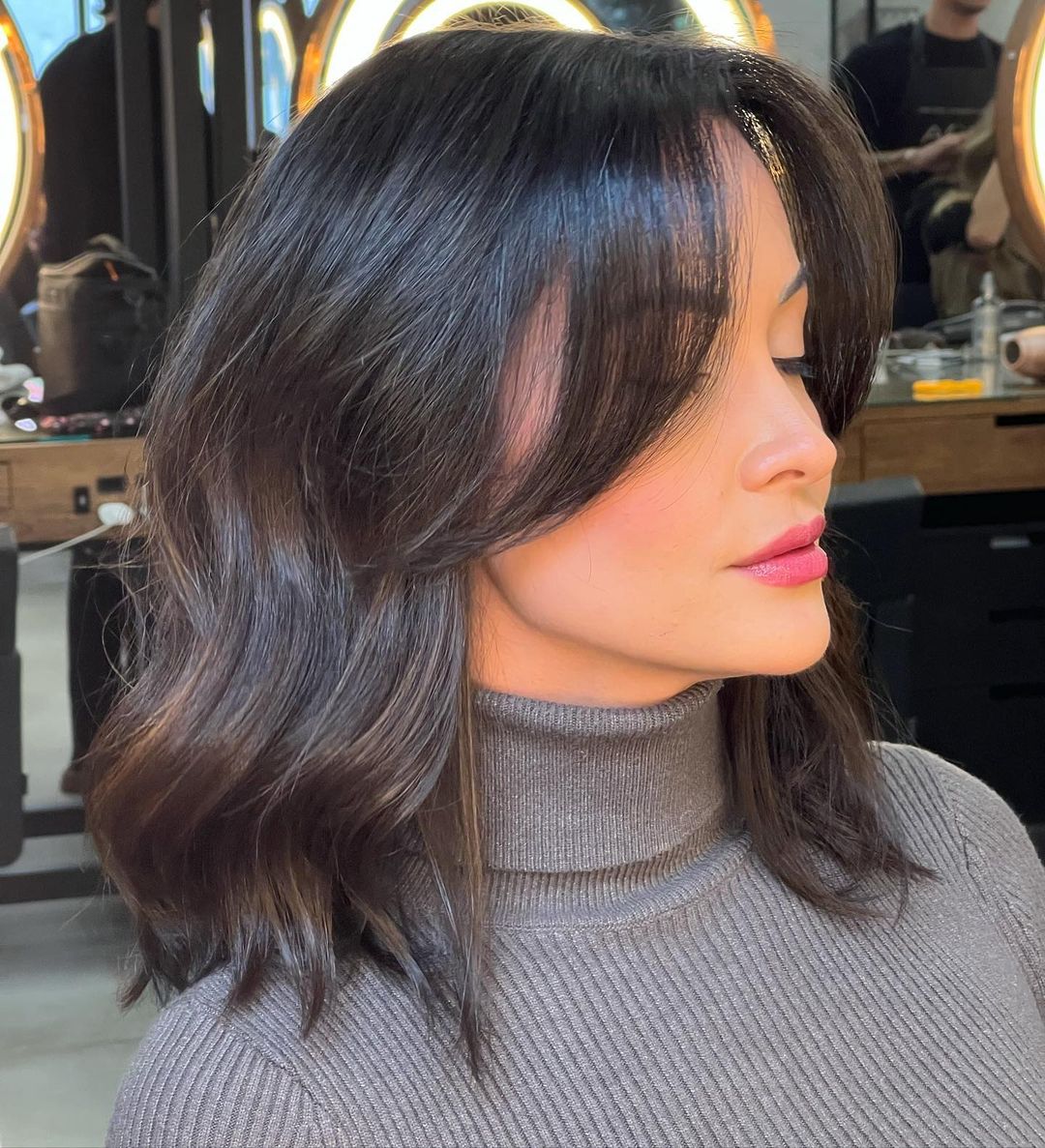
The lob is a lesson in balance: soft layers and curtain bangs keep the collarbone length from sitting too heavy on thick, wavy hair. A middle parting and loose waves let the face-framing layers do their job, which is to soften the line around your jaw without sacrificing volume. Ask your stylist for: collarbone lob with soft layers and curtain bangs. The dark blonde base with balayage adds dimension that makes the waves read as movement, not bulk. To recreate the texture at home, apply a sea salt spray to damp hair and scrunch as you air dry, then touch up with a curling wand on the ends only. Expect to revisit the bangs every four to six weeks, since they grow out faster than the rest.
This collarbone lob with balayage and curtain bangs suits anyone with thick, wavy hair who wants a cut that frames the face and cuts drying time in half.
Textured Ear-Length Bob
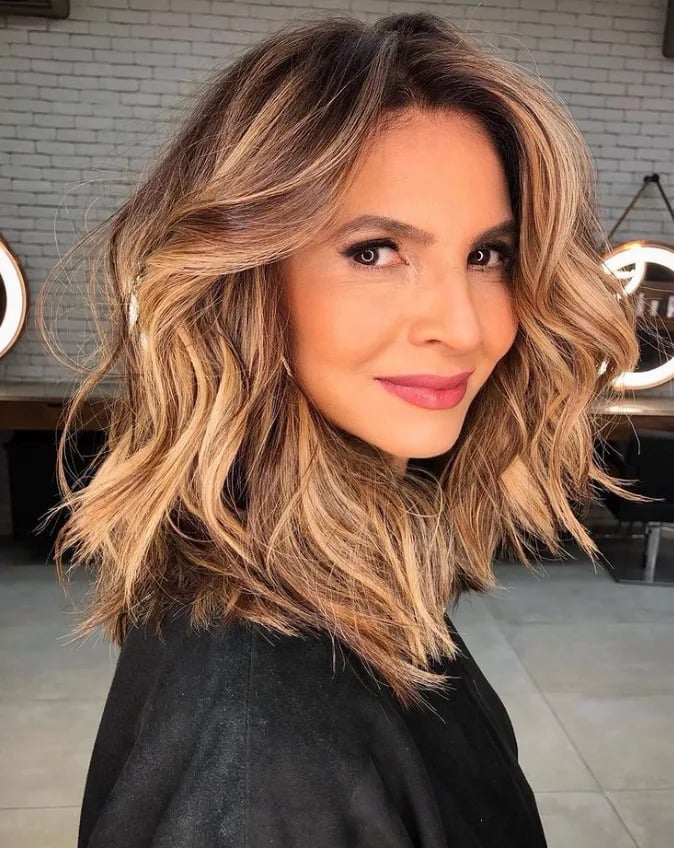
An ear-length bob with a textured blowout is a volume machine, but it demands a stylist who understands thick hair. The dark brown base with subtle highlights gives the shape depth, while the textured finish adds movement. Ask your stylist for: ear-length bob with textured blowout. The drawback: without proper layering at the crown, the density can make the cut look round and heavy. It suits thick, wavy hair that needs a shape with body, and it works best if you are prepared to style it with a round brush every morning. A trim every six weeks keeps the silhouette sharp, since the shape loses its edge quickly on thick growth.
Collarbone Layered Bob With Ash Blonde Highlights
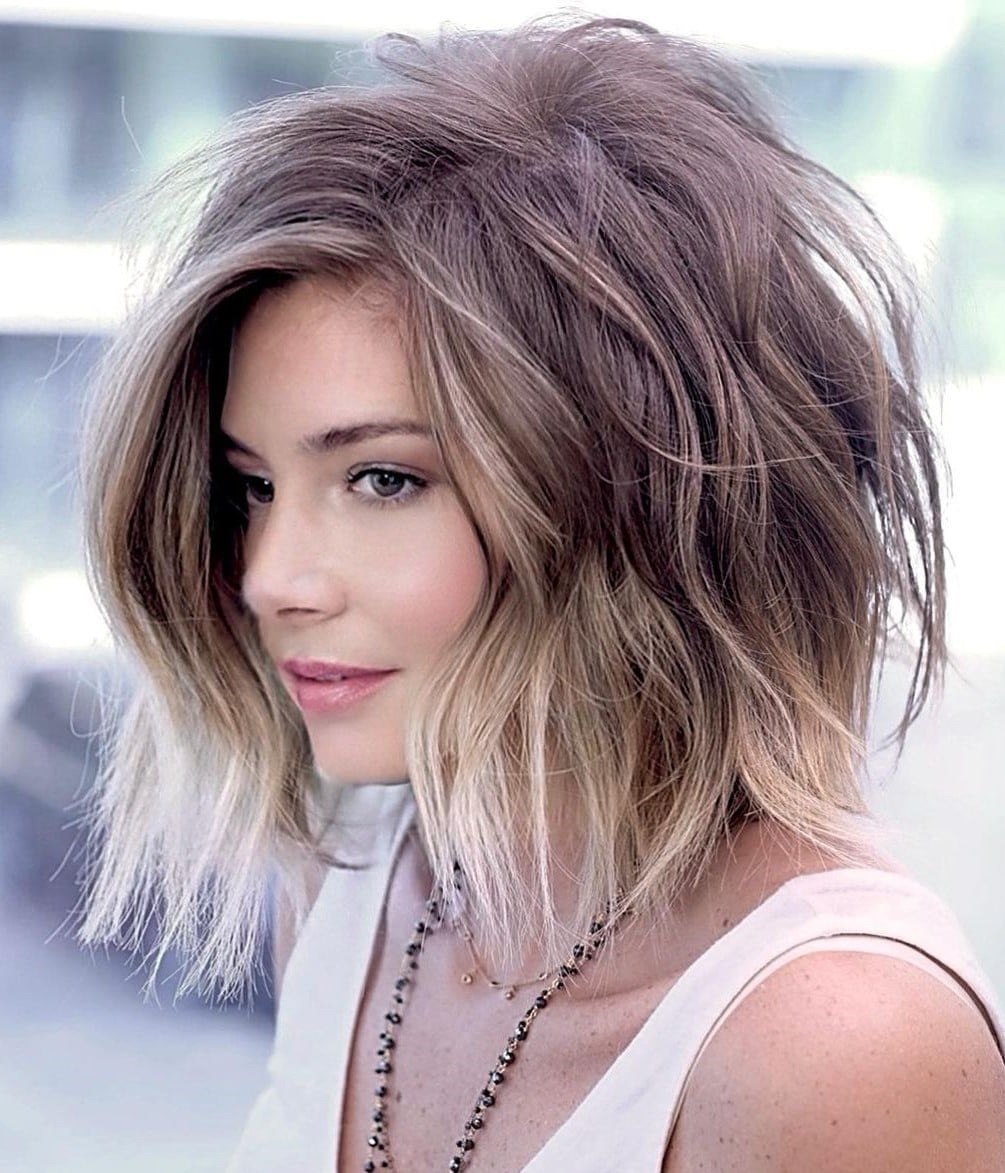
If you are weighing a full blonde against a lived-in color, this collarbone bob with dark roots and ash blonde highlights is the lower-maintenance option. The layers and curtain bangs break up the thickness, while the textured blowout and middle parting show off the dimension. Ask your colorist for: ash blonde highlights with dark roots. The dark base means you can skip the salon for a couple of months; the roots grow out as a feature, not a mistake. It suits thick, wavy hair of collarbone length, where the layers help manage the density. Tone the highlights every six to eight weeks to keep the ash from warming up, and use a texturizing spray to encourage the waves.
Mid-Back With Balayage And Curtain Bangs, Close-Up Take
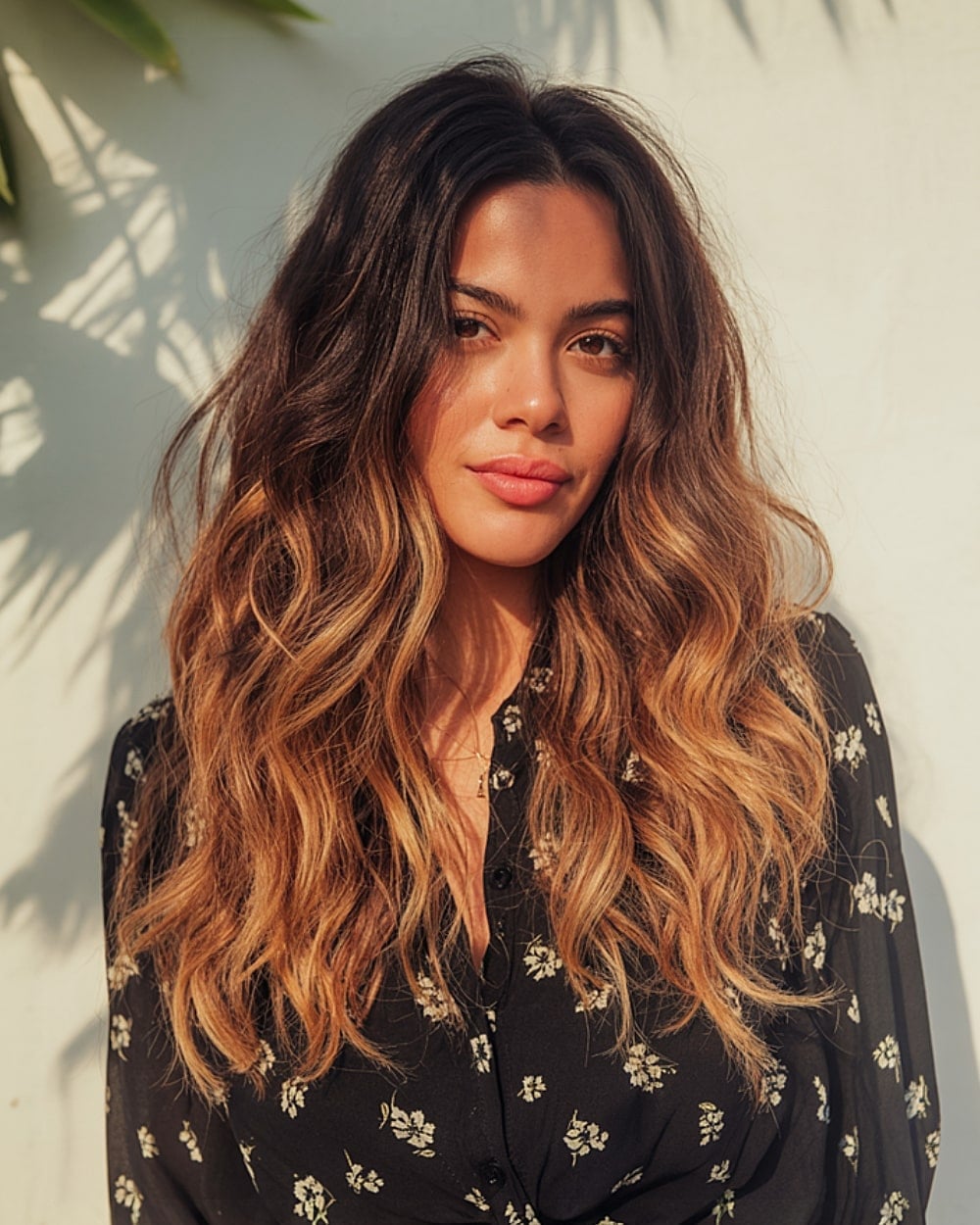
The mid-back length is a commitment, but on thick, wavy hair it pays off when the long layers are cut to move with the texture. A middle parting and curtain bangs soften the face, while the dark brown base with prominent blonde balayage adds dimension that stops the length from reading as one solid block. Ask your colorist for: mid-back balayage with curtain bangs. This style suits anyone with thick, wavy hair who wants to keep length and has the patience for styling; thick hair can pull layers flat if they are not cut high enough. Damp hair can be controlled with a smoothing product, then a diffuser or wide-barrel iron creates the loose waves. Trim every eight to ten weeks to keep the ends healthy and the shape from dragging down.
If your hair is finer or straighter, the same cut may lack body, so consider shorter layers or a smaller balayage section to add movement.
Collarbone Layers With Soft Waves And Curtain Bangs

To get soft, collarbone-length layers that frame the face, the key is asking for the layers to be blended, not choppy. This cut works with thick, wavy hair, where the side parting and glossy finish highlight the natural volume. Ask your stylist for: collarbone layers with curtain bangs. The soft waves are the payoff: they give the hair movement without the effort of a full blowout. It suits most face shapes, since the curtain bangs can be swept either way to adjust the frame. Use a texturizing spray on dry hair to define the waves, and trim the bangs every four to six weeks to keep them from getting straggly.
Long Hair With Curtain Bangs And Balayage
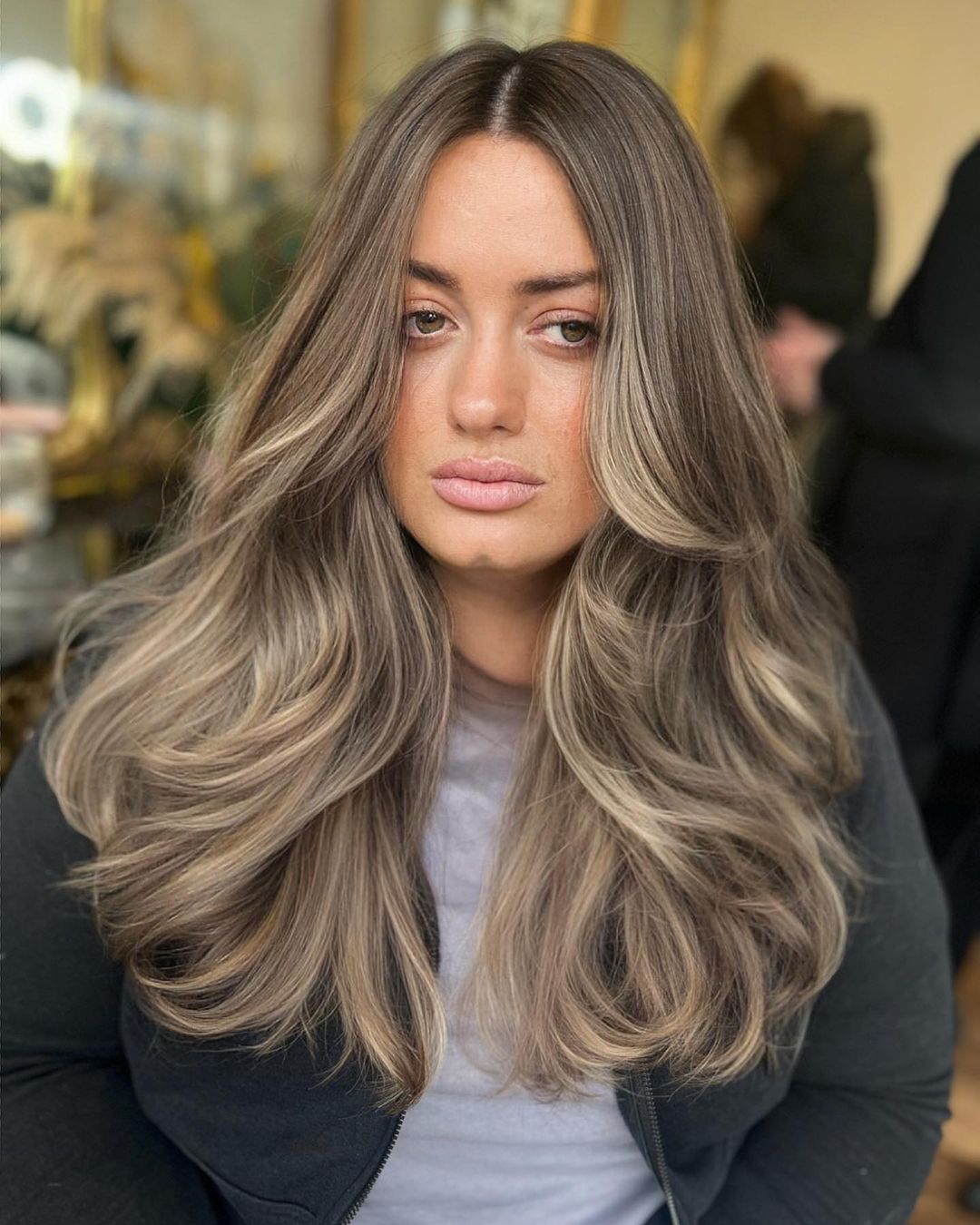
The balayage is the quiet workhorse here, lifting ash brown into blonde pieces that catch the eye without shouting. Long layers keep the weight from turning this into a triangle, while the curtain bangs and middle parting frame the face. This long hair curtain bangs balayage combo suits thick, wavy hair that already has some length to work with. Ask your stylist for: long hair with curtain bangs and balayage. Apply a heat protectant before blow-drying and use a wide-tooth comb on damp hair to keep the wave pattern intact.
The lived-in color grows out gracefully, so you can stretch the next appointment to ten or twelve weeks. Between visits, a gloss treatment at the salon keeps the blonde from drifting brassy. A trim every eight weeks keeps the ends from splitting, which matters when you have this much hair to manage.
Collarbone Shaggy Mullet With Curtain Bangs

Does it look like you just rolled out of bed and it happened to work? That is the whole point, and it takes effort. This collarbone shaggy mullet with curtain bangs needs a texturizing spray or dry shampoo to give the layers grit and keep the tousled shape from falling flat. The ash blonde with darker roots adds depth, but the darker roots mean you can wait longer between color appointments. The drawback: it is not a wash-and-go style, so budget time to piece out the texture. Ask your stylist for: shaggy mullet with curtain bangs. A trim every six to eight weeks is non-negotiable to keep the shape from growing into a shapeless blob.
Collarbone Layers With Soft Waves

Soft waves add movement to a polished blowout, making this style suitable for both the office and evening plans. This cut transitions easily from workdays to weekends. Ask your stylist for: collarbone length layers with soft waves. Apply a smoothing cream to damp hair to control frizz. A trim every six to eight weeks prevents layers from growing out unevenly.
Ear-Length Shag Mullet With Micro Bangs
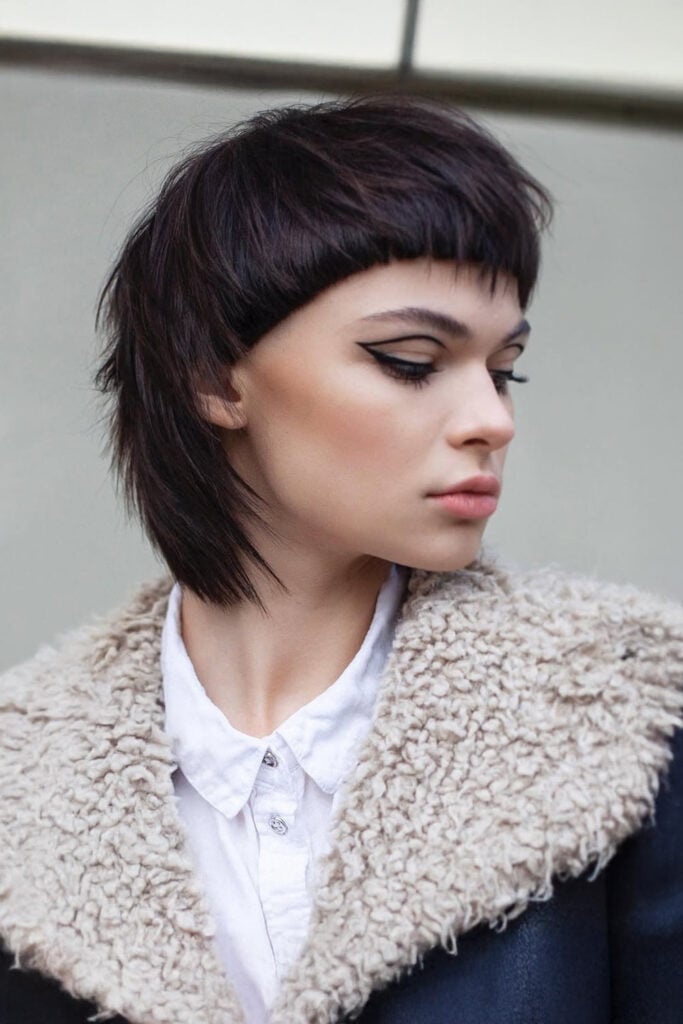
The rule with micro bangs is simple: do not try to cut them yourself. One wrong snip and you have a fringe that makes you look surprised. This ear-length shag mullet with micro bangs works best on thick, straight hair that can hold the textured shape without flopping. The side parting adds a little softness to an otherwise bold cut. Ask your stylist for: shag mullet with micro bangs. The drawback is the commitment: micro bangs need a trim every three to four weeks, and you will be styling them every morning with a strong-hold pomade to keep the pieces defined.
Ear-Length Blunt Bob With Micro Bangs

Blunt and piecey sound like opposites, but this ear-length bob pulls it off with textured ends that keep the heavy cut light. The micro bangs add the edge, and the middle parting keeps everything symmetrical. On thick, straight hair, the blunt line shows off density, while the piecey finish gives it a modern, lived-in feel. Ask your stylist for: ear-length blunt bob with micro bangs. To get close to this at home, work a paste through the ends after blow-drying. The salon does the cutting, though: precise trims every four to six weeks are what keep the micro bangs from becoming a unibrow situation.
Chin-Length Bob With Curtain Bangs

The middle parting and the smooth blowout do the heavy lifting here, giving the chin-length bob its polished shape. The ash blonde base with lighter highlights adds dimension without weighing down the fine, straight texture. Curtain bangs soften round and heart faces, but on fine hair this cut can fall flat without significant styling effort. Ask your stylist for: chin-length bob with curtain bangs. Blow-dry the bangs with a round brush and add a smoothing serum for a sleek finish that holds past lunch.
Mid-Back Shag With Curtain Bangs And Curly Texture
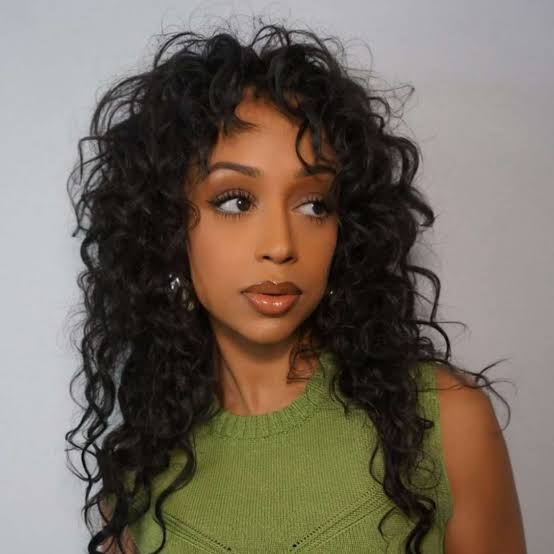
The shag’s layered structure gives thick, curly hair room to move, so the mid-back length doesn’t turn into a triangle. Curtain bangs blend into the curl pattern instead of fighting it, and the air-dried finish keeps the dark brown base looking natural. This cut genuinely flatters anyone with density and wave who wants to lose weight without losing length.
If your hair is fine or loose-waved, the shag’s internal layers can read as stringy rather than textured. For the rest, ask your stylist for: mid-back shag with curtain bangs. Work a curl-defining cream through damp hair, then air dry or diffuse. Plan on a trim every eight to ten weeks to keep the layers from growing into a shapeless mass.
Chin-Length Angled Bob With Purple Undertones
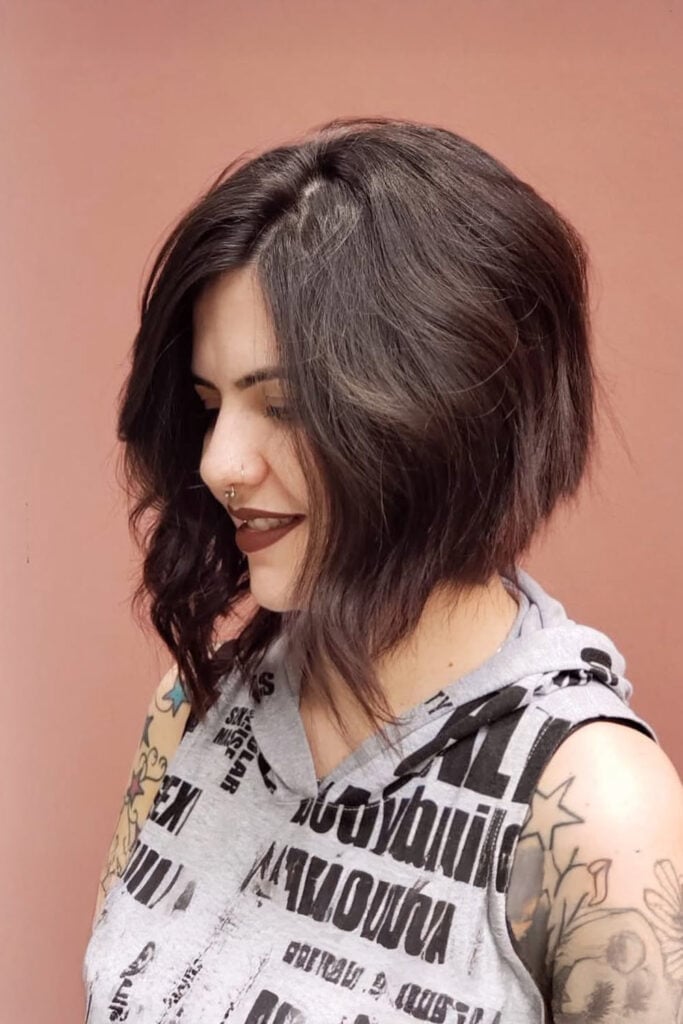
The side parting and subtle waves show off the density, while the dark brown base with purple undertones adds depth without a full color commitment. This cut suits thick hair that can hold the line, and the angle works well for those who want movement around the jaw. Ask your colorist for: dark brown with purple undertones. A smoothing serum and flat iron keep it sleek, and trims every six to eight weeks maintain the angle.
Chin-Length Bob With Blunt Bangs, Copper Red

The copper red shade is the loudest thing here, but the blunt bangs are the real commitment. They cover the forehead completely and sit straight across, so the middle parting and chin-length bob stay graphic and sharp. This works best on thick, straight hair that can support the weight of the fringe. For oval and long faces, the blunt line balances proportion. Ask your stylist for: chin-length bob with blunt bangs. Keep the bangs smooth with a flat iron and add a texturizing spray for a slightly lived-in finish.
Chin-Length Sleek Bob With Blunt Bangs, Close-Up Take

Black hair makes the geometry obvious, so the middle parting and chin-length bob read as deliberate. Thick, straight texture is the ideal base, and the cut suits oval and long faces that can carry the severity. Ask your stylist for: chin-length sleek bob with blunt bangs. A flat iron and smoothing serum deliver the shine, and the bangs need a trim every three to four weeks to stay exact.
Chin-Length Bob With Sharp Blunt Bangs, Black Hair Styled In A Sleek

How often do you actually need to trim those blunt bangs? About every three weeks, because one millimeter of regrowth turns a sharp line into a shaggy suggestion. This chin-length bob in black hair uses a middle part and a flat-ironed finish to make the geometry the whole point. Ask your stylist for: chin-length bob with sharp blunt bangs. Thick hair makes those bangs look dense, so keep the ends absolutely straight with a smoothing serum. The cut stays sleek with no layers to interrupt the line.
Chin-Length Bob With Blonde Highlights
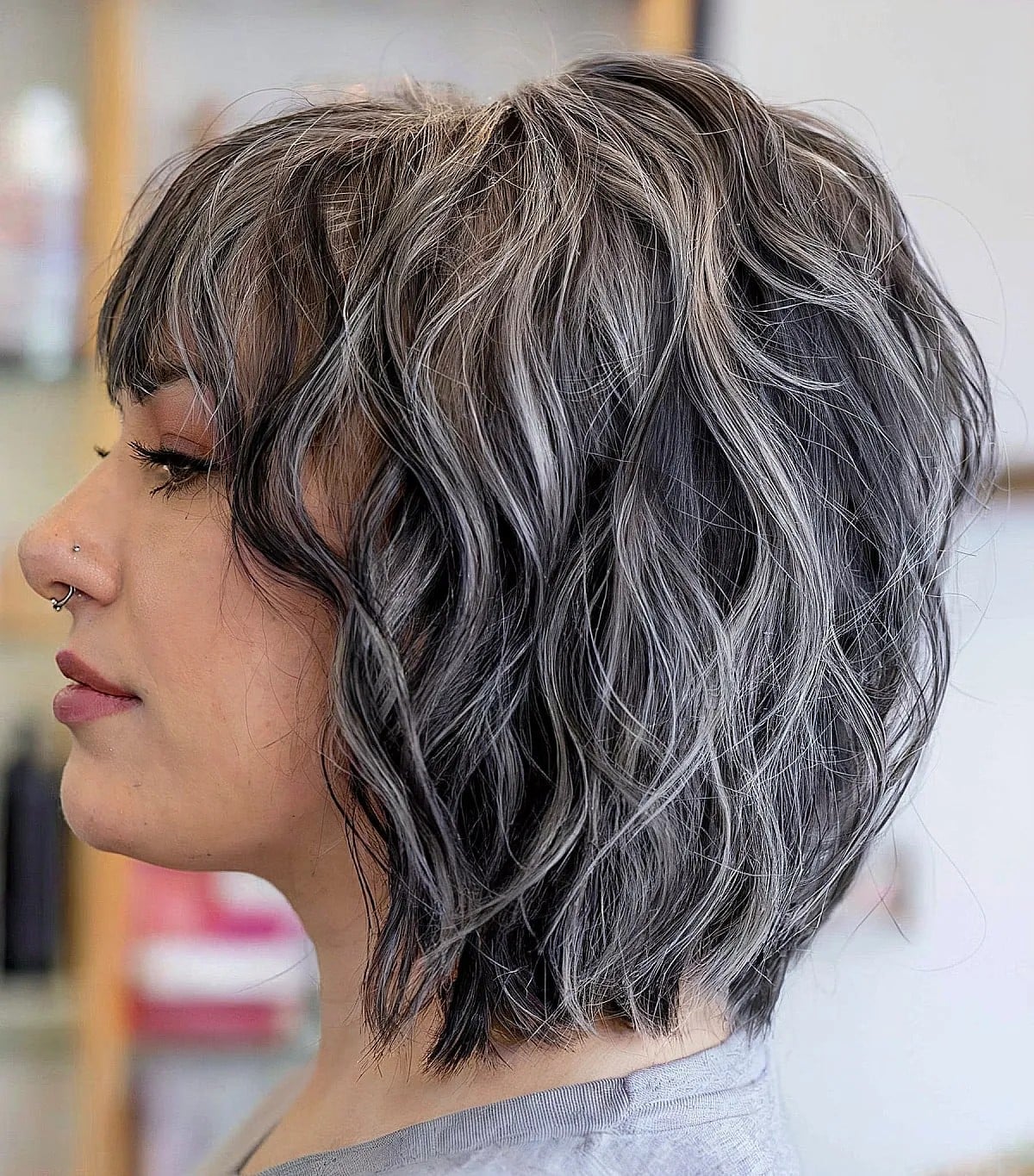
Winter light is stingy with dimension, which is why this chin-length bob leans on blonde highlights to do the work. The rich dark brown base gets thin, face-framing ribbons of warmth that catch whatever gray daylight is available. Subtle layers through the ends keep the weight from pulling the wave flat. Ask your stylist for: chin-length bob with subtle layers and blonde highlights. A soft blowout with a round brush is all it takes to make the color shift visible. It reads as a transitional season cut, equally at home with a sweater in January or a blazer in March.
Chin-Length Bob With Blunt Bangs And Waves, Dark Brown

The mistake people make with blunt bangs and waves is treating the whole head the same way. Here, the bangs need a flat iron while the rest of this chin-length bob gets a sea salt spray and air-drying. Ask your stylist for: chin-length bob with blunt bangs and waves. Thick, dark brown hair holds a wave well, but those bangs will look heavy if they hit at an unflattering angle. A middle part and a slightly piecey texture through the body prevent the cut from feeling like a helmet. The drawback is that blunt bangs on a round face can shorten the visual line, so the bob length needs to stay at the chin or below.
Neck Length Stacked Bob
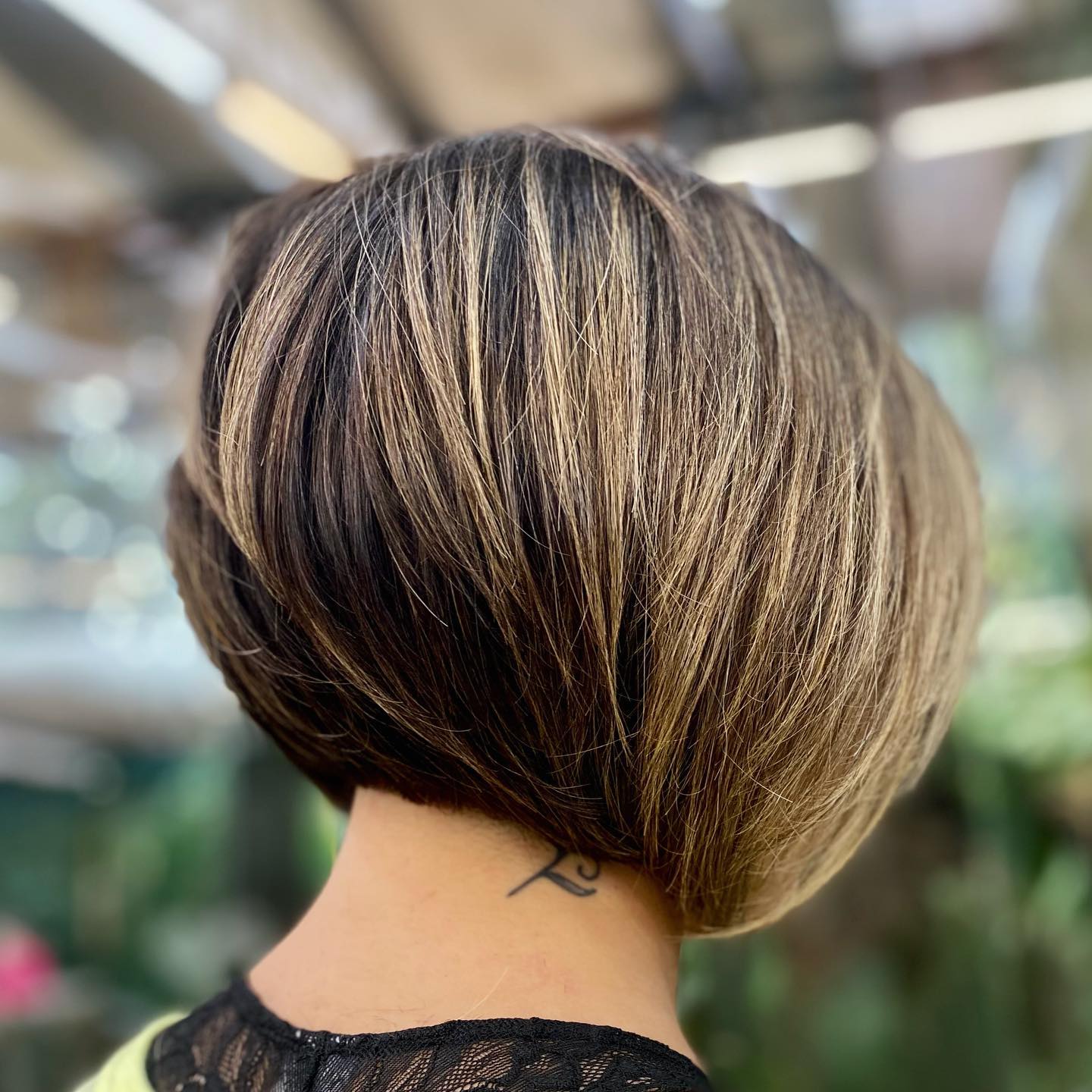
The stacked bob is a haircut you do not try to recreate at home with kitchen shears. That rounded silhouette at the nape requires graduated layers that only a stylist can eyeball correctly. This neck-length version in dark brown with subtle blonde highlights uses the stacking to create volume where thick hair often needs it least, but the shape actually controls bulk by removing weight from the interior. Ask your stylist for: neck-length stacked bob. The back view is the whole story, with a smooth finish and a clean line that sits just above the shoulders. Salon-only, and worth booking every six weeks.
Ear Length Pixie With Wet Look
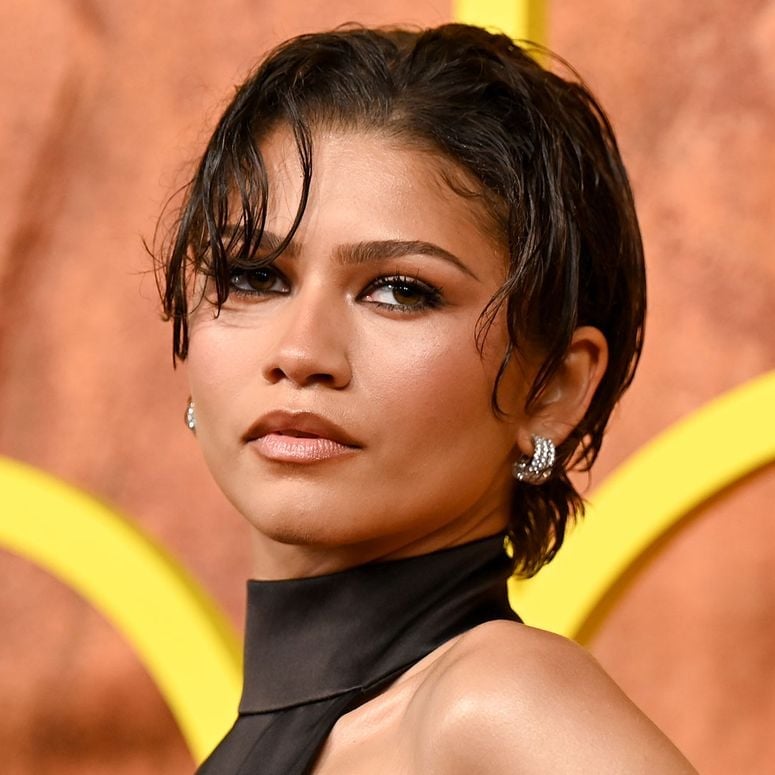
A wet-look pixie on thick hair is a statement, but it comes with a warning: the product load required to hold that glossy sheen can make dense hair feel like a helmet by midday. This ear-length cut in dark brown uses short, wispy bangs swept to the side to keep some air in the design. Ask your stylist for: short pixie cut with wet look finish. The straight texture and strong hold gel are essential here, and the shape needs a trim every three weeks to keep the ear-length silhouette clean. The wet look is a styling choice, not a low-maintenance shortcut.
Ear Length Layered Bob With Side Swept Bangs
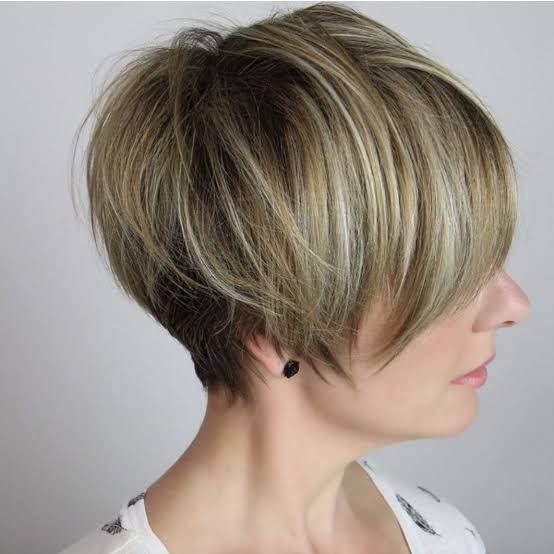
A side view lets you see the real point of this ear-length bob: the layers are doing the work, carving out movement so thick, straight hair doesn’t sit like a heavy curtain. The side-swept bangs and side parting add a soft angle that breaks up the density. This cut suits thick, straight hair that already reaches the ear or a bit longer, since the layering needs some weight to play with. Ask your stylist for: ear-length layered bob with side-swept bangs. A light texturizing spray gives the layers definition, and you’ll want a trim every six weeks to keep the shape sharp.
Collarbone Lob With Caramel Balayage

Where an ash-toned lob can read cool and flat, this collarbone-length cut with dark brown base and caramel balayage brings warmth and dimension to thick, wavy hair. The loose waves and side parting let the balayage peek through in soft ribbons, so the color moves as you do. It’s a good match for wavy textures that hold a bend, and the collarbone length works with most face shapes. Ask your colorist for: collarbone length lob with caramel balayage. Work a shine serum through damp hair before styling to keep the gloss, and plan a trim every six to eight weeks to stop the ends from feeling bulky.
Ear Length Gray Pixie With Silver Highlights

A gray pixie with silver highlights is less about blending in and more about leaning into the metallic side of the spectrum. The layers end at the ear, with side-swept bangs and a side parting that keep the thick texture from reading as one solid block. This style suits thick hair that’s already ear length or longer, since the pixie needs enough density to hold its shape. Ask your colorist for: ear-length gray pixie with side-swept bangs. A texturizing paste helps define the layers, and expect a toner visit every four to six weeks to keep the gray bright rather than muddy.
Mid-Back Loose Waves With Curtain Bangs

Here’s a case where the bangs are the reason the rest works. Curtain bangs, cut to fall at the collarbone, frame the face and pull the eye outward, while the mid-back length and long layers give the thick, wavy texture room to move without turning triangular. The middle parting and blowout set the waves in a consistent direction, and subtle lighter highlights keep the medium brown from going flat.
Suitability is broad: this cut complements most face shapes, and the layers lighten the visual weight of dense hair. Ask your stylist for: mid-back length loose waves with curtain bangs. To maintain it, apply a smoothing serum and blow-dry with a round brush, then book a trim every eight to ten weeks so the layers and bangs don’t grow past their intended shape.
Final Thoughts
For thick hair, prioritize cuts that remove weight without sacrificing shape, like layers or a well-executed shag. If you prefer a blunt cut, keep it at a length that allows movement, such as a collarbone bob. Your stylist can suggest the right balance for your density and face shape. Schedule trims every six to ten weeks to keep the shape fresh.
- Schedule trims every 6-10 weeks to maintain shape and remove weight.
- Use a sulfate-free shampoo and rich conditioner to maintain moisture.
- Incorporate a deep conditioning mask weekly for hydration.
- Minimize heat styling; use a heat protectant spray when necessary.
- For layered cuts, use a texturizing spray to enhance movement.
Embrace your hair’s natural thickness with a cut that works for you.