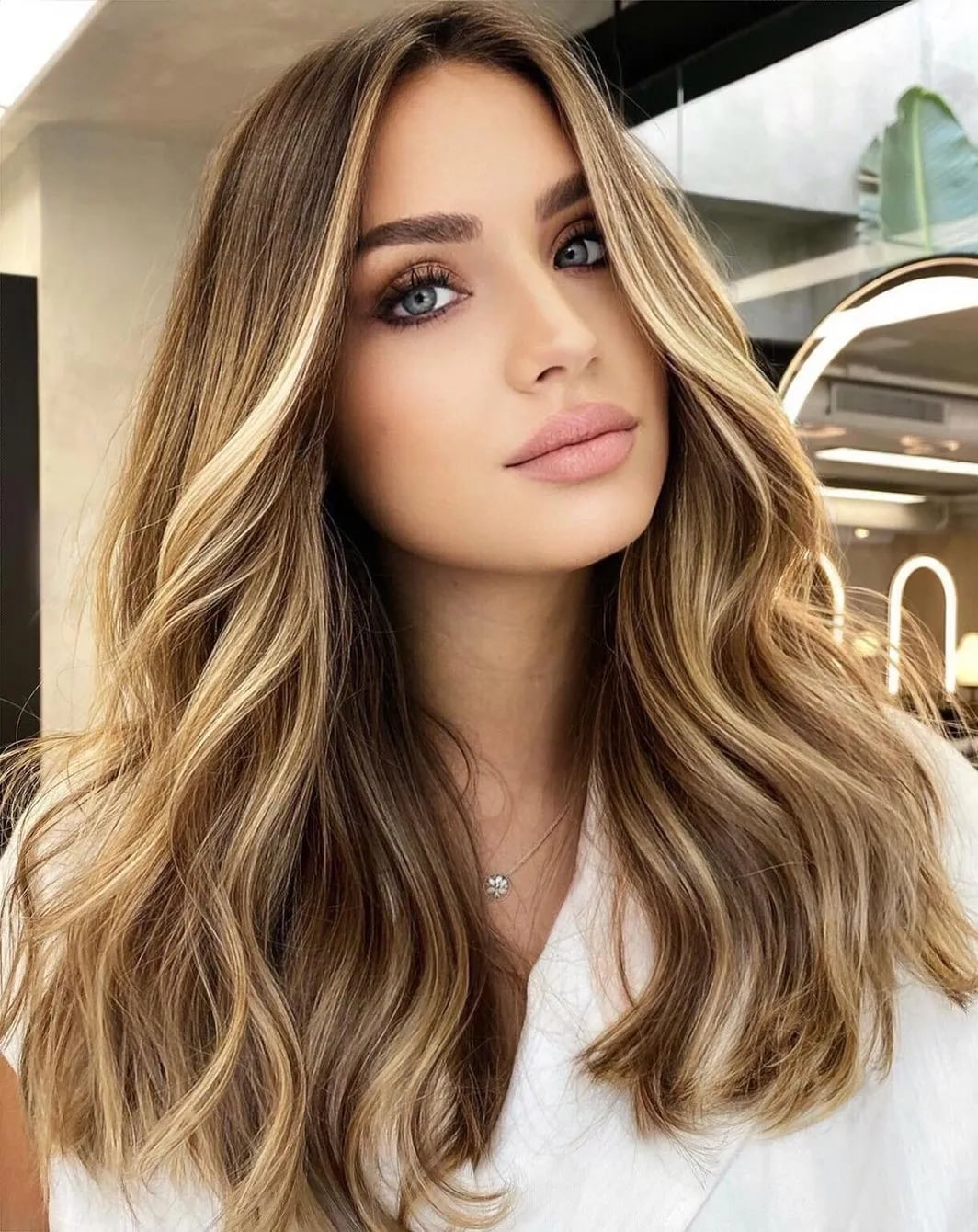
Vivid hair color starts with a pigment-heavy base and a technique that keeps the tone from washing into a muddy blend. This season, soft face-framing layers and lived-in color are the backdrop for saturated shades, with glossy natural texture replacing flat-ironed finishes.
27 ideas for Vivid Hair Color Inspiration cover the range from low-upkeep ombré to high-maintenance rainbow melts, across short bobs and mid-back lengths. These options work for fine hair that needs a solid pigment load, thick hair that can handle multiple tones, and anyone who wants a grow-out line that looks deliberate, not accidental.
Mid-Back Layers With Rainbow Streaks
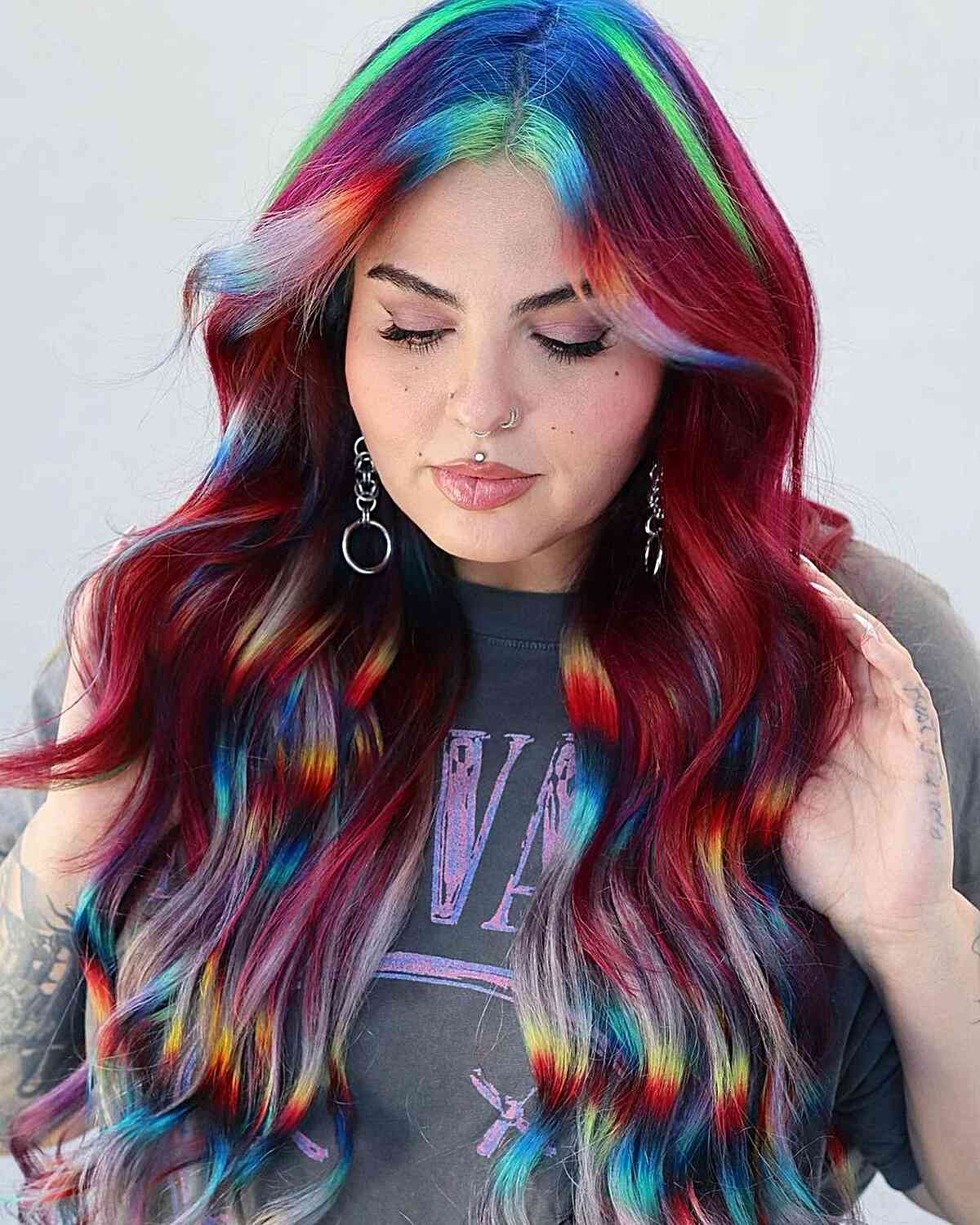
A deep red base acts as the anchor for rainbow streaks that are woven through the mid-back layers rather than painted on top. The technique relies on leaving enough of the red visible between each vivid slice so the color reads as dimensional instead of chaotic. Thick, wavy hair at this length has the surface area to carry both a dark base and bright highlights without looking crowded. Ask your colorist for: deep red base with rainbow highlights and curtain bangs. A texturizing spray on the waves adds definition without flattening the streak placement.
Mid-Back Waves With Purple and Lime Green Color Blocking
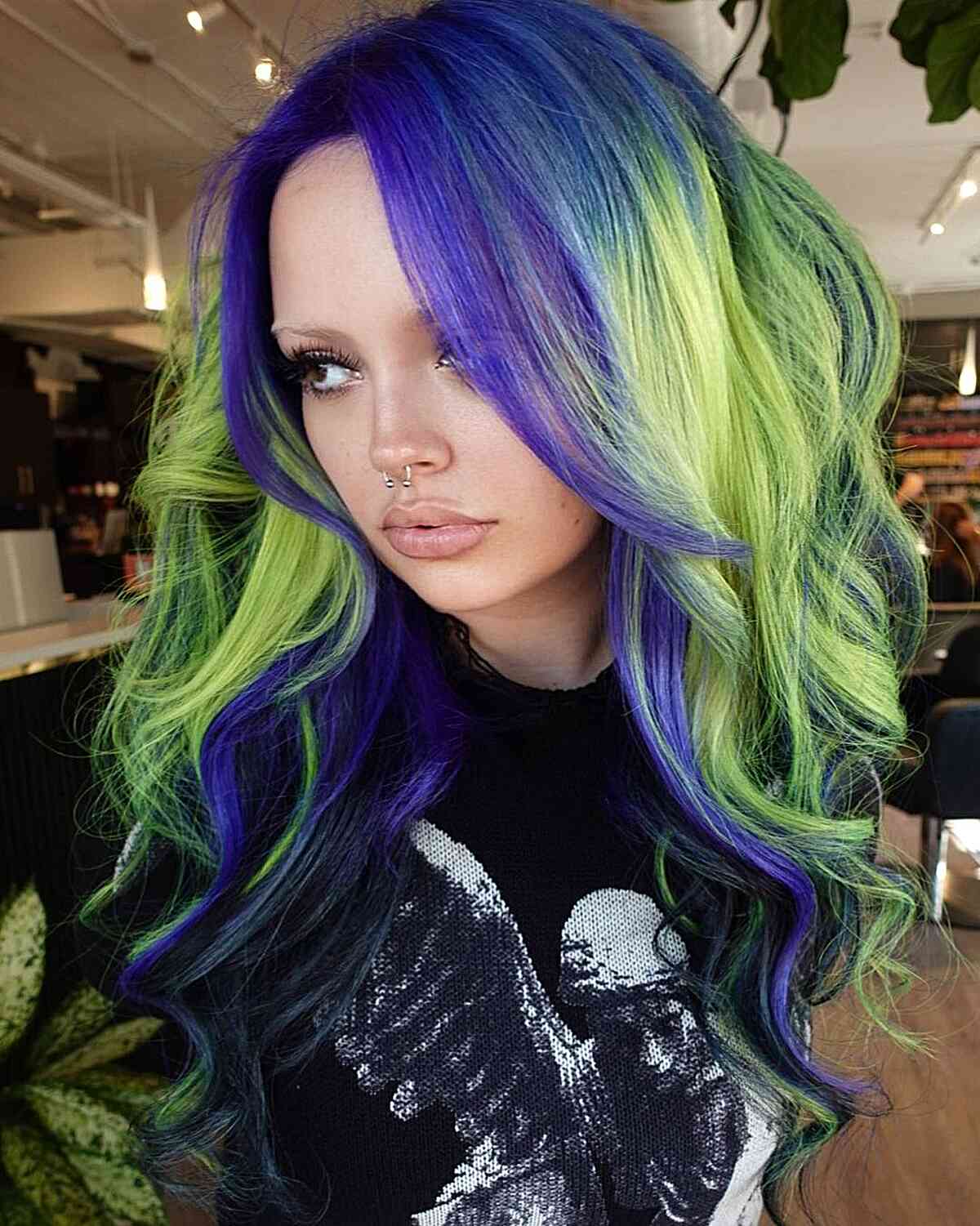
Color blocking differs from highlights in that no shade blends into the next. The purple starts at the root and stops at a clean horizontal line, then lime green takes over for the rest of the length. This works best on thick, wavy hair where the parting naturally separates the sections. Thinner hair can make the transition line look accidental rather than deliberate. Ask your colorist for: purple and lime green color blocking with side-swept bangs. Apply a smoothing serum to tame flyaways and keep the block shapes crisp. A toning appointment every six to eight weeks keeps the green from shifting toward teal.
Shoulder-Length Shag With Holographic Pastel Tones
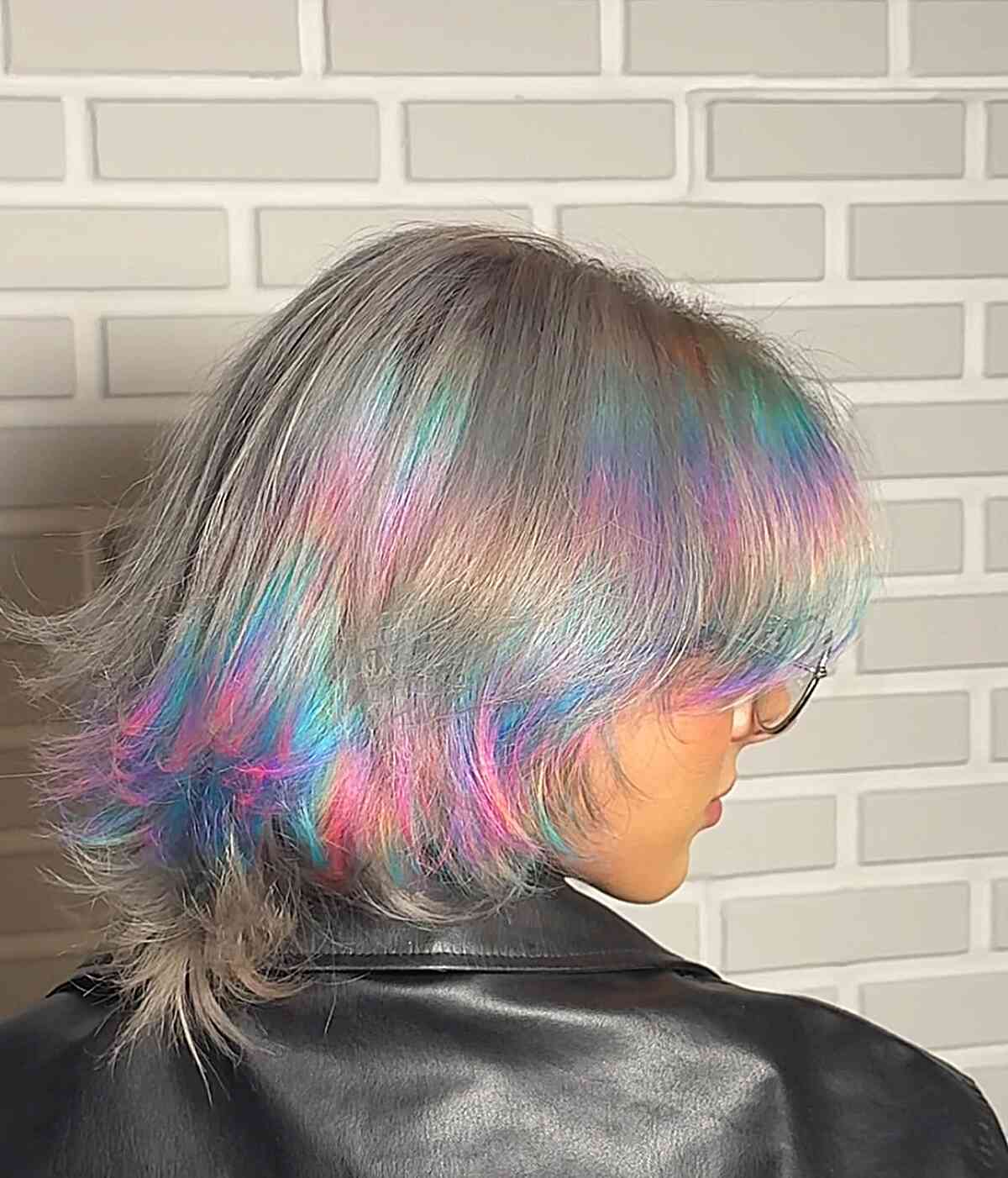
Can fine, wavy hair hold a holographic pastel effect? Yes, but the payoff is a trade-off. The shag cut removes enough weight that the pink, blue, and yellow tones catch light from different angles, creating the shifting color. The drawback is that pastels on fine hair fade faster than saturated shades, so the holographic look becomes more subtle after a few washes. Ask your colorist for: holographic pastel shag with short bangs. A sea salt spray helps the texture read, but it also lifts the cuticle and accelerates color loss.
Mid-Back Sleek With Rainbow Cascade
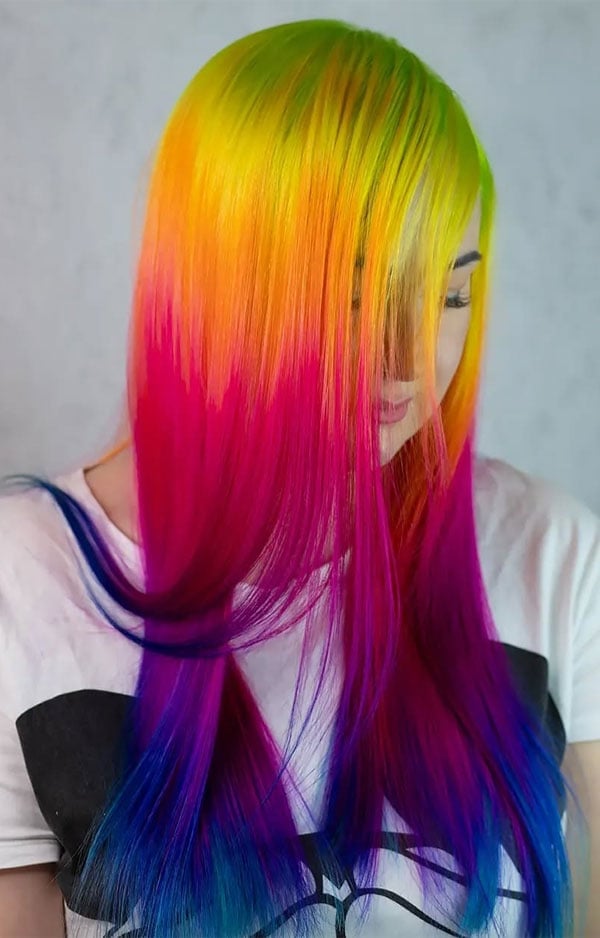
A rainbow cascade on sleek, straight hair means the color transitions from yellow at the top through orange, hot pink, purple, and blue toward the ends. The blunt bangs keep the look graphic. Ask your colorist for: sleek mid-back with blunt bangs and rainbow cascade color. The key terms are “cascade” for the gradient style and “blunt” for the bang shape. Fine, straight hair at this length lets each band of color read clearly because there is no wave pattern to disrupt the line.
Shoulder-Length Shag in Vivid Hot Pink
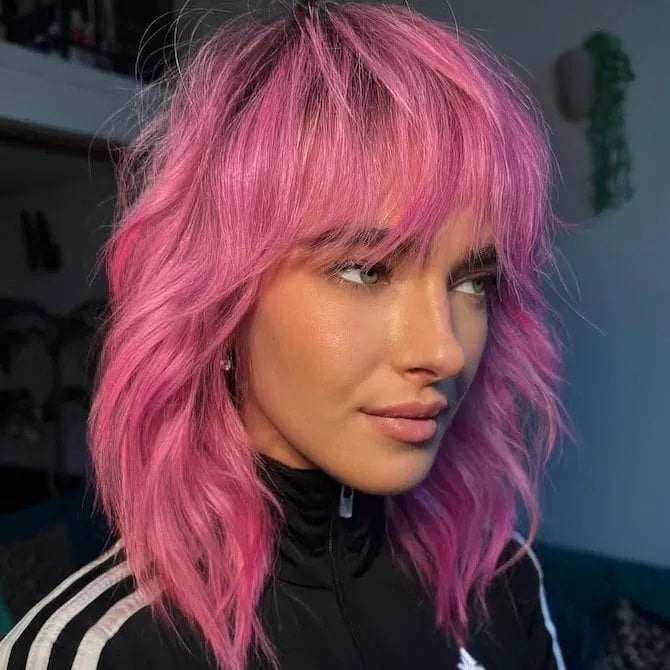
A solid hot pink shag relies on the cut for movement since the color is uniform from root to tip. The textured layers and curtain bangs add the shape that a single saturation cannot provide. Ask your colorist for: shoulder-length shag in vivid hot pink with curtain bangs. A color-depositing conditioner every other wash keeps the pink from turning salmon. Expect a trim every six to eight weeks to maintain the shag shape, and a toning appointment around week four to refresh the hue.
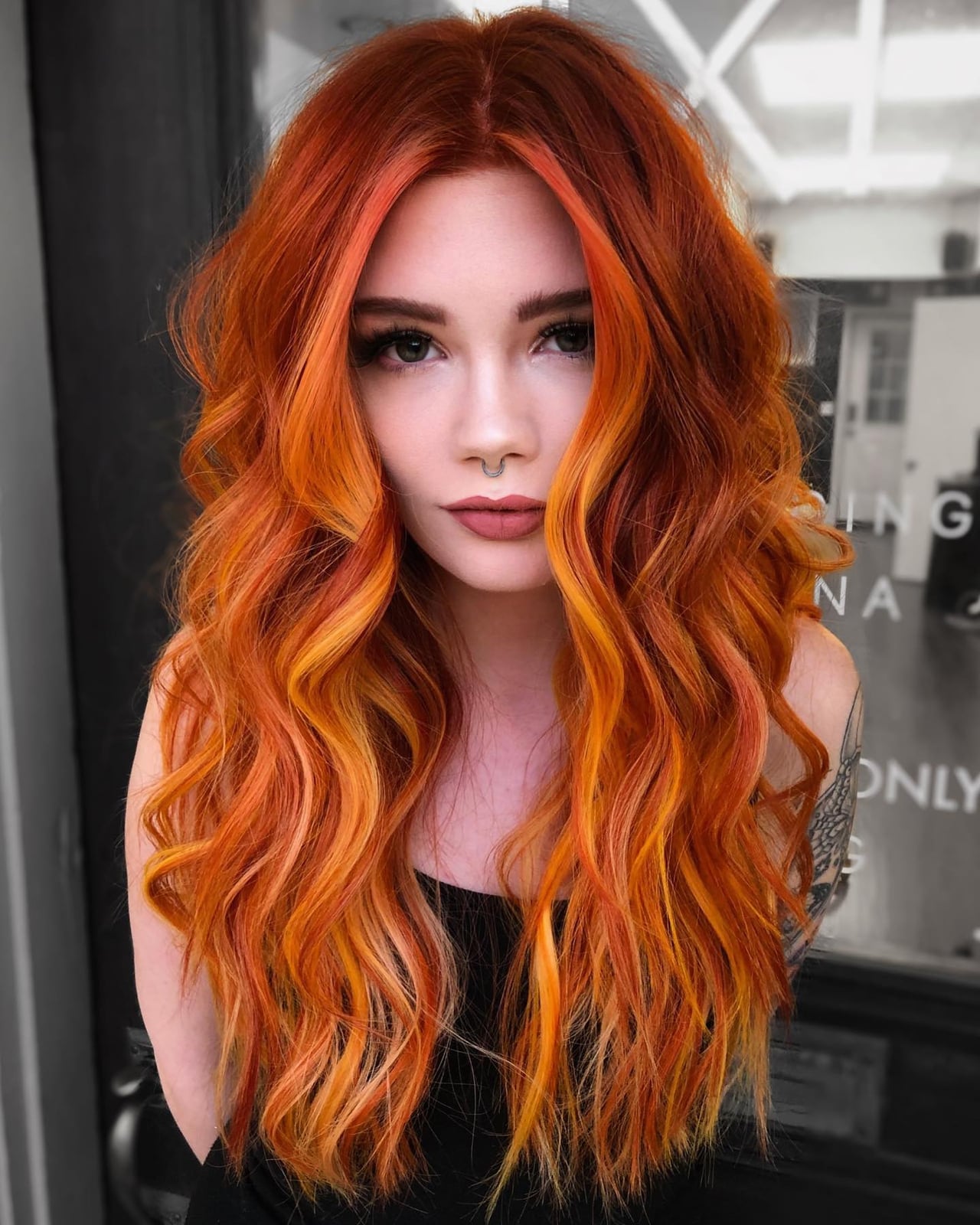
Mid-Back Waves in Fiery Red, Orange, and Yellow Blend
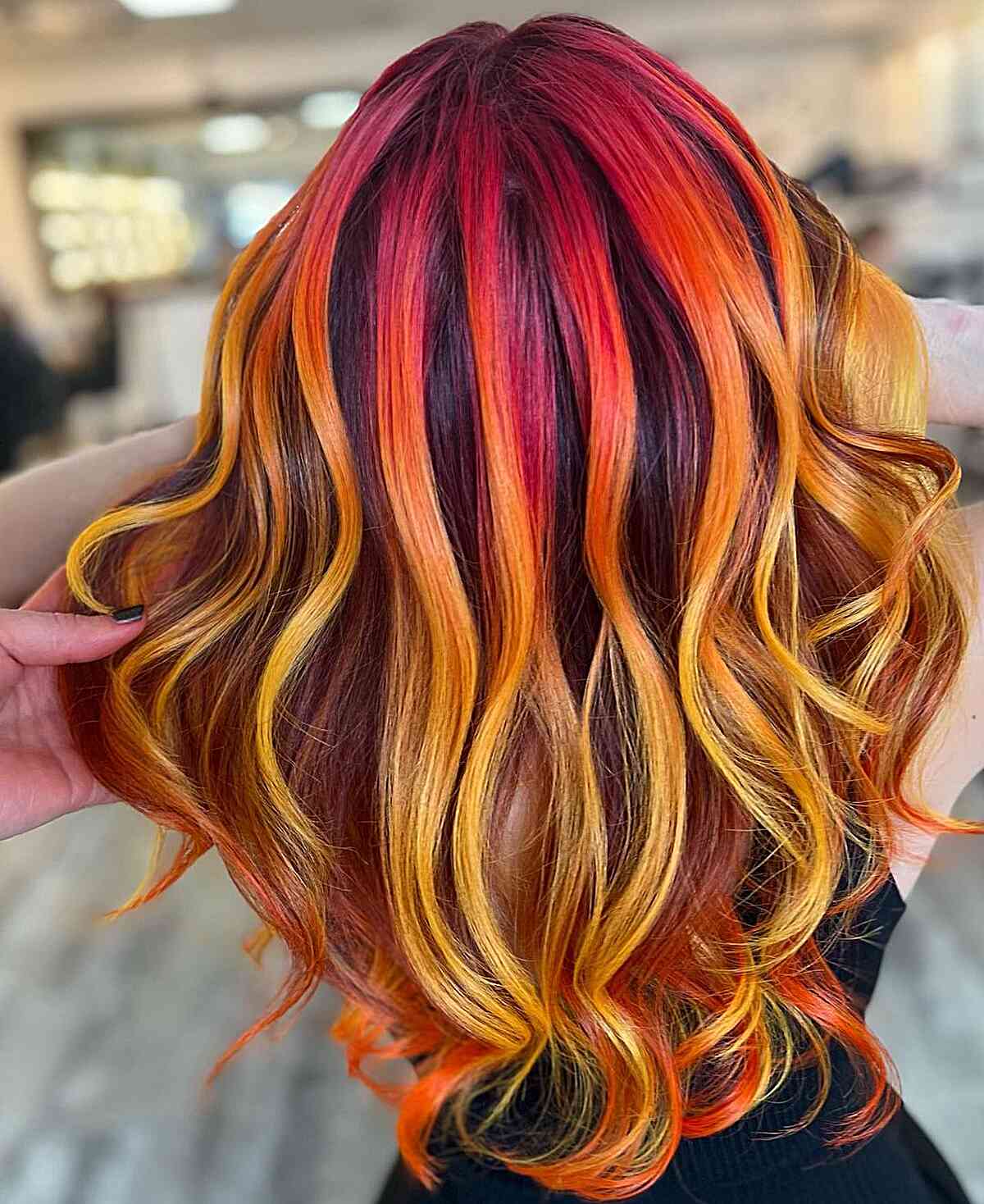
It’s not autumn leaves, but it wears the same palette. Mid-back wavy hair in thick sections carries a vertical blend of red, orange, and yellow that reads as warm, not hot. The middle part and loose waves let each tone sit separately instead of muddying. Ask your colorist for: mid-back length with fiery red, orange, and yellow blend. Thick, wavy hair of mid-back length is the starting point. A heat protectant before waving keeps the blend crisp, and a color-safe shampoo is worth the swap-in for the season.
Shoulder-Length Layers With Vivid Balayage Streaks
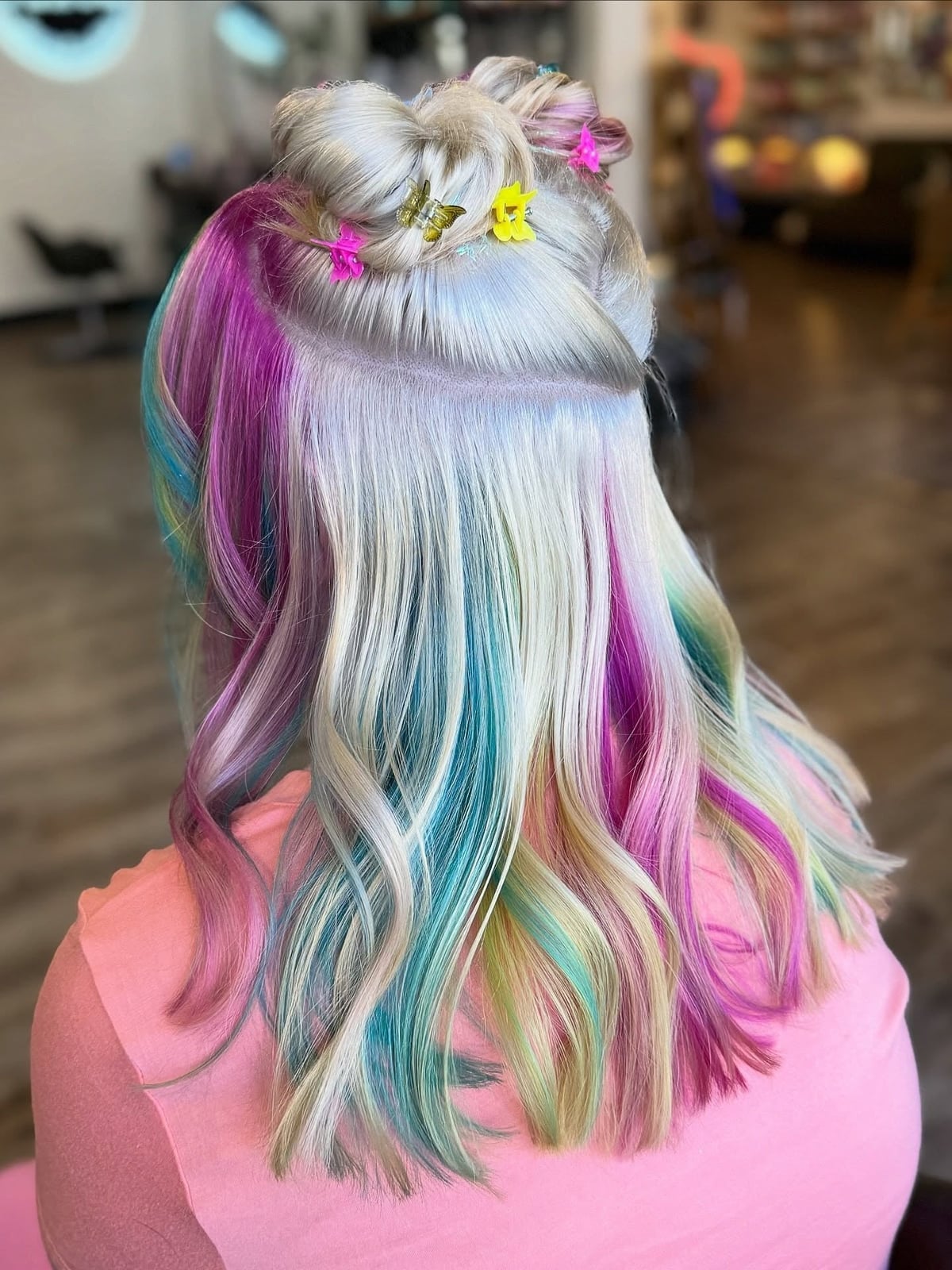
Can you get vivid balayage streaks from a box at home? Probably not. Shoulder-length layered hair in fine, wavy texture has pink, blue, green, and yellow streaks applied with a balayage technique, visible even in a half-updo with two small buns. Ask your colorist for: shoulder-length layers with vivid balayage streaks. The salon handles the lift and placement; you handle the messy bun. A touch-up every eight to ten weeks keeps the contrast alive without a full redo.
Mid-Back Neon Green With Rainbow Streak
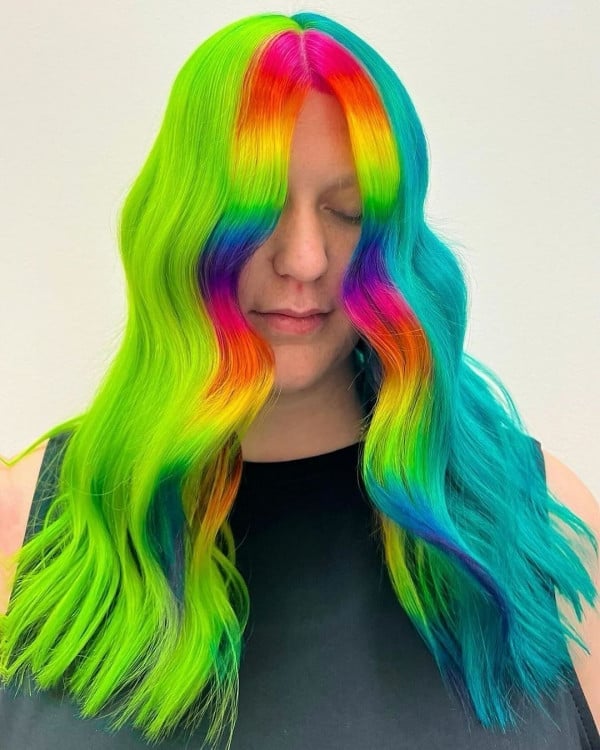
A neon green base and a single rainbow streak sound straightforward until you wash them together. Thick, wavy hair at mid-back length uses a neon green and teal base with a rainbow streak that frames the face and runs through the mid-lengths. Curtain bangs soften the commitment. Ask your colorist for: neon green base with a rainbow streak and curtain bangs.
Color bleed is a risk: the rainbow’s lighter shades can stain the green if the stylist does not seal each section separately. That means a longer chair session and a cold-water rinse routine at home.
Collarbone Lob With Neon Aqua and Green Split Dye
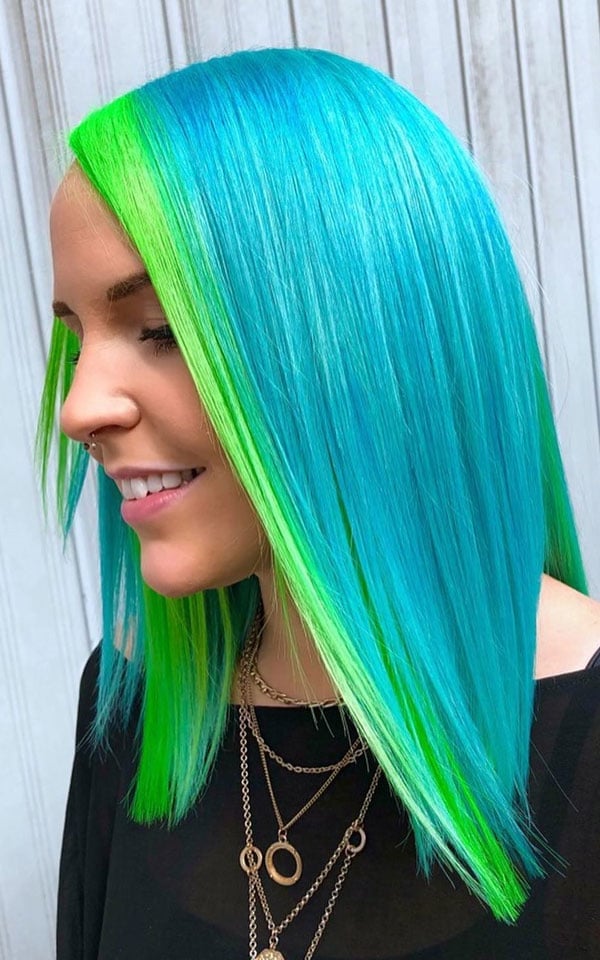
A split dye demands a clean vertical line from root to tip, and this collarbone-length cut delivers it. Fine, straight hair is parted in the middle with neon aqua on one side and neon green on the other, styled sleek and straight. Ask your colorist for: collarbone length with neon aqua and green split dye. The precision comes from sectioning the hair into two exact halves before any color touches it. A side view shows the contrast best, so this one works with a lob that hits the collarbone exactly.
Mid-Back Teal and Blue With Orange Tips
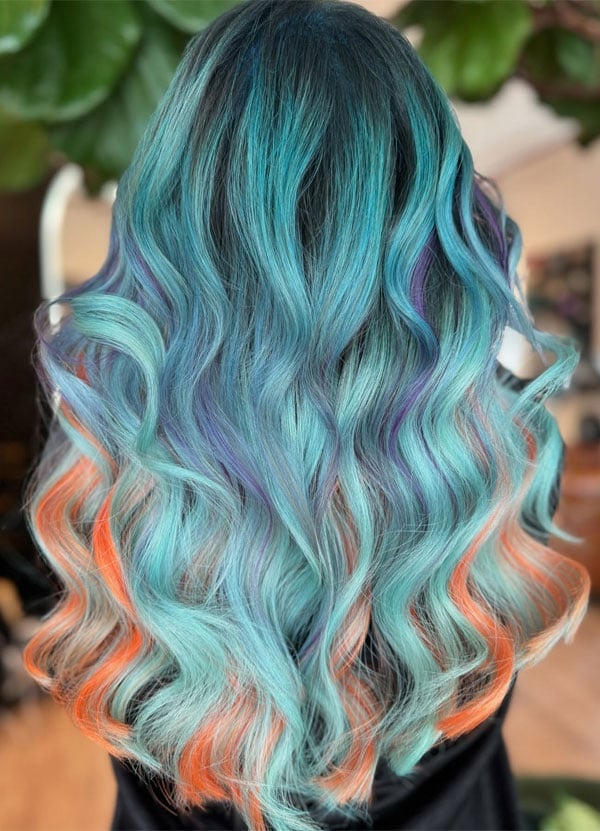
How long before those orange tips fade to peach? About four weeks with regular washing. Mid-back wavy hair in thick texture carries a teal and blue blend through the lengths, with orange concentrated at the ends. Ask your colorist for: mid-back length with teal and blue vivids and orange tips. The loose waves and middle part let each section read clearly. Use a color-safe shampoo and conditioner to stretch the blend; the tips will need a refresh sooner than the rest, which is the trade-off for a look this specific.
Mid-Back Ombré From Orange/Red to Pink/Purple
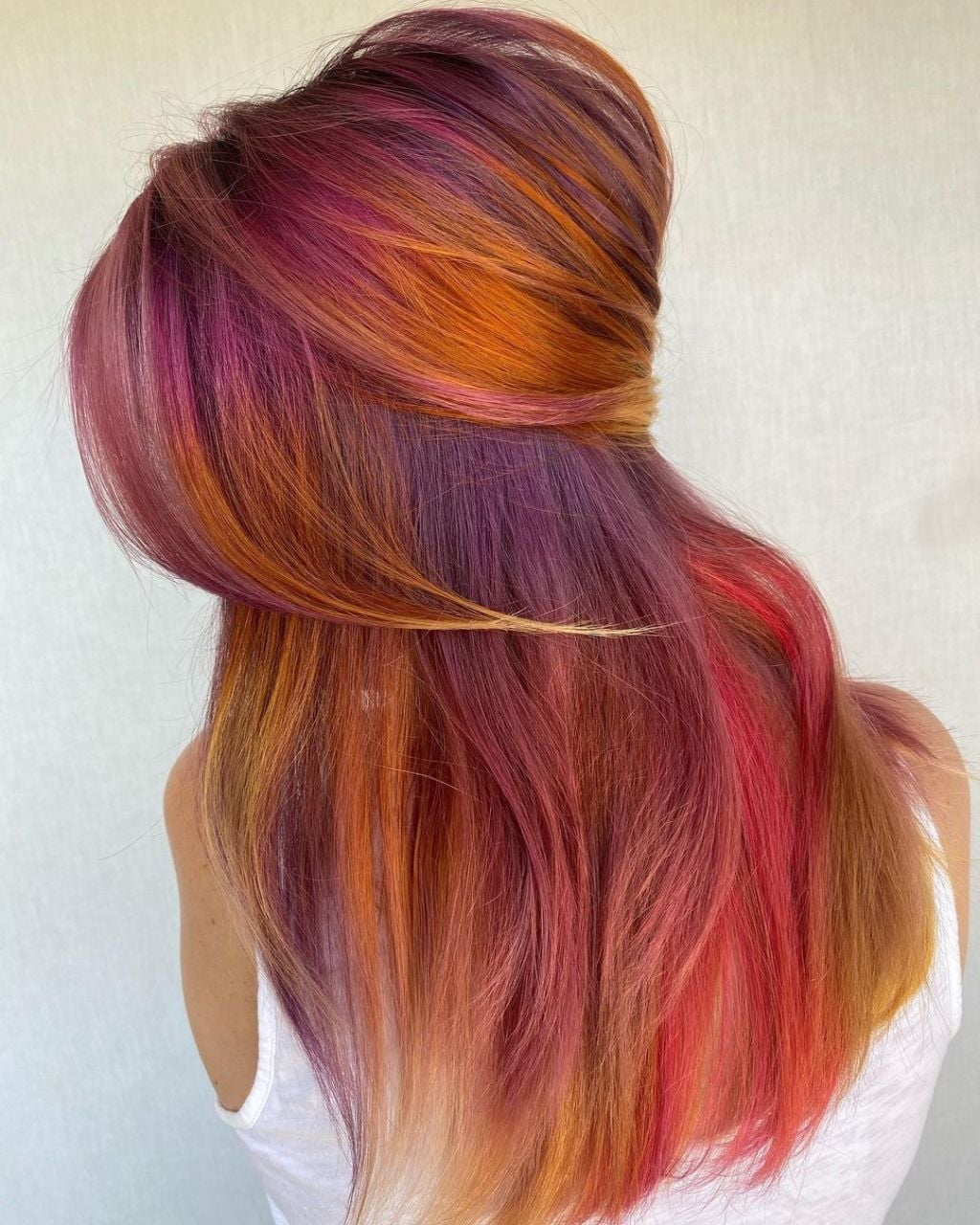
The transition goes from orange and red into pink and purple over mid-back length, so the color stands out while the cut stays simple. On wavy, medium density hair, that gradient lands where the waves turn, which gives each bend a different shade. Ask your colorist for: mid-back length with orange, red, pink, and purple ombré. The movement of loose waves shows off the blend better than straight hair would, and a middle parting keeps both sides even. It is a salon-only job, so budget for a full session and expect to revisit the color every six to eight weeks to keep the transition crisp.
Mid-Back Blue to Purple Gradient With Highlights
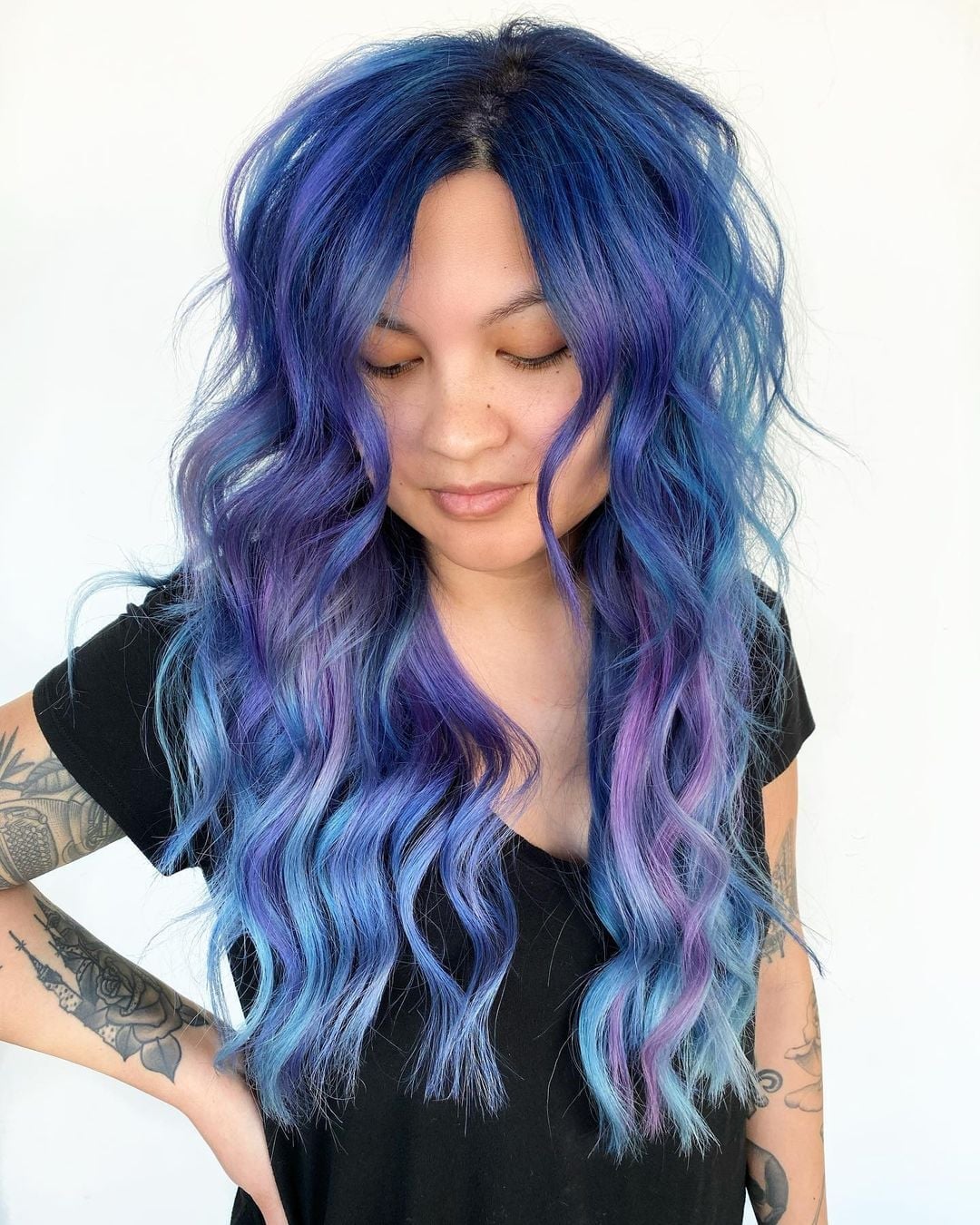
Deep blue fades into purple along mid-back length, with lighter blue highlights that keep the gradient from looking flat. Face-framing bangs pull the color forward, which suits most face shapes. Ask your colorist for: mid-back length blue to purple gradient with face-framing bangs. A purple-toned shampoo keeps both the blue and purple from drifting gray, and the bangs will need a trim every four to six weeks to hold their shape. The highlights mean the color fades unevenly if you skip touch-ups, so plan for a refresh around the eight-week mark.
Sharp Bob With Orange and Pink Color Blocking
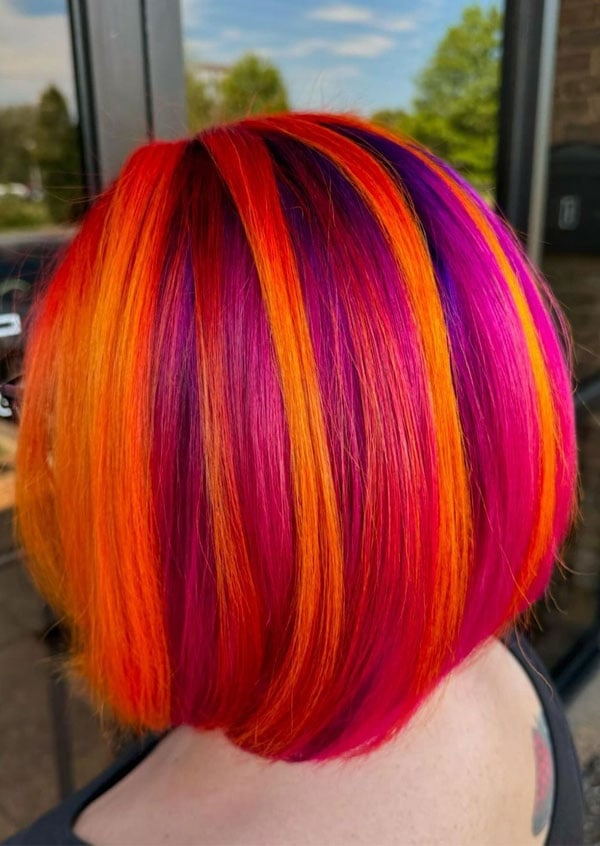
Color blocking on a sharp bob hits harder than it would on softer, longer styles, because the straight lines of the cut echo the graphic blocks of orange and hot pink. That precision also means the bob needs regular upkeep: short bangs grow out fast, so expect a trim every three to four weeks to keep the line clean. Ask your colorist for: chin-length sharp bob with short bangs and orange/pink color blocking. On fine, straight hair, a straightening balm keeps the finish sleek. The real drawback is that the color blocks are high maintenance; any root growth or faded section breaks the graphic effect.
Mid-Back Waves With Denim Patchwork Color
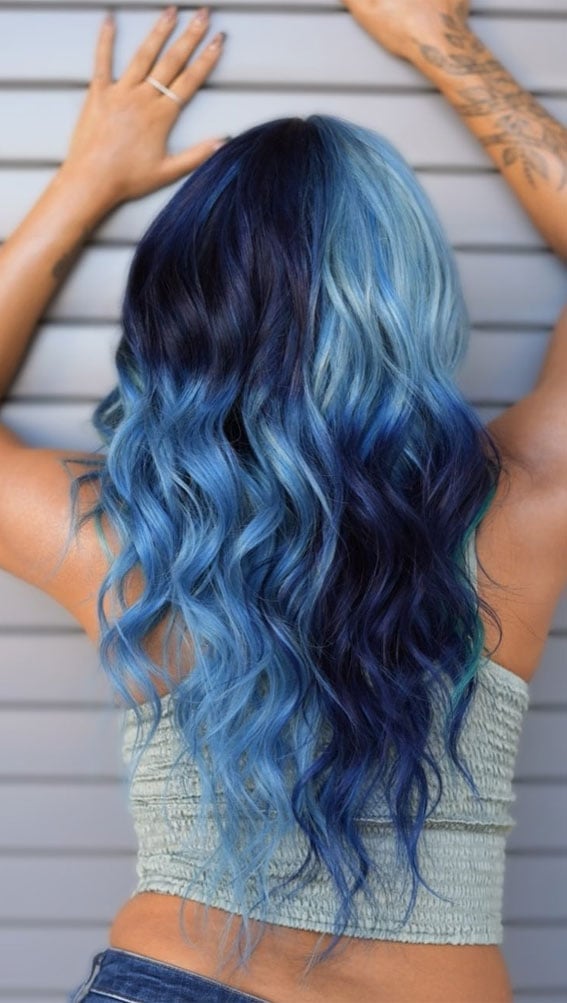
The denim patchwork effect is built by placing irregular panels of blue and gray close together, so the color reads like a textured fabric, not a solid shade. On mid-back length with loose waves, those panels show at different angles, which sells the patchwork idea. Ask your colorist for: mid-back length with denim patchwork blue and gray color. Because the tones sit side by side, a color-safe shampoo is required to prevent bleeding between them. Expect to refresh the color every six to eight weeks, since the gray sections tend to fade faster than the blue.
Chin-Length Wavy Bob With Fiery Sunset Blend
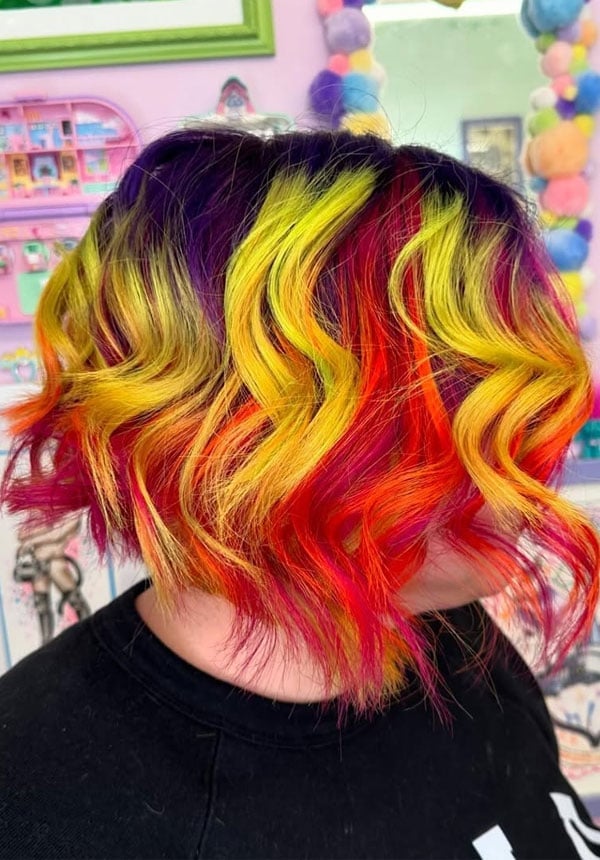
How do you ask for a color that moves from yellow at the roots to red at the ends without sounding like a maniac? You say you want a fiery sunset blend on a chin-length wavy bob, and the colorist will know the rest. The loose waves and side parting let the yellow, orange, and red stack naturally, so the gradient follows the curve of each wave. Ask your colorist for: chin-length wavy bob with fiery sunset blend. This cut suits medium density hair because the waves give the color depth. A curl-defining cream enhances the texture, and the bob needs a trim every six to eight weeks to keep the shape.
Mid-Back Ombré From Magenta/Violet to Red
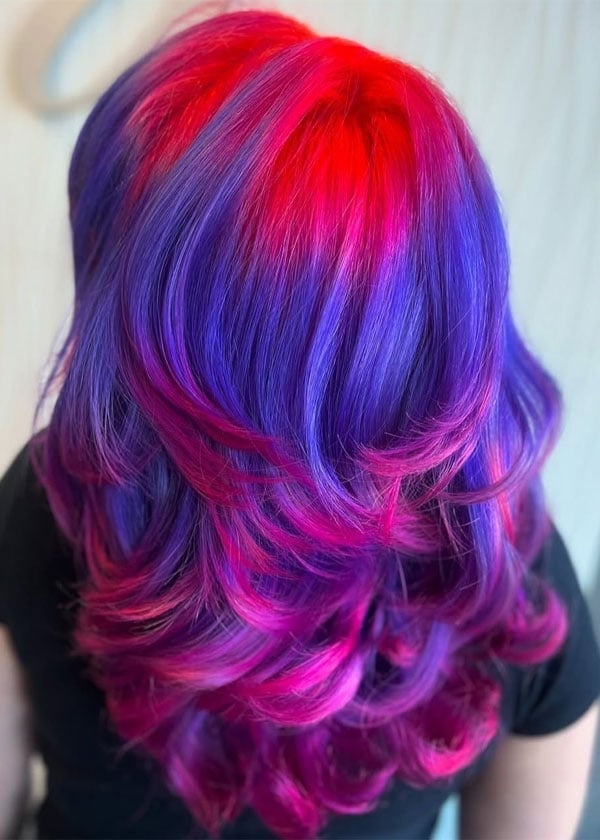
An ombré from electric magenta and violet at the crown into vibrant red at the ends is a bold design, but the red roots present a problem. As the magenta and violet fade, those red roots can start to look more like a grow-out than an intentional choice.
Ask your colorist for: mid-back length layered with electric magenta, violet to red ombré. The solution is a root shadow in a deeper magenta tone applied at every color appointment, roughly every six weeks, to keep the transition clean. This is a salon-only project; the fade pattern requires someone who understands how vivids shift over time.
Mid-Back Rainbow Color Melt
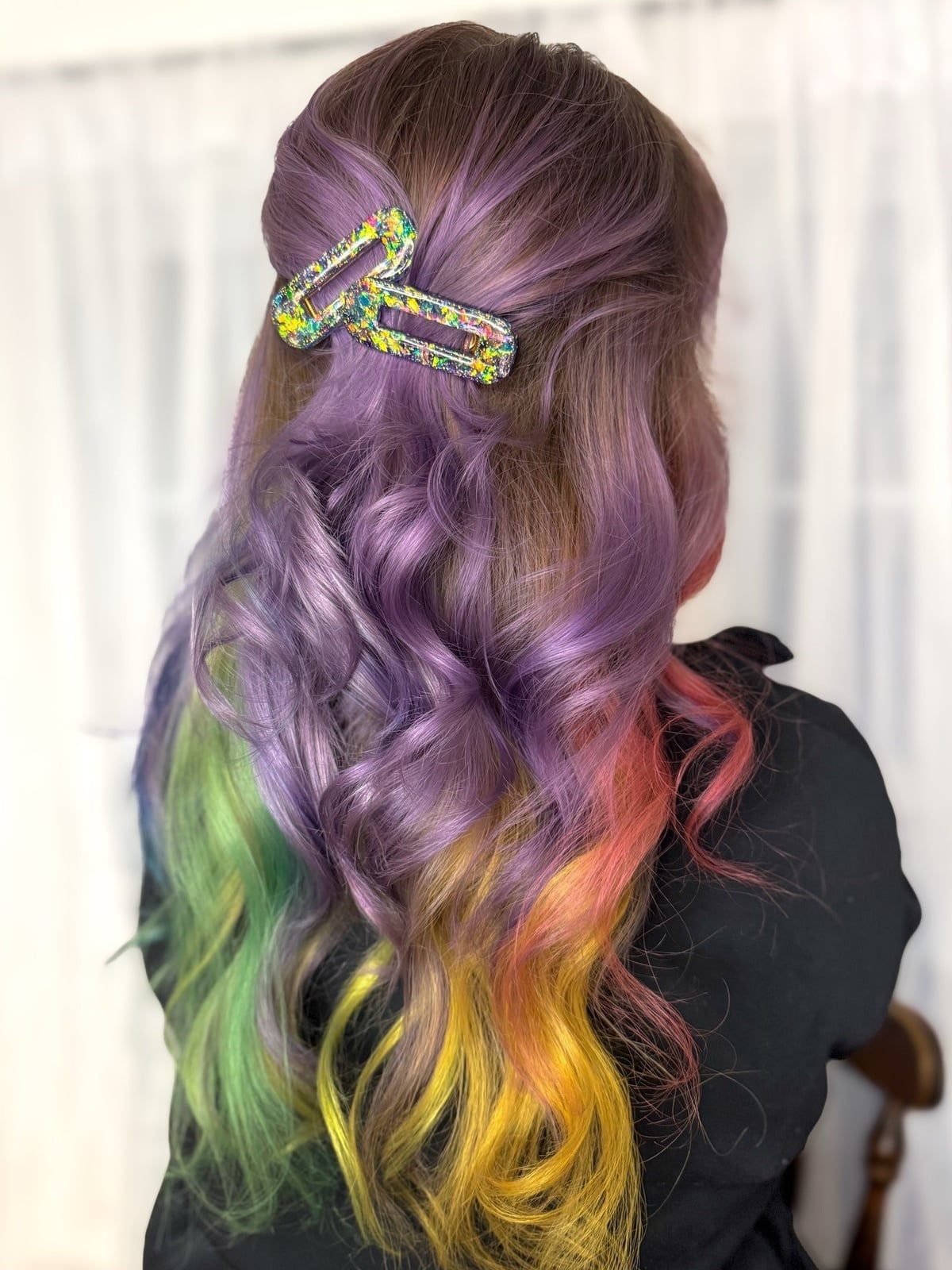
This rainbow color melt packs green, yellow, orange, pink, purple, and blue into one mid-back length, and the balayage technique keeps the shades from blending into a muddy mess. Each shade is painted into the previous one so the transition is a soft wash without stripes.
Ask your colorist for: mid-back length with a rainbow vivid color melt. The upkeep is real: wash with cool water and color-safe shampoo only, and expect a refresh visit every four to six weeks to maintain the separation between tones. Your natural wave texture helps camouflage any uneven fading between appointments.
Shoulder-Length Hair in Vivid Yellow
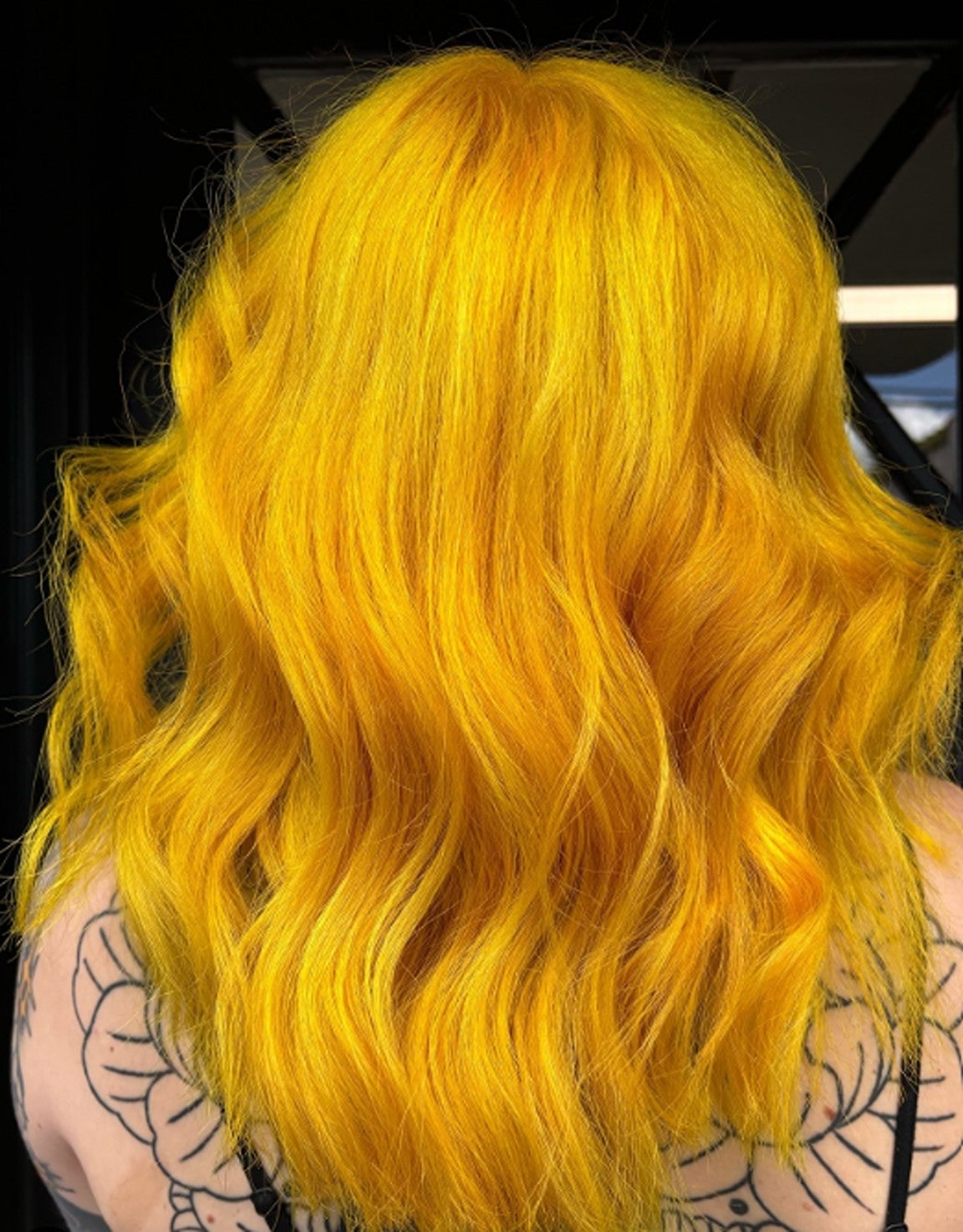
Who actually wears a full head of vivid yellow? For summer festivals and beach vacations, this is the answer. The uniform saturation and loose wave texture make it look confident, and the shoulder length keeps the color close enough to feel deliberate.
Ask your colorist for: shoulder-length hair in vivid yellow. A middle part and soft layers give the shape some motion, so it doesn’t sit as a flat block. This is a seasonal commitment, plan it for three months of high sun and low maintenance expectations.
Mid-Back Color Melt of Pink, Blue, and Teal
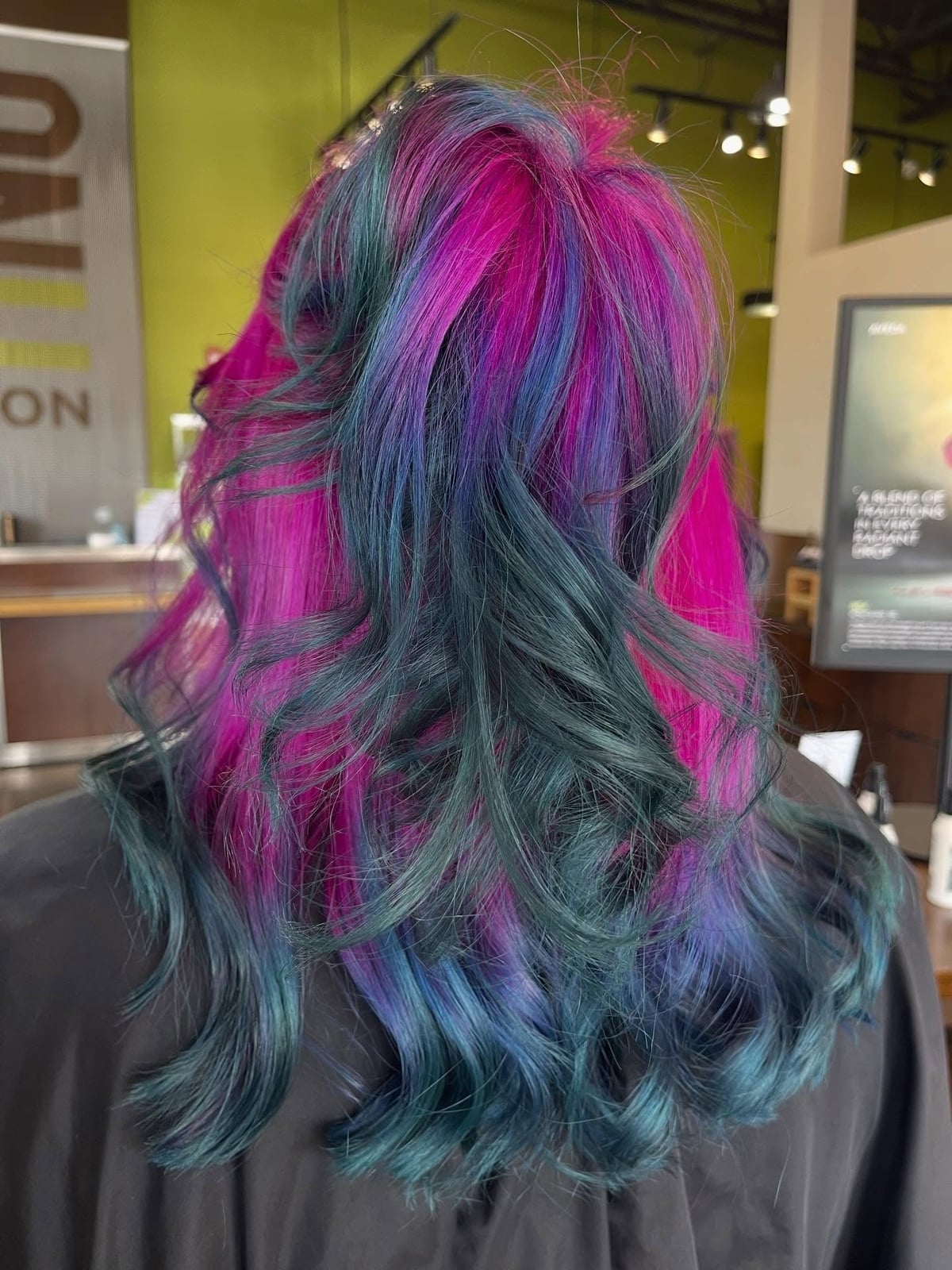
A color melt of pink, blue, and teal works best on hair with medium density and natural wave because the mix of shades needs some movement to show properly. On straight, fine hair the three tones can sit as separate blocks; on wavy texture they blend into a single psychedelic wash.
Ask your colorist for: mid-back length with pink, blue, and teal color melt. The side parting adds a little asymmetry, which helps each shade get its moment. This is a salon application. The melt technique requires the colorist to layer each tone into damp hair so the edges disappear.
Mid-Back Ombré From Neon Pink to Aqua Blue
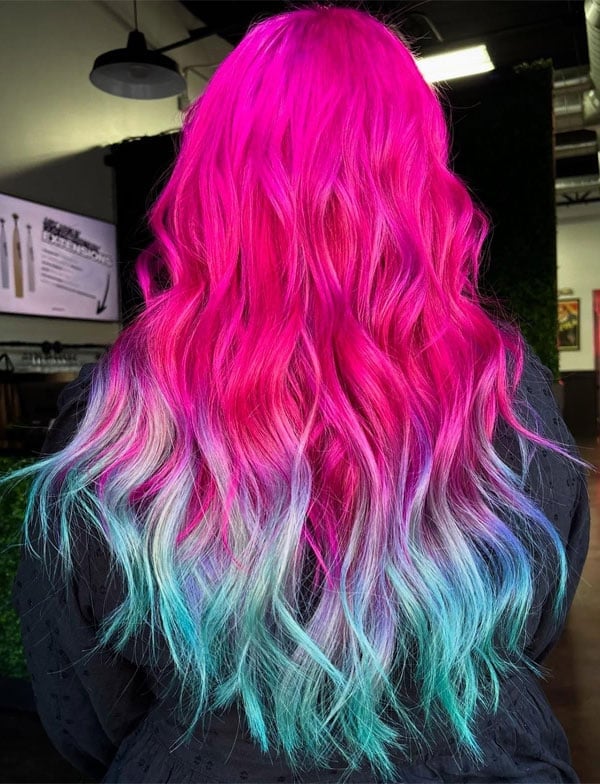
An ombré from electric neon pink at the root to aqua blue at the ends sounds like a DIY challenge, but the clean gradient is what separates a salon result from a home accident. The long layers here help the two colors blend naturally through the mid-back length.
Ask your colorist for: mid-back length long layers with neon pink to aqua blue ombré. Achieving that crisp transition requires bleaching the ends to pale yellow before applying the blue, then painting the pink higher up and letting it feather into the blue zone. Plan for a full day in the chair and a toning visit at week four to keep the neon from drifting.
Mid-Back Wavy Hair in Fiery Orange and Red
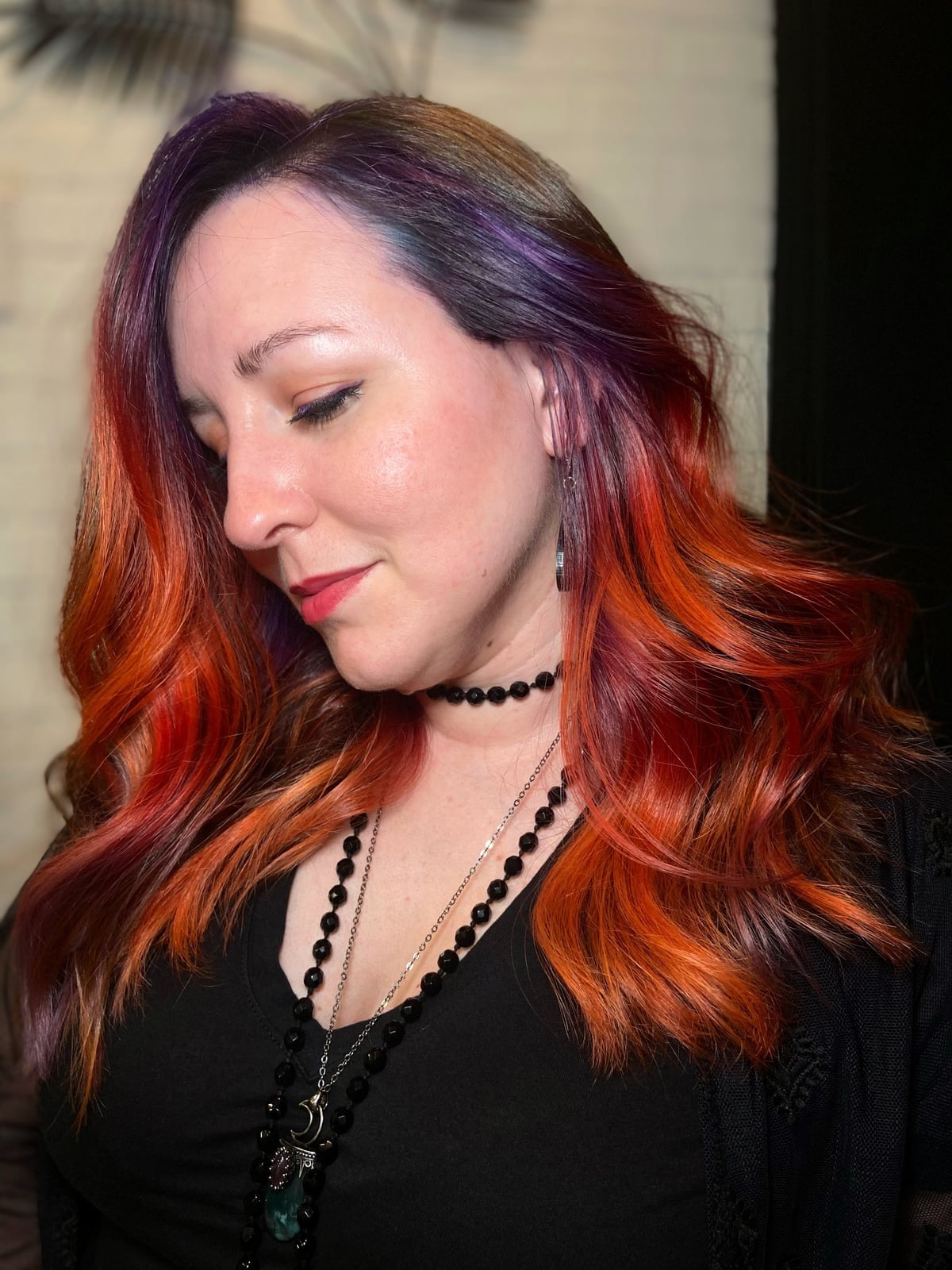
How long will this vivid orange and red blend actually stay fiery? The darker undertones give it depth, so it won’t look flat the way a single bright shade can, but the orange and red pigments are notorious for slipping out with every wash. On thick, wavy hair at mid-back length, the loose waves catch the color from different angles, which helps the dimension read even as it fades. Ask your colorist for: mid-back length with a vivid orange and red blend. Use a color-safe shampoo and conditioner every time, and plan for a refresh every six to eight weeks to keep the tones from turning into a dull rust.
Mid-Back Blue to Red Ombré With Layers
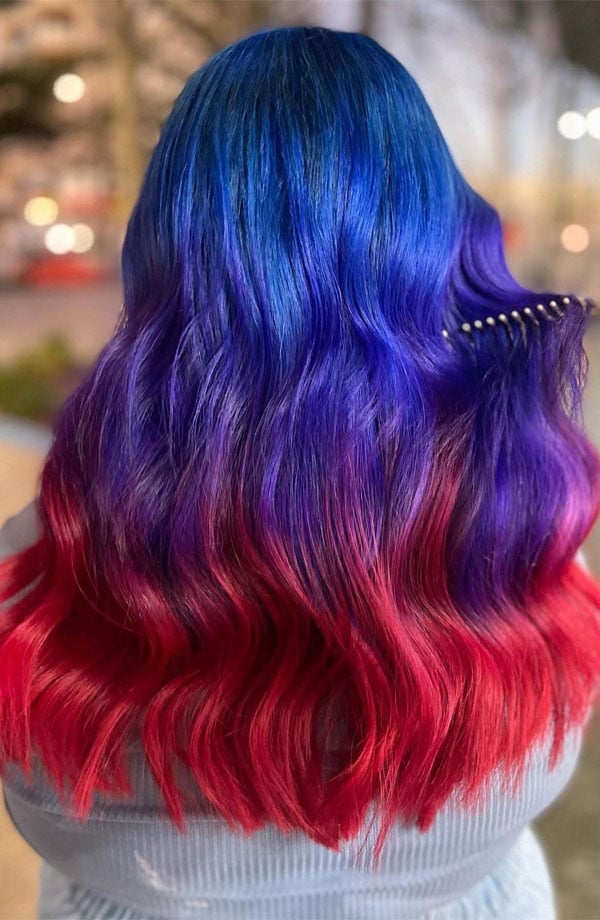
The transition from deep blue roots to bright red ends works because the two colors never actually touch. A skilled colorist will pre-lighten the mids and ends, then apply the blue and red in sections, letting them blend through the layers. On thick, wavy hair at mid-back length, the layered styling breaks up the gradient, so the ombré looks like a planned color choice. Ask your colorist for: mid-back length layered with blue to red ombré. The tricky part is keeping the blue from muddying the red as they meet, which is why this is strictly a salon job.
Collarbone Lob With Platinum Base and Rainbow Pastels
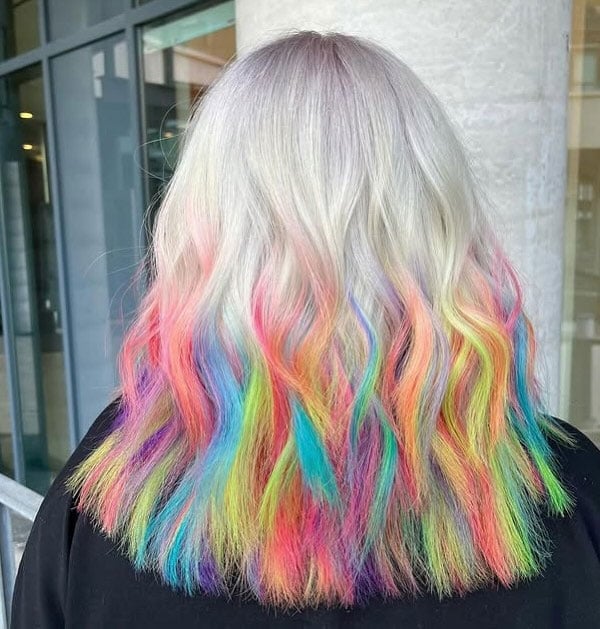
A platinum base with rainbow pastel highlights concentrated toward the ends gives fine, wavy hair a playful pop without committing the whole head to a full rainbow. The contrast is the point: the light platinum makes the pastels look softer and more whimsical than they would on a darker base. But here’s the trade-off: platinum needs a purple shampoo to stay bright, and the pastel ends will fade quickly, so you’ll be toning every few weeks to keep the colors from washing out to a murky gray. Ask your colorist for: collarbone length lob with platinum base and rainbow pastel ends.
Collarbone Lob With Vivid Purple Balayage
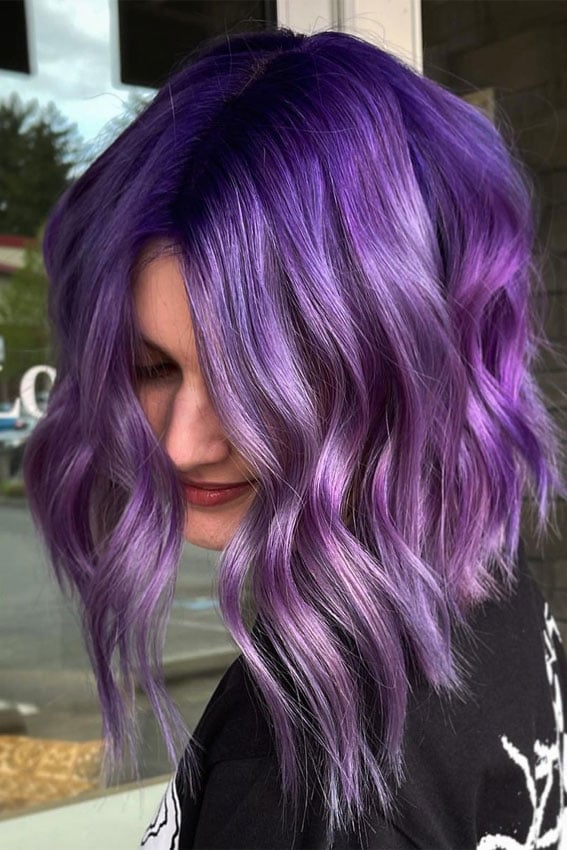
A vivid purple balayage can look polished if you ask for exactly what you see: a collarbone-length lob with the purple woven through the mid-lengths and ends, leaving the roots slightly deeper for a lived-in grow-out. The curtain bangs frame the face and keep the color from feeling heavy, especially if your hair is medium texture and holds a wavy blowout well. Ask your colorist for: collarbone length lob with vivid purple balayage and curtain bangs. For the waves, a color-safe mousse will help define them without weighing down the lob, and the bangs will need a trim every four to six weeks.
Collarbone Bob With Neon Pink to Aqua Blue Ombré
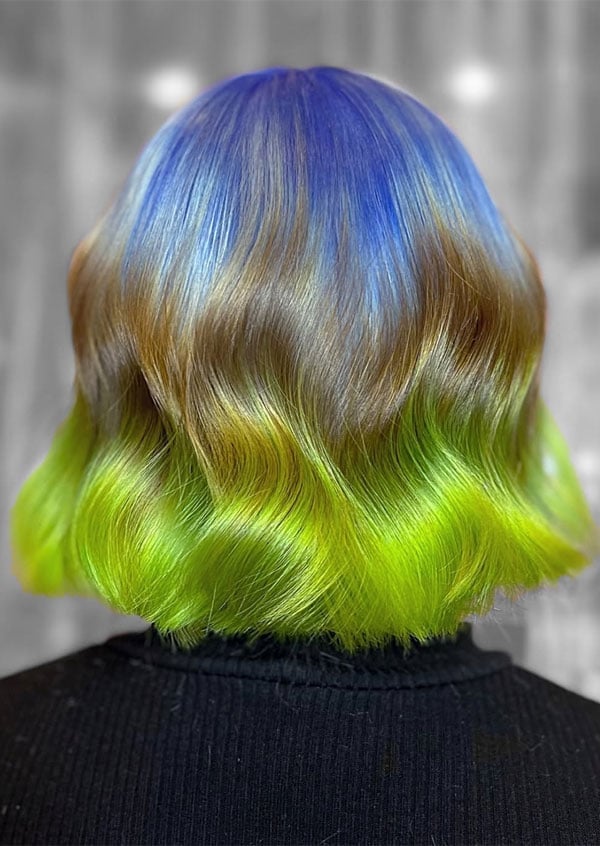
The biggest mistake with a neon pink to aqua blue ombré is letting the two colors bleed into each other in the bowl or on the hair. The pink is applied first, then the aqua is placed lower, and a barrier is used between them so the transition stays sharp instead of turning into a murky teal. On thick, wavy hair at collarbone length, the bob’s blunt shape makes the color contrast even more striking. Ask your colorist for: collarbone bob with neon pink to aqua blue ombré. The drawback: these neon tones fade fast, and washing in anything but cool water will speed up the bleed, so expect to refresh every four to six weeks.
Updo With Braids and Vivid Highlights
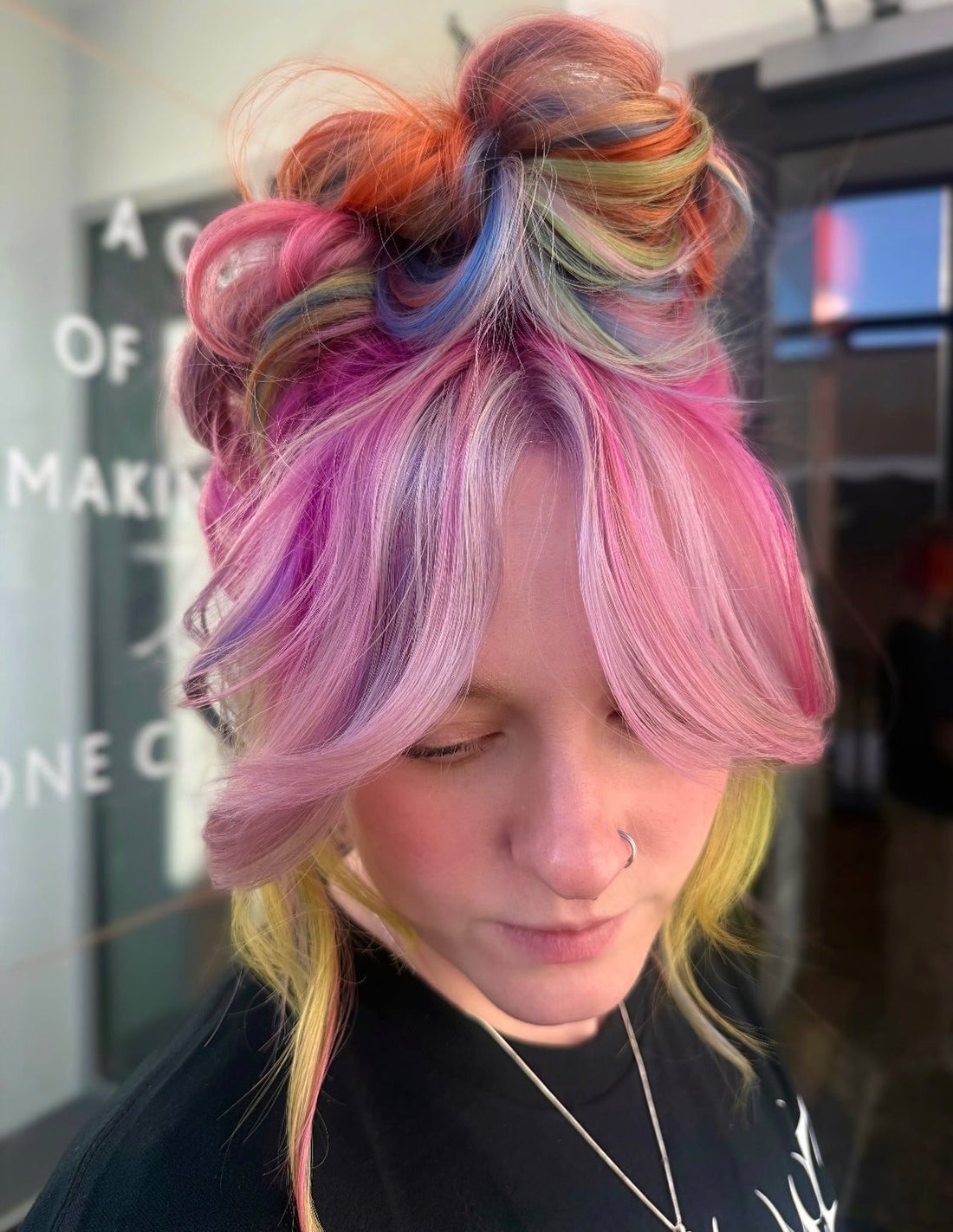
A messy bun with braids is a clever way to wear vivid highlights without the weight of loose hair. The face-framing bangs and middle parting break up the updo, while strands of pink, purple, blue, orange, and yellow peek through the wavy texture. Medium-density hair holds the braids best, and the face-framing bangs work with most face shapes. Ask your colorist for: messy bun updo with braids and vivid highlights, face-framing bangs. When you take the bun down, the colors shift position, so the grow-out looks less like a solid line and more like scattered ribbons. A trim every eight weeks keeps the bangs sharp and the ends healthy.
Mid-Back Curls in Pastel Green
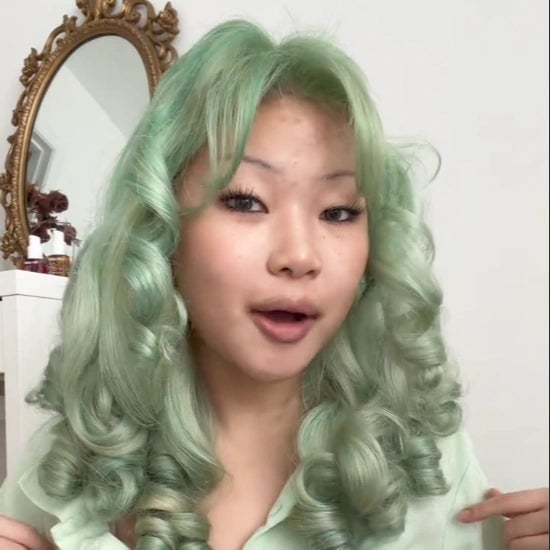
Can a color feel both bold and soft? Pastel green on mid-back loose curls manages exactly that. The curtain bangs and middle parting frame the face without competing with the shade, and the thick, wavy texture adds movement. It is a spring or summer move, when lighter tones make sense. Ask your colorist for: mid-back length loose curls in pastel green with curtain bangs. The pastel green sits best on a pre-lightened base, and a toning appointment every four weeks prevents it from cooling to a grayish cast.
Final Thoughts
For upkeep, match the technique to your schedule: solid vivids need a root touch-up every four weeks, while ombré and balayage can stretch to eight. Bold color is a journey, so choose wisely and wear it with confidence.
- Use color-safe shampoos and conditioners to preserve vibrancy.
- Wash hair with cool water to minimize color fade.
- Incorporate a color-depositing mask weekly for a color boost.
- Schedule salon touch-ups every 4-6 weeks for root maintenance.
- Protect hair from heat styling and UV exposure.
Bold color is a journey, so choose wisely and wear it with confidence.