Blue highlights have moved past the all-over dye job into something more intentional: dimensional streaks, deep teal accents, and smoky balayage that reads as grown-up. The shift is toward placement that catches light instead of shouting for attention.
This collection of 19 classy blue highlights covers the range from a single streak on black hair to near-full vivid color, with options for straight, wavy, layered and bang-heavy cuts. Fine hair that disappears under heavy color gets its due. So does thick hair that needs the saturation to read. Every look here was chosen because it works with a real schedule, not just a filtered photo.
Mid-Back Wavy Hair With Midnight Blue Highlights
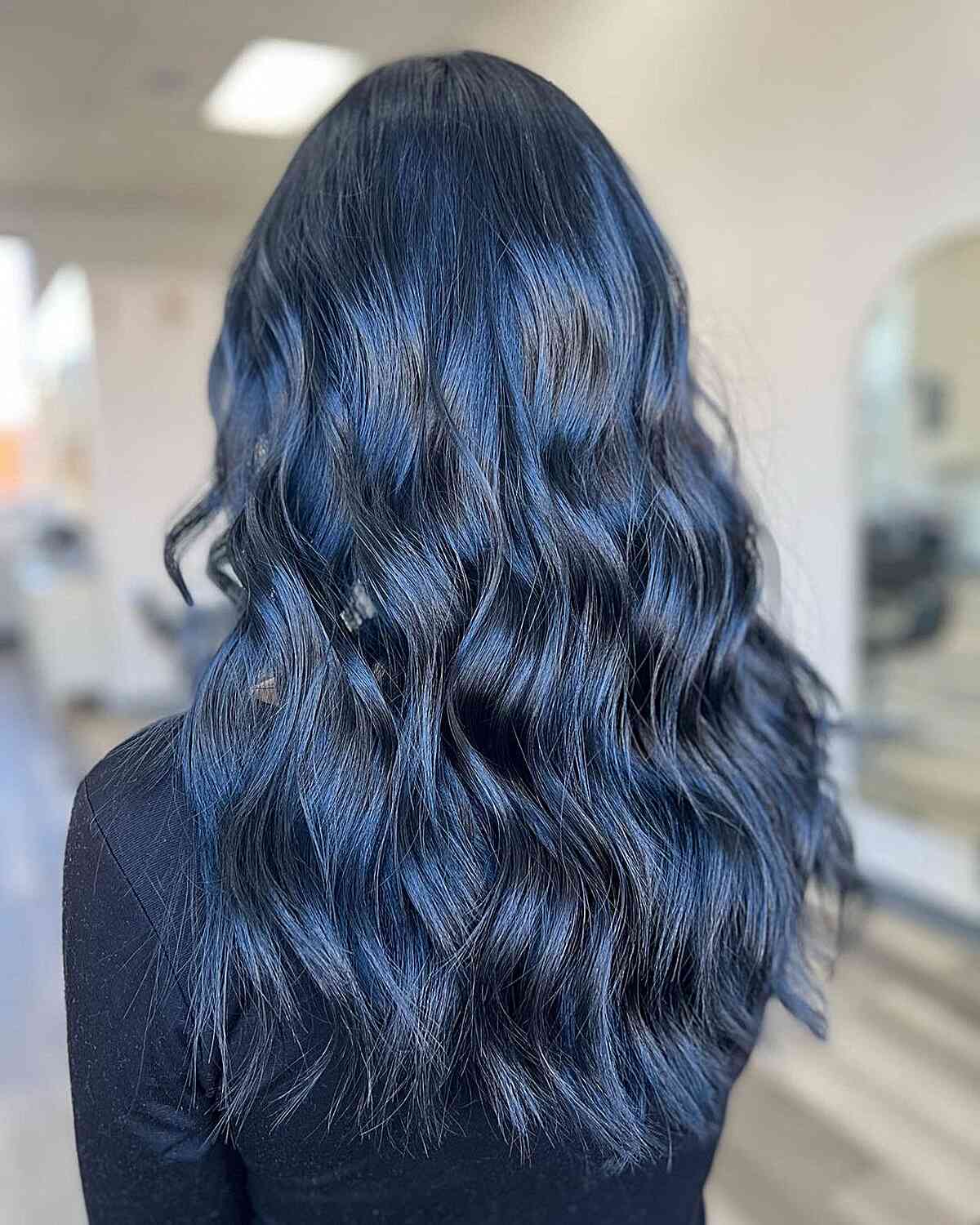
Midnight blue has a way of reading as black until the light catches it, and here the effect is built with purpose: a deep midnight blue base, then subtle lighter blue highlights woven through the waves so the color shifts as you move. The hair is thick, mid-back length, styled in loose wavy curls, and the interplay of those two blues gives the depth you would expect from a salon color, not a box dye. It suits oval and long faces best, since the length below the chin works with those proportions.
Ask your colorist for: midnight blue base with subtle blue highlights, loose waves. The technique matters more than the shade: the highlights need to sit close to the base tone, not pop off it, or you lose the sophistication. To keep the waves defined, use a wide-tooth comb on wet hair and let it air-dry, then scrunch. A trim every six to eight weeks keeps the ends from splitting, which makes the color look intentional rather than faded.
Straight Mid-Back Dark Blue With Light Blue Highlights
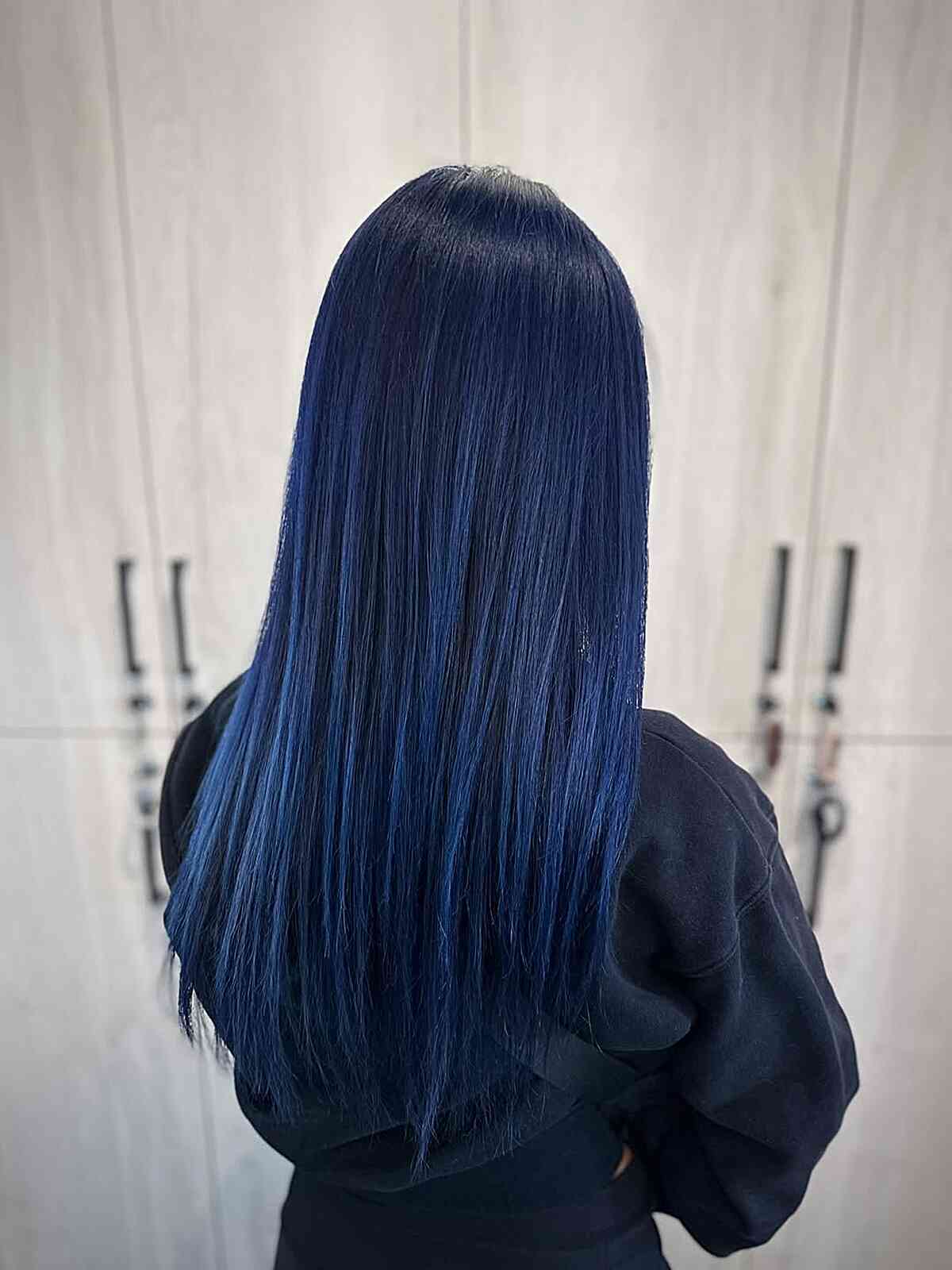
If the wavy version is about depth, this one is about contrast: a dark blue base that is nearly solid, with lighter blue highlights that stand out clearly against it. The hair is straight, thick, mid-back length, and air dried. The vibrant strands create a subtle dimension that a single tone dye job cannot match. It is a close cousin to the midnight look, but the lighter highlights here are more visible, so it suits anyone who wants the blue to be obvious without going full electric.
Ask your colorist for: dark blue base with lighter blue highlights, straight finish. The straight texture means every highlight is on display, so the placement needs to be precise, not chunky. To keep it sleek, apply a smoothing serum to damp hair before air drying, then run a flat iron over the mid lengths if needed. The lighter strands will dull faster than the base, so plan a toning visit every six weeks to keep them bright.
Mid-Back Wavy Hair Blue Highlights On Light Base
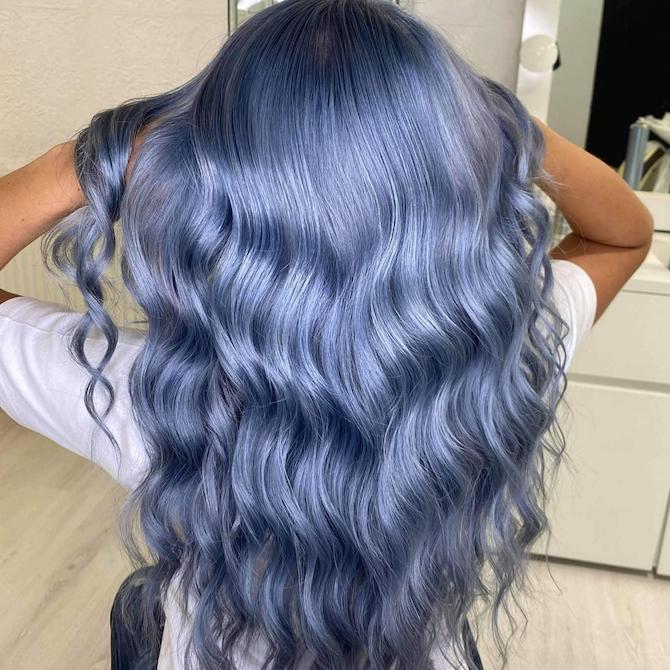
Wondering if blue highlights work on light hair? They do, just differently. Here the base is a light ashy tone, and the blue highlights are subtle and dimensional, not stark, so the overall effect is softer than on a dark base. The hair is thick, mid-back length, styled in a blowout with soft waves and a middle parting. It is a good pick if you are not ready for a dark, dramatic shift but still want the blue to show up.
Ask your colorist for: blue highlights on a light ashy base, soft waves. The lighter base means the blue needs to be toned to sit in the same muted family, or it can look brassy. To keep the volume, spray a volumizing product at the roots before blow-drying, then use a round brush to lift. A trim every six to eight weeks keeps the waves from losing their shape.
Mid-Back Layered Hair With Teal Highlights
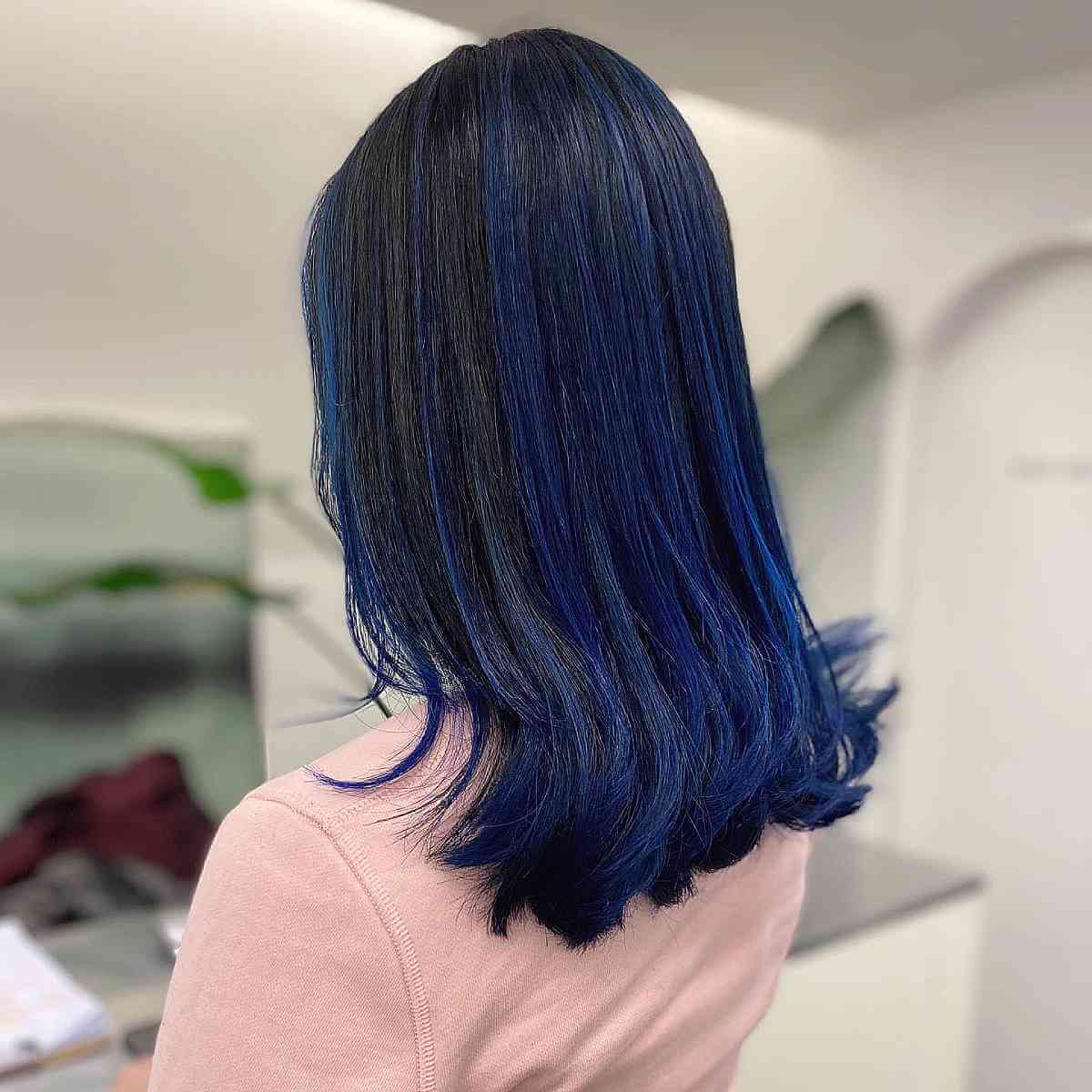
Teal is a richer, more complex blue, and here it’s laid over a dark blue base to create a tone that’s deeper than a standard blue. The hair is thick, straight, mid-back length, with layers that add subtle movement, and the deep teal highlights catch the light in a way that reads as more expensive than a flat color. The straight, air-dried texture lets the layers do the work, so the color shifts as the hair moves.
Ask your colorist for: dark blue base with deep teal highlights, layered cut. The layers are the key: they give the teal strands room to show up at different heights, which keeps the color from looking like a single stripe. To protect the color, apply a heat protectant before blow-drying, and skip the hot tools when you can. The layers will need a trim every eight to ten weeks to keep the movement clean, and the teal will need a toner to stay deep rather than fading to green.
Smoky Blue Highlights On Mid-Back Wavy Hair, Layers
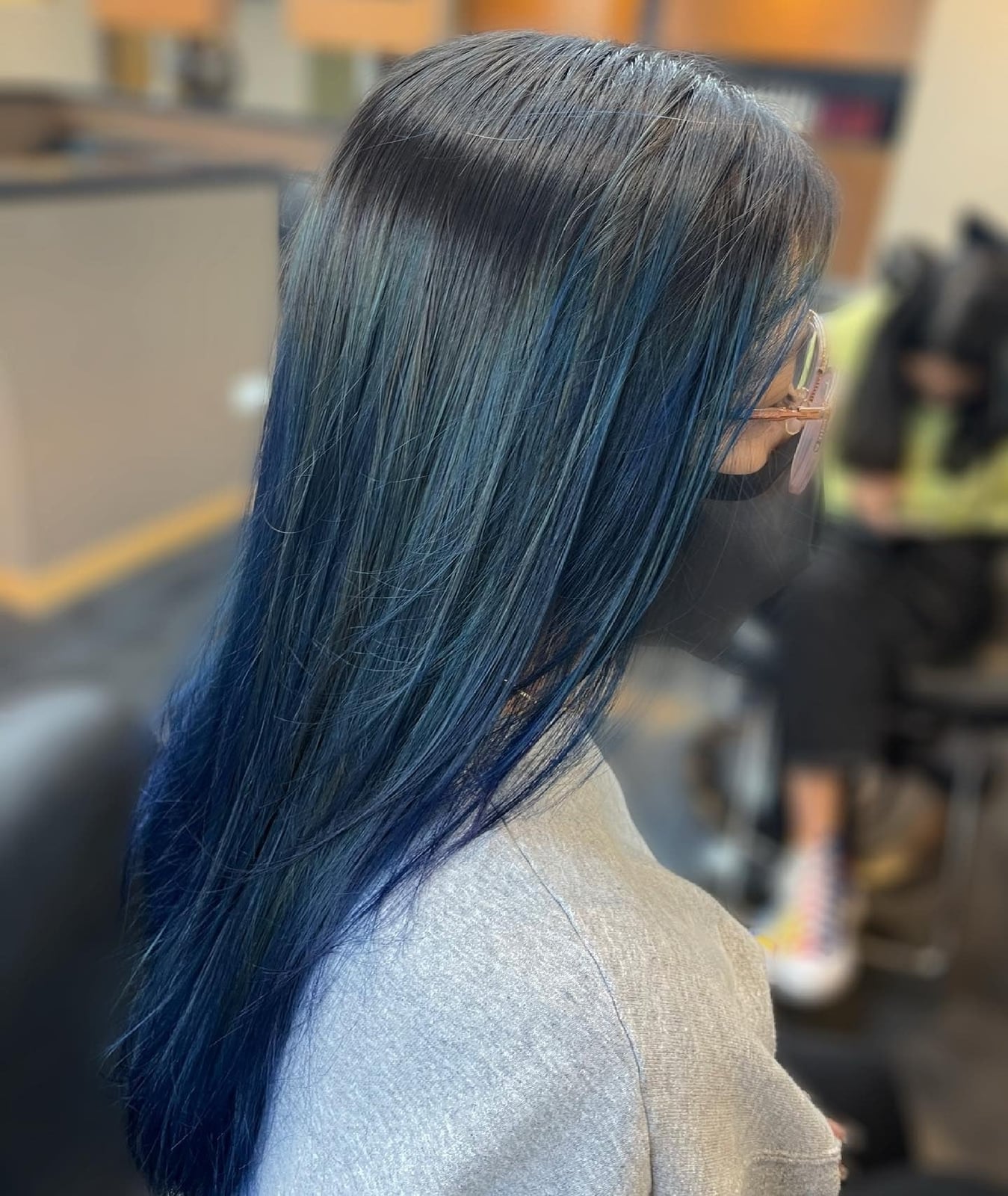
Smoky blue is the muted, grown-up sibling of the brighter blues. It is a softer tone that sits close to gray. The hair is thick, wavy, mid-back length, with layers that give it an air-dried, lived-in texture. The smoky blue highlights run through the waves to create dimension. This color fades gracefully, which is a relief if you have ever watched a vivid blue turn patchy.
Ask your colorist for: smoky blue highlights, air-dried wavy texture. The smoky tone means less contrast with the base, so the placement can be more blended, which is what makes it look natural. To keep the waves defined, apply a sea salt spray to dry hair and scrunch, then let it be. A toning visit every six to eight weeks keeps the smoky tone from going flat, and the layers will need a trim every eight weeks to hold their shape.
Mid-Back Wavy Hair With Teal and Blue Streaks
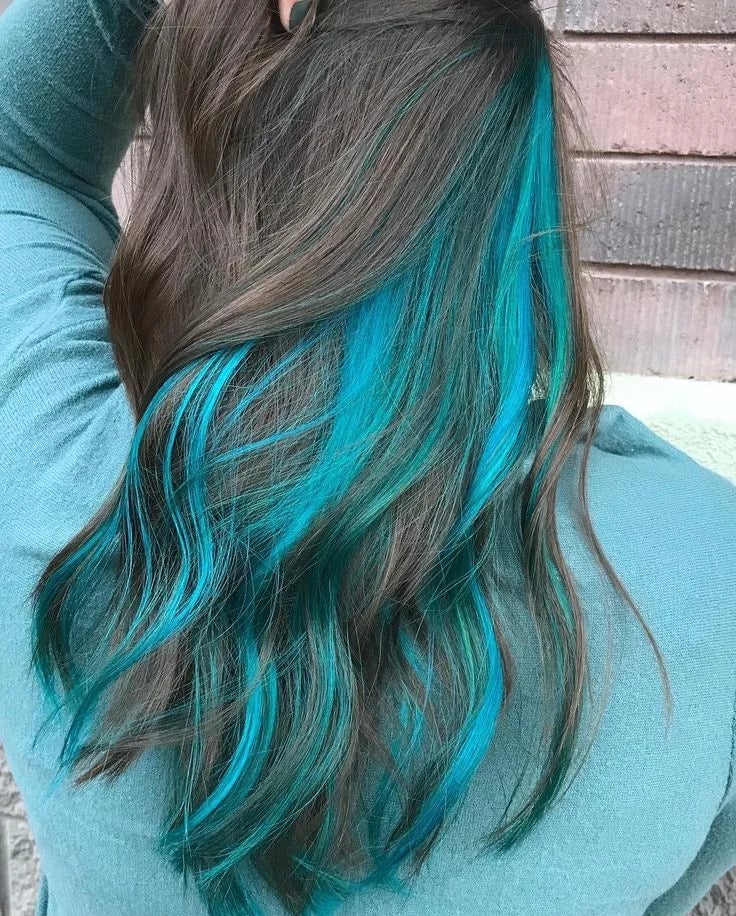
Can’t decide between teal and blue? Ask for both. Thick, wavy hair reaching mid-back is the ideal canvas for a dark base with vibrant teal and blue highlights. The back view reveals the true depth of the color placement, with each shade catching the light independently. Ask your colorist for: dark base with vibrant teal and blue streaks, tousled waves. A middle part keeps the look balanced for oval and long faces. Scrunch hair with a curl cream to define the waves, and plan for a trim every eight to ten weeks to maintain the layered shape.
Black Base With Subtle Blue and Teal Highlights
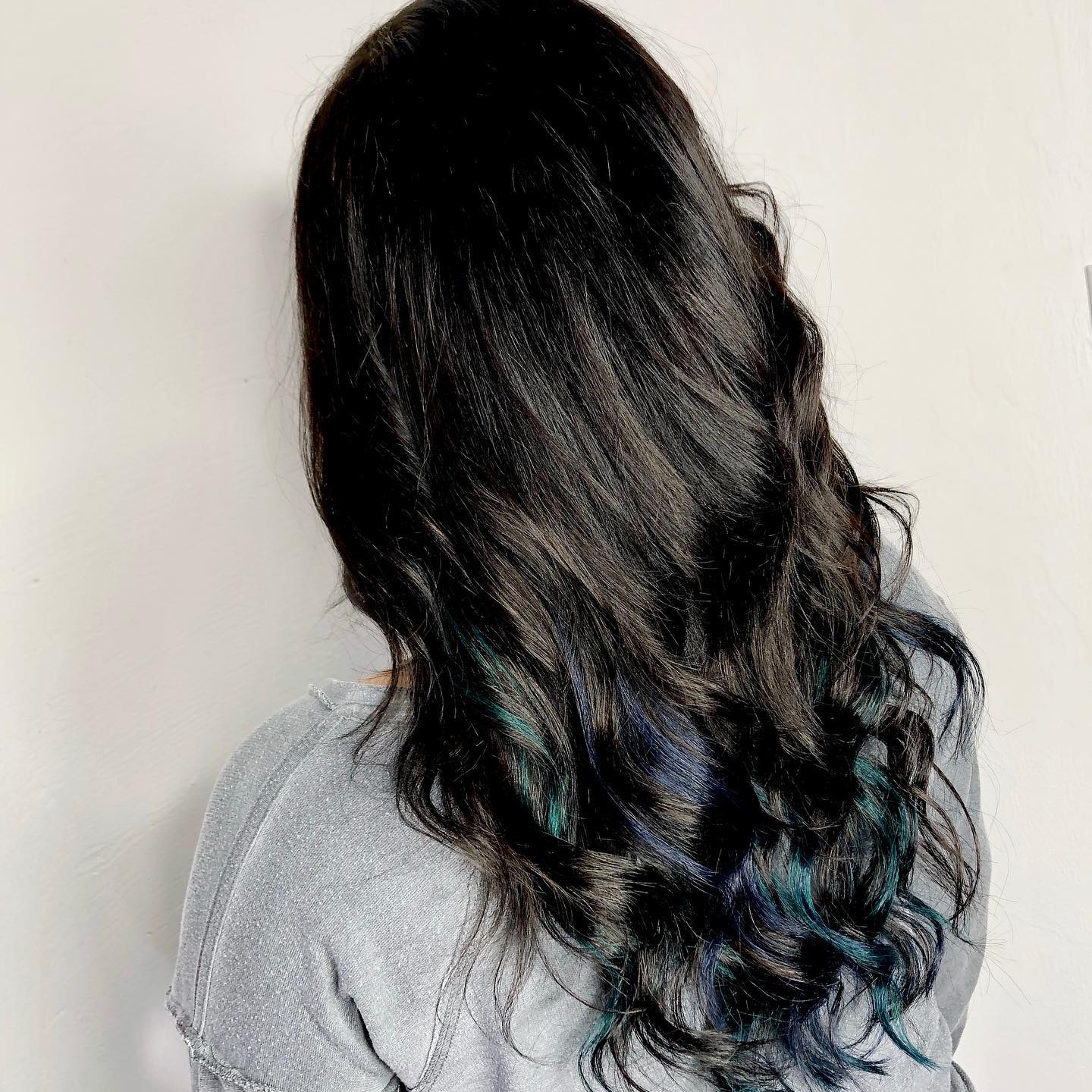
This is blue for people who are not sure they want blue. Thick, wavy mid-back hair starts with a black base, then gets the thinnest whisper of blue and teal woven through the mid-lengths. The effect reads as a cool shimmer and not a color block. A middle part and loose waves keep it soft. Ask your colorist for: black base with subtle blue and teal highlights, loose waves.
These strands are subtle enough that direct sunlight or a bright room is needed to see them. If you want your color to announce itself from across the street, this is not the one. But for someone who wants a quiet, dimensional shift without a hard grow-out line, it delivers. A texturizing spray adds the right lived-in finish.
Mid-Back Dark Base With Denim Blue Highlights
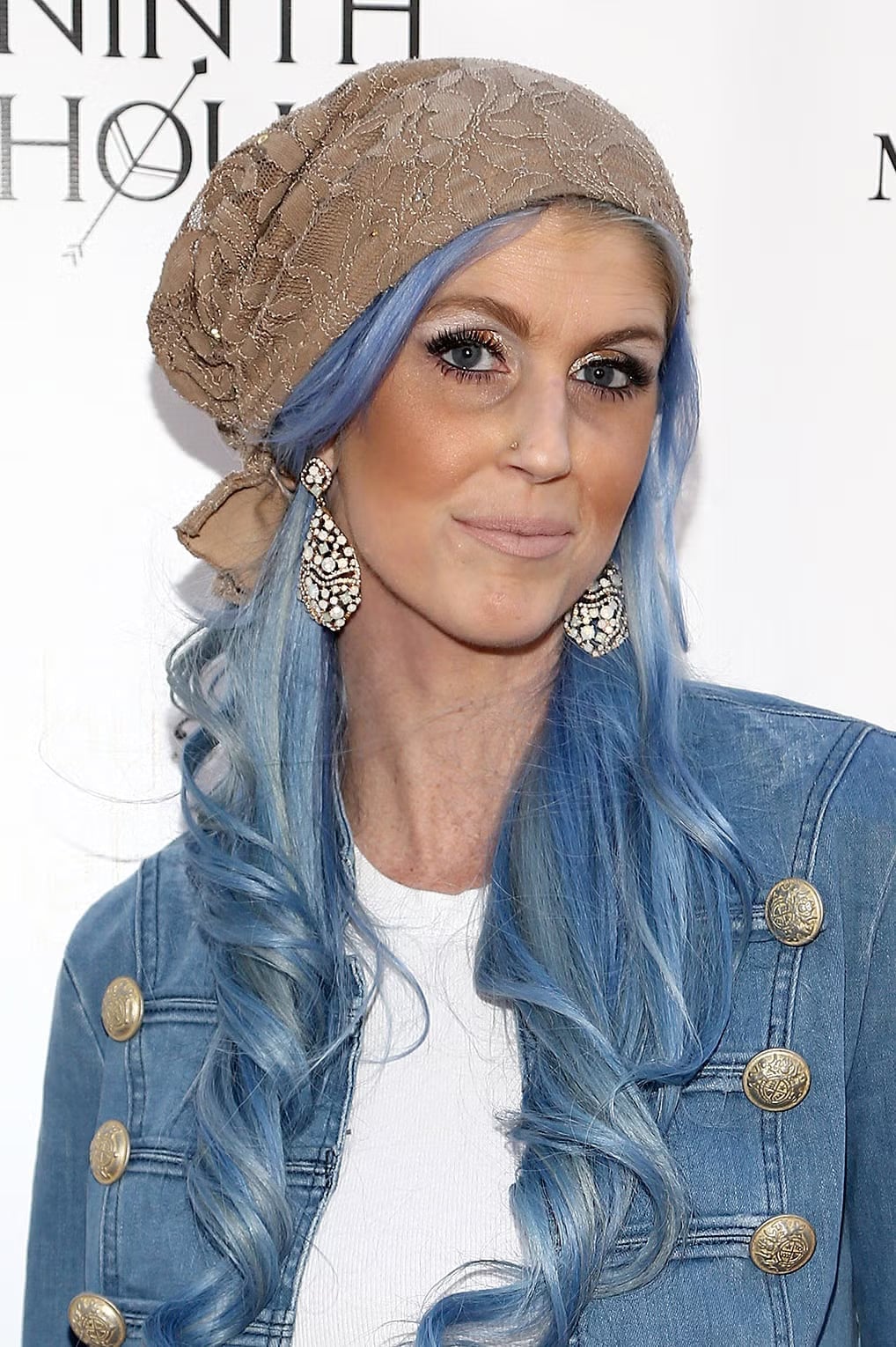
Denim blue is not electric blue. It is a cooler, muted tone that sits closer to navy than to cobalt, and it looks intentional without being loud. On a dark base with loose waves reaching mid-back, the contrast is present but grounded. The front view shows the layers and the middle part, and the thick texture carries the color without it looking sparse. Ask your colorist for: dark base with denim blue highlights, loose waves.
This color works best in cooler months. The denim tone matches the weight of winter coats and scarves without competing. A diffuser attachment on your blow dryer keeps the waves defined without frizz, and a trim every six to eight weeks keeps the layered ends sharp. It works for everyday wear and evening plans without needing a refresh.
Mid-Back Dark Base With Vibrant Blue Highlights, Wavy
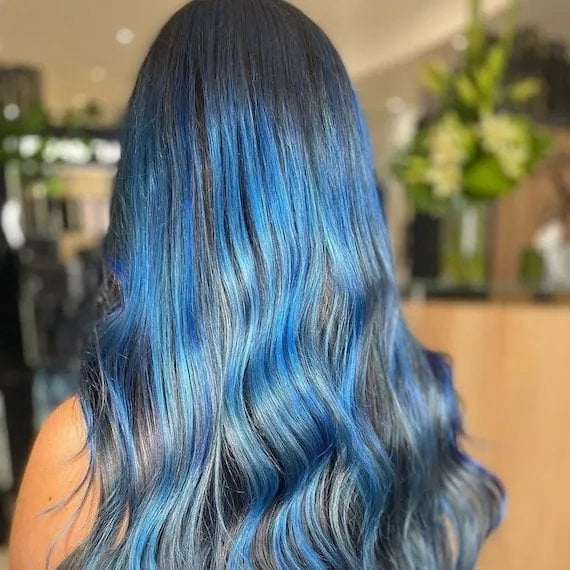
This is the version where the blue is not playing hide and seek. Thick, mid-back hair with a dark base is sectioned for vibrant blue highlights that run from root to tip, visible from every angle. The back view shows the density of the color placement, and the middle parting splits the waves evenly. Ask your colorist for: dark base with vibrant blue highlights, wavy blowout. Use a heat protectant spray before styling, and schedule a toning appointment every four to six weeks to keep the blue from shifting green. The layers in the cut give the waves room to move without looking heavy.
Collarbone Layered Hair With Bright Blue Highlights
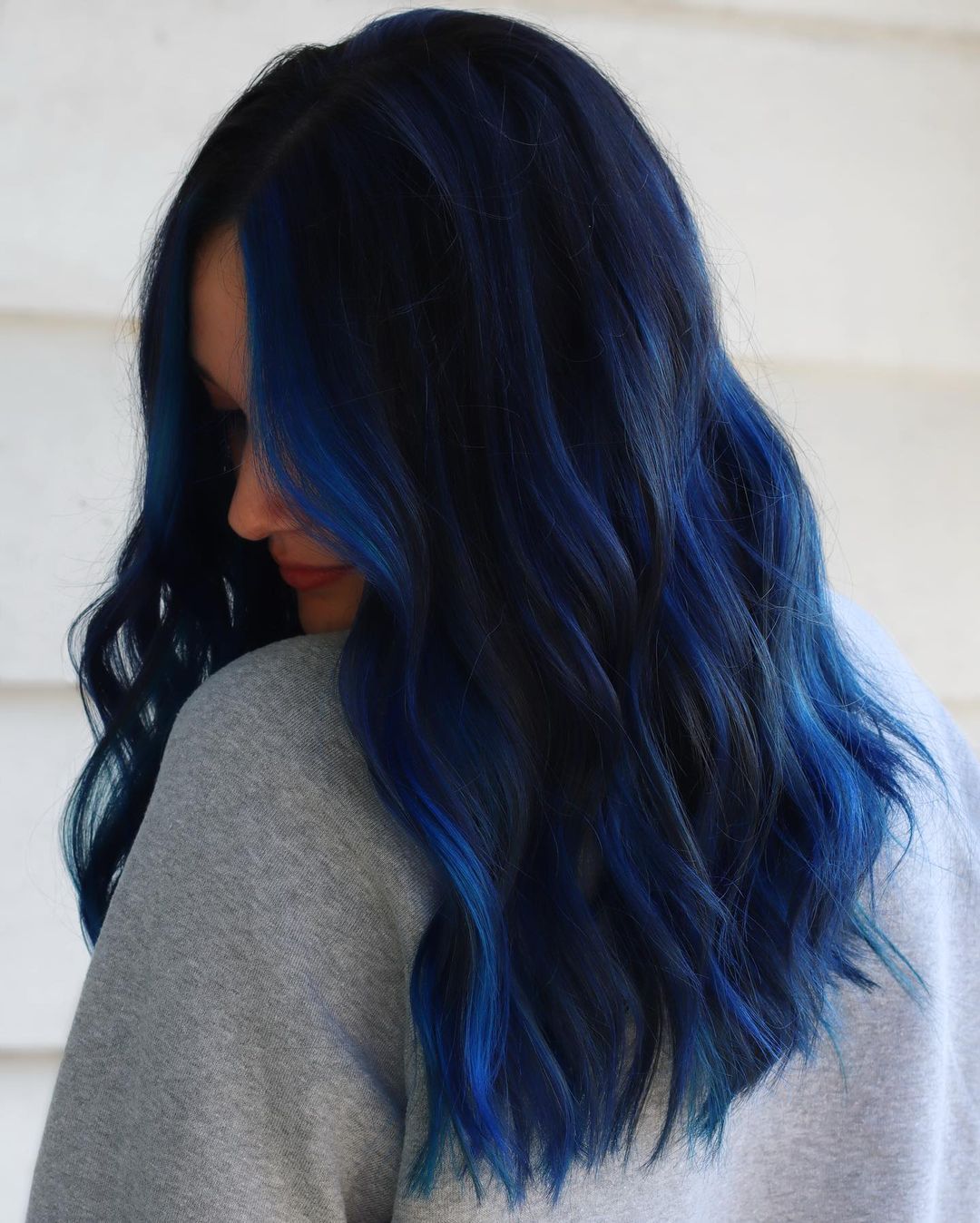
Is bright blue too much for a shorter length? Not when the cut is layered and the highlights are woven through, not painted on. Thick, wavy hair ending at the collarbone keeps the dark base dominant, with bright blue highlights adding pop without overwhelming the shape. The side view shows how the color moves with the layers. Ask your colorist for: collarbone length layers, dark base with bright blue highlights. A round brush blowout gives volume and a smooth finish. This length needs a trim every six to eight weeks to keep the layers from losing their shape. The result is bold but contained.
Collarbone Wavy Hair With Vibrant Blue Highlights
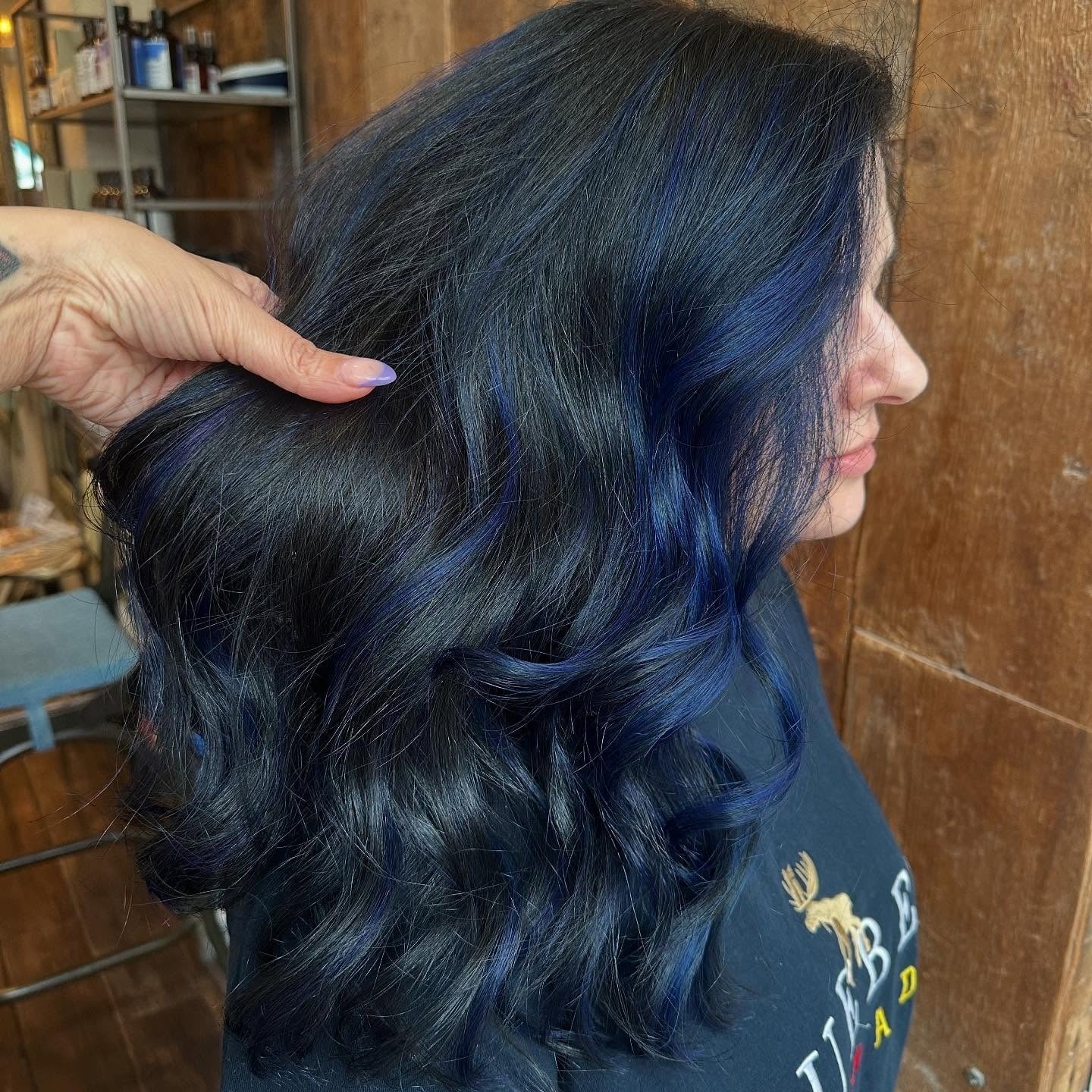
The contrast here is doing the work: a black base keeps the whole thing grounded, then vibrant blue pieces cut through the waves without screaming. Thick, wavy hair at collarbone length with a middle part suits oval and long faces best.
Ask your colorist for: black base with vibrant blue highlights, collarbone length. A wave-enhancing spray on damp hair, then air dry or diffuse. The blue will fade faster than you think, so a toning session every four to six weeks keeps it from turning muddy.
Collarbone Bob With Bright Blue Highlights
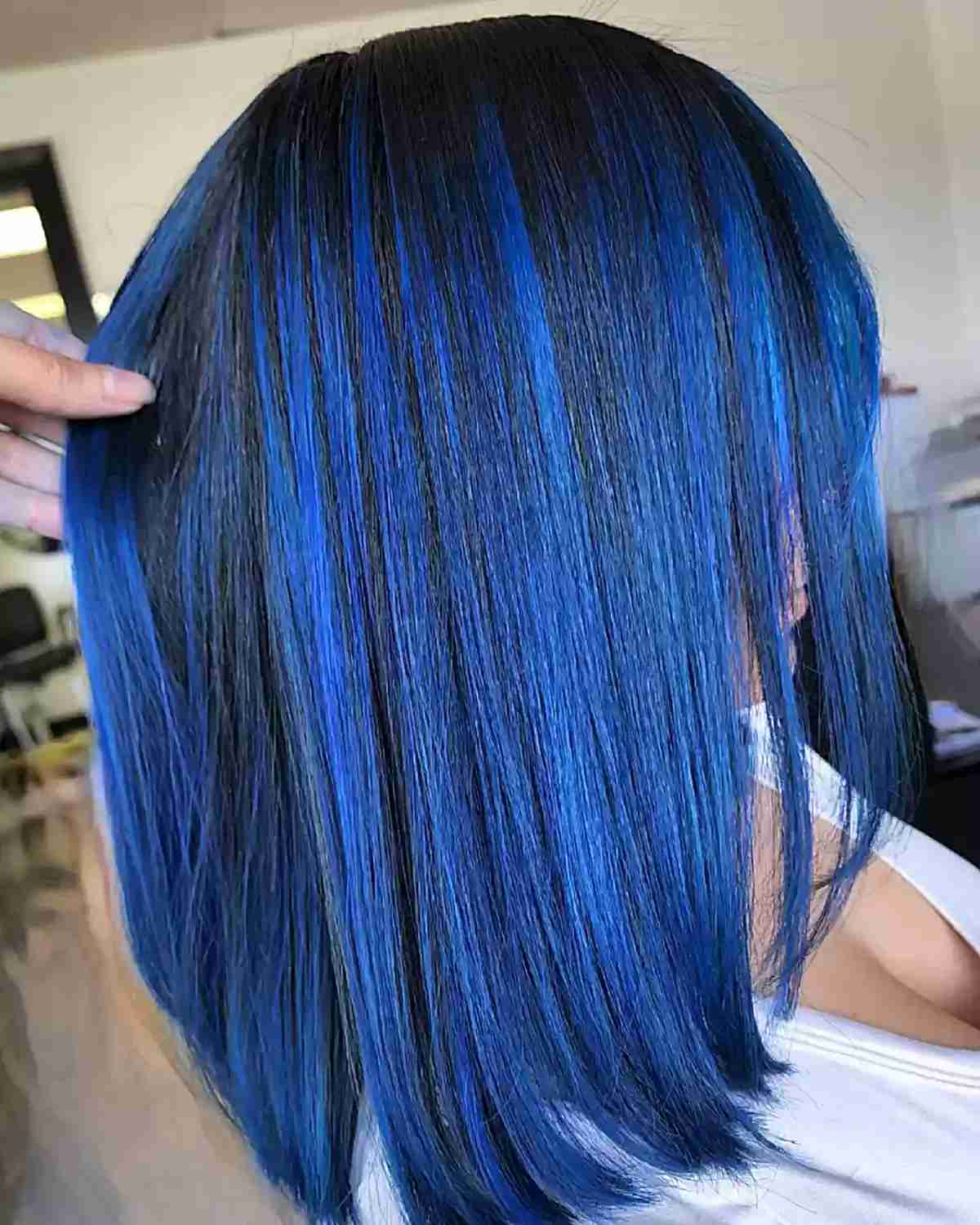
A layered cut spreads color around; a bob concentrates it. On a collarbone bob with a dark base, bright blue highlights sit closer together, so the payoff is more noticeable per strand. Thick, straight hair with a middle part works for oval and long faces. Ask your colorist for: collarbone bob, dark base with bright blue highlights. A flat iron seals the smooth finish, and a trim every six to eight weeks keeps the bob crisp rather than shapeless.
Collarbone Straight Hair With Light Blue Highlights
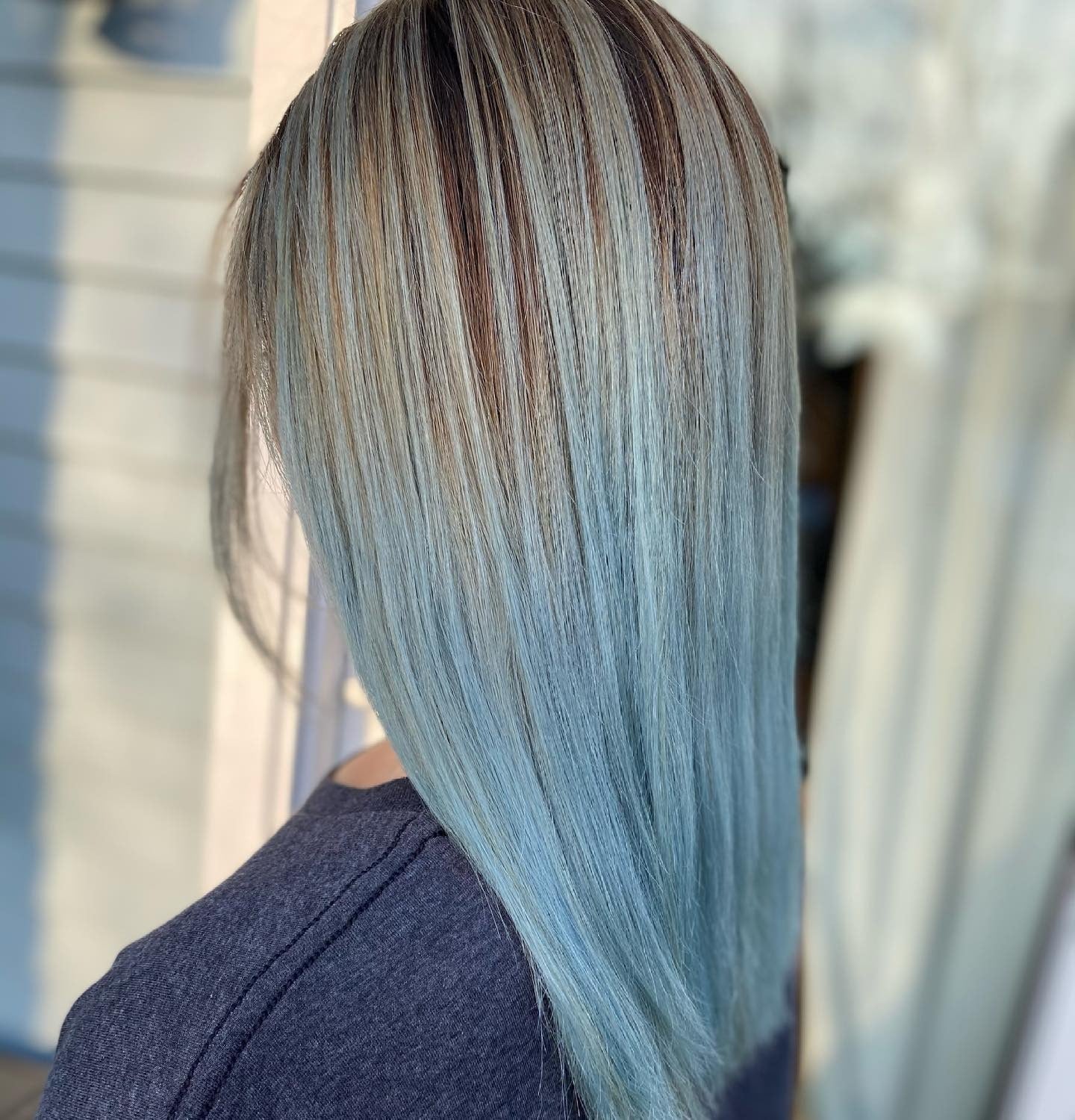
Starting with a light base means the light blue highlights don’t need heavy lifting. The effect is subtle but dimensional, more like a whisper than a shout. Fine, straight hair at collarbone length with a middle part suits oval and long faces. Ask your colorist for: light base with subtle light blue highlights. A lightweight serum adds shine without weighing down fine strands, and a trim every six to eight weeks keeps the ends looking neat.
Collarbone Bob In Vivid Blue
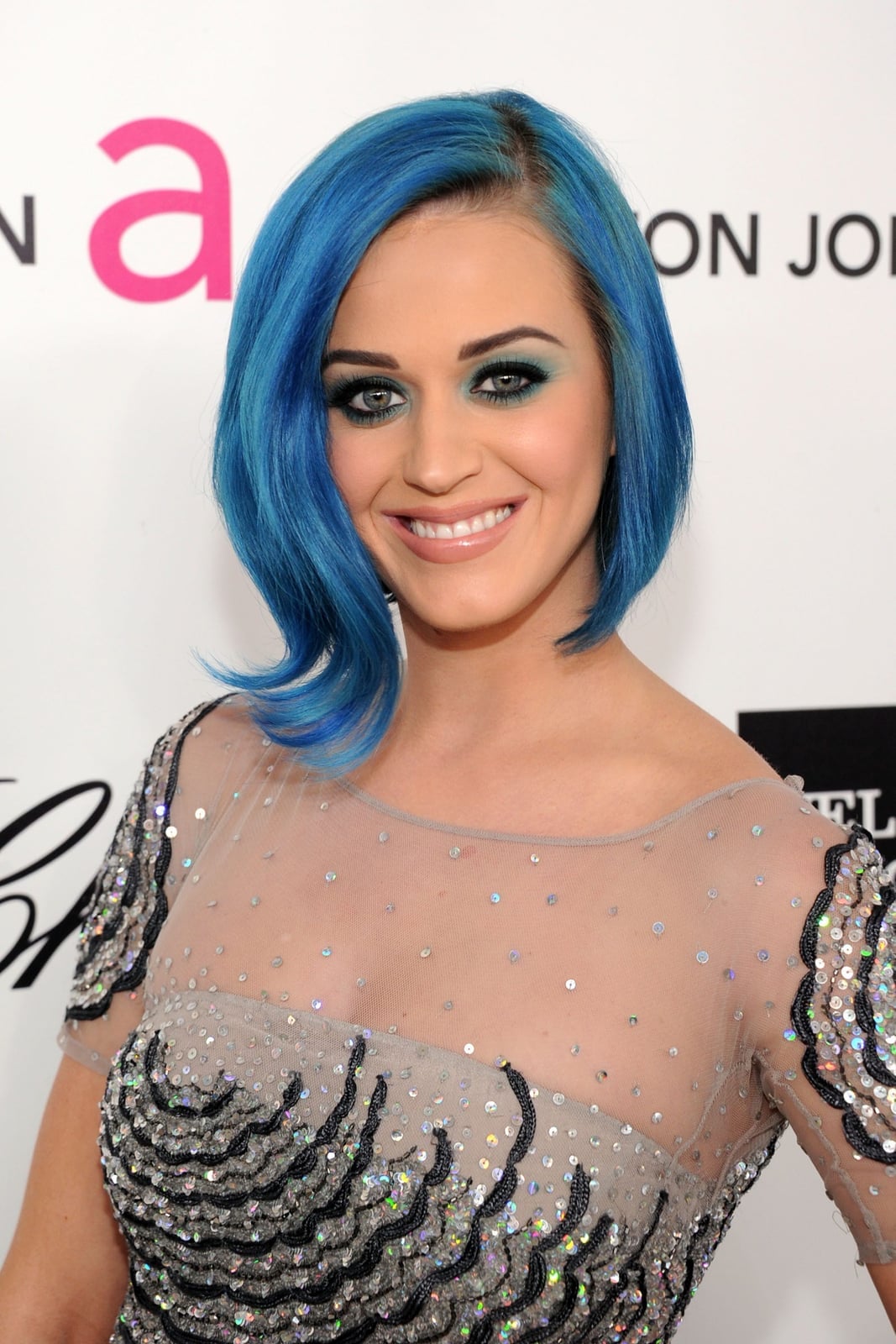
Styling is straightforward. Apply a heat protectant, then blow dry with a round brush for volume. This is a salon color, not a box job, and it needs about three hours in the chair. At home, a purple shampoo helps maintain the tone between touch-ups.
Shoulder Length Wavy Hair With Side Bangs
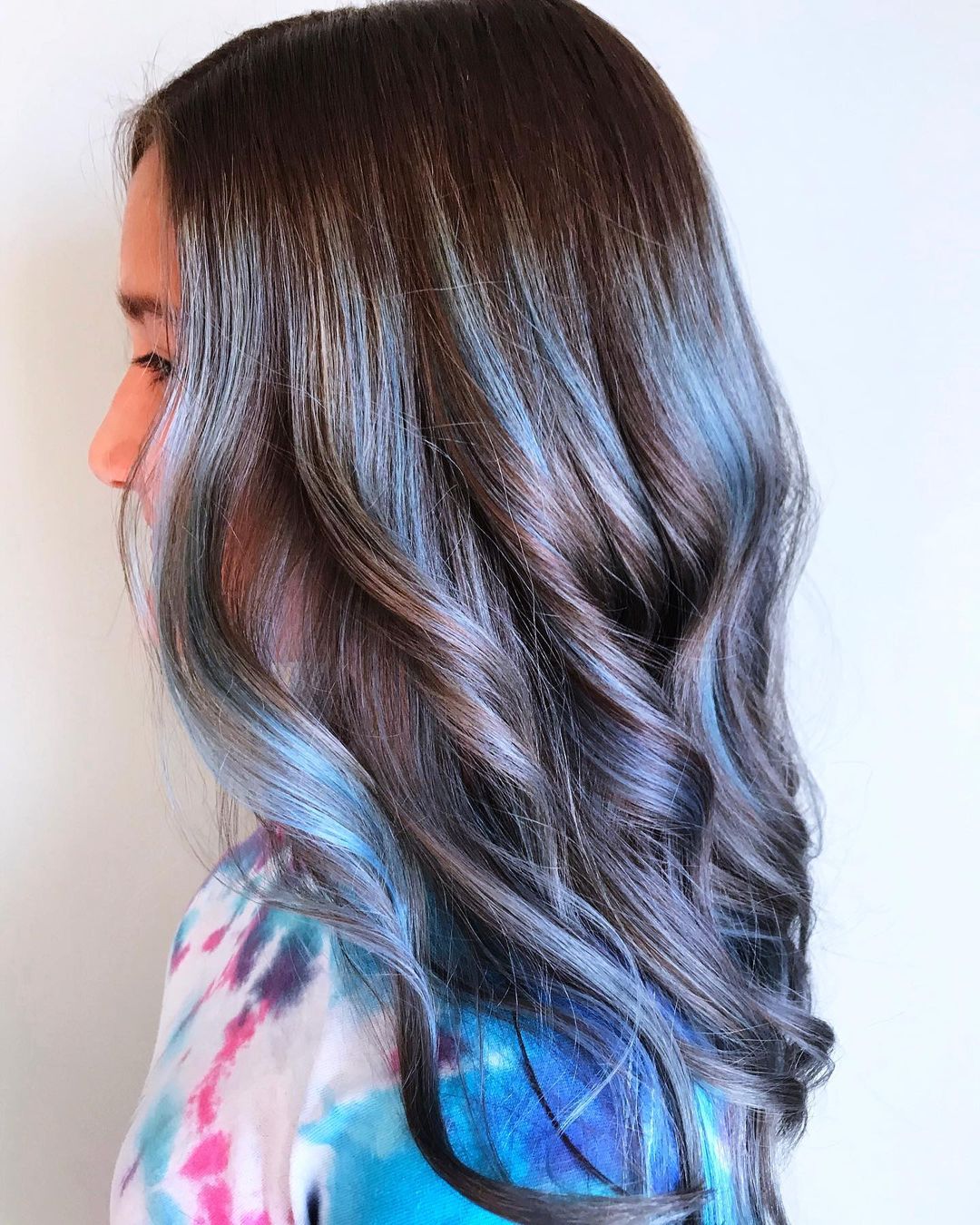
Side bangs and light blue highlights on a dark base create a natural grow-out pattern. The side-swept shape means the bangs blend into the waves as they lengthen, so you get a few extra weeks before the next trim. Thick, wavy hair at shoulder length with a side parting suits round and oval faces. Ask your colorist for: shoulder length wavy hair, dark base with light blue highlights, side-swept bangs. Use a texturizing spray on damp waves, then a trim every six to eight weeks.
Shoulder Length Wavy Hair With Blue Highlights
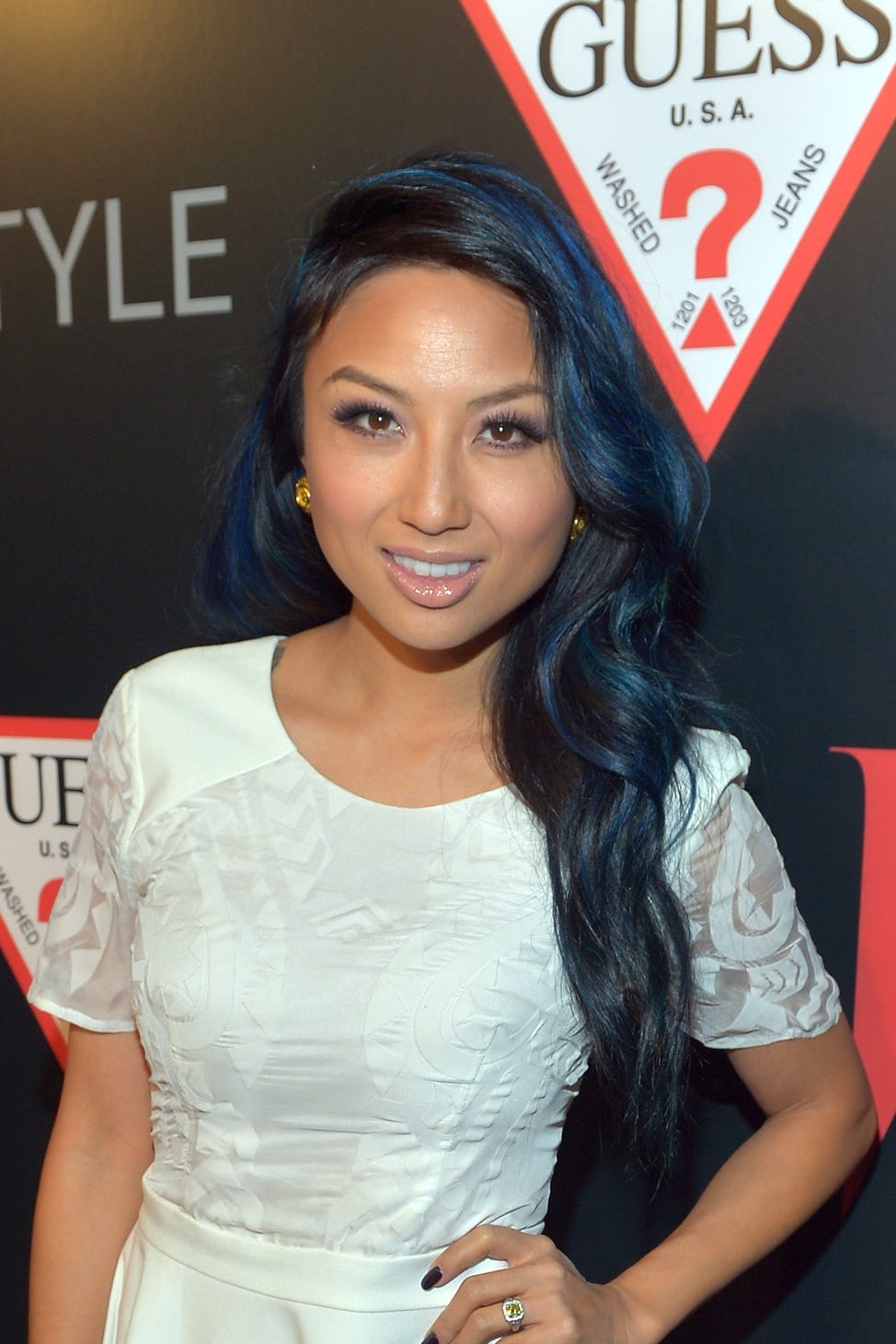
Is it possible to dip into blue without going full mermaid? Here, the answer is yes: shoulder-length waves with side-swept bangs keep the dark base dominant while blue highlights add a cool, subtle shimmer. Medium density wavy hair holds this best, and the side bangs soften round and oval faces. Ask your colorist for: shoulder length wavy hair, dark base with blue highlights, side-swept bangs. Tuck the side bangs behind the ear for a different look; trim every six to eight weeks.
Mid-Back Wavy Hair With Full Fringe
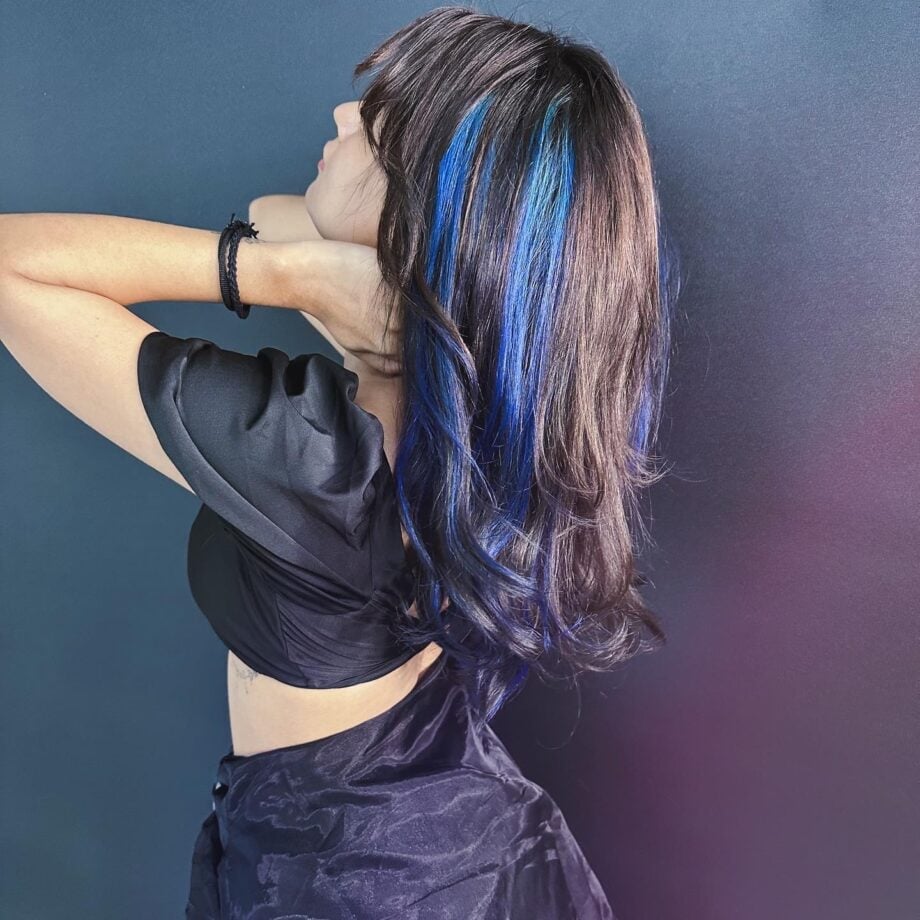
That full fringe is the detail that makes the electric blue highlights look deliberate, not accidental. Thick, wavy mid-back hair with a dark brown base gets a jolt of bright blue woven through the layers, and the straight-across fringe ties it together. This is a salon-only proposition: the colorist lifts each section to a pale yellow before applying the blue, so the fringe alone takes about an hour. The honest drawback is the grow-out. Dark roots show against the electric blue within three weeks, and the fringe needs a trim every four weeks to keep the line clean. If you cannot commit to a monthly appointment, skip the fringe and keep the highlights through the lengths only. Ask your colorist for: mid-back length wavy hair, dark brown base with electric blue highlights, full fringe.
Collarbone Layers With Curtain Bangs
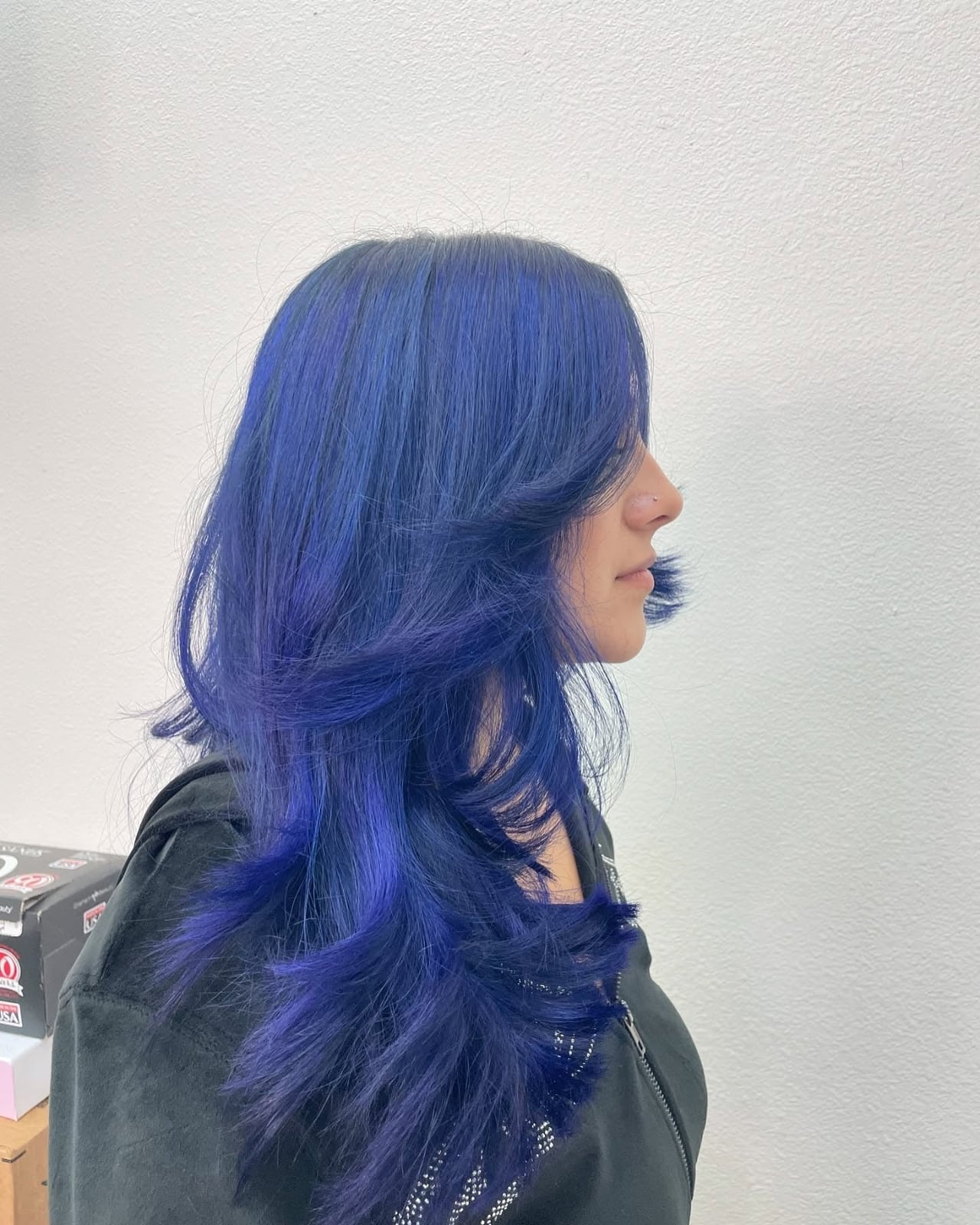
Can a deep blue base and lighter blue highlights look polished rather than costumey? Yes, when the cut has curtain bangs and layered collarbone length. The curtain bangs break the blue into soft, face-framing pieces, and the layers keep the color from sitting in one heavy block. Wavy, thick texture helps the dimensional effect show. Ask your colorist for: collarbone length layers, deep blue base with lighter blue highlights, curtain bangs. Blow-dry the curtain bangs with a round brush away from the face; trim the layers every eight to ten weeks.
Mid-Back Wavy Hair With Blue Undertones, Thick
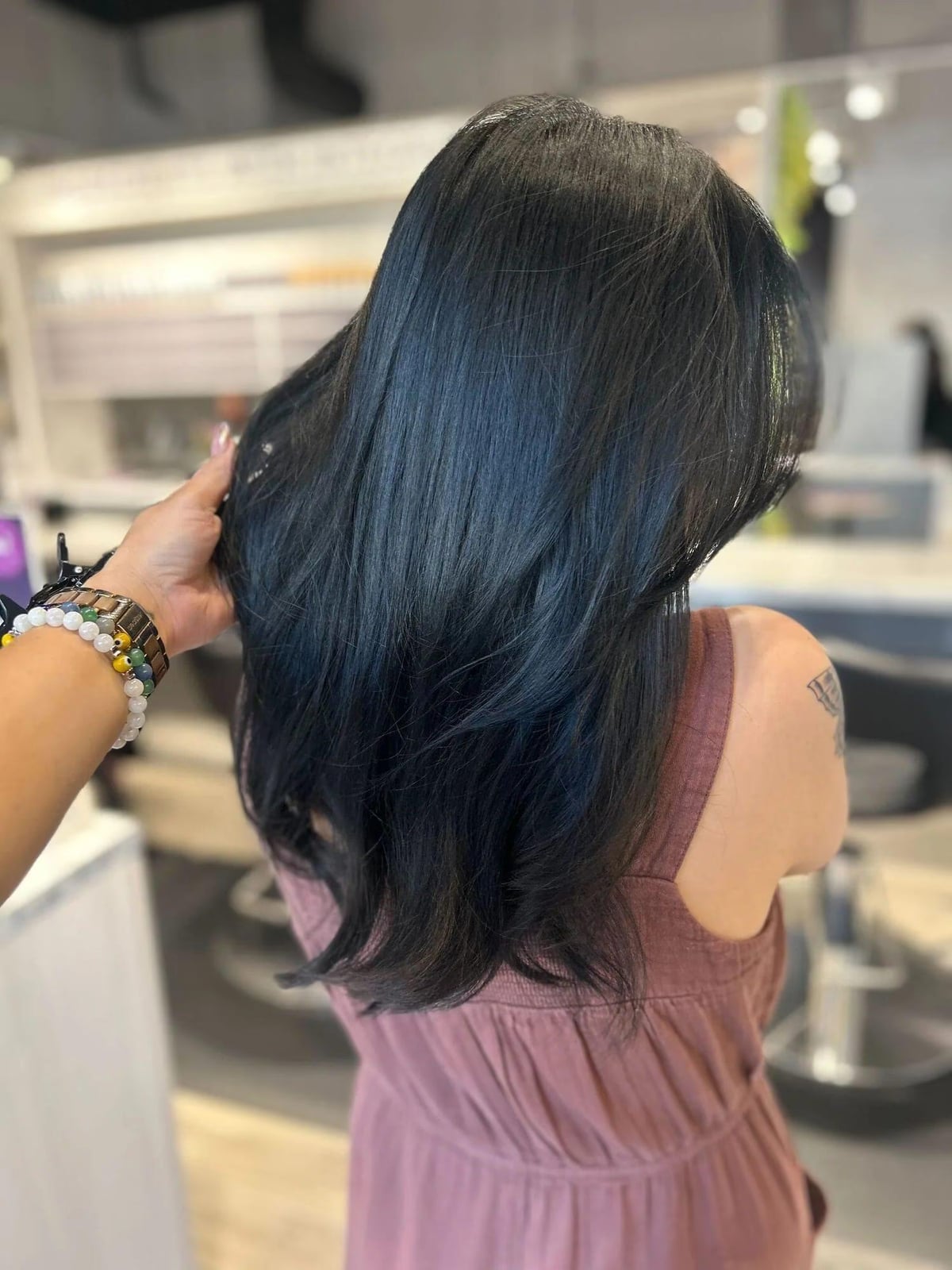
Where the other looks here announce the blue, this one hides it. Thick, wavy mid-back hair with a deep black base carries subtle blue undertones that read as black in most light and only catch a cool sheen in direct sun. It is the closest alternative to a classic black gloss, but with a faint cold shift. A middle part suits oval and long faces, and the wavy texture keeps the undertone from looking flat. Ask your colorist for: dark base with subtle blue undertones, wavy texture. Use a color-depositing conditioner every other wash to maintain the blue cast; trim every eight to ten weeks.
Final Thoughts
For a subtle effect, keep the blue close to the base tone and ask for fine, spaced highlights. For a bolder statement, let the color sit on lighter pieces or go for a vivid all-over blue. Either way, the upkeep is the trade-off: vivid tones need a toning session every six to eight weeks, while darker blues fade more gracefully into the base.
- Maintain blue highlights with color-depositing conditioners every 2-3 weeks to preserve vibrancy.
- Use sulfate-free shampoos and conditioners to prevent premature fading.
- Schedule salon toning sessions every 6-8 weeks to keep the blue hue fresh.
- Minimize heat styling to protect colored strands from damage and fading.
Blue highlights offer a spectrum of expression.