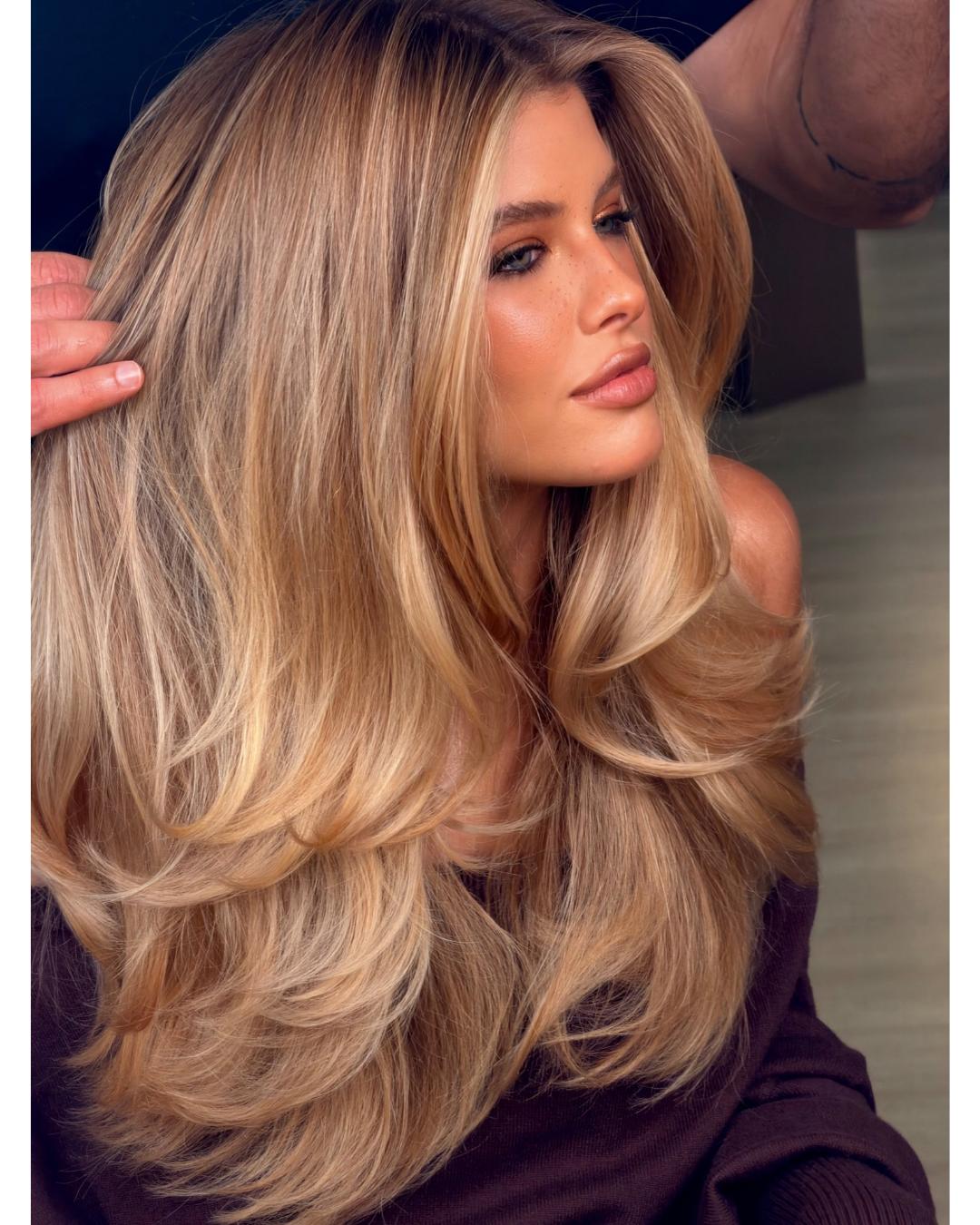
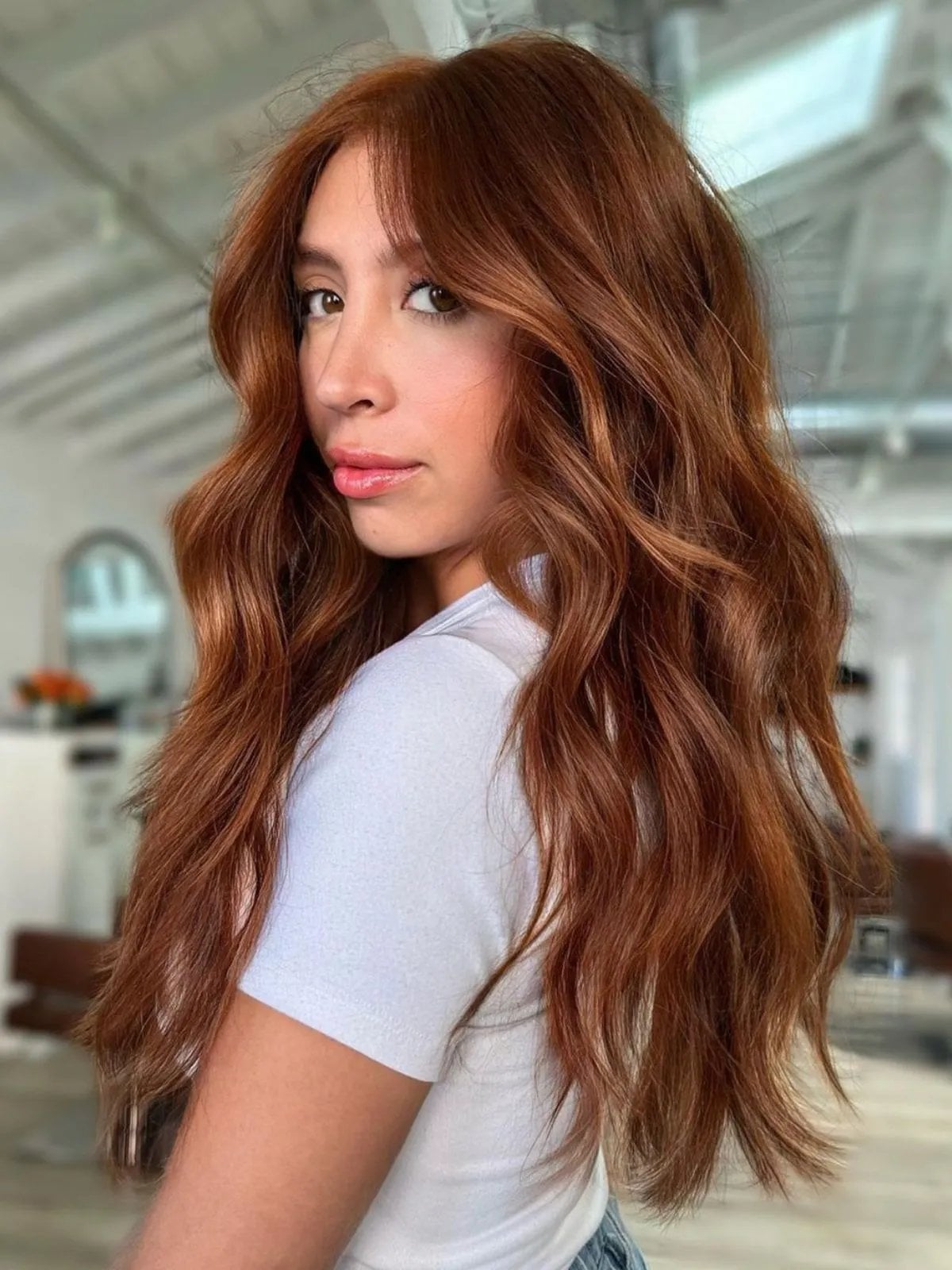
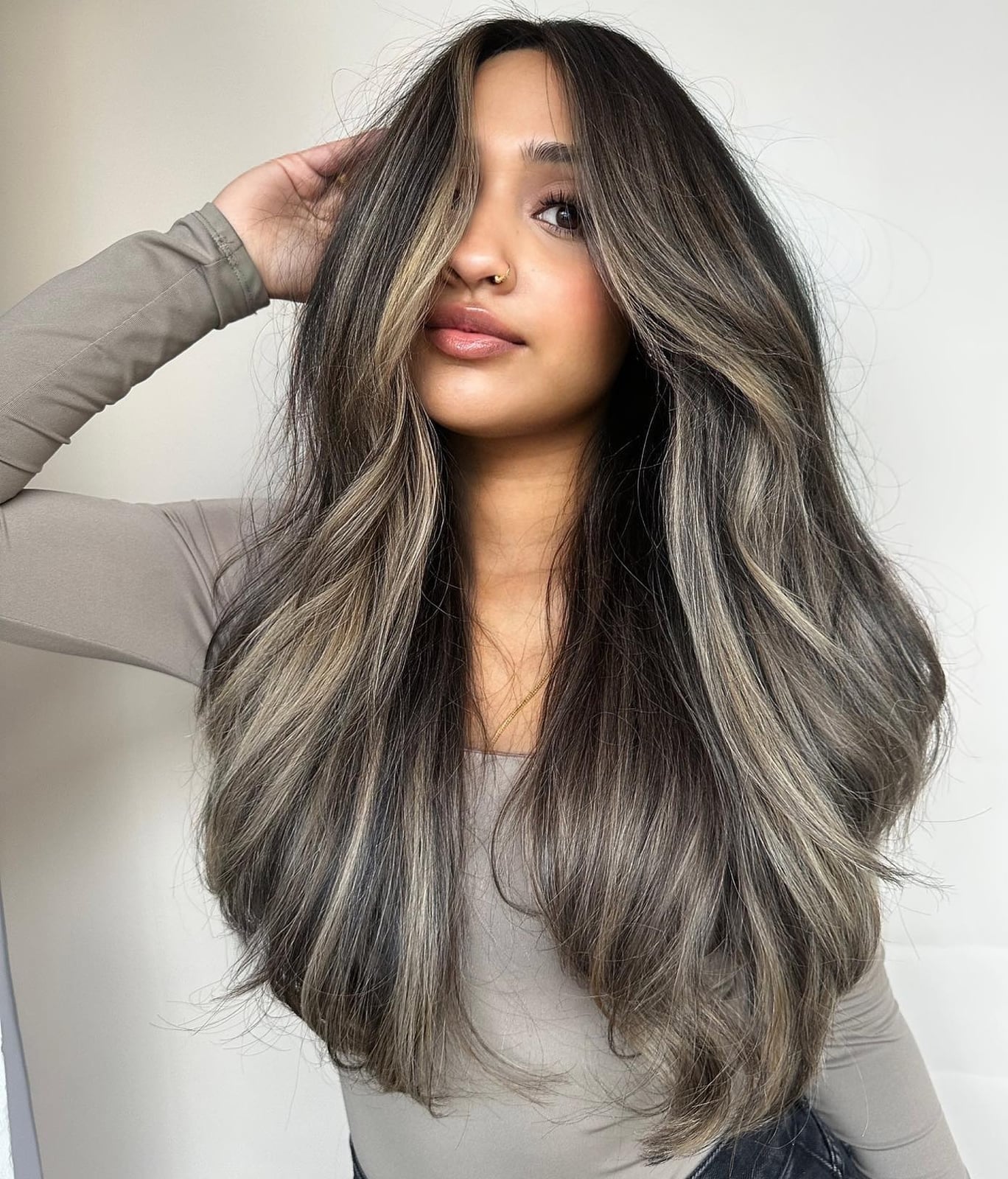
Honey blonde highlights blend warm, golden tones into your base for a sun-kissed glow that suits nearly anyone. In 2027, the trend favors lived-in color, soft face-framing layers, and glossy natural texture over chunky, high-contrast streaks.
This collection of 28 ideas shows how Classy Honey Blonde Highlights adapt across mid-back, collarbone, and shoulder lengths, with techniques from subtle balayage to brighter all-over dimension. Whether your hair is fine and falls flat or you’re managing a visible grow-out line, there’s a honey blonde approach that works for your texture, face shape, and maintenance comfort.
Mid-Back Length Honey Blonde With Curtain Bangs
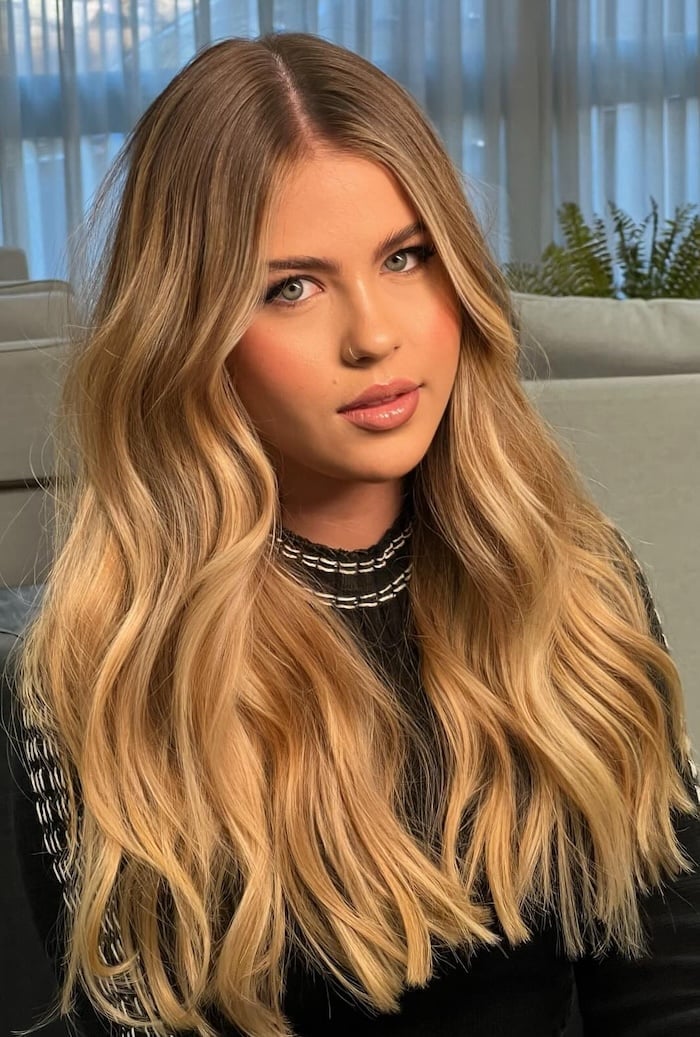
Wondering how to ask for honey blonde highlights without leaving the salon with something too golden or too ashy? Start with the base: a honey blonde foundation with lighter blonde highlights woven through mid-back length hair, styled in loose waves with curtain bangs. The blend keeps the color from reading as flat, while the bangs soften the transition around the jaw. This setup works best on thick, wavy hair that can handle the weight of both length and layers. Ask your colorist for: mid-back honey blonde with curtain bangs. A large barrel curling iron creates the wave pattern, and a trim every eight weeks keeps the baseline clean.
The curtain bangs are cut to sweep outward rather than sit straight across, which means they grow out gracefully rather than demanding a monthly reshape. The middle part keeps the face-framing pieces symmetrical, so the highlights hit both sides evenly. For the color, the lighter strands are concentrated around the front and ends, giving the impression of natural sun exposure rather than a uniform lift. It is a formula that looks deliberate without looking complicated.
Voluminous Mid-Back Waves Honey Blonde
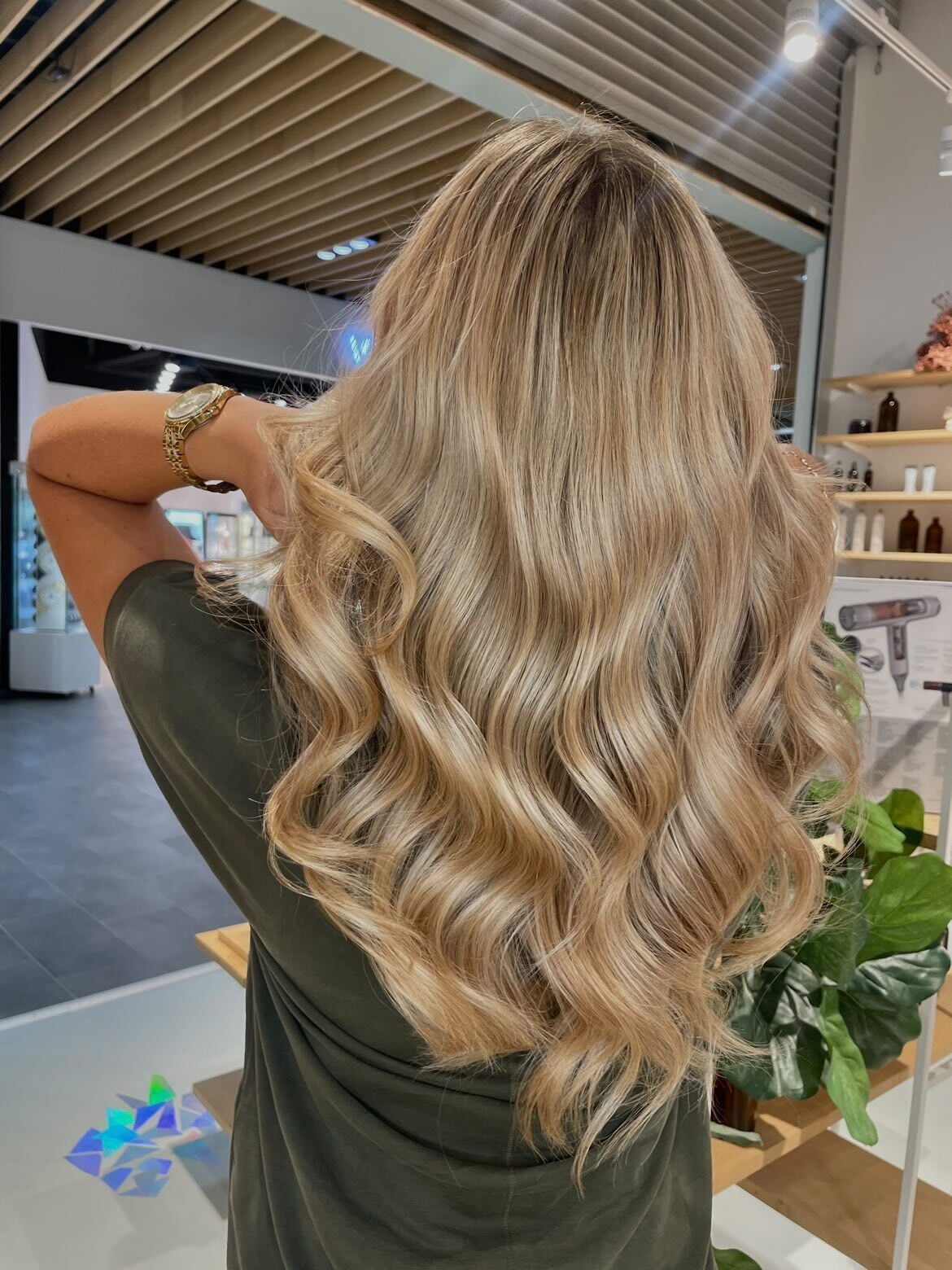
Voluminous waves on mid-back length hair demand a cut that supports movement rather than fighting it. Here, a rich honey blonde base with lighter blonde highlights runs through layered sections, and the back view reveals how the color drops deeper near the roots and brightens toward the ends. The middle part lets the waves fall symmetrically, which helps the volume look balanced rather than lopsided. This angle is honest about what you are working with: thick, wavy texture that holds a curl without much coaxing. Ask your colorist for: mid-back honey blonde with voluminous waves. A volumizing mousse applied to damp roots before blow-drying gives the lift, and a texturizing spray at the mid-lengths keeps the shape from collapsing by midday.
For finer textures, the same cut can work if the layers are kept subtle. The key is that the volume comes from the haircut, not just the styling. The highlights do the rest by adding depth that makes the waves read as dimensional rather than one solid block of color.
Long Thick Hair Bright Honey Highlights
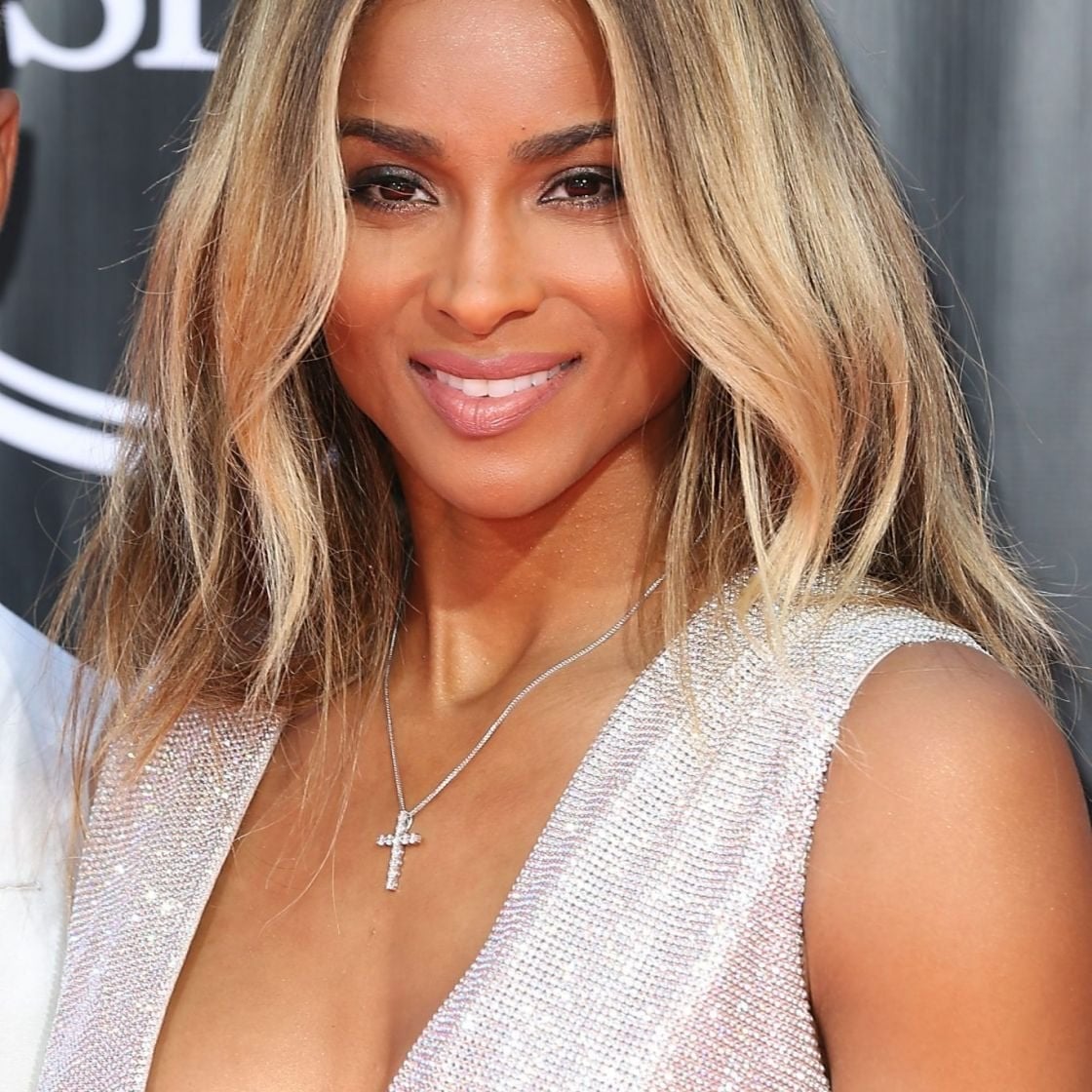
Bright honey highlights on a warm blonde base create contrast without veering into brass. The technique here involves painting the lighter pieces through the mid-lengths and ends, leaving the root area slightly deeper so the grow-out phase is less conspicuous. Long, thick hair needs that deliberate spacing; too many highlights close to the scalp can look stripey, while too few can get lost in the density. Ask your colorist for: long hair bright honey blonde highlights. The application takes about three hours because each section is foiled individually. The consistent lift from front to back holds up through several washes. This is a salon-only job, not a DIY weekend project.
Warm Brown Base With Honey Blonde Highlights
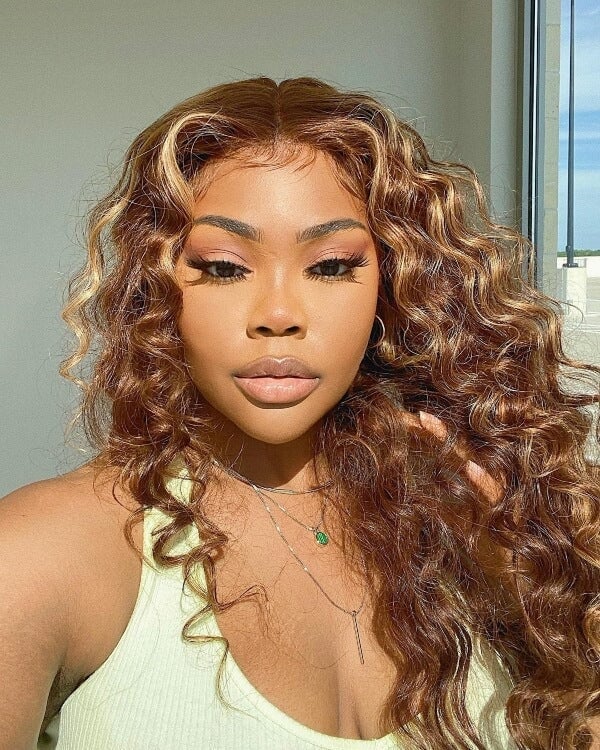
Honey blonde highlights on a warm brown base create a grounded look, while the lighter strands add the illusion of movement. The brown base uses a warm tone, which prevents the highlights from looking ashy or disconnected. The face-framing layers help the lighter pieces sit around the collarbone area, drawing attention to the color shift. Ask your colorist for: warm brown base with honey blonde highlights. A color-depositing conditioner used once a week keeps the highlights from fading into a brassy yellow. The brown base needs a gloss treatment every four to six weeks to maintain its warmth, or the highlights can start to look disconnected.
Mid-Back Blonde With Honey Highlights
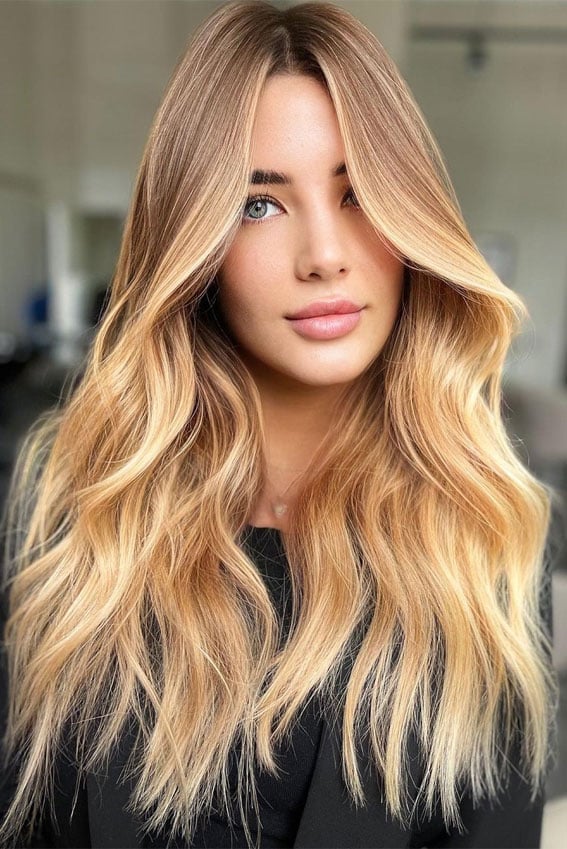
When the base is already blonde, honey highlights add warmth without changing the overall lightness. This version uses a blonde foundation with honey-toned pieces worked through the mid-lengths, so the color appears sunny rather than flat. The loose waves and blowout finish give the hair a polished texture that works for both the office and evening plans. Ask your colorist for: mid-back blonde with honey highlights. The waves add definition without weighing the hair down, and a trim every six to eight weeks keeps the ends from splitting. The middle part is practical here: it lets the highlights distribute evenly on both sides, so you are not constantly flipping your hair to show off the color.
Mid-Back Blonde With Glossy Honey Highlights
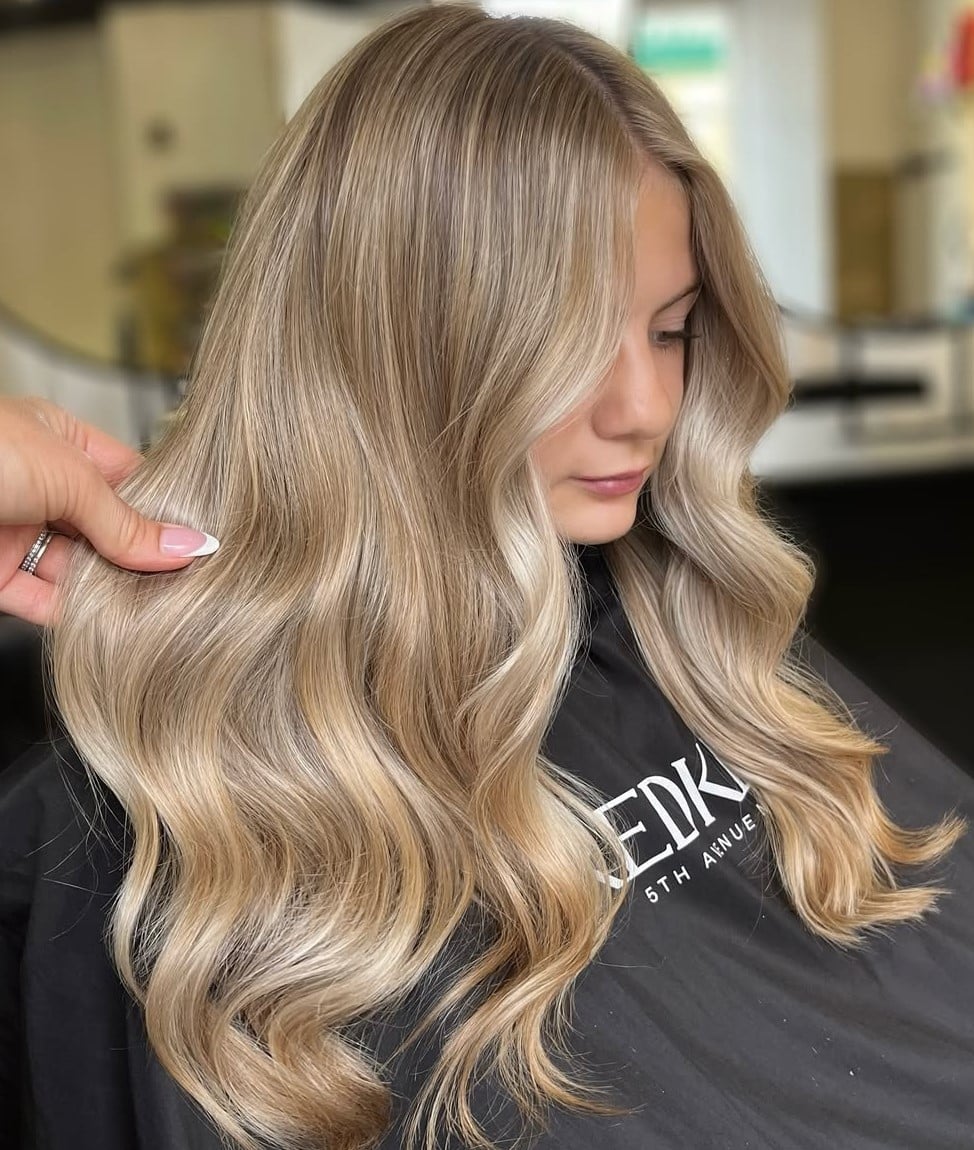
To keep that shine, apply a lightweight shine serum to the ends after drying, and use a round brush to smooth each section as you go. The blowout holds for a couple of days if you sleep on a silk pillowcase, but the gloss fades with washing, so a clear gloss treatment every four weeks keeps the finish looking fresh. A trim every six weeks prevents the ends from looking ragged, which is what dulls the whole effect.
Back View Mid-Back Blonde With Honey Highlights
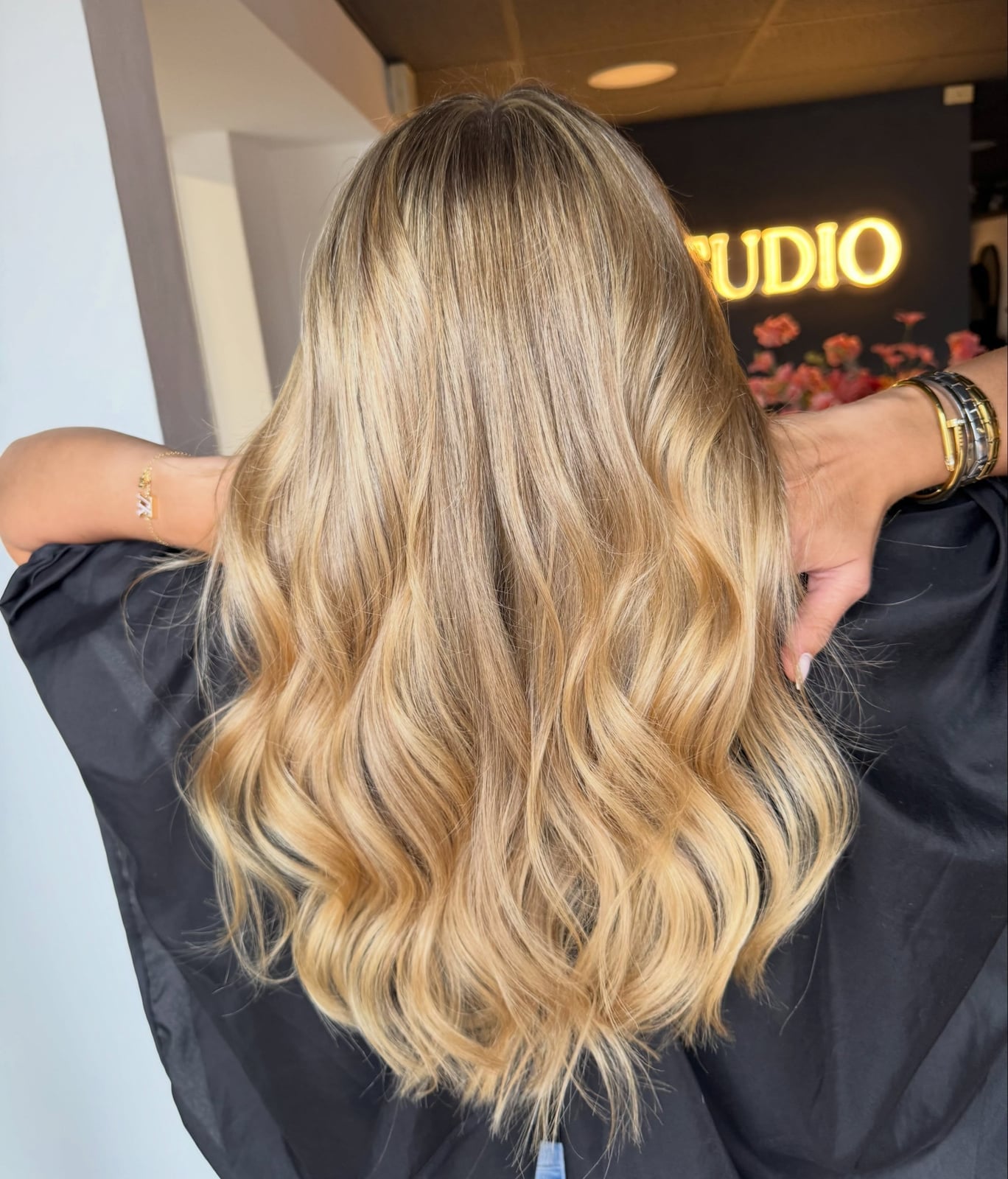
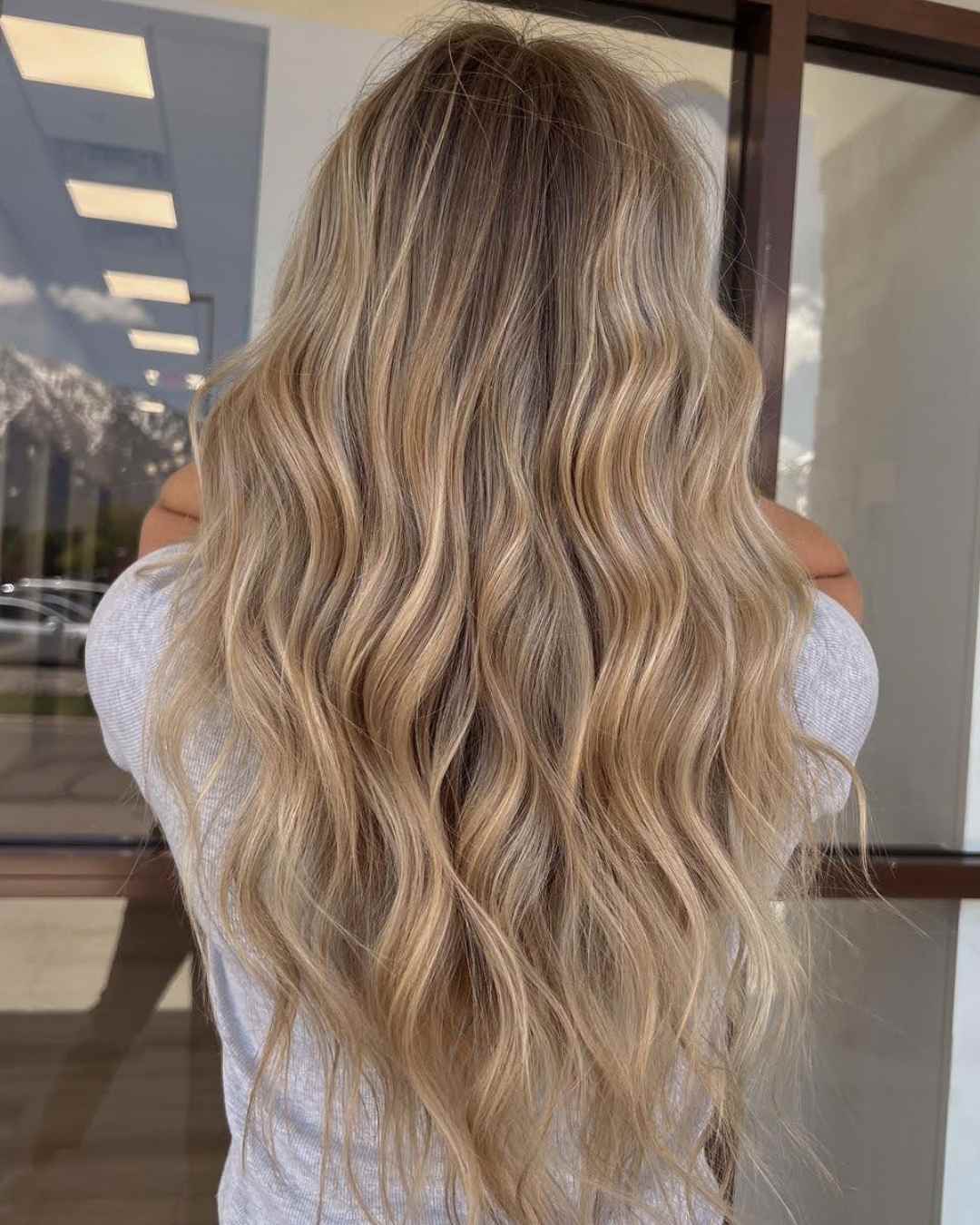
Ever wonder why some honey highlights look brassy instead of warm? The mistake is letting them go too chunky or too light against a blonde base, which turns the dimension into stripes. This back view shows the right balance: mid-back length wavy hair, a middle part, and prominent honey highlights that stay blended through the layers, so the color reads as sun-kissed rather than painted on. Ask your colorist for: mid-back blonde with prominent honey highlights.
Getting this subtle placement is a salon job, not a DIY project, because the foil work needs to follow the natural fall of the waves. The honest drawback is that the warmth drifts toward brass after six weeks, so you will need a toner appointment to reset the tone, and a trim every six to eight weeks keeps the layers from turning the ends see-through.
Long Mid-Back Cascading Honey Highlights
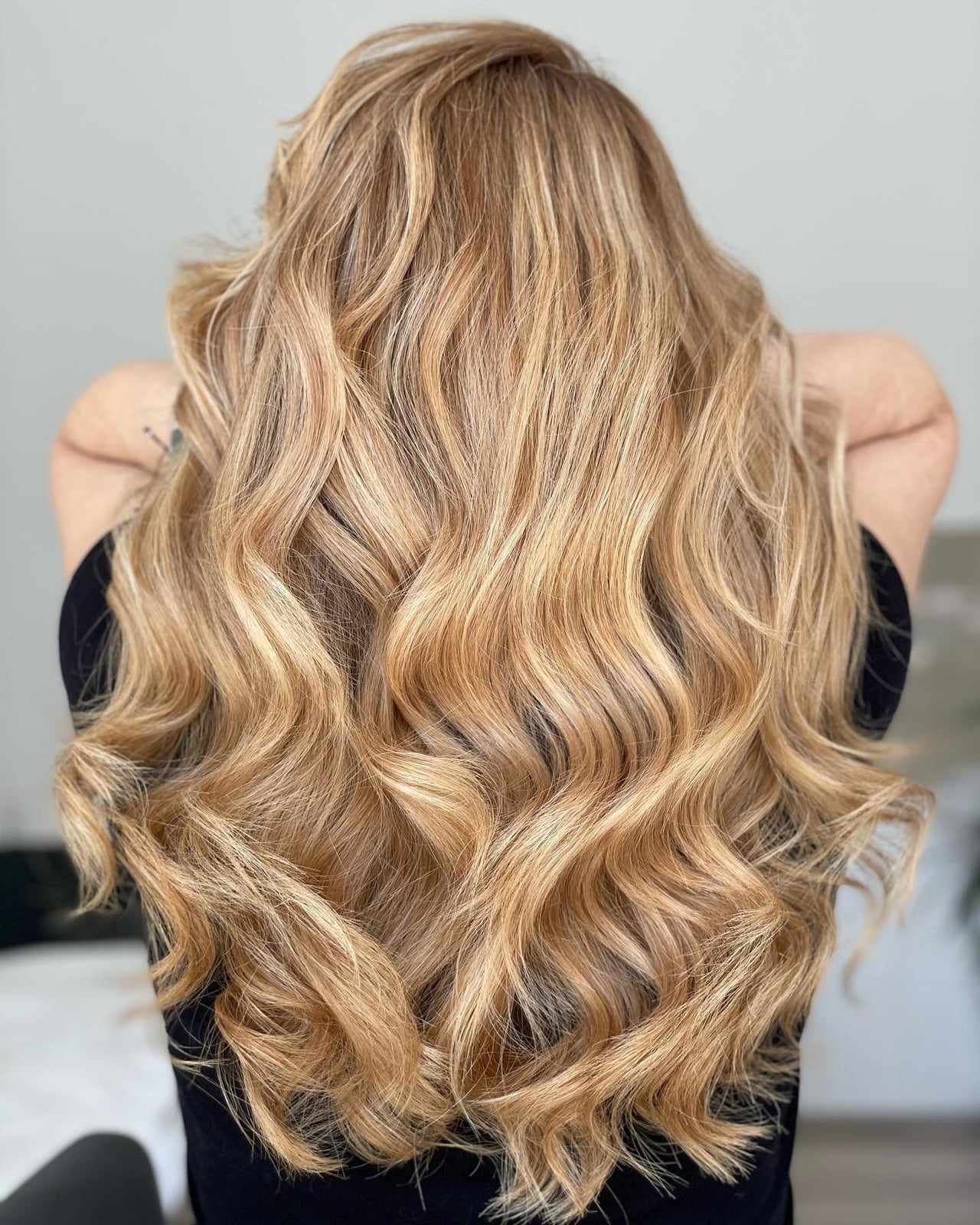
When the weather turns gray, this is the color that carries the season: a rich blonde base with cascading honey highlights that move through the layers like late-afternoon light, styled in loose waves from a middle part. On mid-back length thick hair, the warm tones keep the color from going flat under winter coats, and they pair with the layered cut to give the waves a sense of depth. Ask your colorist for: long hair with cascading honey highlights.
This design lands best in autumn and winter, when the golden tones offset the muted light and the blowout adds volume that cold air tends to flatten. The layers are cut to fall naturally, so you can wear it straight or wavy, but the honey highlights show their full range when the hair has movement. A heat protectant spray before styling keeps the color from dulling, and a trim every six to eight weeks maintains the cascade’s shape, since split ends will mute the warm glow.
Mid-Back Dark Base With Honey Blonde Highlights
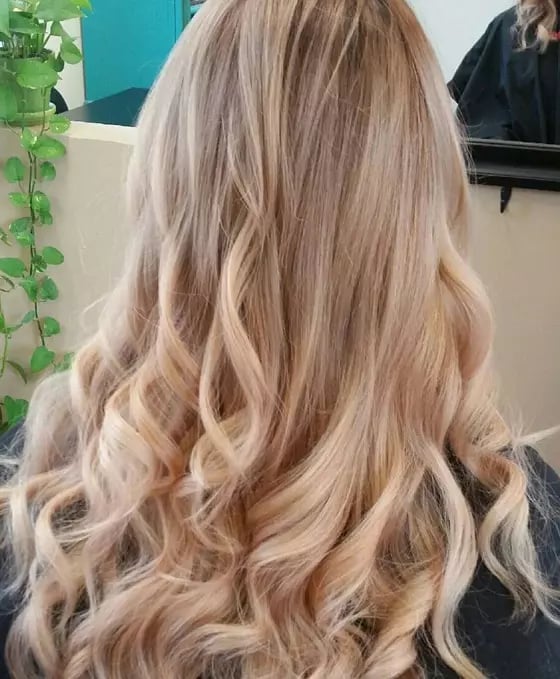
A dark base changes the whole personality of honey blonde highlights: instead of brightening the hair, they add depth and a subtle dimension that only shows when the light hits the waves. On mid-back length thick, wavy hair with no bangs, the scattered highlights concentrate toward the mid-lengths and ends, so the roots stay dark and the color grows out without a harsh line. Ask your colorist for: dark base with scattered honey blonde highlights.
This suits anyone with a darker natural color who wants warmth without a full blonde commitment, and it works on oval and long faces because the dark root elongates the face while the lighter ends soften it. The upkeep is low: a purple shampoo once a week keeps the blonde from turning brassy against the dark base, and a trim every six weeks keeps the ends healthy, which is what makes the dimension read as intentional.
Back View Mid-Back Honey Blonde Highlights With Healthy Appearance
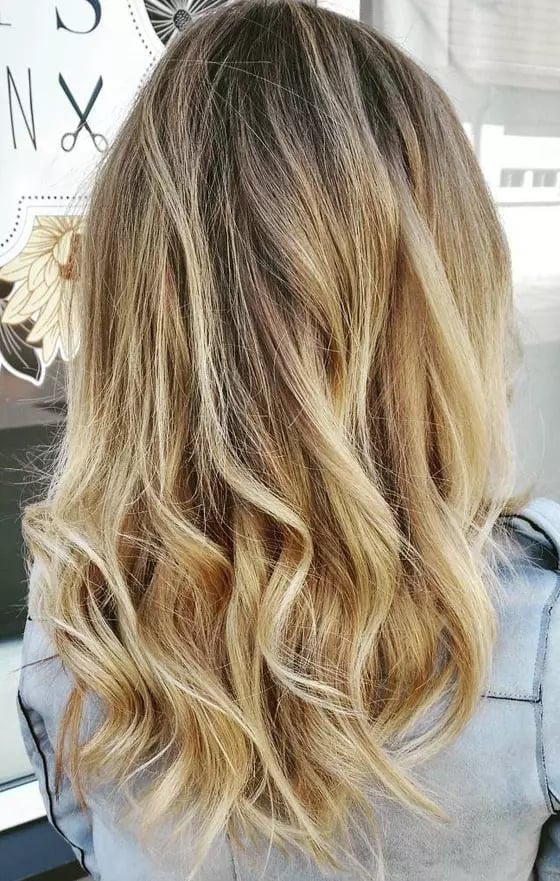
The health of the hair is the real accessory here: a honey blonde base with visible blonde highlights that sits on thick, wavy mid-back length hair, styled loose with a middle part so the shine does the talking. The layered cut keeps the weight off the ends, which is why the hair looks thick all the way down, and the warm tone gives the color a lived-in quality that does not need constant maintenance. Ask your colorist for: mid-back honey blonde with visible highlights.
To keep that healthy appearance, apply a leave-in conditioner to the ends after every wash to maintain softness and stop the waves from frizzing, and a trim every six to eight weeks prevents the ends from splitting. The blonde highlights will fade gradually, so a gloss or toner every four to six weeks refreshes the warmth without a full color appointment. This look wears well between salon visits.
Mid-Back Honey Blonde With Lighter Highlights
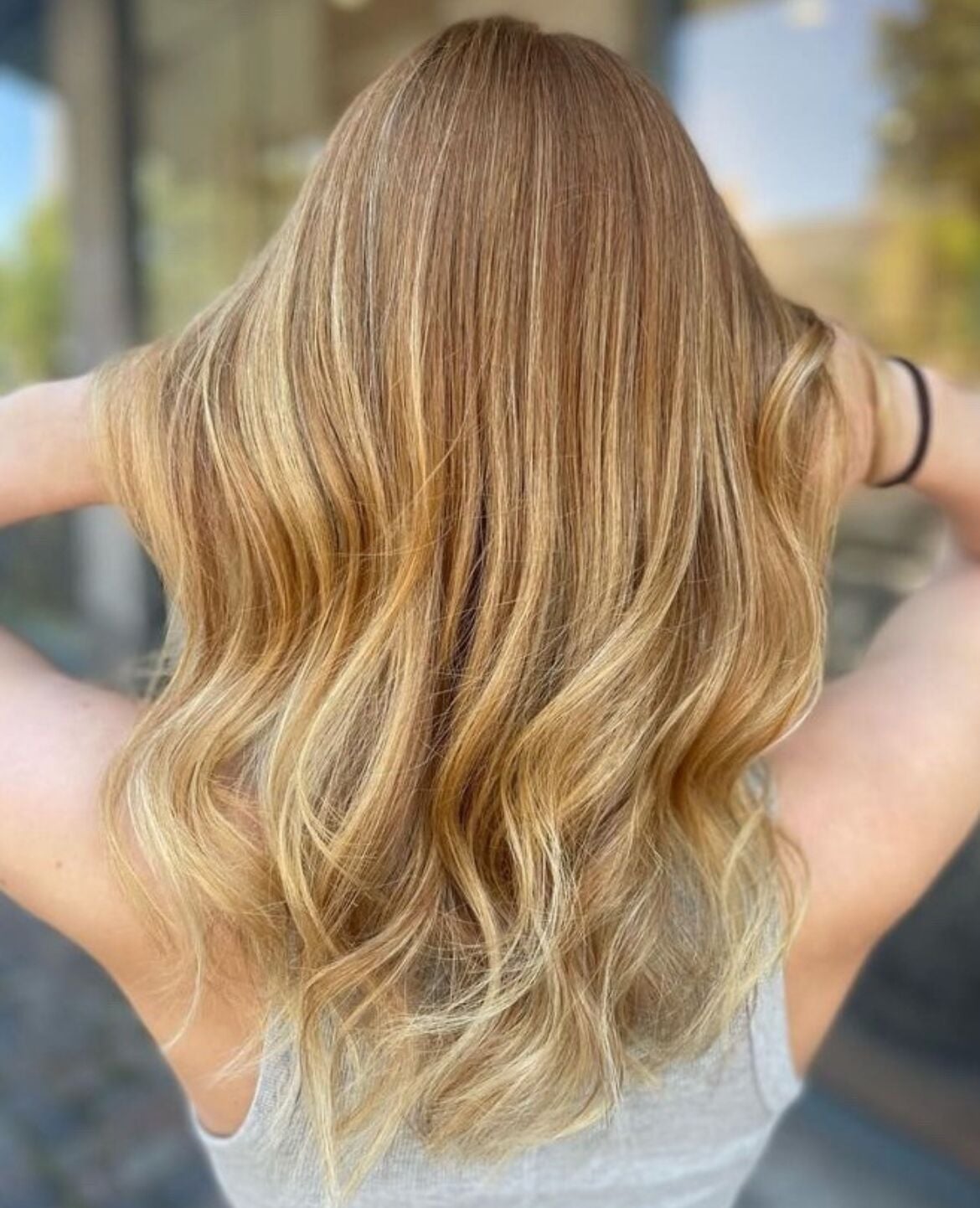
Want the sun-kissed effect without looking like you tried too hard? A mid-back honey blonde base with lighter highlights scattered through thick, wavy hair delivers exactly that. The key is asking for highlights that sit one or two shades lighter than your base, so they pop without turning brassy. This is a salon job, not a box-color weekend project; the lightener needs to be placed strategically to catch the waves. Ask your colorist for: mid-back honey blonde with lighter highlights. For upkeep, a toner every eight to ten weeks keeps the lighter pieces from drifting yellow, and a trim every six to eight weeks keeps the ends healthy enough to hold the wave.
Back View Mid-Back Honey Blonde Dimensions, Wavy
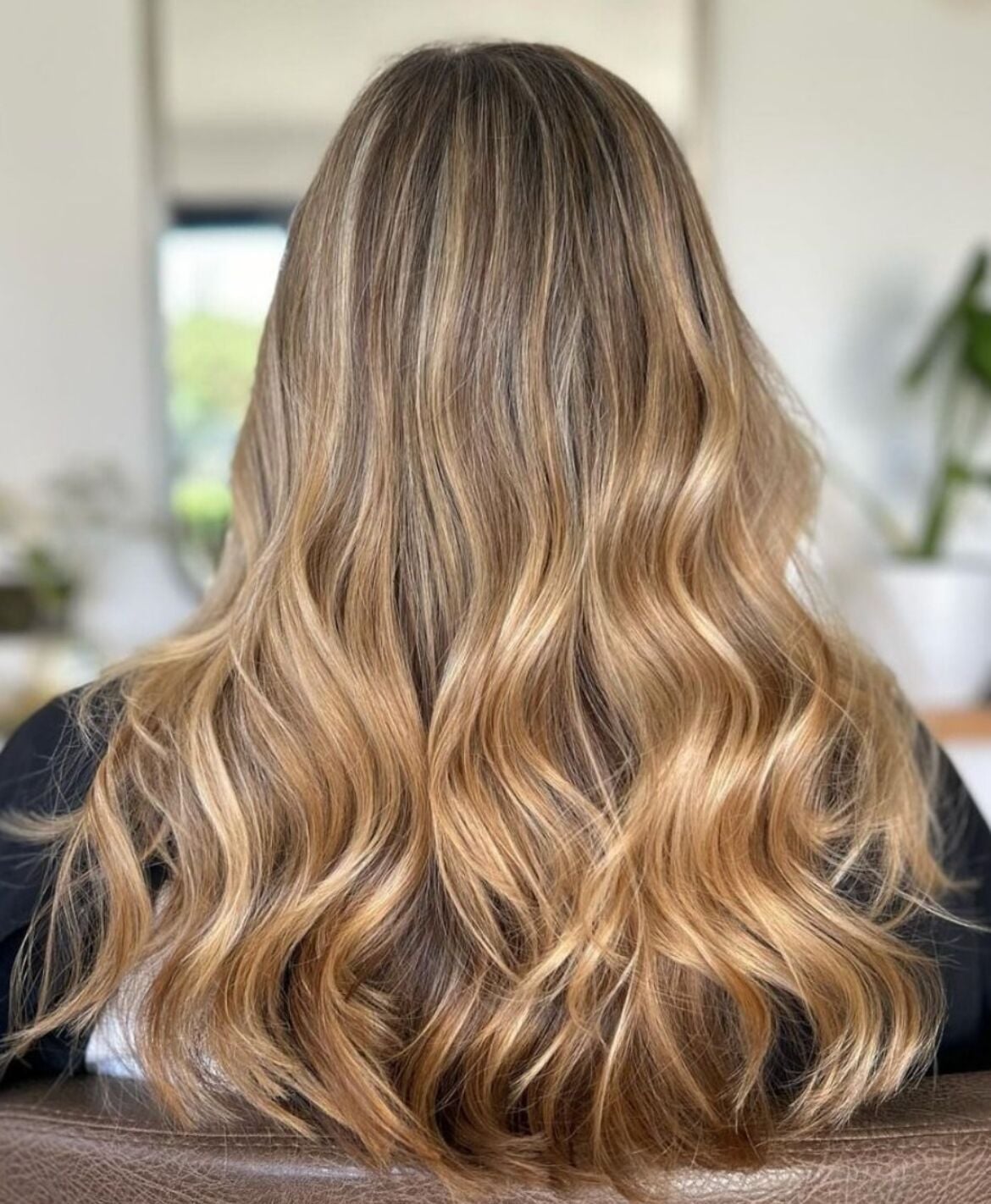
The dimensional effect comes from alternating honey blonde base tones with brighter blonde highlights, placed so they catch the curve of each wave. On thick, wavy hair cut in long layers, those lighter pieces wrap around the bend and create depth that a single flat color can’t fake. The middle parting lets the highlights frame both sides evenly, so the dimension reads from the back as a balanced blend of warm and bright. Ask your colorist for: mid-back honey blonde with dimensional highlights. This is a salon technique; foils are the usual route, and the result lasts until the roots grow out enough to need a touch-up, typically around eight weeks.
Mid-Back Honey Blonde With Natural Highlights
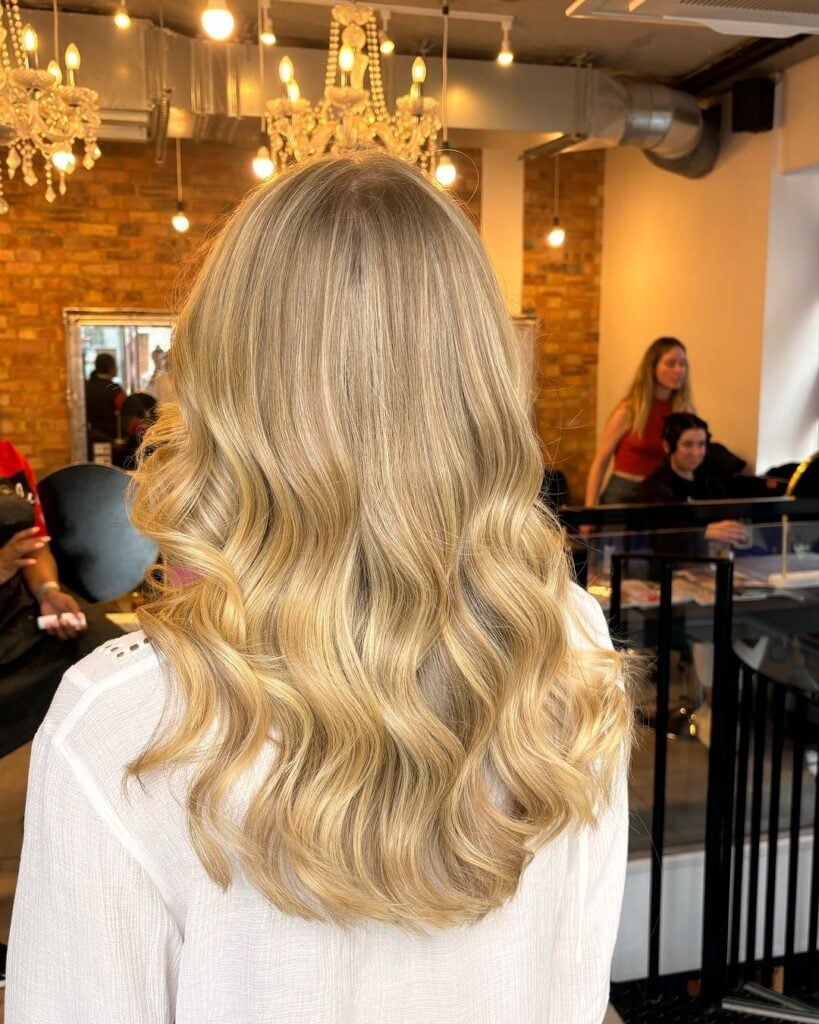
What’s the mistake people make when they ask for natural-looking highlights? They let the colorist take the lightener too close to the roots, which creates a stripe effect. The fix is keeping the honey blonde base as your anchor and weaving in lighter blonde highlights with a bit of space between them, so the color grows out softly instead of announcing itself. On this mid-back length with a middle parting and soft blowout waves, the dimensional highlights mimic the way sun lightens hair on its own. A toner every eight weeks keeps the warmth in check, and a trim every six to eight weeks preserves the shape. Natural-looking highlights demand restraint, which is harder to get than it sounds.
Mid-Back Blonde With Subtle Honey Highlights
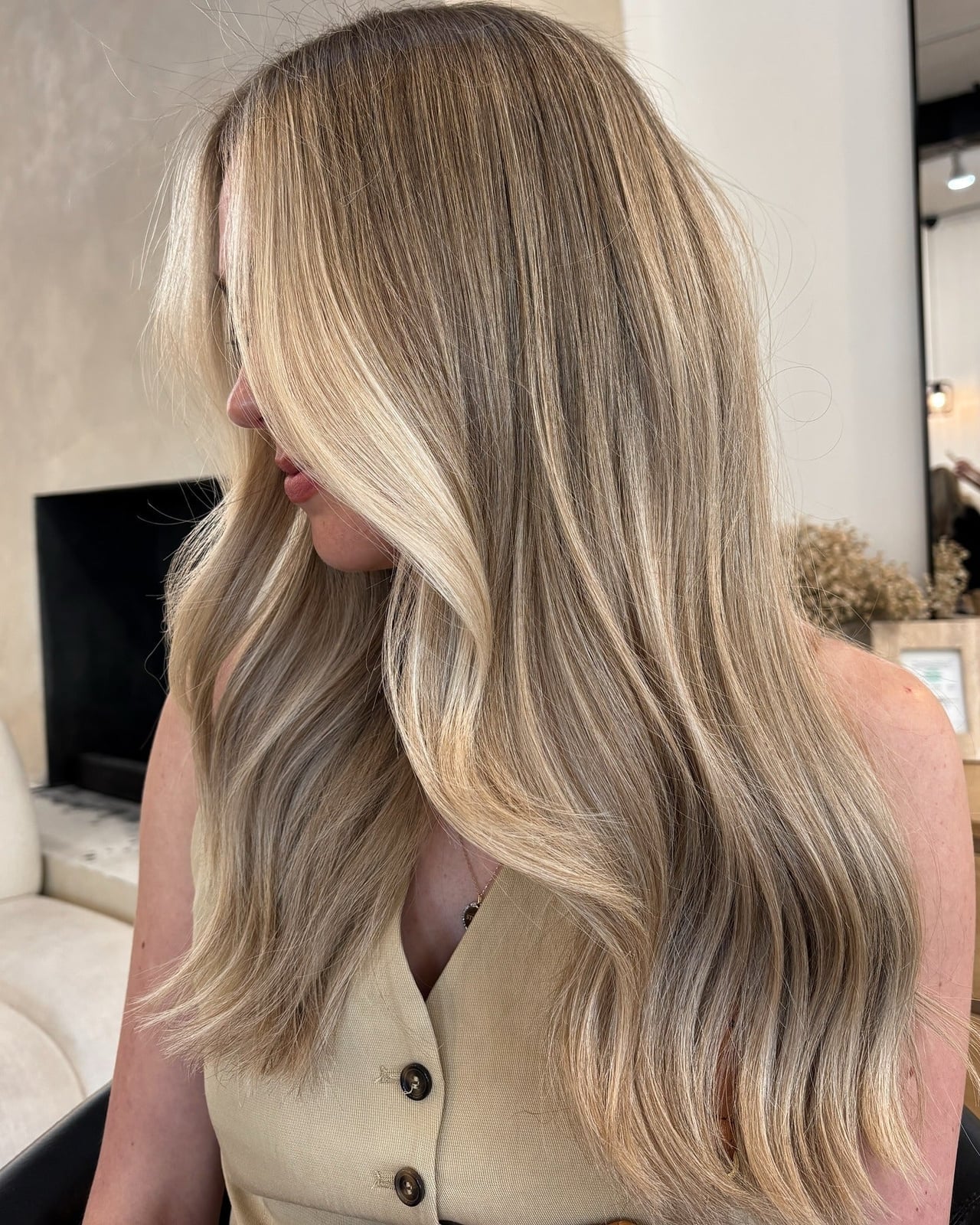
Face-framing layers and subtle honey highlights are a pairing that works because the lighter pieces land right where they soften the jawline. This mid-back length, styled with a blowout and a middle parting, shows a blonde base with honey highlights that are visible but not loud, giving the hair a warm dimension from the side. If you have a square or heart-shaped face, those face-framing layers do the gentle work of rounding out the angles. Ask your colorist for: mid-back blonde with subtle honey highlights. The subtlety means you can stretch the time between touch-ups, but a trim every six to eight weeks keeps the layers from losing their shape.
Collarbone Length Honey Blonde With Curtain Bangs
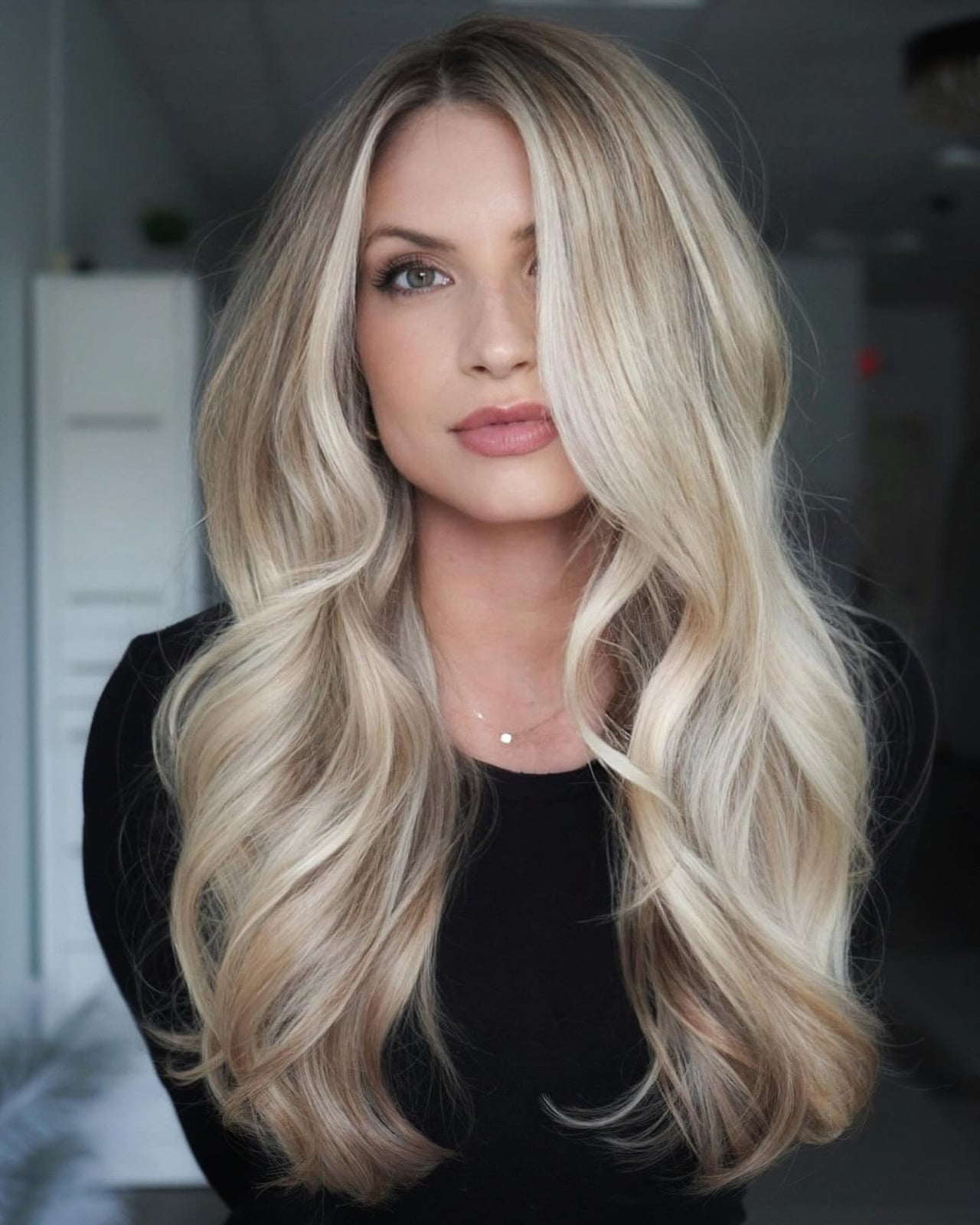
Curtain bangs and honey blonde highlights is the update a collarbone-length cut needs when it starts feeling predictable. The honey blonde base carries lighter blonde highlights through the waves, while the curtain bangs, parted down the middle, soften the face and blend into the layers. This length works for thick, wavy hair because the weight of the hair keeps the waves from turning into frizz. Ask your colorist for: collarbone honey blonde with curtain bangs. The style suits everyday wear and office settings alike, since the bangs can be swept aside or left as they fall. A trim every six to eight weeks keeps the bangs from growing into your eyes.
Shoulder Length Honey Blonde With Face-Framing Layers
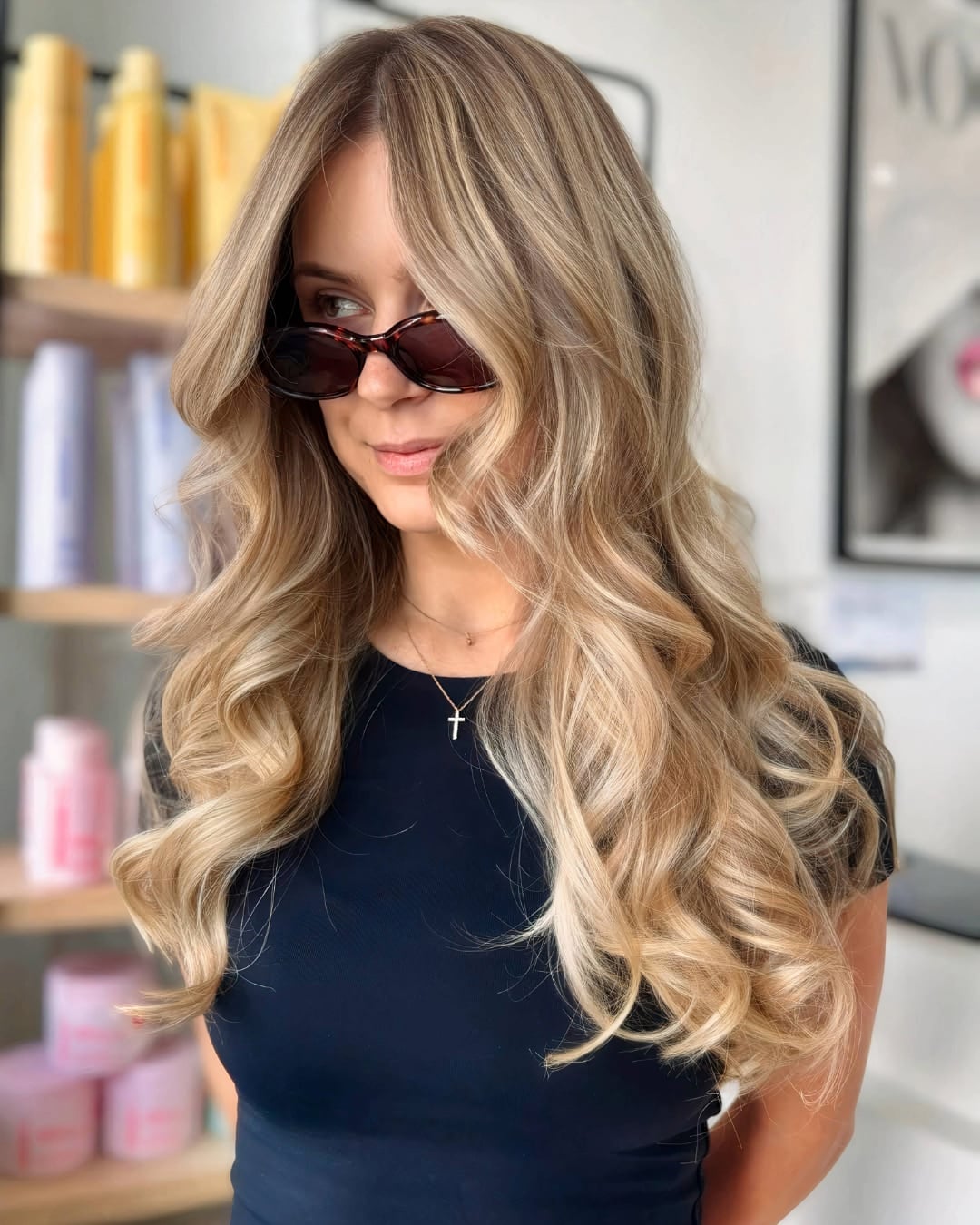
The honey blonde base gets a lift from lighter highlights placed to follow the face-framing layers, so the lightest pieces land where the cut already moves. A collarbone length with curtain bangs and a middle parting, the hair is thick and wavy with a blowout finish. Ask your colorist for: shoulder length honey blonde with face-framing layers and curtain bangs. The face-framing layers and curtain bangs soften round and heart faces. Use a medium barrel curling iron to enhance waves. A trim every six weeks maintains the shape.
Shoulder Length Honey Blonde With Glossy Waves
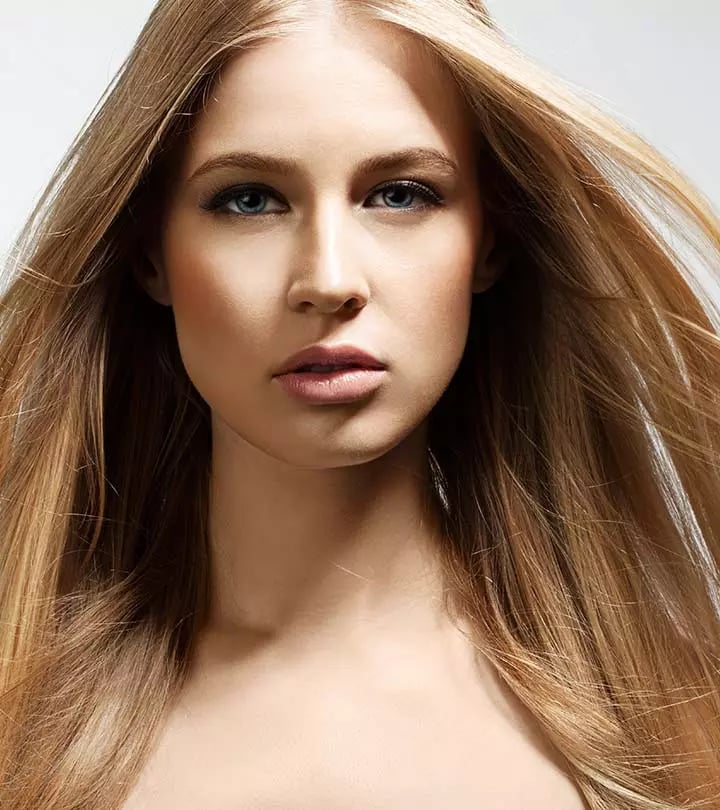
A glossy finish on shoulder-length honey blonde hair looks polished. The subtle blonde highlights sit on a warm honey base, and the soft waves with a middle parting give it movement. Thick, wavy hair with face-framing layers suits square and heart faces here. Ask your colorist for: shoulder length honey blonde with glossy waves.
The shine is the main event, and it needs a little help to stay that way. Apply a shine serum after blow-drying to keep the gloss going, and trim the ends every six weeks. The highlights will need a toning appointment every eight to ten weeks to maintain their warmth and prevent brassiness.
Collarbone Length Honey Blonde With Face-Framing Layers, Wavy
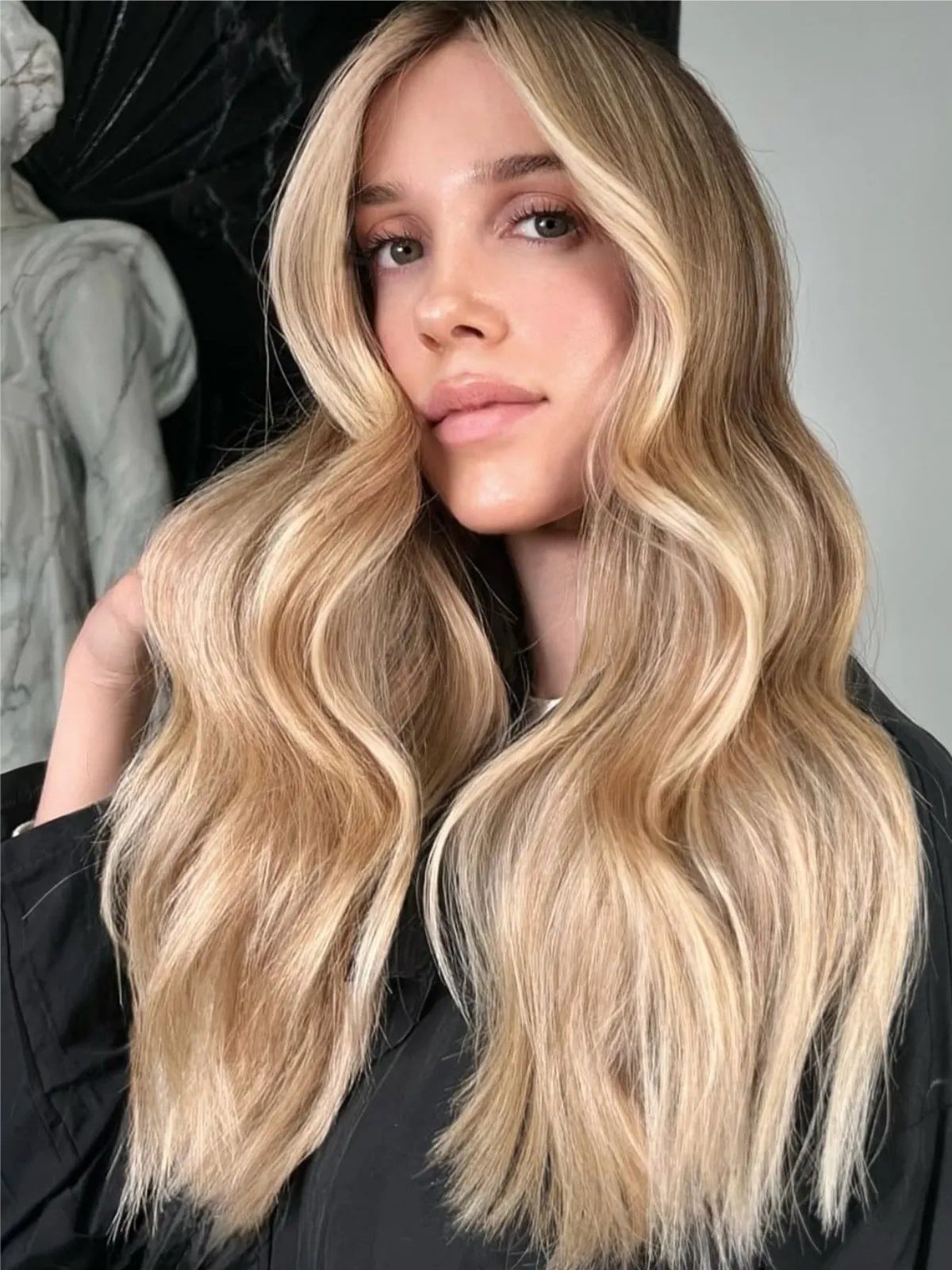
Can you have too many layers on collarbone-length hair? Yes, and the mistake is cutting them too short so the honey blonde highlights lose their anchor. Here the layers stay subtle, with curtain bangs and a middle parting that keep the thick, wavy texture intact. A blowout gives it that smooth finish. Ask your colorist for: collarbone honey blonde with face-framing layers. The drawback is that this is a salon-only cut: the balance between length and layering is precise, and DIY trims risk chopping the face-framing pieces too high.
Collarbone Length Honey Blonde Face-Framing Highlights
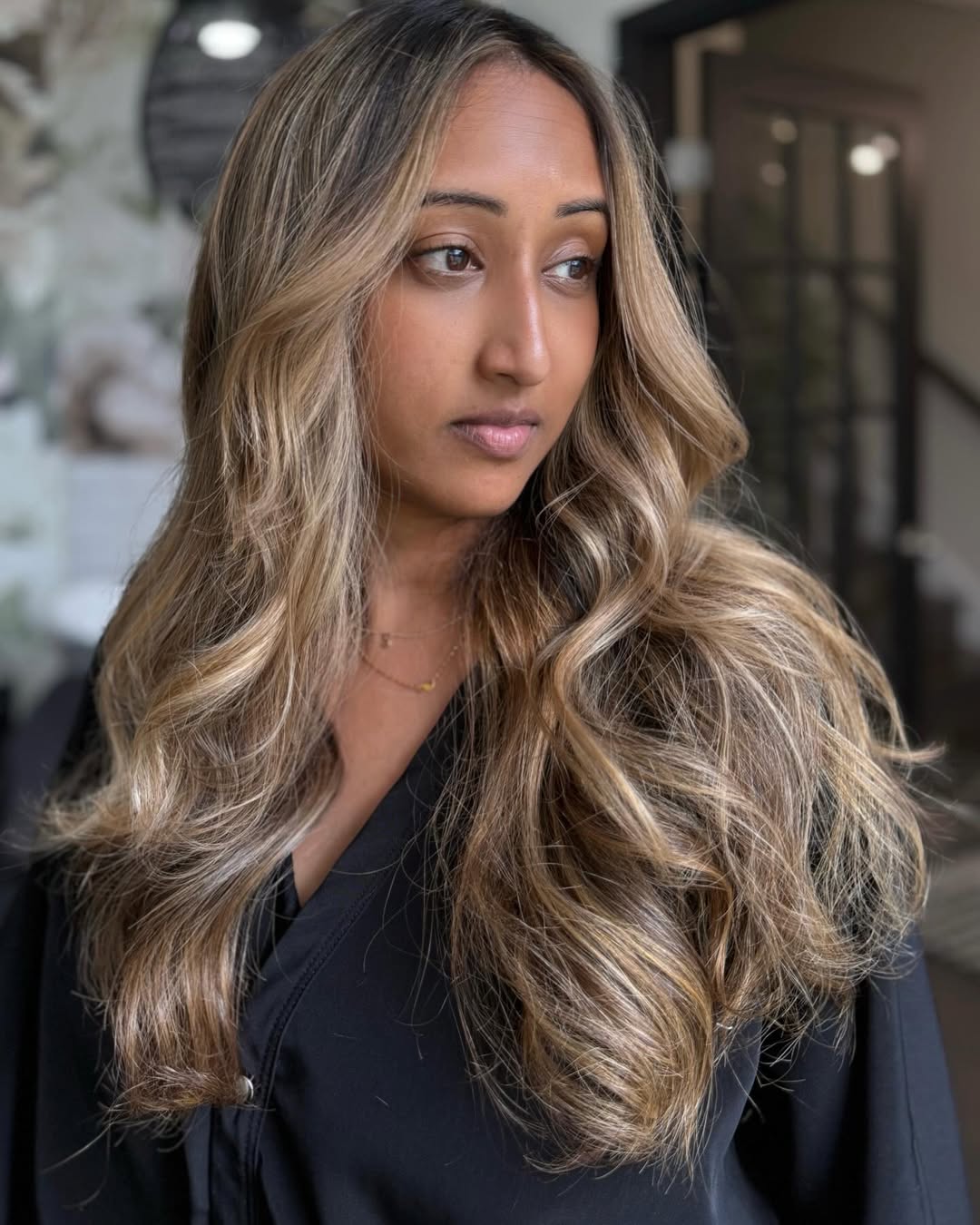
Spring and summer are the seasons for honey blonde highlights, and this collarbone-length version delivers exactly that transition. The rich honey base gets distinct lighter pieces around the face, with soft layers and a middle parting to keep the voluminous blowout from falling flat. Thick, wavy hair carries the dimension best. Ask your colorist for: collarbone honey blonde with face-framing highlights. The lighter pieces around the face make it a natural choice for warmer weather, when hair tends to lighten naturally anyway.
Collarbone Honey Blonde With Face-Framing, Close-Up Take
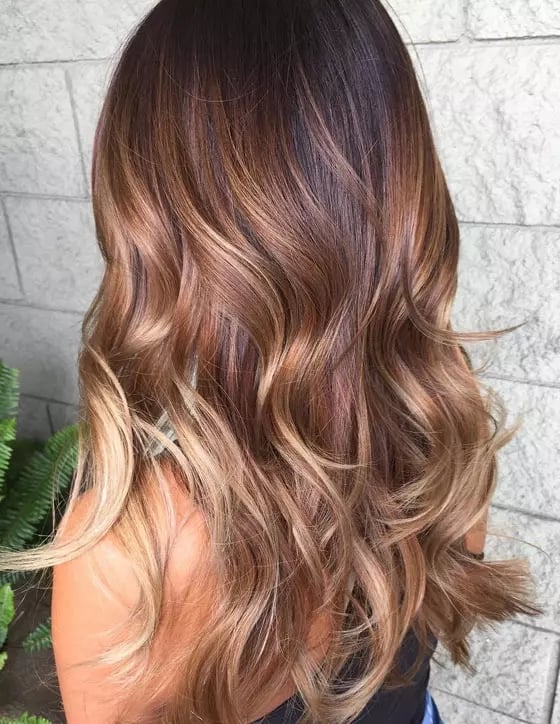
The face-framing highlights here are not subtle: they are distinct lighter pieces on a rich honey base, starting near the cheekbones and blending into the collarbone length. Soft layers keep the voluminous blowout from looking heavy, and the thick, wavy texture gives the highlights a natural lift. Ask your colorist for: collarbone honey blonde with face-framing. Use a round brush when blow-drying to smooth the hair and emphasize the contrast between the honey base and the lighter pieces around the face.
Collarbone Dark Blonde With Honey Highlights
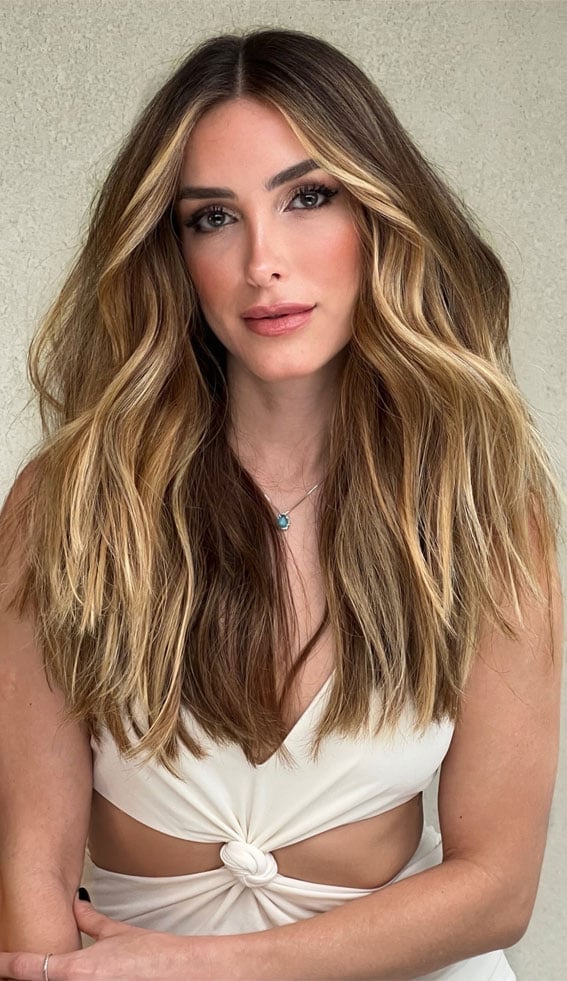
Building honey blonde highlights onto a dark blonde base starts with a balayage sweep from the mid-lengths to the ends, so the color lands brightest where the light hits. The curtain bangs and face-framing pieces get a lighter pass to open up the front without lifting the whole head. Ask your colorist for: collarbone dark blonde with honey highlights and curtain bangs. This thick, wavy texture takes the blend well, and a middle parting lets the darker root show through for depth. Expect about three hours in the chair, then a trim every six weeks to keep the collarbone line sharp.
Collarbone Honey Blonde With Natural Dimension
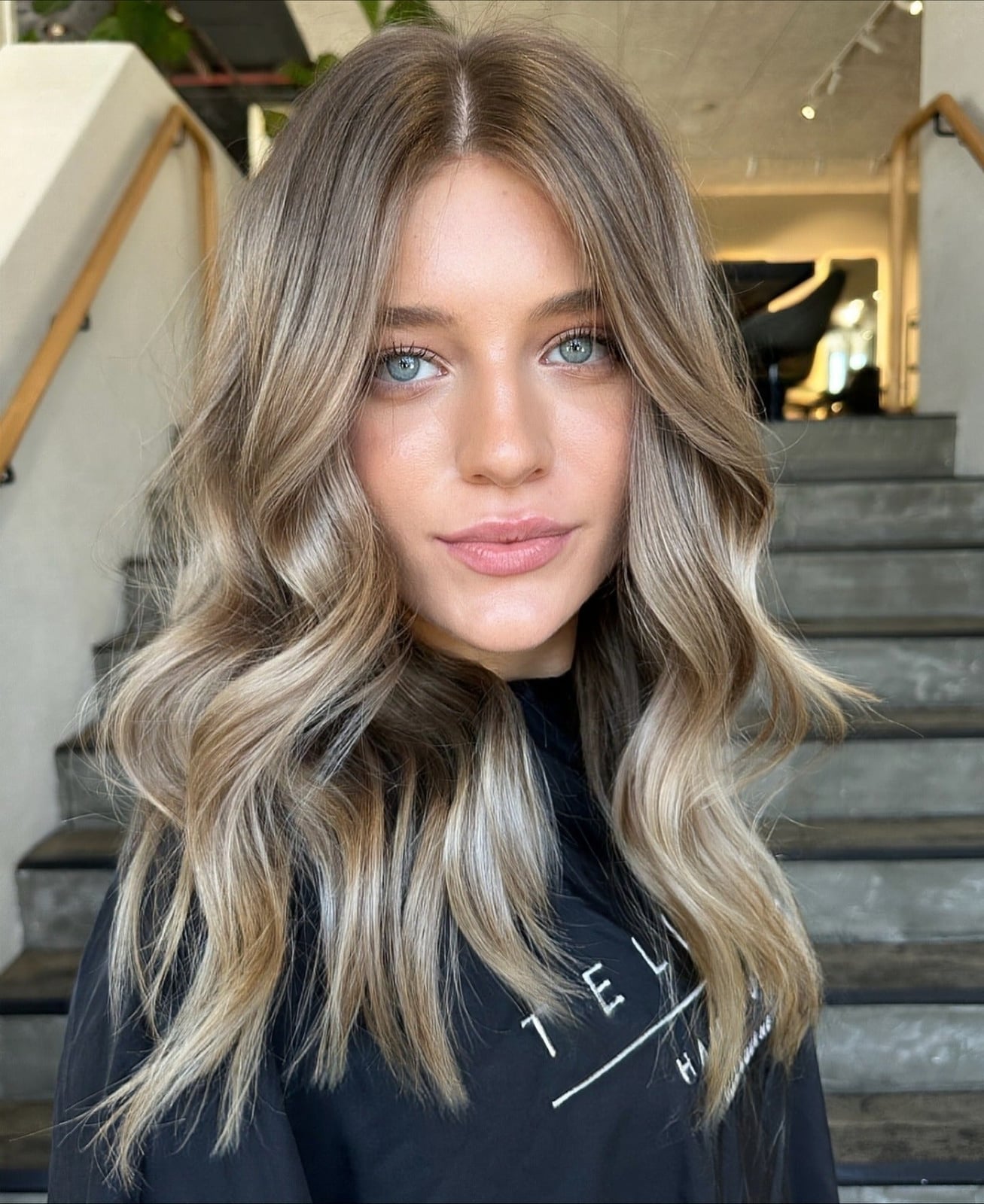
This collarbone cut uses a honey blonde base with lighter blonde highlights placed sparingly, so the dimension survives regular washing without turning brassy. The face-framing layers are cut to sweep around the jaw, which softens square and heart shapes. Ask your colorist for: collarbone honey blonde with natural dimension. Thick, wavy hair shows the blend best, since each wave catches a different tone. A smoothing serum on the ends keeps the blowout polished, and a trim every six weeks preserves the shape.
Collarbone Honey Blonde With Side Part
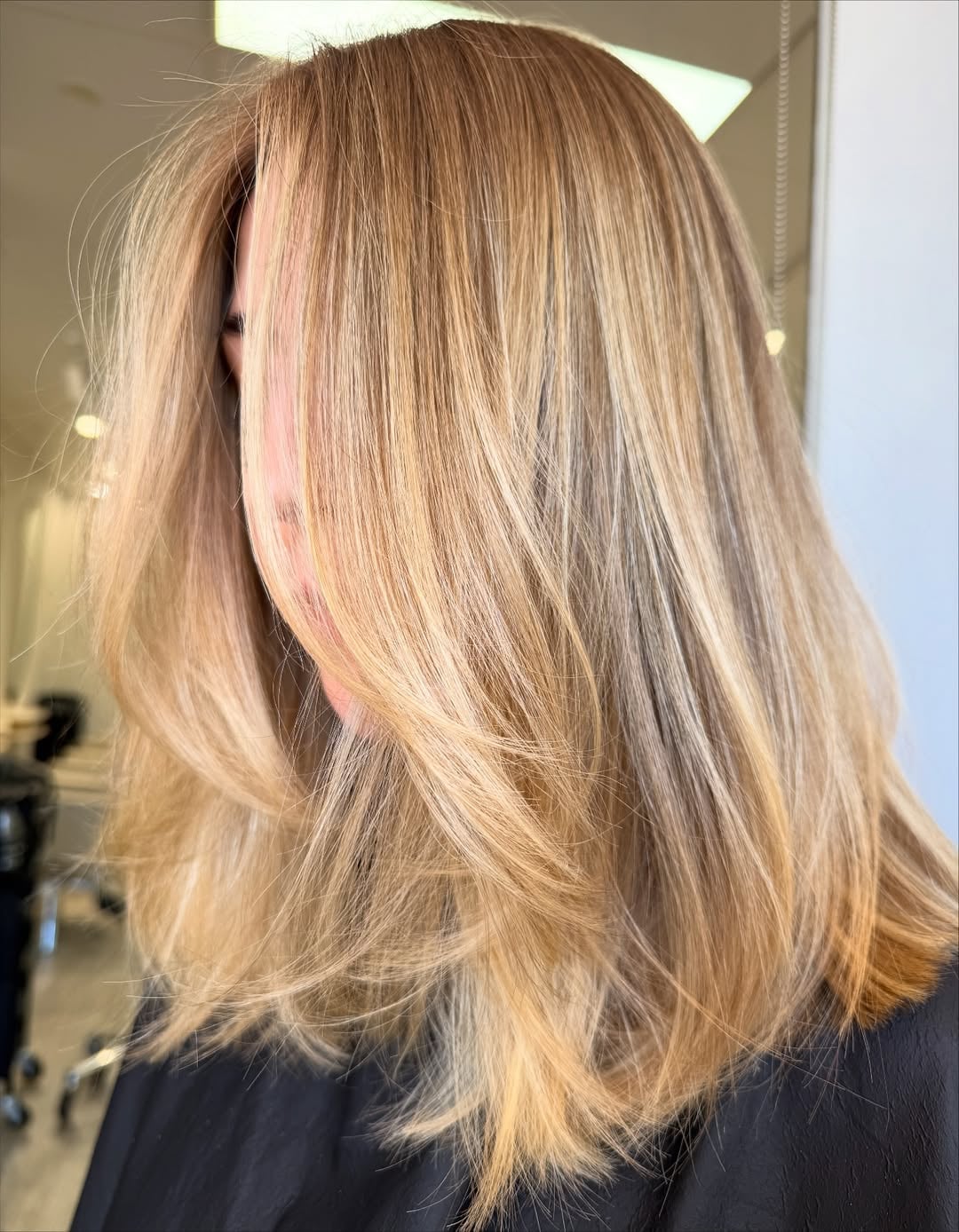
A side part changes the entire weight of a collarbone cut. The face-framing layers fall forward from the deeper side, which adds volume at the crown and softens a long face. The honey blonde base carries subtle blonde highlights that read as a lived-in color rather than a full bleach. Ask your colorist for: collarbone honey blonde with subtle highlights and side part. This works best on thick, wavy hair that holds the sweep without extra styling. Fine hair also benefits, since the side part lifts the root instantly. A flexible hold hairspray keeps the waves in place for the day, and a trim every six weeks maintains the blunt-ish edge.
Mid-Back Honey Blonde With Side Part
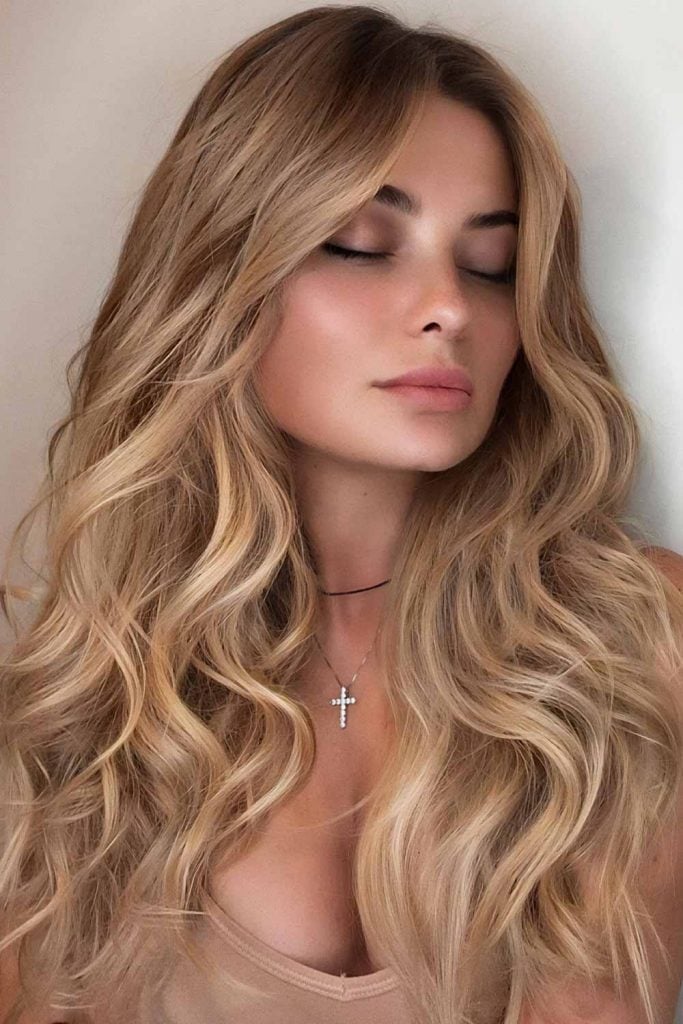
Compared to a middle part, a side part on this mid-back length gives the honey blonde highlights more visible movement, because the hair falls on an angle instead of straight down. The honey blonde base with lighter blonde highlights creates a warm, dimensional effect that reads as sun-kissed. Ask your colorist for: mid-back honey blonde with side part. Thick, wavy hair carries the loose waves well, and the side part adds volume on top. This is a salon job, roughly two and a half hours, and the payoff is a color that grows out naturally. A texturizing spray adds grit, and a trim every six to eight weeks keeps the ends healthy.
Mid-Back Blend Of Warm Tones With Highlights
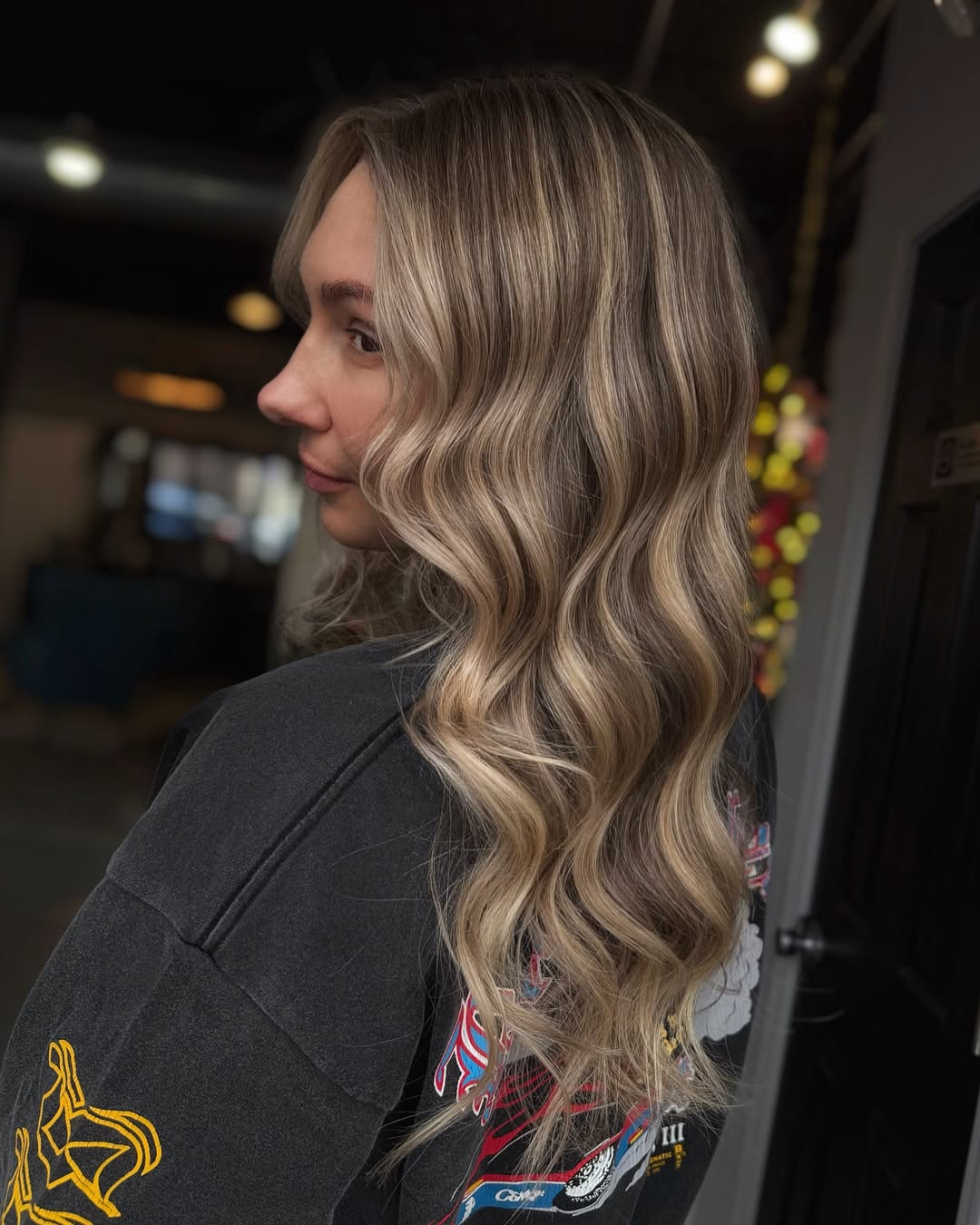
A side view shows how a blend of warm blonde tones builds depth on long, thick hair. The stylist paints honey blonde highlights in alternating widths, so the color moves with the waves instead of sitting flat. Face-framing layers are cut to start at the chin and melt into the length, which suits square and heart faces. Ask your colorist for: mid-back warm blonde blend with honey highlights. The middle parting lets the darker roots show through, giving a natural grow-out. A leave-in conditioner keeps the waves soft, and a trim every six to eight weeks keeps the layers from dragging.
Collarbone Medium Brown With Honey Highlights
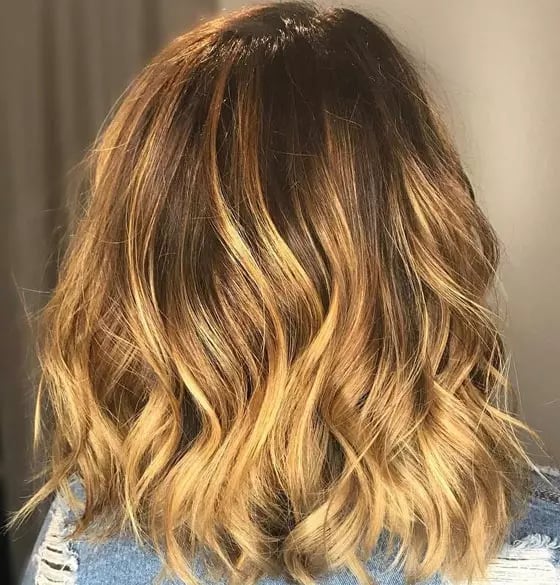
This back view proves honey blonde highlights can add noticeable dimension without touching the root area. The warm pieces concentrate toward the ends, which keeps the regrowth line soft on a medium brown base. The wavy texture and collarbone length suit medium-density hair well, the highlights create the illusion of more fullness without needing extra bulk. Ask your colorist for: collarbone medium brown with honey blonde highlights. A color-depositing mask helps maintain the warm tone between appointments, and a trim every six weeks keeps the ends looking healthy.
Collarbone Uniform Honey Blonde
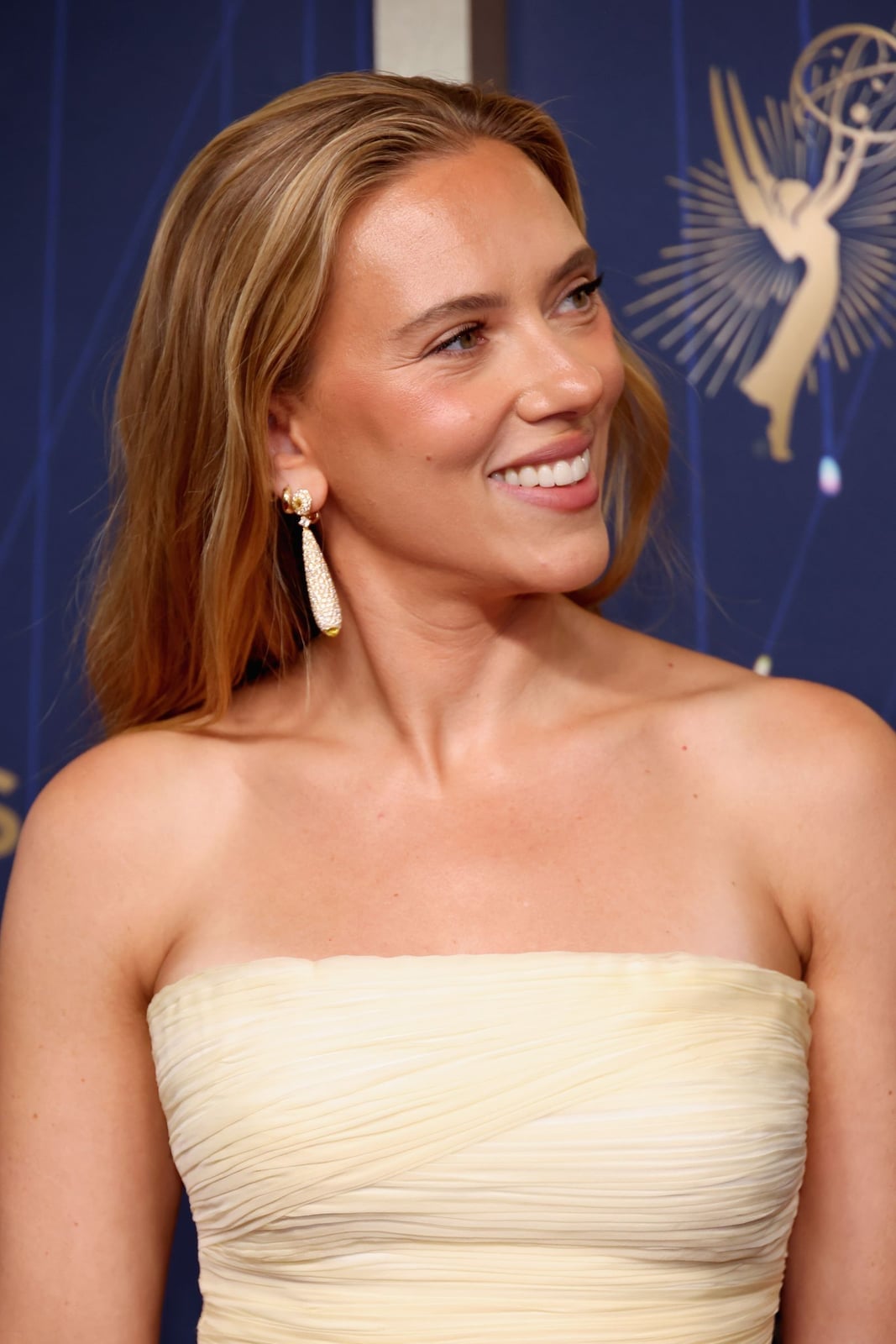
A uniform honey blonde shade looks polished but not flat when the stylist adds lighter face-framing layers. The smooth blowout and middle parting show off the even color distribution, while those slightly brighter sections near the front give the cut some movement. Fine to medium textures benefit from this approach, the single shade avoids the worry of banding, and the face-framing pieces soften a square or heart-shaped face. Ask your colorist for: collarbone uniform honey blonde with face-framing. A smoothing cream before blow-drying helps achieve that glossy finish, and trim every six weeks.
Collarbone Honey Blonde Highlights Fine Texture
Fine, straight hair can look flat, but honey blonde highlights add the depth that a single shade cannot. The collarbone length and soft layers keep the cut from feeling heavy, while the middle part allows the lighter pieces to fall evenly on both sides. Fine hair needs a skilled colorist to keep the highlights from reading as brassy. A toner at the bowl is essential. This is a salon-only job; attempting it at home risks uneven saturation. Ask your colorist for: collarbone honey blonde highlights, fine texture.
Final Thoughts
For fine hair, stick to blended highlights that concentrate around the face, and keep one blunt baseline to preserve density. If you prefer lower upkeep, ask for a root shadow to stretch time between appointments.
- Schedule salon toning every 6-8 weeks to maintain honey blonde vibrancy.
- Use a color-safe shampoo and conditioner to prevent fading.
- Incorporate a deep conditioning mask weekly to keep highlighted hair hydrated.
- Protect hair from heat styling with a thermal protectant spray.
Honey blonde highlights deliver warmth and dimension with enduring appeal.