Hair color is having a moment that’s less about a single shade and more about how you wear it, from lived-in dimension to full-on fantasy. The shift toward natural texture with deliberate color placement means your base shade and technique work together, not against each other.
These 26 ideas for Dye Hair Inspiration cover the spectrum: high-maintenance vivids that demand a weekly color-depositing routine, subtle balayage that grows out gracefully, and everything in between. You’ll find options for fine hair that needs the illusion of density, short cuts that make a statement, and brunette bases that want warmth without brassiness.
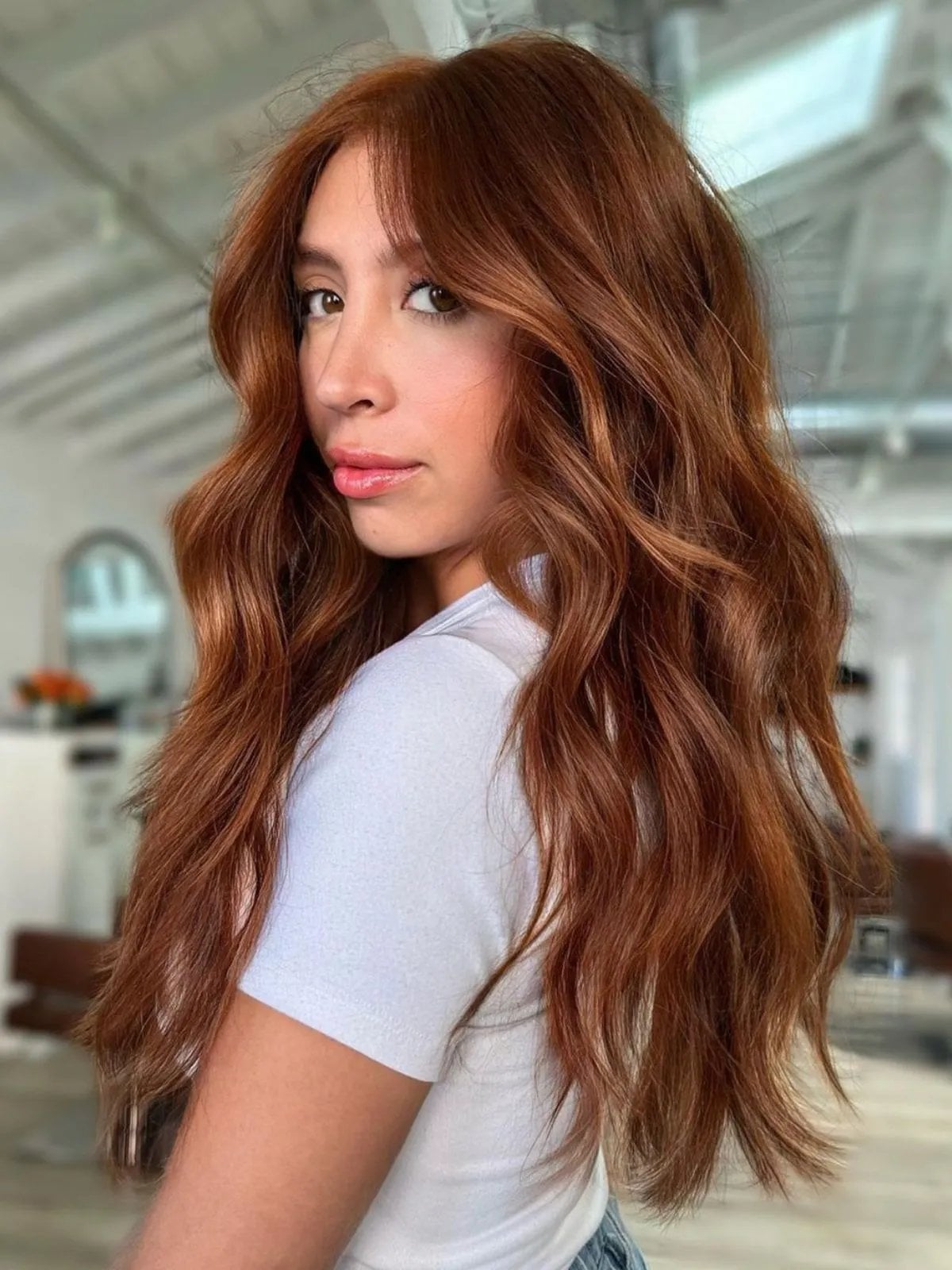
Vibrant Copper Long Layers
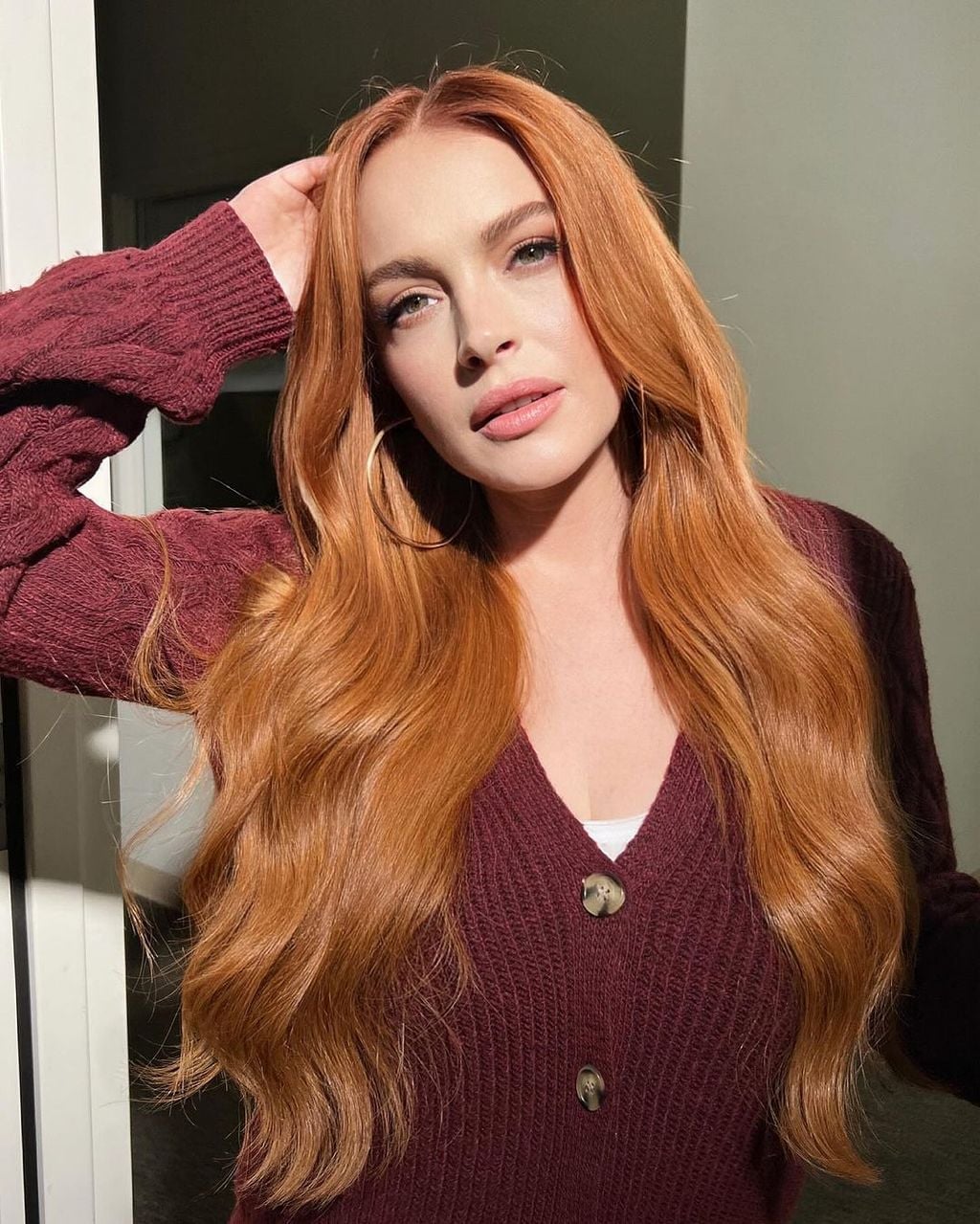
Copper fades faster than brown or black, so plan on a gloss or refresh every four to six weeks to keep the color from turning brassy. Use a color-safe shampoo. A middle part and front framing work with most face shapes, though the weight of thick layers balances a longer face nicely.
Vivid Copper With Darker Undertones
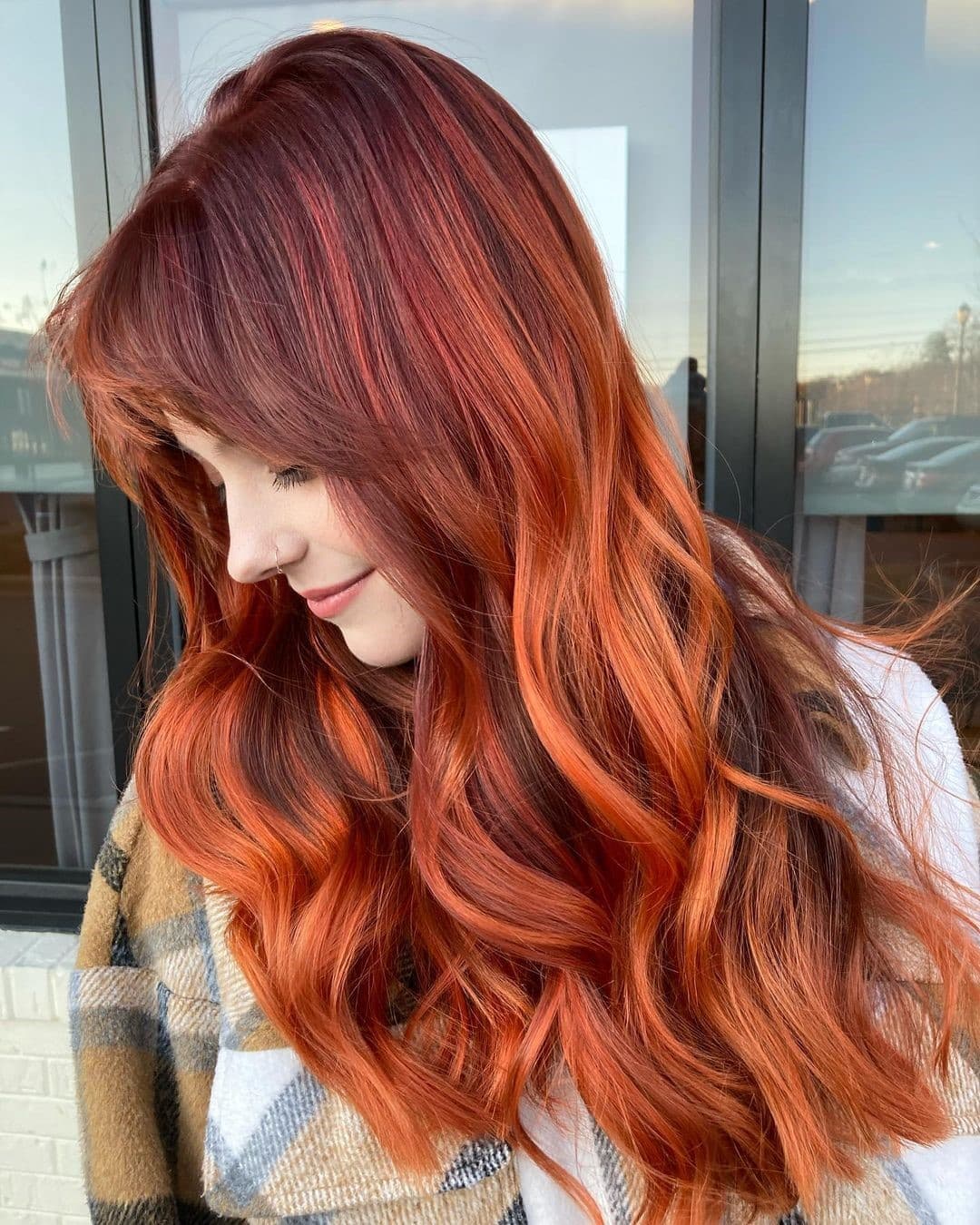
What sets this apart from a solid copper is the darker undertone at the root and through the mid-lengths, which keeps the vivid shade from looking uniform. The colorist applies a deeper copper base first, then paints the brighter copper onto the mid-lengths and ends, letting the darker tone show through in the wave valleys. Ask your colorist for: vivid copper with subtle darker undertones, loose waves, side swept bangs. The side-swept bangs are cut to graze the brow, so they blend into the layers without a hard line. A trim every eight weeks keeps the shape, and a toning gloss every five to six weeks prevents the undertone from pulling orange.
Chin Length Bob With Vivid Blue
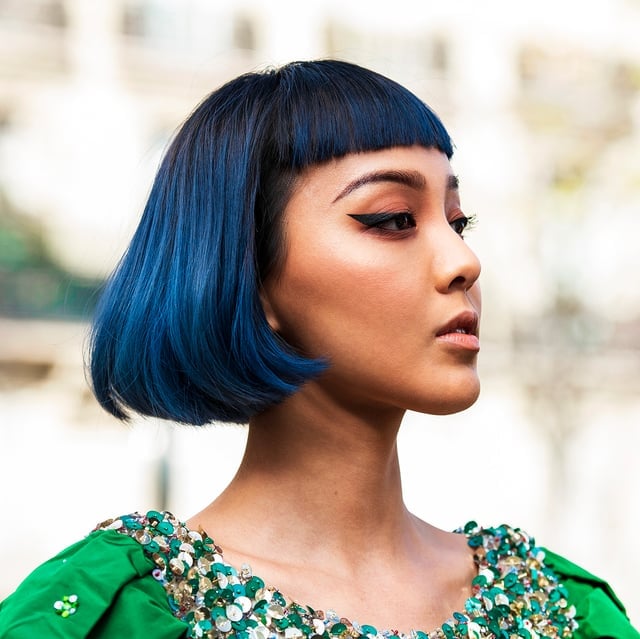
Who actually wants to maintain a chin-length bob in vivid blue? Anyone with fine, straight hair who is tired of watching color fade in a week. On fine hair, the blue reads saturated rather than patchy, and the blunt cut keeps the ends looking sharp, not see-through. Ask your colorist for: chin-length bob, blunt bangs, vivid blue all over. The drawback is that blue leaves a green tint when it fades, so you will need a color-depositing conditioner every two weeks. Blunt bangs this short sit above the brow, which works for oval and heart shapes but can shorten a round face more than most people want.
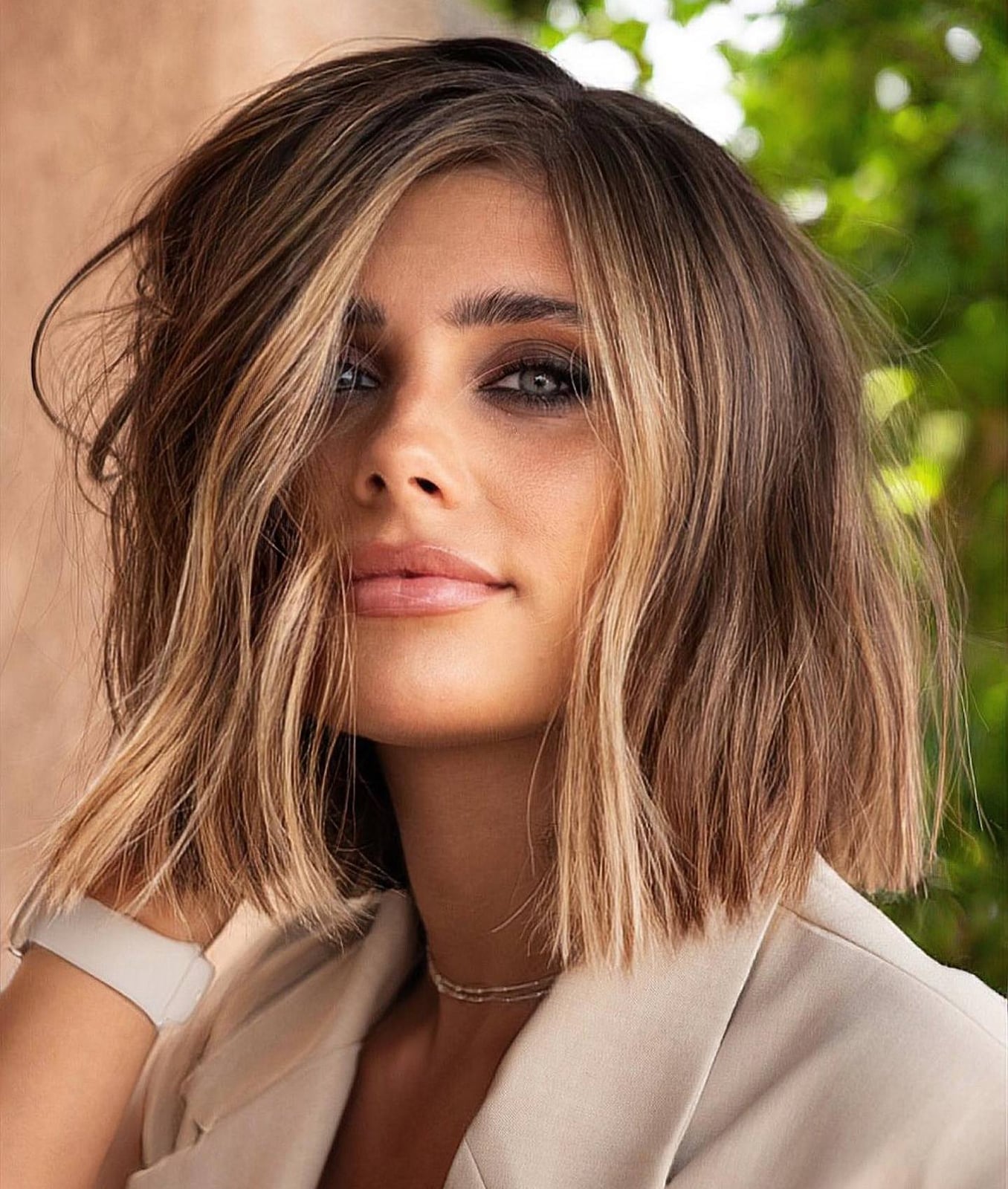
Collarbone Bronde With Subtle Highlights
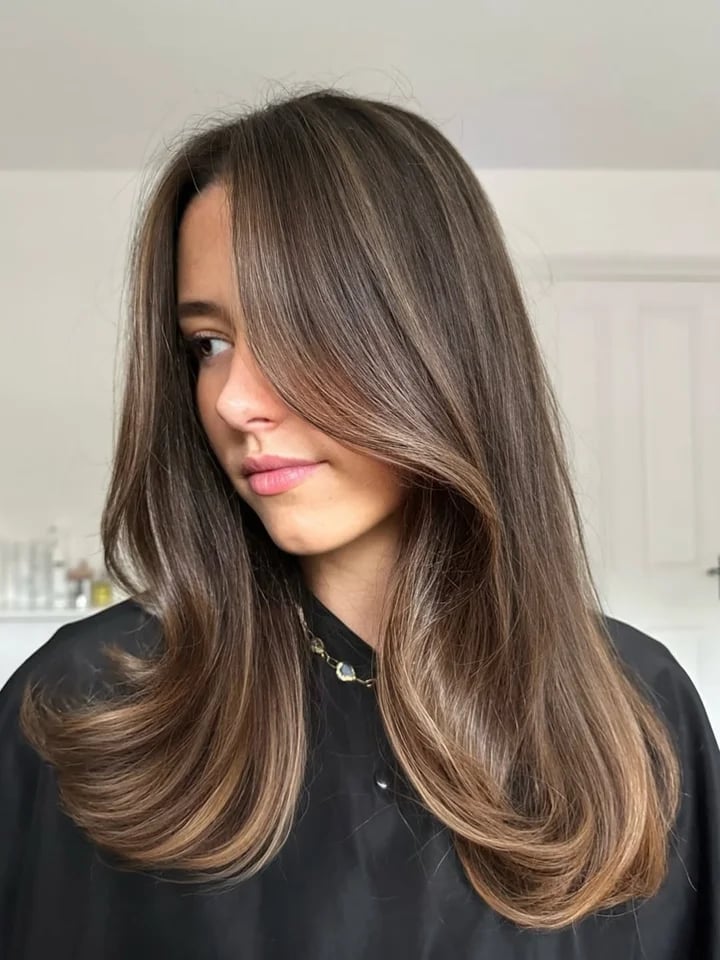
Bronde sits in the middle of brown and blonde, and that ambiguity is exactly the point. Where a full balayage creates a noticeable gradient, this version keeps the highlights fine and dispersed so the overall tone stays neutral. Ask your colorist for: collarbone length, bronde with subtle highlights, face-framing pieces, blowout. The face-framing pieces are painted a shade lighter than the rest, which adds softness around the jaw without needing bangs. A blowout with a round brush gives the collarbone length movement; the pieces tuck behind the ear easily. This is a salon-leaning color that needs a toner every six to eight weeks to keep the highlights from pulling gold.
Mid-Back Red Balayage Waves
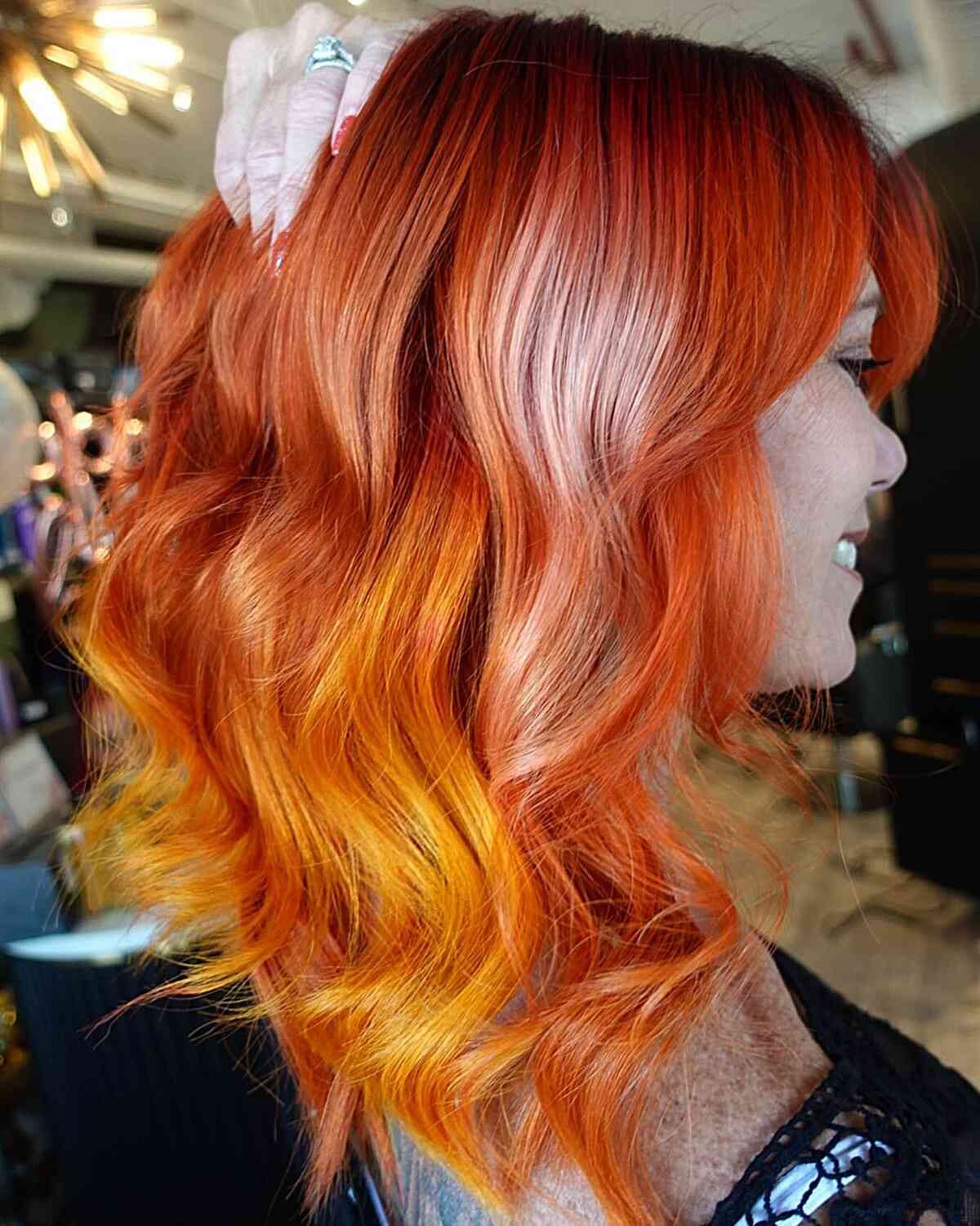
Ask your colorist for: red balayage, copper base with red-orange highlights, mid-back length waves. The middle part lets the color fall evenly on both sides, which matters when the highlights are asymmetrical in density. This is the kind of color that looks best in autumn light, when the warm tones catch the low sun. A sulfate-free shampoo and a cool rinse extend the vibrancy to about six weeks before the red-orange needs a refresh.
Pastel Mint Green Full Fringe
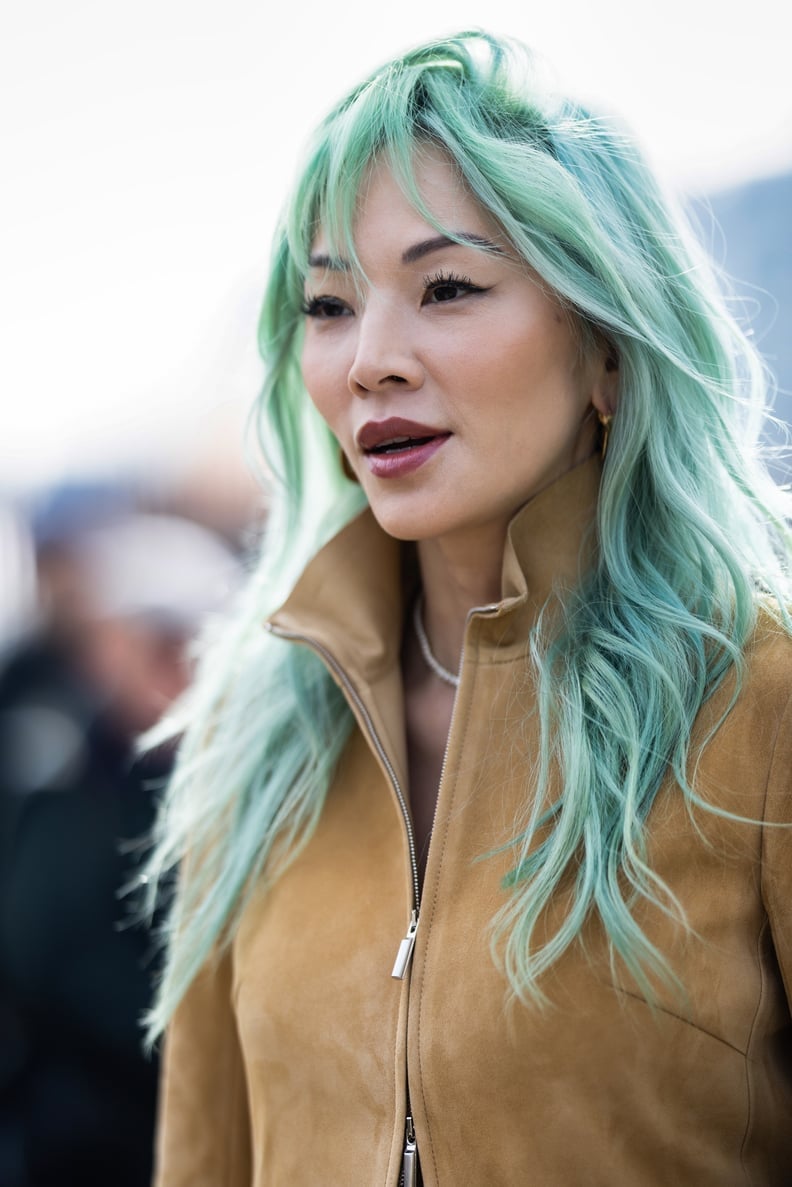
This mid-back length style uses a pastel mint green all over, with subtle lighter strands woven through the layers to keep it from reading flat. The full fringe and middle part anchor the look. Thick, wavy texture holds the pastel tone better than fine hair, which can let the shade look washed out. Oval and long faces get the most from a full fringe, though a round face can work if the fringe is cut slightly longer at the sides.
Ask your colorist for: pastel mint green all over, mid-back length layers, full fringe. This is a salon-only job: achieving an even pastel on dark hair takes two sessions of lightening first. The payoff is a color that works for festival season or a creative office, and the bang trim rhythm is every four to six weeks if you want to keep the fringe grazing your eyebrows.
Dimensional Brunette With Pink And Coral
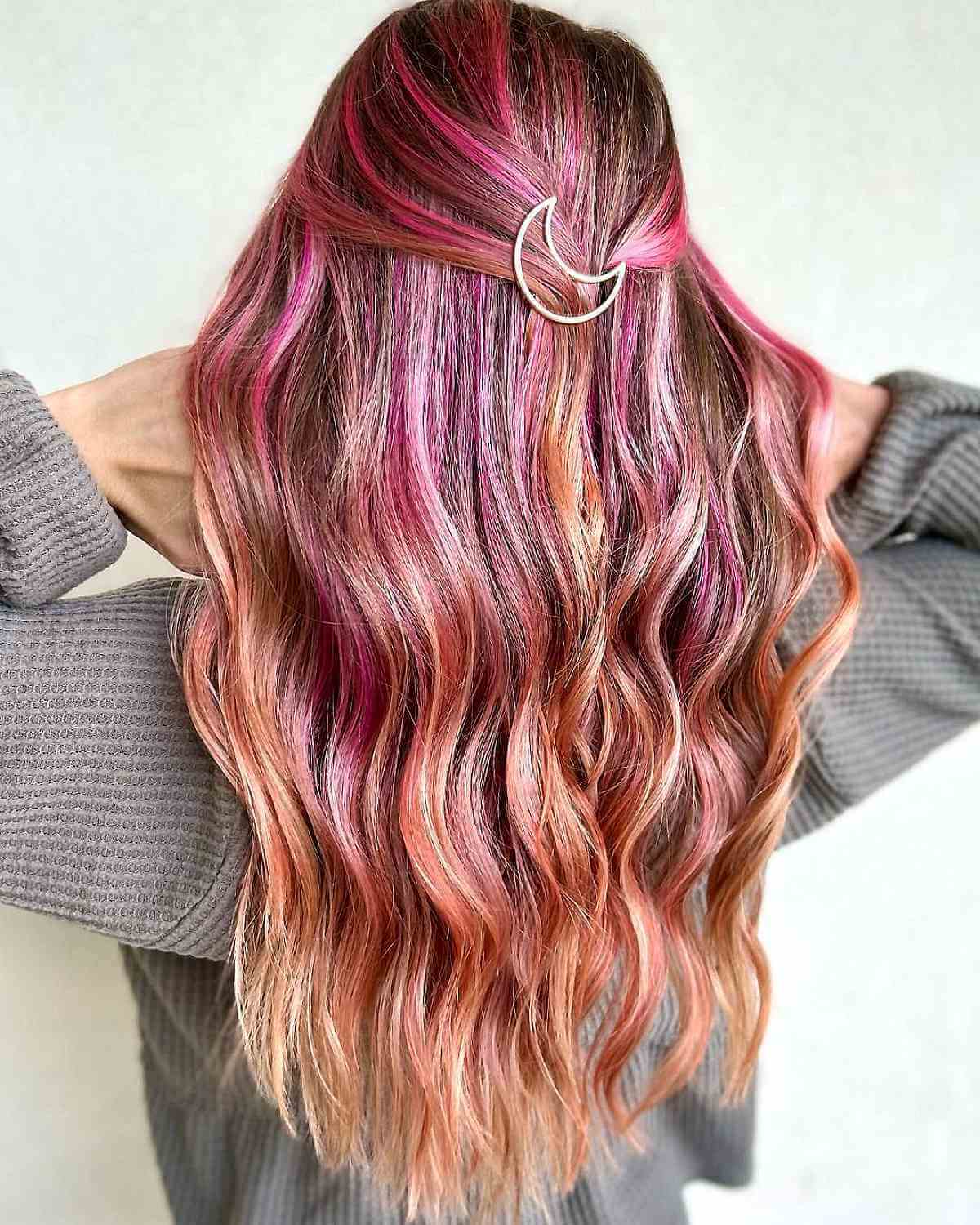
The technique here is precise sectioning: a dimensional brunette base provides depth, and thin pink and coral highlights are painted in ribbons from the mid-lengths to the ends. The back view shows the streaks running through the layers, so the color stays visible even when the hair is worn down. Thick, wavy texture at mid-back length gives the highlights enough surface area to read clearly without clumping. This is a salon design, not a DIY project: one wrong placement turns the ribbons into blobs. A colorist will foil each section to keep the pink and coral separate from the brunette base, which takes about three hours.
Pink And Purple Long Layers
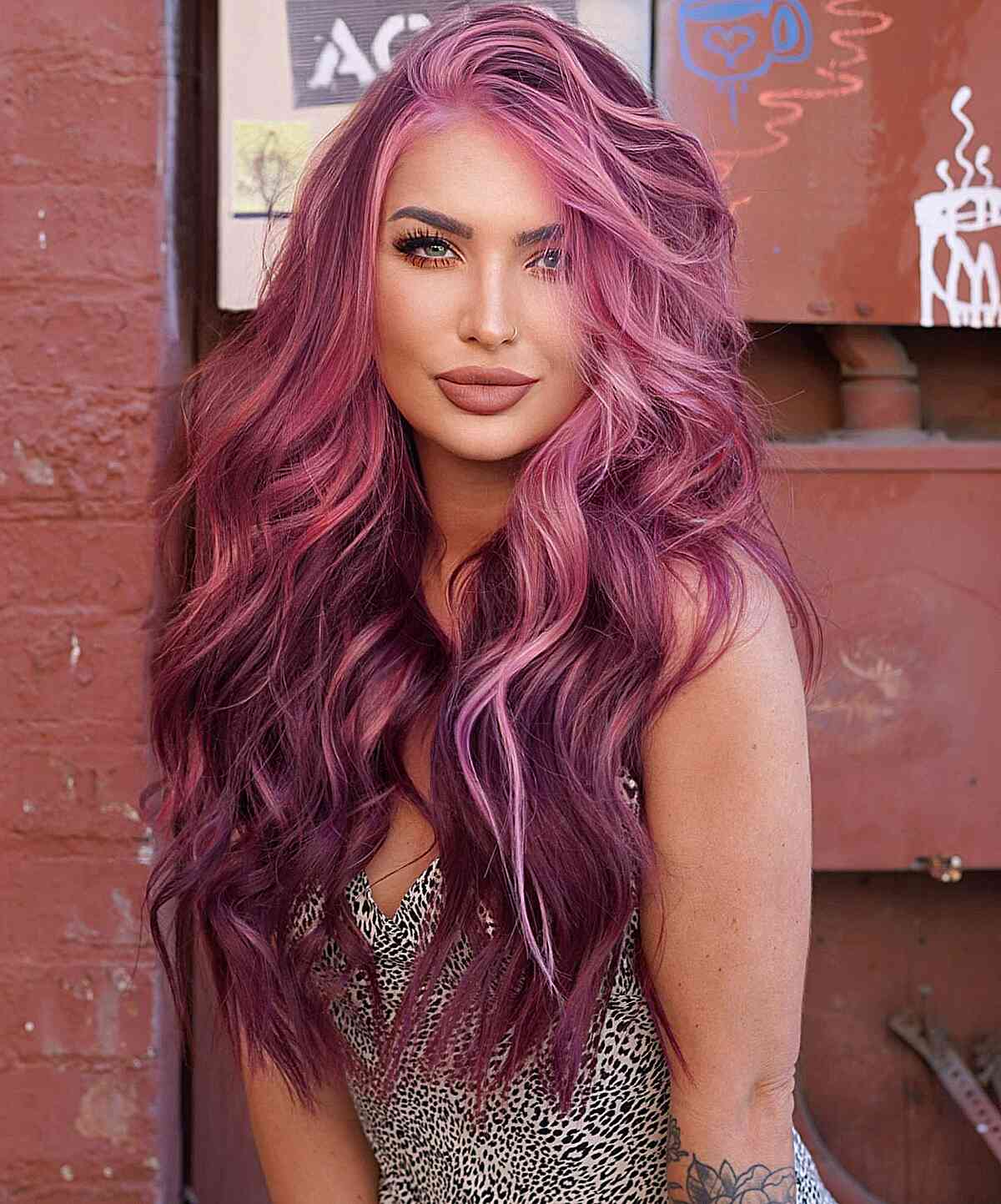
How long will pink and purple really last on long hair? With a side part and loose waves, the blend here leans on face-framing highlights to extend the wear time. The lighter pink pieces around the face fade faster than the deeper purple, so you get a gradual shift rather than a sudden washout. Thick, wavy texture helps the colors grip, but expect visible fading around week four, especially in the front sections.
Ask your colorist for: vibrant pink and purple blend, long layers, face-framing highlights. A purple shampoo used once a week keeps the pink tones from pulling too warm, and a trim every eight to ten weeks stops the ends from looking straggly. The side part means you can flip the highlights to the opposite side for a fresh look between salon visits.
Collarbone Brunette With Caramel Balayage
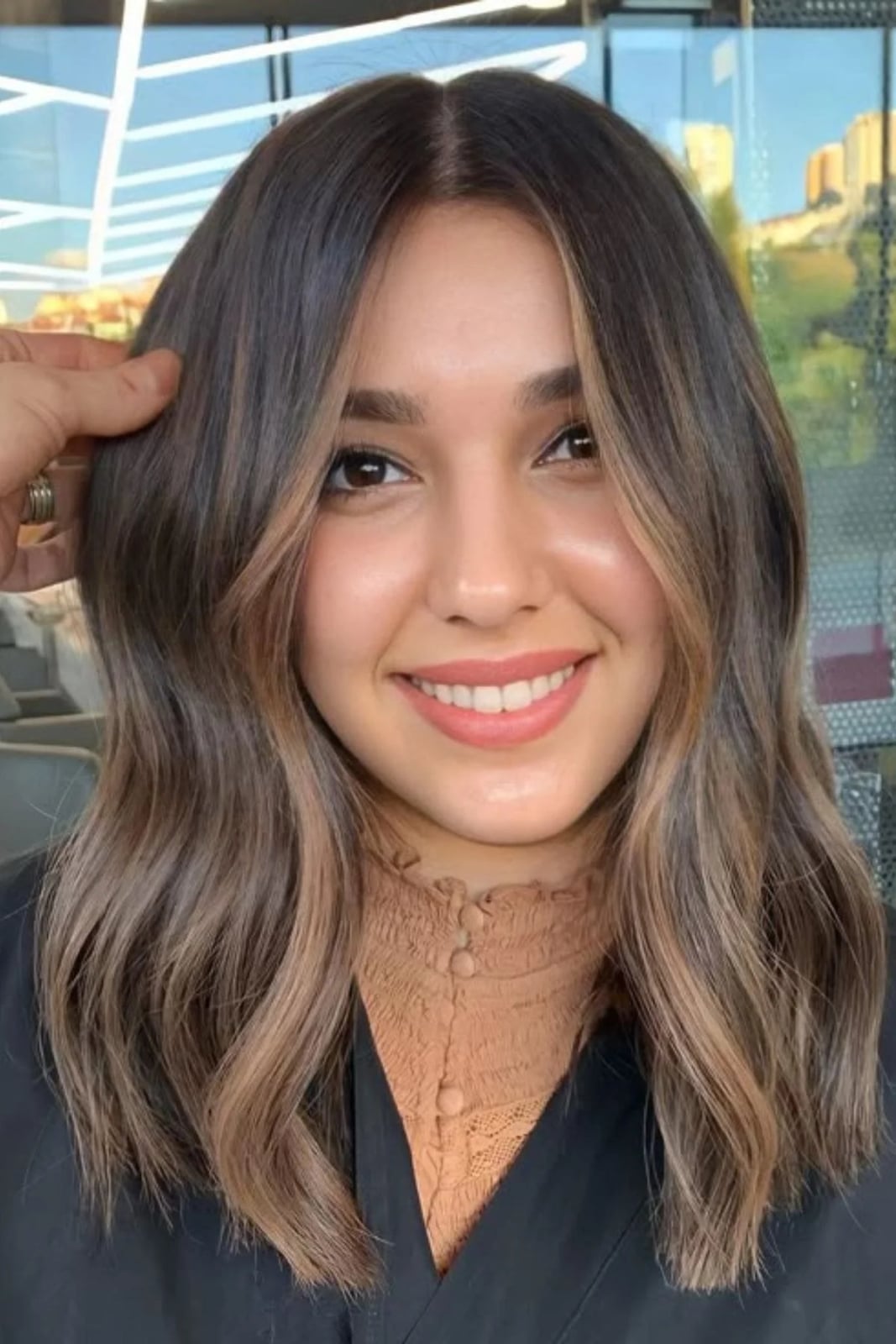
What makes this collarbone length design work is the way the caramel balayage hits just past the chin. The rich brunette base stays dark at the root, so there is no harsh regrowth line, and the subtle caramel pieces sweep through the mid-lengths in a curve that follows the soft waves. Medium density hair is the sweet spot here: fine hair can look overwhelmed by the darker base, while thick hair can hide the balayage. The middle part keeps the color distribution even on both sides, and the collarbone length means the caramel sits where it catches natural light. Ask your colorist for: collarbone length, brunette with subtle caramel balayage, soft waves.
Mid-Back Deep Copper Red
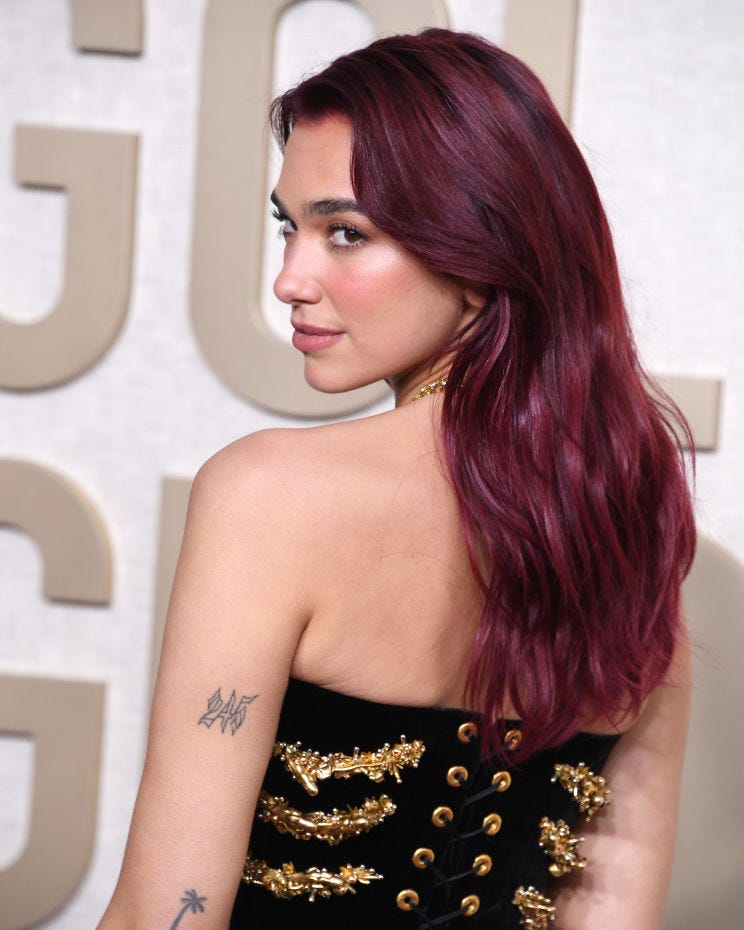
This is a solid, single-process deep copper red applied all over, with no highlights or lowlights to complicate it. The mid-back length and loose waves let the color read as a uniform block, which is the point: one shade, no distractions. Wavy medium texture works with this approach because the waves reflect light differently at every angle, keeping a solid shade from looking flat. The one drawback is the grow-out. On a single-process red, the root line shows as a dark band after about three weeks, and copper fades faster than any other color. Ask your colorist for: deep copper red all over, mid-back length, loose waves. A color-depositing conditioner in the same shade helps extend the time between salon appointments.
Mid-Back Golden Balayage Curls
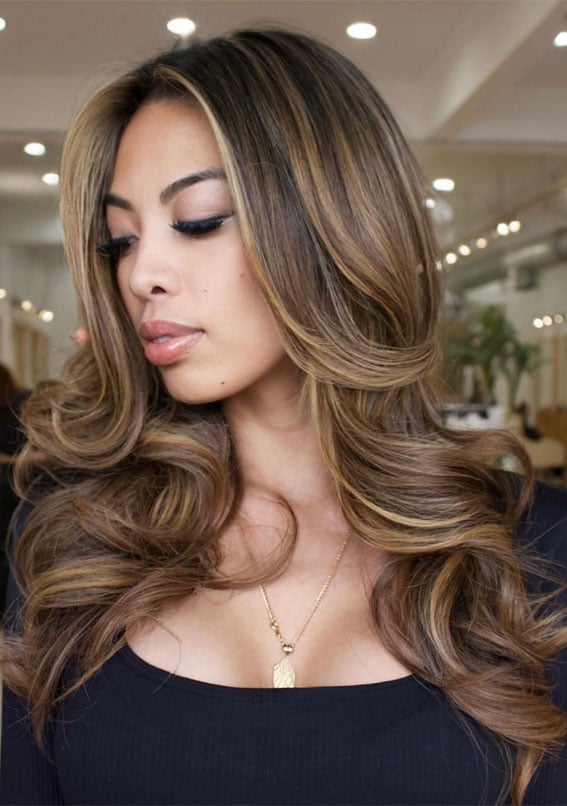
It is not a highlight, it is a golden balayage on a dark brown base, and the difference is where the lightness lives. A highlight starts at the root; balayage is hand-painted onto the mid-lengths and ends, which is why this mid-back length carries such a soft, dimensional fade from dark to gold. The side view and voluminous curls make the technique the point. Ask your colorist for: golden balayage on dark brown base, mid-back curls. Thick, wavy hair of mid-back length is the starting point here, and the dark base with golden tones is versatile enough for most.
The process is not quick, about three hours in the chair, because the colorist paints each section by hand and then tones the gold to keep it from turning brassy. The payoff is that the roots stay dark, so you skip the every-four-weeks touch-up. A diffuser attachment and curl cream define the wave without heat damage. A trim every ten weeks keeps the ends healthy enough to hold the curl.
Red To Orange Gradient With Pink
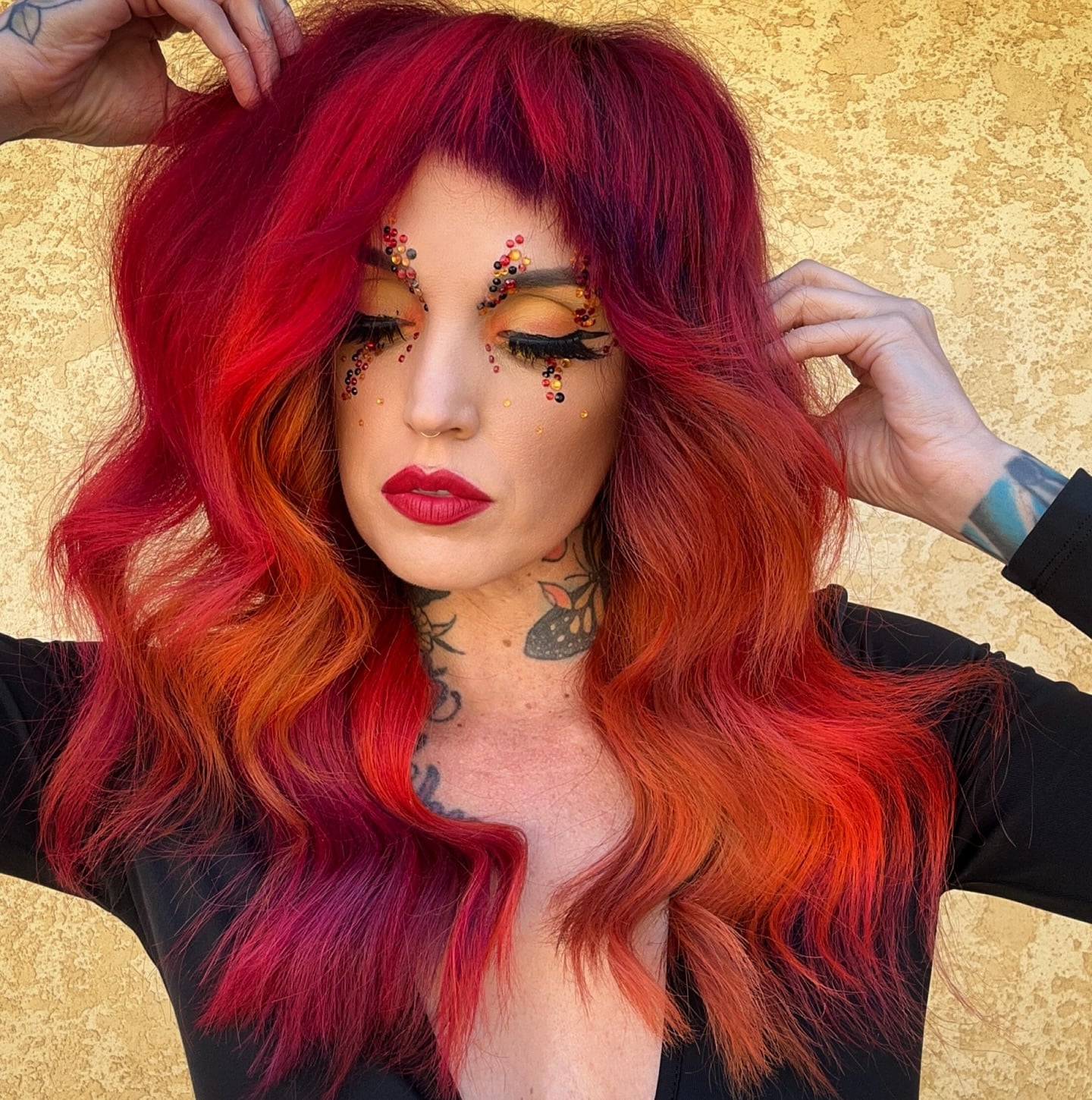
The blunt bangs are the anchor that keeps this gradient from reading as a sunset on the loose. The color moves from a deep red at the roots through a fiery orange middle into a pinkish end, and the front view shows how the blunt fringe frames the face without competing with the color. Ask your colorist for: red to orange gradient with pink undertones, blunt bangs. Thick, wavy hair of mid-back length can hold that many saturated tones without looking thin. The bangs suit oval and long faces. Color-safe shampoo and conditioner are crucial; avoid washing more than twice a week to keep the pink from fading first. A toning mask every third wash preserves the orange.
Mid-Back Dark Brown With Blonde Balayage
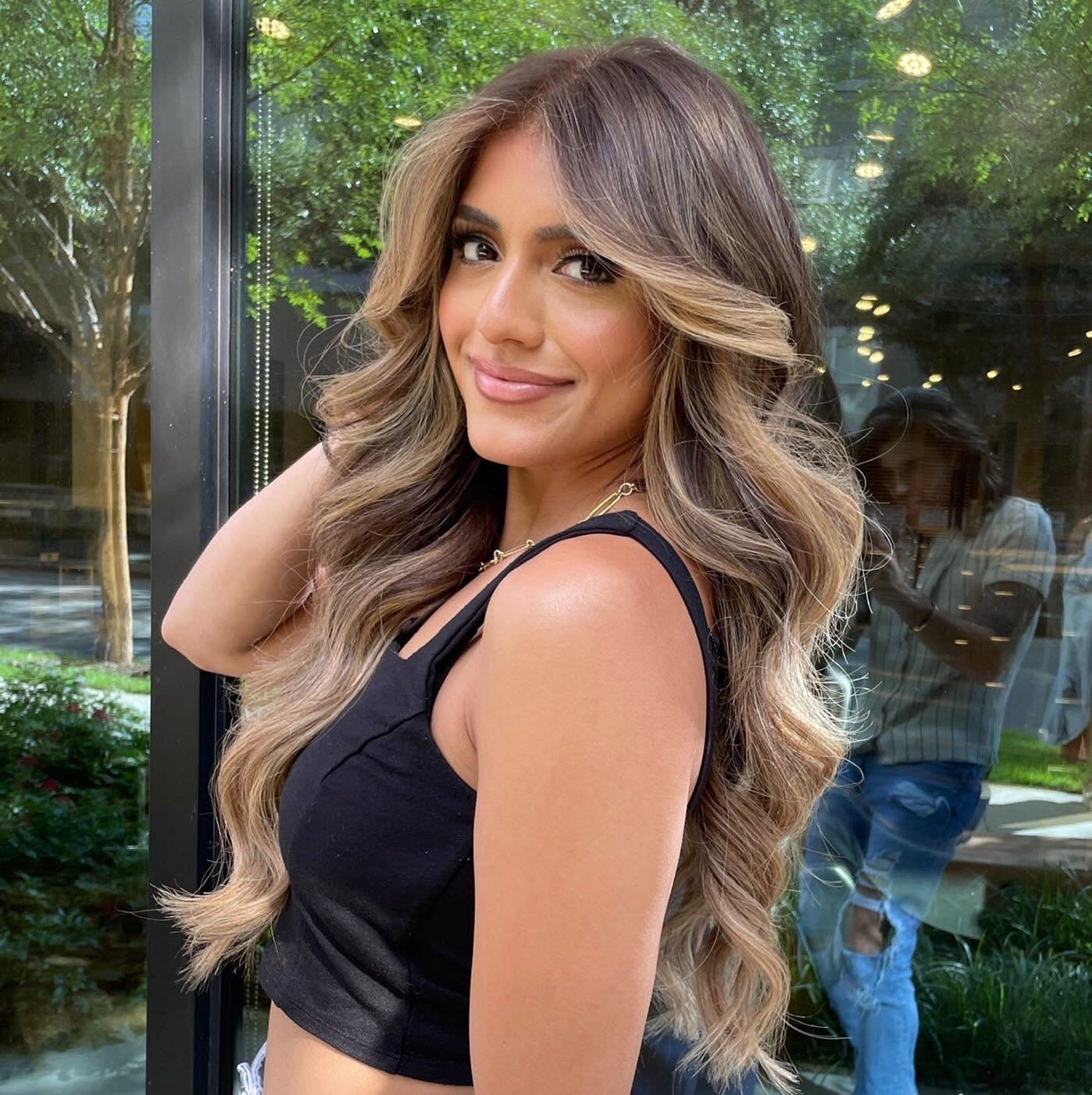
How do you ask for blonde without looking like you asked for blonde? You specify the base and the placement. The dark brown base stays rich at the roots, and the blonde balayage highlights hit the ends, creating dimension that a full head of highlights cannot. The side-swept bangs and side parting soften the contrast. Ask your colorist for: dark brown base with blonde balayage, mid-back length, side-swept bangs. Thick, wavy hair of mid-back length is ideal, and the side-swept bangs can balance a prominent forehead. The blonde should be a level eight or nine, not platinum, to keep the transition natural. A volumizing mousse and round brush create a polished blowout; use dry shampoo between washes.
When you sit in the chair, tell the colorist you want the blonde to start about two inches from the root. That keeps the grow-out soft. The balayage technique means the lightness is concentrated where the wave bends, which adds movement. A trim every eight weeks keeps the ends from splitting, because the blonde is lighter and more porous. The side-swept bangs need a trim every six weeks to stay off the face.
Mid-Back Dark Base With Teal Ombre
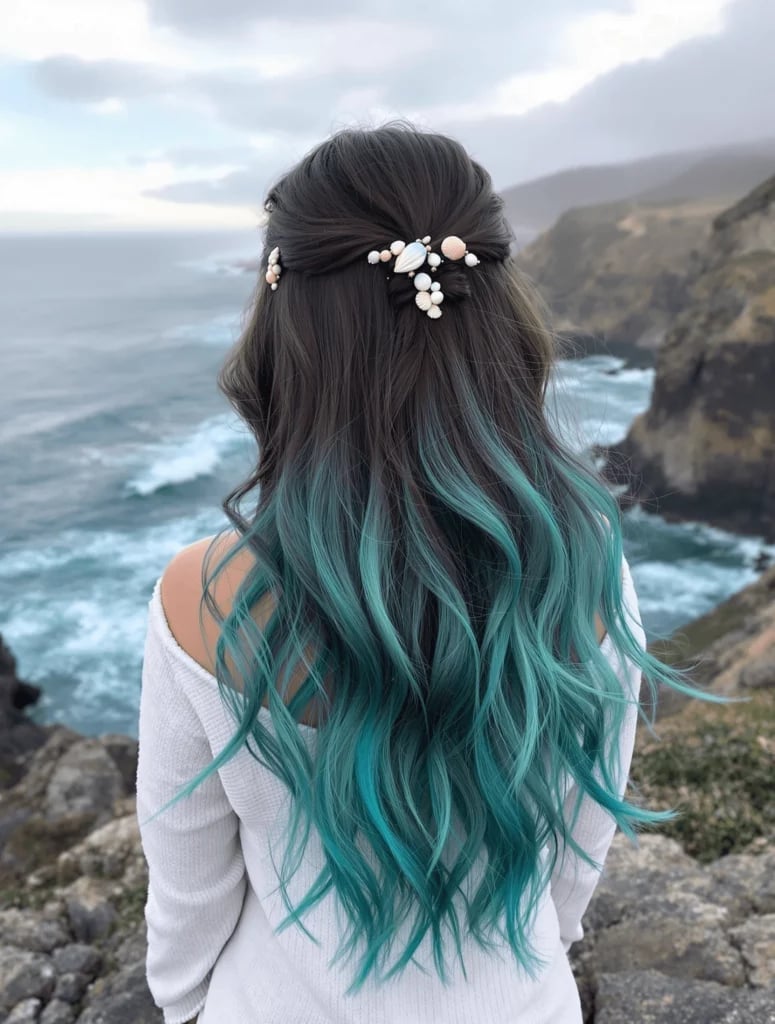
A blonde ombre can look sun-kissed. A teal ombre makes a deliberate color statement. The dark base keeps the root natural, and the bright teal on the lower lengths adds a pop of color without requiring full commitment. The back view shows the clean transition. Ask your colorist for: dark base with teal ombre, mid-back length. Medium, wavy hair of mid-back length works well because the wave helps blend the two shades. This is a salon project, not a kitchen-table one. The dark base stays untouched, so the colorist only lifts and deposits color on the ends, which takes about two hours. A color-depositing conditioner helps maintain the teal; avoid chlorine or use a swim cap. The ombre grows out gracefully because the dark root never needs touching up.
Long Lived-In Balayage
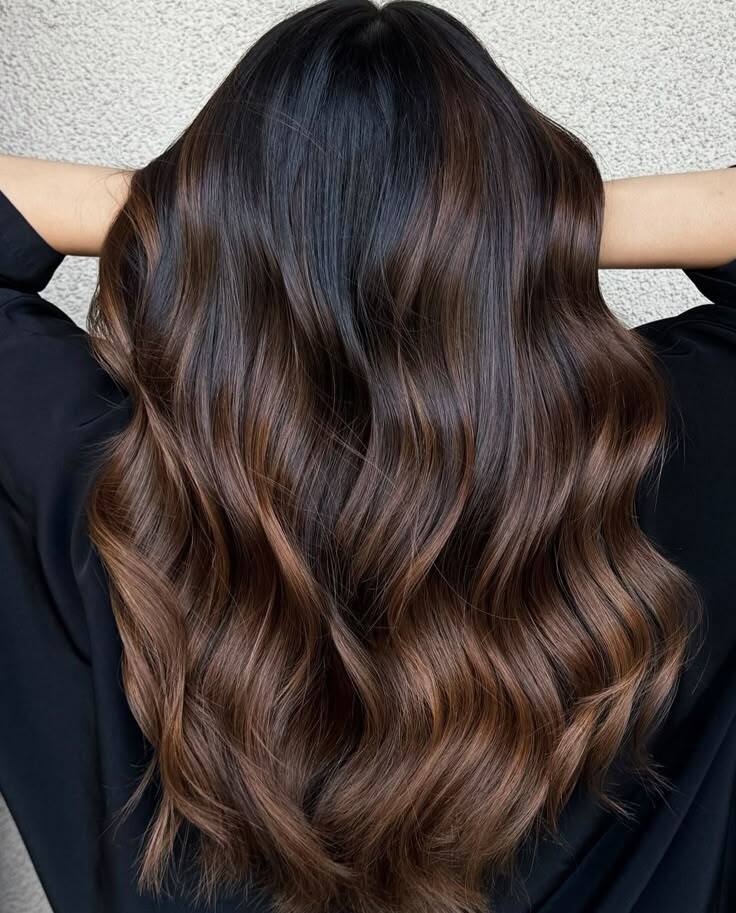
The lived-in balayage is designed to grow out gracefully. The dark base transitions seamlessly into lighter, warmer tones toward the ends, and the loose waves from the back view show the soft, natural dimension. Ask your colorist for: lived-in balayage on dark base, long layers. Thick, wavy hair of long length is ideal, and the low-maintenance technique suits most face shapes. The grow-out is the point, so you wait eight to twelve weeks between appointments before the lightness moves too far down. The mid-lengths benefit from a texturizing spray to enhance the lived-in look, and a trim every ten weeks keeps the ends healthy. The color is subtle, not dramatic.
Shoulder Ash Gray With Silver Highlights
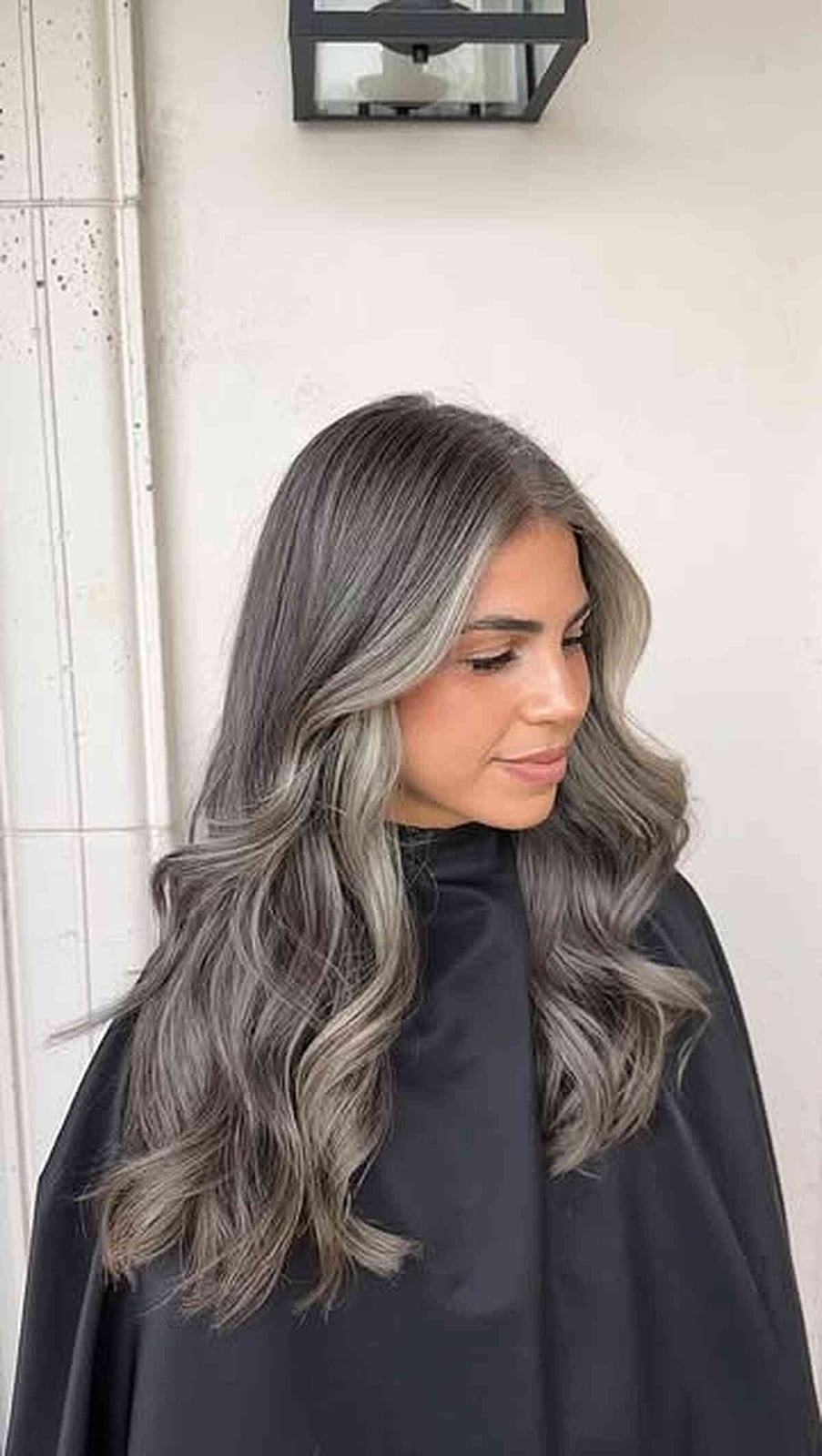
The coolest thing about this look is how the silver highlights sit exactly where they catch the most light. A shoulder-length cut with soft layers and a side part keeps the ash gray base grounded, while the brighter pieces around the face do the heavy visual lifting. This works best on medium density wavy hair. Ask your colorist for: ash gray base with silver face-framing highlights. A purple or silver toning shampoo used once a week stops the ash from going muddy between salon visits.
Mid-Back Dark To Ash Blonde Balayage, Close-Up Take
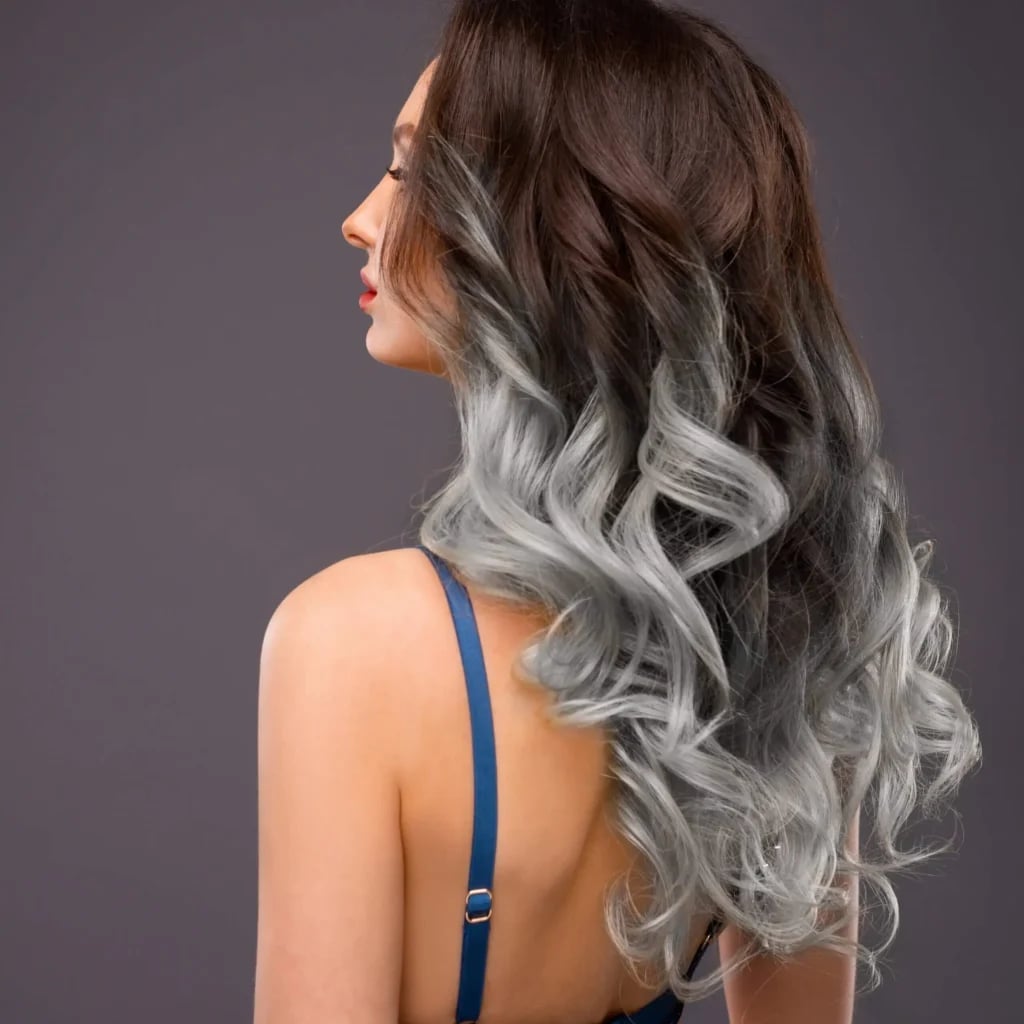
Getting dark brown to fade into ash blonde without a brassy pit stop is the technical challenge here. The balayage technique paints the lightener onto the ends, leaving the root area untouched, which creates a soft, seamless gradient. A side view shows the contrast best: deep pigment at the top, a cool, almost silvery blonde at the bottom.
This transition suits medium density wavy hair of mid-back length. Ask your colorist for: dark brown to ash blonde balayage. Process time is a factor. Lifting dark pigment to ash blonde requires a careful two-step session that can run three to four hours in the chair.
Mid-Back Ash Blonde Balayage With Curtain Bangs
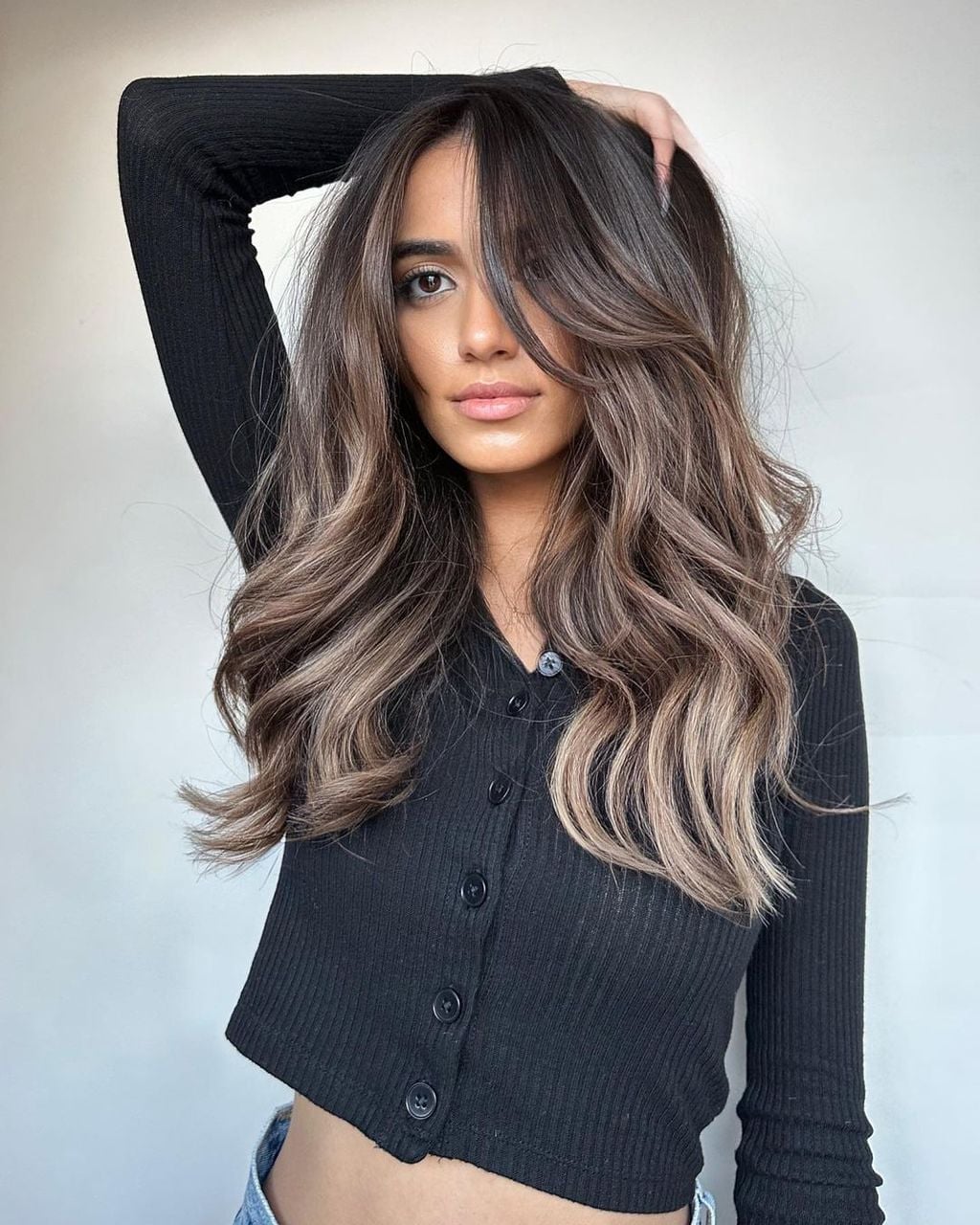
Wondering if curtain bangs and balayage can work together without looking like two separate ideas? They can, when the lightest pieces in the balayage match the face-framing ends of the bangs. Here, a dark brown base gets ash blonde balayage through the lengths, while the curtain bangs sweep outward and pick up the same cool tone.
This combination genuinely flatters oval and heart-shaped faces, because the bangs soften the forehead and the side pieces narrow the jaw. Thick, wavy hair of mid-back length holds the blowout shape best. Ask your colorist for: dark brown base with ash blonde balayage and curtain bangs. A round brush and a heat protectant are all you need to recreate the front sweep at home.
Long Mushroom Brown With Curtain Bangs
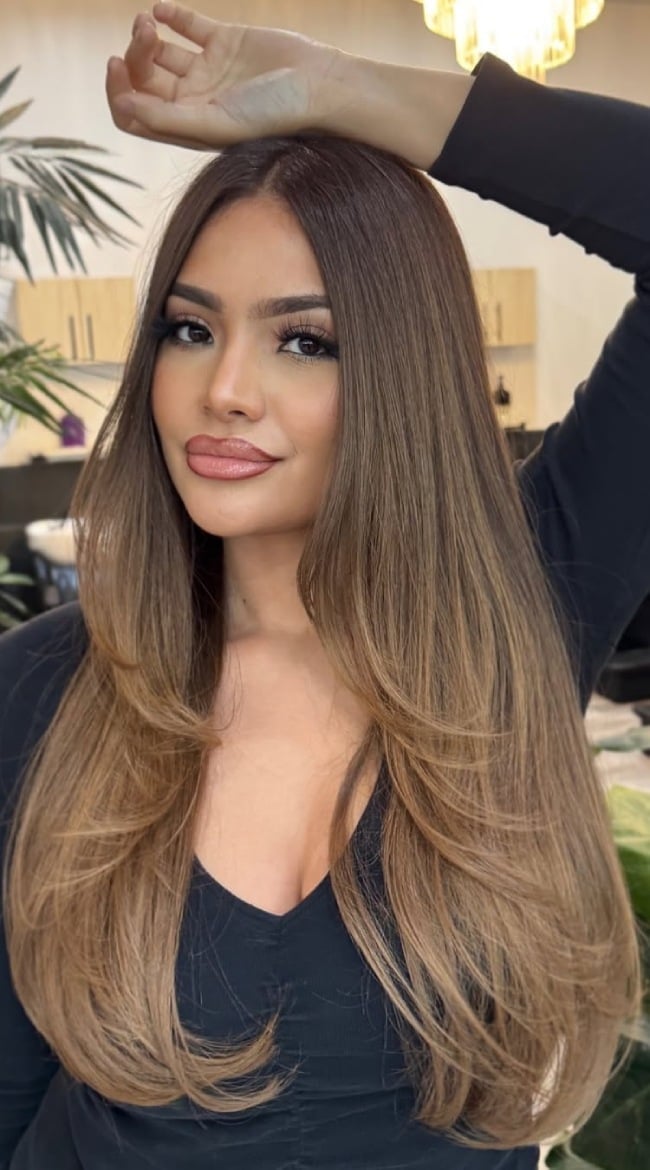
The magic of mushroom brown is that it looks like a neutral shade until you see the faint, cool-toned balayage. Long, straight fine hair with long layers and curtain bangs gets volume at the roots and a soft drape around the cheeks. The middle part and the subtle highlights keep the color from looking flat, which is the usual risk with fine, light brown hair. Ask your stylist for: long layers, light brown with subtle balayage, curtain bangs. Root volume and a round brush during blow-drying give fine hair the body it needs to carry this look.
Chin Length Vibrant Purple Bob
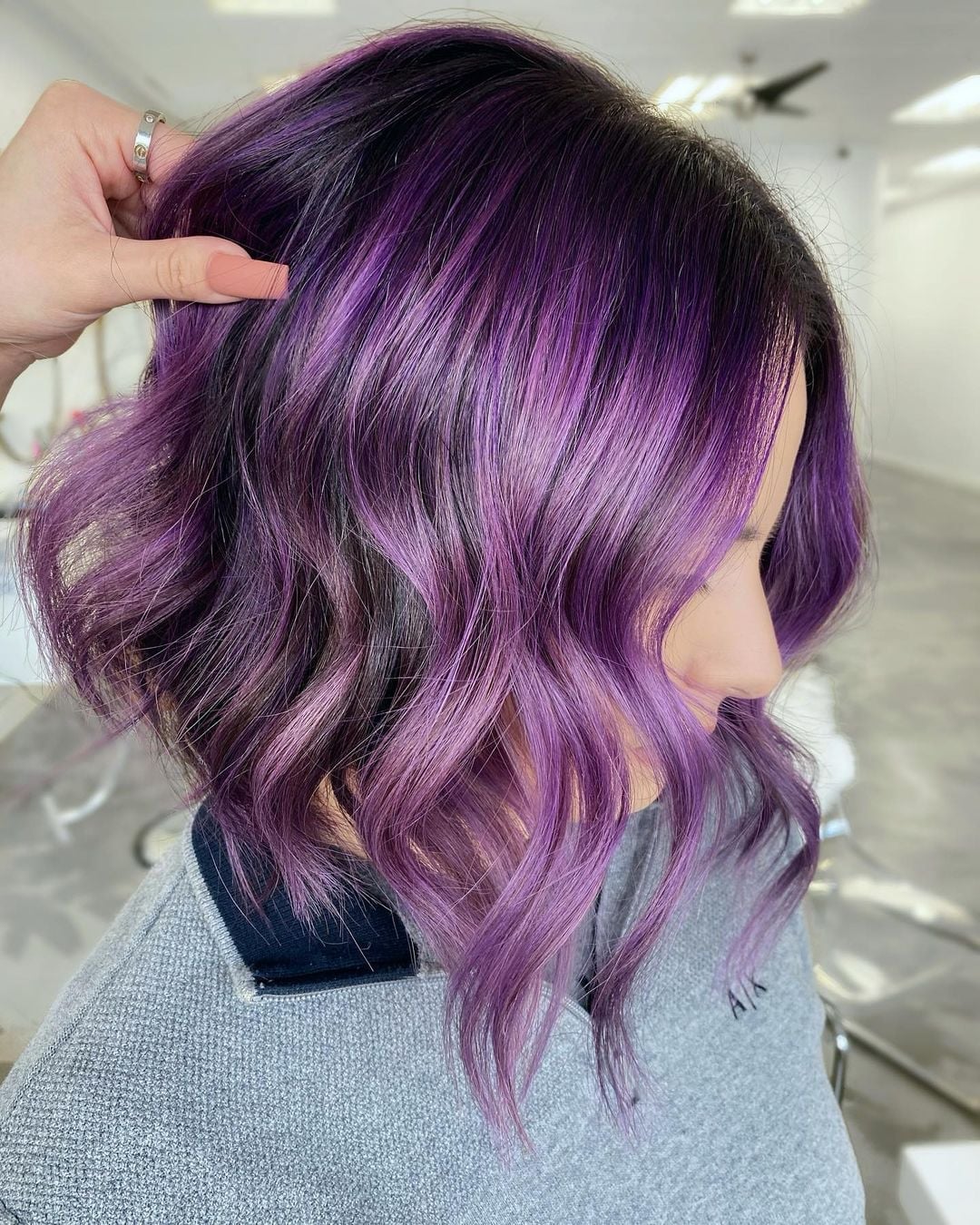
How do you make a vivid color feel polished? A clean chin-length bob with blunt bangs and a middle part does the trick. The vibrant purple is applied all over, so there is no root line to worry about, and the wavy texture keeps the look from feeling too severe. This is a salon-only project: achieving this saturation at home rarely works. Ask your colorist for: chin-length bob, blunt bangs, vibrant purple all over. A color-safe shampoo and a product to enhance the waves are the only ones you will need between appointments.
Mid-Back Dark Brown With Caramel Highlights
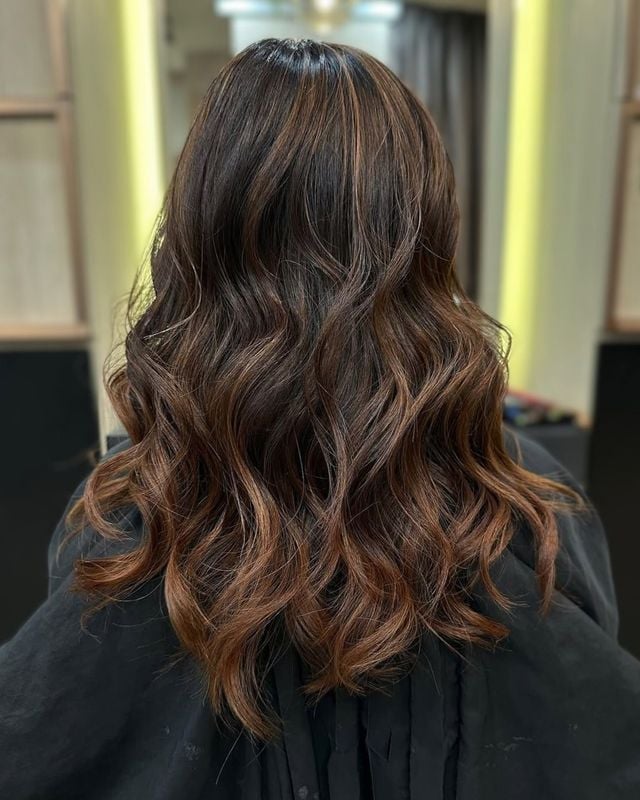
The design here relies on layering warm caramel and copper highlights over a dark brown base to create dimension without obvious contrast. It works best on thick, wavy hair that reaches mid-back, because the texture helps the lighter pieces peek through naturally. Ask your colorist for: dark brown base with warm caramel and copper highlights, mid-back length waves. A styling cream keeps the waves defined and the color looking hydrated.
This is a salon technique that requires a skilled hand to place the highlights for a soft, blended effect. The grow-out is forgiving, so you can stretch to ten or twelve weeks between appointments. It is not a DIY project; the balance of warm tones on dark hair goes muddy fast without professional mixing.
Collarbone Copper With Pink Streaks
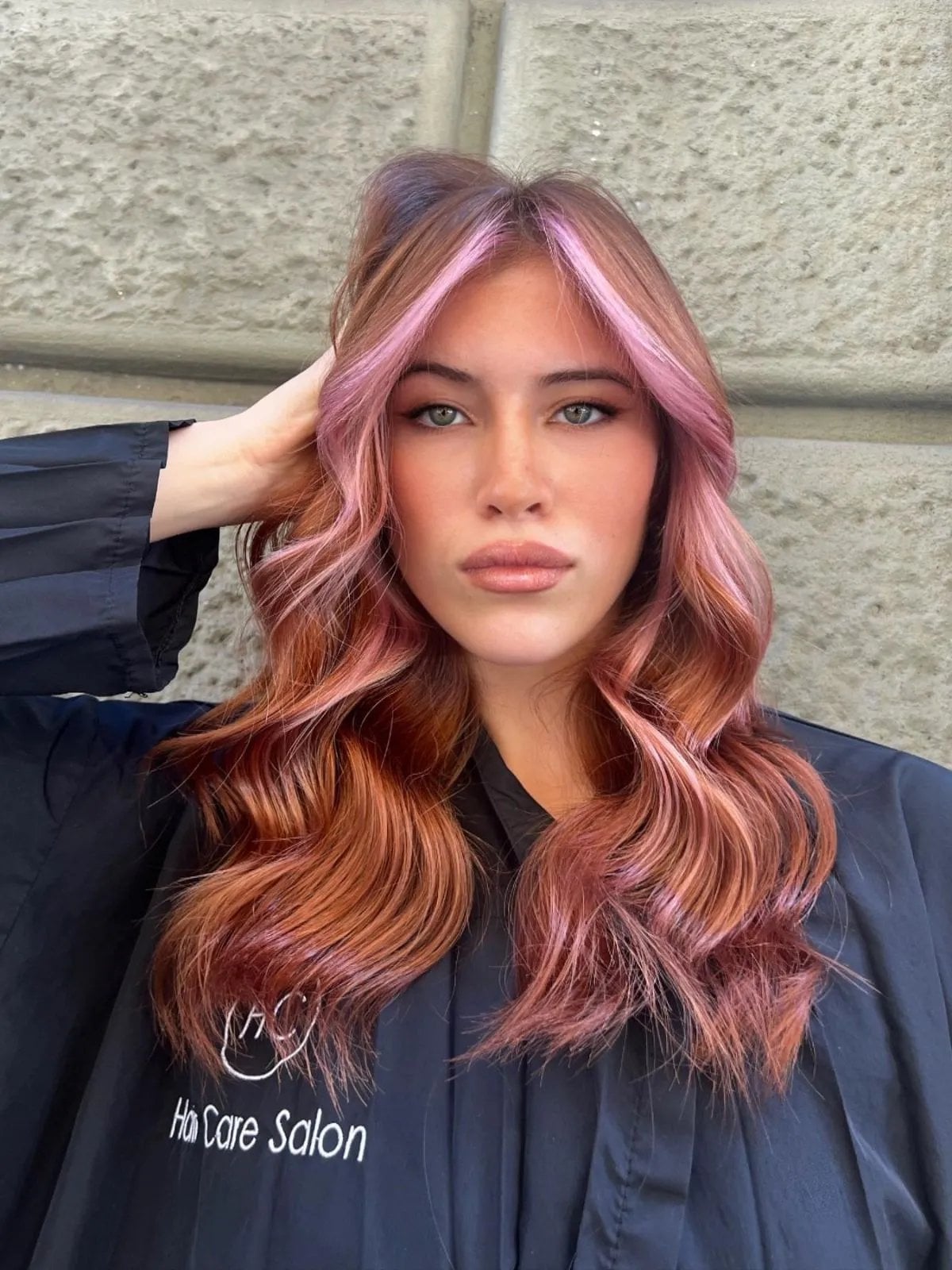
If a standard copper feels too safe, this version adds pink undertones and lighter pink streaks for a playful edge. The collarbone length and loose waves let both colors show clearly, and a middle parting keeps the blend balanced. Ask your colorist for: copper base with pink undertones and pink streaks, collarbone length waves. It suits wavy, medium density hair that can carry the saturation without looking flat.
The pink streaks fade faster than the copper, so a color-depositing mask every few washes keeps them bright. Spring and summer are the ideal seasons for this color.
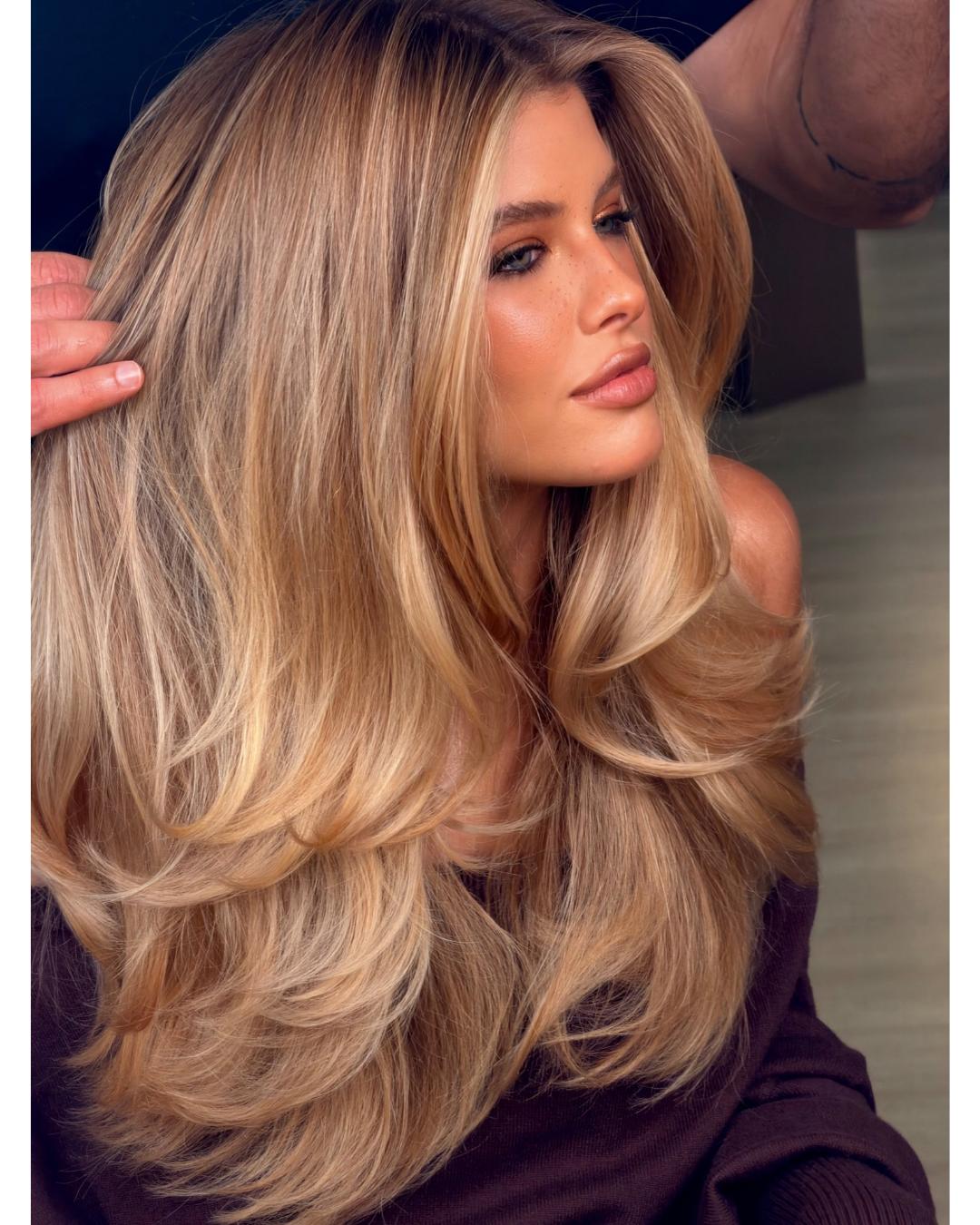
Mid-Back Neutral Blonde Balayage Waves
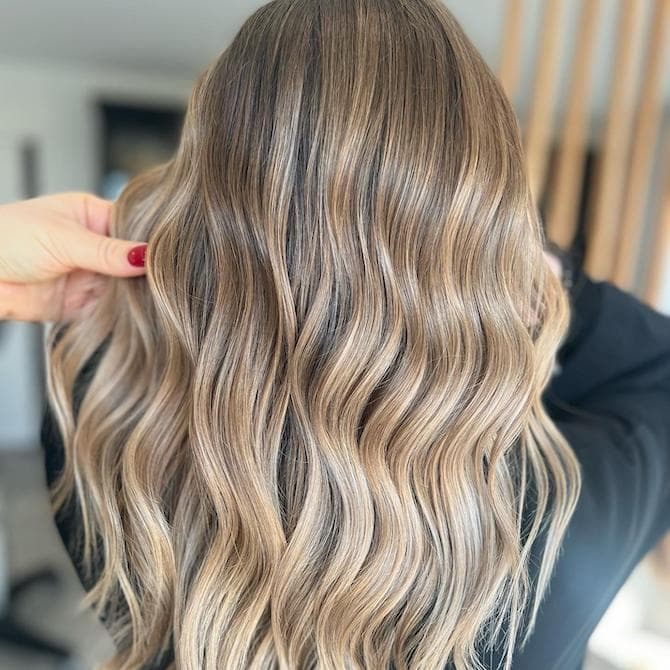
The neutral blonde balayage here avoids the warm or ash extremes, landing on a balanced tone that looks natural in any light. The long layers and loose waves help the color move, so the lighter pieces catch the light at different points. Ask your colorist for: neutral blonde balayage, mid-back length layers, loose waves. It works on thick, wavy hair because the texture breaks up the color line softly.
This is a straightforward technique for an experienced colorist: the balayage is painted freehand for a soft, lived-in root. A purple shampoo once a week keeps the neutral tone from shifting yellow. The grow-out is minimal, so you can wait ten weeks between appointments without a harsh line.
Collarbone Deep Purple With Highlights
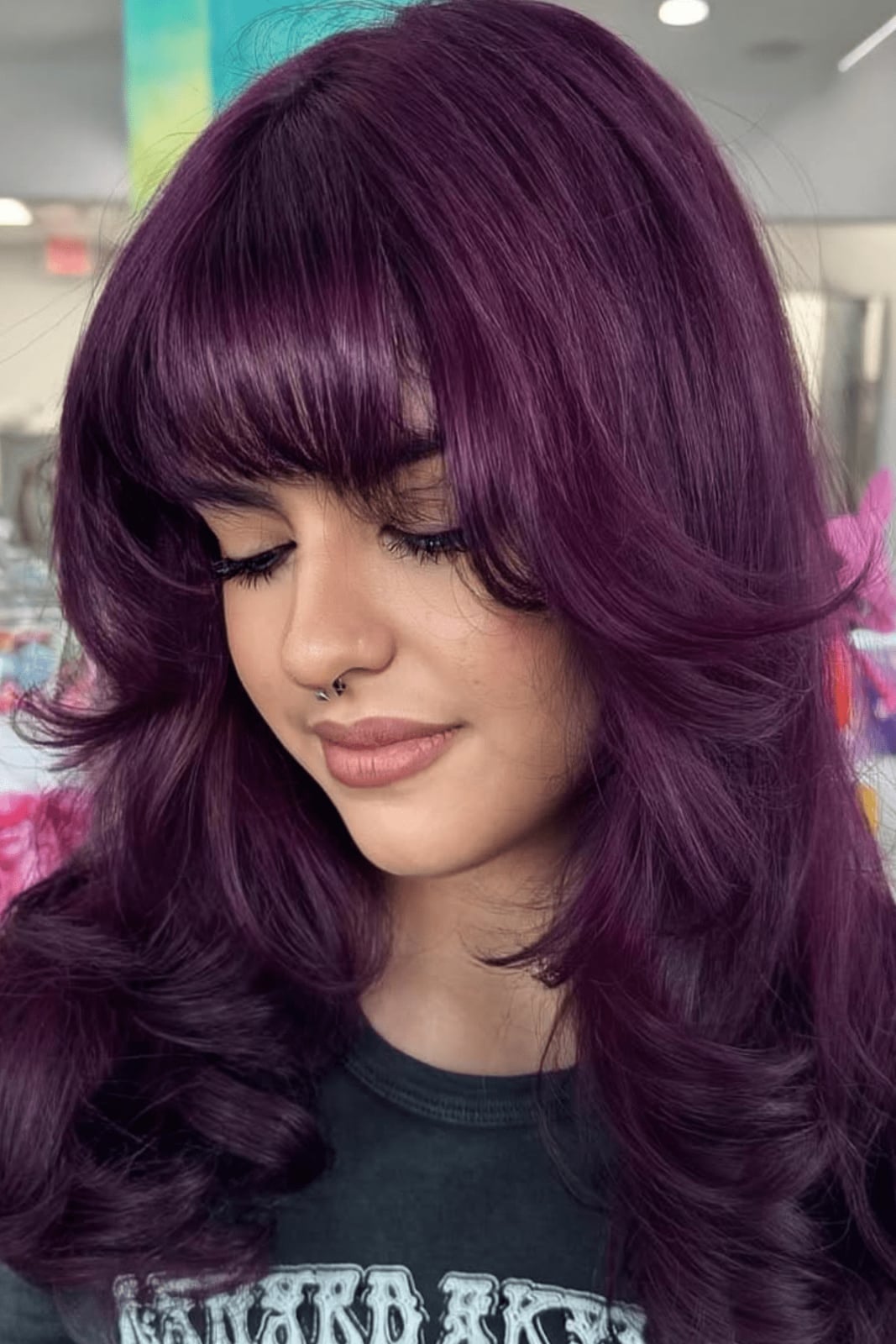
How does a deep purple color wear over time? The lighter purple highlights woven through the base help the color stay dimensional as it fades, so it does not go flat. The collarbone length and full bangs frame the face, and the voluminous blowout adds body. Ask your colorist for: deep purple base with subtle lighter purple highlights, collarbone length, full bangs, blowout. Thick, wavy hair holds the intensity best.
Upkeep is the main consideration: the highlights will fade to a softer violet before the base does, which means you need a color-safe shampoo every wash and a toning mask every two weeks. A trim every eight weeks keeps the bangs sharp and the ends healthy. This color requires pre-lightening for the highlights to show.
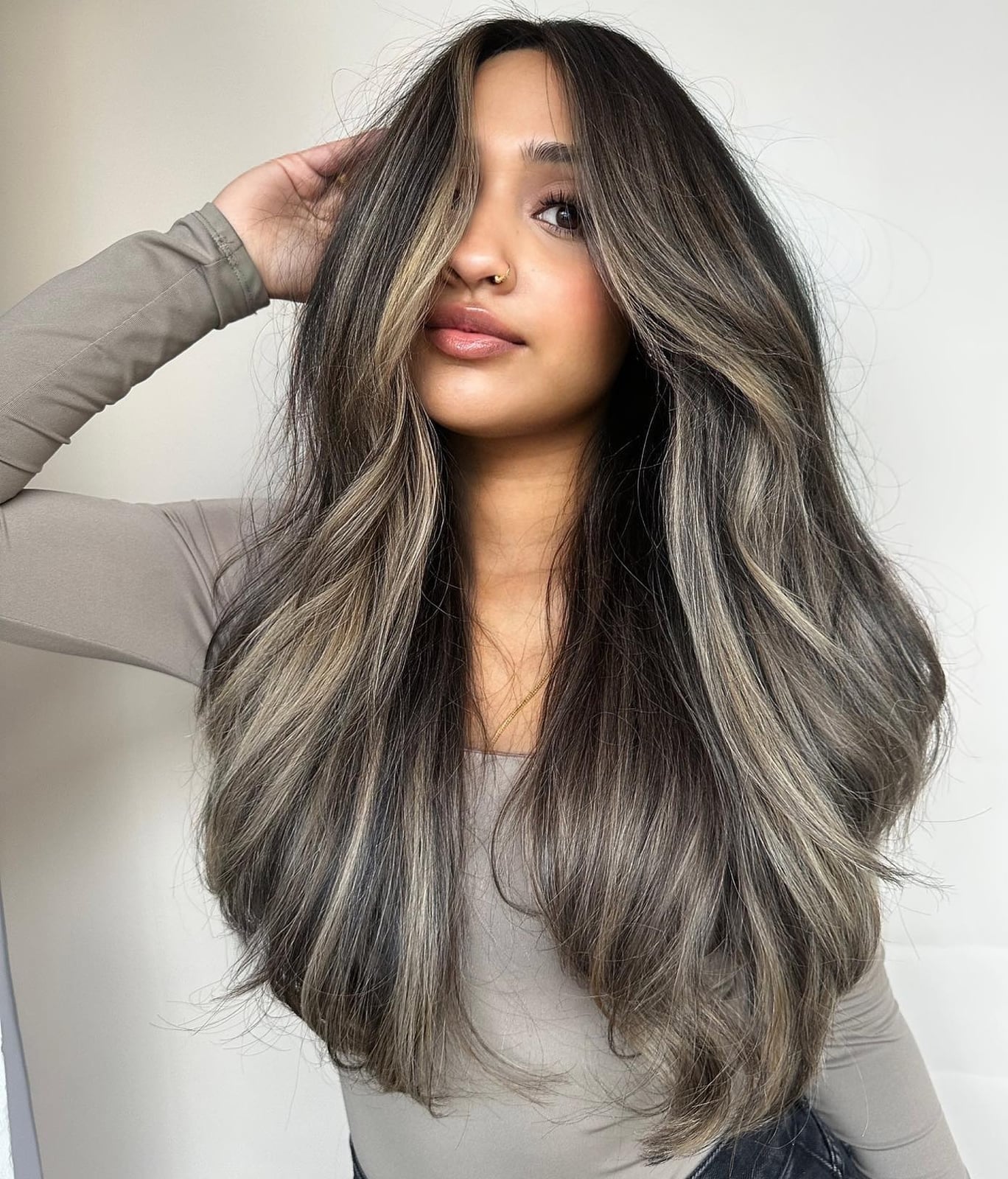
Long Dark Brown With Subtle Highlights
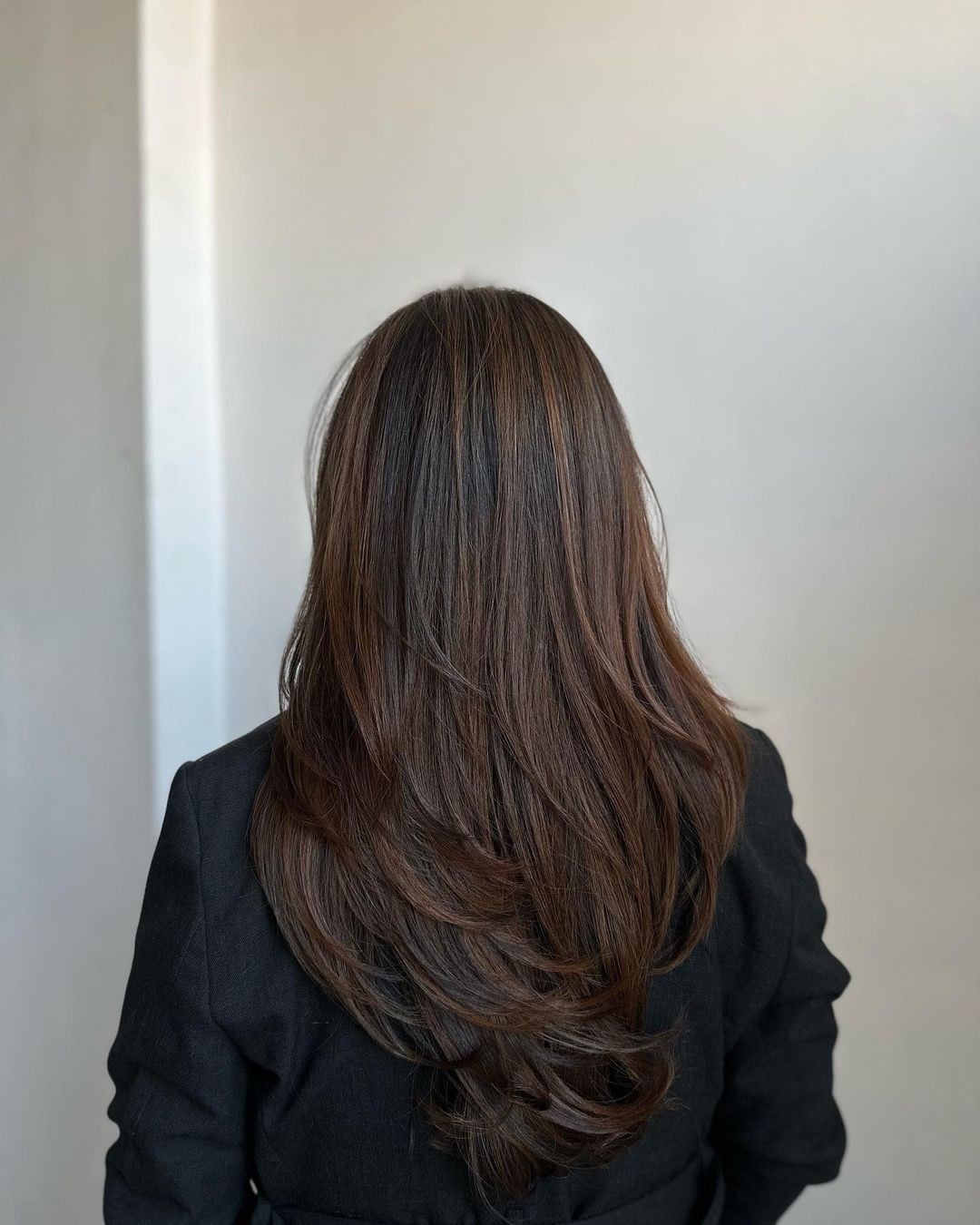
The technique here uses fine, subtle highlights placed close to the base color so the result is dimension without contrast. The long, straight hair with a slight wave at the ends lets the lighter pieces just catch the light. Ask your colorist for: long layers, dark brown base with subtle lighter highlights, straight with subtle waves. It suits thick, straight hair of long length; the highlights add movement without changing the overall tone.
This is a salon-leaning technique, but a dedicated DIYer with a babylights cap can manage it at home if they work slowly and use a low-volume developer. The key is keeping the highlights fine and spaced evenly to avoid stripes. A smoothing serum helps the straight style look polished between trims, which you need every six to eight weeks to keep the ends blunt.
Mid-Back Split Dye Green And Purple
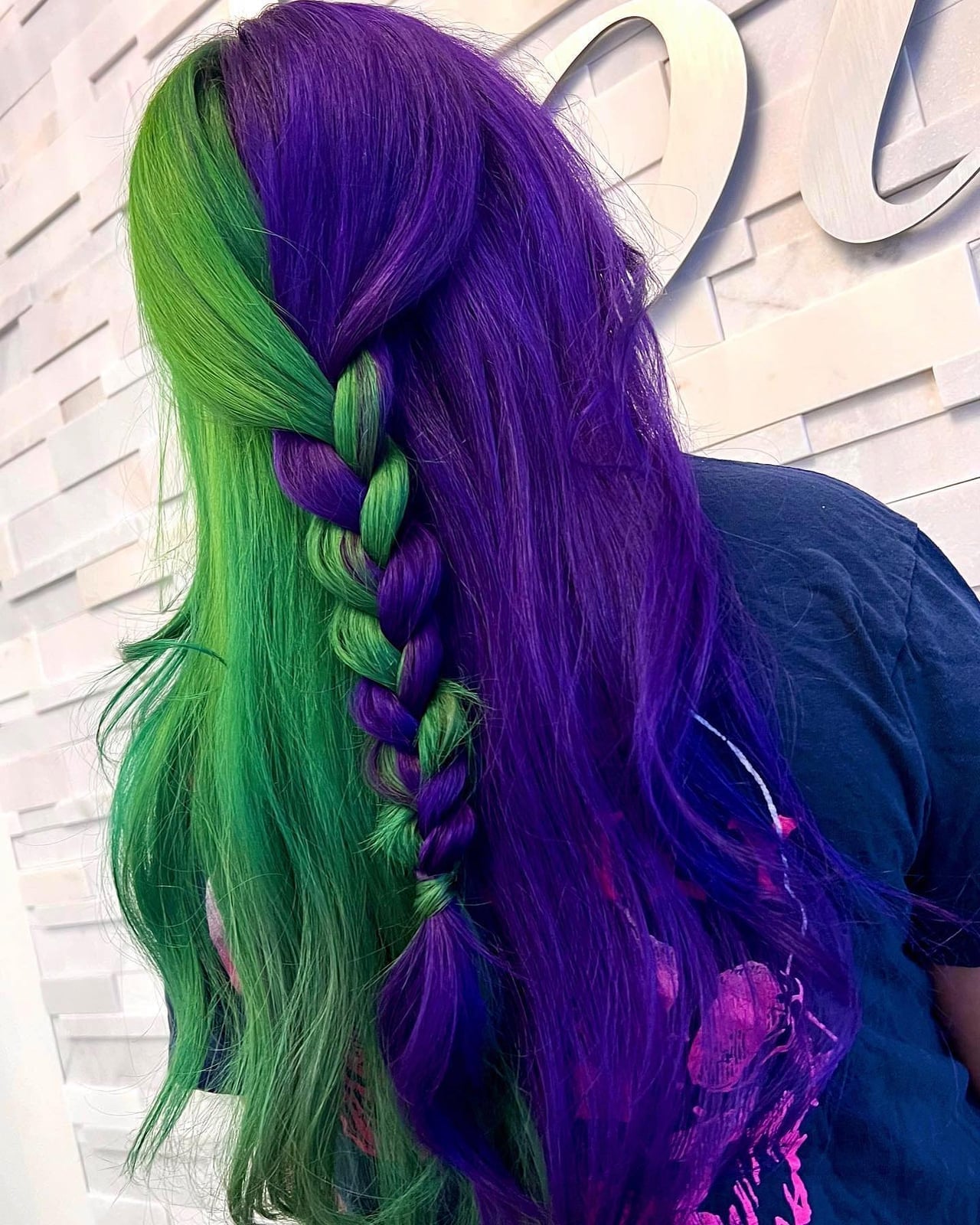
A split dye demands commitment before application. Here, vibrant green runs down one side and deep purple down the other, divided by a middle part and a thick braid that traces the center. Loose waves keep the long layers from feeling stiff, and the back view reveals how the two tones separate cleanly.
This works best on thick, wavy hair that is already mid-back length. The precision required means a salon visit is non-negotiable. Ask your colorist for: split dye green and purple, mid-back length layers, central braid. The real drawback: grow-out is visible fast, so root touch-ups land every four to six weeks, and the two colors will fade at different speeds.
Final Thoughts
For bold, vibrant colors, consider your maintenance commitment; these often require more frequent touch-ups and specialized care. For dimensional techniques like balayage, focus on gradual grow-out and less frequent salon visits.
- Maintain vibrant fashion colors with color-depositing shampoos or conditioners weekly.
- Toning cool blonde shades may be needed every four to six weeks to prevent brassiness.
- Protect color-treated hair from heat styling with a thermal protectant spray.
- Wash hair less frequently, using cool water to preserve color intensity.
- Schedule salon touch-ups for root color or balayage maintenance every six to ten weeks.
Explore these inspirations to find your next signature color.