Professional hairstyles lean on soft face-framing layers, curtain bangs, lived-in color, and glossy natural texture. The shift is away from poker-straight flatness and toward polished movement that holds its shape through a workday.
This collection of 33 Classy Professional Hairstyles spans low-upkeep to high-detail, short to long, and salon-built to DIY. It suits fine hair that needs blunt cuts for volume, thick hair that benefits from layers or sleek updos, and anyone managing a grow-out line or a fringe that will not sit. Each look is built to stay put from the morning commute to the evening meeting.
Glossy Chin-Length Bob With Side Part
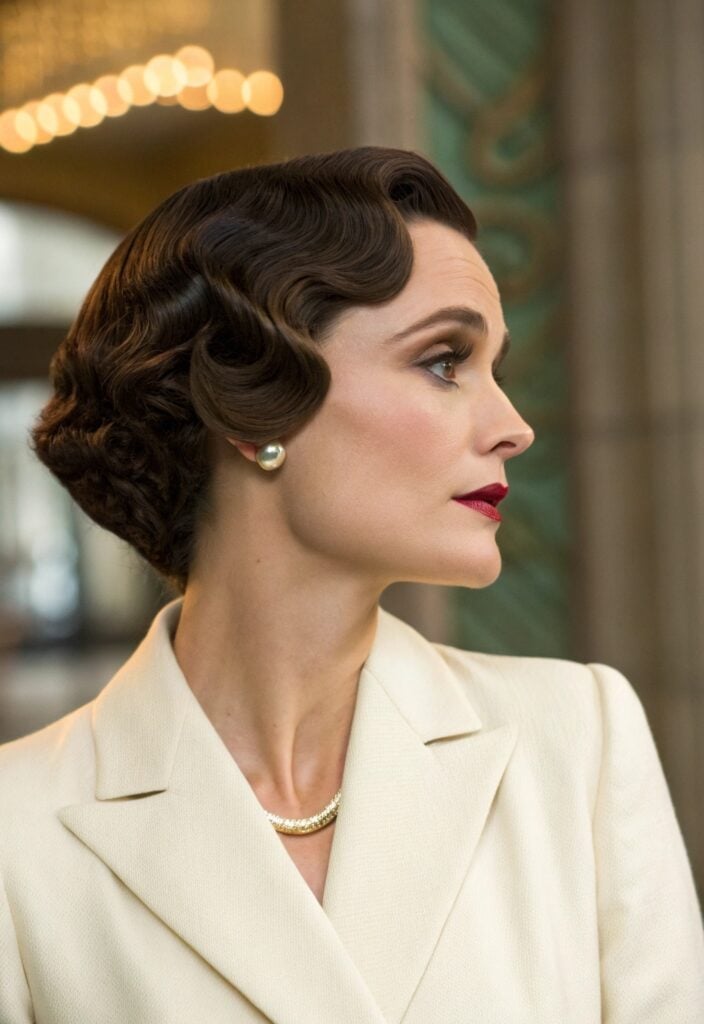
The sharp line of a chin-length bob does the heavy lifting here, and the deep side part adds just enough volume to keep fine, straight hair from falling flat. It’s a cut that rewards precision, so ask your stylist for a chin-length bob with a deep side part and glossy finish. A boar bristle brush during blow-drying maximizes shine, and a trim every six weeks keeps the line sharp. The side part also helps balance round and square face shapes, making this a versatile option for the office.
Sleek Chin Bob With Smooth Blowout
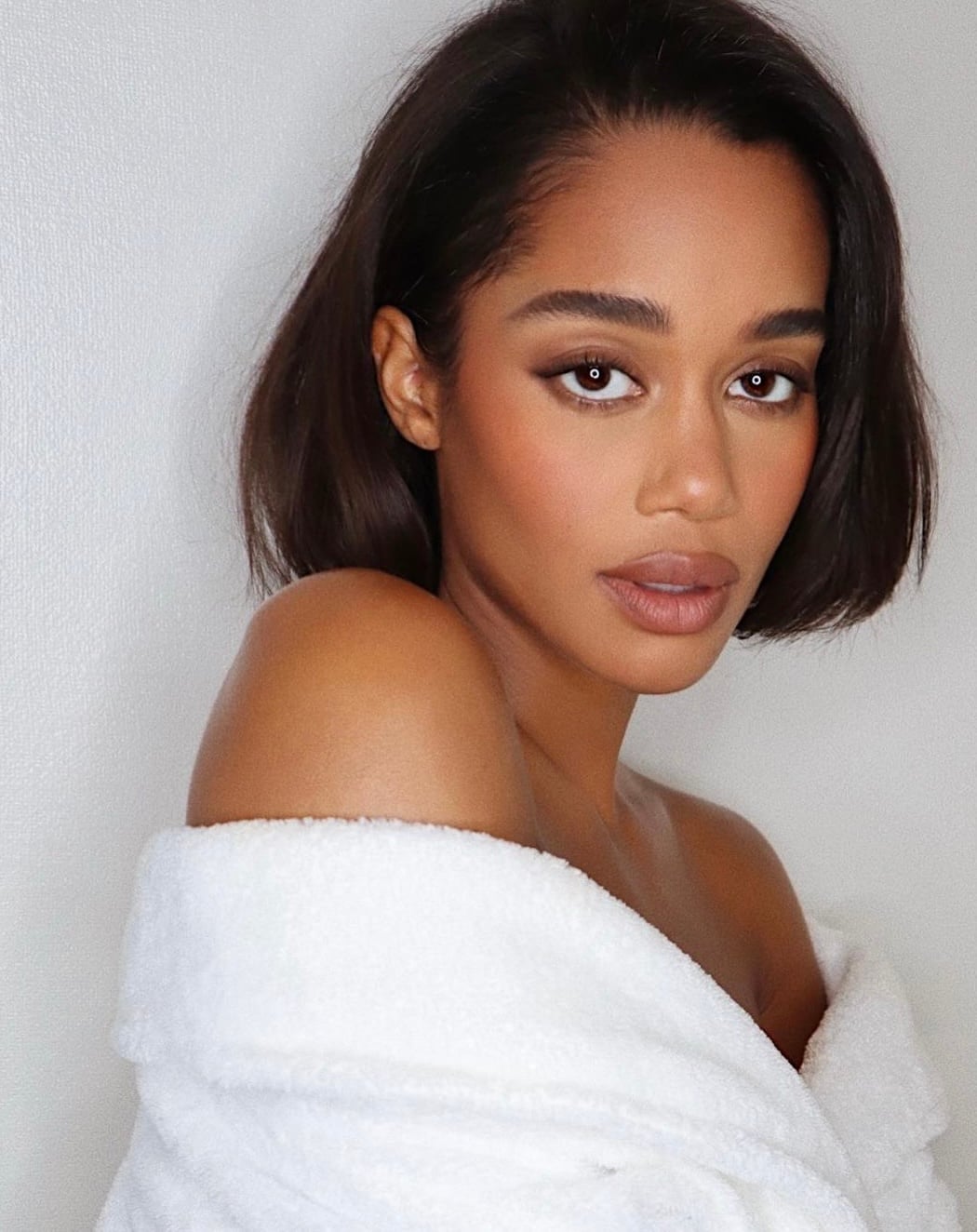
Where the glossy bob leans on shine, this sleek chin bob is all about the smoothness of the blowout. It’s a close cousin, but the front framing and clean lines make it read more tailored, which suits long and oval faces especially well. Ask your stylist for a sleek chin-length bob with a smooth blowout. A smoothing serum before drying keeps flyaways down, and a trim every six weeks preserves the shape. Fine, straight hair holds this style best, so if your texture is coarser, you might find it harder to get that glassy finish.
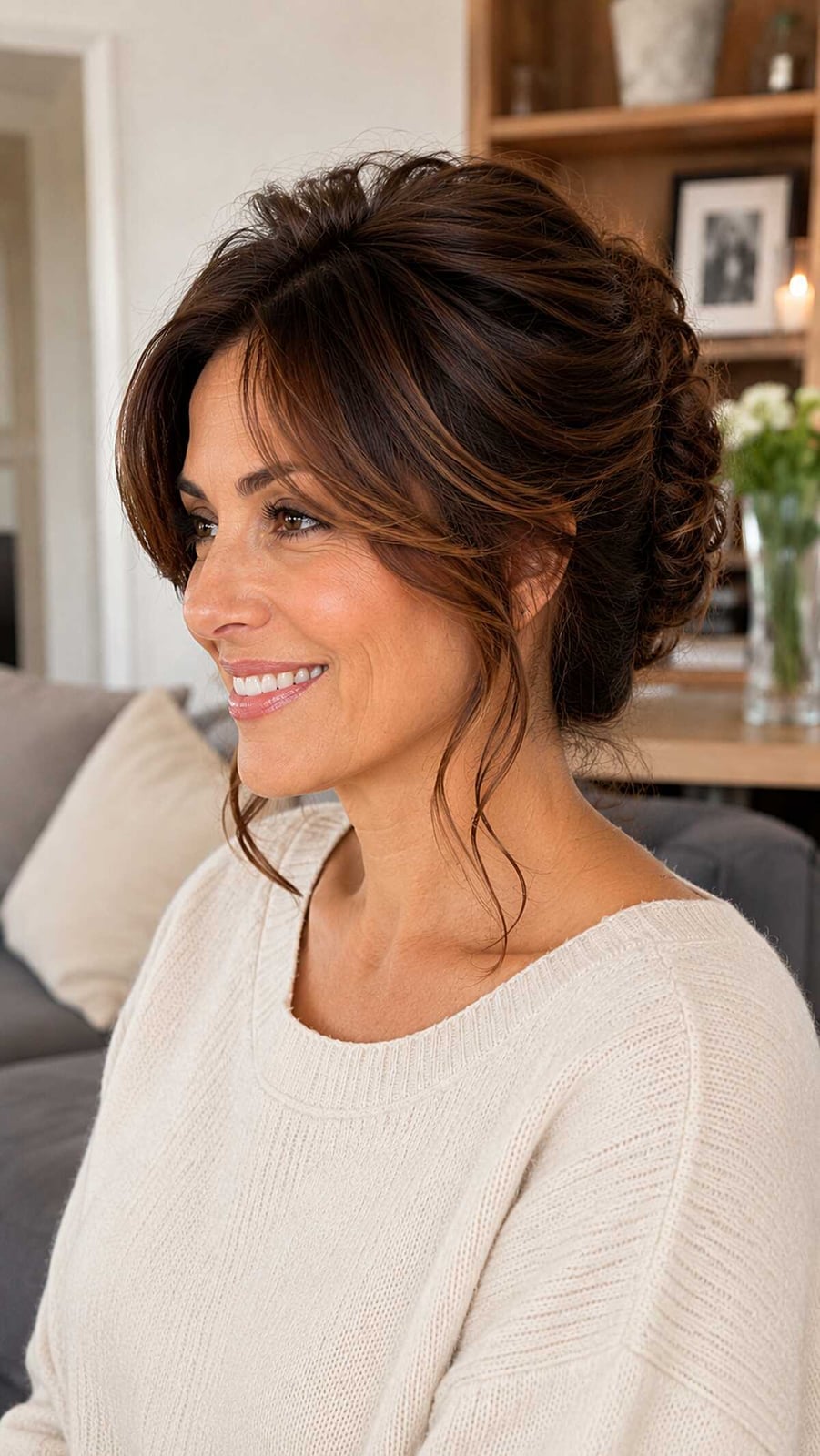
Elegant Collarbone Low Bun With Side Part
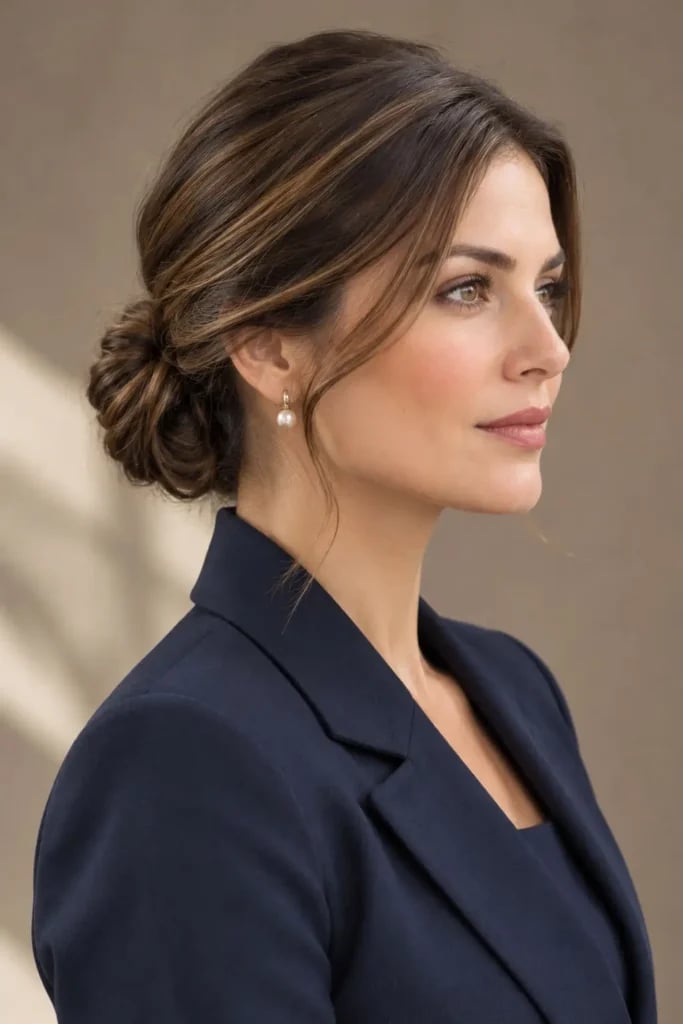
Building a low bun on collarbone-length wavy hair takes a bit of finesse, but the side part does the work of softening the face while the bun sits neatly at the nape. Start by smoothing the hair back with a light gel, then twist and pin the length into a loose coil, letting a few waves escape to frame the jaw. Ask your stylist for collarbone-length layers that support a low bun with a side part. Bobby pins are your best friend here, and a mist of hairspray locks in the polish. The subtle highlights in dark brown add dimension without shouting, and a trim every eight to ten weeks keeps the ends healthy enough to twist cleanly.
Thick Dark Brown Sleek Low Bun
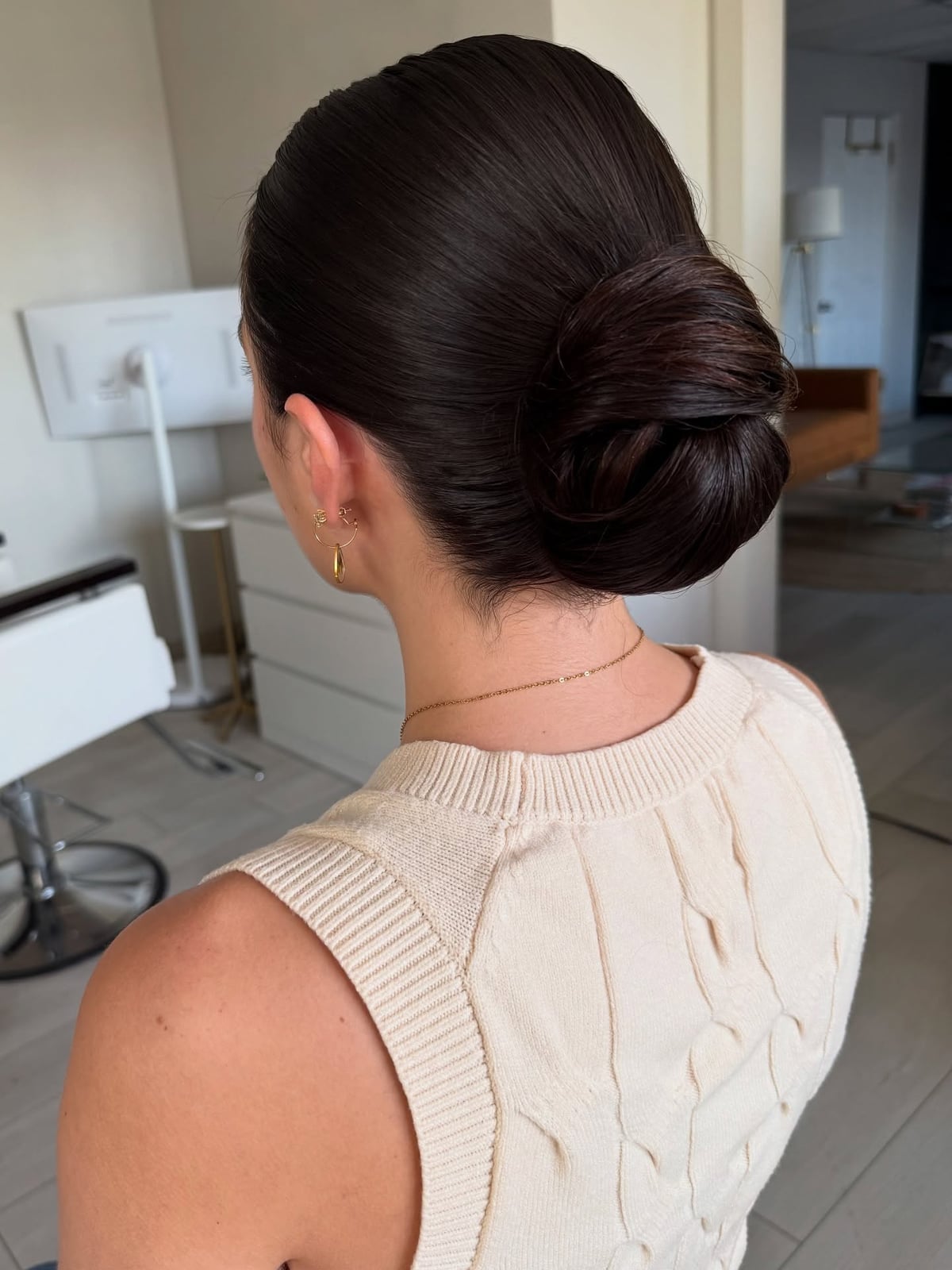
The sleek low bun is a study in control, and thick, straight hair is both its best friend and its toughest critic. Getting every strand to lie flat against the head takes a fine-tooth comb, strong-hold gel, and a patient hand, since thick hair has a habit of rebelling. Ask your stylist for a sleek low bun at the nape. The payoff is a polished shape that holds all day, but the honest trade-off is that it can feel heavy and tight by evening, so it’s not the pick for a long day of meetings. It suits most face shapes, though those with very round faces might prefer a bit of height at the crown.
Collarbone Bob With Glossy Waves
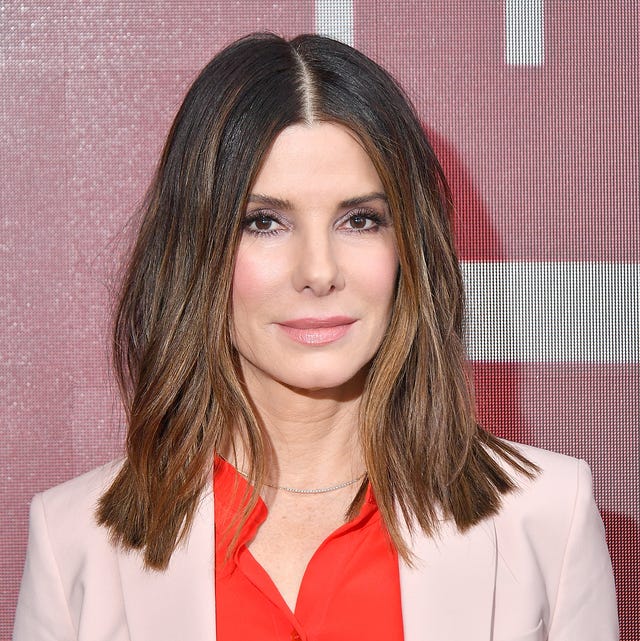
Wondering if a collarbone bob will work with fine, wavy hair? It’s one of the few cuts that adds movement without needing much density, and the middle part helps elongate round faces. Ask your stylist for a collarbone bob with soft, glossy waves. A large barrel curling iron creates the wave, then brushing it out softens the look into something that works for a client presentation or a dinner after work. The dark blonde base with lighter highlights adds depth, and the glossy finish gives it a polished, professional feel. A trim every six to eight weeks keeps the ends from looking straggly.
Mid-Back Loose Waves With Face-Framing Pieces
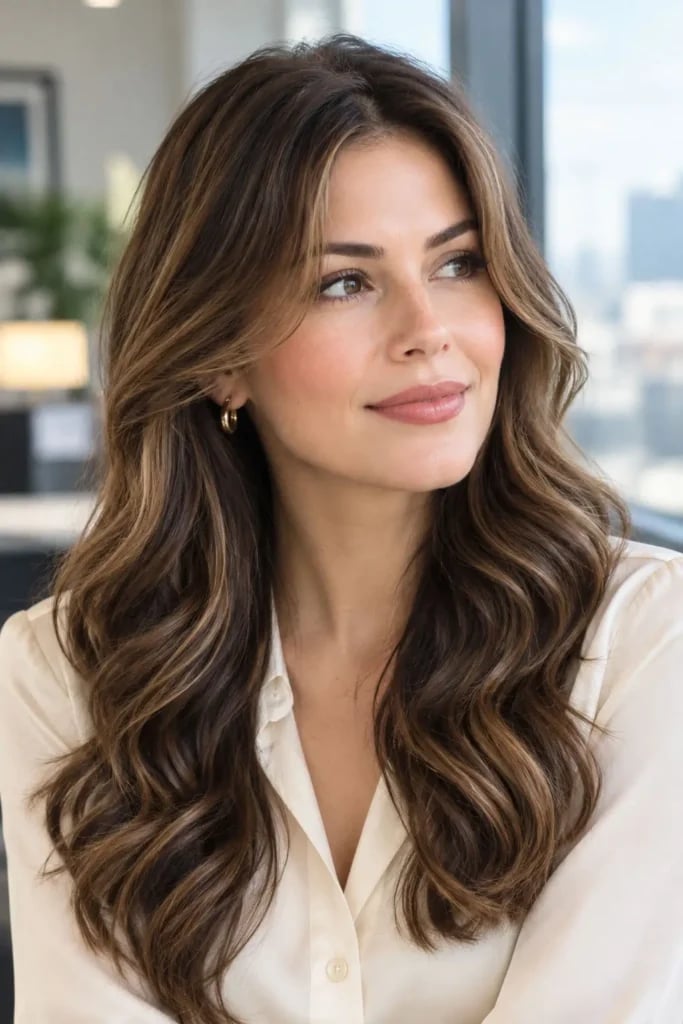
The golden rule for mid-back layers: the longer the hair, the more the face-framing pieces need their own shape to avoid disappearing into the length. Here, thick dark brown hair with balayage highlights hits mid-back, styled in loose waves from a voluminous blowout and a middle parting that lets the front pieces land where they should. Thick wavy textures hold this shape best, and the soft layers around the jaw help soften a square face. Ask your stylist for: mid-back length, loose waves, face-framing pieces. A smoothing cream before blow-drying and a large round brush on the front sections keep the pieces defined and visible within the wave.
The real cost here is the trim rhythm. Those face-framing pieces need a cut every eight weeks or they start grazing the collarbone and lose their intended weight. The balayage highlights grow out soft, so the root line stays tolerable for about three months between toning appointments. That is the trade-off for having a style that looks deliberately shaped and not just long.
Mid-Back Glossy Waves With Subtle Highlights
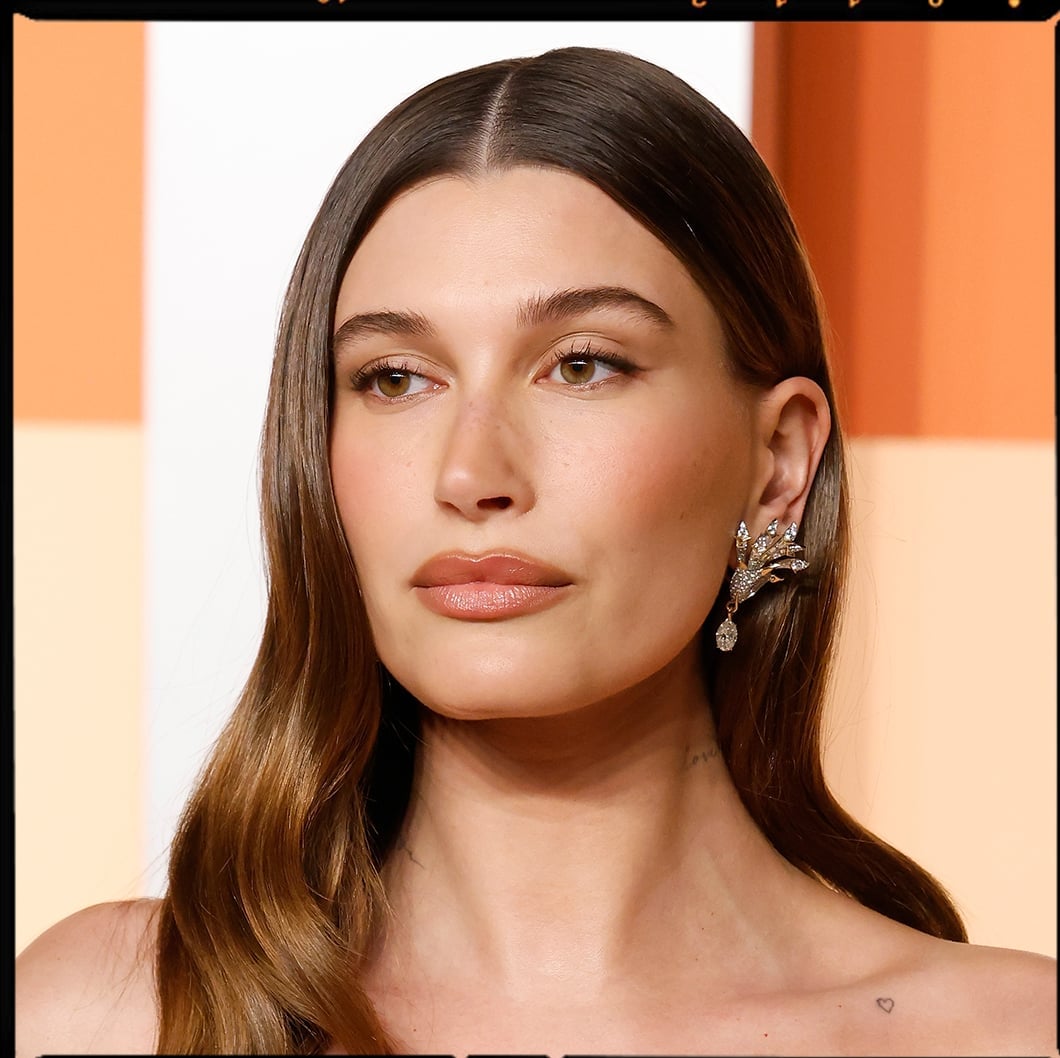
A glossy finish on thick, wavy hair is not about product alone: the blow-dry technique does most of the work. This mid-back length keeps a middle parting and loose waves throughout, with subtle lighter highlights running through the dark brown base to add dimension without obvious contrast. The layers are soft enough that the wave pattern stays uniform from root to end. Thick wavy textures that can handle heat styling without frizzing are the natural home for this finish.
Two things create that shine. First, a heat protectant and a medium round brush, drying each section on medium heat and finishing with a cool shot to seal the cuticle. Second, a lightweight glossing spray on the dry hair, not an oil that weighs down the wave. The middle part works well for elongating a round face, but anyone with a high forehead might prefer it swept slightly off-center. Ask your stylist for: mid-back length, glossy loose waves. A trim every eight to ten weeks keeps the ends from thinning out and losing the reflective surface.
Collarbone Ash Blonde Long Bob With Curtain Bangs
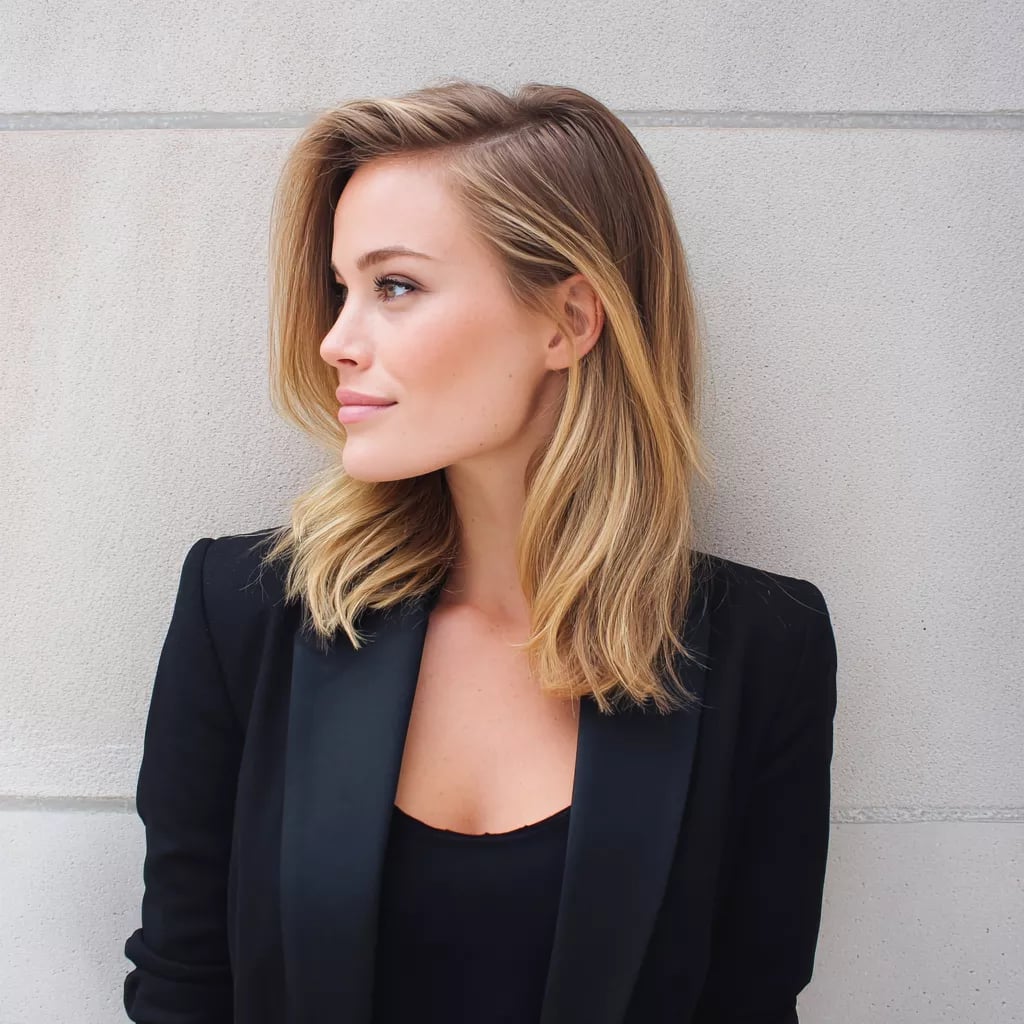
A collarbone long bob in ash blonde with subtle lighter highlights needs the curtain bangs cut with a center point so they naturally fall toward the temples, not the nose. Medium density wavy hair starting at collarbone length is the sweet spot: enough weight to hold the bob shape but enough movement for the bangs to swing. The layers throughout keep the long bob from looking too heavy at the ends. Ask your stylist for: collarbone long bob, curtain bangs.
When you blow-dry the bangs, direct them sideways over a round brush while following the natural curve of the brow bone. Do not try to curl them under: curtain bangs are meant to blend into the sides, not sit across the forehead. A middle parting keeps the whole shape symmetrical, and the soft waves in the length should be set with a large barrel, not a wand, so the wave matches the bangs’ gentle arc. The ash tone needs a purple shampoo once a week to stay cool.
Collarbone Waves With Soft Curtain Bangs
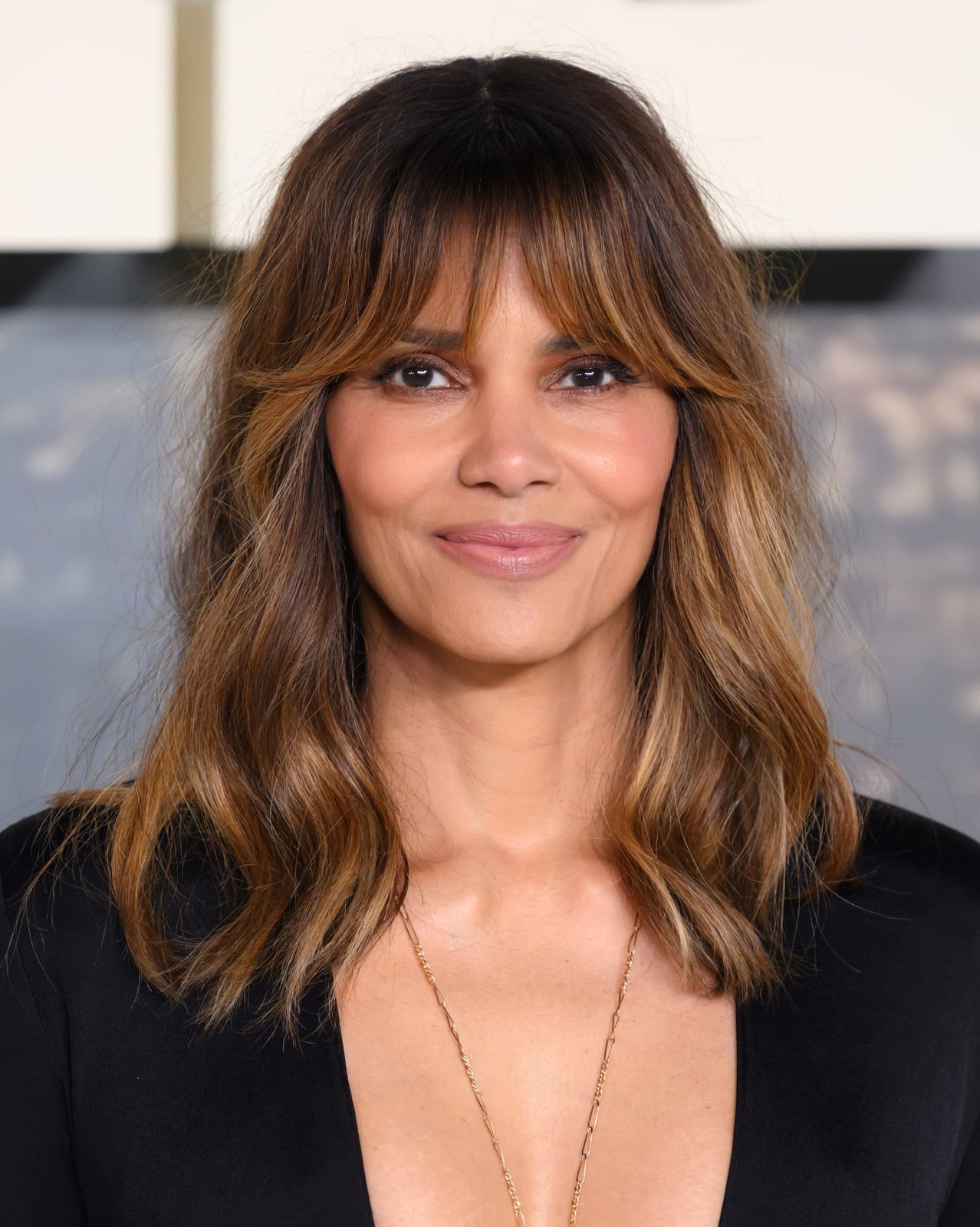
The mistake people make with curtain bangs on collarbone-length hair is cutting them too short, so they either bounce into full fringe territory or refuse to blend into the layers. These bangs land just past the brow bone, with a soft taper that meets the face-framing layers around the cheekbone. Medium density wavy hair with a middle parting and subtle blonde highlights through the brown base keeps the look from reading as flat. Ask your stylist for: collarbone length, soft waves, curtain bangs.
When you style the bangs, dry them first while the rest of the hair is still damp, using a round brush to pull them forward and then out to the sides. If you dry the rest of the hair first, the bangs will set before they have been shaped and will need to be rewet. A texturizing spray on the lengths gives the wave grip without stiffness, and the blonde highlights should be fine and subtle to keep the grow-out soft. A trim every six weeks keeps the bangs at the right length.
Collarbone Shag With Curtain Bangs

A shag at collarbone length is a haircut that announces itself. The layered interior and the curtain bangs create a shape that looks deliberately undone, but the undone part takes work. Medium density wavy hair in dark brown with subtle highlights suits this cut best: the waves give the layers something to grab, and the highlights prevent the dense brown from reading as one solid block. Ask your stylist for: collarbone shag, curtain bangs.
This is not a wash-and-wear cut unless your natural wave pattern is already strong. Most people need a blowout with a diffuser or a texturizing paste worked through the ends to get the separation the shag demands. The result is a shape that works for client meetings and evening events without looking like you tried. The curtain bangs will need a trim every four weeks to keep the face-framing precise, while the other layers can go eight weeks between appointments. A middle parting keeps the shag balanced on both sides.
Collarbone Layers With Ash Blonde Waves
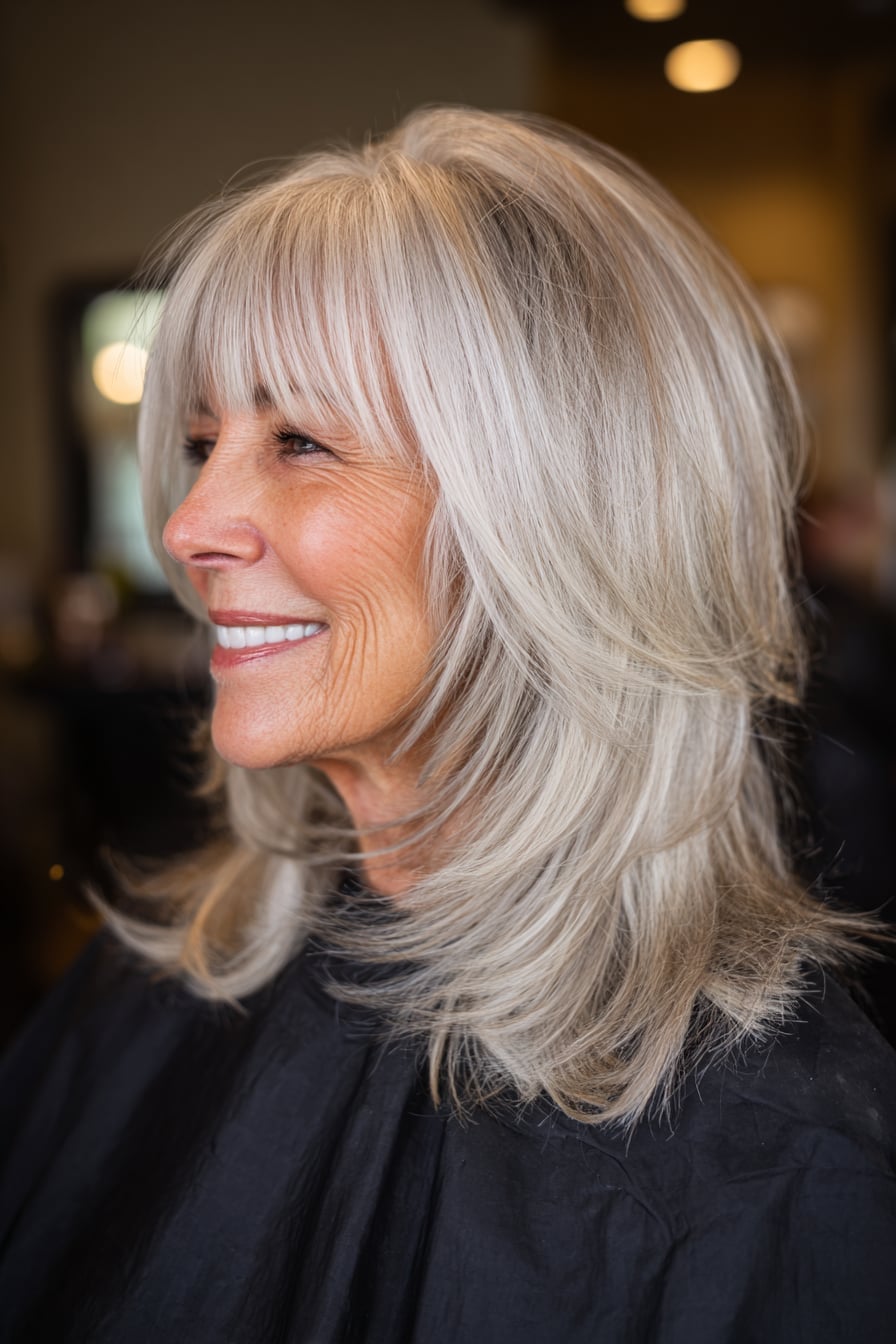
The design hinges on the layering pattern: the shortest layers start around the cheekbones and graduate down to the collarbone, so the ash blonde waves curve inward instead of sitting flat. That face-framing shape works best on thick, wavy hair, where the graduated lengths reduce bulk while keeping the ends weighty enough to hold a wave. Ask your stylist for: collarbone length layers, ash blonde. Curtain bangs are cut to blend into the layers, not as separate pieces.
Styling is a blowout with a round brush, pulling sections forward to set the bend. On thick hair, a volumizing spray at the roots before drying keeps the top from collapsing. The ash blonde with highlights needs a toning appointment every six to eight weeks to hold off brassiness, and the layers themselves ask for a trim every eight to ten weeks.
Collarbone Soft Waves With Side-Swept Bangs
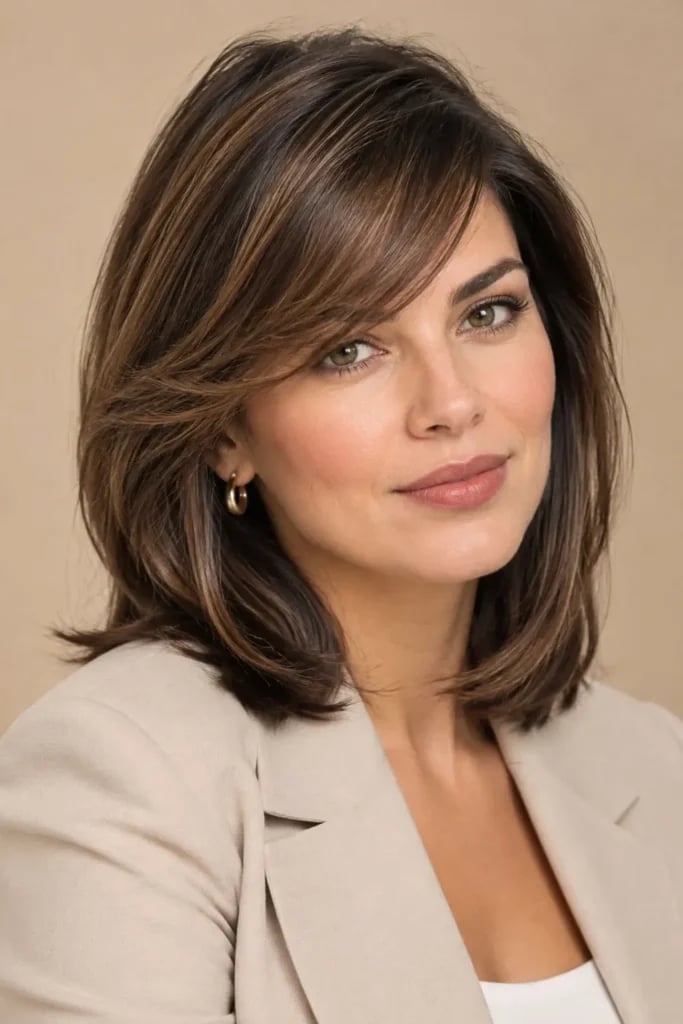
Does your hair sit heavy around the jaw and refuse to move? This cut answers that. The collarbone length with soft waves suits thick, wavy hair that needs directional shape, and the side-swept bangs do the real work of softening an angular face. Ask your stylist for: collarbone length, soft waves, side-swept bangs. The side parting and layered cut give the blowout somewhere to go, with the waves brushed forward to frame the face. A flat iron creates those soft bends in about ten minutes, and the style holds until you sleep on it wrong. The bangs need a trim every four weeks, the rest every six to eight.
Collarbone Balayage Waves With Side-Swept Bangs and Loose Curls
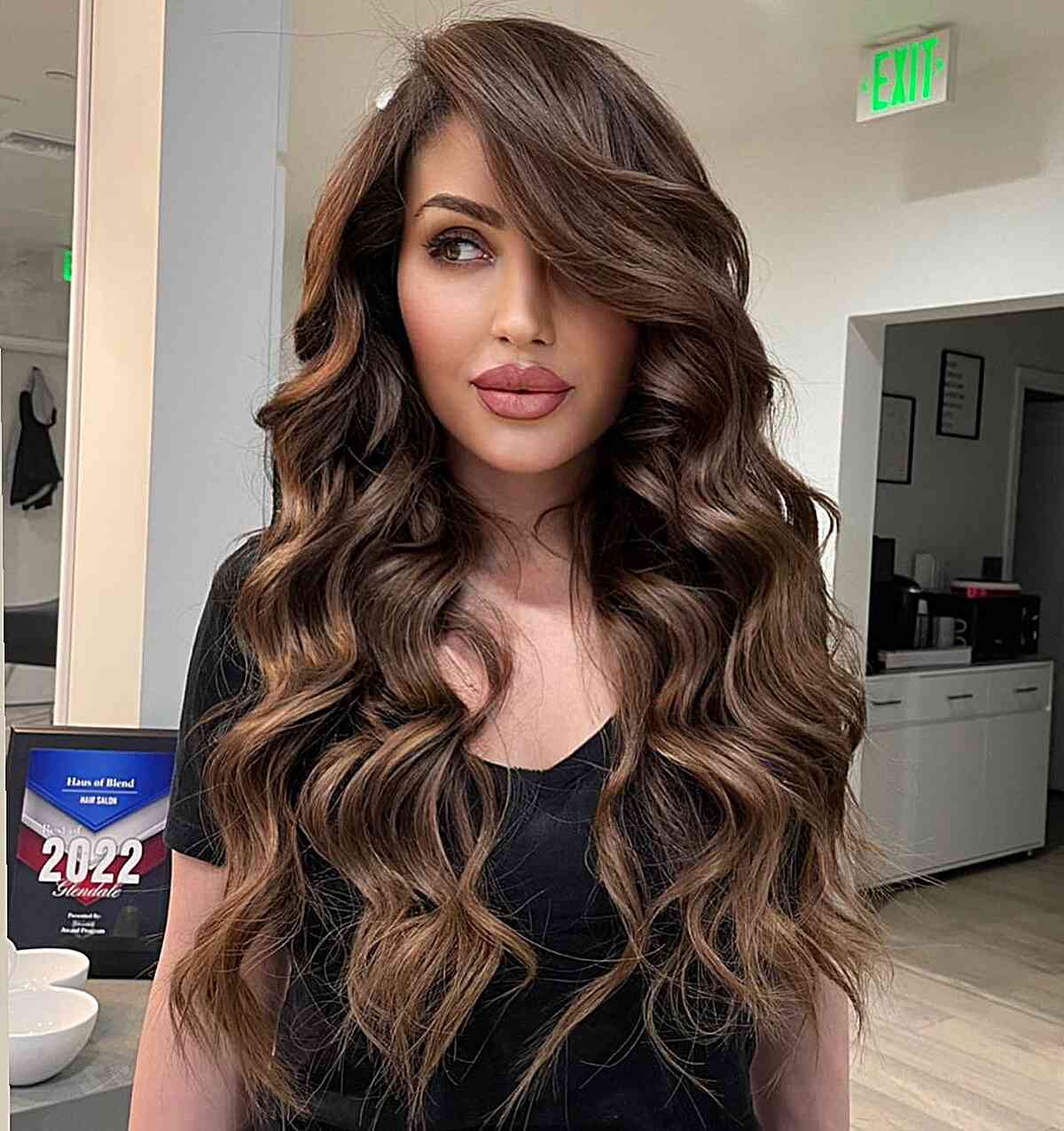
It suits thick, wavy hair that can hold a curl without going crunchy, and the side-swept bangs do the softening work on round or square faces. Ask your stylist for: collarbone length, loose waves, side-swept bangs. The blowout uses a round brush for the base, then a large barrel for the ends. The dark brown base with balayage grows out without a harsh line, so toning is optional, but a trim every six to eight weeks keeps the wave pattern clean.
Collarbone Medium Brown Glossy Waves
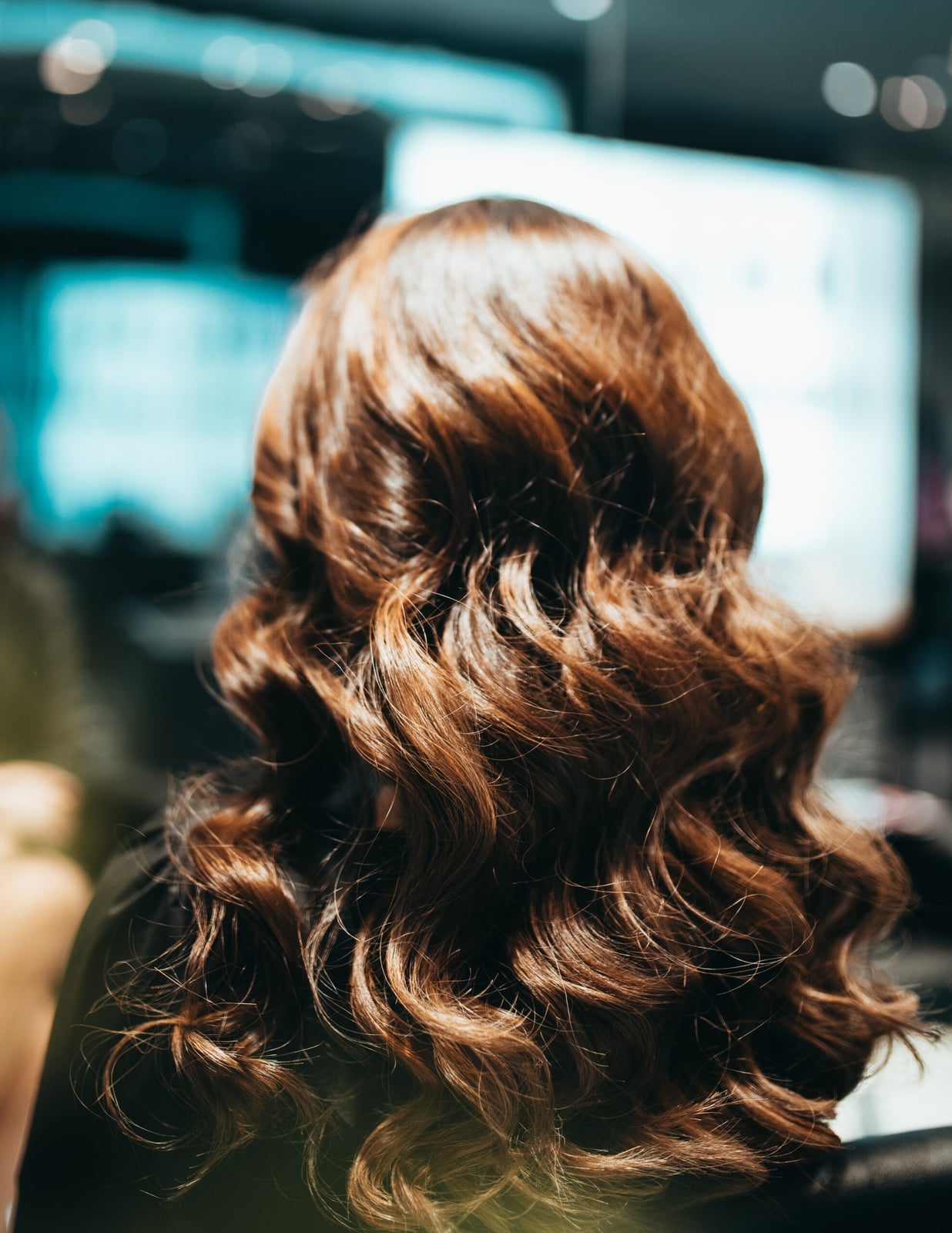
The glossy finish is the point here, and it takes more than a shine spray to get it. On thick, wavy collarbone-length hair, the classic blowout creates the effect: a round brush stretches each section smooth, then a large barrel curling iron sets the wave that the brush started. The medium brown with subtle auburn tones picks up light without needing highlights. Ask your stylist for: collarbone length, medium brown, glossy waves.
Upkeep is where this style earns its keep or costs you. The waves hold for a full workday if you finish with a light-hold spray, but the gloss fades fast on humid days, so apply a smoothing serum to damp hair before drying as a required step. A trim every eight to ten weeks keeps the ends from splitting, and the auburn undertones need a gloss treatment every four to six weeks to stay rich.
Collarbone Blonde Waves With Face-Framing Layers
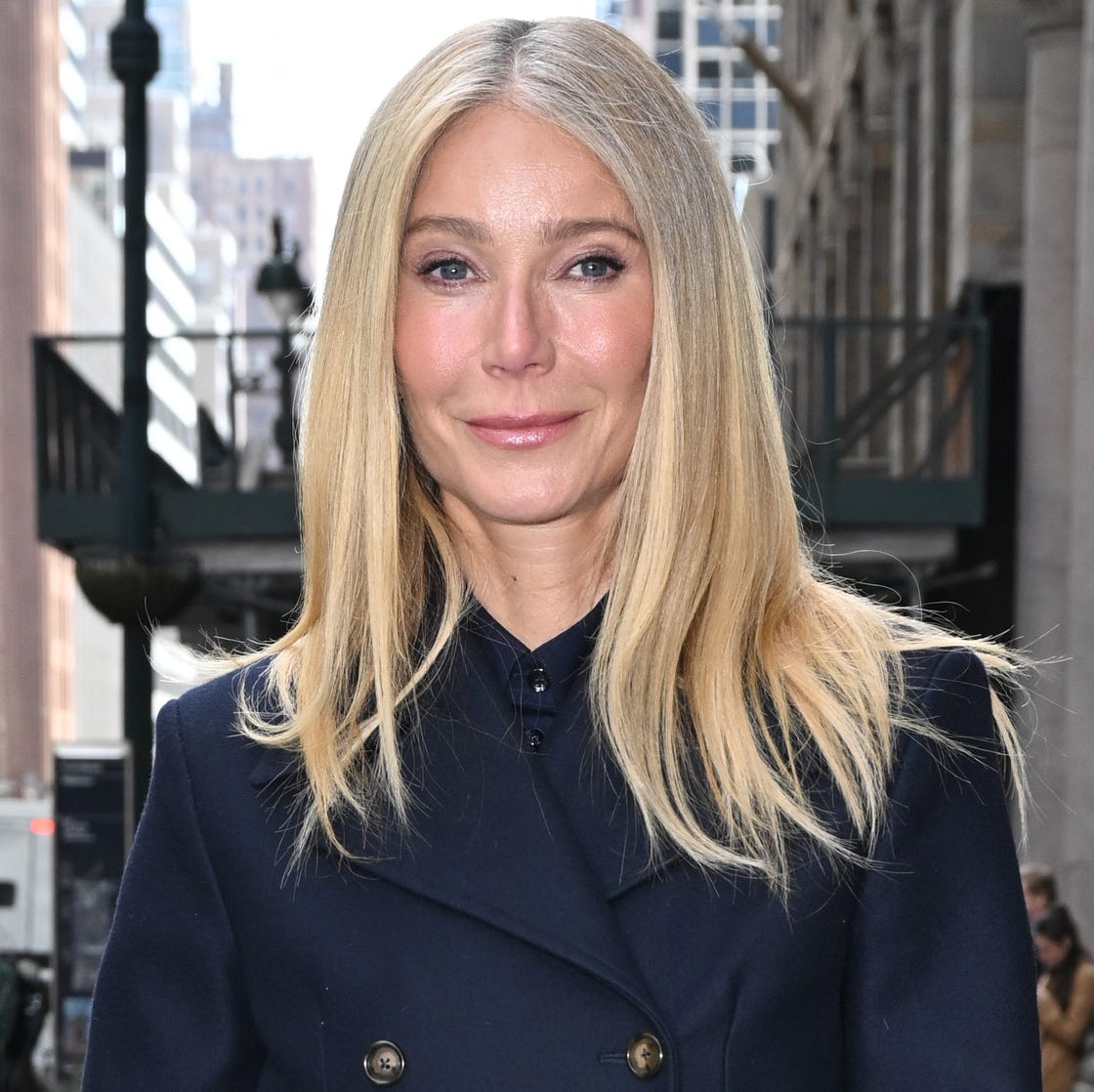
The design is a trap for fine hair: face-framing layers add softness around the jaw, but on fine, wavy texture they can fall flat and read as sparse by midday. It works when the collarbone length gives the layers enough weight to move, and the middle part keeps the framing even. Ask your stylist for: collarbone length blonde waves, face-framing layers. The blowout with a round brush builds the wave at the root, and a texturizing spray on dry hair gives the fine strands grip. The blonde with highlights needs a toner every six weeks to stay bright, and the layers need a trim every eight to ten weeks or they start to look stringy. The downside is the upkeep: this style asks for styling daily, and it does not forgive skipping the texturizer.
Chin Angled Bob With Wispy Bangs
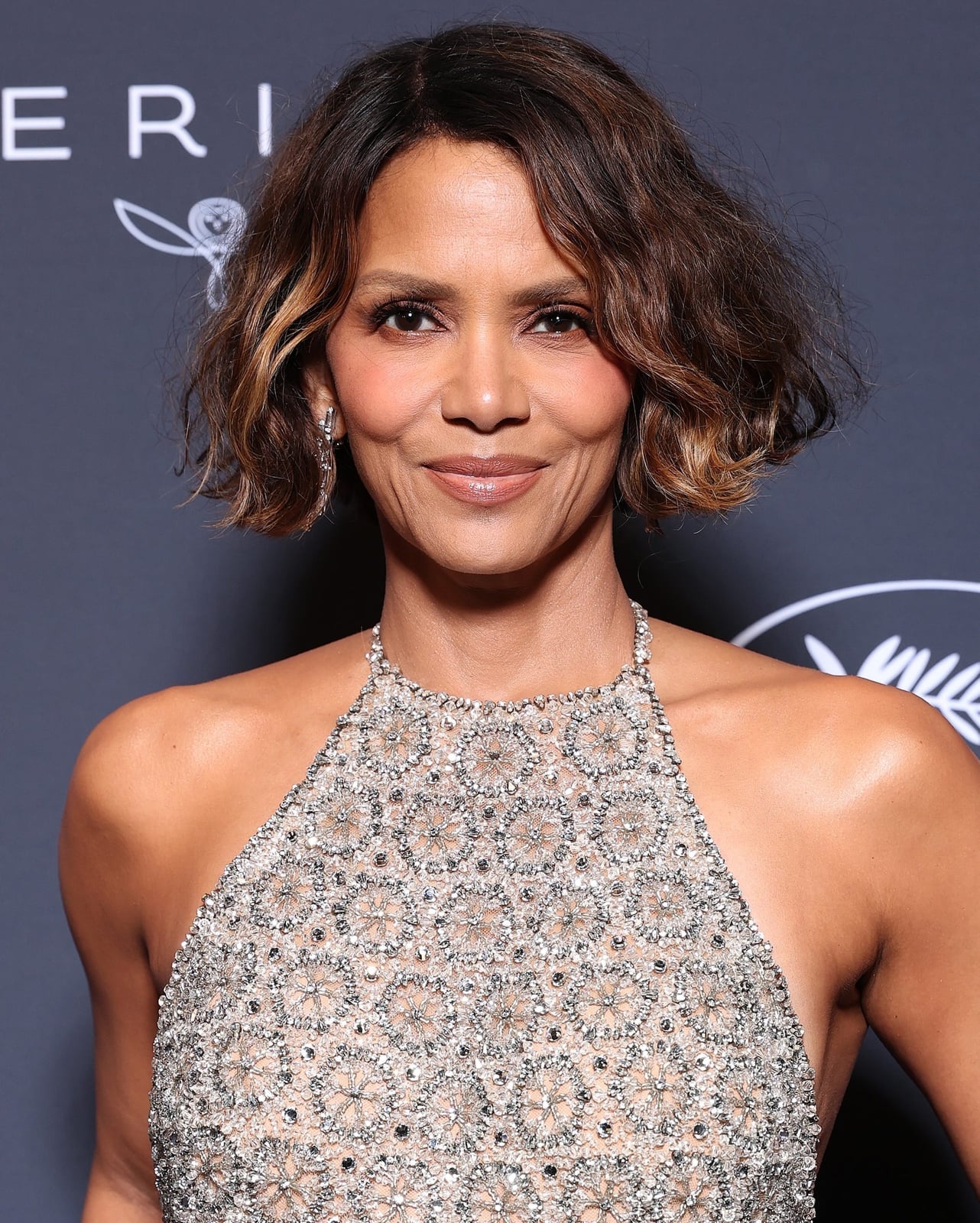
The angle on this bob is steeper at the back than the front, so the line drops cleanly toward the chin without losing density. Medium density wavy hair holds the textured shape best; short wispy bangs work well on oval and heart faces. Ask your stylist for: chin-length angled bob, short wispy bangs. A texturizing spray on the ends defines the waves without weighing them down, and the bob needs a trim every six to eight weeks while the bangs need one every four weeks.
Chin Bob With Sculpted Waves and Victory Rolls
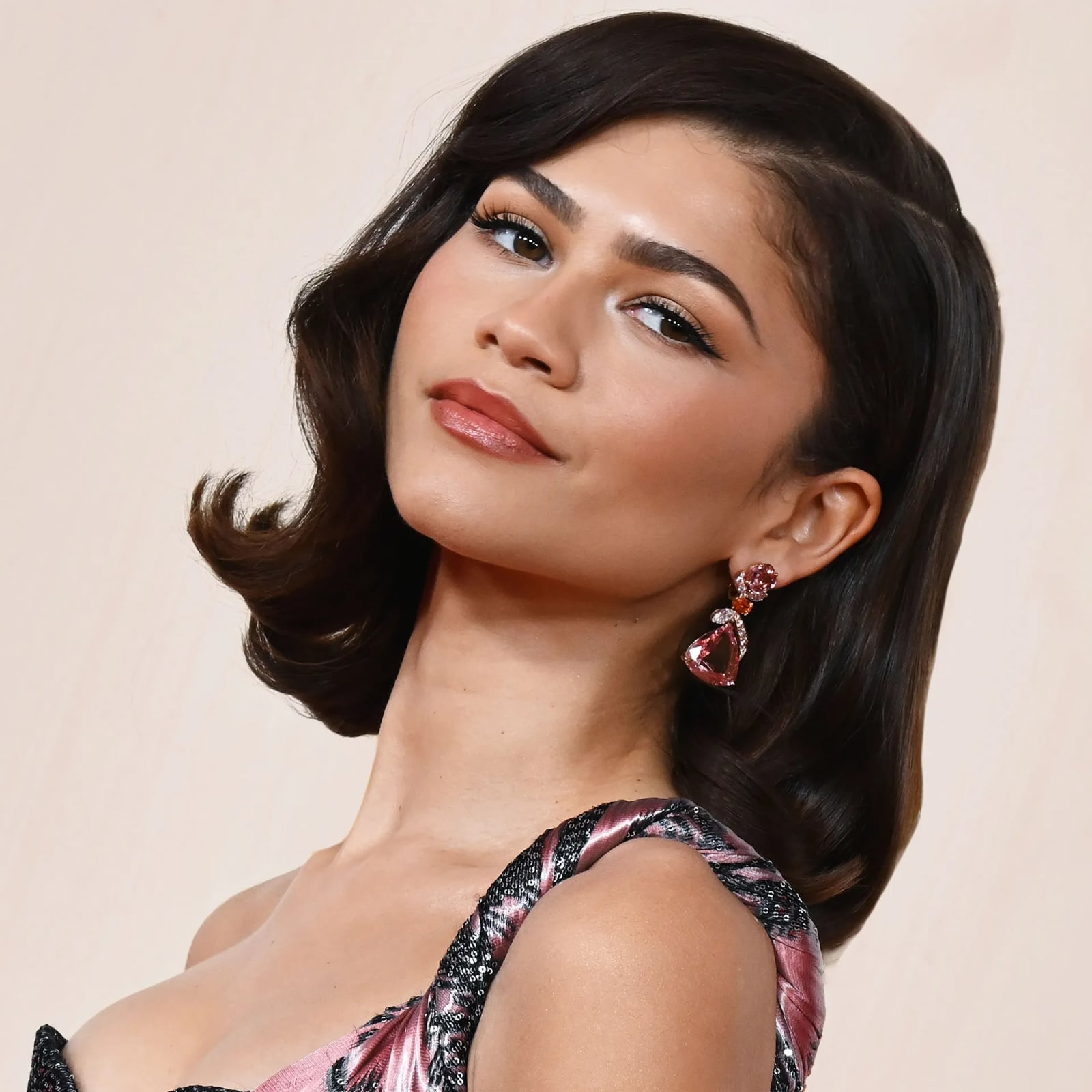
Is this a weekend project or a salon booking? The victory rolls require sectioning, pinning and a strong-hold setting spray, so expect about forty minutes of styling time if you know the technique. Thick wavy hair holds the sculpted waves longer than fine textures. Ask your stylist for: chin-length bob, victory rolls, sculpted waves. The deep side parting and dark brown base keep the look grounded, and the bob needs a trim every six to eight weeks to keep the roll placement accurate.
Chin Gray Bob With Voluminous Curls
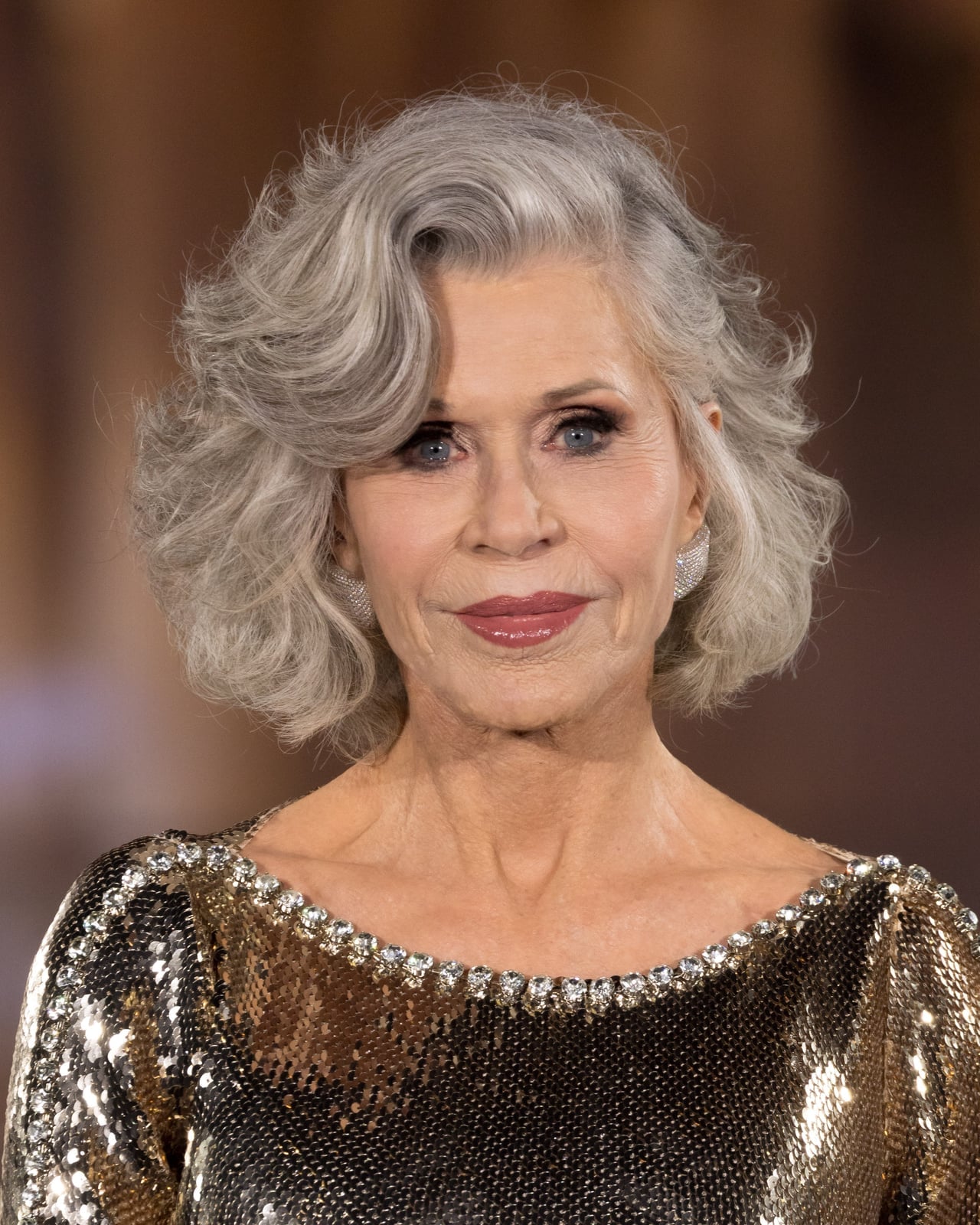
Fine wavy hair gets its volume from density, not strand thickness, so the soft curl pattern here needs a boost from a volumizing mousse and a diffuser aimed at the roots. The chin length and side-swept bangs balance a longer face by adding width at the cheekbone line. Ask your stylist for: chin-length gray bob, voluminous curls. Gray hair can feel drier between washes, so a leave-in conditioner or lightweight oil keeps the curls defined without frizz. A trim every six to eight weeks preserves the bob’s shape.
Short Layered Dark Brown With Crown Volume
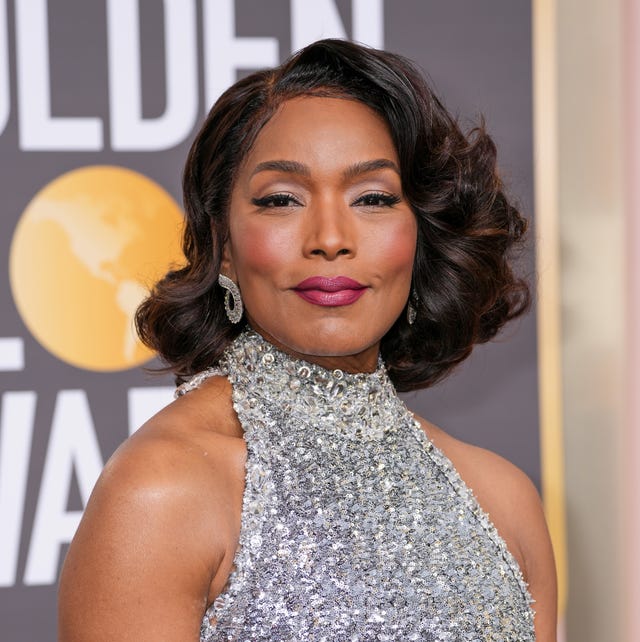
The crown volume here comes from stacking the layers shorter at the crown and leaving the perimeter longer, so the lift is built into the cut rather than the blowout. Medium density wavy hair of ear length or longer works well; the side parting and height at the crown suit round faces by adding vertical line. Ask your stylist for: short layered cut, volume at the crown. The blowout needs a large round brush and a heat protectant, but the volume can soften by midday. A trim every six to eight weeks keeps the layer graduation crisp.
Long Ash Blonde Ponytail With Twisted Detail
Mid-back length lets you pull off a low ponytail with a twist at the base without the hair feeling heavy or pulling at the temples. A low ponytail sits below the occipital bone, which keeps the line clean on long faces, while curtain bangs add softness across the forehead. Ask your stylist for: long hair, low ponytail with twist, wispy bangs. Thick wavy texture holds the twist detail without extra pins, and a texturizing spray on the ponytail prevents slipping. A trim every eight to ten weeks keeps the ends even.
Mid-Back Ash Blonde High Ponytail With Wispy Bangs
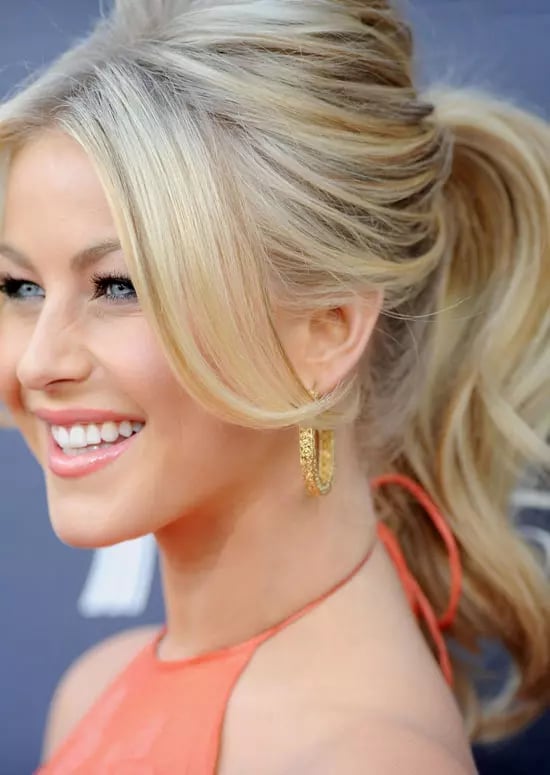
A high ponytail on fine wavy hair is a balancing act between lift and slip. The side part adds root volume where it counts, while the wispy side-swept bangs prevent the style from reading as severe. Ash blonde with subtle highlights keeps the shade work-appropriate and gives the fine texture some visual depth.
This look works for anyone with a rounder face who wants elongation from the high placement. Ask your stylist for: mid-back length, high ponytail, wispy bangs. A texturizing spray at the roots before pulling the hair up gives the ponytail grip and body. Trim every eight to ten weeks to keep the wispy bangs from growing into heavy curtain territory.
Mid-Back Dark Brown High Ponytail With Wrapped Base
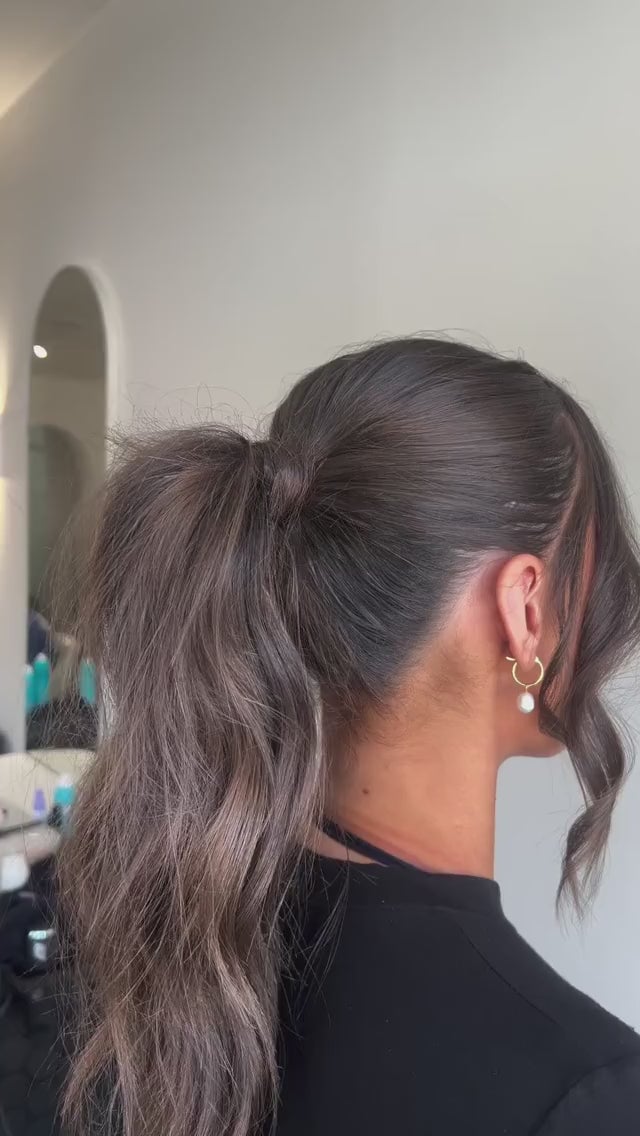
Wrapping a section of hair around the ponytail base transforms a five-second pull-back into a polished finish that holds all day. This version starts with thick wavy mid-back hair in a deep dark brown with subtle lighter highlights, so the base wrap blends seamlessly. The face-framing pieces soften the overall line and spare you that pulled-tight look. A medium-hold hairspray on the wrapped section keeps flyaways at bay and the ponytail stays put without a touch-up. Plan for a trim every eight to ten weeks to maintain the shape through the layers.
Mid-Back Ash Blonde Half Updo With Curls
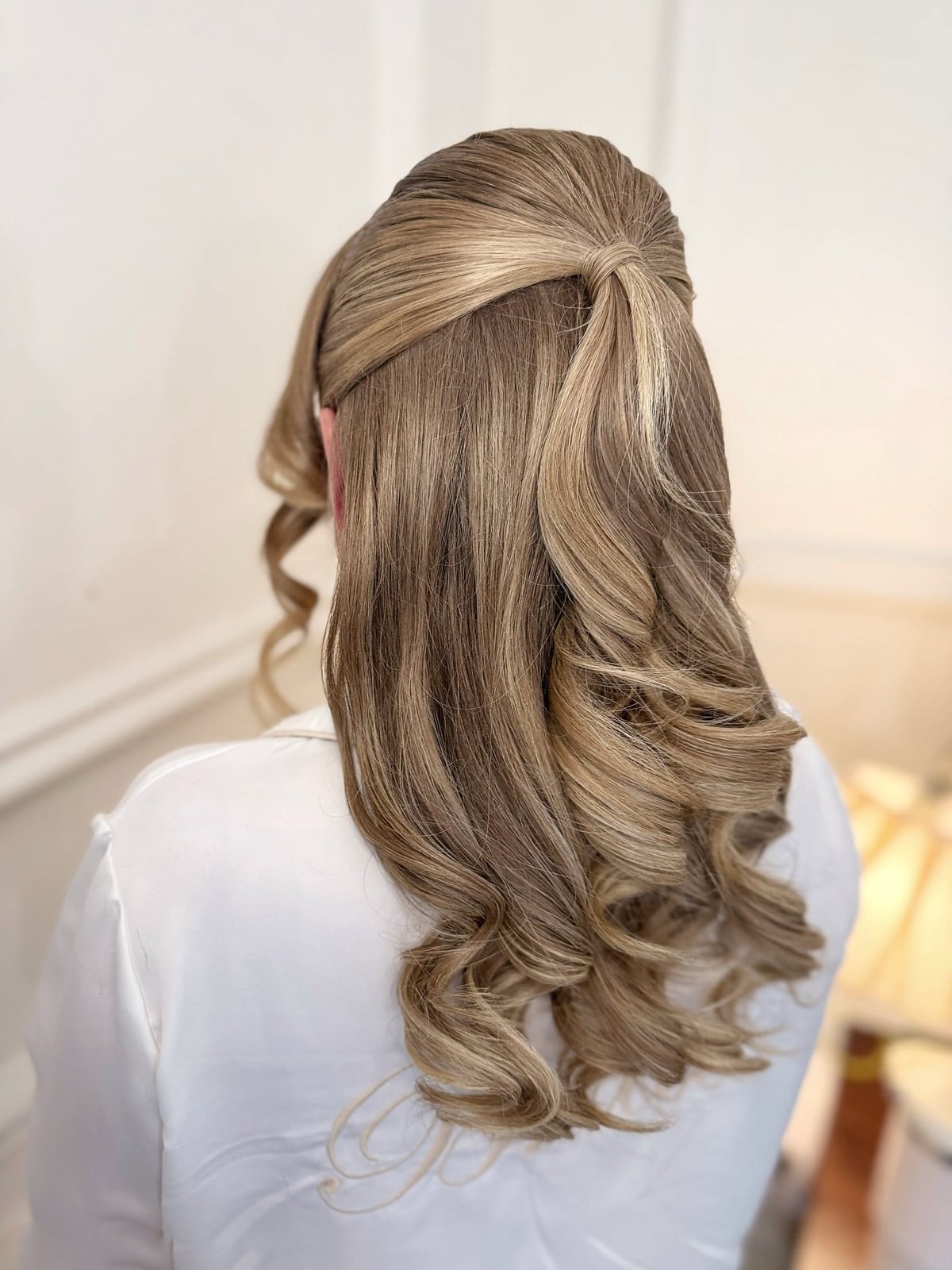
Does a half updo actually stay in thick wavy hair past lunch? Yes, if the top section is secured properly and the lower curls have enough definition to hold their own shape. This ash blonde version with highlights uses the hair’s natural thickness to create volume in both sections: the pulled-back top stays smooth, while the mid-back lengths fall in defined waves. The middle part keeps it symmetrical and professional. Ideal for a day at the office followed by a dinner reservation, since the style keeps the hair off the neck without the commitment of a full updo. A texture spray on the lower section before curling helps the waves last.
Mid-Back Dark Brown Half Updo With Clip
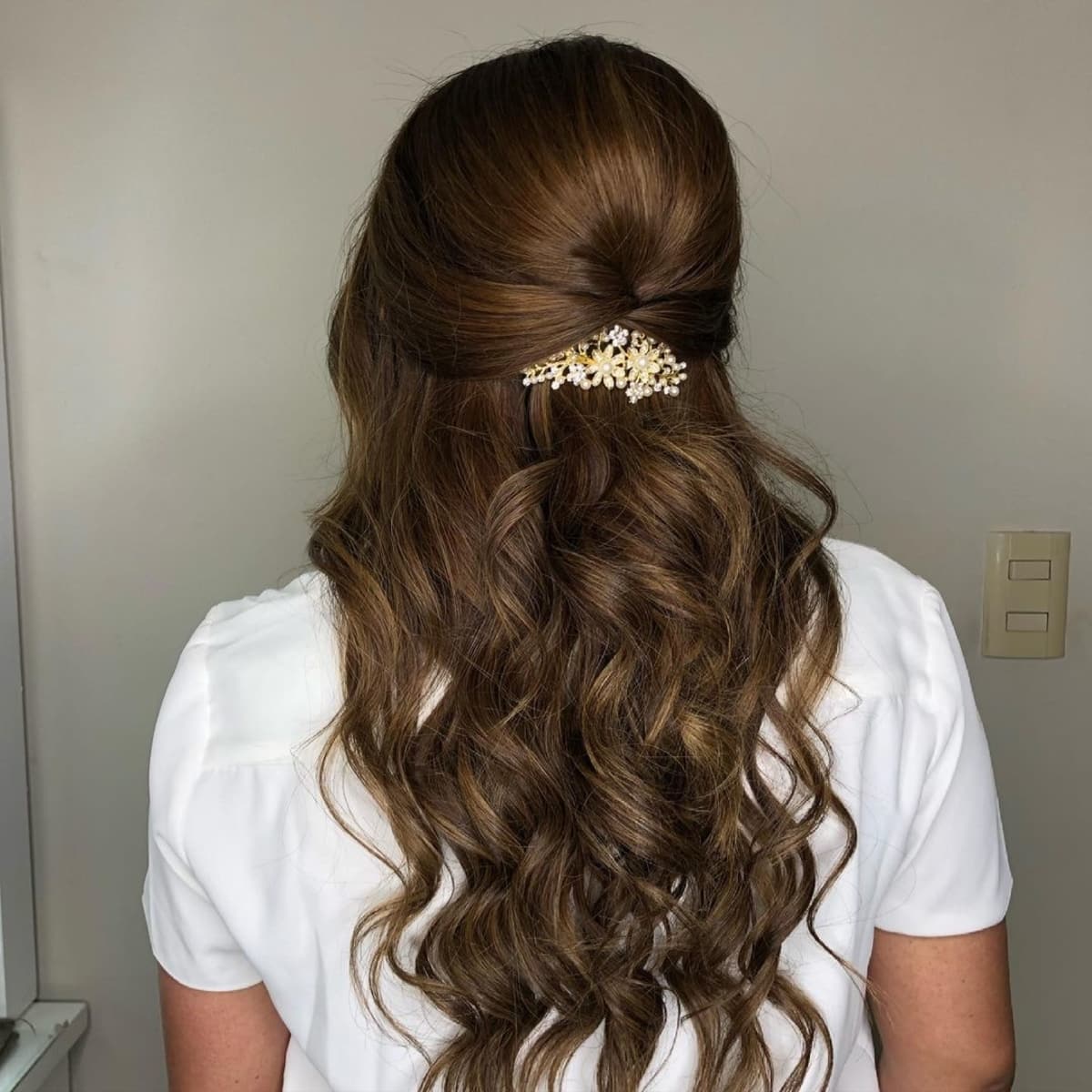
A decorative clip holds this half updo in place, so the clip itself needs to be substantial enough to manage thick wavy hair. The dark brown base with subtle highlights makes the clip visible against the hair. The middle part and loose waves in the bottom half keep the style relaxed. Ask your stylist for: mid-back length, half updo with clip. The clip should be placed after the top section is pulled back and secured with a hidden elastic first, not as the sole fastener. Trim every eight to ten weeks to keep the layers from losing their shape.
Mid-Back Curtain Bangs With Soft Volume
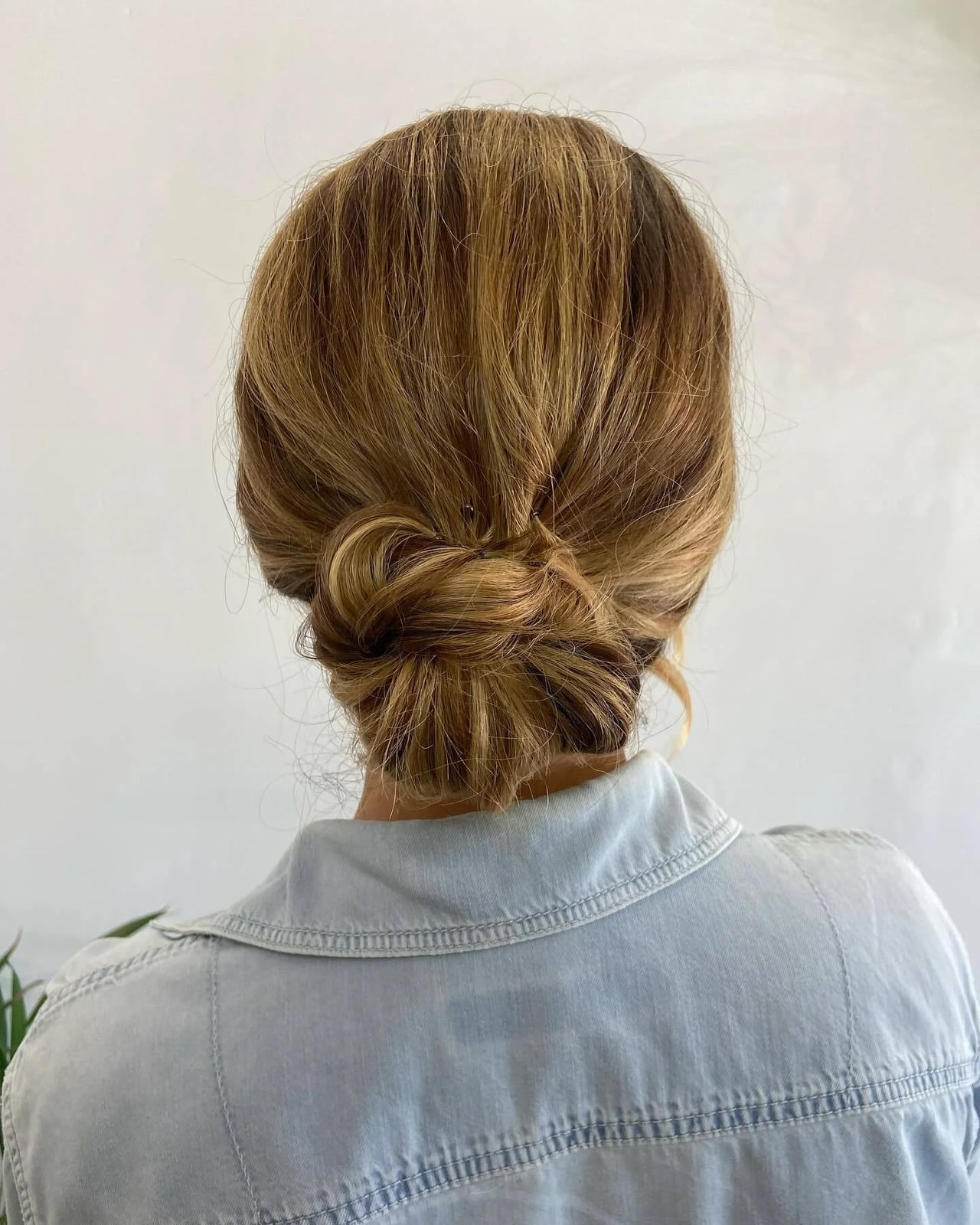
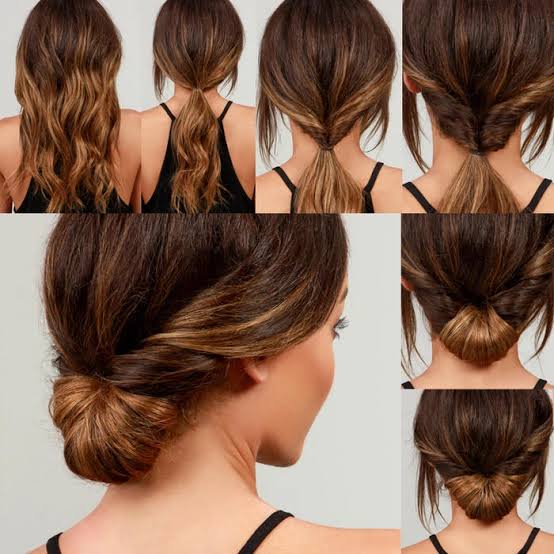
The low bun is the workhorse of professional hairstyles, but it can flatten fine hair into submission if you are not careful. This honey blonde version with darker roots keeps the bun soft and slightly tousled, so the thick wavy texture still reads through. The darker root line also means you can stretch the time between color appointments. The honest drawback: a low bun hides most of the length and texture, so if you want your waves or highlights to be the main event, this is not the pick. Dry shampoo at the crown before pulling the hair back gives the bun enough volume to look deliberate rather than deflated.
Mid-Back Dark Brown Waves With Curtain Bangs
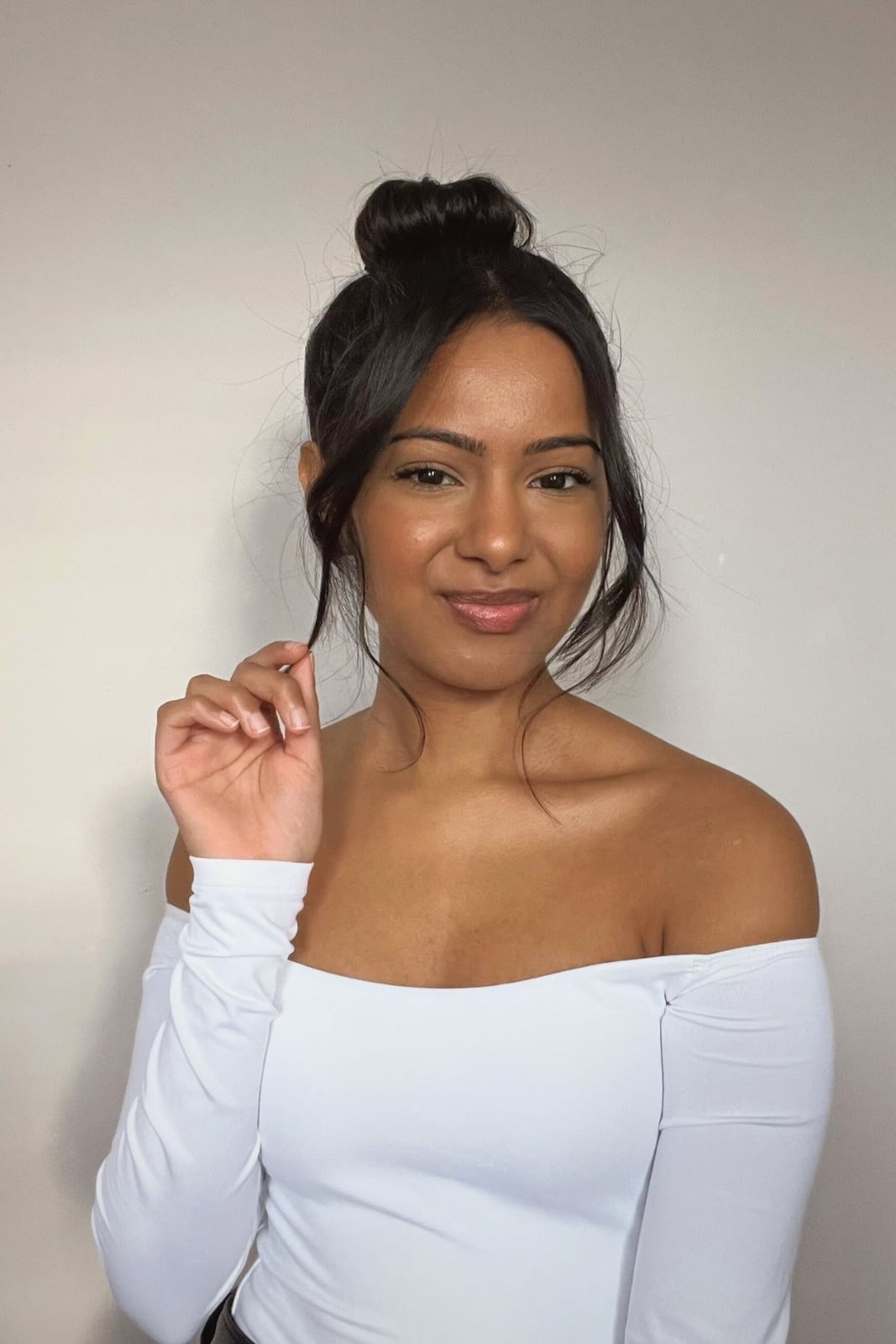
The curtain bang is doing double duty here: it softens the transition from a middle part into the density of thick, wavy hair. Mid-back length with subtle lighter highlights scattered through the dark brown base, the color stays low-maintenance because the contrast is gentle. The waves are built with a round brush and a medium heat setting, aiming for a bend rather than a curl.
This style suits thick wavy hair that already has some natural movement. Ask your stylist for: mid-back length, loose waves, curtain bangs. The layers in the bangs need a trim every eight weeks to keep them skimming the cheekbones rather than drifting toward the chin. A smoothing serum before the blowout cuts down on flyaways without flattening the wave pattern.
Mid-Back Honey Blonde Balayage Loose Waves
A balayage on thick wavy hair has a predictable lifespan: about four months before the lighter pieces have grown far enough that the dimension shifts. The honey blonde here is painted onto mid-back length hair with long layers, so the color lands mostly on the ends. The loose waves are wide and glossy, created with a large-barrel iron and a cool shot to set the shape.
Ask your colorist for: mid-back length, honey blonde balayage, loose waves. A toning appointment every six to eight weeks keeps the honey from pulling too warm or brassy. The face-framing pieces are cut to graze the collarbone, so they blend into the wave pattern. A texturizing spray at the roots adds lift without disturbing the overall polish.
Long Blonde Balayage Loose Waves
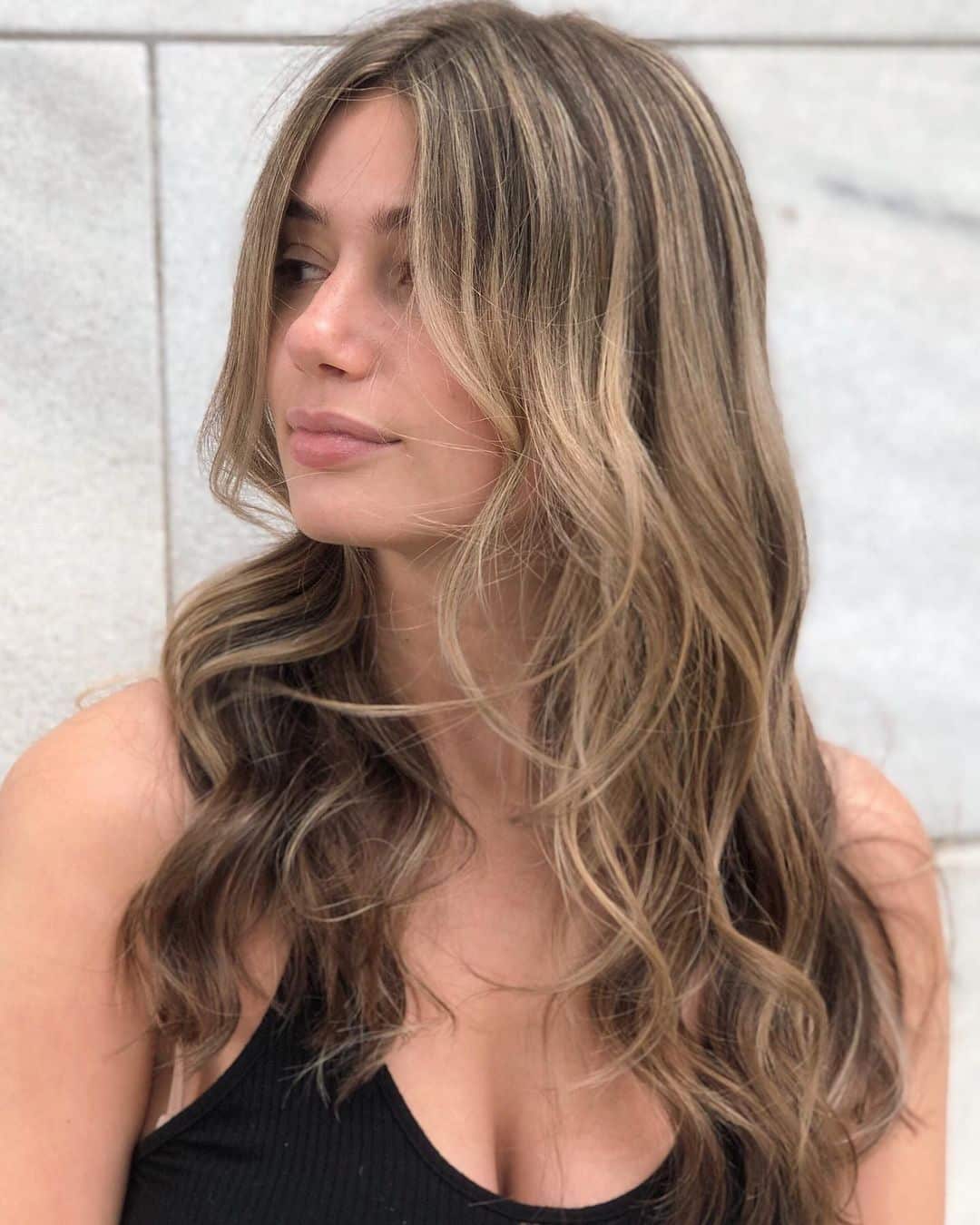
Who actually wears long loose waves to a desk job? Anyone whose office has a dress code that says polished rather than severe. The blonde balayage here starts a few inches from the root, so the grow-out is gentle and the tone stays bright without frequent salon visits. Medium density wavy hair at this length benefits from soft face-framing layers that stop above the shoulder. Ask your colorist for: long blonde hair, loose waves, face-framing layers. The middle part keeps the weight distributed evenly. This is a conference-presentation or client-dinner style: structured enough to look deliberate, soft enough to not read as formal.
Long Dark Brown Curls With Side-Swept Bangs

The mistake people make with long, thick curls is brushing them out after they are dry. That breaks up the curl pattern and turns volume into frizz. Here the dark brown base has warm highlights placed through the mid-lengths, so each curl shows dimension instead of one solid block of color. The side-swept bangs are cut to graze the brow bone and blend into the longer layers.
Ask your stylist for: long dark brown hair, voluminous curls, side-swept bangs. The part is on the side, which lets the bangs sweep across without needing constant re-adjustment. A curl-defining cream applied to damp hair, followed by a diffuser on low speed, keeps the bounce intact. The layers are cut to stack gently, so the curls sit in a cohesive shape without fanning out at the ends.
Mid-Back Ash Blonde Intricate Braid
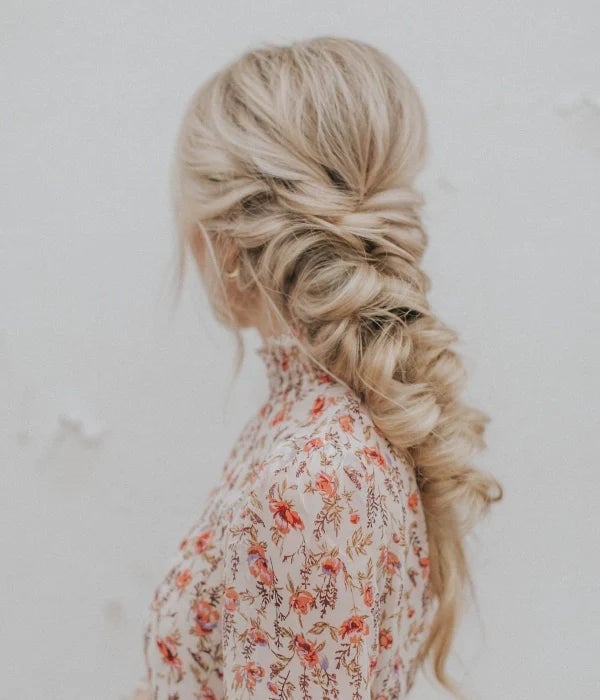
An intricate braid is a test of tension: too tight and it pulls at the scalp, too loose and the sections unravel by lunch. This one is built on mid-back length ash blonde hair with subtle highlights that create visible definition between the twisted sections. The middle part keeps the front clean, with a few loose strands left out to frame the face and soften the overall silhouette. Ask your stylist for: mid-back length, intricate braid. The thickness of the hair is what gives the braid body, so thin hair would need a texturizing spray for grip. This works for an office event or a formal meeting where a ponytail feels too casual and a bun feels too severe.
Mid-Back Honey Blonde Low Bun With Darker Roots
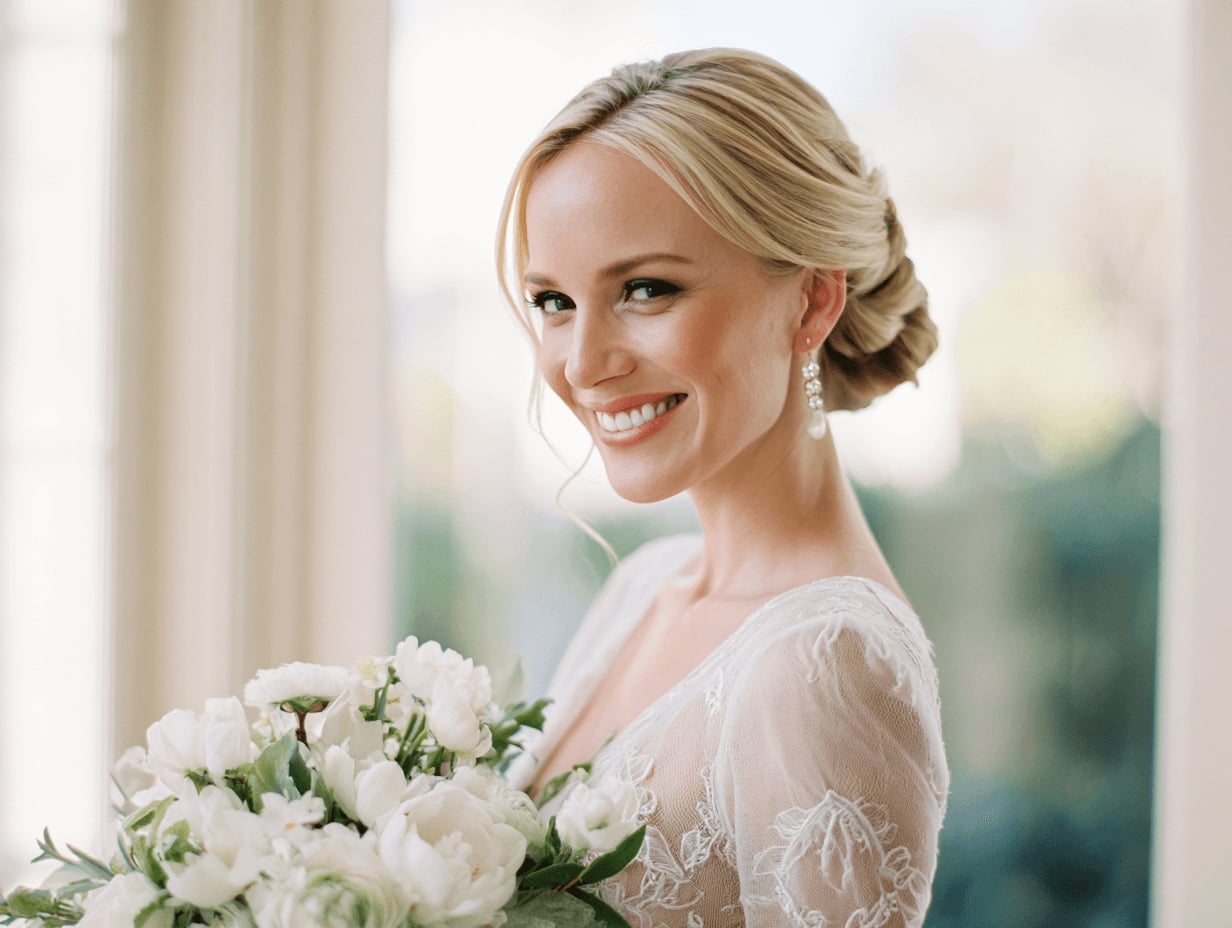
Can you pull off a sleek low bun at home when your hair is fine and straight? The answer is yes, but the honey blonde low bun with darker roots shown here is a salon-level polish. The mid-back length gives you enough weight to wrap into a neat shape at the nape, and the darker roots add depth that makes the blonde look lived-in rather than flat. Ask your stylist for: mid-back length, low bun, honey blonde. To get this finish, you will need a boar bristle brush to smooth every strand and a strong-hold hairspray to keep the bun in place through a full workday. A trim every eight to ten weeks keeps the ends clean so the bun stays sleek, not fuzzy.
Fine Blonde Sleek Low Bun
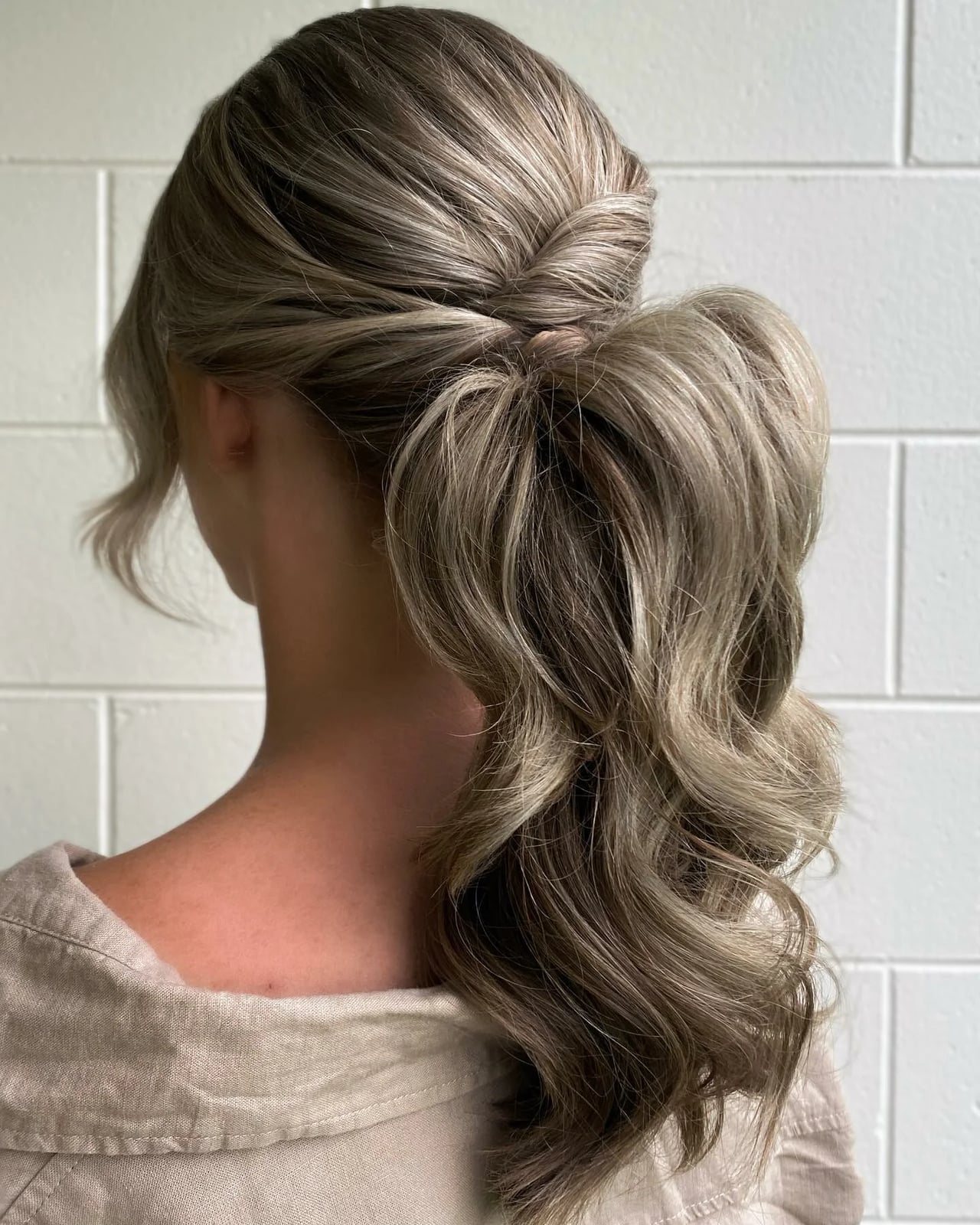
The low ponytail with a twisted detail at the base is a clever way to make fine hair look thicker than it is. The twist adds visual interest without requiring a single extra pin, and the wavy texture gives the style a soft, lived-in feel that a poker-straight version lacks. The ash blonde with subtle highlights keeps the style from reading flat, which matters when the hair is pulled back tightly.
That said, the low placement means the style can slip on medium-density hair, especially if you move a lot during the day. You will need a texture spray at the roots for grip and a strong-hold hairspray over the finished twist. Ask your stylist for: fine hair, sleek low bun. A trim every eight to ten weeks keeps the ends from looking straggly, and the style holds best on hair that is at least collarbone length.
Platinum Blonde Sleek Low Bun, Long
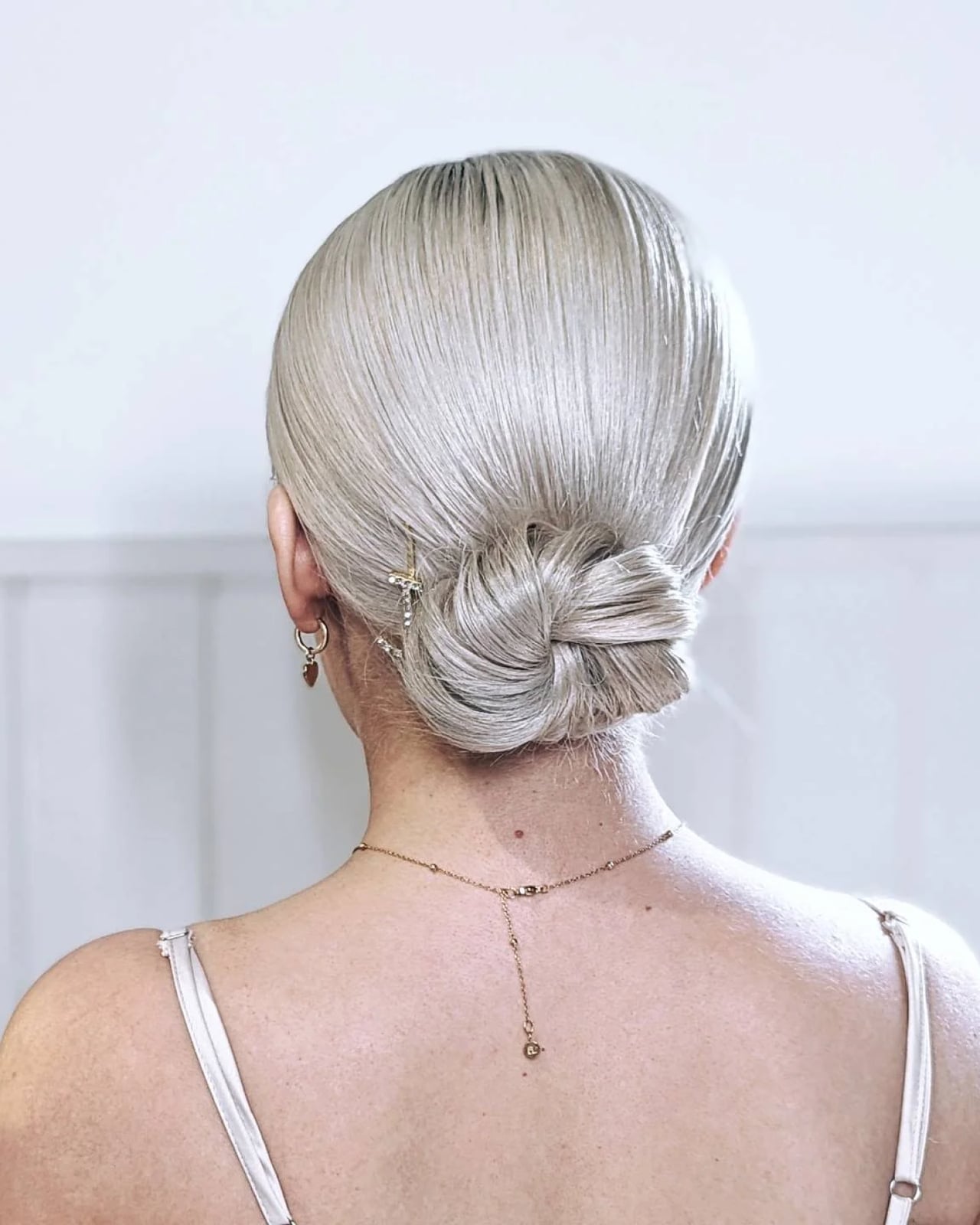
The nape placement works with the long length to create a clean line from crown to bun, and the thick texture gives the bun enough body to hold its shape without collapsing. Ask your stylist for: platinum blonde, sleek low bun. The one real drawback is the bulk. Thick hair can fight a sleek bun, so you will need a smoothing serum and a handful of bobby pins to keep every strand locked down. A trim every eight to ten weeks prevents the ends from catching on the pins and keeps the silhouette sharp.
Final Thoughts
For fine hair, keep one blunt baseline and skip heavy layers; a chin-length bob or textured shag will hold volume. For thick hair, layered cuts or sleek updos manage density without fight.
- Trim blunt bobs every six to eight weeks; layered cuts every eight to ten.
- Refresh blonde with a purple shampoo or toner every four to six weeks.
- Spray a heat protectant before blow-drying or heat styling.
- Wash two to three times a week to preserve natural oils and styling.
Find the professional style that makes you feel confident and capable.