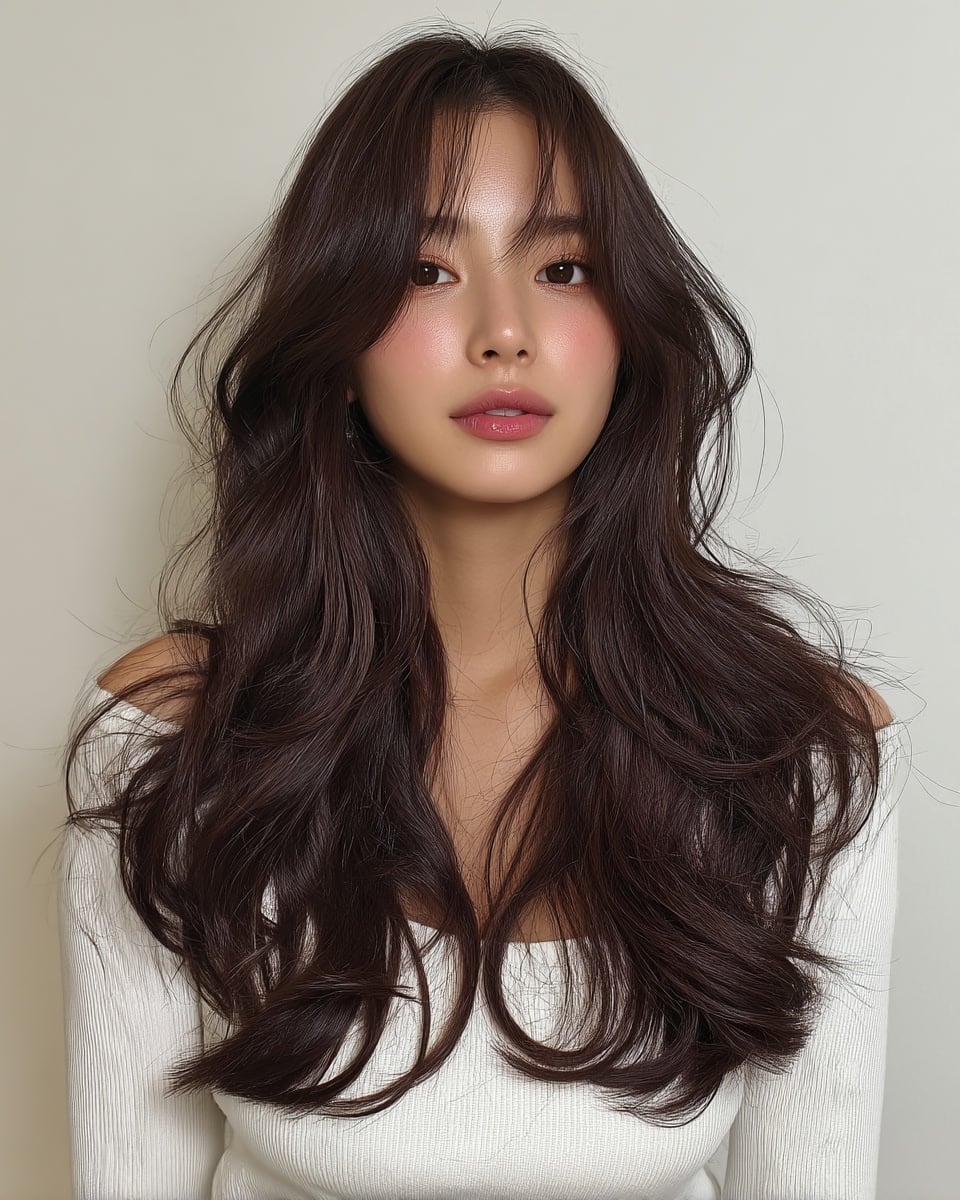
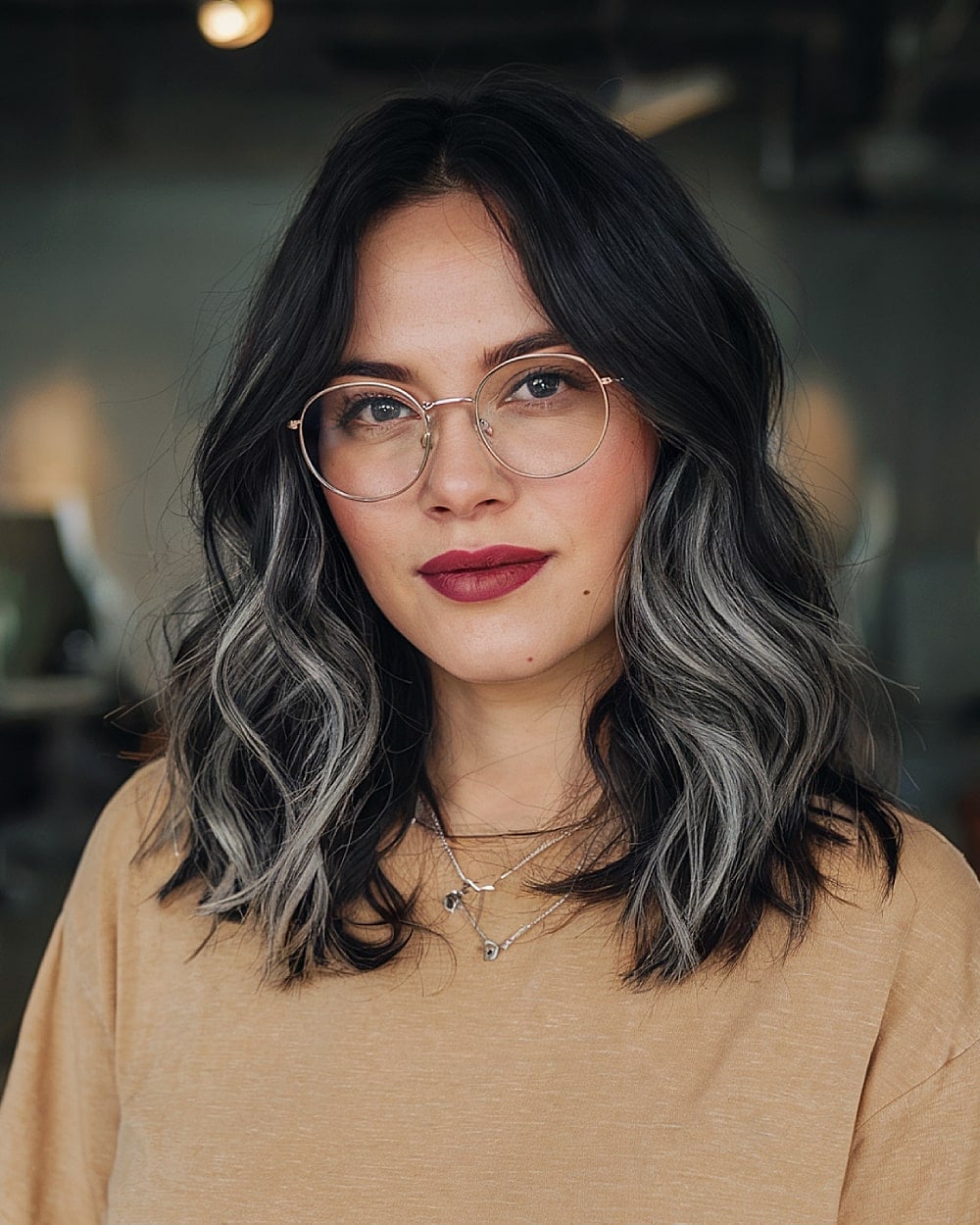
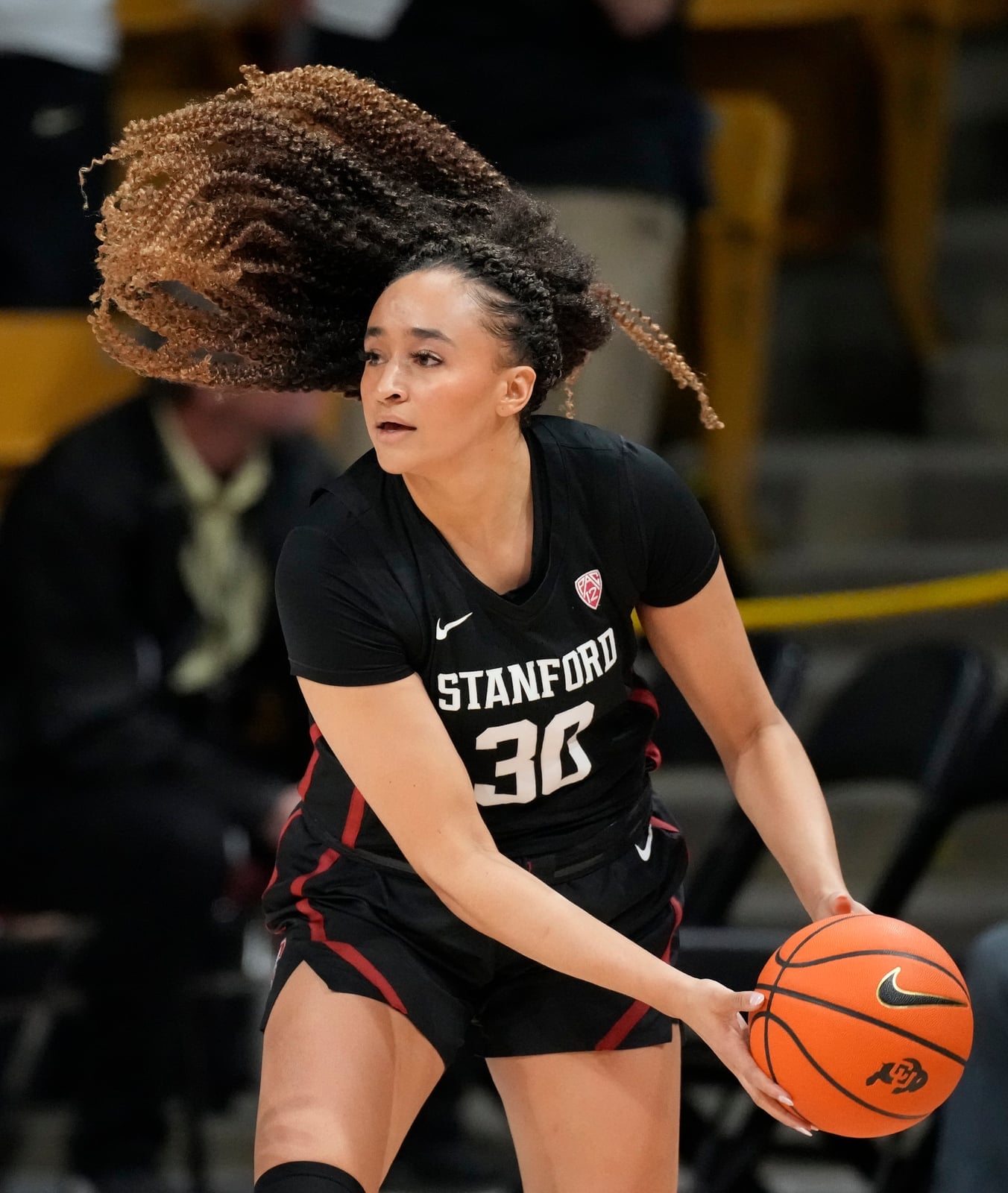
Dyed locs have moved past the experimental phase into something more deliberate: color that works with the natural texture instead of fighting it. The 2027 direction favors lived-in tones, glossy finishes, and soft face-framing layers that let the hair move.
Classy Dyed Locs, all 28 of them, span the spectrum from low-upkeep natural browns to bold reds, purples, and ombres. Whether your locs are fine or thick, collarbone or mid-back, there is a shade and technique here that fits. If you have struggled with a visible grow-out line or color that fades fast, these ideas address both without the guesswork.
Natural Brown Locs With Subtle Light Ends
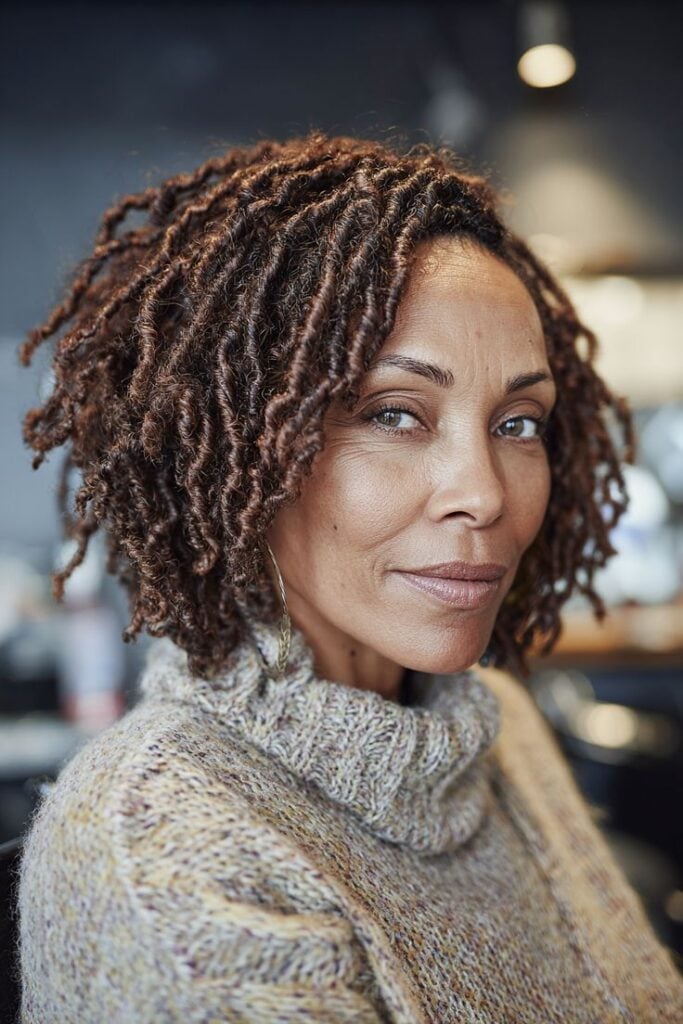
The clever part of this color is that it doesn’t announce itself. A brown base carries most of the length, while the ends pick up just enough light to read as sun-kissed rather than painted. From the back, the mid-back locs show their wavy texture and thick density, and the subtle shift keeps the eye moving down the length instead of stopping at the roots.
This finish typically works on naturally wavy locs that already have some movement, since the lighter ends catch light as the hair swings. Ask your colorist for: natural brown locs with subtle lighter ends. Keep the color rich with a conditioning treatment and a light oil over the ends, and trim every 10 to 12 weeks so the lighter sections stay soft instead of straggly.
Dark Brown Locs With Lighter Brown Highlights
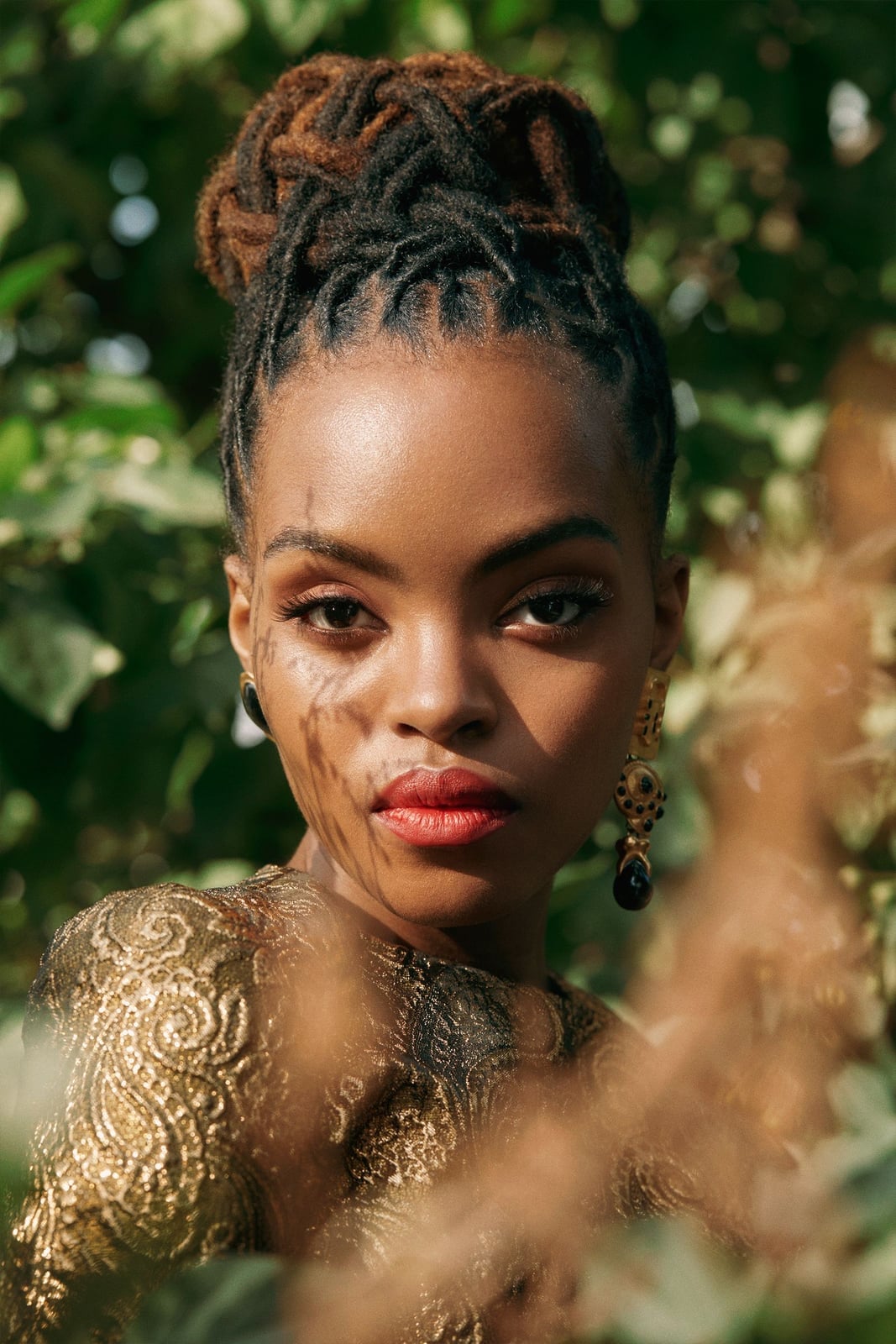
Wondering if highlights will get lost in dark locs? They won’t if they’re placed as thin, subtle ribbons rather than chunky streaks. The dark brown base stays dominant, while lighter brown highlights add depth without turning the style into a contrast project. Styled into a high bun with a middle parting, the shoulder-length wavy locs show the dimension from every angle, which is exactly what you want for an updo.
This shade works for medium to thick locs that can hold a neat bun without looking sparse. Ask your colorist for: dark brown locs with subtle lighter brown highlights, styled in a bun. A smoothing serum before styling keeps the bun sleek, and a highlight refresh every 8 to 10 weeks keeps the dimension from dulling.
Collarbone Locs With Subtle Light Brown Dimension
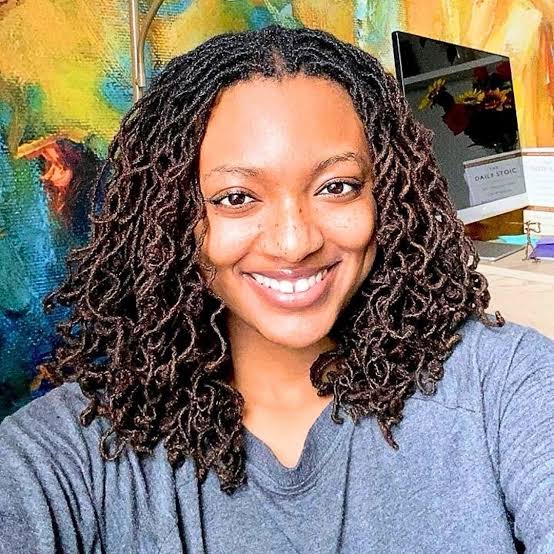
If you are torn between a solid color and something with more movement, this sits in the middle. It is not the bold, high-contrast highlighting you see on longer hair; it is a dark brown base with lighter brown pieces woven through so softly that the effect reads as natural texture. The collarbone length and wavy, medium-density locs keep the style grounded, and a middle parting lets the dimension fall evenly on both sides.
This suits anyone who wants a color boost without a dramatic shift. Ask your colorist for: collarbone length locs, dark brown with subtle lighter brown highlights. Because the highlights are subtle, they grow out gracefully, and a trim every 6 to 8 weeks keeps the ends from feeling heavy.
Mid-Back Dimensional Dark Brown Locs
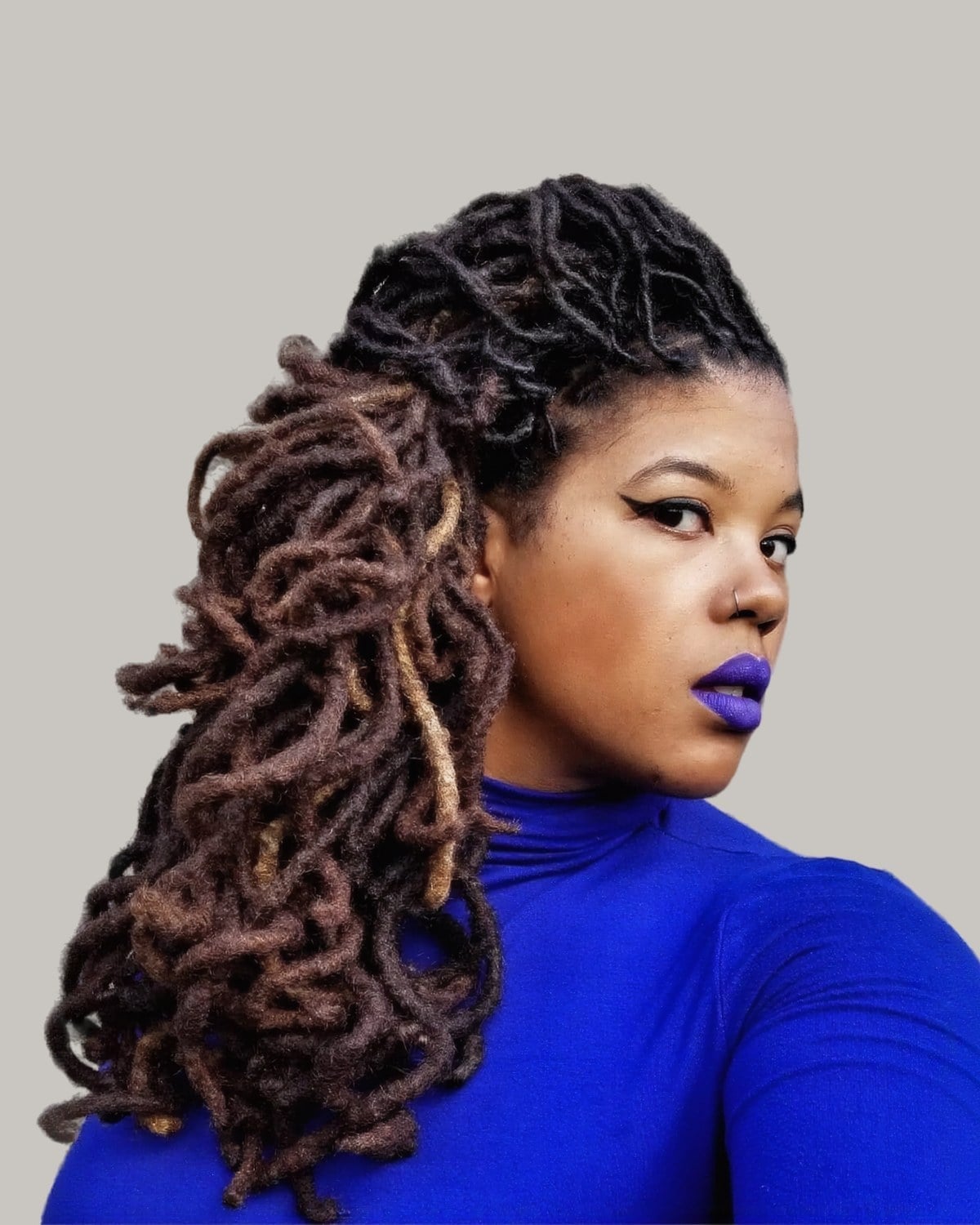
Dimensional color does its best work when the hair moves, and mid-back wavy locs give it plenty of room. The dark brown base anchors the style, while lighter brown highlights catch light and shadow as the locs swing, making the color appear richer than a flat single shade would. From a side view with a side parting, the variation creates depth that keeps the look polished.
This kind of dimension needs a base that is deep enough to ground the lighter pieces, so the dark brown is essential. Ask your colorist for: mid-back locs, dark brown with lighter brown highlights. A leave-in conditioner keeps the locs soft and the highlights defined, and trimming the ends every 8 to 10 weeks prevents the lighter sections from looking dry.
Medium Brown Locs With Highlighted Dimension Updo
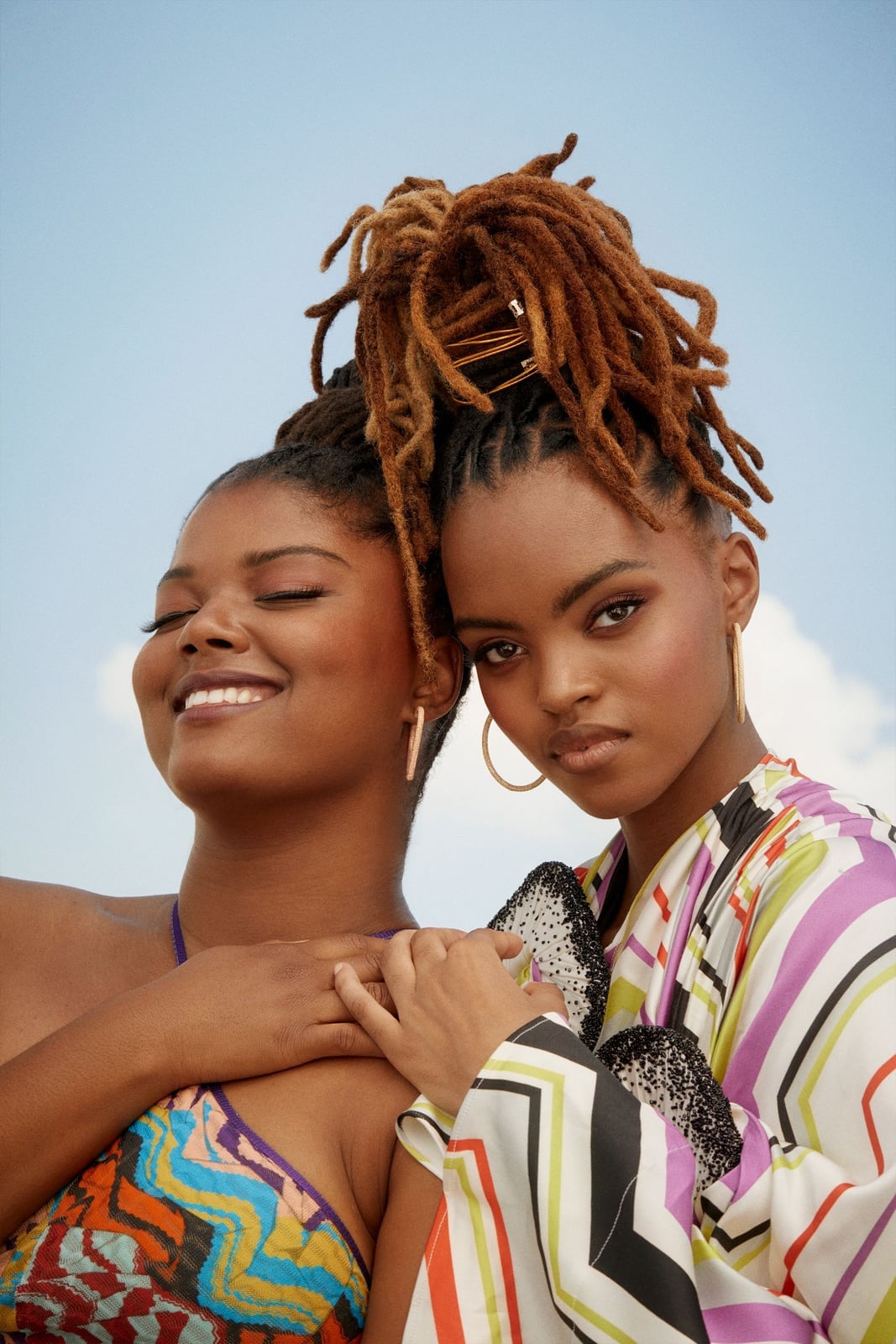
How do you ask for color that shows up in an updo without looking streaky? You specify placement. The medium brown base carries the locs, and lighter brown highlights are woven through so the updo looks two-tone from the front, not just at the ends. With mid-back length wavy locs pulled into an updo and a middle parting, the dimension becomes the focal point, especially with a few decorative pins to break up the surface.
Ask your colorist for: medium brown locs with lighter brown highlights, styled for an updo. To get the effect you want, mention that you wear your hair up often, so the highlights should sit higher than the nape. Use bobby pins that match your loc color to keep the updo secure, and refresh the color every 8 weeks so the dimension stays visible.
Collarbone Faux Locs With Blonde Highlights
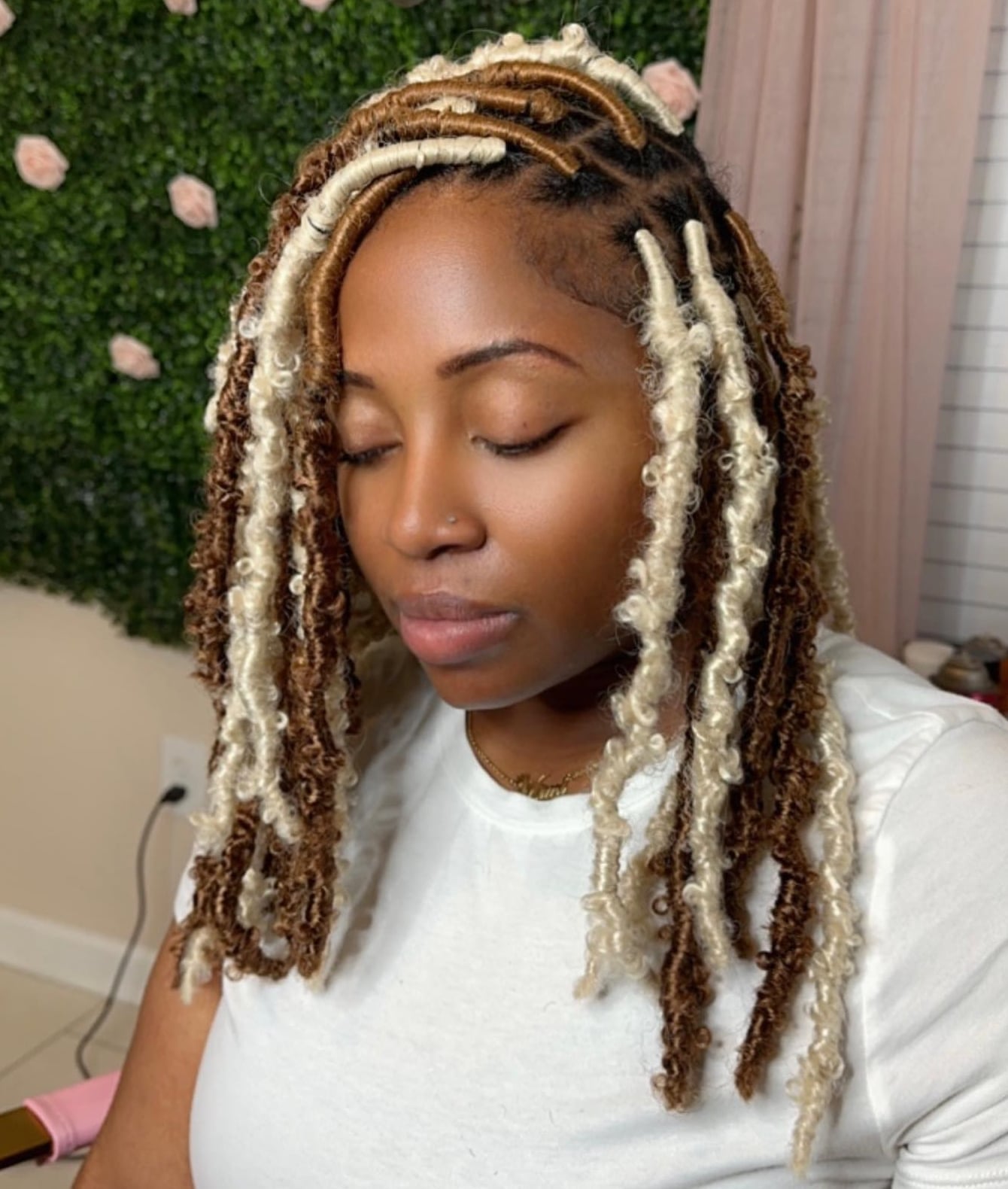
The butterfly wrapping technique builds these collarbone-length faux locs, with a brown base and blonde highlights woven in for contrast. They sit at collarbone length with a middle parting and a wavy texture that softens the overall shape. This design works best for those with medium to thick natural hair looking for a protective style that includes color.
Ask your colorist for: collarbone faux locs, brown base with blonde highlights. A light-hold mousse helps define the waves and keep frizz at bay. Because these are faux locs, professional installation and removal are required to protect your natural hair underneath.
Shoulder Length Dark Brown Locs With Blonde Highlights
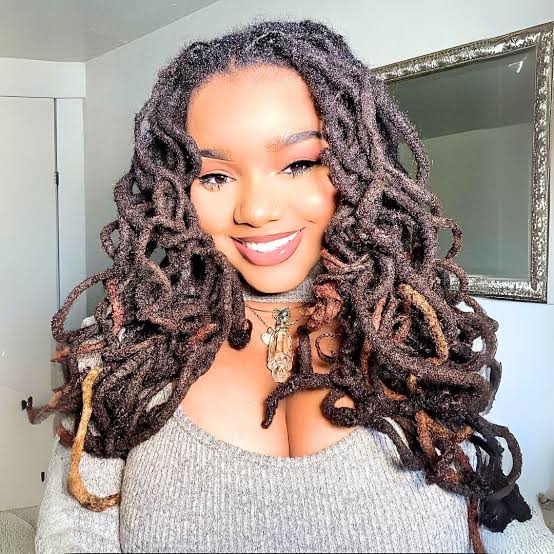
Thick, shoulder-length locs with visible blonde highlights work for anyone with a voluminous texture and a stylist who places the highlights sparingly. Here, a dark brown base meets scattered blonde highlights on wavy locs, styled in loose curls with a middle part. The density of the locs carries the contrast without it feeling heavy. For finer locs, the blonde could appear sparse.
Glossy Mid-Back Dark Brown Locs, Wavy
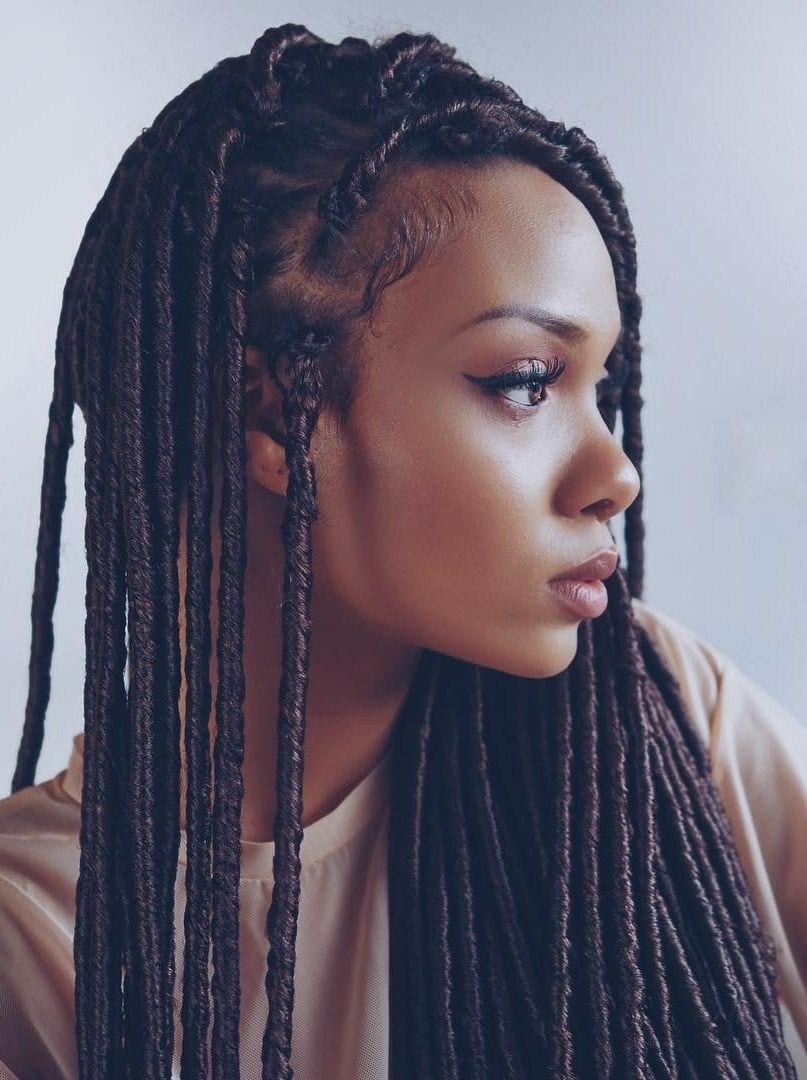
This is a single-color look, but the glossy finish changes everything. The mid-back length locs are a deep dark brown, styled loosely with a middle part, and the shine picks up the light in a way that flat color never does. The wavy, thick texture holds the polish without needing constant heat.
A shine-specific serum applied after washing keeps the gloss going for about a week. Plan for a trim every 10 to 12 weeks to prevent the ends from looking dull. Ask your stylist for: glossy mid-back length dark brown locs.
Natural Texture Mid-Back Dark Brown Locs With Strands Framing The Face
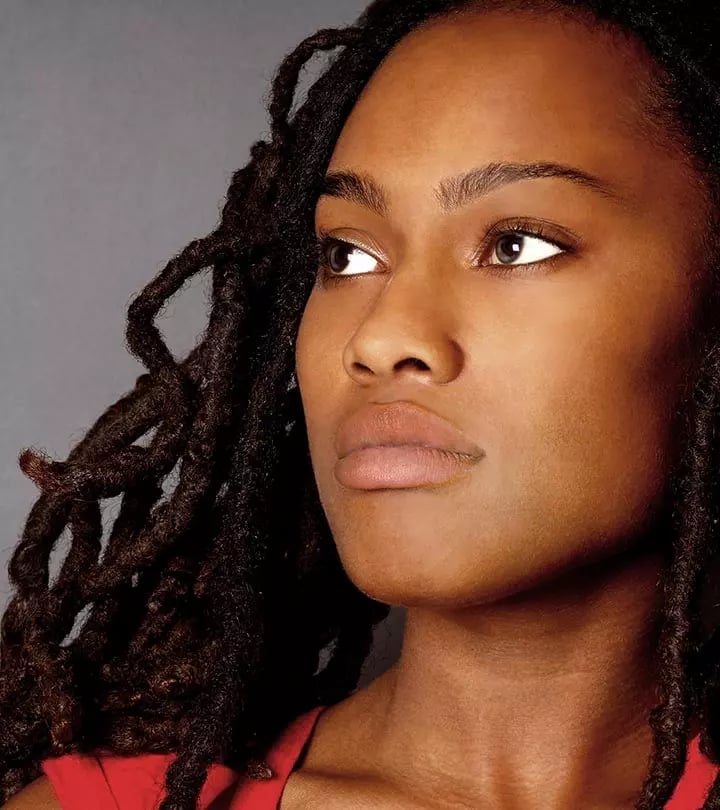
There is no color placement to hide behind here. The dark brown is uniform from root to end, so the wavy, thick texture of these mid-back locs has to do all the work. Loose strands frame the face, and the soft side part keeps the weight from falling flat. Ask your colorist for: natural texture mid-back dark brown locs.
The honest drawback: this look demands that your locs be in excellent condition. Any fraying, dryness or unevenness shows because there is no highlight to distract the eye. A deep-conditioning treatment every two to three weeks is not optional, it is the price of a texture that looks deliberate rather than neglected. Keep the trim schedule consistent at every ten to twelve weeks, and skip the heavy oils that weigh down the wave.
Chin Length Black Locs With Warm Brown Tips
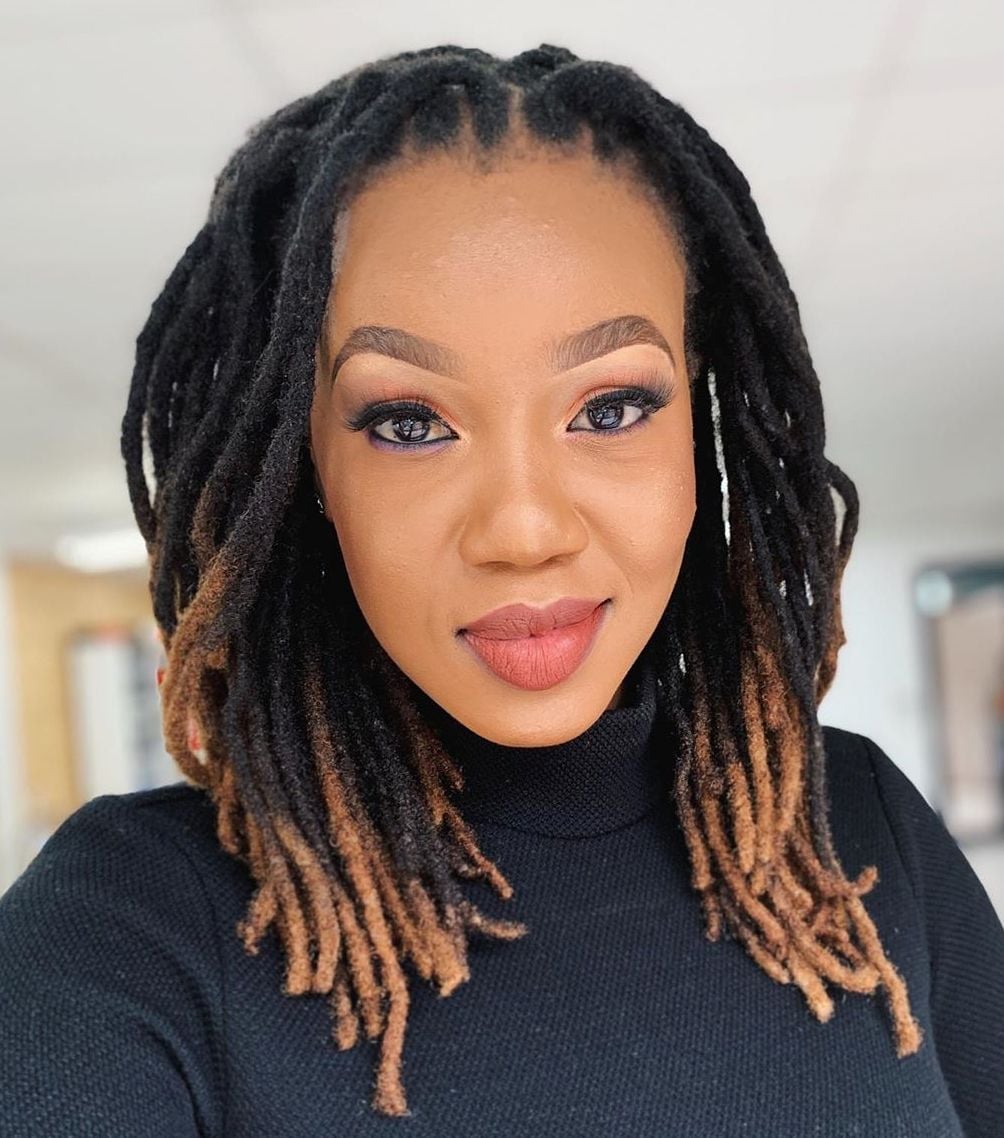
It is not an ombre, it is a dip: black locs at chin length with warm brown color concentrated at the tips. The side parting and air-dried texture keep it casual, while the color adds a subtle seasonal shift. It works well for medium-density locs because the lighter ends do not overwhelm the overall shape. As autumn approaches, this combination transitions naturally from a summer-bleached look into something richer. Ask your colorist for: chin length black locs with warm brown tips.
Shoulder Length Locs Auburn and Blonde Highlights
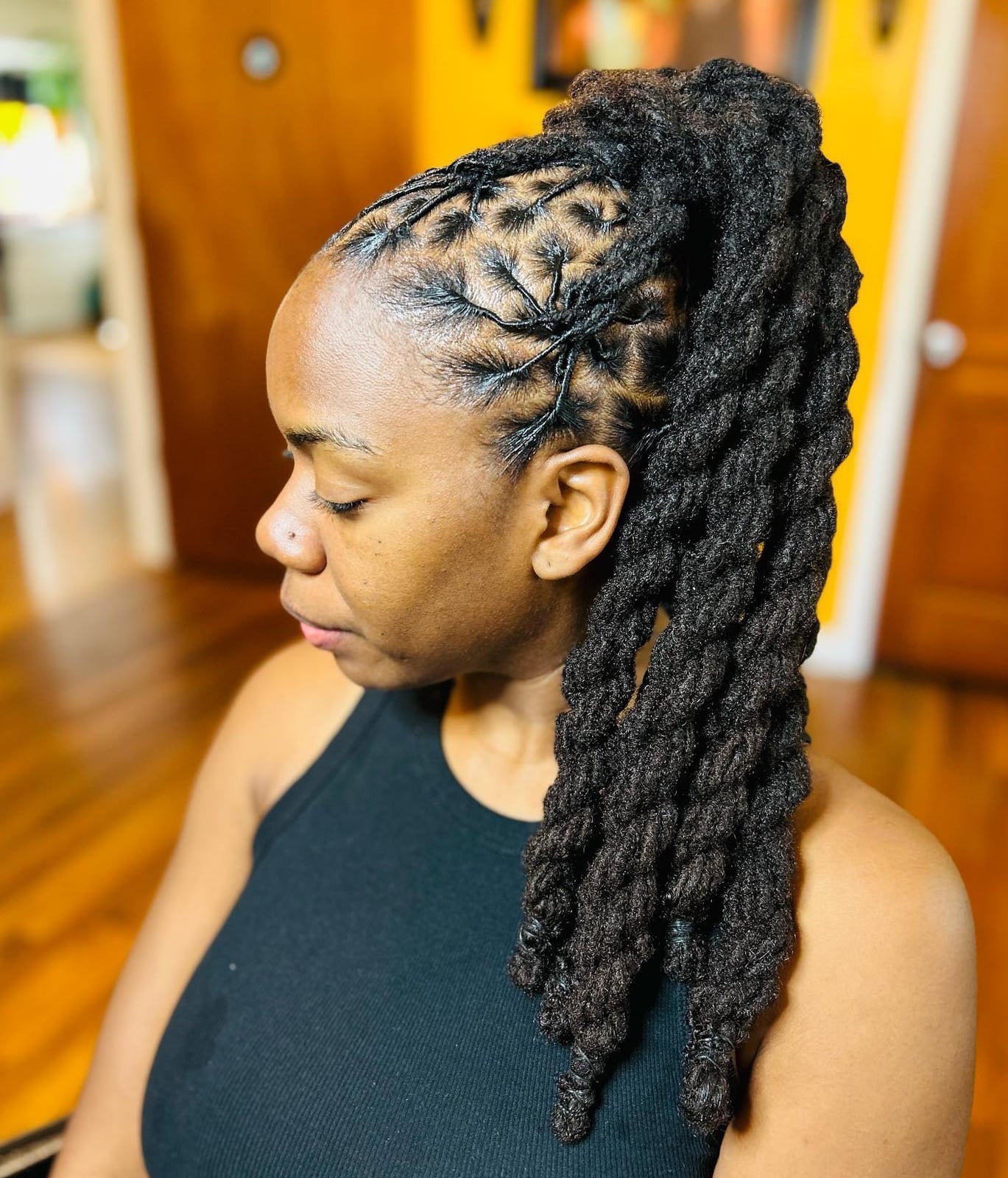
Wondering how to mix warm and cool tones without it looking chaotic? These shoulder-length locs start with a dark brown base, then add auburn and blonde highlights for a vibrant, multi-tonal effect. The high ponytail shows off every shade, so placement matters. Ask your colorist for: a dark brown base with auburn and blonde highlights, concentrated around the face and ends. Specify that the auburn pieces stay close to the root while the blonde lands lower, creating depth without a harsh line. A texturizing spray on the ponytail base adds grip for styling, and a gloss treatment every six weeks keeps the tones from turning muddy.
Mid-Back Black and Brown Highlighted Locs Updo
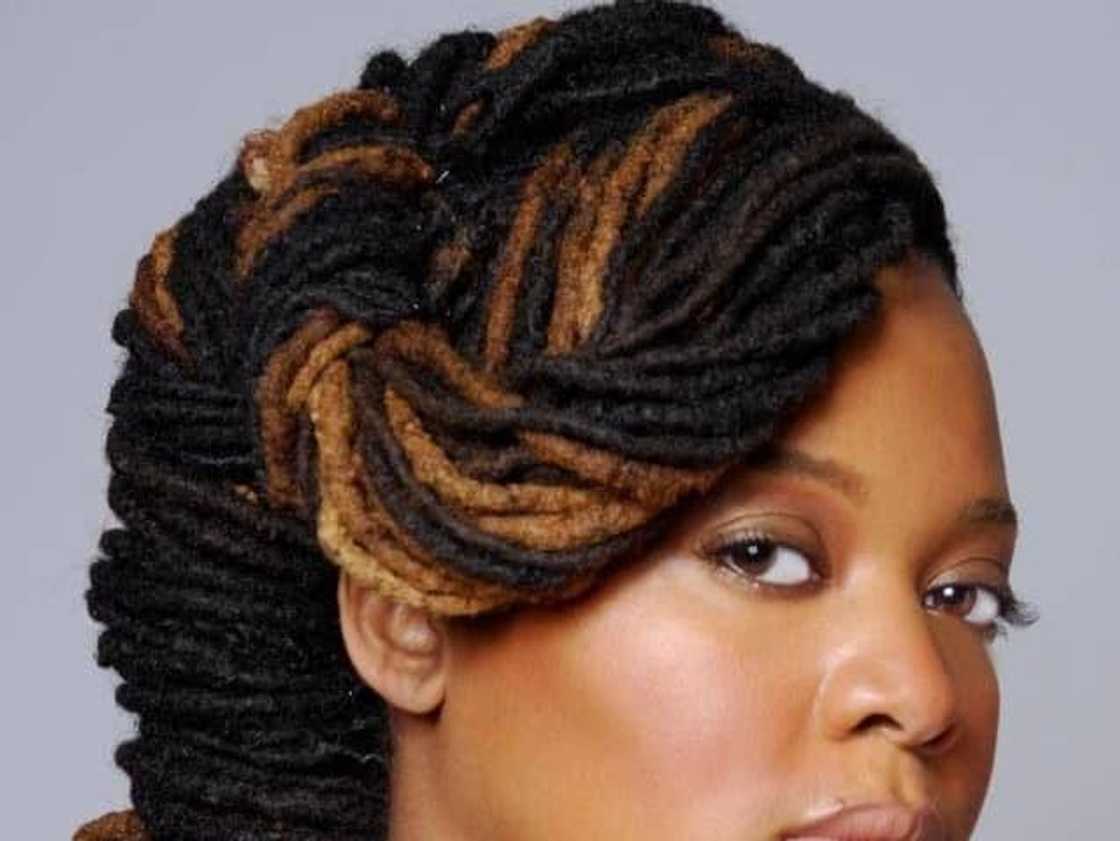
The design hinges on contrast without drama. A black base runs through these mid-back locs, while brown highlights are woven in at irregular intervals, creating a subtle highlight effect that looks like natural dimension. The updo pulls the hair back, leaving a side-swept bang to break the silhouette. Ask your colorist for: a black base with brown highlights, placed randomly for a natural blend. The technique uses a low-contrast approach: the brown is only a shade or two lighter than the black, so the grow-out stays soft. A middle part would work, but the side-swept bang is what gives this style its lift.
Mid-Back Dark Brown Locs With Blonde Highlights Updo
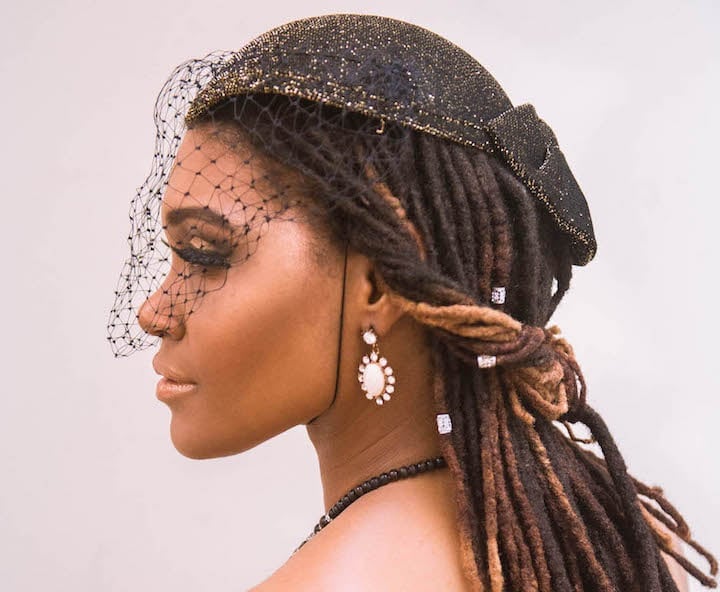
This is not your everyday ponytail. The thick, wavy locs are gathered into an elegant braided updo that sits low and works for an evening event. The dark brown base runs deep, while blonde highlights are dispersed through the braid. Ask your colorist for: mid-back dark brown locs with blonde highlights, concentrated at the mid-lengths and ends. The braid works best when the highlights are chunkier, because fine strands get lost in the twist. A finishing spray with hold keeps the braid intact through a dinner or a wedding reception.
Mid-Back Dark Brown Locs With Highlighted Updo, Close-Up Take
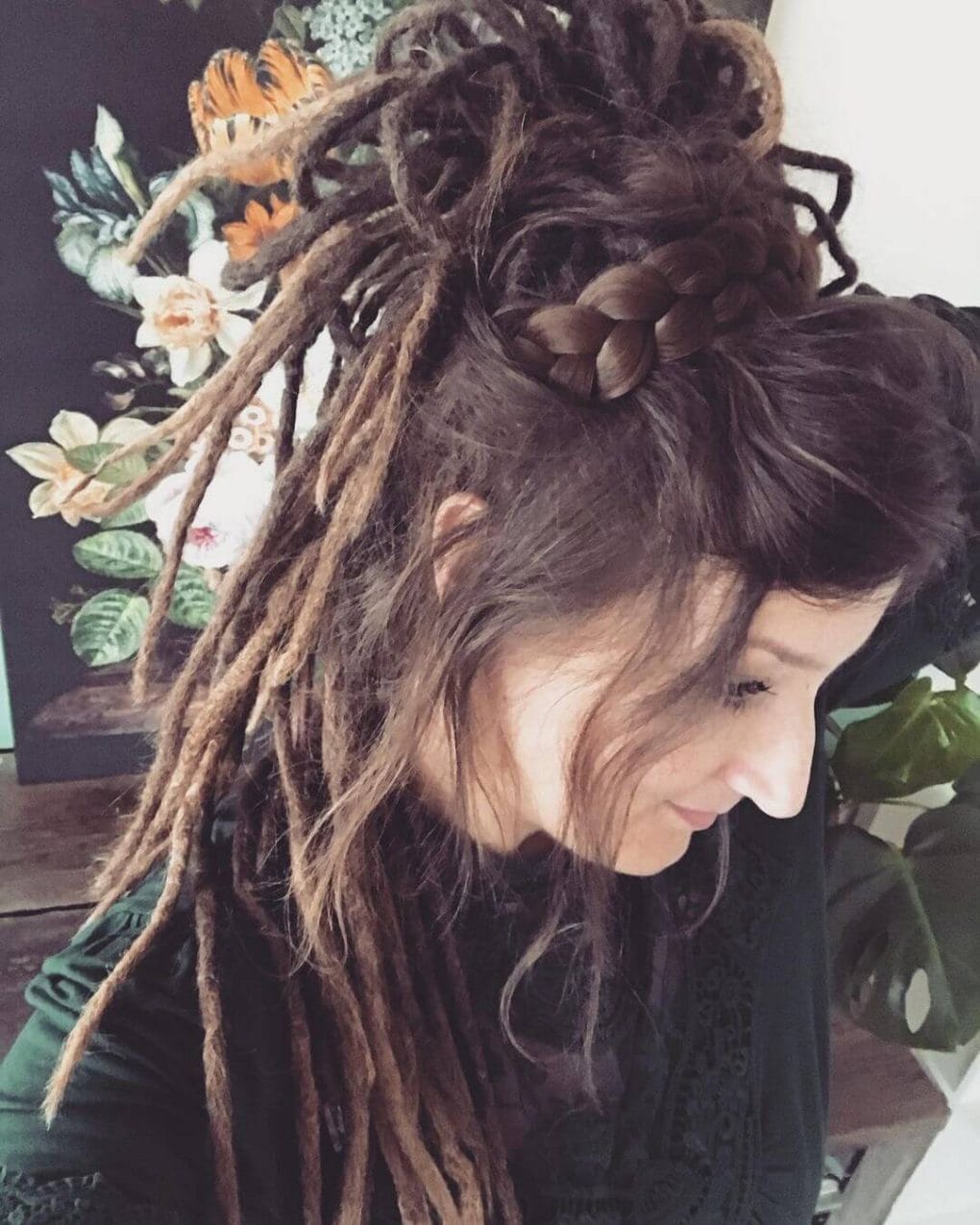
The braided accent is the detail that makes this updo hold interest. A single braid wraps around the base of a high bun, and the mid-back length is gathered without pulling tight, so the locs retain their natural volume. The dark brown base is punctuated by subtle lighter brown highlights that surface only when the braid twists. Ask your colorist for: a dark brown base with lighter brown highlights, placed sparingly for a subtle effect. The braided accent needs a flexible-hold product to stay defined without stiffness, and a trim every eight weeks keeps the ends clean for the wrap. A middle part keeps the front balanced.
Mid-Back Platinum Blonde Locs Bun
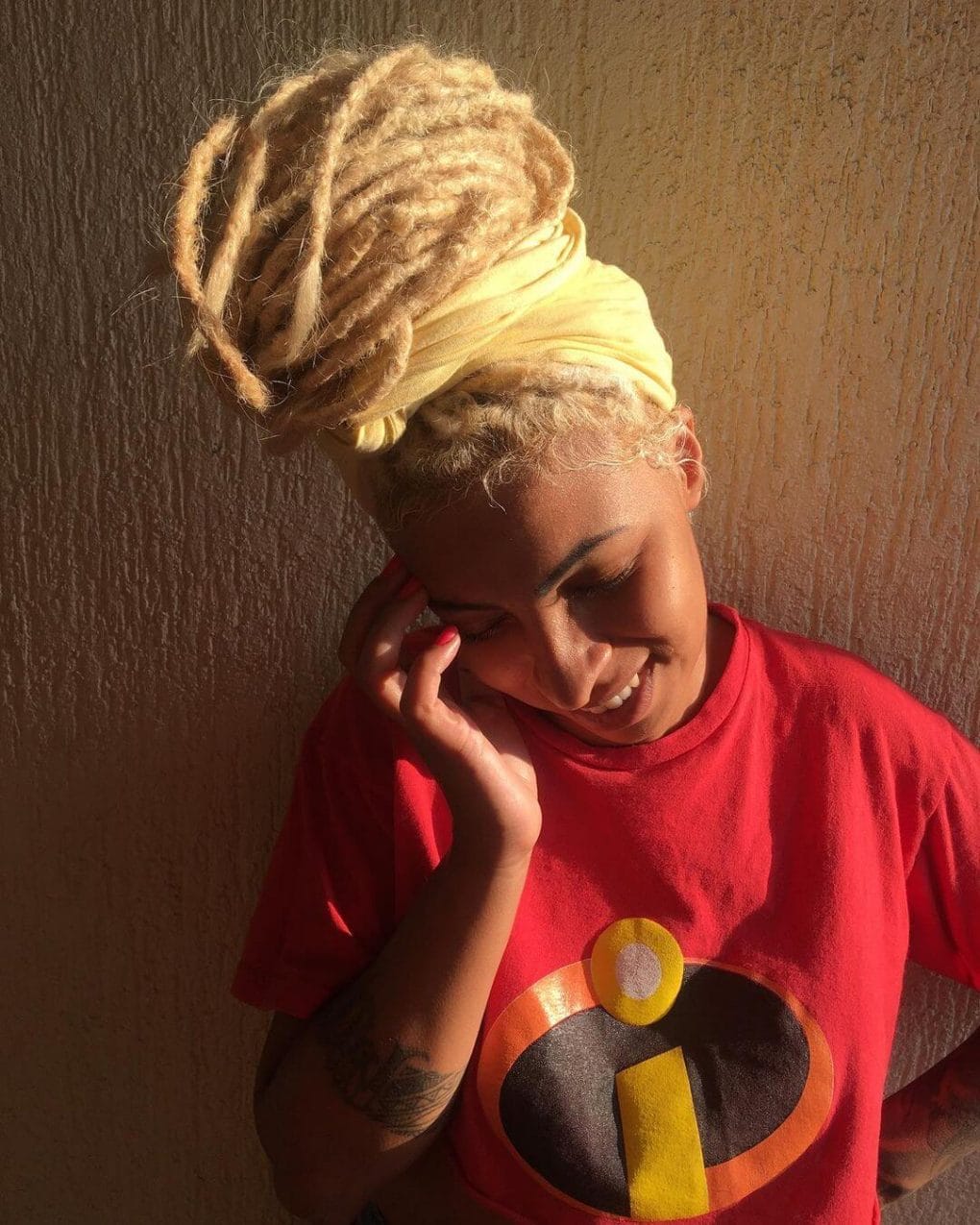
Can you go platinum on locs without a salon visit? Technically yes, but the risk of uneven lift and porosity damage is high. These mid-back, thick, wavy locs are a striking platinum blonde, styled in a bun wrapped with a yellow scarf. The result is a bold, fashion-forward statement that relies on even saturation. Ask your colorist for: platinum blonde locs, applied with a bond-protecting lightener. The salon route costs more time, about four hours for application and processing, but the result is uniform color rather than patchy brassiness. A purple shampoo used weekly maintains the cool tone between touch-ups.
Mid-Back Wispy Bangs Vibrant Red Locs
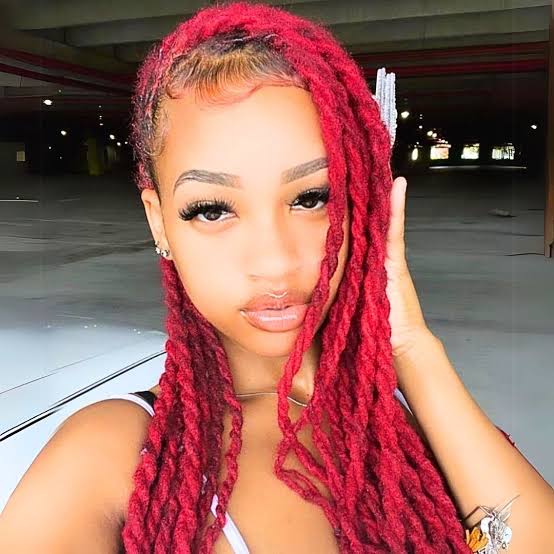
The design logic here is simple: a uniform, vibrant red reads as a solid commitment, and wispy bangs keep it from feeling heavy. Thick, coily locs at mid-back length provide the ideal canvas; the side part and soft fringe break up a long face more gently than a full bang would. Ask your colorist for mid-back locs with wispy bangs, vibrant red color. The bangs will need a trim every four weeks, and the color holds best with a color-depositing conditioner used weekly between toning appointments.
Shoulder Length Vibrant Red Locs
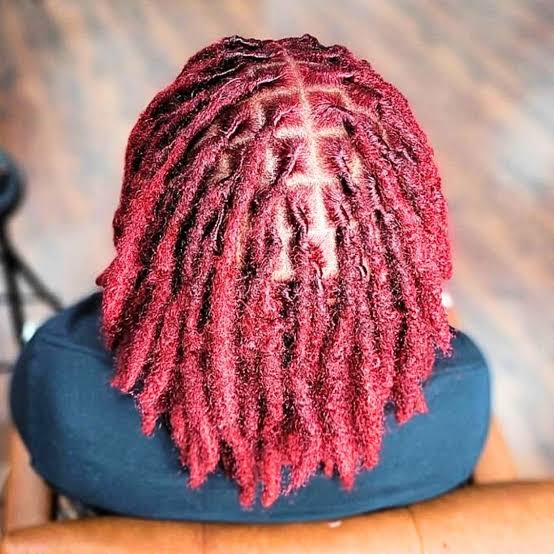
This is the neat version of a vibrant red: shoulder length locs sectioned with a middle part, each one dense and uniform. Where a tousled red feels spontaneous, this one feels planned. The color is the event, not the texture. Thick locs at shoulder length carry the intensity without the weight of longer hair. Ask your colorist for shoulder length locs, vibrant red color. A color safe shampoo preserves the tone, and a trim every six to eight weeks keeps the ends clean.
Mid-Back Vibrant Copper Orange Locs
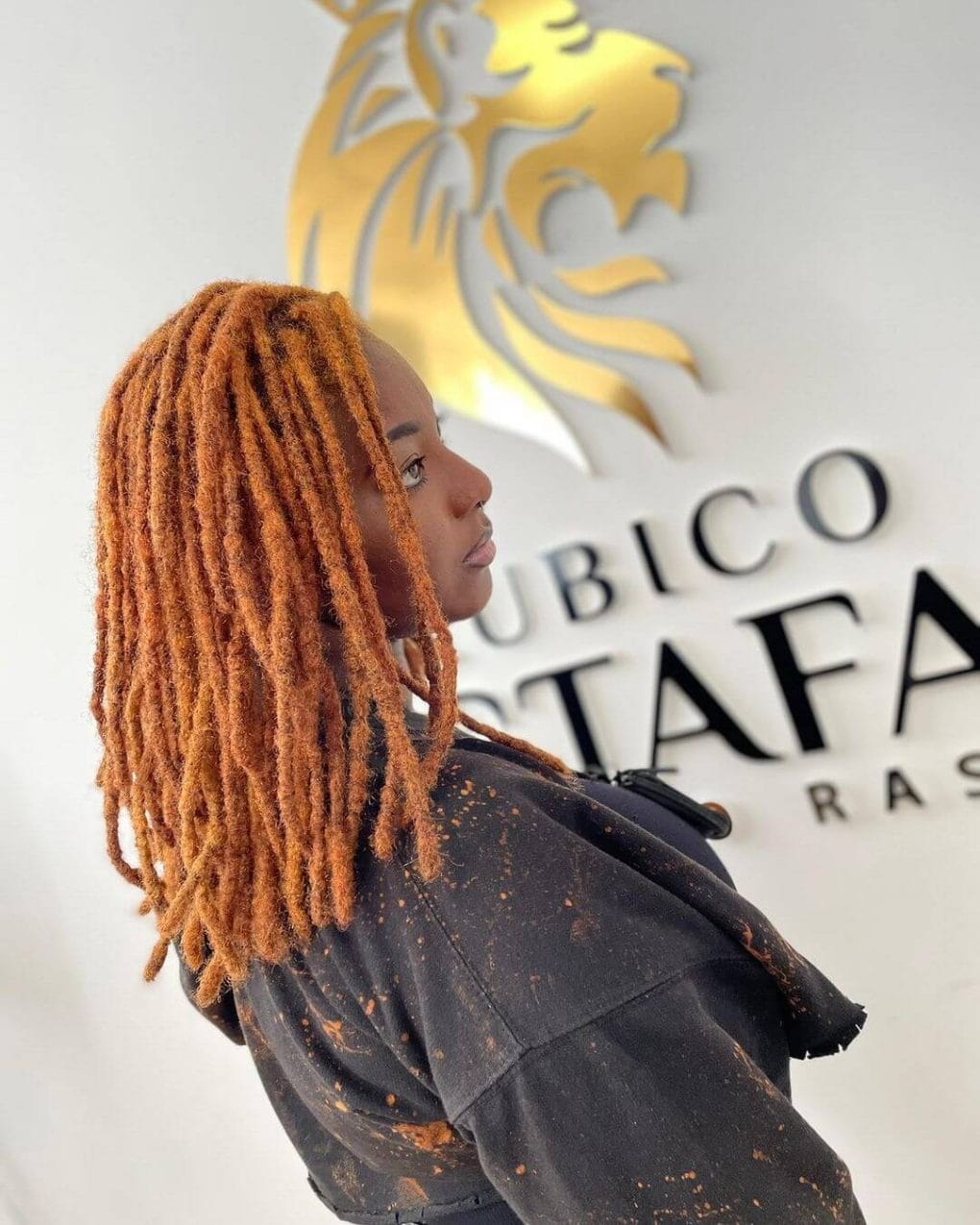
A vibrant copper orange on locs is a two-step process: a pre-lightener to lift the natural pigment, then a direct dye laid over it. The result is a warm, saturated tone that catches light differently than a red. Mid-back locs styled loose show off the uniform application best. Ask your colorist for mid-back locs, vibrant copper orange color. The color is high-maintenance, a weekly color-depositing conditioner and a toning appointment every six weeks keep it from shifting into brass.
Shoulder Length Copper Orange Microlocs Updo
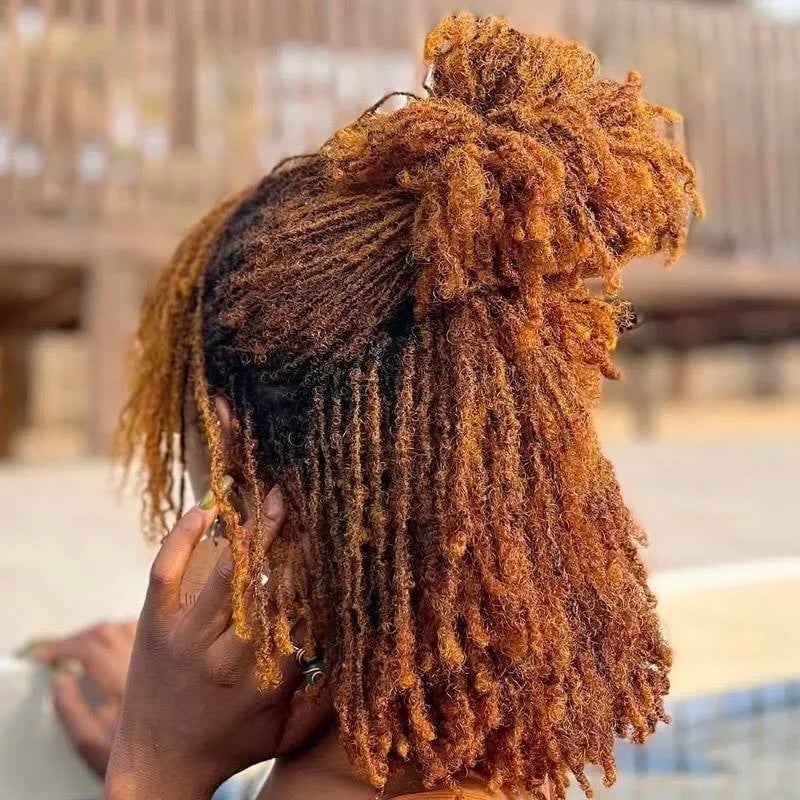
A high updo on copper orange microlocs exposes every inch of color, so the shade has to be even. Shoulder-length microlocs with coily texture hold the updo well without slipping. Ask your colorist for shoulder length copper orange microlocs, styled in a high updo. The color needs refreshing every six to eight weeks, and a satin wrap at night keeps the updo intact between wears.
Shoulder Length Copper Locs With Darker Roots
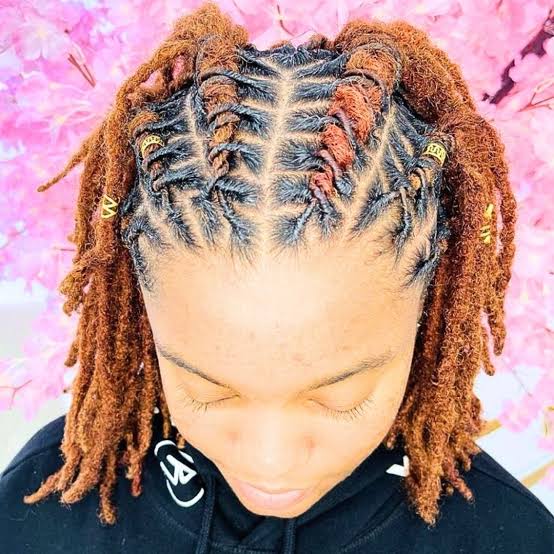
How do you get a copper loc that does not look flat? Start with darker roots. The contrast between a rich copper base and deeper regrowth creates dimension without requiring a full head of highlights. Thick, coily locs at shoulder length carry the braided crown detail without strain. Ask your colorist for shoulder length copper locs with darker roots, styled with braids. The copper requires touch-ups every eight to ten weeks; the roots grow in naturally, so the grow-out is forgiving.
Mid-Back Vibrant Purple Thick Wavy Locs
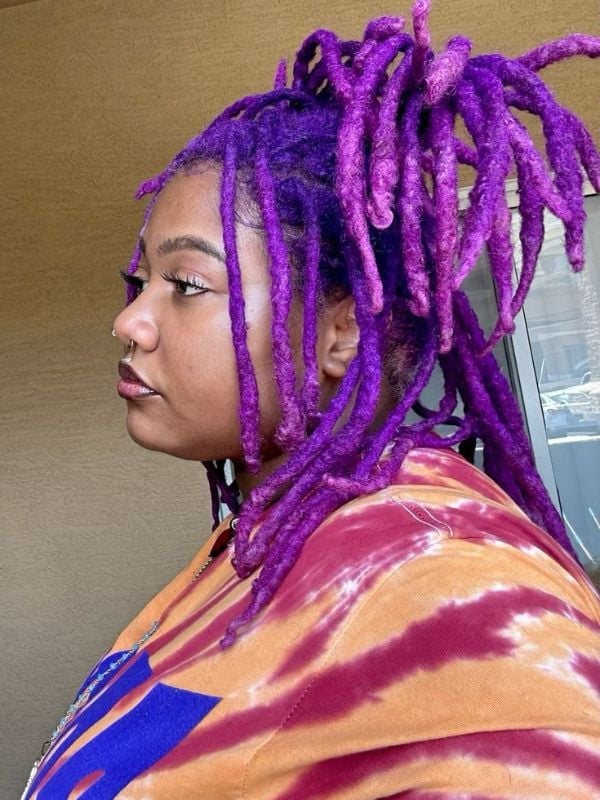
Thick wavy locs in a full-spectrum vibrant purple fall loosely past the shoulders, the color so dense it reads more like a custom fabric than hair dye. The trade-off is predictable: purple fades faster than any natural shade, especially on locs where the texture holds pigment unevenly. A color-depositing conditioner every other wash buys you about two weeks of intensity before the tone shifts toward magenta, then lavender. If you can’t commit to that rhythm, skip this one. Ask your colorist for mid-back locs in a vibrant purple tone. A trim every eight to ten weeks keeps the ends healthy enough to hold color without looking parched.
This is a salon-only project. The bleach lift required for that saturation is aggressive, and the application alone takes hours. The payoff is a color that stops conversation, but it asks for maintenance on a schedule, not on a whim.
Shoulder Length Teal Locs Fading to Dark Roots
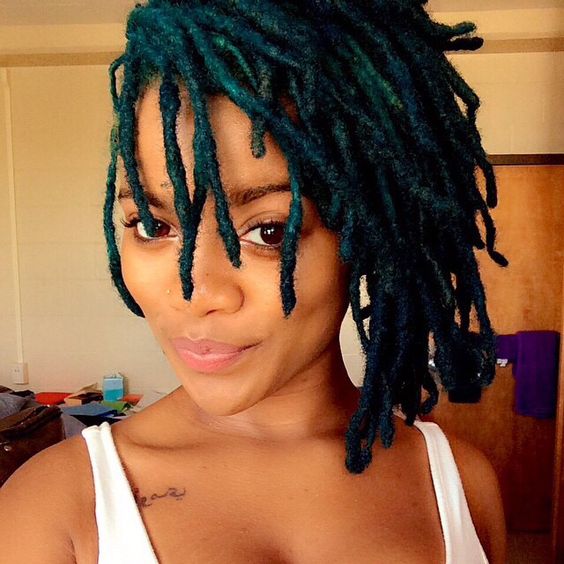
Where the purple section demands constant upkeep, this teal fading to dark roots practically begs you to let it grow. The dark root line is part of the design, so new growth fits the look, not neglect. Shoulder-length coily thick locs carry the cool teal tone well, the color landing somewhere between sea glass and a retro swimming pool. Summer is the natural season for this shade, but the real perk is how the dark root anchors the look, making it wearable into fall. Ask your colorist for shoulder-length locs with teal color fading to dark roots. No bangs, just the locs doing the work.
Mid-Back Multicolor Highlighted Locs

The design looks chaotic until you notice the method. Burgundy, purple, blue, and blonde highlights are woven through mid-back wavy thick locs in a deliberate pattern, some strands left loose while others are braided. The braids act as visual separators, keeping the colors from blending together. This is not a one-session job. Each color section is treated individually, which means a full day in the chair and a price tag that reflects the labor. Ask your colorist for mid-back locs with burgundy, purple, blue, and blonde highlights. A color-safe shampoo is necessary here, since bleeding between shades turns the whole thing gray.
The payoff is a head of locs that looks different from every angle. One braid pulls forward and you see purple; another shifts and it is blue. That kind of variety works best on thick locs where each strand has enough surface area to show its own color block.
Mid-Back Blonde and Brown Locs Bubble Ponytail
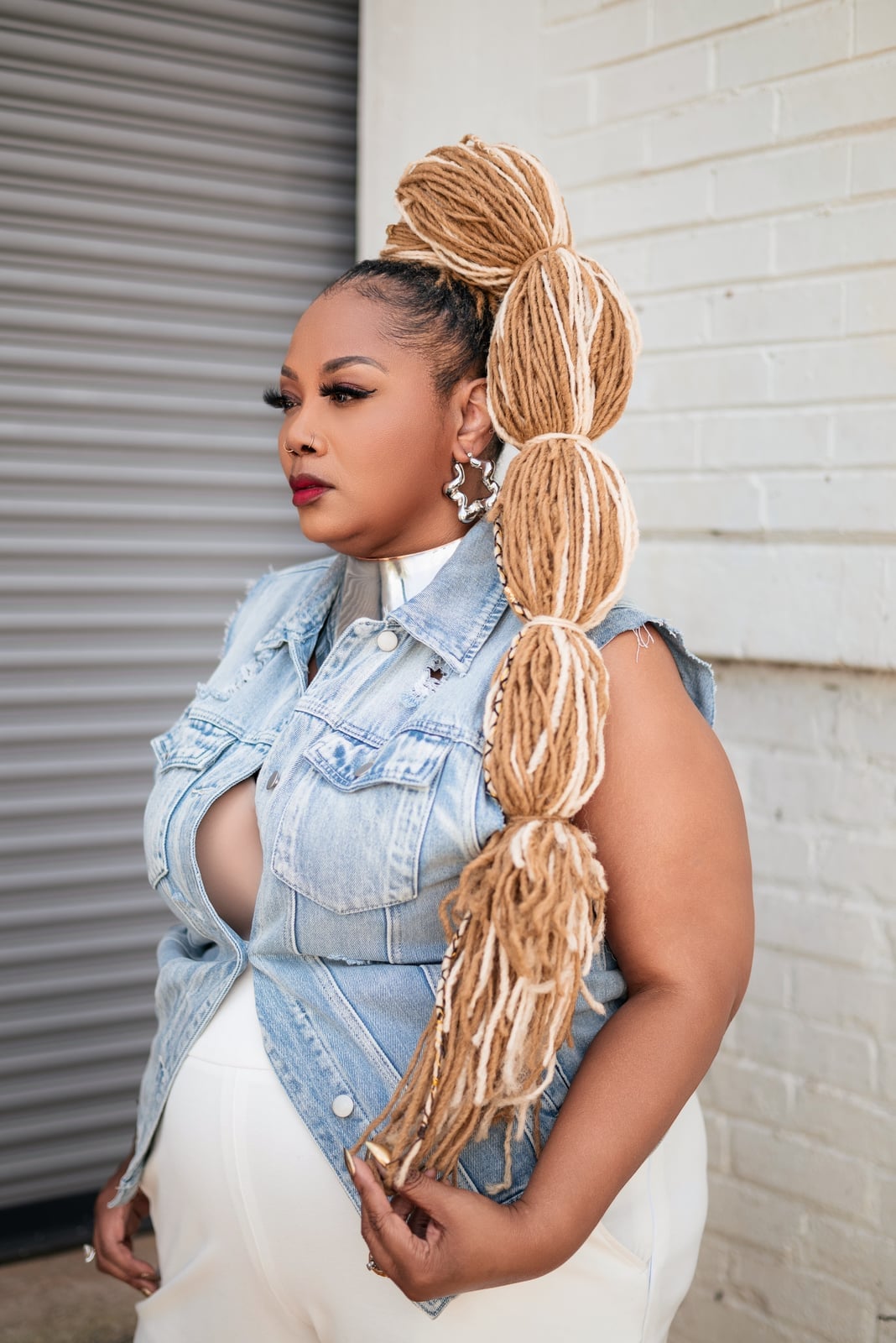
How do you get a ponytail that holds its shape without elastics cutting into the locs? The bubble method. Mid-back thick wavy locs in alternating blonde and brown strands are gathered high, then sectioned with small hair ties spaced a few inches apart, each section gently fluffed to create the rounded bubble effect. The color contrast does the heavy lifting here, the blonde sections popping against the brown. Ask your stylist for a high bubble ponytail with alternating blonde and brown strands. A middle parting keeps the front balanced while the back does the work.
The steps are simple enough for a home repeat. Secure the base, add the first tie, pull the hair between them outward, repeat. Use ties that match the darker loc shade so they disappear. The style holds all day and looks polished without being stiff.
Mid-Back Black to Blonde Ombre Curly Locs
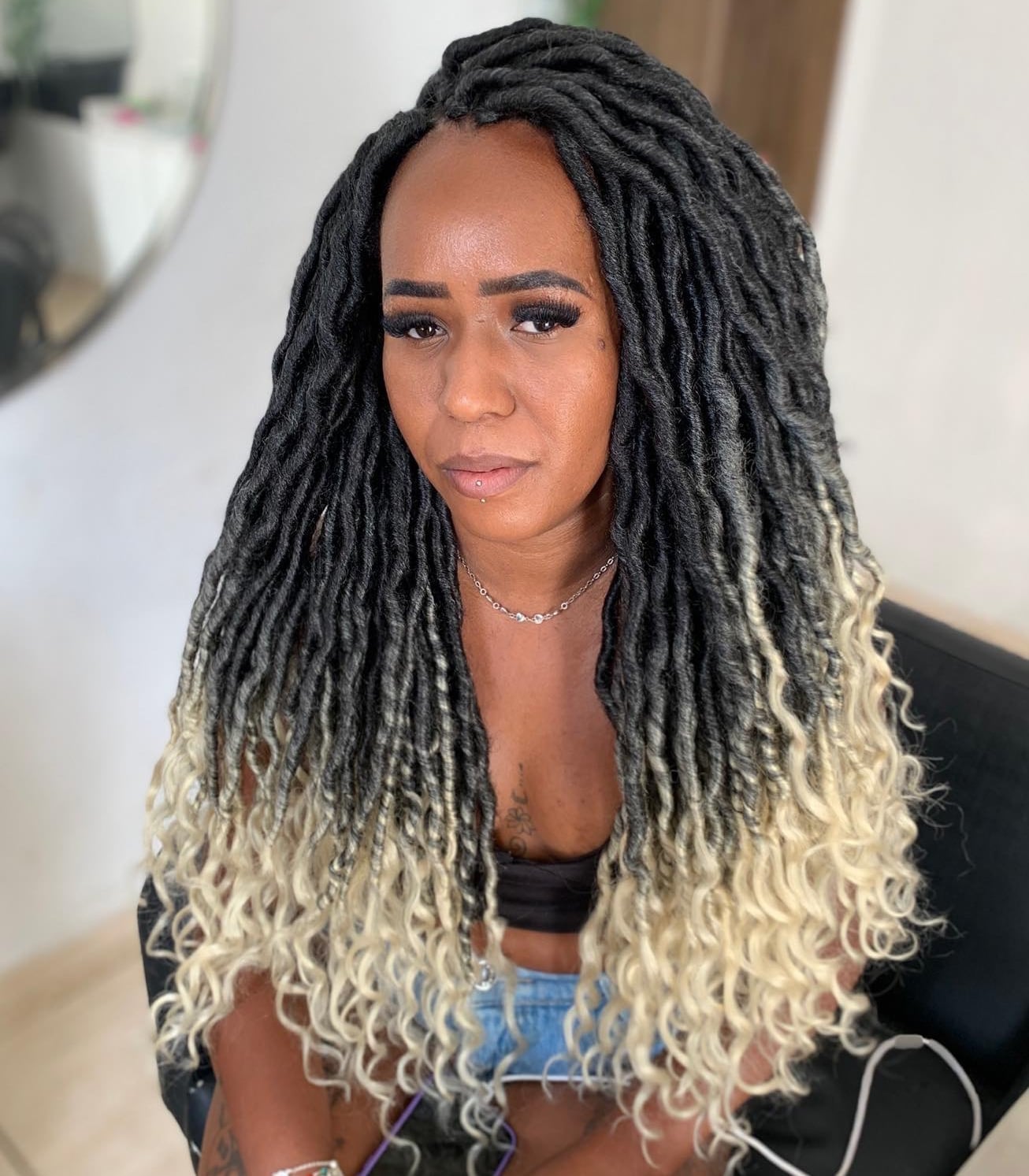
A black base that fades to blonde ends is one of the most forgiving ombre transitions on locs. The dark root never needs touching up, and the blonde only demands attention when the ends start feeling dry. Mid-back curly thick locs carry the gradient beautifully, the curls catching light at different points along each strand so the transition looks softer than it actually is. A middle parting opens the face without requiring bangs. Ask your colorist for mid-back locs with a black to blonde ombre. The blonde ends benefit from a toning treatment every eight to ten weeks to keep them cool rather than brassy.
Long Black Base to Fiery Orange Ombre Locs
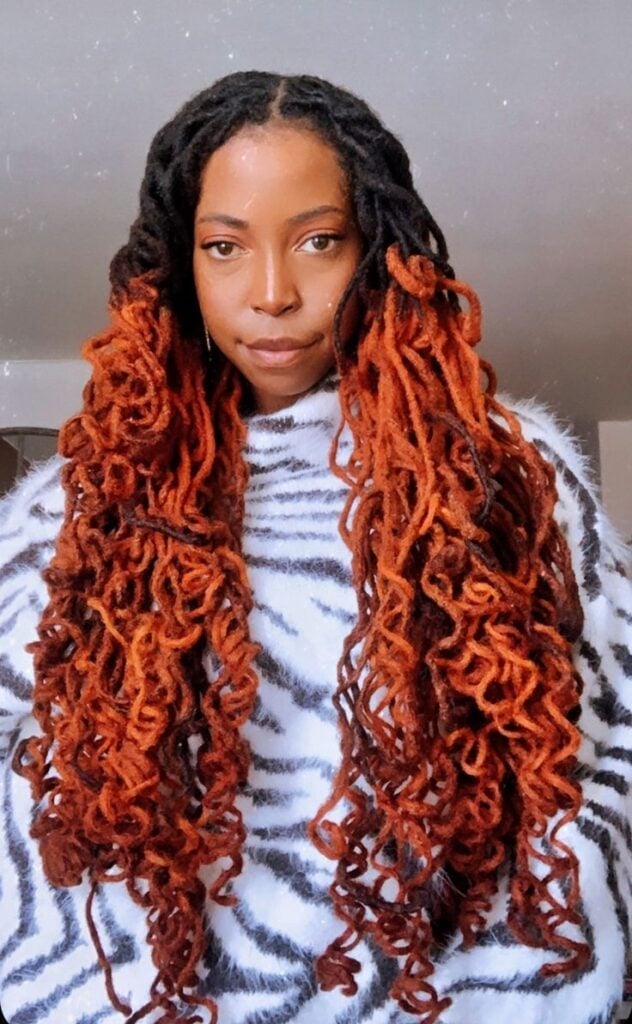
This ombre does the dramatic work for you: a black base that dissolves into fiery orange at the ends, with the loose curls showing off the transition from every angle. The middle part keeps the focus on the color shift, and the long length gives the gradient room to breathe. Ask your colorist for: long locs, black base fading to fiery orange ends.
Upkeep is where this design earns its keep. The orange needs a refresh every six to eight weeks to stay vibrant, since heat styling and washing pull the tone toward brass. A heat protectant before you curl keeps the ends from drying out, and a color-safe shampoo stretches the time between touch-ups. As the roots grow in, the black base hides new growth cleanly, so you are not chasing the line every month. That makes it a high-impact option that does not demand constant salon visits.
Mid-Back Locs With Black Red Orange Yellow Blend
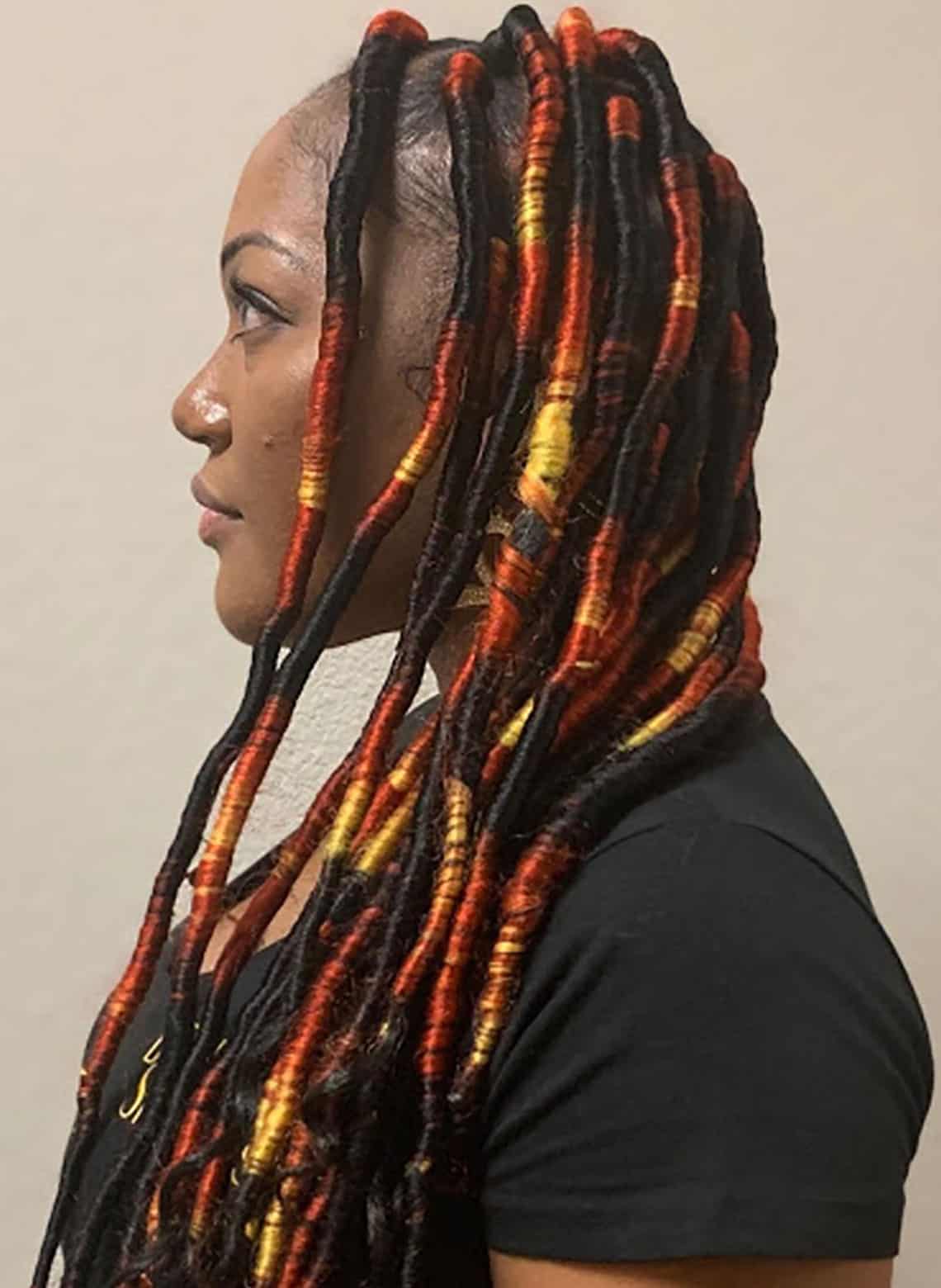
Can you get this multicolor blend right at home? The short answer is probably not. The black base with fiery red, orange, and yellow highlights requires precise placement so each tone lands where it should, and a side view like this shows every mistake. Loose, wavy locs at mid-back length give the color layers room to show a gradient. Ask your colorist for: mid-back locs, black with red, orange, and yellow highlights.
The salon route matters here because achieving this blend involves multiple steps and a steady hand. At home, you risk patchy coverage or tones that bleed into each other. A professional can map out where each color sits and how they melt together, which is what makes the difference between a polished result and a messy one. If you are after an artistic, vibrant result, this is one to book, not to DIY.
Shoulder Length Dark Brown Locs With Undercut
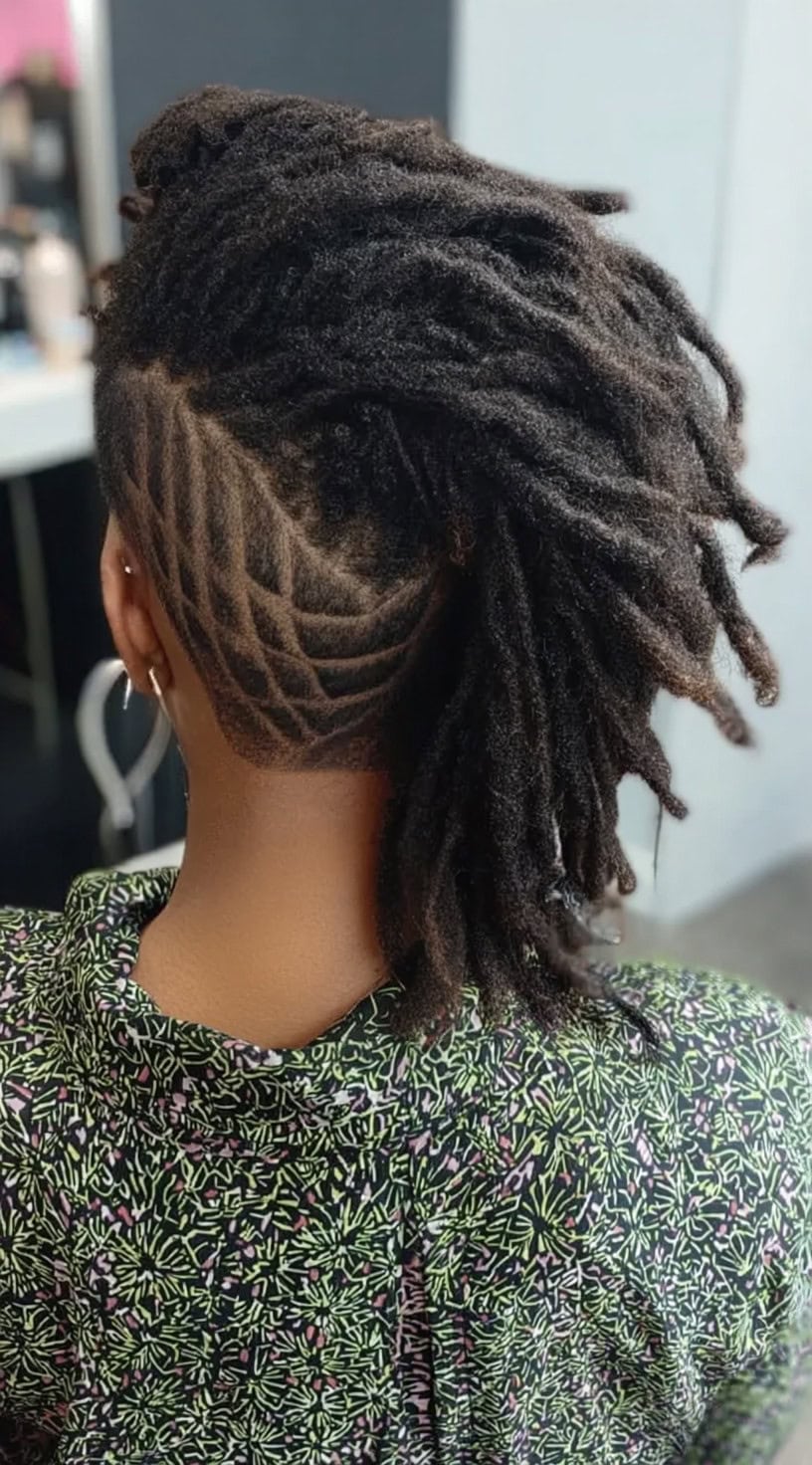
A carved geometric design in the undercut turns the back of your head into a canvas, and with shoulder length, wavy, thick locs, the contrast between the shaved pattern and the dense texture above is the whole point. Ask your stylist for: shoulder length dark brown locs with a carved undercut. The trade-off: this is a committed style. The carved design needs a trim every four to six weeks to stay sharp, and regrowth blurs the lines fast, so it is not a low-maintenance choice. If you are not ready to tend to the back every month, skip the carve and keep the undercut clean instead.
Final Thoughts
For subtle enhancement, ask for highlights or a balayage that mimics natural color variation, keeping the root line soft. For a bolder statement, pick a single vibrant hue or a clean ombre that lets the color transition gradually. Match the technique to your texture and your tolerance for upkeep.
- Trim and tone color every 6-10 weeks to maintain vibrancy.
- Use color-safe shampoos and conditioners to prevent fading.
- Deep condition locs weekly to combat dryness from coloring.
- Protect dyed locs from excessive heat and sun exposure.
Classy dyed locs are about intentional color that celebrates texture.